Breakfast
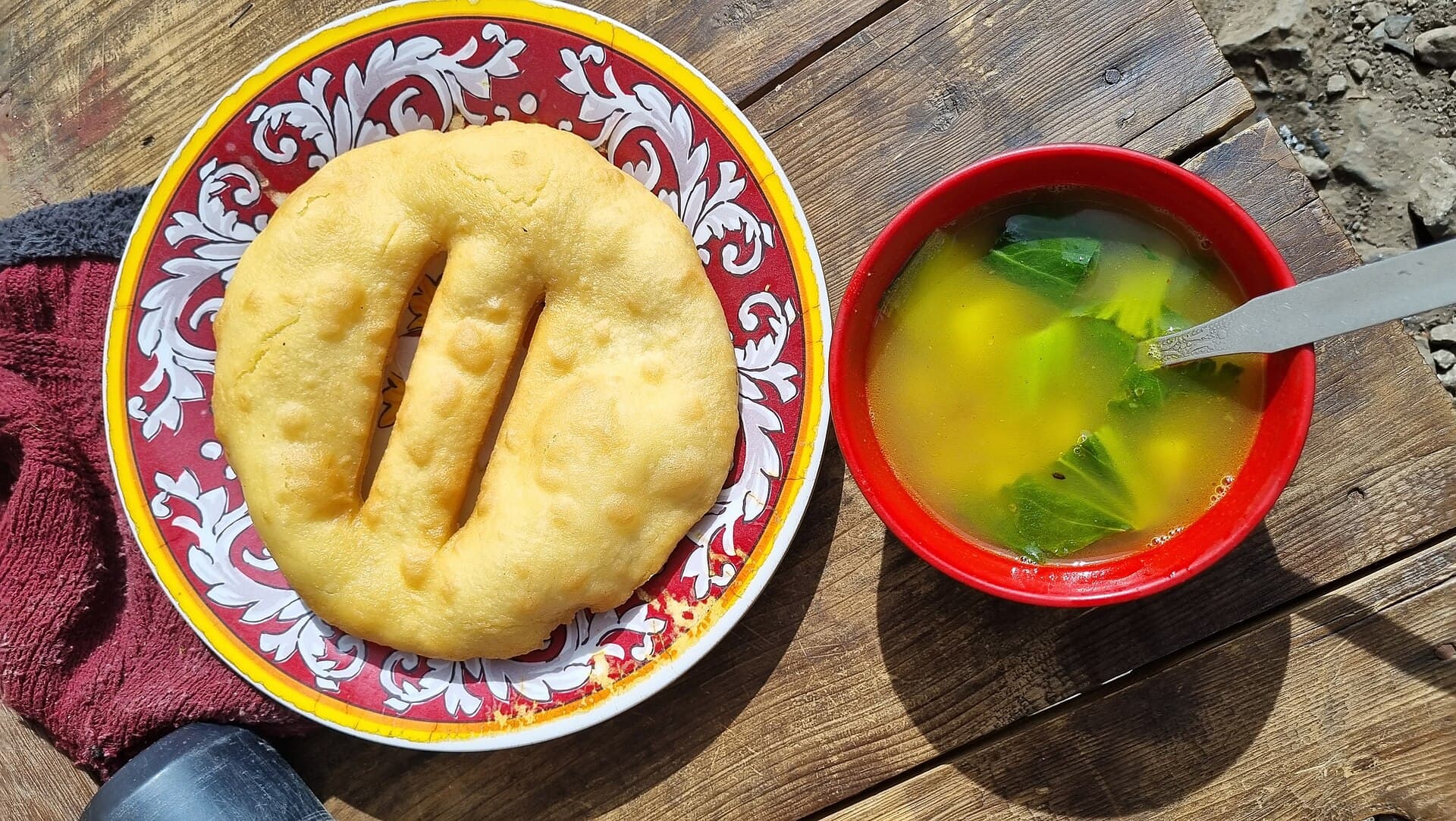
Porridge, eggs, chapati, tea and coffee, served in the dining tent while the crew take down the camp
A full circuit of the seventh-highest mountain in the world, camping from the roadhead to Marpha, over two passes above 5,000 m with no lodges or phone signal in between.
A full circuit of the seventh-highest mountain in the world, camping from the roadhead to Marpha, over two passes above 5,000 m with no lodges or phone signal in between.
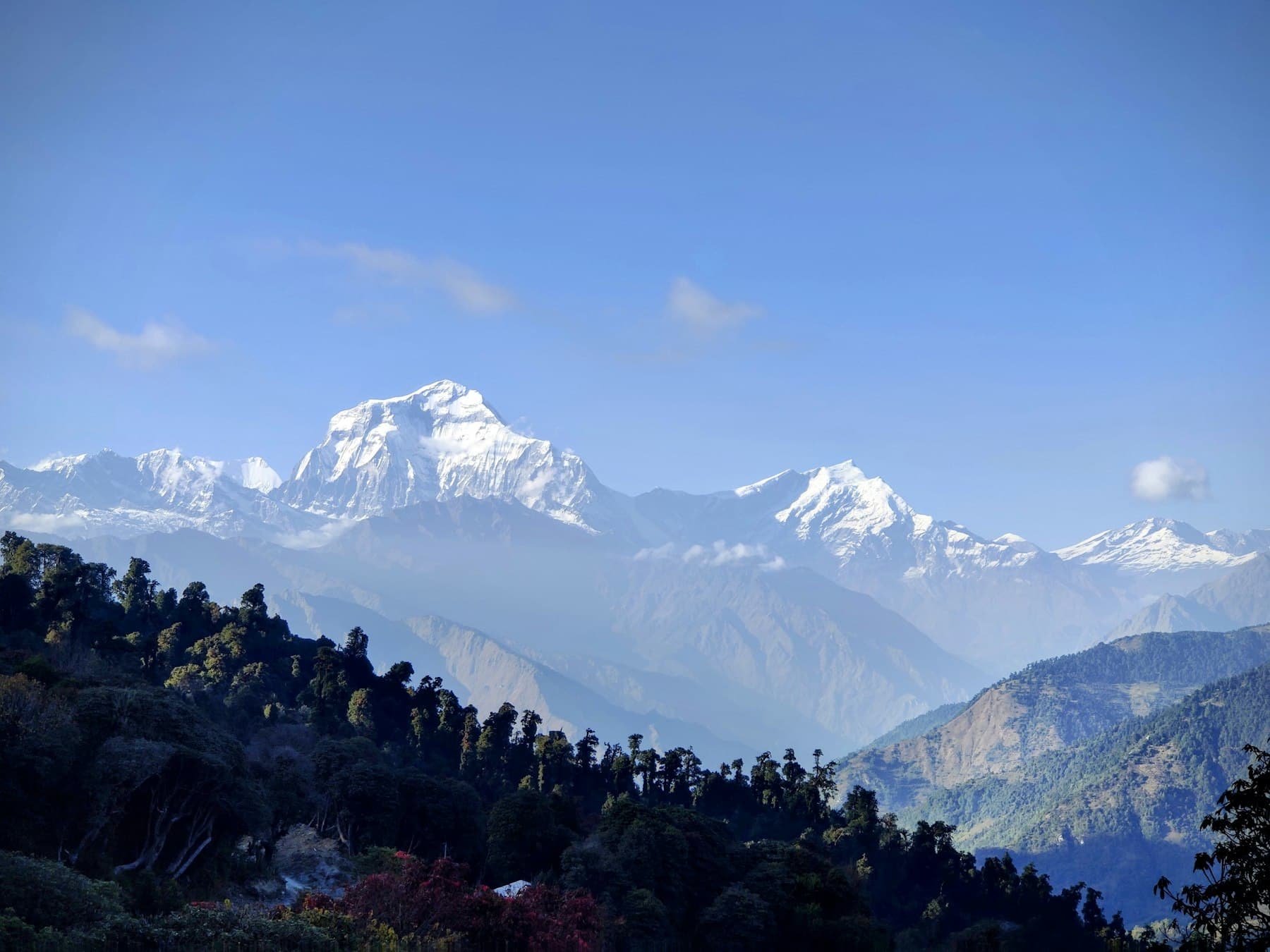
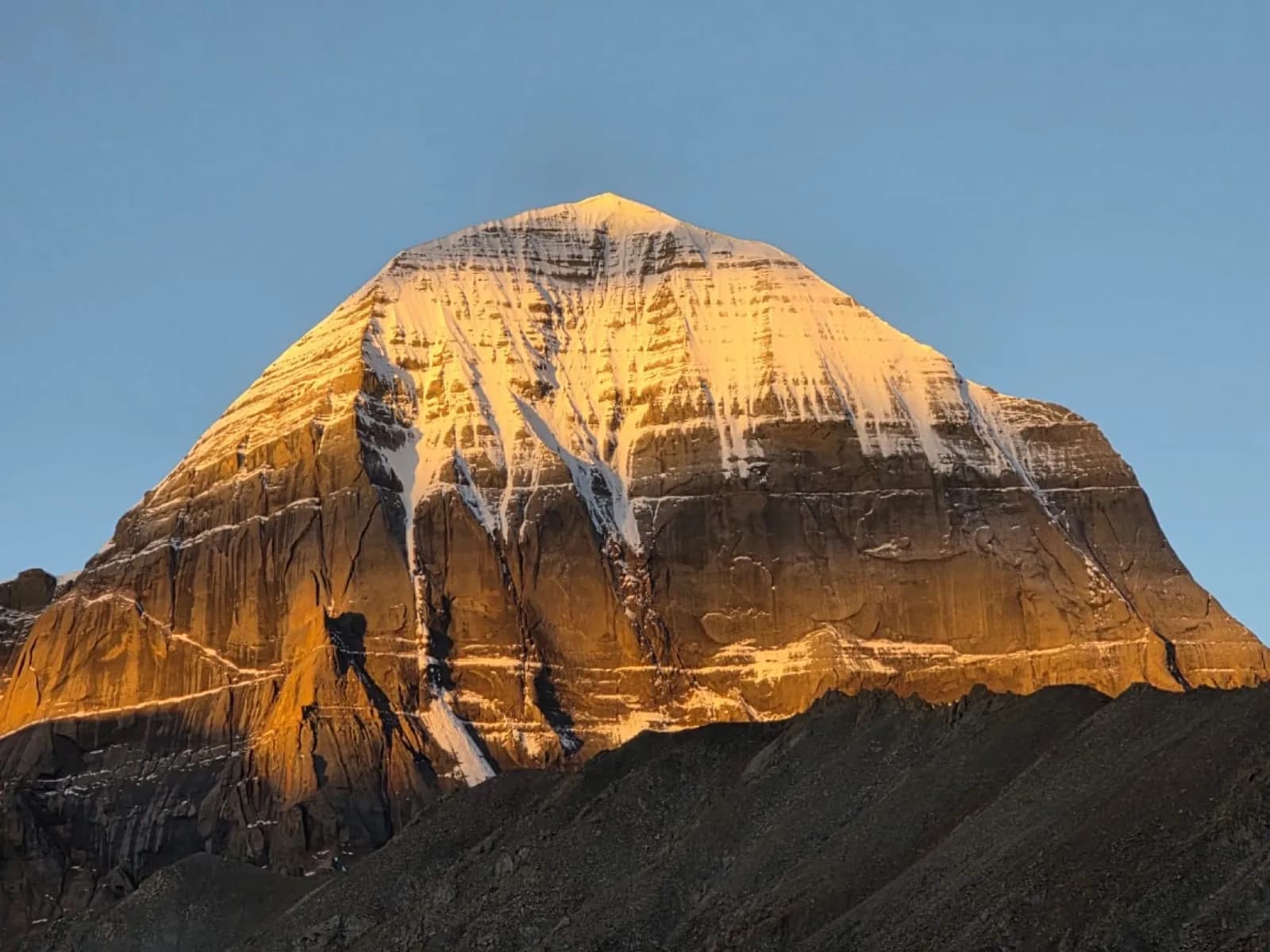
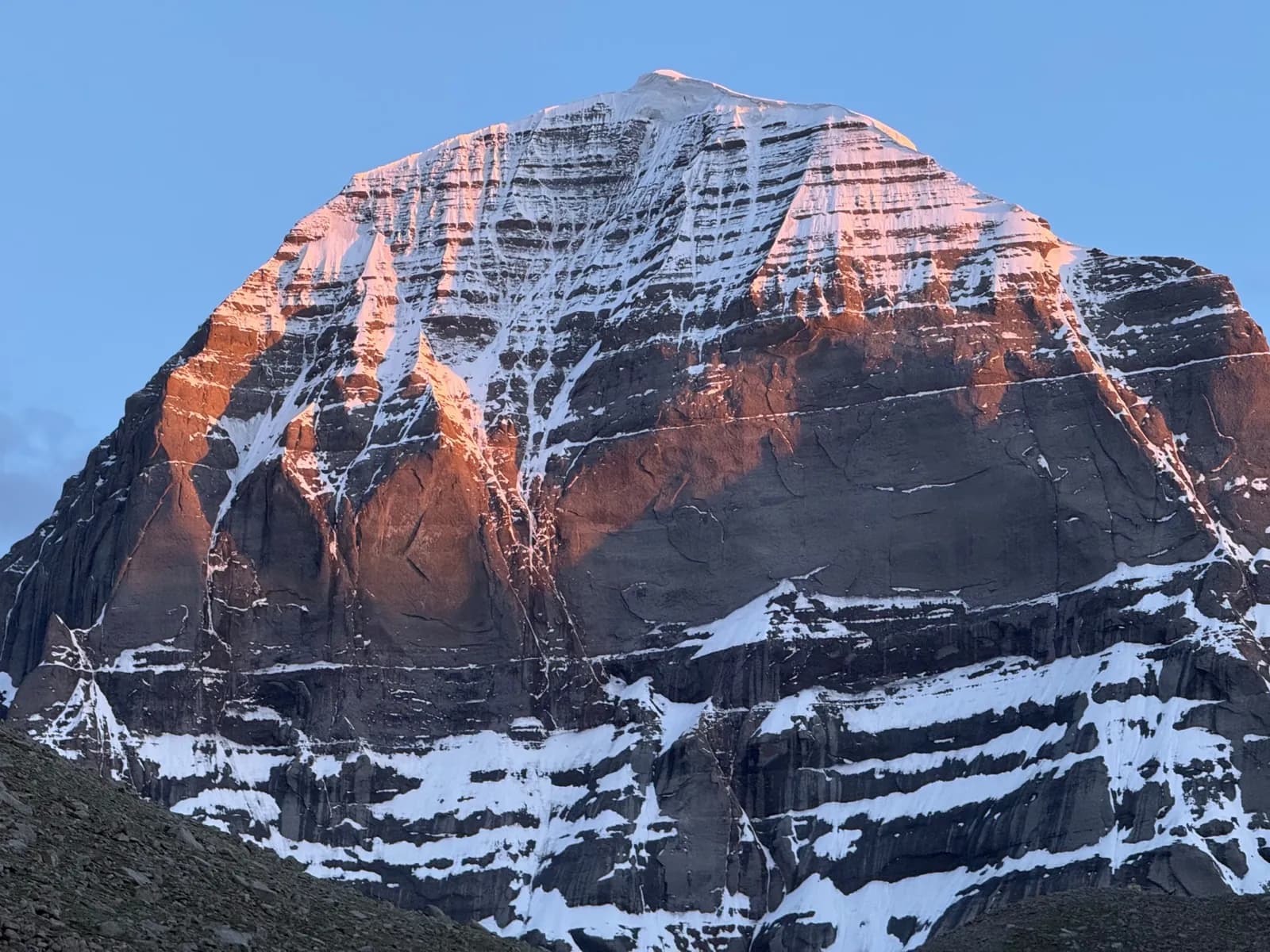
A complete circuit of Dhaulagiri I, at 8,167 m the seventh-highest mountain in the world, from the farmland of the Myagdi Khola over the French Pass and the Dhampus Pass into the Kali Gandaki valley. It was first walked as a trekking route in the 1990s and has never become popular, because there is no accommodation along the way. Everything you need is carried in.
Nepal's best-known treks are popular partly because lodges have been built along them. There are no lodges here. Between Dobang and Marpha, eight days apart, there is no permanent settlement, so the only way to complete the route is with a camping crew. This keeps the cost higher and the numbers low, which is the main appeal of the trek.
Trekkers who have already completed a Himalayan trek, are comfortable at altitude and want a quiet route. It is not suitable as a first trek in Nepal, but it is a very good second or third.
Anyone who needs a shower, a bed or a phone signal, and anyone who is not confident of walking eight hours on rough ground on the fourteenth consecutive day. There is no quick way out from the middle of this route, and this affects every decision we make on it.
We meet you at the airport and take you to your hotel. The afternoon is free. In the evening we go through the route in detail, because this is not a teahouse trek and your equipment and training are more important than usual. We check your equipment against the list and hire anything that is missing.
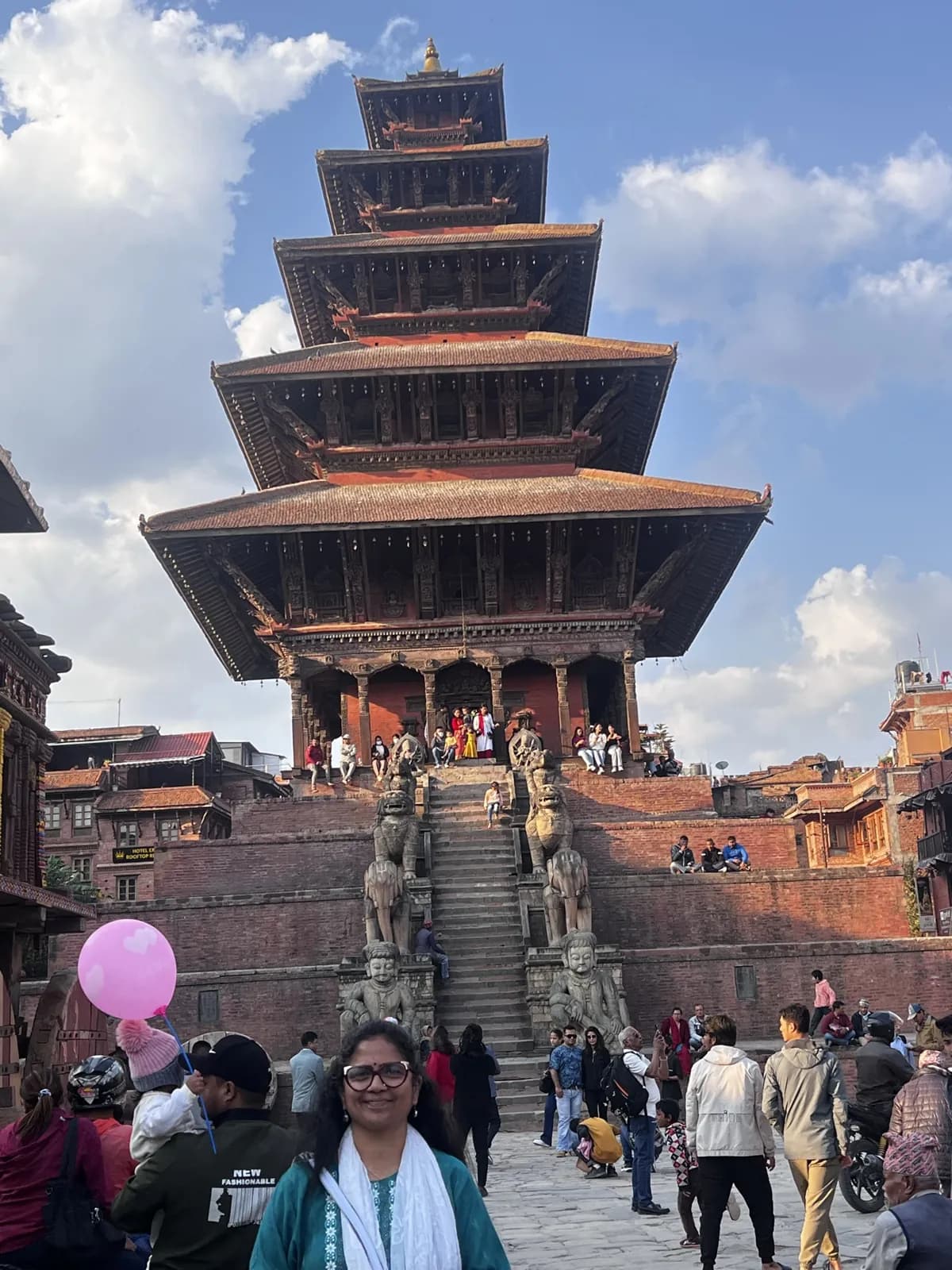
The flight takes twenty-five minutes, or the drive six to seven hours along the Trishuli if the weather prevents flying. The afternoon is for final shopping and for dividing your luggage between what the porters carry and what you carry. There are no shops after tomorrow.
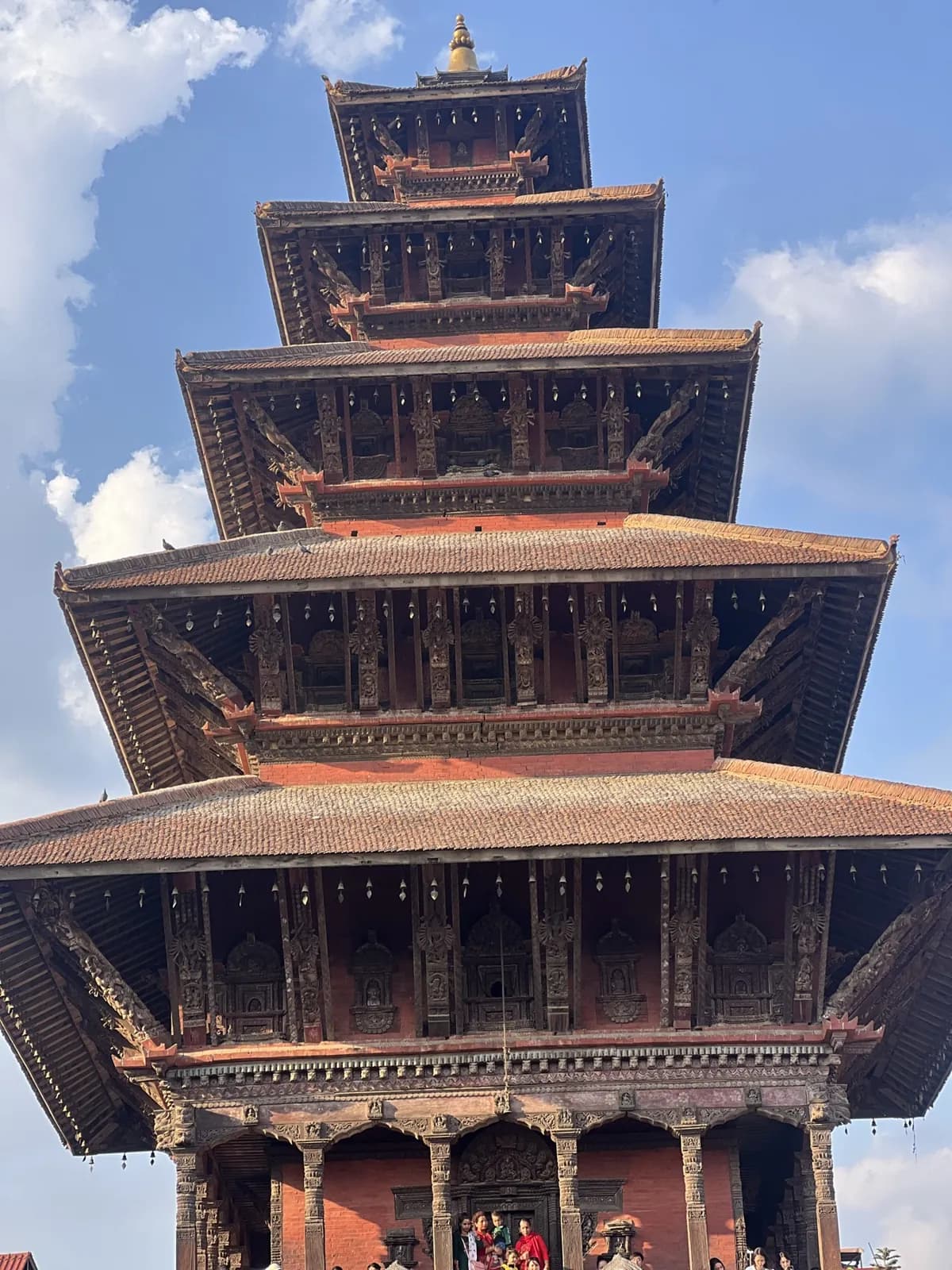
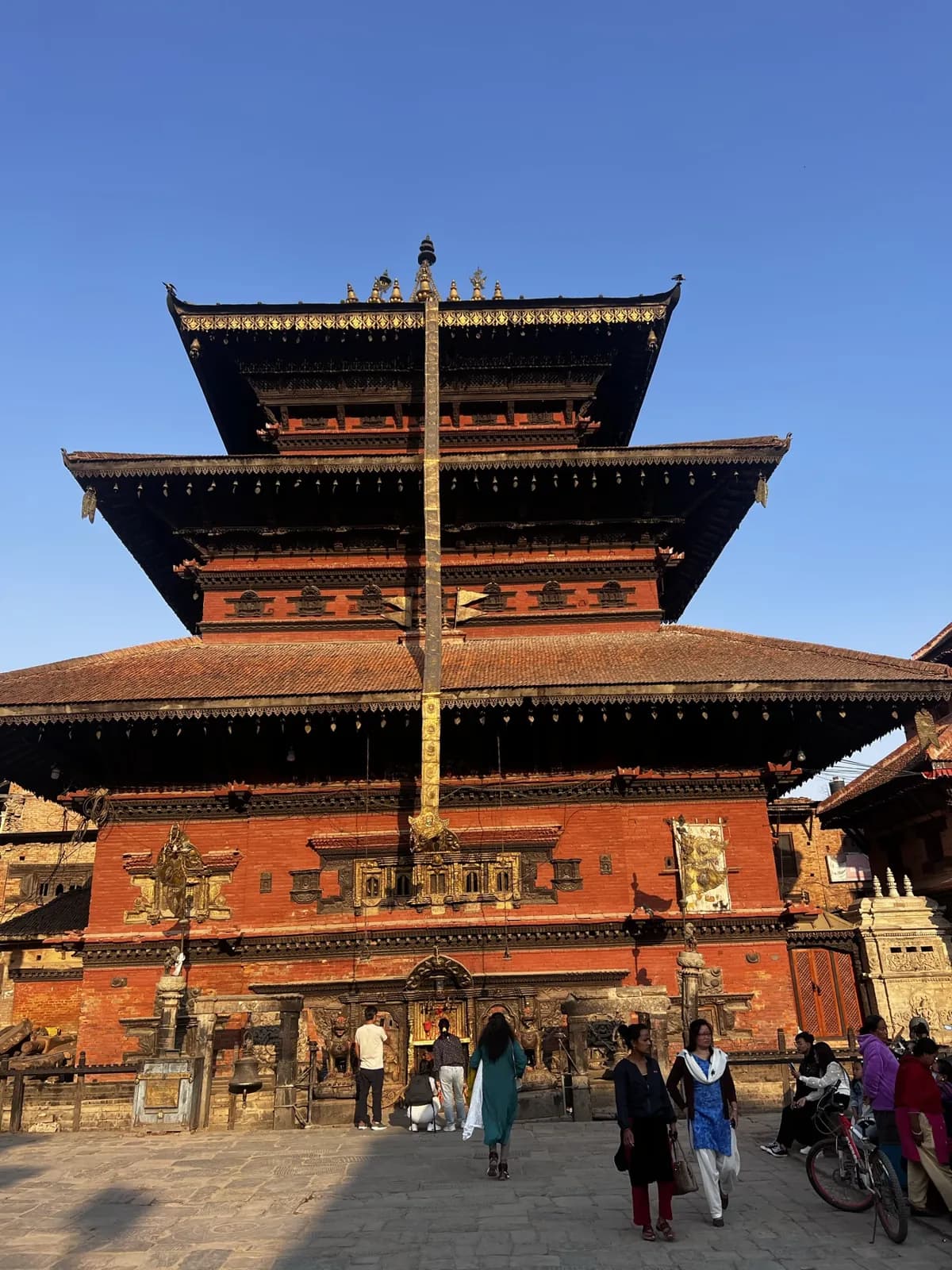
A long morning by jeep up the Myagdi Khola to Darbang, on a road that soon becomes unpaved and further on becomes unreliable. From the roadhead we walk for two to three hours through terraced fields to Dharapani and set up the first camp. The area is subtropical, green and warm.
You climb through Magar villages of stone and slate houses, which see very few trekkers. A long climb leads to the ridge at Naura, followed by a traverse to Muri. This is still farmland, and villagers often offer cucumber to passing walkers.
Today the valley narrows. The trail descends to the Myagdi Khola and follows the north bank along exposed sections that have been rebuilt several times after landslides. The day takes seven hours, with a good deal of ascent and descent, and ends at Boghara, the last village in the valley.
You pass Lipshe, the last permanent settlement, and enter forest of oak, then bamboo, then rhododendron. The path crosses the river on log bridges, which the crew often rebuild as needed. Dobang is a forest clearing rather than a village, and beyond this point the valley is uninhabited.
The morning is spent in deep forest, wet underfoot, with the river loud below and occasional views of Dhaulagiri through the trees. Sallaghari is a clearing in pine forest at the upper edge of the tree line. It is the last camp with firewood and the last sheltered camp.
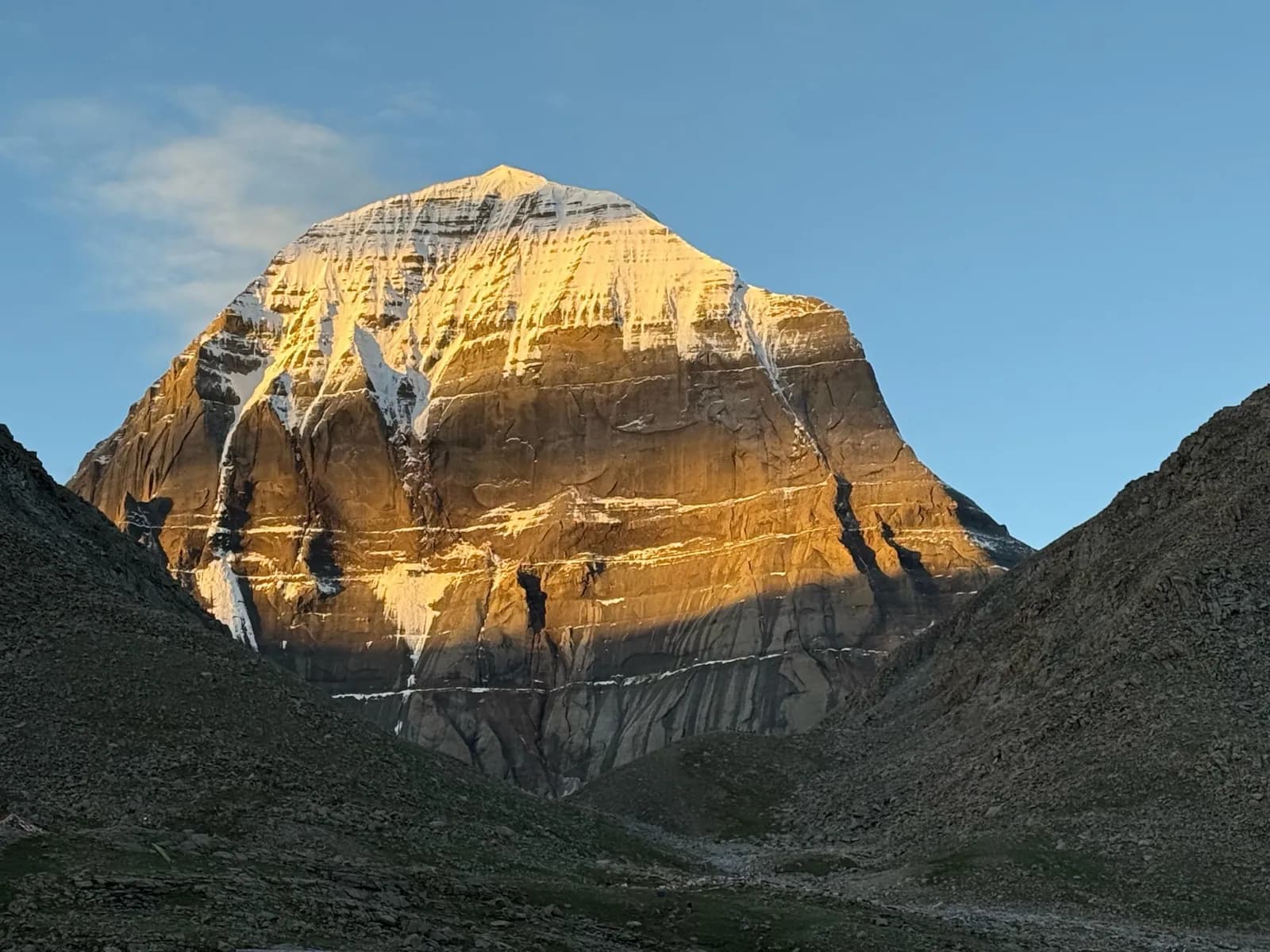
You leave the forest and enter the moraine. The day is deliberately short, four hours, because both the terrain and the altitude change significantly today. Italian Base Camp is in a meadow below the west face, with the mountain filling the head of the valley. Most people spend the evening outside watching the mountain at dusk.
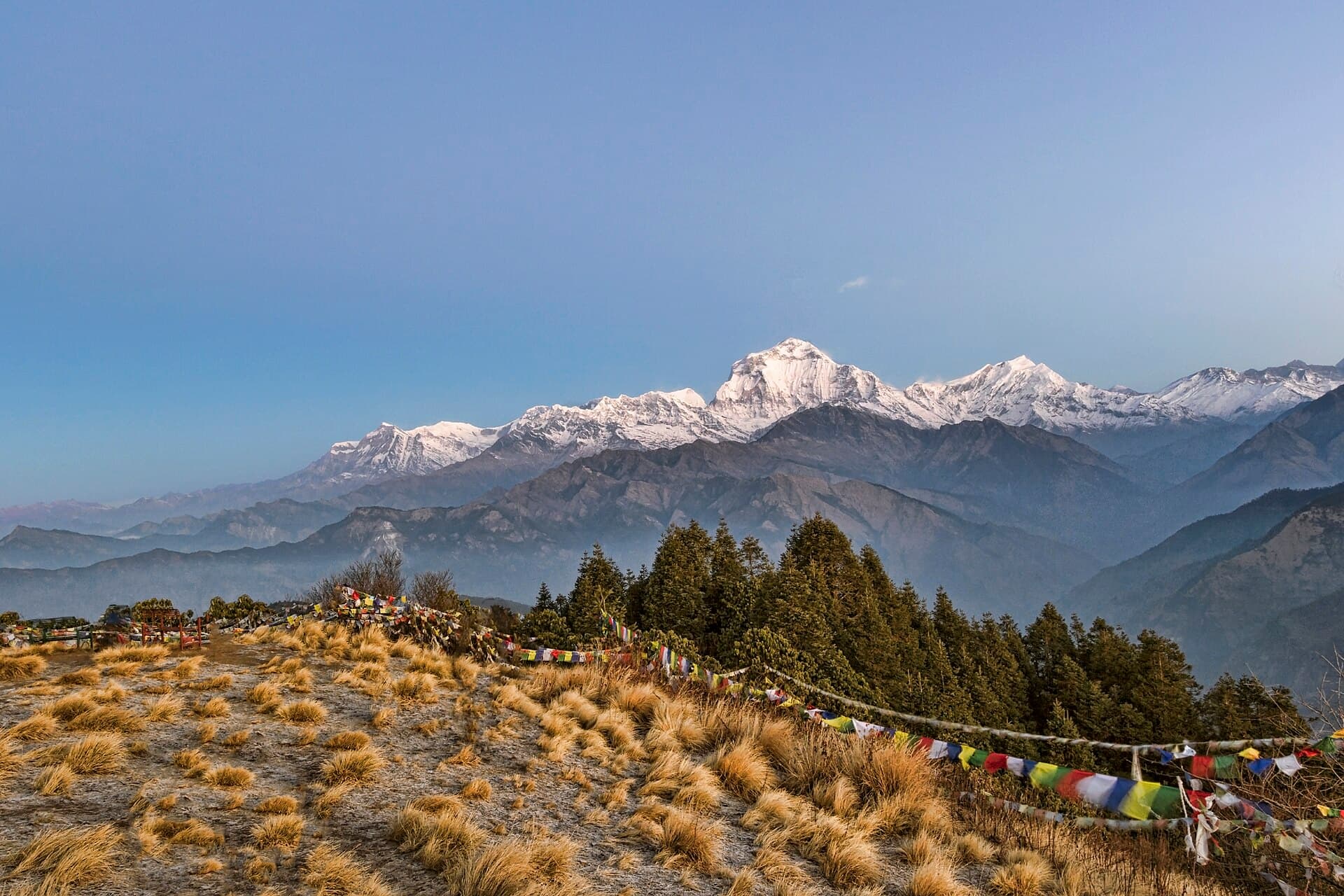
This is an active rest day. We walk for two to three hours up the side of the valley and return to sleep lower, which helps acclimatisation. From today your guide measures everyone's oxygen saturation morning and evening and records it, so that any decline is clearly identified.
This is the narrowest part of the route. The trail follows the Chonbarden gorge on scree and rock slabs below loose ground, and helmets are worn for the whole section. You reach the glacier in the afternoon. Glacier Camp is on moraine at 4,200 m, and the ice can be heard moving through the night.
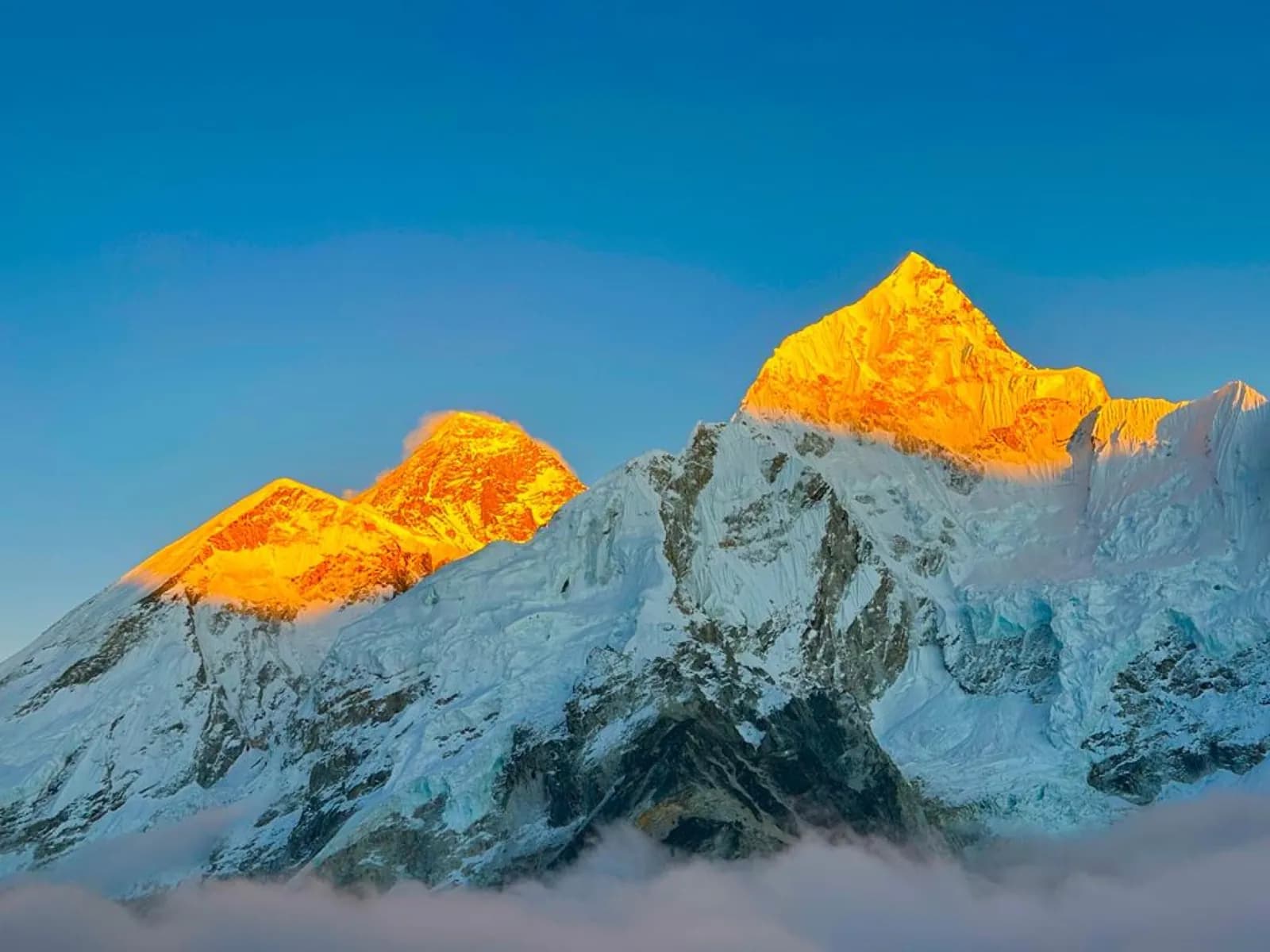
A four-hour climb up the Chonbarden glacier, roped where the crew consider it necessary, to the shelf below the north face. Dhaulagiri Base Camp, at 4,740 m, lies between Tukuche Peak on one side and the north face of an 8,000 m mountain on the other, in a bowl of ice that is constantly active.
The second acclimatisation day. Part of the day is spent on the ice learning to use crampons and hold an ice axe, whether or not you have done so before. In the afternoon there is a short walk up towards the icefall. Tomorrow is the hardest day of the trek, and this preparation is important.
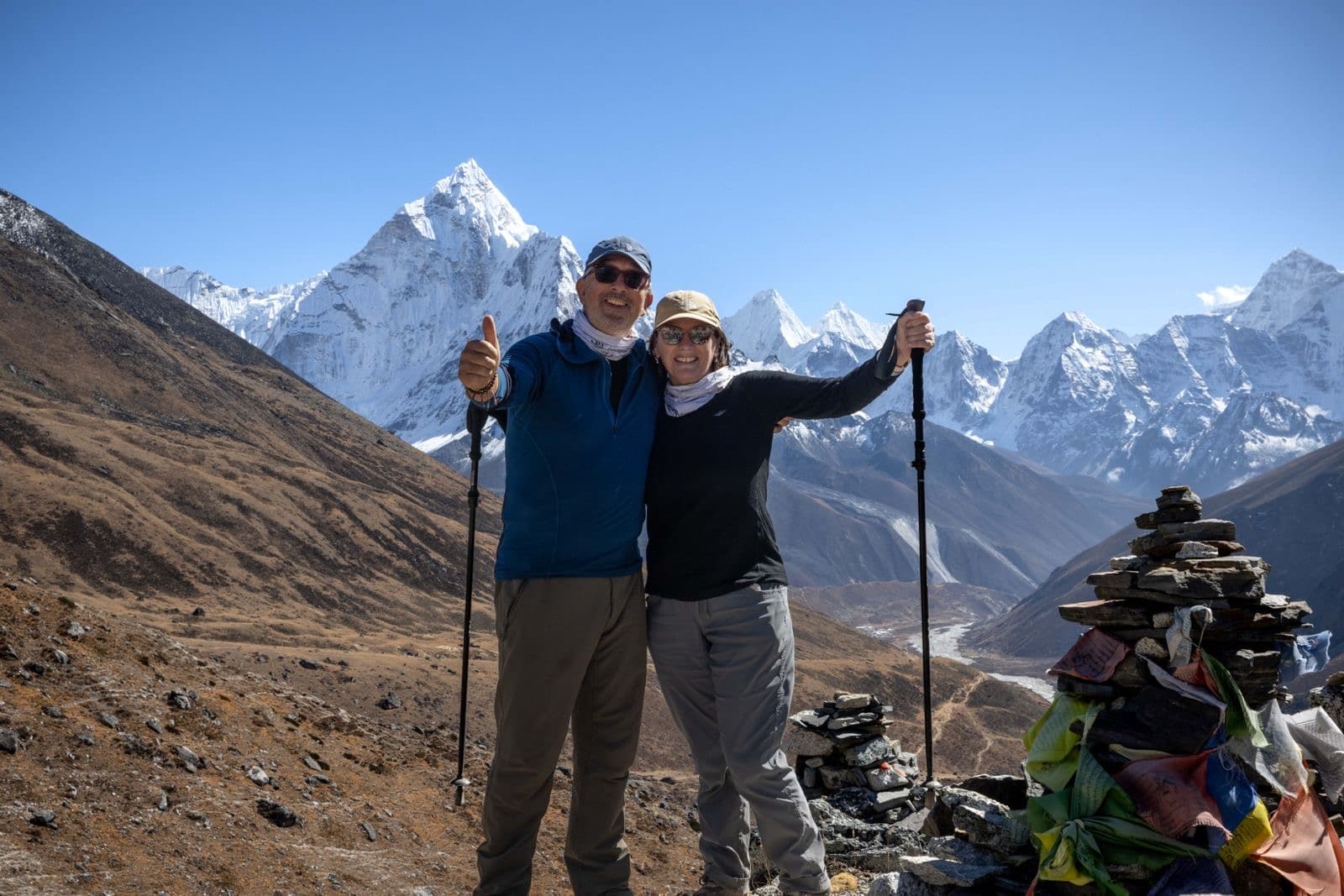
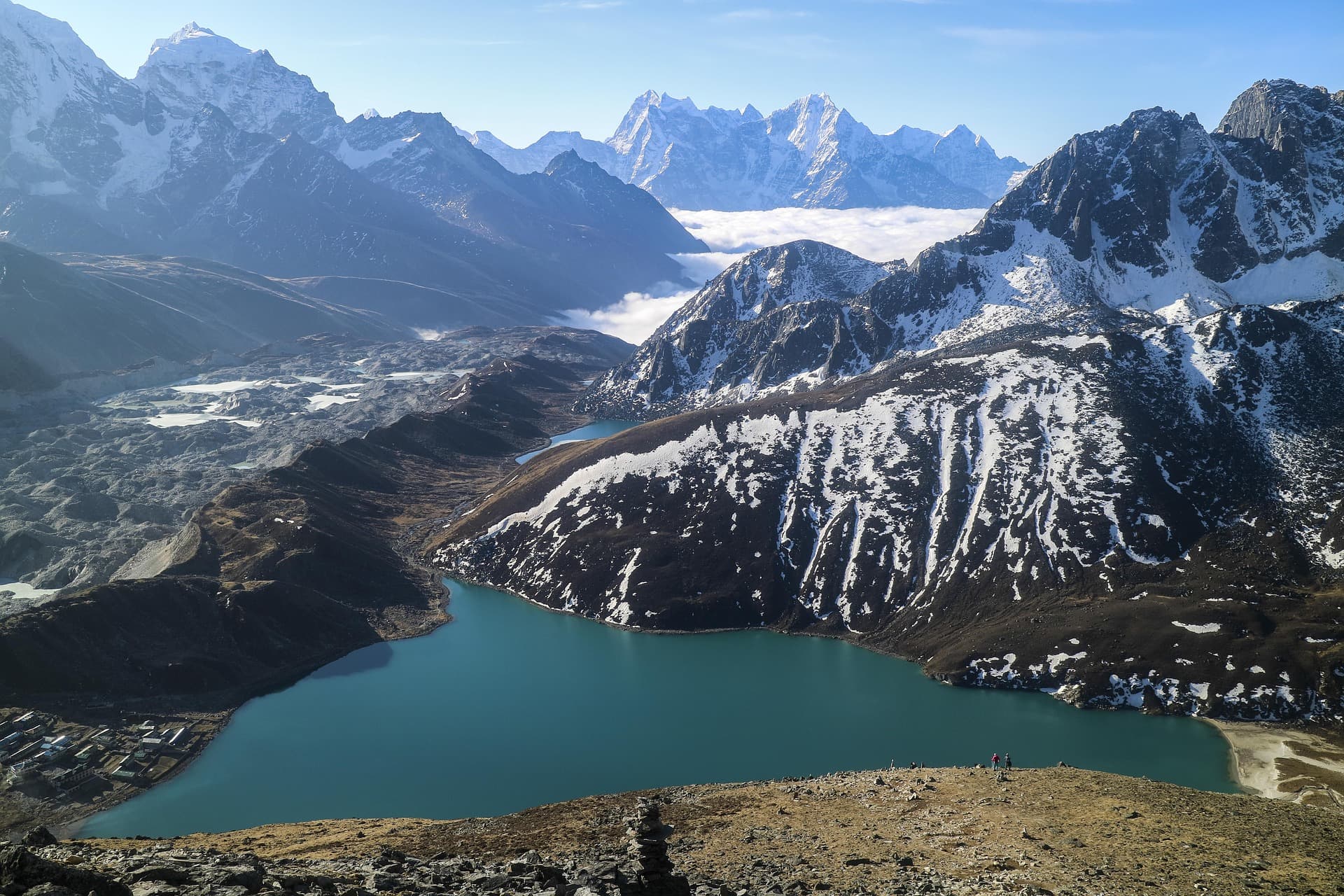
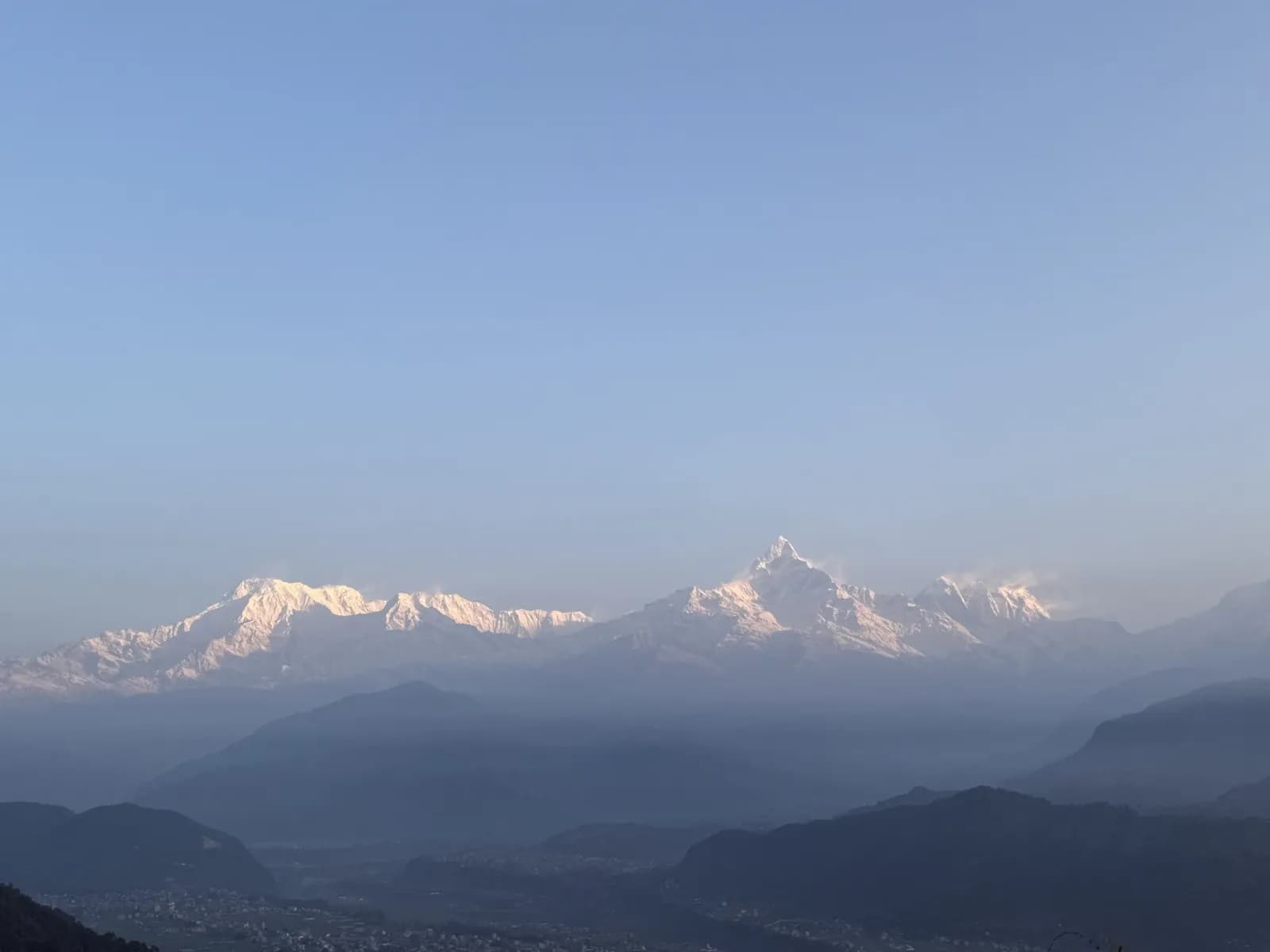
You set off before dawn. For most of the morning you climb snow slopes at a moderate angle to the cairns and prayer flags of the French Pass at 5,360 m, which has views of Dhaulagiri I and II, Tukuche and Sita Chuchura. The descent is on snow into Hidden Valley, a flat, enclosed and very quiet valley.
This day is held in reserve. If snow has closed the French Pass, someone needs an extra day, or the weather has changed while we were at base camp, this day absorbs the delay. If it is not needed, those who are fit and willing can walk up towards Dhampus Peak for the morning, and the rest of the group rests at 5,050 m.
This is the longest and hardest day of the trek, and you will be briefed on it in advance. A four-hour traverse on snow and rock leads to the Dhampus Pass at 5,240 m, with Nilgiri and the western end of the Annapurna range ahead. You then descend more than 1,500 m on scree, which is hard on the knees. The day takes nine hours in total and ends at the grazing ground of Yak Kharka.
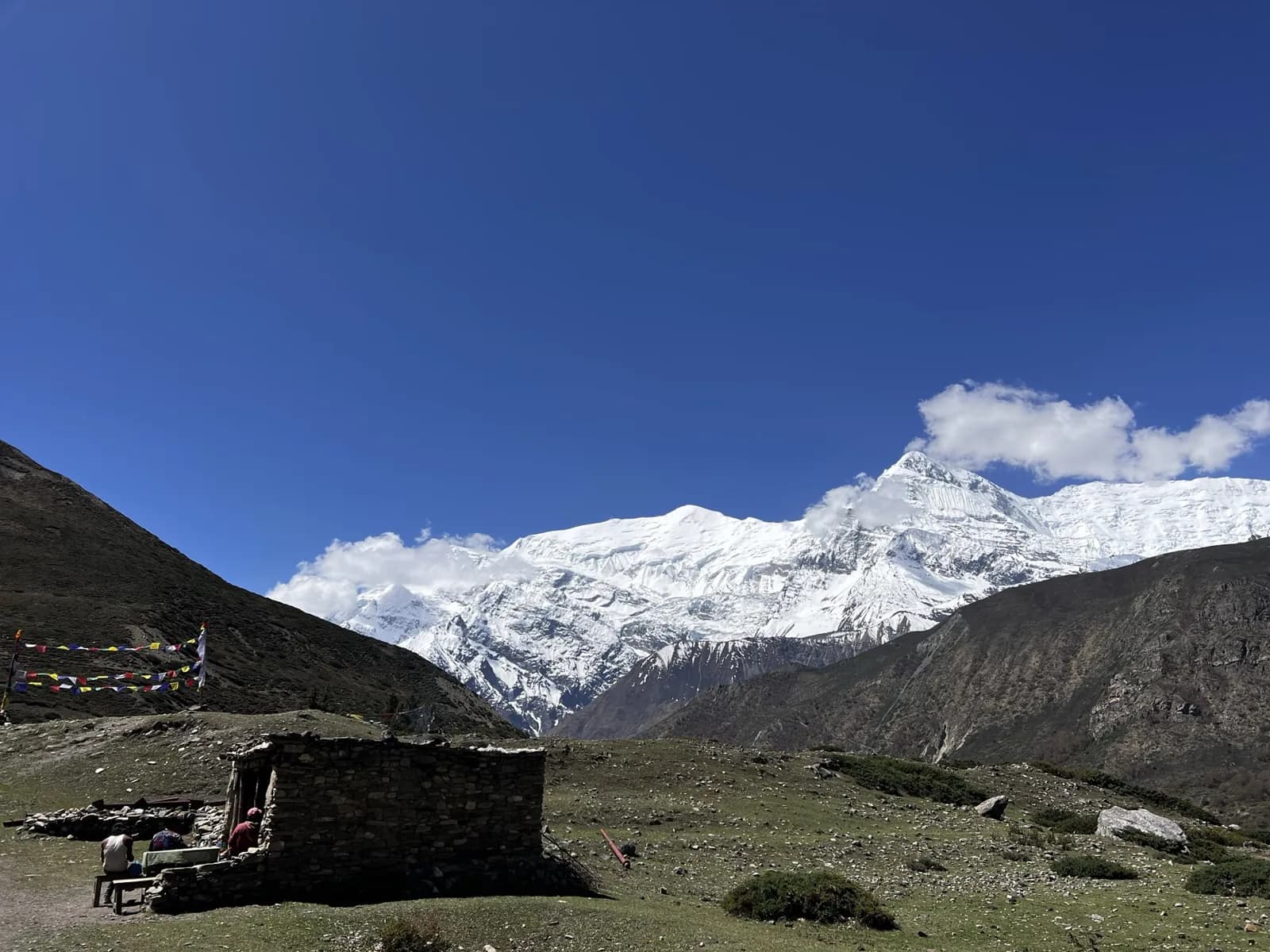
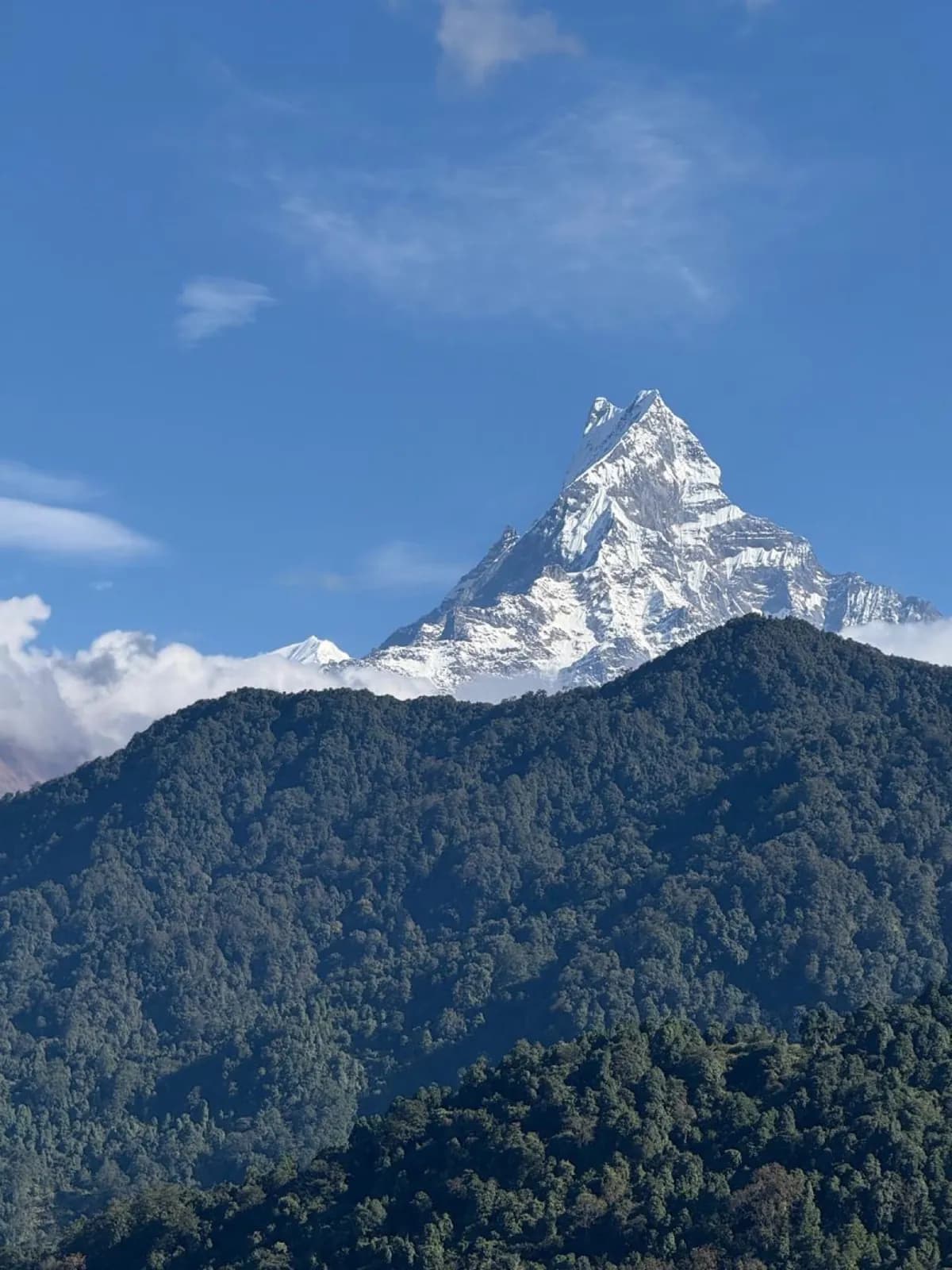
You descend through juniper and then apple orchards to Marpha, a village of whitewashed houses and flagstone streets. There is time to visit the distillery and have a full lunch before a short walk or drive to Jomsom. Tonight you stay in a lodge with a bed, a hot shower and a private room.
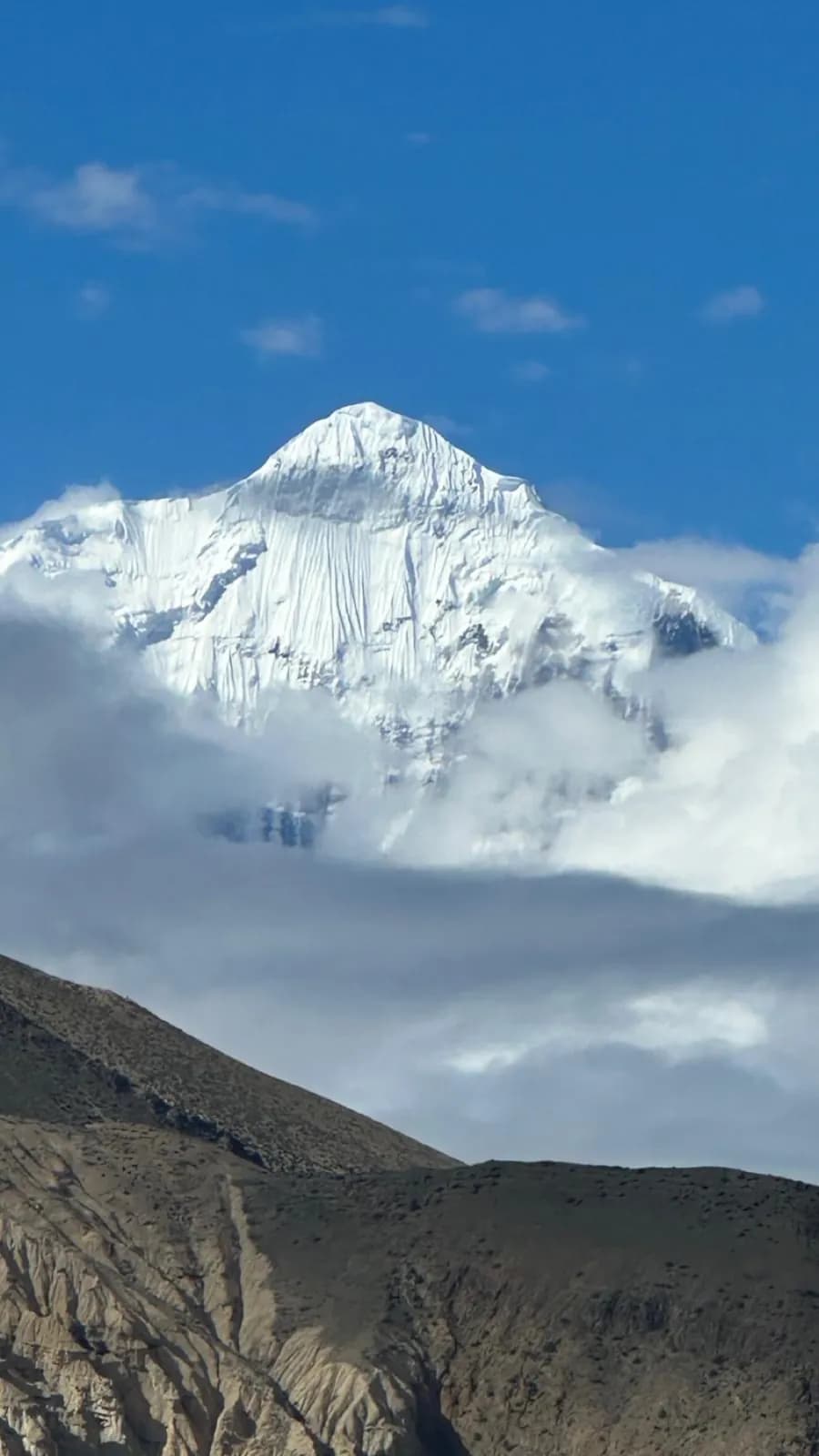
The Jomsom flight leaves at first light, because the Kali Gandaki wind closes the airstrip by mid-morning. The twenty-minute flight follows the deepest gorge in the world down to Pokhara, and you continue to Kathmandu by air or by road. In the evening there is a group dinner.
You have a free morning and are transferred to the airport three hours before your flight. If bad weather at Jomsom has delayed us by a day, this day makes up for it, and we will already have contacted your airline if needed.
Start date
24 Oct 2026
End date
10 Nov 2026
Available
12 places left
US $2,687
Per person
Start date
22 Apr 2027
End date
9 May 2027
Available
12 places left
US $2,687
Per person
Start date
2 May 2027
End date
19 May 2027
Available
12 places left
US $2,687
Per person
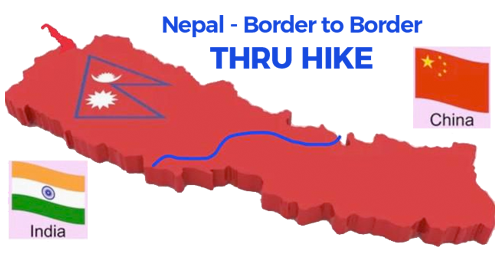
The trail from start to finish, at a glance.
There is no shop after day 3
On a teahouse trek, you can replace a forgotten item at the next village. On this trek there are no villages to buy from. Everything you need for fourteen days is carried in from day 3, and Pokhara is the last place to buy anything. We check your equipment carefully on the evening of day 1, because it is easy to hire a down jacket in Thamel and very difficult to manage without one at 5,050 m.
The flights and long drives on this itinerary, and what happens if one is delayed or cancelled.
Day 1 is an arrival day, with a full equipment check in the evening. If your flight lands on the evening of day 1 you will miss it, and the equipment check ensures you can hire anything you need in Thamel, such as a down jacket for Hidden Valley. Arriving two days early is better and gives you time to see Kathmandu.
The flight takes twenty-five minutes in good weather; the drive takes six to seven hours. We book the flight and keep the road as the alternative. Either option fits the schedule, because day 2 has no other activities.
Jomsom lies in the Kali Gandaki gorge, and the wind rises by mid-morning, so flights operate only at first light. Day 18 is partly intended to absorb a cancellation. If the weather keeps us at Jomsom, we drive to Pokhara, which takes most of a day on a rough road, or charter a helicopter if you have a flight to catch.
A changeable ticket is worth the extra cost on this route. If you fly out on the evening of day 18, we will book a day room for you in Kathmandu. However, if the Jomsom weather causes a delay of two days rather than one, a fixed ticket can become expensive.
Hotels at each end, a lodge at Jomsom, and eleven nights in a two-person tent, with a dining tent, kitchen and toilet tent that move with the camp.
Apart from a few basic lodges low in the Myagdi valley, there is no accommodation until Yak Kharka above Marpha, so the trek is a camping trek. You sleep in a two-person four-season tent on a foam mattress, one tent each unless you ask to share. The crew set up a dining tent and a toilet tent at each camp, cook on kerosene and bring a bowl of hot water to your tent each morning. Above Italian Base Camp the camps are on moraine, glacier and snow, and the nights are well below freezing, so a four-season sleeping bag is required.
In Kathmandu and Pokhara you stay in three-star hotels. The last night of the trek is in a lodge at Jomsom, with a twin room, a private bathroom and a hot shower.
| Where | Nights | Type | Room | Bathroom |
|---|---|---|---|---|
| Kathmandu | 2 | Three-star hotel in or near Thamel | Twin or double | Private, hot water |
| Pokhara | 1 | Three-star hotel near the lake | Twin or double | Private, hot water |
| On the trail | 13 | Two-person four-season tent with a foam mattress | One tent each unless you ask to share | A toilet tent, and a bowl of hot water each morning |
| Jomsom | 1 | Lodge | Twin | Private, with a hot shower |
Porridge, eggs, chapati, tea and coffee, served in the dining tent while the crew take down the camp
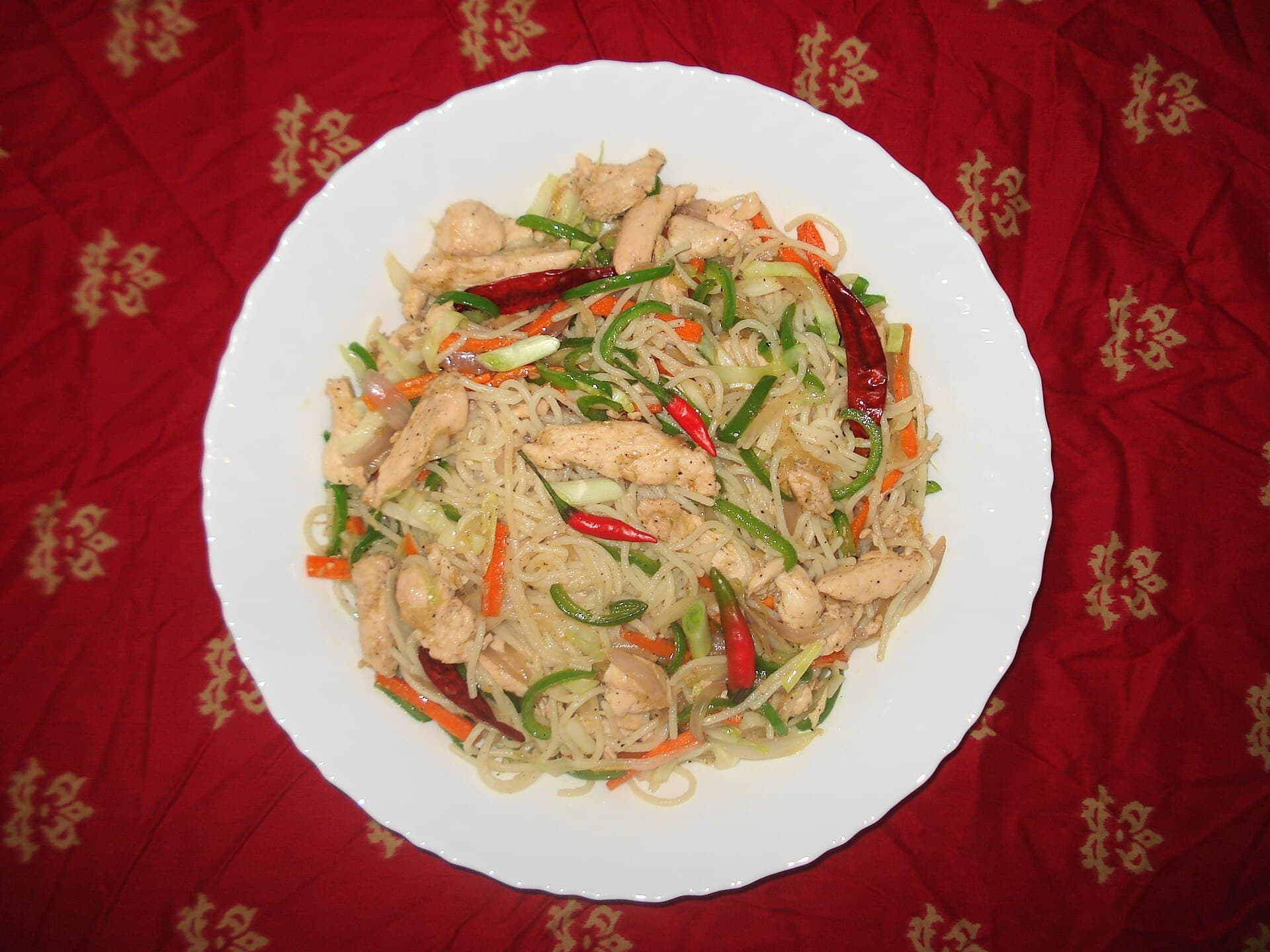
Cooked on the trail: noodles, fried rice, soup, and always something hot

Dal bhat, pasta, curry and soup, and on the last night a cake baked by the cook in a pressure cooker
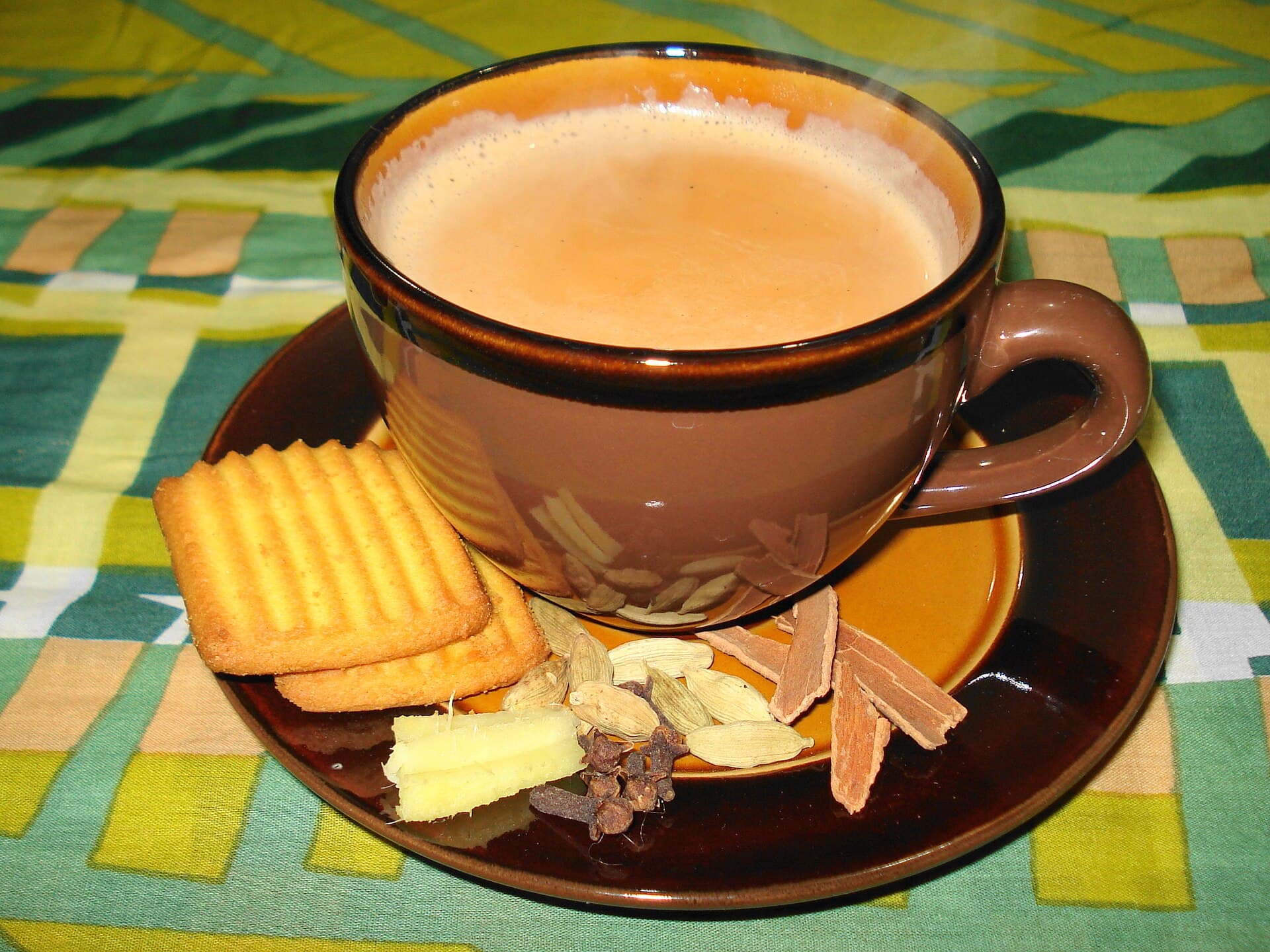
Tea and biscuits on arrival at camp
5:30Wake-up tea brought to your tent
6:00Breakfast, while the crew take down the tents
7:00Start walking. The crew usually overtake the group within the hour
11:30Lunch, cooked on the trail wherever there is water and shelter
13:00Afternoon walking, usually the shorter part of the day
16:00Arrive at camp, with tea, biscuits and your tent already set up
17:00Oxygen saturation measured and recorded, from Italian Base Camp onwards
18:30Dinner in the dining tent, and a full briefing on the next day
20:00Bedtime
The trek is not technical, but it is long, cold and remote. Day 15 crosses a 5,240 m pass and then descends 1,500 m before camp.
This is the hardest trek we offer outside our expeditions. It is not technical, but it is long, cold, remote and self-sufficient, with two passes above 5,000 m and a nine-hour day near the end. It is a suitable next step for trekkers who have completed Everest Base Camp and the Annapurna Circuit.
Written for somebody who walks a bit and does not train. If you already run or cycle regularly, start partway through. Nothing here needs a gym.
6 months before, stage 1 of 4
Train three or four times a week, including one long hill walk at the weekend. Work up to six hours on rough ground with a 7 kg pack. If you cannot do this by the fourth month, consider a different trek this year and this one next year.
You sleep above 4,000 m for five nights and above 5,000 m for two, and the nearest road is four days behind you. For this reason our itinerary takes eighteen days rather than the sixteen offered by some operators. The two acclimatisation days, at Italian Base Camp and Dhaulagiri Base Camp, provide the trip's safety margin, and we do not offer a version without them.
Report symptoms early
Tell the leader at the first sign of a headache, not on the third morning. You will not be penalised for reporting symptoms, and our approach depends on hearing about them early.
Mild symptoms
Nobody with symptoms sleeps higher than the night before. There are no exceptions to this rule on this route, and the leader's decision is final.
Serious symptoms
If symptoms do not improve after a rest day, you descend with the assistant guide. From Hidden Valley this means crossing the Dhampus Pass to Marpha, which the leader will have planned in advance.
Oxygen and helicopter evacuation
We carry an oxygen cylinder and an oximeter on every departure. If the situation is serious and the weather allows flying, we call a helicopter and deal with the insurance afterwards.
Fitness and altitude are unrelated
This is the thing people get wrong most often. Training makes the walking easier and does nothing for how your body handles thin air. Strong young trekkers get altitude sickness and unfit older ones frequently do not. Go up slowly, and say something the first time your head hurts.
We recommend two months of the year for this trek and run two more with a caution. The route is closed for the rest of the year.
The best month. Stable weather, clear air and both passes open. The trip is planned around this season.
Figures for 4,740 m and 5,050 m, which is where you sleep on the cold half of the trek. The valley below Italian Base Camp is fifteen degrees warmer and tells you nothing useful about the passes.
You are accompanied by a licensed leader who has crossed both passes many times, an assistant guide for groups of six or more, a cook and two kitchen staff, and porters at a ratio of one to every two trekkers plus the camp loads. This usually means fourteen to eighteen people supporting eight trekkers, which is typical of a camping trek.
The kitchen team cooks three meals a day for three weeks on kerosene, in a tent, at altitudes of up to 5,050 m, and bakes a cake for the last night. The cook boils and filters all your drinking water. On a route with no shops and no clinics, the kitchen is the most important part of our safety arrangements.
Porters carry 25 kg, not 35 kg, and wear boots and jackets that we provide. Every member of the crew is insured for rescue and medical treatment at the same altitude as you. If you would like to know what the crew are paid, please ask and we will tell you.
There are no bins between Darbang and Marpha, so every wrapper, battery and tin carried in with the kitchen is carried out by the porters. The toilet tent pit is dug and filled in at every camp. We weigh the rubbish at the end of the trek as a matter of routine.
The kitchen uses kerosene that we carry in. The forest between Dobang and Sallaghari is the last remaining forest in this valley, and a camping crew burning wood every night would destroy it within a decade. Carrying fuel costs more, but we do not compromise on this.
The crew are hired in Pokhara and Beni, the jeep is from Darbang, and food is bought in the Myagdi valley rather than brought from Kathmandu. On a route without lodges, crew wages are the main source of local income, which is one of the main reasons for running the trek.
Do not build cairns, leave flags or carve initials. The Chonbarden is an active glacier and the route across it changes every year, so any markers are of no use to the next group and spoil the area for everyone.
Write to us or send a WhatsApp message with your preferred date and the number of people in your group. We will tell you whether the departure is confirmed, how many people have already booked, and whether we think this is the right trek for you this year.
A 20 per cent deposit secures your place, and the balance is due sixty days before you fly. A camping trek commits us to crew and food well before you arrive, which is why the balance is due earlier than on a teahouse trek.
If you cancel more than sixty days before departure, the deposit can be transferred to another departure within eighteen months. Within sixty days, the crew have been hired and the food bought, so we retain fifty per cent, and within thirty days we retain the full amount. We strongly recommend travel insurance with cancellation cover.
An accurate account of your fitness and your previous experience at altitude. We would much rather discuss this by email in February than at Italian Base Camp in October.
You need helicopter evacuation cover to 6,000 m, with the policy number and the 24-hour assistance phone number. We ask for these before you fly and check them again at the equipment check, because on this route adequate insurance is essential in an emergency.
Priced per person, arranged before you travel, and none of them included in the price above.
A non-technical 6,000 m summit from Hidden Valley, climbed on the reserve day if the weather and the group allow. It requires a climbing permit, a climbing guide and mountaineering boots, and adds a summit to the trek. Please tell us when you book, not at base camp.
Marpha is the most attractive village in the Kali Gandaki valley and a good place to rest after eleven nights in a tent. You can visit the distillery and the gompa above the village, and relax at 2,670 m.
Per person on a shared charter, for use when the scheduled flights are grounded and you have a flight to catch. We keep this in reserve rather than selling it in advance, and it is the quickest solution when the Jomsom wind prevents flights.
Added at the end of the trek. A lakeside hotel, a boat trip, a massage and free time.
Your own group, on your own dates within the two seasons, with the same crew. For groups of eight or more there is no supplement.
A one-hour flight along the range with a guaranteed window seat. It can be added on day 18 if your international flight is in the evening.
4 versions of this journey. They use the same guides and the same lodges; what changes is the length, the comfort and how much of it you walk.
Wonderful trip with excellent service
May 2012, Tripadvisor
I had a wonderful trip, I could not ask for more, Earthbound expeditions has made this trip a memorable one for me. From my tour to KTM, Pokhara, trek to Ghandruk, Chitwan to Bhaktapur. The guide that took me all around KTM and Bhaktapur is knowledgeable and provided a lot of information including the present situation happening in Nepal. Rajan was very responsive in all my communications with him, answering my queries and providing suggestions that will suit me. He even personally picked me up from my trip from Chitwan. My guide Arjun was simply the best, making sure I am safe and waiting patiently as I take my time admiring the surroundings and the people. Thanks Rajan and Arjun for your excellent service!
FANTASTIC! LOOK NO FURTHER THAN EARTHBOUND EXPEDITIONS
December 2011, Tripadvisor
Dear intrepid traveler! I can imagine your "dilemma": you want to have an awesome time in one of the most beautiful countries in the world ... but you need help and a great contact to 'make it happen'. After traveling around the world to 67 countries, I think I know a bit about what I say when I confidently advise the following: "JUST GO WITH RAJAN, PRESIDENT OF EARTHBOUND EXPEDITIONS!" You will not be dissapointed in ANY way. E-mail communication from Rajan and his team is five-stars, his charges are VERY fair, and he makes the time to welcome you, personally. In summary, memories of Nepal were awesome ... and thigns went smoothly because I booked, well, with the best.
Do this.
April 2012, Tripadvisor
Absolutely magnificent. Did the Annapurna trek and couldn't be happier with the way this was organised. Big thanks to director Rajan for the set up of this tour. The scenery was amazing. Breath taking in fact. The meals and lodging were great for what was on offer. Never went hungry or without a comfortable bed and was always felt very welcome. In fact being vegan the earthbound staff would always make sure my meals were suited to my requirements. I often have trouble getting that type of service at home. Brilliant! The best memory I will take away from this trip is of the staff. Our guide Gopal is without a doubt the most peaceful, caring, respecting man I have ever met. His knowledge and passion for these wonderful mountains was a joy to witness and I will think of him whenever I think of my amazing trip to this wonderful country. I hope to see you again Gopal. Oh, and a big shout out to Debendra, who was always there when the legs got tired and the going got tough. This company comes highly recommended and rightly so. Cheers.
Rajan and Kedar !! Out of this world !!
April 2012, Tripadvisor
I have met alot of kind people .. but as kind and trustworthy as Rajan And Kedar there is no waay !! you really feel so shy dealing with them coz all what they care about it your satisfaction ... Unfortunately I didn't get a chance to trek but I will definitely go on a 10 days ABC and Poonhill trek soon .. I loved Nepal .. Sarangkot sunrise watching and then parachuting was amazing hiking throw the Nepalese villages for couple of hours before getting to the peace stupa then down the mountain forest to the lake was all incredible ... I would definitely come there again and if I would do it i would directly blindly head towards Earthbound expedition because as my 3.5 years of travelling I haven't dealt with such kindn and trustworthy people ... All the love from Dubai !!
Answers to the 14 questions travellers ask us most often. If your question is not here, contact us and we will answer it.
Yes, considerably. Everest Base Camp is a lodge trek on a wide trail with a village every two hours. This trek involves eleven nights in a tent, a glacier crossing, two passes above 5,000 m and an uninhabited valley. The altitude is similar, but every other aspect is more demanding.
No, but you need to be willing to learn. You will wear crampons and may be roped together on the glacier. We spend a morning at base camp practising both, and people who have never used an ice axe complete the route every season. Good fitness, however, is essential.
You need to be able to walk for eight hours on rough ground, on consecutive days, at altitude, carrying a daypack. Day 15 is nine hours long, with a 1,500 m descent at the end. If your longest recent walk is four hours on a path, start training six months before the trek and read the fitness section.
Two-person four-season tents, one each unless you ask to share, with foam mattresses. There is a dining tent with a table and stools, and a toilet tent that moves with the camp. The tents are basic, but they are dry and warm enough.
At Hidden Valley in October, overnight temperatures of minus 10 to minus 15 Celsius are normal, and minus 20 is possible. Your sleeping bag must be rated to minus 20, and you should sleep in a hat. Days on the passes are bright and can be warm enough for a single layer while you are moving.
The kitchen provides a bowl of hot water each morning. This is the arrangement for eleven days. There is a shower at Jomsom on day 16.
There is patchy signal up to Boghara. After that there is none until you cross the Dhampus Pass and descend towards Marpha. The leader carries a satellite phone for emergencies and for weather forecasts, which are more important on this route than on any other trek we run.
We wait a day, which is what day 14 is for. If the pass is still closed, we turn back and walk out the way we came. This is rare in October and more common in spring. Turning back in these conditions is the safe choice.
They descend with the assistant guide while the rest of the group continues. This is why we bring a second guide for groups of six or more. We carry oxygen and an oximeter and use them. Above Italian Base Camp, descending means a long walk, so we aim to identify problems early.
Yes, from Italian Base Camp, Glacier Camp, Dhaulagiri Base Camp and Hidden Valley, when the weather allows flying. Your insurance must cover helicopter evacuation, and the helicopter operator will ask for proof before flying. Bring your policy number and the assistance phone number, not only the certificate.
October is the best month, with stable weather, open passes and the clearest air after the monsoon. Late April to mid May is the second option, with more snow on the Dhampus Pass. November is very cold at Hidden Valley. We do not recommend the trek during the monsoon or in midwinter.
Because there are no teahouses. All the food for eleven days is carried in by porters, along with the tents, kitchen, fuel and rope. A camping trek needs roughly three times the crew of a lodge trek of the same size, and this accounts for most of the difference in price.
Four to twelve people. With fewer than four, the camping costs per person become too high to run the trek properly. With more than twelve, the camps become difficult to manage in the narrower valleys.
Yes, on any dates within the two seasons. A private departure costs more per person for small groups and the same for groups of eight or more. Please write to us with your dates.
Didn't find what you were looking for?
Search every word on this page, or ask somebody who has walked the route.
18 days
$2,687 per person