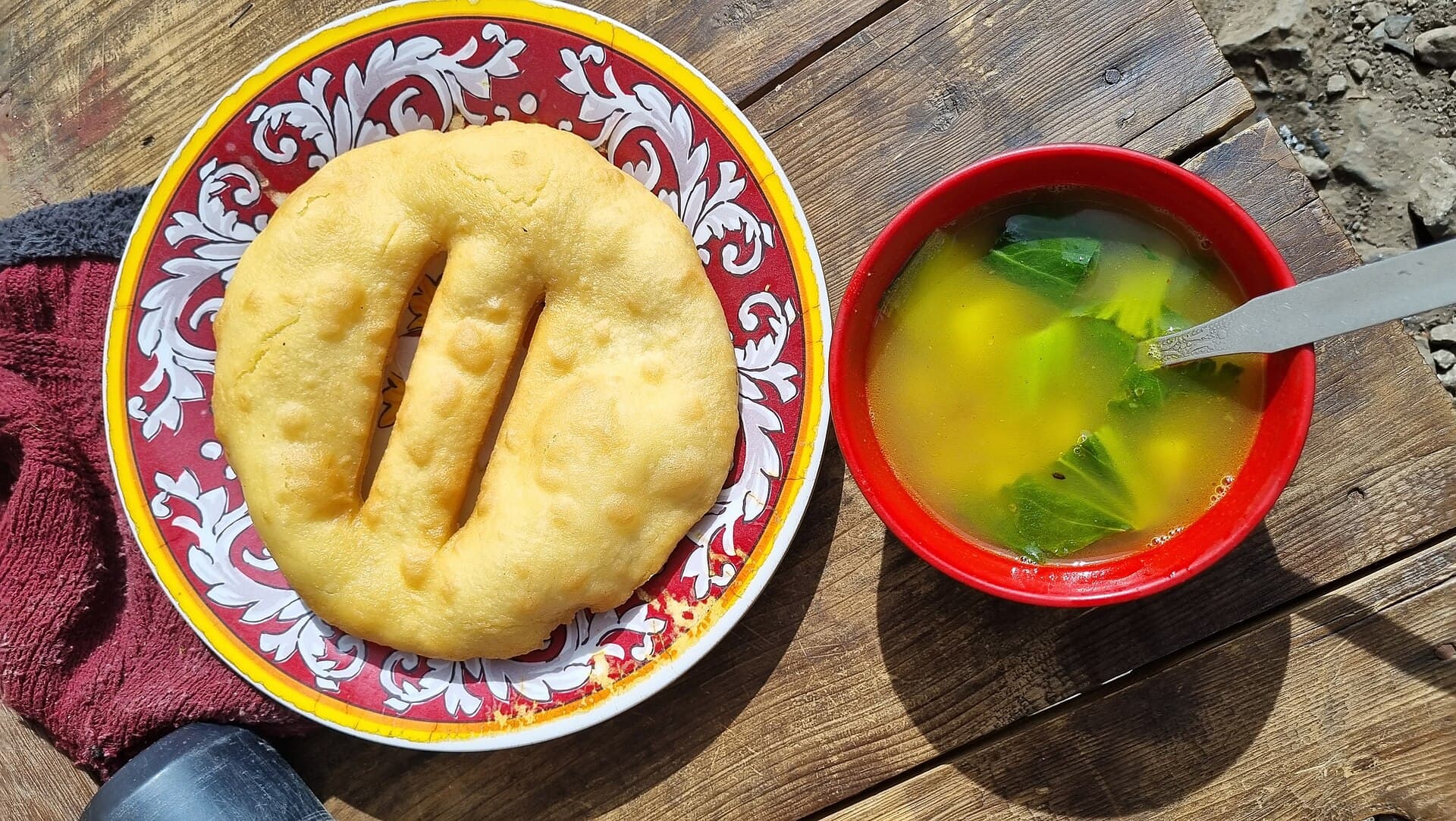
Breakfast
Porridge, Tibetan bread, eggs, chapati, pancakes, tea or coffee
All destinations
All destinationsAn introduction to Himalayan mountaineering, combining the Everest trail with a guided ascent of Imja Tse (Island Peak).
An introduction to Himalayan mountaineering, combining the Everest trail with a guided ascent of Imja Tse (Island Peak).
Island Peak, Imja Tse in Nepali, is a 6,189 m trekking peak at the head of the Imja valley, and it is the usual first Himalayan summit. It is a real climb, not a walk: the summit day involves fixed ropes, a jumar, crampons, an ice axe and a headwall of about 100 m at over 6,000 m, and it starts at around one in the morning. It is also achievable for a fit person with no previous climbing experience, which is why it is the most common first Himalayan peak.
No climbing skills are needed in advance. The itinerary includes a full training day at base camp with your climbing Sherpa: rope work, ascending with a jumar, abseiling, walking in crampons and self-arrest with an ice axe. If you have done a Scottish winter route or an alpine course, you will already know much of this; if you have not, it is the most useful day of the trip. Fitness and altitude tolerance cannot be taught in a day, and the two weeks of trekking beforehand are for building these.
You acclimatise to 6,189 m by first walking the Everest Base Camp route. The itinerary follows the standard route up the Khumbu, with rest days at Namche and Dingboche, before turning east into the Imja valley to Chhukung and base camp. Shorter Island Peak itineraries leave out this approach and have lower summit success rates as a result.
Fit, well-acclimatised groups on a twenty-day itinerary reach the summit in most cases, but not all. Climbers are turned back by weather at the headwall, crowding on the fixed rope in peak season, or exhaustion on reaching the crampon point after fourteen days of trekking. Turning back below the summit is a normal outcome, and your Sherpa's decision is final.
Arrive in Kathmandu, where an Earthbound Expeditions representative meets you and transfers you to a 3-star hotel.
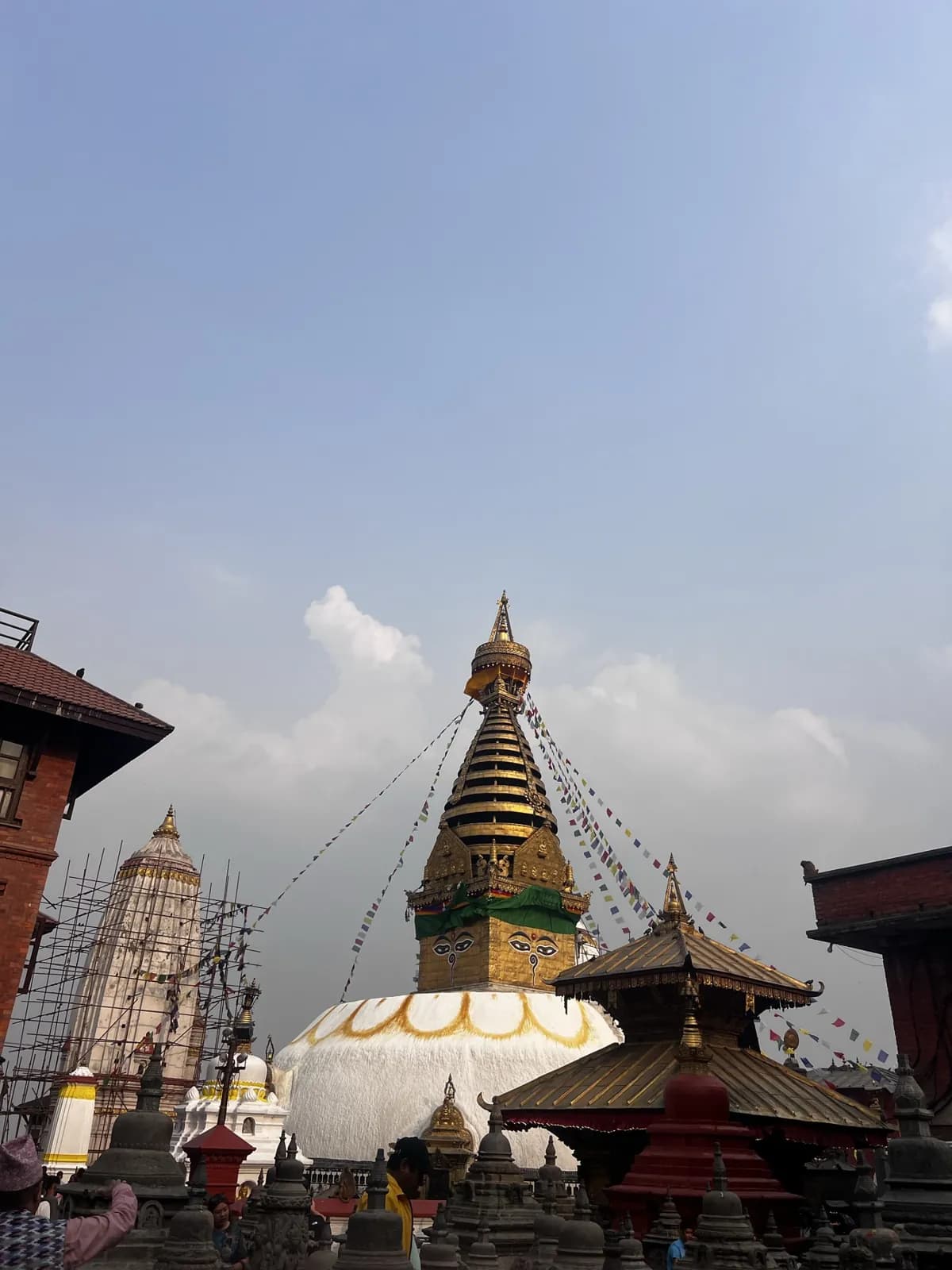
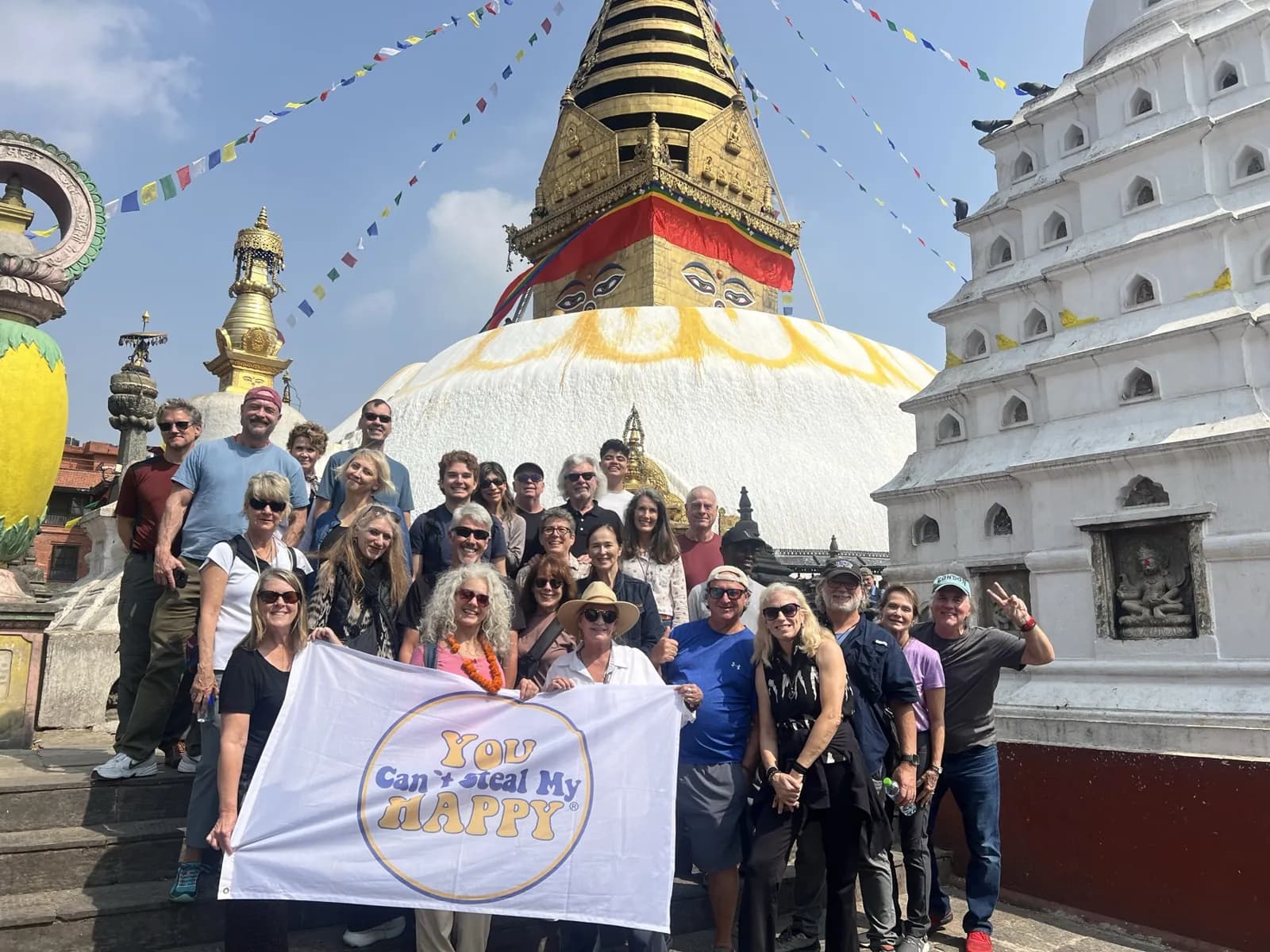
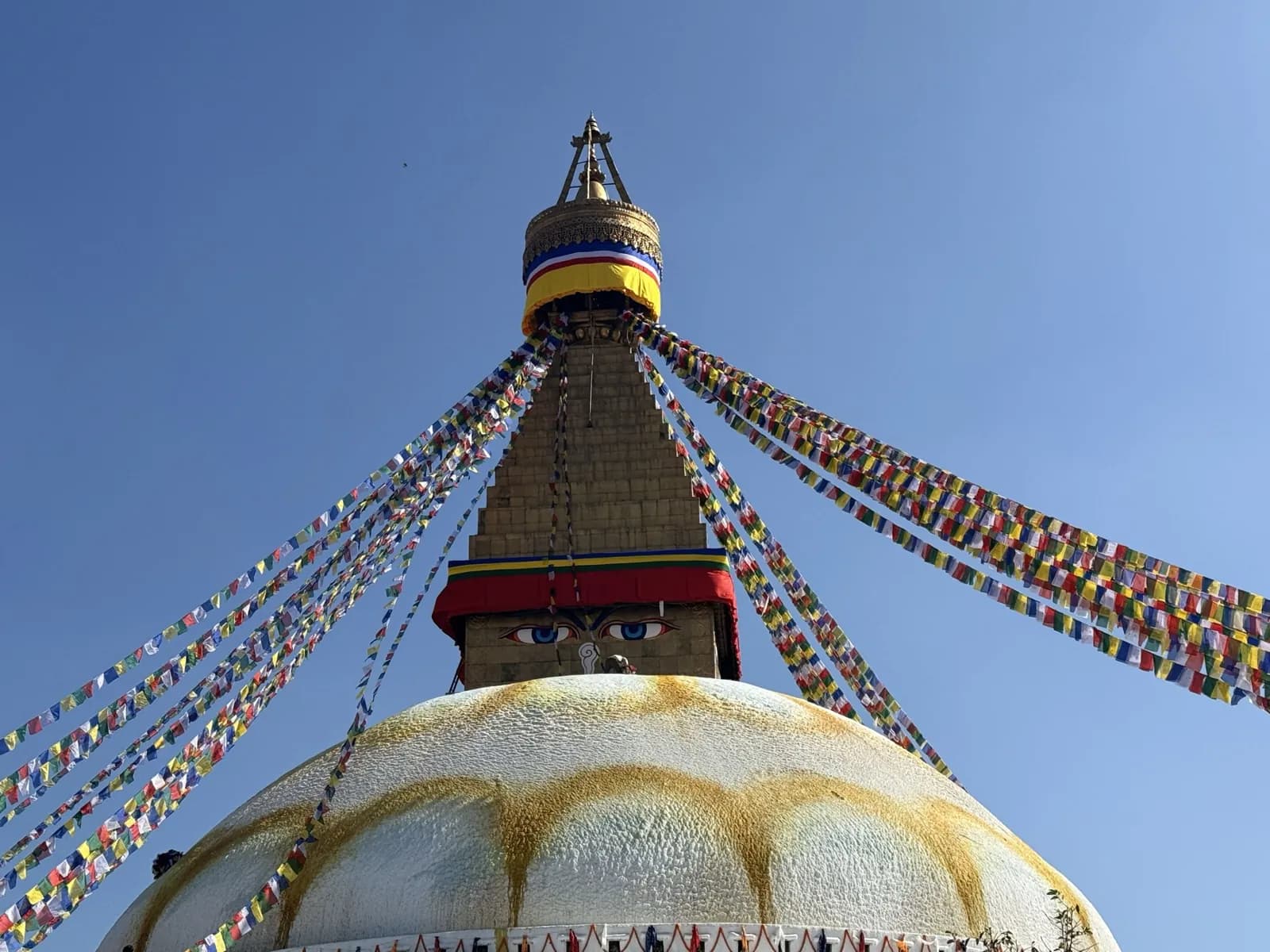
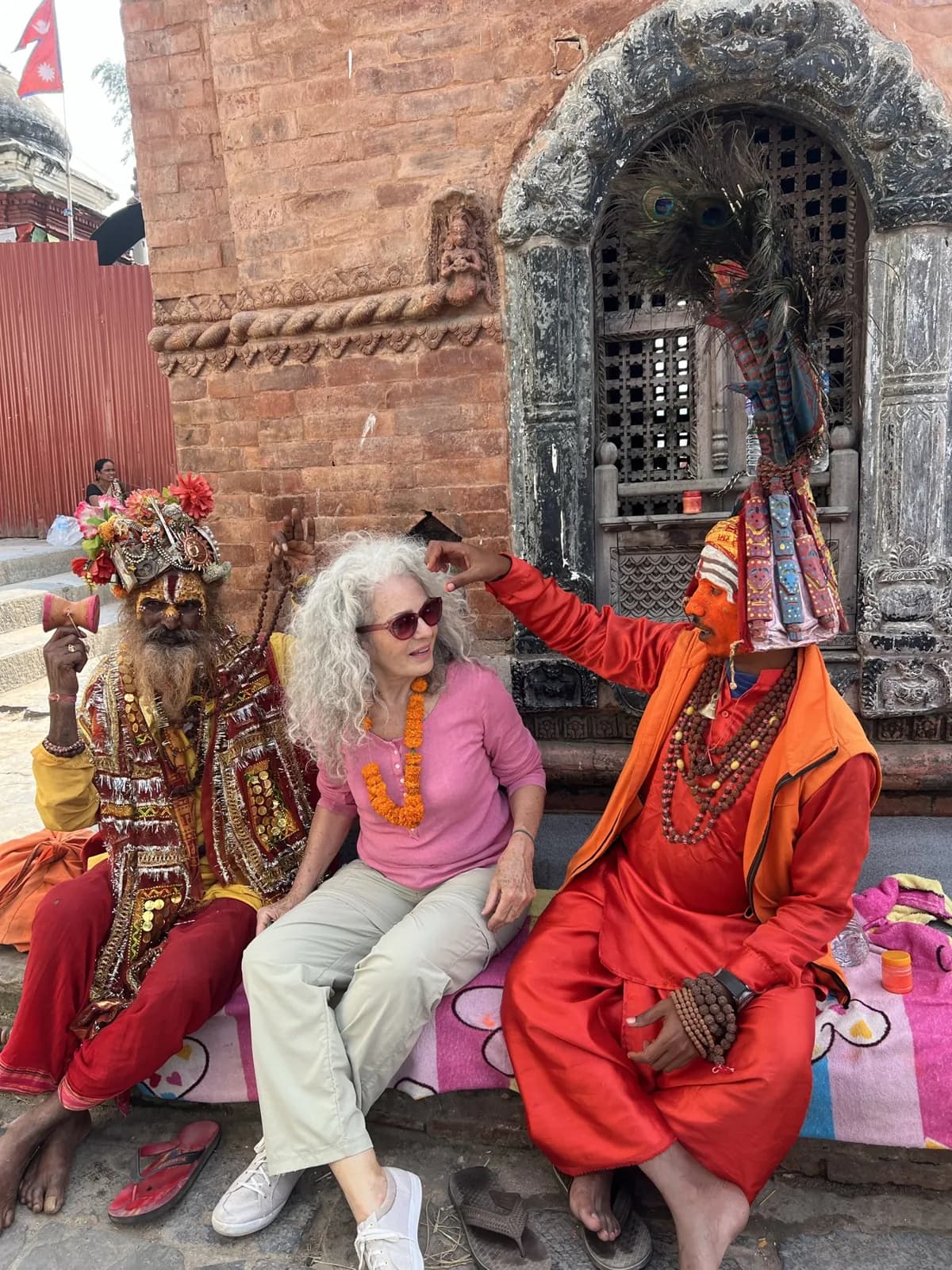
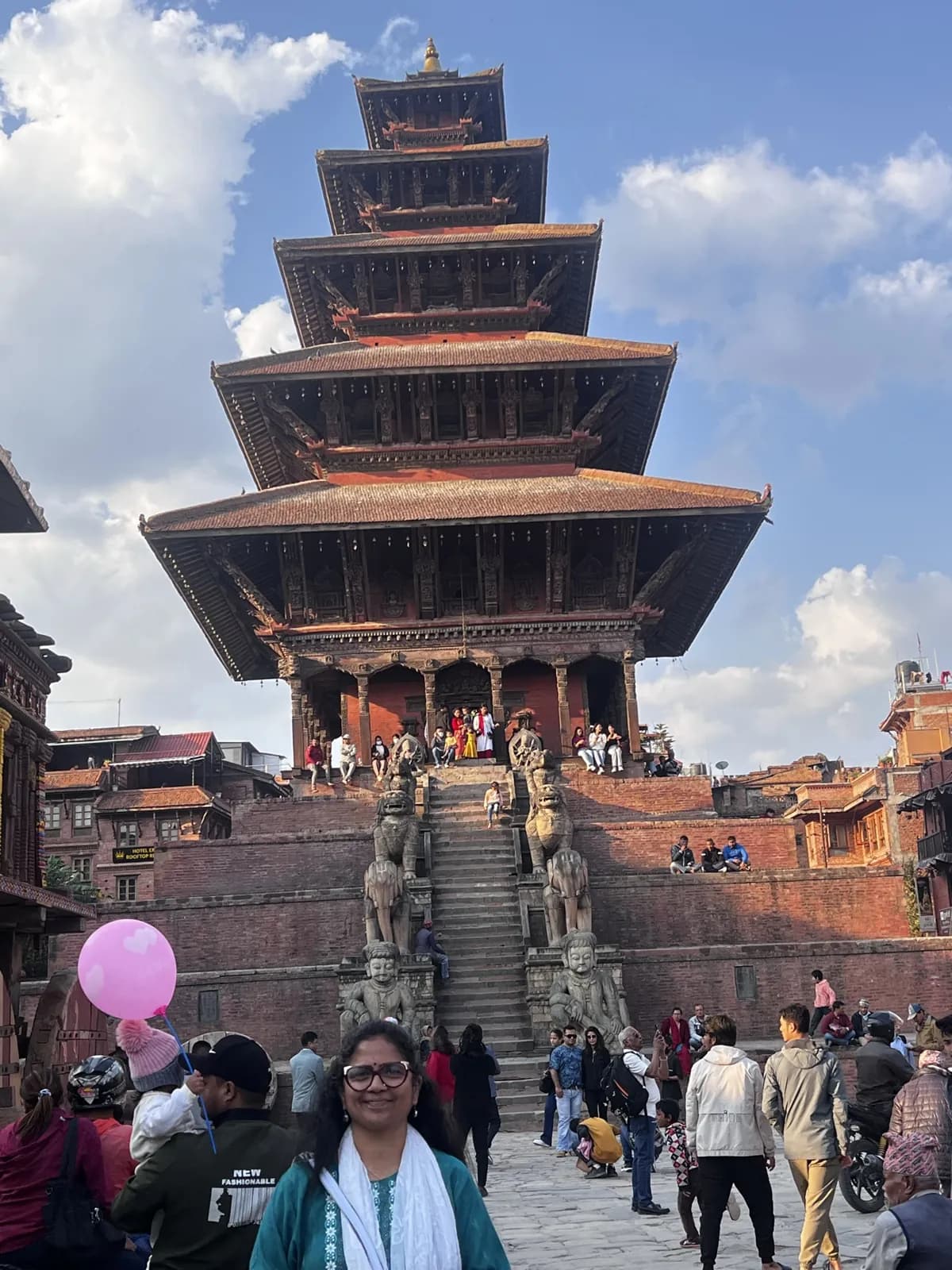
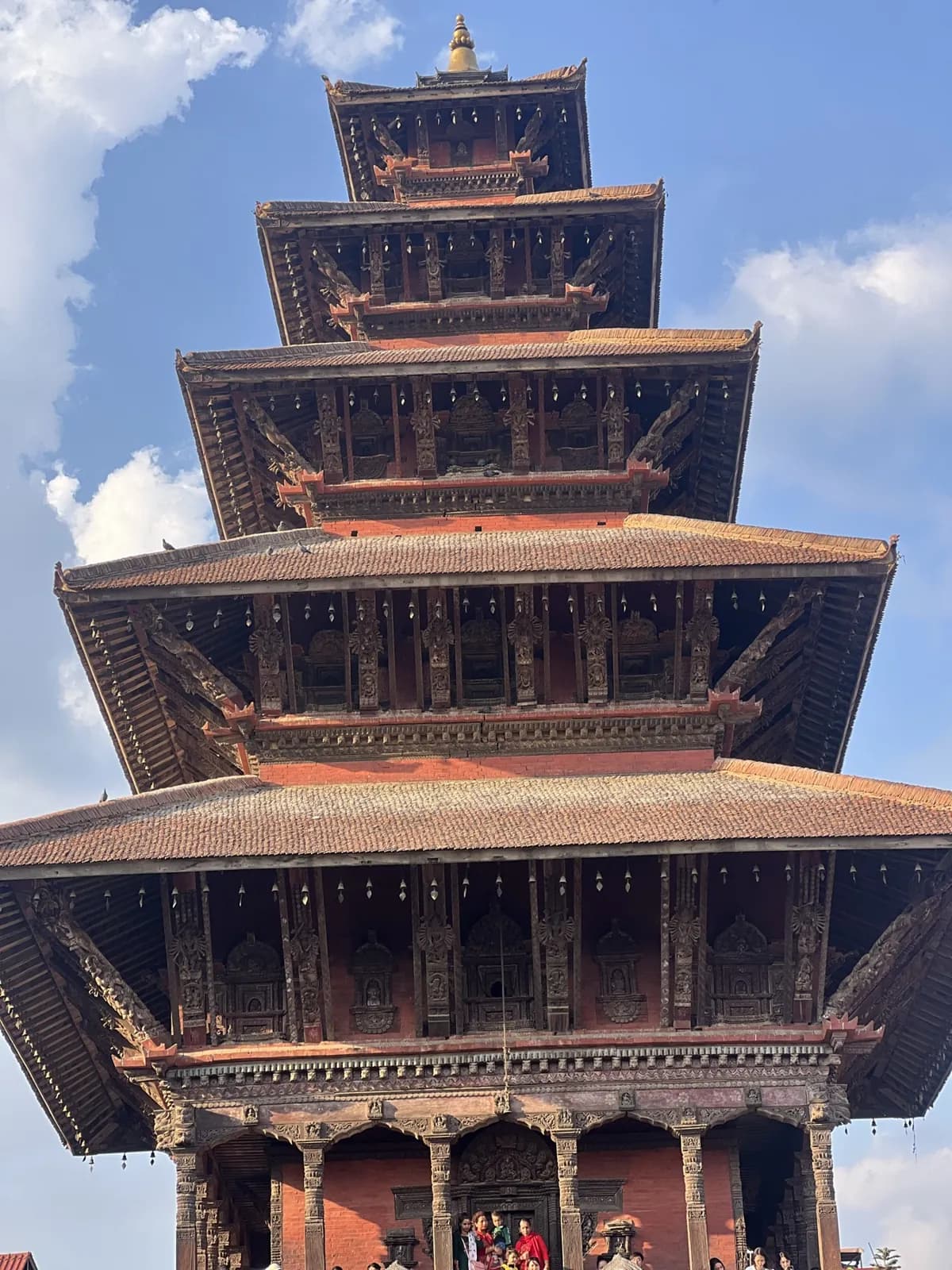
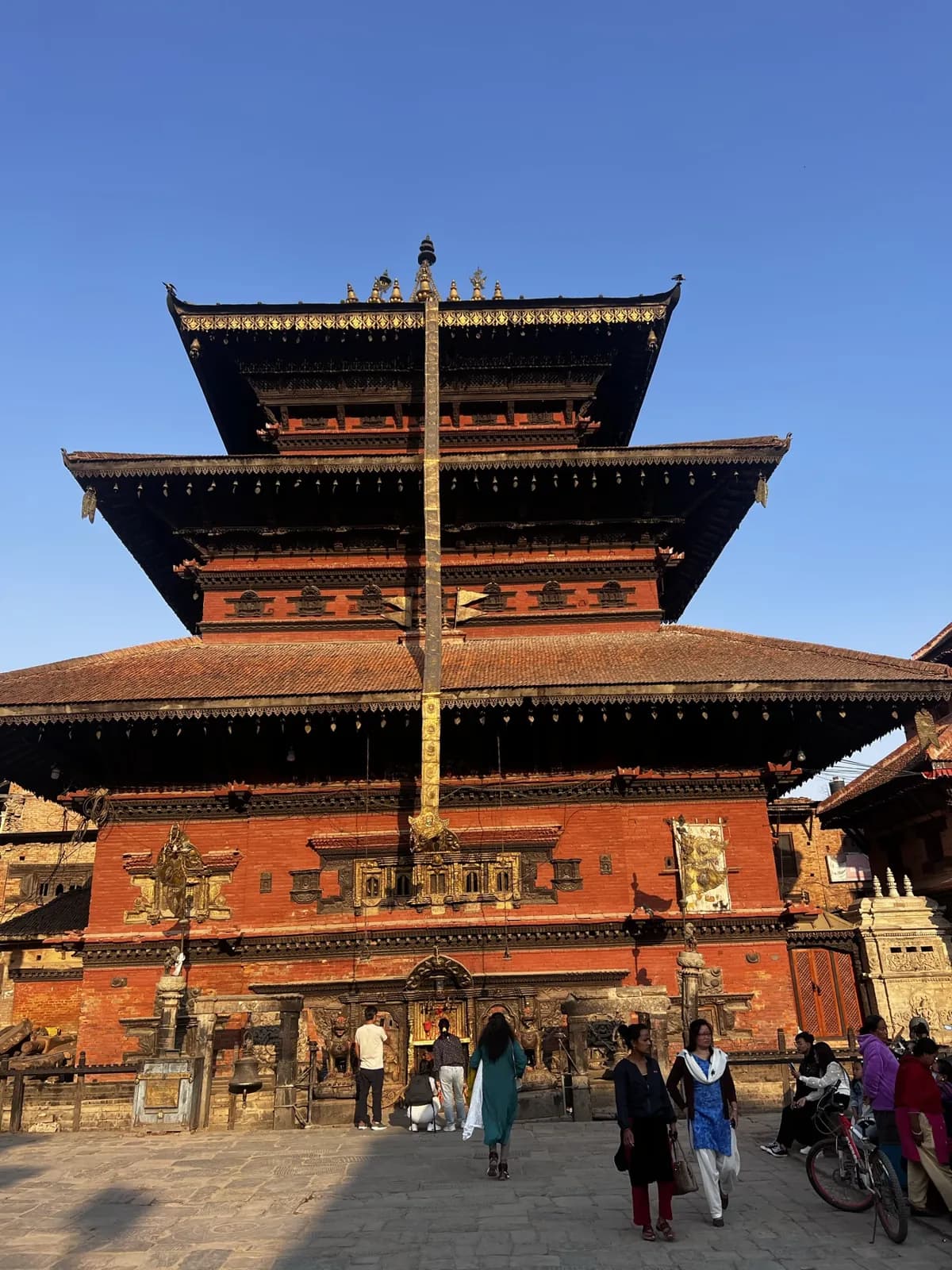
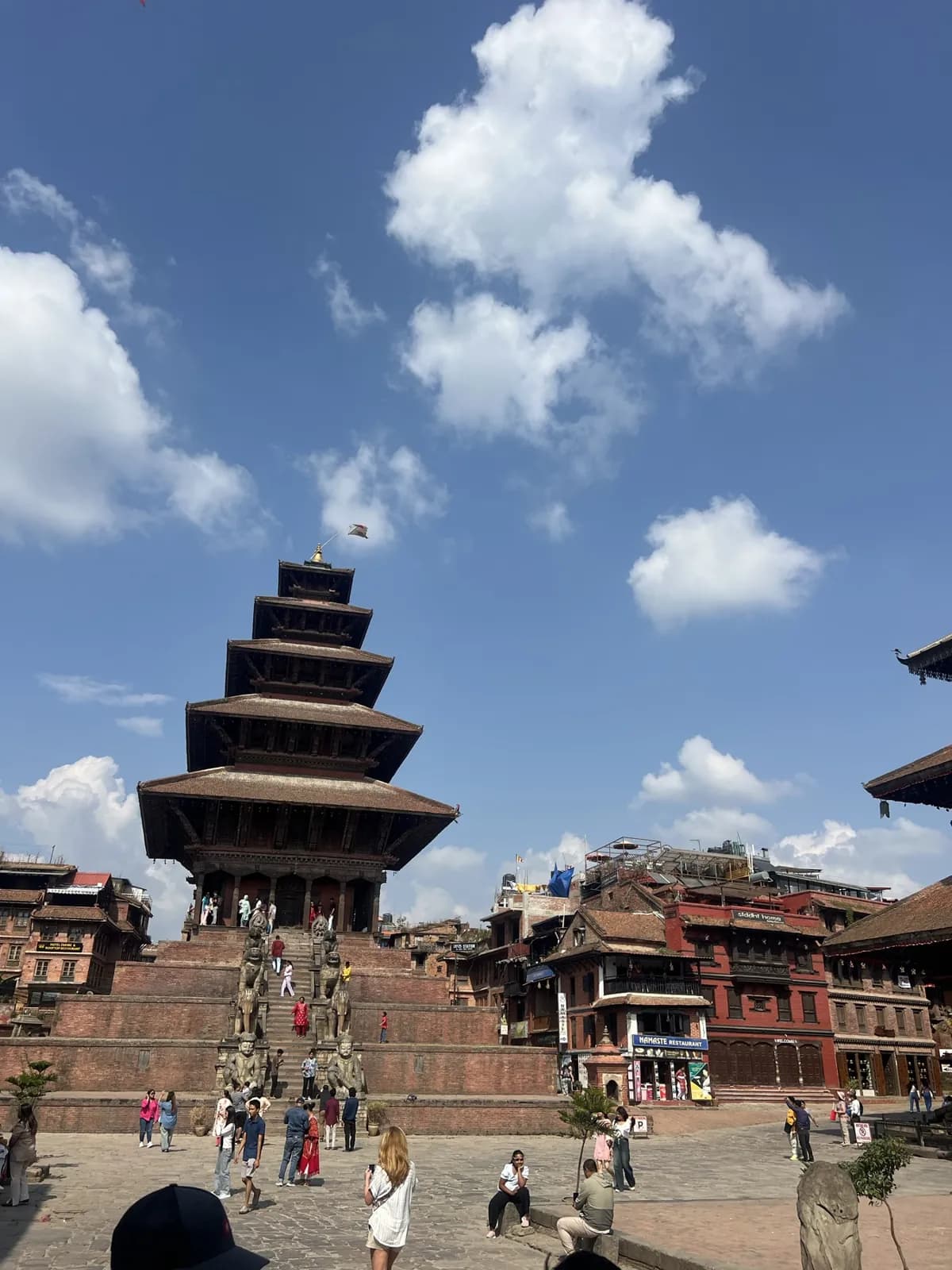
A pre-trek briefing and introduction to your guide, followed by a half-day sightseeing tour of the World Heritage Sites.
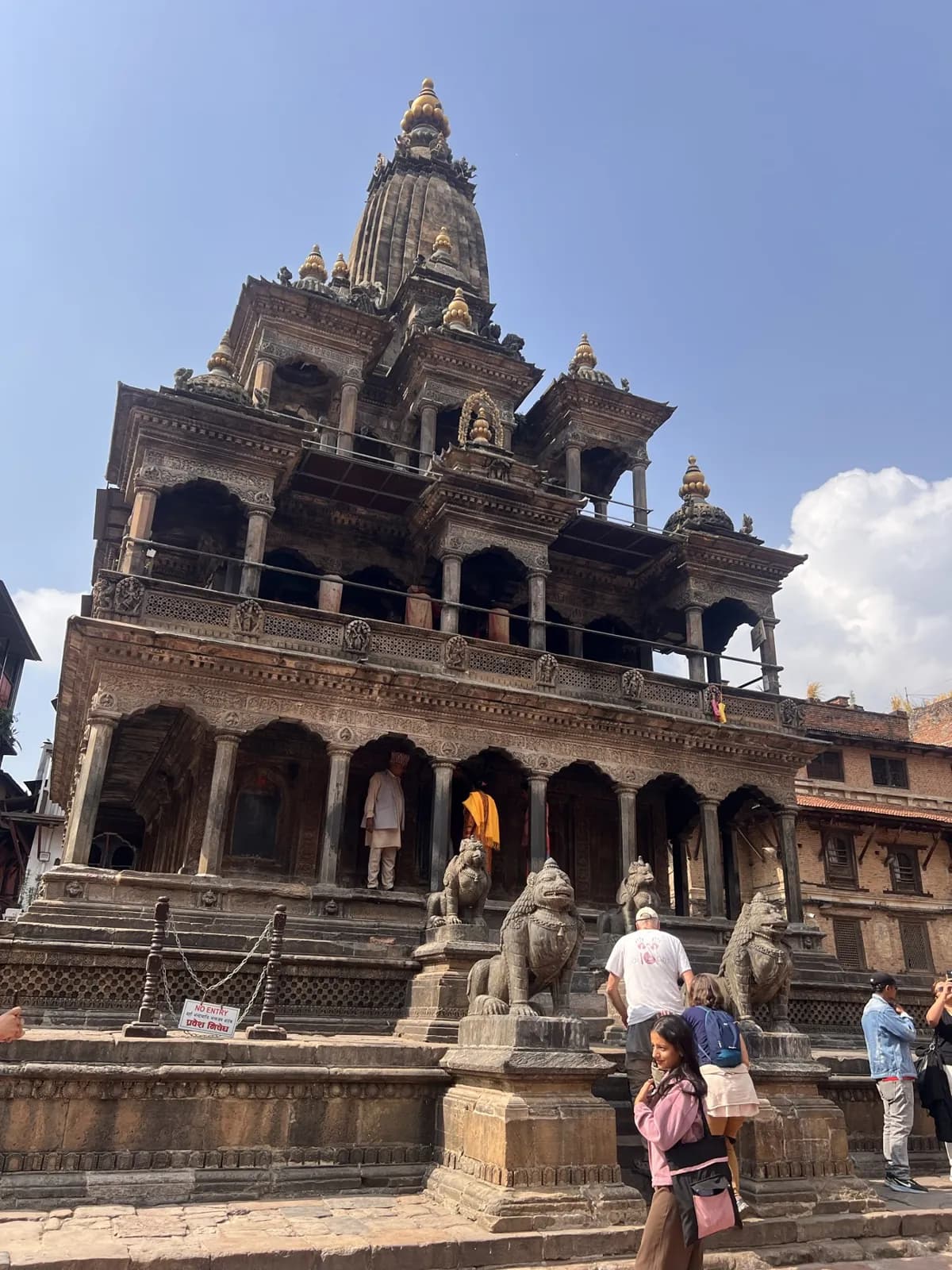
Take an early morning flight to Lukla, with views of the Himalayan peaks. Descend and trek to Phakding for the night.
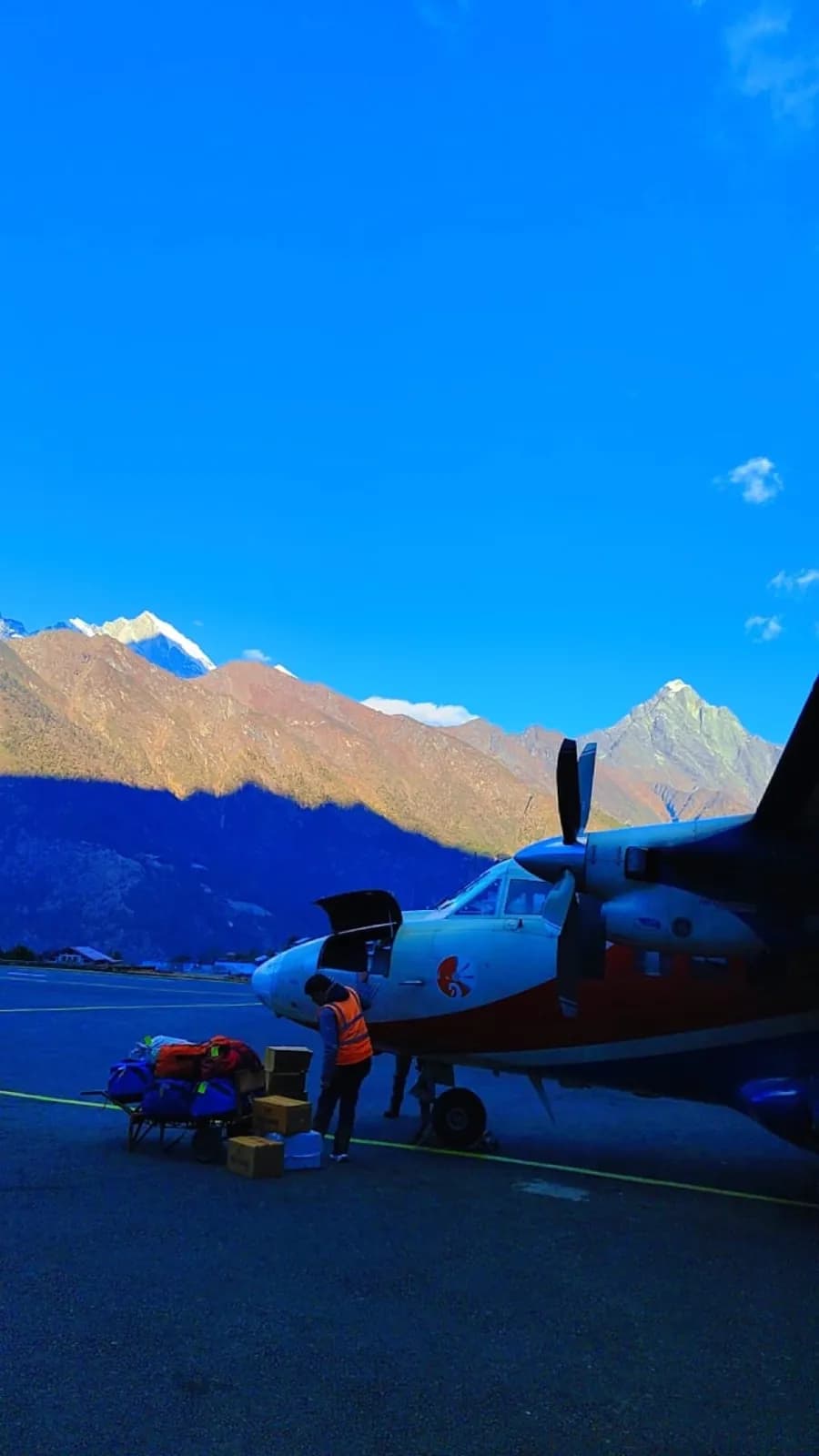
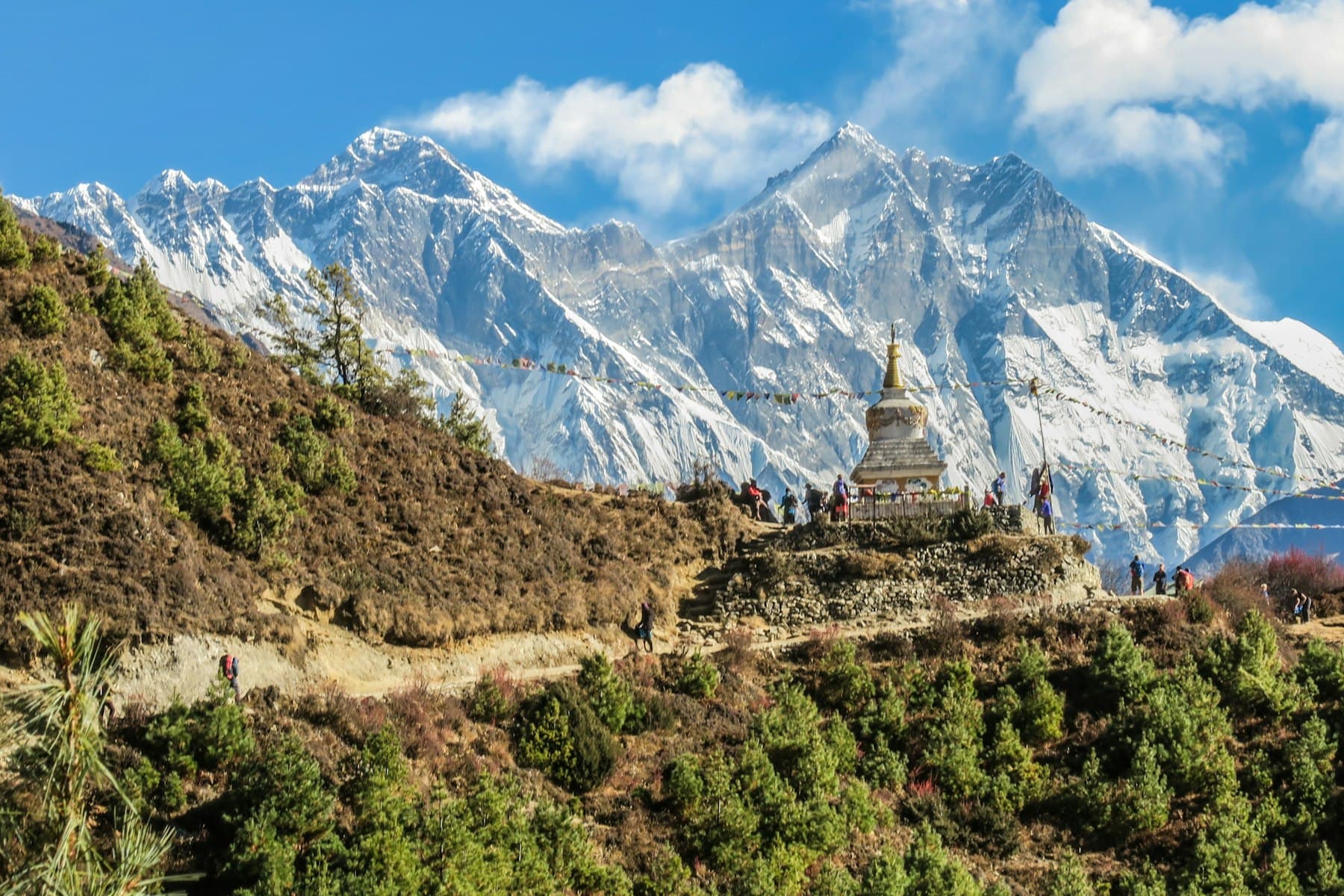
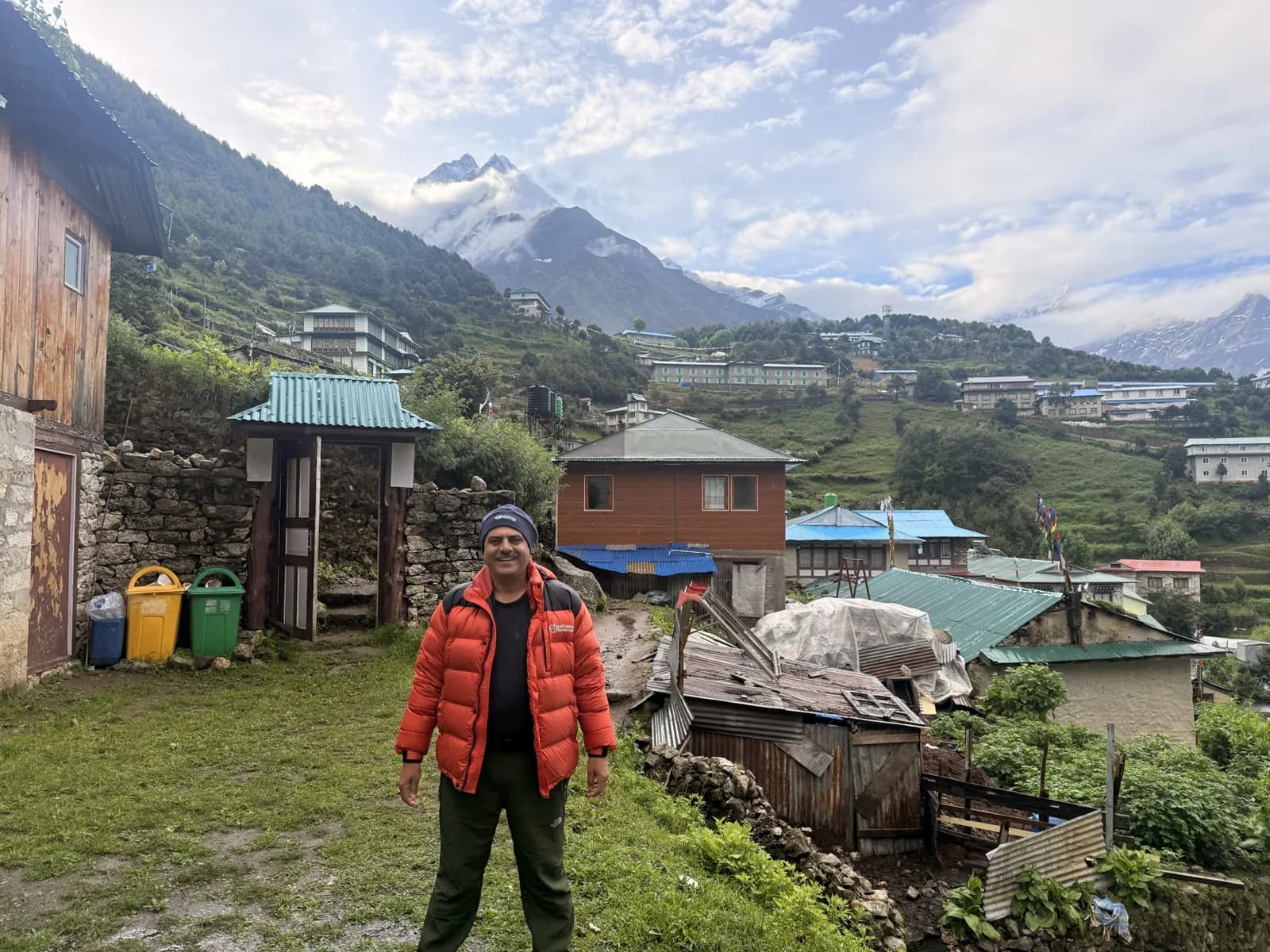
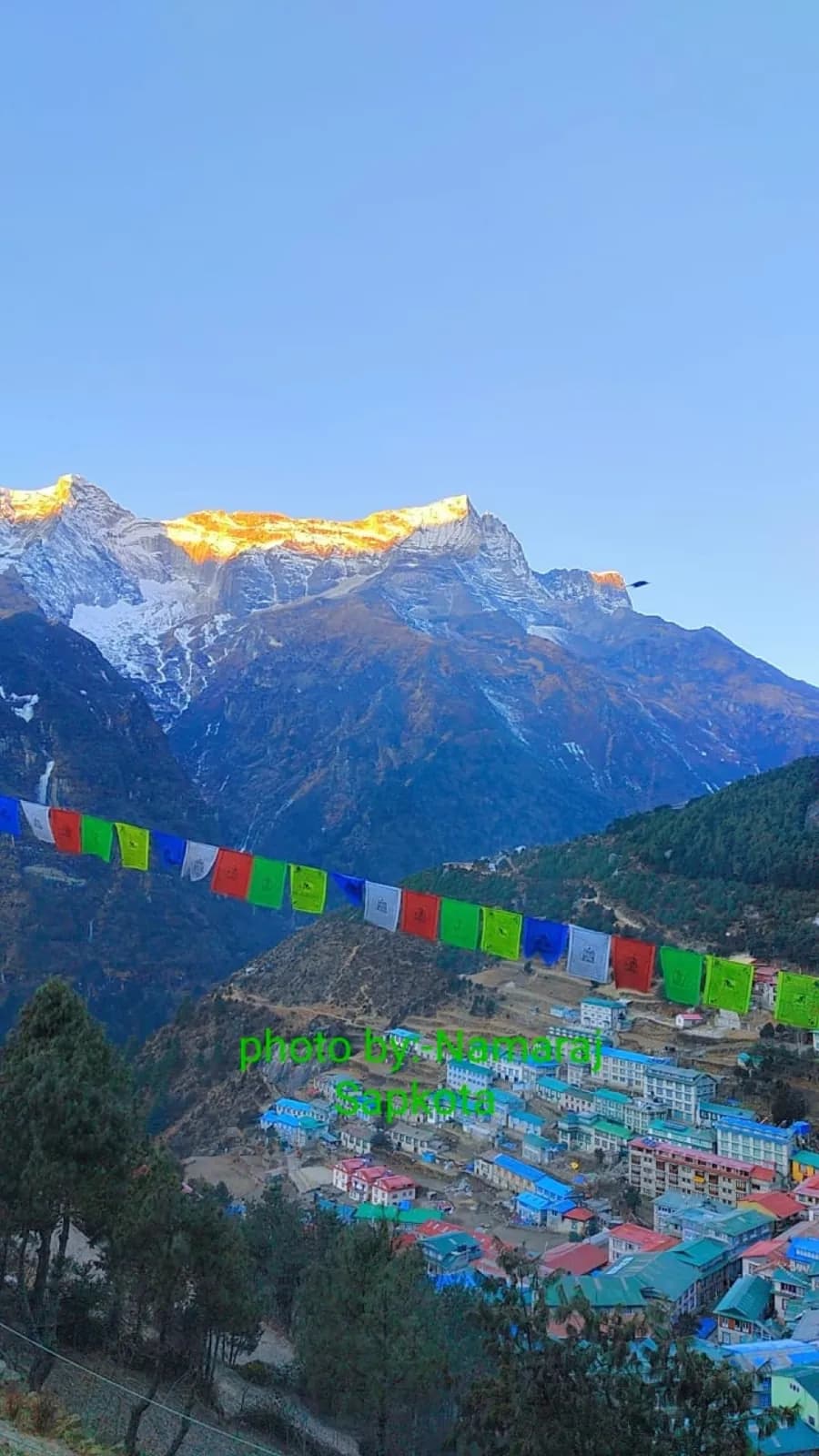
The trail climbs to Namche Bazaar, the gateway to the Everest region. You may see Everest for the first time about halfway up the climb.
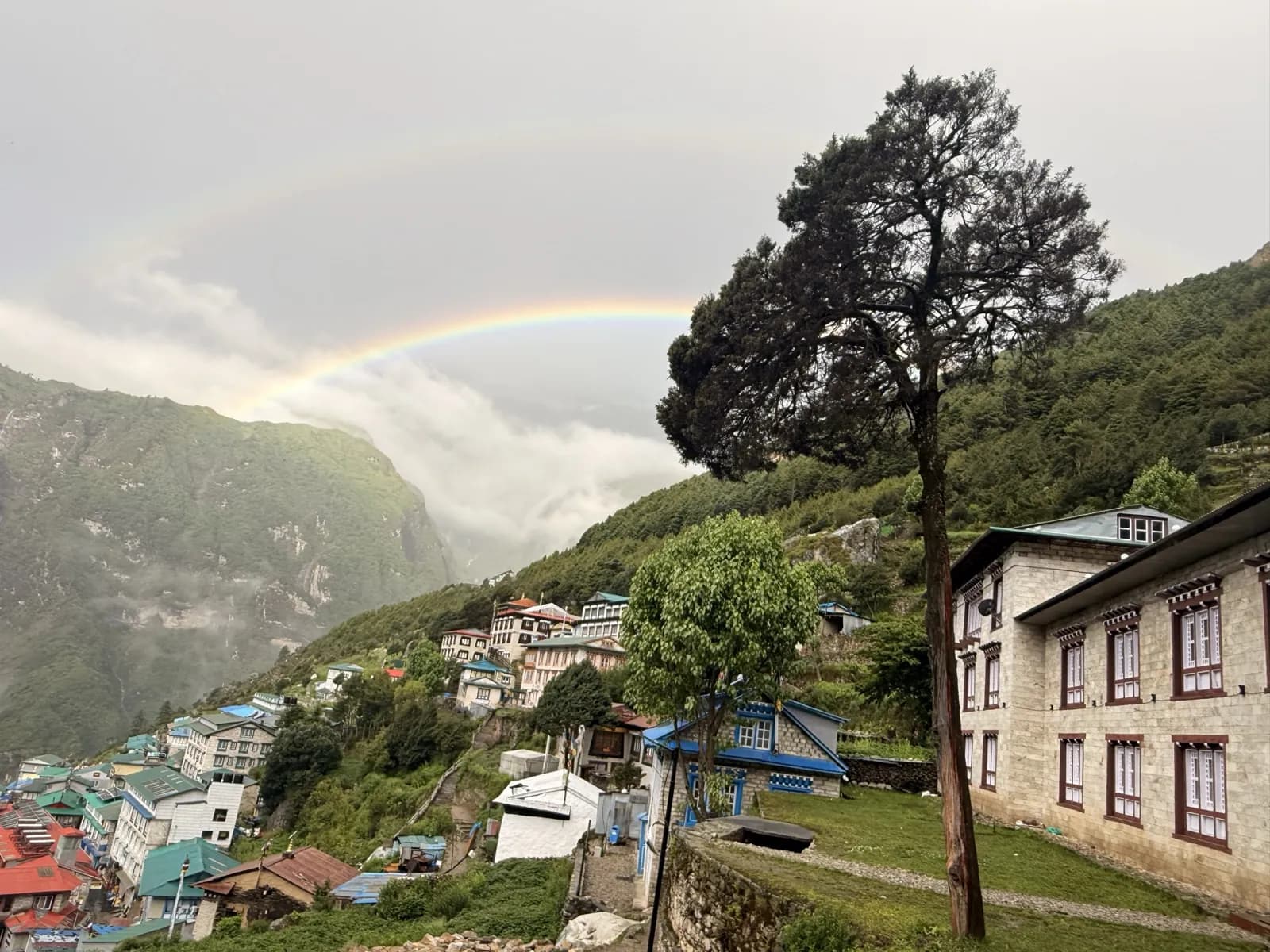
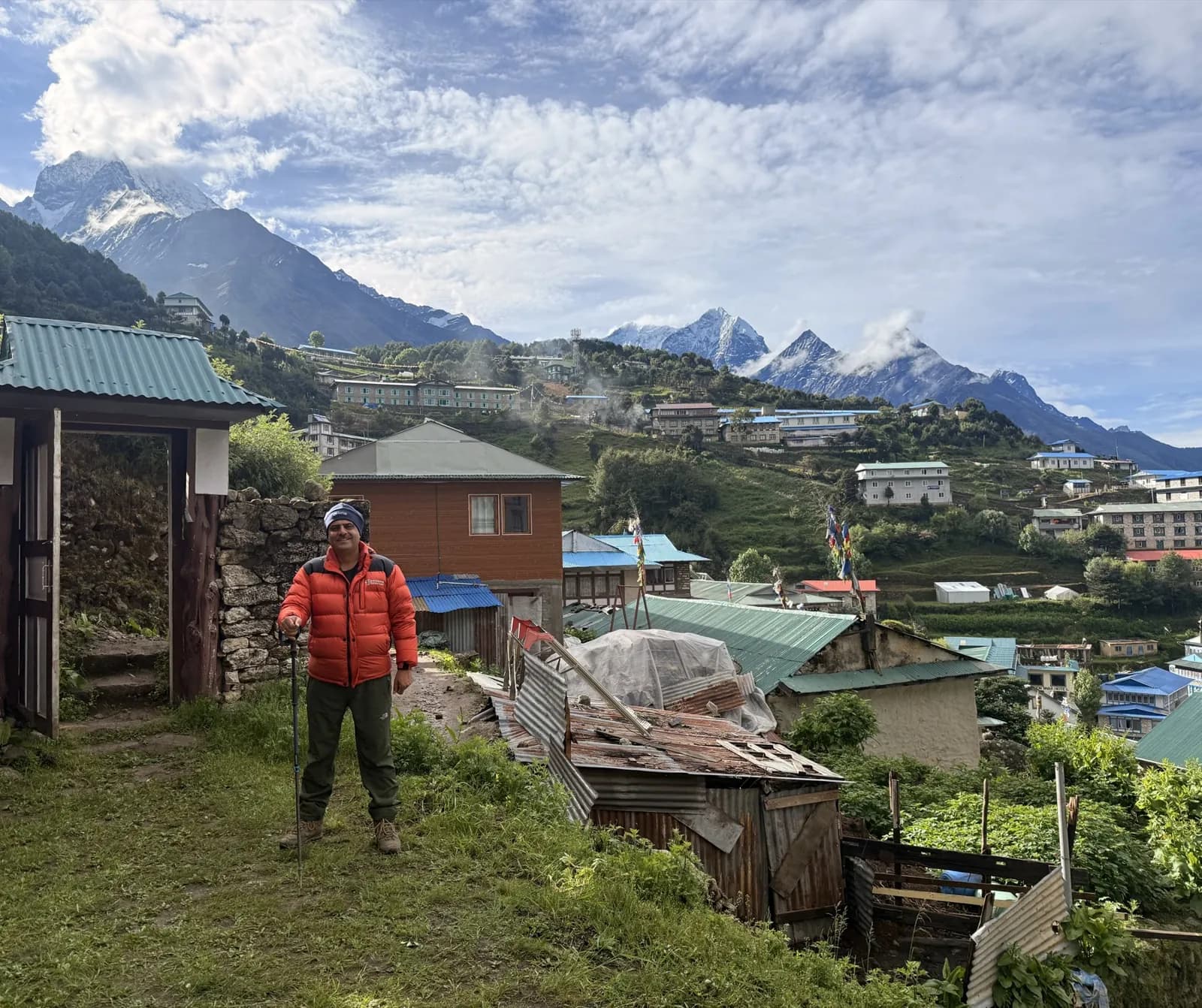
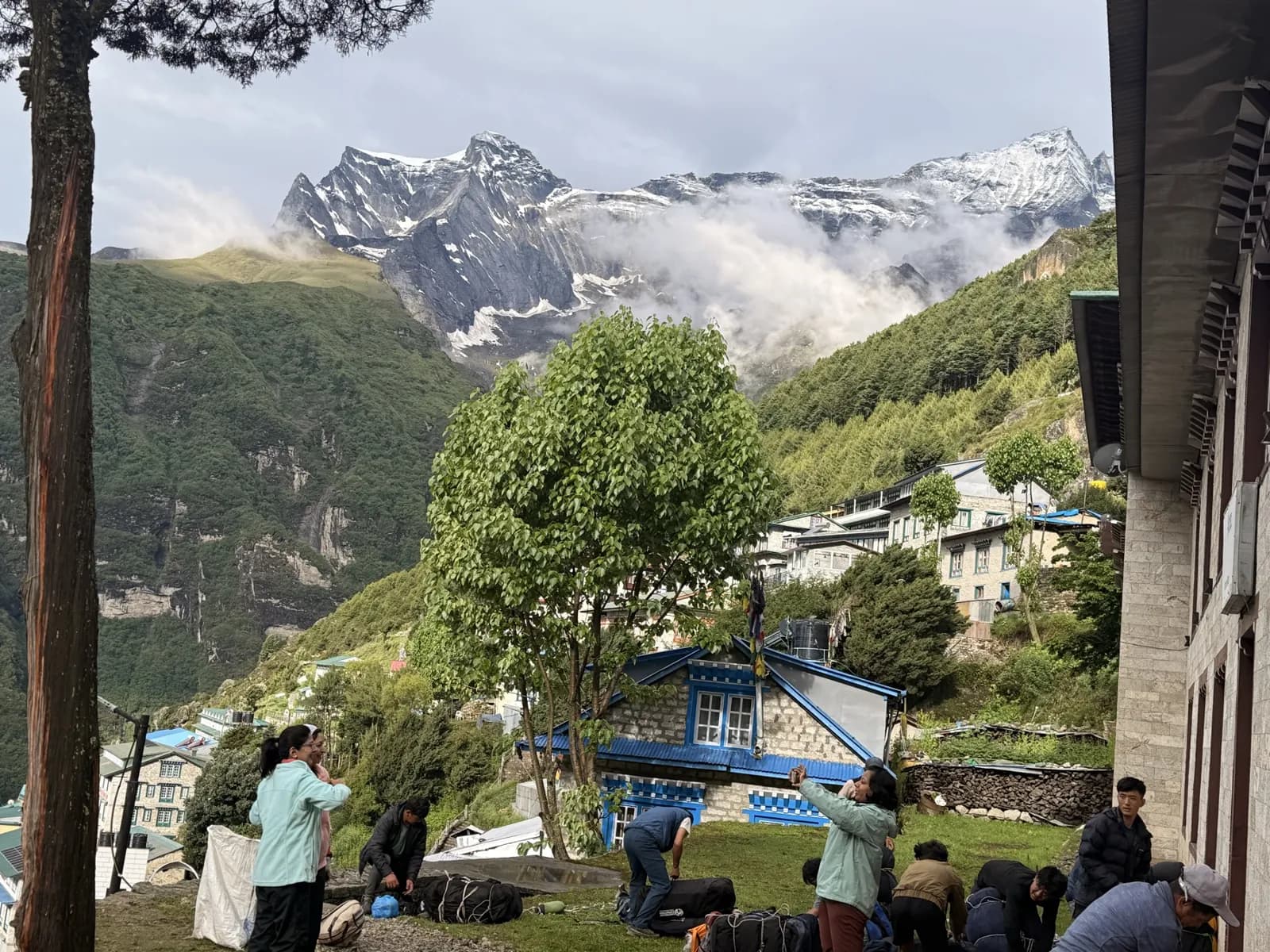
An acclimatisation day with a hike towards Thame and Sangbuche, with good views of the snow peaks, before returning to Namche.
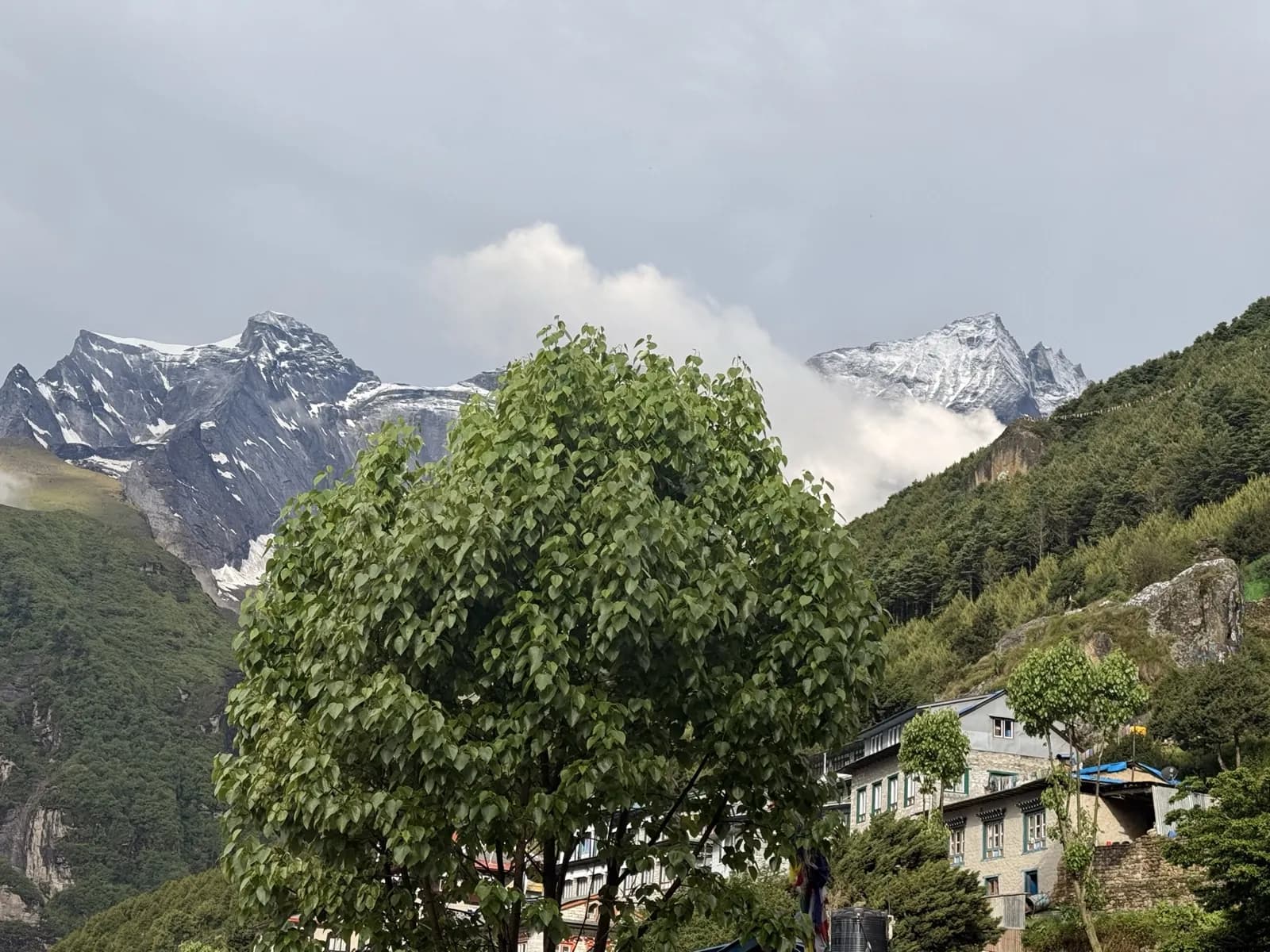
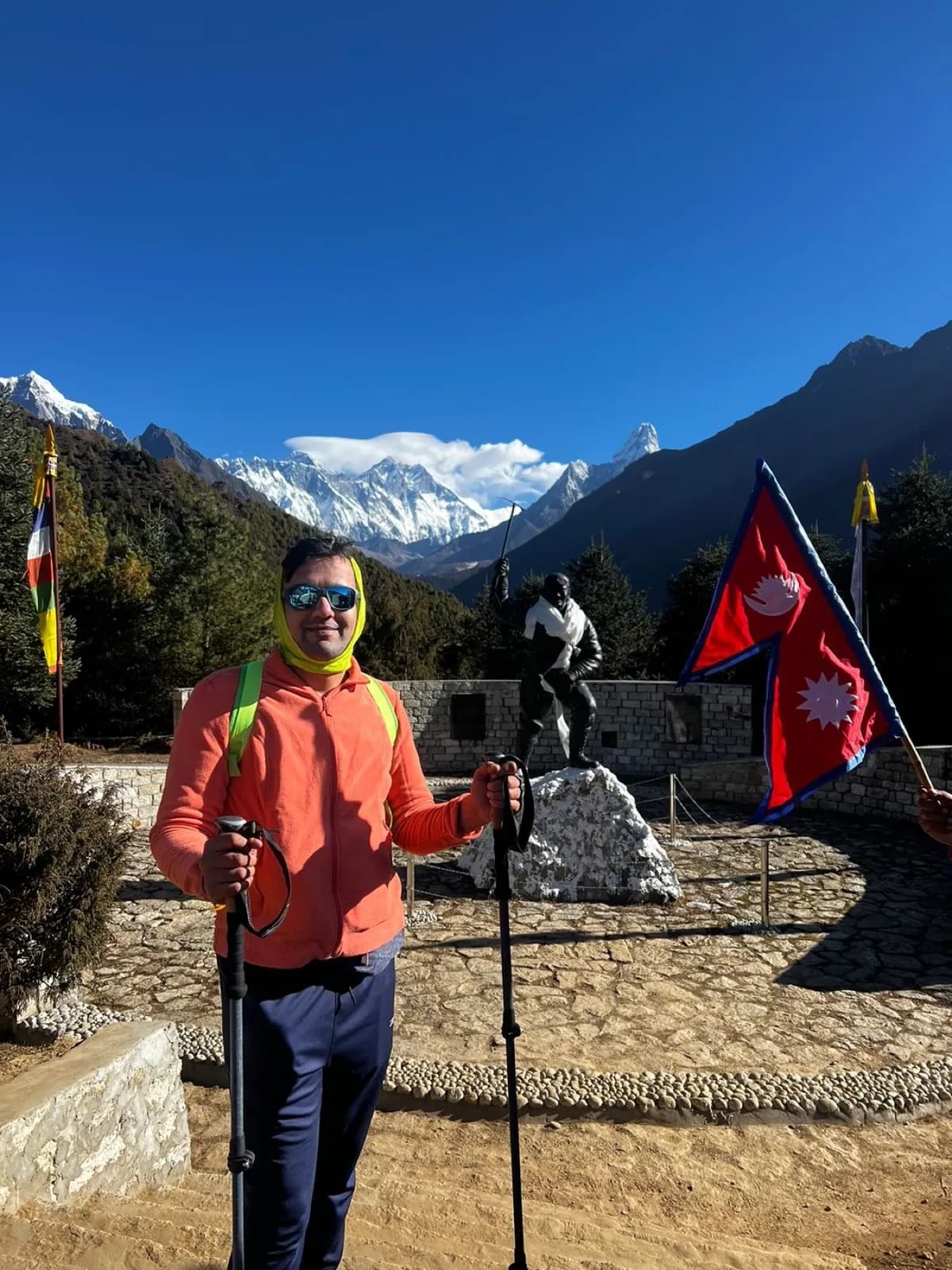
Trek through Khumjung to Tengboche monastery, which has panoramic views of the Himalaya.
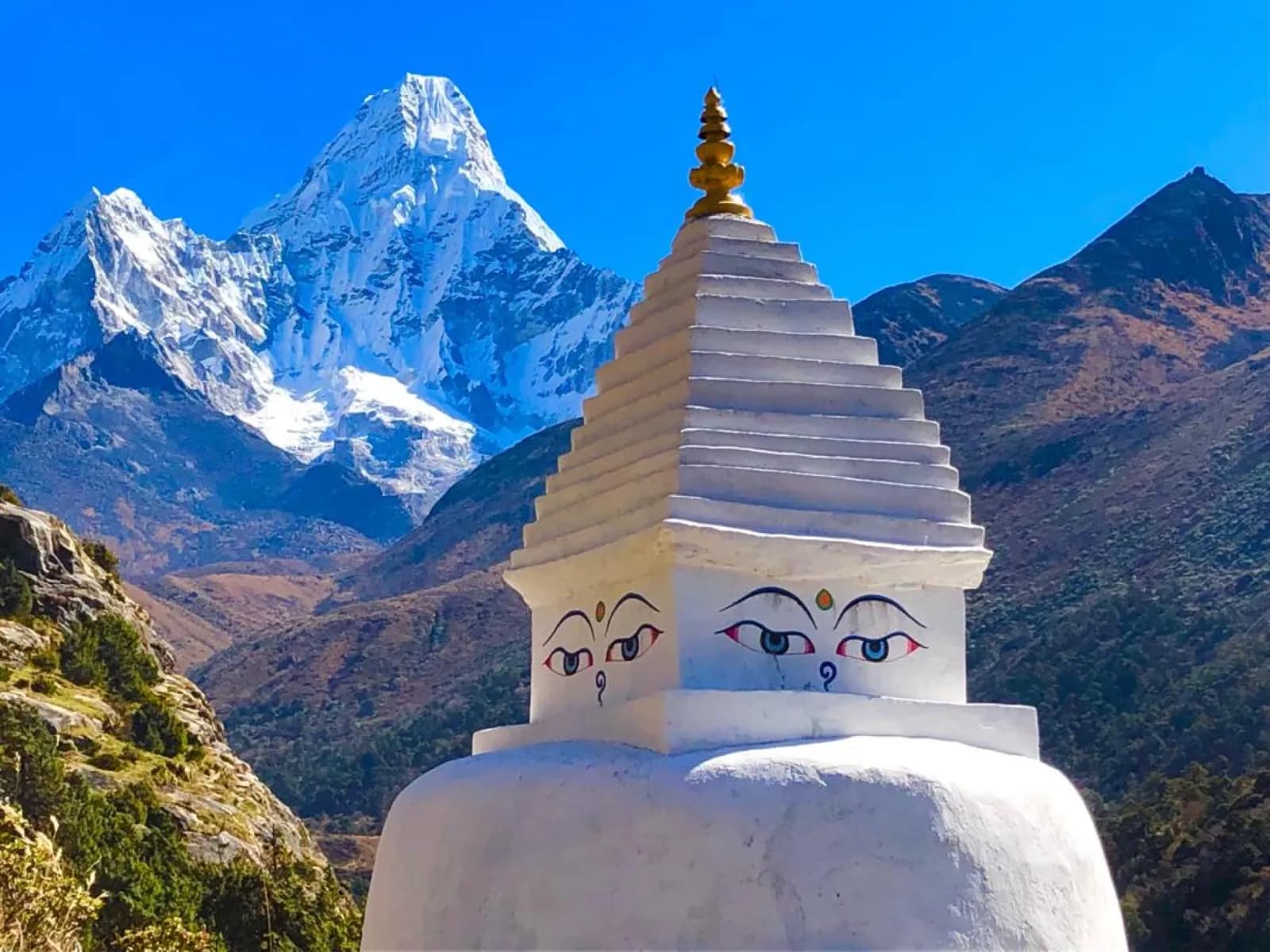
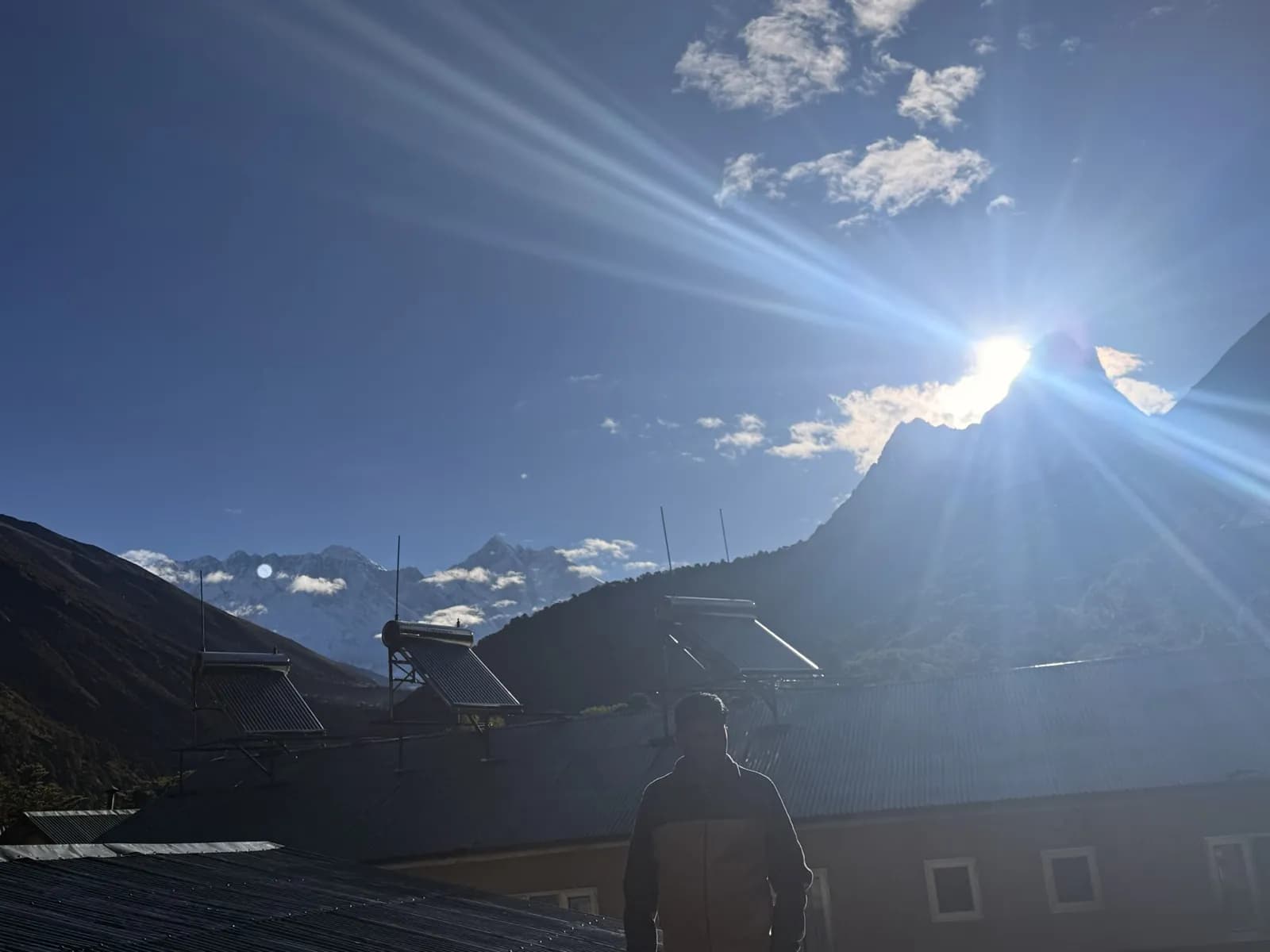
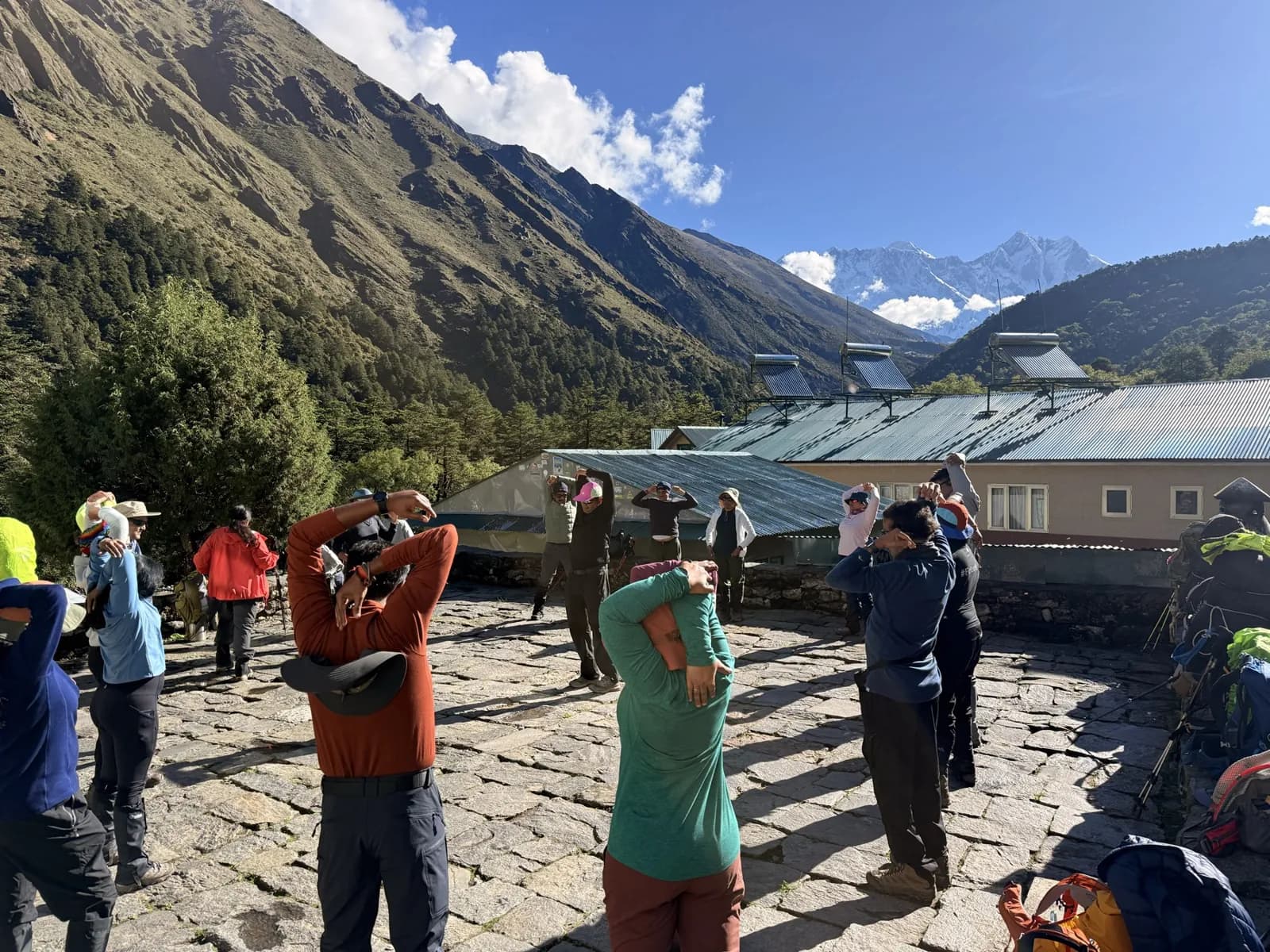
The trail crosses the Imja Khola on the way to Dingboche, passing terraced fields and pastures where yaks graze.
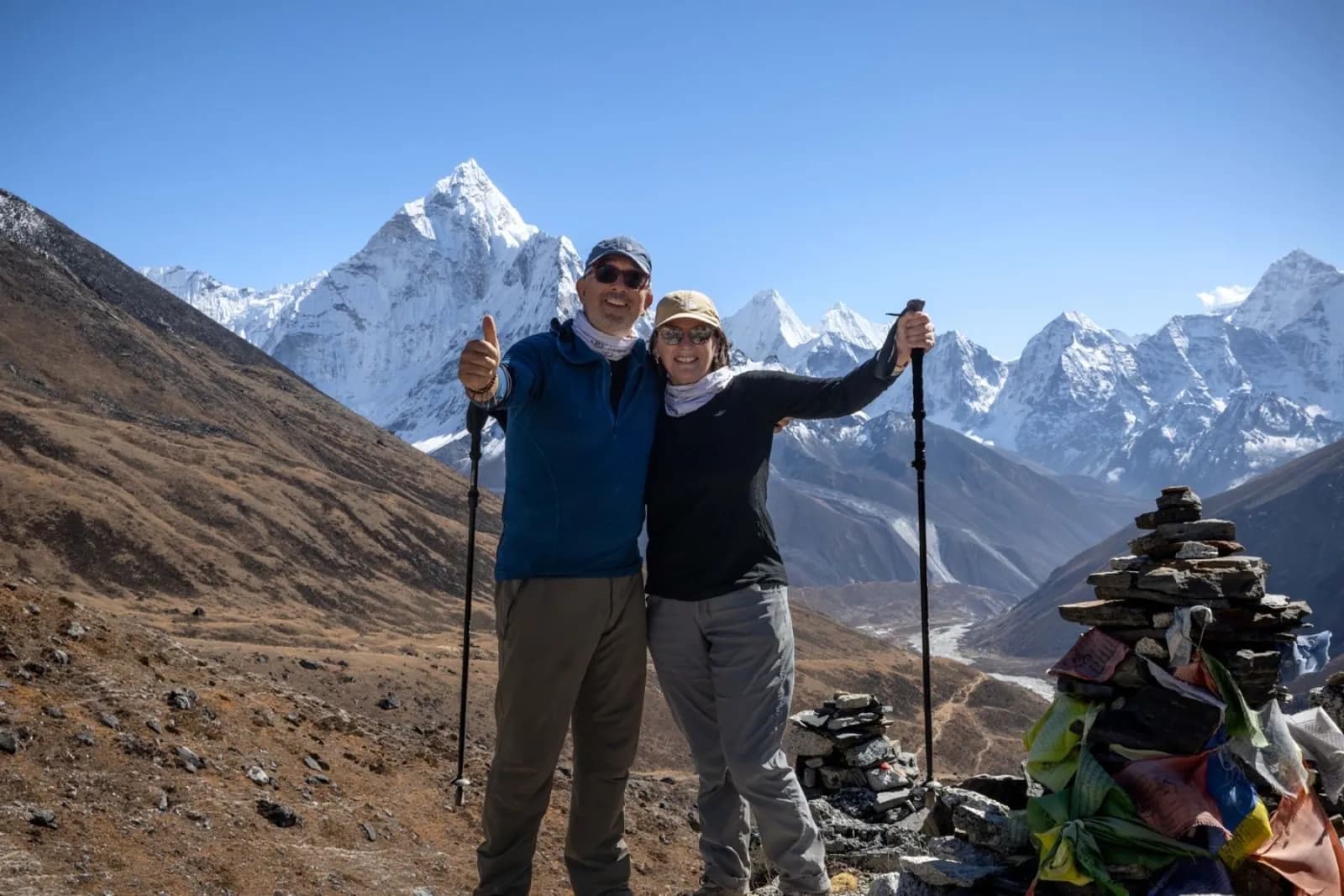
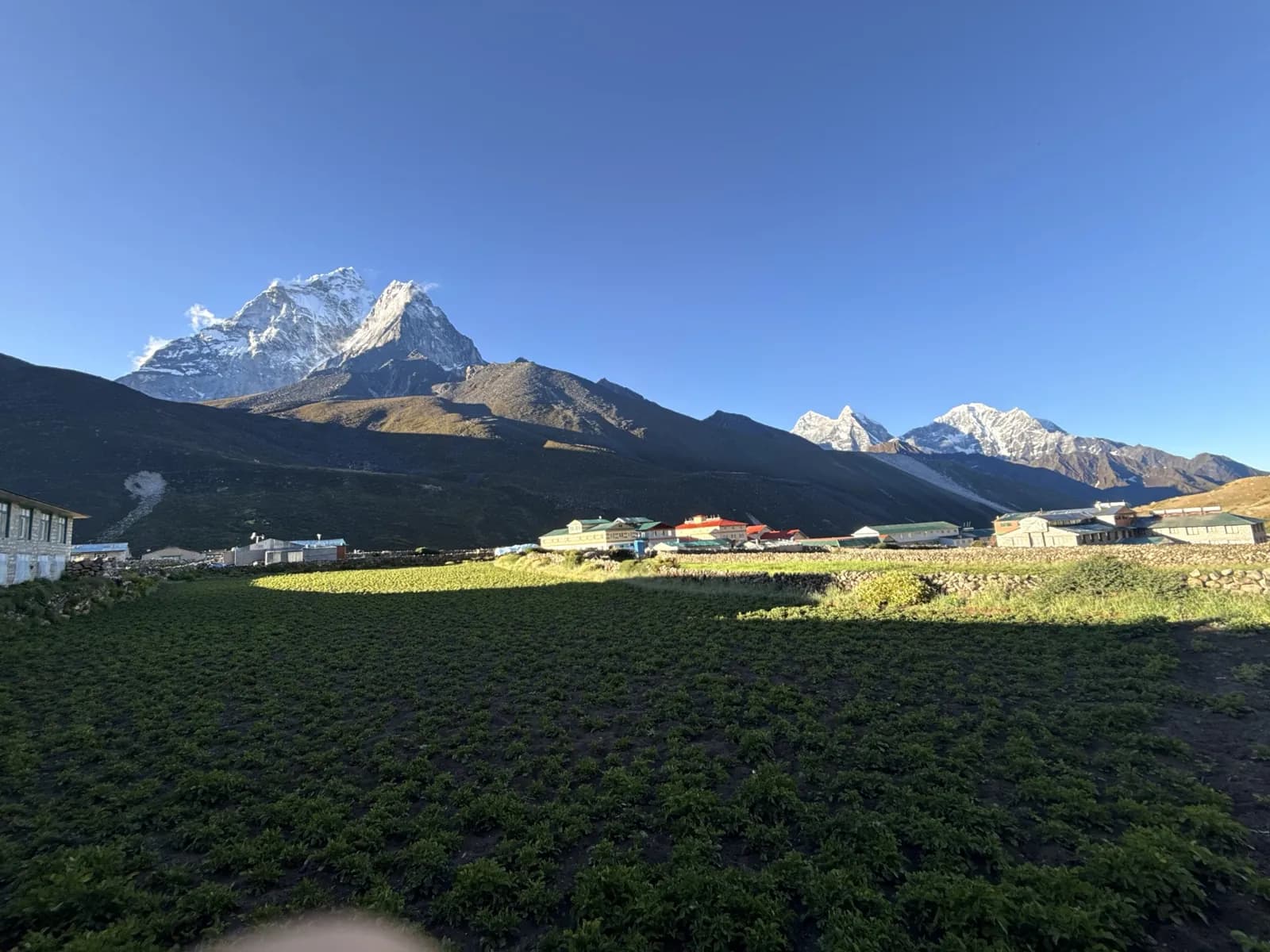
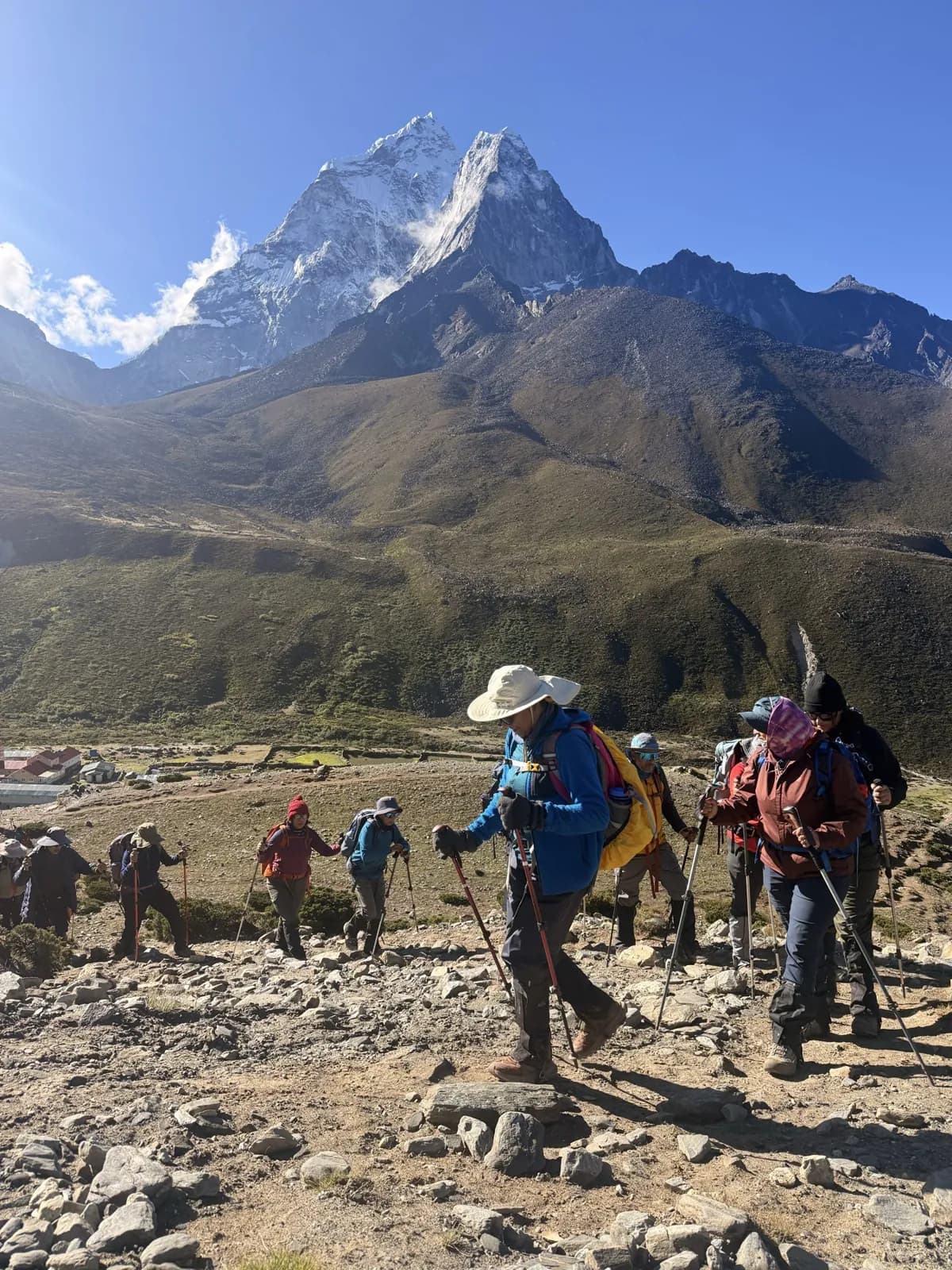
An acclimatisation day at Dingboche with optional hikes. The views include Lhotse and Ama Dablam.
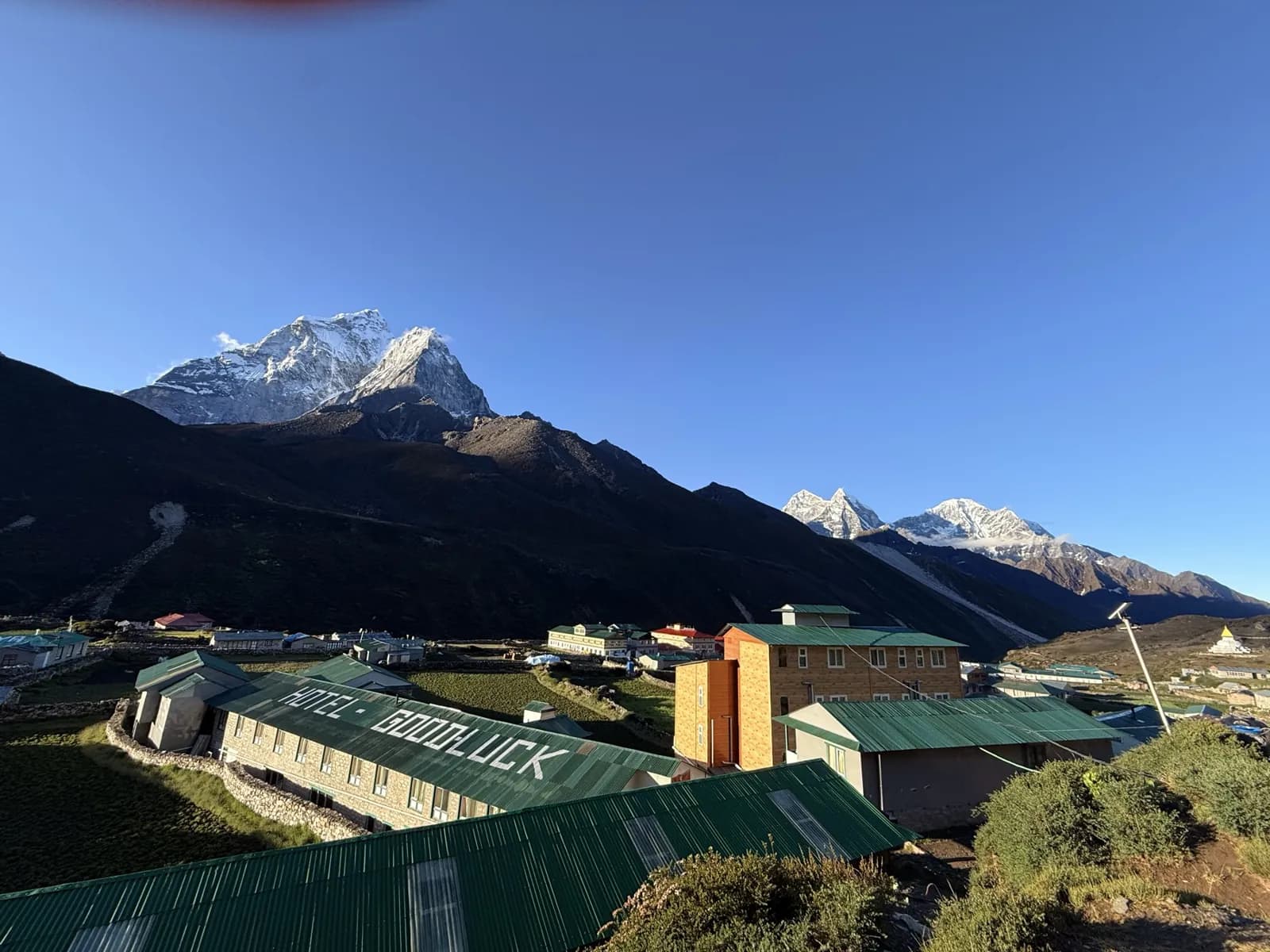
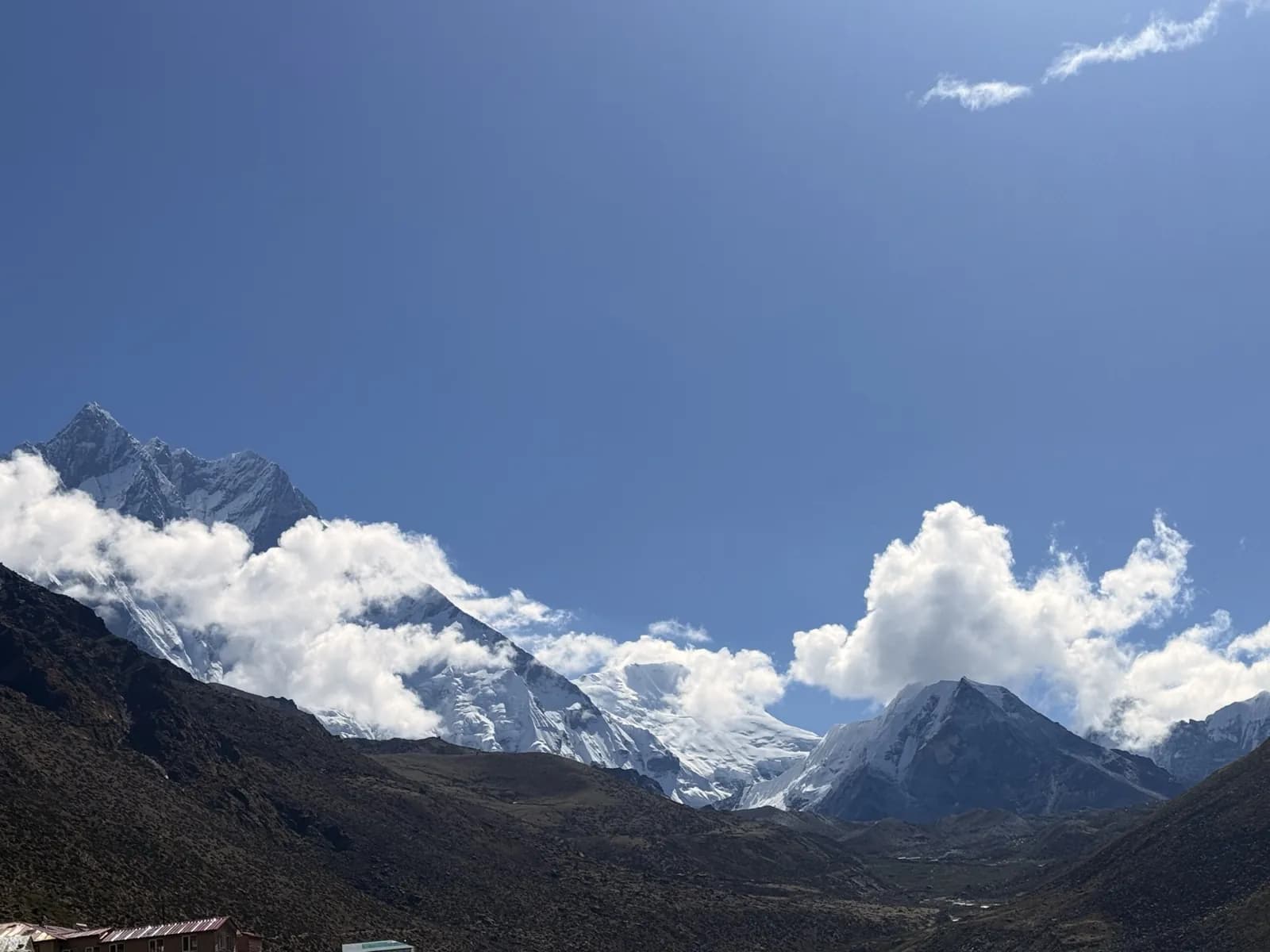
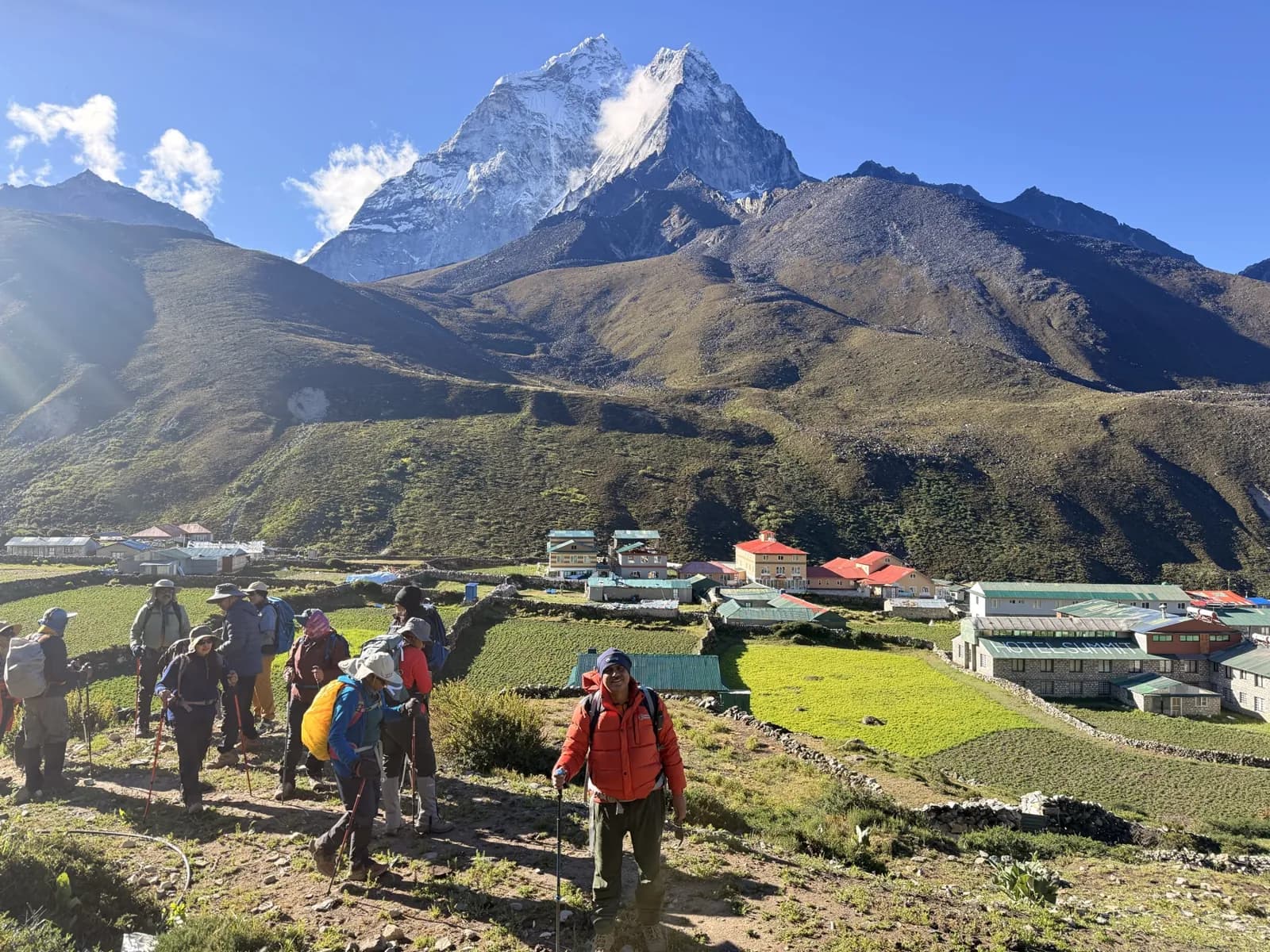
The trail climbs through a grassy valley towards the Khumbu Glacier. Overnight at Lobuche.
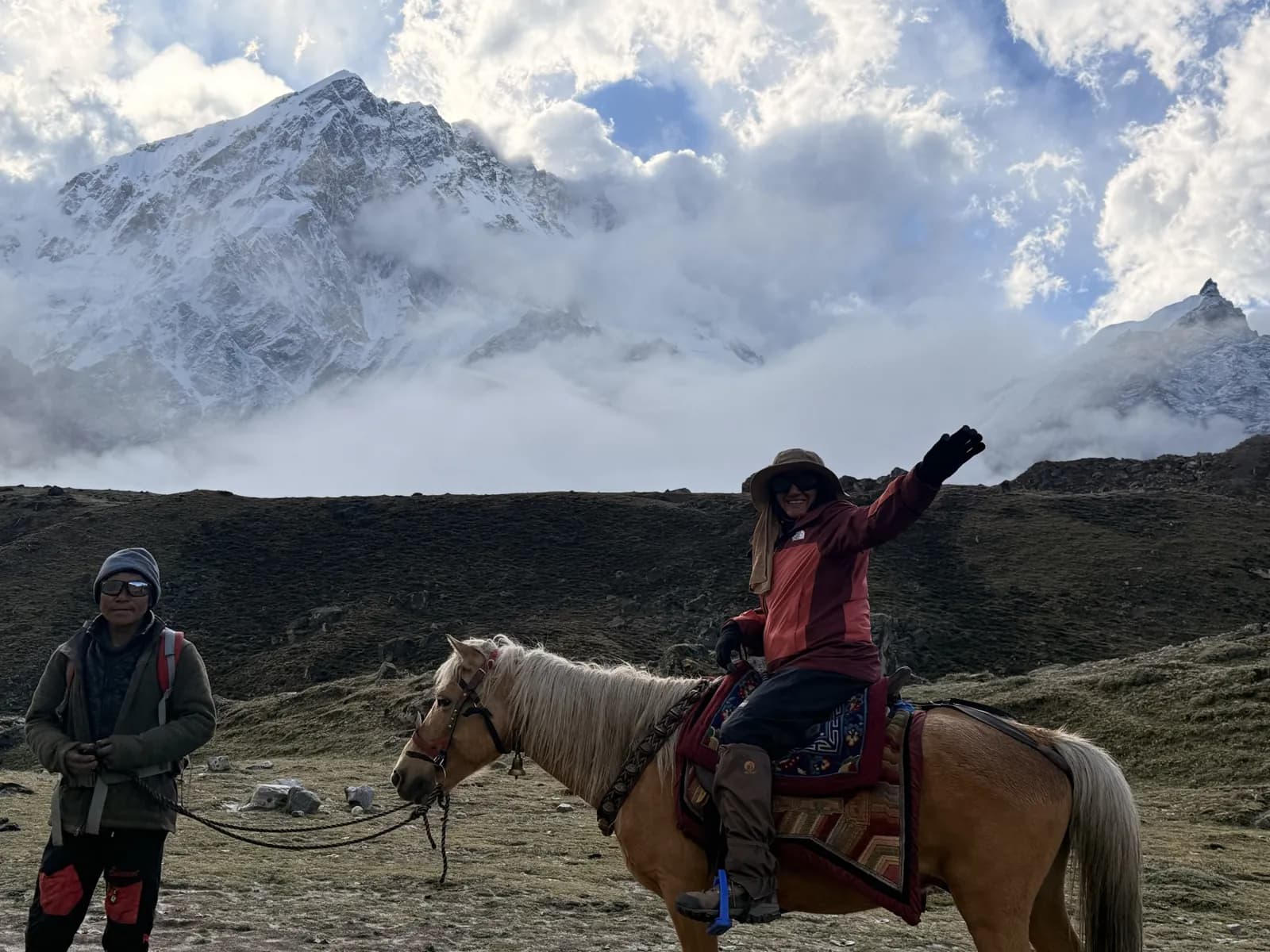
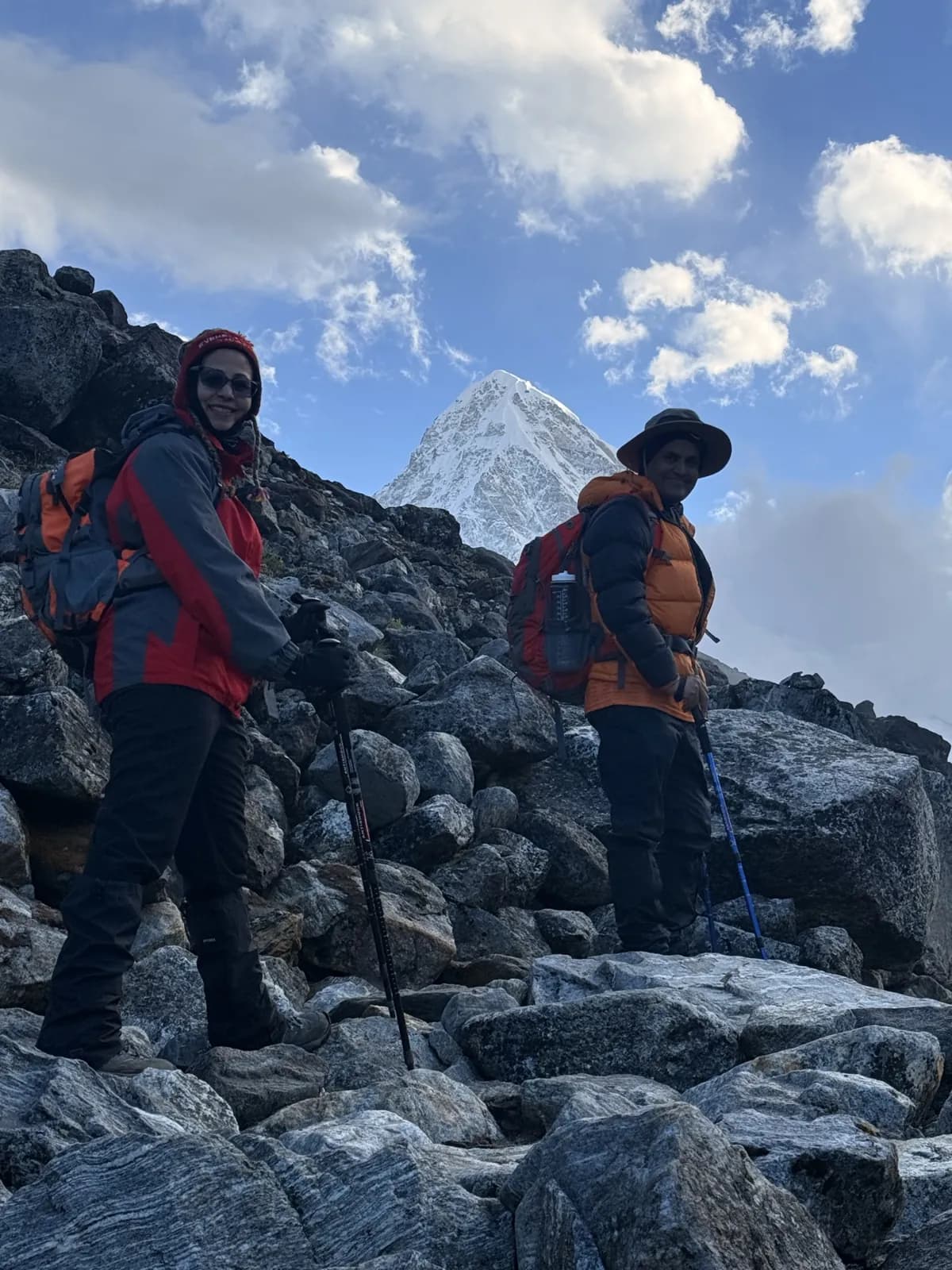
Walk along the Khumbu Glacier to Gorak Shep, then continue to Everest Base Camp in the afternoon. Return to Gorak Shep for the night, the highest overnight stop of the trek.
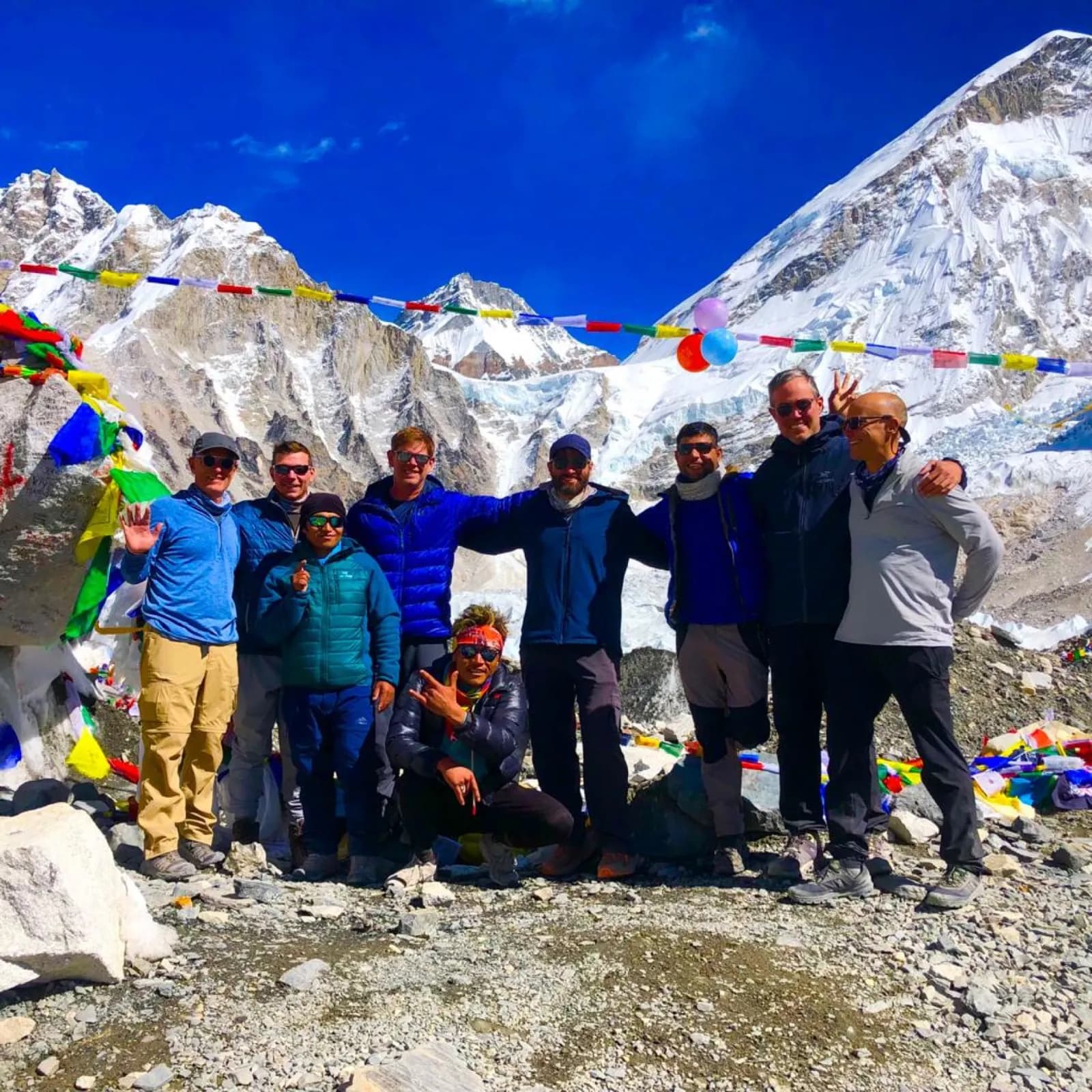
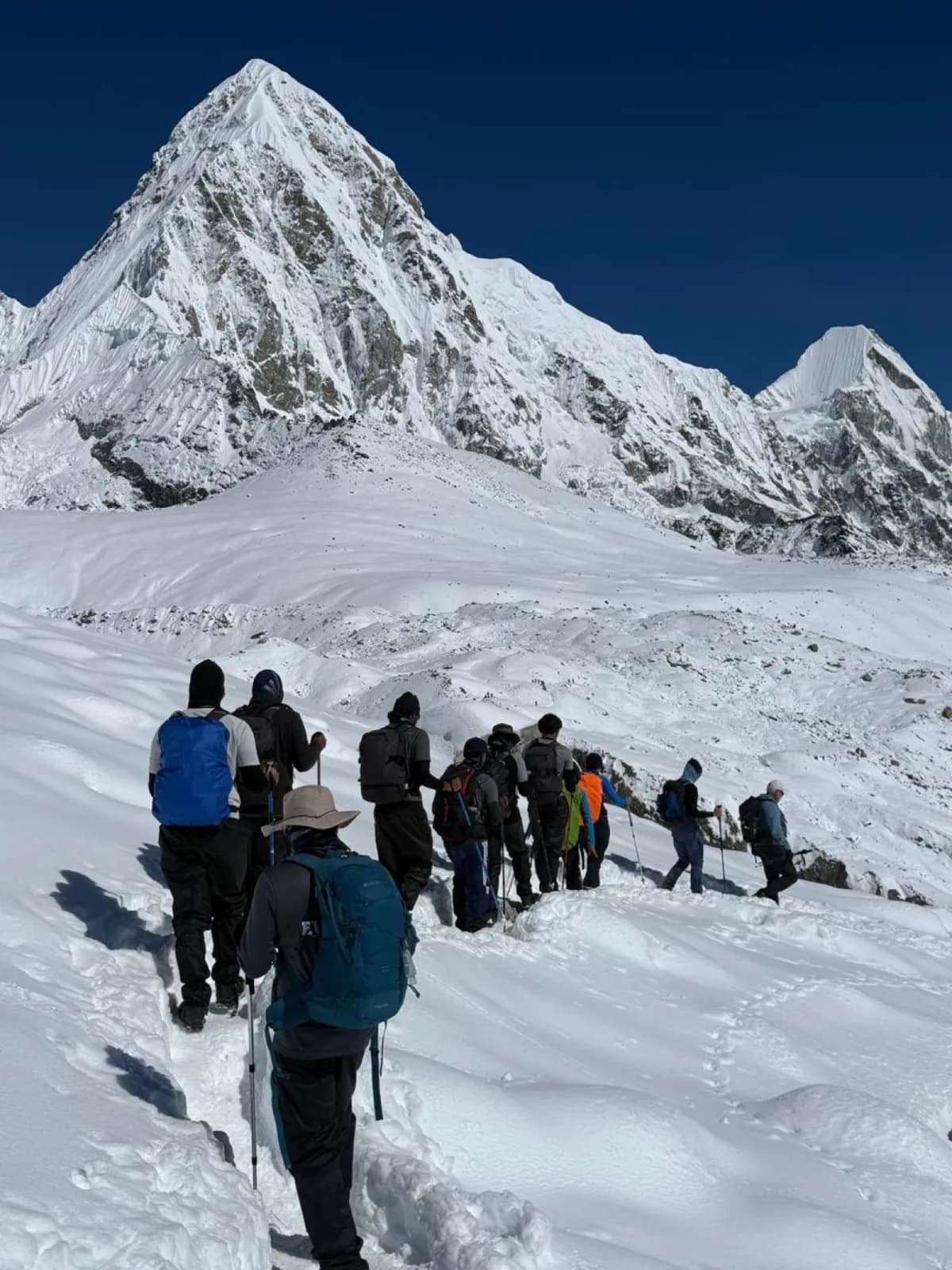
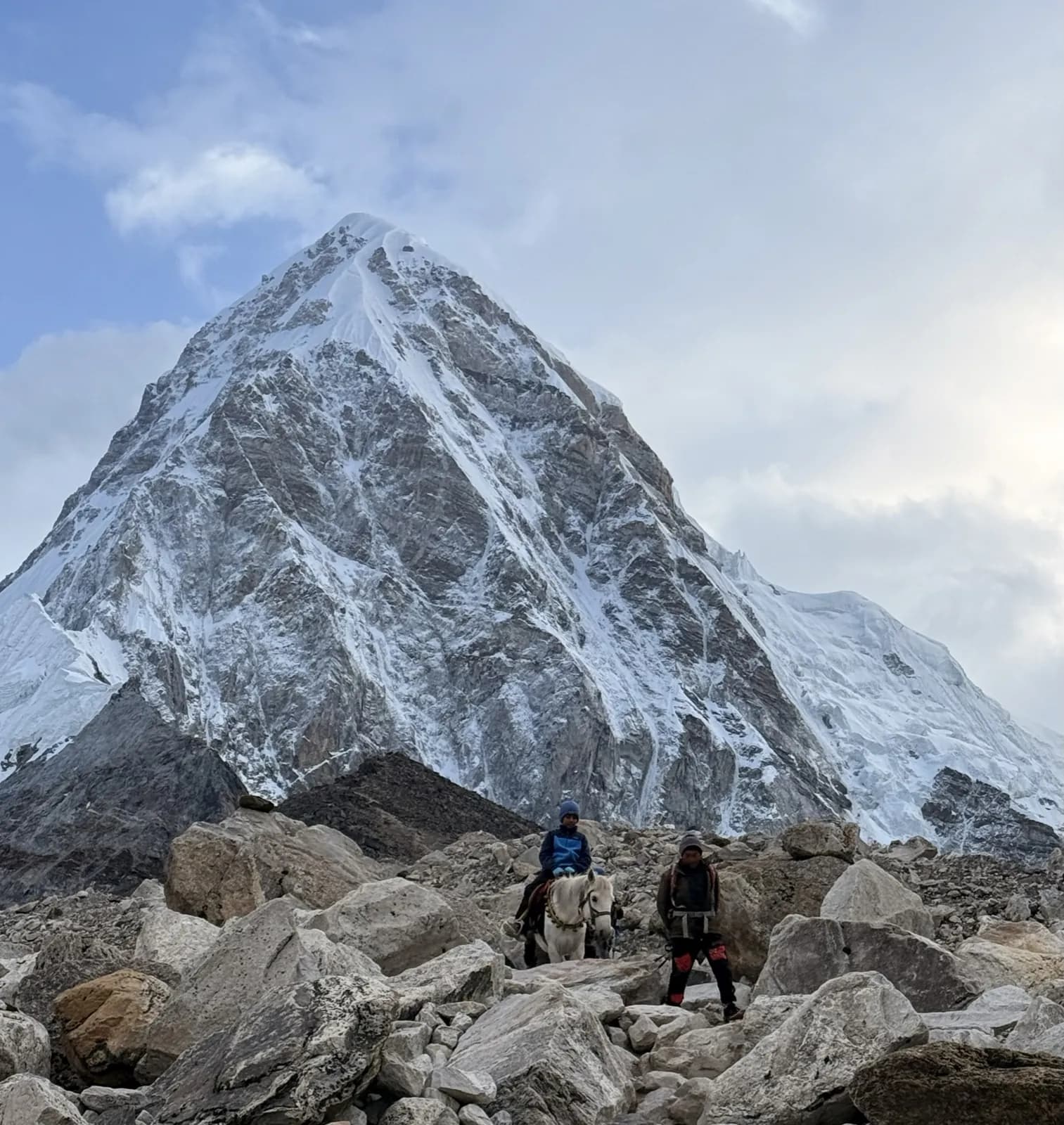
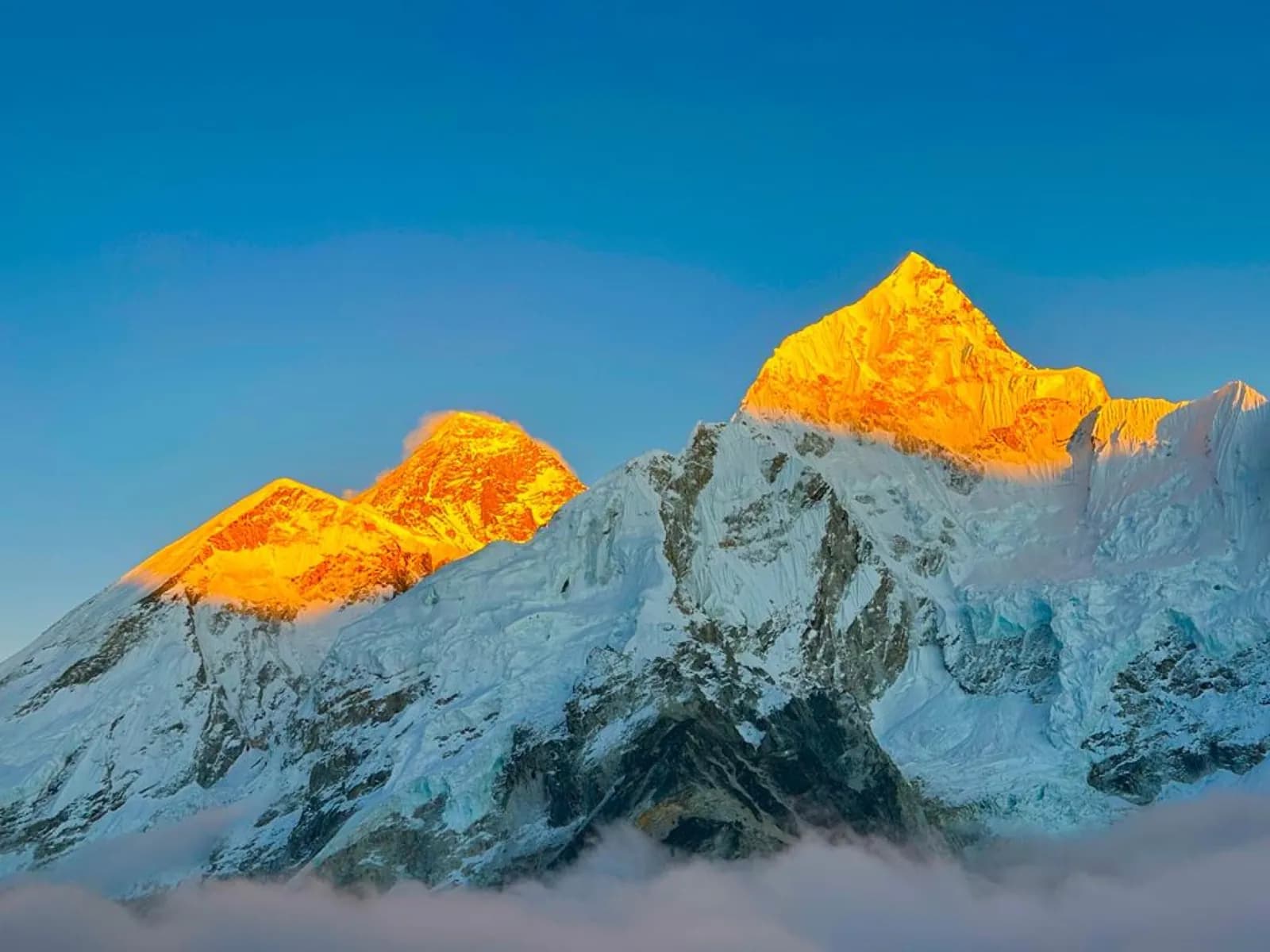
An early start up Kala Patthar for the sunrise view of Everest and the surrounding peaks, followed by a long descent past Lobuche to Dingboche.
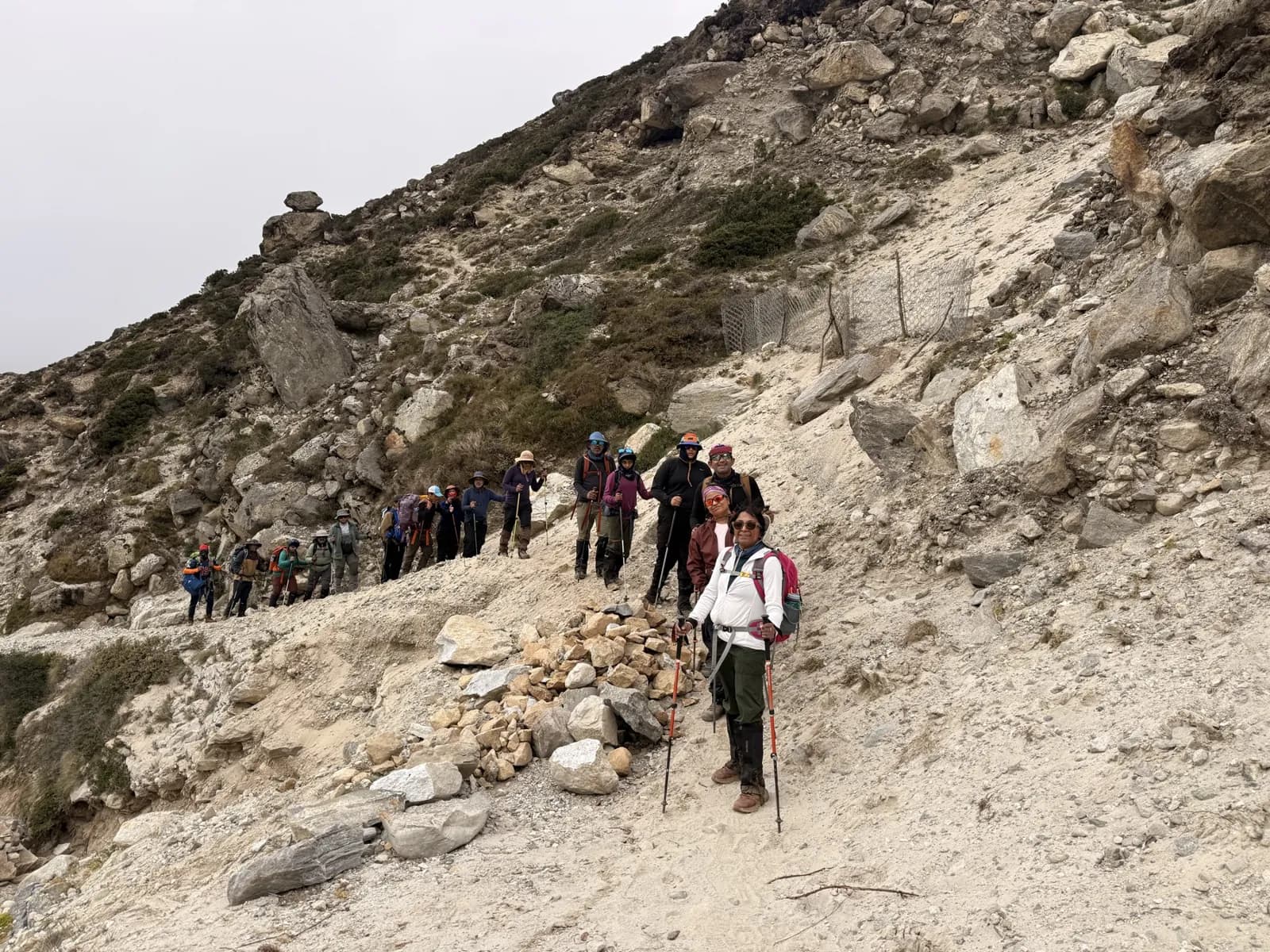
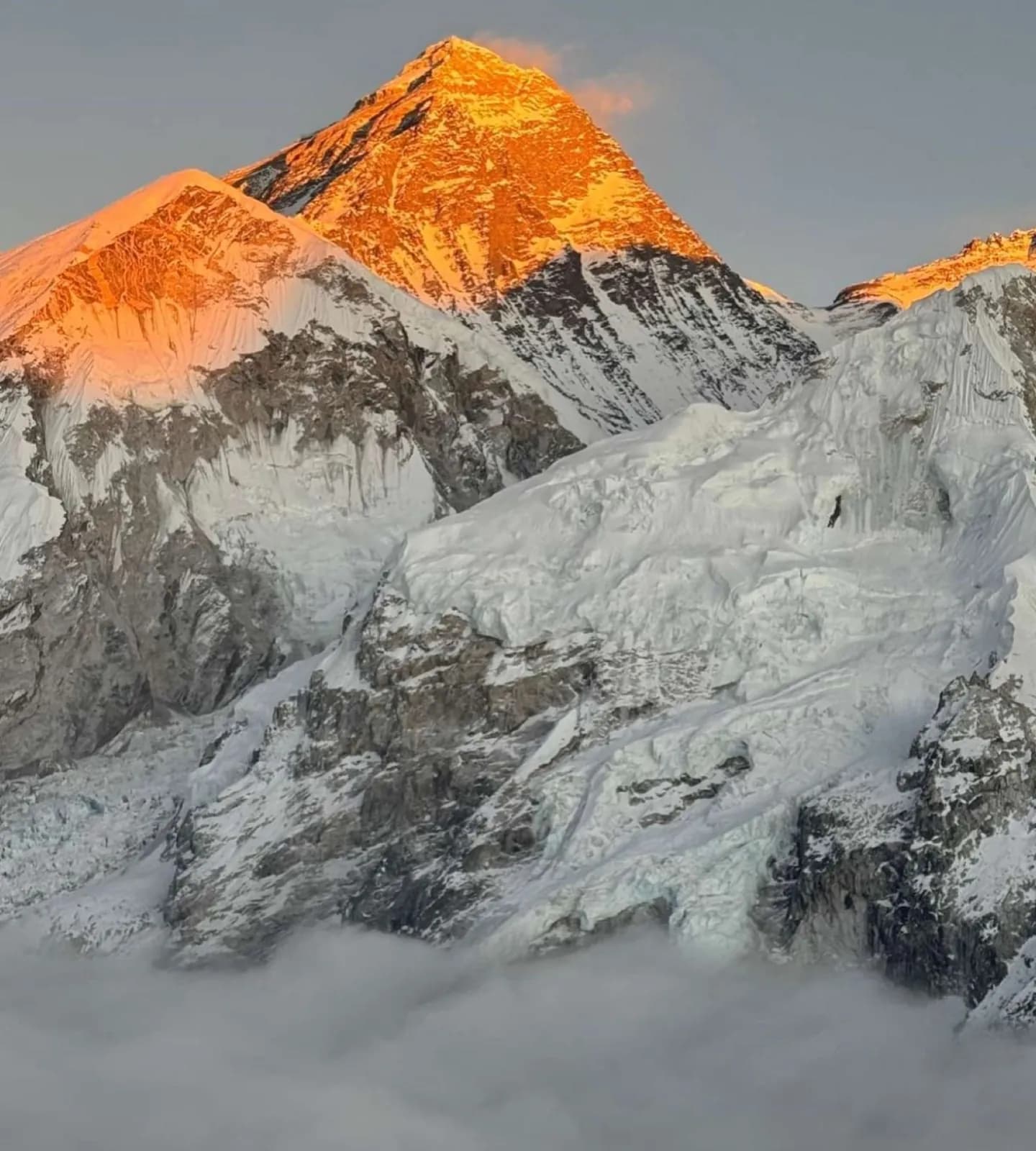
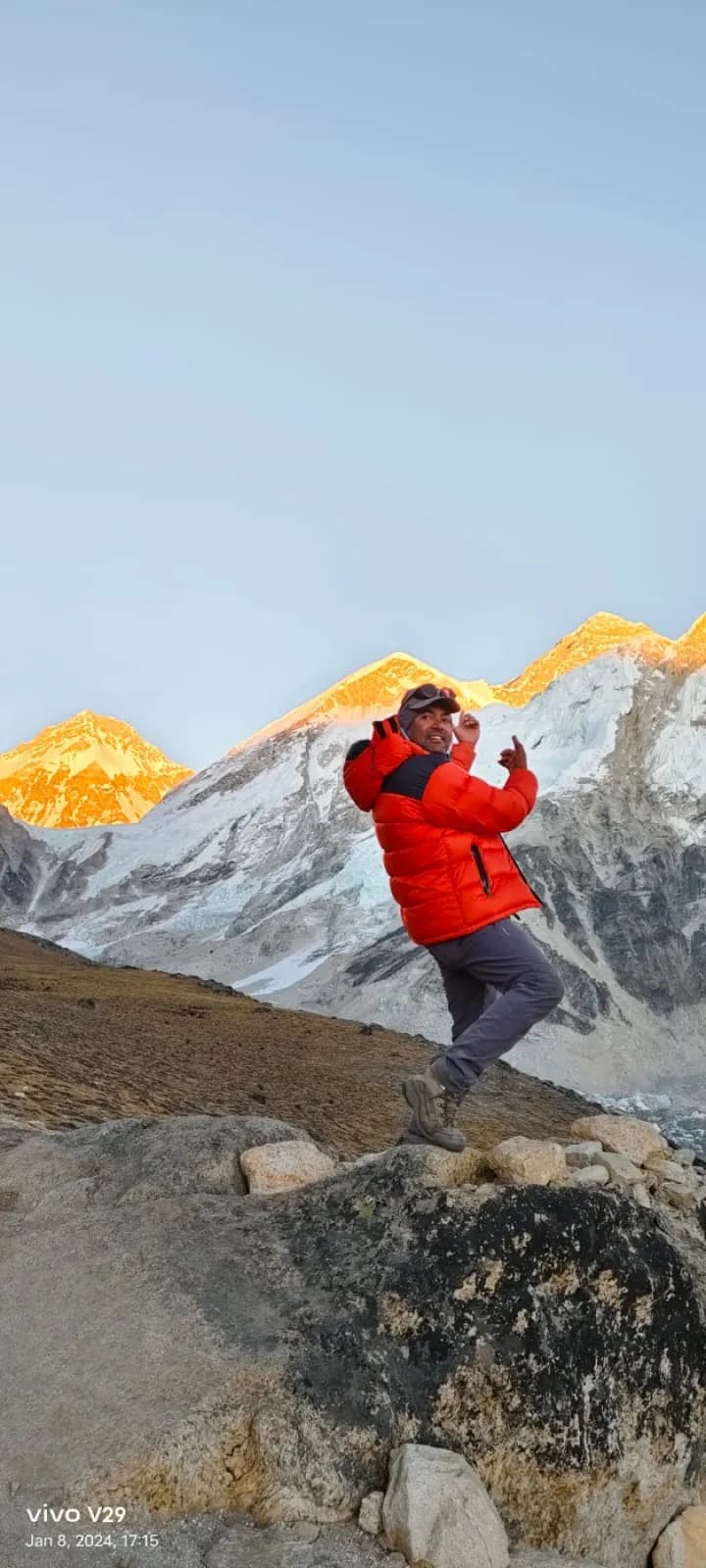
A short walk up the Imja valley, below the wall that links Nuptse and Lhotse, to Chhukung.
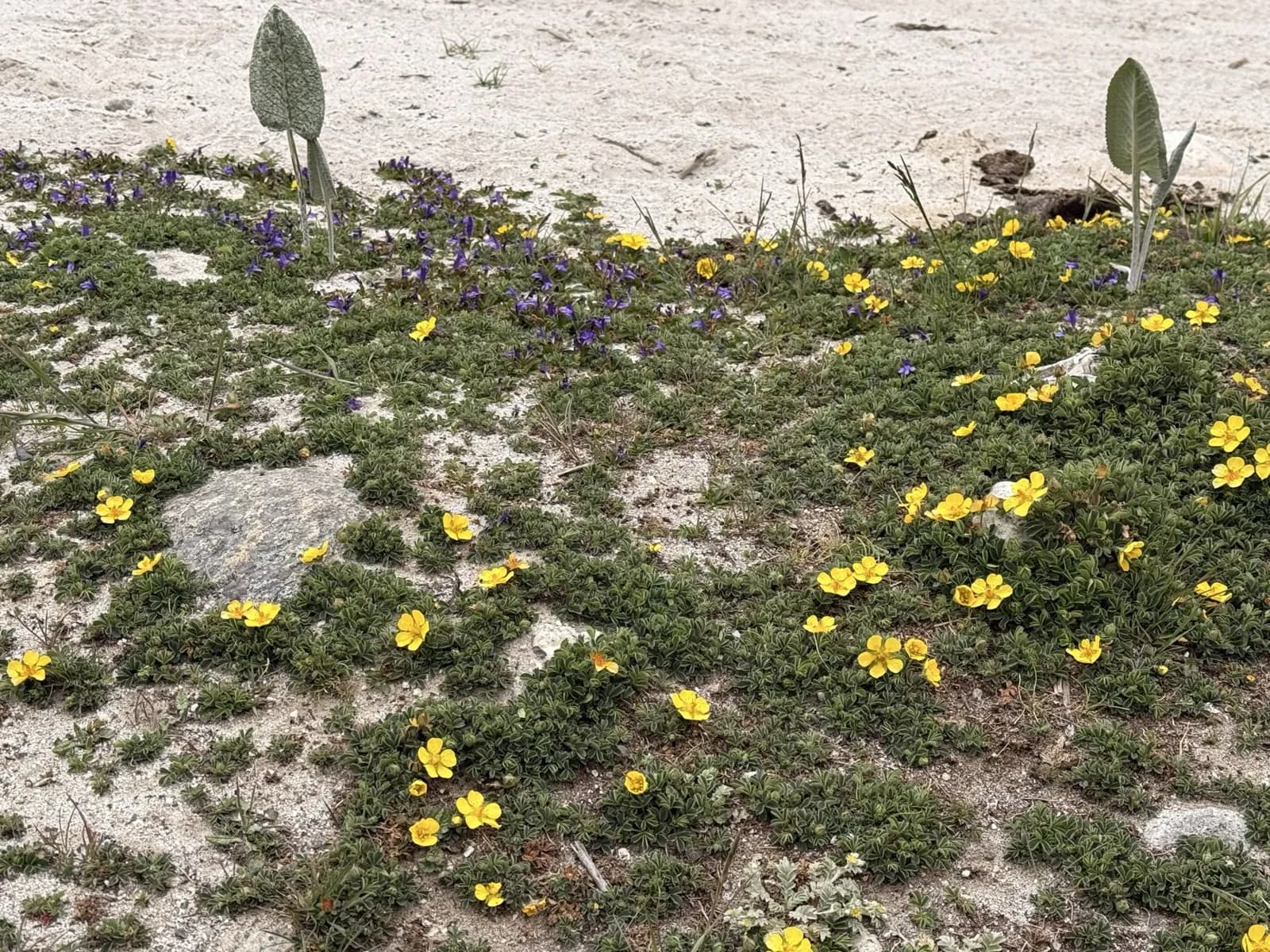
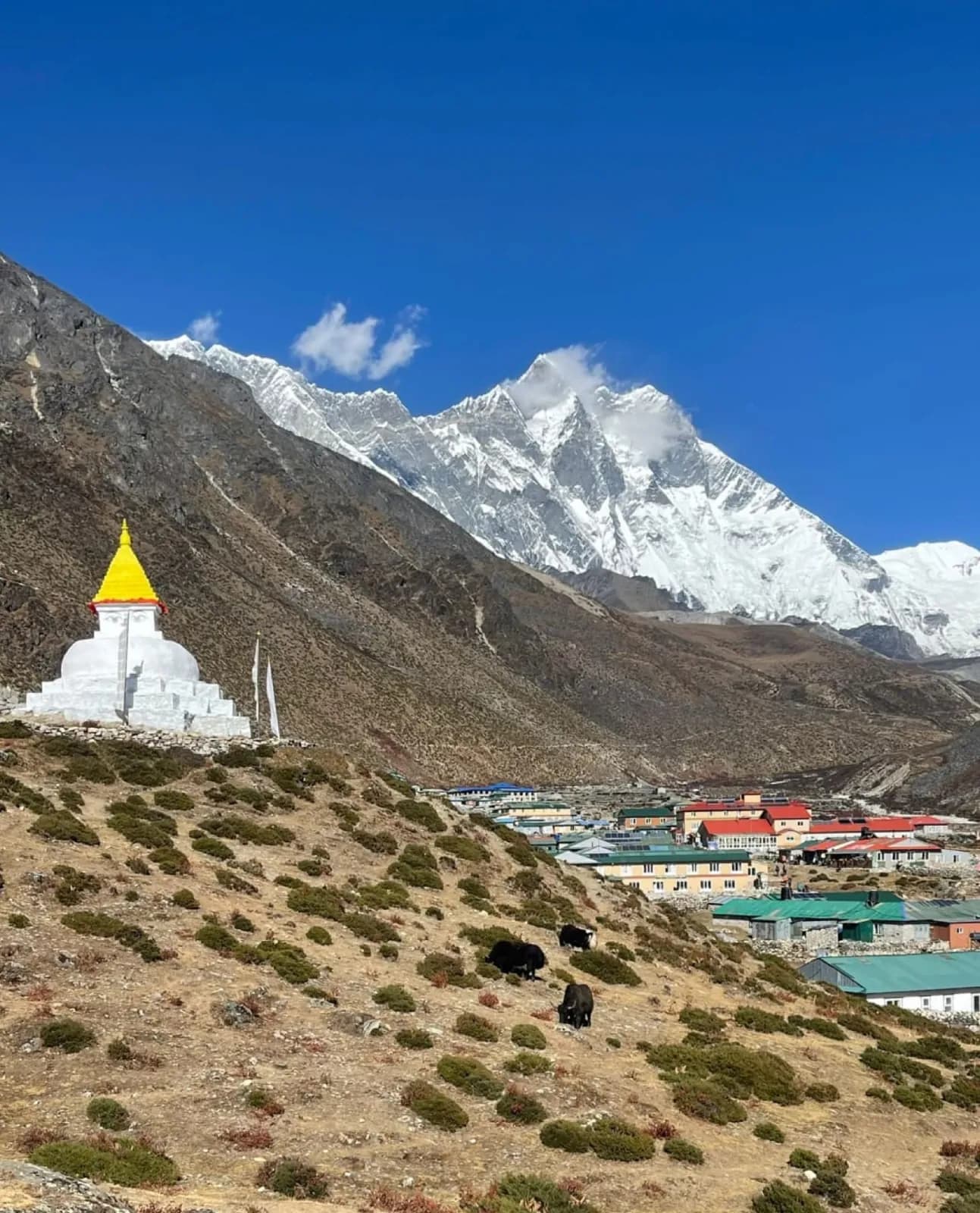
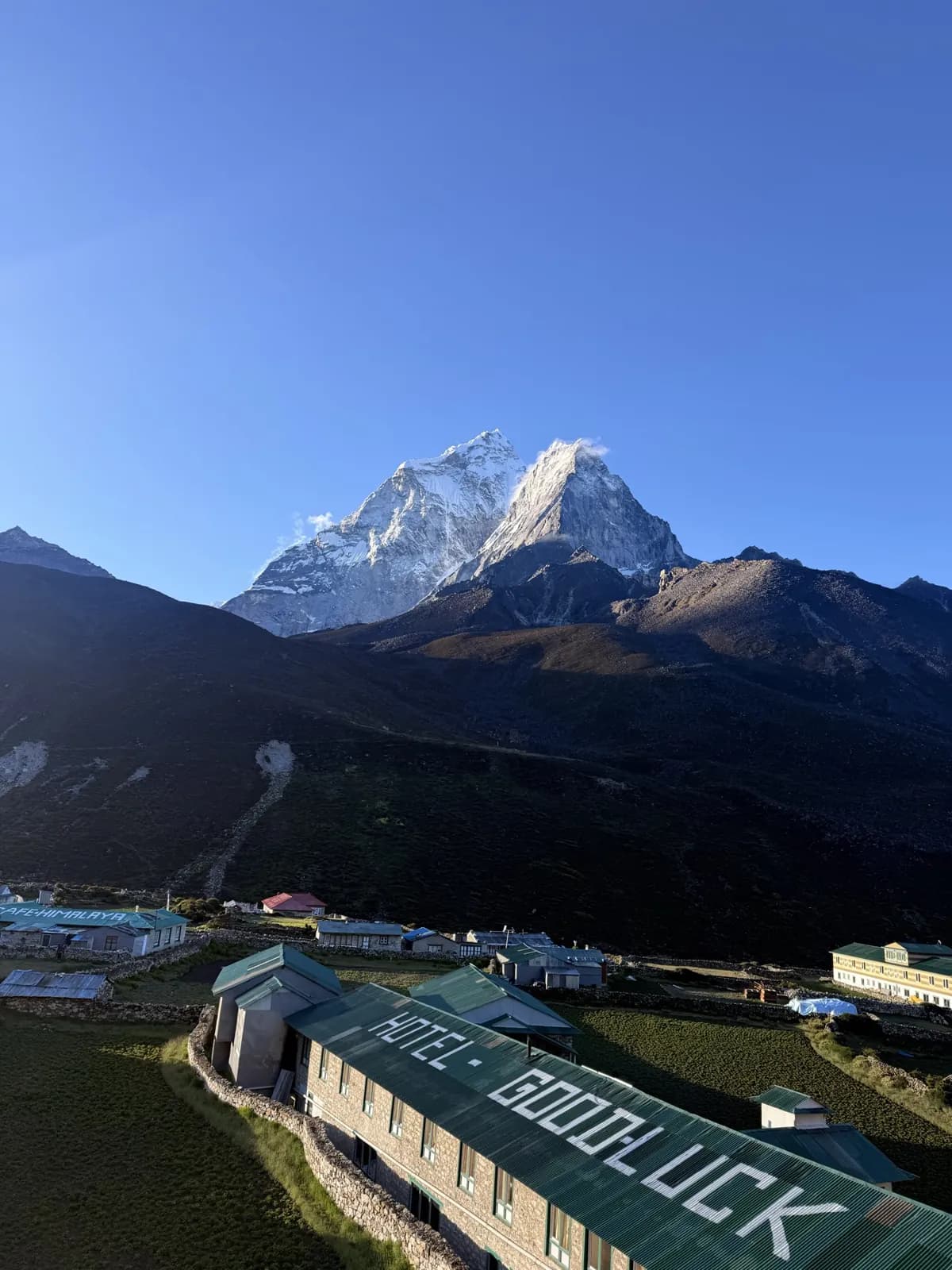
About four hours along the Imja Khola to base camp. The crew put up the tents and check the climbing equipment.
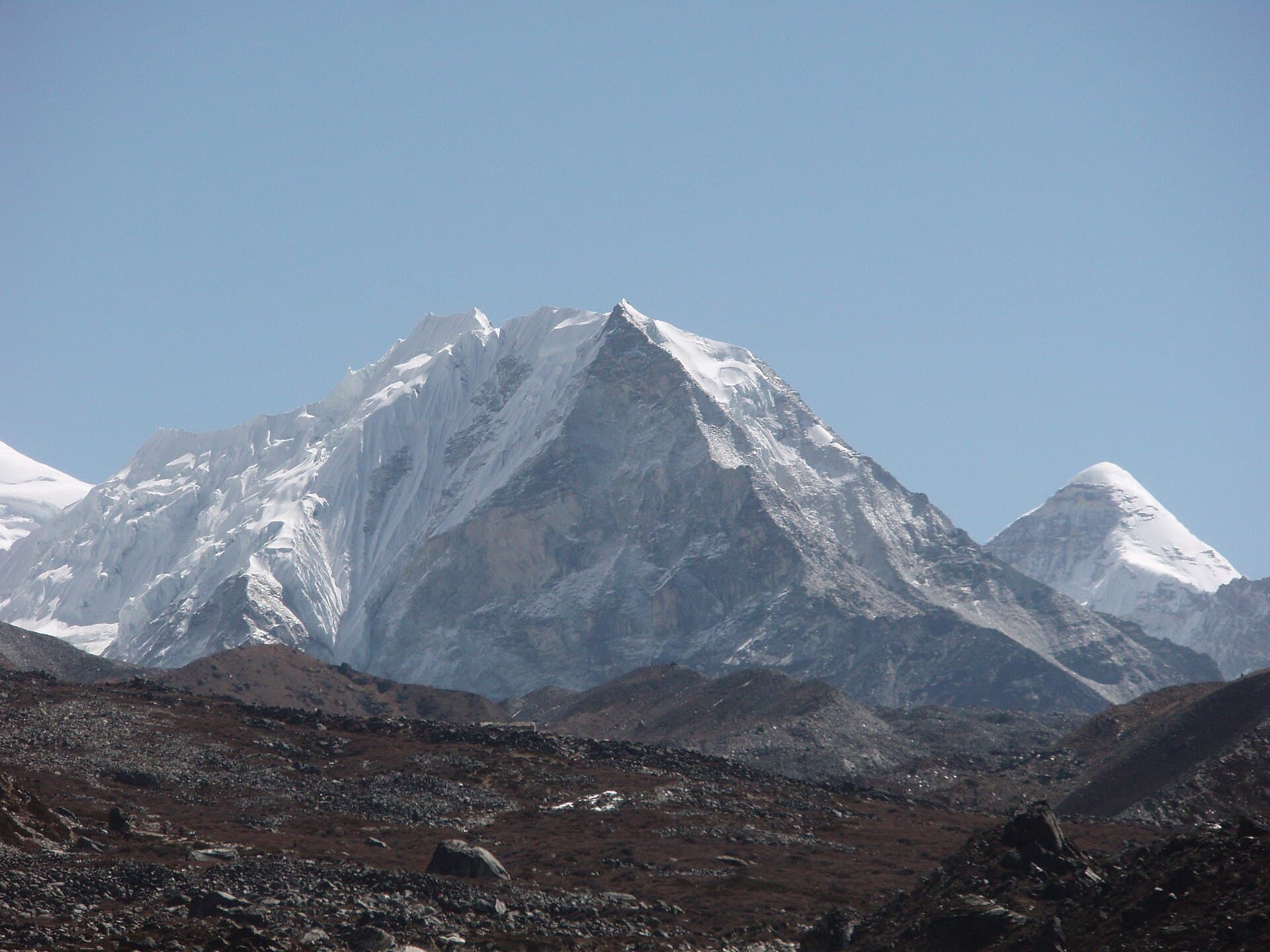
A day of rope training with the climbing guide: fixed-line technique, the jumar, crampons and the ice axe, and a practice of the descent.
Start at around one or two in the morning, climbing over rock and snow to the glacier, then up fixed ropes on the headwall to the summit ridge. Return to base camp in the afternoon.
This day is kept for a second summit attempt if weather or conditions prevent the first. If it is not needed, it allows an easier walk out.
Descend the Imja valley past Dingboche to Pangboche and its old monastery.
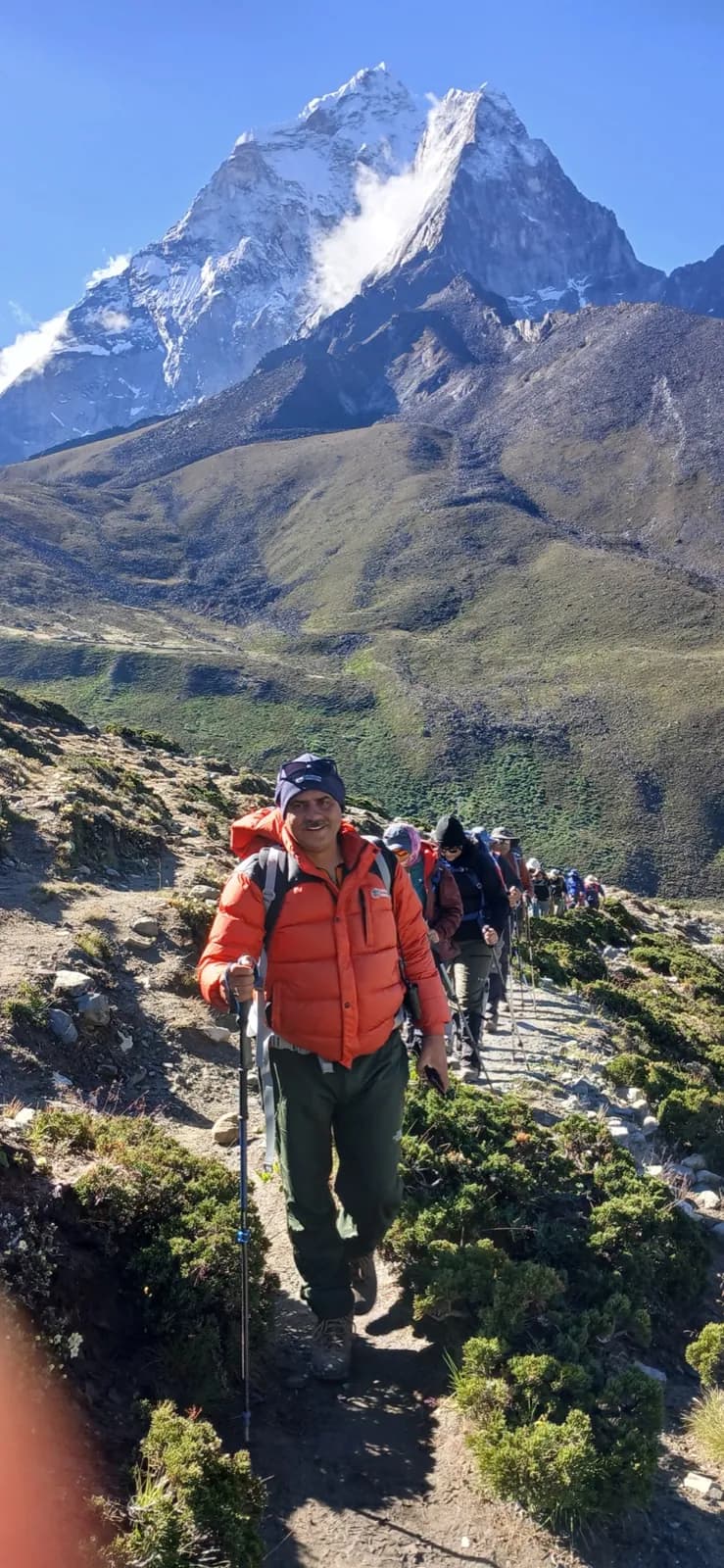
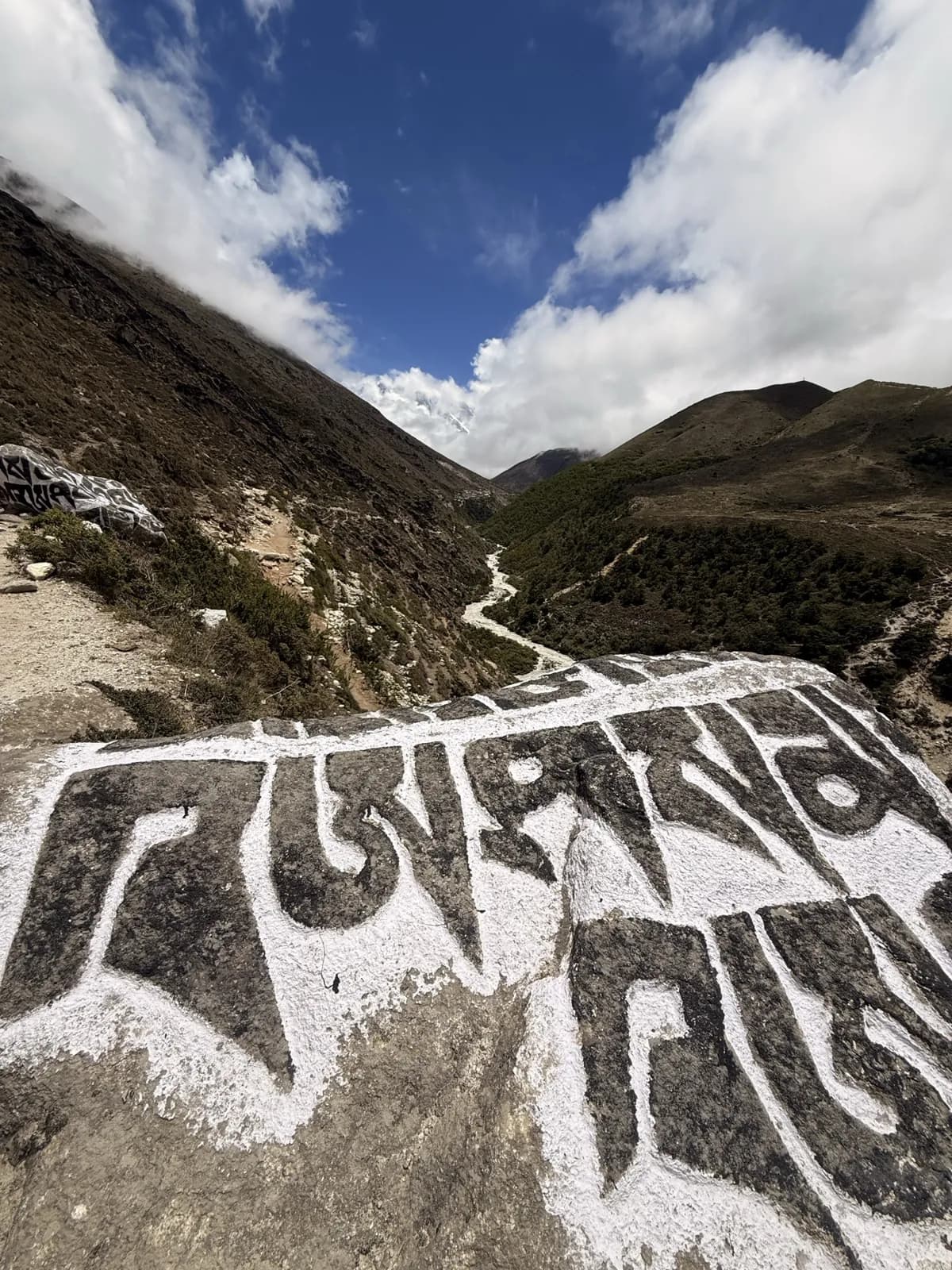

Walk past Tengboche and down to the river, then climb back up to Namche.
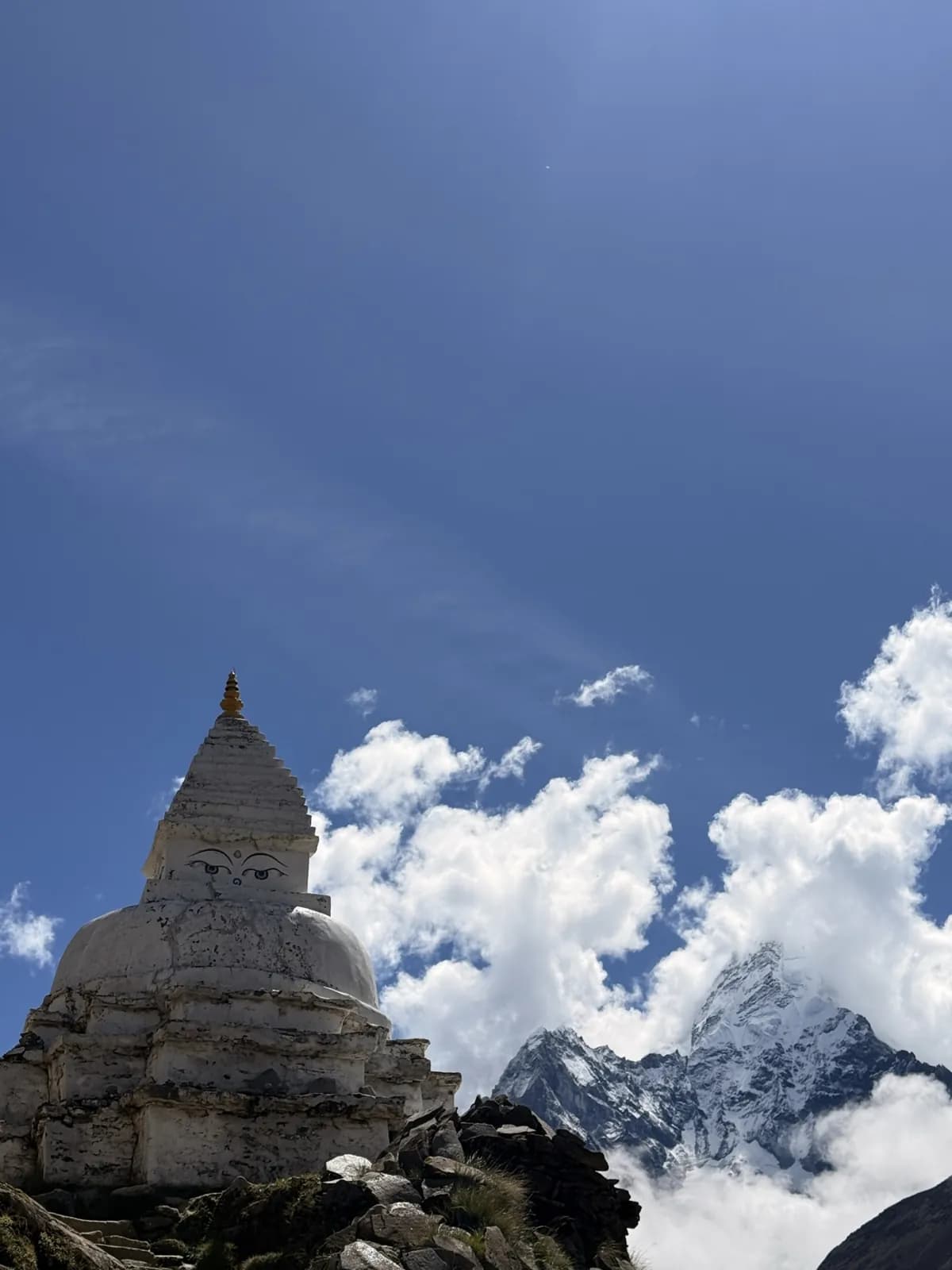
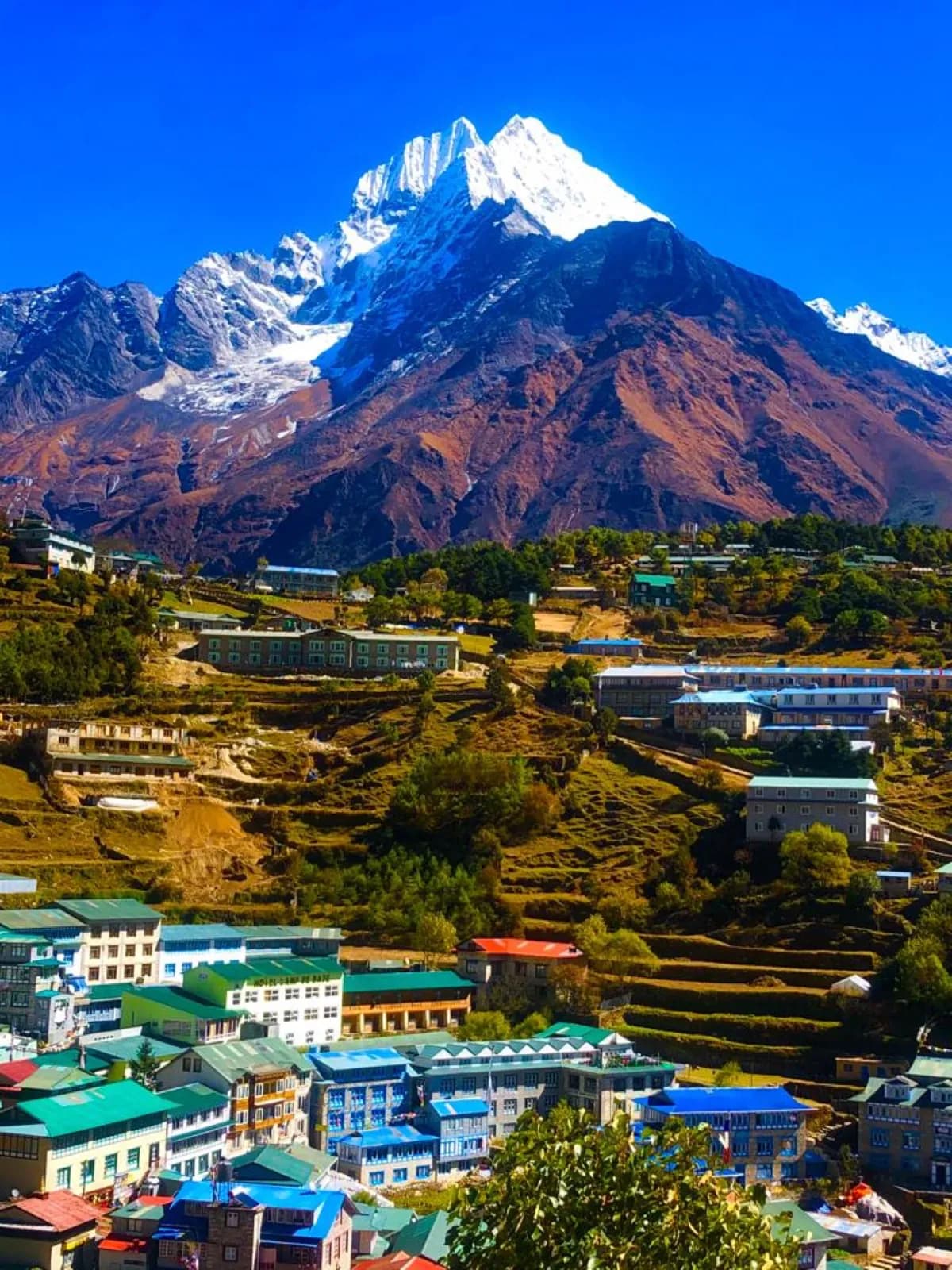

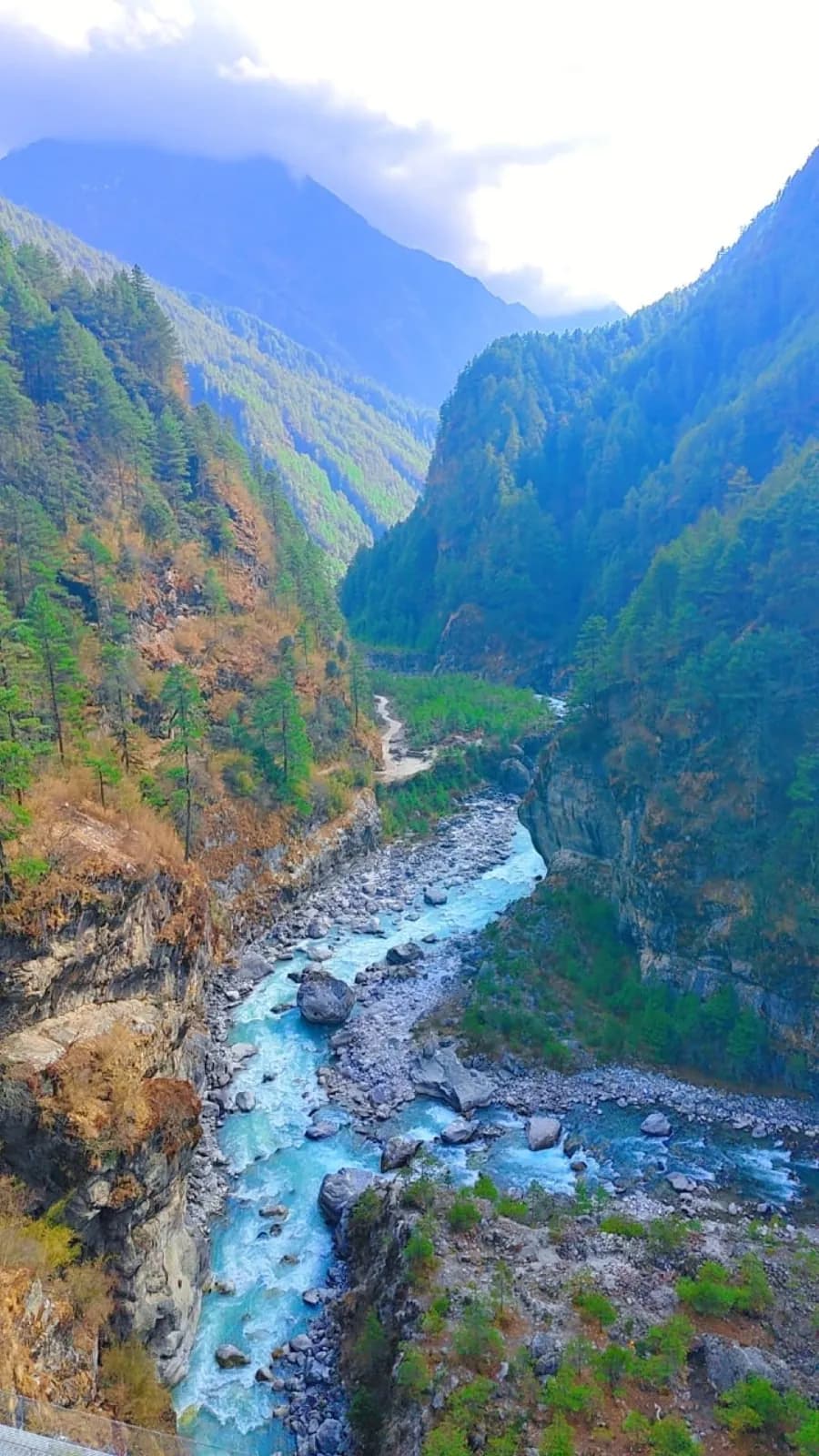
The last day of walking: down through the pine forest to the Dudh Koshi, across the suspension bridges and up the final climb to Lukla, where you have a celebration dinner with the crew.
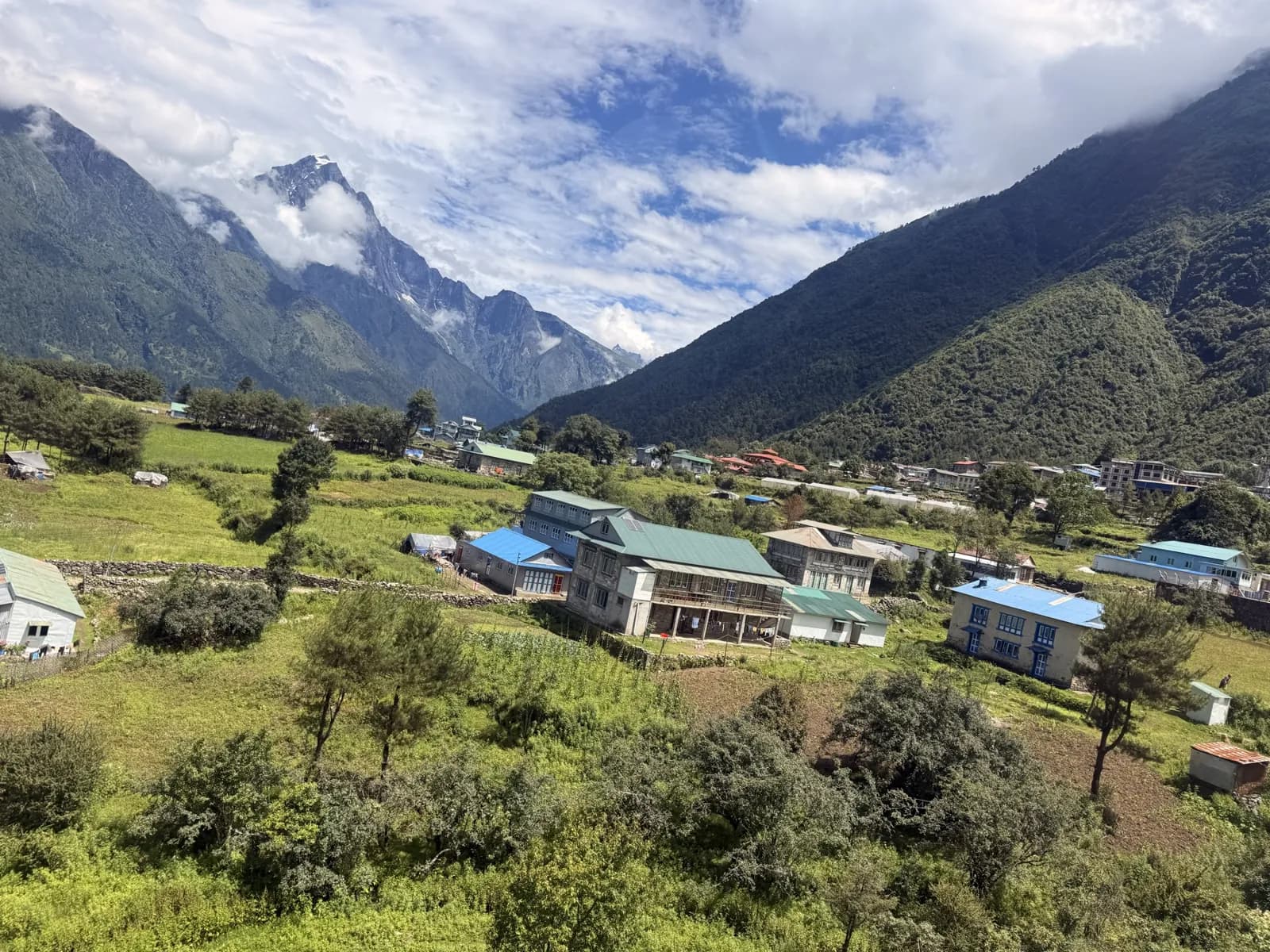
Fly back to Kathmandu. In the evening there is a cultural show and dinner.
Transfer to the airport for your onward flight.
Start date
25 Apr 2027
End date
15 May 2027
Available
12 places left
US $2,697
Per person
Start date
26 Sept 2027
End date
16 Oct 2027
Available
12 places left
US $2,697
Per person
Start date
17 Oct 2027
End date
6 Nov 2027
Available
12 places left
US $2,697
Per person
The trail from start to finish, at a glance.
Weight limits and climbing equipment
Your porter carries a strict maximum of 20 kg, shared between two trekkers. The Lukla flight allows 15 kg and baggage is weighed. In addition, boots, crampons, ice axe and harness are heavy and must be carried up. We provide the duffel bag, sleeping bag, down jacket and group climbing equipment.
The flights and long drives on this itinerary, and what happens if one is delayed or cancelled.
Outside the two busiest periods of the year, the flight leaves from Kathmandu and takes about 35 minutes. For most of March to May and late September to November, air traffic control moves Lukla departures to Manthali airport at Ramechhap to reduce congestion at Kathmandu. This means a drive of four to five hours, leaving Kathmandu at around two in the morning, followed by a twenty-minute flight. The trek is the same, but the night before is much shorter. We tell you which applies to your dates before you book.
The allowance is 15 kg in total: 10 kg checked baggage and 5 kg hand baggage. Excess baggage is charged at about $1.50 per kilo and the limit is enforced, because the aircraft is a nineteen-seat Twin Otter or Dornier and the runway is 527 metres long and sloped. Anything you do not need on the trek can be stored free of charge at our office in Kathmandu.
Lukla is closed by cloud several times a month in every season. Losing one day is common and losing two is not unusual. The reserve day on day 16, which is also the weather day for the summit, is for this purpose. If the flight is cancelled for more than three days, we change the itinerary to a comparable trek at lower altitude rather than shorten this one, at no extra charge. If you prefer to fly by helicopter on the day, it costs around $500 per seat and we can usually arrange it within a few hours.
Book an international flight that leaves at least one clear day after your scheduled return to Kathmandu. This is the least expensive way to protect your trip against delays.
Most of the trip is spent in teahouses on the Everest trail. These are family-run lodges with one dining room heated by a single stove, and simple twin rooms with foam mattresses and thin walls. Bring a sleeping bag. Lower down, at Phakding, Namche and Lukla, many rooms have a private bathroom. Higher up, at Dingboche, Lobuche, Gorak Shep and Chhukung, bathrooms are shared, and hot showers, charging and wifi are paid for separately.
At Island Peak Base Camp, at about 5,000 m, you sleep in tents. The crew set up sleeping tents, a dining tent, a kitchen tent and a toilet tent, and the cook provides hot meals and boiled water. The training day, the night before the summit and any reserve day are spent here. It is cold, and a four-season sleeping bag is needed.
| Where | Nights | Type | Room | Bathroom |
|---|---|---|---|---|
| Kathmandu | 3 | Three-star hotel | Twin or double | Private, hot water |
| Phakding | 1 | Teahouse | Twin | Private in most lodges |
| Namche Bazaar | 3 | Teahouse | Twin | Private, hot shower for a fee |
| Tengboche | 1 | Teahouse | Twin | Shared |
| Dingboche | 3 | Teahouse | Twin | Shared |
| Lobuche | 1 | Teahouse | Twin | Shared |
| Gorak Shep | 1 | Teahouse, the highest on the route | Twin, basic | Shared, no shower |
| Chhukung | 1 | Teahouse, the last before the mountain | Twin, basic | Shared, no shower |
| Island Peak base camp | 4 | Tents. There are no buildings at base camp | Two-person tent, shared, with a foam mattress | Toilet tent. No shower; a bowl of warm water from the kitchen |
| Pangboche | 1 | Teahouse | Twin | Shared |
| Lukla | 1 | Teahouse | Twin | Private |
Porridge, Tibetan bread, eggs, chapati, pancakes, tea or coffee
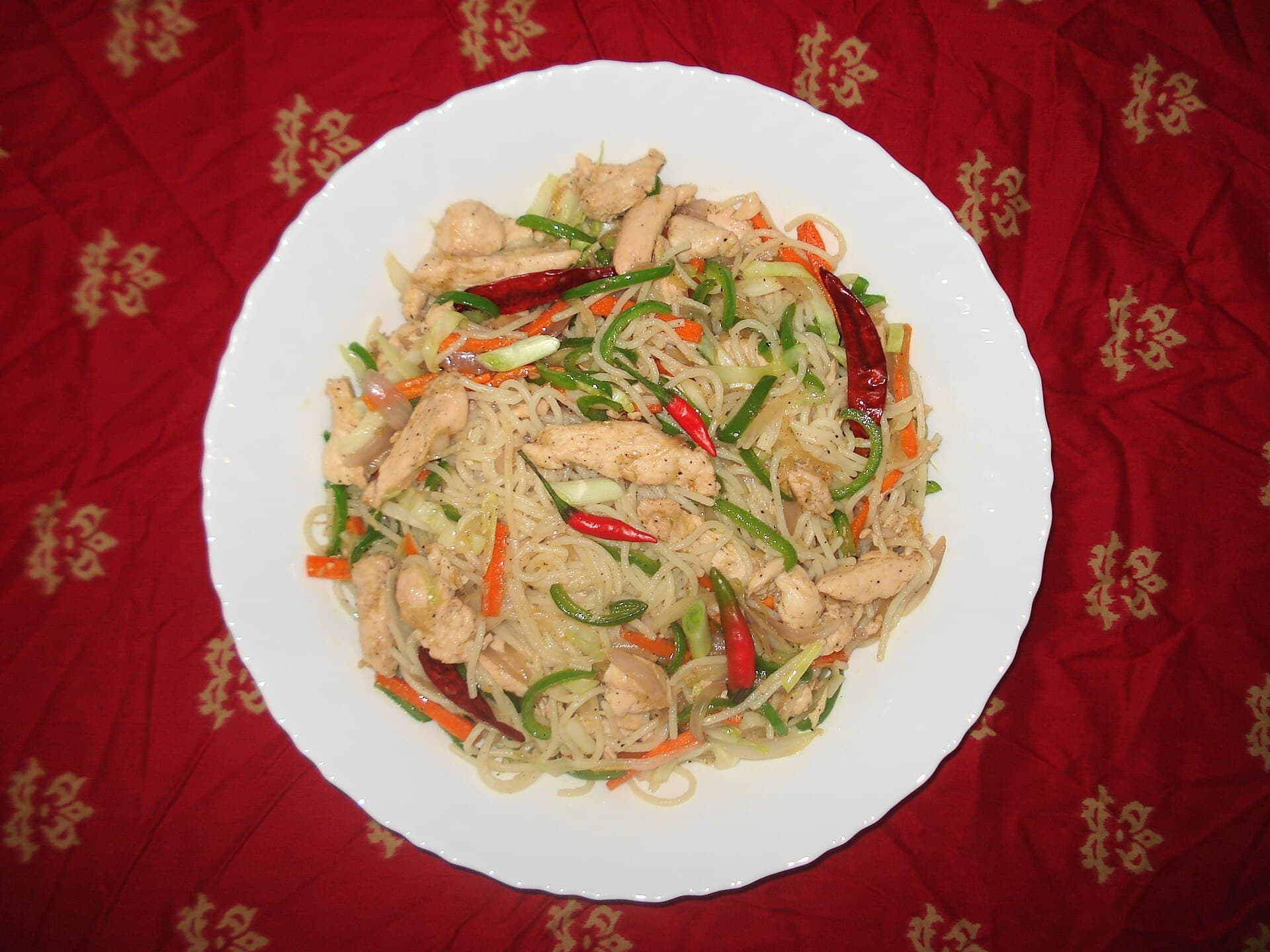
Dal bhat, fried rice, noodles, soup, momo, potatoes

Dal bhat, pasta, thukpa, curry and rice, with soup to start. At base camp, prepared by our own cook
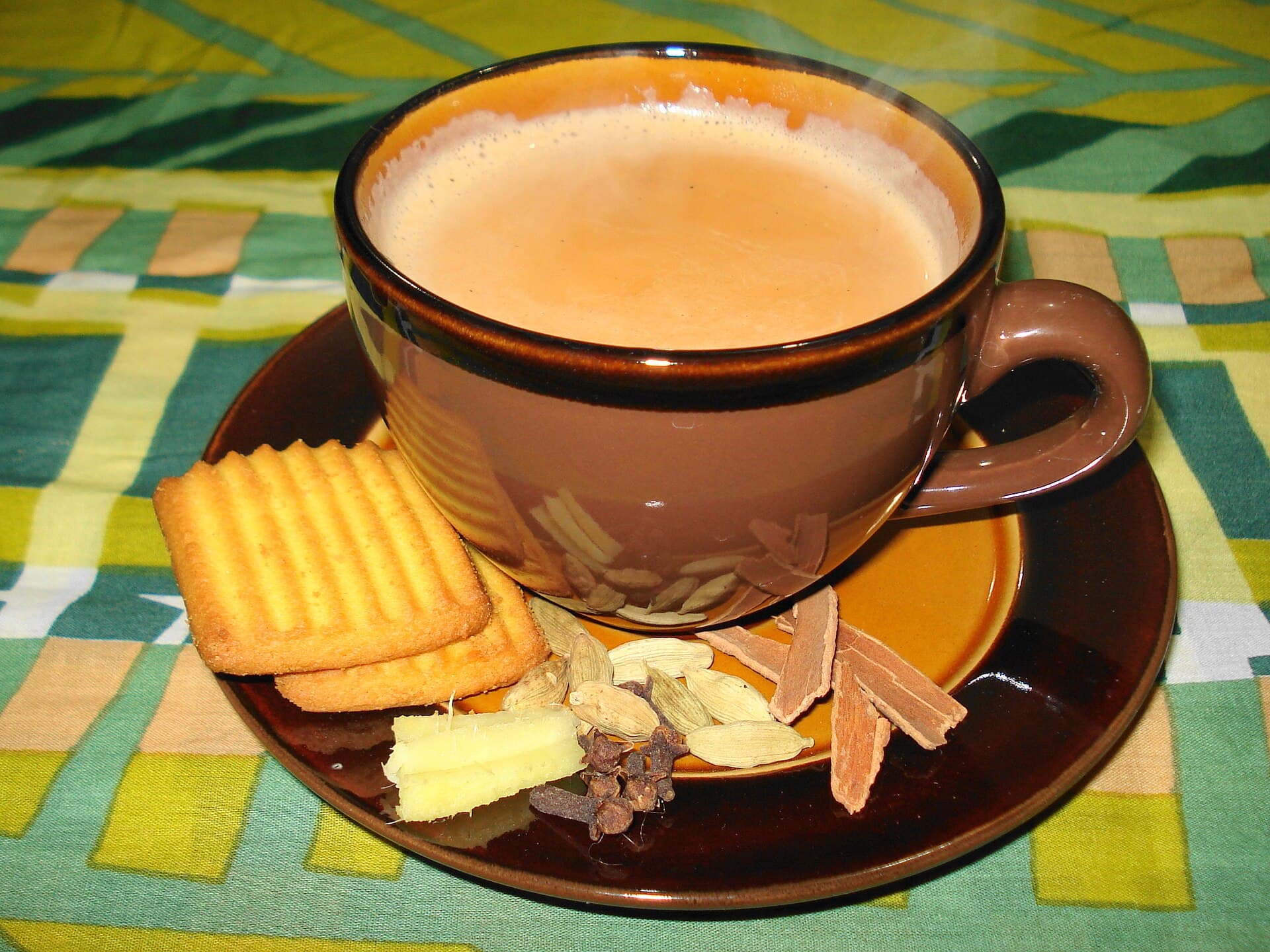
Black, milk, lemon, ginger or masala, at every stop and in the dining tent at base camp
Porridge and hot drinks before you set off, with snacks and a flask on the mountain
6:00Tea in your room, a bowl of warm water, and your duffel bag ready for the porter
7:00Breakfast together
8:00On the trail, at the guide's steady pace, which is slower than most people expect
12:00Lunch at a teahouse on the route, about an hour
13:00Two to four hours more, depending on the day
15:30Arrive, tea, wash, rest
17:00Oxygen saturation and pulse measured and recorded
18:30Dinner, and the guide explains the plan for the next day
20:30Bed. On summit night you get up again at midnight
A genuine climb at the end of a demanding trek. No climbing experience is needed, but a high level of fitness is required.
Written for somebody who walks a bit and does not train. If you already run or cycle regularly, start partway through. Nothing here needs a gym.
12 weeks before, stage 1 of 6
Three cardio sessions a week, 45 minutes each, at a pace at which you can still hold a conversation. Walking, cycling, swimming or rowing are all suitable. This is the most important part of your preparation.
You sleep at 5,087 m and climb to 6,189 m, which is higher than any other trip we offer on foot. The approach follows the Everest Base Camp route with both its rest days, and those two weeks provide all your acclimatisation: by the time you reach Chhukung, you have already slept at 5,164 m and stood at 5,545 m. The summit then adds 1,100 m of ascent in a single push on the coldest morning of the trip.
Daily health checks
Above Namche, your guide measures your oxygen saturation and pulse every evening, and every morning if you feel unwell, and records them throughout the twenty days.
Summit decision at Chhukung
The decision whether to attempt the summit is made at Chhukung, two days before the summit, where descending is easy. Your guide decides based on your readings, the weather and how you managed the Kala Patthar day, not on how much you want to continue.
Decisions on the mountain
Turnaround time, rope conditions and weather are decided by your climbing Sherpa, and the decision is final. In most seasons someone turns back at the headwall, and this is a normal outcome, not a failure.
Descent and helicopter evacuation
Pheriche and its Himalayan Rescue Association clinic are a day from base camp. Helicopters can reach Chhukung and base camp. The cost is $3,000 to $5,000, and the helicopter will not fly without a payment guarantee.
Fitness and altitude are unrelated
This is the thing people get wrong most often. Training makes the walking easier and does nothing for how your body handles thin air. Strong young trekkers get altitude sickness and unfit older ones frequently do not. Go up slowly, and say something the first time your head hurts.
Typical conditions on this route in each month, including the months we do not run this trip.
The best month. Warm days, stable weather, and the forests below Namche are in flower.
Averages from Nepal DHM station data for the Khumbu, the same as the Everest Base Camp trek. Any week can be ten degrees either side, and summit morning on the headwall is colder again, around minus twenty with wind.
Write to us and tell us about your experience. Previous climbing experience is not required, but we do ask for a previous trek at altitude, or a detailed discussion of why you believe you are ready without one.
A deposit of thirty per cent secures your dates, and the balance is paid in cash or by card when you arrive in Kathmandu. At the same time, we ask for a copy of your passport, your insurance certificate and any dietary or medical information.
Pay by bank transfer, or by card through a secure link. Card payments carry the bank's fee of about 4 per cent, which we show you before you pay. The balance in Kathmandu can be paid in US dollars, pounds, euros or Nepali rupees.
If you cancel more than 30 days before departure, your deposit can be transferred to any other date or trip we run, with no time limit. Within 30 days the deposit is retained, because the permits, flights and crew have been booked. If we cancel for any reason other than weather, we refund the full amount.
Both cost the same for a group of five or more. A private departure runs on your dates at your pace and can be arranged for one person; a group departure runs on the dates in the table above. Most travellers book privately, at no extra cost.
Book at least two months ahead, or three months for a spring departure. The climbing permit is issued in the names of the climber and the climbing leader, and the Sherpa you want is booked a season in advance.
Priced per person, arranged before you travel, and none of them included in the price above.
Where the route passes one, we book a premium lodge instead of the standard teahouse. Mountain Lodges of Nepal has lodges at Lukla, Phakding, Monjo, Namche and Deboche, and Everest Summit Lodges has lodges at Lukla, Monjo, Tashinga and Pangboche. They offer warmer rooms, better beds, private bathrooms in most rooms and a quieter dining room.
There are no premium lodges above Pangboche, so the higher nights are in standard teahouses. We confirm which lodges have rooms on your dates before you book.
We can only say good things as good things happened for us on our trip. Very thankful to Earthbound Expeditions.
August 2024, Tripadvisor
In August 2024 we went with our friends to kailash mansarover yatra. This we did with Earthbound Expeditions and we were taken care for every need of ours with lot of love and affection and sincerity from Rajanji and his team. We were treated like family and we had a very successful journey. Missing our trip. Wish it never ended. I really want to thank the Earthbound family to give us an experience of a lifetime. Really recommend them to everyone to book with them for your tour and travel needs. Hopefully one day we do the trek again with you Rajanji and team. We were served the most delicious meals at breakfast, lunch and dinner. I also enjoyed our tea times with Masala chai and hot snacks. Thank you to their chef Narain and sarke. Doctor Arjun always was there if any of us was not feeling well. Thanking Hari for his his very sweet smile and support and watching out for all of us. We are thankful to God for making us touch lives with very sweet Nepali family. Love you guys and missing you all.
Spiritual-Adventure
August 2024, Tripadvisor
If you are seeking an adventurous trek combined with a spiritual experience, look no further than EarthBound Expeditions. This incredible team offers not just an adventure but a journey filled with personal care, daily health checkups, safe travels, and freshly cooked meals that cater to your needs. Their passion, positivity, and genuine love for what they do shine through every aspect of your journey, making it truly unforgettable. With EarthBound Expeditions, you are not just booking a trip; you are immersing yourself in an experience that blends adventure, spirituality, and heartfelt hospitality in a way that only they can provide.
A unique experience of spiritual combined with adventure.
August 2024, Tripadvisor
Rajan Ji, I'm writing to personally thank you & your wonderful team for the once in a lifetime spiritual & adventure experience during Kailash Manasarowar parikrama. Your leadership and management style, good humour & positive spirits in difficult situations, your knowledge, passion and pride in your work and your country is inspiring. All the very best for the future. I look forward to other trips with you in the coming years. All the best. Amit
Excellent service| Hassle free journey
July 2024, Tripadvisor
My Manasarovar and Mt.Kailash trip with Earthbound was a great experience overall. I was very pleased with the hospitality and flexibility and care the team took towards accommodating all the guests and making sure all of us maintained good health throughout the journey. It was very important in such a trip to eat well and take care of health at high altitudes and Earthbound team is experienced and took very good care of all the essentials. They were patient in addressing all our concerns and always had a smile. Overall, they serviced us with all heart and would love to go back on another expedition with them!
Answers to the 6 questions travellers ask us most often. If your question is not here, contact us and we will answer it.
We grade it Technical. You reach about 6,189 m, so the main challenge is the altitude rather than technical climbing. Rest days are included to help you adjust, and a good level of everyday fitness is enough. Tell us about your experience when you enquire and we will give you an honest assessment of whether the trip suits you.
The best time to go is spring and autumn (April to May, October to November), when the weather is most settled and the views are clearest. We also run the trip outside these months on request; ask us and we will tell you what to expect.
Small. Many of our trips run for just one or two people, and we keep groups small so that you set the pace and your guide has time for everyone. You can also book the whole trip privately.
A 30% deposit, about $809 on this trip, secures your place, and the balance is due before you travel. You can change your dates free of charge up to 60 days before departure.
Yes, you need permits, and they are included. We arrange all the national park fees and trekking permits for this route, and they are included in the price. You only need a valid passport and a Nepal entry visa, which you get on arrival.
Every itinerary can be adjusted to your dates, your pace and the time you have. If you want extra rest days, a different starting point, or to add another region, tell us and we will plan the trip around you.
Didn't find what you were looking for?
Search every word on this page, or ask somebody who has walked the route.
21 days
$2,697 per person