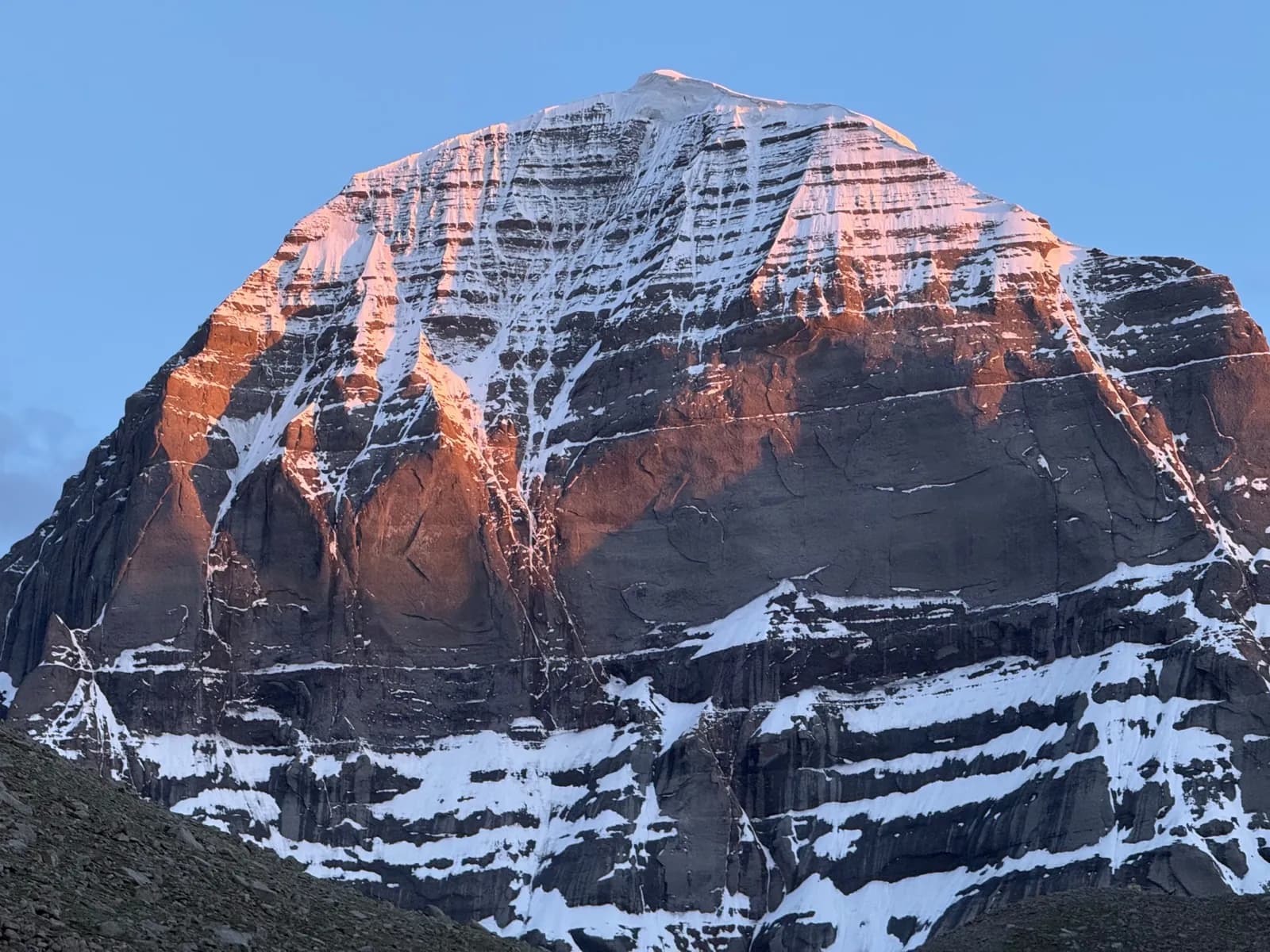
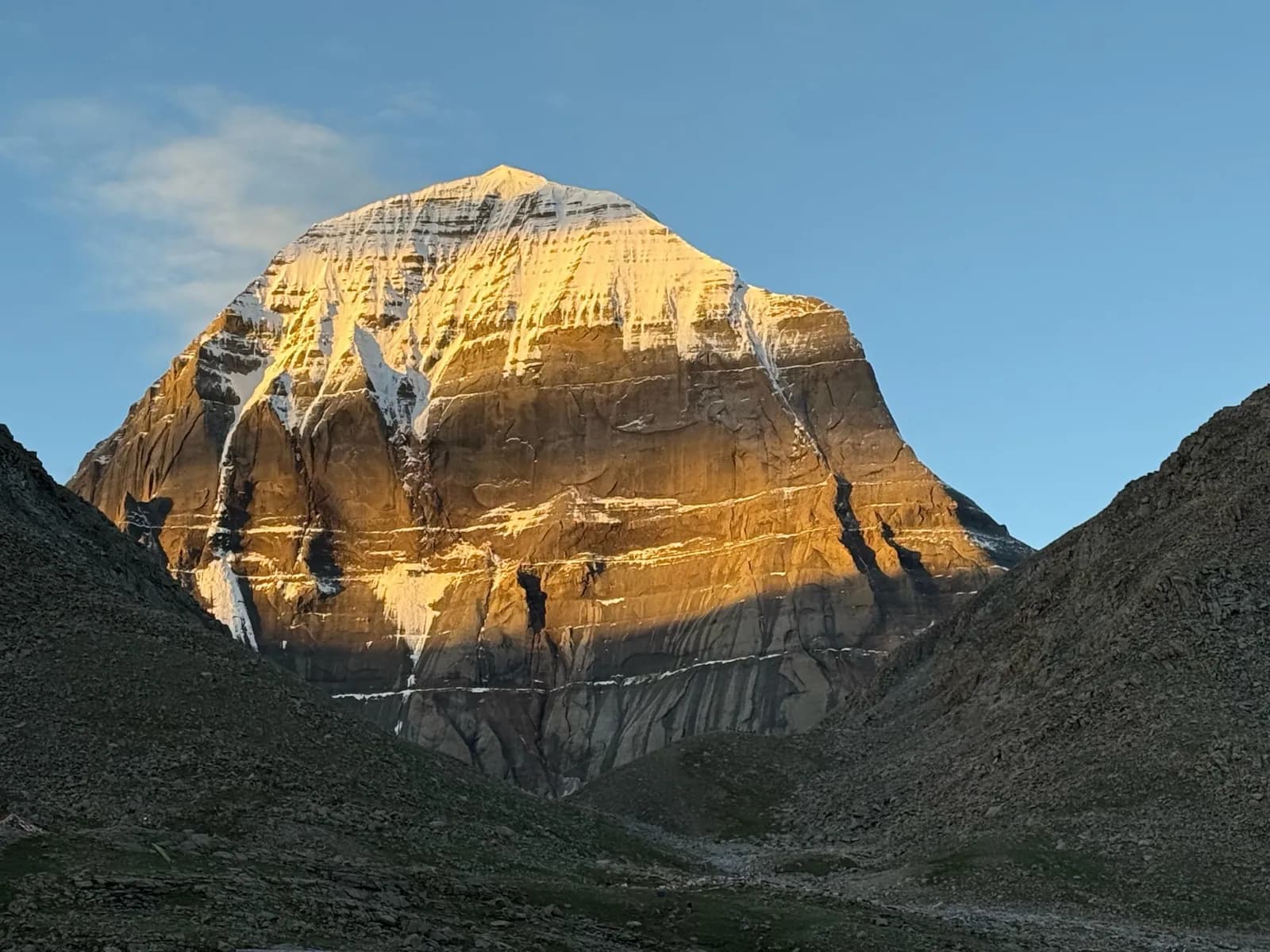
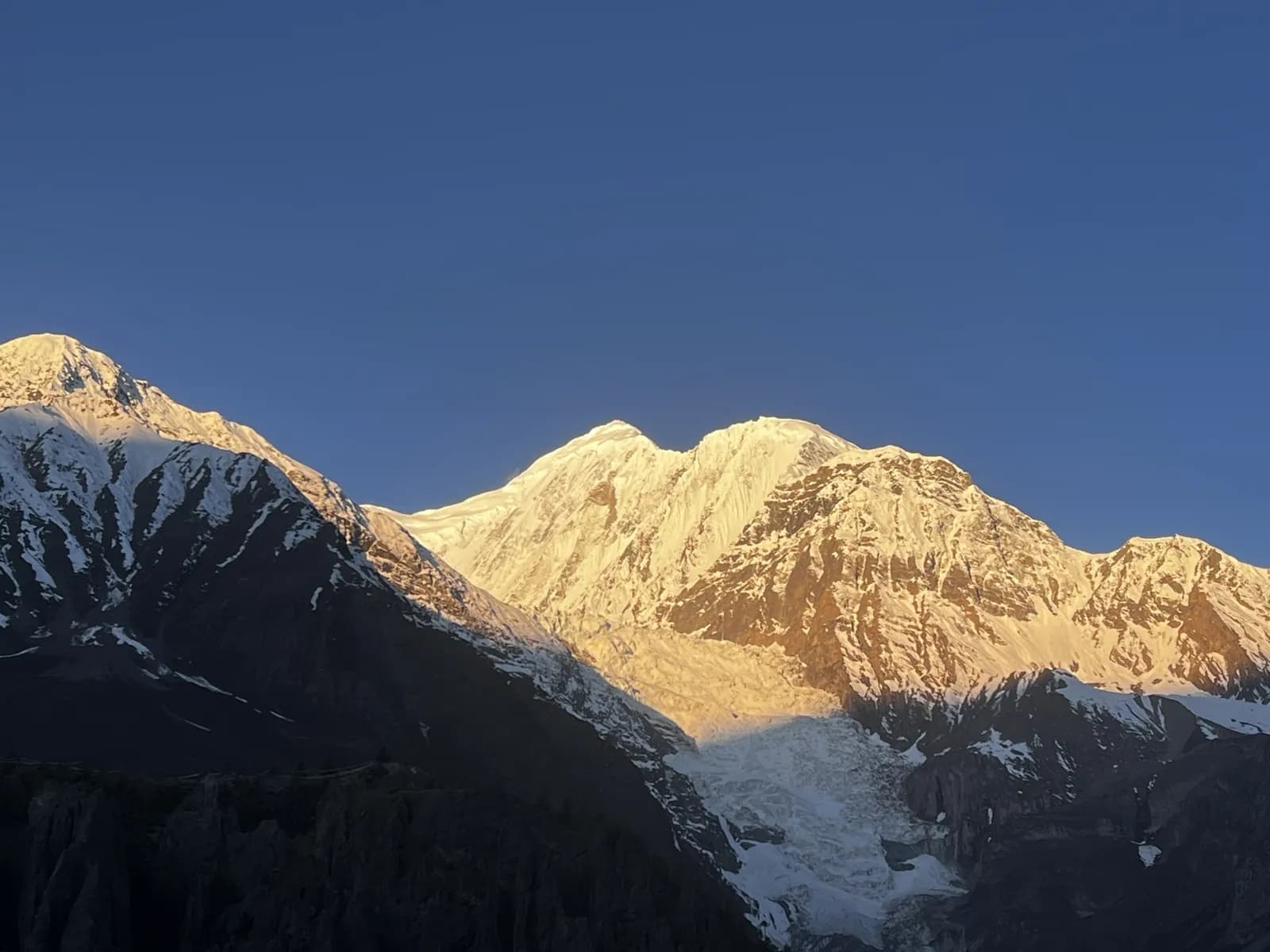
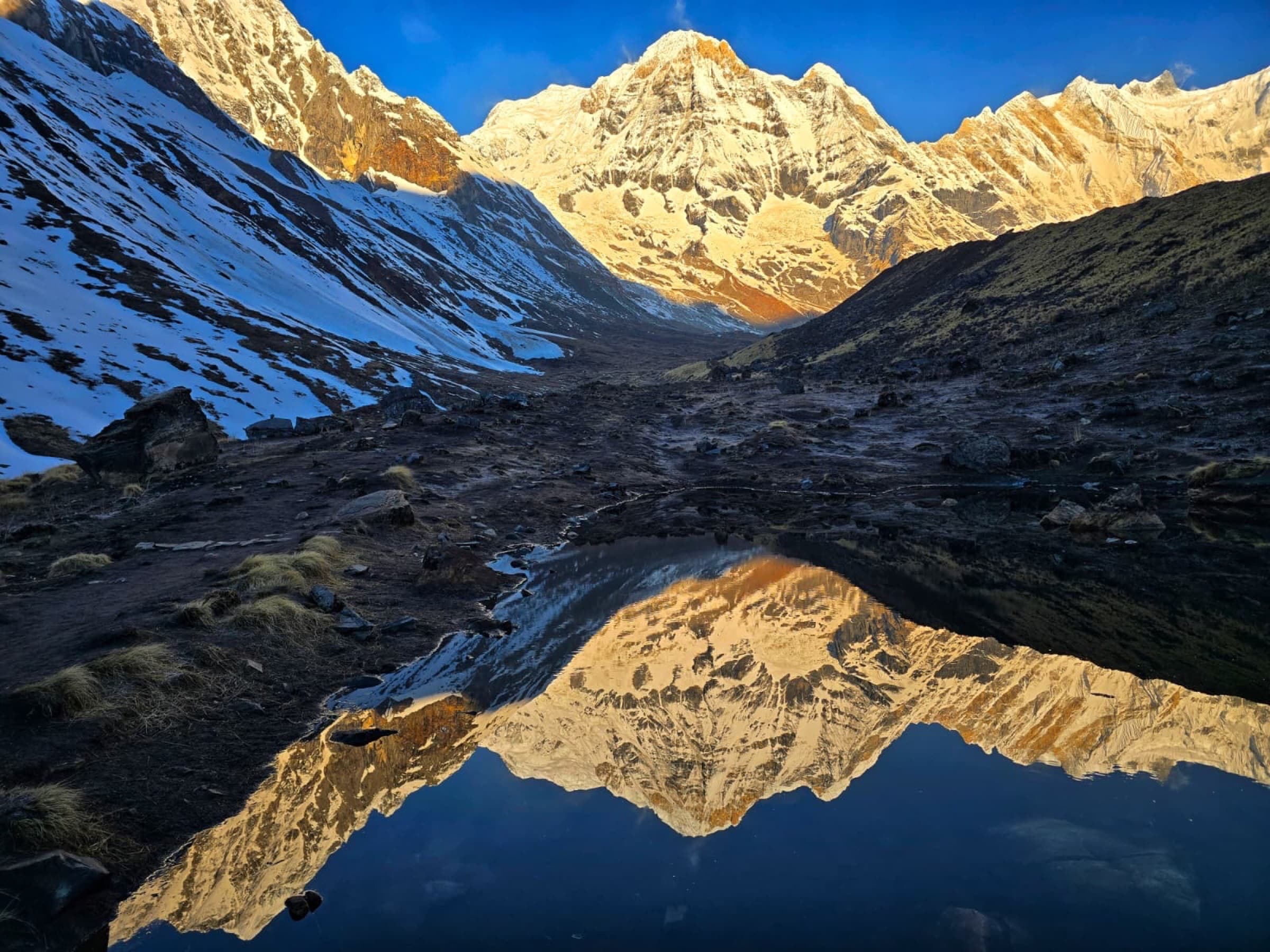
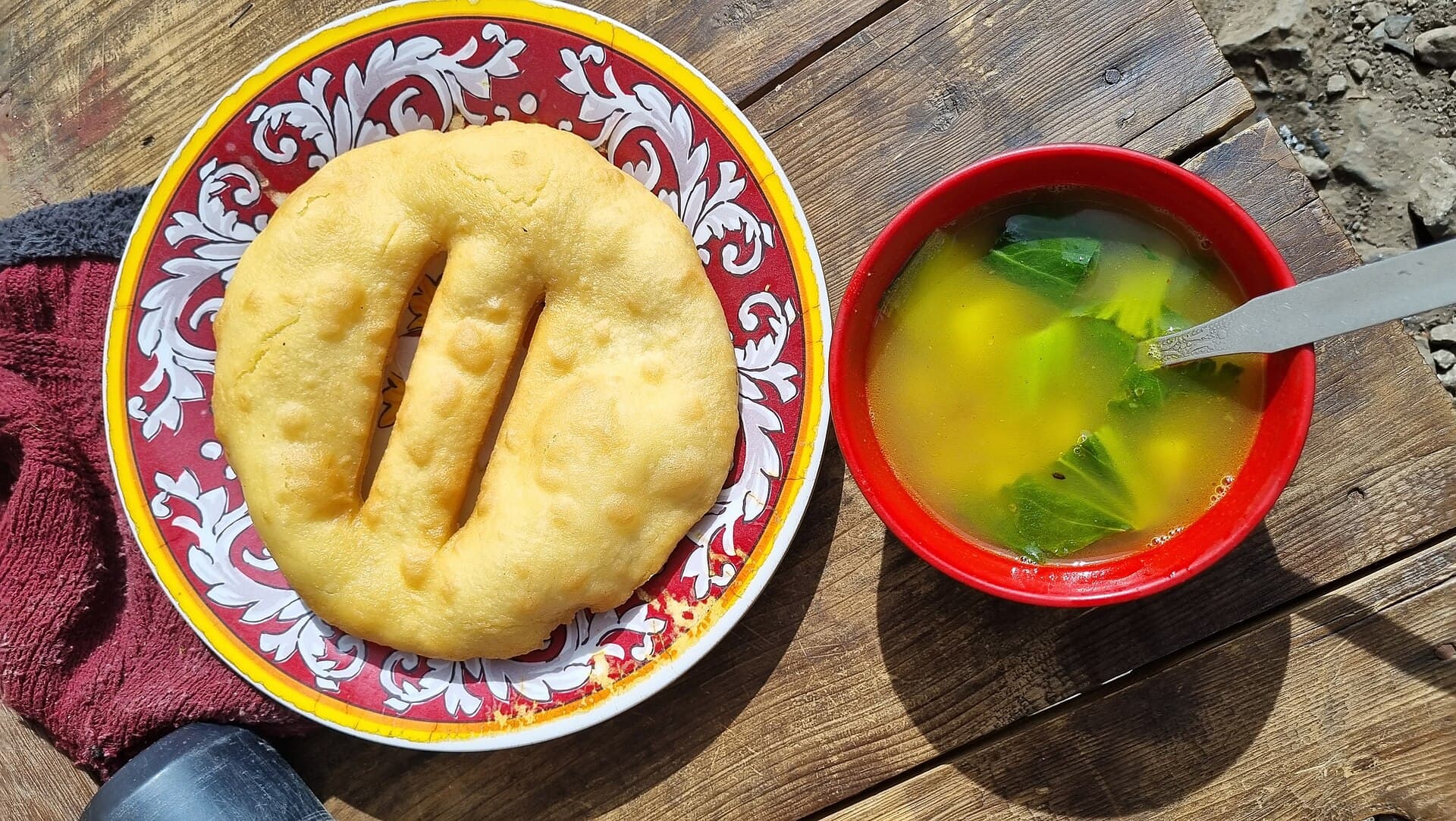
Breakfast
Porridge, Tibetan bread, eggs, chapati, pancakes, tea or coffee
A quieter, more remote alternative to the Annapurna Circuit, circling the world's eighth-highest mountain through remote villages with a strong Tibetan influence.
A quieter, more remote alternative to the Annapurna Circuit, circling the world's eighth-highest mountain through remote villages with a strong Tibetan influence.
A full circuit of the world's eighth-highest mountain, up the Budhi Gandaki gorge and over a 5,106 m pass to join the upper section of the Annapurna Circuit. There are eleven walking days through an area that was closed to foreigners until 1991 and is still a restricted area today. It is similar to the Annapurna Circuit of thirty years ago: there is no road through the middle section, the villages are Tibetan in language and religion rather than Nepali, and there are far fewer trekkers.
This trek suits someone who has already done a Himalayan trek and wants the next one to be quieter rather than higher. It is not technically harder than the Annapurna Circuit, but it is much more remote: there are fewer lodges, fewer good ones, no road to walk out to for a week in the middle, and no helicopter landing site until Samagaon. If your first trek went well and you would have preferred fewer people on the trail, this trek is a good choice.
The Budhi Gandaki cuts a narrow channel through the foothills, and the trail is cut into its side. Days 4 to 6 are therefore a continuous series of climbs and descents that gain very little height and are tiring on the legs. There are suspension bridges, landslide crossings and stone staircases, and the views are of the gorge walls rather than the mountains. It is the least scenic section of any of our treks, but it leads to the upper half of the route, which is among the best.
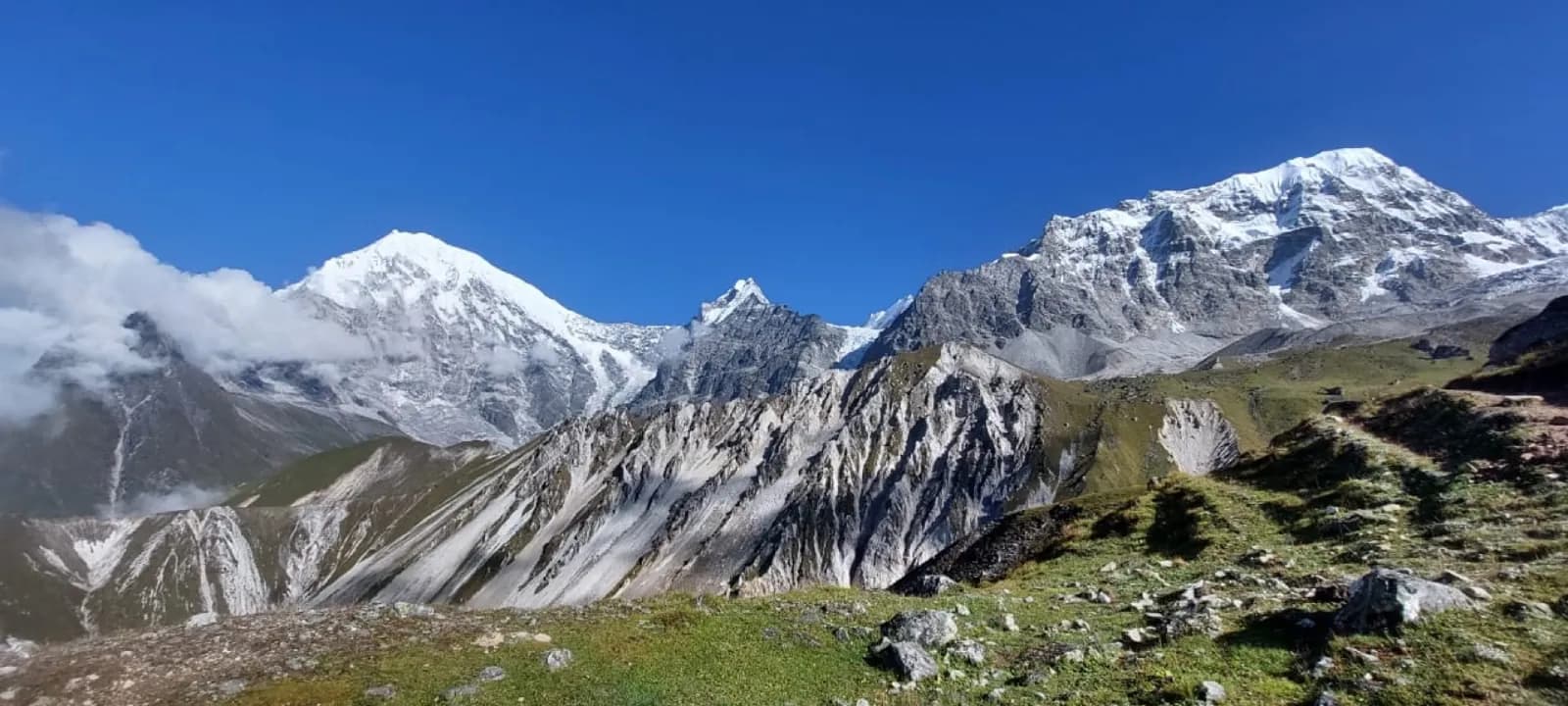
Samagaon, at 3,530 m, is the acclimatisation stop. It prepares you for a pass 1,576 m higher, with a night at 4,460 m in between. It is also the best place on the trek to spend a day: Birendra Lake is an hour away, Manaslu Base Camp is a hard day hike above it, and the Pungyen Gompa sits on a moraine with the mountain directly behind. Some itineraries skip this day, and their trekkers are the ones who turn back at Dharamsala.
An Earthbound Expeditions representative meets you at Tribhuvan International Airport and transfers you to your hotel to rest.
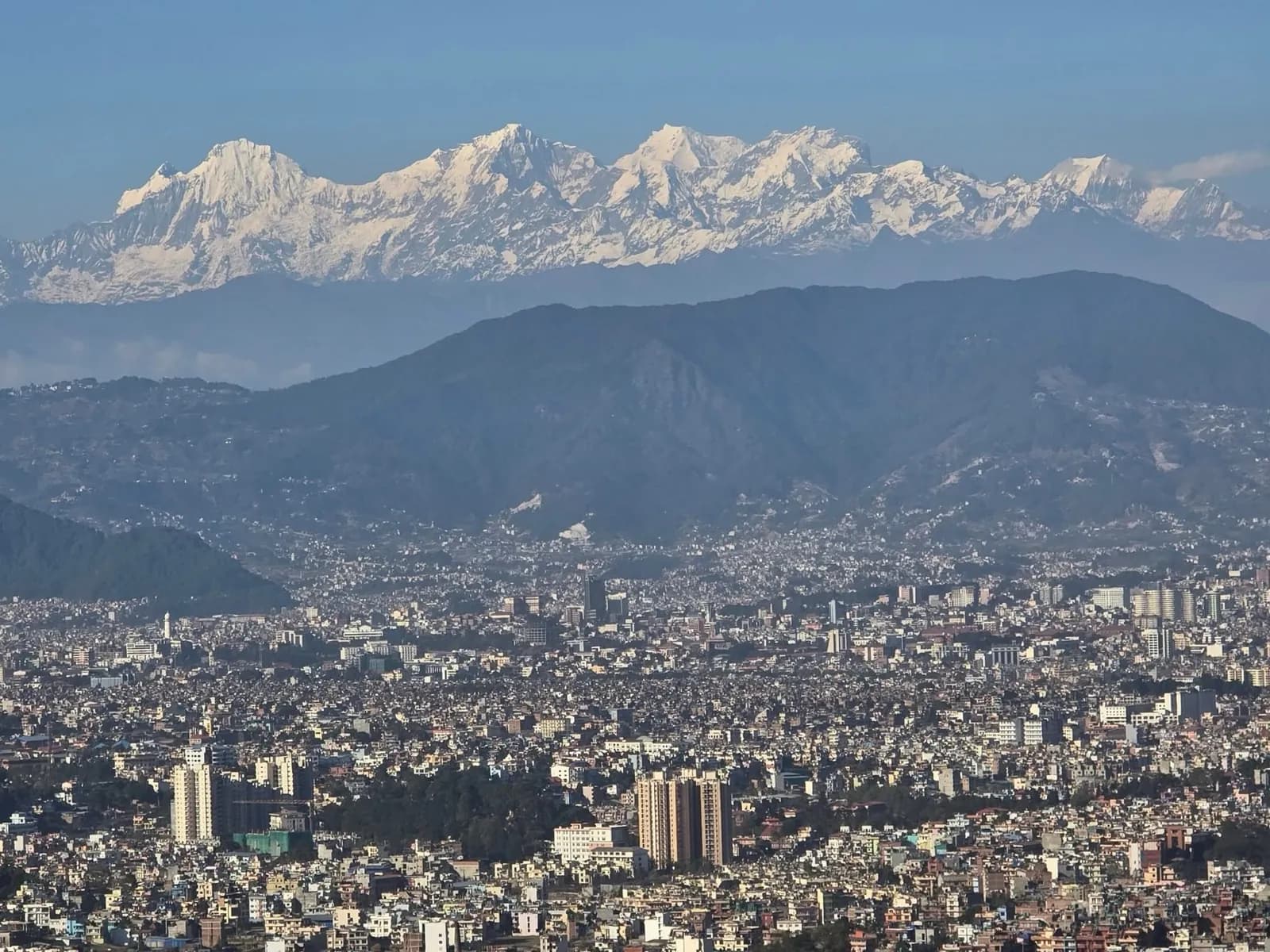
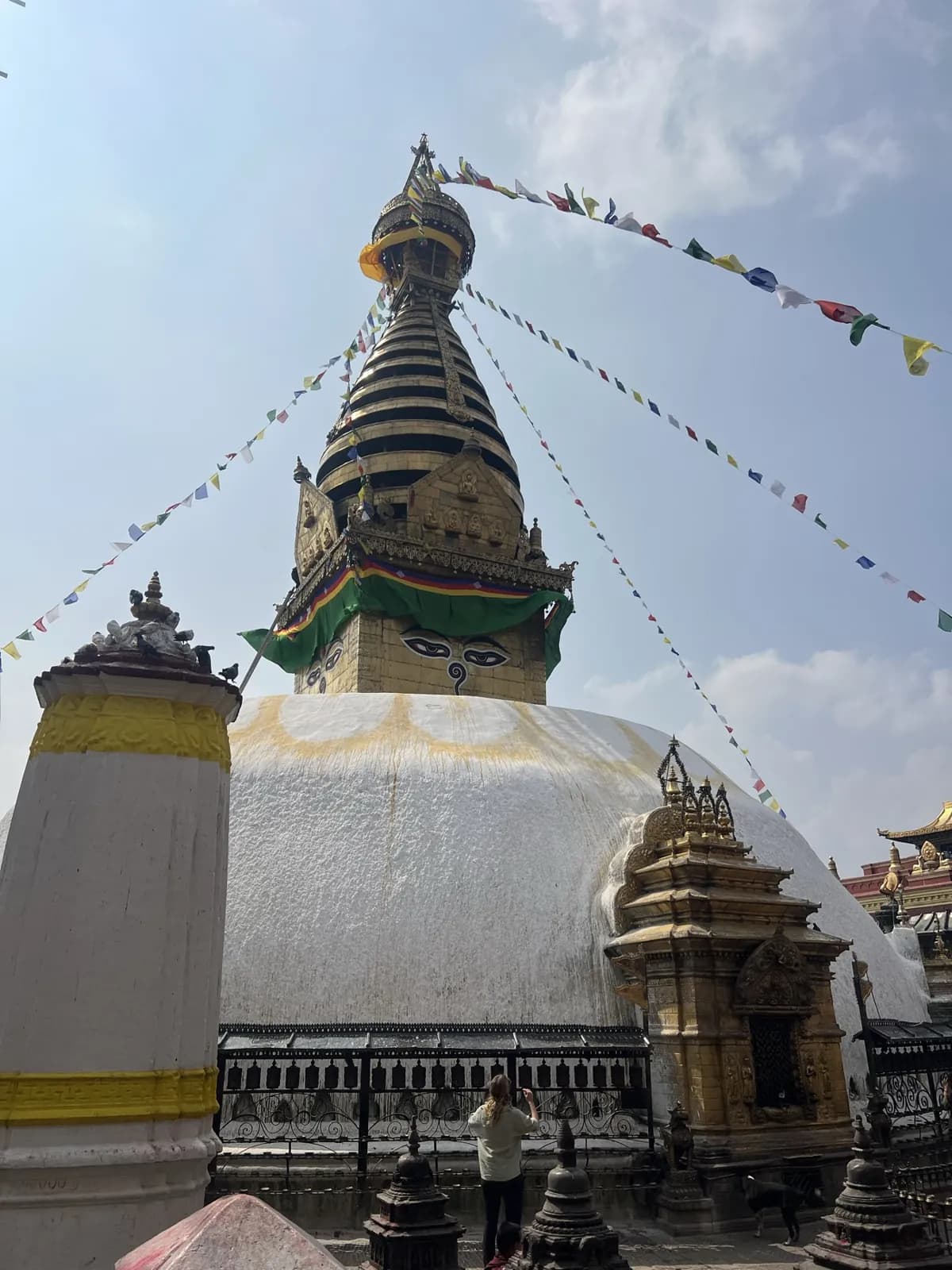
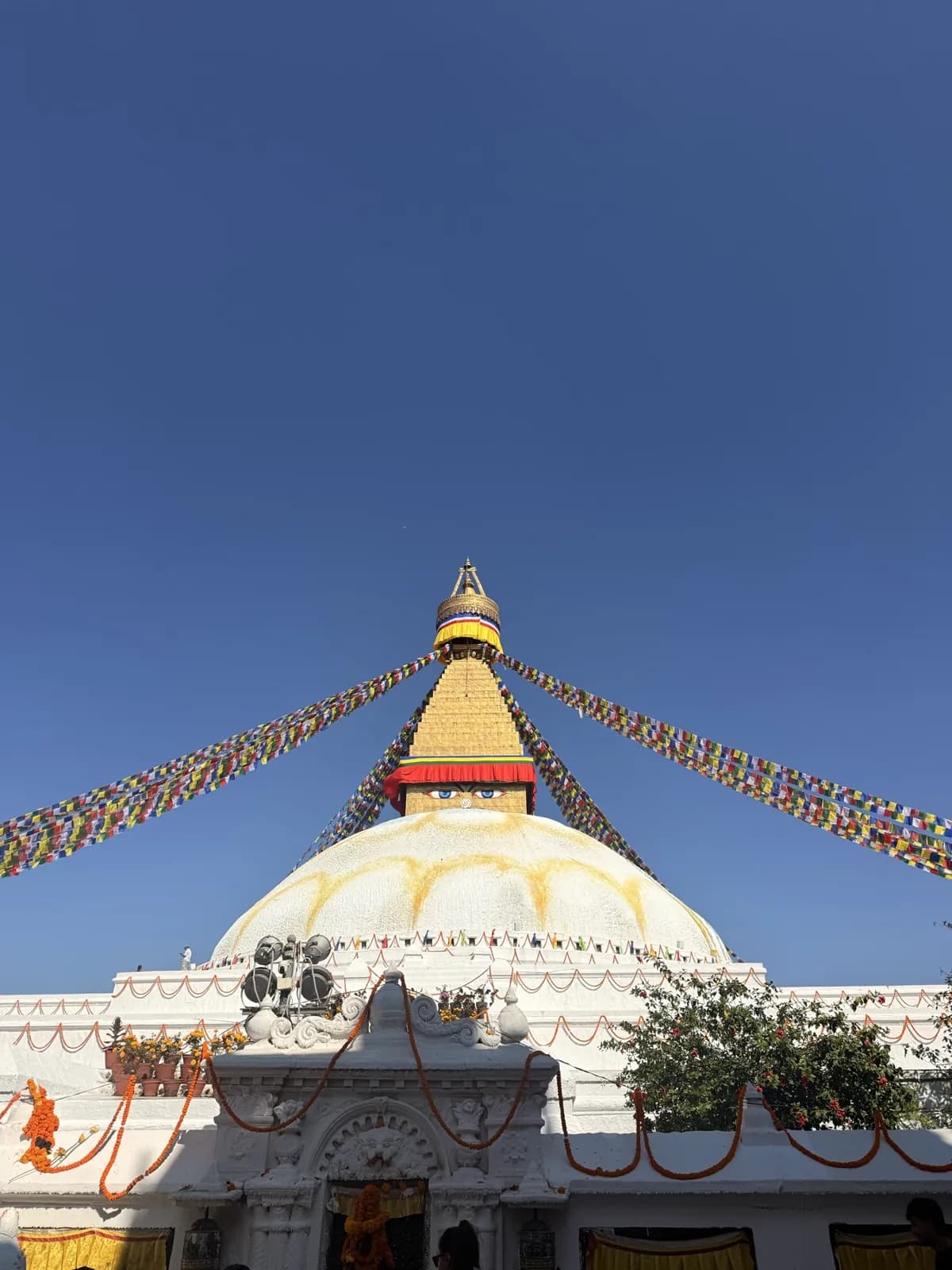
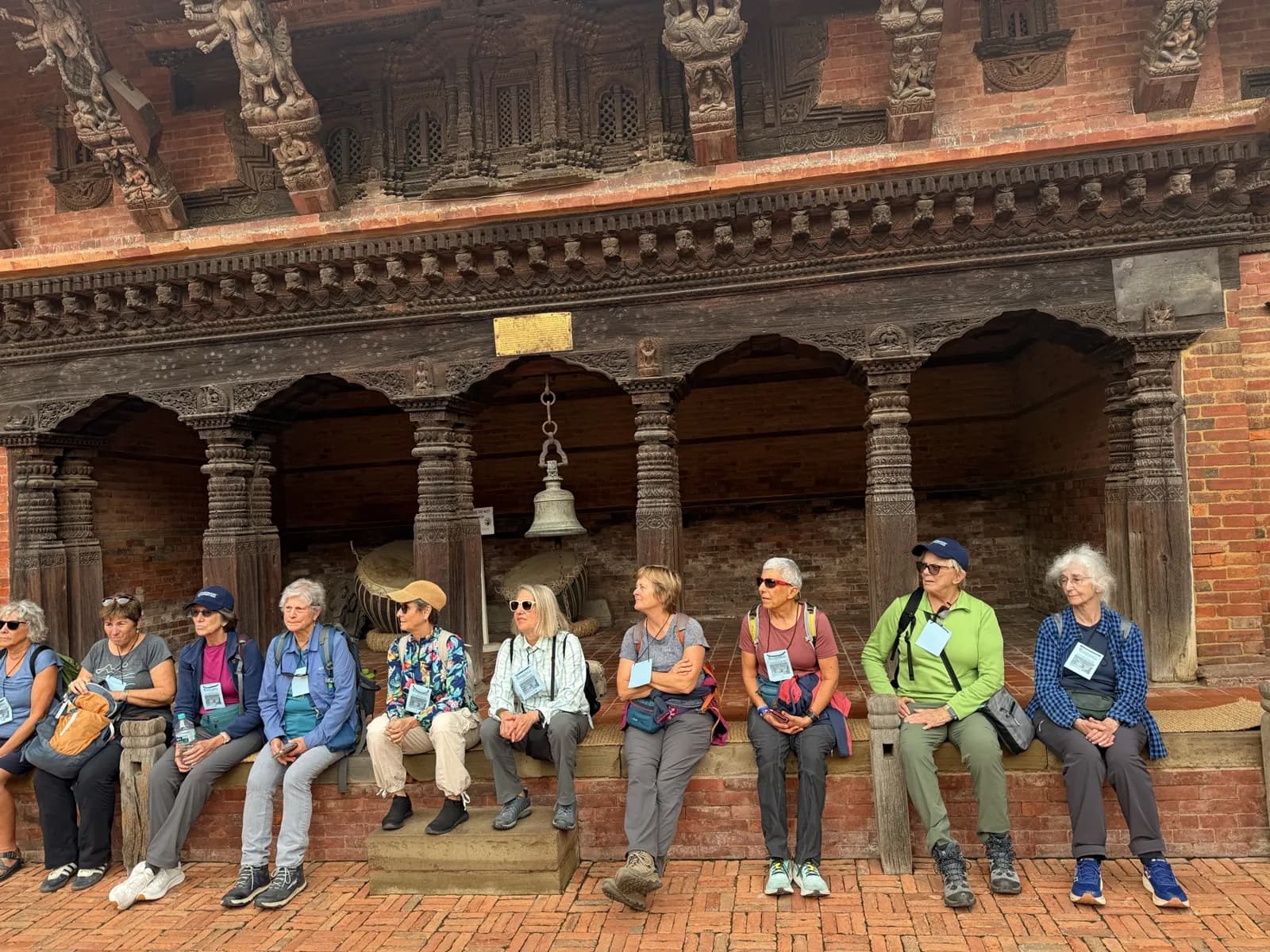
A tour of UNESCO World Heritage Sites, including Swayambhunath Stupa, Boudhanath and Pashupatinath, followed by a pre-trek briefing. Overnight in a hotel.
An 8 hour drive over rough roads passes Arughat on the Budhi Gandaki River and continues through Soti Khola to Maccha Khola. Overnight in a simple riverside teahouse.
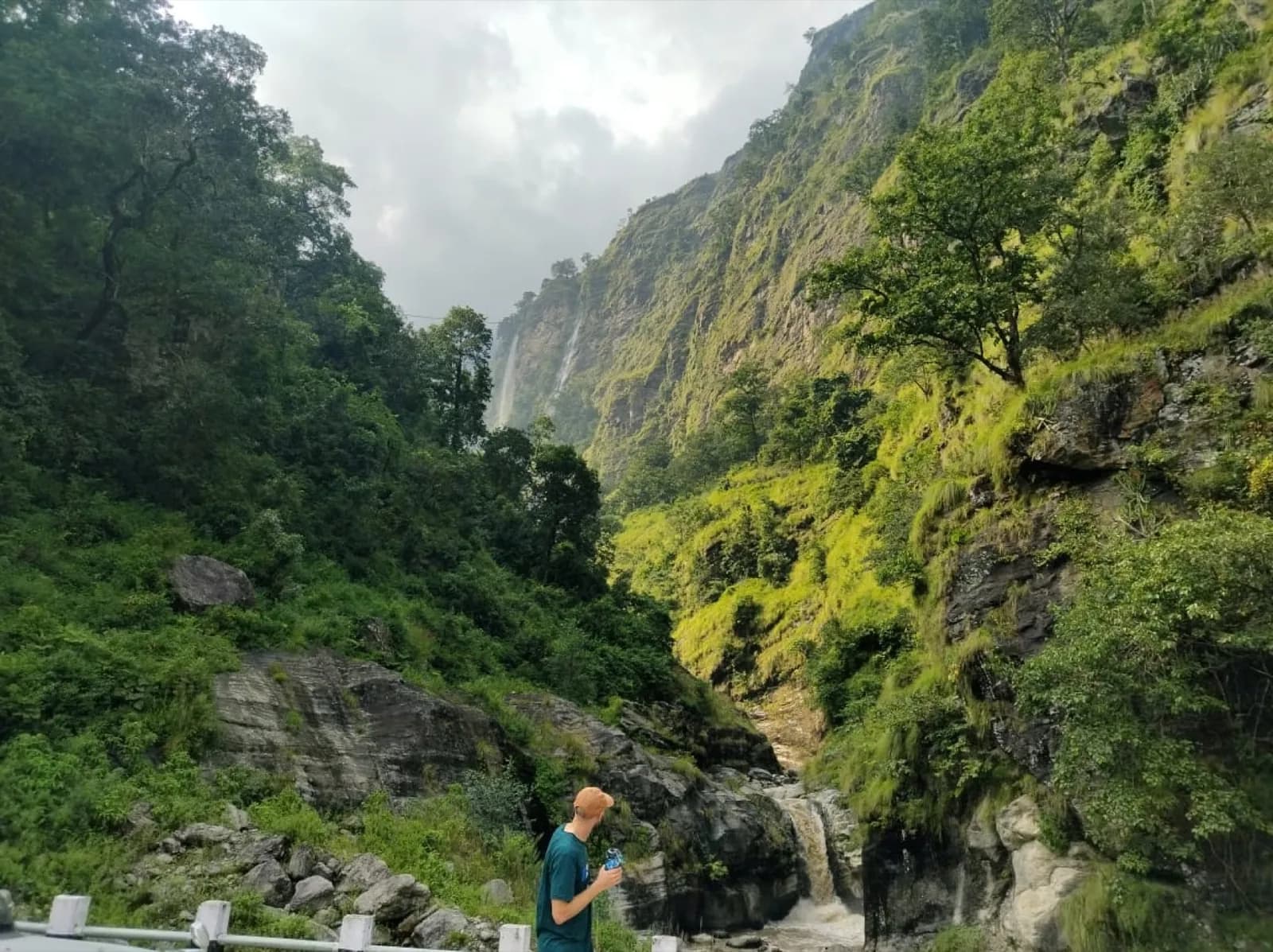
A 6 to 7 hour trail climbs and descends past the Tatopani hot springs, over ridges and bridges above the Budhi Gandaki gorge, to the traditional village of Jagat. Teahouse accommodation.
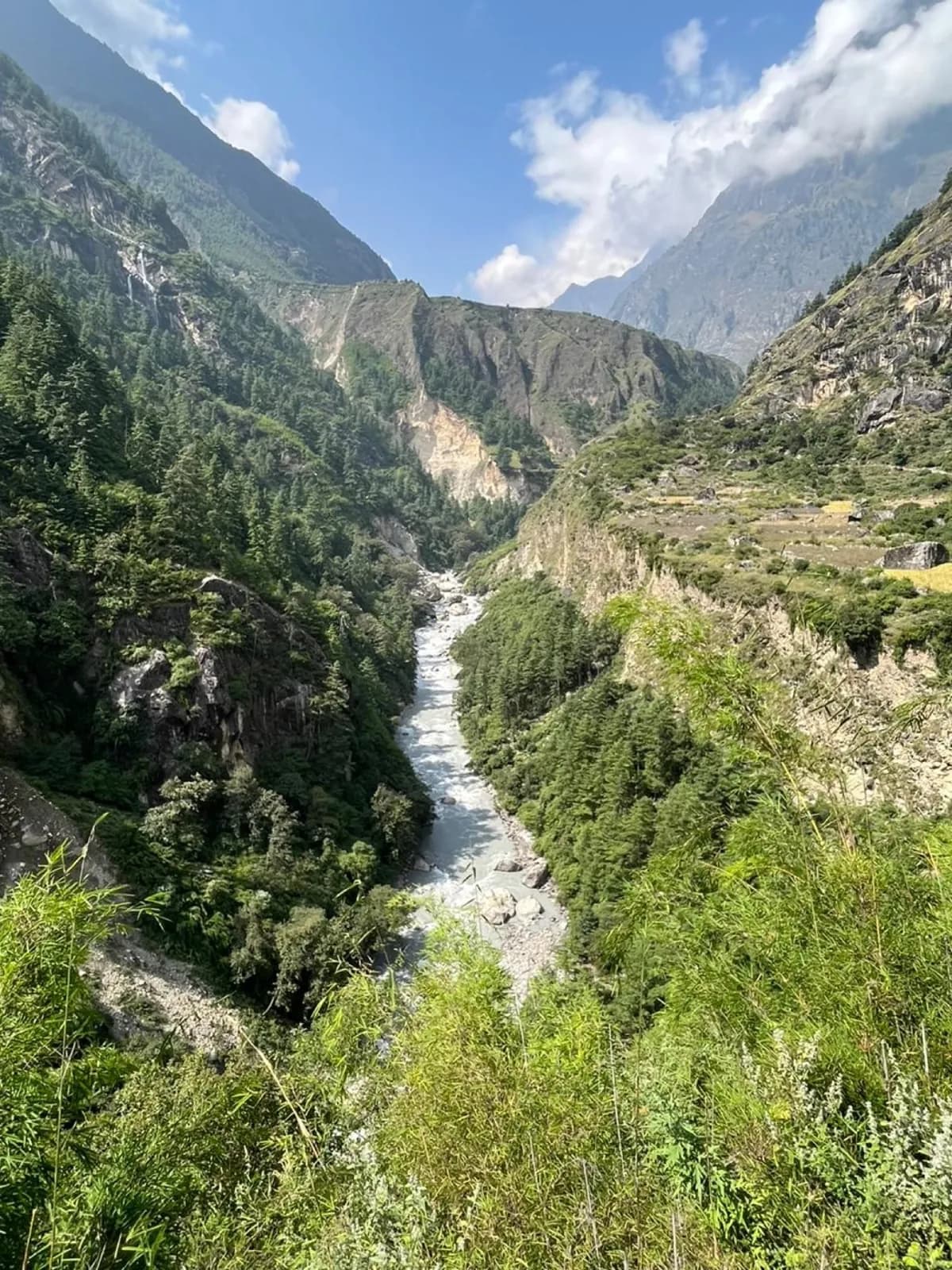
About 18 km of walking climbs to Salleri, then descends through Philim and Ekle Bhatti, crossing millet fields and bamboo forests to the Himalayan village of Dyang. Teahouse accommodation.
Beyond Deng, the route crosses the Budhi Gandaki, climbs to Rana and heads west through forests to Ghap, known for its mani stones, waterfalls and views of snow-capped peaks. Teahouse accommodation.
A 5 to 6 hour trail crosses the Simnang Himal side valley to Lho, which has a large gompa and a carved chorten, and close views of Mount Manaslu. Teahouse accommodation.
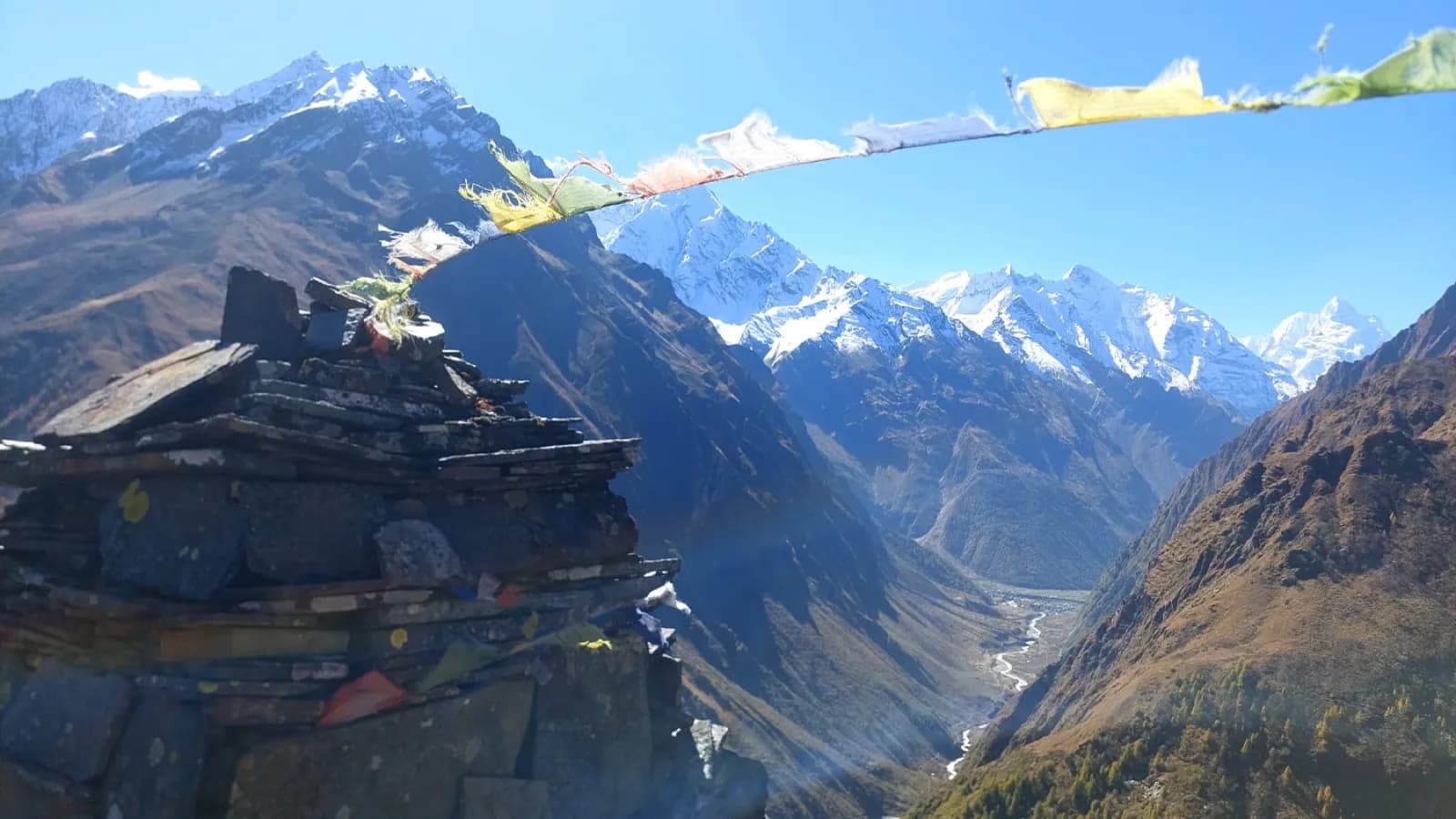
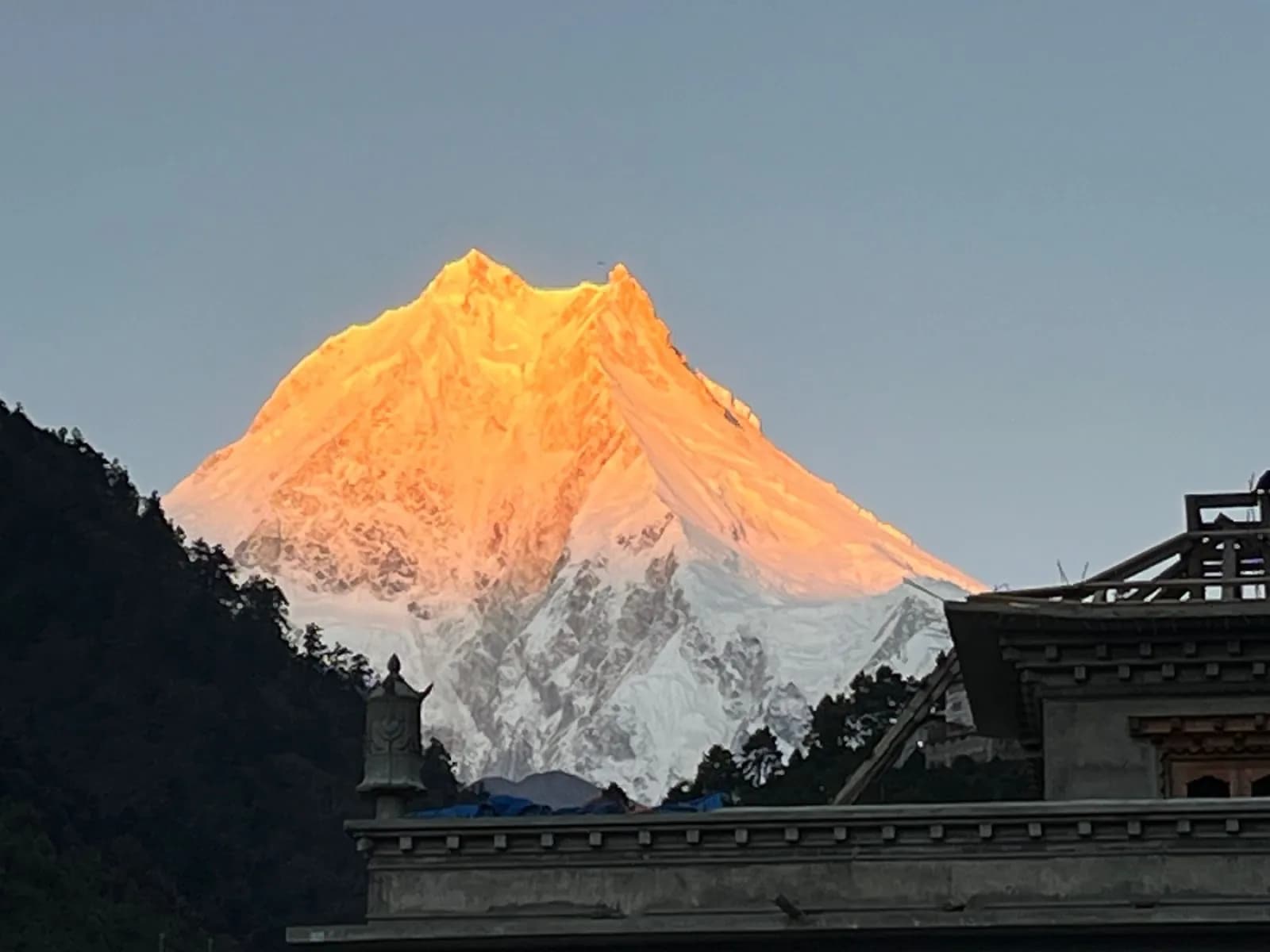
A 6 to 7 hour route via Shyala crosses rough terrain beneath Manaslu and large glaciers, with a visit to Pungyen Gompa. Samagaon is an essential acclimatisation stop. Teahouse accommodation.
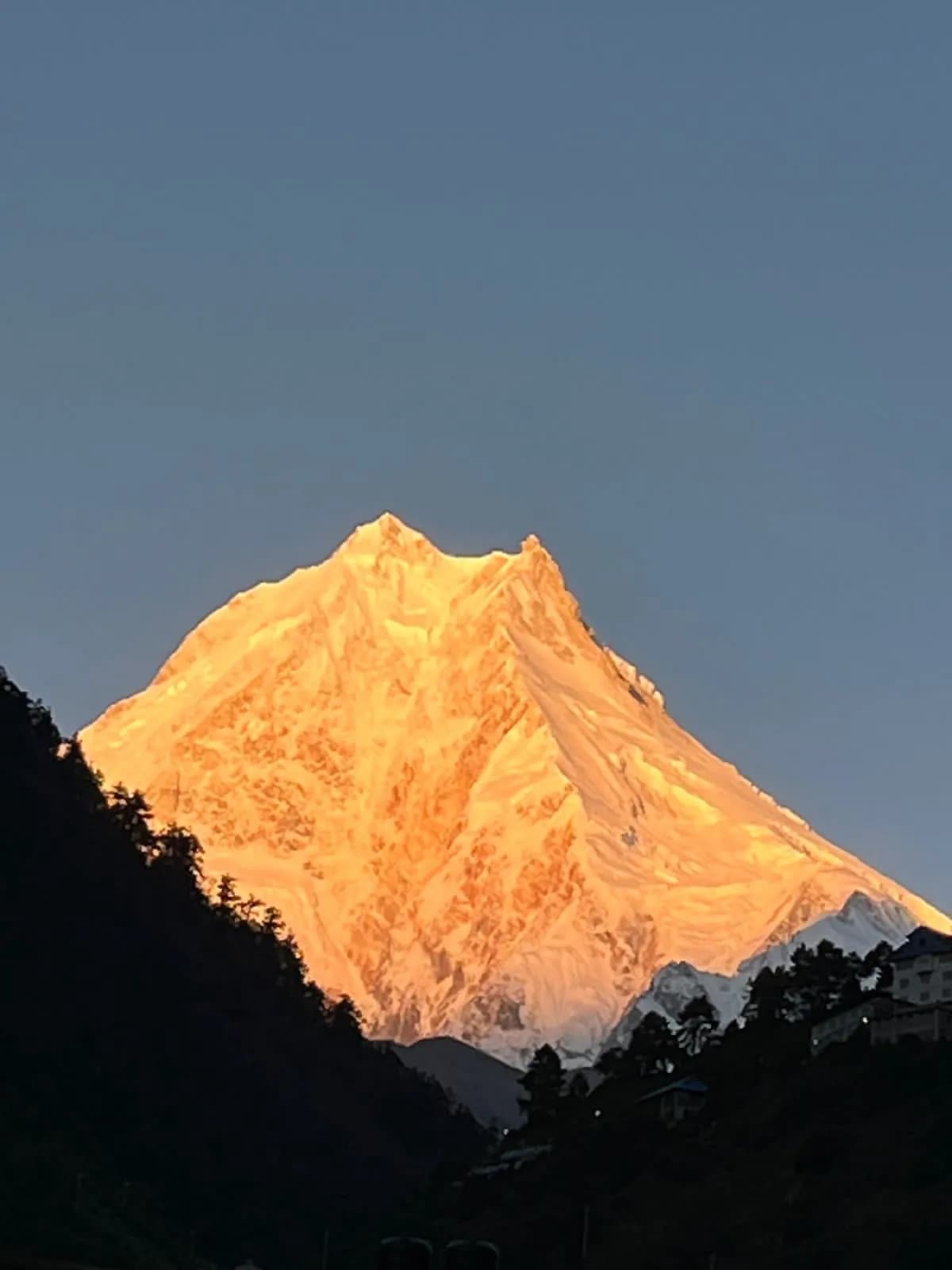
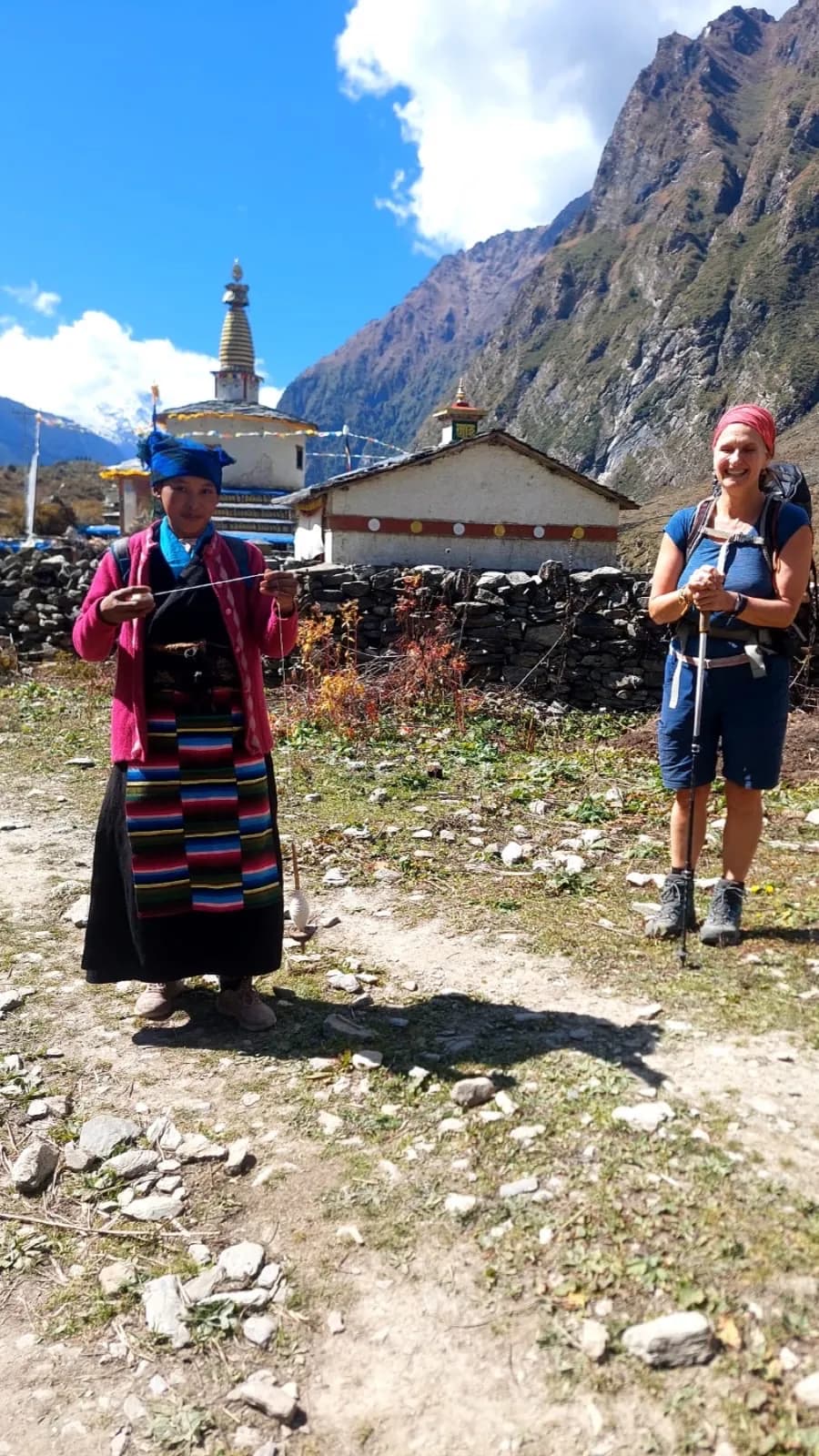
The route descends to the Budhi Gandaki River, then crosses bridges and passes through birch forests at Kermo Kharka to Samdo, a small Bhotia village of Tibetan origin with monasteries and chortens. Teahouse accommodation.
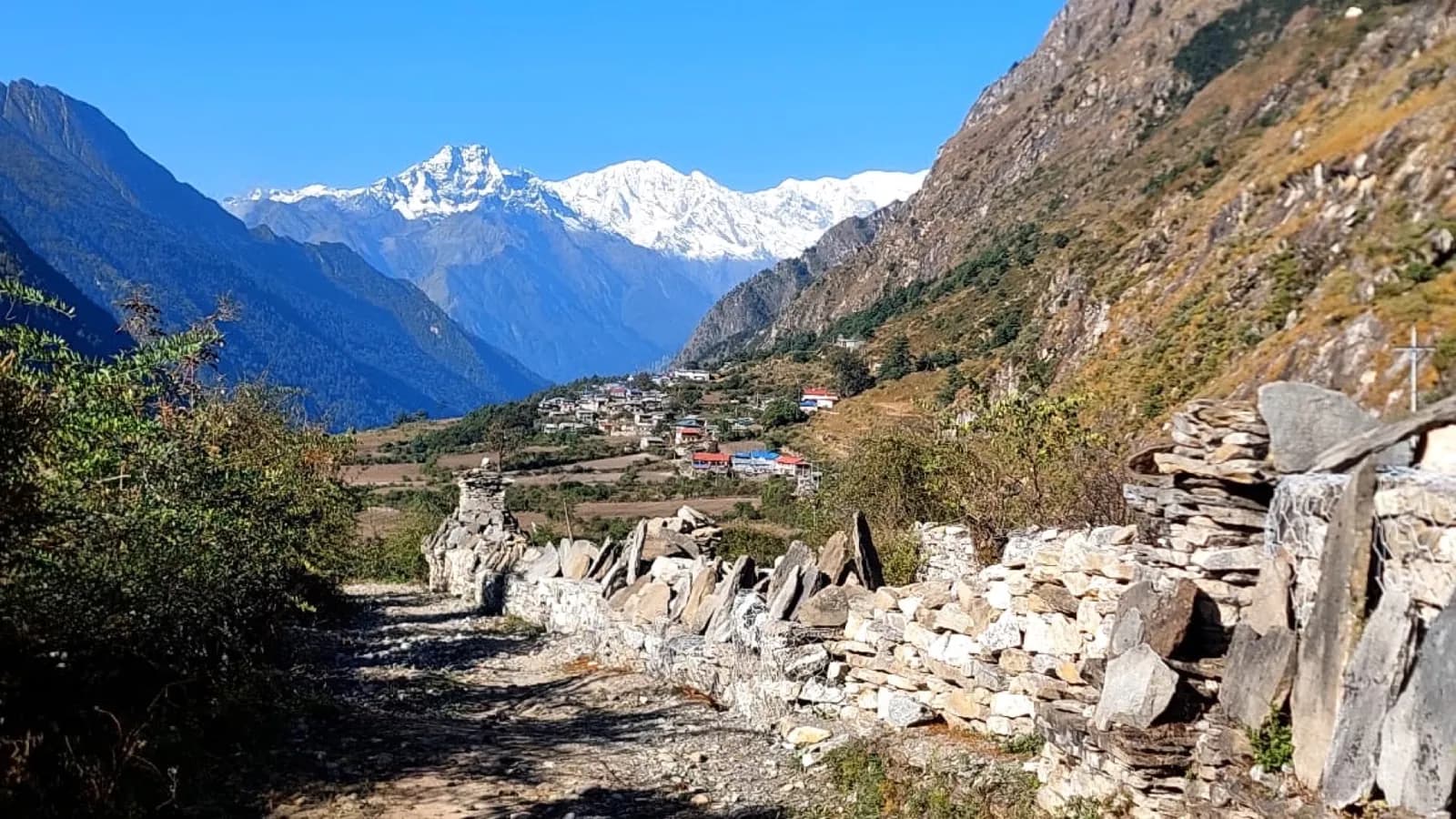
A rest day before the Larkya La, with an optional hike along old Tibetan trade routes offering views of Manaslu, Simrang and Ngadi peaks. Teahouse accommodation.
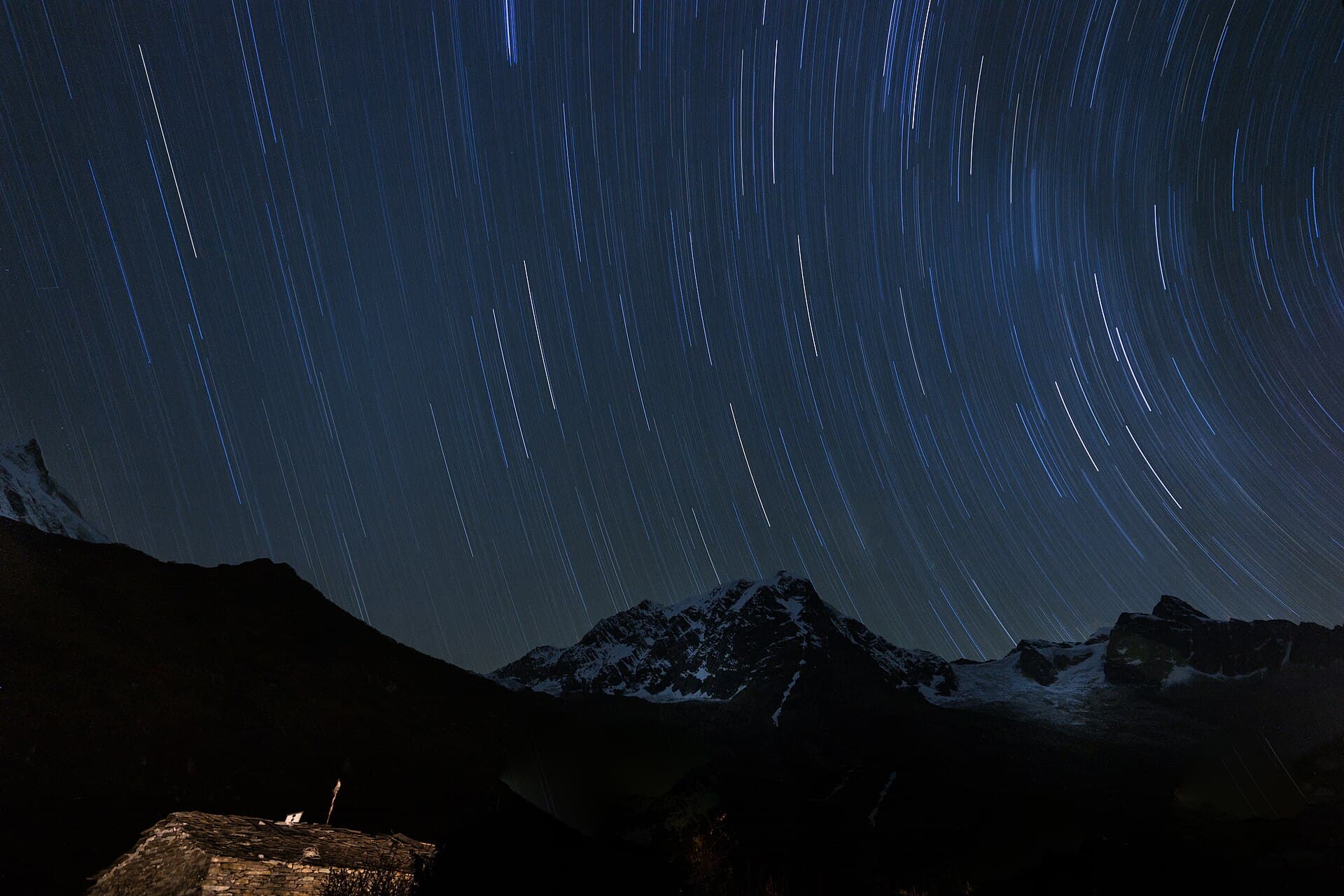
A 4 to 5 hour day along narrow trail edges and over wooden bridges passes the Larkya Glacier and the Salka Khola valley to Dharamsala, via the seasonal Larkya Bazaar. Overnight in a stone shelter.
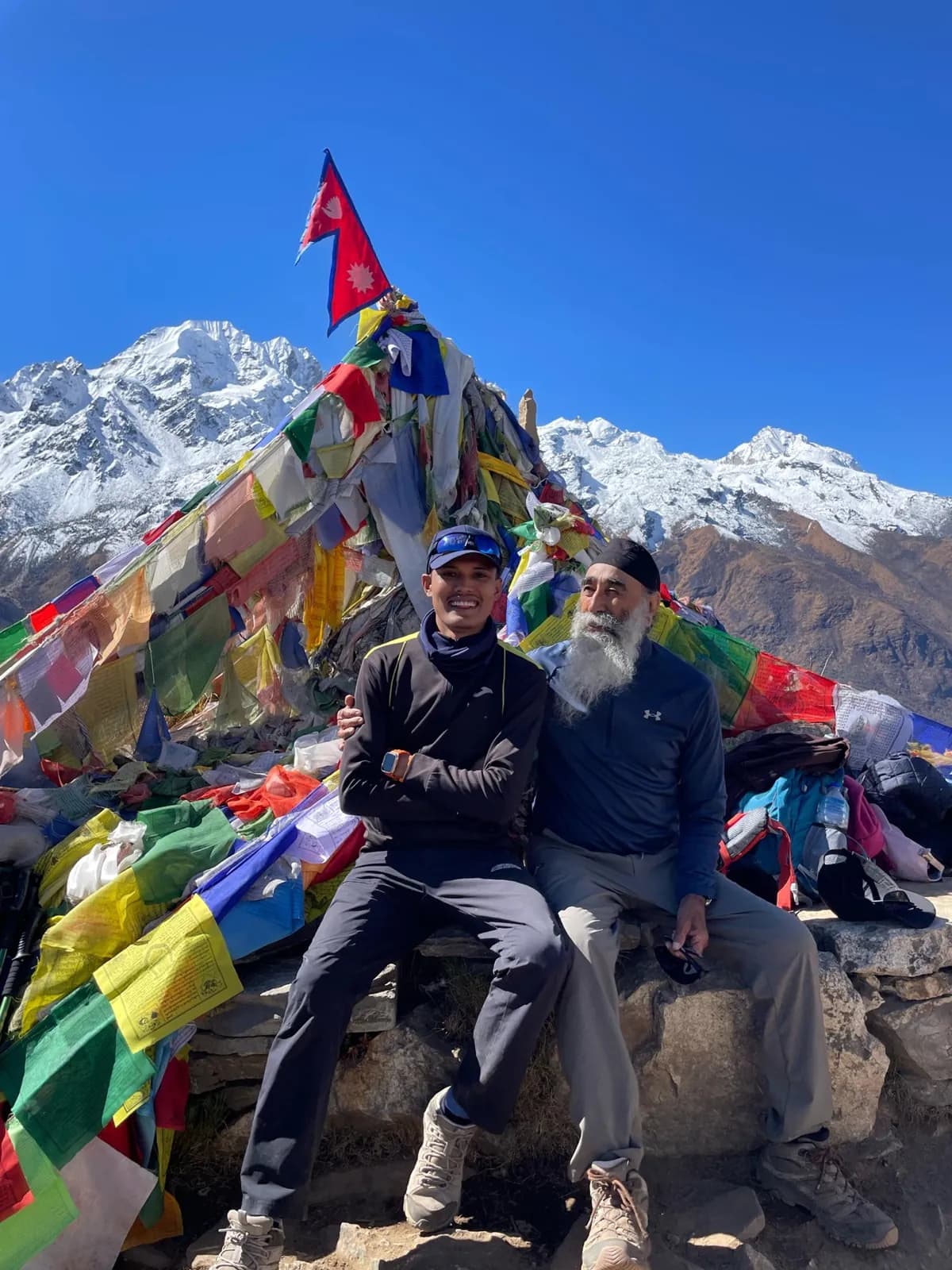
This is the longest day, about 24 km. The route climbs to the Larkya Glacier and crosses the pass, one of the hardest parts of the trek, with views of Himlung, Cheo and Kang Guru, before a steep descent to Bimthang. Teahouse accommodation.
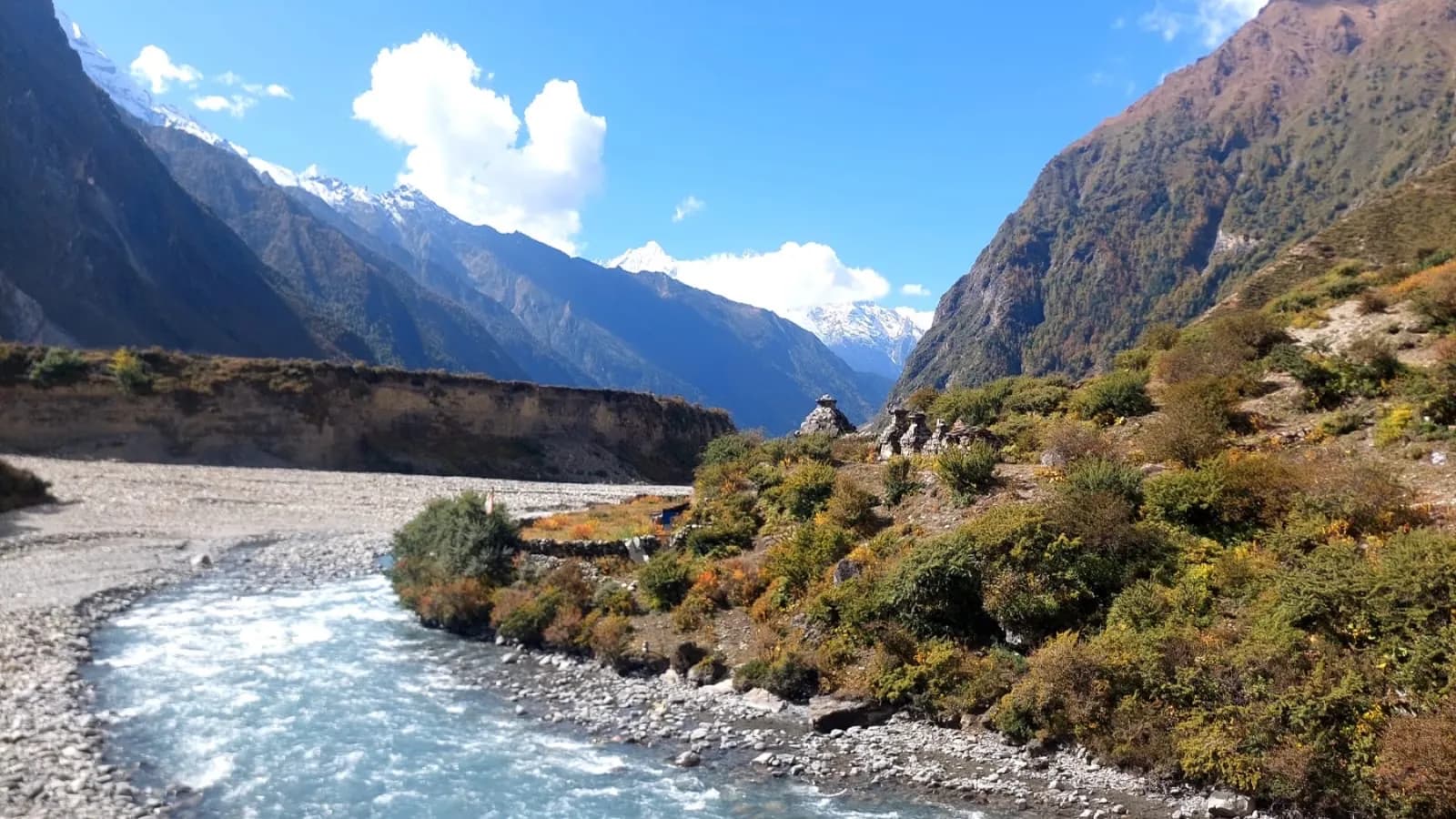
About 13 km of descent through the Sangure Kharka pastures, across the Dudh Khola and through rhododendron forests and Karche, to the village of Tilje. Teahouse accommodation.
A walk along dirt roads through the Marsyangdi valley rejoins the Annapurna Circuit at Dharapani. A 7 to 8 hour jeep or bus journey then returns to Kathmandu, followed by an evening cultural show and dinner.
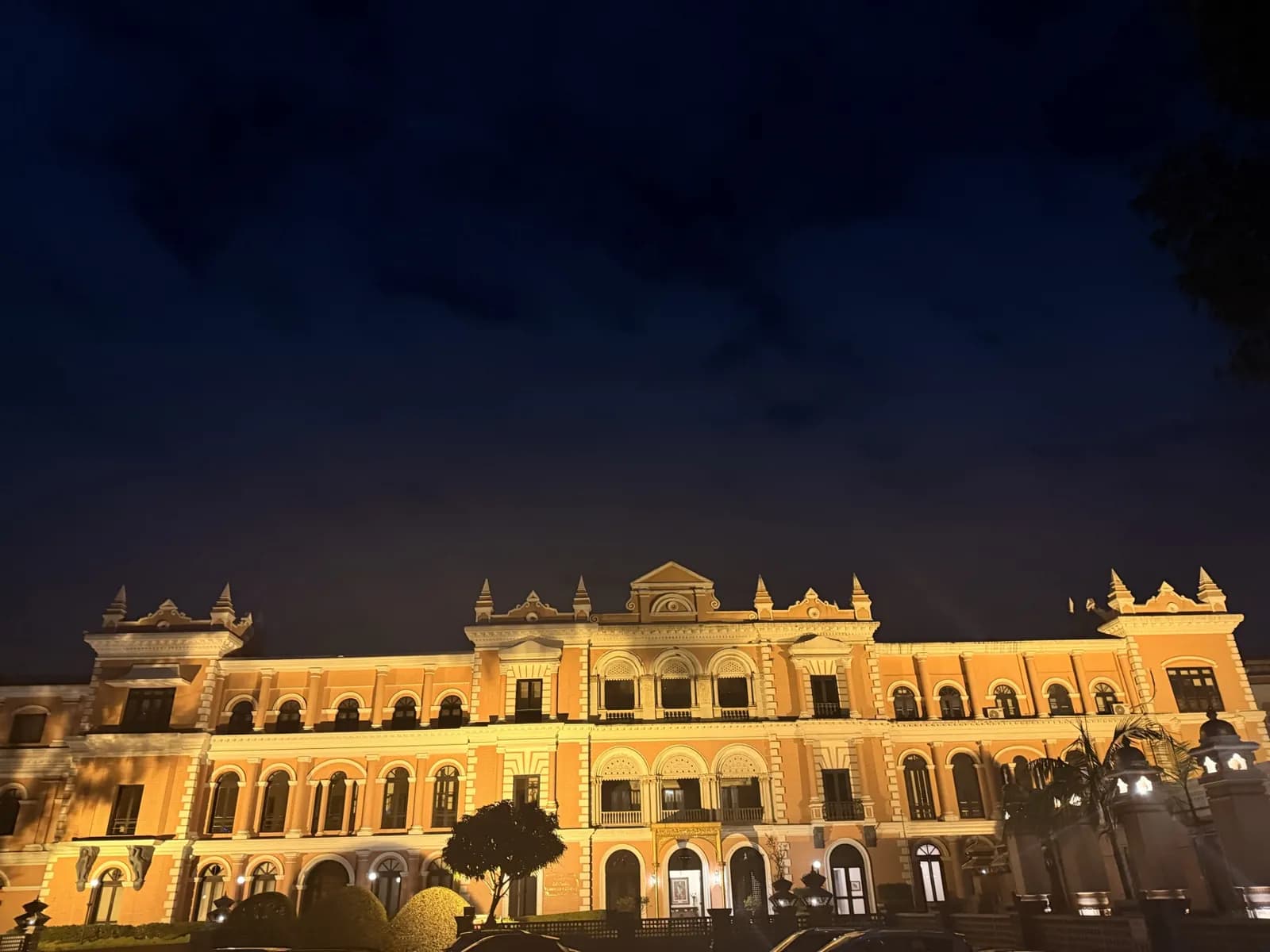
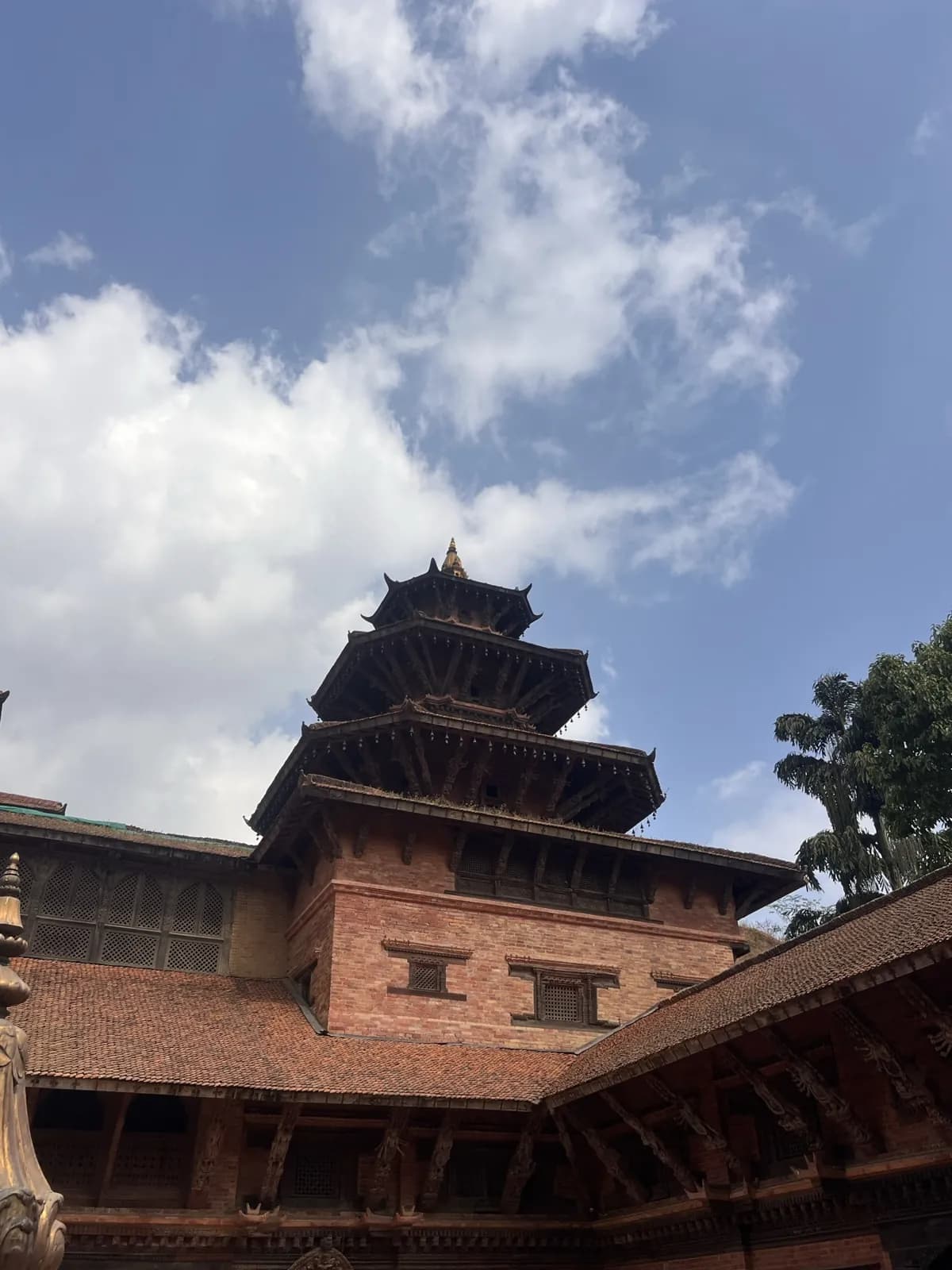
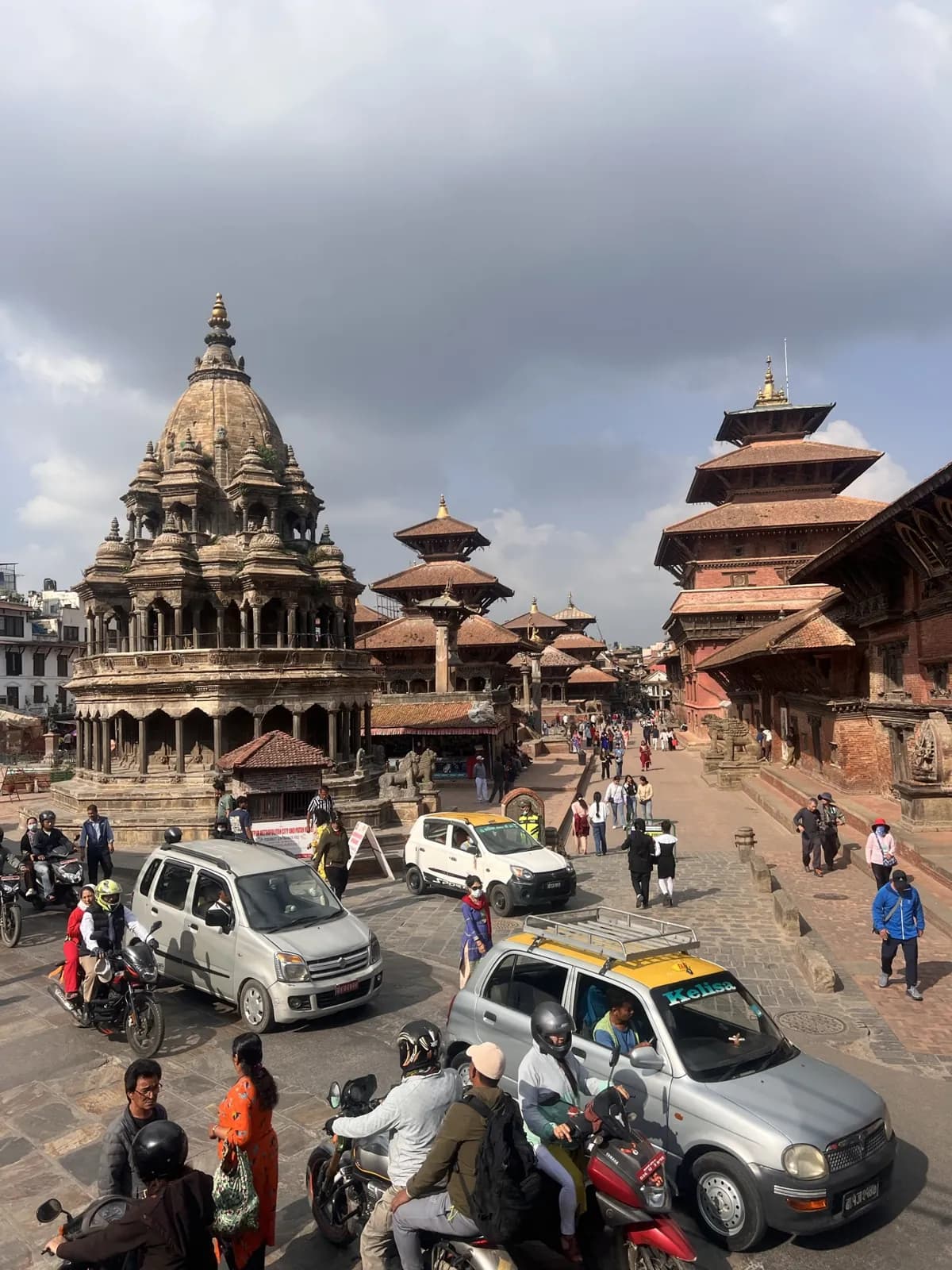
You may end or extend your trip. If you are departing, we provide transport to Tribhuvan International Airport.
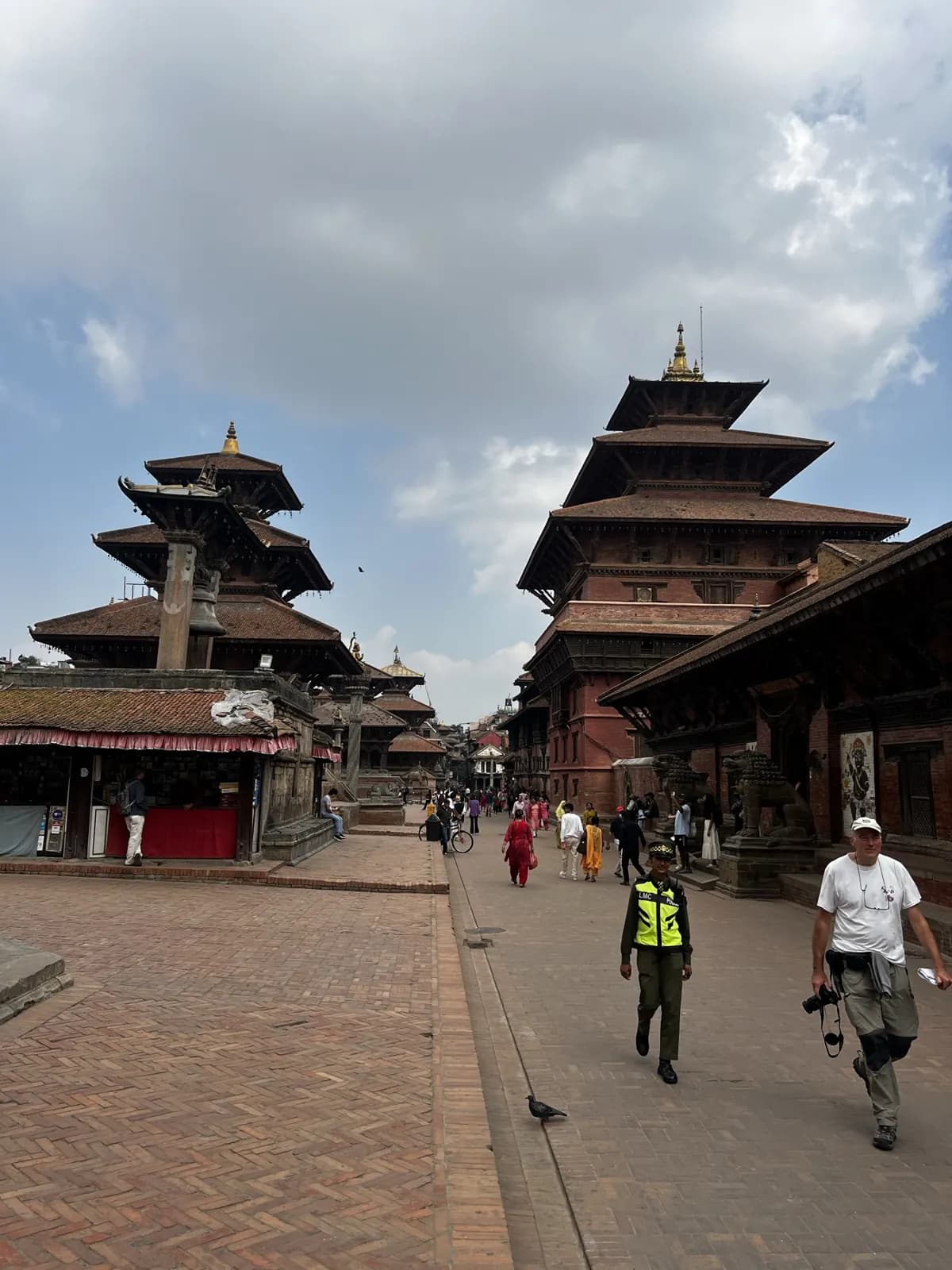
Start date
19 Apr 2027
End date
3 May 2027
Available
10 places left
US $1,637
Per person
Start date
20 Oct 2026
End date
3 Nov 2026
Available
10 places left
US $1,687
Per person
Start date
19 Oct 2027
End date
2 Nov 2027
Available
10 places left
US $1,687
Per person
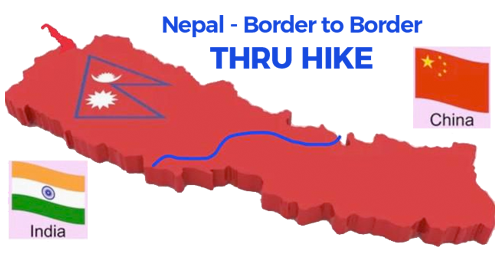
The trail from start to finish, at a glance.
Weight limit and supplies
Your porter carries a strict maximum of 20 kg, shared between two trekkers. There are no flights on this trek and no shops after day 8, so you must bring everything you need from Kathmandu. We provide the duffel bag and the sleeping bag.
There is no mountain airstrip on this trek. Instead, there are about eight hours of rough jeep track at each end, and the monsoon can close the road.
Nothing on this trek depends on a nineteen-seat aircraft landing on a sloping airstrip, so nothing on it can be delayed for three days by weather. This is a real advantage over the Everest treks, and it is why this itinerary has no spare day. Instead, the trek relies on roads, which have their own problems.
The drive from Kathmandu takes about eight hours: paved road to Arughat, then a rough single-track road cut into the side of the Budhi Gandaki gorge. It is uncomfortable, at times unnerving, and very scenic. We use a private jeep rather than the shared local one, which makes the long day much more comfortable.
The track is extended further up the valley every year, and the monsoon damages parts of it every summer. In a good season we drive to Maccha Khola or beyond; after a heavy monsoon the jeep stops earlier and day 3 includes an extra hour or two of walking. We tell you in advance which applies to your dates, rather than on the morning of departure.
On day 14 you walk down to Dharapani and join the upper Annapurna Circuit road, followed by a seven to eight hour jeep journey back to Kathmandu. If you would prefer to break the journey with a night in Besisahar or go on to Pokhara, both are easy to arrange. Dharapani is also where a Manaslu trek can be extended directly into the Annapurna Circuit instead of returning to Kathmandu.
This is the main difference between Manaslu and Annapurna. Between Jagat and Samagaon there is no road and no reliable helicopter landing site, and walking out from the middle of the gorge takes two to three days back along the same route. Samagaon has a landing site and is the first place a helicopter can reach reliably. This is a reason to take acclimatisation seriously, not a reason to avoid the trek.
Every night on the trail is spent in a teahouse: a family-run lodge with one warm dining room, heated by a single stove, and simple twin rooms with foam mattresses and thin walls. Bring a sleeping bag. The Manaslu lodges are simpler than those on the Annapurna Circuit, and bathrooms are shared on most nights, from the riverside lodges at Maccha Khola and Jagat up to Samdo.
Samagaon has the best lodges on the route, some with private bathrooms and a hot shower for a fee. Lho has the best view. Samdo is basic, and you spend two nights there. Dharamsala, the night before the Larkya La, is a stone shelter with dormitory or shared twin rooms and no shower, and it is the most basic night of the trek. Bimthang and Tilje, on the far side of the pass, are comfortable by comparison.
| Where | Nights | Type | Room | Bathroom |
|---|---|---|---|---|
| Kathmandu | 3 | Three-star hotel | Twin or double | Private, hot water |
| Maccha Khola | 1 | Riverside teahouse, simple | Twin | Shared |
| Jagat | 1 | Teahouse | Twin | Shared |
| Dyang | 1 | Teahouse, basic | Twin | Shared |
| Ghap | 1 | Teahouse | Twin | Shared |
| Lho | 1 | Teahouse, with the best view on the trek | Twin | Shared |
| Samagaon | 1 | Teahouse, the best on the route | Twin | Private in the better lodges, hot shower for a fee |
| Samdo | 2 | Teahouse | Twin, basic | Shared |
| Dharamsala | 1 | Stone shelter, the most basic night on any of our trips | Dormitory or shared twin | Shared, no shower |
| Bimthang | 1 | Teahouse | Twin | Shared |
| Tilje | 1 | Teahouse | Twin | Private in most lodges |
Porridge, Tibetan bread, eggs, chapati, pancakes, tea or coffee
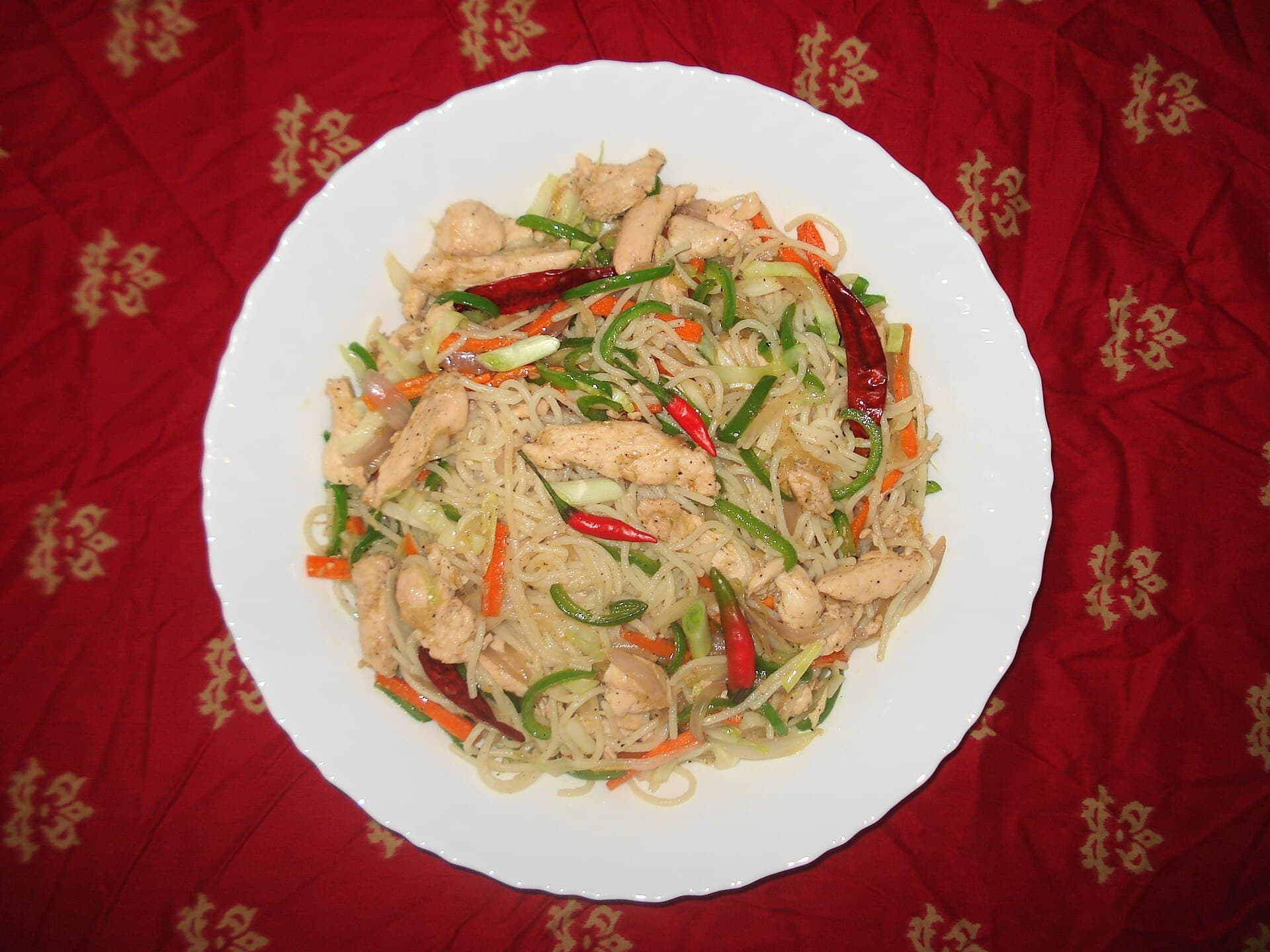
Dal bhat, fried rice, noodles, soup, momo, potatoes in every form

Dal bhat, pasta, thukpa, curry and rice, soup to start
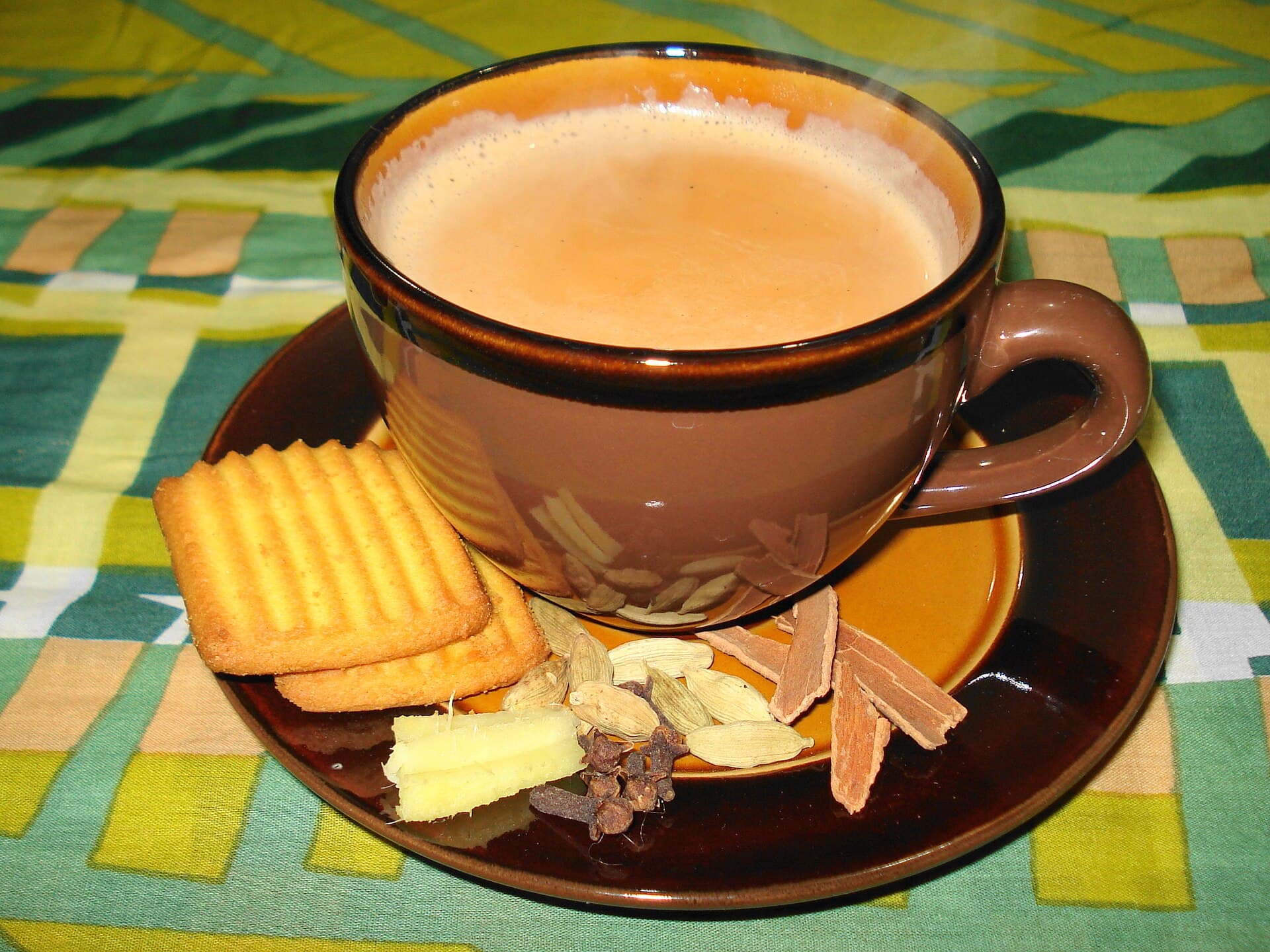
Black, milk, lemon, ginger or masala. Included at every stop.
6:00Tea in your room, and a bowl of warm water to wash in
6:30Pack, and put the duffel outside your door for the porter
7:00Breakfast together in the dining room
8:00On the trail. The guide sets a slow, steady pace
12:00Lunch at a teahouse on the route, about an hour
13:00Two to four hours more, depending on the day
15:30Arrive, have tea, choose a bed, wash and rest if you need to
17:00Oxygen saturation and pulse measured and recorded
18:30Dinner, and the guide explains the plan for the next day
20:30Bedtime. At 4,000 m, most people are asleep before nine
Eleven demanding days with little rest, followed by a 5,106 m pass.
Written for somebody who walks a bit and does not train. If you already run or cycle regularly, start partway through. Nothing here needs a gym.
12 weeks before, stage 1 of 7
Three cardio sessions a week, 45 minutes each, at a pace at which you can still hold a conversation. This trek demands endurance more than intensity, so a solid base is what matters.
The Larkya La, at 5,106 m, is lower than the Thorong La, but this trek is not necessarily easier at altitude, because of where you sleep. You spend two nights at 3,875 m at Samdo and then one at 4,460 m at Dharamsala. Dharamsala is a stone shelter with no heating, poor food and often no electricity, which makes it a difficult place to be if you feel unwell. The acclimatisation profile itself is good: the gorge keeps you at low altitude for four days, and the climb from Lho to Samdo is gradual. The difficulty is the isolation. From Dharamsala the only options are to cross the pass or walk two days back down, and the first reliable helicopter landing site is at Samagaon.
Daily health checks
From Lho at 3,180 m upward, your guide uses a pulse oximeter to measure your oxygen saturation and pulse each evening, and again any morning you feel unwell. The readings are recorded, so any decline over the days at Samdo is clearly visible rather than a matter of opinion.
Decision point at Samdo
As on the Annapurna Circuit, and for the same reason: descending from Samdo is straightforward, and descending from Dharamsala is not. We decide whether you will cross a day and a half before the pass, rather than at four in the morning at 4,460 m.
Mild symptoms
We descend three hundred and fifty metres to Samagaon, which has the best lodges and the only reliable helicopter landing site on the route. Most cases improve there, and there is often time to climb again and still cross the pass.
Serious symptoms
You do not cross the pass. You descend with a guide and the group continues. From Samagaon you either wait for a helicopter or walk three days back down the gorge, and both are safer than crossing the pass. This decision is not open to discussion.
Helicopter evacuation
Samagaon is the reliable landing site, and Samdo can be used in good conditions. The flight to Kathmandu takes about fifty minutes. Your insurance must cover this: the cost is $3,500 to $5,500, more than an Annapurna rescue because of the distance, and the helicopter will not take off without a payment guarantee.
Medical facilities
Unlike the Everest and Annapurna regions, Manaslu has no Himalayan Rescue Association aid post. There is a small health post at Samagaon that is not always staffed. Your guide's first aid training and the oximeter are the medical cover on this trek, which is one reason we follow the protocol above strictly.
Fitness and altitude are unrelated
This is the thing people get wrong most often. Training makes the walking easier and does nothing for how your body handles thin air. Strong young trekkers get altitude sickness and unfit older ones frequently do not. Go up slowly, and say something the first time your head hurts.
The rating shows whether the Larkya La can be crossed, not whether the valley is pleasant. Between December and February these are two different things.
The best spring month. Rhododendron in the gorge and stable conditions on the pass.
Averages from station data for the Manaslu region. The closures at either end of the year have different causes: the pass under snow in winter, the access road under landslides in the monsoon.
A government-licensed guide with wilderness first aid training leads every departure, and there is one porter for every two trekkers. For groups of 11 or more, a second guide joins, so nobody is left alone at the back of a long line. Our guides come from the hill regions they lead you through.
Each porter carries a maximum of twenty kilos, which is your duffel and one other. This is below the 25 kg limit set by the trekking association and well below the loads you will see on the trail. If your bag is overweight, the load is split rather than added to. Porters carry luggage, not daypacks: your water, camera, jacket and snacks for the day stay with you.
Salary, insurance, food and accommodation for every guide and porter are included in the price you pay, not collected on the trail. Every guide and porter is insured for altitude and for helicopter evacuation on the same terms we ask of you. Porters in this industry have long been overloaded, poorly equipped and underpaid, and including their full costs in the package price is how we make sure we do not contribute to this.
Tipping is customary but not compulsory, and it never replaces wages. The usual amount for this trip is $150 to $250 per traveller for the whole team, given together on the last evening rather than daily. Your guide will not ask for tips and would prefer that you do not tip in front of the group.
A traveller drinking bottled water uses around 35 plastic bottles on this trip, and every one of them has to be carried in and carried out again. Boiled water is available at every lodge for a dollar or two a litre, and we encourage you to buy it. Bring water purification as a backup rather than as your main supply.
We carry out everything we bring in that is not food. The Manaslu valley has a waste problem that it did not create and cannot solve on its own, and every operator should avoid adding to it.
The lodges are family businesses in the villages you pass through. The guides and porters live in this district. The restricted area fee goes to the Department of Immigration, and the conservation permit fee goes to the National Trust for Nature Conservation, which runs the Manaslu Conservation Area and funds the schools and health posts in Samagaon and Samdo. Almost all of what you pay is spent within a few days' walk of the trail, which is a good reason to book with a Nepali operator rather than a foreign one that subcontracts the trip to a local company.
Ask before photographing anyone. When a mule train approaches, stand on the mountain side of the trail, not the drop side, and let it pass. Monasteries welcome visitors, but they are places of worship: remove your hat and shoes, and if a service is taking place, wait.
Write to us or send a message on WhatsApp with your approximate dates, and tell us whether you are travelling alone. Manaslu is a restricted area, so we need passport scans earlier than for other treks, and the permit is applied for in your name at the Department of Immigration rather than bought over the counter.
A deposit of thirty per cent holds your dates, and the balance is paid when you arrive in Kathmandu, in cash or by card. At the same time, we ask for a copy of your passport, your insurance certificate and any dietary or medical information.
Pay by bank transfer, or by card through a secure link. Card payments carry a bank fee of about 4 per cent, which we show you before you pay. The balance in Kathmandu can be paid in US dollars, pounds, euros or Nepali rupees.
If you cancel more than 30 days before departure, the deposit can be transferred to any other date or trip we run, with no time limit. Within 30 days, the deposit is retained, because the permits, flights and crew have been booked by then. If we cancel for any reason other than weather, you receive a full refund.
Both cost the same for a group of five or more. A private departure runs on your dates at your pace and can be arranged for one person; a group departure runs on the dates in the table above. Most travellers book privately, at no extra cost.
Three weeks in advance is comfortable, and ten days is possible. The limiting factor is the Department of Immigration rather than the lodges: restricted area permits are issued against scanned passports on working days only, so an enquiry on a Friday for a Monday start is not possible.
Priced per person, arranged before you travel, and none of them included in the price above.
A side valley reached from Lokpa that was closed to outsiders until 2008, with its own dialect, its own gompas and a longstanding ban on killing animals. It requires its own restricted area permit, and it is the best extension we offer.
A demanding day hike, climbing 1,200 m from Samagaon to the base camp at 4,800 m. It provides excellent acclimatisation and views, and is only suitable for trekkers who are already acclimatising well.
The most useful day you can add to this trek. It gives time for Birendra Lake and the Pungyen Gompa, and a much better chance of crossing the pass.
You finish the Manaslu Circuit at Dharapani, where the upper section of the Annapurna Circuit begins. This gives two 5,000 m passes in one trip and about a month on the trail.
Priced per aircraft rather than per seat. It is usually chosen because of a change of plan rather than an emergency, and it depends on the weather.
For the Kathmandu nights and the better lodges. Above Samagaon the lodges do not have single rooms, and Dharamsala is a dormitory.
4 versions of this journey. They use the same guides and the same lodges; what changes is the length, the comfort and how much of it you walk.
Lovely manaslu
April 2026, Tripadvisor
We just finished our trek with earthbound expeditions! We did the Manaslu & Tsum Valley trek and it was so beautiful. Would really recommend the Tsum Valley, as it’s super local and authentic. You can even extend to another small valley in the Tsum, to go see a monastery. We didn’t know about this, but heard great things, so would love to go next time. Our guide (which is mandatory on the trek) Som Giri was a kind and funny man who kept everything interesting on the trek. He helped out finding tea houses and organising breakfast, lunch and dinner for us every day. I would recommend Som as a guide for the trek, he’s a great guy to spend the 2 weeks with! We are from nz, so having a guide for our hike was definitely an interesting and sometimes challenging experience. It’s a tough trek (especially the pass day), so make sure you have all your elevation sickness meds, first aid kit and warm layers handy (look after yourself). All in all it was a fabulous experience enjoying the beauty of the mountains and the beautiful Nepalese culture! Easy and clear communication on email with the company was also helpful!
Good fun (manaslu & Tsum valley)
April 2026, Tripadvisor
We had a lot of fun doing the Manaslu hike in Nepal with Earthbound Expeditions. Prior to departure we had our expectations of comfort and amount of English to expect calibrated. This was helpful on the trek. The larke pass was cold and hard work, we were glad to have bought our elevation sickness medication, first aid kit and warm clothing to be self sufficient for the adventure. Our guide Som Giri was very helpful to organise tea house food and accomodation and took some very fun photos for us.
Great Manaslu
April 2025, Tripadvisor
I walked the Manaslu circuit with some friends this, and just, wow. Experience of a lifetime. The scenery, the mountains, the villages, people and the food, all of it was incredible and awe-inspiring. It was definitely a challenge, but worth every tear, and every ache. Highly recommended! Our guide Ramsaram took excellent care of us, highly recommend him too!
Mighty mountains, big blue rivers, dense green jungles, wild wild animals, food for the soul, and above all, the wonderful peopl
March 2024, Tripadvisor
My husband and I booked our first holiday and Trek in Nepal through Earthbound Expeditions. We were keen to do a trek in a remote area and thus picked the Manaslu Circuit, followed by 1 week to explore other parts of the country. During our E-Mail and WhatsApp contact prior to and during the trip, the responses of the Director were prompt and clear, and he planned a great itinerary for us. Our guide and porter were well experienced and familiar with the terrain. I enjoyed not needing to plan the route or worry about accommodation but just mindfully enjoy the nature and physical activity. The crew also ensured that we had sufficient breaks, stayed hydrated, ate and slept well as we moved higher from Teahouse to Teahouse. Unfortunately due to fresh snow at the pass and an increasing avalanche risk, the Larke Pass was closed. But the team promptly came up with a great alternative short hike to Poonhill and Ghorepaani with the remaining days at no extra cost. Here, we got to see more 8000m+ peaks, which was yet another highlight. Finally we had 3 nights in Pokhara, 1 night in Bandipur and 3 nights in Chitwan to enjoy a spa, eat more great food, different ethnic cultures, jungle safaris with lots of wild animals. They say, "You come as a tourist, and you leave as a friend" : we befriended the team, the locals, the mountains and the jungles. Truly, the experience of a Lifetime.
Answers to the 23 questions travellers ask us most often. If your question is not here, contact us and we will answer it.
The two treks follow a similar pattern but offer very different experiences. Both cross a pass a little above 5,000 m, and both take about two weeks. The Annapurna Circuit has a road at each end, good lodges throughout, a doctor at Manang and many trekkers. The Manaslu Circuit has none of these, which is the main reason people choose it. If you have trekked the Annapurna Circuit and would prefer a quieter route, this trek is a good choice.
Not on any single day. The Larkya La is 310 m lower than the Thorong La, and the pass day is comparable. It is harder overall: there are eleven walking days with no rest day until the ninth, four of them in a gorge where the trail climbs and descends repeatedly, and a much more basic night before the pass.
Usually not, and we will tell you so. The route is remote, the accommodation at the higher villages is very basic, there is no clinic on the route, and leaving from the middle of the trek takes days. None of this is dangerous with a good guide, and all of it is easier to manage when you already know how your body responds at 4,000 m. We recommend trekking to Annapurna Base Camp or Everest Base Camp first, and then this route.
You need to be fit enough to walk six hours a day for eleven days in a row. For this trek, that is a better measure than any single hard day. The training plan on this page covers twelve weeks. The part most people skip, three walking days back to back, is the most important part for this trek.
Yes. Since 22 March 2026, the Department of Immigration no longer requires two foreign trekkers on a restricted area permit. Before that date, solo travellers had to find a partner or pay for a second permit in another name, and many websites still give this outdated information. You will still walk with a licensed guide, because a restricted area permit is only issued through an agency.
You need four things. The restricted area permit costs $100 for seven days plus $15 per additional day from September to November, and $75 plus $10 per additional day from December to August. The Manaslu Conservation Area permit costs NPR 3,000. The Annapurna Conservation Area permit also costs NPR 3,000. You also need a licensed guide from a registered agency. All of these are included in the price, and we arrange them for you.
The Larkya La leads into the Annapurna Conservation Area, and you walk out through the checkpoint at Dharapani, where the permit is checked. Travellers are caught out by this every season, and about half of the Manaslu permit guides online do not mention it.
No. The restricted area permit replaces it. Some Manaslu pages list a TIMS card, but buying one would be an unnecessary expense of NPR 2,000.
The difference is almost entirely the restricted area permit. At the autumn rate it costs around $145 per person for this itinerary, while an Annapurna trek needs no such permit. The conservation permit costs are also doubled, because you need two. In total, permits cost roughly $190, compared with $37 on an Annapurna trek. This cost is the reason the trail stays quiet.
You leave Dharamsala at three or four in the morning, when the temperature is about minus fifteen. There are four to five hours of steady climbing across moraine to the pass at 5,106 m, a wide saddle hung with prayer flags, with views of Himlung, Cheo and Kang Guru. This is followed by a long descent of 1,516 m on loose ground to Bimthang. The day takes eight to ten hours in total and is by far the longest day of the trek.
You descend with a guide. This is why we make the decision at Samdo rather than at Dharamsala. From Samdo, Samagaon is three hours below and has the only reliable helicopter landing site on the route. From Dharamsala at four in the morning, the options are much more limited. If the discussion takes place at Samdo a day and a half earlier, nobody has to make that decision at 4,460 m.
No. Unlike the Everest and Annapurna regions, there is no Himalayan Rescue Association post on this trek, only a health post at Samagaon that is not always staffed. Medical cover consists of your guide's wilderness first aid training, the daily oximeter readings and a readiness to descend early. For this reason, we follow the altitude protocol strictly.
In October there is usually little snow. In March and late November, expect some, and your guide will decide at Samdo whether the group needs microspikes. From December to February the pass is normally closed, and we do not offer the crossing then.
It is the most basic accommodation on any of our trips, and we want you to know this in advance. It is a stone shelter at 4,460 m, with dormitory or shared twin rooms, no heating, an unreliable electricity supply, poor food, and a cold night before the most demanding day. It is only one night, and it is necessary in order to cross the pass. Bring a sleeping bag liner you are comfortable with, and make sure you eat.
They are better than Dharamsala, but simpler than the lodges in the Annapurna region. The gorge lodges at Dyang and Ghap are simple. The lodge at Lho has the best view on the trek from its dining room. Samagaon is the most comfortable night, with hot showers and private bathrooms in the better lodges. Samdo is basic but adequate.
Coverage is patchy as far as Namrung, better at Samagaon, and there is none above it. NTC covers more of this valley than Ncell, which is the opposite of the Annapurna region, so buy an NTC SIM card in Kathmandu. Expect to be out of contact for the last five days, and let people at home know.
The last cash machine is in Kathmandu. There is no cash machine anywhere on this trek, and cards are not accepted. Bring three hundred to four hundred and fifty dollars in Nepali rupees, in small notes, to cover tea, charging, the occasional shower and your tips.
It is much quieter than the Annapurna region in October. It is busier than it was five years ago, and part of the lower gorge now has a jeep track. Between Namrung and Bimthang, the most important week of the trek, you will still have long stretches with no other trekkers.
The drive from Kathmandu to Maccha Khola takes eight hours by private jeep. The road is paved as far as Arughat, followed by a rough road cut into the hillside above the Budhi Gandaki. The exact point where the jeep stops depends on the monsoon damage to the track that year, and we will tell you before you arrive, not on the morning of departure.
No, and this is an advantage. Nothing on this trek can be delayed for three days by cloud, as a Lukla flight can, which is why this itinerary has no spare day at the end. In exchange, there is a rough road at each end, and the monsoon occasionally closes it.
Late September to mid-November, or April. October is the most reliable month, and November has the clearest weather and the fewest trekkers. Do not trek during the monsoon: from June to August the access road, rather than the trail itself, makes the trip unsafe.
Three weeks in advance is comfortable. The limiting factor is the Department of Immigration rather than the lodges, because restricted area permits are issued against scanned passports on working days only. Ten days is possible, but an enquiry on a Friday for a Monday start is not.
If you have an extra week, yes. The Tsum Valley is a side valley that was closed to outsiders until 2008. It has its own dialect and a longstanding local ban on killing animals, and it is the best extension we offer. It requires its own restricted area permit and extends the trip to about twenty-four days.
Didn't find what you were looking for?
Search every word on this page, or ask somebody who has walked the route.
15 days
$1,687 per person