
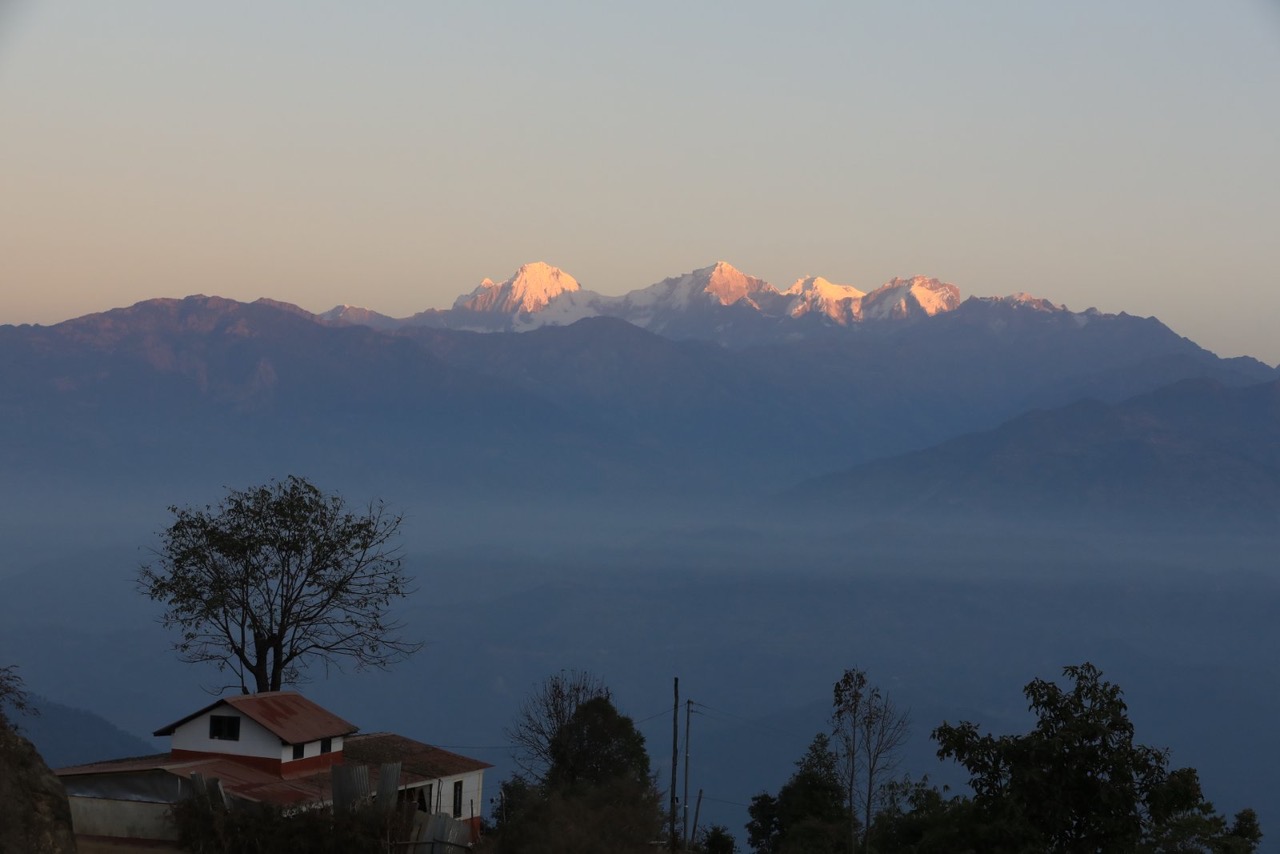
In a world driven by speed, consumption, and constant comparison, the idea of happiness has become increasingly complicated. We chase it through success, possessions, and validation-yet it often feels just out of reach.
In a recent conversation on the You Can't Steal My Happy Podcast, Himalayan tourism entrepreneur Rajan Simkhada offers a radically different perspective-one shaped not by theory, but by over 30 years of lived experience in the mountains of Nepal.
This is not just a discussion about travel. It is a reflection on nature, culture, and a way of life where happiness is not pursued-but experienced.
Watch the Full Conversation
Himalayan Soul: Stories, Nature & the Sound of Nepal with Rajan Simkhada
You Can't Steal My Happy Podcast - Himalayan Soul: Stories, Nature & the Sound of Nepal with Rajan Simkhada
Happiness Is Not Something You Can Buy
One of the most striking ideas Rajan shares is simple-but deeply confronting:
In the Himalayas, happiness is not something you chase. It’s something that naturally exists.
Unlike modern urban environments-where happiness is often tied to material success-life in the mountains operates on a different rhythm. There is less noise, less pressure, and less comparison. What replaces it is presence.
In nature, there is no competition. No one is trying to prove anything. And in that absence, something rare happens: people begin to feel like themselves again.
The Himalayas Are Not Just Mountains
To many travelers, the Himalayas are a destination.
To those who live there, they are something else entirely.
Rajan describes the region as an energy center-a place long associated with spiritual practice, meditation, and deeper forms of awareness. Across generations, these mountains have been seen not just as landscapes, but as living environments that shape the human experience.
This is why people often describe their journeys here as transformative-not because of luxury or comfort, but because of what the environment allows them to feel.
Why People Cry in the Mountains
It’s a pattern Rajan has witnessed for decades.
Travelers arrive with expectations of adventure-trekking routes, scenic views, physical challenges. But somewhere along the journey, something shifts.
They slow down.
They disconnect from constant stimulation.
And often, they reconnect-with themselves.
For many, that moment becomes emotional.
Not because something is wrong-but because something finally feels right.
A Different Way of Living
One of the key contrasts discussed in the conversation is the difference between modern life and life in the Himalayas.
In much of the world, we are moving fast-but rarely asking why.
We optimize for efficiency, productivity, and growth-yet often feel disconnected.
In Nepal, especially in rural and mountainous regions, life still revolves around:
Family and community
Cultural traditions
Simplicity and presence
It is not a perfect system. But it offers something increasingly rare: clarity.
Culture That Doesn’t Hide Life’s Truths
Another powerful insight from the conversation is how Nepalese culture approaches life-and death.
In many parts of the world, difficult realities are hidden away. In Nepal, they are acknowledged openly. Rituals, ceremonies, and traditions are not designed to avoid truth-but to engage with it.
This creates a deeper understanding of life itself-one that many travelers encounter for the first time during their journey.
From Village Roots to Global Vision
Rajan’s perspective is grounded in personal experience.
Born in a remote Himalayan village, he moved to Kathmandu at a young age, working his way through roles in hospitality, trekking, and guiding. In 1999, he founded Earthbound Expeditions with a vision to create something different.
Not just tours-but experiences.
Over time, that vision evolved into a broader ecosystem spanning trekking, cultural journeys, luxury travel, and hospitality across Nepal and beyond. Yet the core idea has remained the same:
Travel should not just show you a place. It should change how you feel.
Beyond Tourism: A Philosophy of Experience
What emerges from this conversation is a clear philosophy:
Travel is not about ticking destinations
Nature is not a backdrop-it is an active force
Happiness is not something external-it is something rediscovered
This perspective is increasingly relevant in a time where many travelers are seeking more than just itineraries-they are looking for meaning.
Explore More
For those interested in learning more about Rajan’s vision and the broader ecosystem he has built:
Official profile and group overview: Earthbound Bio Link Hub
Previous article: “Why Nepal Matters” (Founder’s perspective)
Travel platforms and guest reviews across global networks
Final Thought
You can visit the Himalayas for the views.
You can go for the adventure.
But if you stay long enough, something else happens.
You stop chasing happiness-
and begin to experience it.















Comments