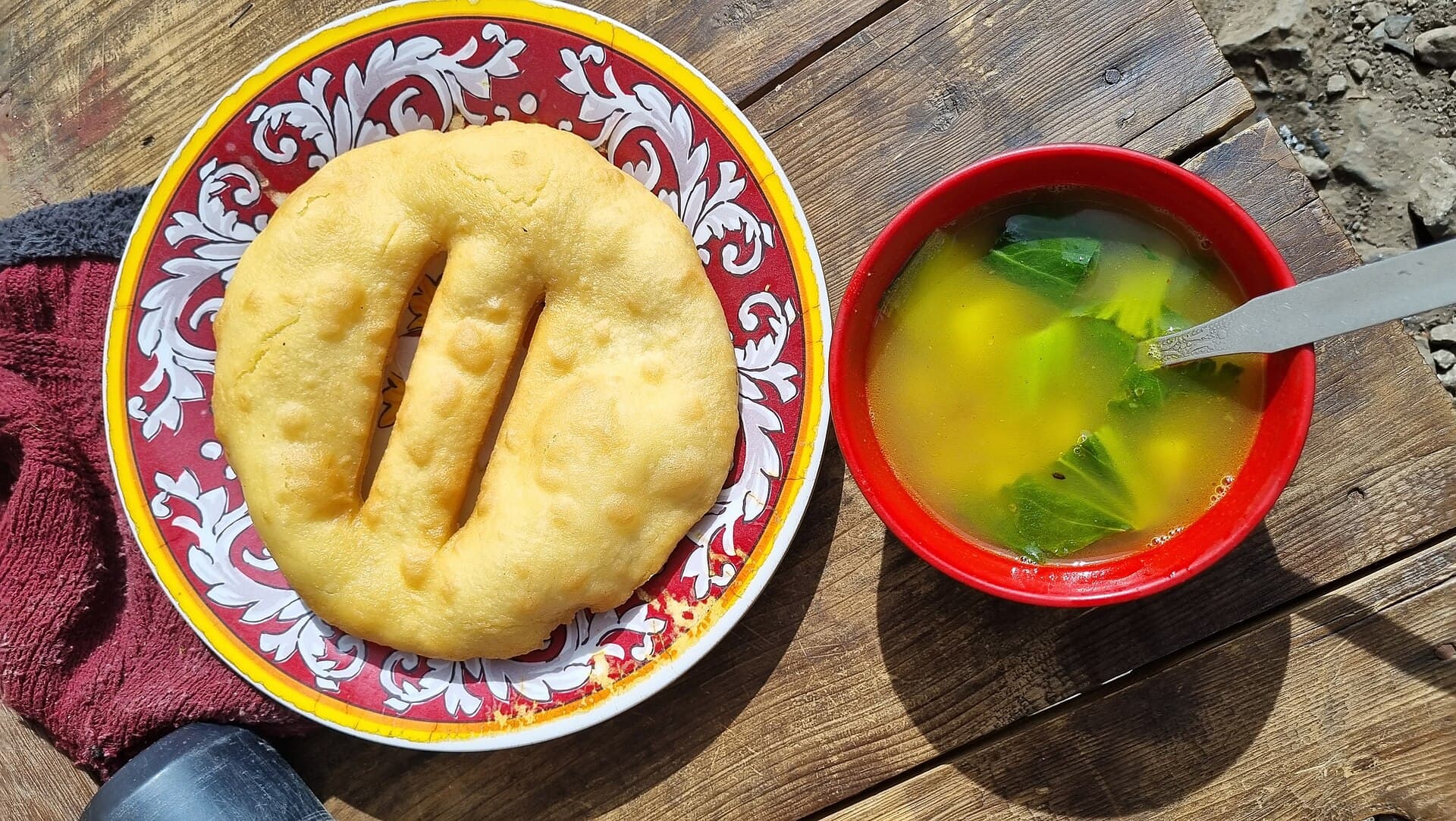
Breakfast
Buffet in the hotels. In Bhutan, expect red rice, eggs, and ema datshi if you would like it at breakfast
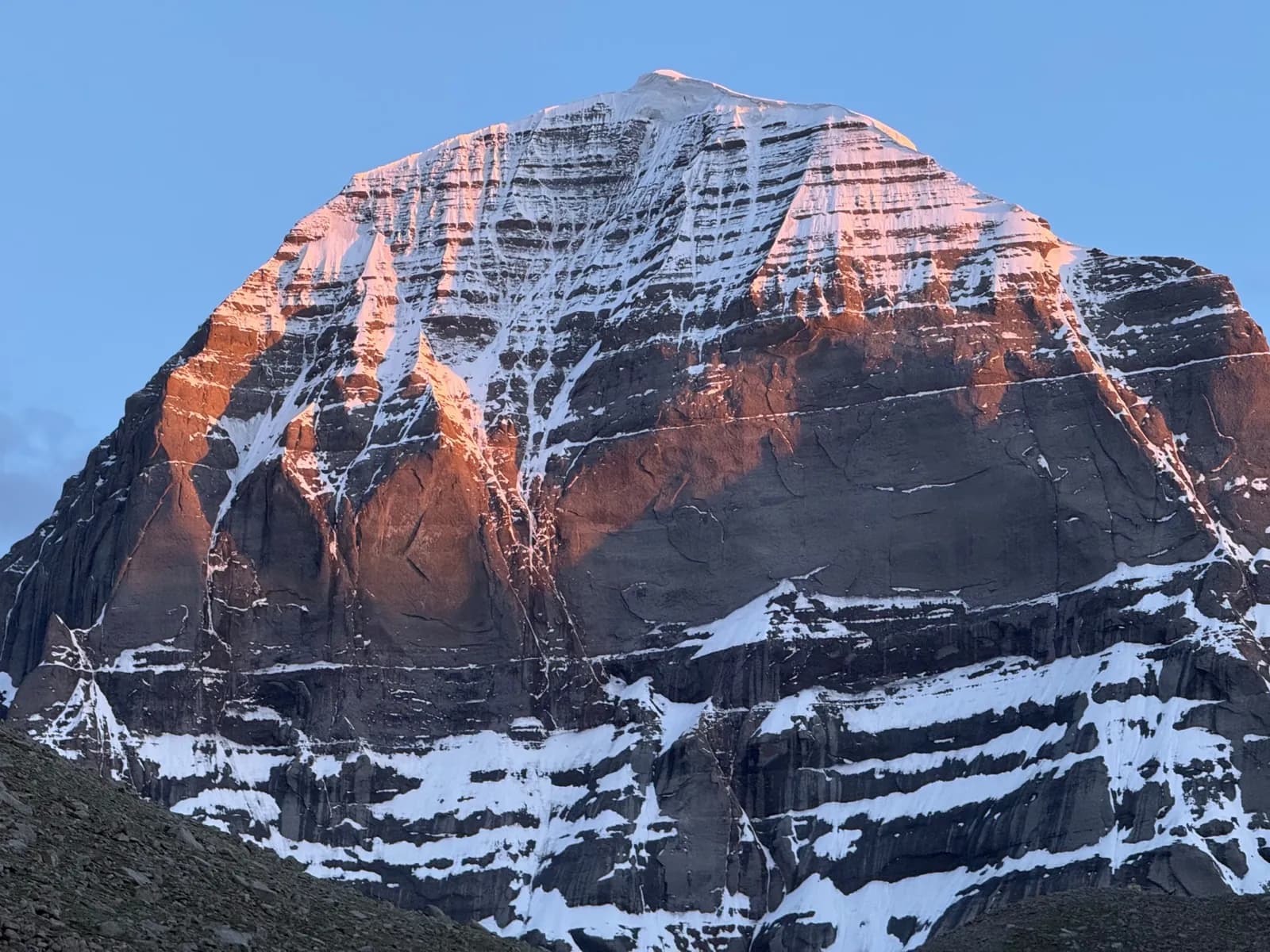
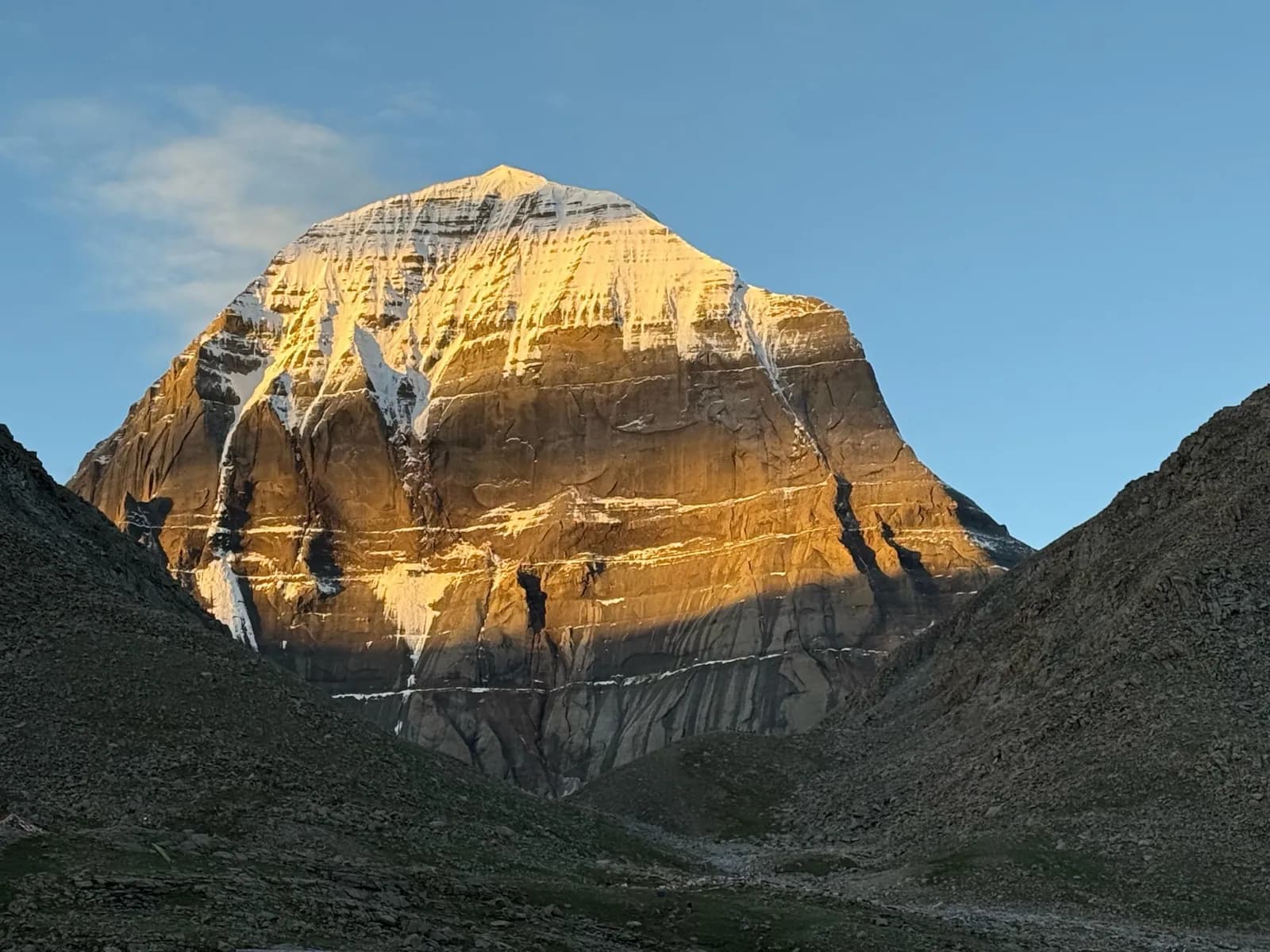
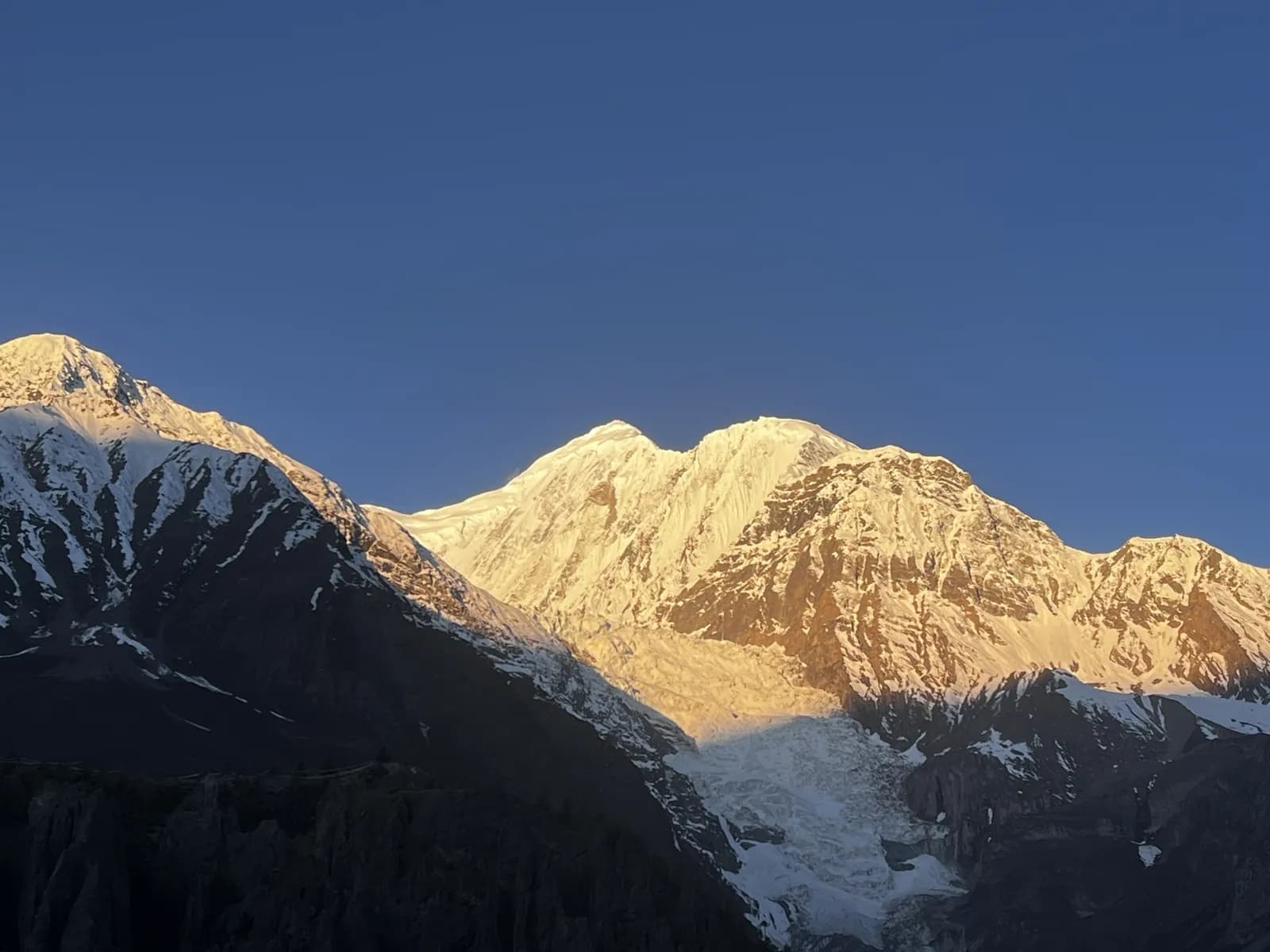
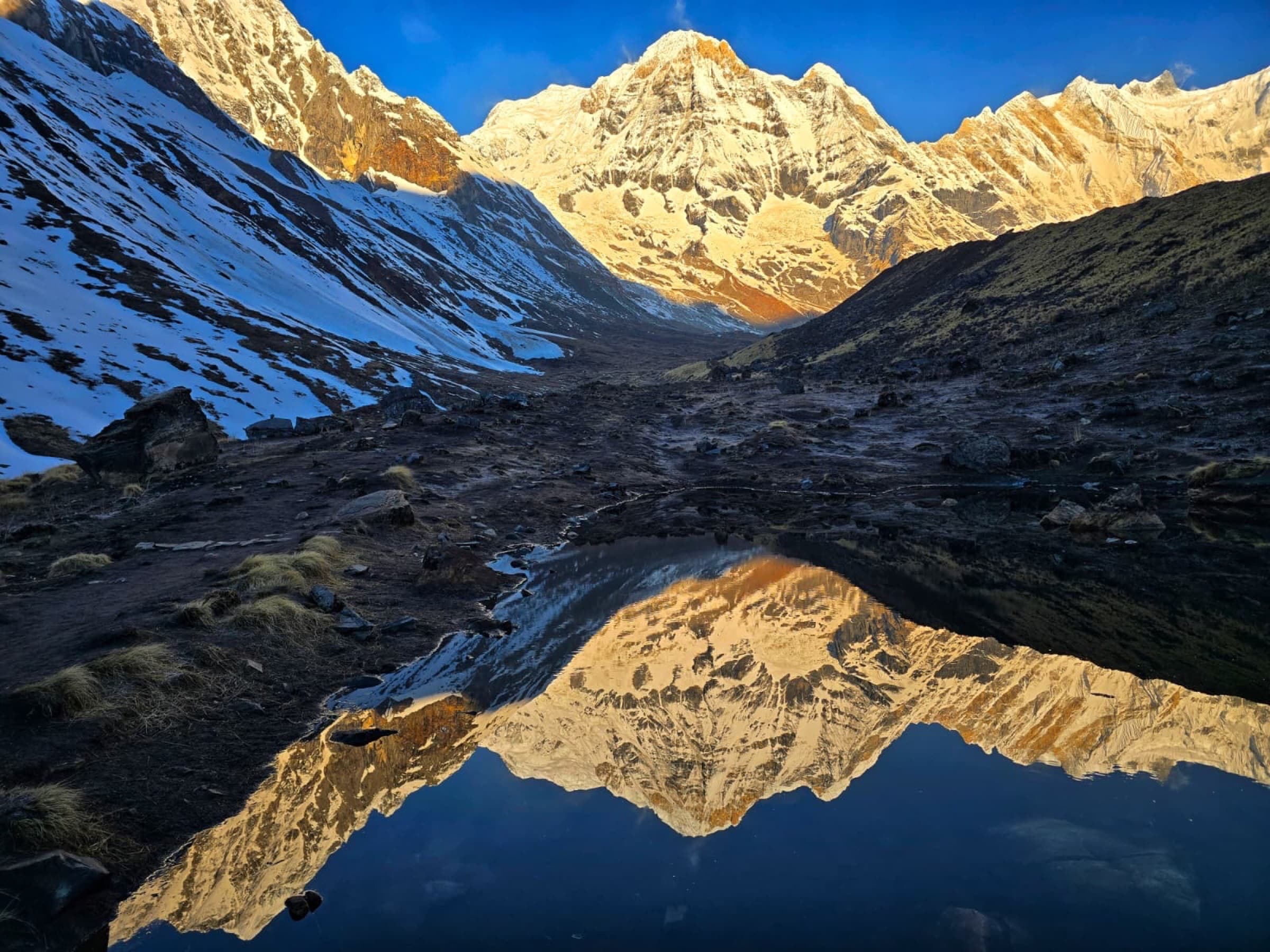
Two Himalayan kingdoms in one trip: the living temple cities of the Kathmandu valley, the dzongs and monasteries of Bhutan, the Tiger's Nest, and rhino in the lowland jungle at Chitwan.
Two Himalayan kingdoms in one trip: the living temple cities of the Kathmandu valley, the dzongs and monasteries of Bhutan, the Tiger's Nest, and rhino in the lowland jungle at Chitwan.
This trip visits two neighbouring Himalayan kingdoms that are very different from each other. Nepal is busy and crowded, both Hindu and Buddhist, and has been open to travellers since 1951. Bhutan is quiet, orderly and entirely Buddhist, admits visitors on a fixed daily fee, and has never been colonised or occupied. Twelve days is enough to understand why people who have visited both describe them so differently.
The reason is the flights. Only two airlines fly into Paro, Drukair and Bhutan Airlines, and for most travellers the practical departure points are Kathmandu, Delhi, Kolkata, Bangkok and Singapore. Kathmandu is the only one of these in the Himalaya. The Bhutan section therefore fits in the middle of a Nepal itinerary, and it is not an expensive detour: the flight from Kathmandu to Paro takes an hour.
Travellers who want to see the Himalaya without trekking for two weeks. The only demanding day is the walk to the Tiger's Nest on day 7, which involves 900 m of ascent and descent at around 3,000 m and takes four to five hours. The rest of the trip is sightseeing, driving and a jeep safari in a national park. It suits travellers in their seventies and families with children, and we recommend it to travellers who cannot trek but want to see the mountains.
The Bhutan section accounts for much of the price of this trip. Bhutan charges a Sustainable Development Fee of USD 100 per person per night, plus a USD 40 visa fee, before any hotel, meal or guide costs. Four nights amount to USD 440 per person in government charges. This is not a mark-up by us but national policy, and it keeps the valleys quiet.
We meet you at the airport and take you to your hotel. In the evening we brief you on the trip and on the Bhutan documents: your visa clearance letter has already been issued, and your Paro flight seats are reserved against it.
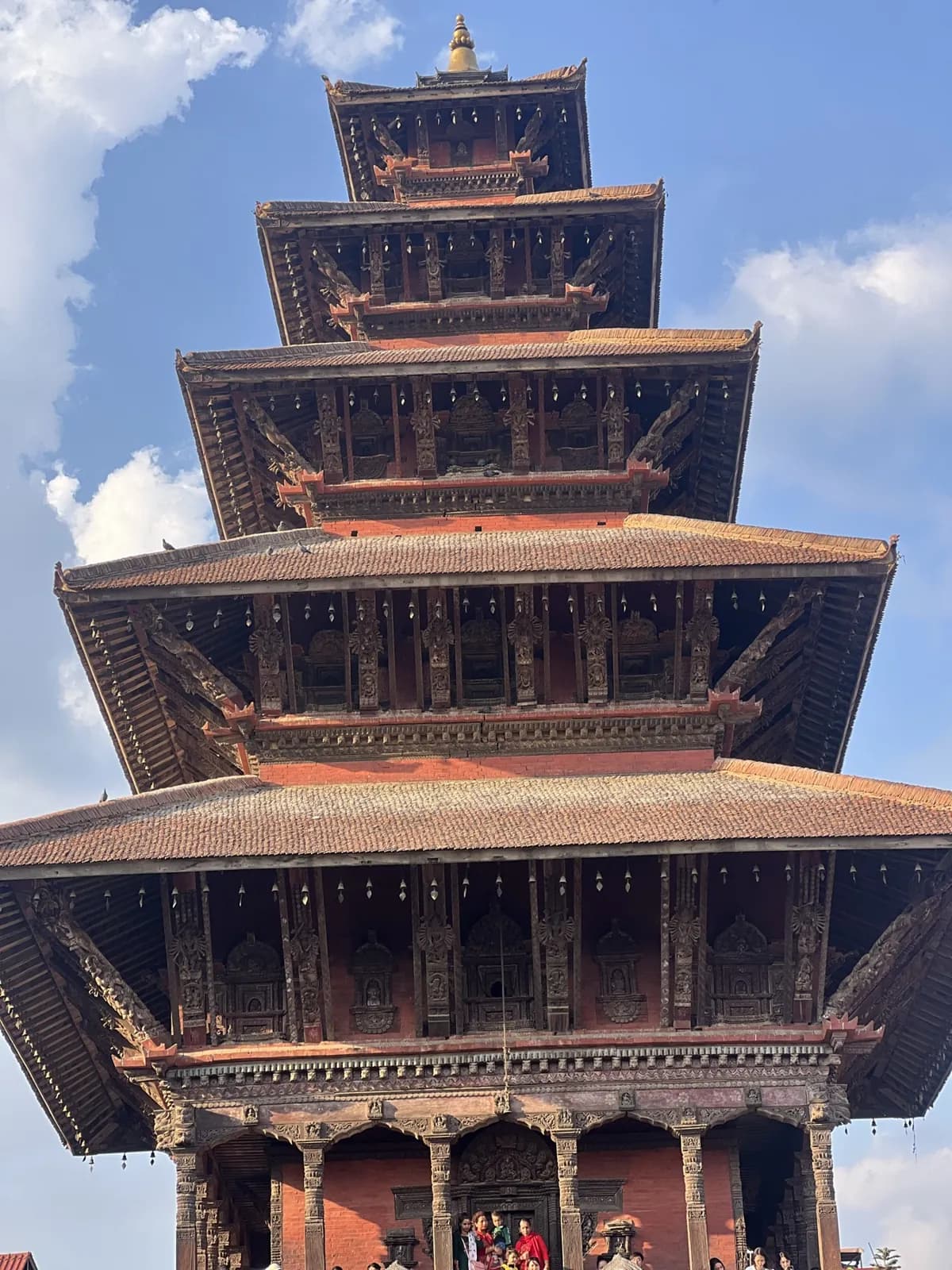
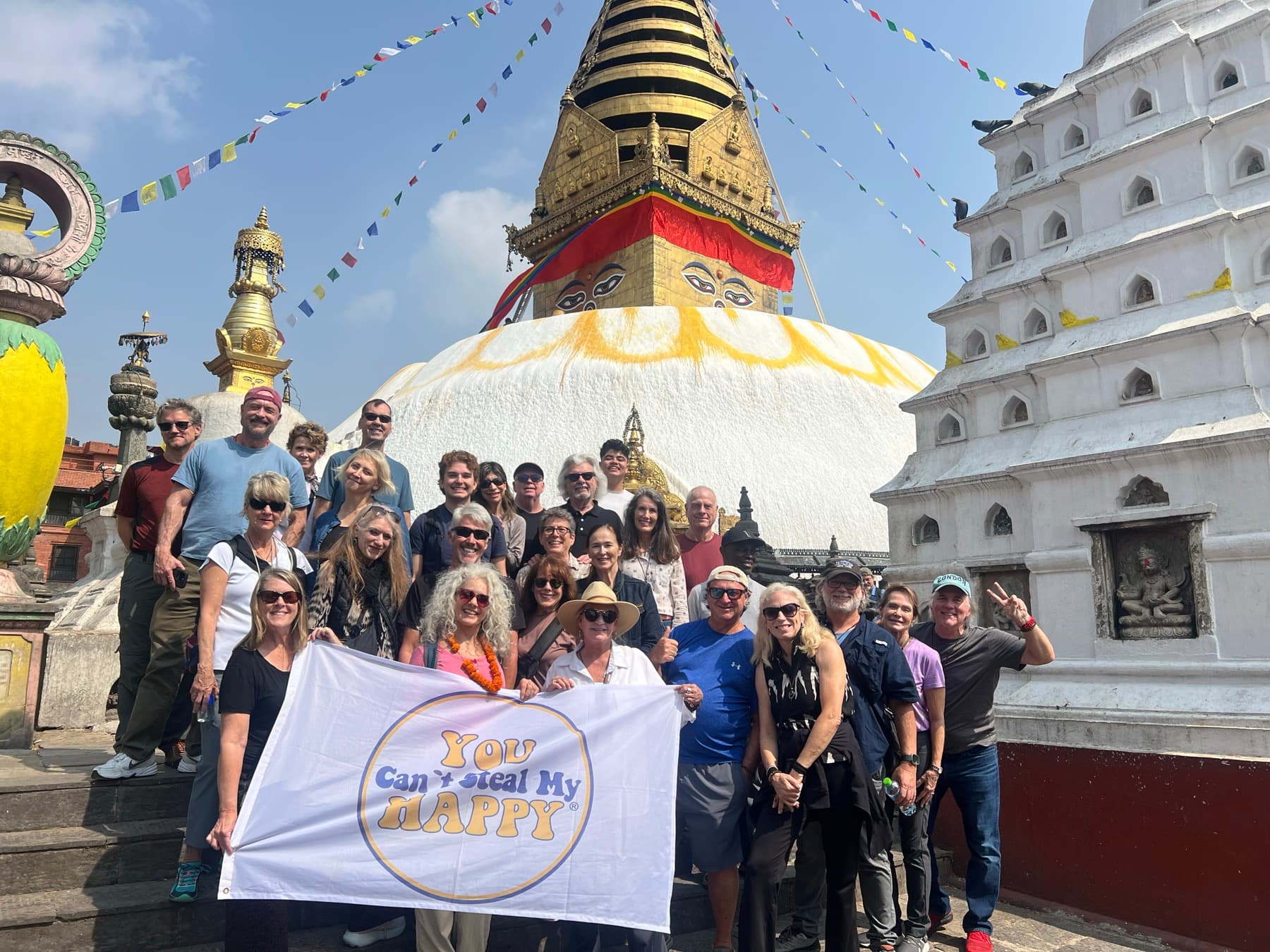
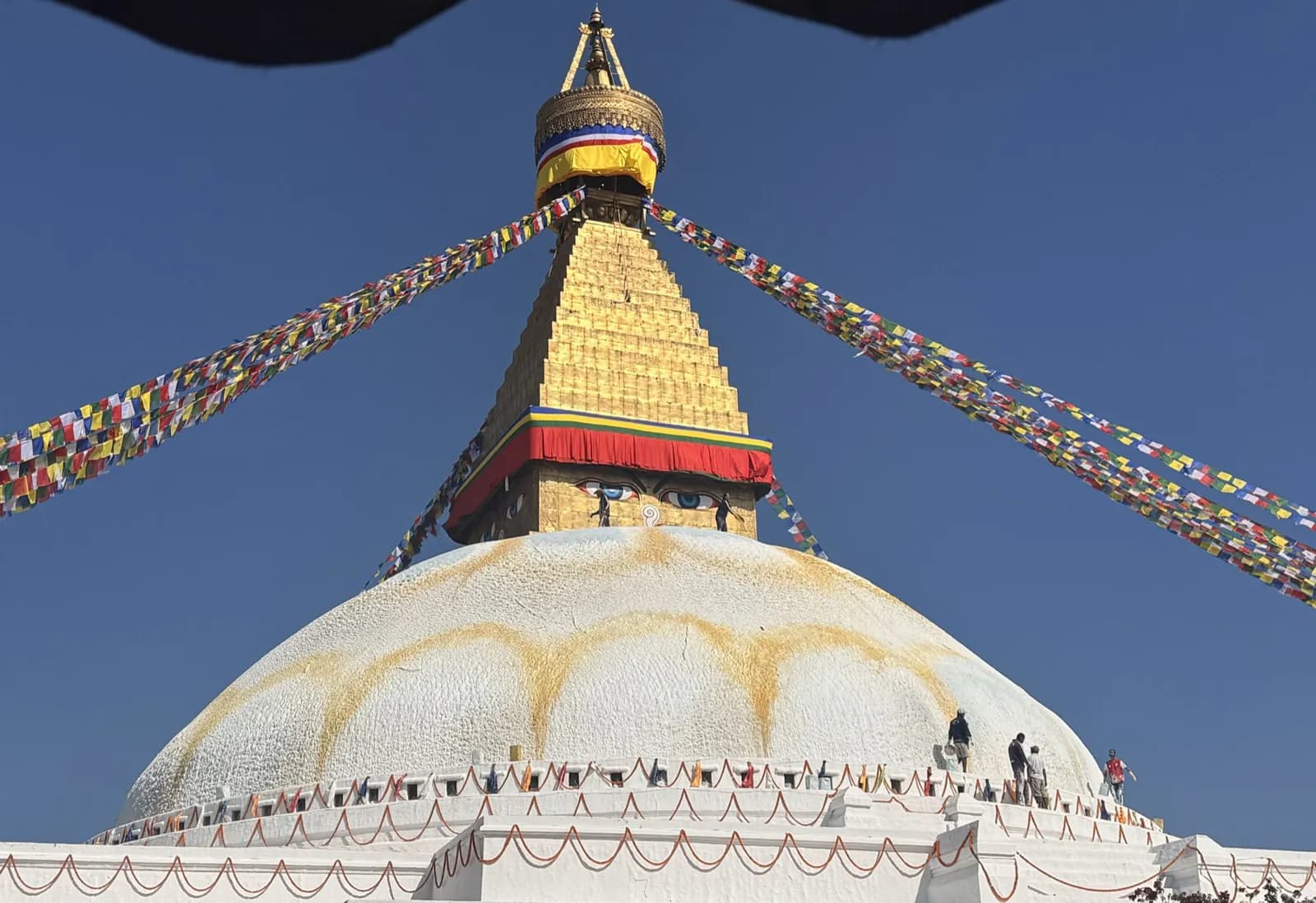
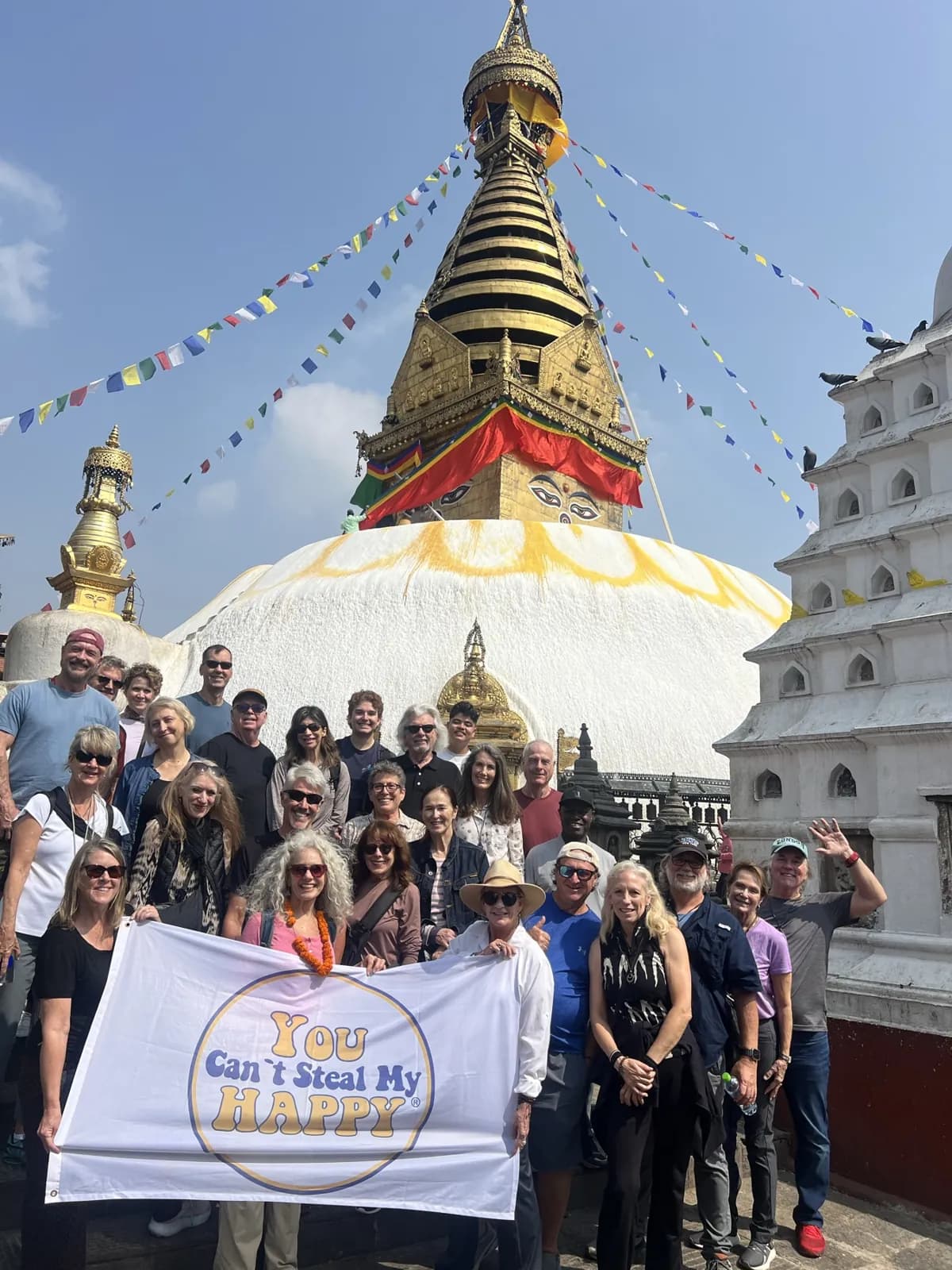
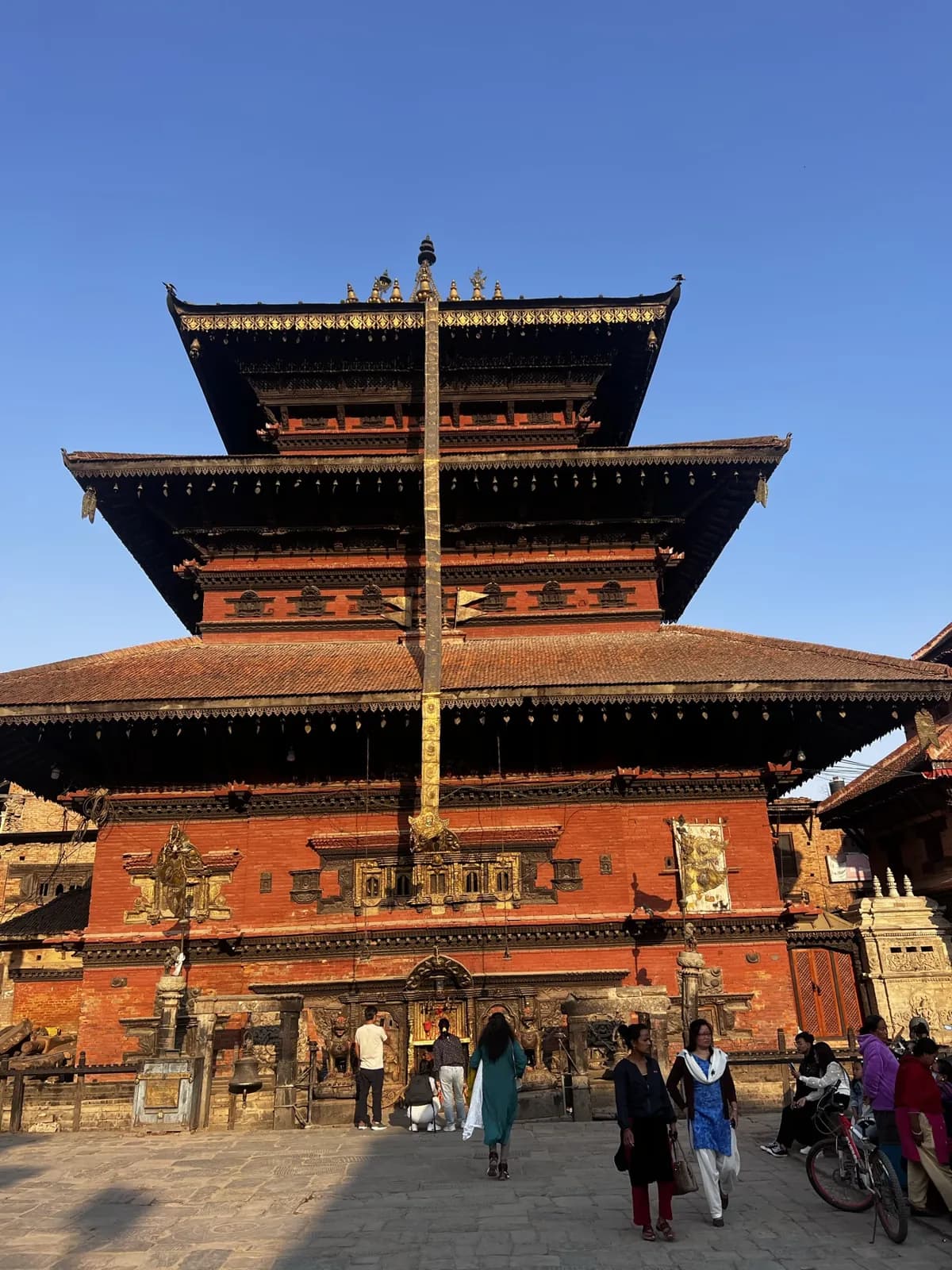
You visit Swayambhunath on its hill, the cremation ghats at Pashupatinath, the great dome of Boudhanath and the carved courtyards of Patan, with a guide who can explain the religious art in detail. In the afternoon, we drive up to Nagarkot on the valley rim for the sunset.
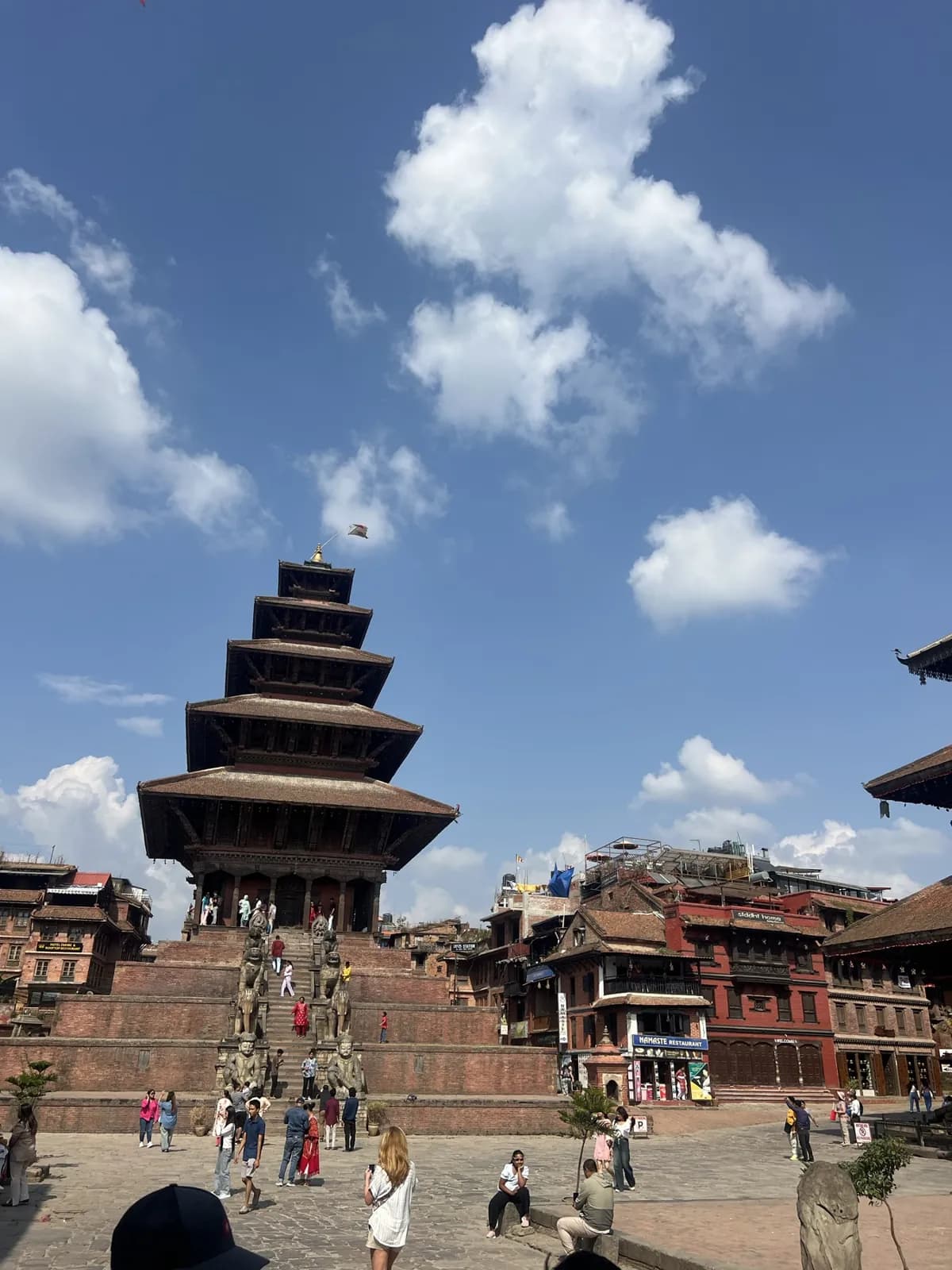
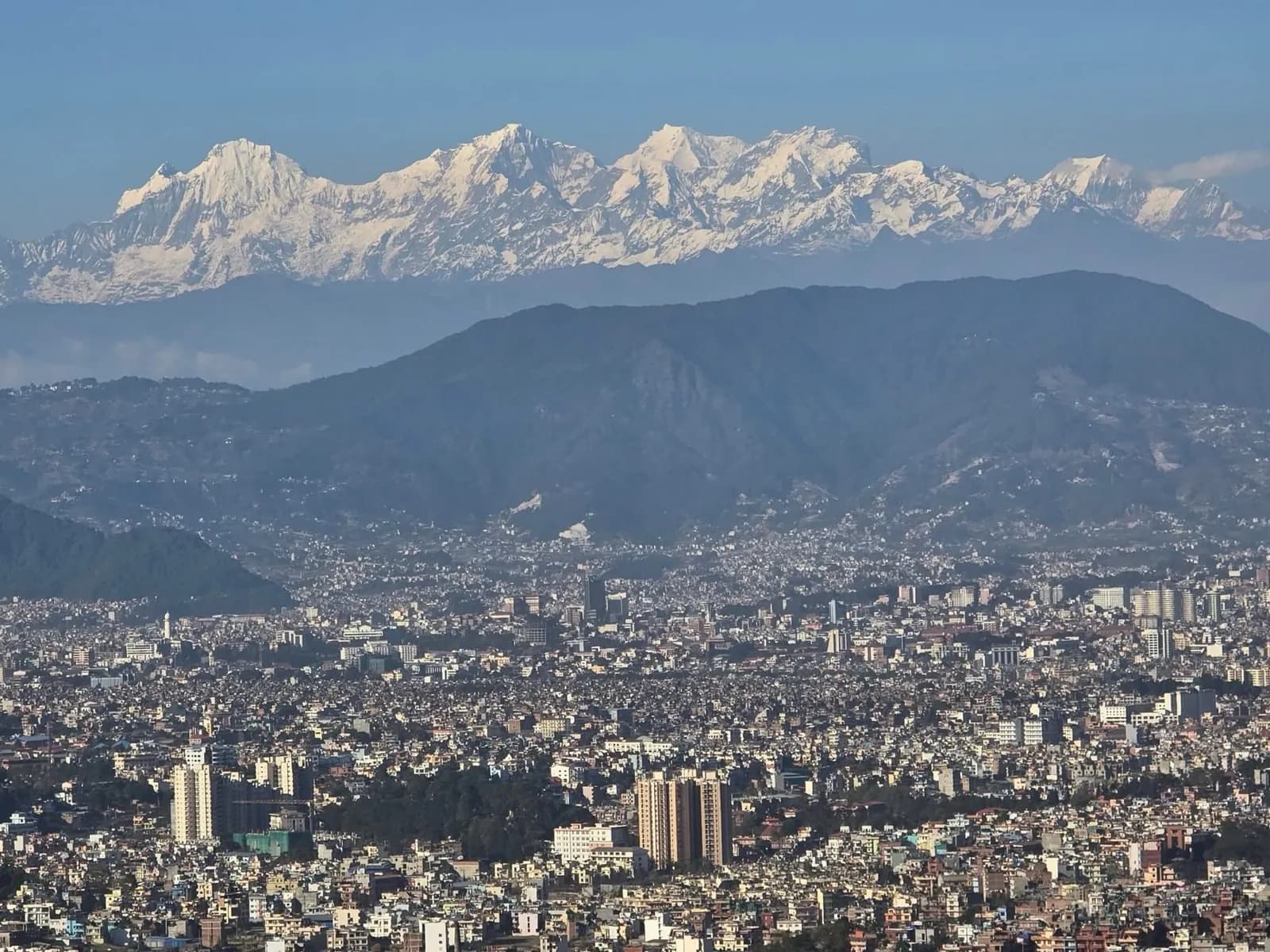
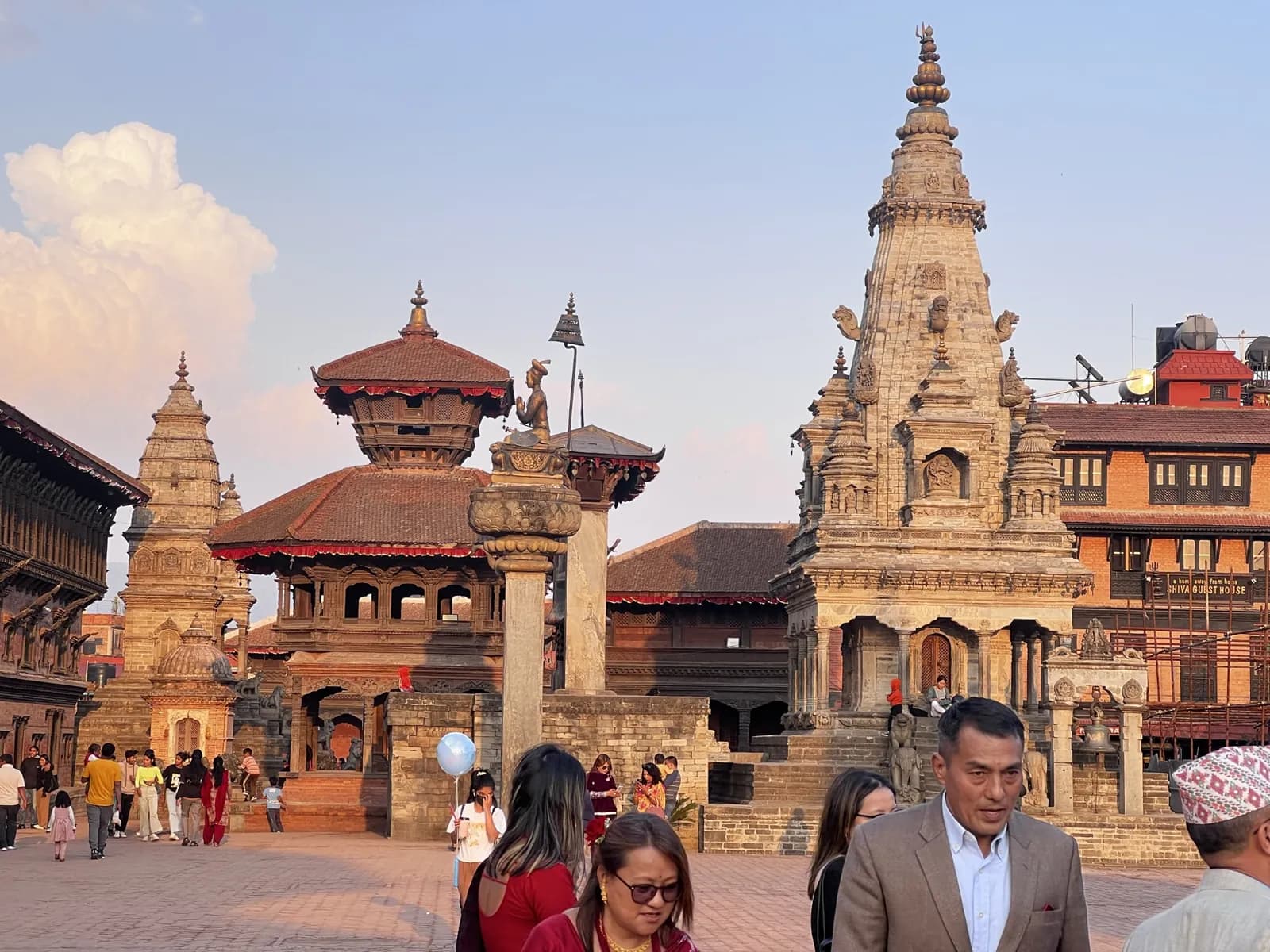
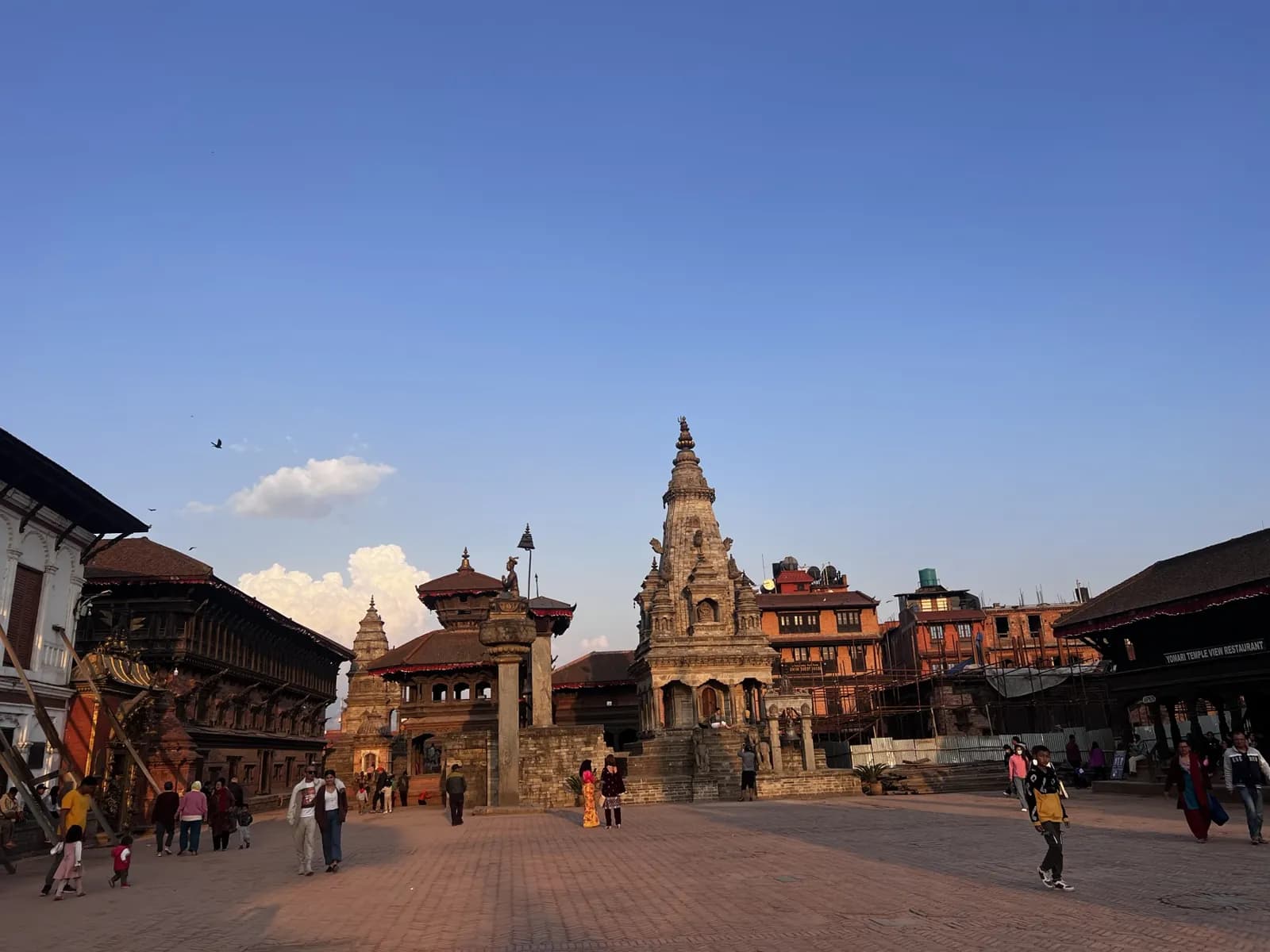
An early start to see the Himalaya along the northern horizon, including Everest on a clear morning. You then drive down to Bhaktapur, the best-preserved of the valley's three old cities, where we spend the afternoon before returning to Kathmandu.
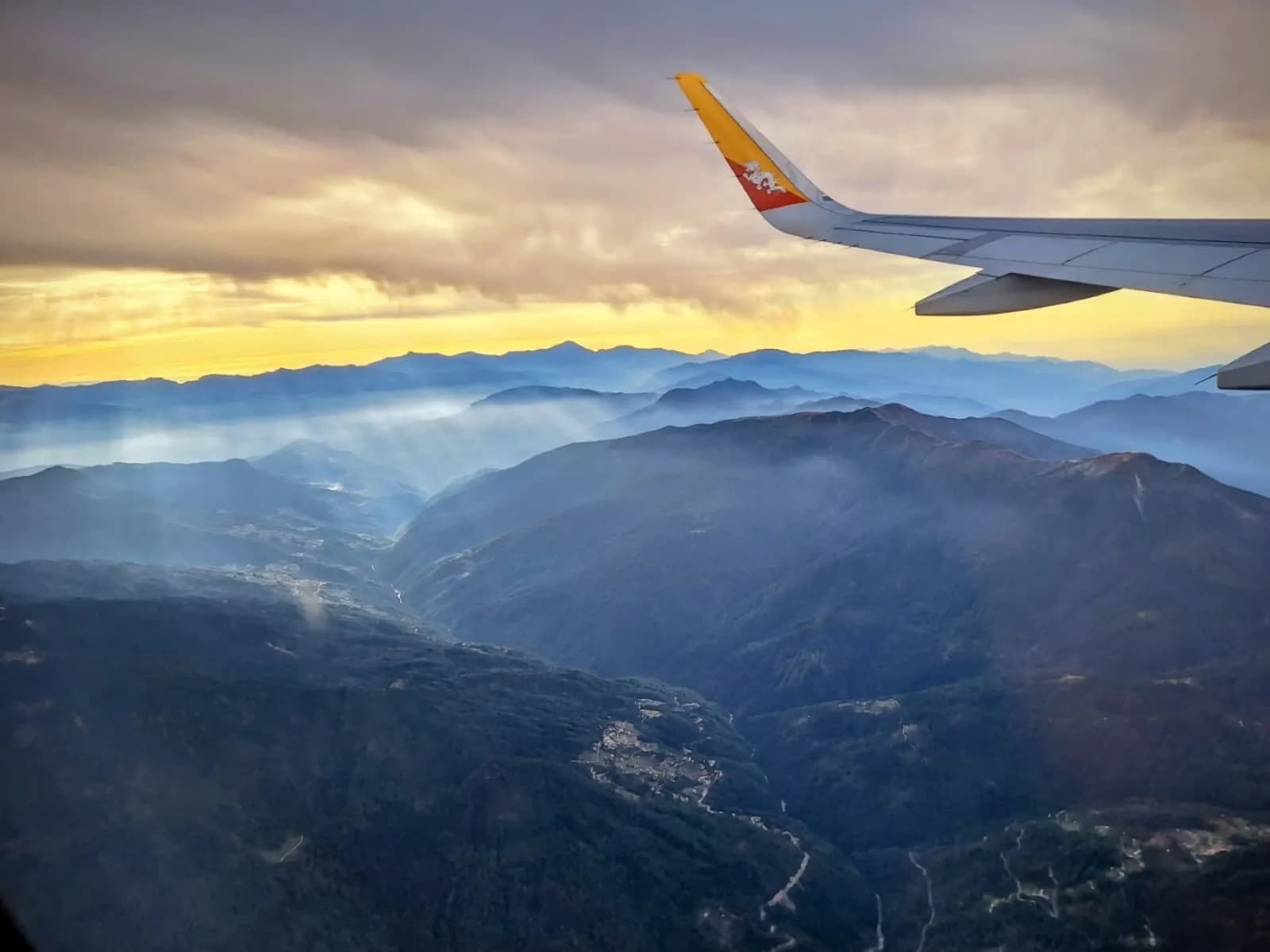
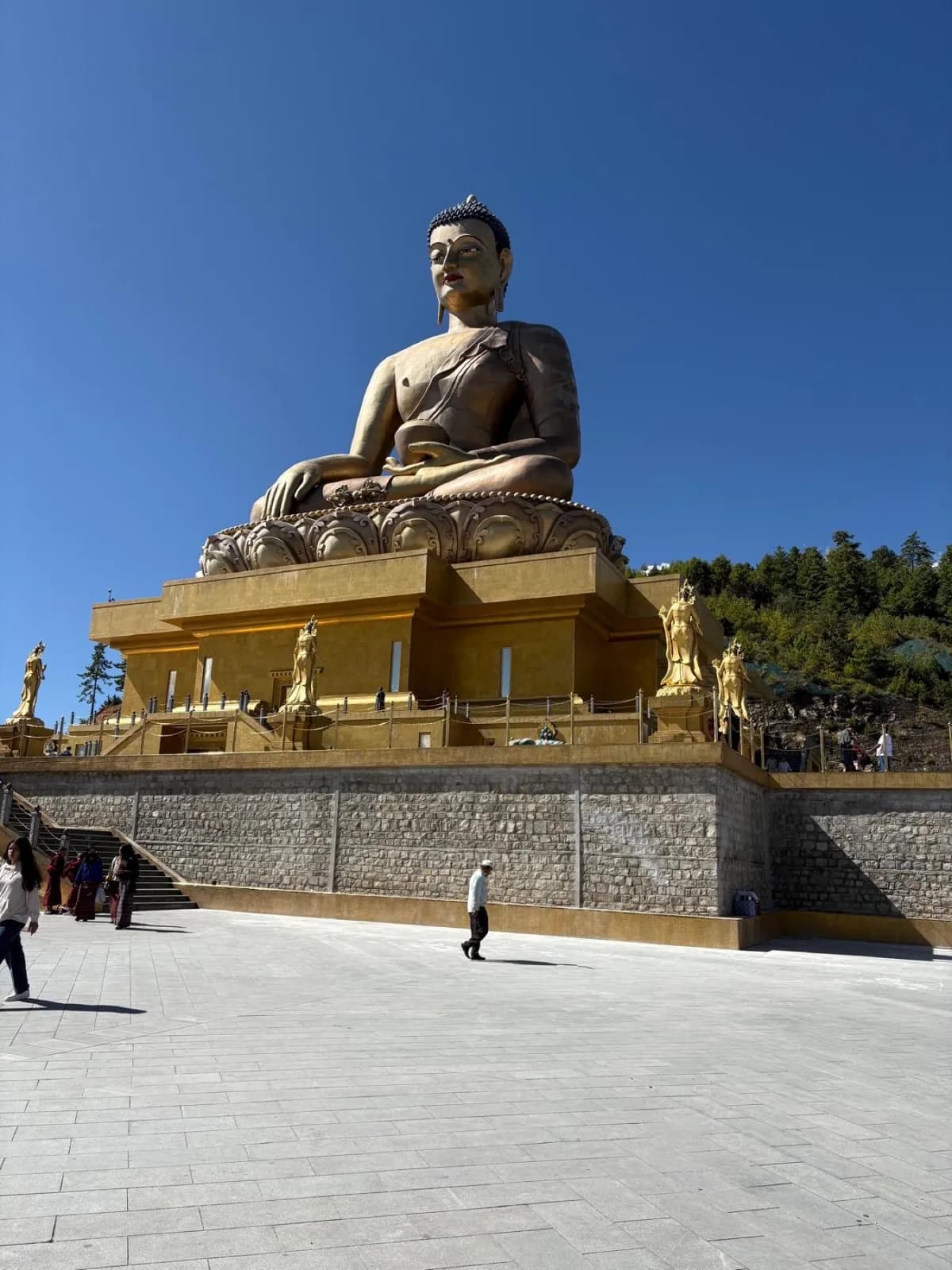
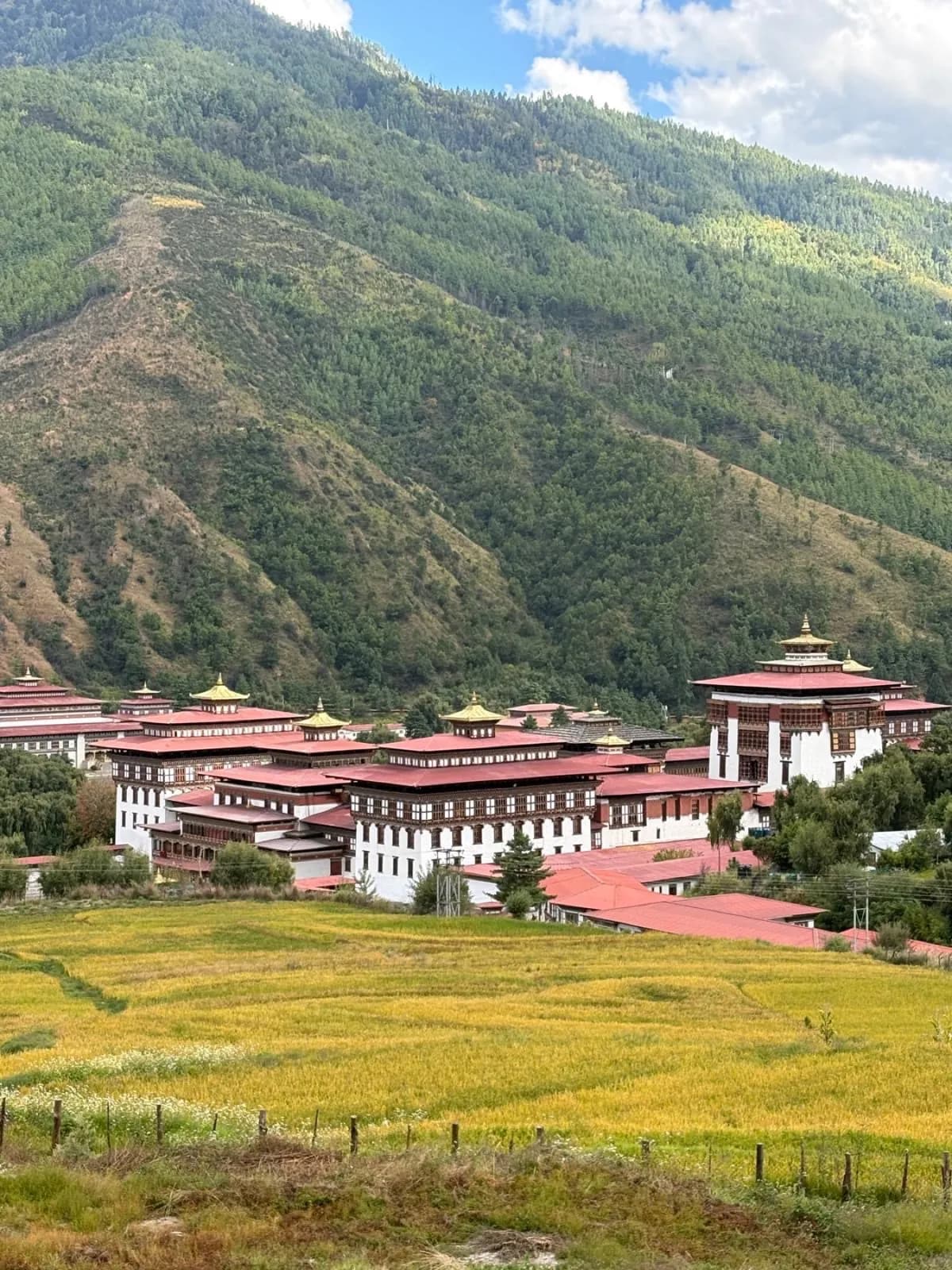
The one-hour flight offers some of the best mountain views of any commercial flight. Sit on the left to see the Himalaya, including Everest and Kanchenjunga. Pilots fly the approach into Paro manually between mountains. In the afternoon, you visit Thimphu: the Memorial Chorten, the 54 m Buddha Dordenma above the valley, and Tashichho Dzong.
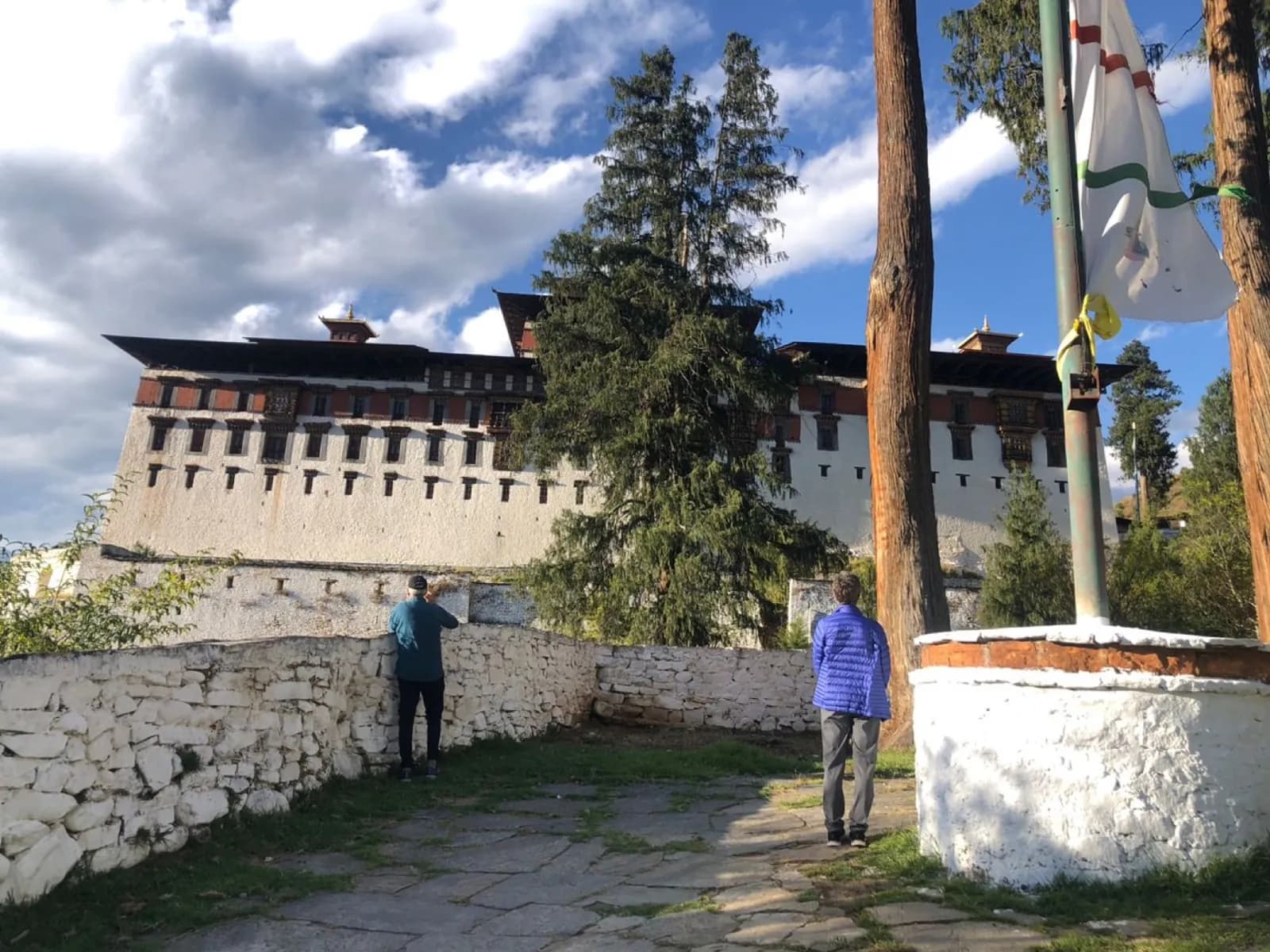
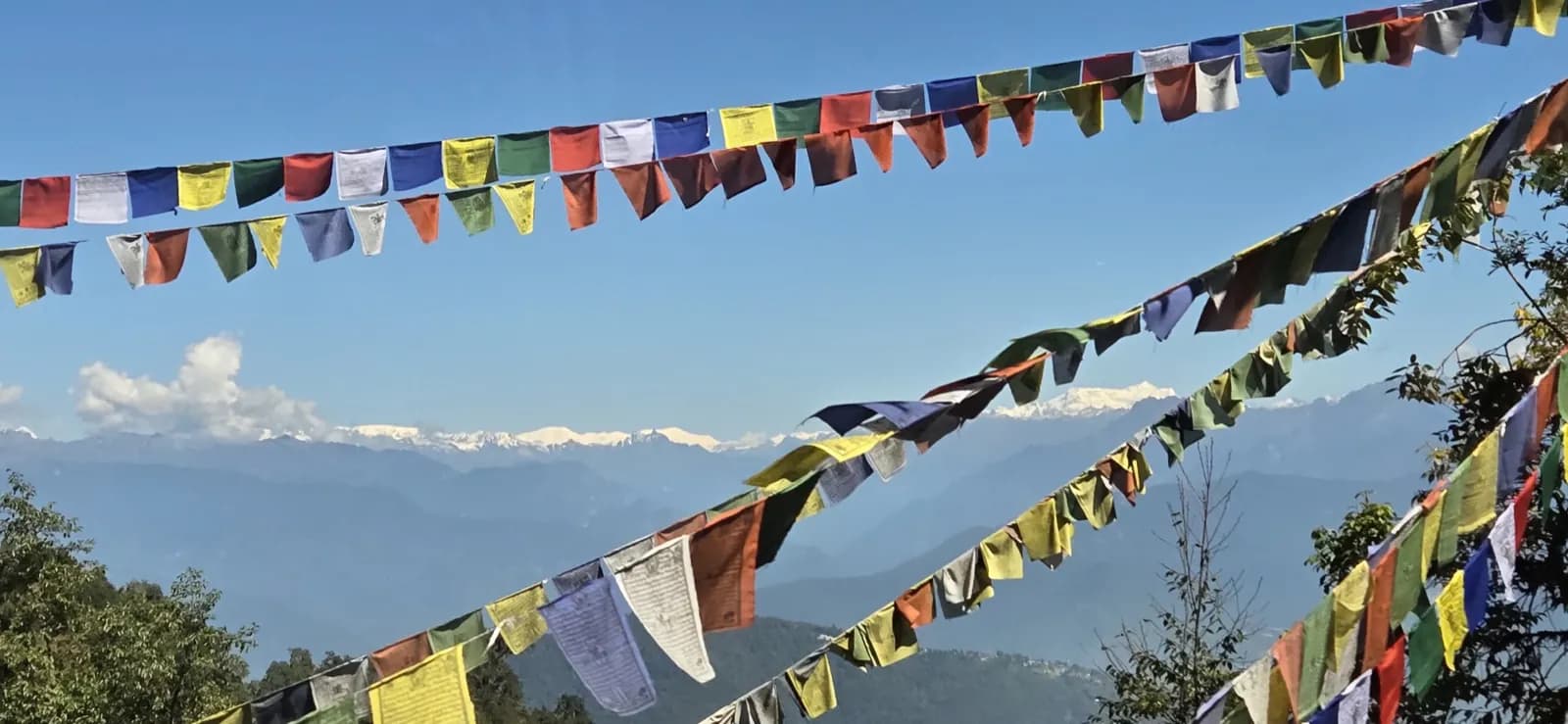
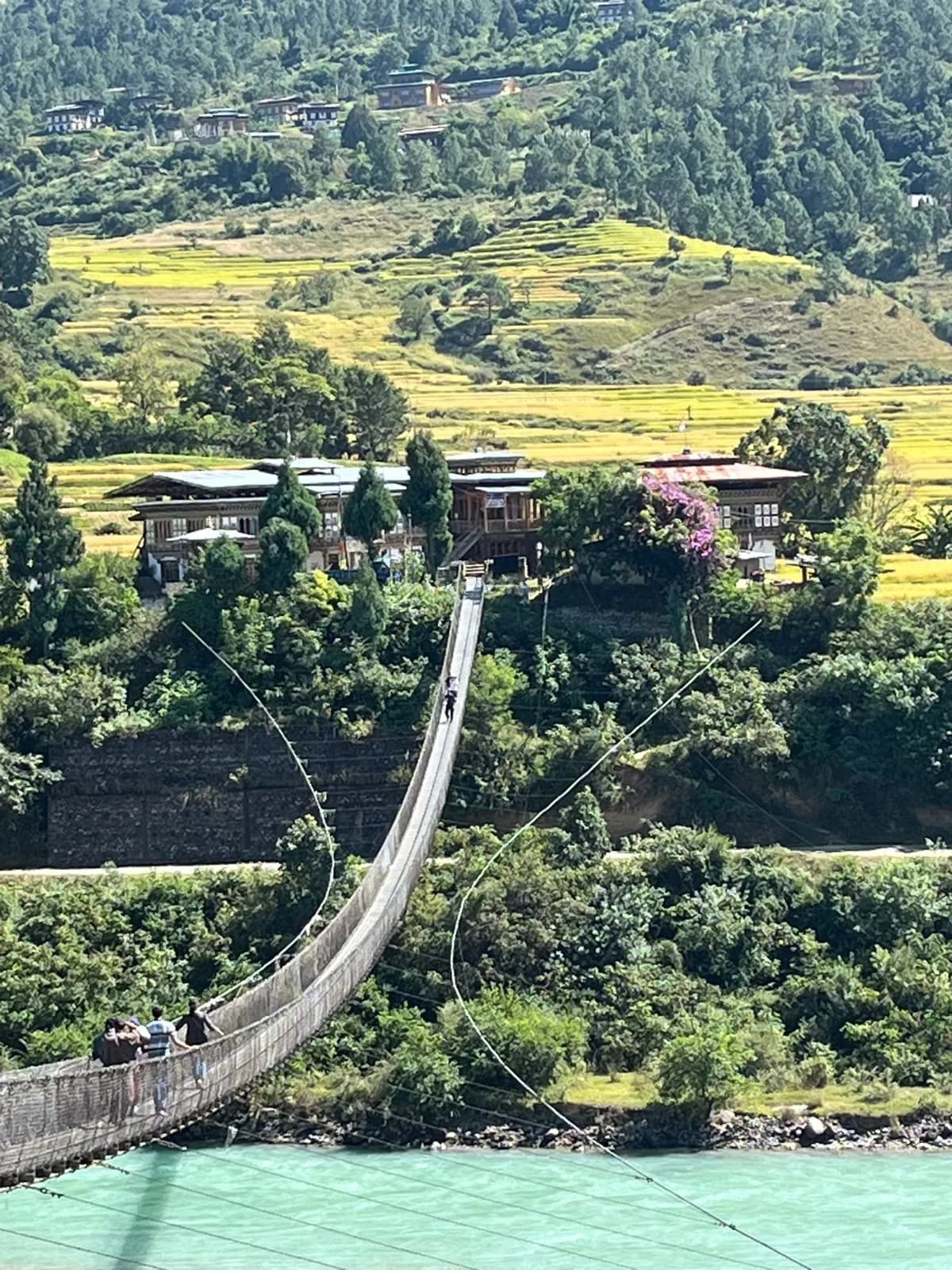
A three-hour drive east over the Dochula pass at 3,100 m, where 108 chortens stand on a rise and, on a clear morning, the eastern Himalaya is visible across the skyline. We descend into the warm Punakha valley to visit Chimi Lhakhang and then Punakha Dzong, at the meeting point of two rivers, which is considered the most beautiful building in Bhutan.
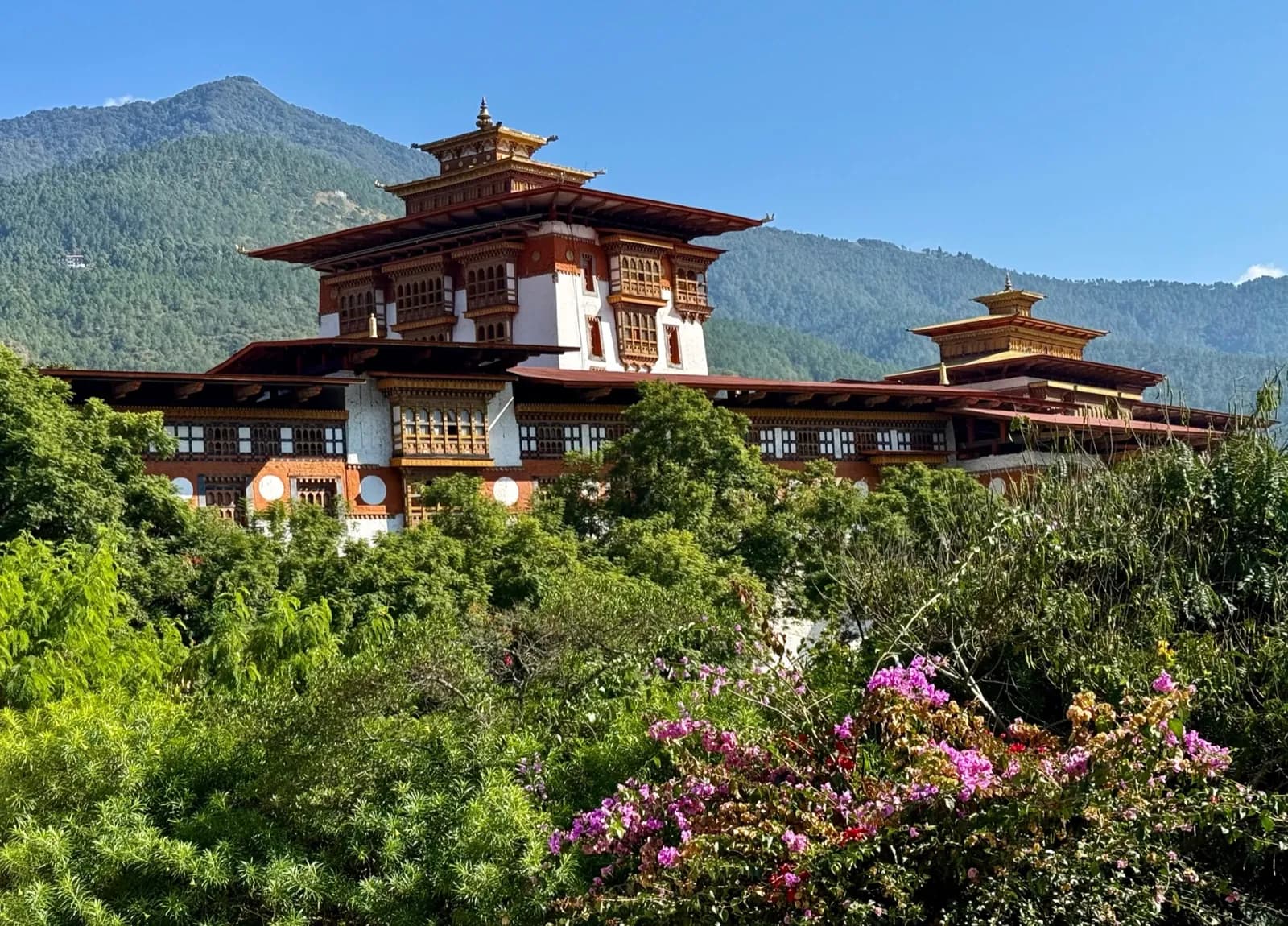
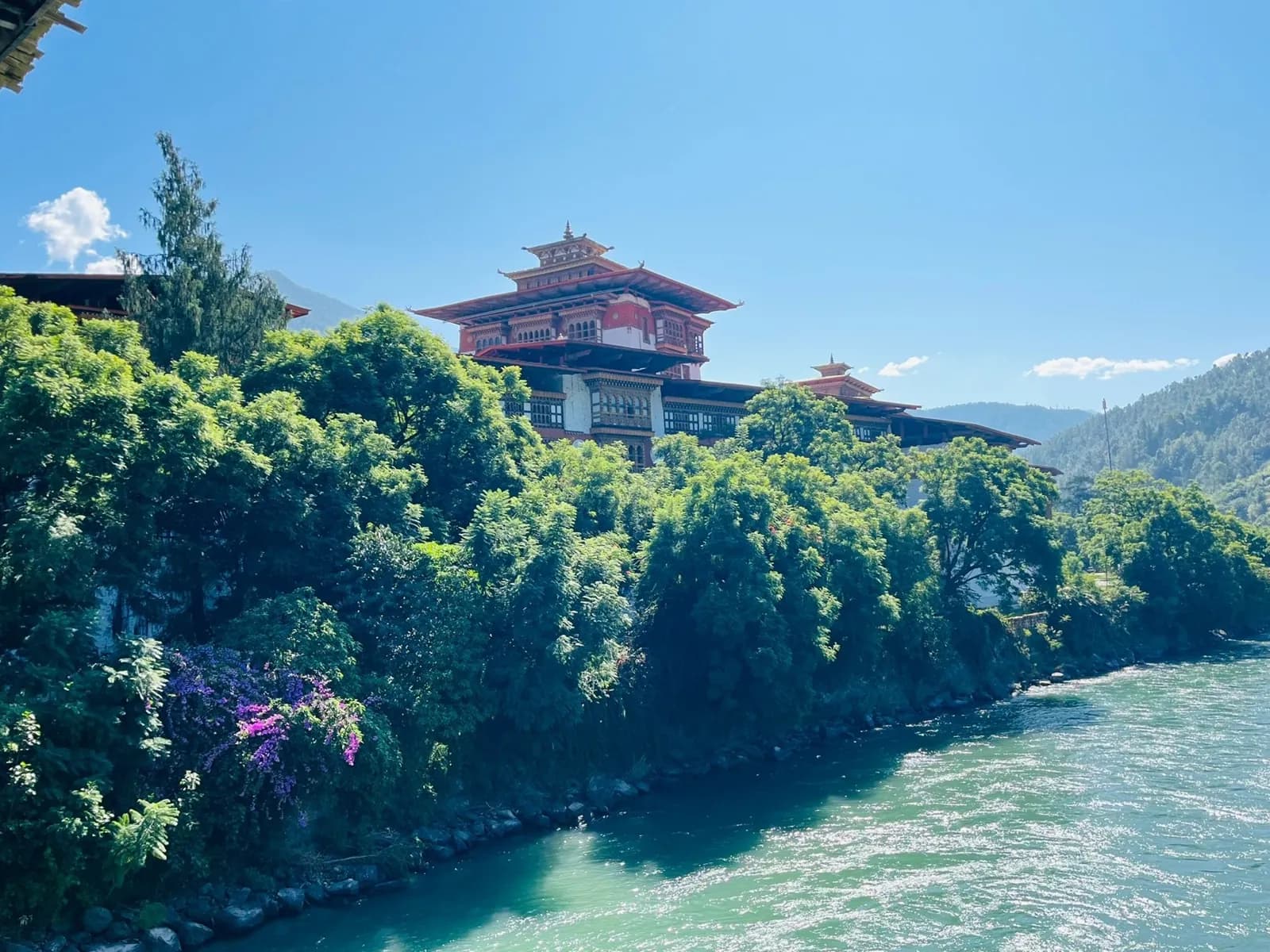
We drive back over the pass and west through Wangdue to the Paro valley, stopping along the way at places such as a roadside chorten, a village archery match or a farmhouse. Driving in Bhutan is slow, and the journey is an important part of the experience.
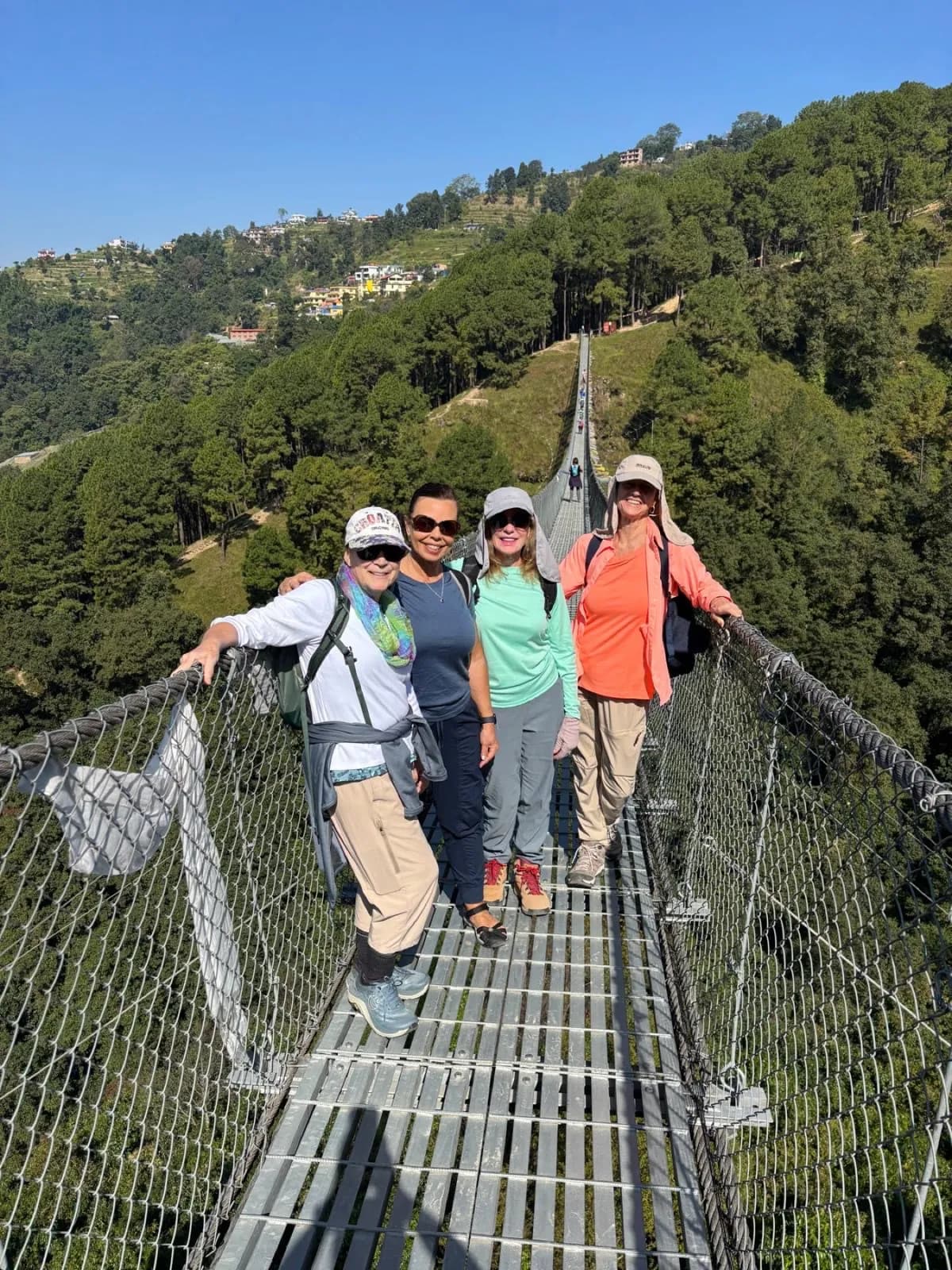
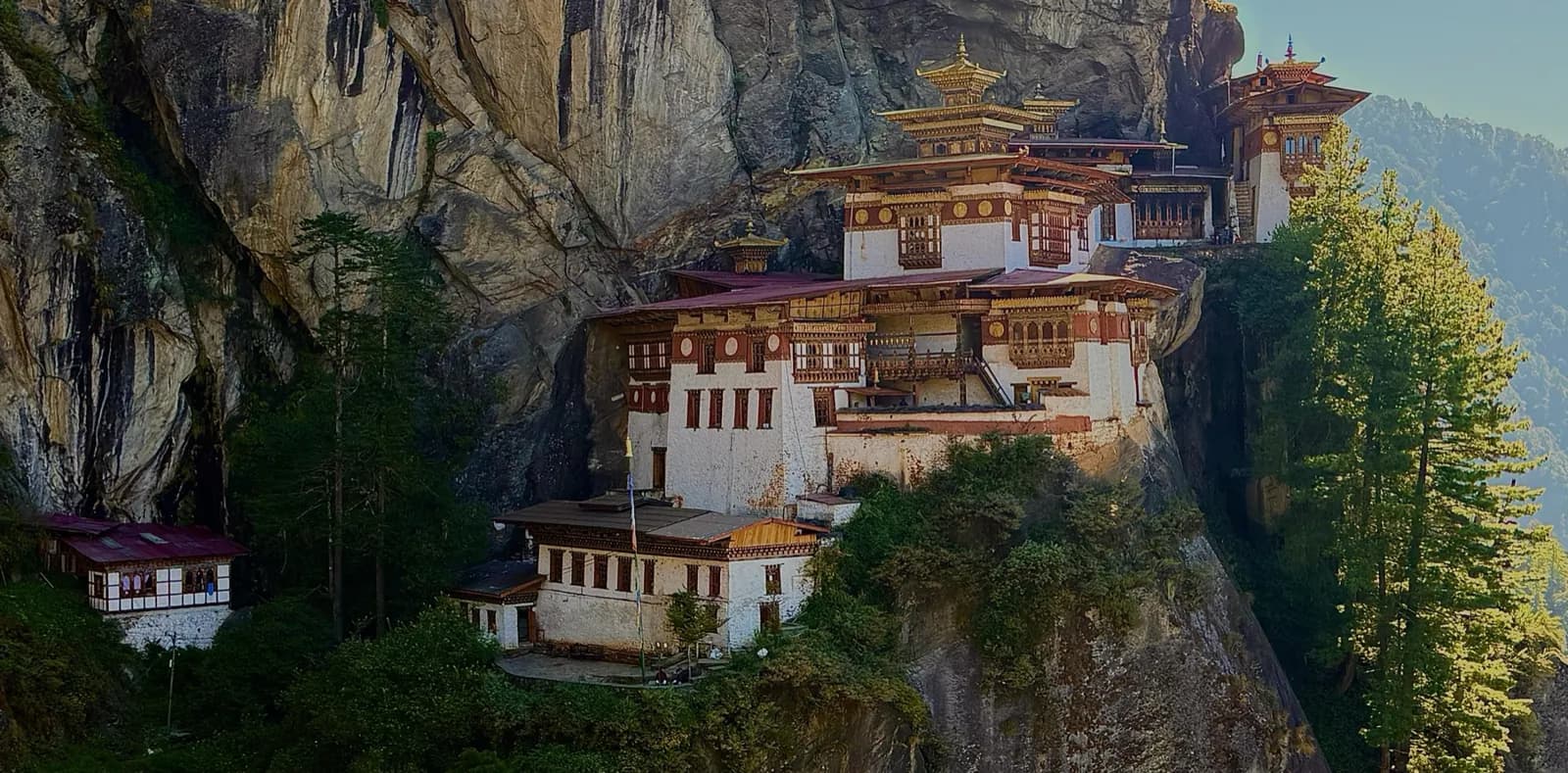
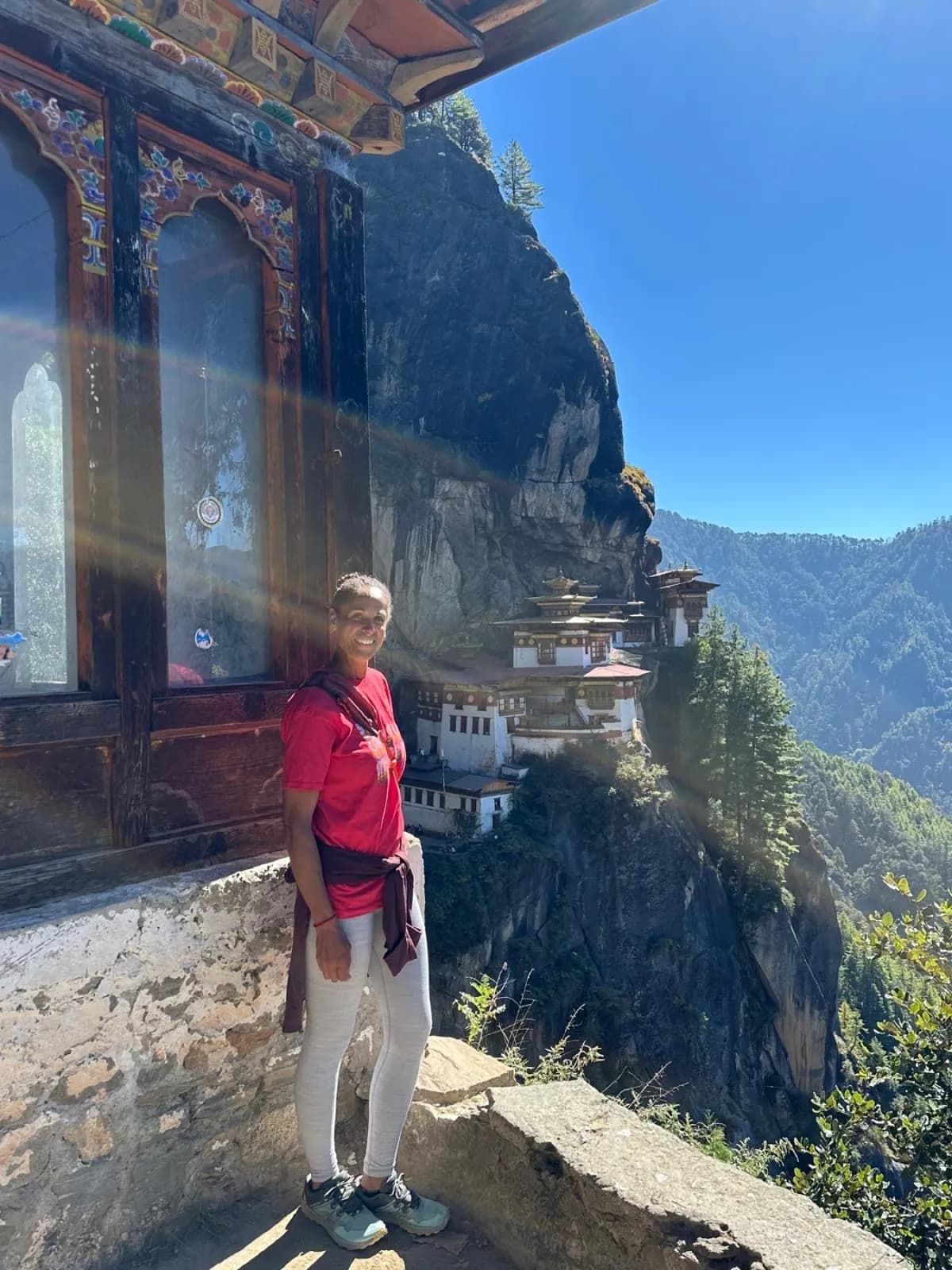
The main walk of the trip: three to four hours up through oak and pine forest to Taktsang, which sits on a cliff 900 m above the valley floor. Guru Rinpoche is said to have flown here on the back of a tigress. This is the most physically demanding day of the trip. Ponies are available for the lower half.
The morning flight west, with the mountains on the right-hand side this time. The afternoon is free in Kathmandu for Thamel and anything you did not see on day 2. In the evening there is a Nepali cultural show and dinner.
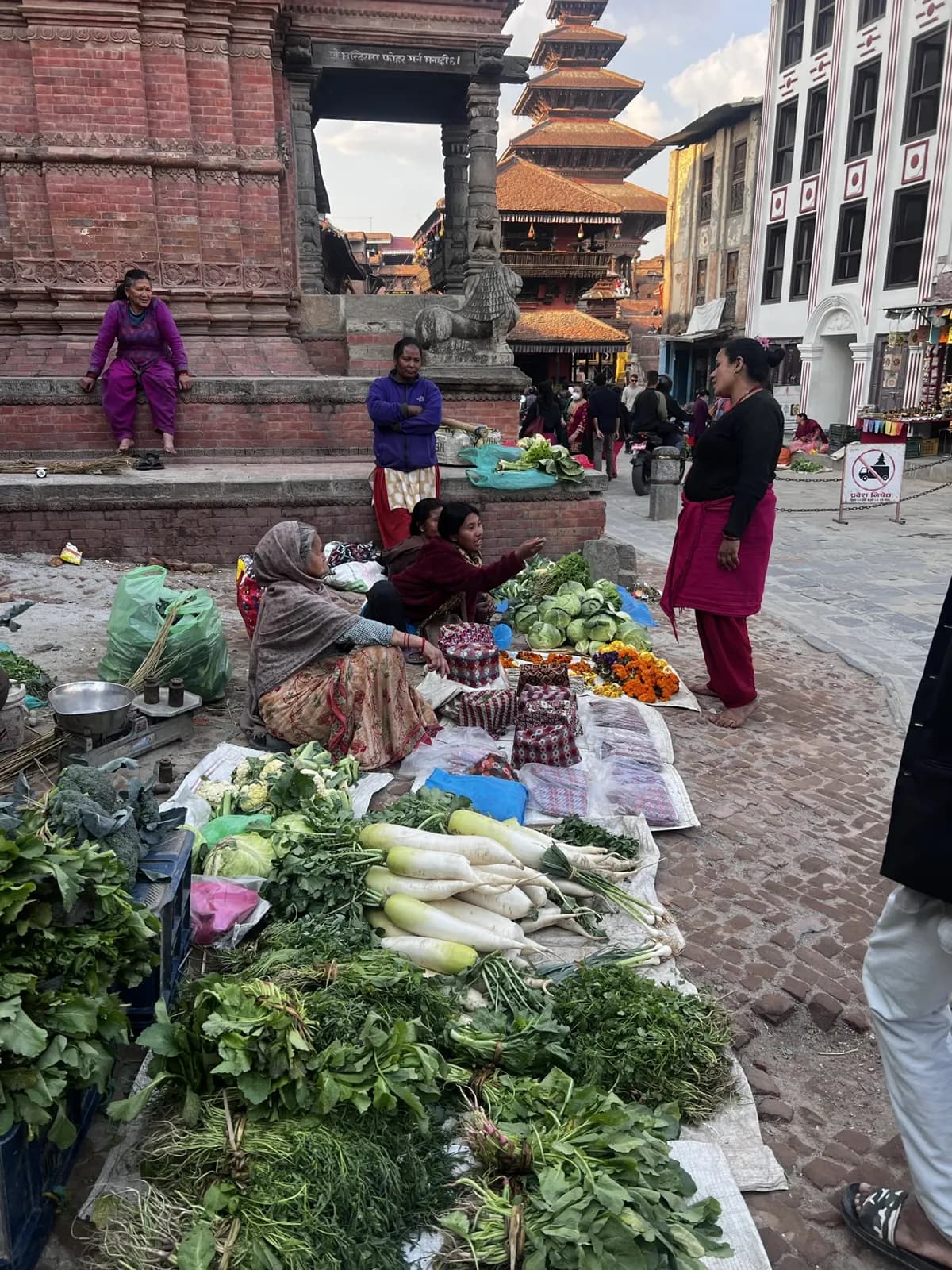
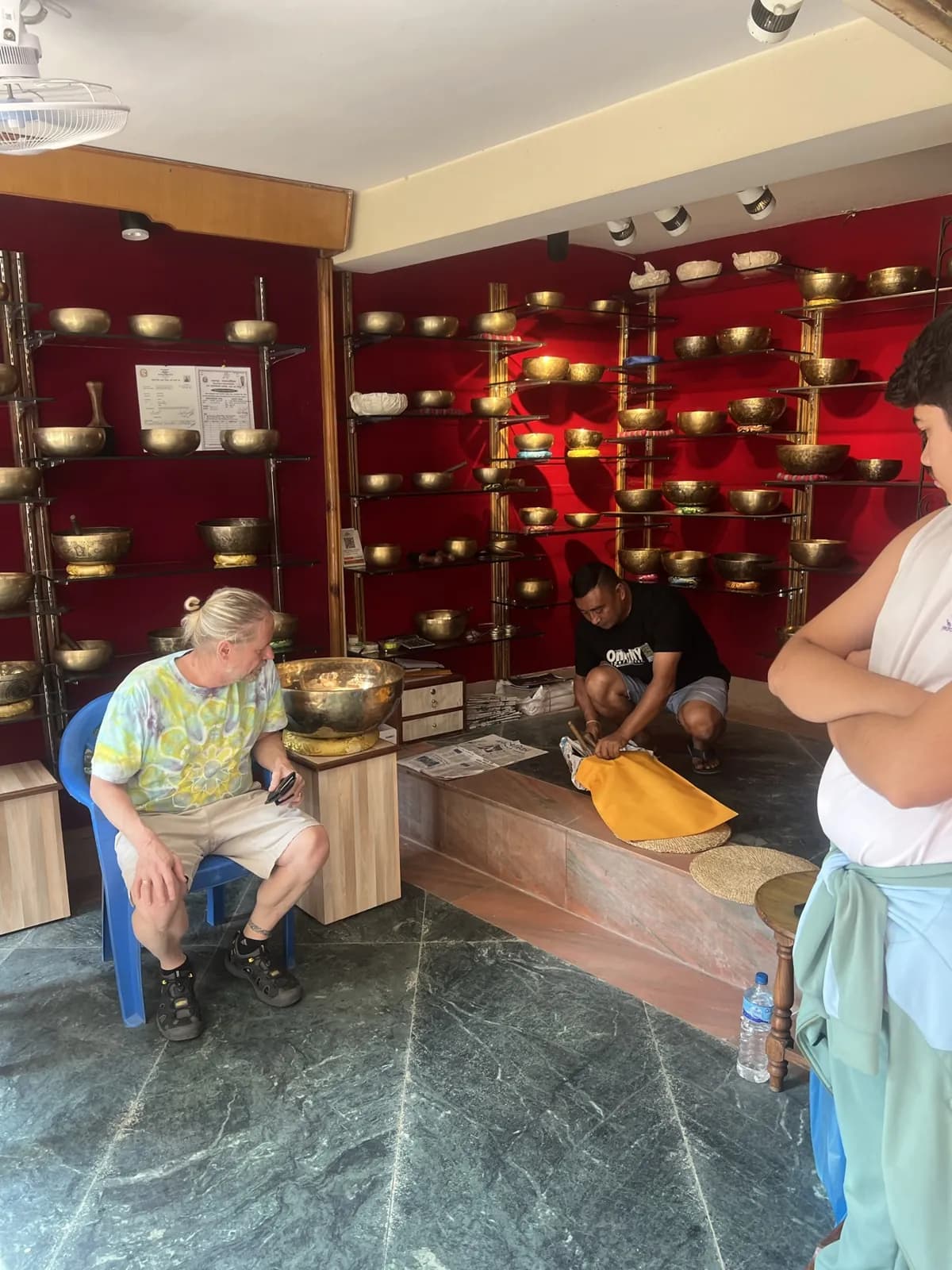
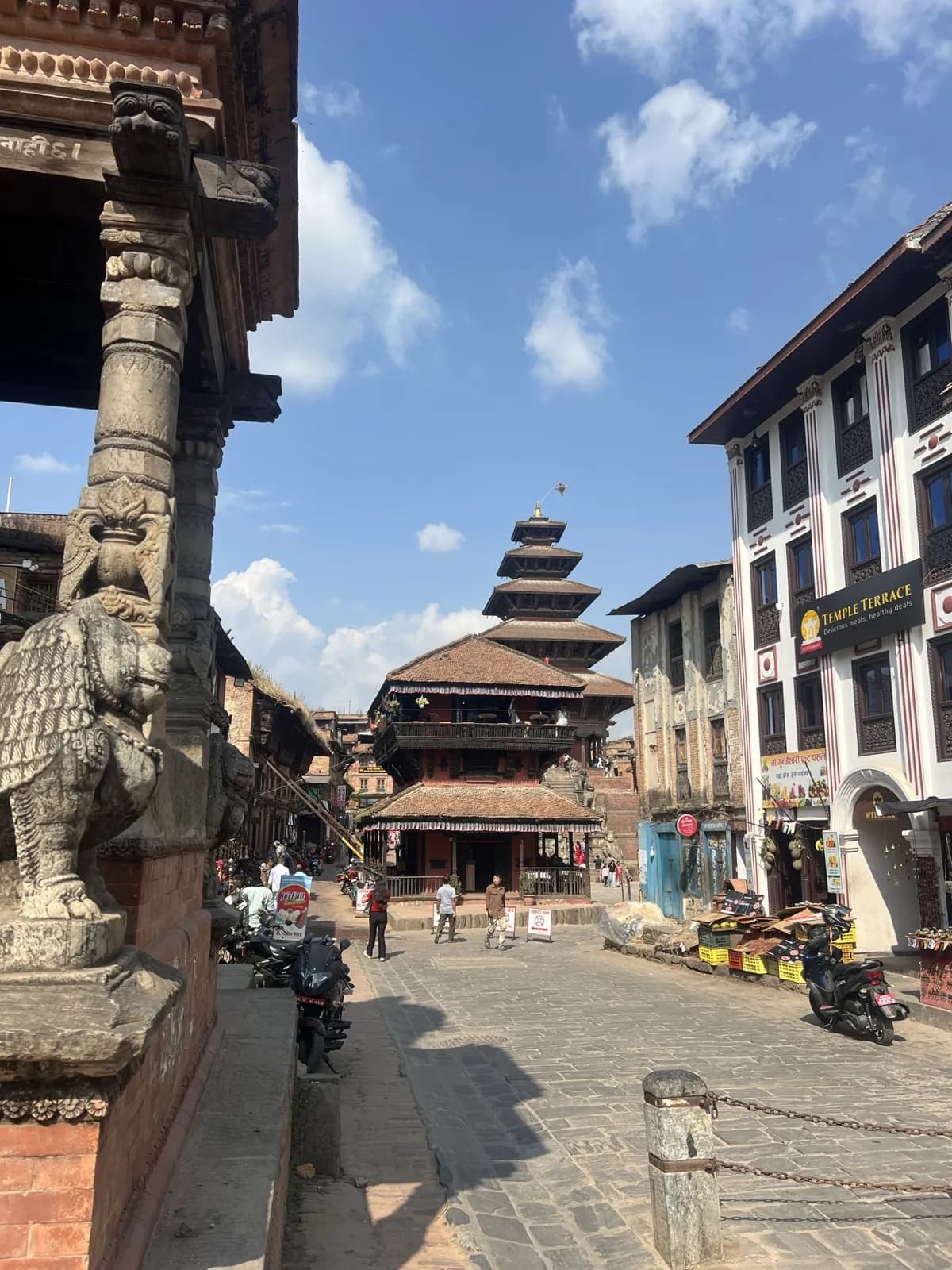
A five-hour drive south, out of the hills and onto the Terai plain, which is hot, flat and green, and much closer to India in character. Chitwan is a UNESCO World Heritage Site and one of the last strongholds of the one-horned rhino. In the evening there is a walk by the Rapti river and a Tharu stick dance after dinner.
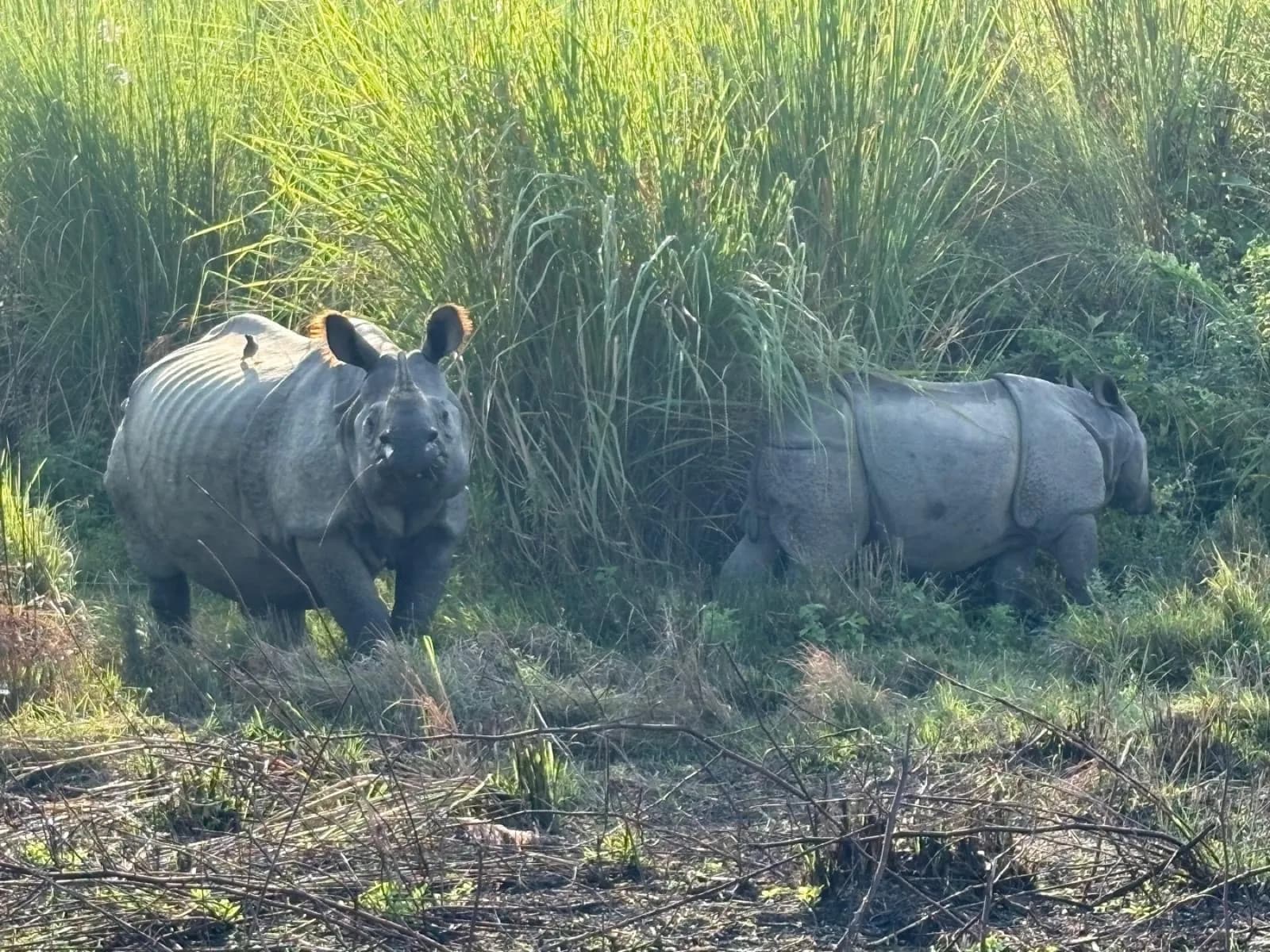
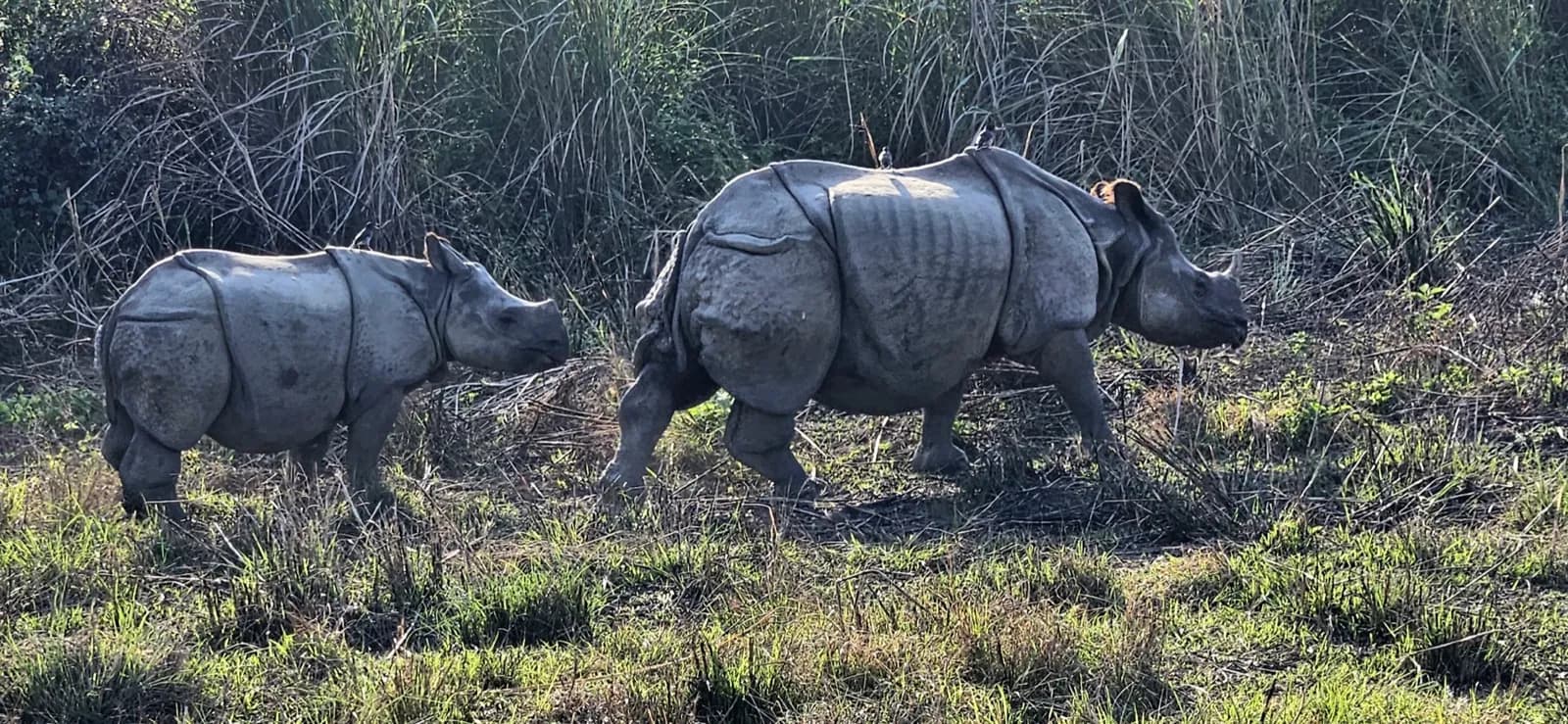
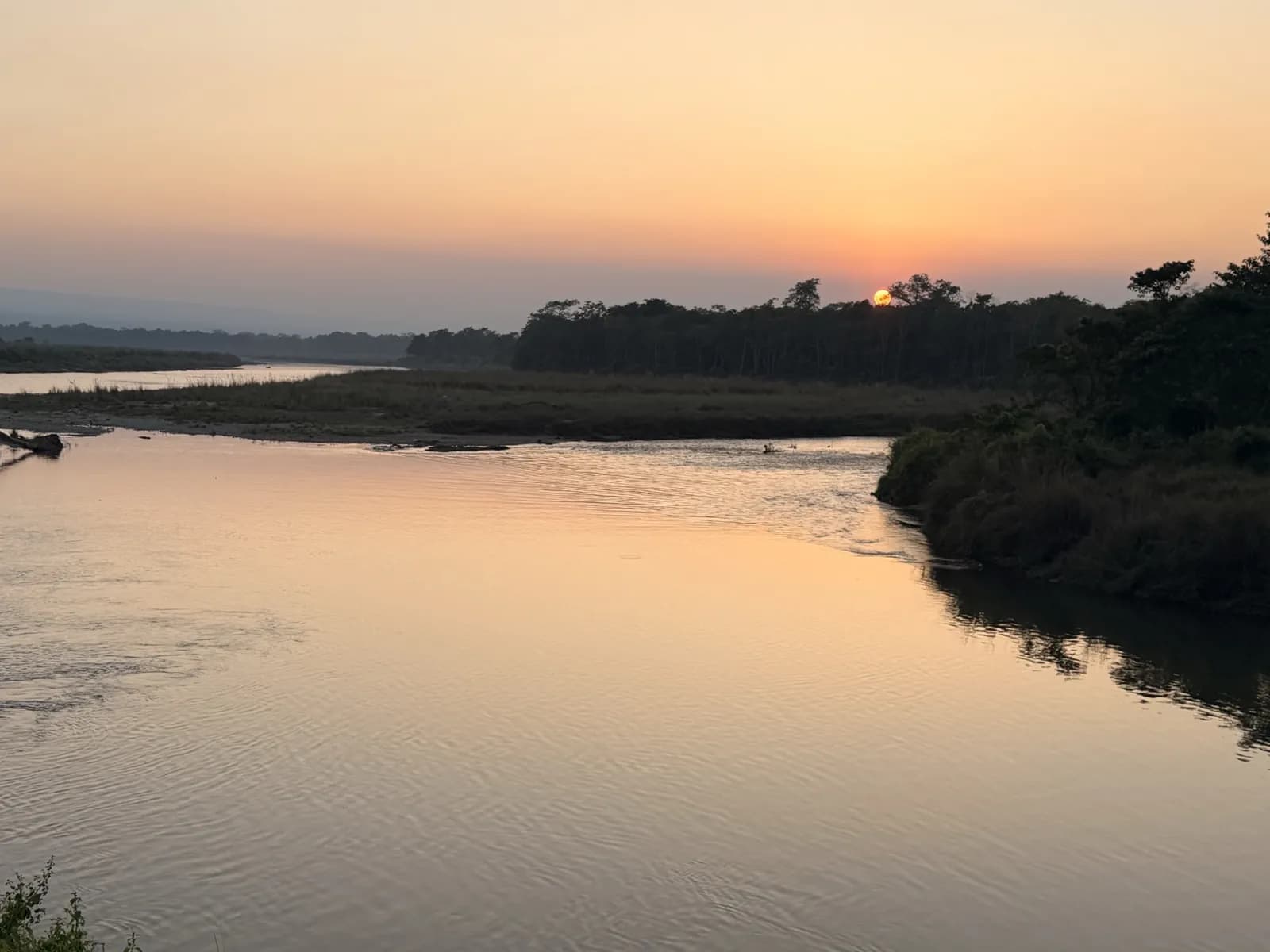
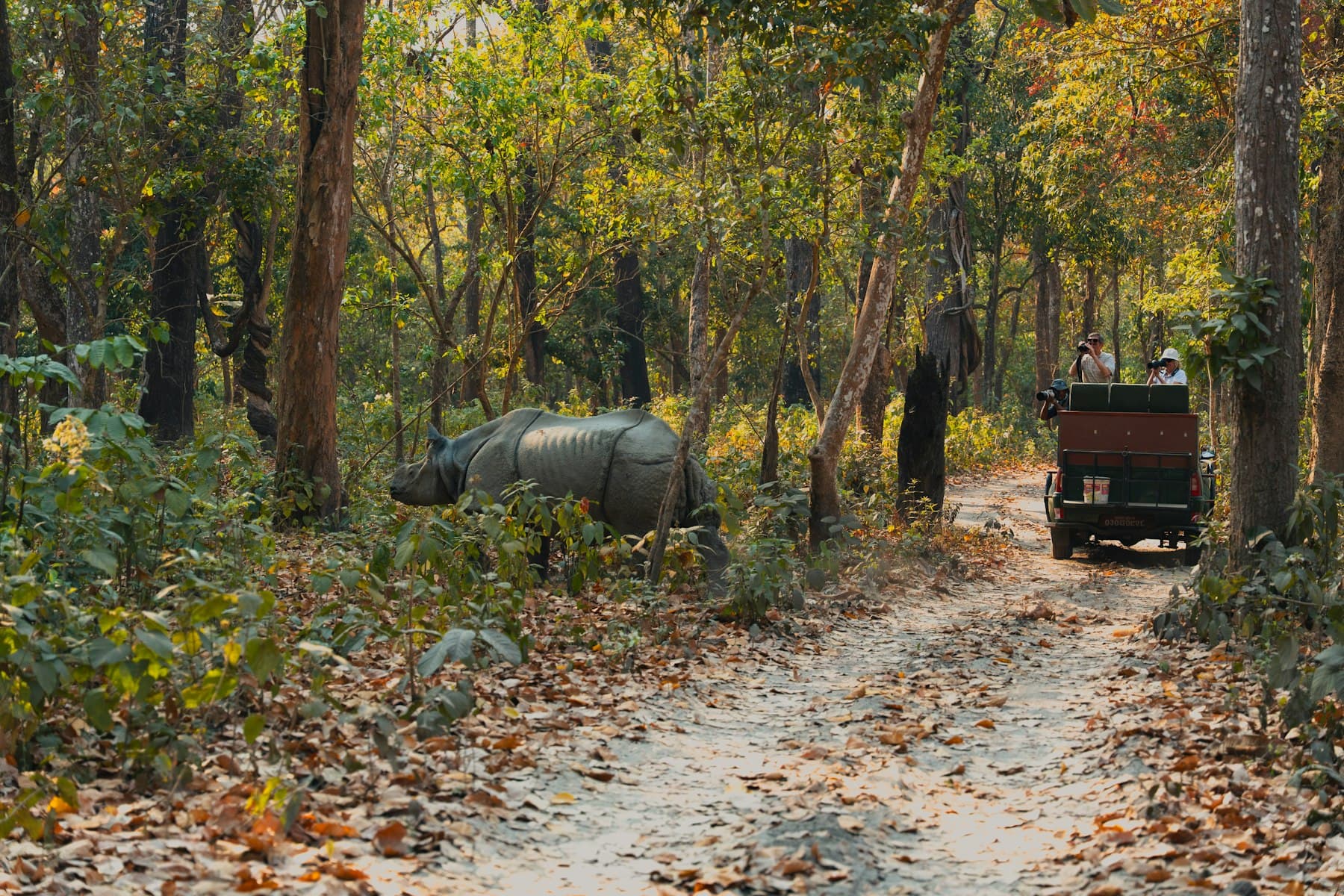
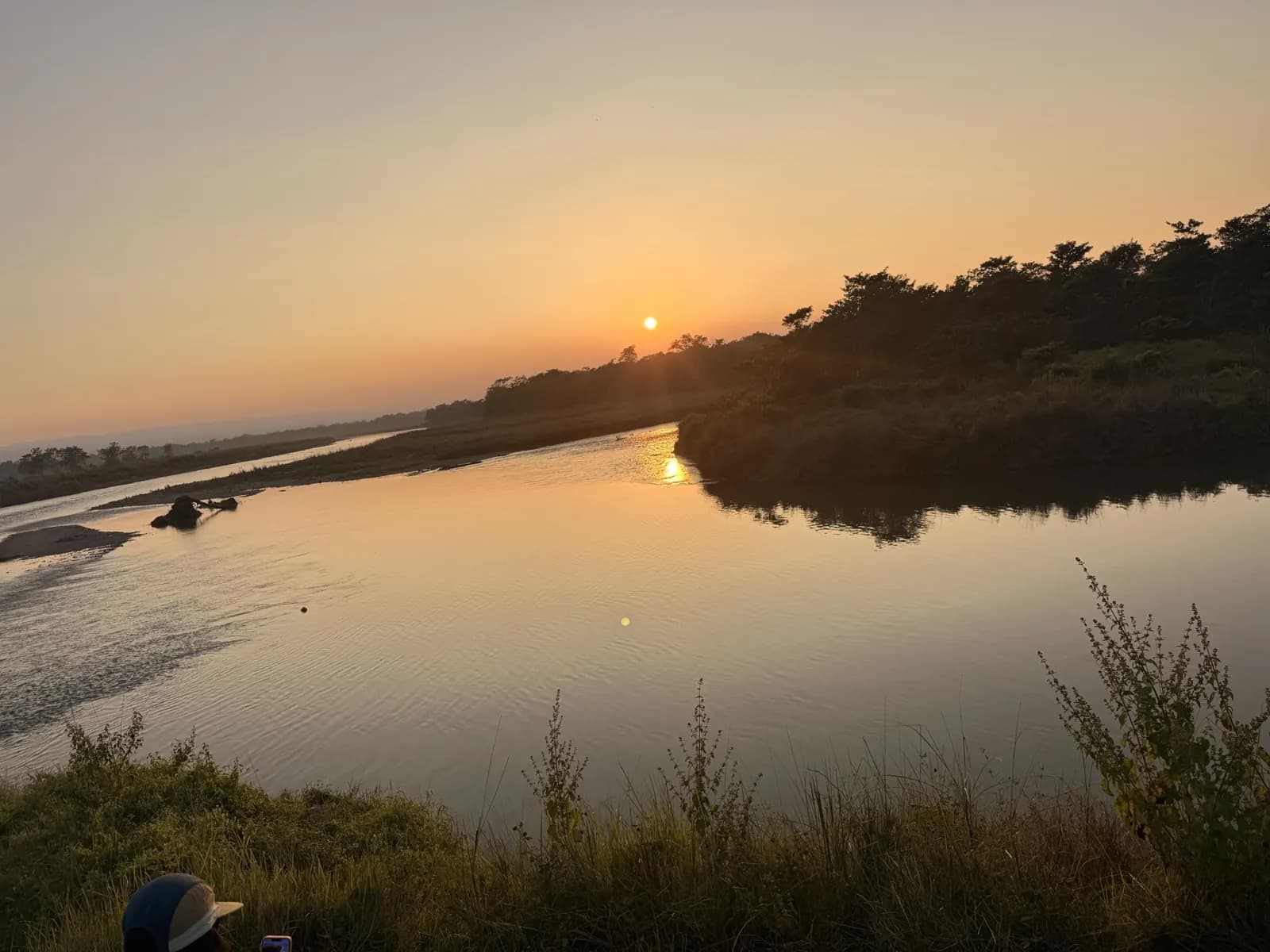
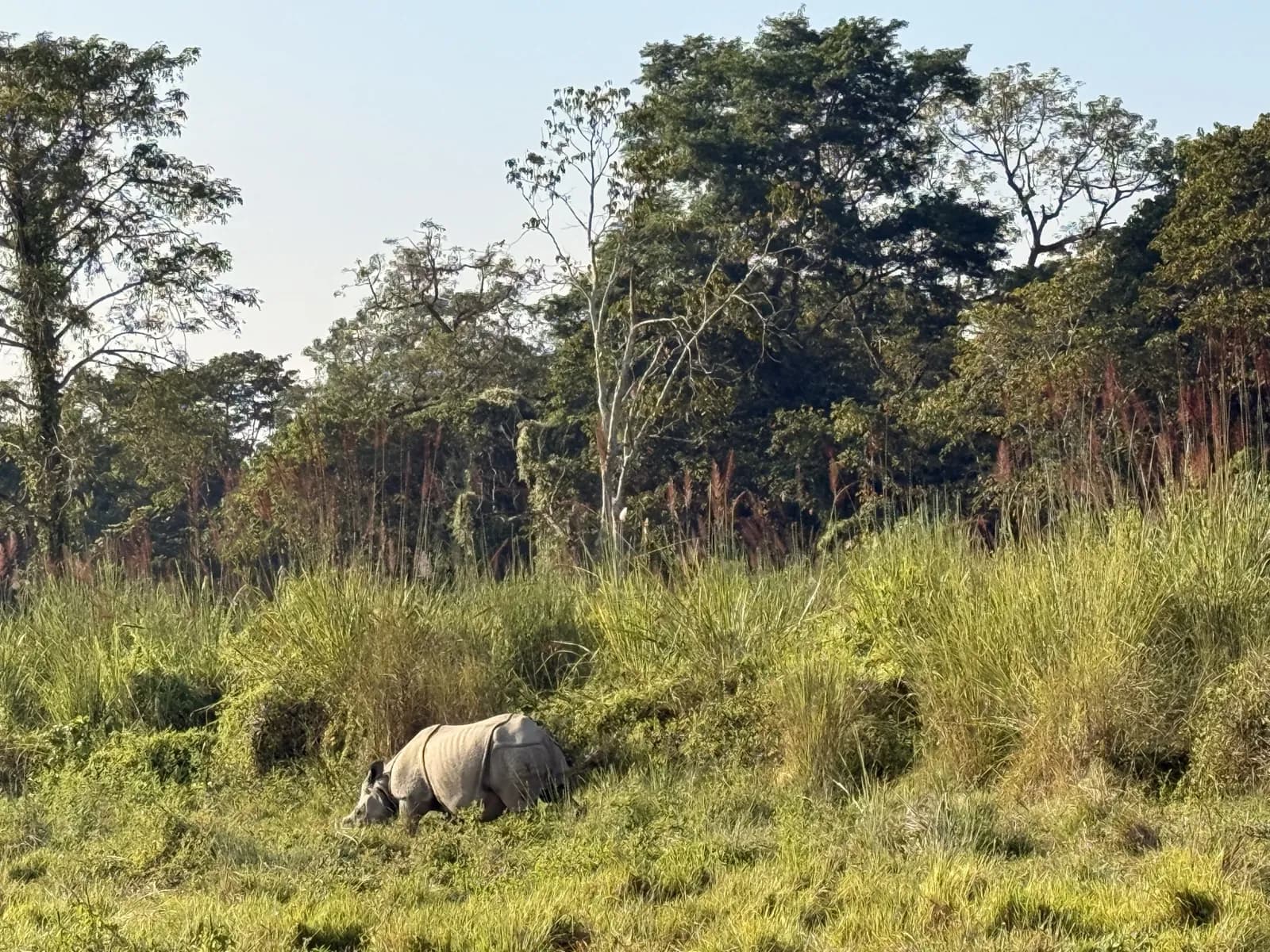
A dugout canoe trip on the river at first light to look for gharial and kingfishers, a guided jungle walk, and a jeep safari into the park to look for rhino, and with luck a sloth bear or a tiger. In between, you visit a Tharu village and the elephant breeding centre.

A twenty-five-minute flight from Bharatpur, or a five-hour drive if you would prefer to see the countryside. The rest of the day is free for shopping in Patan and Thamel, and there is a farewell dinner in the evening.
We take you to the airport. If you are continuing on a trek, we introduce you to the trekking team here.
Start date
25 Sept 2027
End date
6 Oct 2027
Available
12 places left
US $3,487
Per person
Start date
8 May 2027
End date
19 May 2027
Available
12 places left
US $3,287
Per person
Start date
4 Mar 2028
End date
15 Mar 2028
Available
12 places left
US $3,287
Per person
Only two airlines fly into Paro and neither has codeshare agreements with other airlines. This section explains how that affects the way a Bhutan trip is booked.
Drukair and Bhutan Airlines are the only airlines certified to land at Paro. They do not belong to any alliance, have no codeshare agreements with European or American airlines, and cannot check a bag through from London. Your flight to Kathmandu is one ticket and the Paro flight is a second one, which we reserve for you as part of the trip.
Drukair will not confirm a Paro seat without a visa clearance number, and the Bhutan visa is issued only against a confirmed, paid itinerary. The operator completes these steps in the correct order, and this is one of the main things an operator does for travel to Bhutan. It is also why we ask for passport scans six weeks before departure rather than two weeks.
Paro lies at 2,235 m in a valley with mountains on both sides. Pilots fly the approach visually and manually, and only a small number of pilots are qualified to do so. It is one of the most dramatic landings in commercial aviation. For this reason the airport operates only in daylight and good weather, and there is no alternative airport, so a Paro flight can be delayed by a day.
Sit on the left from Kathmandu to Paro and on the right on the return. On a clear morning you can see Everest, Makalu, Kanchenjunga and Chomolhari one after another, and the cabin crew name them. Ask for the seat at check-in.
Several parts of this itinerary depend on the weather: the Paro flight, the Nagarkot sunrise and the flight back from Chitwan to Bharatpur. None of these is likely to cause a three-day delay as a Lukla flight can, but we still advise against booking an international flight that leaves the morning after day 12, even if it is cheaper.
| Where | Nights | Type | Room | Bathroom |
|---|---|---|---|---|
| Kathmandu | 4 | Three-star hotel | Twin or double | Private, hot water |
| Nagarkot | 1 | Hill resort on the valley rim | Twin or double, mountain-facing | Private, hot water |
| Thimphu | 1 | Three-star hotel | Twin or double | Private, hot water |
| Punakha | 1 | Three-star hotel or a valley lodge | Twin or double | Private, hot water |
| Paro | 2 | Three-star hotel | Twin or double | Private, hot water |
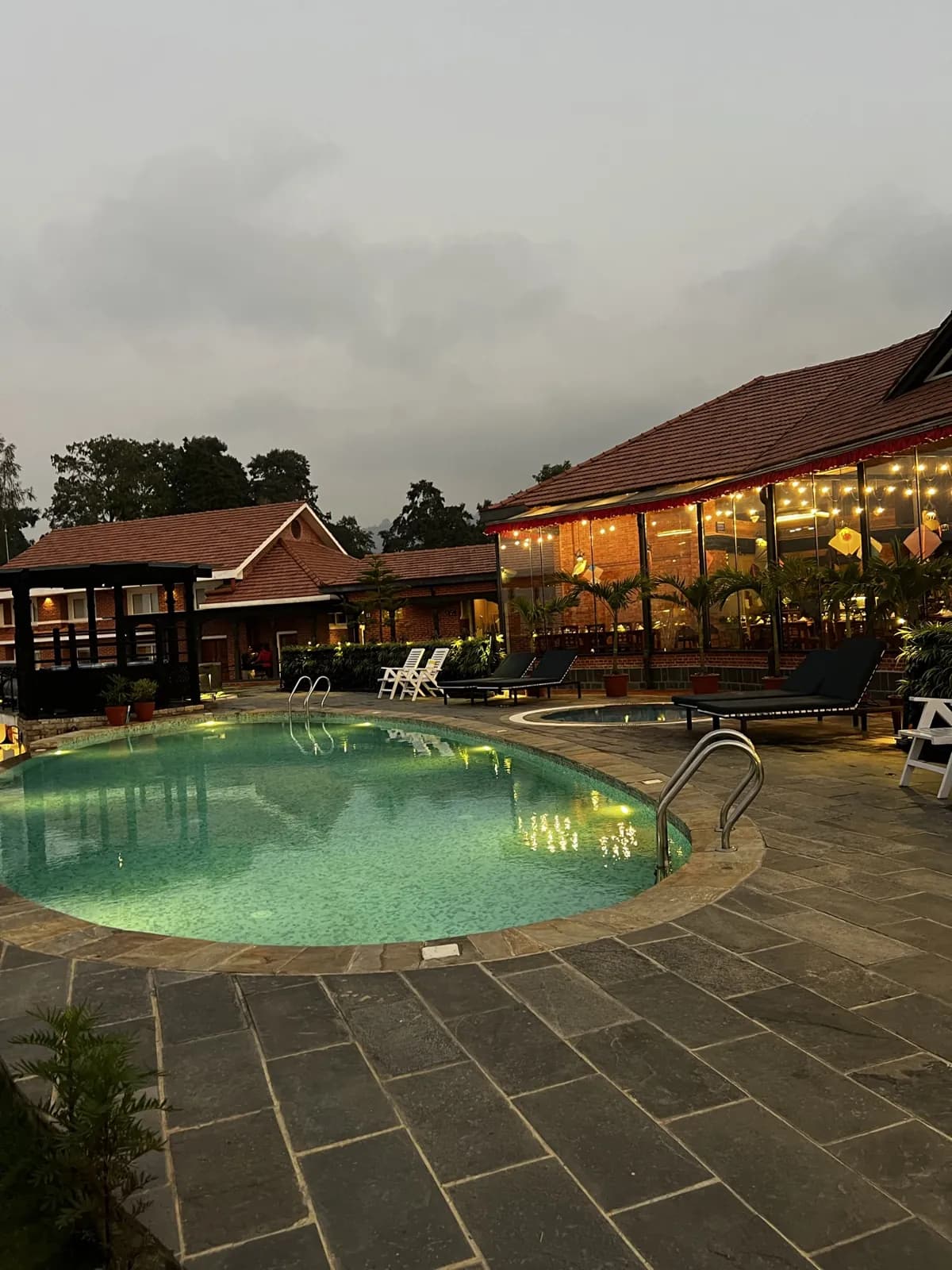
| Chitwan | 2 | Jungle lodge | Twin or double, or a cottage | Private, hot water |
Buffet in the hotels. In Bhutan, expect red rice, eggs, and ema datshi if you would like it at breakfast
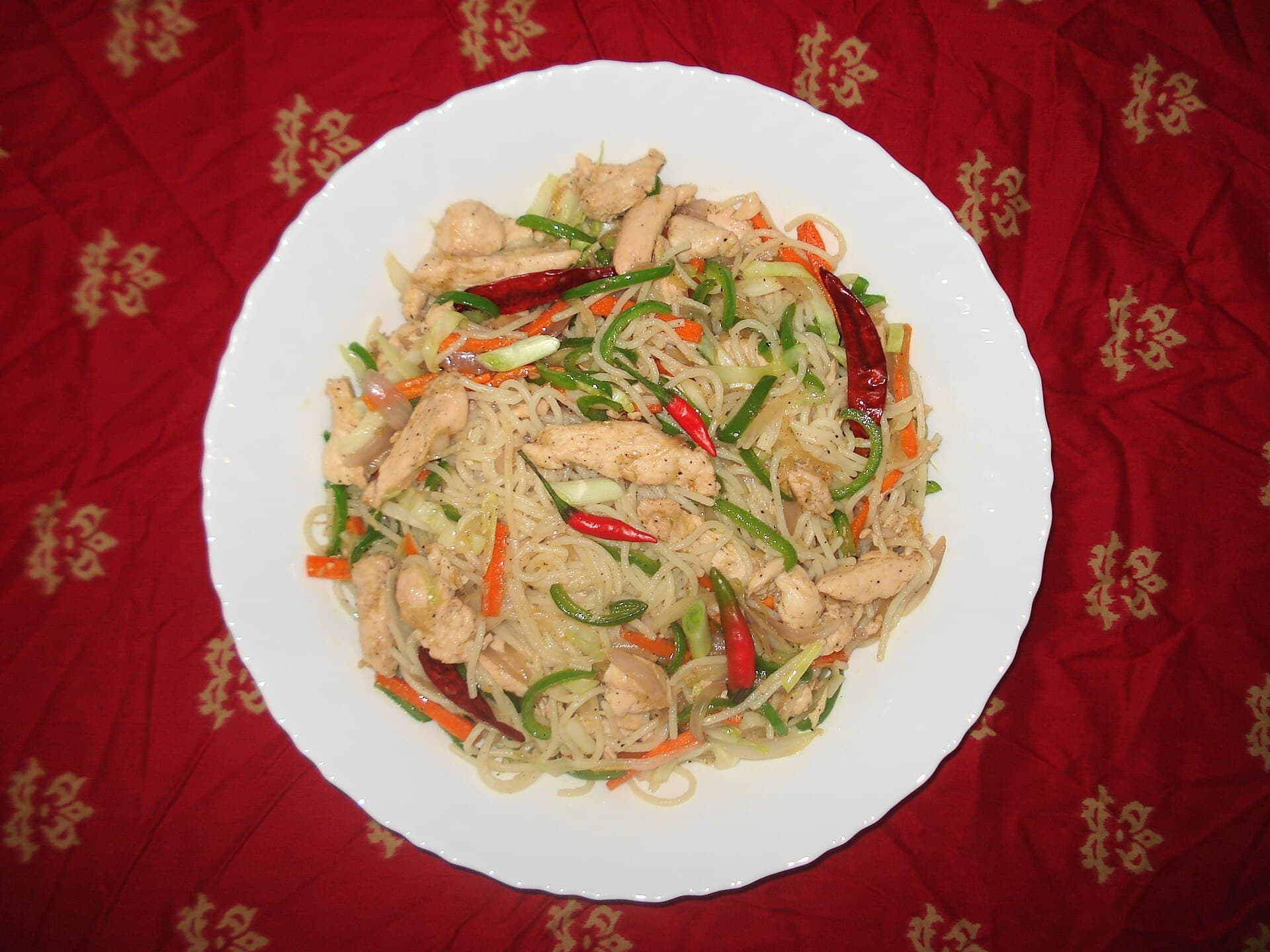
In Bhutan, a set menu at a local restaurant, included. In Nepal, wherever you are during the day

Bhutanese, Nepali, Indian and Continental. The Chitwan lodge serves a barbecue with a Tharu dance performance
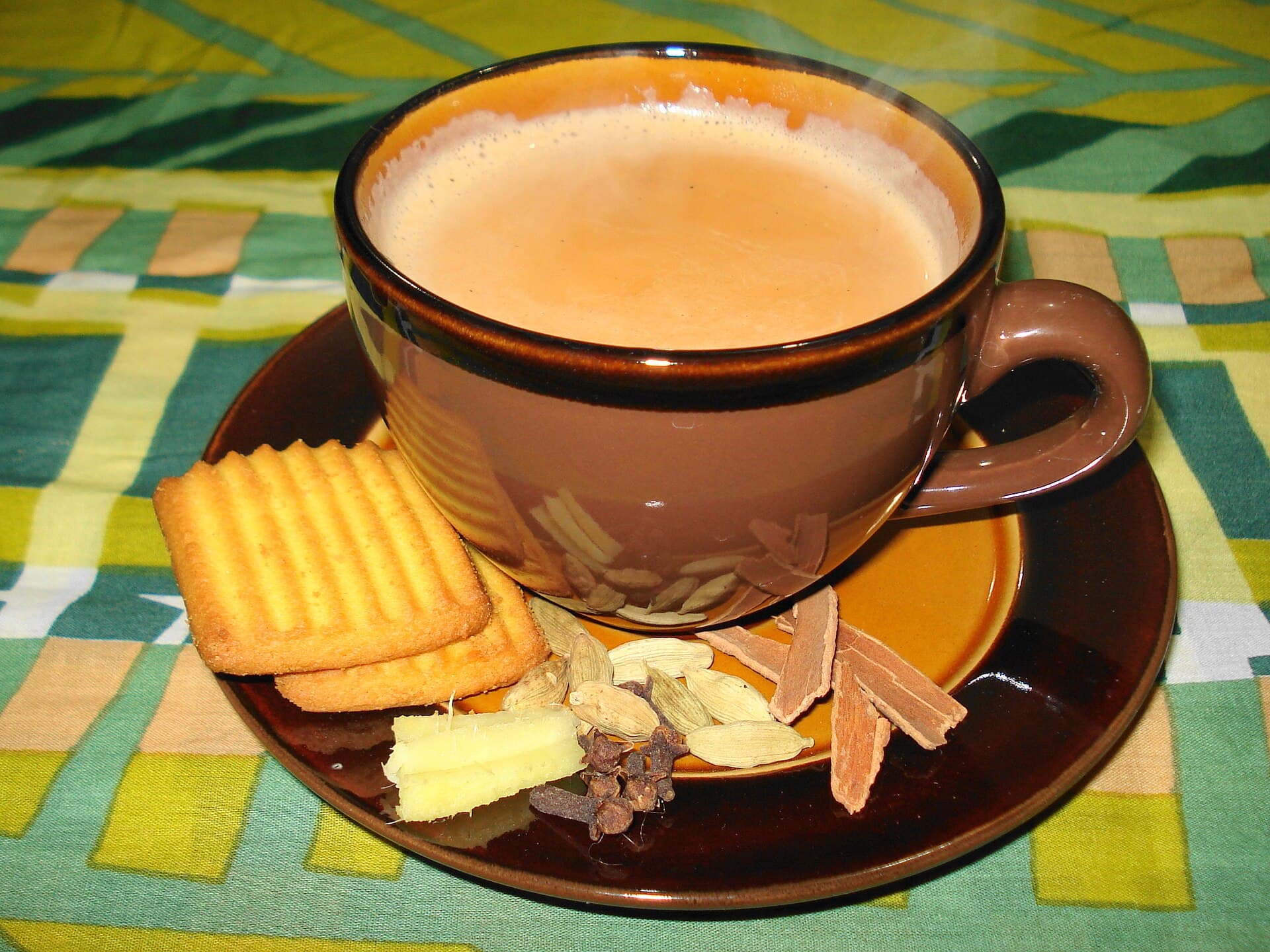
Nepali masala chiya, and Bhutanese suja, a salted butter tea worth trying once
7:00Breakfast at the hotel, at a comfortable hour, as this is not a trek
8:30Depart with the guide and driver. In Bhutan, the same guide and driver are with you for all four days
10:00The first dzong, temple or viewpoint of the day
12:30Lunch. In Bhutan, this is a set menu ordered in advance
14:00Afternoon: a second site, a village, a market, or a drive to the next valley
17:00Return to the hotel. Bhutanese towns are small and you can walk around one in an hour
19:00Dinner, and a briefing from the guide on the next day
21:00Free evening, with the option of a bar in Thamel on the Kathmandu nights
An easy trip with one demanding morning.
Written for somebody who walks a bit and does not train. If you already run or cycle regularly, start partway through. Nothing here needs a gym.
6 weeks before, stage 1 of 4
Take one walk a week that includes 300 m of ascent, building up to two hours. This is all the preparation this trip needs, and it is aimed at the Tiger's Nest walk on day 7.
Nepal and Bhutan share the same weather system. This section is most relevant to Bhutan, where the weather mainly affects the Paro flight.
Rhododendrons in flower on the Bhutanese passes, and the Paro Tsechu, the largest festival in the country.
Averages for Paro and Thimphu, with the Kathmandu daytime figure alongside. The rating tracks the Paro flight as much as the sightseeing.
You have two separate teams, and they hand over at Paro airport. In Nepal, you travel with one of our own guides and a driver, both employed by us in Kathmandu. In Bhutan, you travel with a licensed Bhutanese guide and driver, because Bhutanese law requires guiding to be done by a Bhutanese national through a licensed local operator. We have worked with the same partner in Paro on every departure for many years. This is how we ensure consistent standards in a country where we cannot legally guide ourselves.
Bhutanese guides take a national certification that covers history, Buddhist religious art, botany and etiquette, and they are re-tested regularly. Ask them what is painted on a dzong wall, which of the sixteen arhats you are looking at, or why there is a phallus painted on a farmhouse in Punakha. Of all our trips, this is the one where the quality of guiding makes the greatest difference to what you see.
Tipping is customary rather than compulsory, and it is now expected of tour groups in both countries. Allow about $150 to $250 per traveller for the whole trip, divided between the two teams and given at the end of each section rather than at the very end. Your Bhutanese guide and driver are tipped together at Paro on day 8.
Bhutan's Sustainable Development Fee of $100 a night is not a general tourist tax. It funds free healthcare and education for Bhutanese citizens and the country's forest conservation programme, and it is intended to limit visitor numbers. Bhutan is the only carbon-negative country in the world and one of very few with a constitutional requirement to maintain 60 per cent forest cover. The fee is what keeps places such as the Punakha valley quiet.
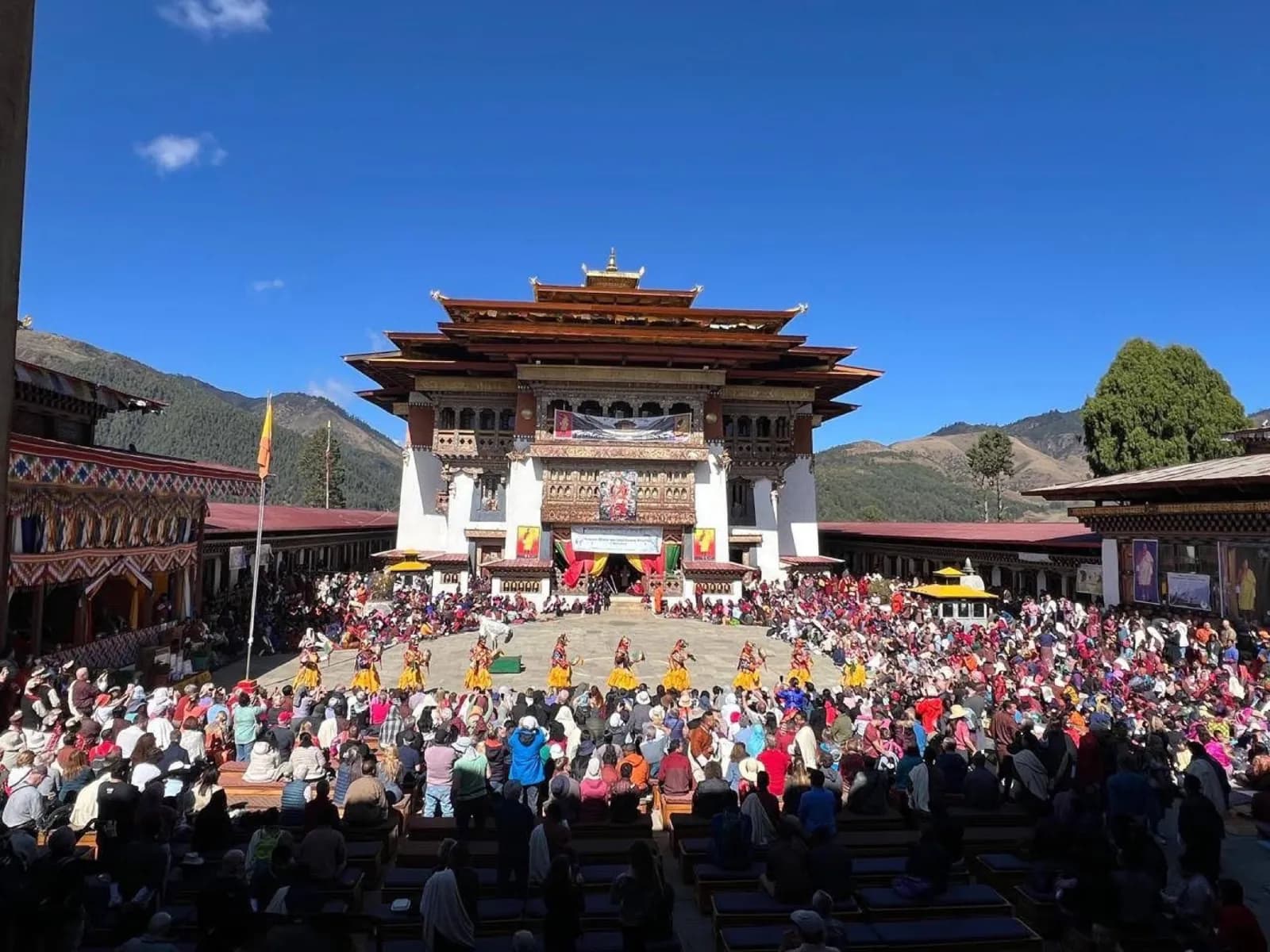
Every dzong on this itinerary is both a monastery and a district administrative headquarters, with monks on one side of the courtyard and civil servants on the other. They are not museums. Cover your shoulders and knees, remove your hat, remove your shoes where asked, and do not take photographs inside the temple halls unless you are told it is permitted. Walk clockwise around chortens and mani walls.
This itinerary includes a jeep safari, a dugout canoe trip and a guided walk. Together these offer the best wildlife viewing available and take you into the park at the times when animals are most active. Elephant-back safaris are available at Chitwan and we can arrange one on request. They are not part of the standard itinerary, so if you prefer not to take one, you do not need to do anything.
The Bhutan section, which is around half the price, goes to the Bhutanese government as the SDF and to the Bhutanese operator, hotels, guide and driver. The Nepal section is paid to us and stays in Kathmandu, Nagarkot and Chitwan. Almost none of the cost of this trip is paid to anyone outside the two countries you visit.
Email us or send a WhatsApp message with your approximate dates and the number of people in your group. You will receive a reply from someone who has led this trip. There is no payment at this stage.
This is different from our treks. The Bhutan section, which covers the SDF, the visa fee and the ground arrangements, is paid in full before the visa application is submitted, as required by the Bhutanese system. The Nepal section follows our normal terms: a thirty per cent deposit to secure your dates, with the balance paid on arrival in Kathmandu.
We need passport scans six weeks before departure, which is earlier than for our treks. The Bhutan visa is reviewed within five working days, and Drukair will not confirm a Paro seat without the clearance number, so the process begins with your passport details.
Bank transfer, or card payment through a secure link. Card payments carry a bank fee of about 4 per cent, which we show you before you pay. The Nepal balance in Kathmandu can be paid in US dollars, pounds, euros or Nepali rupees.
The Nepal section follows our usual terms: if you cancel more than 30 days before departure, the deposit can be transferred to any other trip with no time limit, and within 30 days it is retained. The Bhutan section is different. The $40 visa fee is never refunded, and the SDF and ground costs already paid to Bhutan are subject to the Bhutanese operator's terms, which become much stricter within 30 days of departure. Travel insurance with cancellation cover is more important on this trip than on a trek.
Six weeks is comfortable and three weeks is possible. Two weeks is not enough, because of Bhutan's requirements: the visa takes five working days after a paid booking, and the Paro seat is confirmed after that. For October or either of the major festivals, book three months ahead.
Priced per person, arranged before you travel, and none of them included in the price above.
The Paro Tsechu in March or April and the Thimphu Tshechu in September or October are the two largest festivals, and both involve several days of masked dances in a dzong courtyard. Dates follow the Bhutanese lunar calendar, and hotels are booked up a year in advance.
Travel east beyond Trongsa to the four valleys of Bumthang, the spiritual heartland of Bhutan, which contain the country's oldest temples. The journey is a long drive or a short domestic flight, and it gives a deeper experience of Bhutan than the areas near Paro.
A four-day trek from Paro to Thimphu over the ridge, passing high lakes at around 4,000 m, with nights in tents. It is the most accessible trek in Bhutan and a very different experience from the road tour.
A one-hour flight along the range from Kathmandu with a guaranteed window seat. It can be added on day 3 or day 11, and it is the closest view of Everest on this trip.
Travel west to the lake at Pokhara, with views of the Annapurnas across the water, and an optional short walk to a viewpoint. It is easily added after Chitwan.
A room to yourself for all eleven nights. Unlike on our treks, this is available at every stop on this trip.
4 versions of this journey. They use the same guides and the same lodges; what changes is the length, the comfort and how much of it you walk.
A great travel experience
October 2024, Tripadvisor
We did a trip combining Nepal and Bhutan organized by Earthbound Expeditions. From our very first email contact with Rajan at the Kathmandu office, he was helpful and professional, always responding promptly and with just the information we needed. The trip was well planned, the drivers and guides were excellent, and everything could not have gone better. We would highly recommend Earthbound Expeditions!
Nepal and Bhutan - a beautiful , historic part of the world.
October 2024, Tripadvisor
An exceptional trip from start to finish - Nepal and Bhutan . Rajan's company was recommended by friends who travelled 12 years ago . Top notch guides, drivers, guides , porters and airport pickup . The Kathmandu and Annapurna hike and accommodations and traditional meals were wonderful . The Bhutan experience was perfect. Beautiful views of Everest on the way over and back , visits to many historic temples , dzongs , museums , arts/crafts sites , a spectacular hike to the Tiger's Nest on our final tour day. We stayed an extra day at the Dormaling monastery in Kathmandu , well worth it . Rajan is an amazing ambassador for travel to this part of the world . Prompt , efficient and cheerful. Highly recommended !!
Beyond Happy in Nepal & Bhutan!!
October 2024, Tripadvisor
Our Happy group agreed Earthbound Expeditions gets a 10 out of 10. The service we received from everyone in this company (the owner, drivers, guides and family members) was outstanding! They went above and beyond taking great care with each opportunity.
Kathmandu and Bhutan
October 2023, Tripadvisor
Rajan was spectacular in planning and executing our trip! He made suggestions for our group that were fantastic! He was always available and responsive, he’s very good at coordinating everything we did and really went above and beyond! We used his company for a cooking class, day and overnight trips in and around Kathmandu and our group trip to Bhutan. Highly recommend, would definitely use him again.
Answers to the 21 questions travellers ask us most often. If your question is not here, contact us and we will answer it.
The cost is set by government policy. There is a Sustainable Development Fee (SDF) of $100 per person per night, plus a $40 visa fee, before any hotel, meal or guide costs. On this itinerary, four nights amount to $440 per person in government charges. This is part of a national policy of high-value, low-volume tourism. The fee funds free healthcare and education for Bhutanese citizens and the forest conservation programme, and it keeps the valleys quiet.
The fee is $100 a night. It was $200 from September 2022, was reduced to $100 in September 2023, and the reduced rate has been extended to 31 August 2027. Some websites written during this period still quote the older figures as current, which is why you may have seen different amounts.
No. Visas on arrival are available only to Indian, Bangladeshi and Maldivian nationals. For everyone else, the visa is issued only against a paid itinerary, and the fee is charged for each night of your stay, whatever you do that day. A licensed guide is also required beyond the Paro and Thimphu valleys, and this itinerary leaves them on day 5.
Children aged 6 to 12 pay half, at $50 a night, and children under 6 pay nothing. The $40 visa fee applies to everyone.
The process is simpler and cheaper. No visa is needed: a permit is issued on arrival at Paro or Phuentsholing on presentation of a passport or voter ID card, and the SDF is charged at the regional rate of INR 1,200 per person per night instead of $100. The same terms apply to Bangladeshi and Maldivian nationals.
Only two airlines fly into Paro, Drukair and Bhutan Airlines, and for most travellers the practical departure points are Kathmandu, Delhi, Kolkata, Bangkok and Singapore. Kathmandu is the only one of these in the Himalaya, so the Bhutan section fits within a Nepal trip. The flight takes an hour.
In practice, no. Drukair will not confirm a seat without a Bhutan visa clearance number, and the visa is issued only against a confirmed, paid itinerary. The two steps have to be completed in the correct order, and arranging this is one of the main things an operator does for travel to Bhutan.
Six weeks is comfortable, three weeks is possible and two weeks is not enough. The limit is set by Bhutan: the visa is reviewed within five working days after a paid booking, and the Paro seat is confirmed after that. For October or either of the major festivals, book three months ahead.
Sit on the left from Kathmandu to Paro and on the right on the return. On a clear morning you can see Everest, Makalu, Kanchenjunga and Chomolhari one after another, and the cabin crew name them as you pass. Ask for the seat at check-in.
Yes, because of cloud. Pilots fly into Paro visually between mountains, and there is no alternative airport, so flights operate only in daylight and good weather, and a flight can be delayed by a day. Delays are far less frequent than on Lukla flights, but we still recommend booking your international flight home with a spare day after day 12.
One morning. The walk to the Tiger's Nest on day 7 involves 900 m of ascent and descent at around 3,000 m and takes four to five hours. The rest of the trip is sightseeing, driving, a dugout canoe trip and a jeep safari. We recommend this trip for travellers who cannot trek but want to see the Himalaya.
Most people can. A good guide is whether you can walk uphill for two hours at home. Ponies can carry you for the lower two-thirds of the route, as far as the cafeteria viewpoint, and everyone walks the final section of stone steps. Many people walk as far as the viewpoint, look across at the monastery and turn back, which is still a rewarding day.
It is very unlikely. You do not sleep above 2,320 m on this trip, and the highest point is 3,120 m, for about an hour on day 7. For this reason, this page does not include an altitude protocol, unlike our trek pages.
Yes, and it is one of only two trips we offer that we recommend for both. Every night has a bed, a private bathroom and hot water, the driving days are short, and the one demanding morning is optional. We have run this trip for families and for travellers in their late seventies.
Yes, very. Chillies are treated as a vegetable rather than a seasoning, and the national dish, ema datshi, is made of chillies and cheese. Tell your guide on day 4 and it is easily managed, as hotel kitchens are used to the request. We recommend trying the traditional dish at least once.
Wear long trousers and tops with sleeves, with shoulders and knees covered. You will be refused entry to a dzong in shorts or a vest, as a dzong is a government office as well as a monastery. Slip-on shoes are useful because you remove them at every temple.
No. Internet restrictions apply in Tibet, not Bhutan. Hotels in Bhutan have normal wifi with no blocked sites, and your guide can arrange a local SIM card on arrival.
Not on the two days in this itinerary, which include a jeep safari, a dugout canoe trip and a guided walk. Elephant-back safaris are available at Chitwan and we can arrange one on request. Many travellers ask us not to include one, so it is not part of the standard itinerary.
April, October and November. April brings rhododendrons in flower on the Bhutanese passes, and October has the clearest skies of the year, although it books up months in advance. November is our preferred month: cold, clear and quieter. Avoid June to August, when the Paro flight is unreliable and the mountains are hidden by cloud.
If you want to see masked dances in a dzong courtyard, yes. The Paro Tsechu in spring and the Thimphu Tshechu in autumn are the two largest festivals. Dates follow the Bhutanese lunar calendar and change each year, and hotels are booked a year in advance for those weeks, so the trip has to be planned around the festival from the start.
Yes. You can add three days to travel east beyond Trongsa to Bumthang, whose four valleys contain the oldest temples in the country and give a deeper experience of Bhutan than the areas near Paro. If you would prefer to walk, the four-day Druk Path from Paro to Thimphu is the most accessible trek in Bhutan.
Didn't find what you were looking for?
Search every word on this page, or ask somebody who has walked the route.
12 days
$3,287 per person