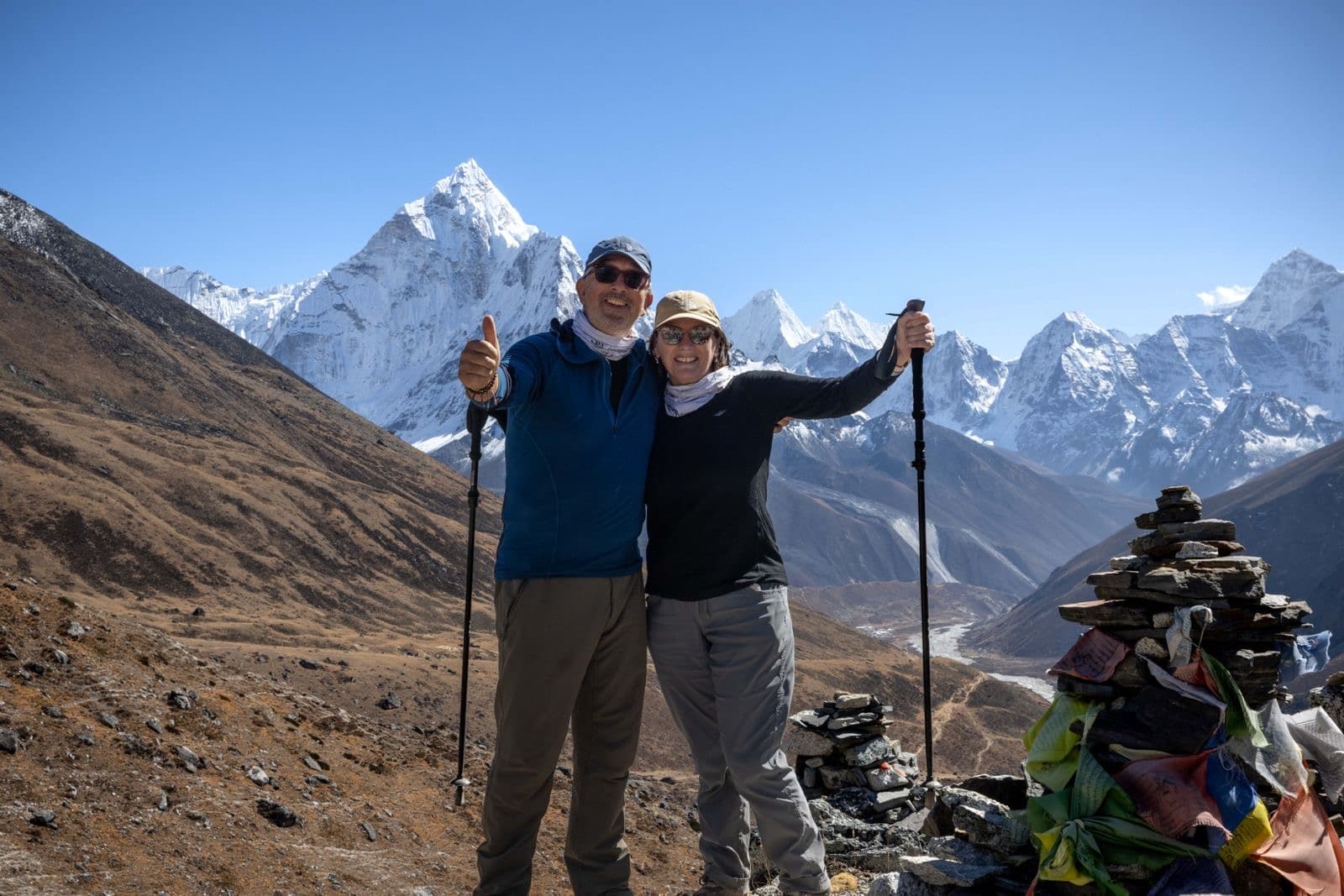
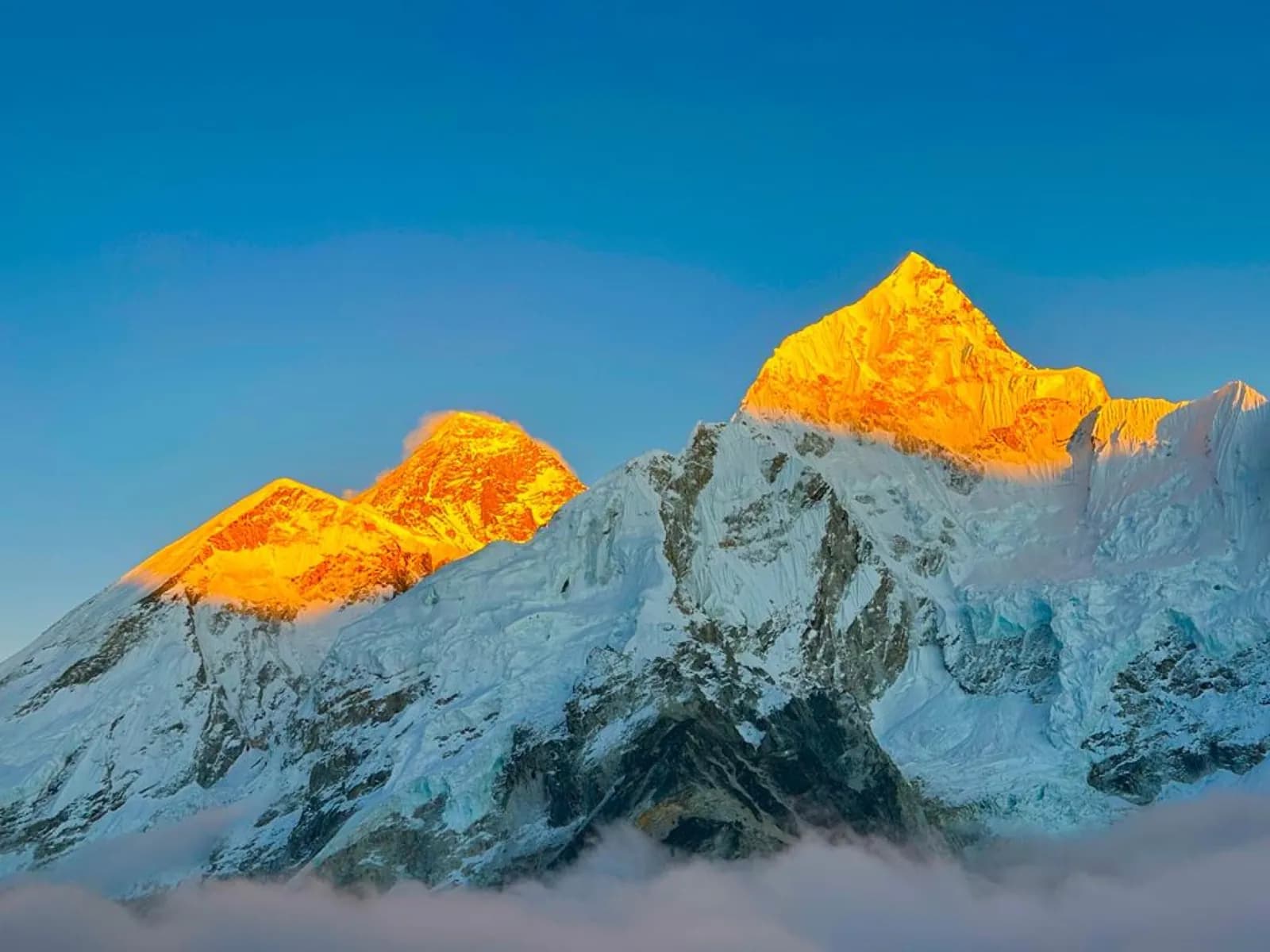
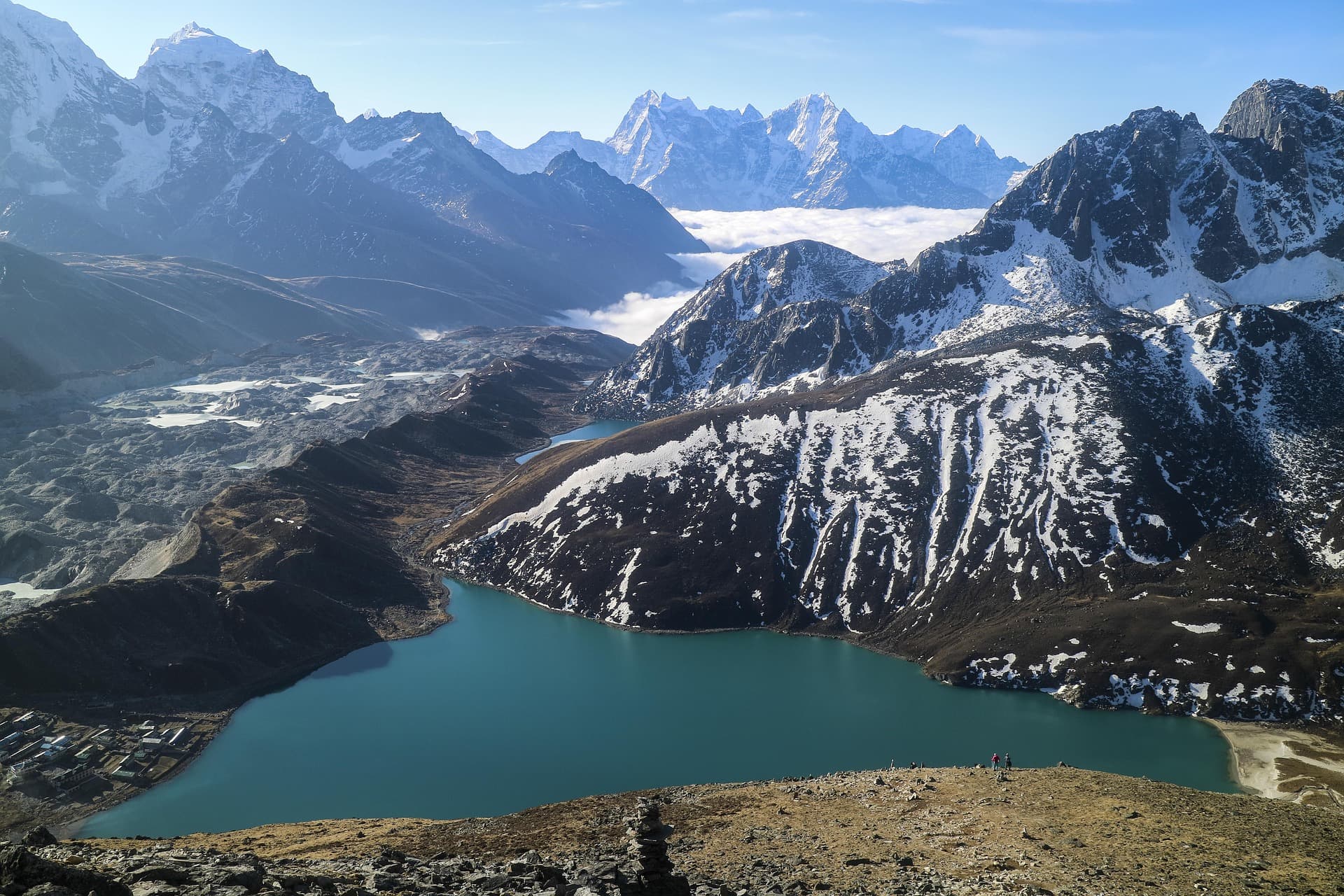
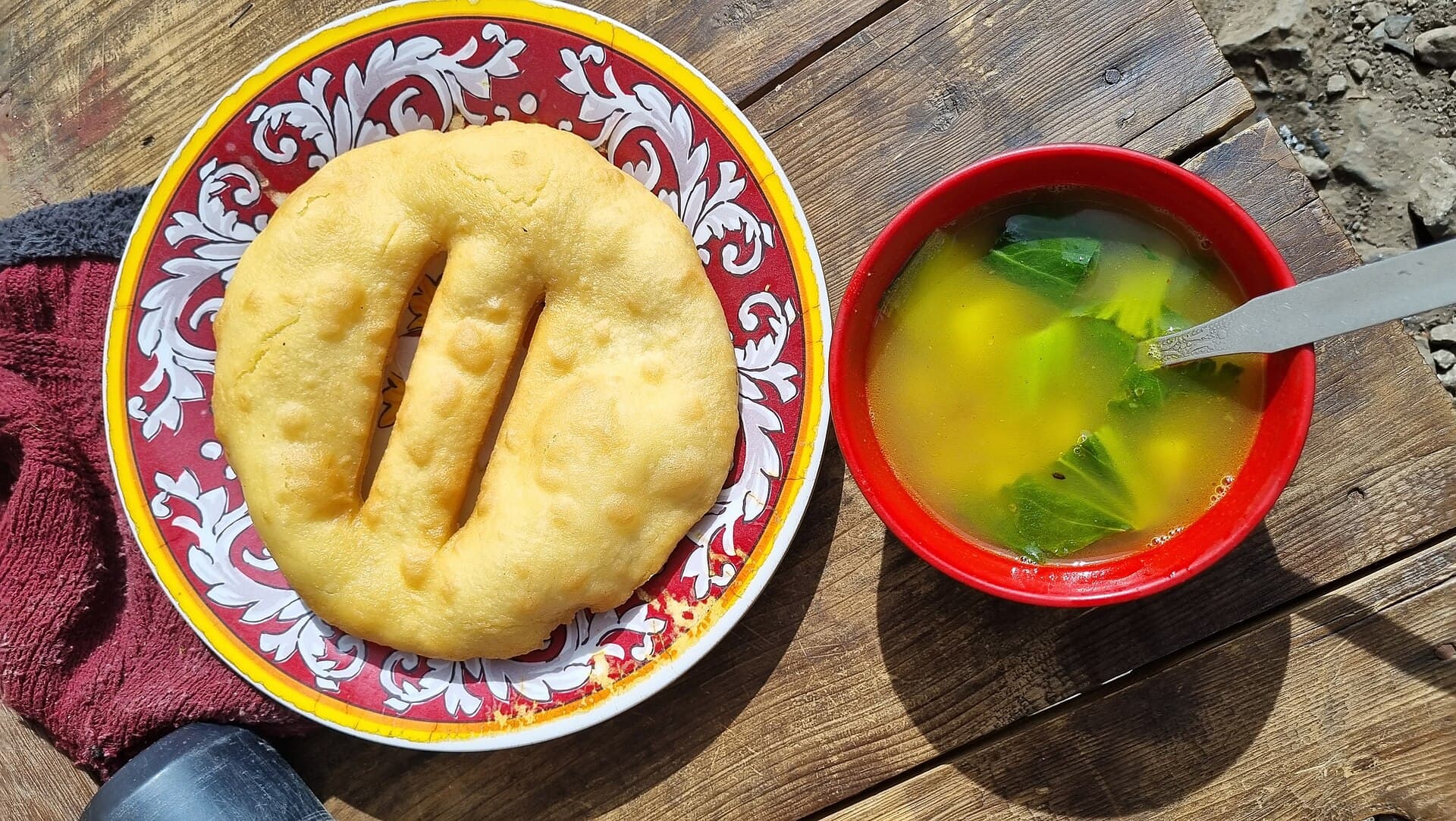
Breakfast
Eggs, chapati, Tibetan bread, porridge, honey, tea or instant coffee
Three easy walking days on the ridge around Kathmandu, from a national park gate and oak forest to sunrise over Langtang, ending in two of the oldest towns in the valley.
Three easy walking days on the ridge around Kathmandu, from a national park gate and oak forest to sunrise over Langtang, ending in two of the oldest towns in the valley.
This is a five-day trip, with three days on foot along the rim of hills that encloses the Kathmandu valley. You drive an hour to Sundarijal, climb through Shivapuri Nagarjun National Park to a pass at 2,430 m and sleep at Chisapani. The next day you follow the rim east to Nagarkot for the sunrise view, and on the third day you descend to Changunarayan and Bhaktapur.
The trek suits anyone who can walk four to six hours on a hill path and does not want to spend two weeks trekking. This includes beginners, families with children aged about ten and over, people with a short holiday, and people who are concerned about altitude and want to find out whether they enjoy walking in Nepal before committing to a longer trek. It is the least expensive and the easiest trek we offer.
This is not a wilderness trek. The first day is through forest, but much of the second day follows a ridge that is farmed and inhabited, and for part of the afternoon you walk on a dirt road with occasional jeep traffic. In return, the Langtang range is in view for most of the way.
An hour from Thamel you are walking through oak forest with barbets calling, and the descent on the last morning ends at a temple that has been in continuous use since the fifth century. Few short walks offer this much in three days. It also makes a good first week for travellers who will fly to Lukla later in the same trip.
When you land at Tribhuvan International Airport, a member of our office will meet you with a sign bearing your name and take you to your hotel in Thamel. If you have the afternoon free, you can walk to Durbar Square. Over dinner we go through the route, check your boots and tell you about recent weather on the ridge.
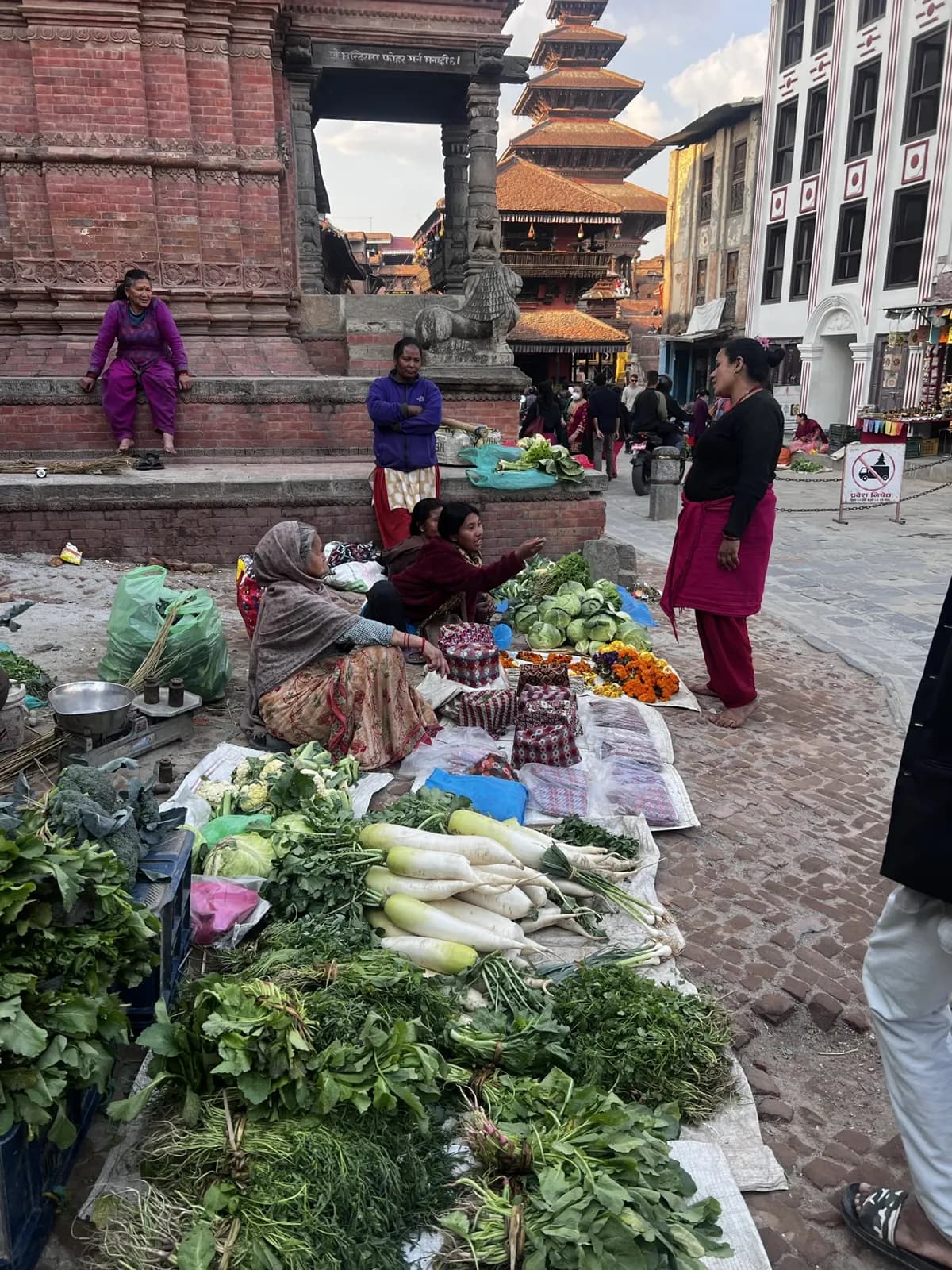
You drive an hour north-east to Sundarijal, then climb concrete steps beside the pipe that carries water down to the city. The park gate is early on the route, and we buy your ticket there. Above Mulkharka the path narrows into oak and rhododendron forest and climbs steadily to the pass at Borlang Bhanjyang, then descends for half an hour to Chisapani.
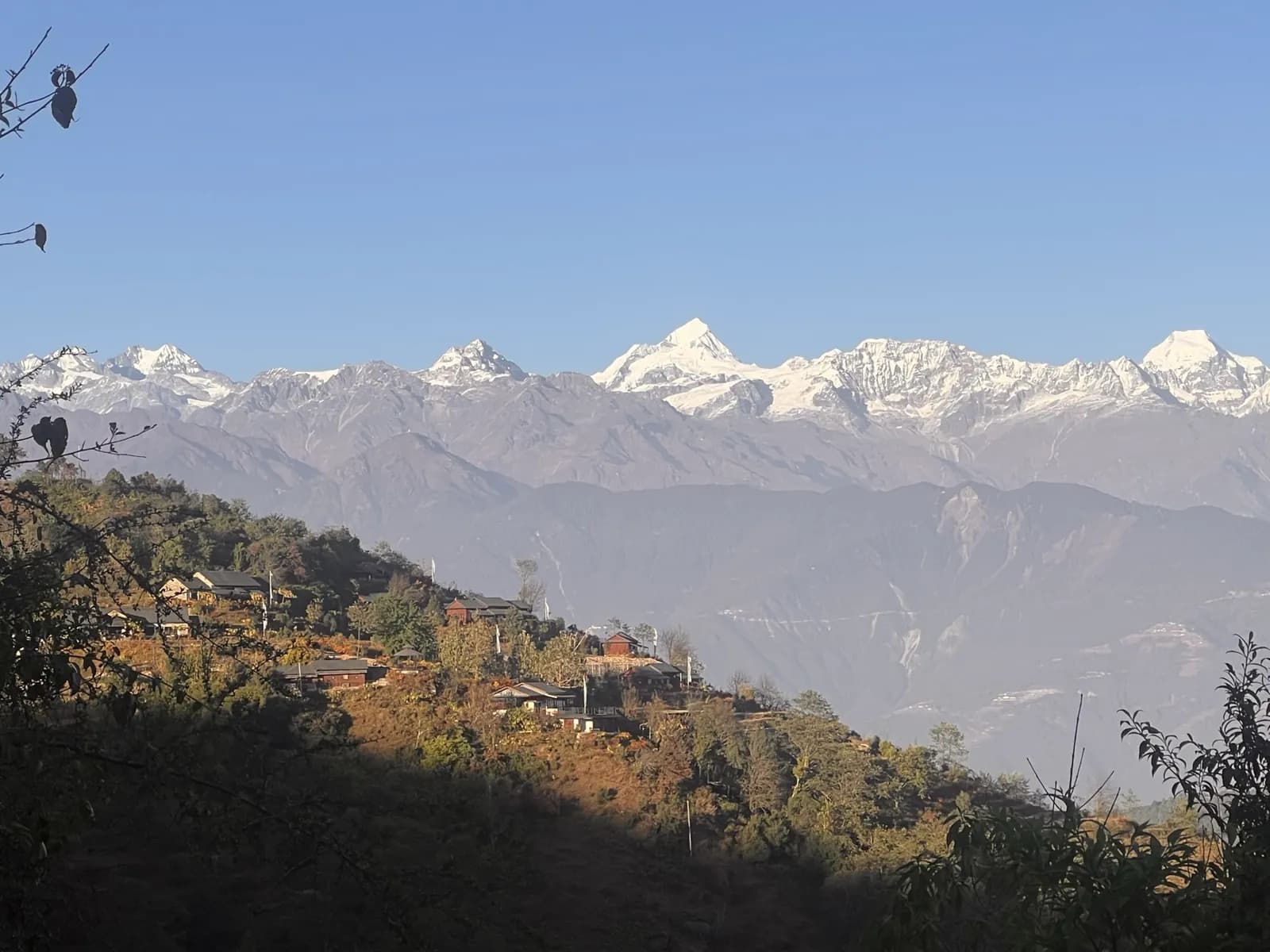
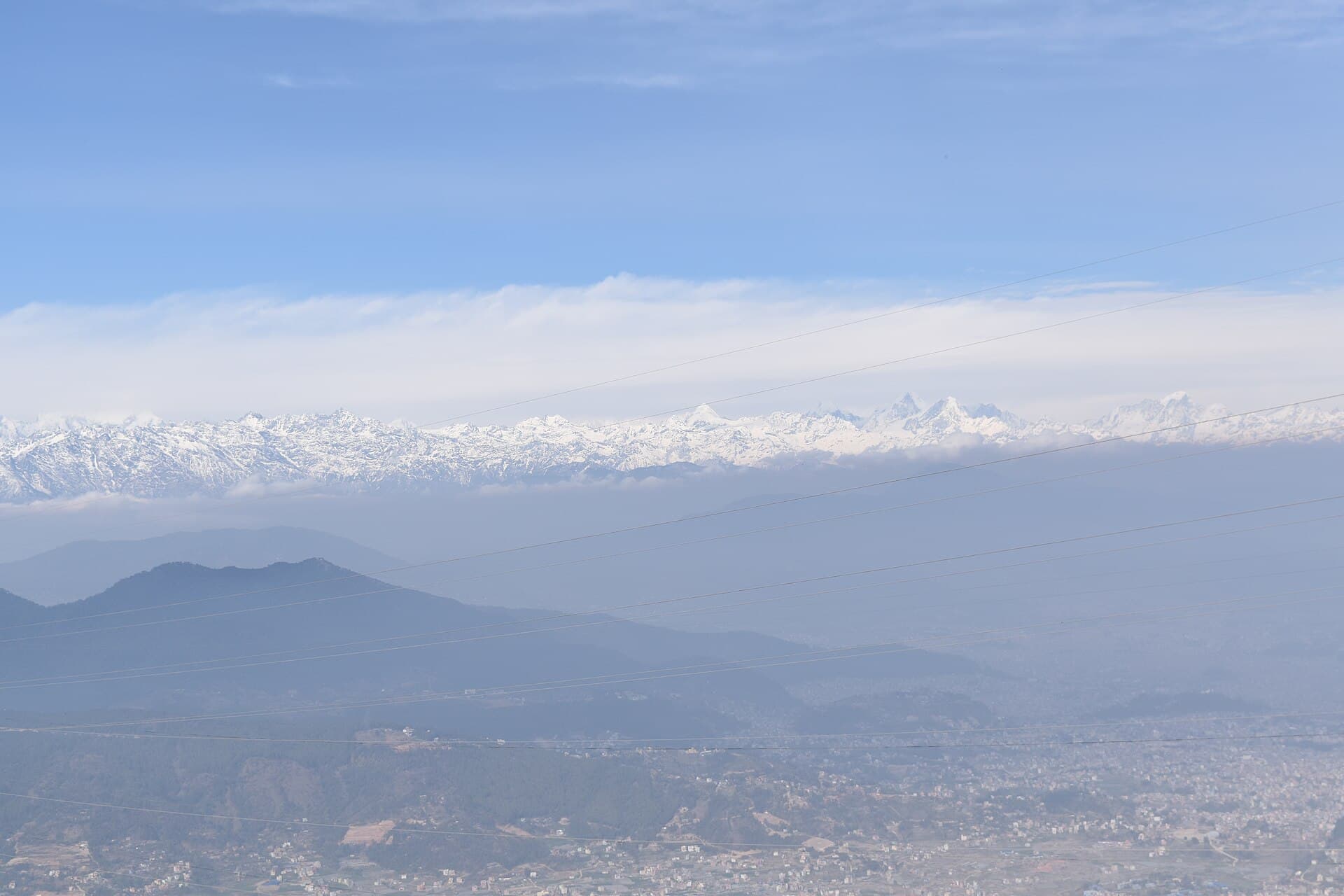
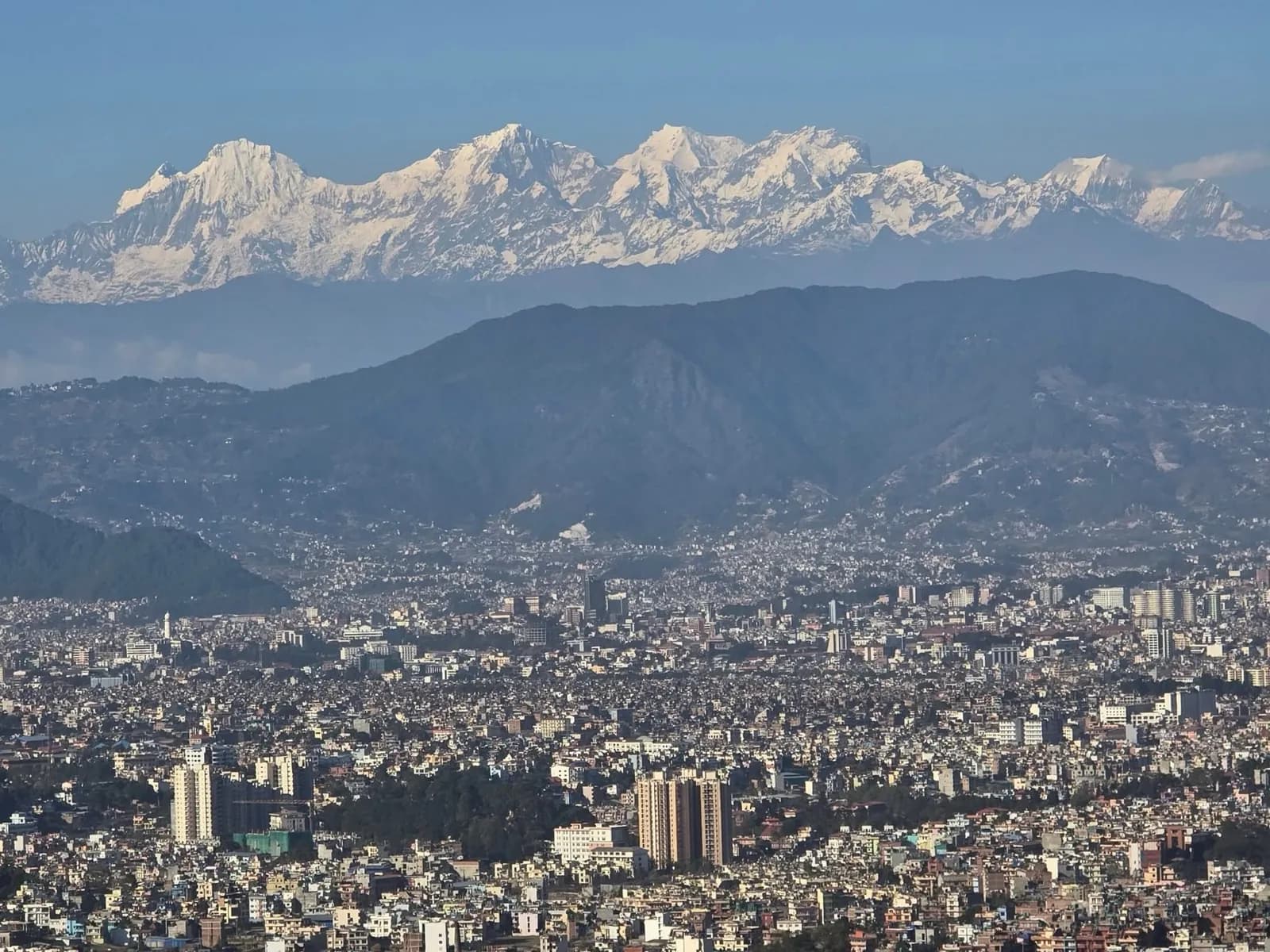
This is the longest day. You leave the forest for a ridge of terraced fields and villages, and walk on a dirt road for a good part of the afternoon. Lunch is at Chauki Bhanjyang. Langtang and the Jugal peaks are on your left for almost the whole way to Nagarkot.
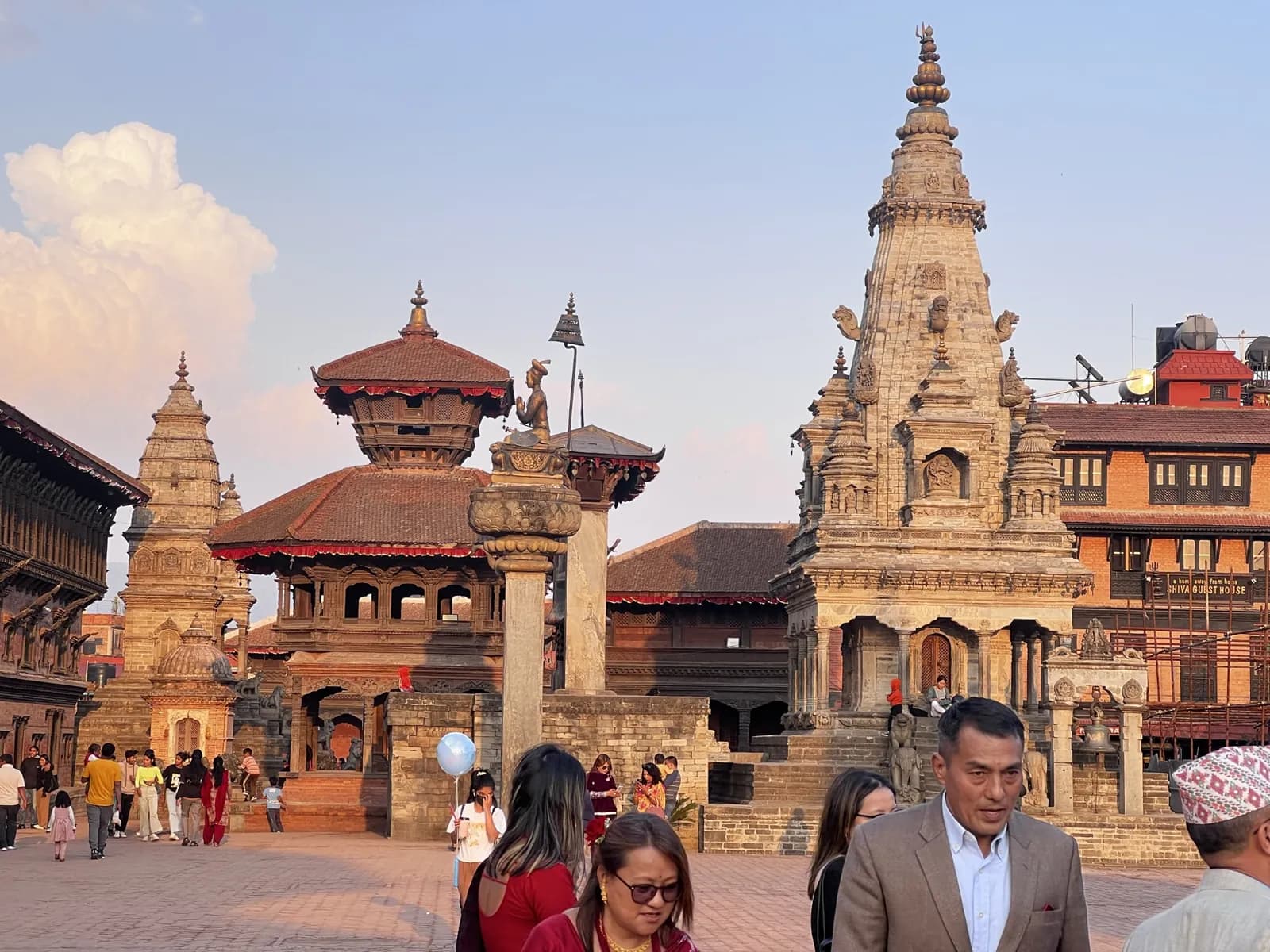
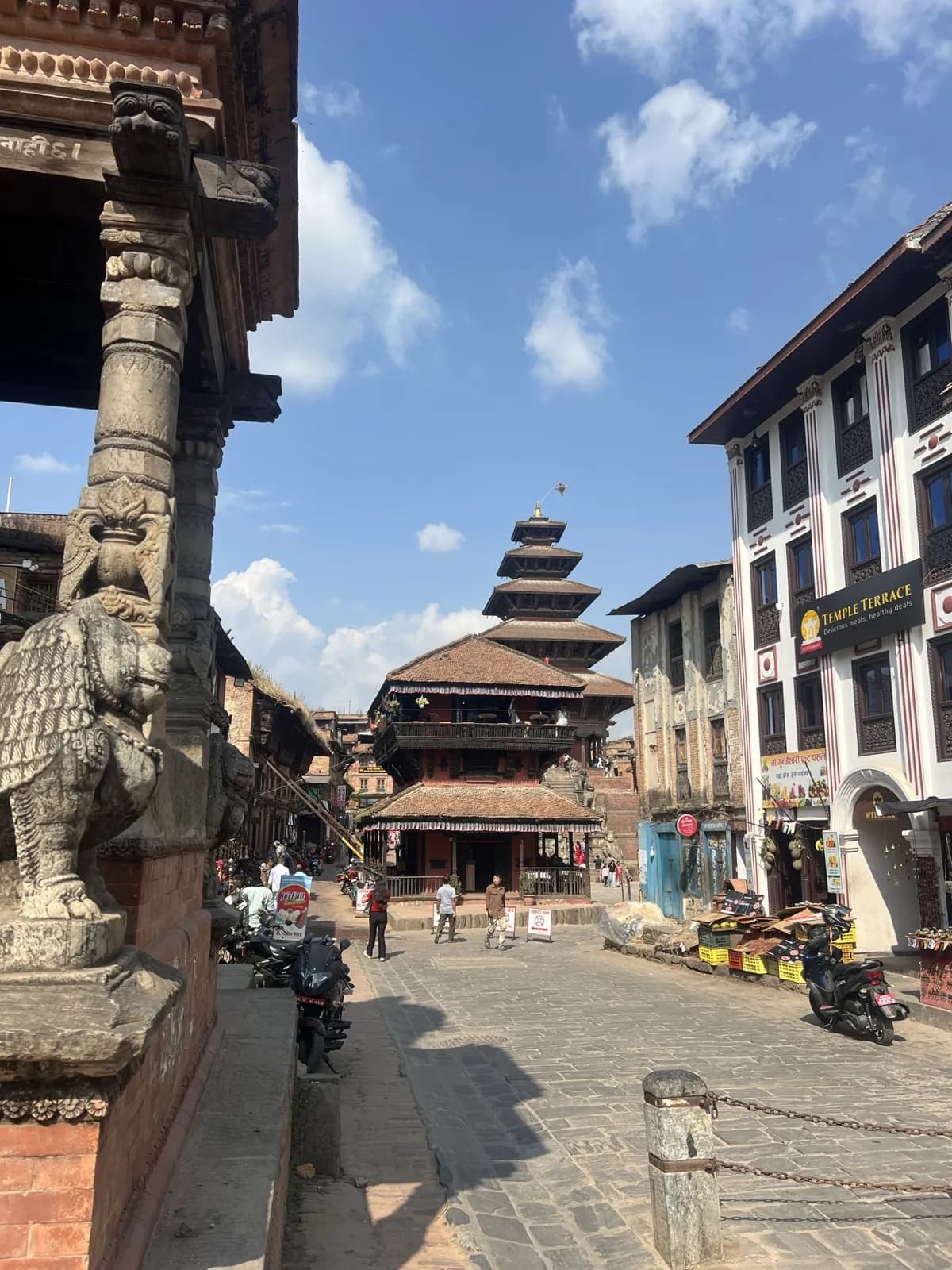
You set out before six to see the morning light on Langtang and Dorje Lakpa, and on an exceptionally clear morning a wider range of peaks. After breakfast you walk down the southern ridge through pine forest and terraces to Changunarayan, where the oldest dated stone inscription in Nepal stands beside a statue of Garuda. You then continue to Bhaktapur and drive back to Kathmandu.
After breakfast, you have the morning free until your flight. If you wish, we can take you to Patan to visit the museum, or to the airport at any time you choose. Most people leave Nepal from here. Some stay on for a longer, higher trek, which we can also arrange.
Start date
28 Mar 2027
End date
1 Apr 2027
Available
12 places left
US $349
Per person
Start date
11 Apr 2027
End date
15 Apr 2027
Available
12 places left
US $349
Per person
Start date
7 Feb 2027
End date
11 Feb 2027
Available
12 places left
US $319
Per person
The trail from start to finish, at a glance.
You carry a small daypack
There is no porter on the standard version of this trek, because there is very little to carry. You walk with a daypack containing water, a warm layer, a waterproof jacket and your camera, and your suitcase is kept in the hotel storeroom in Kathmandu until day 4. If you prefer not to carry a daypack, a porter costs $22 a day and we can arrange one. We lend trekking poles and a dry bag free of charge, so you do not need to buy either for this trip.
This trek involves no internal flights, no early departures and no weather-related flight cancellations. The trailhead is a short drive from Kathmandu after breakfast.
This is one of the few treks we offer that involves no internal flight, which removes the most common cause of disrupted itineraries in Nepal. You arrive at Tribhuvan International Airport, we collect you, and two mornings later a car takes you to the trailhead. If monsoon cloud covers the hills, there is no flight to be cancelled; the walk simply goes ahead in wetter conditions.
Sundarijal is about 15 km north-east of the city centre, an hour's drive if traffic at Chabahil is light and ninety minutes if it is heavy. We leave the hotel at eight after breakfast. The road ends at a small hydroelectric intake and a group of tea shops, and the concrete steps start immediately, beside a large water pipe that supplies Kathmandu.
Changunarayan is about 20 km from central Kathmandu, and Bhaktapur a few kilometres further. Allow an hour and a half in the late afternoon. If you have an evening flight out on day 4 rather than day 5, let us know and we will finish at Changunarayan and drive straight to the airport, with your bags already in the car.
If possible, arrive a full day before the walk starts. It costs one extra hotel night and gives you a buffer against a delayed connection, and it means your first morning in Nepal is not also your first morning of walking. Flights into Kathmandu land at all hours, and we meet every one.
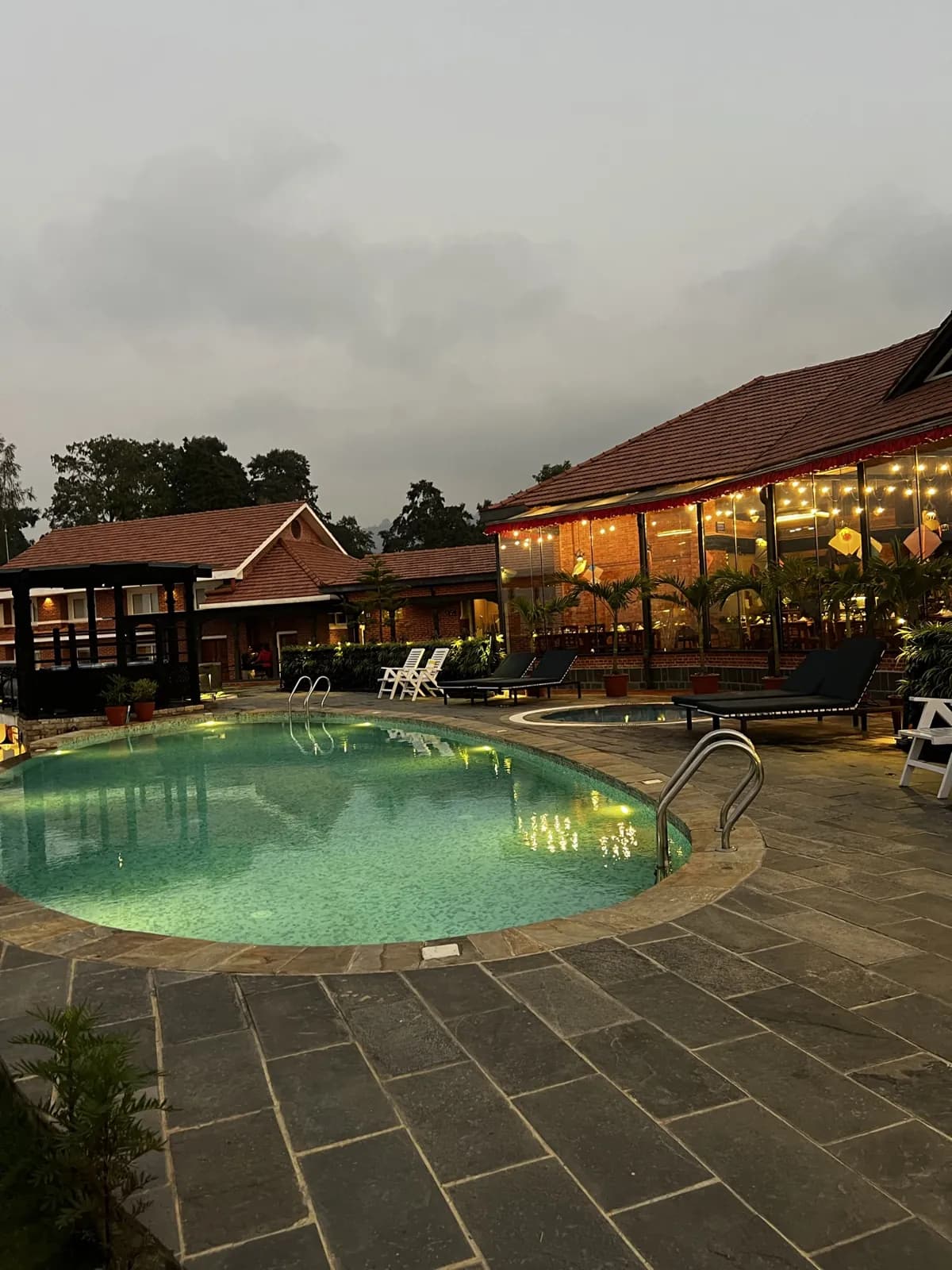
At Chisapani you sleep in a family-run lodge: simple twin rooms with thin walls, a private bathroom in most rooms, and hot water from solar panels, which is warm in the afternoon and less so late in the evening. Meals are eaten together in the dining room. At Nagarkot the hotel is on the north side of the ridge, and the rooms face north towards the mountains, so the sunrise can be seen from the room. Hot water there is reliable.
Before and after the walk you stay in a three-star hotel in Thamel, with twin or double rooms and a private bathroom.
| Where | Nights | Type | Room | Bathroom |
|---|---|---|---|---|
| Kathmandu | 2 | Three-star hotel in Thamel | Twin or double | Private, hot water |
| Chisapani | 1 | Family-run lodge | Simple twin rooms with thin walls | Private in most rooms, solar hot water |
| Nagarkot | 1 | Hotel on the north side of the ridge | Twin or double, north facing | Private, reliable hot water |
Eggs, chapati, Tibetan bread, porridge, honey, tea or instant coffee
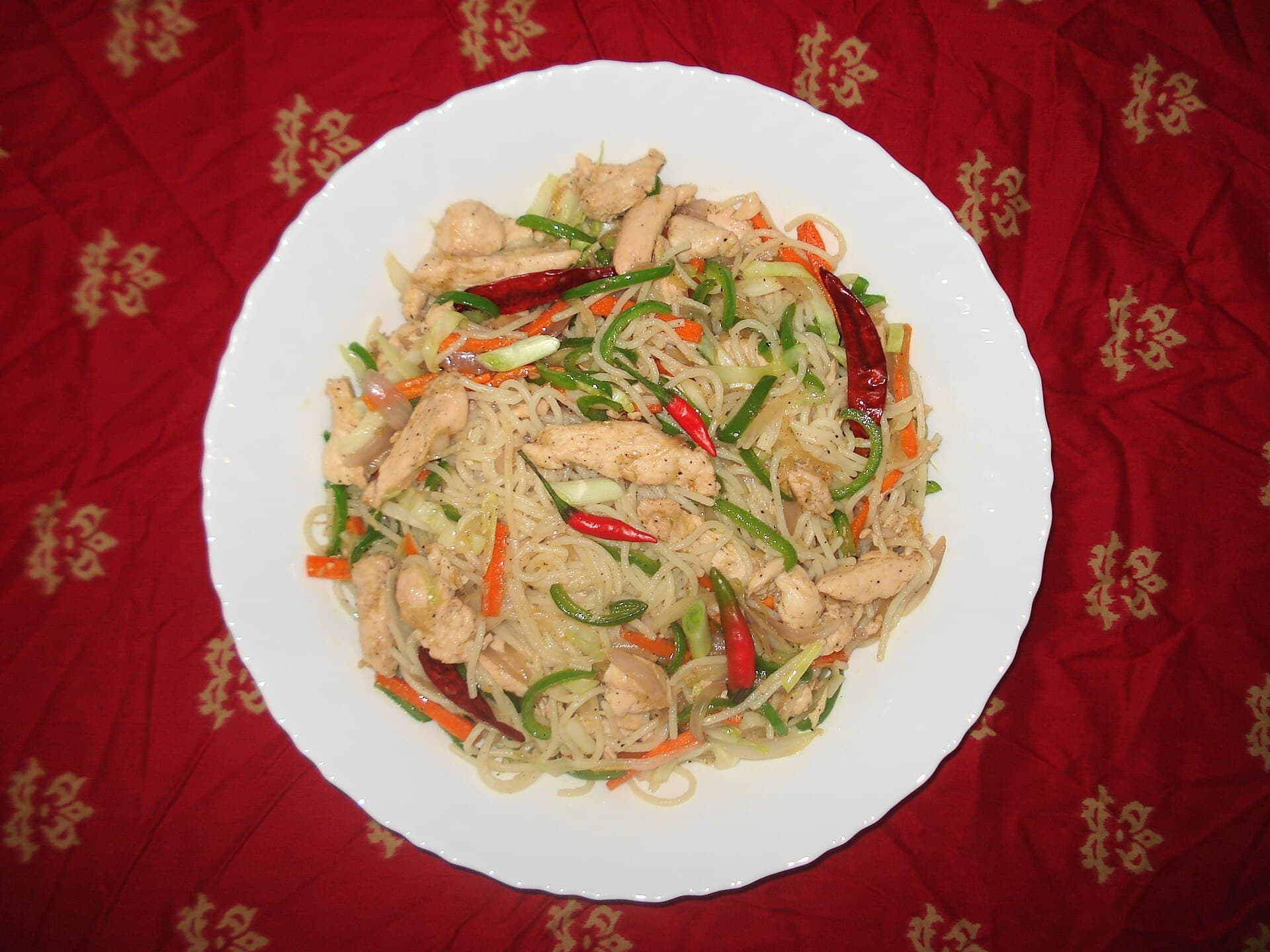
Dal bhat, fried rice, thukpa, noodles, momo at the bigger tea shops

Dal bhat, curry and rice, pasta, soup to start, something fried and salty
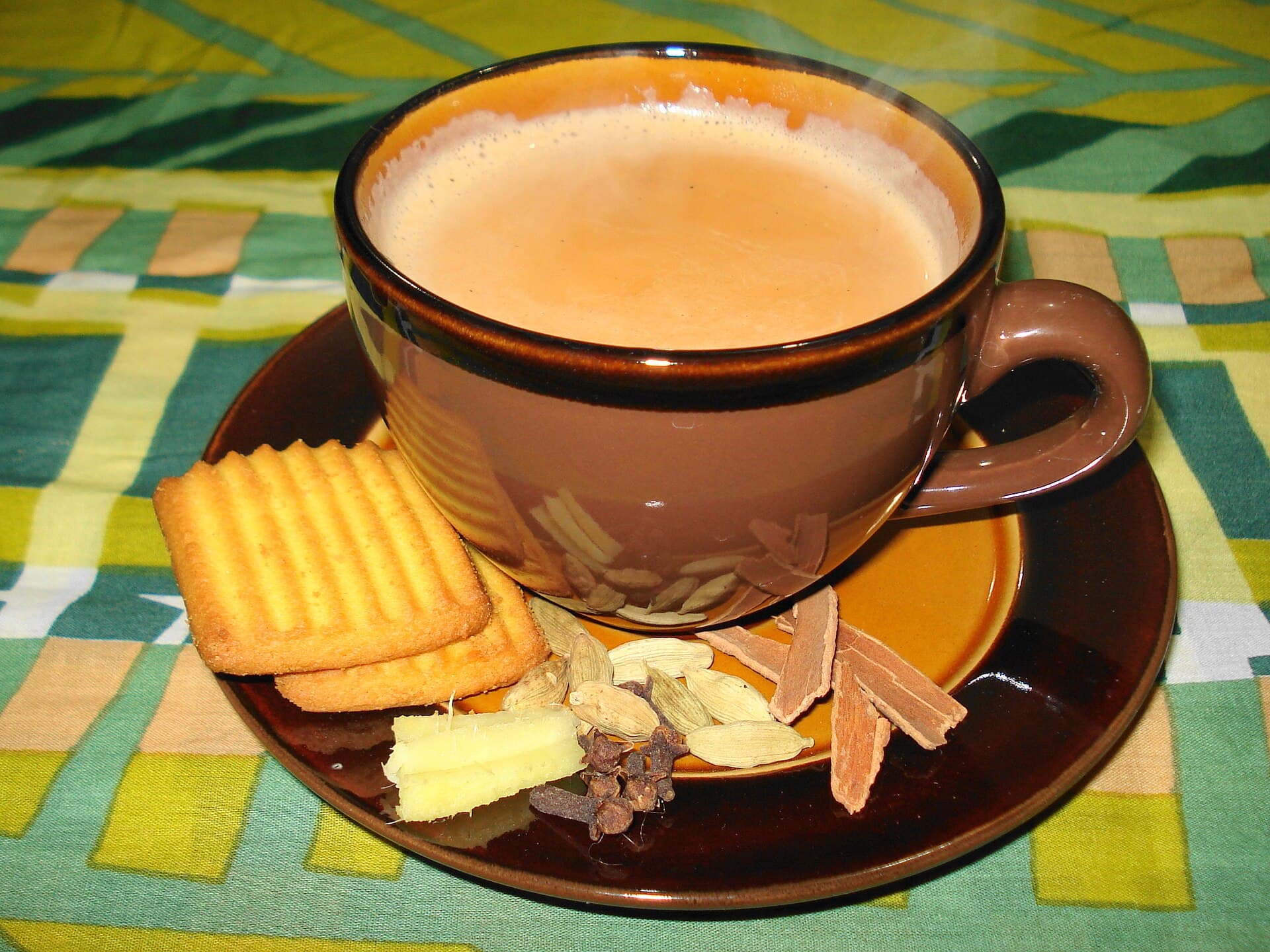
Black, milk, lemon, ginger or masala tea, included at every stop
6:30Tea brought to your room while breakfast is prepared
7:00Breakfast in the dining room, with the mountain view if the weather is clear
8:00Start walking. The first hour of each day is the coldest and often the clearest
10:30A tea stop. There is a tea shop roughly every hour on this route
12:30Lunch, usually dal bhat, and an hour's rest
13:30Two to four more hours of walking, with the Langtang range on your left
16:00Arrive at the lodge, check in, wash and rest outside in the evening light
18:00The haze often clears and the peaks become visible again
19:00Dinner together, and a briefing from the guide on the next day
This is the easiest trek we offer. A fit ten-year-old can complete it.
Written for somebody who walks a bit and does not train. If you already run or cycle regularly, start partway through. Nothing here needs a gym.
6 weeks before, stage 1 of 4
Take two or three walks a week of an hour each, at a pace at which you can still talk. The challenge on this trek is not distance but walking three days in a row, which many people have not done before.
Our other trip pages cover acclimatisation in detail. This trek stays low enough that acclimatisation is not required.
The highest point of this trek is the pass at Borlang Bhanjyang, at 2,430 m, and you sleep at 2,194 m and 2,175 m. Altitude sickness does not occur at these heights in healthy people. Many European ski resorts are higher than Chisapani. If you have been advised not to go above 3,000 m, this trek stays well below that limit. The list below covers the minor problems that some walkers experience on this route.
No altitude procedures needed
Nothing on this route requires acclimatisation, oxygen saturation readings or a descent plan. The altitude procedures described on our Everest page do not apply here.
First aid
Your guide carries a first aid kit with blister care, painkillers, rehydration salts, antiseptic, a bandage and a foil blanket. Every guide holds a current first aid certificate.
Vehicle access
There is road access at Chisapani, at several points along the ridge and at Nagarkot, so no one needs to be carried if they cannot continue.
Hospital access
From any point on this route you can be in a Kathmandu hospital within about two hours, and the best hospitals there provide good care. This is not the case on our other treks.
Fitness and altitude are unrelated
This is the thing people get wrong most often. Training makes the walking easier and does nothing for how your body handles thin air. Strong young trekkers get altitude sickness and unfit older ones frequently do not. Go up slowly, and say something the first time your head hurts.
We do not run this trek for two months of the year, and the three winter months that are least often booked have the clearest air.
The clearest air of the year. Cold at dawn, pleasant by nine, with sharp views of the peaks.
Nagarkot station at 2,147 m and Kathmandu airport, 1991–2020 normals from Nepal's Department of Hydrology and Meteorology. Any given week can sit five degrees either side of these figures.
One government-licensed guide with a current first aid certificate leads every departure, including for a single walker. Groups of nine or more have a second guide, so that nobody at the back of the group walks alone. Most of our valley guides grew up in the hills you walk through and know the local tea shops well.
On this route the guide is not needed for navigation. The path is clear and signposted for most of its length, and many people walk it alone. The guide arranges the park permit and the bed at Chisapani in October, identifies the peaks for you and helps you talk with the local people you meet along the way.
Our guides are paid a salary with insurance, not a day rate that stops when the trip ends, and we pay for their food and accommodation on the trail. Tips are welcome but never expected, and anything you give goes directly to the person you give it to.
English is available on every departure. With three weeks' notice we can usually provide a French, German, Spanish or Japanese-speaking guide on this route, and a Nepali sign language interpreter with more notice. Please ask early, as few valley guides offer these languages.
Shivapuri Nagarjun National Park covers 159 square kilometres of forest that supplies a large part of Kathmandu's drinking water, and there is no rubbish collection above the gate. Your guide carries a bag, and all the group's waste is brought back down in it. This includes fruit peel, which takes months to decompose at this altitude and encourages monkeys to scavenge.
Both lodges provide boiled or filtered water free of charge, and your guide also carries a filter. A three-day walk on bottled water uses about nine plastic bottles per person, discarded in a water catchment area. Please bring a reusable bottle and refill it.
We use the same family lodge at Chisapani on every trip rather than the cheapest available that month, and lunch is always bought at a village tea shop rather than carried from the city. The park fee goes to the Department of National Parks, and part of it is returned to the buffer zone communities along the trail.
Changunarayan is an active Hindu temple as well as a heritage site, and worship continues while visitors take photographs. You may be asked to leave leather belts and bags outside, and shoes must always be removed. Non-Hindus may view the courtyard but may not enter the inner shrine. Your guide will explain this before you arrive.
A trek of this length can be arranged within a week, and is often booked by travellers who are already in Kathmandu.
Write to us or send a WhatsApp message with your preferred week. You will receive a personal reply from a member of our Kathmandu office who has walked this ridge. Nothing is payable until you choose to pay a deposit.
A scan of your passport, your arrival and departure flight details, any medical conditions or dietary requirements, and a brief summary of your walking experience. There is no altitude questionnaire for this trek because it does not reach high altitude.
A 20 per cent deposit secures your dates, and the balance is due on the day you arrive in Kathmandu, in cash or by card at our office. Card payments carry a bank charge, which we will tell you about before you pay.
We can arrange this trek within two days if the lodges have space, which they usually do outside October and Easter. Many people book it from a guesthouse in Thamel on a Tuesday and start walking at Sundarijal on the Thursday. Please ask, even if your dates are next week.
If you cancel more than 21 days before departure, your deposit can be transferred to another trip within a year. If you cancel within 21 days, we keep the deposit, because the lodge beds and the car have already been booked. If bad weather prevents the walk, we will offer you alternative dates.
Standard travel insurance is sufficient for this trek. You do not need the high-altitude helicopter cover required for our other treks, because there is road access at both ends and a hospital an hour away. Check that your policy does not exclude hill walking below 3,000 m.
Priced per person, arranged before you travel, and none of them included in the price above.
A porter is not needed on this route, but some walkers prefer to carry nothing.
Two chances to see the sunrise instead of one, which in March or April roughly doubles your chances of a clear view.
Three hours with a guide who can explain the woodcarving, the Potters' Square and the earthquake restoration work. Bhaktapur benefits from a heritage guide more than any other town in the valley.
Descend north from the rim to the old Newar trading town of Sankhu and the Bajrayogini temple above it, then drive back to Kathmandu. It is quieter and far less visited than Bhaktapur.
A one-hour flight along the range from Kathmandu with a guaranteed window seat. This is the most reliable way to see Everest on a trip like this one.
Travel south to the lowland jungle to see rhino, gharial and a wide variety of birds. It combines well with a short valley walk if you have a spare week.
5 versions of this journey. They use the same guides and the same lodges; what changes is the length, the comfort and how much of it you walk.
Wonderful Nepal Experience!
June 2017, Tripadvisor
Rajan helped us organize an awesome tour and trek in Kathmandu valley! During our city tour, our guide Assok was extremely knowledgeable about all of the different World Heritage Sites that we visited that included the Monkey Temple, Pashupatinah, Boudhanath and Patan Durbar Square. Our trek guide Anjur was equally wonderful and we had a great trek through Kathmandu Valley. Trekking through the country side we enjoyed good conversation, beautiful views and a glimpse into the lives of people who lived and worked around us. The Kathmandu Valley Rim Trek was a nice route, even during monsoon season. It was a great mix of moderate terrain (might be challenging for smaller children), great views, and countryside exploration. Earthbound Expeditions made our all of our activities happen so easily, and the communication was excellent as we made our plans. Rajan was so flexible with adjusting our experience around our schedule in Nepal. We could not have asked for a better experience with Earthbound Expeditions and highly recommend using this organization for any of your travel!
Kailash Mansarovar Trip
August 2026, Tripadvisor
Amazing team of professionals who are meticulous and methodical in their approach and make your trip memorable! They are lead by an exceptional leader Rajan Simkhada. The team includes wonderful human beings Arjun, Ramji, Narayan and Tarkela to name a few. From pick up to accommodation and food is carefully crafted! I recommend them highly!
Kailash Yatra
July 2026, Tripadvisor
A friend referred me to the Earthbound Expedition. Before I signed up, Rajan ji was available all the time whether on call or Whatsapp chat in answering any queries. The planning was spot on whether the paper work or to get the approvals for visas which reduced a lot of waiting time at the immigration. We are a group of 19 and the supporting staff were 10. The food arrangements were great mostly Indian type and accommodation at various places were good. The supporting staff was very curtious through out the yatra and the every day plan was communicated up front. This is a group yatra and our group is right up to the optimal size and very supportive of each other in completing the yatra together. Sriram Ji led this group along with Kedar Ji and thanks to the entire Earthbound Expedition team for the great experience - Nepal, lake Manassarovar and Mount Kailash. Om Namah Shivaya!
Blessed Spiritual journey provided by Earthbound
August 2026, Tripadvisor
We were 18 member group guided by Earthbound Expeditions for Holy Mount Kailash yatra in July-Aug 2026. Id highly recommend going through them for future Kailashians to have a spiritual blessed yatra. They were all along with us from start to finish ensuring every detail be it small or big is taken care and kept us well informed and took care of all our physical needs and well being. Amenities provided were very good to excellent and served authentic food from breakfast to dinner everyday without the need to look elsewhere. They provide many options to accomplish the yatra in most conducive way for every individual.
Answers to the 21 questions travellers ask us most often. If your question is not here, contact us and we will answer it.
Yes. We recommend this trek to first-time trekkers more than any other. It involves three days of walking, a light daypack, a bed with a duvet each night and a road that is never far away. If you can walk for five hours on a hilly footpath at home, you can do this trek.
Yes. Children from about ten years old manage the trek comfortably. Day 3 is the longest at 22 km, and for a younger child we would split it by staying overnight at Chauki Bhanjyang or driving the last section. Tell us their ages and we will plan the days accordingly.
Age alone is not a problem. We take walkers well into their seventies on this route every season. What matters is whether you walk regularly at home and how your knees cope with 600 m of descent. Trekking poles help, and a slower four-day version costs the same.
Yes. Three days of walking at 2,200 m will not acclimatise you for the Khumbu, but it will show you whether you get blisters, test your boots and let you find out whether you enjoy trekking before you commit to a two-week trip.
No. The highest point is 2,430 m and you sleep lower than that. Altitude sickness is not a meaningful risk below about 2,500 m and does not occur at these heights in healthy people. Acclimatisation is not a concern on this trek.
A vehicle can reach Chisapani, several points along the ridge and Nagarkot. Your guide calls for a car. From anywhere on the route you can be in a Kathmandu hospital within about two hours, which is not the case on our other treks.
Yes, and many women do. You can request a female guide, and we can usually arrange one with a few weeks' notice. The route is busy enough that you are rarely out of sight of other people, and both overnight stops are in villages.
Very rarely. Everest is roughly 160 km away. On an exceptionally clear winter morning you may see a faint grey peak behind the nearer ridges, which is easily confused with other mountains, and many peaks pointed out as Everest at Nagarkot are not Everest. The main view from Nagarkot is of the Langtang range.
In clear weather you see the Langtang range almost due north, with Langtang Lirung at 7,227 m, Dorje Lakpa and the Jugal peaks to its right and Ganesh Himal to the left. On a very clear day you can also see Manaslu at 8,163 m and part of the Annapurna range far to the west.
Very likely in December and January, likely in November and late October, about even in March, and unlikely in April and May, when haze settles over the valley. For the best chance of a view, we recommend travelling in winter and bringing a warm jacket.
If the morning is cloudy, you can still watch the mist fill the valley. The peaks often clear again around five in the afternoon, so the evening before is also worth watching. A second night at Nagarkot, for $45, doubles your chances of a clear view.
No. Day 2, from Sundarijal to Chisapani, passes through oak and rhododendron forest inside the national park. Day 3 crosses farmland, villages and, for a good part of the afternoon, an unsealed road used by occasional jeeps.
It is dusty in spring, muddy after rain and pleasant in November. It makes up about two hours of the day 3 walk. Construction on the ridge is increasing steadily, so expect more road each year. The mountain views continue throughout.
At Chisapani you stay in a small family lodge with twin rooms, blankets, usually a private bathroom, solar hot water that works best before dark, and a good kitchen. At Nagarkot you stay in a standard hotel with heating, wifi and a north-facing terrace. Both are comfortable but not luxurious.
Yes, along the whole route. Ncell and NTC both cover this ridge. You can buy a SIM card at the airport or in Thamel for a few hundred rupees, and you will have mobile data at every point on this trek, which is unusual for trekking routes in Nepal.
You need one permit: the Shivapuri Nagarjun National Park entry permit, which costs NPR 1,000 (about $8) and is bought at the Sundarijal gate on the morning of day 2. We buy it for you and it is included in the price. There is no TIMS card on this route.
No. The TIMS card applies to the designated Himalayan trekking regions, so that the authorities know who is on those routes. The Kathmandu valley rim is not one of these regions. Nobody will check for a TIMS card, and you should not pay anyone to issue one for this walk.
About NPR 4,000 to 5,000 in small notes covers tea, snacks, a beer at Nagarkot and tips for the lodge. There is no cash machine between Sundarijal and Bhaktapur, and the lodges do not accept cards.
Not usually. Two to three weeks' notice is enough outside October, and we have arranged this trek within 48 hours on several occasions. October is the exception, when Nagarkot and Chisapani fill with Nepali weekend visitors as well as trekkers.
Yes, legally. The route is well used and signposted, the park gate sells permits to individual walkers, and many people walk it independently. On this route a guide is useful for company and local knowledge rather than for navigation.
There are no internal flights and no porters, the trek lasts three days rather than two weeks, and the lodges are an hour from our office. It is the least expensive way to spend three days walking in Nepal with a guide who knows the area.
Didn't find what you were looking for?
Search every word on this page, or ask somebody who has walked the route.
5 days
$349 per person