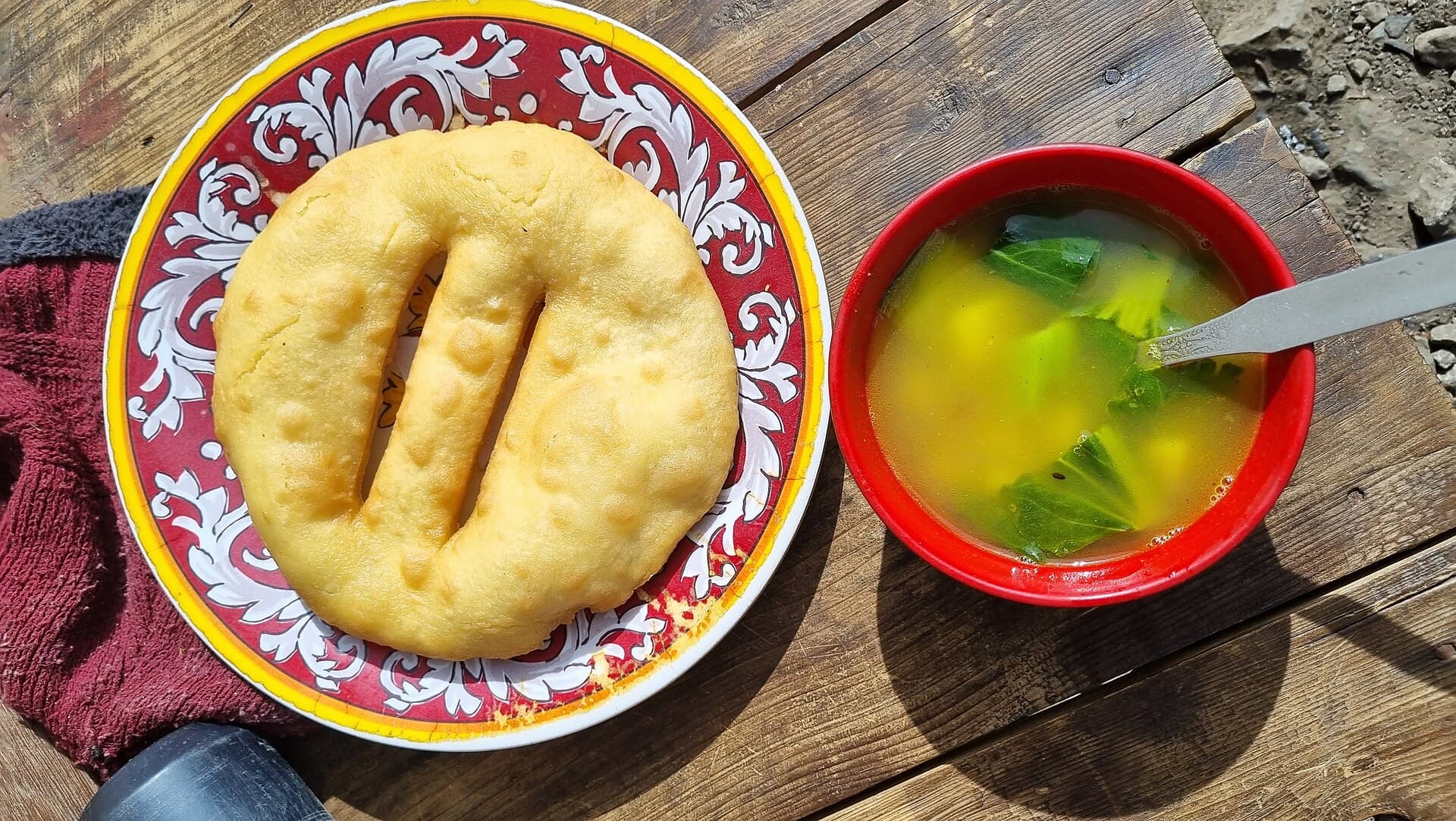
Breakfast
Tibetan bread, eggs, porridge, tsampa, and flasks of tea
All destinations
All destinationsThe traditional pilgrim route to Kailash and Mansarovar, by road in both directions, gaining height gradually to make the plateau easier on your body.
Update, September 2026: the flood of 26 August 2026 closed the border at Rasuwagadhi and Kerung and the road to it, and there is no date yet for reopening. Until it reopens we run this trip by flying to Lhasa or through Simikot and Hilsa. Ask us for the current route before you book.
The traditional pilgrim route to Kailash and Mansarovar, by road in both directions, gaining height gradually to make the plateau easier on your body.
Before there were flights to Lhasa, everyone who reached Kailash from the south walked or drove the Kerung road, and most Nepali and Indian pilgrims still use it. The main advantage remains the same: you climb from 1,400 m to 4,640 m over six days rather than ninety minutes, and arrive at the mountain with your body better adjusted to the altitude.
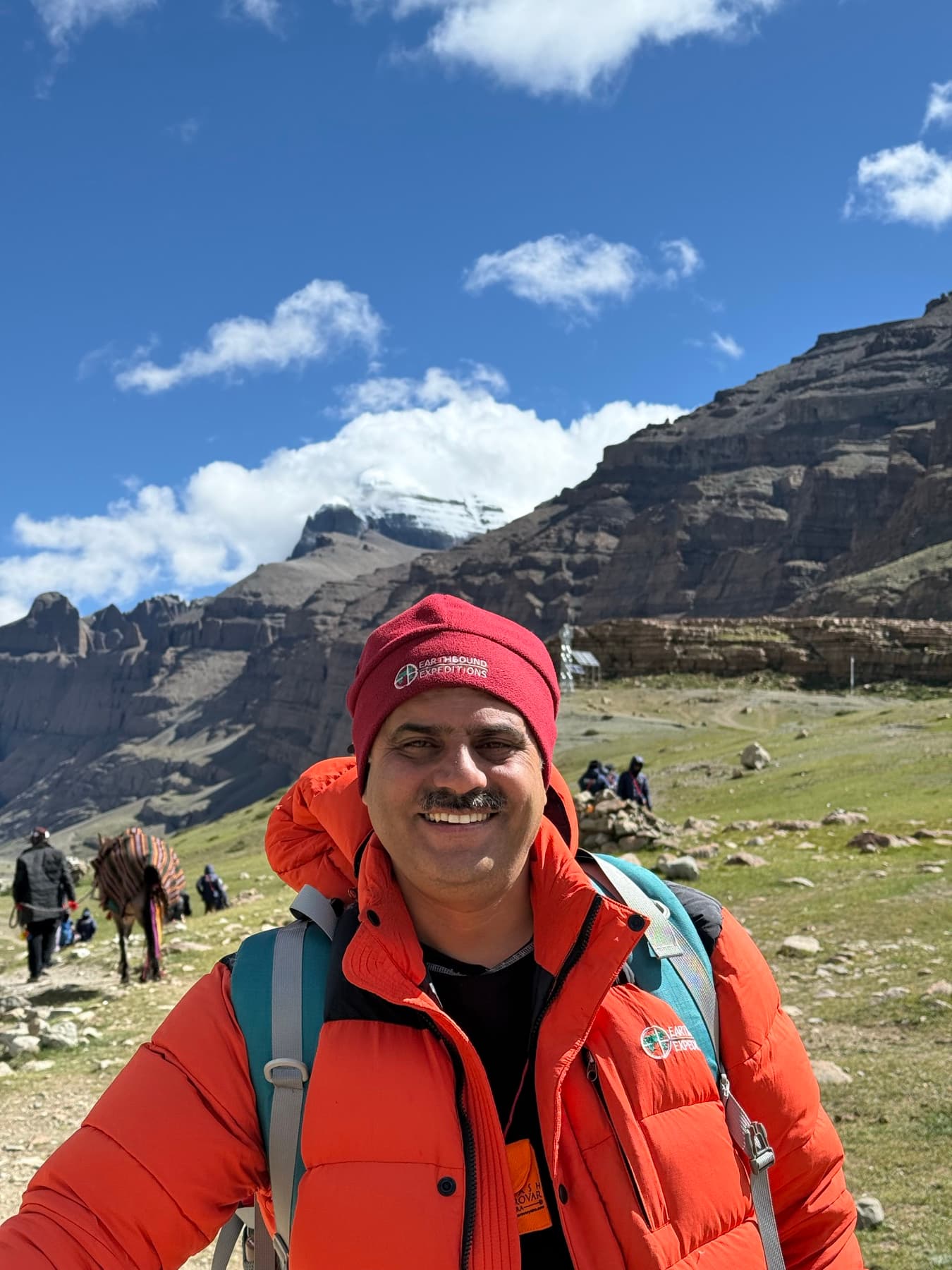
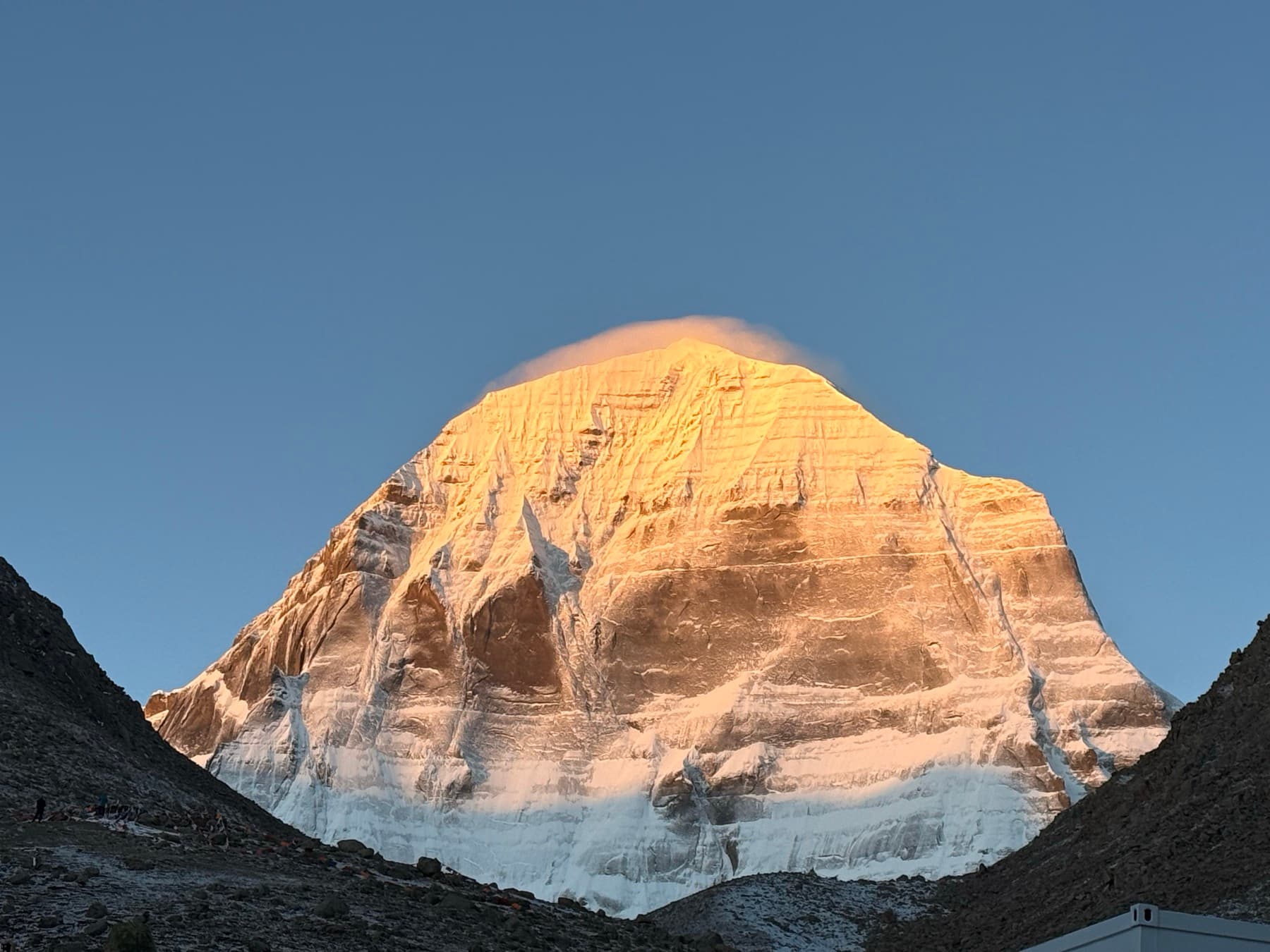
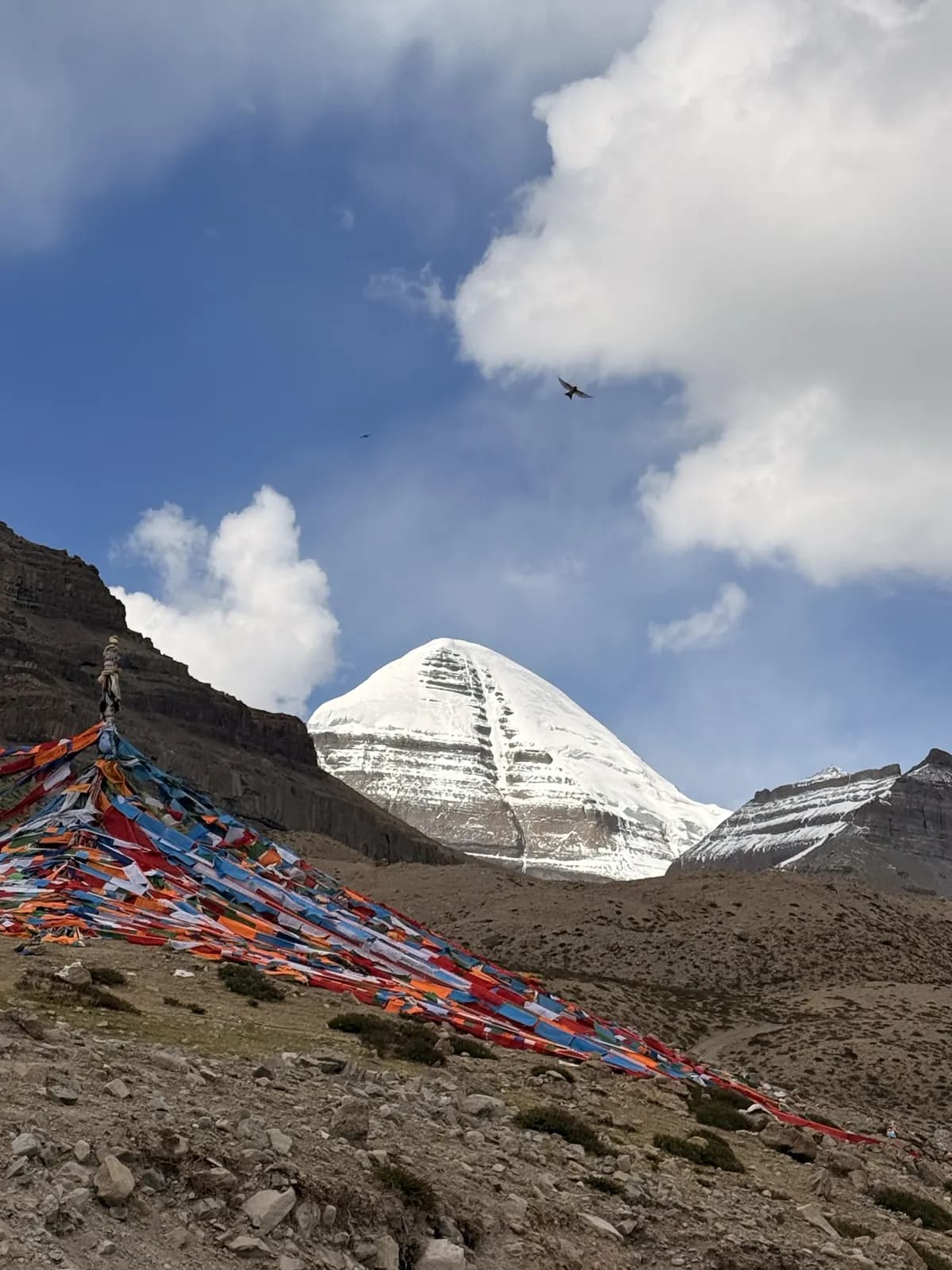
Kailash is a 6,638 m peak of dark rock in the far west of Tibet. It has never been climbed, because climbing it is not permitted. Hindus regard it as the abode of Shiva. Buddhists place Demchok on its summit. Jains believe that Rishabhadeva attained liberation here. Followers of Bon walk around it in the opposite direction. The path around the mountain is shared by all four faiths.
The kora is fifty-three kilometres, starting and ending at Darchen. The first day runs north up the Lha Chu valley below the west face to Dirapuk, twelve gentle kilometres. The second crosses the Dolma La at 5,630 m and is long, cold and demanding. The third descends the Zhong Chu valley to the plain, twelve kilometres, and finishes by lunchtime.
None of the journey is technical, and no section is steep for long. The difficulty is that even the easiest day is higher than the summit of Mont Blanc. Everything takes longer, sleep is poor, appetite decreases and small problems can become serious. The trip is planned around the altitude rather than the distances.
We meet you at the airport and take you to your hotel. The afternoon is free to rest after your flight. In the evening we explain the route, the permits and the altitude, and check your equipment, because what is suitable for the Khumbu is not always enough on the plateau.
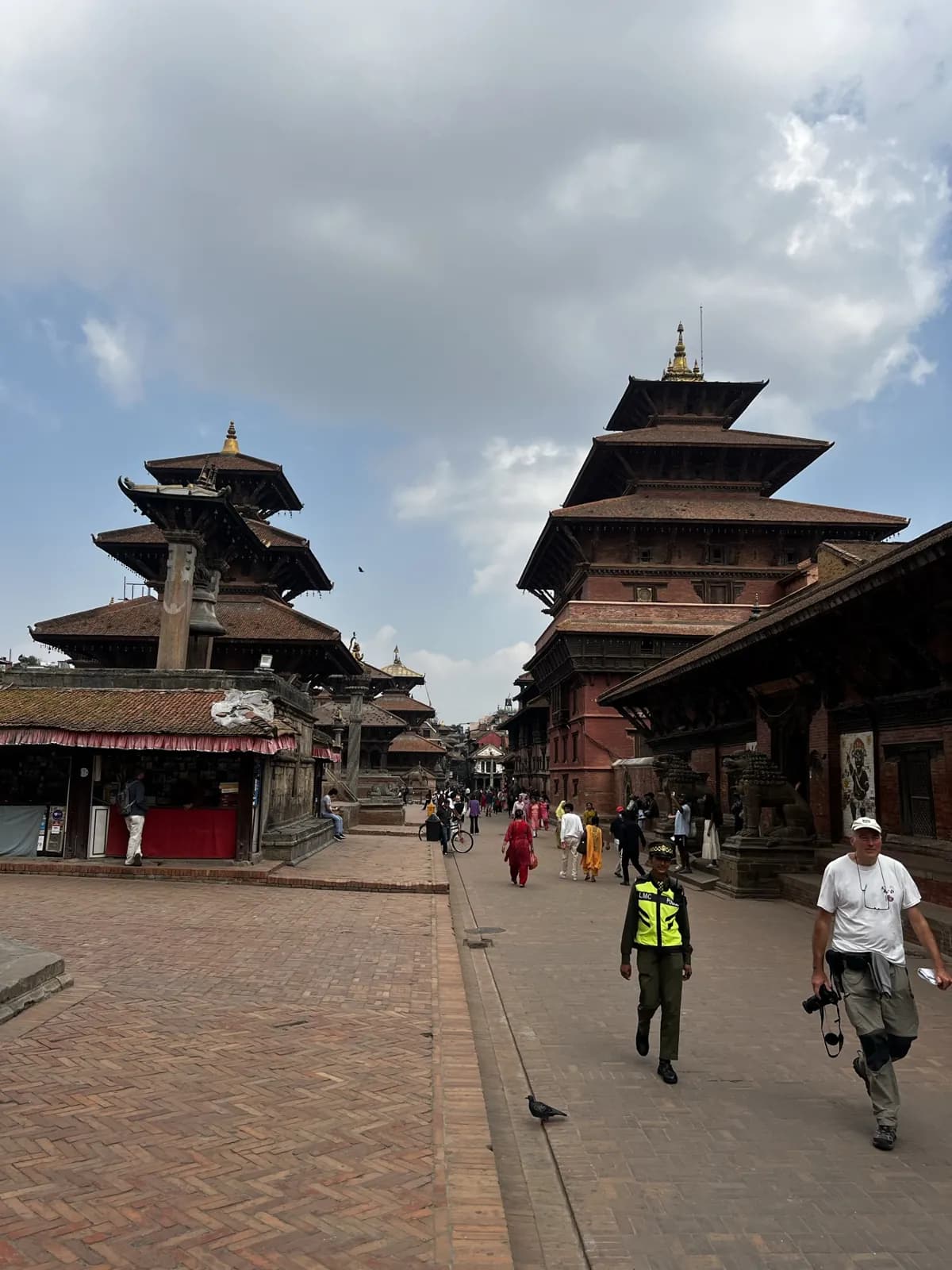
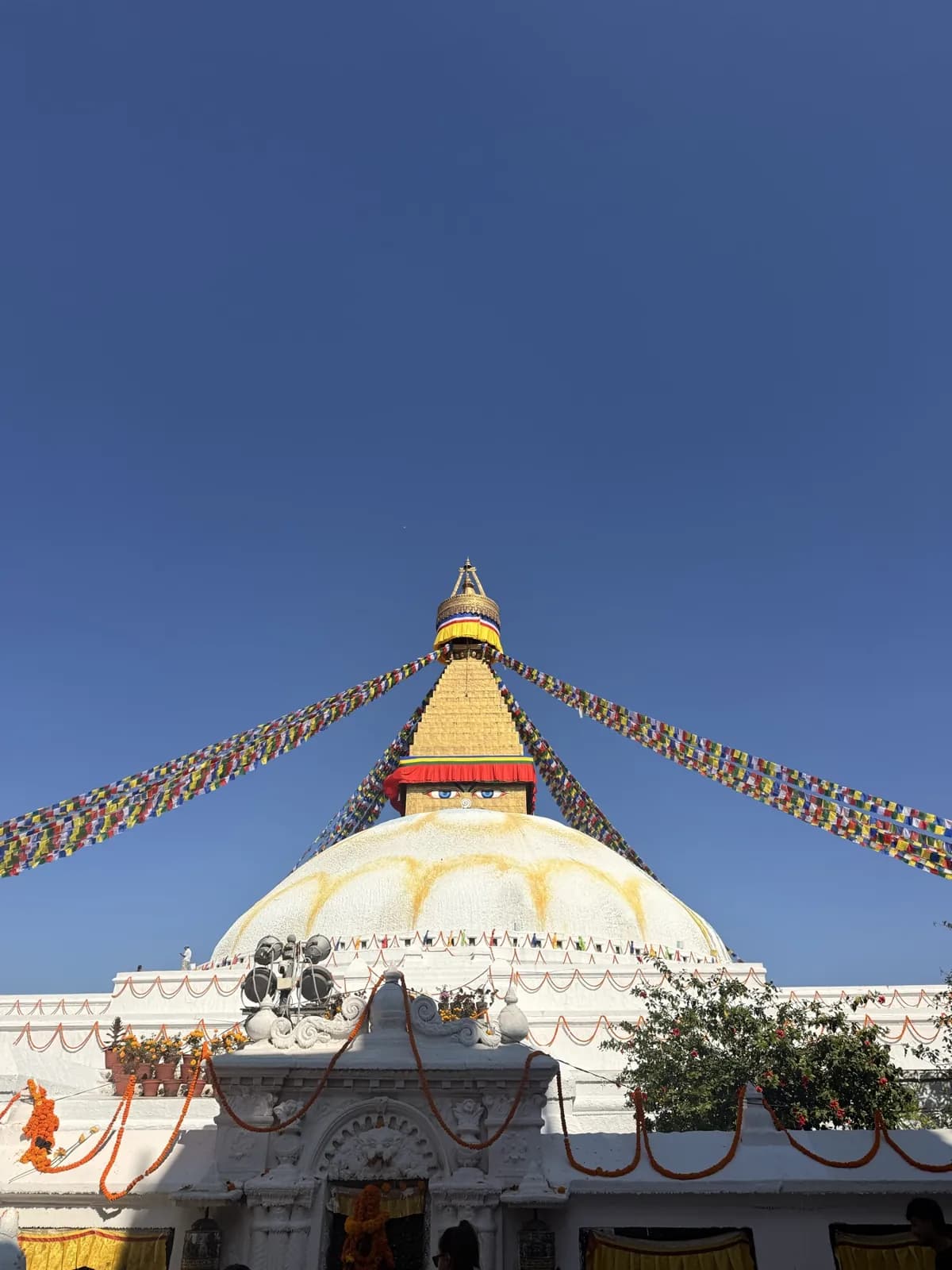
A morning visit to Pashupatinath and Boudhanath, where many pilgrims begin their journey. Your passport is at the Chinese Embassy for the group visa, so this day in Kathmandu is essential. We hire any equipment you are missing in Thamel and repack your belongings into one duffel bag and one daypack.
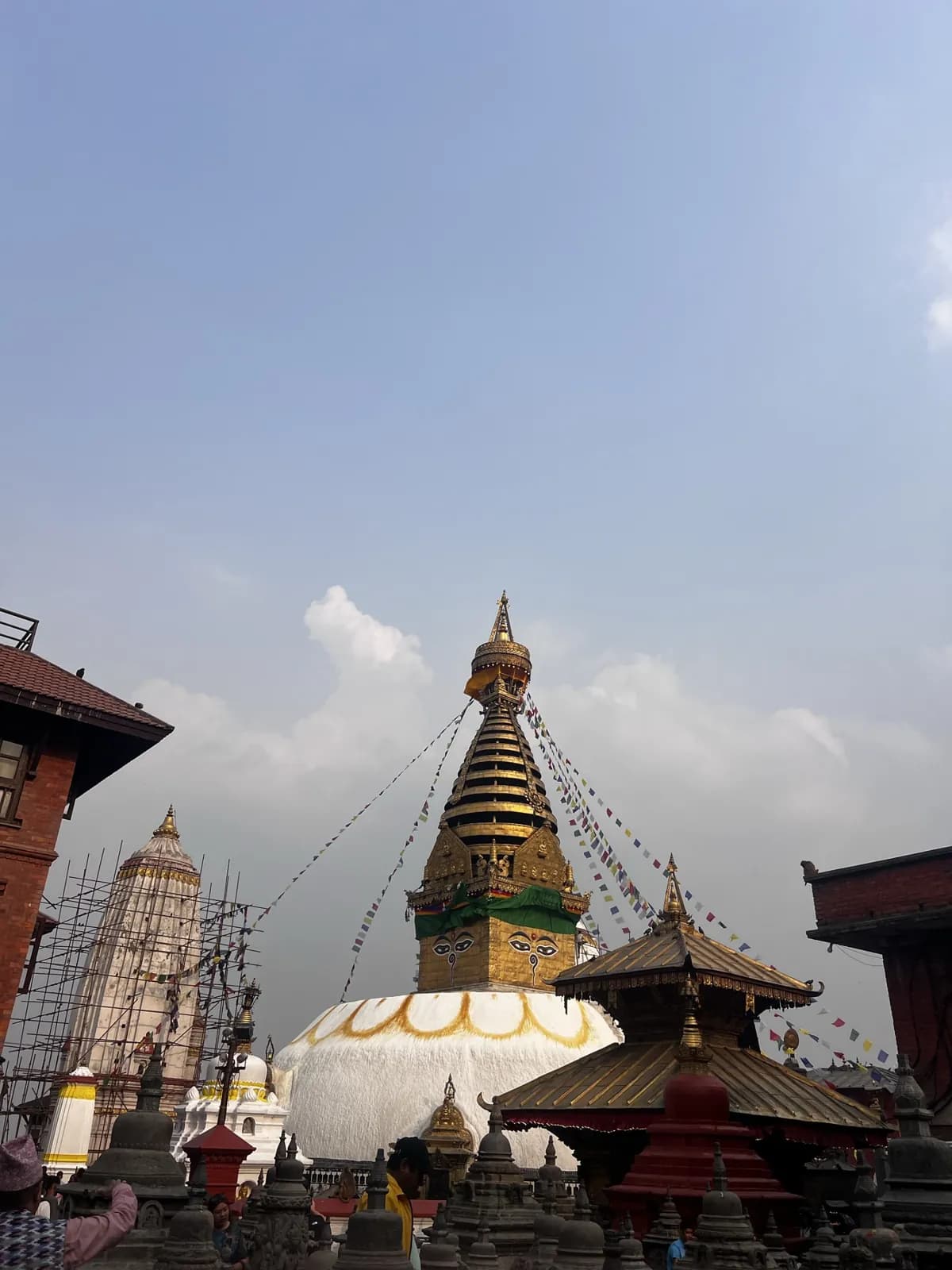
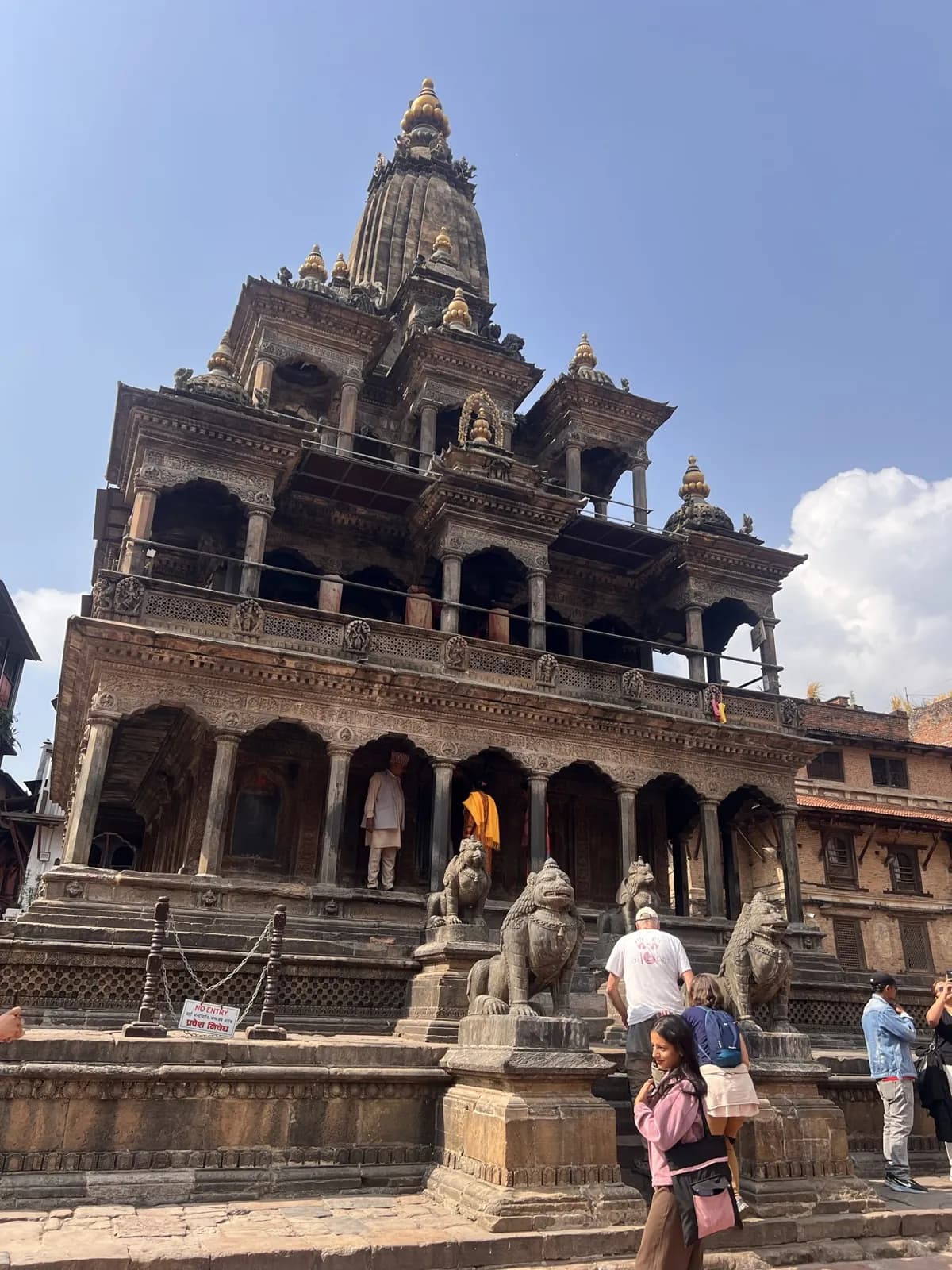
Drive north out of the Kathmandu Valley and up the Trishuli valley, on a road that changes from tarmac to gravel and is often damaged by the monsoon. It is a long day in the vehicle for the distance covered. Timure lies in the gorge below Rasuwagadhi, and you spend the first night here at a relatively low altitude.
Complete Nepali exit formalities at the bridge, then Chinese immigration, which is thorough and slow. Bags are opened. Books about Tibet and images of the Dalai Lama are confiscated, so do not bring them. After the border post, the road climbs steeply through pine forest to Kerung, gaining nearly a kilometre in an hour.
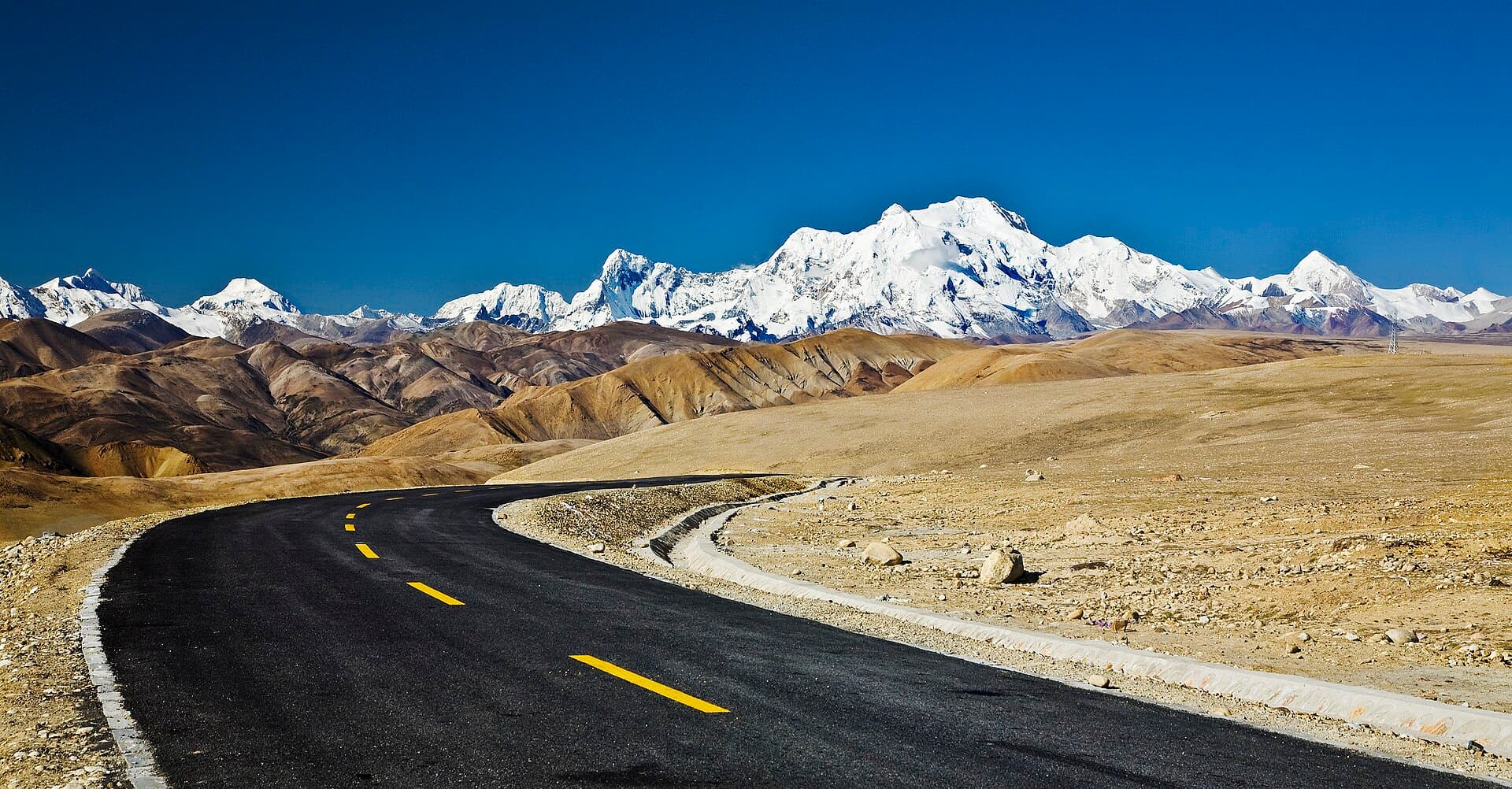
An important day for acclimatisation. We walk for an hour or two up the side valley behind the town and return to sleep lower down. From here onwards, your guide measures everyone's oxygen saturation morning and evening and records it, so that any decline is noticed early.
The road climbs above the tree line and over the Kongtang La, and from here the landscape is high, brown and vast. Saga is a garrison and lorry town rather than a destination, and it is where most people first feel the altitude. Drink more than you feel you need and eat more than you want to.
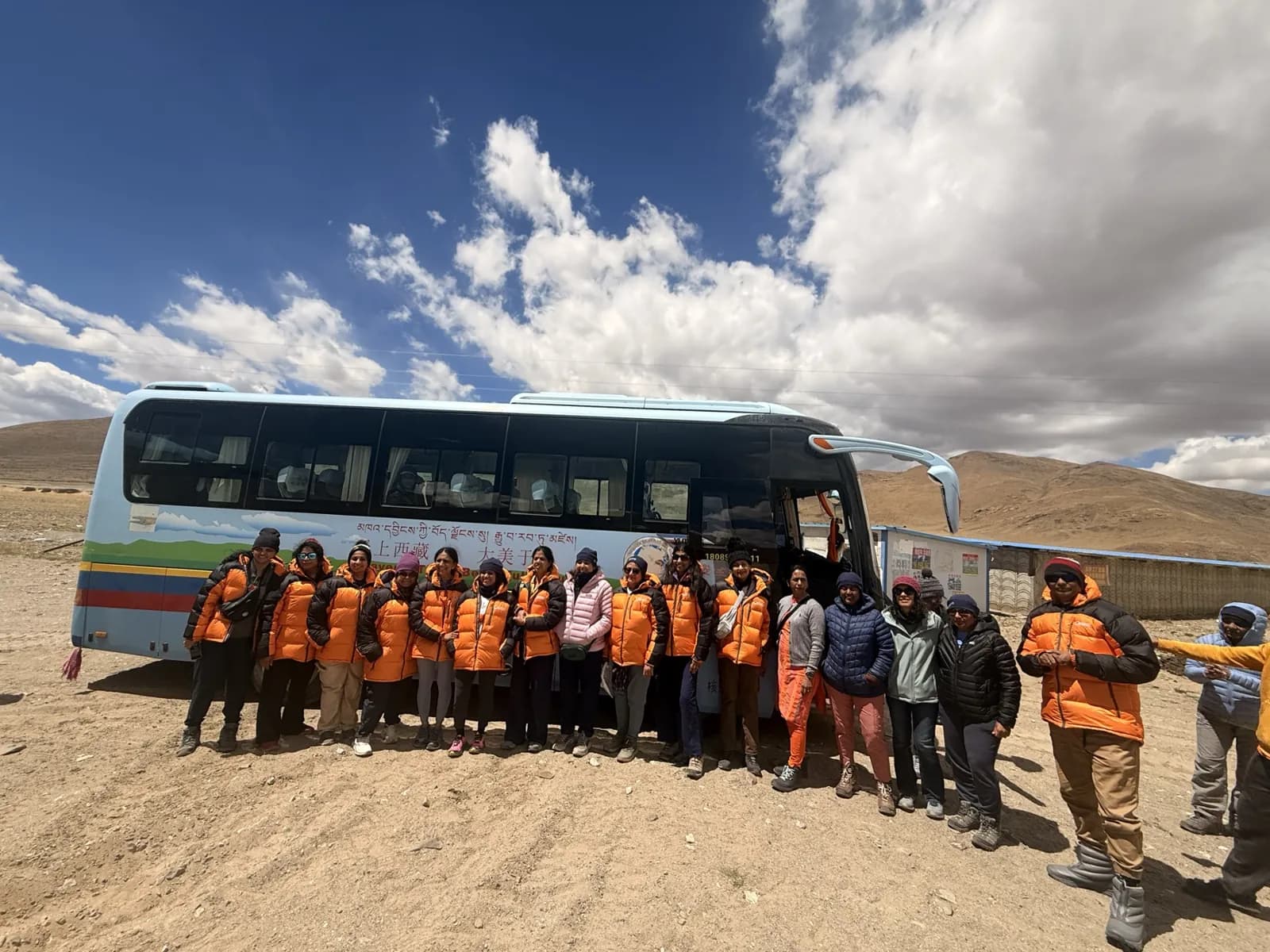
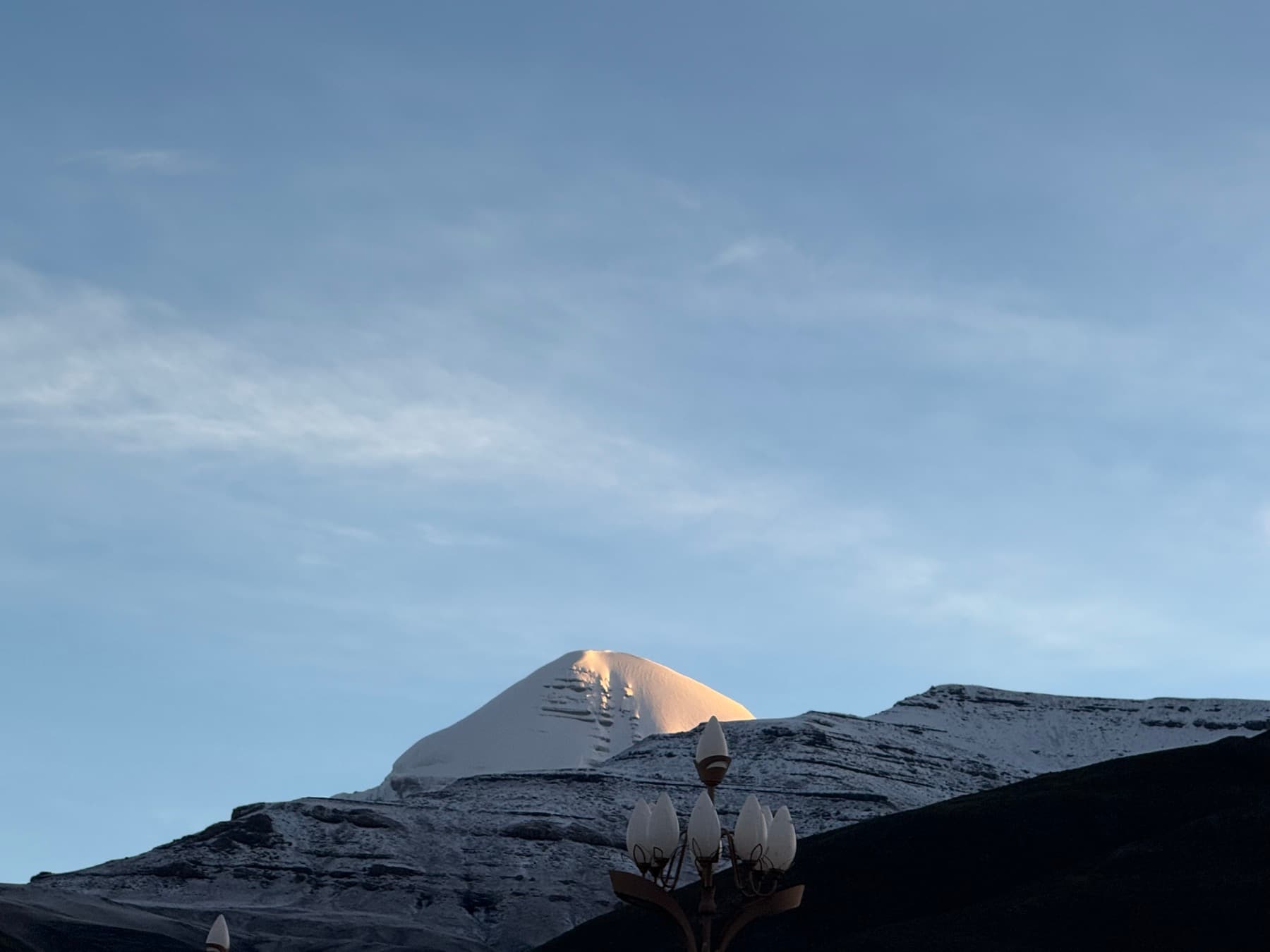
The longest drive of the trip, heading west along the Brahmaputra and then away from it, past nomad camps and salt lakes in open country. Late in the day, Gurla Mandhata comes into view on the left, followed by Lake Mansarovar.
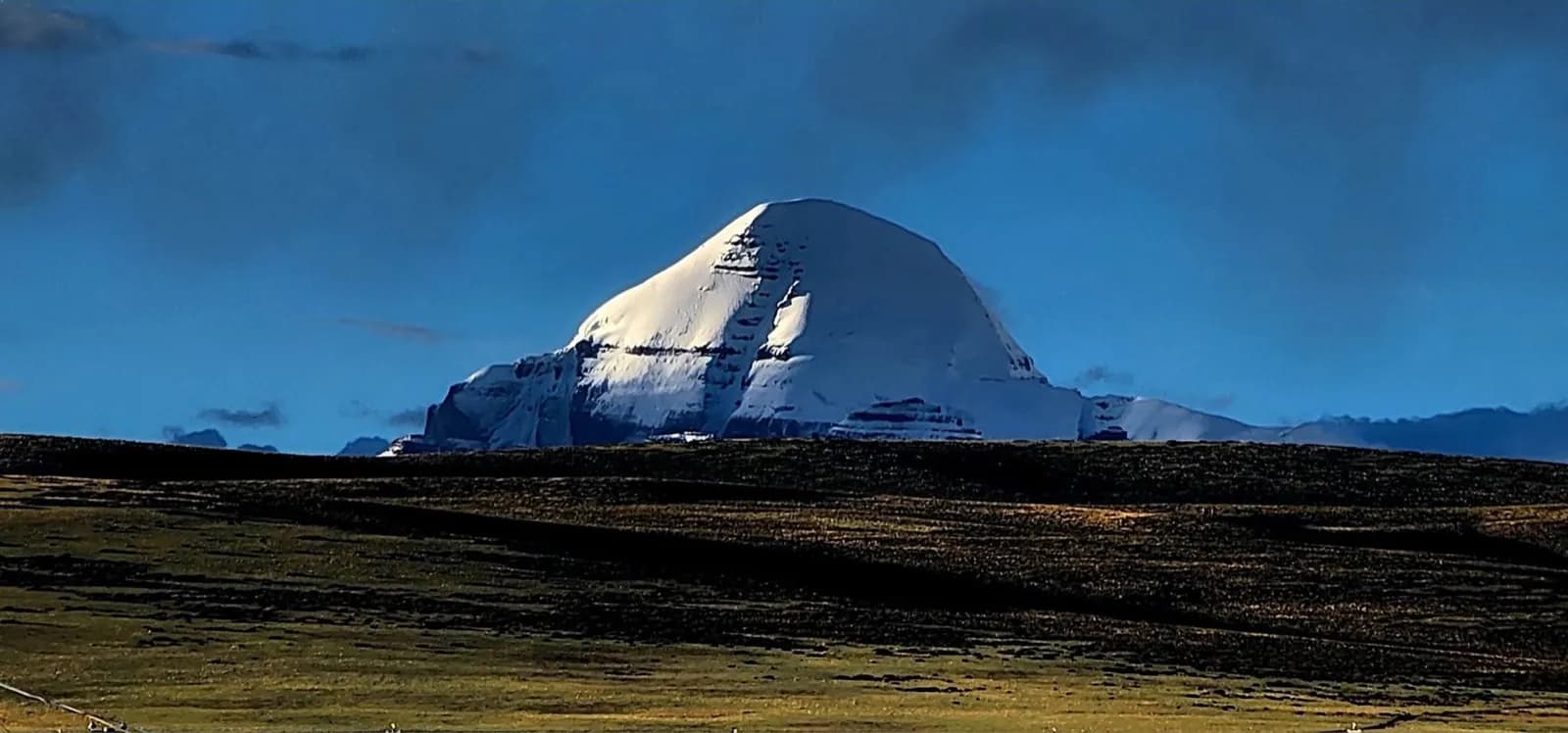
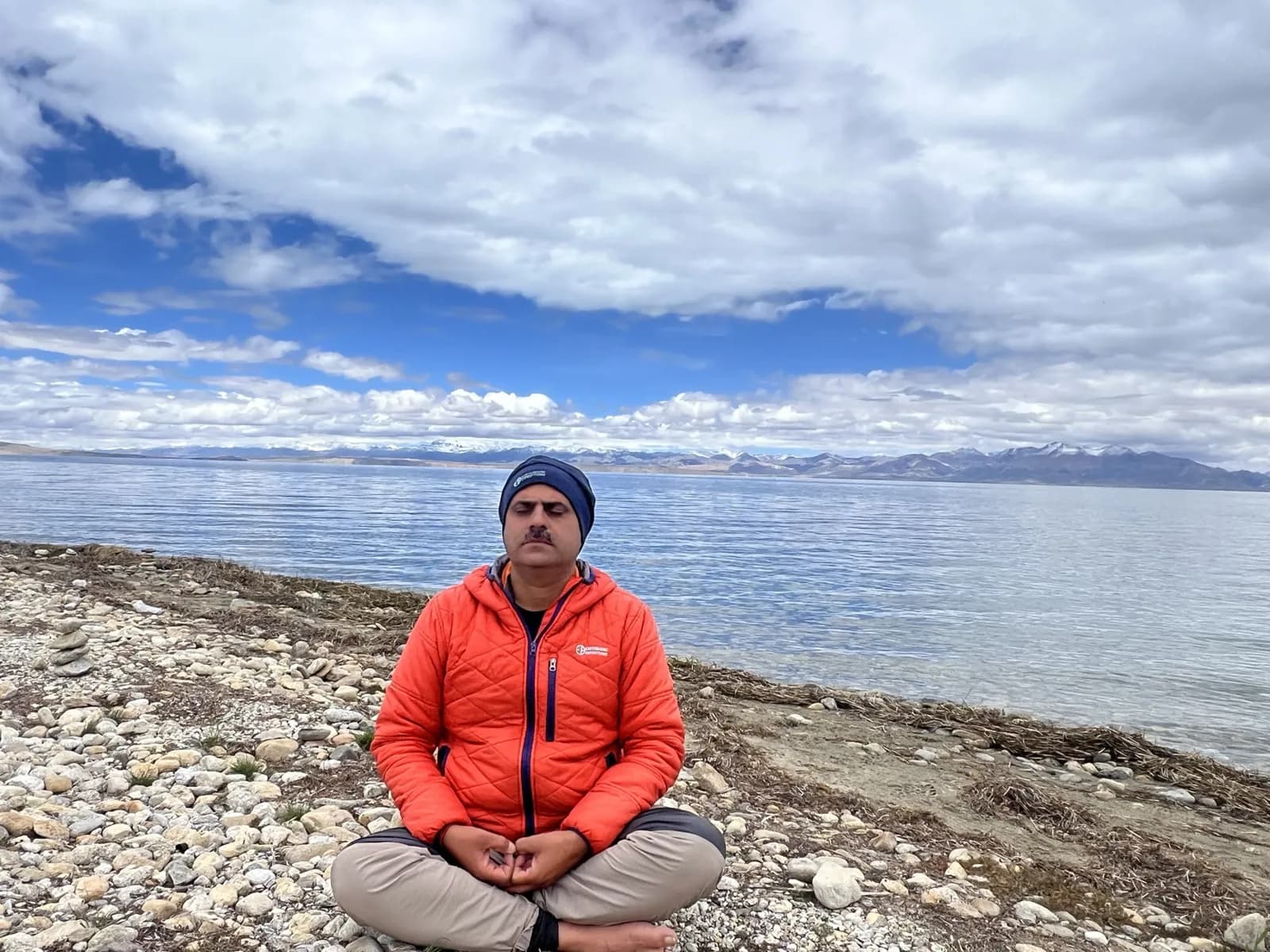
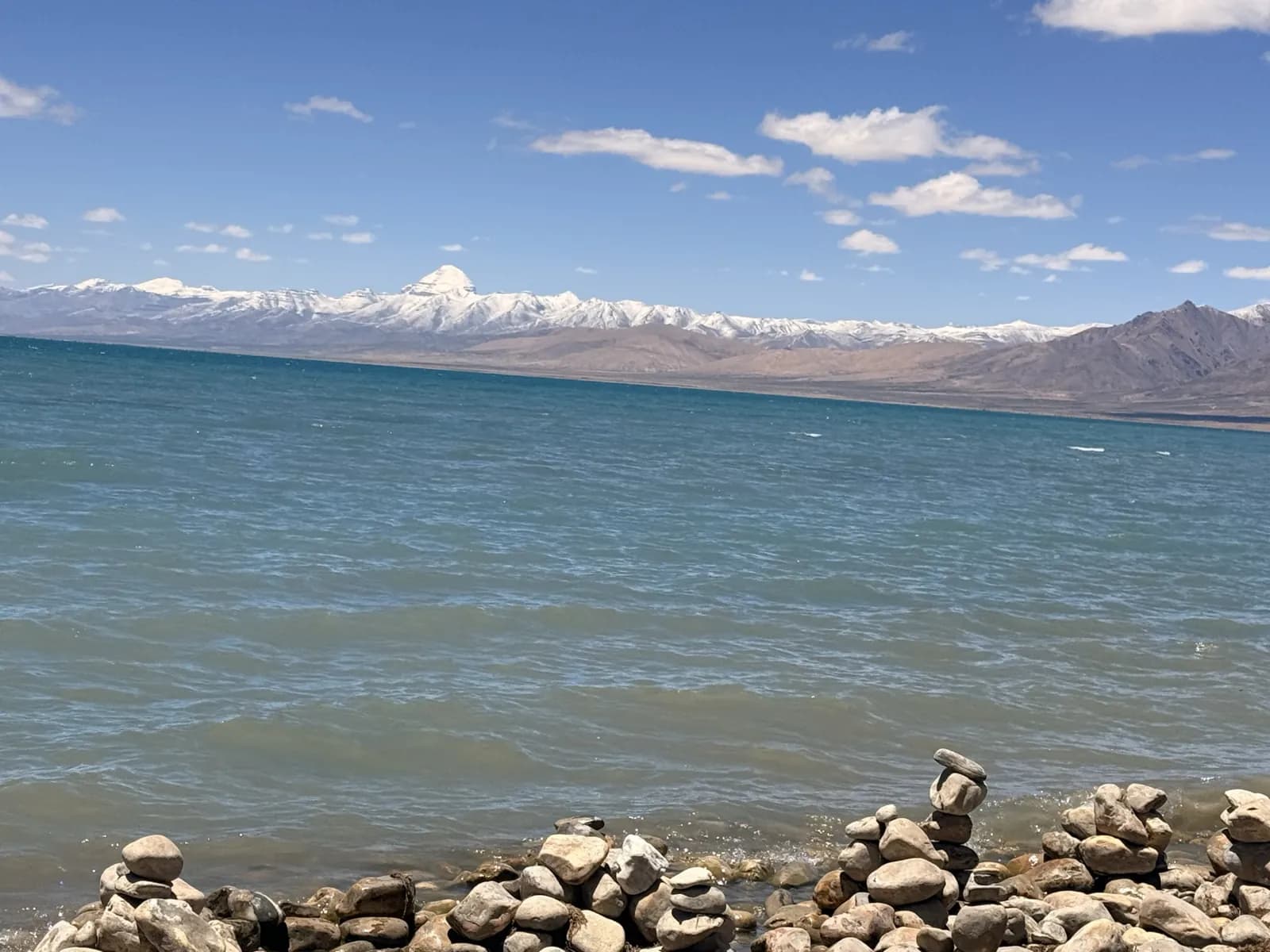
Sunrise on the lakeshore, which is the reason we stay here overnight. Those who wish to bathe do so briefly, because the water is only a few degrees above freezing. We drive along part of the lakeshore, see Lake Rakshastal, and reach Darchen in the afternoon to organise the loads for the kora.
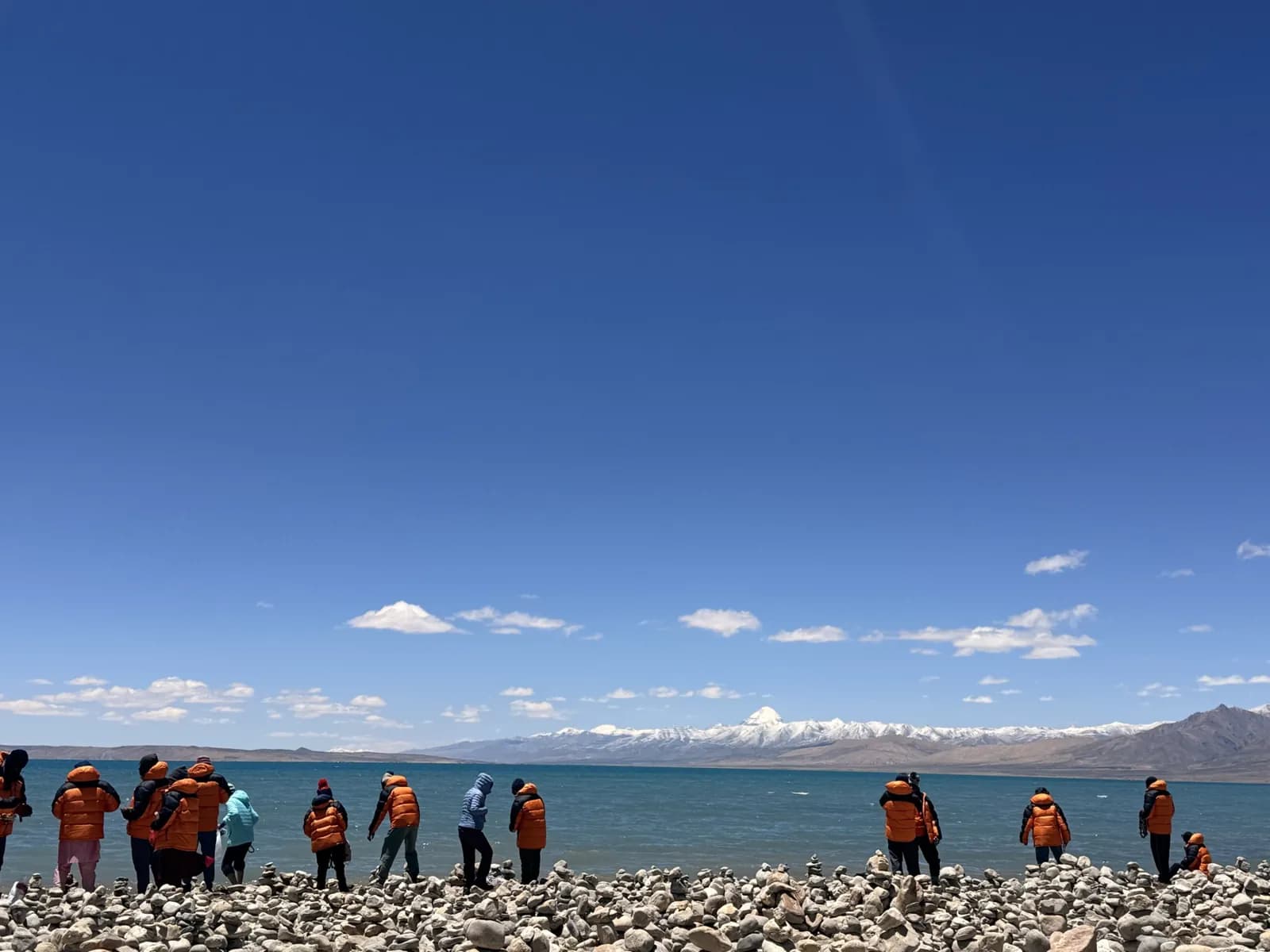
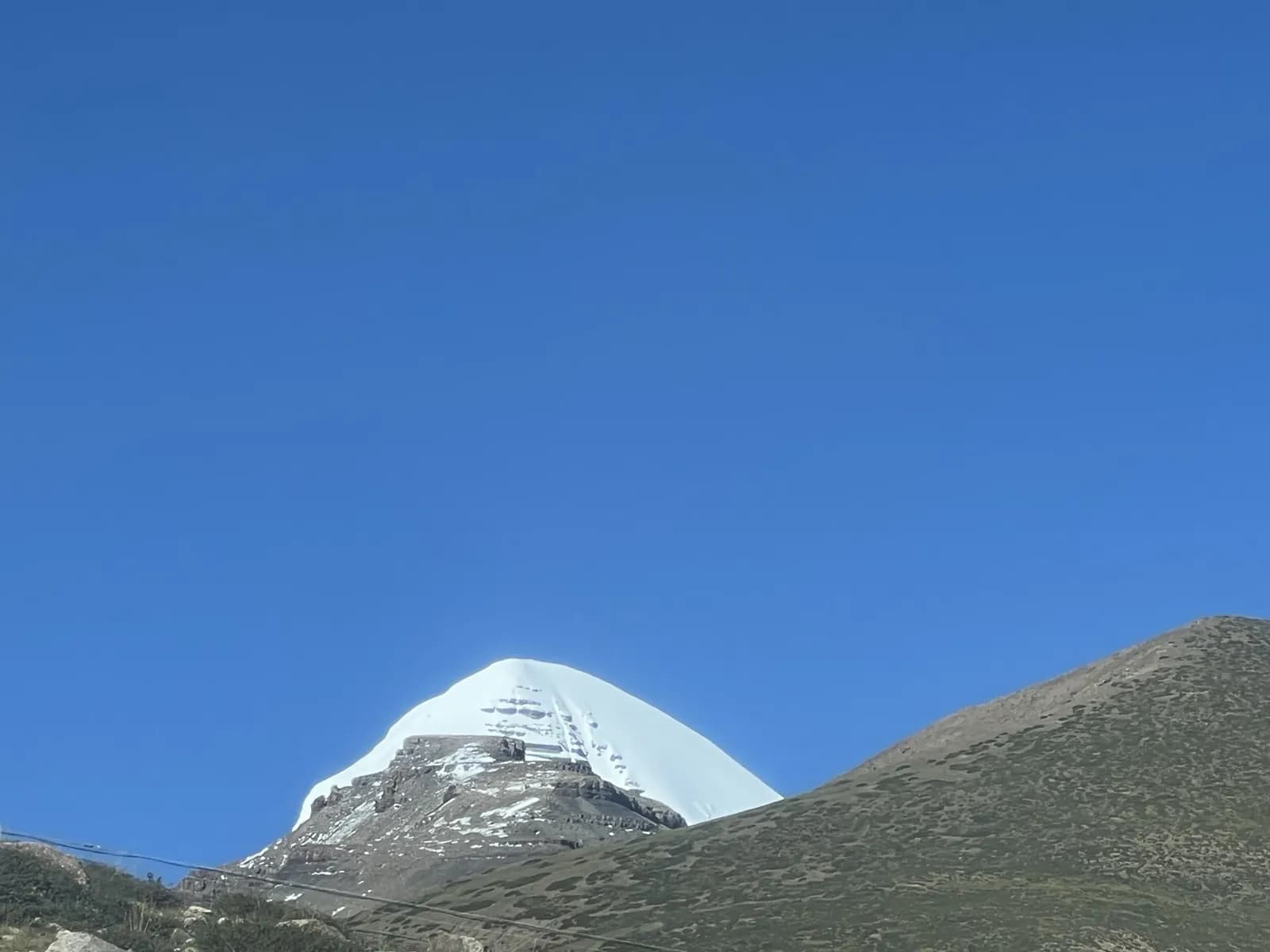
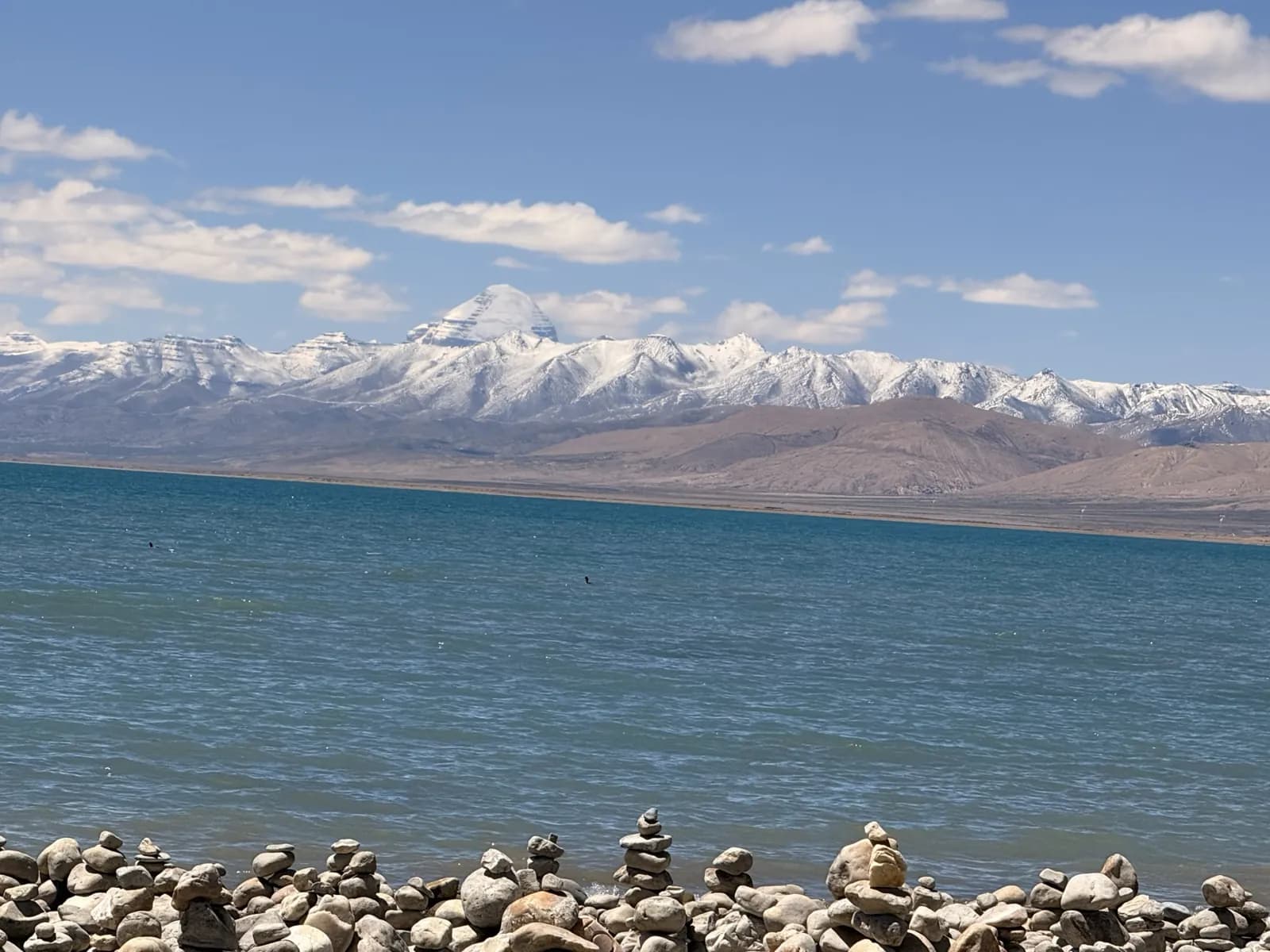
A short drive to Yam Dwar, the gate where the walking begins. The valley turns north, with the south face of Kailash above you for most of the afternoon. It is twelve kilometres on a good path with little ascent; the only difficulty is the altitude of around 4,500 metres.
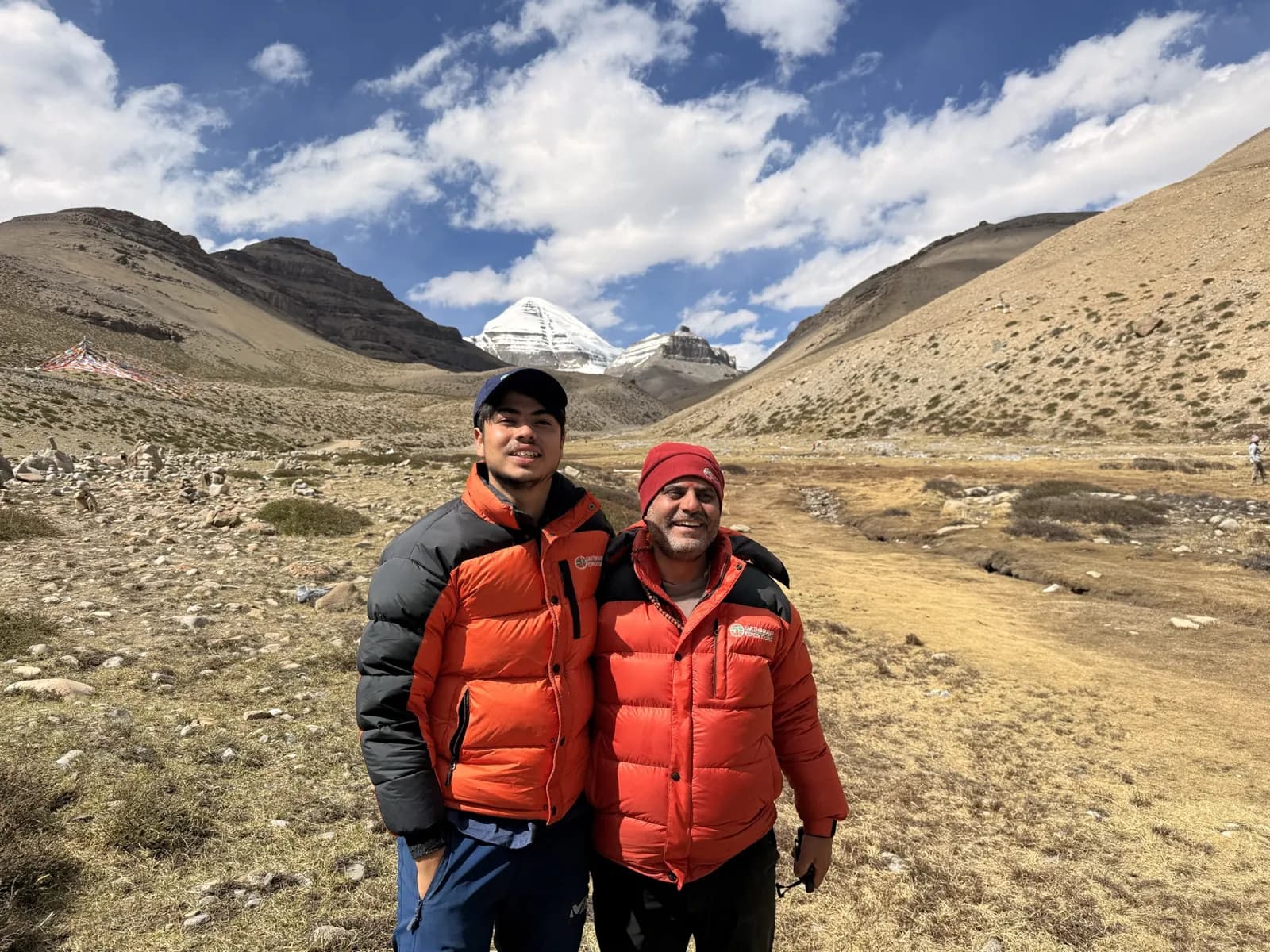
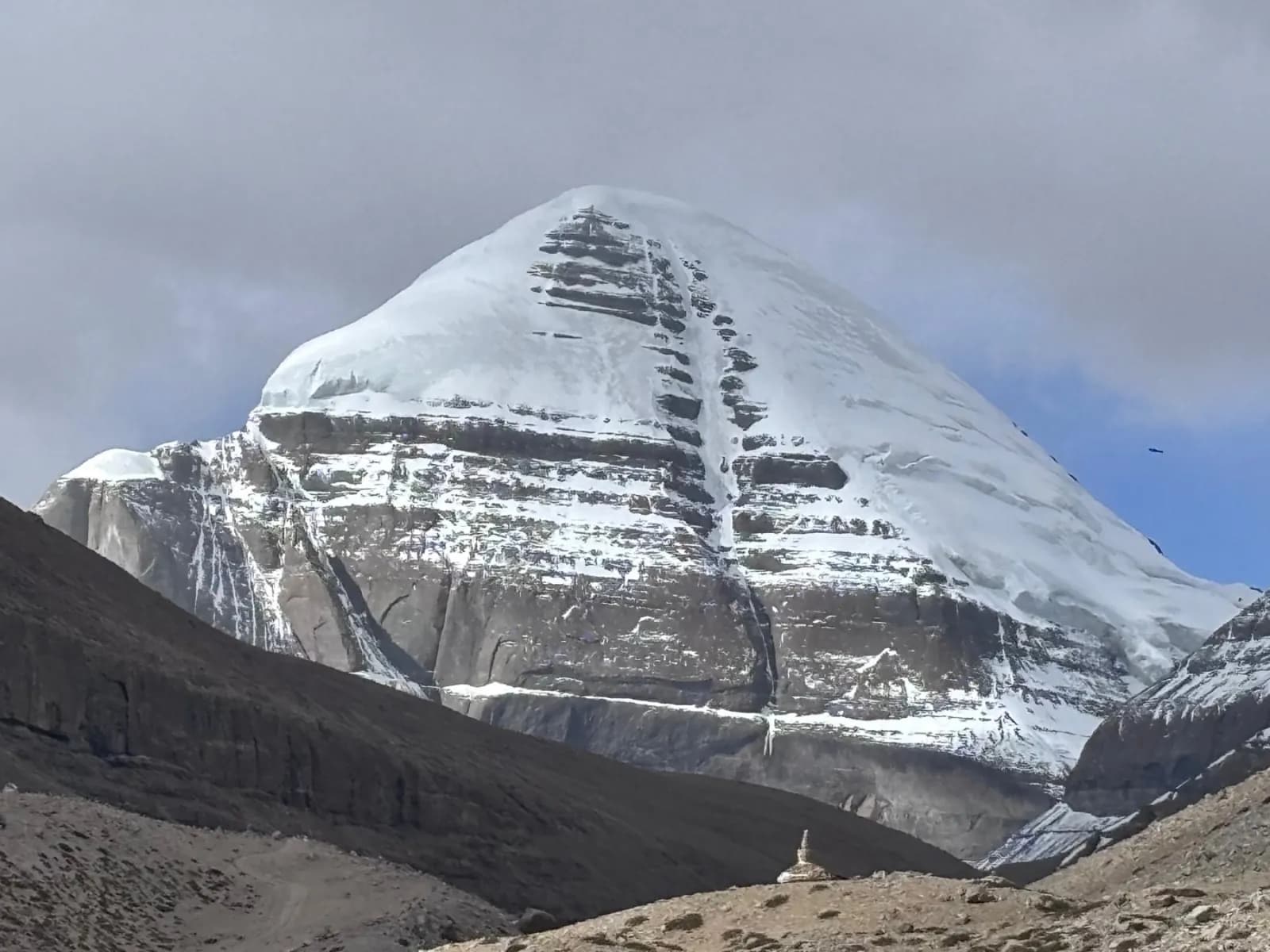
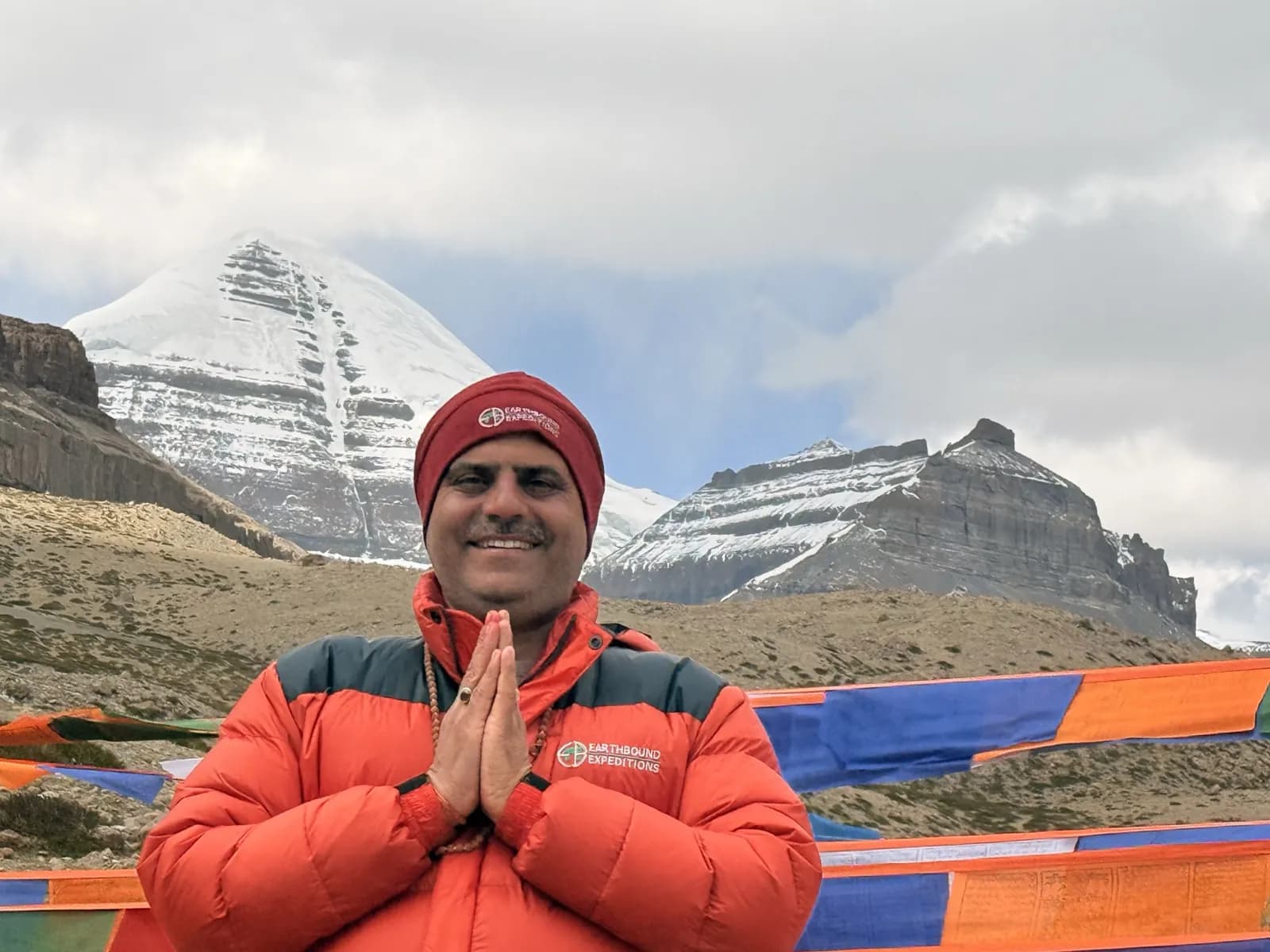
The most demanding day of the trip. We leave before first light and climb the moraine to Shiva Tsal, where pilgrims leave personal items, then make the long ascent to the Dolma La at 5,630 m, which is covered in prayer flags. The descent to the valley floor is steep and loose, and the final hours are flat and very long.
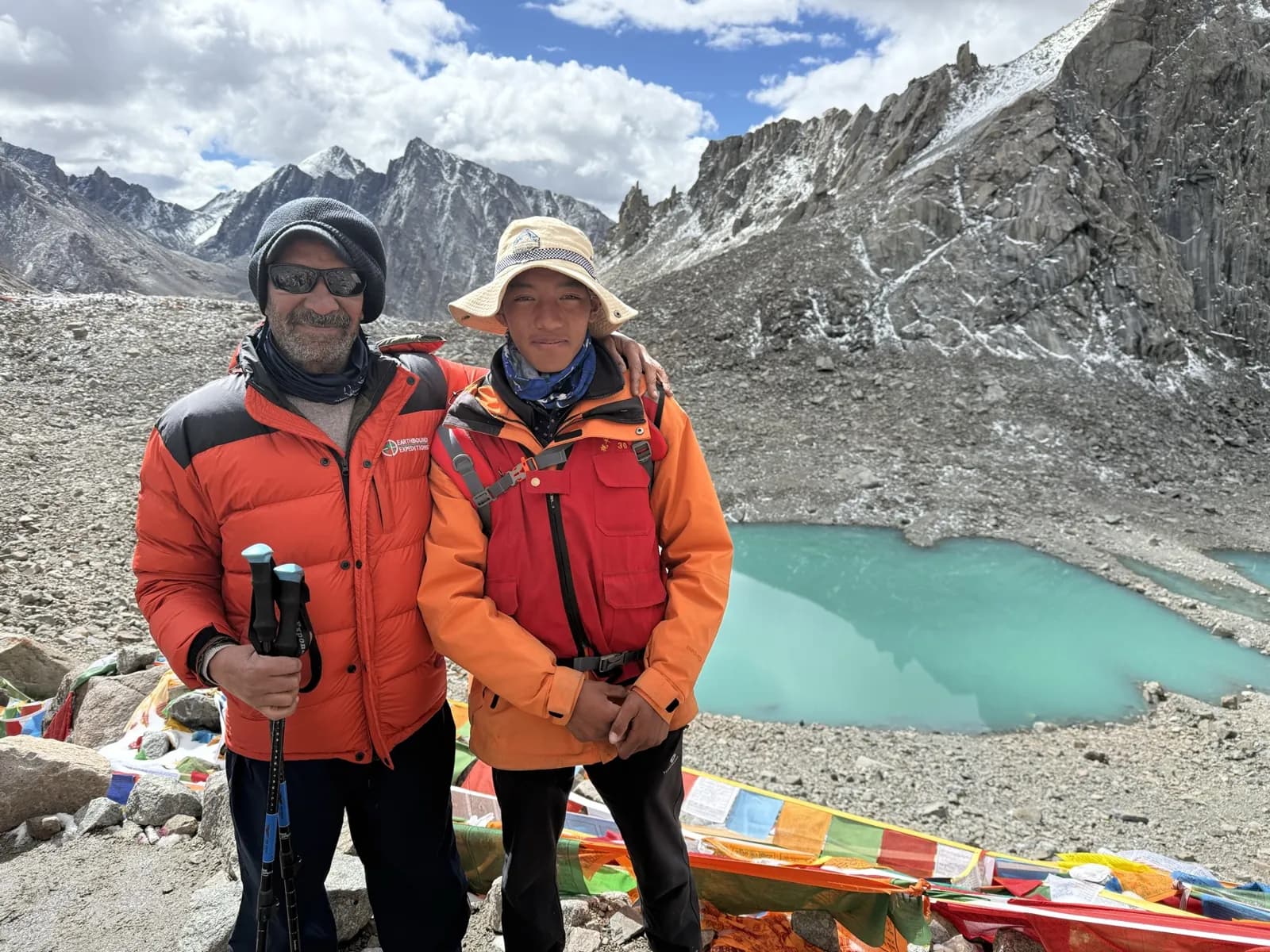
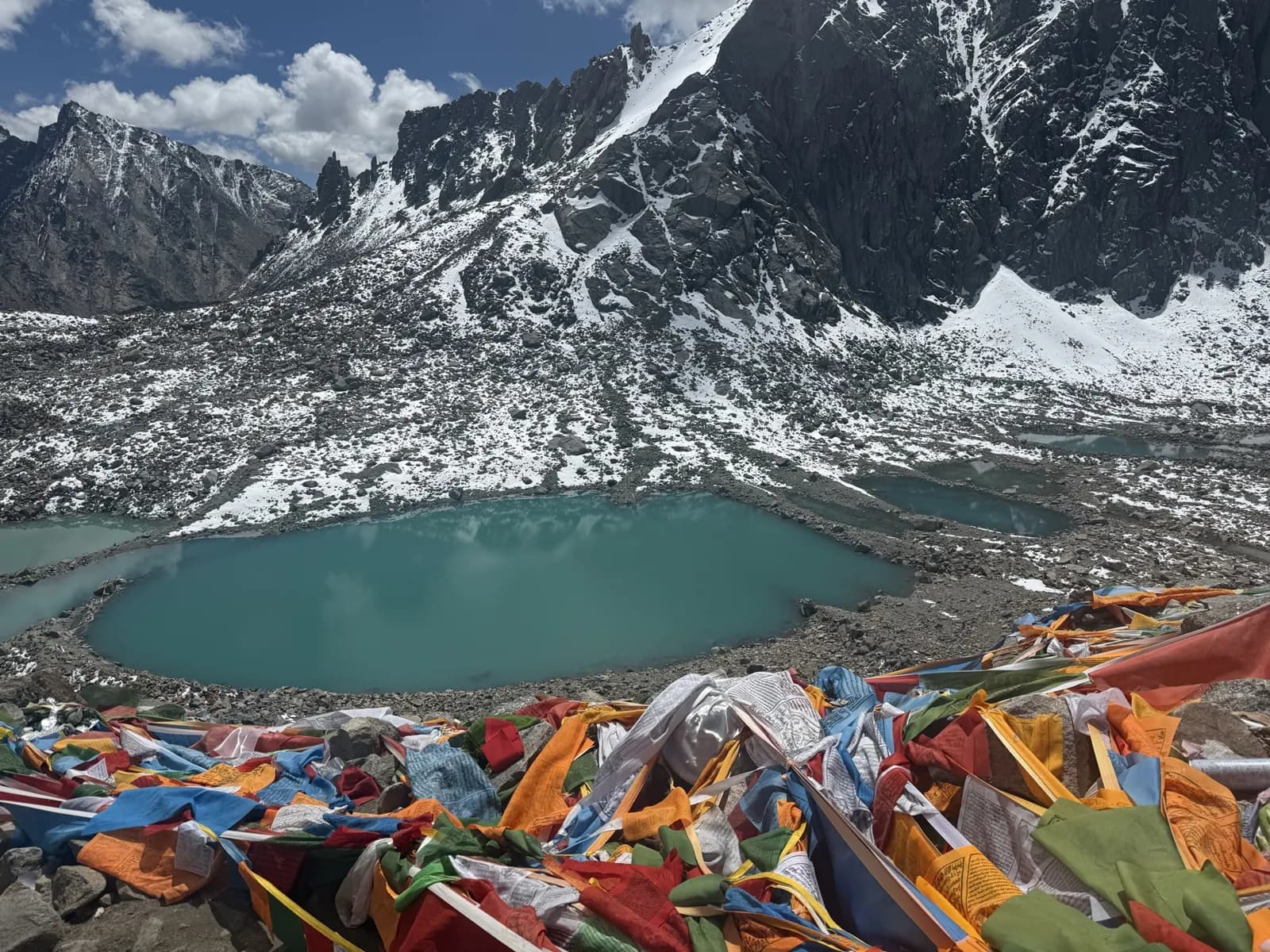
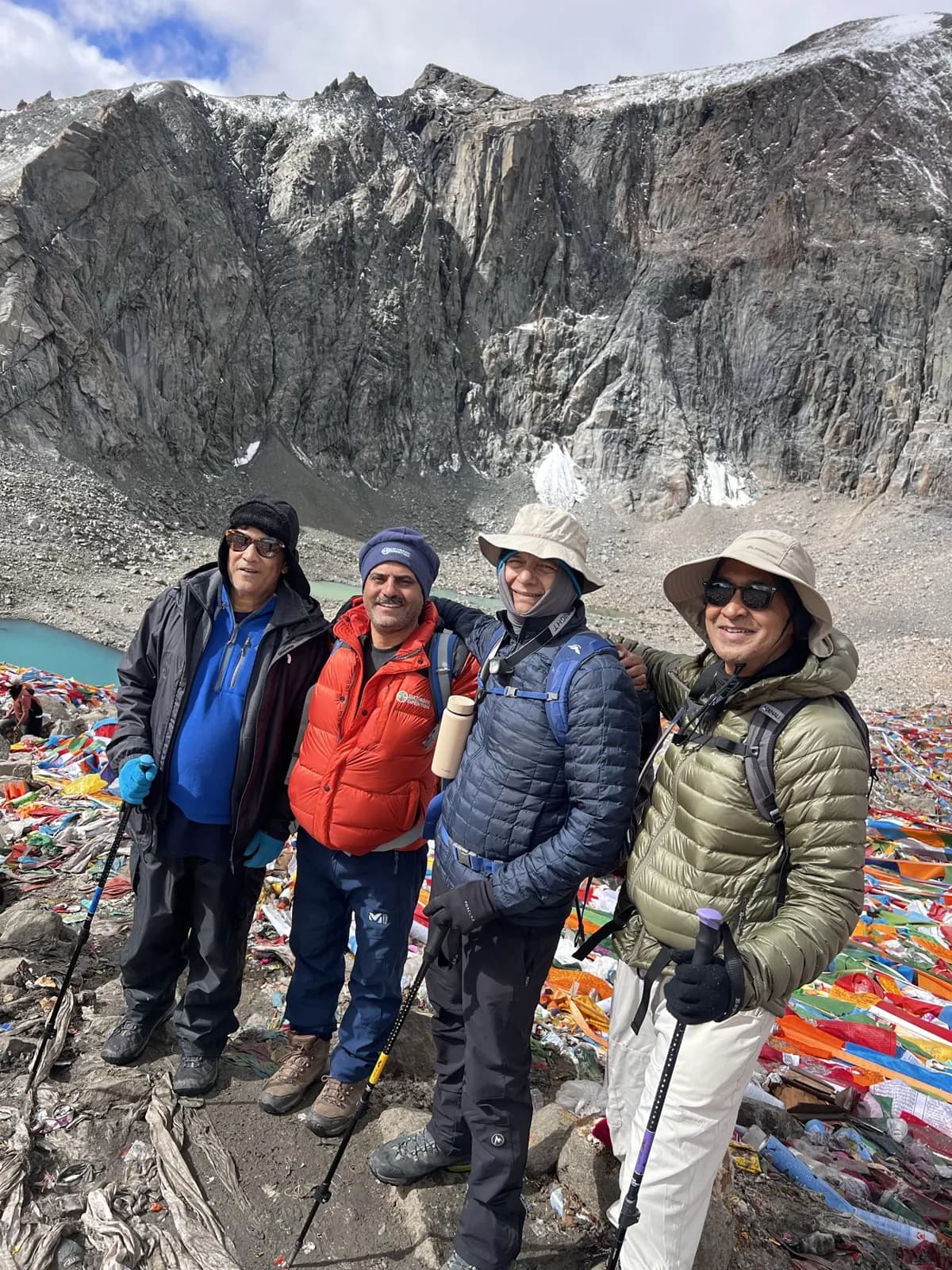
An easy final morning down the gorge, past Milarepa's cave, until the valley opens onto the Barkha plain where the vehicles wait. The circuit is complete by early afternoon. We drive east to the lakeshore, which is lower than Darchen, so everyone sleeps better.
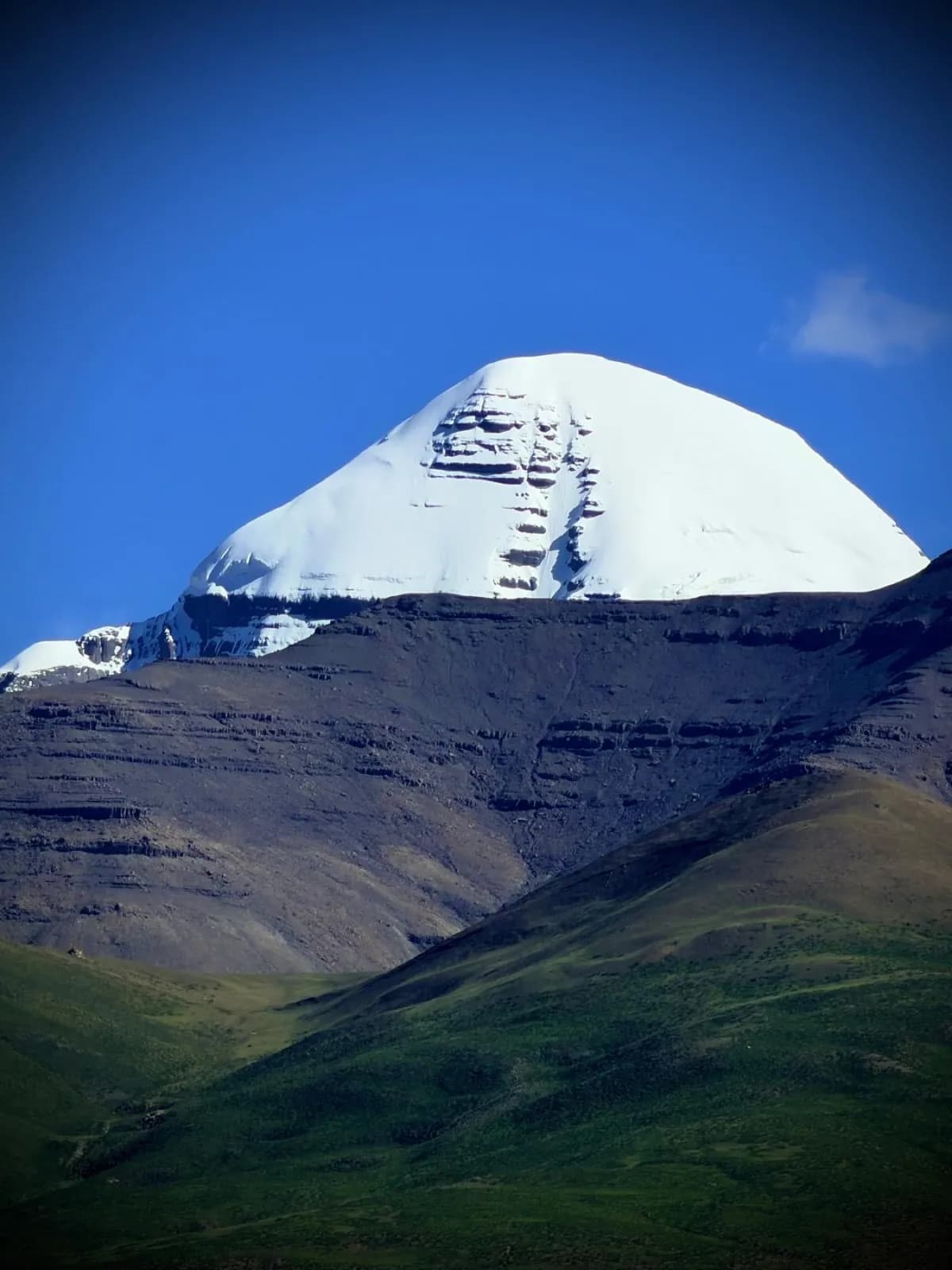
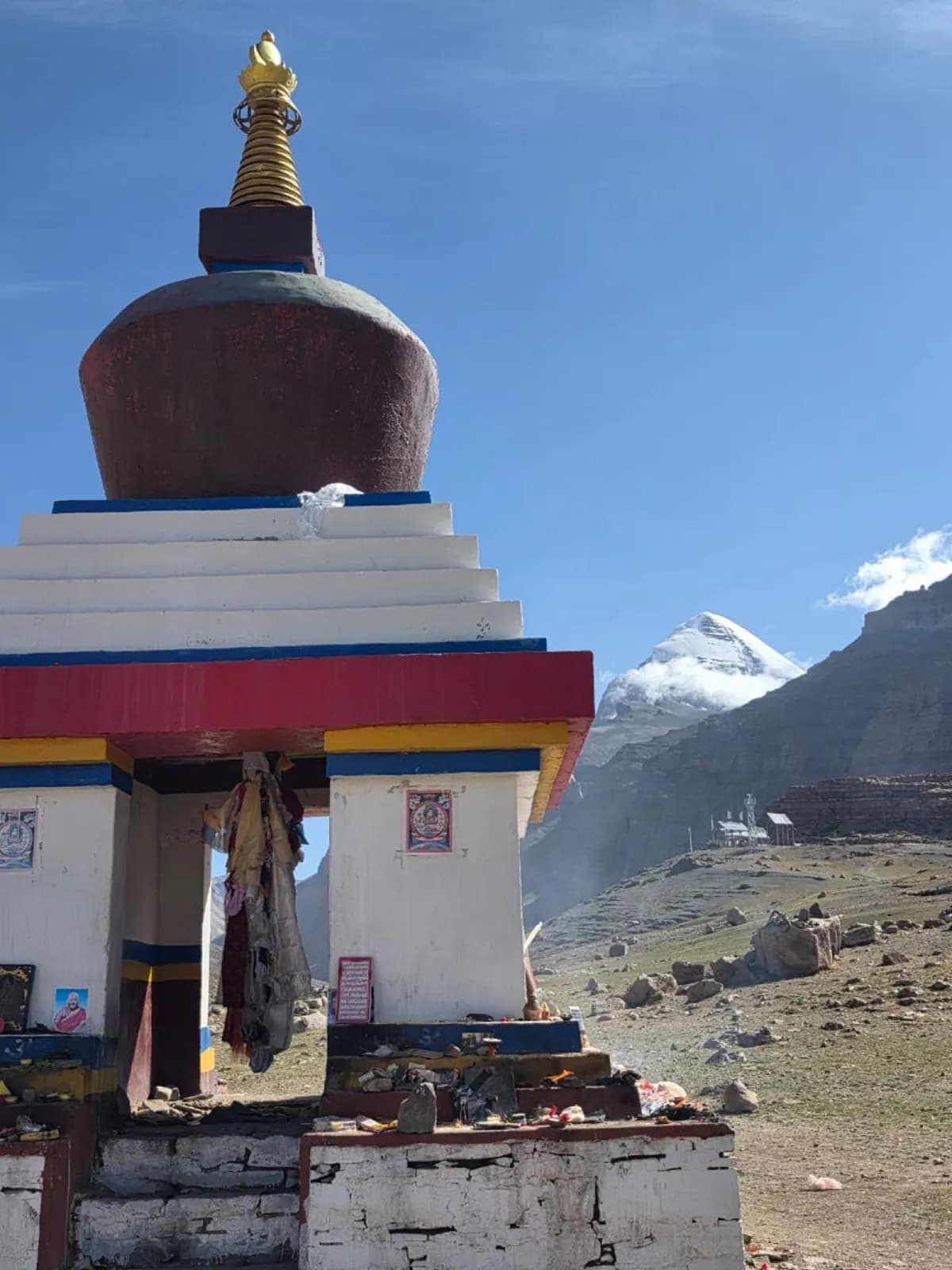
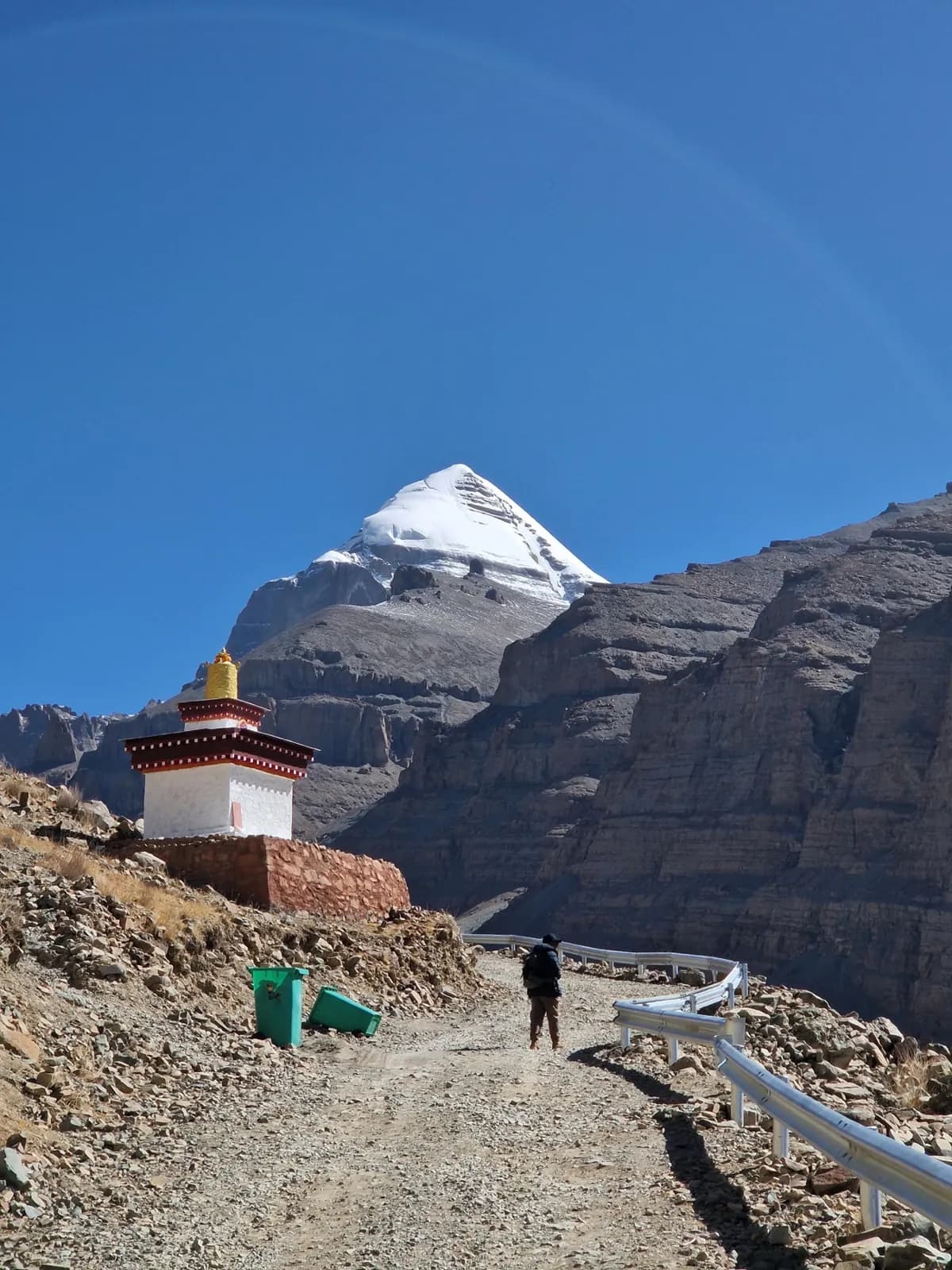
This day is kept in reserve. It is used if the pass was closed by snow, if someone needed a slower day, or if a vehicle broke down on the plateau. If it is not needed, you have a second morning at Mansarovar and a restful afternoon.
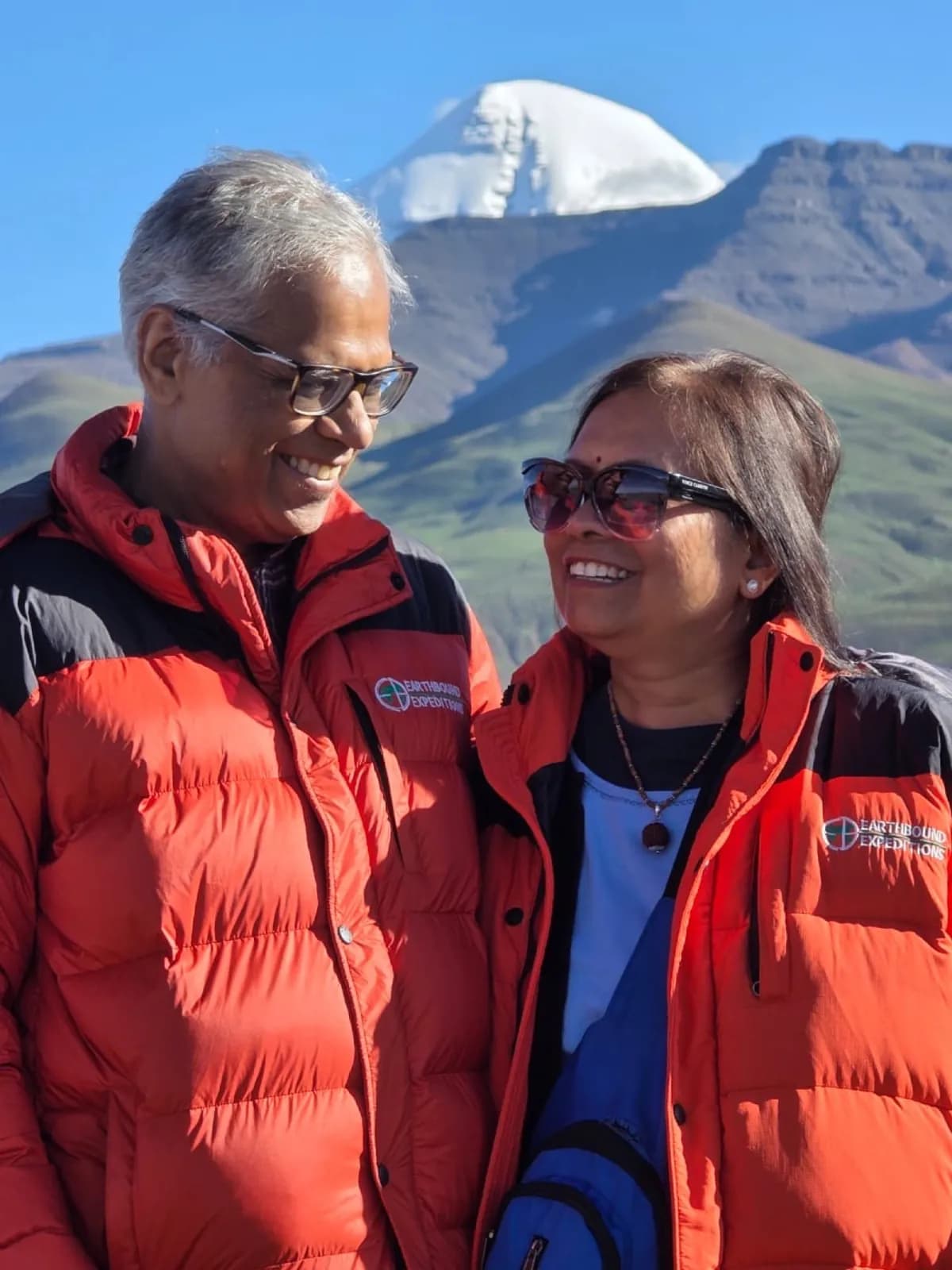
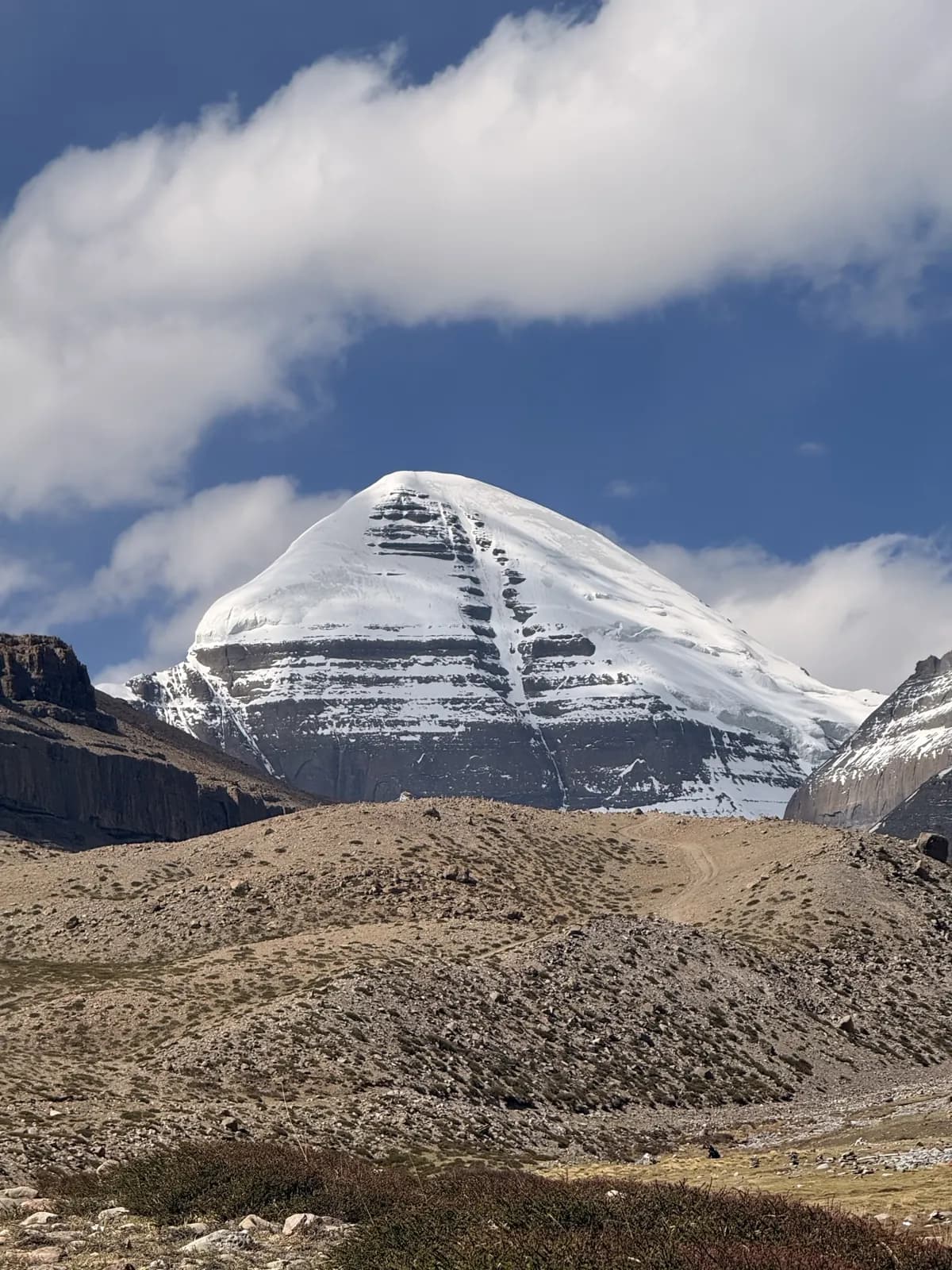
We drive back along the same road in the other direction. Most people sleep for much of the drive. After a week at higher altitude, Saga feels relatively low.
We cross the Kongtang La again and descend into the forest. Kerung, at 2,800 m, has a milder climate after a week on the plateau, and most people's appetite returns here.
Complete the Chinese exit formalities at the border, which can take some time, then cross the bridge at Rasuwagadhi to Nepali immigration. The road down the Trishuli valley is rough, green and warm. We reach Kathmandu in the evening, where you can have dinner wherever you choose.
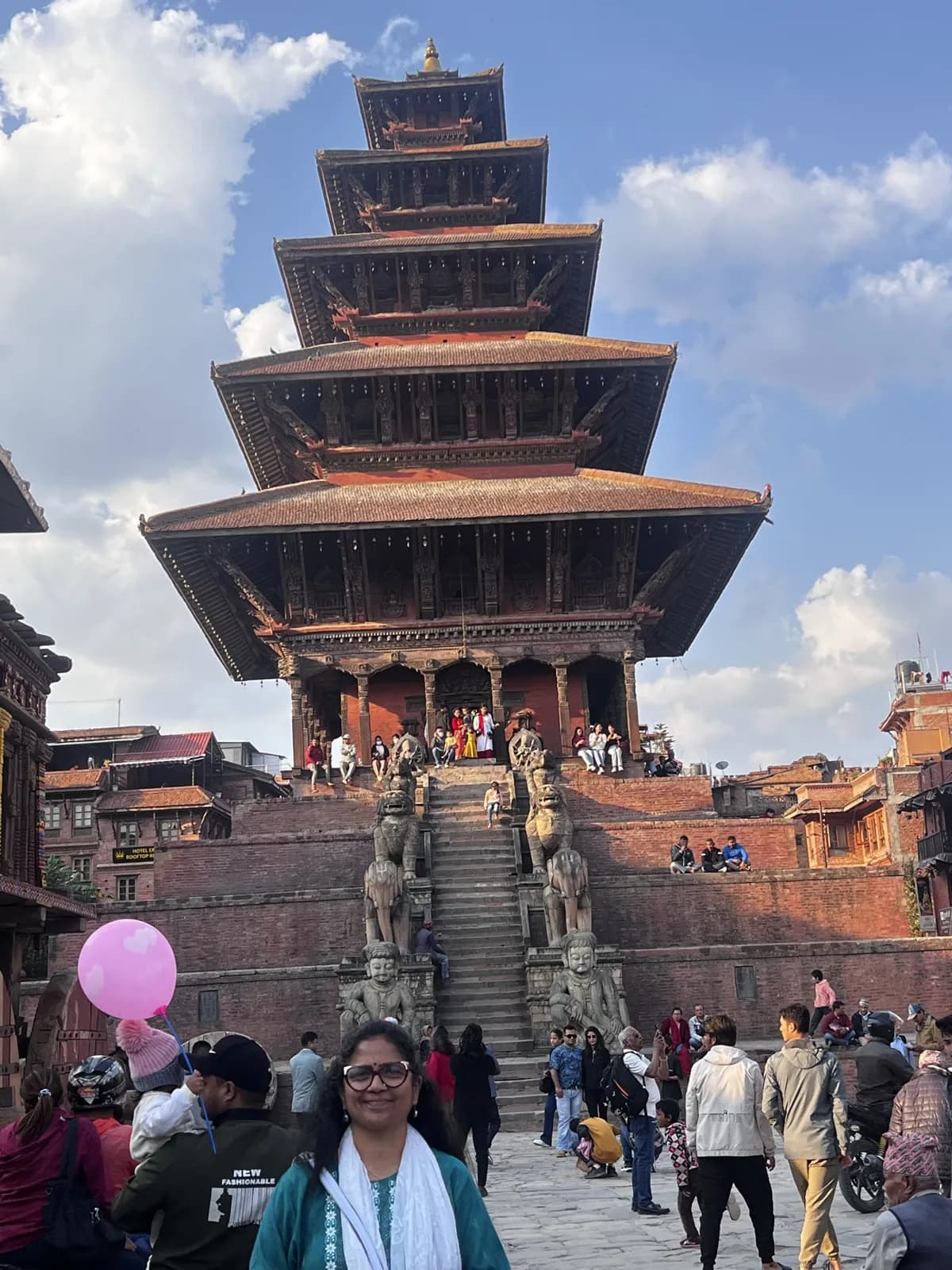
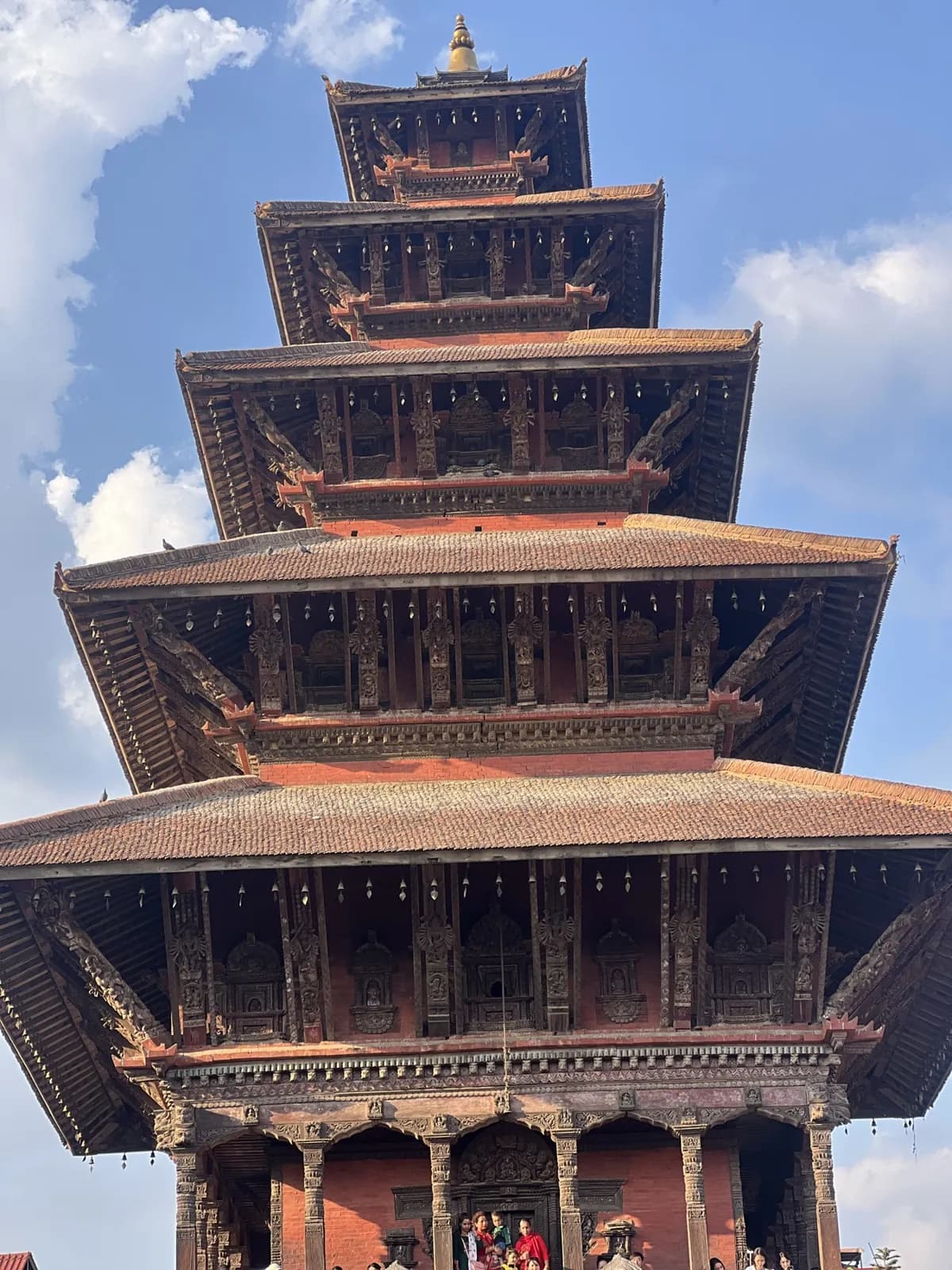
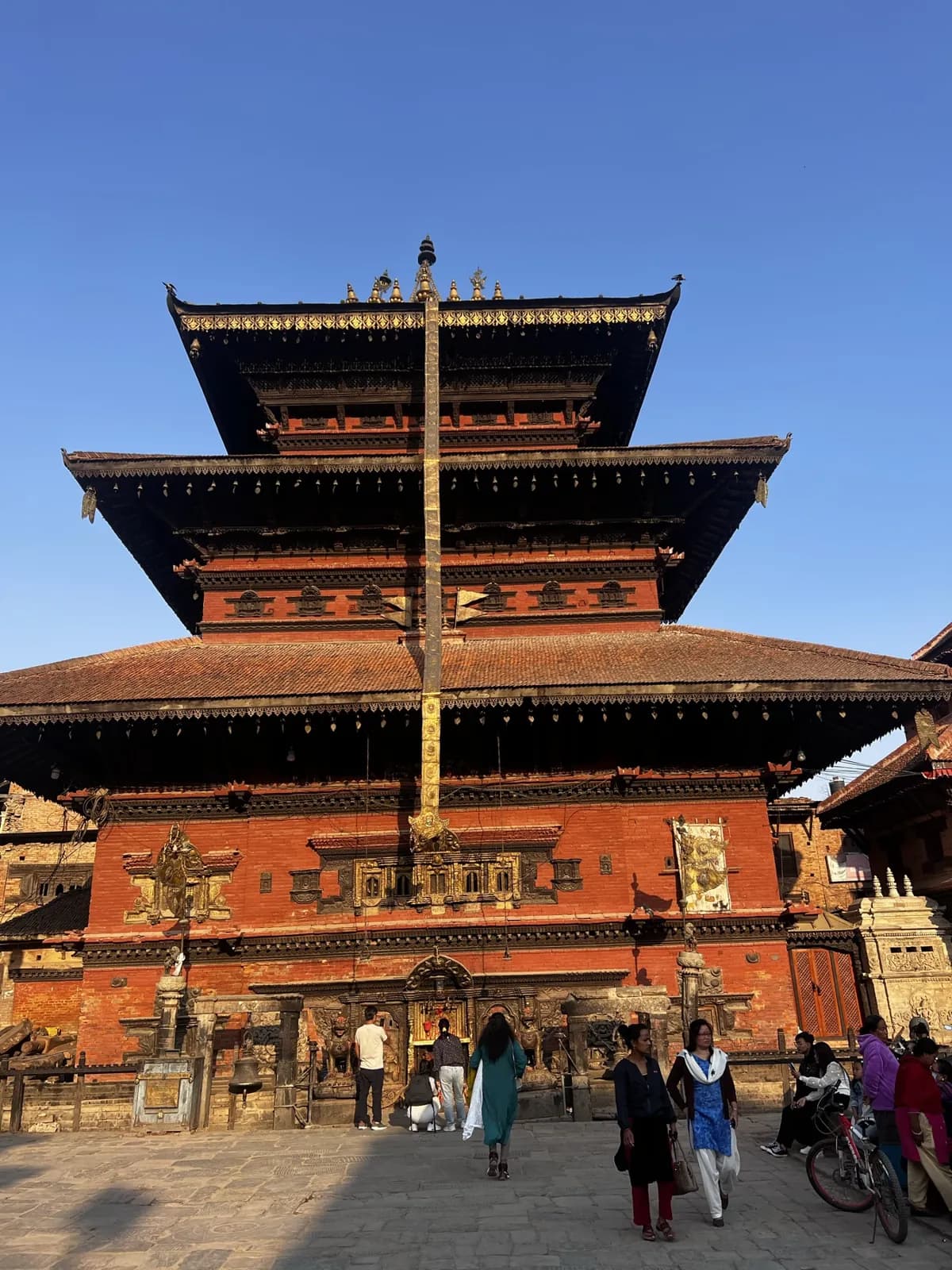
After a late breakfast and a free morning, we take you to the airport in time for your flight. If you are staying longer, we can arrange a few days in Chitwan or Pokhara, where the warm lowlands are a welcome change after the plateau.
Start date
15 Aug 2027
End date
30 Aug 2027
Available
20 left
US $2,767
Per person
Start date
18 Jul 2027
End date
2 Aug 2027
Available
20 left
US $2,767
Per person
Start date
5 Sept 2027
End date
20 Sept 2027
Available
20 left
US $2,767
Per person
One duffel and one daypack
The truck carries a duffel bag of up to 20 kg for you from Kathmandu and back. On the three kora days you carry a daypack and 10 kg goes by yak, so pack your duffel with the kora in mind: the things you need at Dirapuk should be easy to find without unpacking everything. Anything you do not need in Tibet can be left at your hotel in Kathmandu free of charge.
Two days by road to the border, a crossing that takes a morning, and permits that take two months to arrange.
Fly into Tribhuvan International Airport. Most travellers connect through Delhi, Doha, Dubai, Istanbul, Bangkok or Kuala Lumpur and arrive in the afternoon. Arrive a day early if you can. The itinerary has no spare time before the border, and luggage that arrives a day late becomes a serious problem by day three.
Timure is about 150 km away, and the drive takes most of a day. The Pasang Lhamu highway is tarmac as far as Trishuli, and after that a narrow mountain road shared with lorries, slower after rain. We stop at Timure rather than continuing to the border, to keep the driving time reasonable and to sleep lower on the first night.
Nepali exit stamps are issued on one side of the Friendship Bridge and Chinese entry on the other, and the Chinese checks are thorough. Bags are searched by hand. Books about Tibet, images of the Dalai Lama and anything the officer considers political will be confiscated and not returned. Do not bring any of these, and allow the whole morning.
The Tibet Travel Permit takes eight or nine working days and is issued only for an itinerary that has already been paid for. The group visa takes a further four days, during which the embassy holds your passport. The Kailash area permits are issued by the Ngari authorities on their own schedule, so allow two months in total.
In Nepal, a serious altitude case can be flown to Kathmandu within hours. In western Tibet, no such service is available at any price. Descent is by vehicle on the road you came in on, and the nearest suitable hospital is a day away. This is the reason for the rest day, the oxygen and the pressure chamber.
| Where | Nights | Type | Room | Bathroom |
|---|---|---|---|---|
| Kathmandu | 3 | Three-star hotel | Twin or double | Private, hot water |
| Timure | 1 | Border guesthouse | Twin | Private, hot water when the power supply allows |
| Kerung | 3 | Simple hotel | Twin | Private, hot water |
| Saga | 2 | Simple hotel | Twin | Private, intermittent hot water |
| Mansarovar and Hor Qu | 3 | Lakeside guesthouse | Shared by two to four people | Shared, outside |
| Darchen | 1 | Simple hotel | Twin | Private, hot water |
| Dirapuk and Zuthulpuk | 2 | Kora guesthouse | Shared by several people, mattress and quilt | Outside, no running water |
Tibetan bread, eggs, porridge, tsampa, and flasks of tea
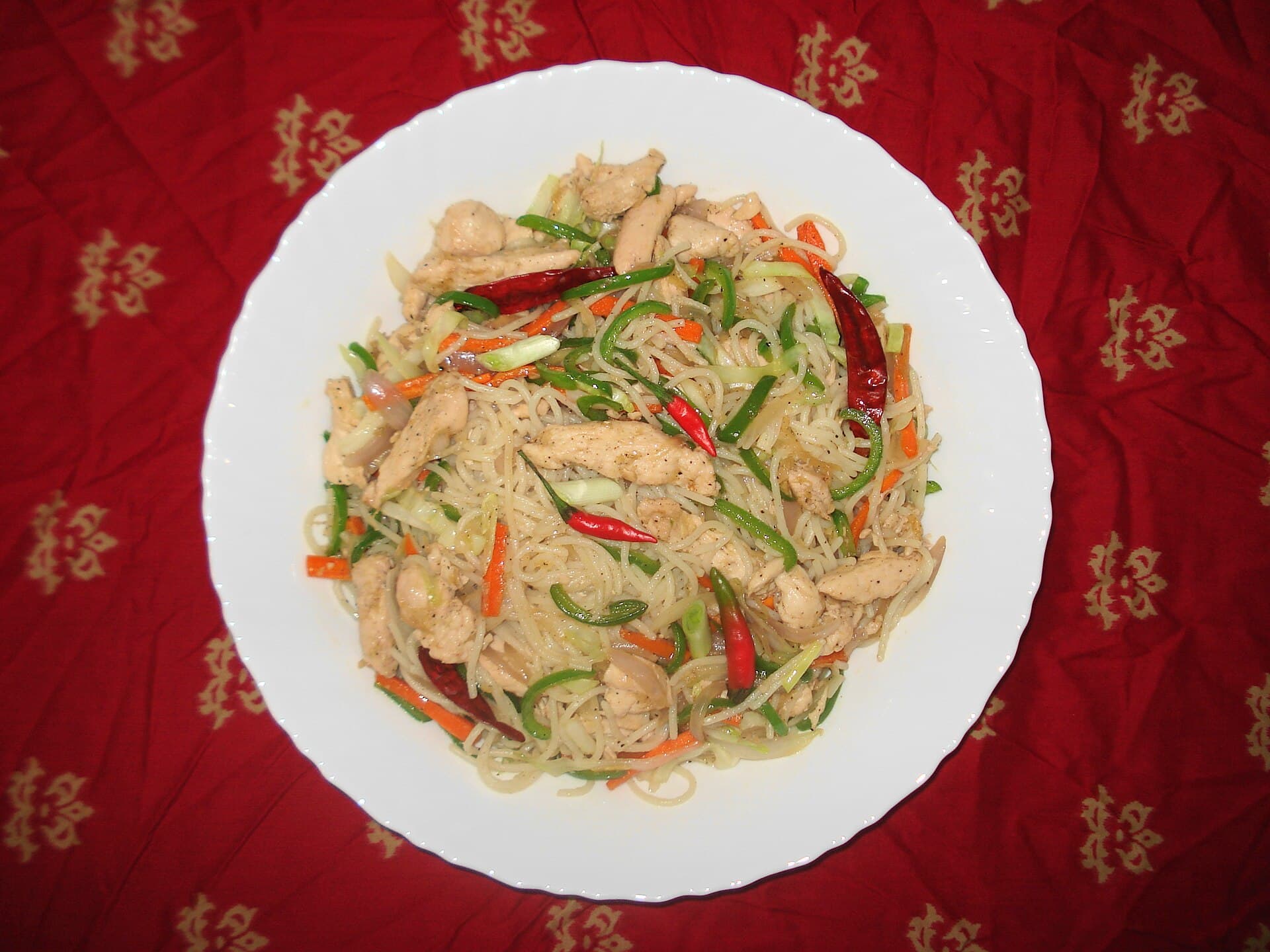
Noodle soup at a roadside restaurant, or a packed lunch where none is available

Dal bhat, momos, fried rice, vegetable curry, with soup first at altitude

Our own cook goes ahead, so hot soup is ready when you arrive at Dirapuk
5.30Tea at your door, and oxygen saturation measured and recorded
6.00Breakfast, and bags loaded onto the truck
7.00Driving or walking, depending on the day
9.00First stop, on the plateau wherever there is shelter from the wind
12.30Lunch, at a roadside restaurant or a packed lunch
15.00Arrival on driving days, and rest before the evening
17.00Second oxygen saturation check, and a walk up the slope near our accommodation
18.30Soup, then dinner
19.30Briefing on the next day: distances, timings and the weather forecast
21.00Bed. Rest is essential at this altitude
Long days in a vehicle and three days of walking, one of them demanding. No technical sections; the altitude is the main difficulty.
Written for somebody who walks a bit and does not train. If you already run or cycle regularly, start partway through. Nothing here needs a gym.
4 months before, stage 1 of 6
Walk for six hours on hills carrying a daypack. Endurance matters more than speed on this trip.
This journey spends eight days above 4,500 m and crosses 5,630 m once. This is the main difficulty of the trip. Travelling overland is the best protection available: you climb by road over six days, sleep twice at 2,800 m, and reach the plateau already partly acclimatised. Our other measures are straightforward. Your oxygen saturation is measured twice a day and recorded, so that any change is clearly visible. Oxygen and a portable pressure chamber travel with the group. The reserve day means nobody has to cross the pass on a day when they are unwell. Most importantly, we ask you to accept before you book that if the guide tells you to descend, you descend, and this decision is not open to discussion.
Gradual ascent by road
Six days from 1,400 m to 4,640 m, rather than ninety minutes to 3,656 m by air.
Two nights at Kerung
At 2,800 m, with a walk higher and a return to sleep lower, before the plateau.
Daily health checks
Oxygen saturation is measured and recorded morning and evening from Kerung onwards, so that any decline over several days is visible.
Oxygen and pressure chamber
Carried in the truck for treatment and descent, not to allow someone who is unwell to continue.
The guide's decision is final
If you are told to descend, you descend. There is no helicopter rescue here to provide another option.
Fitness and altitude are unrelated
This is the thing people get wrong most often. Training makes the walking easier and does nothing for how your body handles thin air. Strong young trekkers get altitude sickness and unfit older ones frequently do not. Go up slowly, and say something the first time your head hurts.
The season runs from May to September. The route is closed for the rest of the year, for two different reasons.
Warm and settled, and the busiest weeks of the year around Saga Dawa.
Averages for the Ngari prefecture. The season shuts at both ends for different reasons: snow on the Dolma La, and an administrative closure of the region in March.
A Nepali leader travels with you from Kathmandu and back, and a licensed Tibetan guide joins at Kerung and, as required by law, stays with the group for the whole time it is in the region. On the kora, a cook and kitchen crew go ahead to the guesthouses so that hot food is ready at Dirapuk.
Land Cruisers carry four people per vehicle, and a truck follows with the baggage, food, fuel, oxygen and pressure chamber. The drivers are Tibetan and have driven this road for many years. They are also the people who will take you down quickly if needed.
Loads on the kora are carried by yaks, arranged through the Darchen yak and horse association, which shares the work among local families in turn. Your 10 kg allowance travels with them. If you want a riding horse and handler, we book it at Darchen the evening before, and the payment goes to the same families.
Tips are customary and not included. About $120 to $180 per traveller covers the guide, the drivers and the kora crew on a trip of this length. We collect tips at the end and hand them over together, and we will tell you what a fair amount is.
Most people on the path are walking it for religious reasons. Walk clockwise, as Hindus, Buddhists and Jains do, unless you follow Bon. Ask before photographing anyone, and respect a refusal. At Shiva Tsal, where pilgrims leave clothing and hair, leave the ground as you found it.
We carry out everything we bring. There is no waste collection on the kora, and anything left at 5,000 m remains for years. Our crew carries out our rubbish and usually a good deal of other people's as well. Bring a refillable bottle rather than bottled water, and take your used batteries home.
Never use soap, shampoo or detergent in the lake, including biodegradable products. If you bathe, do so as pilgrims do and wash elsewhere afterwards. For the people who live beside it, the lake is a source of drinking water, a sacred site and an ecosystem.
Less of your money stays in Nepal than on our other trips. Tibetan permits, vehicles, guides and accommodation are paid in China at rates set there. In Nepal, we employ our own leader, use hotels in Kathmandu and Timure, and employ the kitchen crew, all paid at our usual rates.
No Tibetan permits can be applied for until the itinerary is booked and paid for. We take a deposit and apply for everything, and your place is confirmed once the permits are issued. If the permits are not issued, we refund your payment.
A clear scan of your passport at least eight weeks before departure, valid for six months beyond the trip and with two blank pages. Four passport photographs. Your occupation, as you would write it on any official form, and details of any medication you take. Journalists, diplomats and photographers should contact us before booking.
At least five travellers must be on one visa, entering and leaving China together. If there are two of you, we will place you on a scheduled departure with other travellers, which is usually easy to arrange in the season. A private overland trip for fewer than five people is not possible.
We refund everything you have paid us. Refusals are rare, are made without explanation and are not your responsibility, so we do not keep a deposit in these cases.
Priced per person, arranged before you travel, and none of them included in the price above.
By custom, only for pilgrims who have already completed thirteen koras. We arrange it for those who have.
Fly from Ngari Gunsa to Lhasa and on to Kathmandu, instead of driving back.
The full moon festival at Tarboche, and the busiest days of the year on the kora.
Jungle and a warm climate at 150 m, which is a welcome change after the plateau.
Available in Kathmandu, Kerung, Saga and Darchen. Not available on the kora.
The overland route is the slowest and has the most gradual ascent. The other routes take fewer days and cost more, in return for comfort or speed.
3 versions of this journey. They use the same guides and the same lodges; what changes is the length, the comfort and how much of it you walk.
September 2023, Tripadvisor
Was acquainted with Rajan ji by a close friend. He was very professional and knowledgeable during our numerous conversations, patiently answering all my trip related queries. He equipped us with all the pre-trip requirements and essentials. i.e admin, packing list and acclimatization and fitness regime. Rajan ji personally came to the airport and fetched us. Was a warm and personal touch on his part. That made us so welcomed and reassuring. The 16 day trip was well planned and executed. Rajan's team took very good care of us and kept an eye on our every move to ensure we're in good health and ready to push on to greater heights! (5800m) Special THANKS to Arjun ji, dendi ji and the chef team for the hard work and dedication to ensure the trip was smooth sailing. KUDOS TO RAJAN JI AND TEAM! Well done. Wishing you the very best and ill definitely link you up with my buddies. Cheers!!!
March 2017, Tripadvisor
It can be very difficult to choose between lot of trekking companies in Nepal and choice of going with a non-local European Company. I am very happy with the choice I made of going with Earthbound Expeditions, keeping it local to add more to the local economy. Rajan is the most professional, friendly business owner I have ever met. Bishal Rai (my guide) were experienced and informative, clearly having excellent knowledge of all the issues regarding trekking in Nepal, as well as having excellent communication skills and being very conscious of safety and low impact on the environment. Above all they were friendly, flexible to my travel needs and very accommodating. I received everything promised and was very happy with my accommodations that were better than expected and I can highly recommend them.
April 2017, Tripadvisor
This amazing and much awaited trip began with the meticulous and efficient planning by Rajan! I was thoroughly impressed with his prompt and timely response to all my request and changes. Even before the trip began, I knew I was in good hands and will enjoy this much desired birthday gift to Nepal! From the first impression at the airport till the last moments, Rajan and his team went the extra miles. The tour around Kathmandu was excellent with the services of Arjun, our guide. The days that followed where we visited Pokhara, Nagarkot and Bhakhtipur were seamlessly planned and detailed attention was given to all our needs. His recommendation of the Heritage Hotel was remarkable! We simply loved the authenticity and service delivery of the hotel! The hotel itself was a destination and attraction! The cultural dance experience at our dinner in Kathmandu with Rajan's lively and entertaining company was so memorable. After having rendered such remarkable service, Rajan's final touch of presenting his hand picked flowers from his garden as a birthday bouquet to me was just so unforgettable! And his parting gifts to my family will also remain close to our hearts! I am so glad that i chose my special vacation with Earthbound and I am looking forward to many more trips in Nepal with them. Surely, I will be sending many more of my friends to them! Kudos to the team at Earthbound! Thanks Badri..i wouldn't have experienced this if not for you!
December 2016, Tripadvisor
During December 2016 / January 2017, my mother and I did an incredible camping trek: the Ganesh Himal Charity Trek, booked with Earthbound Expeditions in Kathmandu. This was our second trek with booked with the company, after the very good experiences we had the first time. The trek through the Ganesh Himal area is something I highly recommend doing due to its adventurous character and the camping on high altitudes. We passed through villages only on the first and last day of the trek, camping close to the homes of locals who do as much as possible to deliver you a memorable stay. We never encountered more hospitable people than the Nepalese. However, camping in nature, at high altitudes with incredible views of the Himalayan peaks was absolutely an unforgettable experience. The nights were so cold that the tents were frozen from the outside when we woke up in the morning. This was no problem because hot tea and hot water for washing were immediately served after waking up. Do not think that this will be your only cup of tea for the day or that you will have to survive on simple breakfast, lunch and dinner. The food was really of high quality, better than we are used to at home. Cook Kadji was doing the best he could to serve us delicious and varied food during the trek. All the food, cooking utensils and camping equipment (with a toilet / shower tent included) was carried by the porters, who are as well responsible for our wonderful time in the mountains. It took time to get used to 7 porters carrying all the heavy stuff for you. Especially because we are used to carrying our own stuff as lightweight as possible. Then again, it is a charity trekking and this way they earn some money for them and their families. It was also nice to have some company to talk to and they were amazing at building fires when the sun set and the temperatures dropped rapidly. The highlights of the trek were Sing-La Pass and Sing-La Top. From here we had amazing views on the Annapurna massif, Manaslu, Ganesh Himal and Langtang Lirung. Where we had to share the view with hundreds of other travelers on Poon Hill, we were the only ones on Sing-La Top. Our trek ended in the beautiful and tranquil village Darkha, in the Dhading District, where we stayed for three more nights in the homestay of our guide and friend Gopal. This was a warm and happy reunion of me and my Nepalese family with whom I got so close in less than two weeks in April / May 2015.
Answers to the 24 questions travellers ask us most often. If your question is not here, contact us and we will answer it.
Mainly for acclimatisation, and also for cost. Flying to Lhasa takes you to 3,656 m in ninety minutes. Driving from Kathmandu takes you to 1,900 m on the first night and 2,800 m on the second and third, and reaches 4,640 m only on the sixth day. This gradual profile is much better for your body. It is also less expensive, because you do not need a one-way international flight.
We offer four routes to Kailash. This one travels by road in both directions and is the slowest, with the most gradual ascent. The route via Lhasa flies in and drives out, and includes the monasteries of the Tibetan capital. The route via Beijing travels through China with time in cities at each end and is the most expensive. The Express uses Simikot and a helicopter; it is the shortest route and the most demanding for acclimatisation.
Two of the sixteen days involve very little travel: the rest day at Kerung and the reserve day after the kora. Both are there to protect your health at altitude. Sixteen days is the time needed for an overland Kailash journey without rushing the ascent.
The kora takes three days and covers 53 km in total, on paths with no climbing. The second day is the most demanding: nine to ten hours, twenty-two kilometres, over the Dolma La at 5,630 m. Nobody finds it easy. Fit walkers who have acclimatised well complete it; those who arrive tired and dehydrated often do not.
On the first and third days, yes. A horse with a handler is arranged at Darchen for about $180 to $260. On the pass day, a horse can carry you only part of the way, because the ground above Shiva Tsal is loose and steep and everyone walks the final section. Book the evening before, not on the morning.
You return the way you came to Darchen with a crew member and wait for the group, which usually means one extra night. Nobody is carried over the Dolma La. Turning back on the first day is straightforward, but turning back on the pass day is not, which is why the decision is made at Dirapuk in the morning rather than partway up.
Four permits, none of which can be obtained individually: a Tibet Travel Permit from the Tourism Bureau, an Alien's Travel Permit, a military permit and a foreign affairs permit, all arranged by us once the itinerary is paid. In addition, you need the Chinese group visa issued in Kathmandu. We ask for passport scans at least eight weeks before departure.
The Kathmandu group visa is issued to a group rather than an individual, and the embassy will not issue one to fewer than five travellers. Everyone on it must enter and leave China together, at the same crossing, on the same itinerary. This is the most common reason that small private Kailash trips cannot go ahead.
Not for entering Tibet from Nepal. The embassy in Kathmandu issues a separate group visa on a separate sheet, and obtaining it usually cancels the tourist visa already in your passport. If you hold one and want to keep it, tell us before you book so that we can discuss a route through China instead.
The highest point is the Dolma La at 5,630 m, crossed on the tenth day. The highest place you sleep is Dirapuk at 4,900 m. From Kathmandu at 1,400 m the ascent is spread over nine days, with a rest day at Kerung and a long, gradual climb by road, which is as gradual as any route to Kailash.
No. There is no helicopter evacuation in the Ngari region of Tibet, and this is the main difference between this trip and a trek in Nepal. Anyone who needs to descend does so by vehicle on the road, and the nearest well-equipped hospital is a long way away. This is why we carry oxygen and a pressure chamber, and why the rest day is compulsory.
Many pilgrims take it and it helps, but you should discuss it with your own doctor. It does not replace the measures that work: gaining height slowly, drinking more than you feel you need, eating even when you have no appetite, and telling your guide immediately if you feel unwell, not at dinner.
From May to September only. The Dolma La has snow into May and closes again in October, the kora guesthouses close for the winter, and Tibet usually closes to foreign visitors for the whole of March. June to September is the most settled period, and September is our recommended month for clear air and smaller crowds.
Saga Dawa is the full moon of the fourth Tibetan month, when the flagpole at Tarboche is lowered and raised again and thousands of pilgrims walk the kora together. It is a remarkable occasion, but it is crowded, beds are scarce, and the plateau is at its busiest. Decide in advance whether you want the festival or a quieter visit.
Hotels in Kathmandu, Kerung, Saga and Darchen, which are simple but heated and usually have hot water. The two nights on the kora, at Dirapuk and Zuthulpuk, are in guesthouses with shared rooms, a mattress and quilt, no heating and an outside toilet. They are very basic, and there is no alternative accommodation.
Vegetarian throughout, by custom rather than by rule, and of good quality. Nepali dal bhat on both sides of the border, Tibetan noodle soup and momos, and Chinese vegetable dishes and rice in the towns. We bring our own cook and supplies for the plateau, because little food is available in Saga at short notice.
No. Pilgrims bathe briefly as a ritual. The water is only a few degrees above freezing at 4,590 m, so full immersion is a real shock to a body already under strain at altitude. Follow the example of the pilgrims around you: bathe quickly and respectfully, and have dry clothes ready.
The Tibetan side is mostly good tarmac and covers long distances, so the long days are tiring but not rough. The Nepali side, between Kathmandu and the border, is rough, and after a heavy monsoon it can be very rough. Bring medication for motion sickness if you need it.
Wind protection above all. The plateau is dry and open and the wind is constant, so a windproof shell, a buff and good lip protection are more important than an extra fleece. You also need a four-season sleeping bag for the kora guesthouses, and much more sun cream than the temperatures suggest.
In the hotels, yes, with a Chinese plug adaptor. On the kora, no. Dirapuk and Zuthulpuk have no reliable power, so bring a battery pack and keep it warm inside your jacket, because the cold drains batteries quickly.
Your Nepali SIM card stops working at the border. Chinese SIM cards work in the towns but not on the kora, and many common Western apps are blocked in China unless you arrange access before you arrive. Most travellers spend the eight days on the plateau largely offline.
Rasuwagadhi has closed in the past because of landslides, festivals and politics, sometimes without notice. If it closes before departure, we move you to the Lhasa route where seats are available, or refund you in full. If it closes while we are in Tibet, we leave through the other crossing at our own cost.
We refund your payment. Permits are occasionally refused without explanation, and journalists and people with certain stamps in their passports are refused more often. We do not keep deposits when a refusal is not your responsibility.
At least two months ahead, and three for the June and Saga Dawa departures. The Tibet Travel Permit alone takes eight or nine working days once the itinerary is paid for, the group visa another four, and every Kailash group in Nepal applies to the same office during the same short season.
Didn't find what you were looking for?
Search every word on this page, or ask somebody who has walked the route.
16 days
$2,767 per person