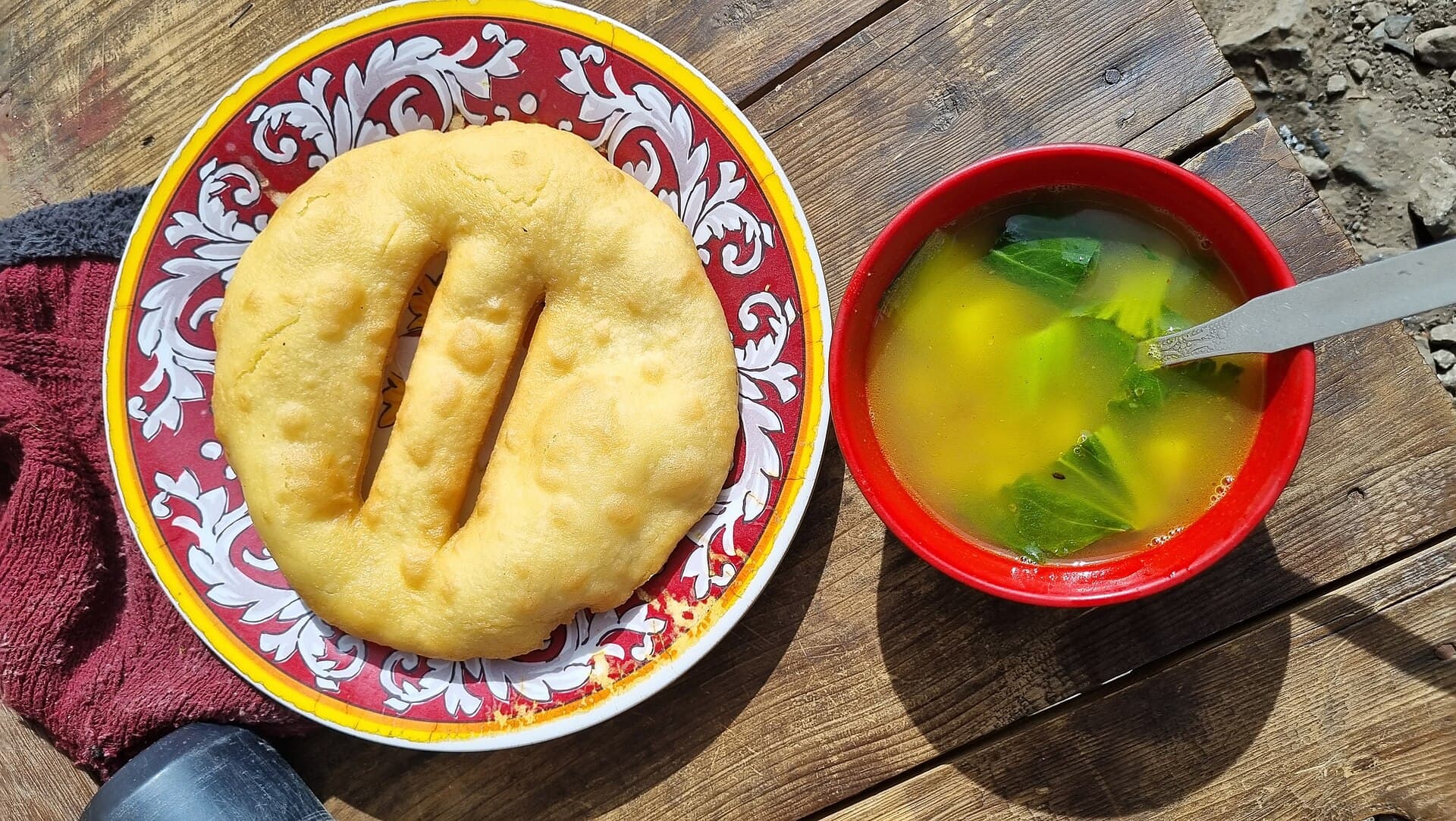
Breakfast
Porridge, Tibetan bread, eggs, chapati, pancakes, tea or coffee
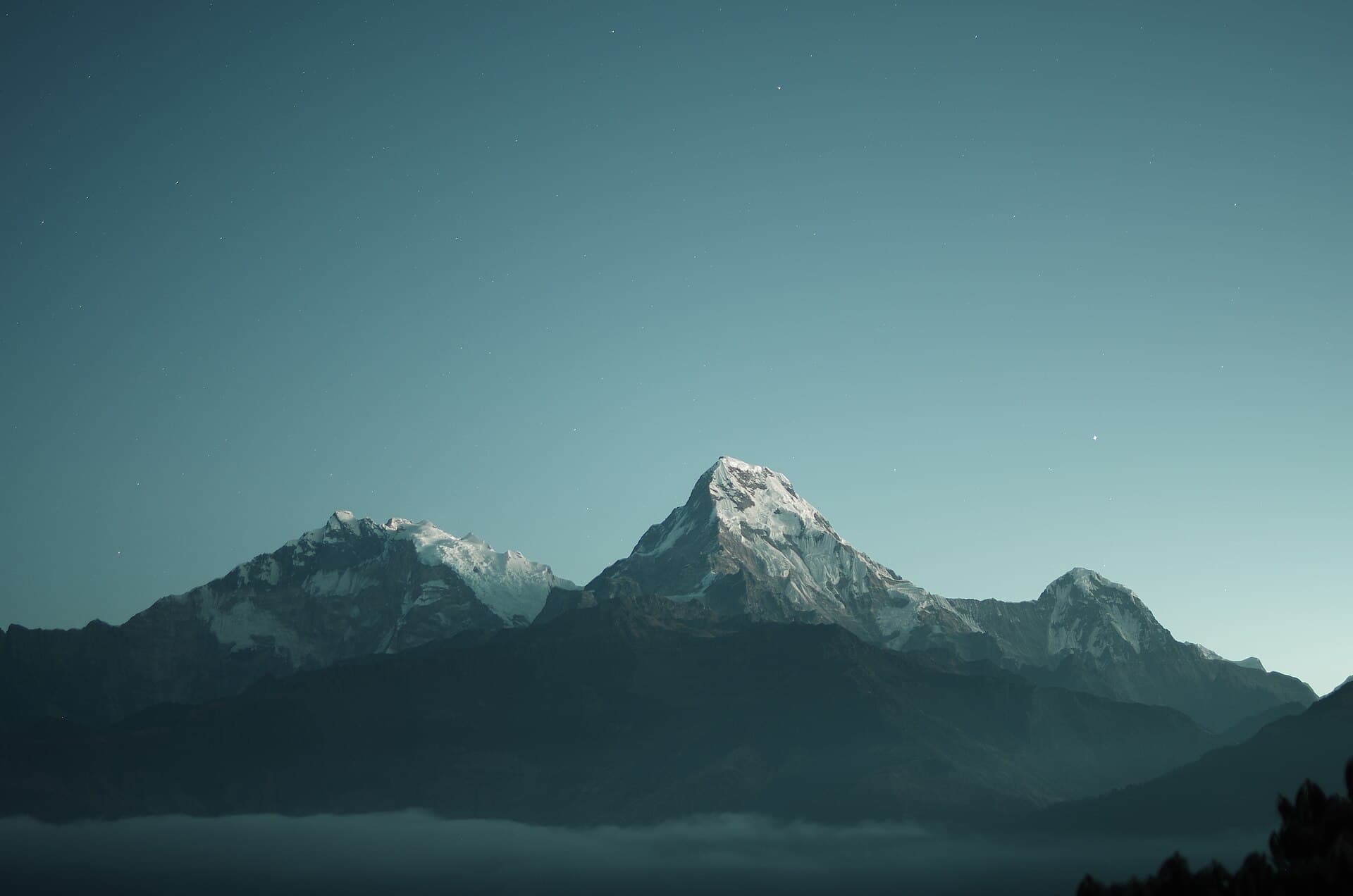
A classic teahouse trek over the Thorong La pass, through landscapes ranging from subtropical valleys to high desert.
A classic teahouse trek over the Thorong La pass, through landscapes ranging from subtropical valleys to high desert.
This is a traverse rather than a return trek, which defines its character. You walk up the Marsyangdi valley on the wet, green, Hindu side of the Himalaya, cross a pass at 5,416 m, and descend the Kali Gandaki valley into high desert on the dry, Tibetan Buddhist side. Over seven walking days the vegetation, architecture, people and religion all change completely. No other trek in Nepal offers this, and it is why the circuit was one of the best-known treks in the world for thirty years.
Trekkers who want variety rather than a single mountain destination. Most days are moderate, four to six hours on good trails, but there is one very long day: you get up at three in the morning, climb for four to five hours to the pass, and descend for three to four hours on the other side. If you can manage one very long day at altitude, the rest of the trek is comfortable. If an eight to nine hour day at 5,400 m concerns you, Annapurna Base Camp is a better choice.
A jeep track now runs from Besisahar to Manang, and another from Muktinath down to Jomsom and Beni. Some trekkers who walked the circuit before the roads were built consider it spoiled. In fact it is now shorter. The four days that were spent walking along the road are now driven, which is why this itinerary takes fourteen days rather than twenty-one. The most important section, from Manang over the Thorong La to Muktinath, has no road and never will. We drive the jeep tracks and walk the NATT trails, marked alternative paths that keep you off the jeep road for most of the remaining route.
Manang, at 3,540 m, is where you acclimatise for a pass that is nearly two kilometres higher. The Himalayan Rescue Association aid post in the village, run by volunteer doctors, gives a free altitude talk every afternoon during the season, and every group attends. Some itineraries skip this day and cost less. The Thorong La is the most common place in Nepal for trekkers to develop serious altitude sickness, and this day is the main reason our groups generally avoid it.
We meet you at the airport and take you to your hotel. The evening is free for you to rest, and we meet to brief you on the days ahead.
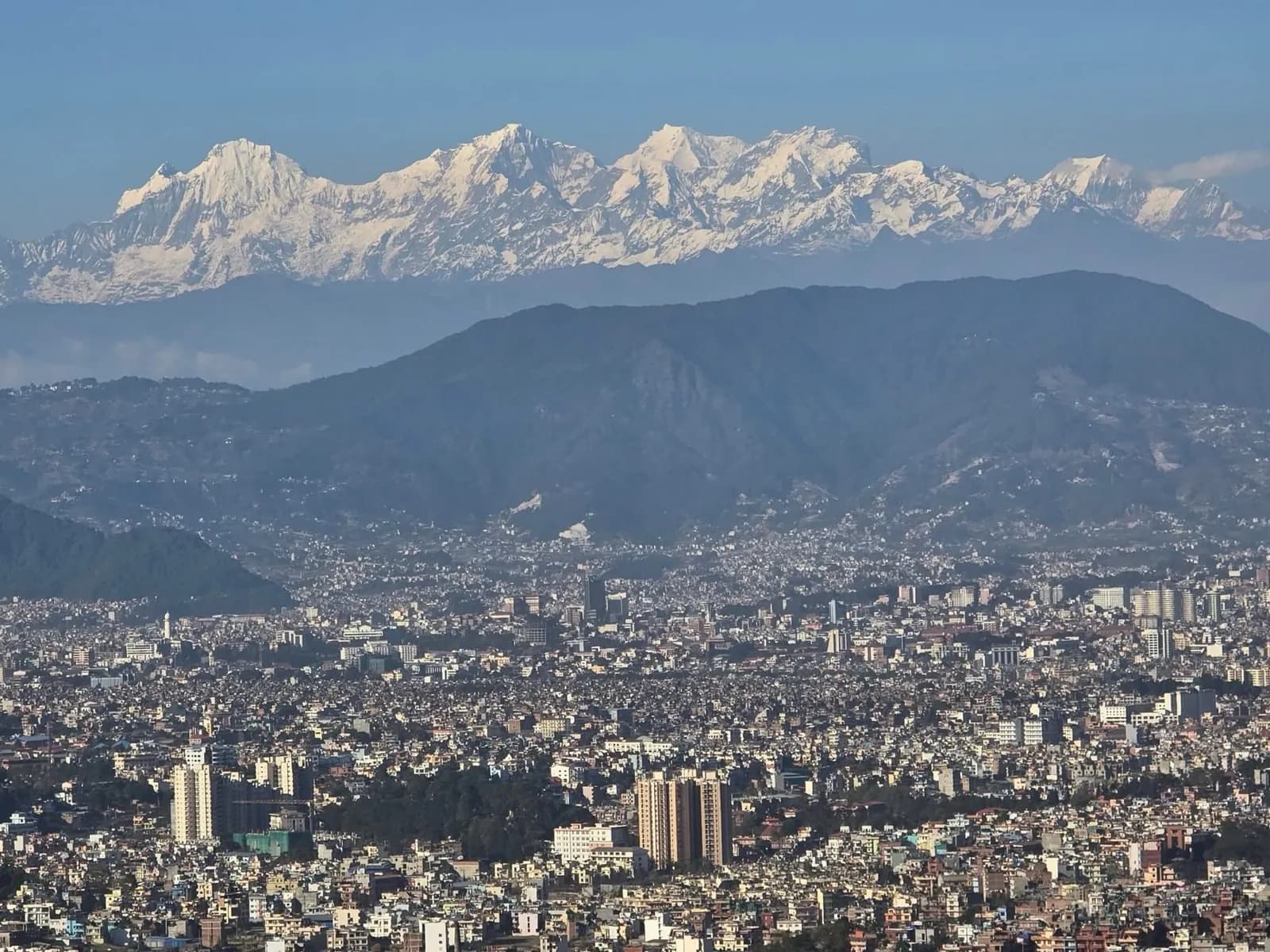
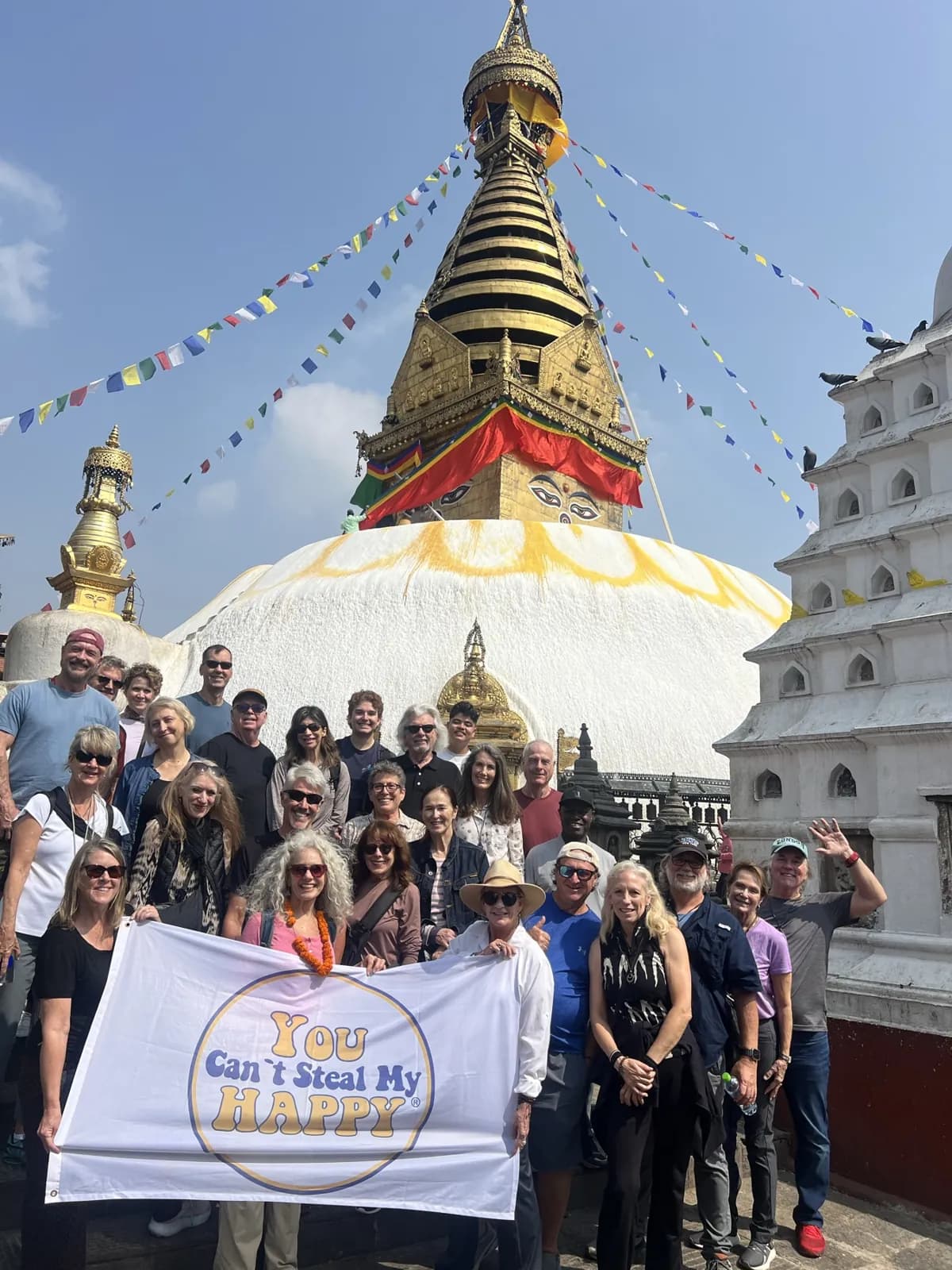
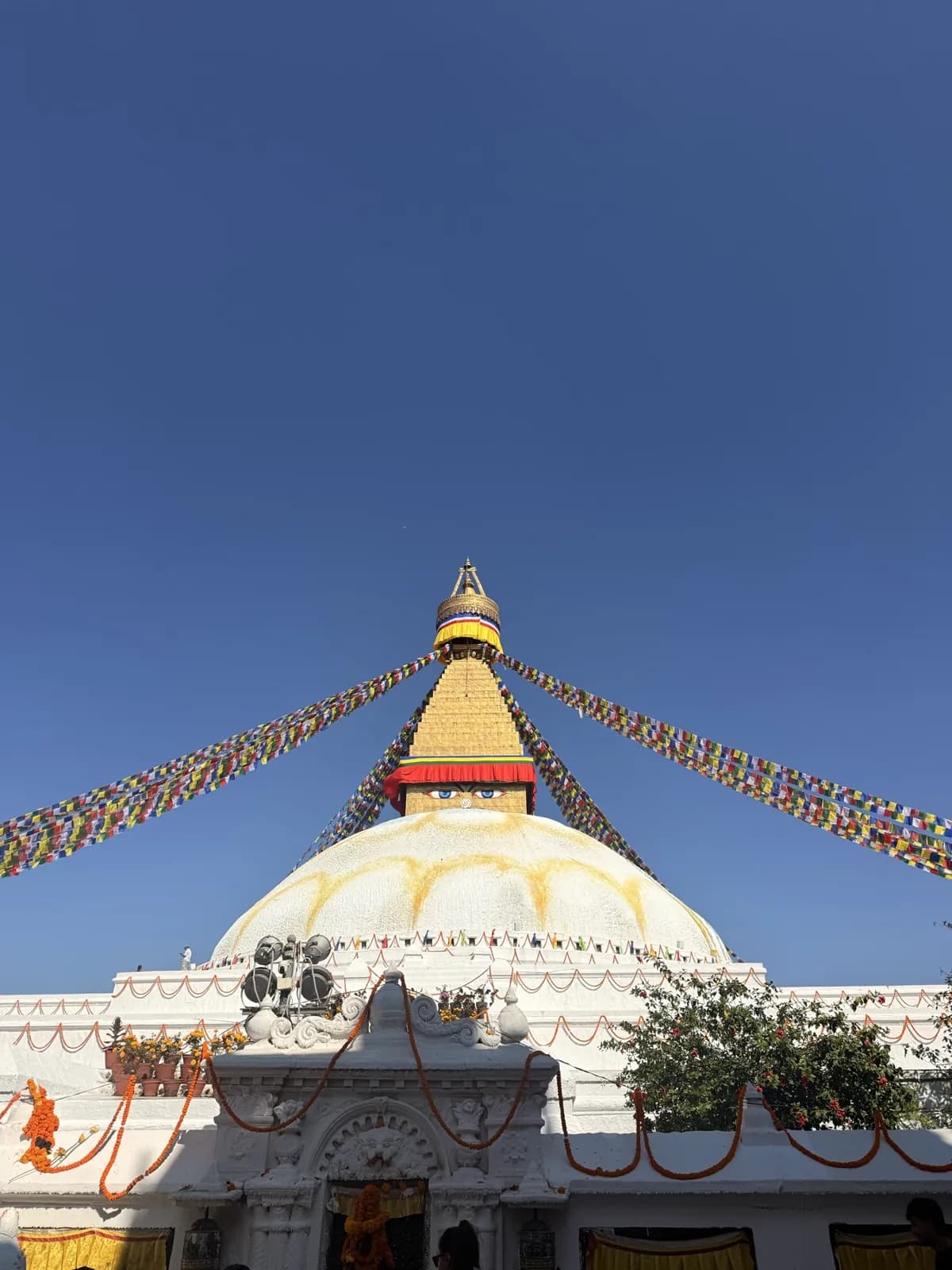
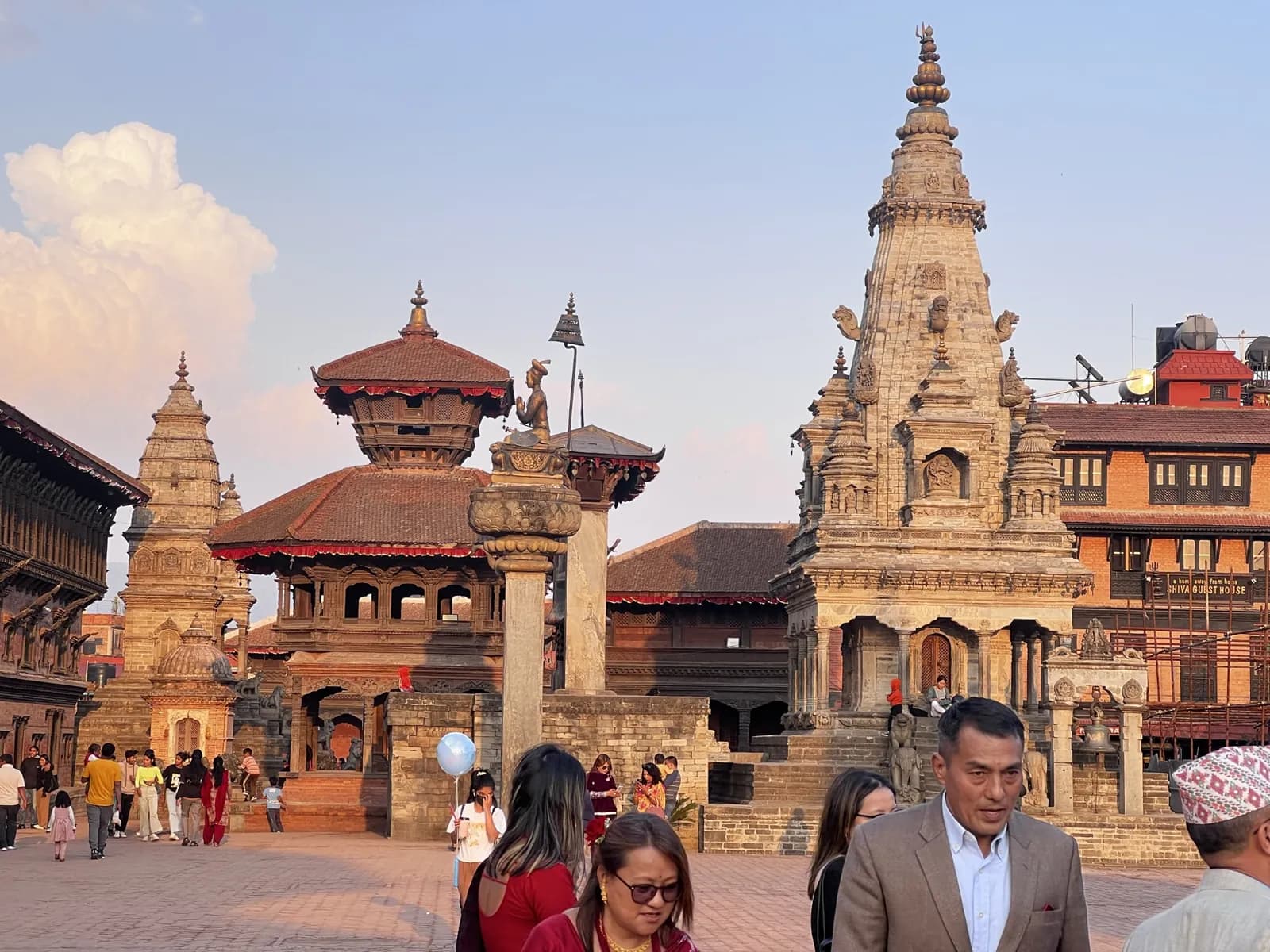
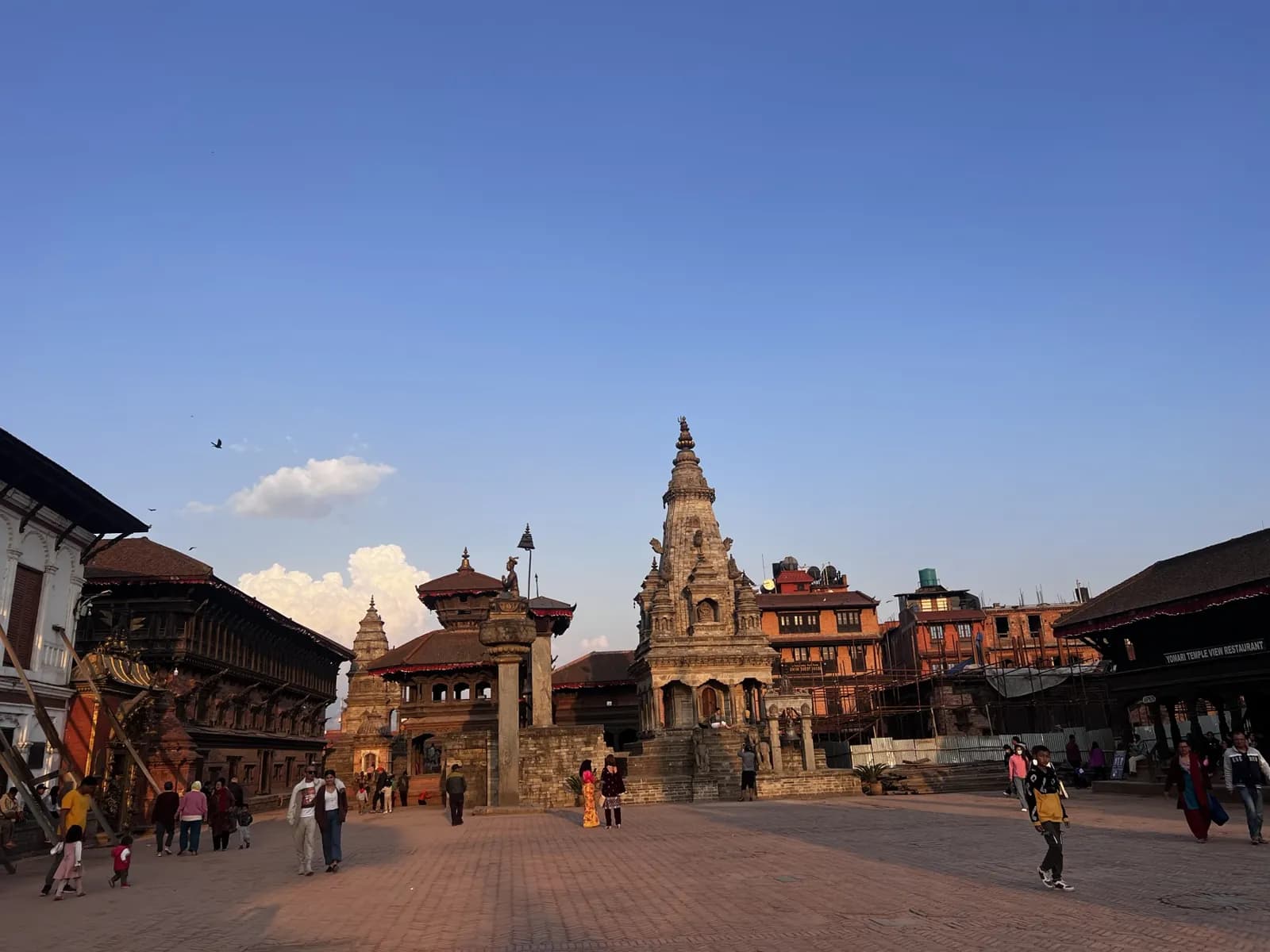
An easy day around the old city: Swayambhunath (the Monkey Temple) on its hill, the great stupa at Boudhanath, and the carved squares of Patan. A gentle start before the mountains.
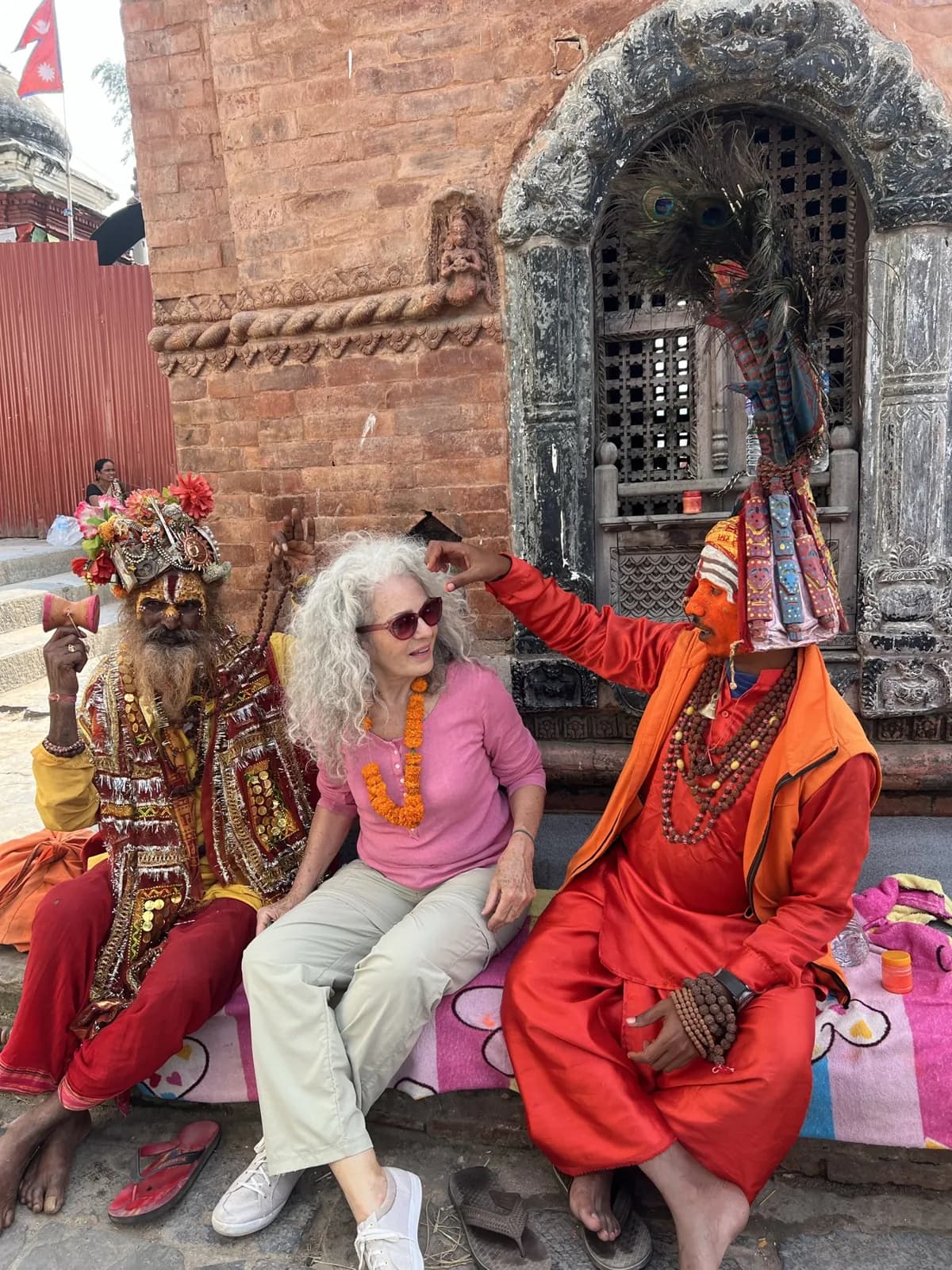
We leave Kathmandu and drive west into the hills, past rivers and terraced farms, to the small town of Besisahar, where the circuit begins.
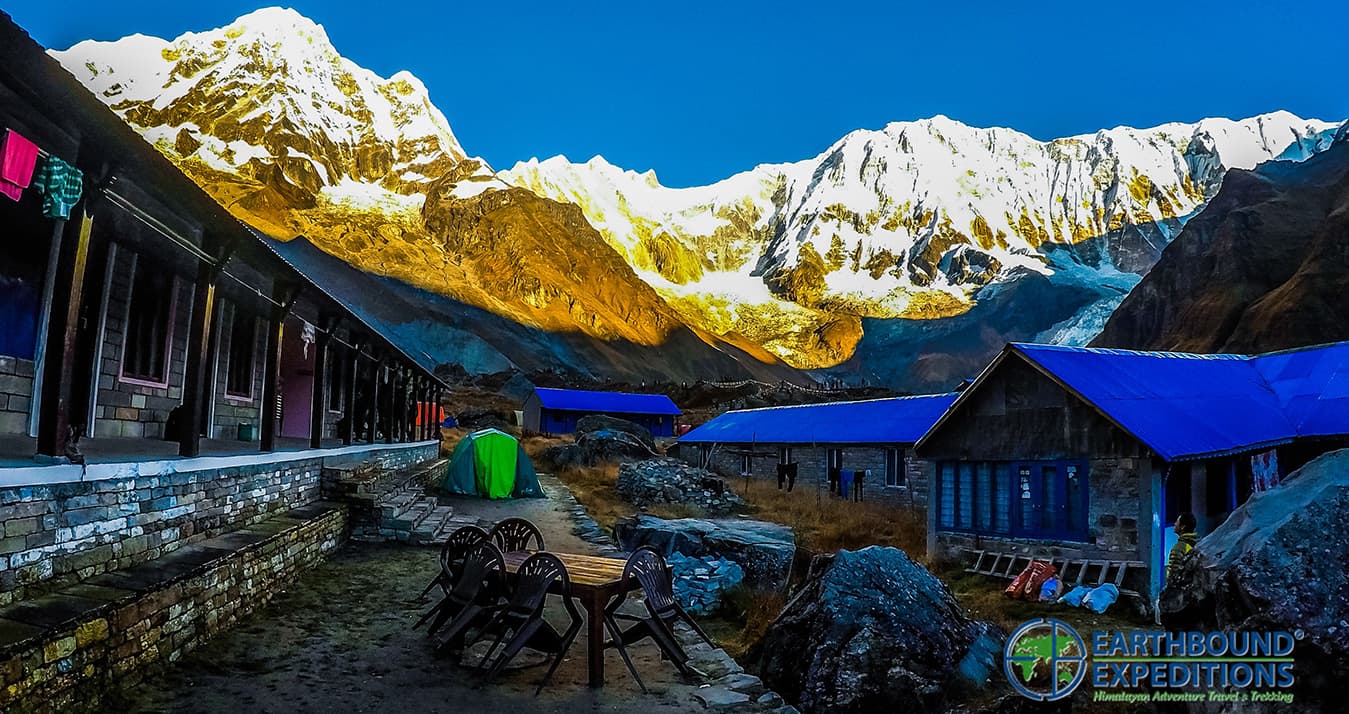
A rougher jeep road climbs north beside the Marshyangdi river to Chame, the main village of the district, with the first close view of Annapurna II above the pine forest.
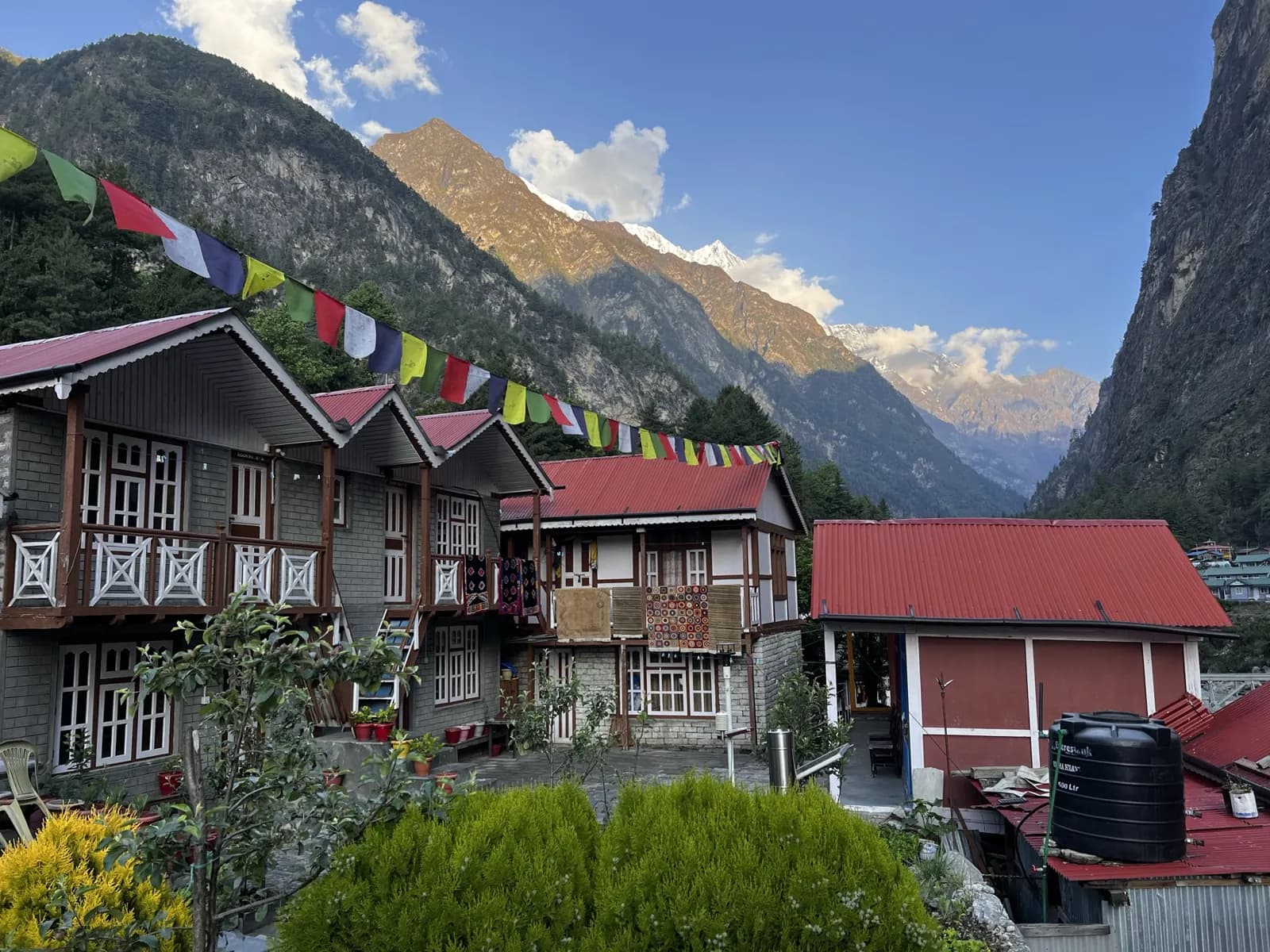
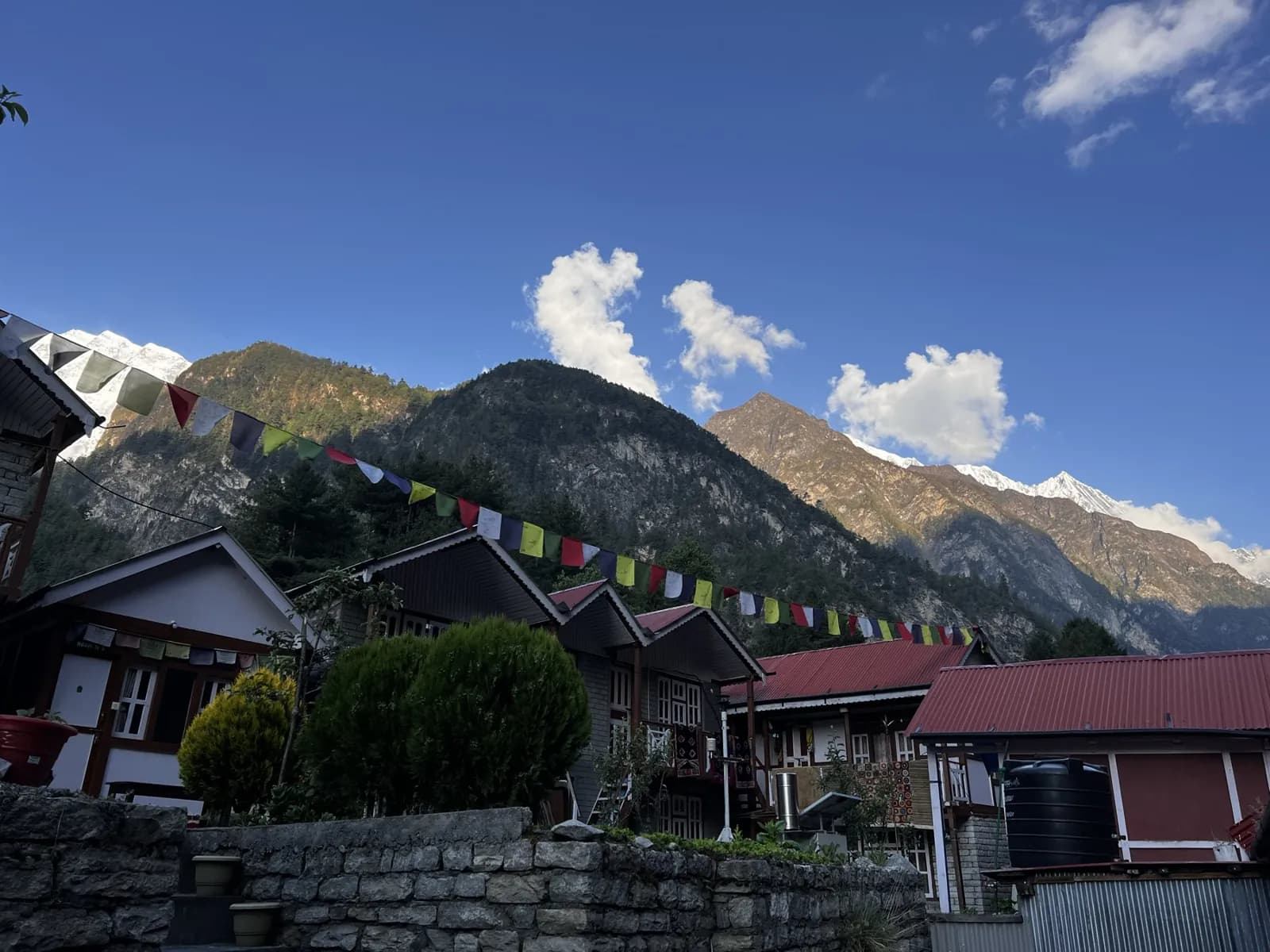
The first day of walking. A steady climb through forest past Bhratang and the great curved rock face, before the valley opens out at Pisang, with its peak rising behind the village.
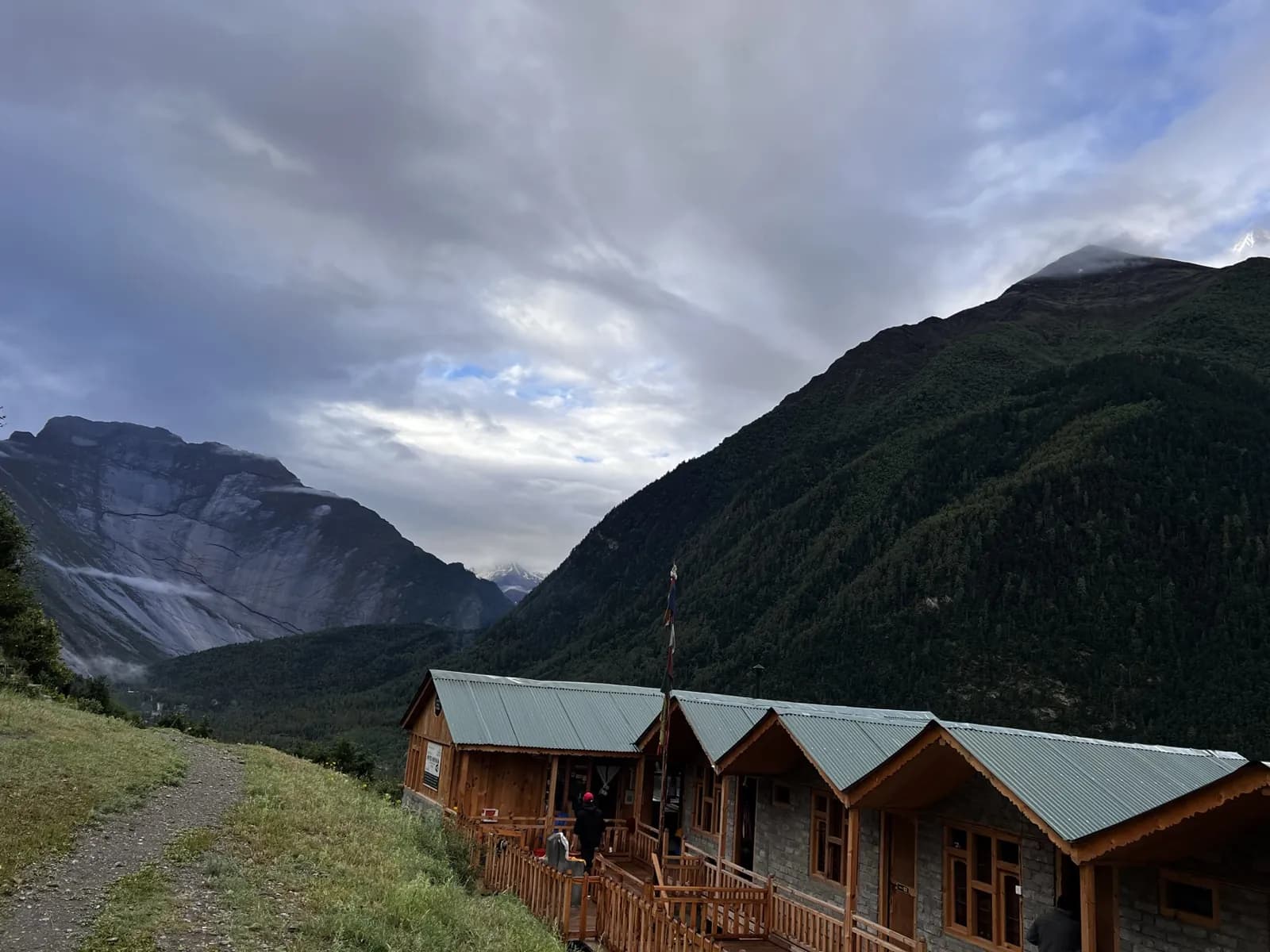
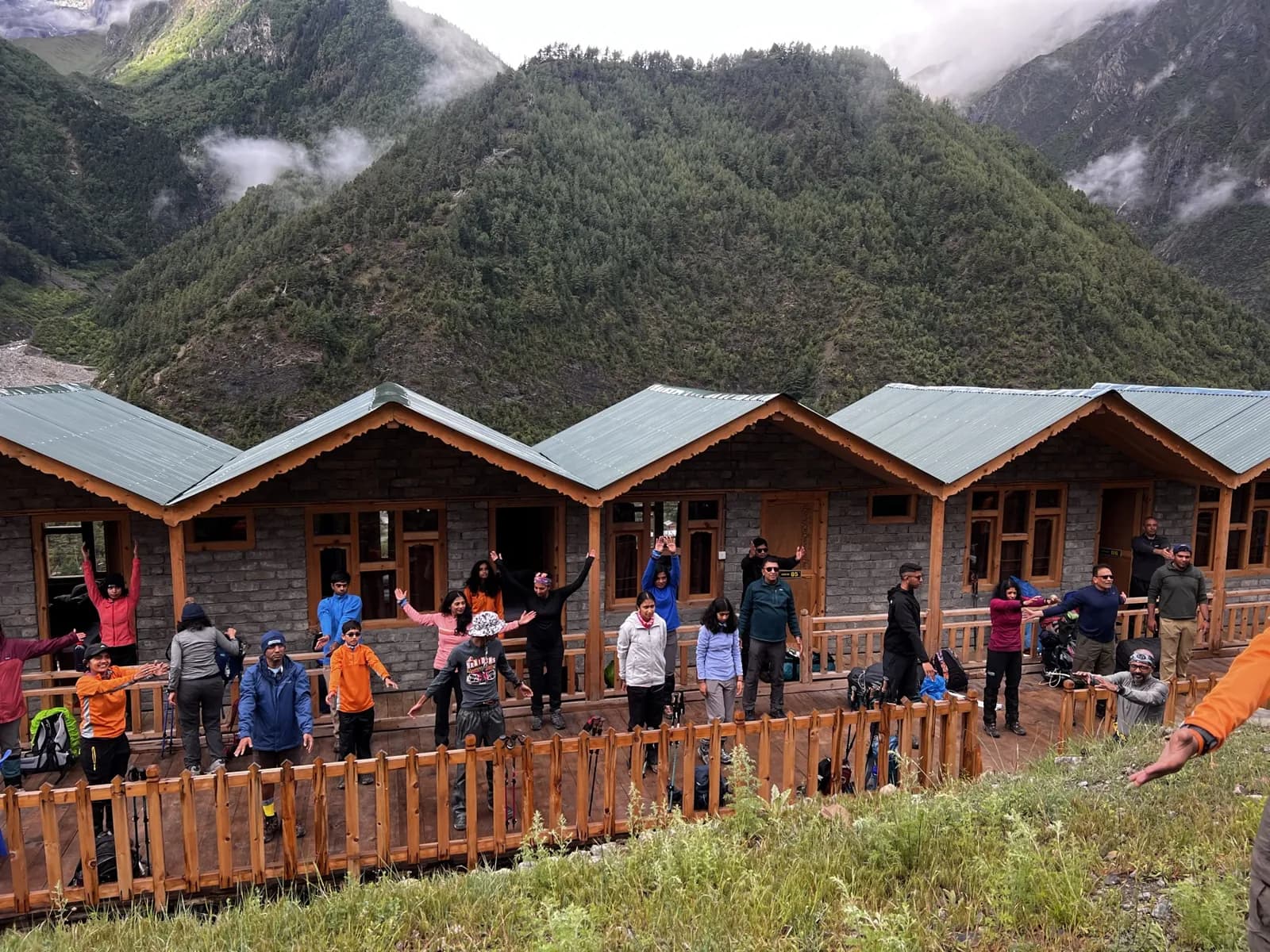
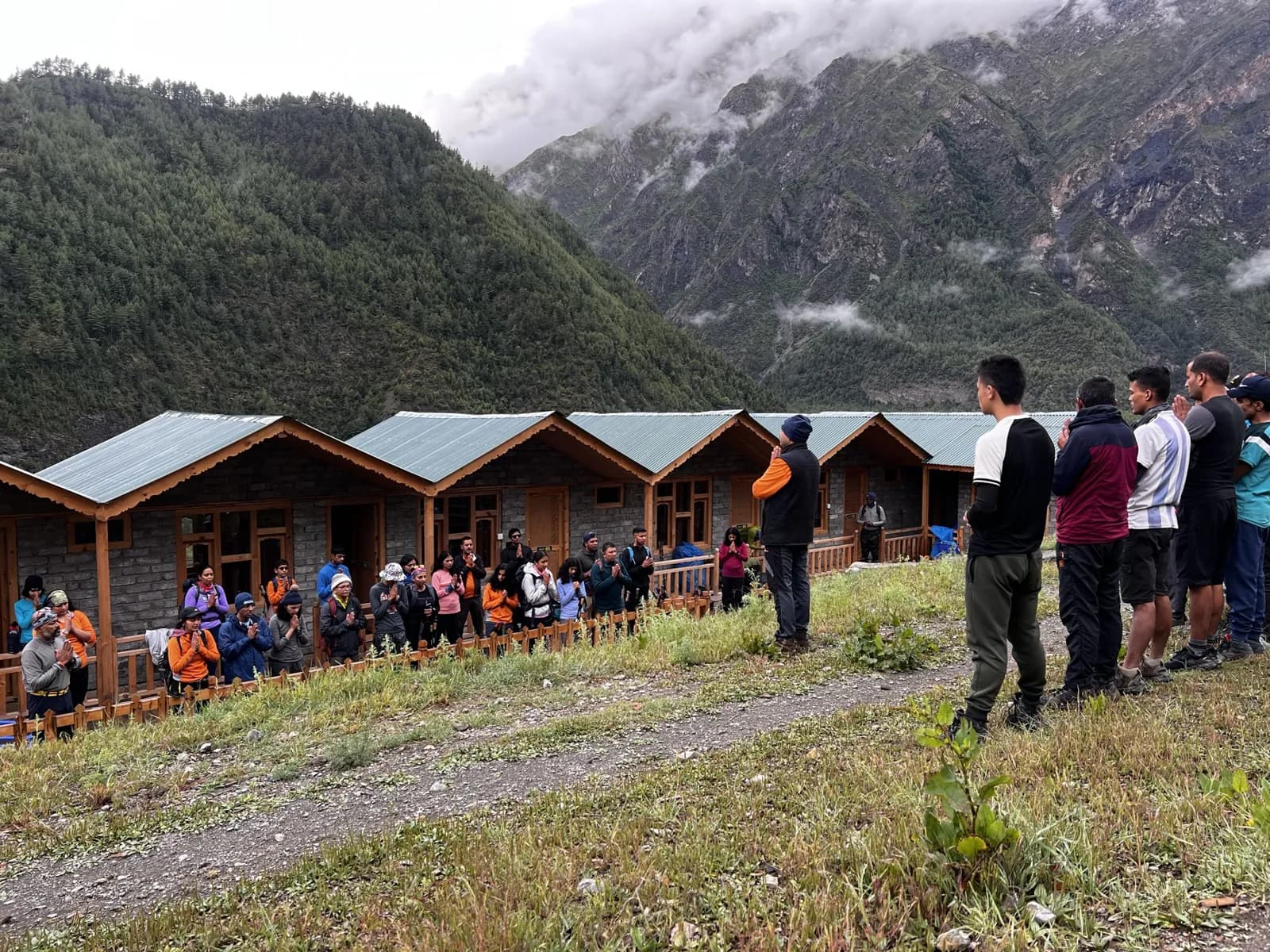
A high, scenic route through the old villages of Ghyaru and Ngawal, with houses and prayer walls in the Tibetan style, to the large village of Manang below the Annapurnas.

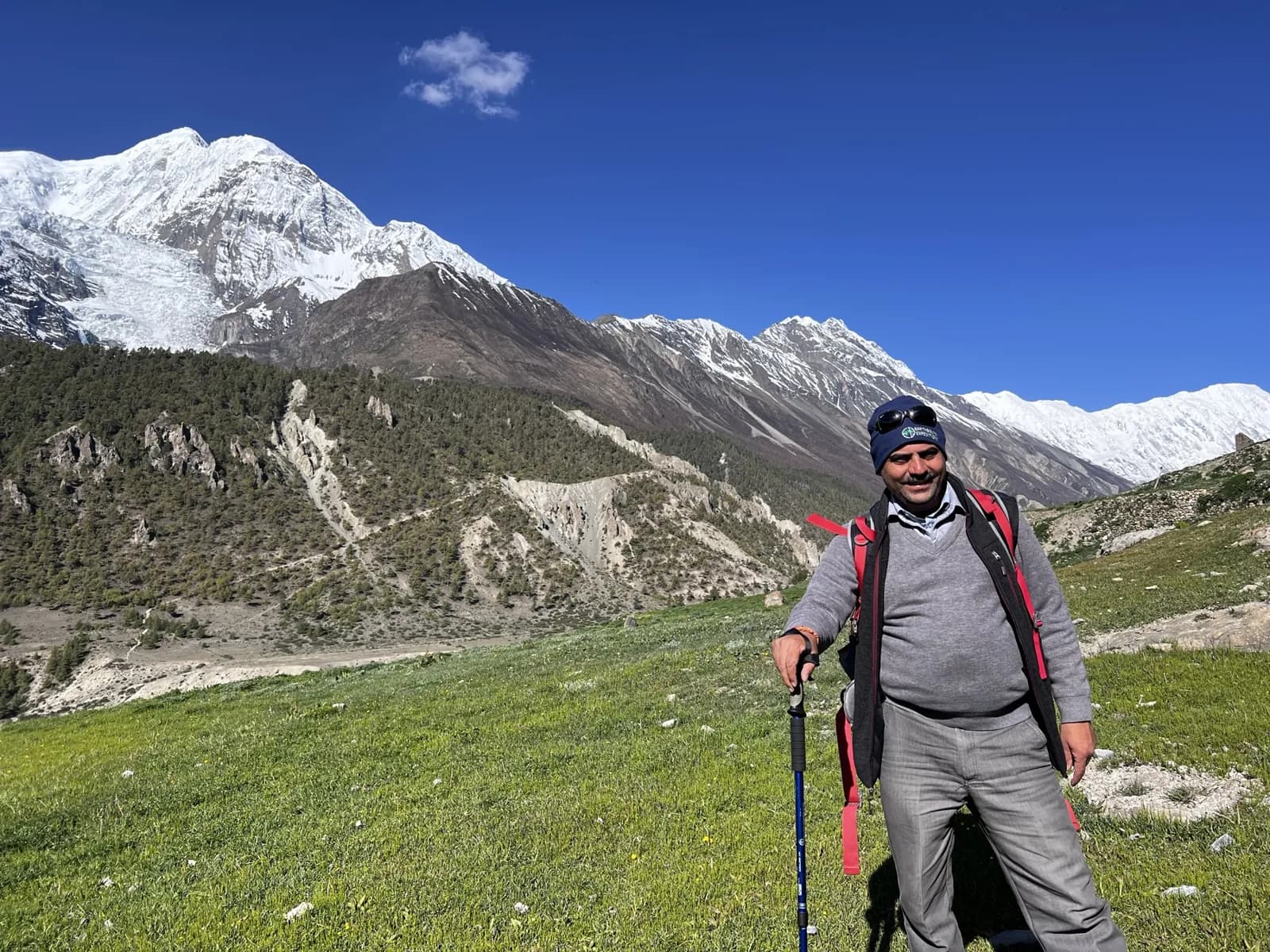
A day to allow your body to adjust to the altitude before going higher. There is an optional short climb to a viewpoint or to the glacial lake, with wide views, before returning to rest.
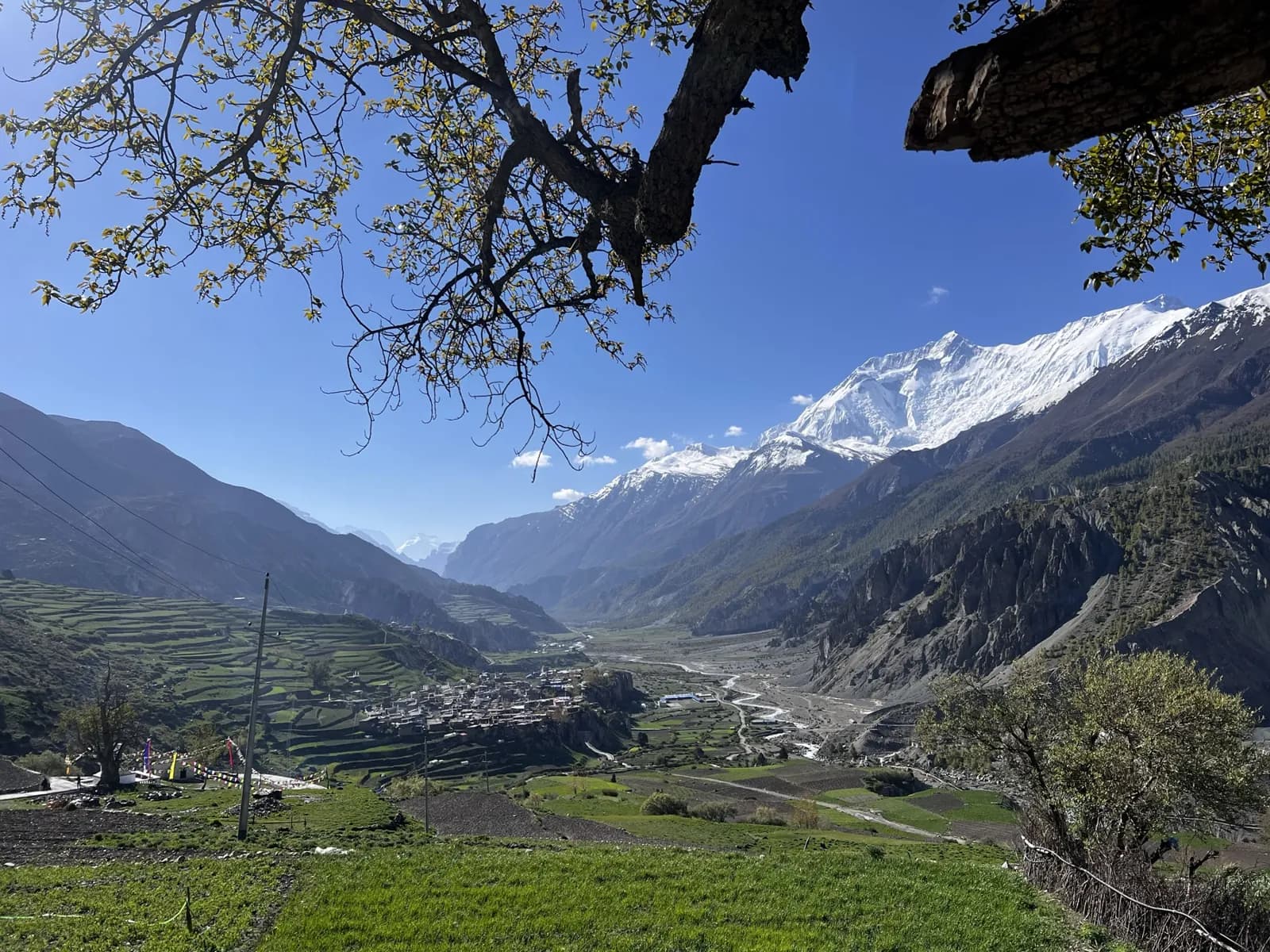
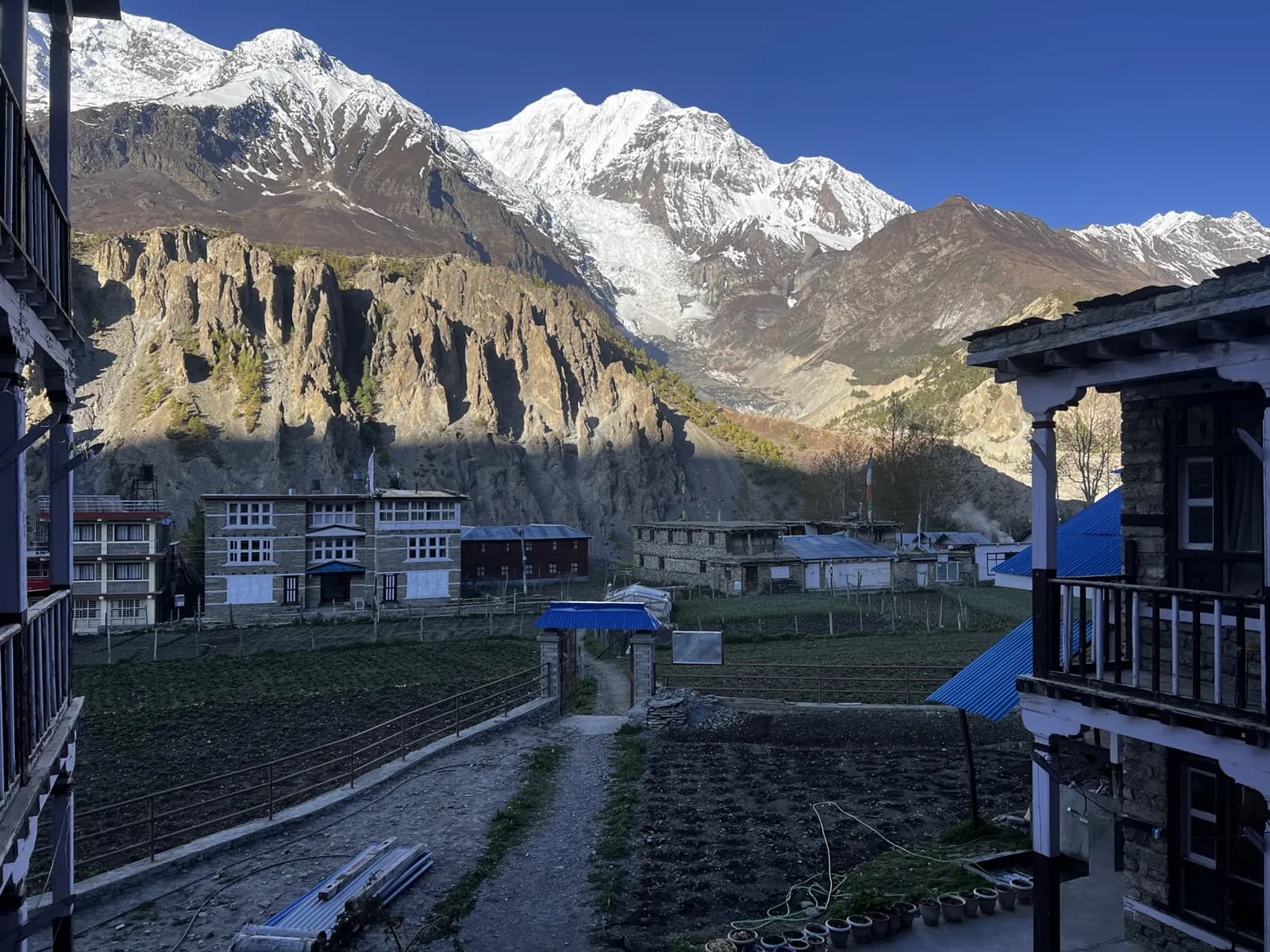
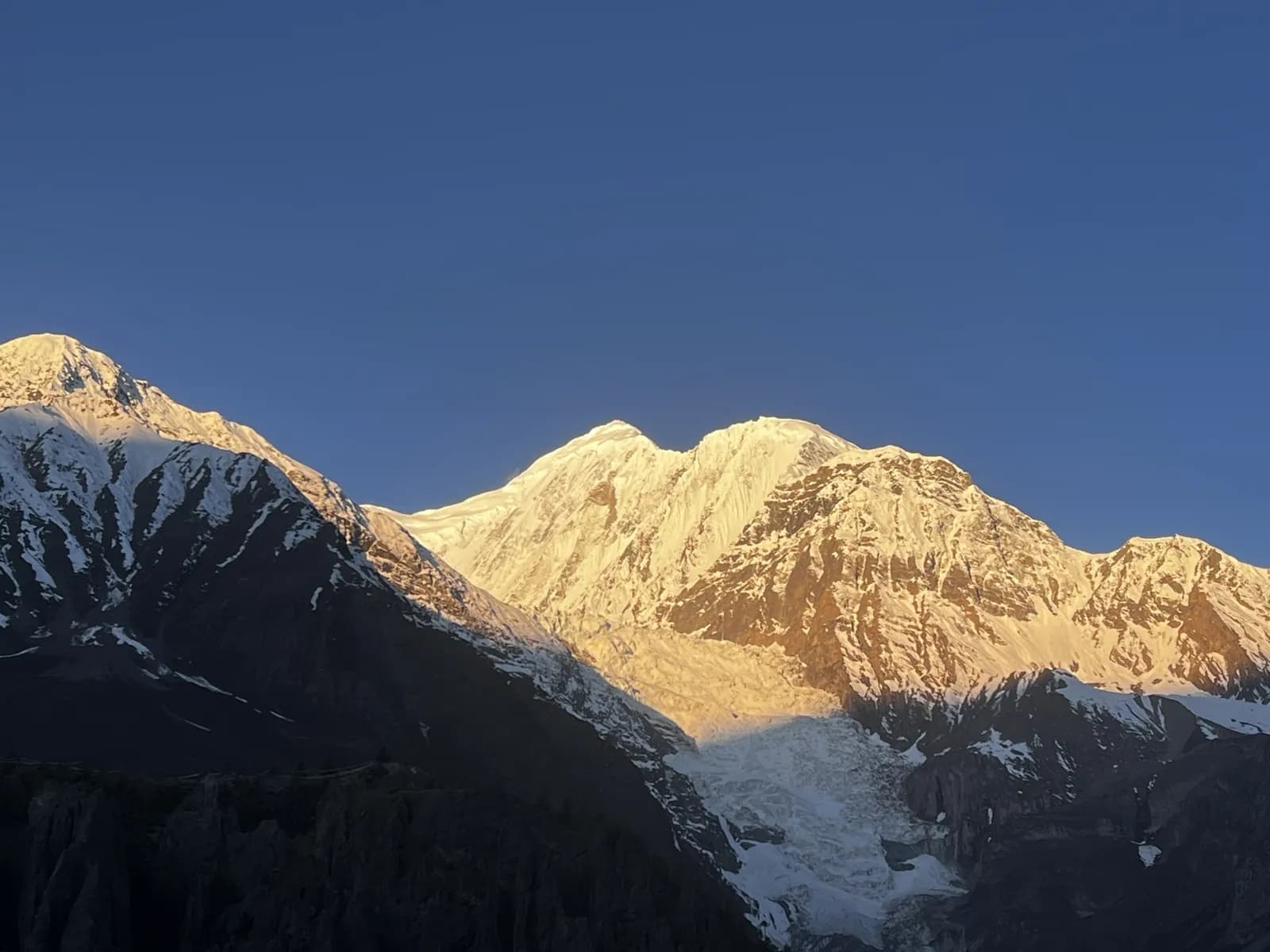
A shorter day at a higher altitude, leaving the forest for open grazing land. Yaks graze on the juniper slopes, and the air is noticeably thinner by the time you reach Yak Kharka.
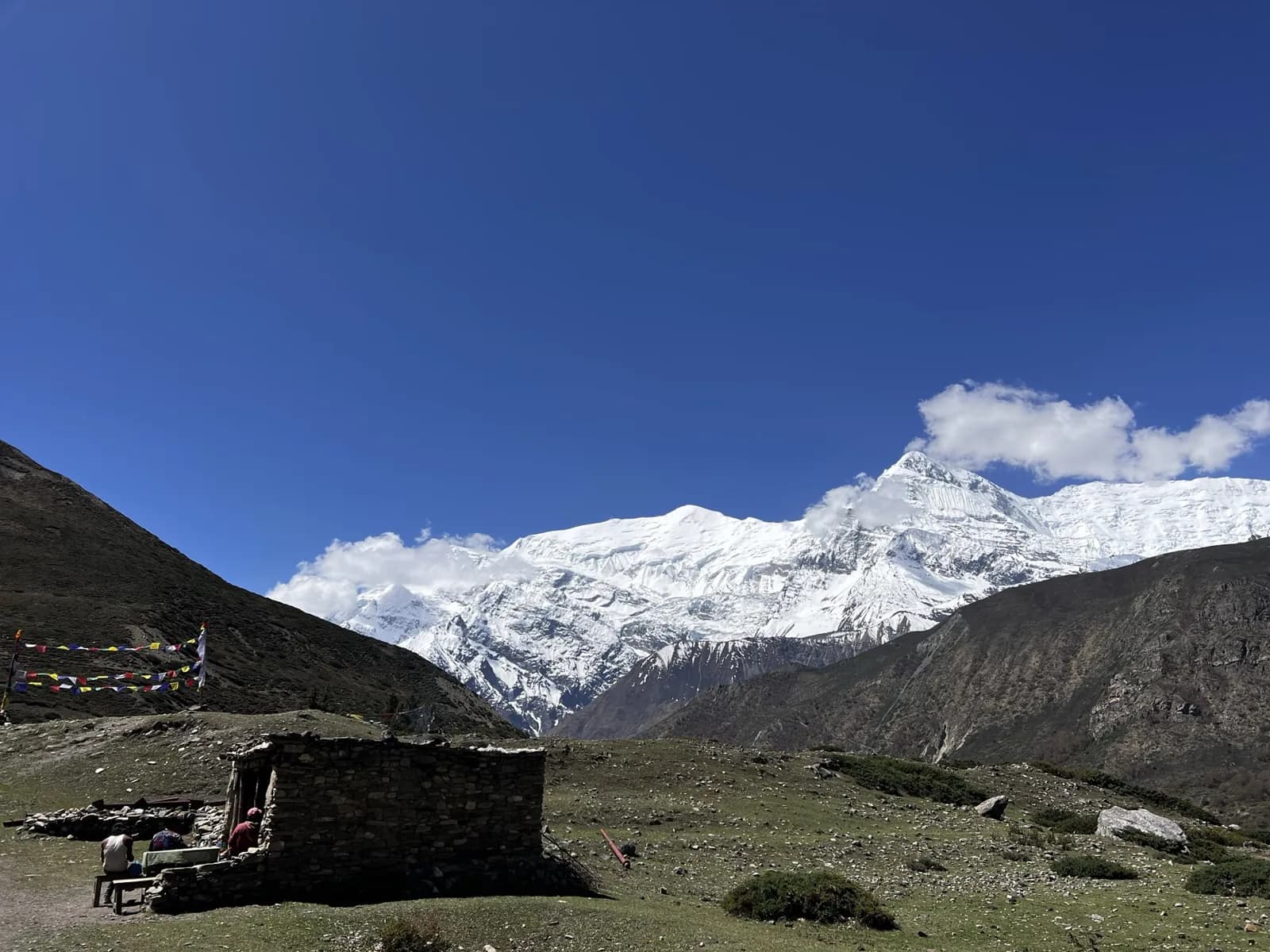
A short, slow walk to the foot of the pass, to save energy for the next day. Thorong Phedi is the last stop before the pass, so we arrive early and rest.
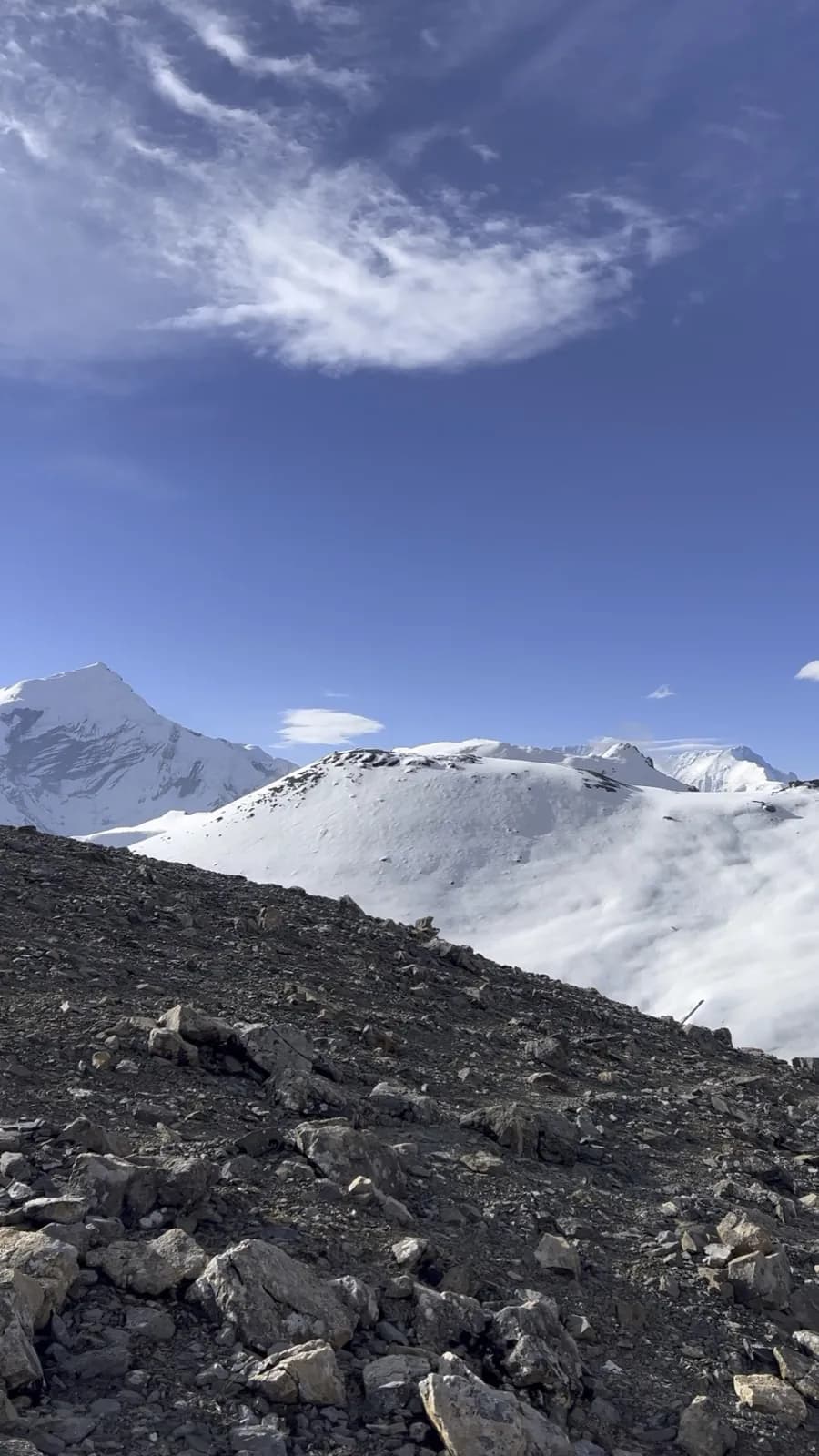
The longest day of the trek, with an early, cold start. A long, slow climb leads to the Thorong La, the highest point of the trek, marked with prayer flags. Then a long descent on the far side to the temple town of Muktinath, which is sacred to both Hindus and Buddhists.
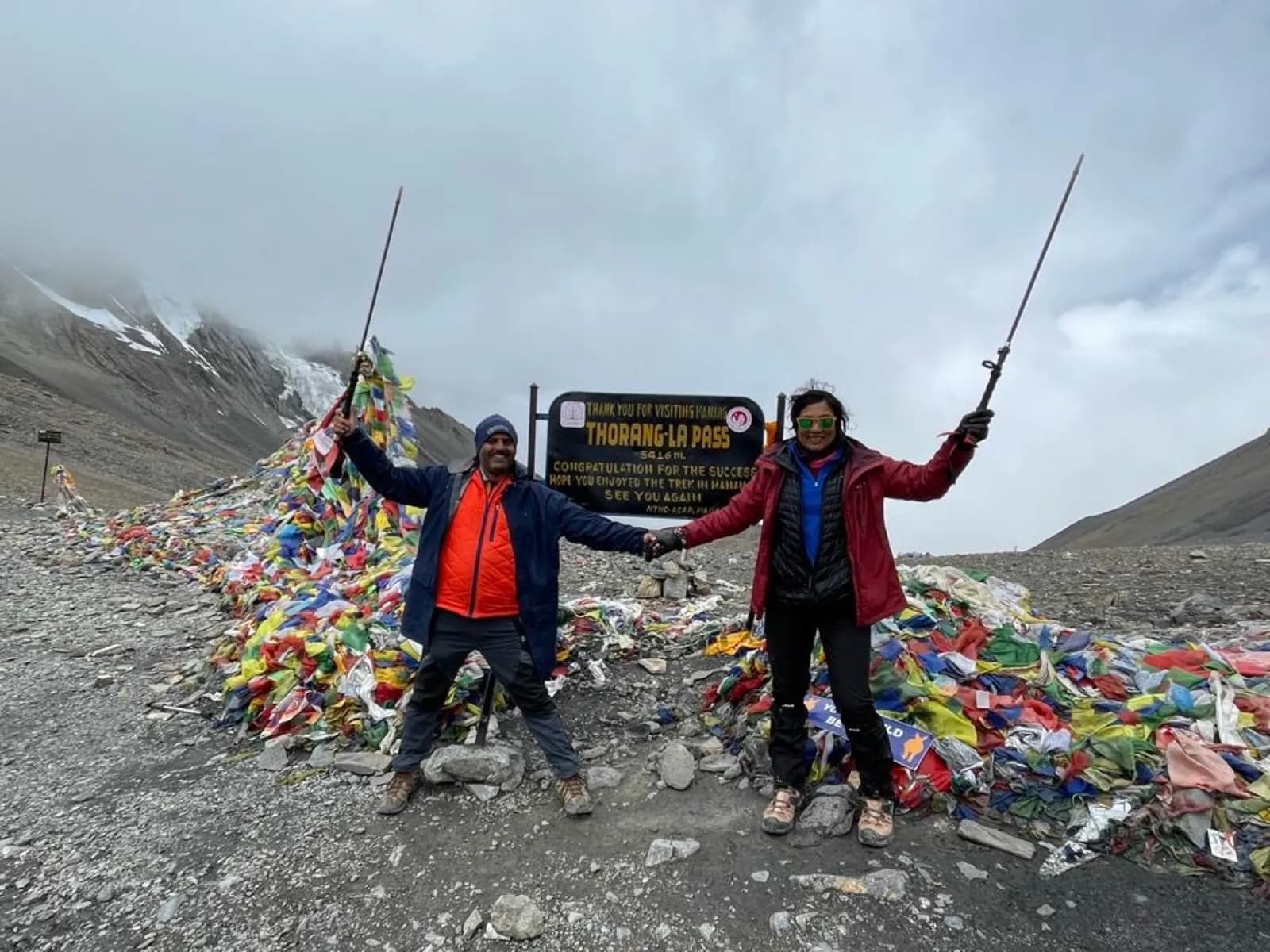
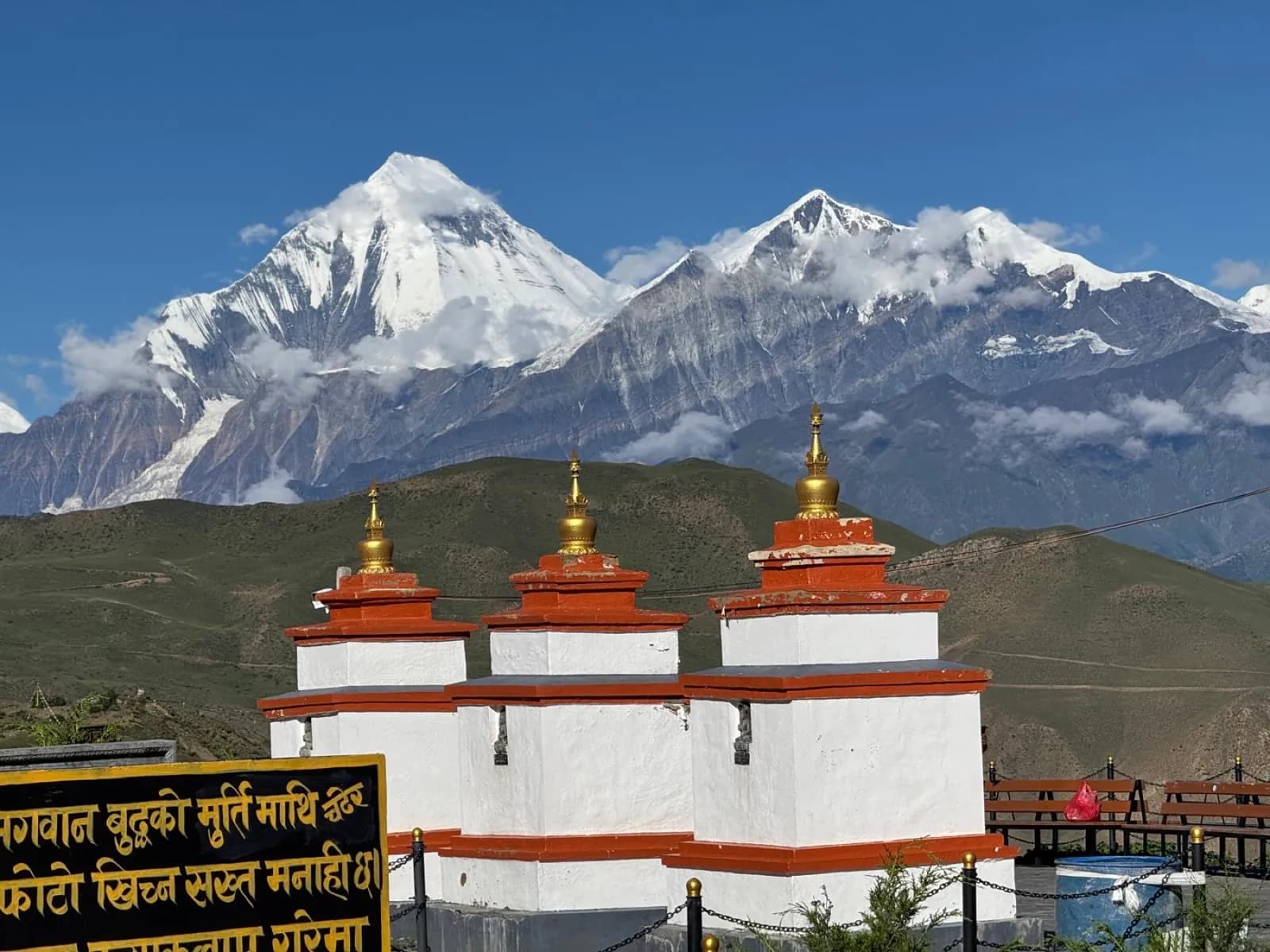

After visiting the pilgrims' water spouts at Muktinath, we descend into the dry, wind-eroded Kali Gandaki valley and follow it down to Jomsom, an old trading town between the peaks.
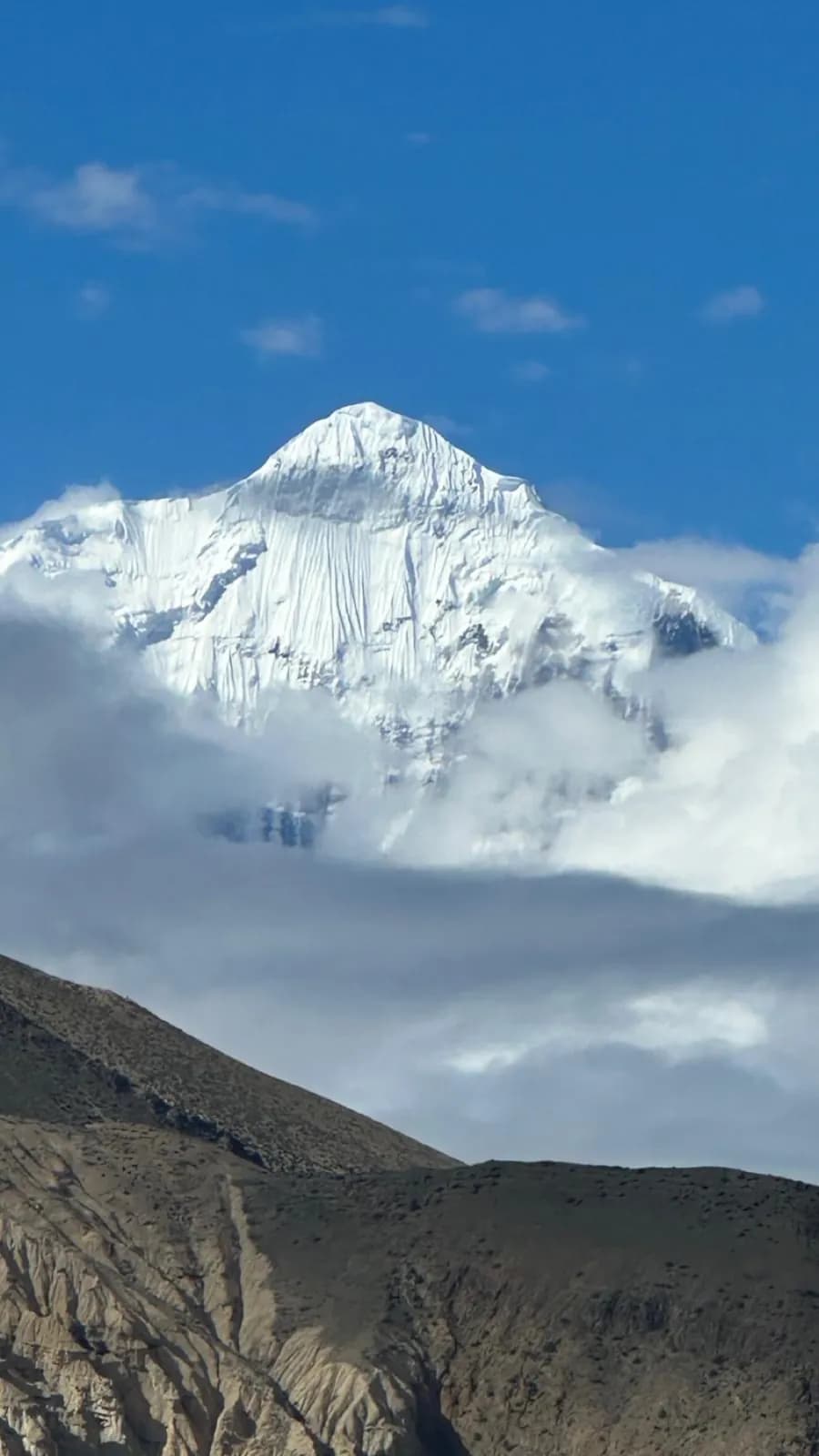
A short, scenic morning flight between the Annapurna and Dhaulagiri massifs down to the lakeside town of Pokhara. The rest of the day is free to relax by the lake.
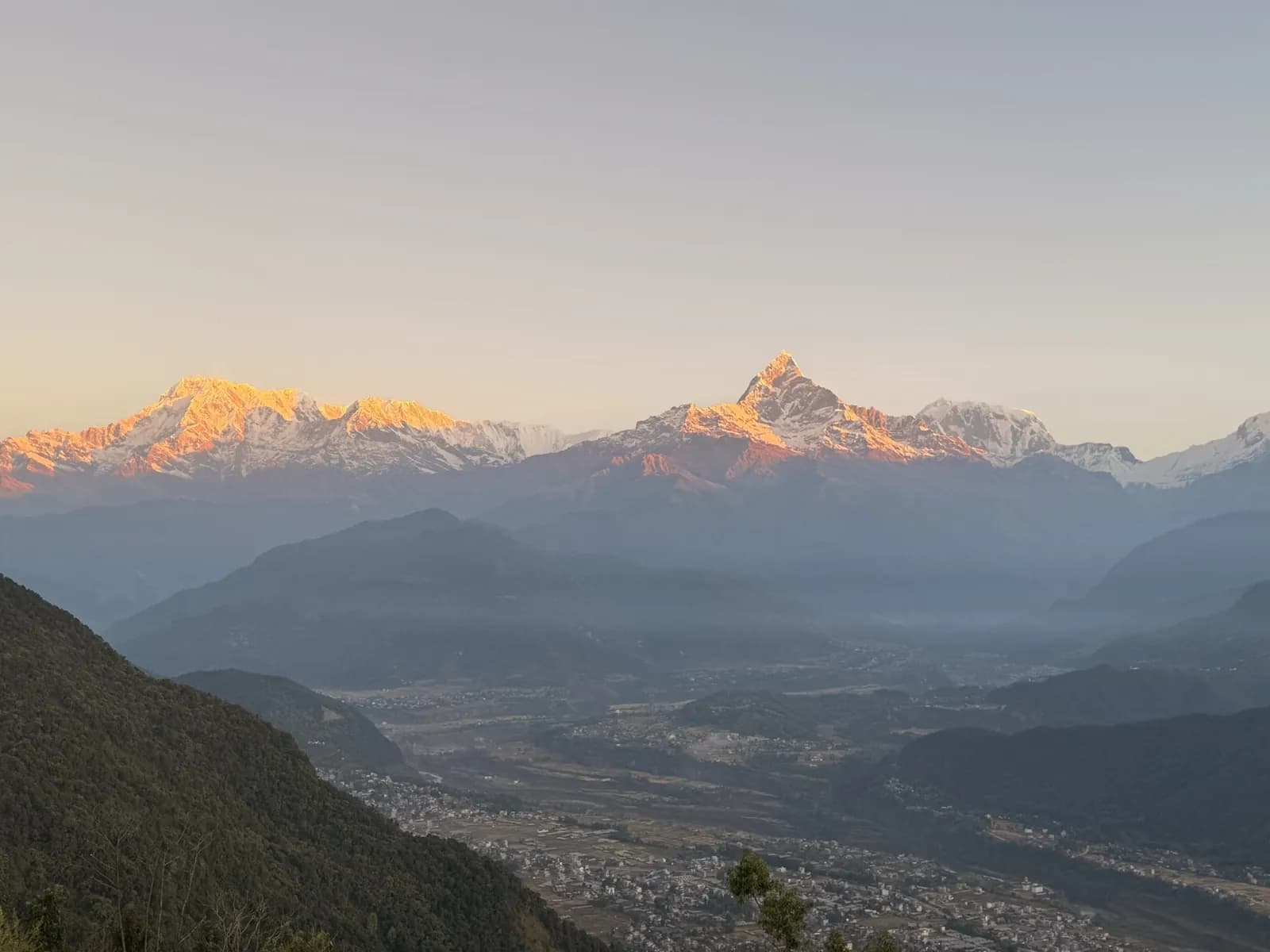
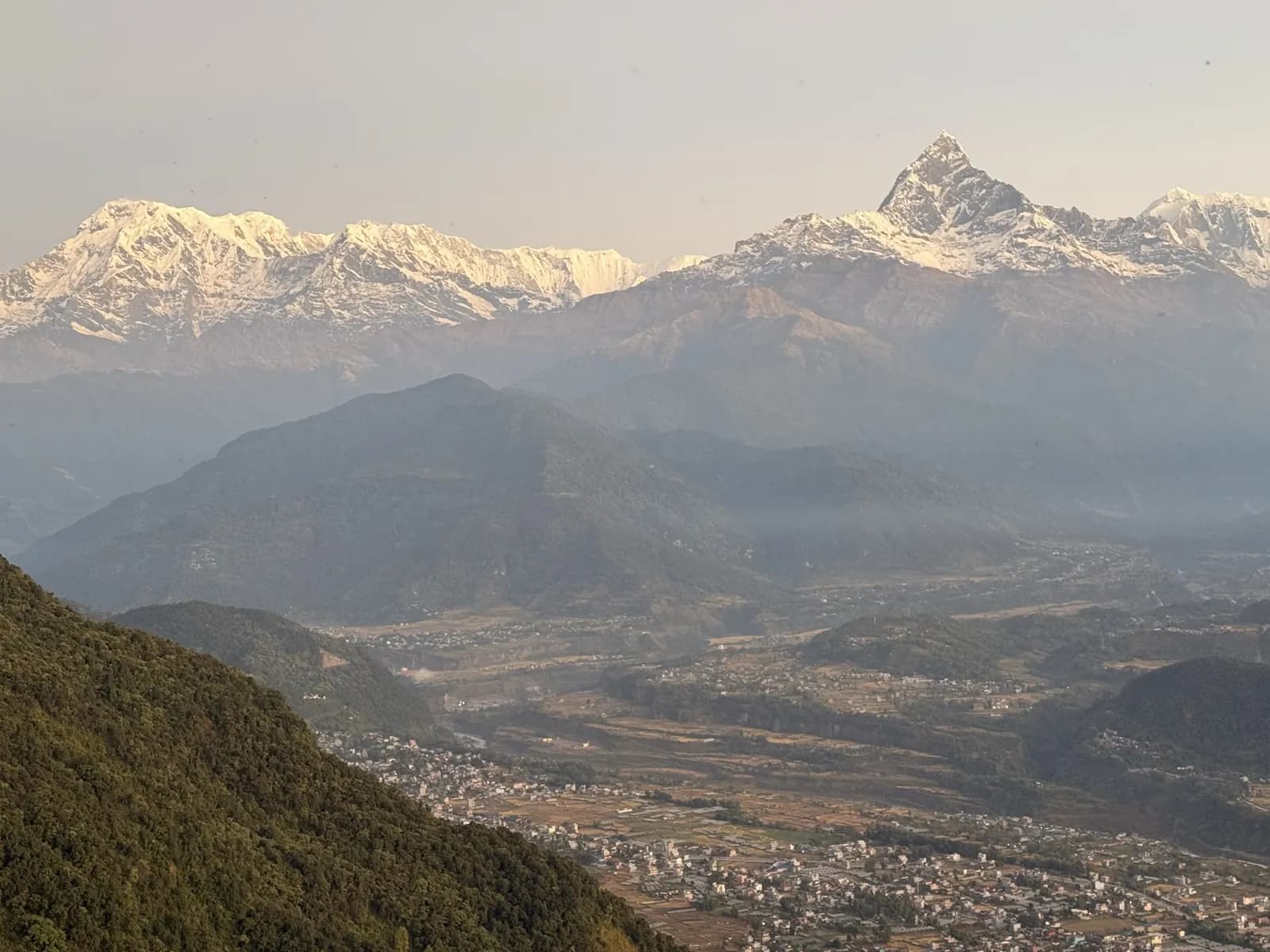
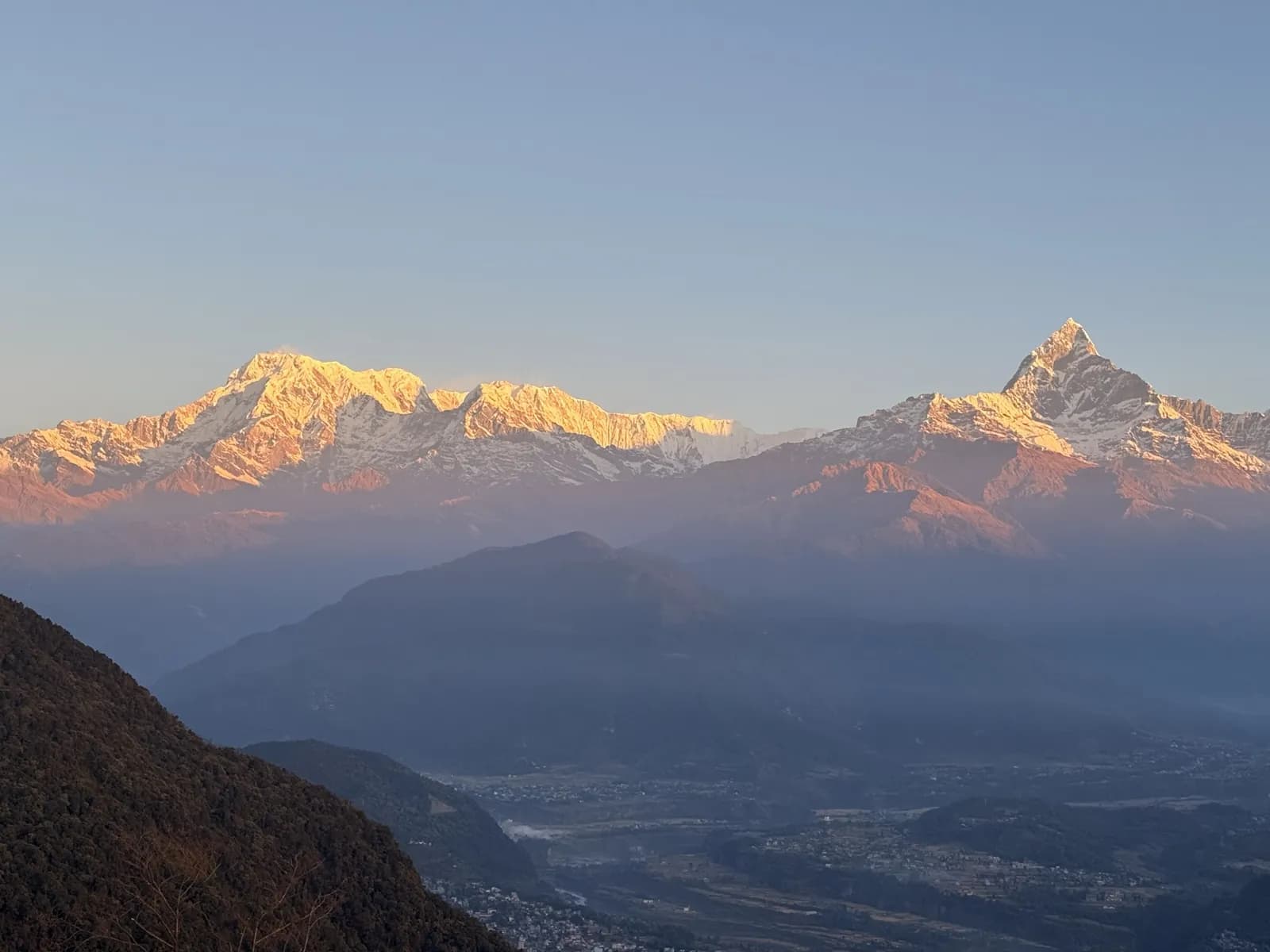
A short flight or a scenic drive takes you back to Kathmandu. The evening is free for a farewell dinner and a last walk around Thamel.
We take you to the airport for your flight home.
Start date
30 Apr 2027
End date
13 May 2027
Available
10 places left
US $1,497
Per person
Start date
8 Oct 2027
End date
21 Oct 2027
Available
10 places left
US $1,497
Per person
Start date
26 Mar 2027
End date
8 Apr 2027
Available
10 places left
US $1,497
Per person
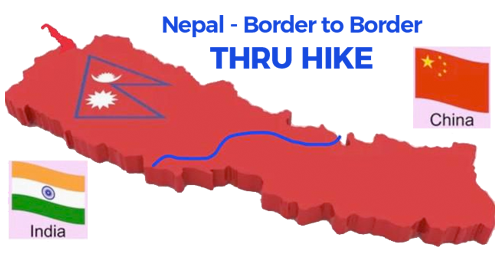
The trail from start to finish, at a glance.
Two weight limits, and the Jomsom flight has the lower one
Your porter carries a strict maximum of 20 kg, shared between two trekkers. The Jomsom to Pokhara flight allows 15 kg and bags are weighed, so anything you buy in Manang has to fit within that limit. We provide the duffel bag and the sleeping bag, and store the rest of your luggage free of charge in Kathmandu.
You drive in on a jeep track and fly out on a twenty-minute mountain flight. The flight is the part most likely to be delayed or cancelled.
The journey takes two days: from Kathmandu to Besisahar on a surfaced road, then from Besisahar to Chame on a rough jeep track cut into the side of the Marsyangdi gorge. It is spectacular but uncomfortable, and slower than the distance suggests: five to six hours for about sixty kilometres. We use a private jeep rather than a shared local one, which makes the day considerably easier.
The flight from Jomsom to Pokhara takes twenty minutes and must leave early. The Kali Gandaki is the deepest gorge in the world, and a strong valley wind rises there around nine or ten in the morning, after which the airstrip closes for the day. Flights therefore leave at first light or not at all. If your flight is cancelled, we take you to Pokhara by jeep, which takes eight to nine hours, and you arrive the same day.
A road runs the whole way below the Jomsom flight route. A cancelled Lukla flight can leave you waiting for three days, whereas a cancelled Jomsom flight means a long drive the same day. This is the practical reason this trek takes fourteen days and the Everest trek sixteen.
This is important to understand on a traverse. From Manang, returning the way you came takes two days to reach a jeep road. From Thorong Phedi there is no road, and the only ways out are back down to Manang or forward over the 5,416 m pass. This is why we assess your fitness in Manang and at Yak Kharka rather than at Thorong Phedi, and why the acclimatisation day is essential.
Every night on the trail is spent in a teahouse: a family-run lodge with one warm dining room, heated by a single stove, and simple twin rooms with foam mattresses and thin walls. Bring a sleeping bag. The Annapurna lodges are among the better ones in Nepal, and in the lower valley at Besisahar, Chame and Pisang most rooms have a private bathroom.
Manang is the best stop on the route, with private bathrooms, hot showers for a fee and good food, which is useful for the two nights you spend there. Above Manang the lodges are simpler. Yak Kharka has shared bathrooms, and Thorong Phedi, the night before the pass, is basic, often full and the coldest night of the trek, with no shower. On the other side of the pass, Muktinath and Jomsom have private rooms with hot water.
| Where | Nights | Type | Room | Bathroom |
|---|---|---|---|---|
| Kathmandu | 3 | Three-star hotel | Twin or double | Private, hot water |
| Besisahar | 1 | Teahouse | Twin | Private |
| Chame | 1 | Teahouse | Twin | Private in most lodges |
| Pisang | 1 | Teahouse | Twin | Private in the better lodges |
| Manang | 2 | Teahouse, the best on the route | Twin | Private, hot shower for a fee |
| Yak Kharka | 1 | Teahouse | Twin, basic | Shared |
| Thorong Phedi | 1 | Teahouse, the coldest night of the trek | Twin, basic and often full | Shared, no shower |
| Muktinath | 1 | Teahouse | Twin | Private, hot water |
| Jomsom | 1 | Teahouse | Twin | Private, hot water |
| Pokhara | 1 | Three-star hotel, lakeside | Twin or double | Private, hot water |
Porridge, Tibetan bread, eggs, chapati, pancakes, tea or coffee
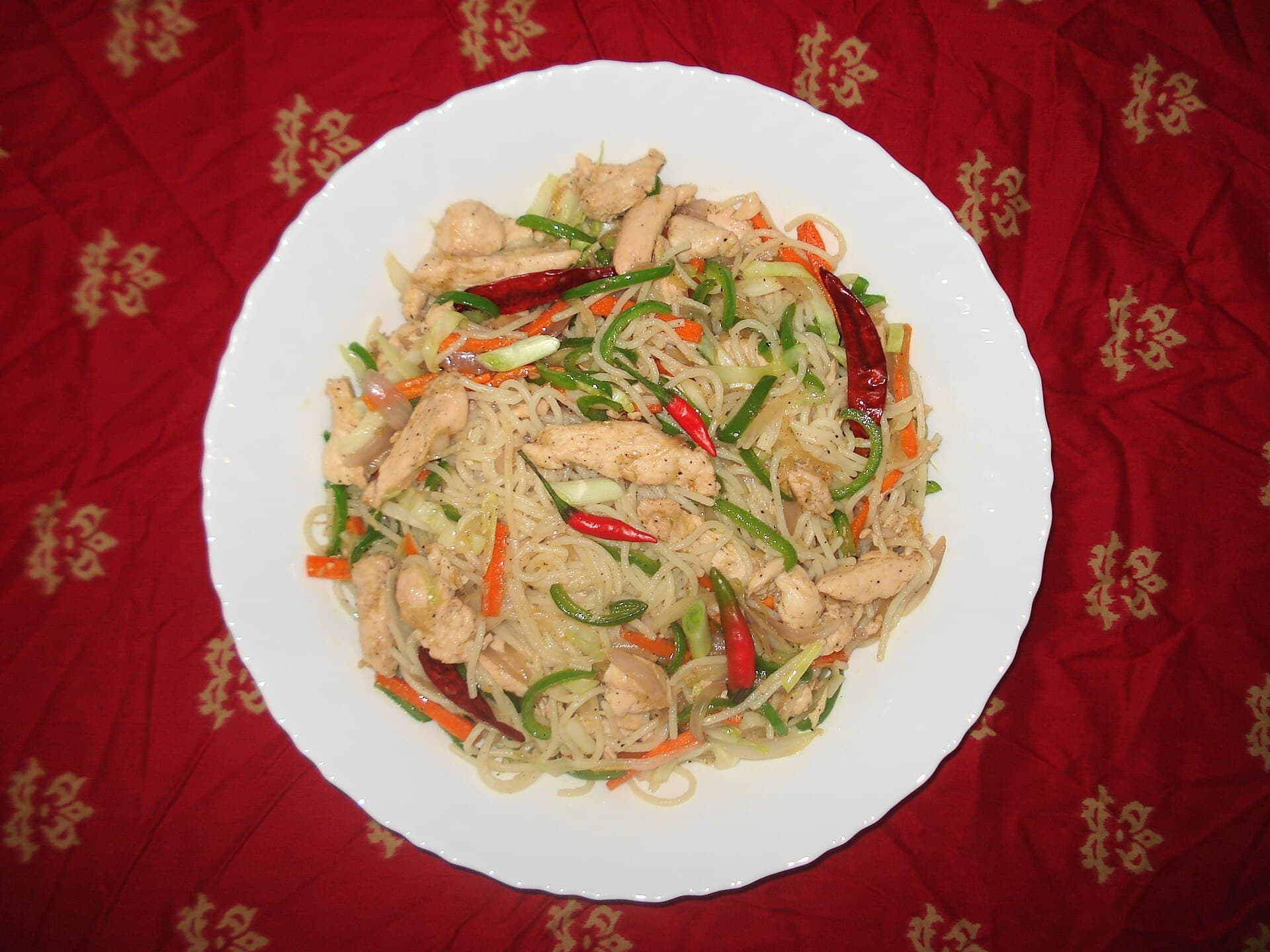
Dal bhat, fried rice, noodles, soup, momo, and potato dishes

Dal bhat, pasta, thukpa, curry and rice, soup to start
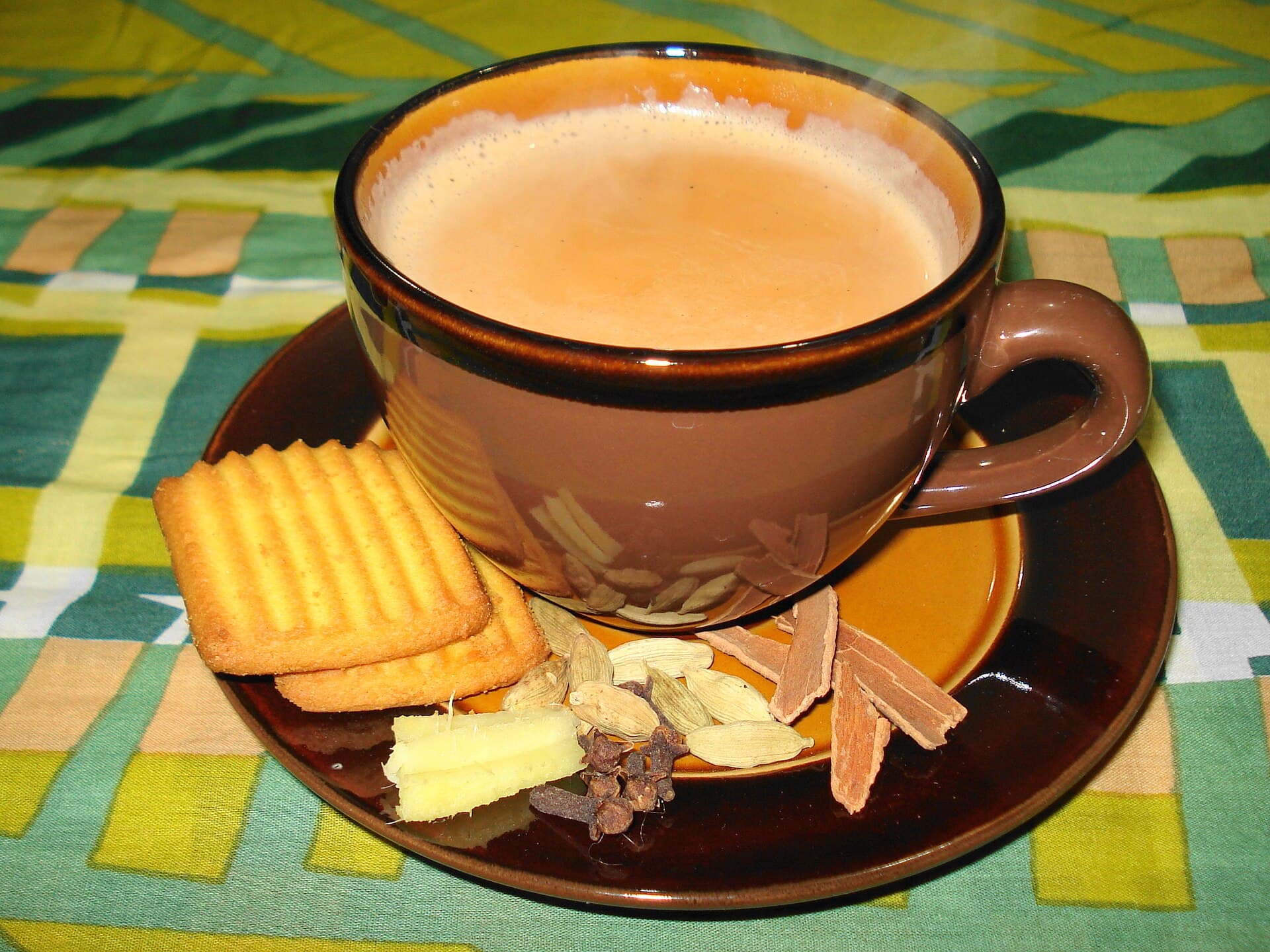
Black, milk, lemon, ginger, or masala. Included at every stop.
6:00Tea in your room, and a bowl of warm water to wash in
6:30Pack, and put the duffel outside your door for the porter
7:00Breakfast together in the dining room
8:00On the trail. The guide sets a steady, slow pace
12:00Lunch at a teahouse on the route, about an hour
13:00Two to four hours more, depending on the day
15:30Arrive at the lodge, tea, check in, wash, and rest if you need to
17:00Oxygen saturation and pulse taken, and written down
18:30Dinner, and the guide briefs you on the next day
20:30Bedtime. At 4,000 m most people are asleep by nine
Six moderate days and one very long day, crossing a pass at 5,416 m.
Written for somebody who walks a bit and does not train. If you already run or cycle regularly, start partway through. Nothing here needs a gym.
10 weeks before, stage 1 of 7
Three cardio sessions a week, 45 minutes each, at a pace where you can still hold a conversation. Choose an activity you will keep doing. If you do only one thing on this list, do this.
At 5,416 m, the Thorong La is one of the highest points reached on any teahouse trek in the world, and historically more trekkers have developed altitude sickness on the Annapurna Circuit than anywhere else in Nepal. There are two reasons for this. The trek climbs quickly in the middle section, from Chame at 2,670 m to Thorong Phedi at 4,540 m in five days. And the route leaves few options: from Thorong Phedi the only ways out are two days back down the valley or forward over the pass, so a trekker who is struggling may feel pressure to continue. We manage both risks by always including the acclimatisation day in Manang and by making the decision on whether to cross at Yak Kharka rather than at Thorong Phedi.
Daily health checks
From Pisang onwards, your guide carries a pulse oximeter and records your oxygen saturation and pulse every evening, and again in the morning if you feel unwell. The readings are recorded, so any decline over the three days above Manang is clear.
Deciding at Yak Kharka
This part of our protocol differs from that of many operators. We decide whether you will cross the pass a day and a half before you reach it, not at Thorong Phedi at three in the morning, because descending from Yak Kharka is easy and descending from Thorong Phedi is not.
Mild symptoms
We descend 500 metres to Manang, at 3,540 m, and spend a night in a village with a doctor. Most cases resolve there, and there is usually time to go up again and still cross the pass.
Serious symptoms
You descend to Manang and leave by jeep, with a guide, while the group continues. Descent is the only effective treatment, and the decision to descend is made by the guide.
Helicopter evacuation
Helicopters can reach Manang, Yak Kharka and Muktinath and fly to Pokhara in about half an hour. Your insurance covers this: the cost is $3,000 to $5,000, and the helicopter will not fly without a payment guarantee.
Medical post on the route
The Himalayan Rescue Association post in Manang, at 3,540 m, is staffed by volunteer doctors in both trekking seasons, and our route spends two nights there.
Fitness and altitude are unrelated
This is the thing people get wrong most often. Training makes the walking easier and does nothing for how your body handles thin air. Strong young trekkers get altitude sickness and unfit older ones frequently do not. Go up slowly, and say something the first time your head hurts.
The rating for each month refers to one thing: whether the Thorong La is passable. A December day in Manang can be pleasant while the pass above it is closed.
The best spring month. Stable, clear weather, with blossom lower down in the Marsyangdi valley.
Averages from Nepal DHM station data for the Annapurna region. The rating column is about whether the Thorong La is passable, not whether the valley is pleasant.
A government-licensed guide with wilderness first aid training leads every departure, and there is one porter for every two trekkers. From 11 trekkers, a second guide joins the group, so nobody is left alone at the back. Our guides come from the hill regions where they work.
Each porter carries a maximum of 20 kg, which is your duffel bag and one other. This is below the 25 kg limit set by the trekking association and well below the loads you will see on the trail. If your bag is overweight, the load is divided rather than added to. Porters carry the main luggage, not daypacks: you carry your own water, camera, jacket and snacks for the day.
Salary, insurance, food and lodging for every guide and porter are included in the price you pay, and are not collected separately on the trail. Every member of the team is insured for altitude and helicopter evacuation on the same terms we require of you. Paying fair wages and insurance through the trip price is how we ensure our porters are properly equipped and not overloaded.
Tipping is customary but not compulsory, and it never replaces wages. For this trip, $130 to $200 per traveller for the whole team is usual, given together on the last evening rather than daily. Your guide will not ask for a tip, and would prefer that it is not given in front of the group.
A traveller drinking bottled water uses around 30 plastic bottles on this trip, and every one has to be carried in and carried out again. Boiled water is available at every lodge for one or two dollars a litre, and we encourage you to use it. Bring purification tablets or a filter as a backup.
We carry out everything we bring in that is not food. The Annapurna Conservation Area has a waste problem, and we make sure we do not add to it.
The lodges are family businesses in the villages you pass through, and the guides and porters live in this district. The ACAP fee funds the conservation area, which is managed by a national trust rather than the government and returns a documented share of the fee to the village committees along the trail. Almost all of what you pay is spent within a few days' walk of the trail. This is one reason to book with a Nepali operator rather than a foreign one that subcontracts the trek locally.
Ask before photographing anyone. When you meet a mule train, stand on the mountain side of the path, not the side with the drop, and let it pass. Monasteries welcome visitors, but they are places of worship: remove your hat and shoes, and if a service is taking place, wait.
Write to us or send a message on WhatsApp and tell us roughly when you would like to travel. You will receive a reply from a member of our team who has been on this trip. Nothing is payable at this stage, and there is no obligation until you pay a deposit.
A deposit of 30 per cent secures your dates, and the balance is paid when you arrive in Kathmandu, in cash or by card. At the same time, we ask for a copy of your passport, your insurance certificate and any dietary or medical information.
You can pay by bank transfer, or by card through a secure link. Card payments carry the bank's fee of about 4 per cent, which we show you before you pay. The balance in Kathmandu can be paid in US dollars, pounds, euros or Nepali rupees.
If you cancel more than 30 days before departure, your deposit can be transferred to any other date or trip we run, with no time limit. If you cancel within 30 days, the deposit is retained, because the permits, flights and crew have been booked by then. If we cancel for any reason other than weather, we refund everything you have paid.
For a party of five or more, private and group departures cost the same. A private departure runs on your dates at your pace and can be arranged for one person. A group departure runs on the dates in the table above. Most travellers book privately, at no extra cost.
Outside October, two weeks' notice is enough, and seats on the Jomsom flight are the only thing that may be limited. For October we need six weeks' notice, because Thorong Phedi has a fixed number of beds and no alternative accommodation.
Priced per person, arranged before you travel, and none of them included in the price above.
A lake at 4,919 m in a side valley near Manang, and one of the highest lakes of its size in the world. This is a demanding extension, with two nights above 4,000 m and a long, exposed traverse. It also provides very good acclimatisation for the pass.
Walk out through Ghorepani instead of flying from Jomsom, and end the trek with one of the best sunrises in Nepal. It costs less than the flight and takes three days longer.
The trek ends in Jomsom, the gateway to Lo Manthang. Continuing into the walled former kingdom is the best extension in the Annapurna region, and requires a restricted area permit at $50 a day.
A 30-minute flight from Sarangkot, with views across the valley of the range you have just trekked through. There is time for it on day 12.
A chance to see rhinos, and a relaxing change after crossing a 5,416 m pass. It fits between Pokhara and Kathmandu.
A room to yourself for the four hotel nights. On the trail, lodges are twin-share only, especially at Thorong Phedi.
4 versions of this journey. They use the same guides and the same lodges; what changes is the length, the comfort and how much of it you walk.
Annapurna Circuit Trek - Trip #4 with Earthbound Expeditions
April 2025, Tripadvisor
This was our fourth trip to Nepal with Earthbound Expeditions. Obviously, as a repeat customer, we think Earthbound is an amazing organization, and this trip was more of the same great service and experiences that we have come to expect. We did most of the Annapurna Circuit Trek (drive from Kathmandu to Chame, walk from Chame to Kagbeni including Tilicho Lake, drive to Tatopani , walk to Ghandruk and then drive to Pokhara). Our guide was Gopal who is both an excellent guide and an excellent person who eliminated all hassles along the way - all we had to do was walk and figure out what we wanted to eat( one of us has a food allergy and Gopal made sure thst was totally accommodated for). As usual, Rajan adapted a few things on the itinerary along the way as one needs to do when traveling in Nepal. Do not hesitate to book with Earthbound Expeditions.
An amazing experience at Nepal
July 2023, Tripadvisor
This was my first trip to Nepal. Rajan-ji & his team took care of us right from the time of arrival at Kathmandu airport and until we were safely dropped back ...... they organized everything so well, patiently & professionally attending to our needs, requirements & wishes during the Annapurna circuit trek, as also for the associated tours, stay & entertainment surrounding the same. Surely looking forward to the next time
Annapurna Circuit Trek
July 2023, Tripadvisor
Perfect place to enjoy nature Especially Rajan and his crew were great. Awesome experience. Anna Purna Circuit Trek should be in your bucket list
Another wonderful expedition with Earthbound Expeditions
July 2023, Tripadvisor
Rajan Ji and his team at Earthbound Expeditions excel in providing a well-planned, safe, and fun hiking experience. This was my second trek with Rakan and Earthbound Expeditions as they also arranged an EBC trek a few years back and we were so pleased that we went with Rajan again, We were a large group of adults and kids who did the Annapurna Circuit last month. He was readily available from the planning phase and connected with us over Zoom and Whatsapp, weeks before we started the hike. Throughout the 9-day hike, the food, accommodations, and arrangements were great and the whole team including the porters, guides and support staff were friendly, helpful and fun to be with. I would highly recommend them!
Answers to the 23 questions travellers ask us most often. If your question is not here, contact us and we will answer it.
The road has changed the trek but not spoiled it. A jeep track now runs from Besisahar to Manang and from Muktinath to Beni, which has removed about a week of walking along the road. The best-known section of the circuit, from Manang over the Thorong La to Muktinath, has no road and cannot have one. You lose the long approach, and the trek takes fourteen days instead of twenty-one, with most of the time spent on the finest section. We drive the jeep tracks and use the marked NATT trails to stay off the road wherever a path exists.
They are very different treks in the same conservation area. Annapurna Base Camp is a return trek up a gorge that ends in a glacial basin, reaches 4,130 m and is graded moderate. The Circuit crosses a 5,416 m pass, from a green Hindu valley into a Tibetan desert landscape. Base Camp has the finest single view, while the Circuit offers the more varied journey. If you are concerned about altitude, choose Annapurna Base Camp.
You need to be fit enough for one day of eight to nine hours' walking at high altitude, because that is the main demand of this trek. The other six walking days are four to six hours on good trails, and most reasonably active people manage them comfortably. Train for day 10 and you will be well prepared for the rest.
There is no upper age limit, and we have taken trekkers in their seventies over the Thorong La. The minimum age is twelve, with a parent. Your walking experience matters more than your age.
You wake at 2:30 am, eat breakfast at 3:00 am, and set off in the dark by head torch, in temperatures of about minus 15°C. The climb takes four to five hours at a steady pace; it is never steep, but the air is thin. The top of the pass is a saddle with prayer flags and a tea shop, and because of the wind you do not stay long. The descent to Muktinath then takes three to four hours and drops 1,650 m. In Muktinath there is hot water, a temple, and a well-earned drink.
You descend to Manang and leave by jeep, with a guide, while the group continues. This is why we make the decision at Yak Kharka rather than at Thorong Phedi: from Yak Kharka the descent is easy, but from Thorong Phedi the only options are two days back down the valley or a 5,416 m pass. We prefer to turn a trekker around a day early rather than leave that decision until three in the morning.
Thorong Phedi, unless you have adapted to the altitude particularly well. High Camp is 300 m higher, which saves an hour on the morning of the crossing, but you sleep much less well at 4,850 m. For most people the hour is not worth it, and our guides will advise you at Yak Kharka.
In October and April there is usually little snow. In March and late November, expect some, and your guide will tell you in Manang whether you need to buy microspikes there. From December to February the pass is often closed, and we do not offer the crossing in January.
Anticlockwise, from Manang to Muktinath, as almost all trekkers do. The eastern side climbs gradually over five days, while the western side descends 1,650 m in an afternoon. Walking in the other direction would mean climbing those 1,650 m in one day to reach a 5,416 m pass on the second or third day of the trek, which carries a high risk of serious altitude sickness.
There are two reasons. The middle section climbs quickly, from Chame to Thorong Phedi in five days, and the layout of the route leaves few options: from Thorong Phedi, the only ways out are two days back down the valley or over the pass. Both risks are manageable, and we address them in the same way, with a rest day in Manang and an early decision about whether to continue. We include the free Himalayan Rescue Association altitude talk in Manang in the itinerary, and every trekker attends.
Discuss it with your own doctor before you travel. On this trek in particular it is a reasonable preventive measure, because of the speed of the middle section. It does not replace the rest day, and it does not make it safe to continue if you have symptoms.
Yes, with cover up to 6,000 m, because the pass is at 5,416 m. It is a condition of booking and we ask to see your insurance certificate. A rescue from Thorong Phedi to Pokhara costs $3,000 to $5,000, and the helicopter will not fly without a payment guarantee.
Manang is a large village with hot showers, a bakery, an internet cafe and two cinemas showing trekking films, and it is one of the more comfortable overnight stops on any trek in Nepal. Yak Kharka and Thorong Phedi are basic and cold, and Thorong Phedi is the coldest night of the trip. Muktinath and Jomsom have hot water and good rooms.
The flight operates reliably in the early morning, but every day the Kali Gandaki wind rises around nine or ten o'clock and flights stop by mid-morning. The flight therefore leaves at first light or not at all. If it is cancelled, we drive you to Pokhara, which takes eight or nine hours, and you arrive the same day. This is why the itinerary does not need a spare day at the end.
In October it is busy, and this is most noticeable at Thorong Phedi, where there is a fixed number of beds and no alternative. Late November and early April have almost equally good weather with far fewer trekkers, and both are good months to choose.
At Thorong Phedi, night temperatures range from minus 10°C to minus 18°C depending on the month, and bedrooms are not heated anywhere on the route. We provide a sleeping bag rated to minus 15°C. On the pass before dawn, expect around minus 15°C, with wind chill in addition, which is why mittens are on the packing list.
You need two permits: the Annapurna Conservation Area permit, at NPR 3,000, and a TIMS card, at NPR 2,000. Both are included and we arrange them for you. If you add Tilicho Lake, no further permit is needed. If you continue from Jomsom into Upper Mustang, which is a restricted area, the permit costs $50 per person per day.
Yes. A licensed guide has been legally required for foreign trekkers in Nepal's conservation areas since April 2023, and the checkpoint at Dharapani enforces it.
Bring 250 to 400 US dollars' worth of Nepali rupees, in small notes. The last cash machine is in Manang, and it does run out of money in October, so do not rely on it.
Because you finish 150 km from where you started. The private jeep in and the Jomsom flight out are both one-way, and the guide and porters have to travel home from the far end. This transport accounts for about $400 of the difference and is not related to the trekking itself.
October and November offer the most reliable weather, and April is best in spring. We particularly recommend late November: the pass is still open, the air is at its clearest, and there are far fewer trekkers than in October. Avoid January, when the pass is usually closed.
Outside October, two weeks' notice is enough. For an October departure we need six weeks' notice, because Thorong Phedi has a fixed number of beds and there is nowhere else to sleep.
Yes, and it is the extension we recommend most often on this trek. It adds three days, visits a lake at 4,919 m, and provides very good acclimatisation for the pass. It is a serious undertaking, however, with two nights above 4,000 m and an exposed traverse, so it should not be added lightly.
Didn't find what you were looking for?
Search every word on this page, or ask somebody who has walked the route.
14 days
$1,497 per person