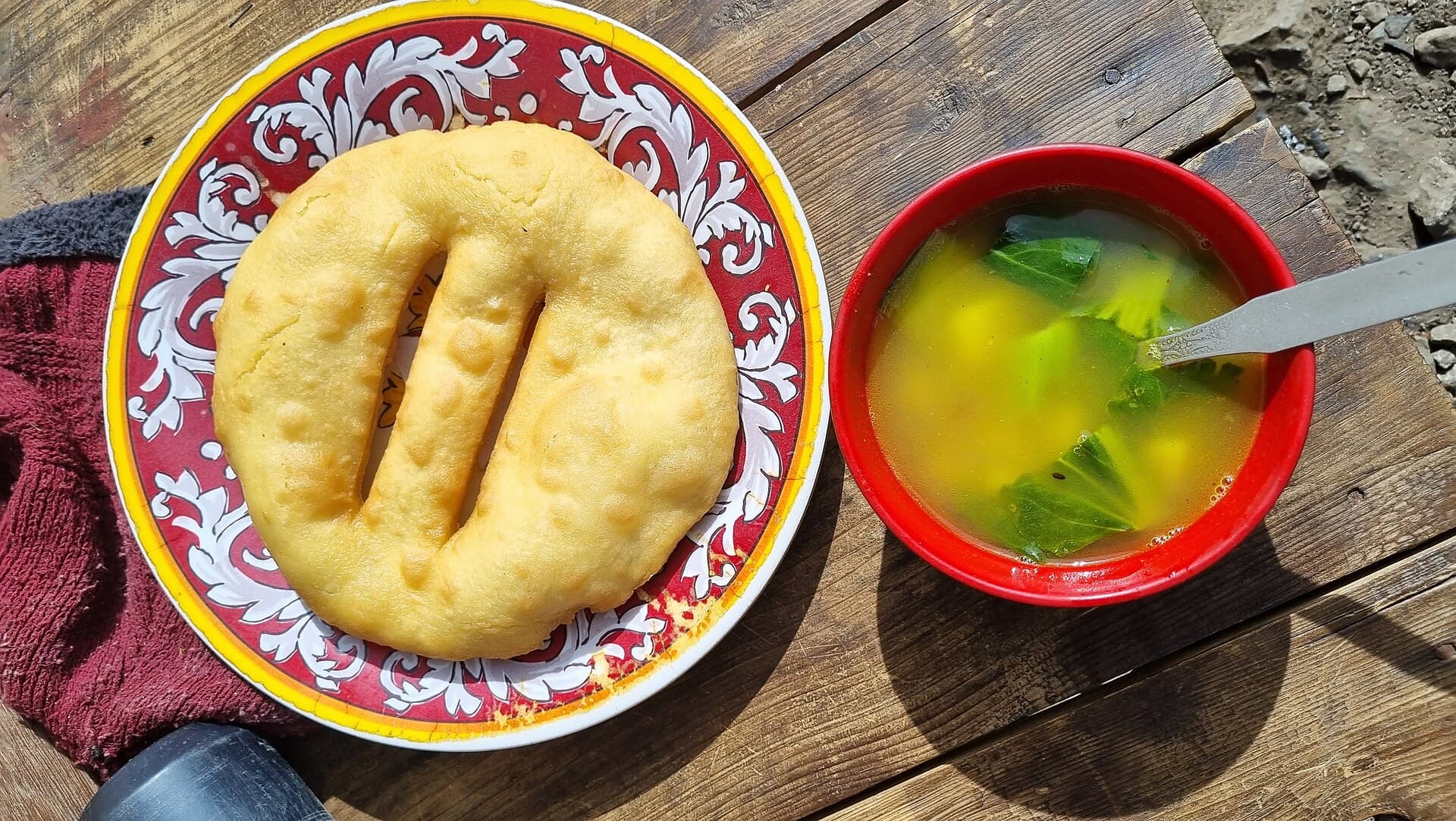
Breakfast
Porridge, Tibetan bread, eggs, chapati, pancakes, tea or coffee
All destinations
All destinationsThe classic trek to Everest Base Camp, staying in the best lodges on the trail, with a helicopter flight from Gorak Shep after Kala Patthar instead of four days walking back.
The classic trek to Everest Base Camp, staying in the best lodges on the trail, with a helicopter flight from Gorak Shep after Kala Patthar instead of four days walking back.
This trip offers two things. The first is comfort: four-star hotels in Kathmandu and the best lodges in the Khumbu at Phakding, Namche and Dingboche, with heated rooms, private bathrooms, duvets and better food than standard teahouses provide. The second is time: the helicopter flight from Gorak Shep on day 11 removes four walking days, so the trek takes twelve days rather than sixteen. Most people book it for the time saved and also appreciate the comfort.
The ascent. Days 3 to 10 follow the same trail, at the same altitudes and with the same walking hours as the classic trek, and the walking is not easy. You climb from 2,610 m to 5,545 m on foot, sleep at 5,164 m at Gorak Shep in a basic lodge, and can still be turned back by altitude. There are no luxury lodges above Dingboche, and the two nights at Lobuche and Gorak Shep are in the same lodges used on the classic trek.
This is the key point to check on any twelve-day Everest itinerary. Ours removes four days from the walk out, all below 3,500 m, which has no effect on acclimatisation. Both rest days, at Namche on day 5 and at Dingboche on day 8, are kept. Some cheaper twelve-day itineraries remove the rest days instead, which makes them a less safe trip of the same length.
You do not walk down. For many people, the descent through Pheriche and Namche, with the air getting thicker every hour, is one of the best parts of the trek, and this itinerary replaces it with an hour in a helicopter. If you are short of time or have concerns about your knees, this is a good choice. Otherwise, the classic sixteen-day trek is the better trip and costs $1,320 less.
You are met at the airport and driven to a four-star hotel in a quiet part of Thamel. In the evening we go through the trek, check your equipment and weigh your bag, because the Lukla baggage allowance applies to every traveller.
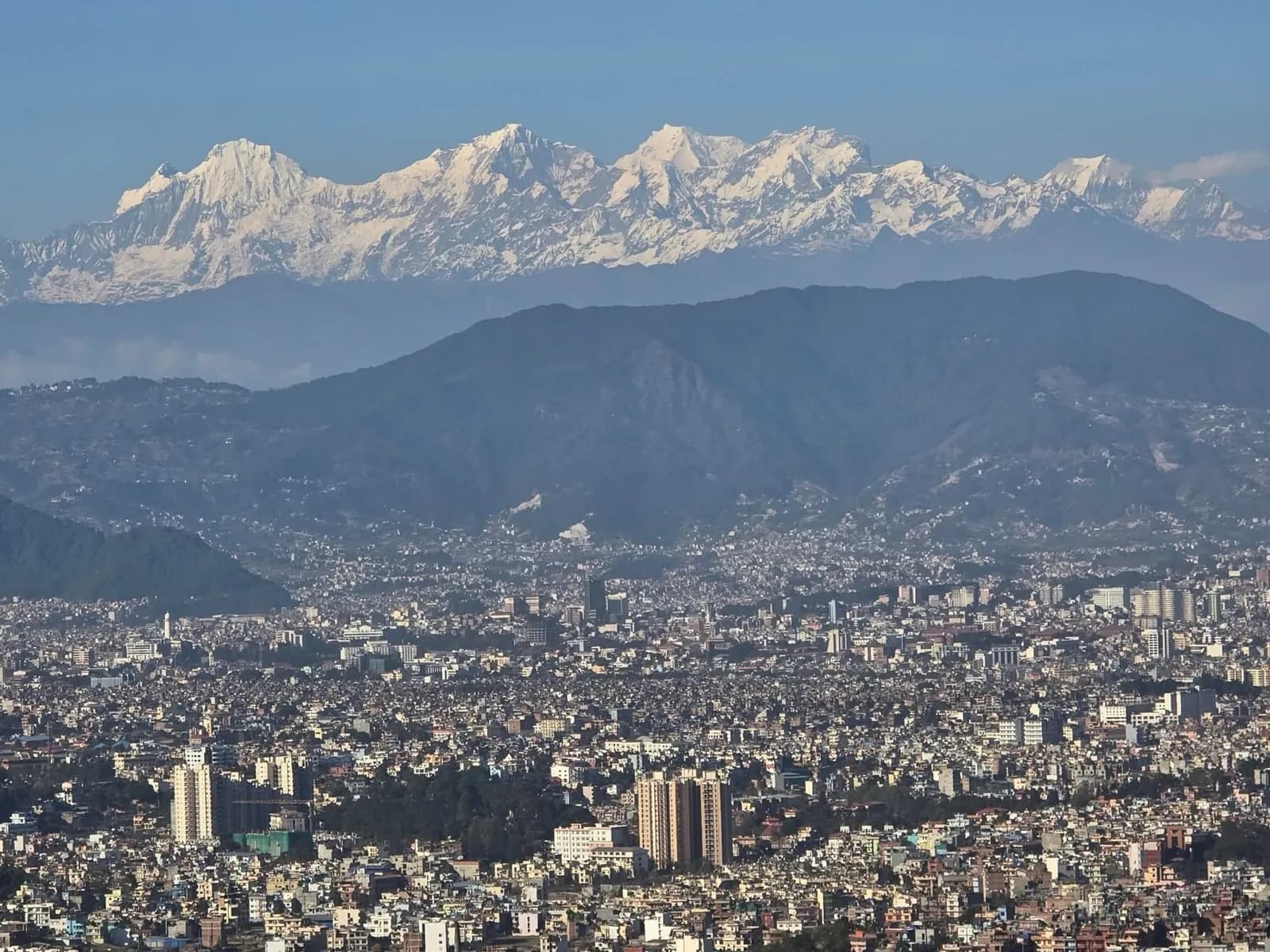
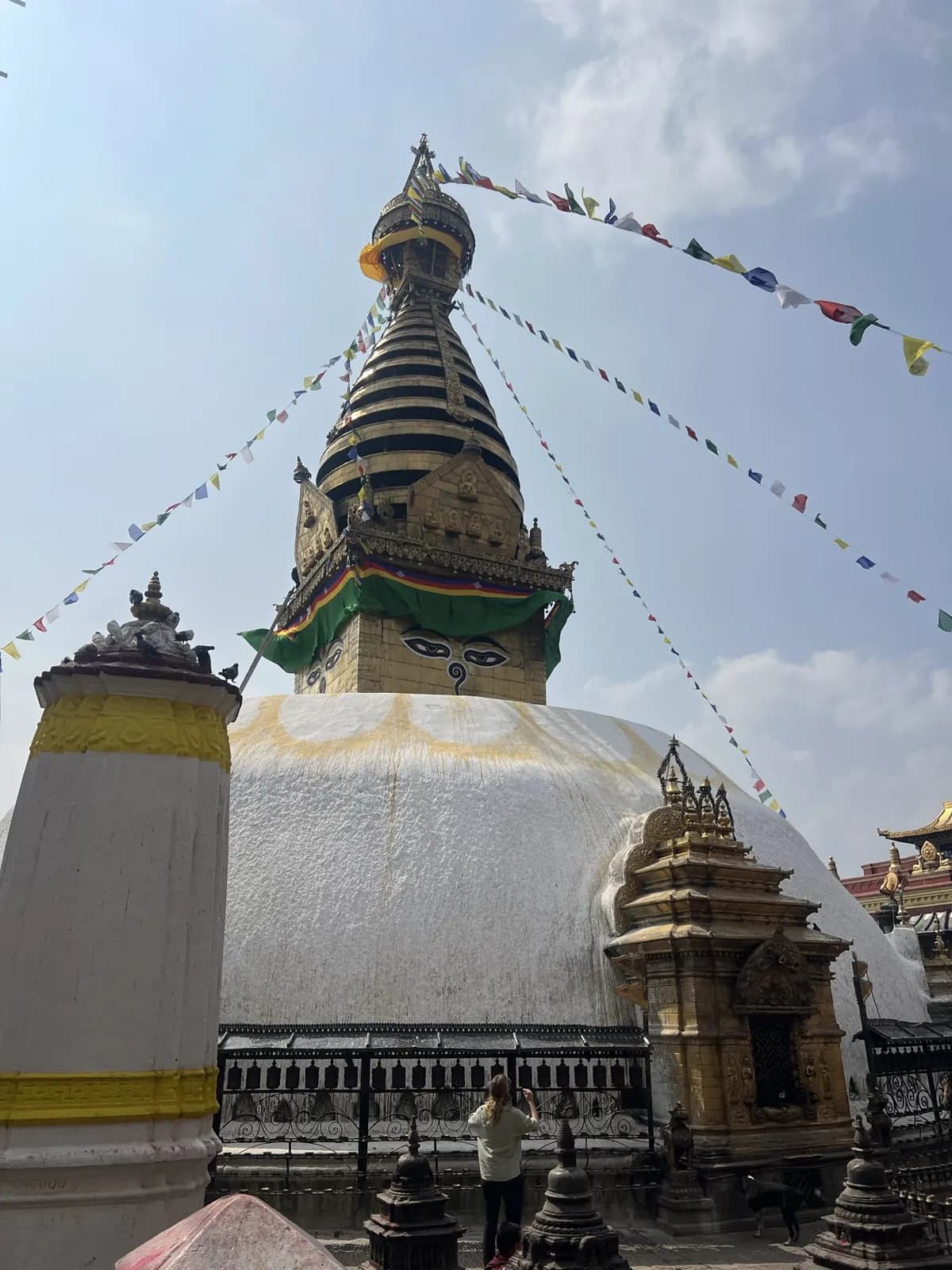
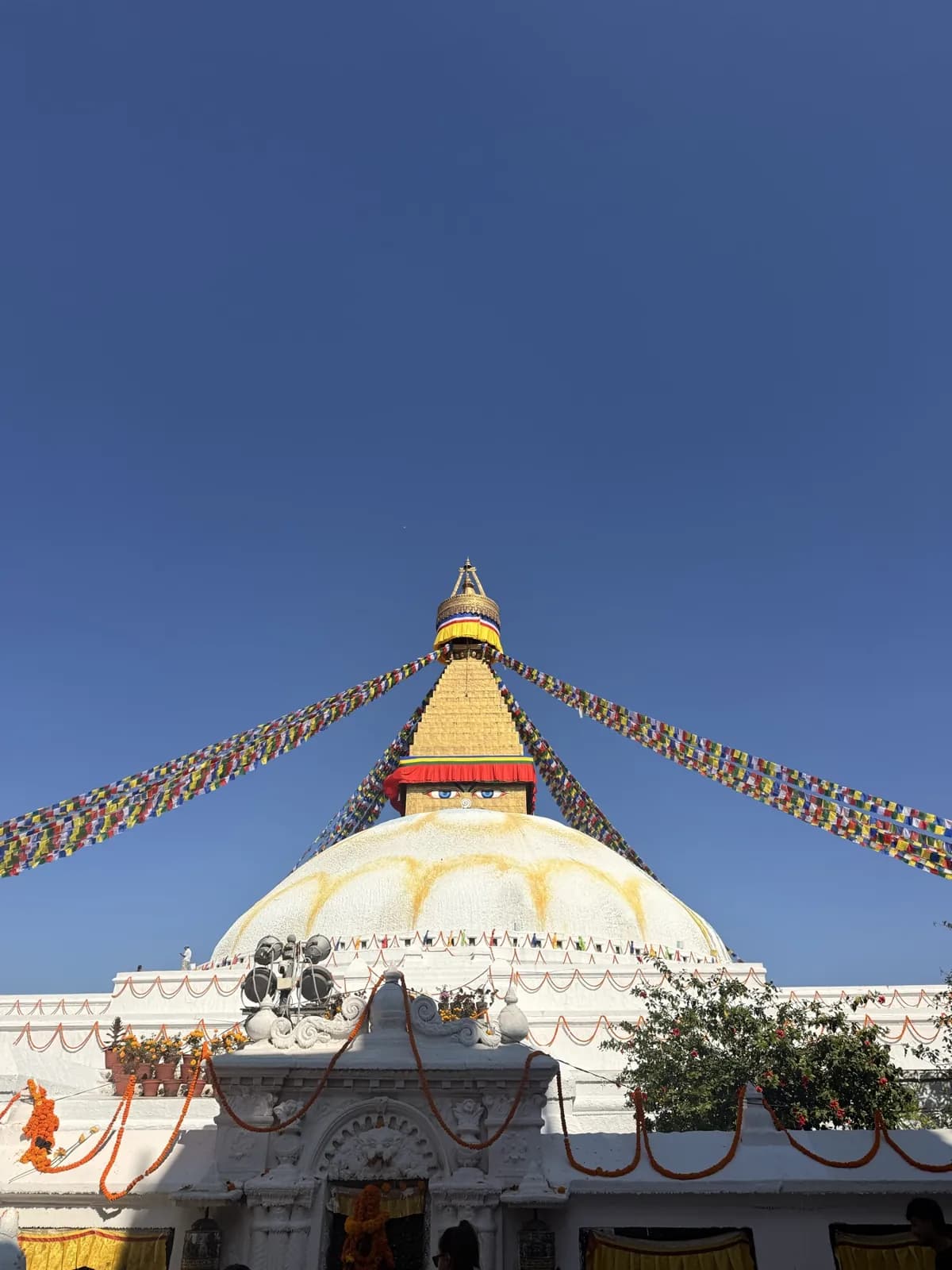
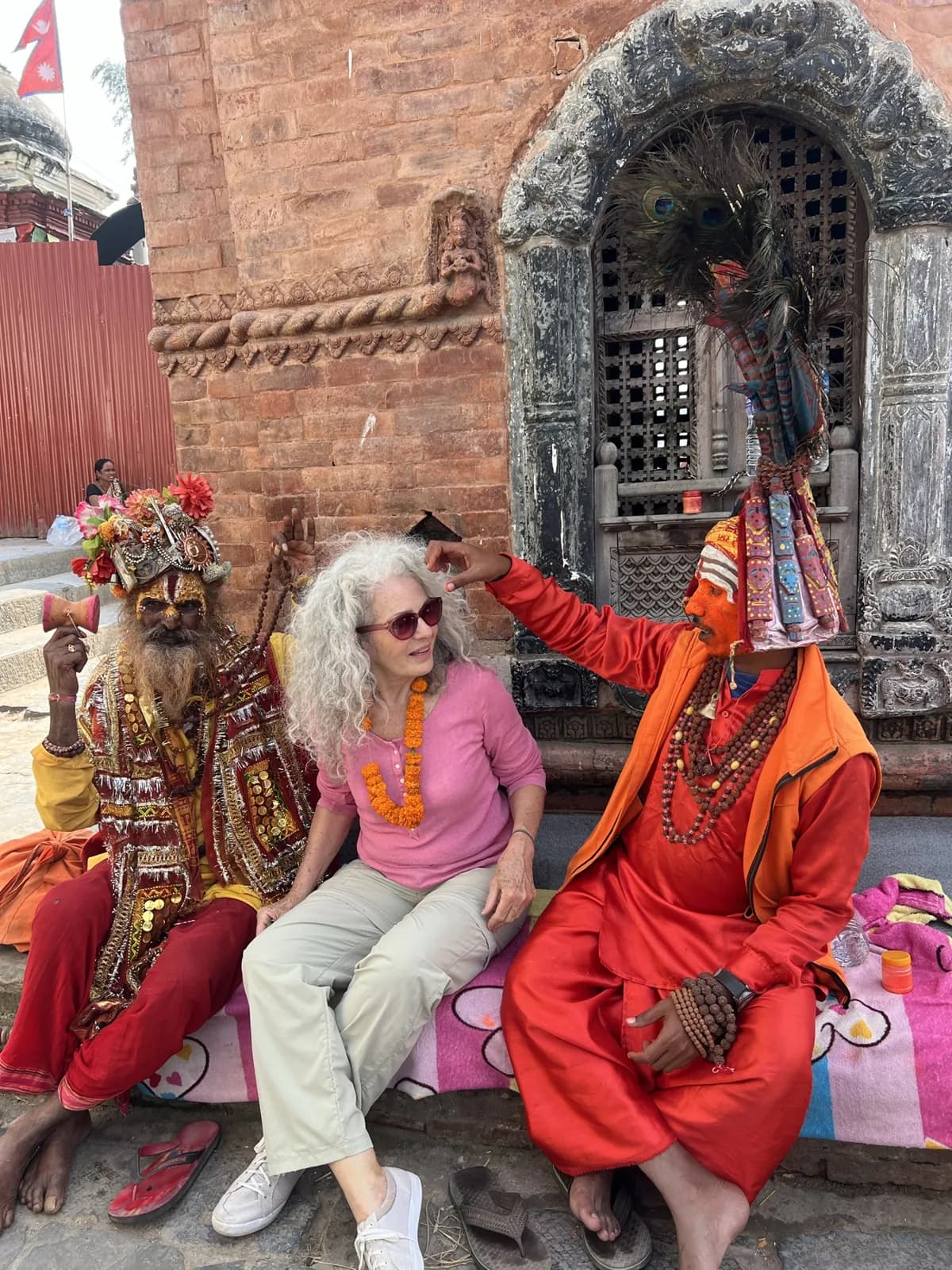
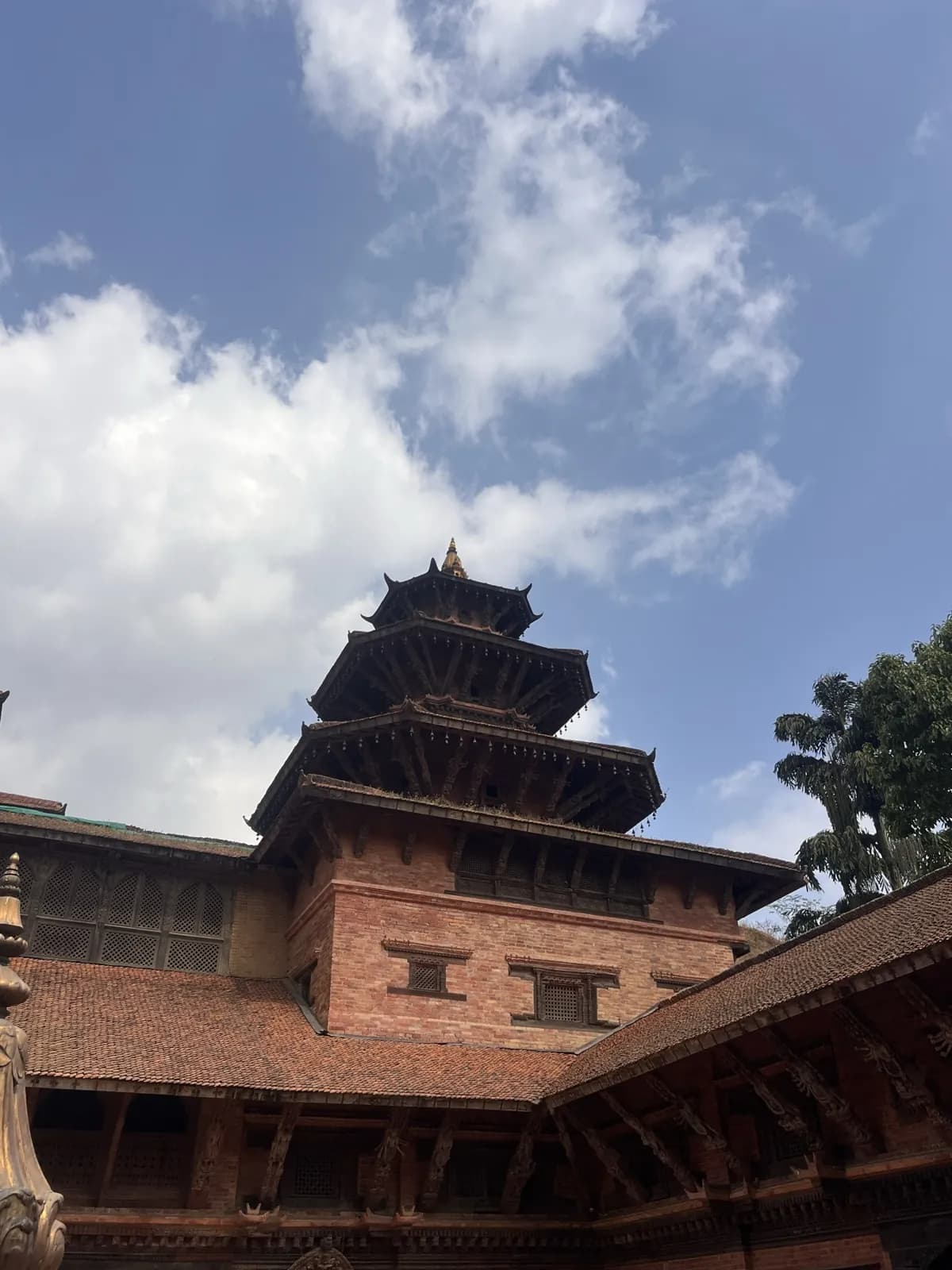
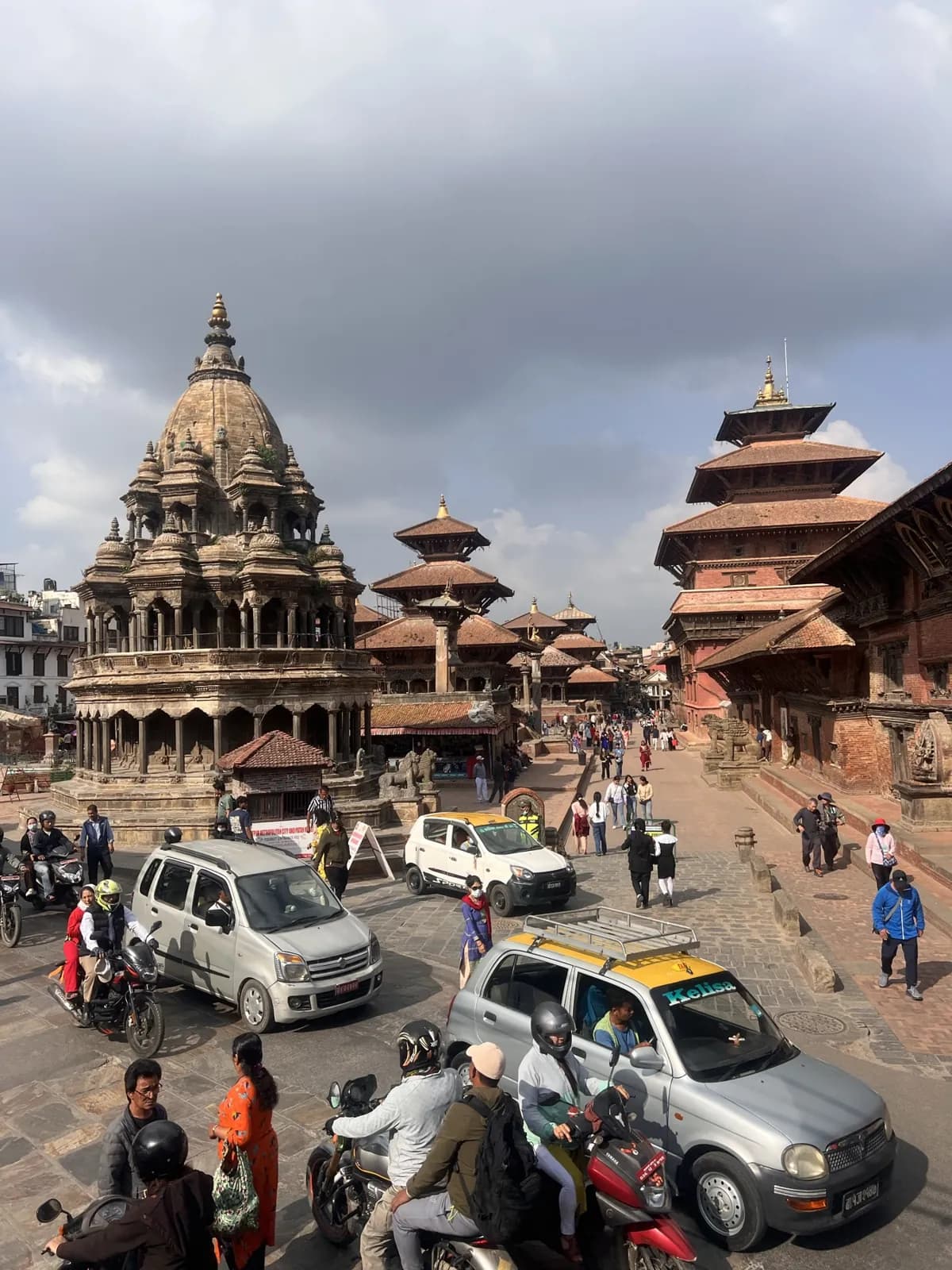
You visit the stupa at Swayambhunath, the riverside temples at Pashupatinath, the great dome of Boudhanath and the carved squares of Patan, with a guide who explains the religious art and symbolism. A private vehicle is provided all day, followed by an early night.
After the mountain flight, you walk gently downhill for half a day beside the Dudh Koshi to Phakding. The walking is easy, and tonight is the first of the upgraded lodges: a private room, a hot shower and a heated dining room.
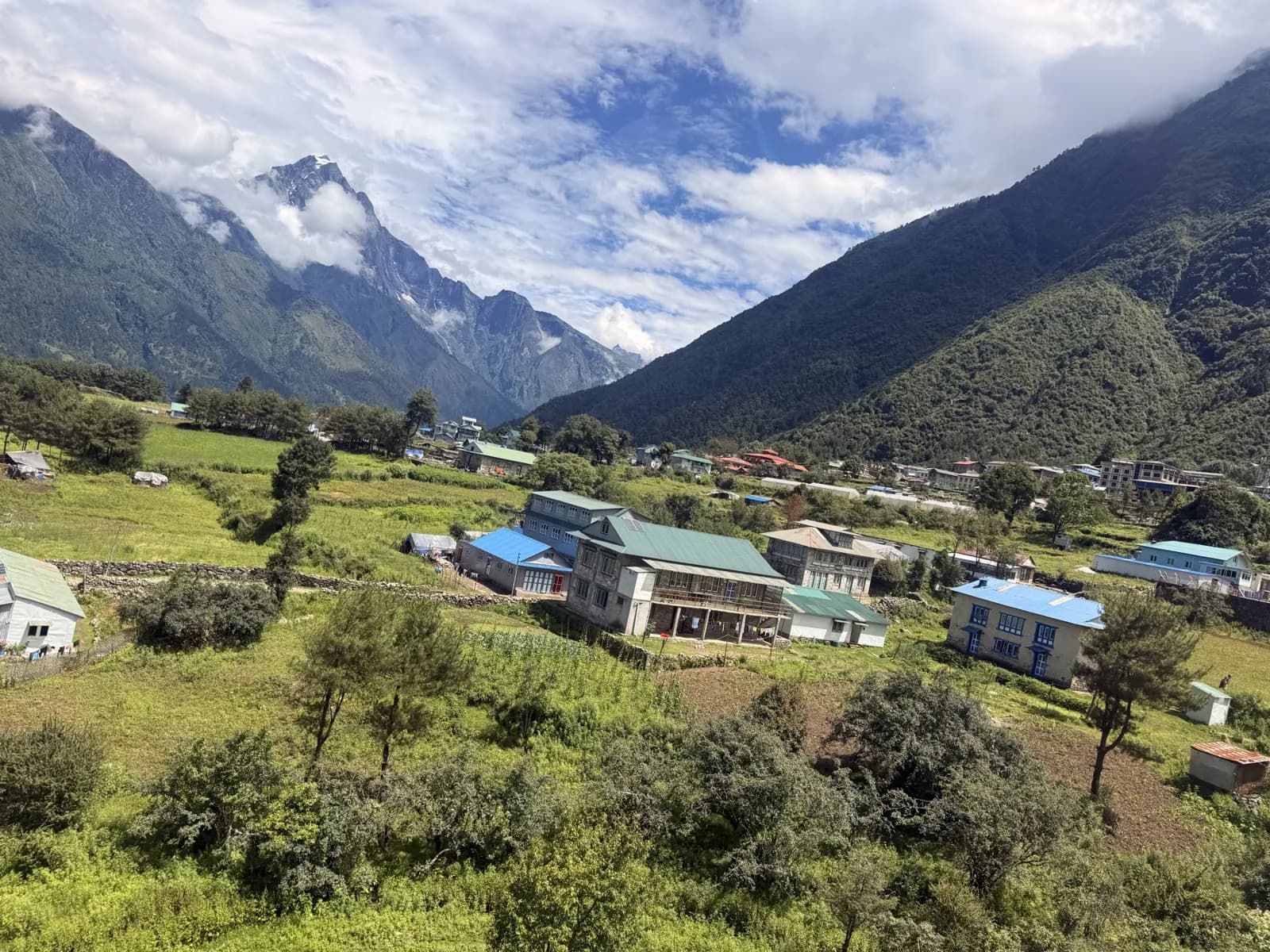
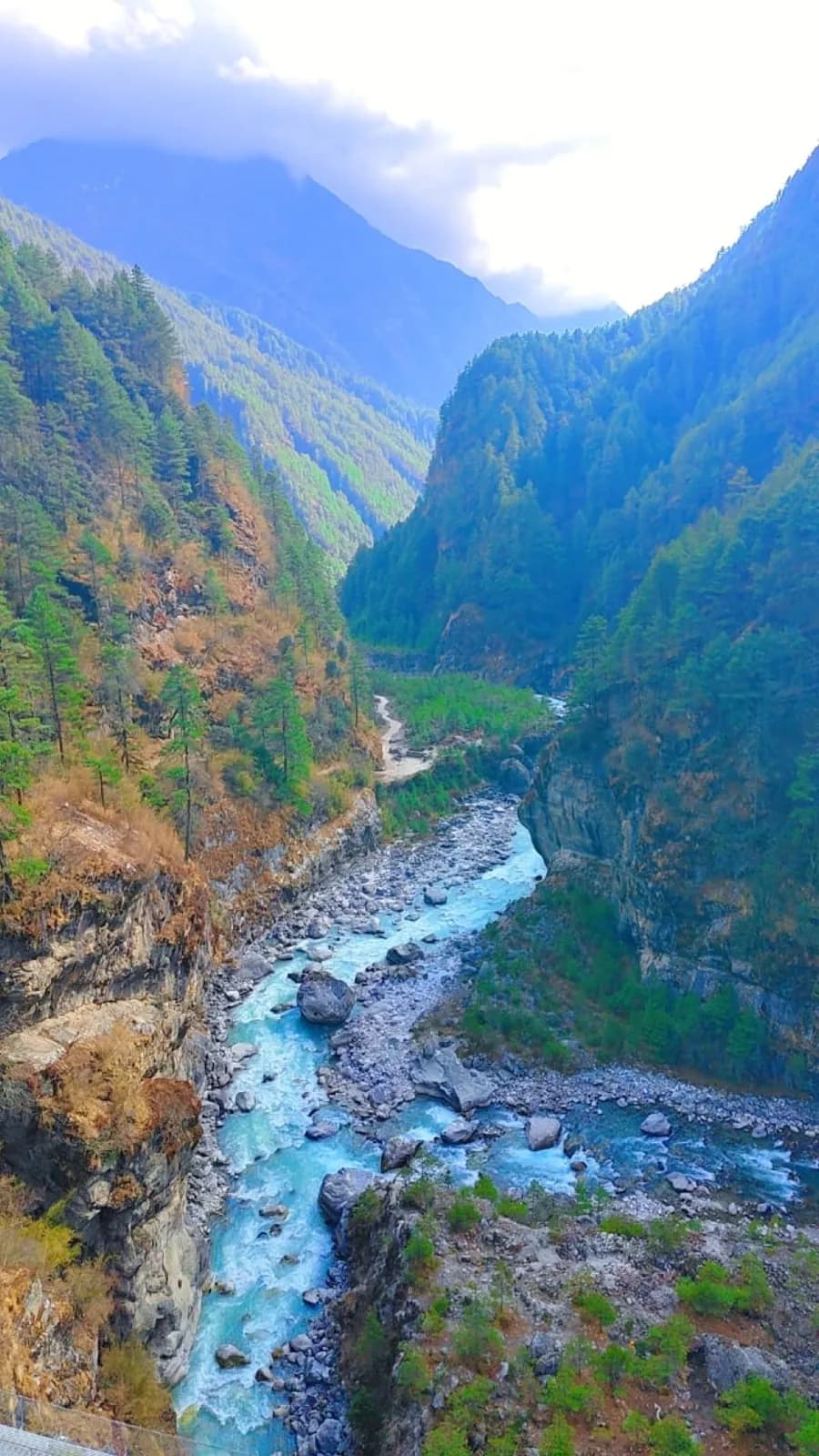
You cross the suspension bridges and then climb for a long time through pine forest to Namche, the Sherpa town built around a hillside. On a clear day you have your first view of Everest on the way up.
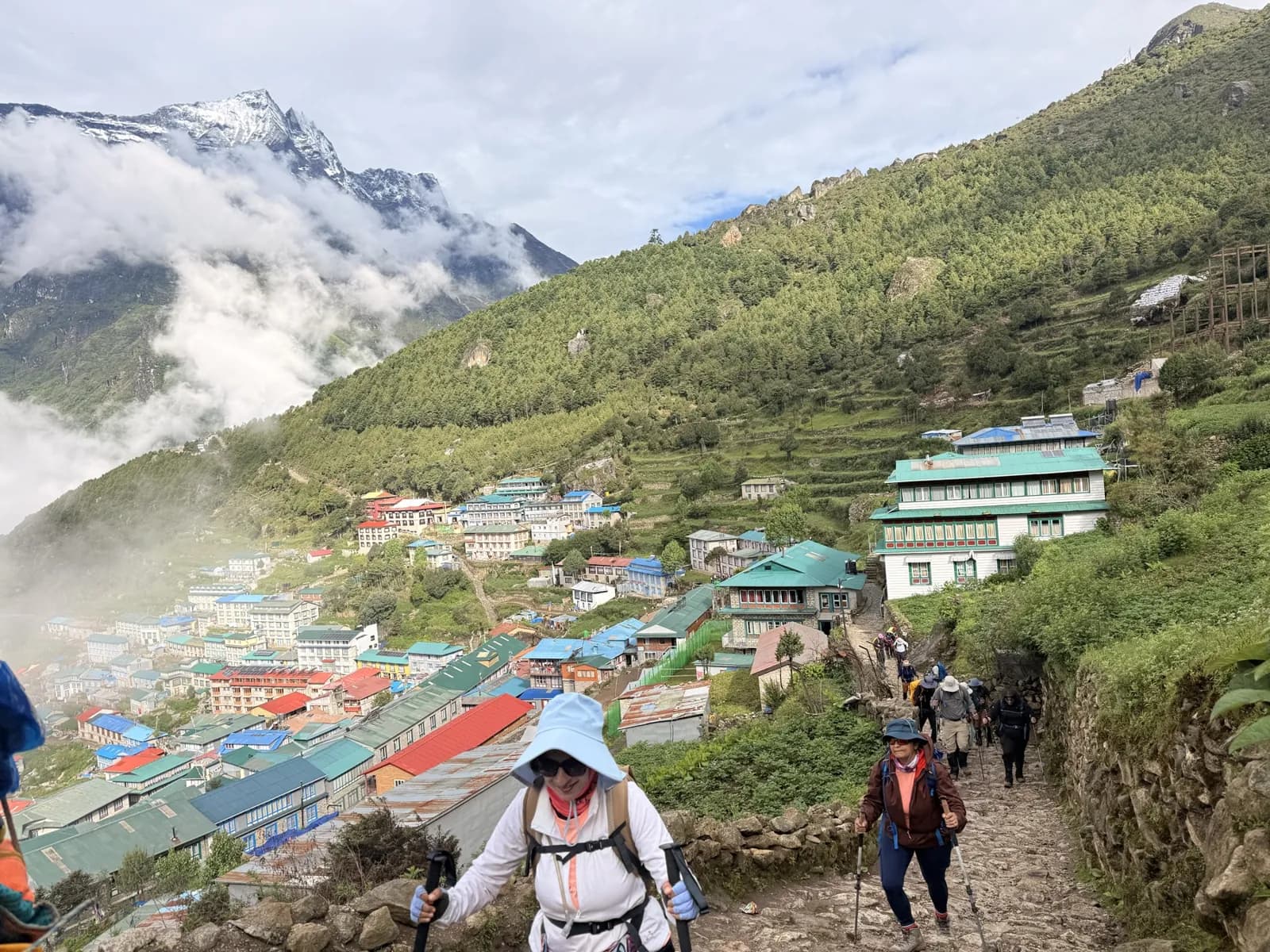
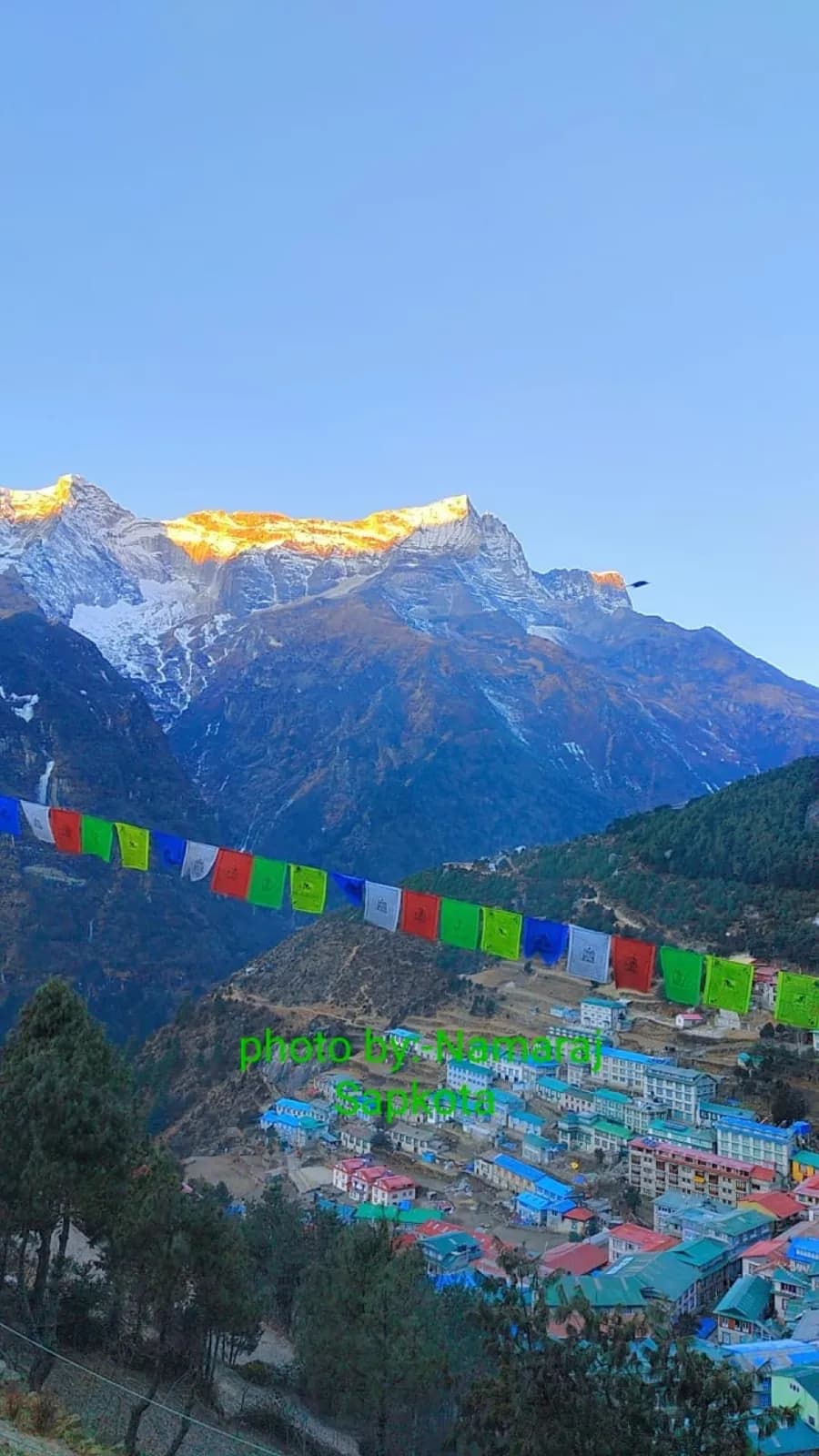
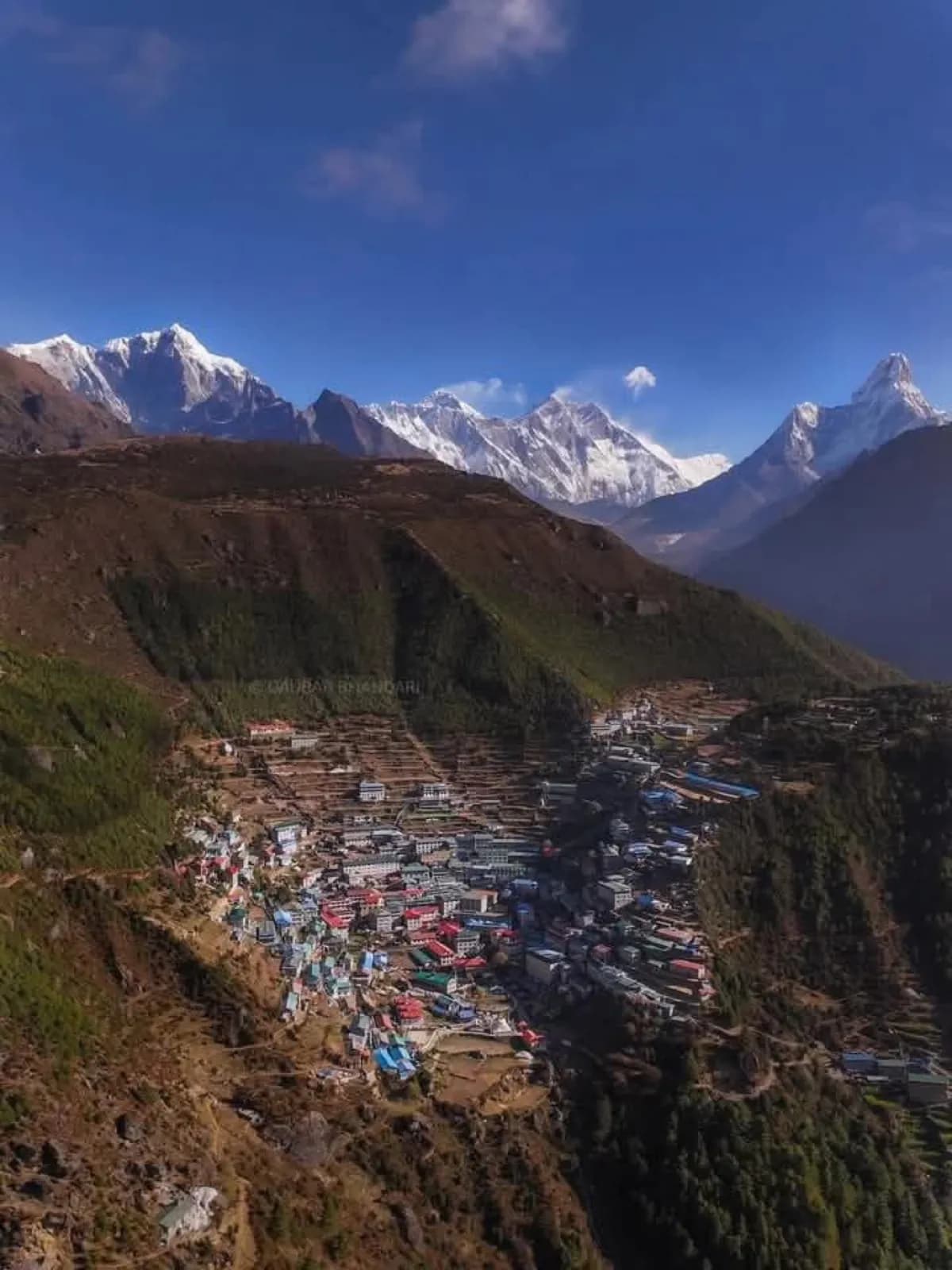
A day to allow your body to adjust. You climb to the viewpoint above the town for views of Everest, Lhotse and Ama Dablam, then return to sleep lower, which is how acclimatisation works. Namche has bakeries, coffee shops and reliable hot showers.
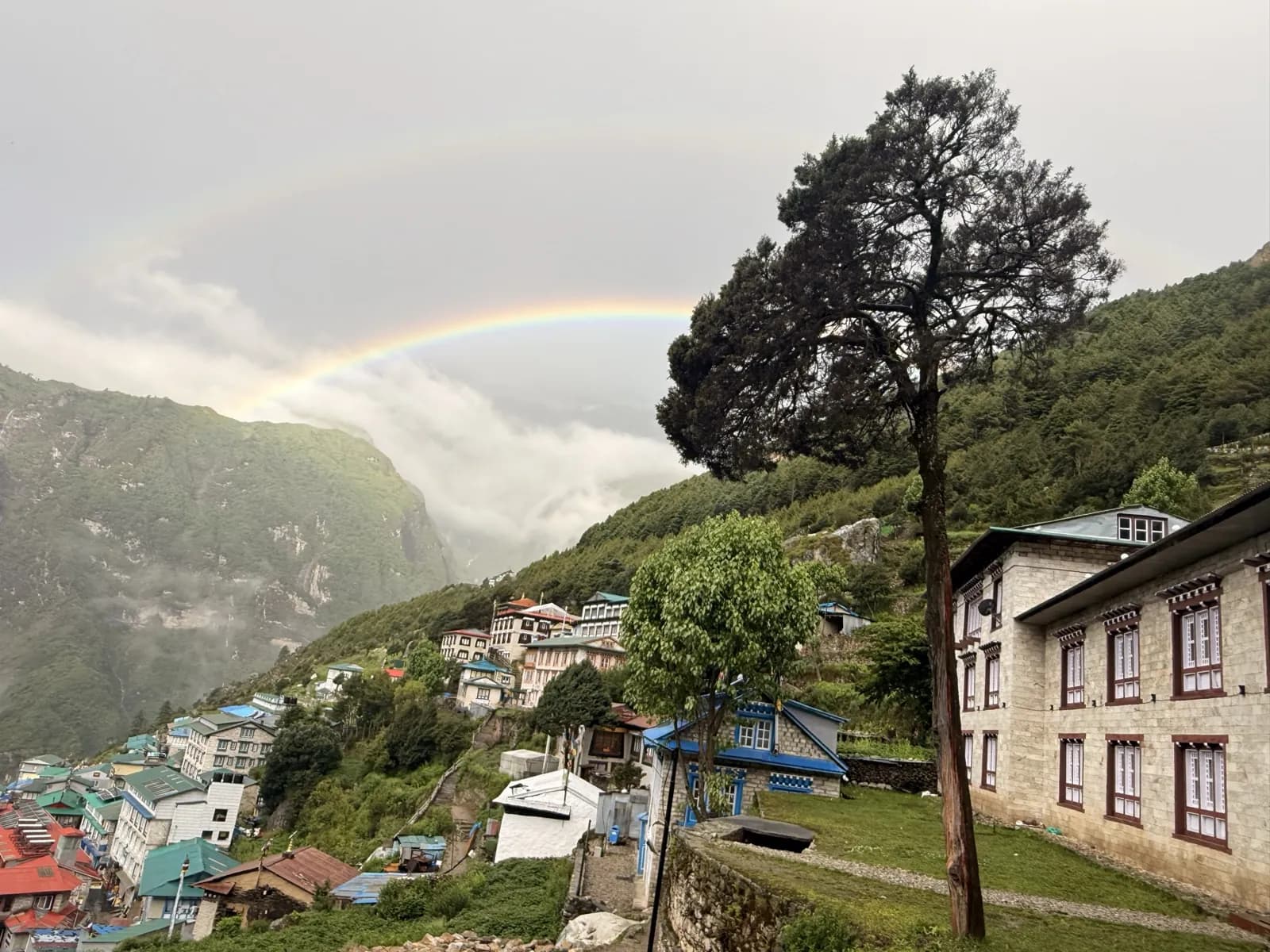
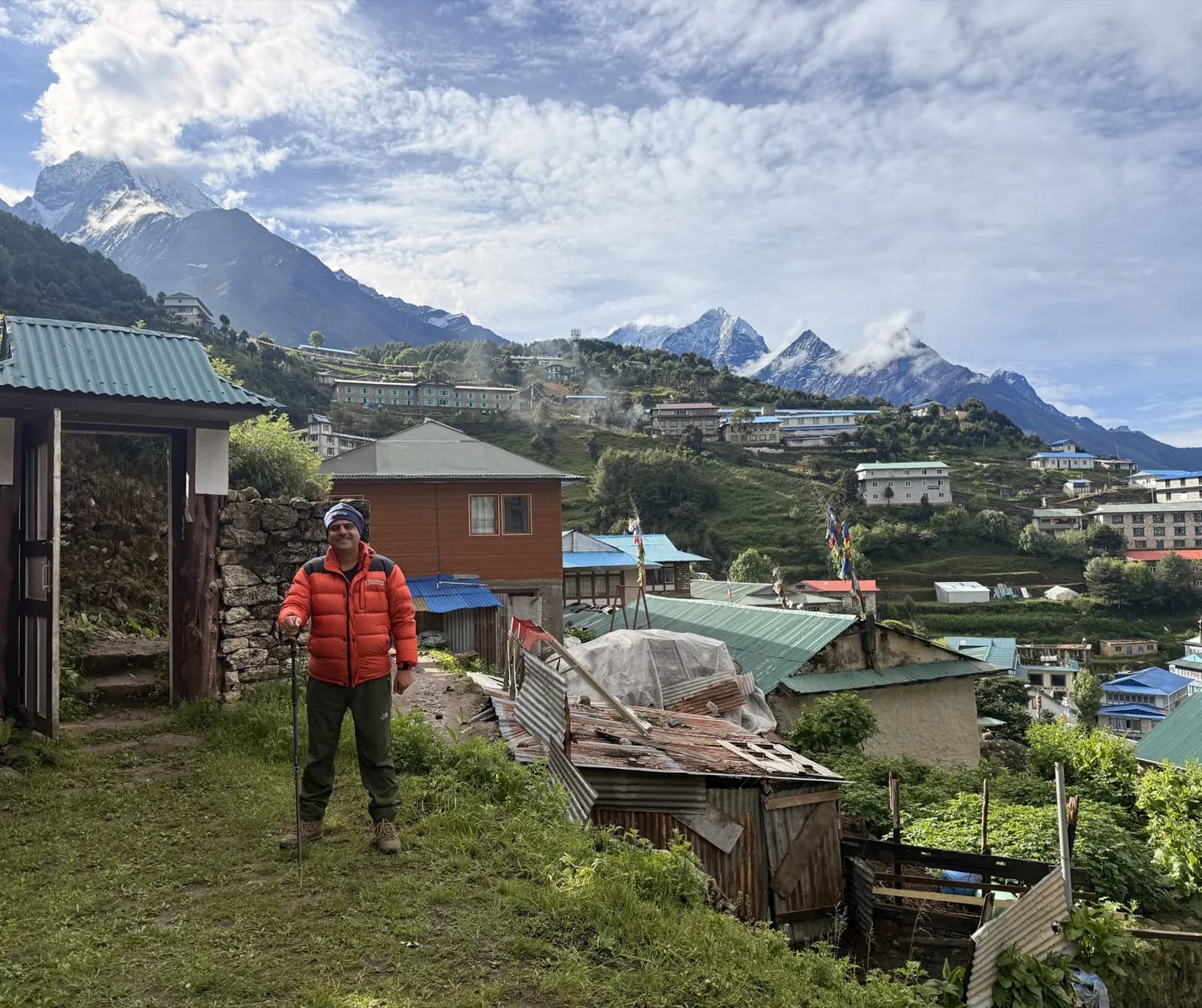
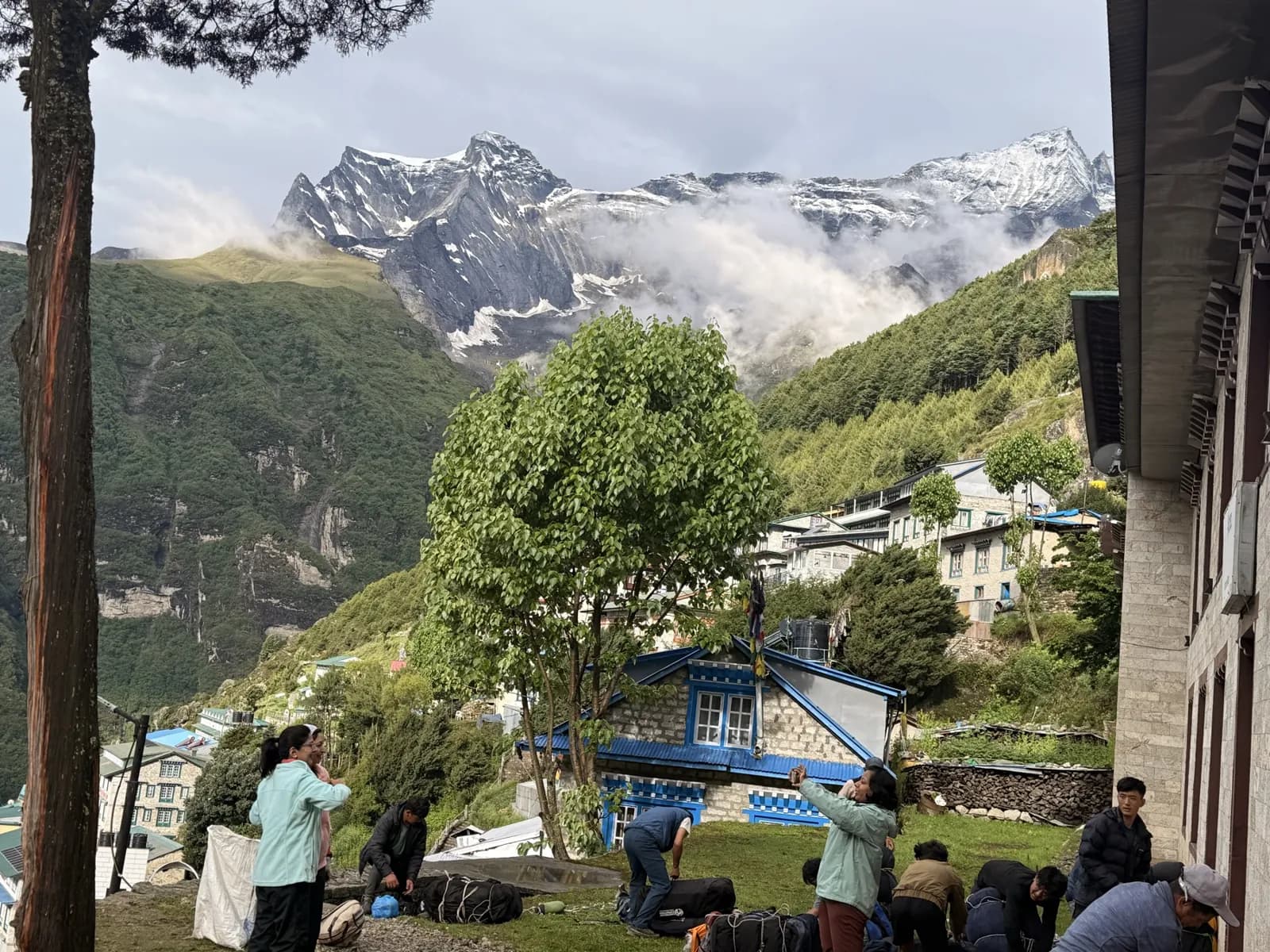
An open, scenic day with mountains in view most of the way. You descend to the river, then climb for a long time to the monastery at Tengboche on its ridge, with Ama Dablam directly behind it. If a service is taking place, you can attend.
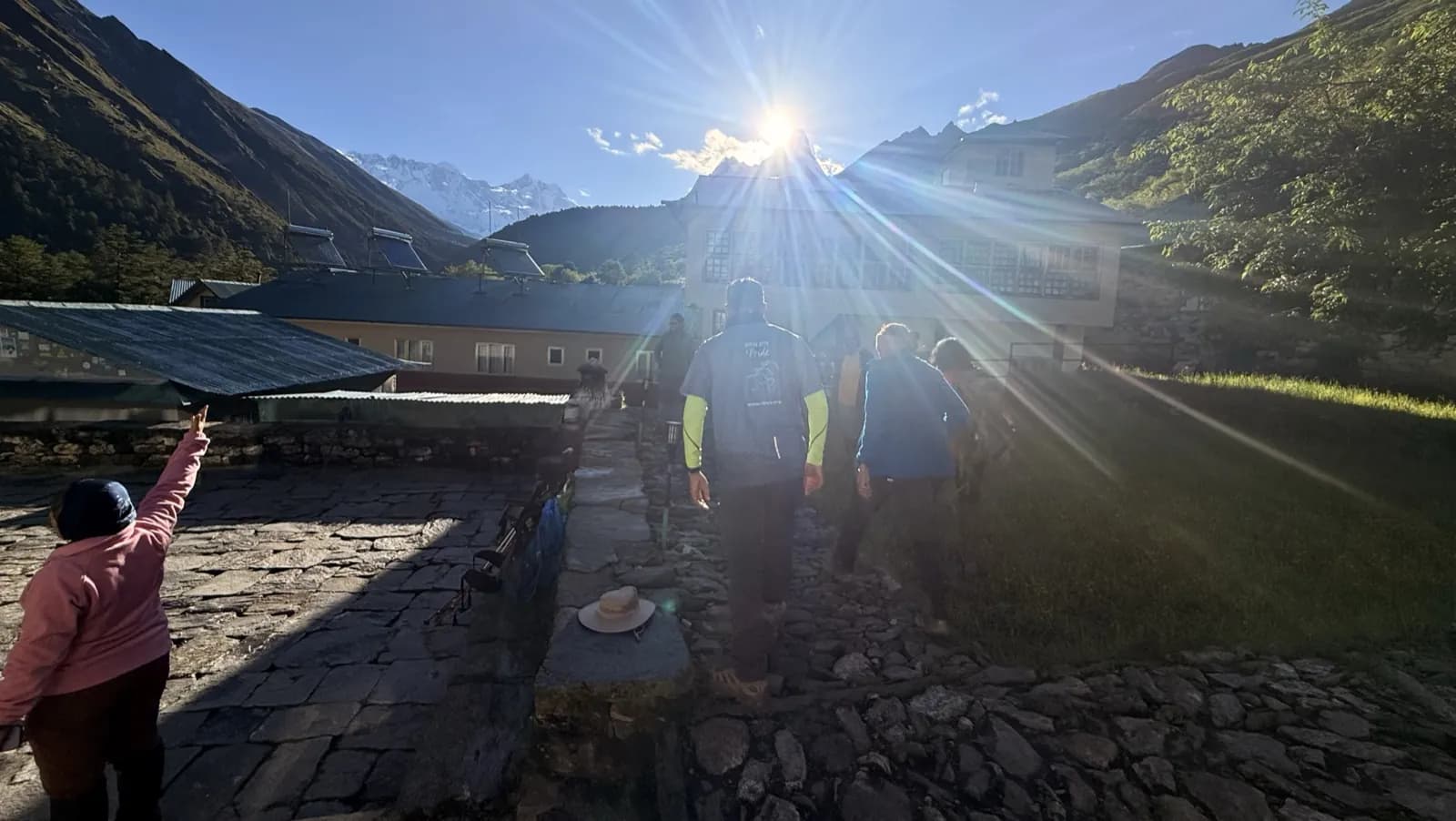
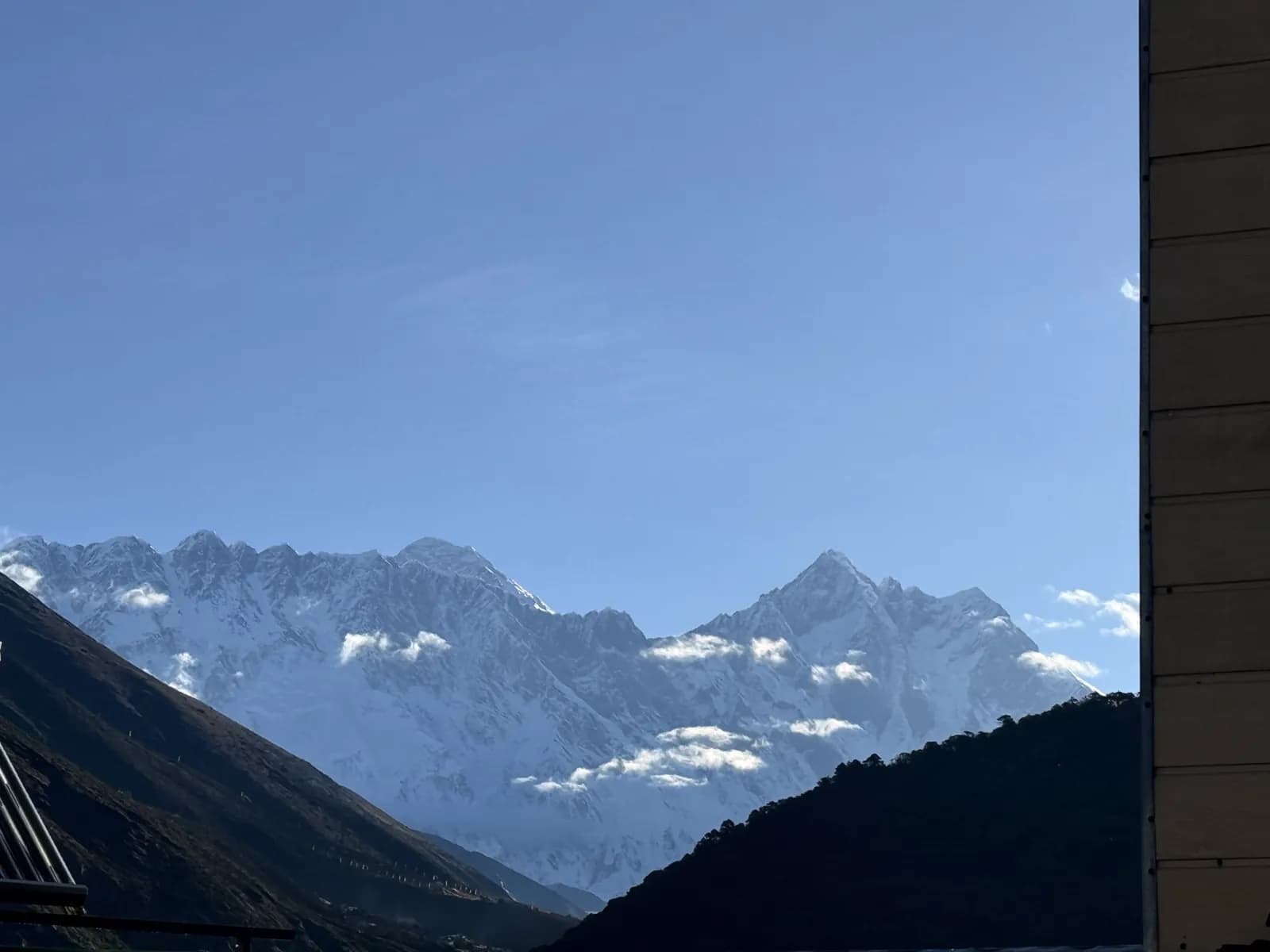
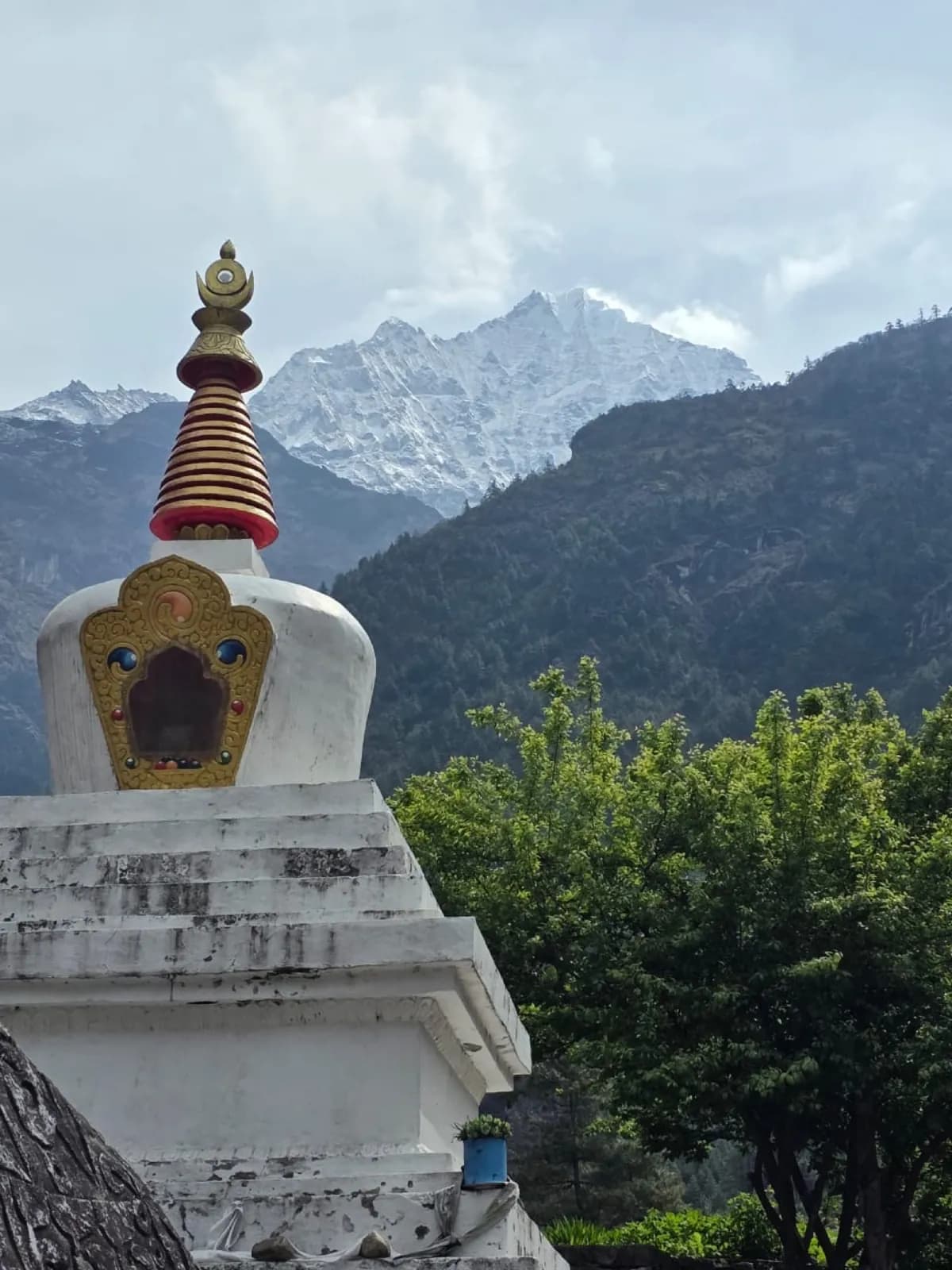
You walk through the last of the forest, past Pangboche and up into open country above the tree line. The trail follows the Imja River to Dingboche, a cluster of stone-walled fields below the high peaks.
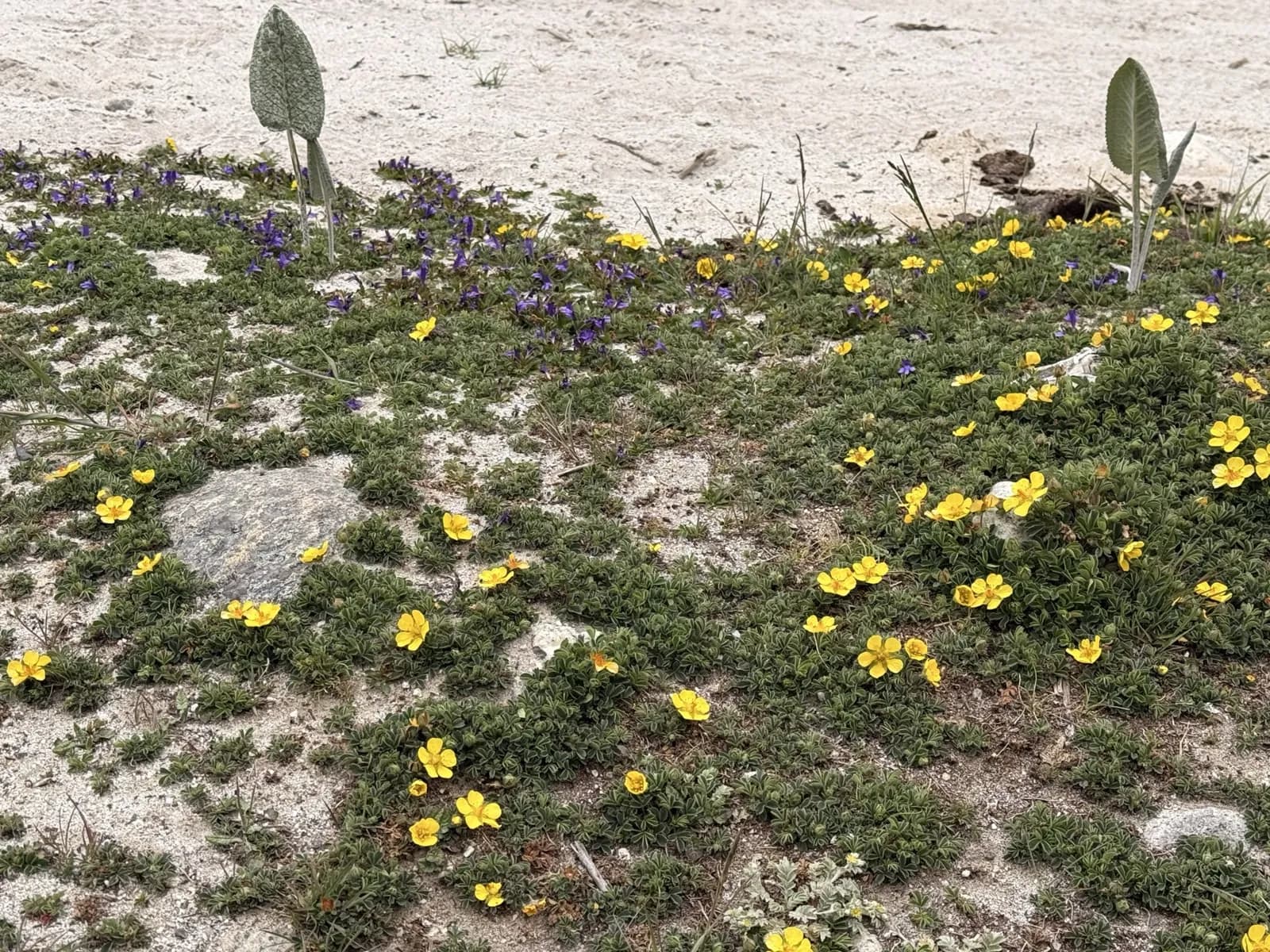
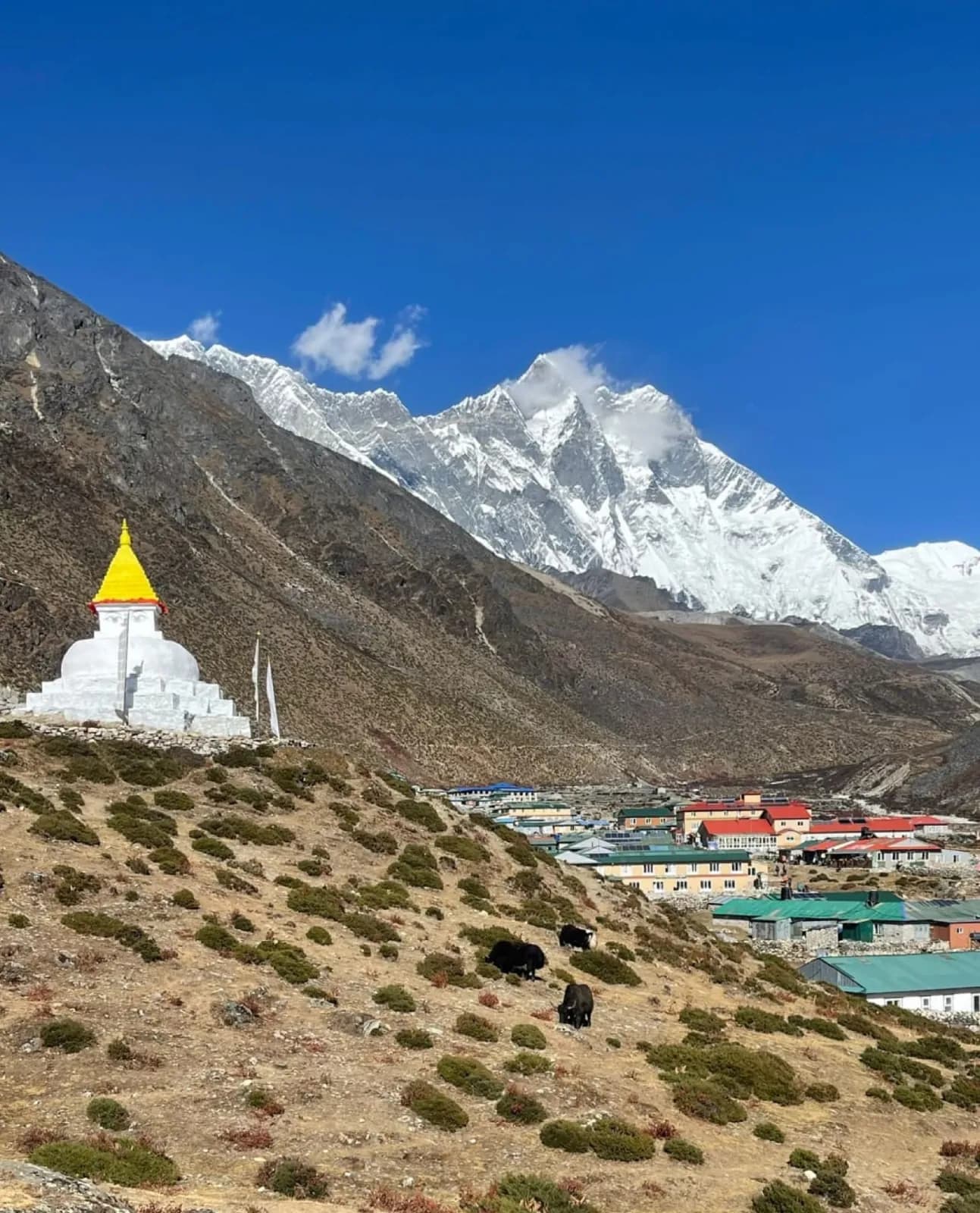
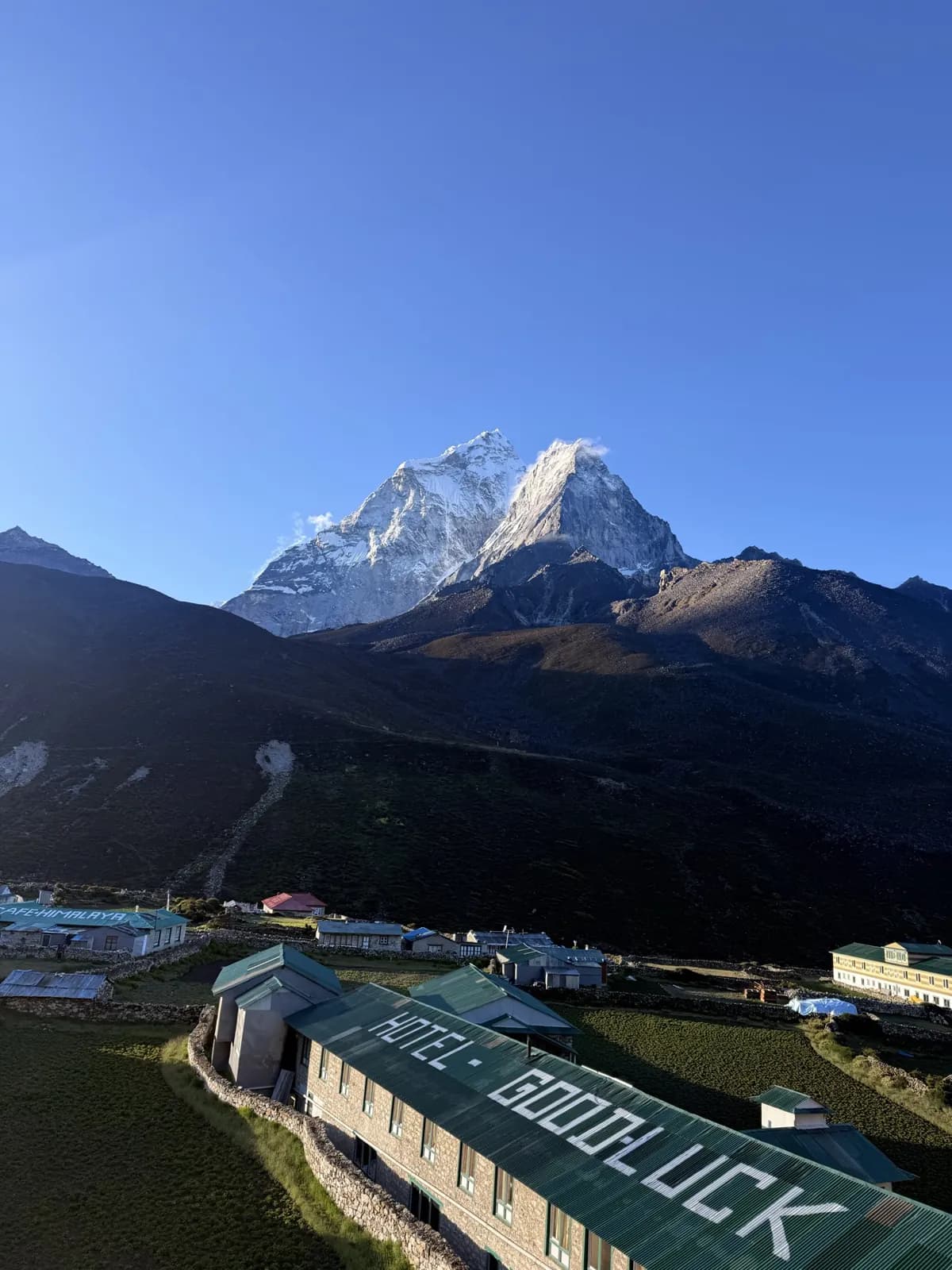
The second acclimatisation day, and an important one. A slow climb up the ridge behind the village gives views of Makalu and Lhotse, two of the highest mountains in the world, before you return to the village to sleep.
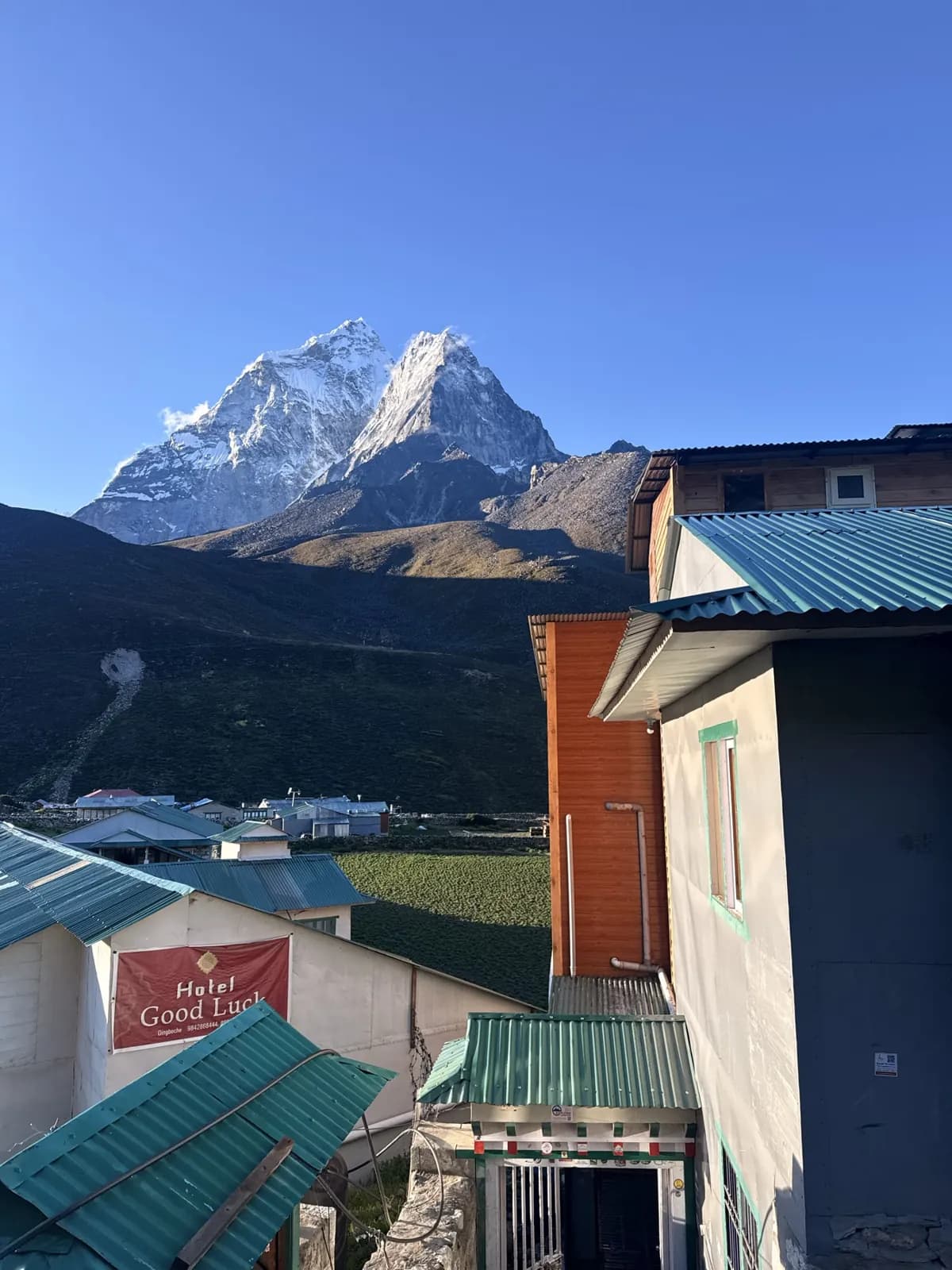
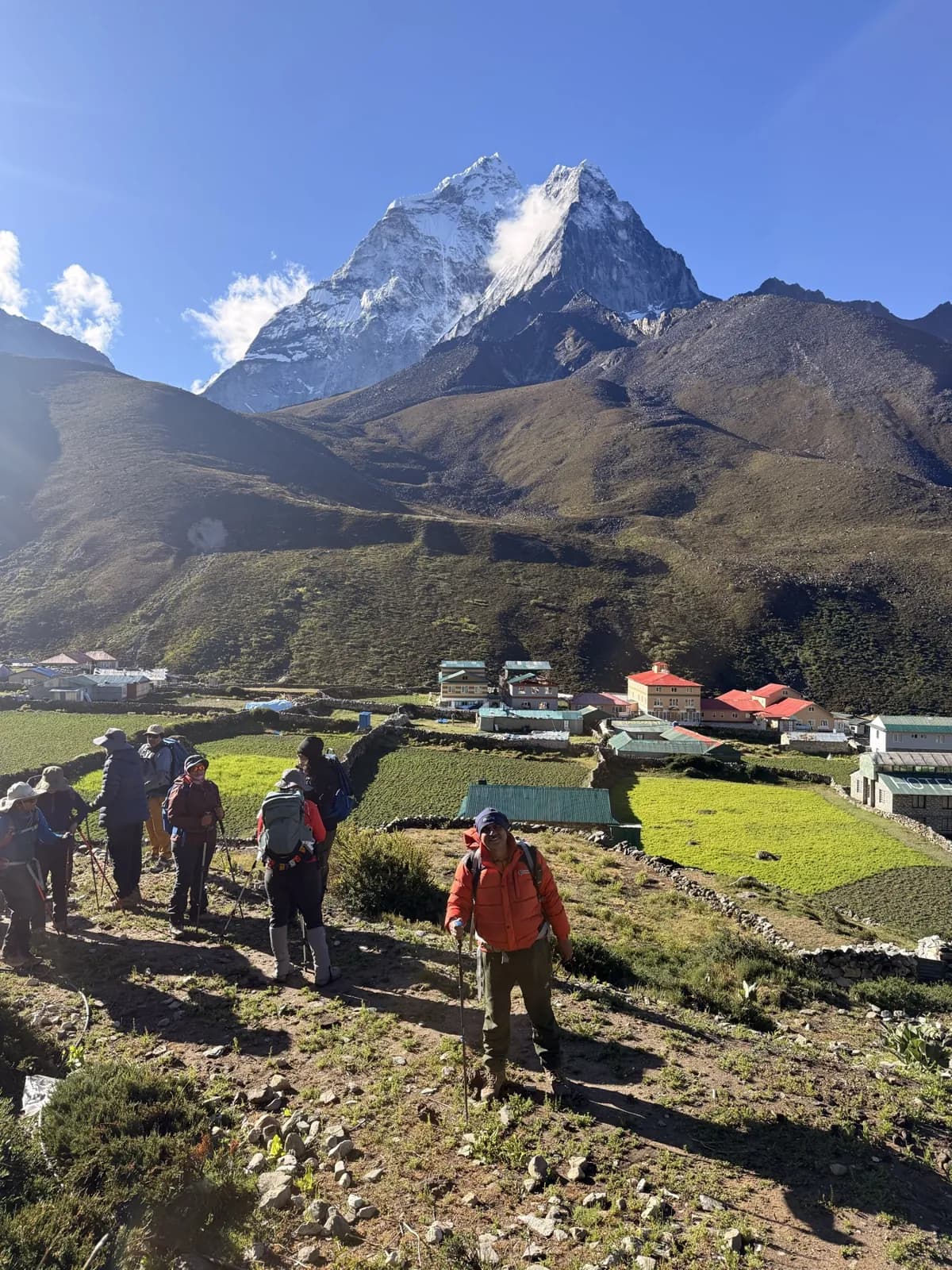
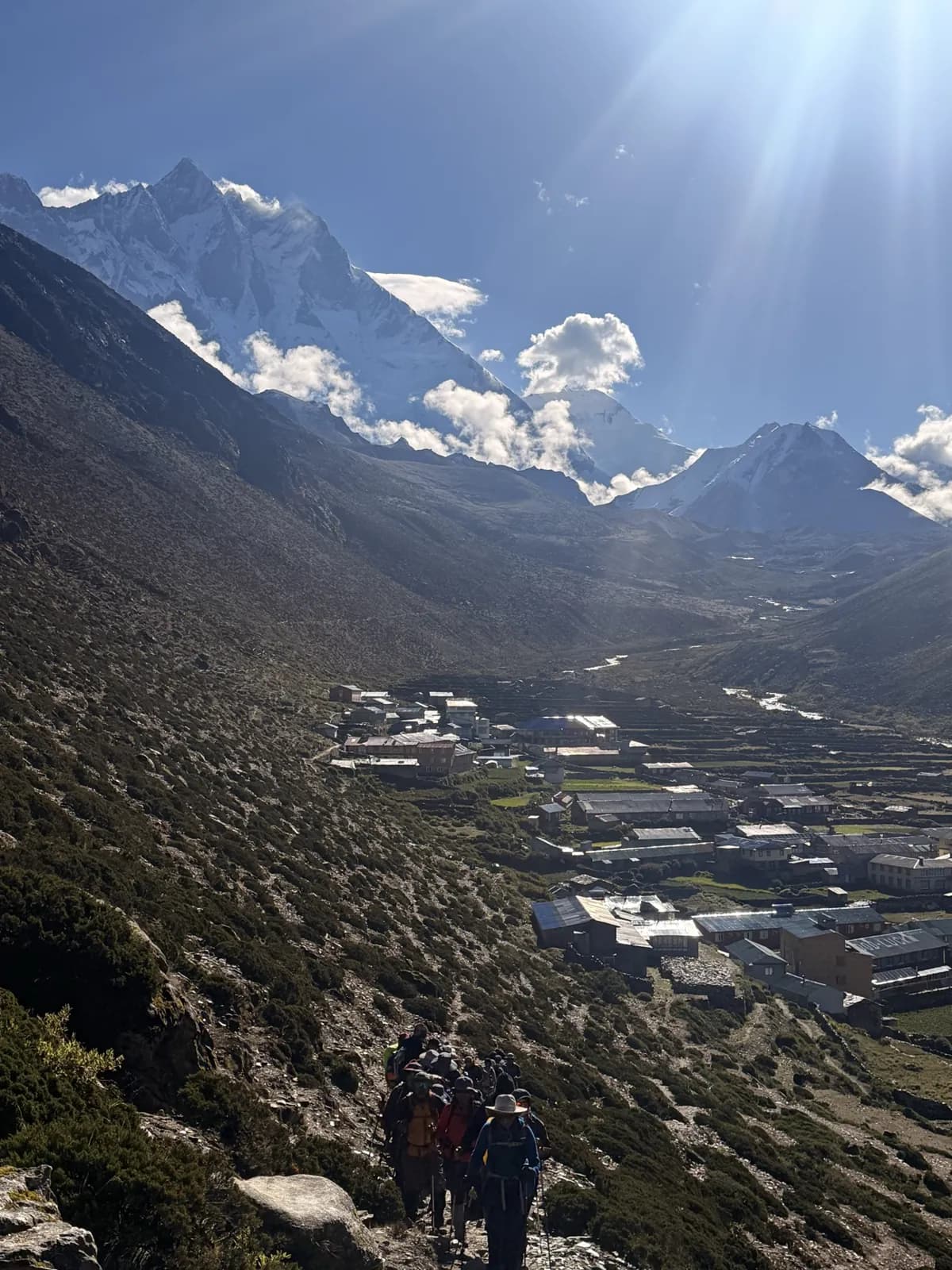
A shorter, higher day up the Khumbu valley. You pass the stone memorials at Thukla, built for climbers who died on Everest, before reaching Lobuche near the edge of the glacier. From here onwards there are no upgraded lodges.
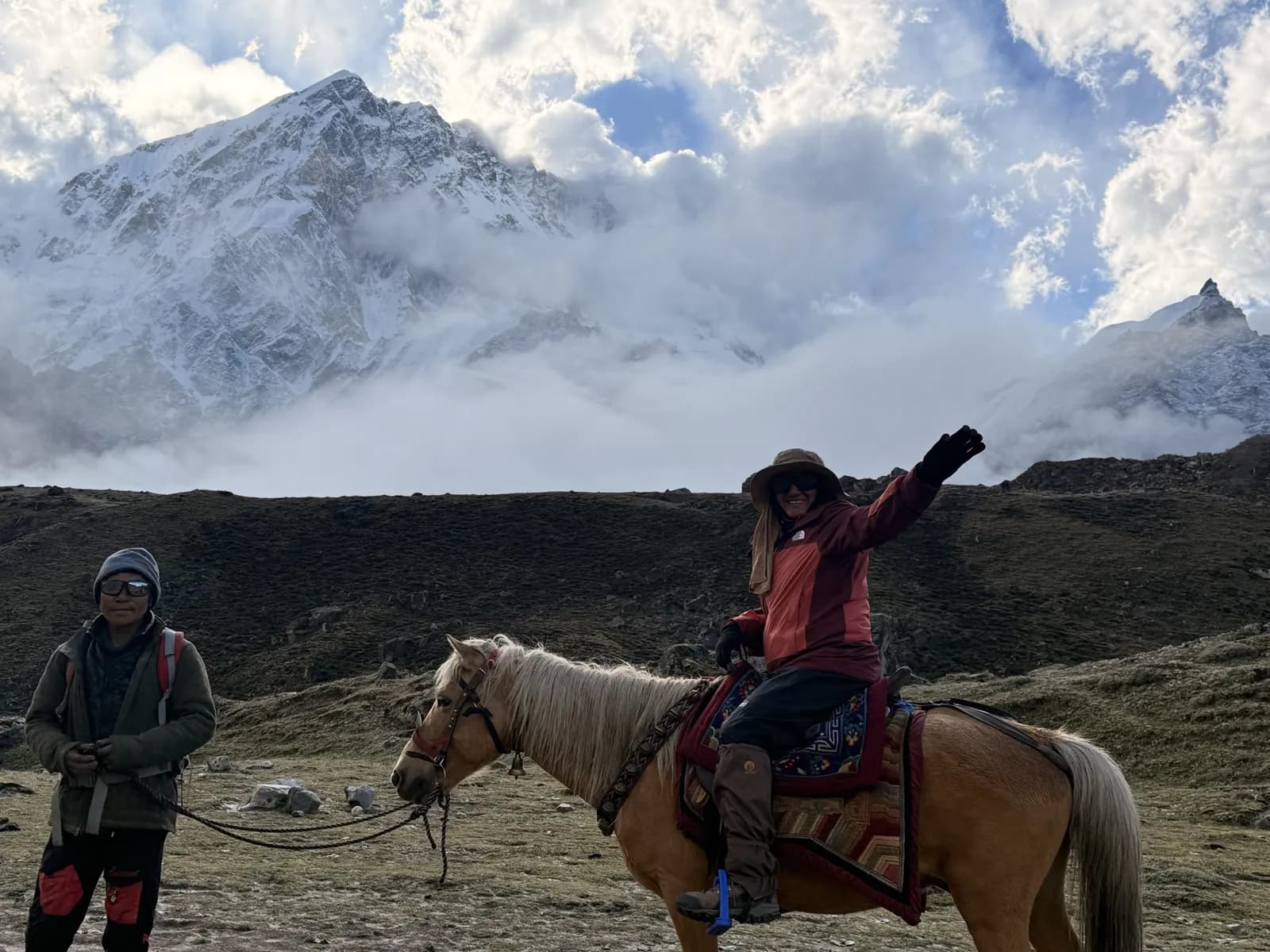
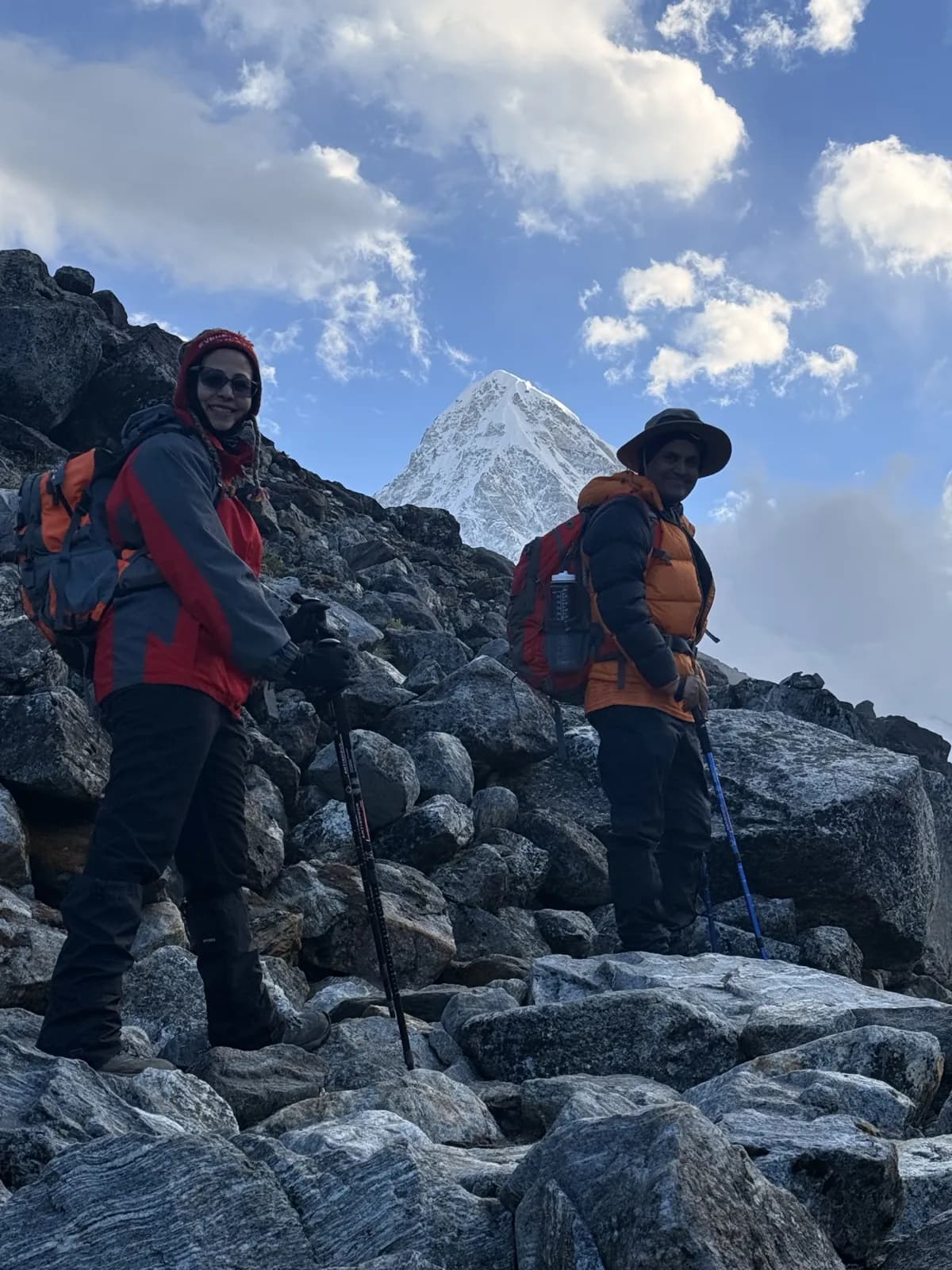
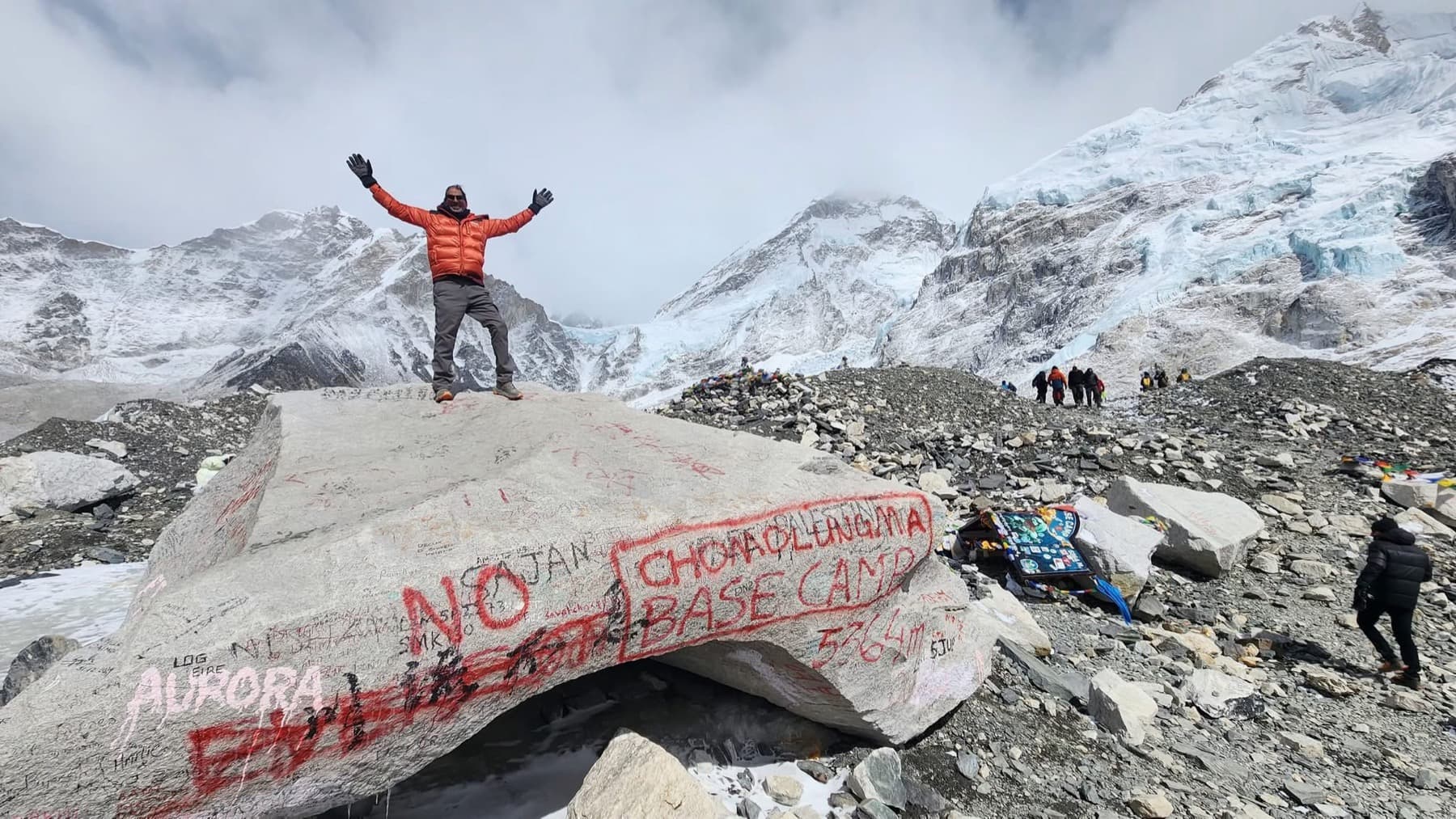
The main day of the trek. A rocky walk along the glacier leads to Gorak Shep for lunch, then across the moraine to Base Camp itself, below the Khumbu Icefall. In spring it is filled with climbers' tents. We return to Gorak Shep for the night.
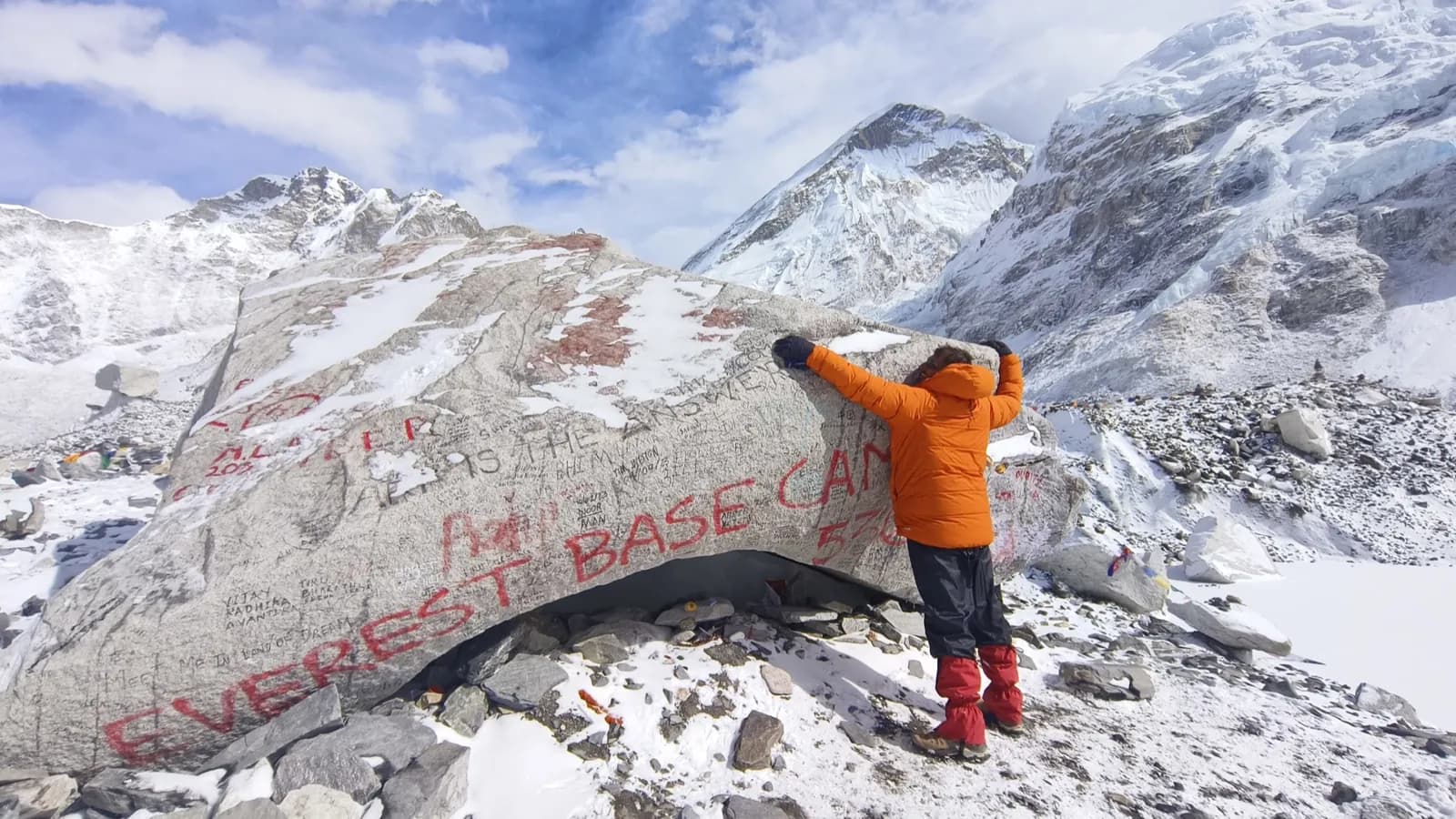
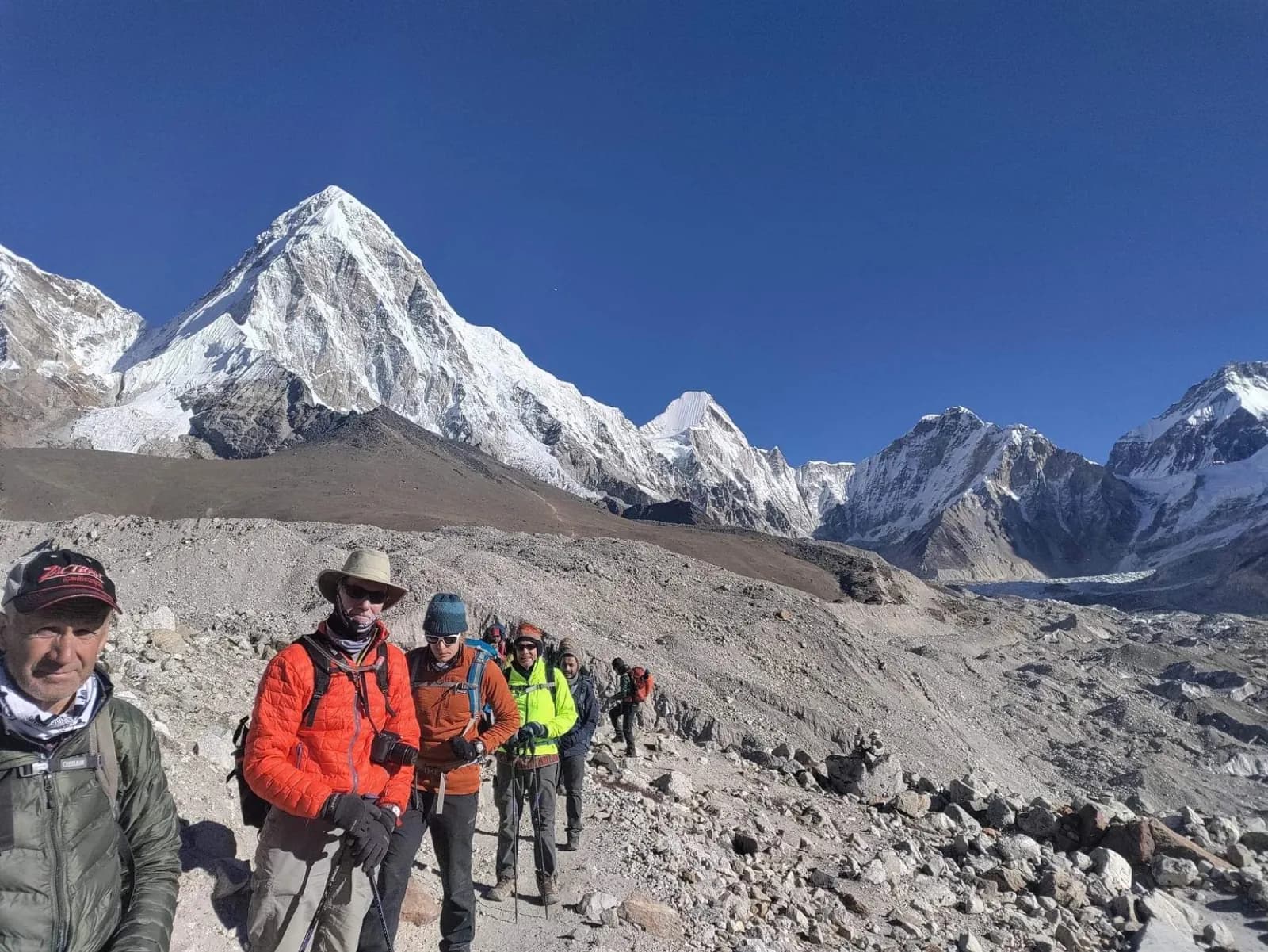
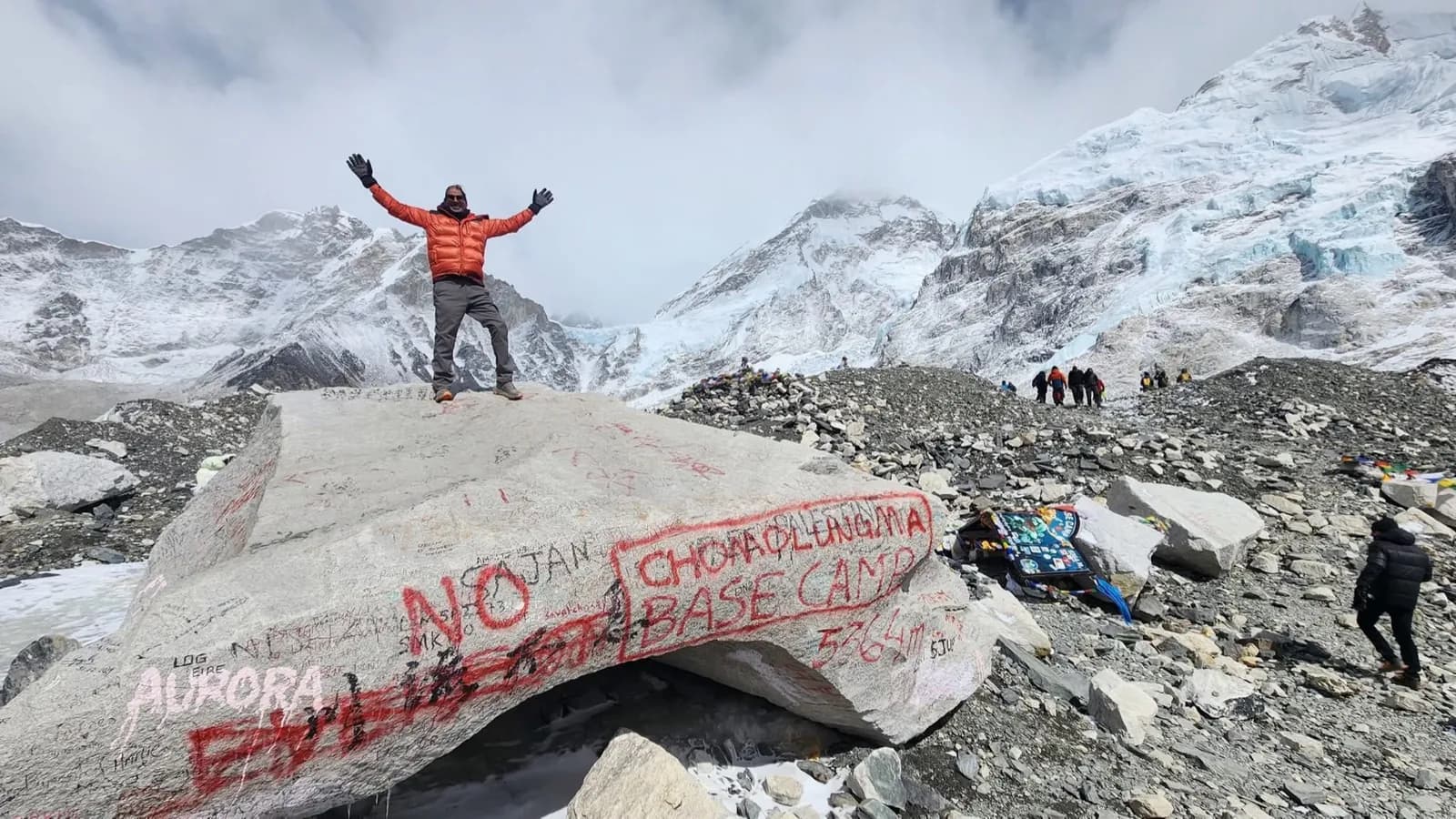
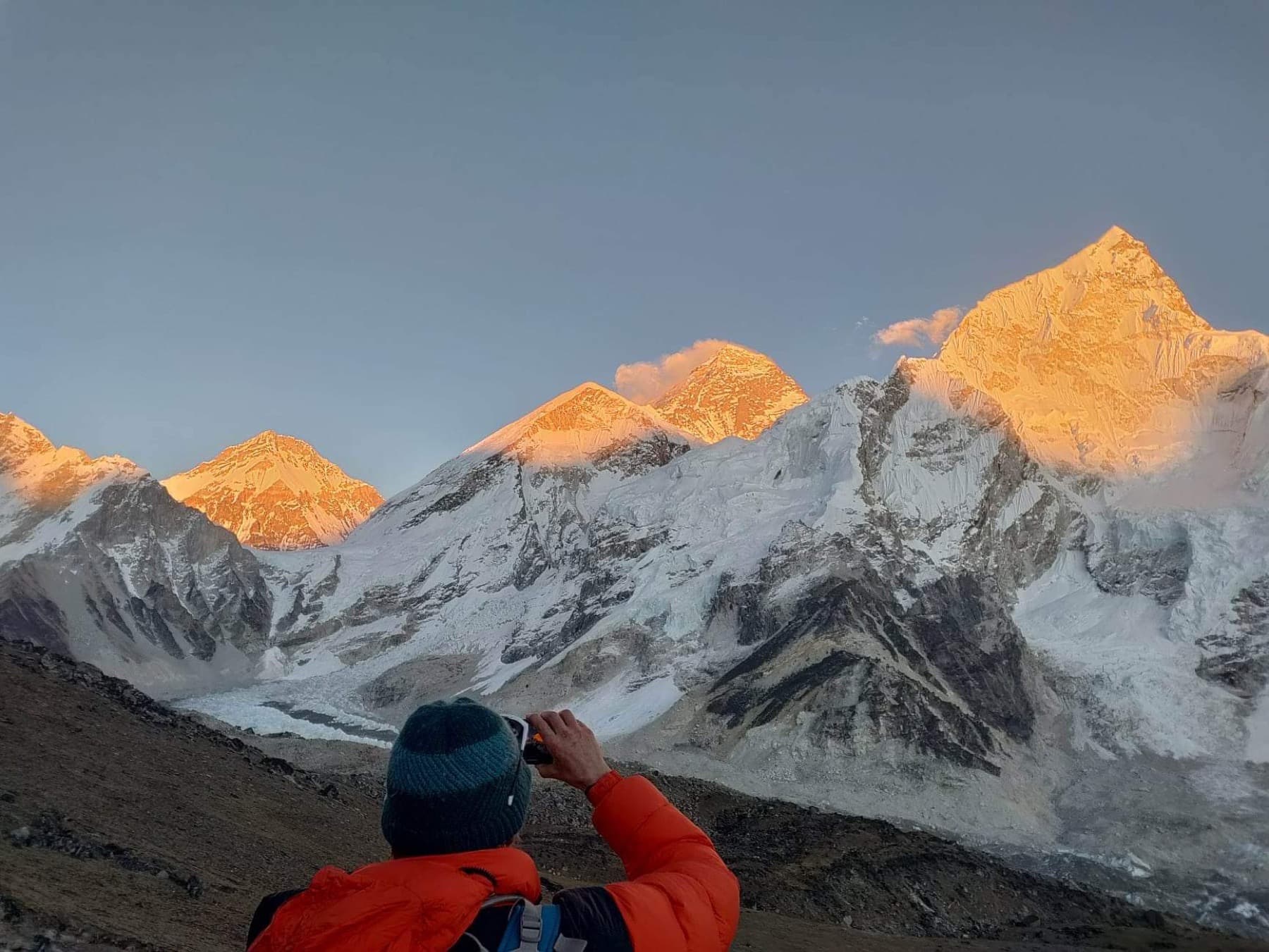
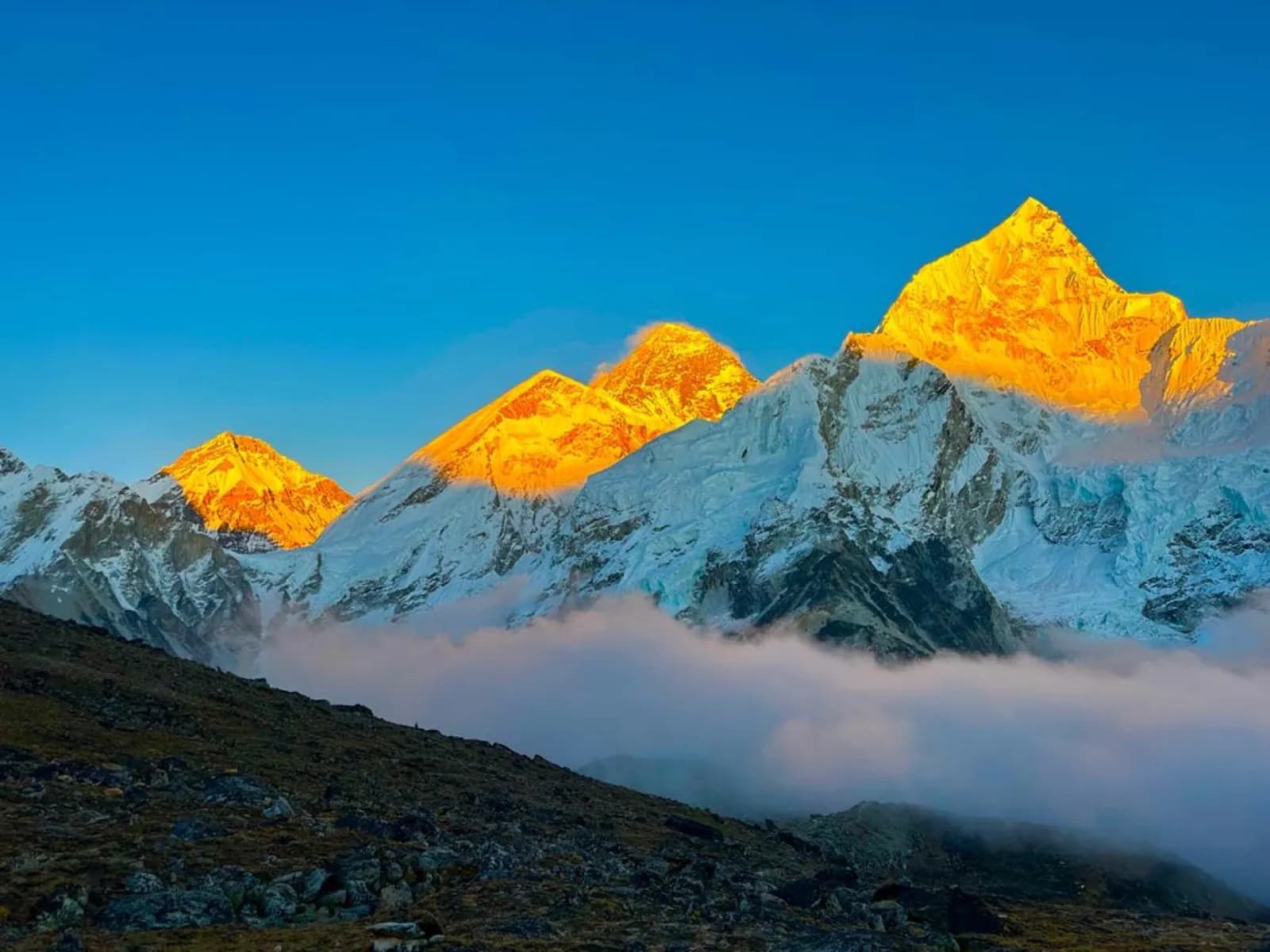
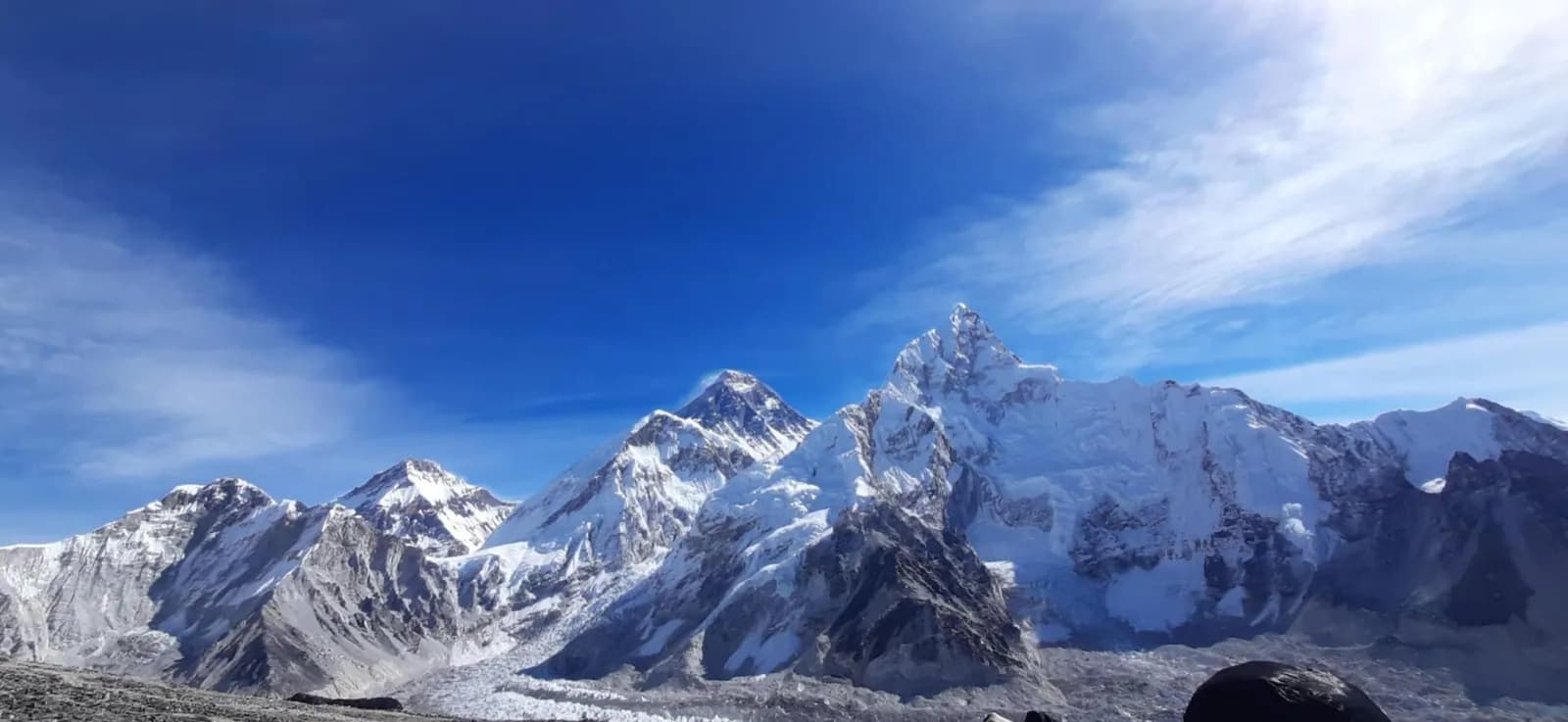
A cold, dark and early start up Kala Patthar for the best view of Everest as the sun reaches it. Then, instead of four days walking back, a helicopter takes off from Gorak Shep and flies you to Kathmandu in about an hour, following the route you walked. You have lunch at the hotel and time to rest.
We take you to the airport. As with any Khumbu itinerary, book an international flight that leaves at least one day later than this, because the helicopter also depends on the weather.
Start date
20 Oct 2027
End date
31 Oct 2027
Available
8 left
US $3,187
Per person
Start date
10 Mar 2027
End date
21 Mar 2027
Available
8 left
US $3,187
Per person
Start date
6 Oct 2027
End date
17 Oct 2027
Available
8 left
US $3,187
Per person
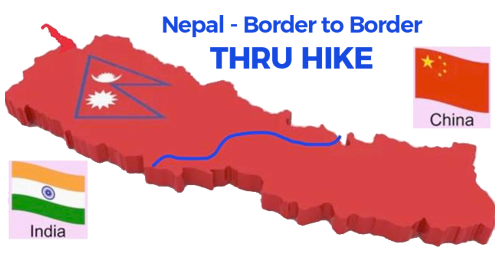
The trail from start to finish, at a glance.
Two baggage limits, and the helicopter limit is stricter
The Lukla flight allows 15 kg in total, 10 kg checked and 5 kg hand baggage, and bags are weighed. The helicopter flight out has its own load limit, which is stricter. Each traveller has one porter, who carries up to 20 kg. We provide the duffel bag, sleeping bag and down jacket.
This trip depends on two weather-sensitive flights rather than one. The helicopter return is the flight the whole itinerary is planned around.
Outside the two busiest periods of the year, the flight leaves Kathmandu and takes about 35 minutes. For most of March to May and late September to November, air traffic control moves Lukla departures to Manthali airport at Ramechhap to reduce congestion at Kathmandu. This means a four to five hour drive leaving Kathmandu at around two in the morning, followed by a twenty-minute flight. The trek is the same, but the night before is much shorter. We tell you which applies to your dates before you book.
The allowance is 15 kg in total: 10 kg checked and 5 kg of hand baggage. Excess baggage is charged at about $1.50 a kilo, and the limit is enforced because the aircraft is a nineteen-seat Twin Otter or Dornier and the runway is 527 metres long and sloping. Anything you do not need on the trek can be stored free of charge at our office in Kathmandu.
Lukla is closed by cloud several times a month in every season. Losing a day is common and losing two is not unusual. This itinerary has no spare day, which is a consequence of the twelve-day format. If the flight is cancelled for more than three days, we change the itinerary to an equally good trek at a lower altitude rather than shorten this one, at no extra charge. For this reason we strongly recommend booking your international flight home to leave two clear days after this trek rather than one.
Whatever your itinerary, book an international flight that leaves at least one clear day after your scheduled return to Kathmandu. It is the least expensive way to protect your trip, and we often wish travellers had done so.
A single-engine helicopter takes off from Gorak Shep at 5,164 m, which is close to the practical limit for carrying a useful load. It therefore flies early in the morning, when the air is coldest and densest, and carries fewer people than it would at sea level. It needs clear weather at Gorak Shep and at Lukla, where it usually refuels. In good weather it takes off within a couple of hours of your descent from Kala Patthar, and you reach Kathmandu by lunchtime.
You walk down, which is why the guides on this trip are prepared for the classic itinerary as well. If the weather closes in at Gorak Shep, we descend on foot to Pheriche or Namche, where the helicopter can often land when it cannot reach 5,164 m, and fly from there. If no flights are possible, the walk out to Lukla takes three days and we pay for the extra lodge nights. We cannot give you back the extra days, which is the limit of what a helicopter itinerary can guarantee.
The same 15 kg allowance applies on the flight in, and the helicopter flight out has its own load limit, which is stricter than the aeroplane's. Small purchases in Namche are not a problem, but a second duffel of items bought in Kathmandu on day 2 and carried up the trail is.
At Phakding, Namche Bazaar and Dingboche you stay in the best lodges in the Khumbu. Rooms are twin or double and heated, with a private bathroom, a reliable hot shower and a duvet on the bed. The dining rooms are warm and the food is of a higher standard than in standard teahouses. In Kathmandu the hotel is four-star.
At Tengboche we book the best room in the village, in a good standard teahouse with its own bathroom. Above Dingboche there is no better accommodation, so at Lobuche and Gorak Shep you stay in basic teahouses: unheated twin rooms, thin walls, shared toilets and no shower at Gorak Shep. You spend one night at each, and the helicopter flight from Gorak Shep means you do not sleep at that altitude again.
| Where | Nights | Type | Room | Bathroom |
|---|---|---|---|---|
| Kathmandu | 3 | Four-star hotel | Deluxe double or twin | Private, with hot water and a bath |
| Phakding | 1 | Luxury lodge | Twin or double, heated | Private, hot shower |
| Namche Bazaar | 2 | Luxury lodge | Twin or double, heated | Private, hot shower |
| Tengboche | 1 | The best teahouse in the village, a good standard teahouse | Twin | Private in the room we book |
| Dingboche | 2 | Luxury lodge | Twin or double, heated | Private, hot shower |
| Lobuche | 1 | Standard teahouse, the only option available | Twin | Shared |
| Gorak Shep | 1 | Standard teahouse, the highest on the route | Twin, basic | Shared, no shower |
Porridge, Tibetan bread, eggs, chapati, pancakes, tea or coffee
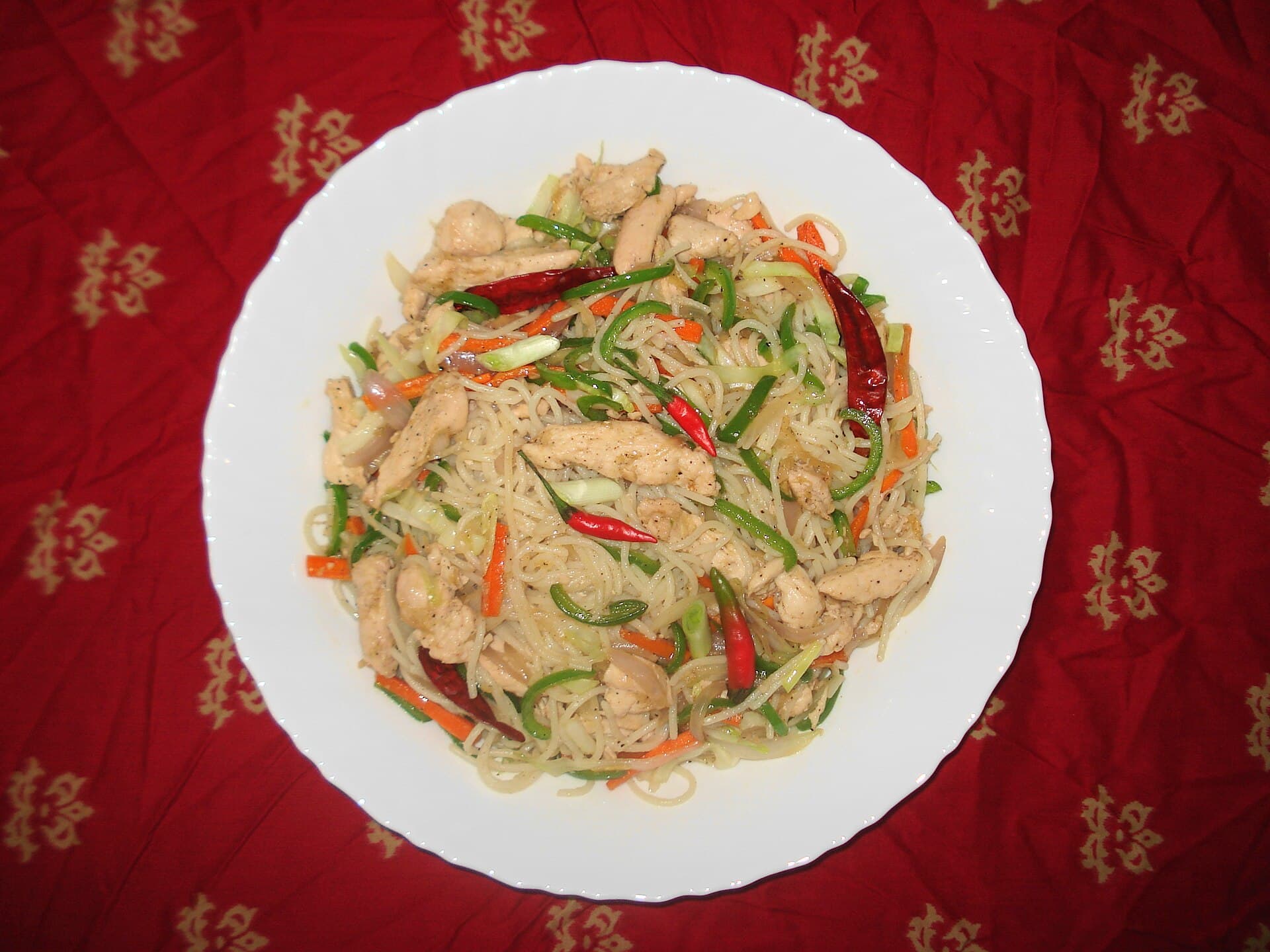
Dal bhat, fried rice, noodles, soup, momo, potatoes in every form

Dal bhat, pasta, thukpa, curry and rice, soup to start
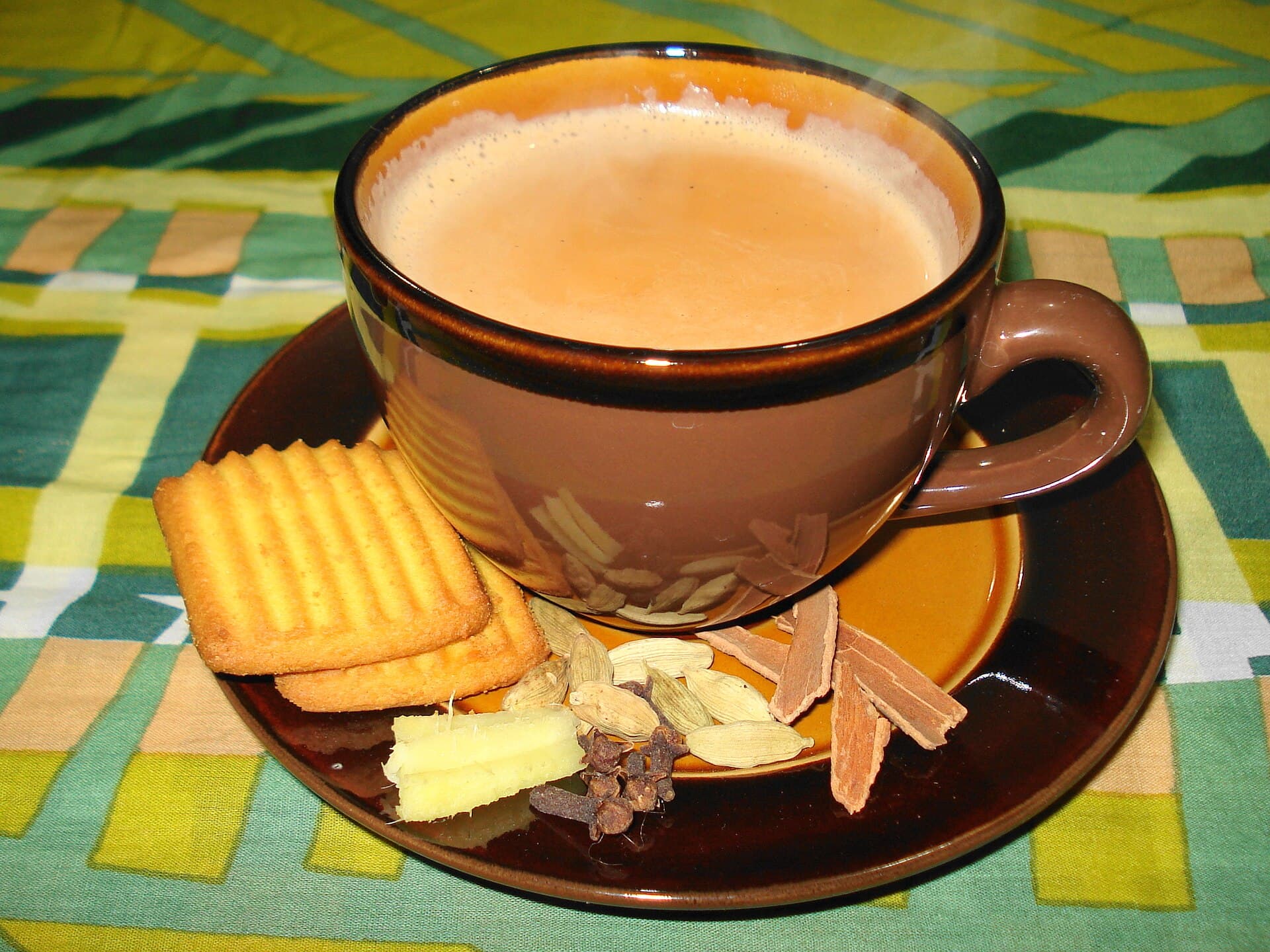
Black, milk, lemon, ginger or masala tea. Included at every stop.
6:00Tea in your room, and a bowl of warm water for washing
6:30Pack, and leave your duffel outside your door for the porter
7:00Breakfast together in the dining room
8:00Start walking. The guide sets a slow, steady pace
12:00Lunch at a teahouse on the route, about an hour
13:00Two to four more hours of walking, depending on the day
15:30Arrive, have tea, check in, wash and rest if needed
17:00Oxygen saturation and pulse measured and recorded
18:30Dinner, and a briefing from the guide on the next day
20:30Bedtime. At 4,000 m most people are asleep by nine
The same difficulty as the classic trek, but for eight days of walking instead of eleven.
Written for somebody who walks a bit and does not train. If you already run or cycle regularly, start partway through. Nothing here needs a gym.
12 weeks before, stage 1 of 6
Do three cardio sessions a week, 45 minutes each, at a pace at which you can still hold a conversation. Walking, cycling, swimming or rowing are all suitable. This is the most important part of the plan.
Everest Base Camp is at 5,364 m, and you sleep one night at 5,164 m. At that altitude each breath contains roughly half the oxygen available at sea level, and training at home does not change how your body responds to it. Fitness and altitude tolerance are unrelated: strong young trekkers can get altitude sickness, while less fit older trekkers often do not. What helps is ascending slowly, which is the purpose of the two rest days, and telling someone early if you feel unwell.
Daily health checks
Your guide carries a pulse oximeter and measures your oxygen saturation and pulse every evening, and again on any morning you feel unwell. The readings are recorded, so any decline over three days is clear from the records.
Mild symptoms
You rest for a day where you are, or descend a short distance to the previous village and climb back the following day. Most cases are resolved at this stage and the trek continues.
Serious symptoms
Descent is the only effective treatment, and 500 m of descent is usually enough. This is not negotiable, and the decision rests with the guide.
Helicopter evacuation
Helicopter evacuation is available from anywhere on this route and can be arranged by phone. In daylight the helicopter is usually in the air within the hour. This is why your insurance must cover it and why we ask to see your policy: the cost is $3,000 to $5,000, and the helicopter will not fly without a payment guarantee.
Medical care on the route
The Himalayan Rescue Association clinic at Pheriche, at 4,371 m, is staffed by volunteer doctors during both trekking seasons and is on our route on day 11.
Fitness and altitude are unrelated
This is the thing people get wrong most often. Training makes the walking easier and does nothing for how your body handles thin air. Strong young trekkers get altitude sickness and unfit older ones frequently do not. Go up slowly, and say something the first time your head hurts.
The weather in the Khumbu is the same as for the classic trek, with one extra consideration: the helicopter needs a clear morning window at 5,100 m, which makes the shoulder months less reliable for this trip.
The best month. Warm days, stable weather, and the forests below Namche are in flower.
Averages from Nepal DHM station data for the Khumbu. Any given week can be ten degrees either side of these, and the helicopter needs a clear morning at 5,164 m as well as a mild one.
A senior government-licensed guide with wilderness first aid training leads every departure, and on this trip there is one porter per traveller rather than one between two. This means your duffel is not shared and the group moves at the pace of its members. Groups of 9 or more have a second guide.
Each porter carries twenty kilos, which is your duffel and one other. This is below the 25 kg limit set by the trekking association and well below the loads you will see on the trail. If your bag is over the limit, it is divided rather than added to another load. Porters carry duffels, not daypacks: your water, camera, jacket and snacks for the day stay with you.
Salary, insurance, food and accommodation for every guide and porter are included in the price you pay, not collected on the trail. All of them are insured for altitude and helicopter evacuation on the same terms we require of you. Porters in this industry have often carried excessive loads in unsuitable footwear for low pay, and we avoid this by including fair pay and proper equipment in the package price.
Tipping is customary but not compulsory, and never replaces wages. For this trip, $200 to $300 per traveller for the whole team is usual, given together on the last evening rather than daily. Your guide will not ask for a tip, and would prefer it not to be given in front of the group.
A traveller drinking bottled water uses around 30 plastic bottles on this trip, all of which have to be carried in and carried out again. Boiled water is available at every lodge for one or two dollars a litre, and we recommend you buy that instead. Bring water purification as a backup.
We carry out everything we bring in that is not food. The Khumbu has a rubbish problem that it did not create and cannot solve alone, and we make sure not to add to it.
The lodges are family businesses in the villages along the route. The guides and porters live in this district. The permit fees fund Sagarmatha National Park and the Khumbu Pasang Lhamu Rural Municipality. Almost all of what you pay is spent within a few days' walk of the trail, which is a good reason to book with a Nepali operator rather than a foreign company that subcontracts to one.
Ask before photographing anyone. When you meet a mule train, stand on the mountain side of the trail, not the side with the drop, and let it pass. Monasteries welcome visitors but are places of worship: remove your hat and shoes, and if a service is taking place, wait.
Write to us or send a WhatsApp message with your dates. For this trek in particular, please include your group size in your first message: the helicopter is chartered per aircraft rather than per seat, so whether there are two or five of you affects the price more than anything else.
A 30 per cent deposit secures your dates, and the balance is paid when you arrive in Kathmandu, in cash or by card. At the same time we ask for a copy of your passport, your insurance certificate and any dietary or medical information.
You can pay by bank transfer or by card through a secure link. Card payments carry a bank fee of about 4 per cent, which we show you before you pay. The balance in Kathmandu can be paid in US dollars, pounds, euros or Nepali rupees.
If you cancel more than 30 days before departure, the deposit can be transferred to any other date or trip we run, with no time limit. If you cancel within 30 days, the deposit is retained, because the permits, flights and crew have been booked by then. If we cancel for any reason other than weather, you receive a full refund.
Both cost the same for a party of five or more. A private departure runs on your dates at your pace and can be arranged for one person. A group departure runs on the dates in the table above. Most people book privately, at no extra cost.
Three weeks' notice is usually enough. The limiting factor is the upgraded lodges rather than the flights, as there are only a few in the Khumbu and they are full in October. For an October departure we recommend booking three months ahead.
Priced per person, arranged before you travel, and none of them included in the price above.
A one-hour flight along the range from Kathmandu, with a guaranteed window seat. It is a good alternative if cloud keeps Lukla closed, and can be added on day 2.
On the flight out, a landing at Base Camp itself or at Kala Patthar rather than a direct flight from Gorak Shep. This depends on the weather and can be arranged on the morning of the flight.
At Syangboche above Namche, at 3,880 m, with a view of Everest from the terrace and oxygen supplied to the rooms. It is an unusual hotel, and the view is the one seen on postcards.
Bhaktapur, Patan and Boudhanath with a guide who explains the religious art and symbolism, and a private car. Day 2 includes a shorter version of this tour.
Travel south to the lowland jungle to see rhino, staying in a lodge rather than a camp. A good way to recover after eight days above 3,000 m.
A room to yourself in Kathmandu and in every upgraded lodge. Single rooms are not available at Lobuche and Gorak Shep.
4 versions of this journey. They use the same guides and the same lodges; what changes is the length, the comfort and how much of it you walk.
Flawless EBC Trek with Earthbound Expeditions
July 2026, Tripadvisor
Top-tier organization and unmatched professionalism. I recently returned from a 9-day Everest Base Camp expedition with Earthbound Expeditions. Managing a diverse crew of 47 trekkers aged 10 to 65 is a massive operational challenge, especially with so many novice mountaineers in the mix. Yet, Earthbound executed the trip seamlessly. Our leader, Rajan Ji, demonstrated exceptional leadership throughout the rugged terrain. He managed altitude adjustments, coordinated teahouse logistics, and proactively arranged support horses for anyone struggling physically. His ability to handle sudden itinerary changes gave our entire group a deep sense of security. Every single one of us reached Base Camp safely. I highly recommend Earthbound Expeditions for any Himalayan trek!
Beyond expectations: Incredible guides, seamless planning, and the best hospitality.
June 2026, Tripadvisor
If you are considering trekking to Everest Base Camp, look no further than Earthbound Expeditions. We just completed a massive 9-day trek with a group of 47 trekkers, and the logistics required to pull this off were absolutely mind-boggling. Rajan ji and his team handled everything flawlessly. When our fixed-wing flights from Kathmandu to Lukla were canceled last minute due to weather, Rajan miraculously found 12 choppers from 8 different charter companies in just a couple of hours. He moved all 47 of us and kept our entire trip perfectly on track. We also had a seamlessly planned return chopper ride straight from Gorakshep back to Kathmandu after the summit. What truly sets Earthbound Expeditions apart is their people. The Nepali guides and our 24+ porters are absolute superhumans. They woke up before us every single day, carried our gear, and served us warm food at every stop with the biggest smiles. They are genuinely some of the nicest, most down-to-earth people you will ever meet. The level of care, attention, and encouragement we received from the guides throughout the journey was incredible. Even when dealing with the unpredictable weather and the sheer physical toll of the altitude, the entire team ensured we all safely made it to Base Camp at 17,598 feet and back down without any major hurdles. Their incredible hospitality didn't stop at the mountain, either. Earthbound also organized wonderful sightseeing tours for us around Kathmandu, including visits to Chandragiri Hills, Patan Durbar Square, Pashupatinath Temple, and the Monkey Temple. To top it all off, they threw a grand success party for our entire group when we returned to the city so we could all celebrate the achievement together! Earthbound Expeditions didn't just give us a trek - they kept us safe, sane, and gave us a once-in-a-lifetime experience from start to finish. Five stars is not enough!
Earth Bound expedition to Everest base camp with Rajanji
June 2026, Tripadvisor
Trip started June 27th fromKathmandu, when 47 friends started the expedition to Everest Base Camp. With multiple challenges with weather, flight cancelations, Rajanji and the team worked out alternative plans and started the expedition arranging helicopters for 47 people. Trek started at Surke and we advanced to Phadking next day and to Namche bazaar. Beautiful views opened up and nice weather! Wonderful porters and helpers all along and the stsy in tea houses were well organized. Porters Psdam , Pushkar, Abishek ,Himrset were exceptional guides and they went above and beyond our expectations. They carried the Duffel bags and at times helped with our backpacks! Rajanji started the trek everyday with a prayer which still rings in our ears. He made sure that everyone was taken care of well. We had 46 of reach Everest base camp successfully, which was an commendable achievement! Our descent to Gorashep and Lobuche was uneventful. We were picked up at Lobuche by helicopters which was executed very well like action movie. We all reached Kathmandu safely and ended our trip with a party and celebrations! Excellent experience as Rajanji himself came with us throughout, making things happen! He also arranged sightseeing trips for us to Pokara and in and around Kathmandu! We visited Bhaktapur and many monasteries and temples. Excellent 2 weeks in the mountains and beautiful Nepal! Memories created Thank you Rajanji and Earth Bound Expedition!
Unforgetable experience at the EBC trek
July 2026, Tripadvisor
I recently completed a 9-day trek to Everest Base Camp between late June and Early July 2026. This was a large and diverse group of 47 people, ranging in age from 10 to 65. Many of the members, including me, were first time mountaineers. Undertaking this journey and taking care of every individual needs was a huge logistical challenge, but Earthbound Expeditions handled it very professionally. Throughout the trek, whether we were navigating the rugged Himalayan terrain, managing the realities of high altitude, or tactically arranging horses for members of our group who needed extra support, our chief tour operator, Rajan Ji, was phenomenal. He made sure that that every member of our group arrived at Base Camp safely. I want to express my sincere appreciation to Earthbound Expeditions and Rajan Ji for making this once-in-a-lifetime experience possible. As I wrote earlier, Rajan Ji managed the complex logistics behind the scenes with absolute professionalism. From navigating sudden travel changes to handling our daily teahouse operations, Rajan's hard work and dedication gave our large group an immense sense of security. I highly recommend Earthbound Expeditions to anyone who is looking for a great expedition in the Himalayas.
Answers to the 18 questions travellers ask us most often. If your question is not here, contact us and we will answer it.
No, and this is the most important point on this page. Days 3 to 10 follow the same trail, at the same altitudes and on the same schedule as the classic trek. You climb from 2,610 m to 5,545 m on foot and sleep at 5,164 m at Gorak Shep in a standard lodge. The additional cost pays for more comfortable evenings on the way up and a one-hour helicopter flight instead of four days walking down.
Four-star hotels in Kathmandu instead of three-star. Heated rooms with private bathrooms at Phakding, Namche and Dingboche, in the few upgraded lodges in the Khumbu. Better food, included laundry, free filtered water and reliable wifi at those stops. One porter each rather than one between two. And the helicopter flight on day 11.
No. There are no upgraded lodges above Dingboche. Your nights at Lobuche and Gorak Shep are in the same standard teahouses used by all trekkers, with shared bathrooms and no shower, because nothing else has been built at that altitude.
If you are short of time, it is very likely worth it: it saves four days, which is most of a working week. If you have concerns about your knees, it is also worth it, because the descent is the hardest part on the knees. Otherwise, we recommend the classic sixteen-day trek, which suits most people better and costs considerably less.
You descend from Kala Patthar in the morning, and the helicopter takes off from Gorak Shep at 5,164 m, usually refuelling at Lukla, and reaches Kathmandu in about an hour. It flies early because the air is coldest and densest then, which is very important at that altitude. In good weather you will be having lunch at your hotel.
You walk down. Our guides know the classic itinerary well and are prepared for this. We descend on foot to Pheriche or Namche, where a helicopter can often land when it cannot reach 5,164 m, and fly from there. If no flights are possible, the walk out to Lukla takes three days and we pay for the extra lodge nights. We cannot give you back the extra days.
Because a helicopter is chartered per aircraft rather than per seat, and at 5,164 m, in thin air, it carries fewer people than it would at sea level. Shared between five people it costs about $500 each. Shared between two it costs well over twice that. This is why the group price table on this page varies more than on any other trek we offer.
Sometimes, for around $300 extra, weather permitting. The decision is made on the morning of the flight rather than at booking. A landing at Kala Patthar is more often possible than one at Base Camp itself.
Yes, and this is the key point to check on any twelve-day Everest itinerary. Ours keeps both acclimatisation days, at Namche on day 5 and at Dingboche on day 8, and removes four days of walking downhill below 3,500 m, which has no effect on acclimatisation. Some cheaper twelve-day itineraries remove the rest days instead, which makes them a less safe trip of the same length.
Exactly as fit as for the classic trek: able to walk five to seven hours a day, on consecutive days, on rough ground, with about half the oxygen you are used to. The twelve-week training plan on this page is the same as for the classic trek, because the walking is the same.
Yes, on the same terms as any other trekker. The safety procedure is the same as on the classic trek: oximeter readings every evening, recorded, and descent if the readings decline. The higher price pays for a warmer room; it does not change how your body responds to altitude.
Yes. Note that a rescue flight is separate from the flight included in your trip. Your itinerary includes a scheduled helicopter flight out; it does not include an emergency evacuation, for example from Dingboche on day 8. Insurance covering trekking to 6,000 m, including helicopter rescue, is a condition of booking.
No. A twelve-day itinerary does not leave room for one. Lukla is closed by cloud several times a month in every season, so for this trek in particular, book your international flight home to leave two clear days after the trek rather than one.
Fifteen kilos on the Lukla flight, 10 kg checked and 5 kg hand baggage, and bags are weighed. The helicopter flight out has its own, stricter load limit. Anything you do not need on the trek can be stored free of charge at our office in Kathmandu.
In the upgraded lodges, yes, noticeably: a proper kitchen, more variety and fresher vegetables. At Tengboche, Lobuche and Gorak Shep the menu is dal bhat and fried rice, as elsewhere, and at 5,000 m that is usually what you will want.
Three weeks is usually enough, but for October we recommend three months. The limiting factor is not the flights but the upgraded lodges: there are only a few in the Khumbu, and they are full in the high season.
April and October are the most reliable months. On this trek there is one extra consideration: the helicopter needs a clear morning window at 5,164 m, so the shoulder months are slightly less reliable than for a trek that walks out.
Yes, and most people do. On this trek it makes more difference than usual, because the helicopter is chartered per aircraft. A private group of four or five gets the advantages of both: your own dates, and enough people sharing the aircraft that the flight is not the largest cost on the invoice.
Didn't find what you were looking for?
Search every word on this page, or ask somebody who has walked the route.
12 days
$3,187 per person