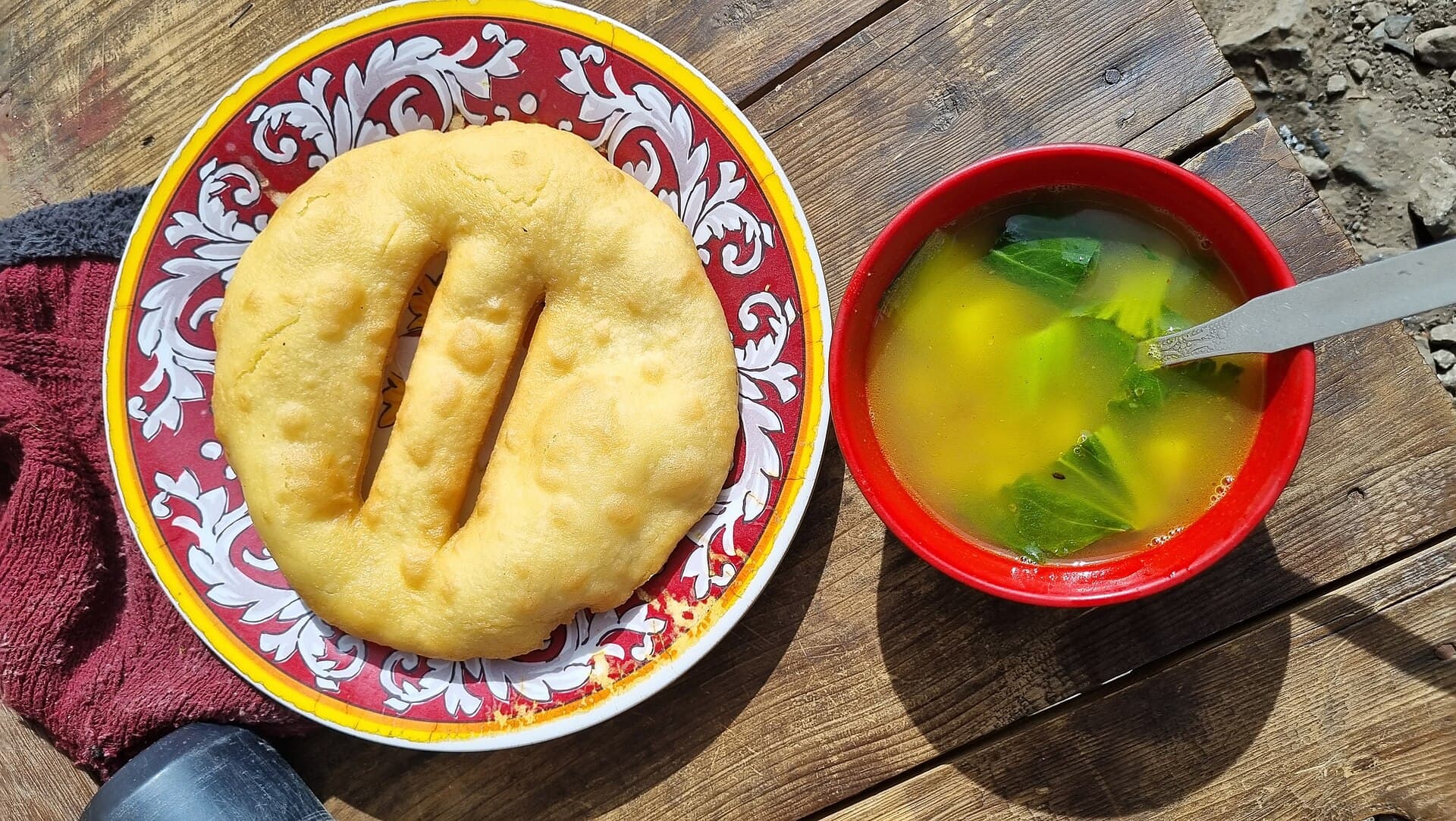
Breakfast
Porridge, Tibetan bread, eggs, chapati, pancakes, tea or coffee
Five short days of walking between four luxury lodges in the Annapurna foothills, with Annapurna South and Machhapuchhre in view throughout and a highest point of 1,950 m.
Five short days of walking between four luxury lodges in the Annapurna foothills, with Annapurna South and Machhapuchhre in view throughout and a highest point of 1,950 m.
The highest point of this trip is Ghandruk, at 1,950 m, which is lower than many European ski resorts and below the height at which altitude sickness becomes a consideration. The trek is designed around this. On our other treks you need to manage your acclimatisation; on this one you walk between four lodges in the Annapurna foothills with the high peaks directly above you. Altitude is not a reason to turn back on this route.
At Ghandruk, Jhinu, Tolkha and Dhampus there is a purpose-built lodge with proper beds, private bathrooms, reliable hot water and meals prepared in a proper kitchen. On the higher treks, this level of comfort ends at around 4,000 m because no lodges of this kind have been built higher up. On this route it is available throughout, because the whole trek lies within the altitude range where these lodges exist.
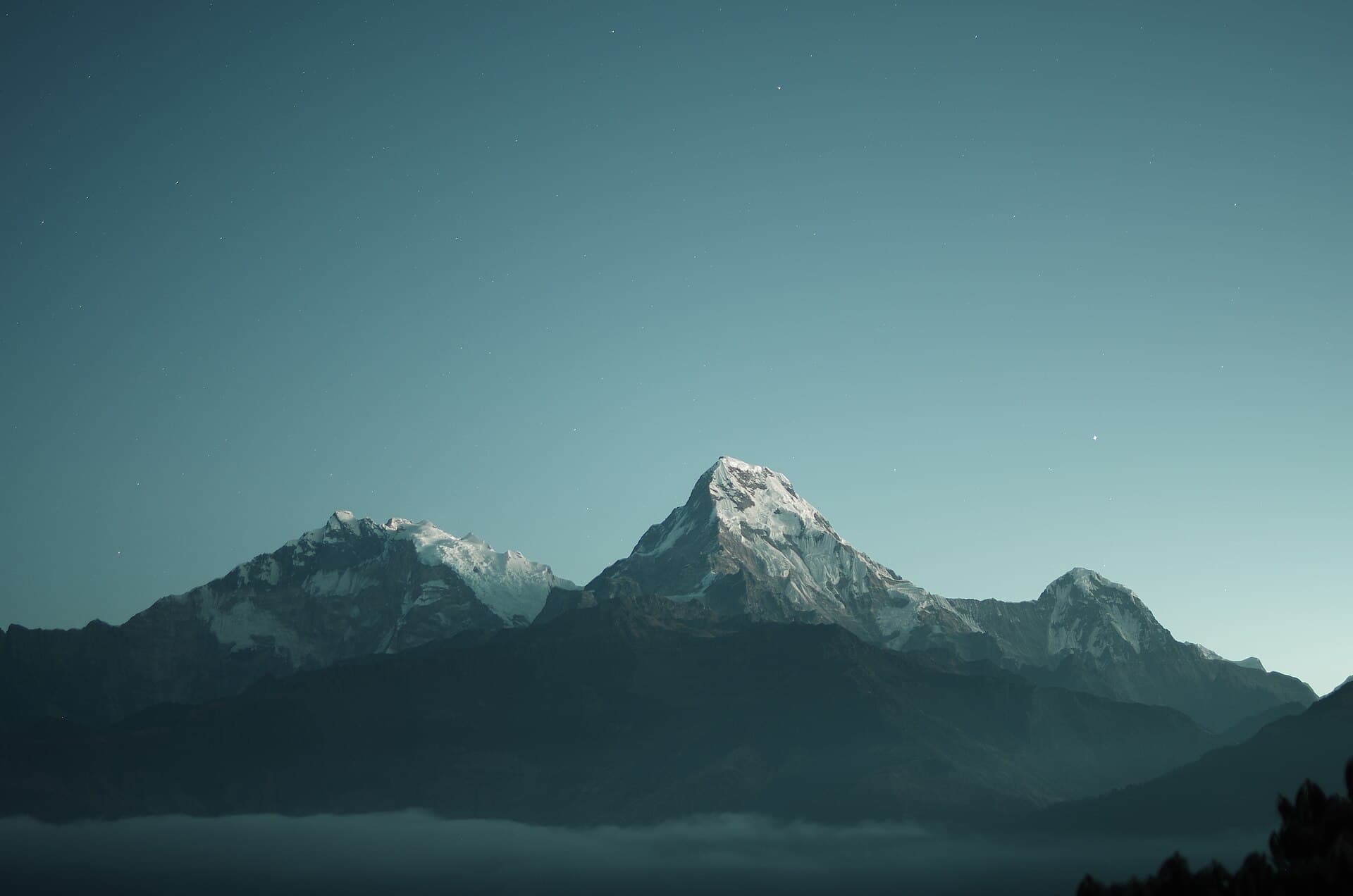
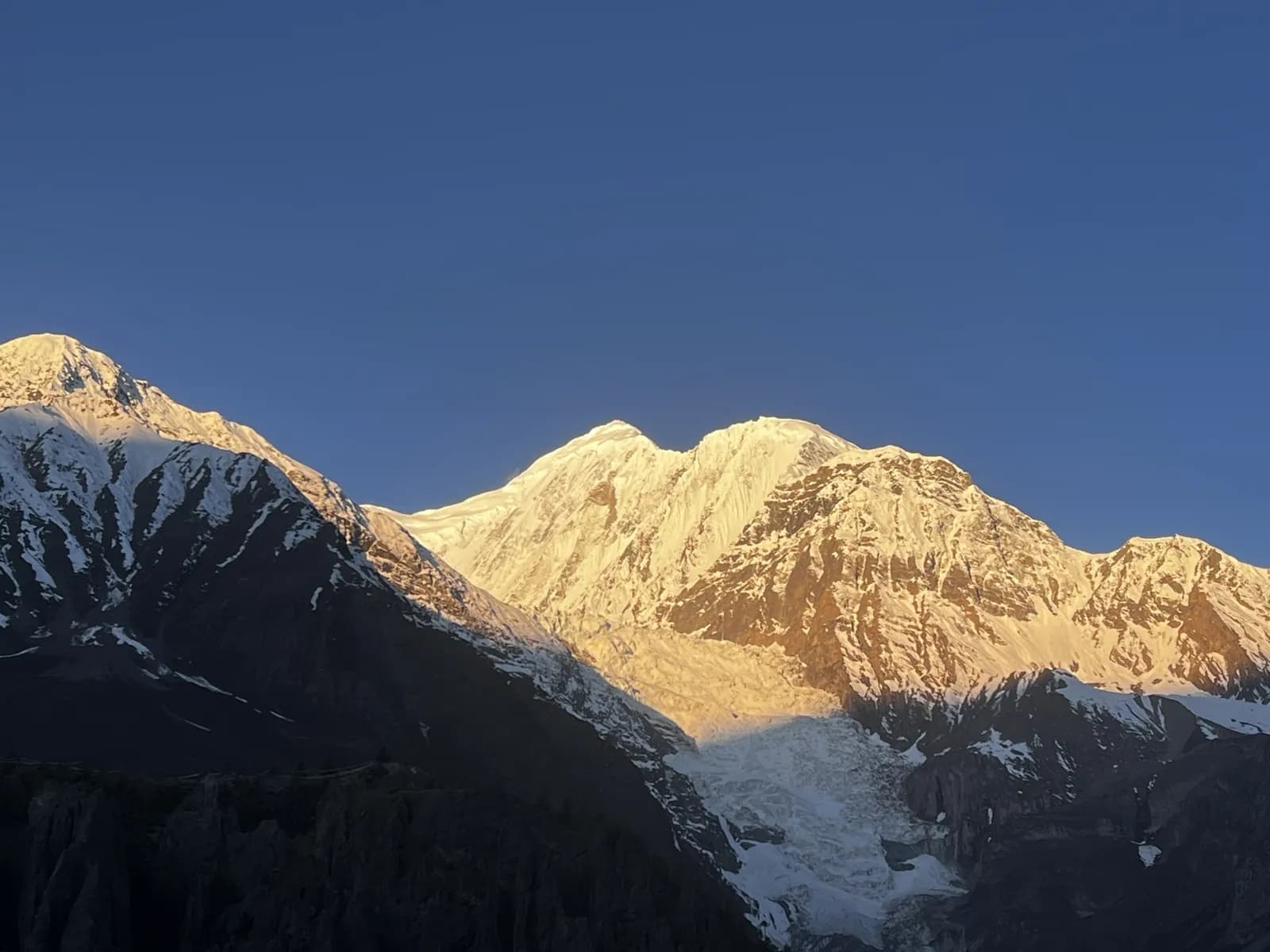
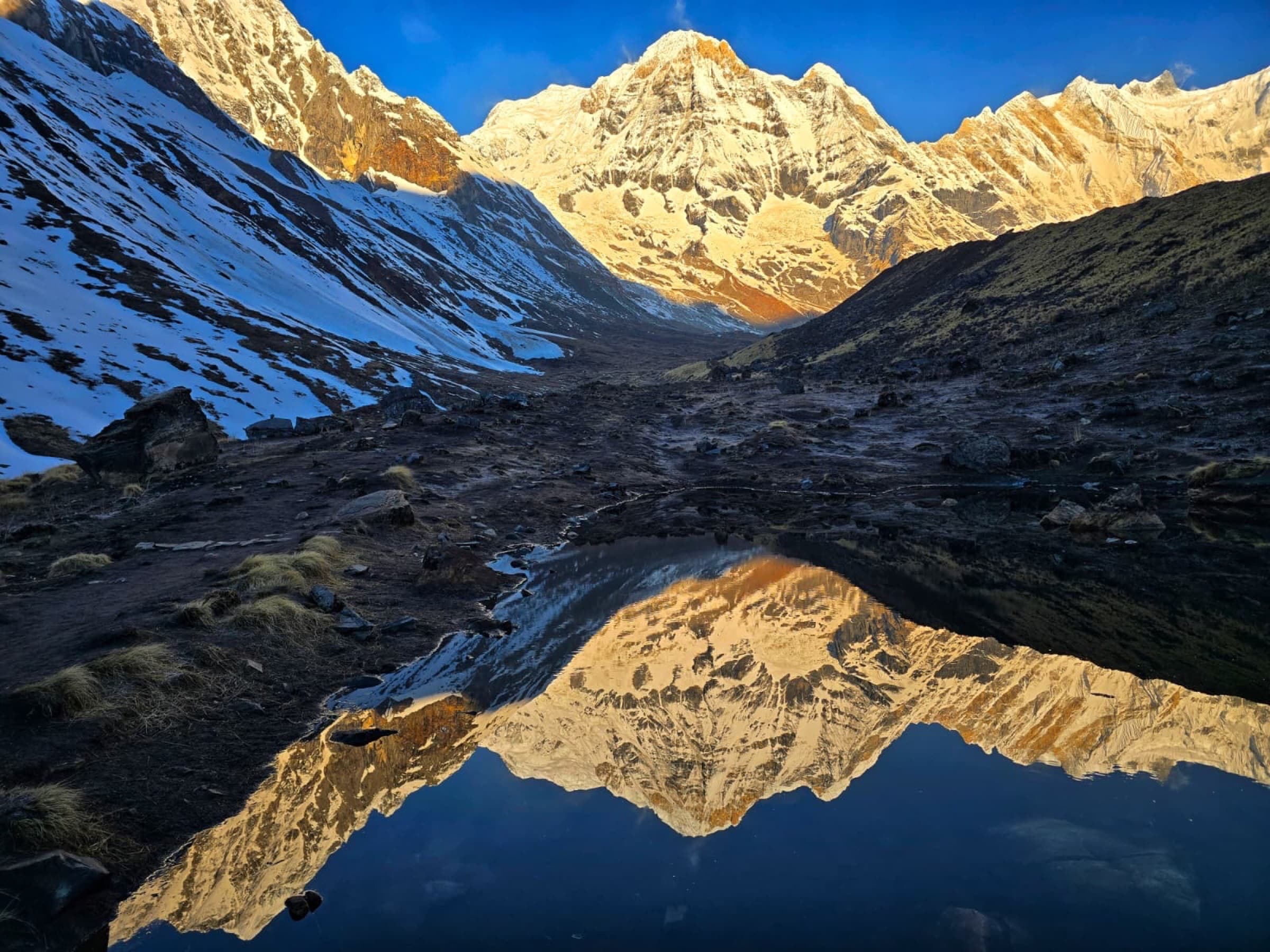
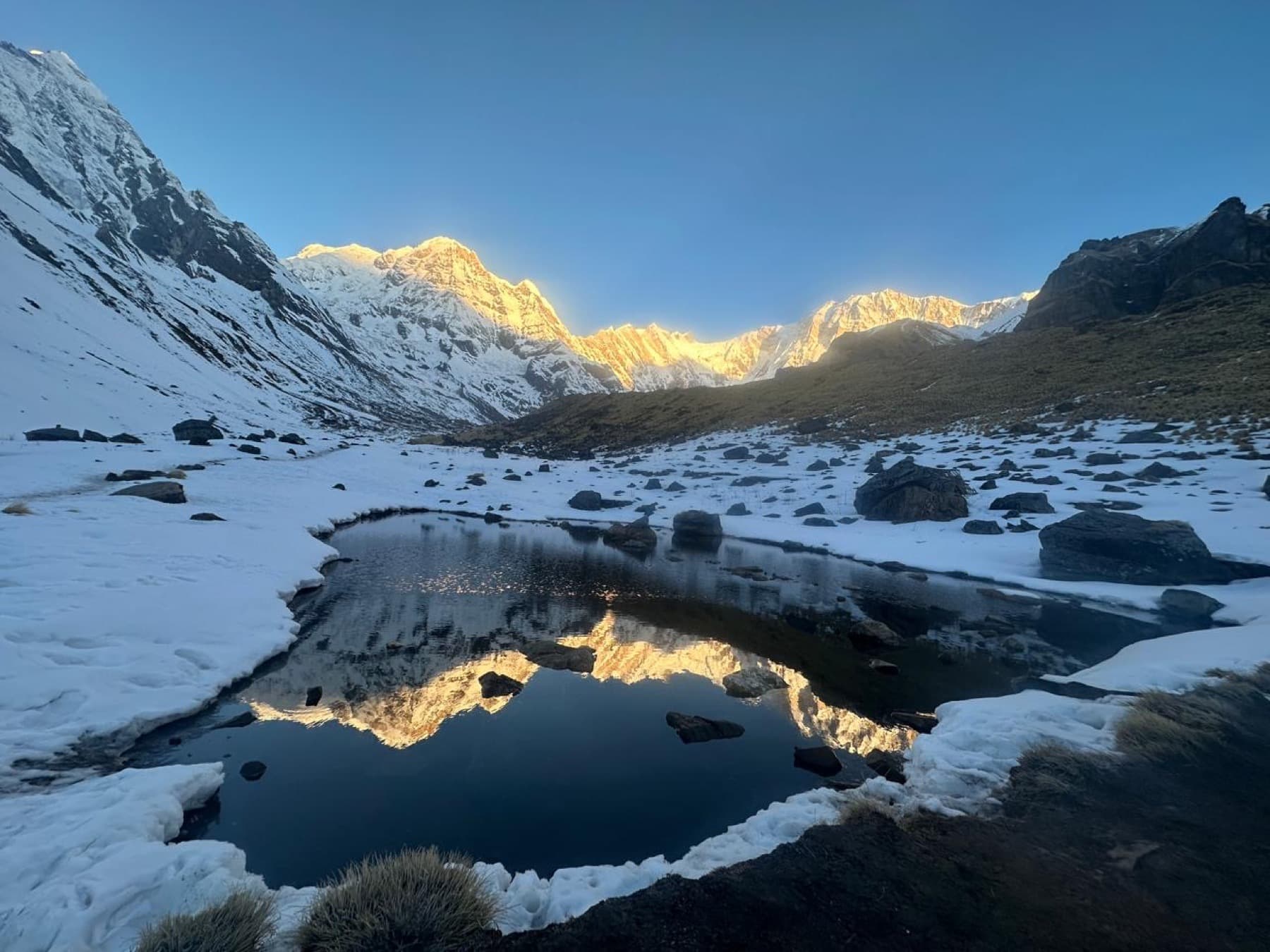
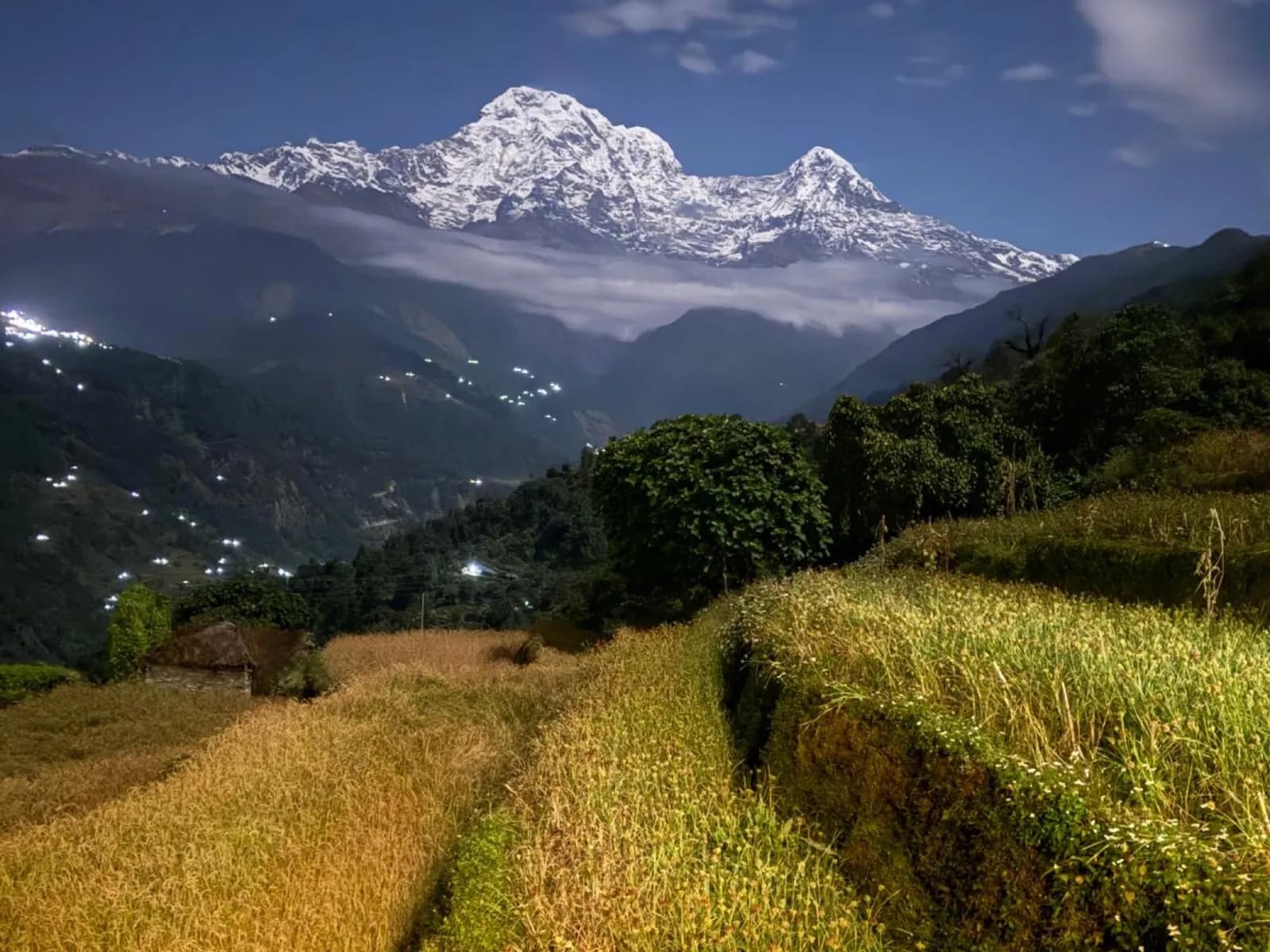
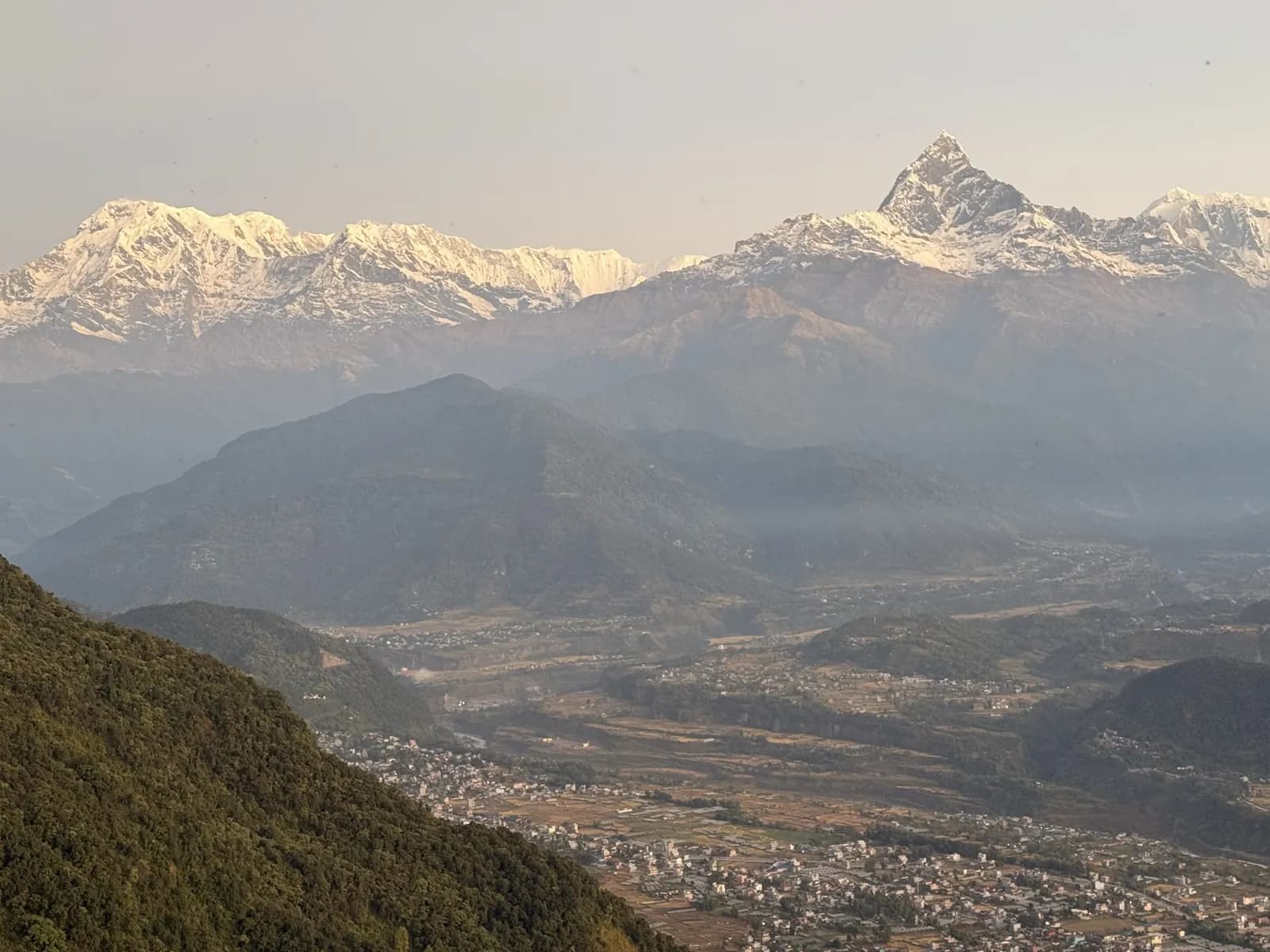
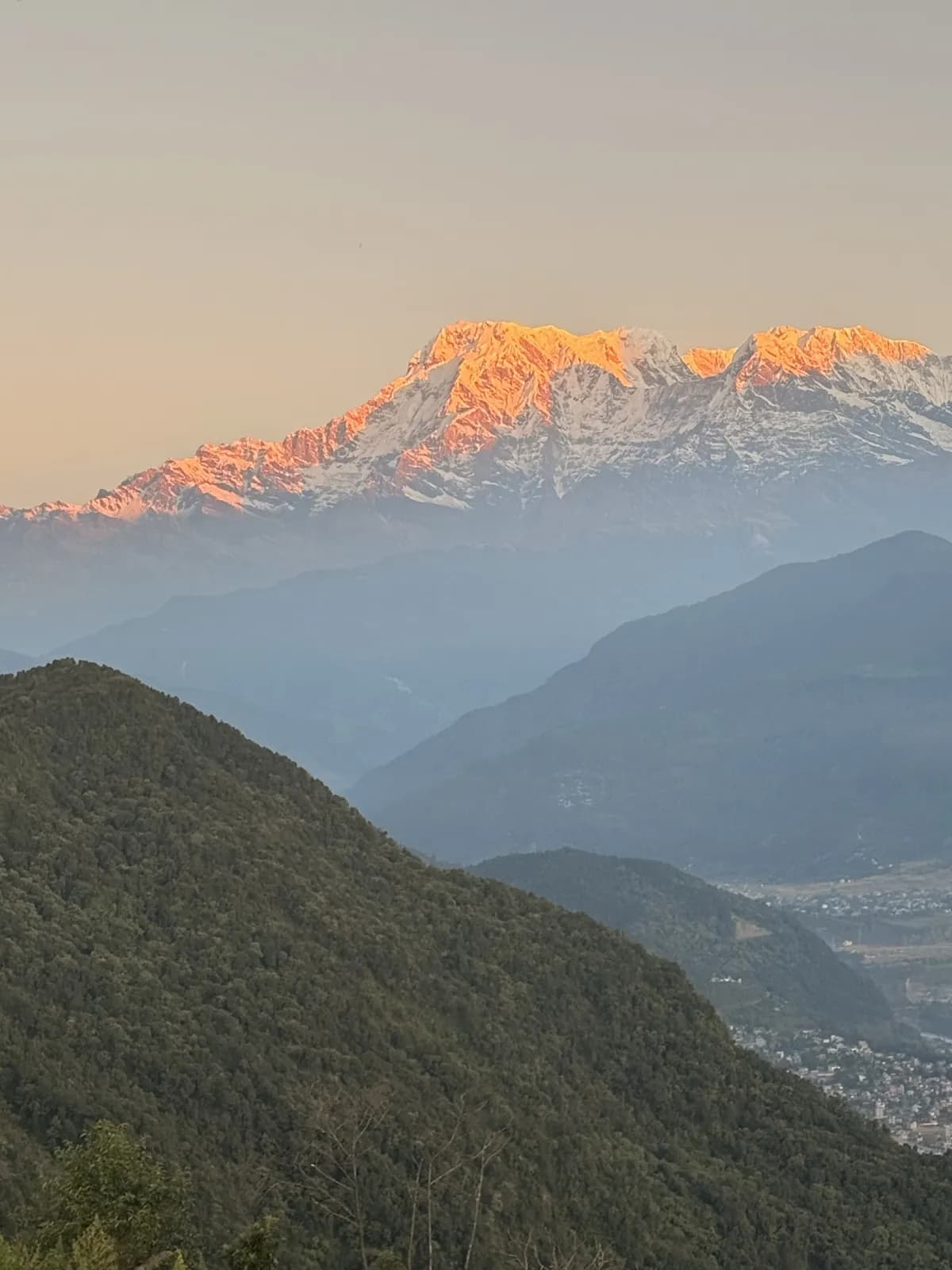
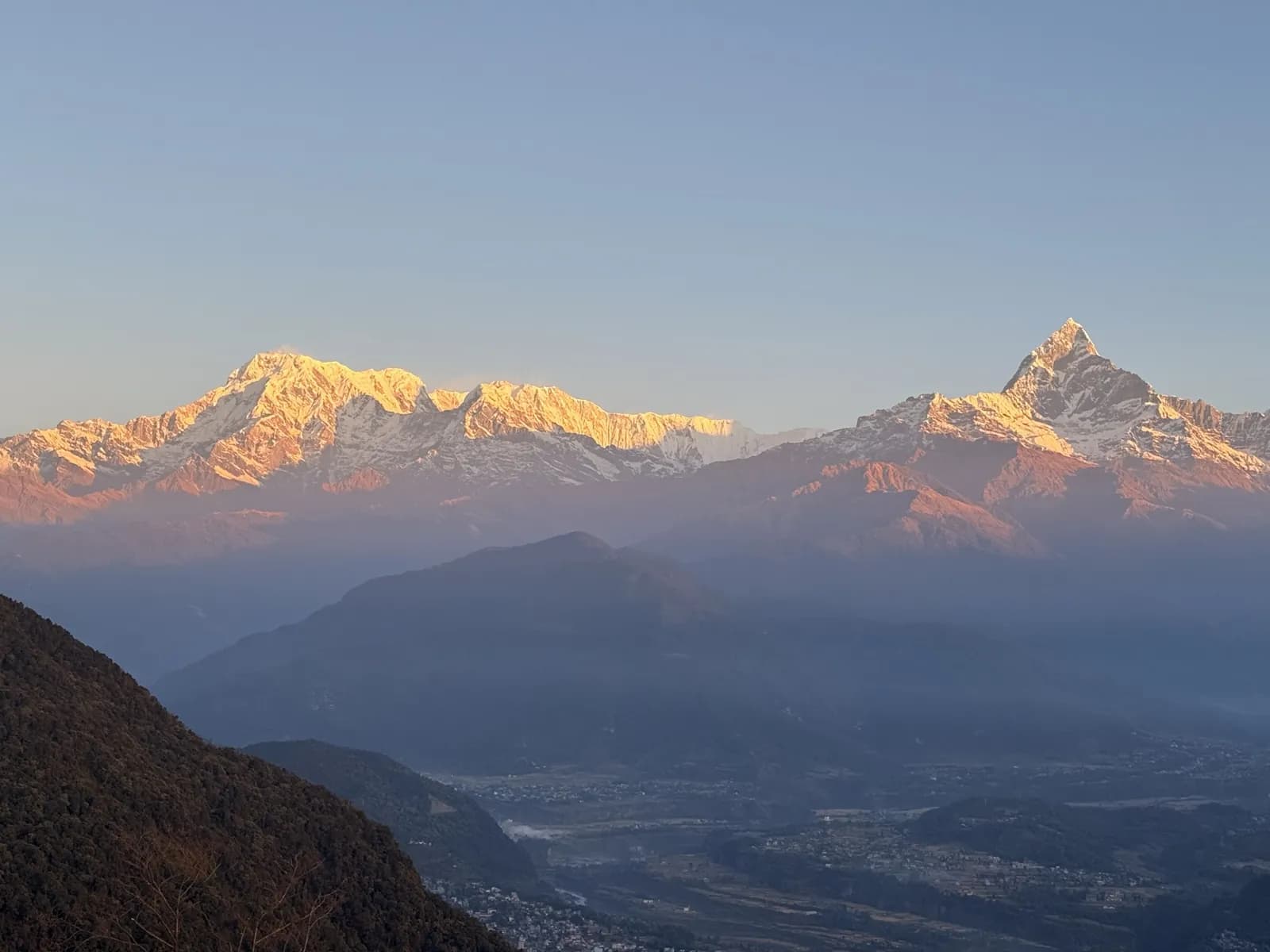
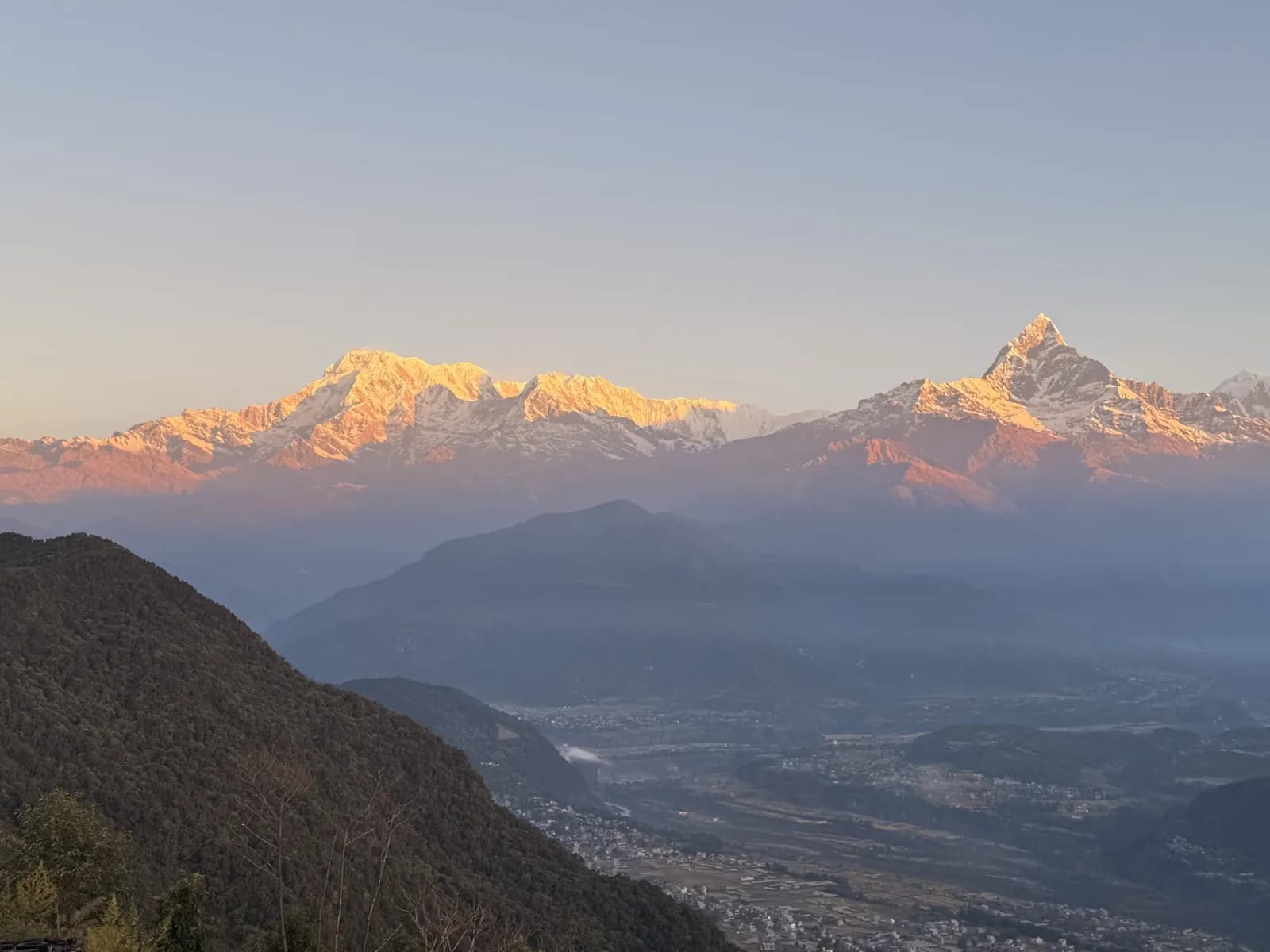
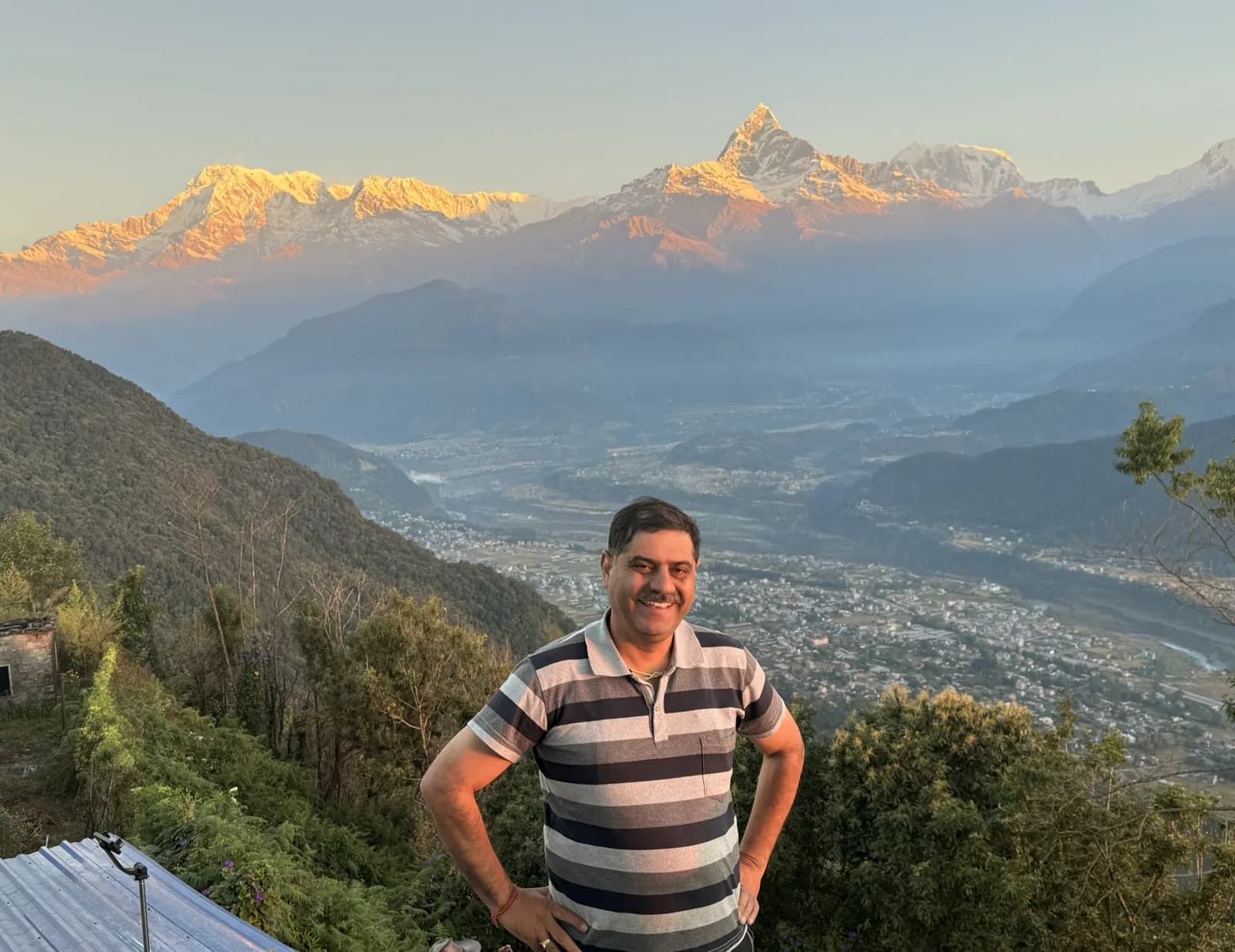
Annapurna South, Hiunchuli and Machhapuchhre rise directly above the ridge you walk along, so from Ghandruk and again from Dhampus you can see a wall of snow-covered peaks from a terrace below 2,000 m. The size of the view does not depend on your altitude, and the Annapurna foothills show this more clearly than anywhere else in Nepal.
Travellers who want to see the Himalaya without an endurance challenge, families with children, people with knee problems, those with ten days rather than three weeks, and couples who want comfortable accommodation at the end of each day. It is not a substitute for Annapurna Base Camp or Everest Base Camp. It is a good trip that also happens to be easy.
You are met at the airport and driven to a five-star hotel. In the evening we brief you on the trip over dinner. The briefing takes about twenty minutes rather than an hour, because there is no altitude plan to explain and no equipment to weigh.
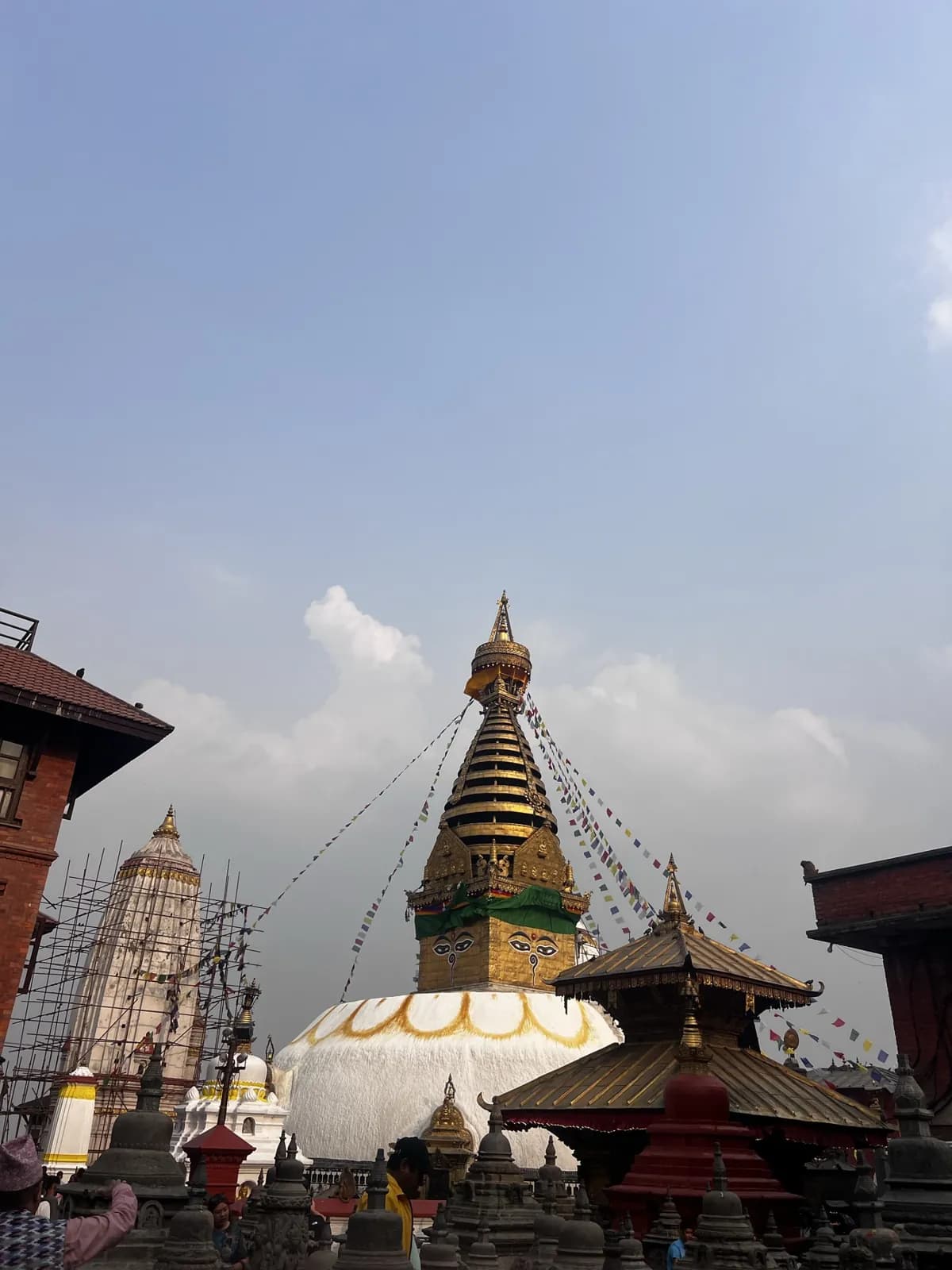
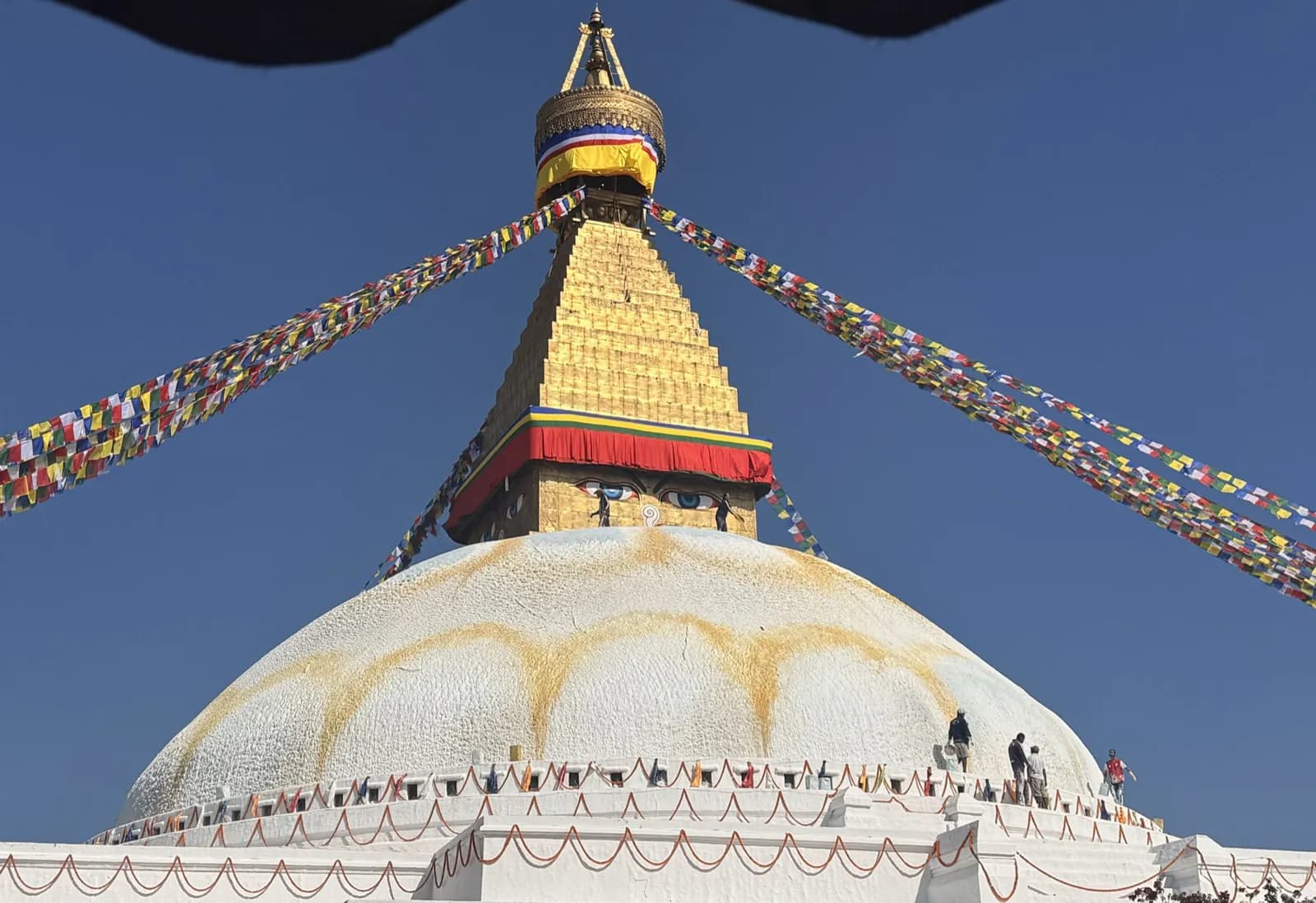
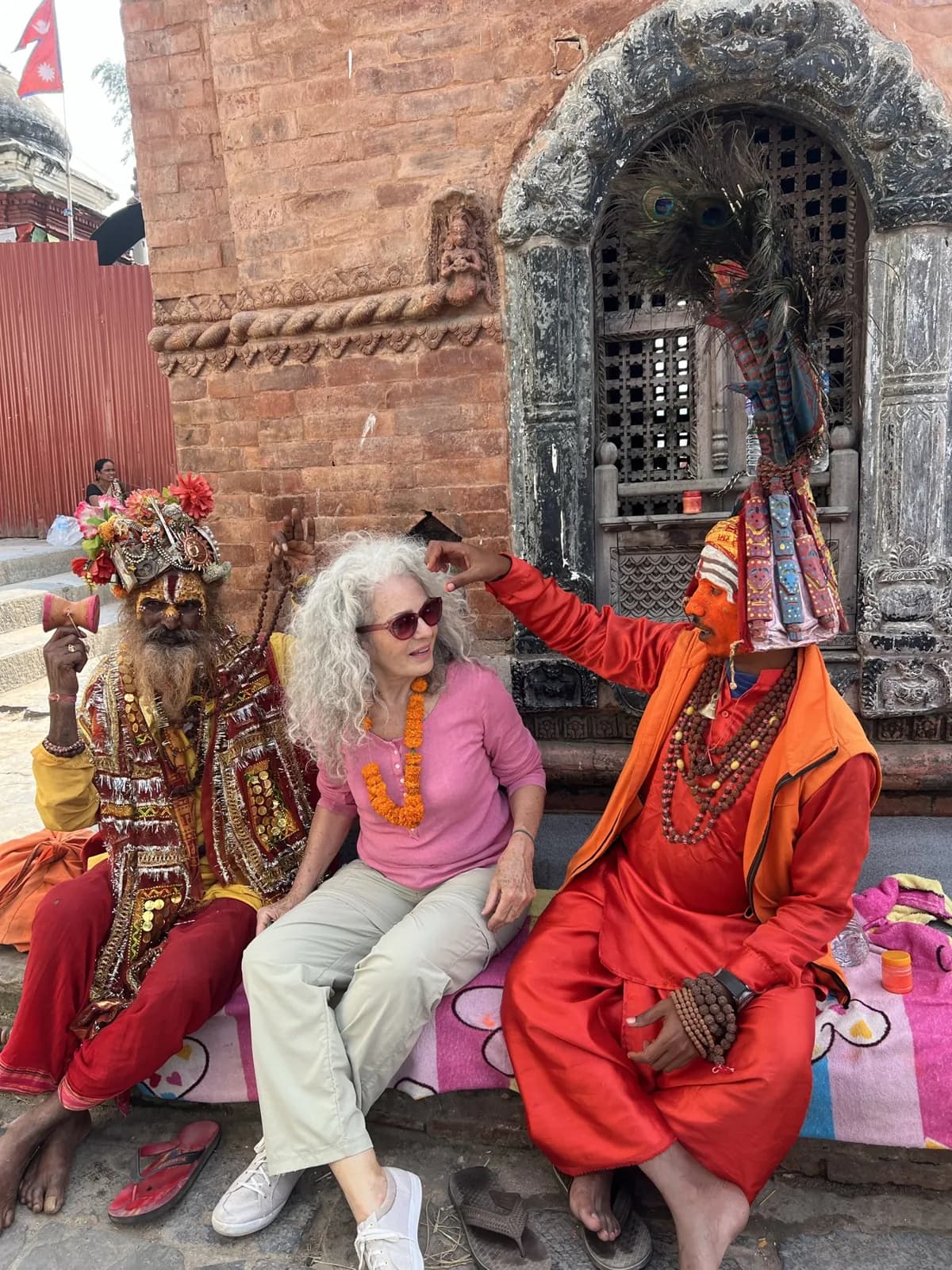
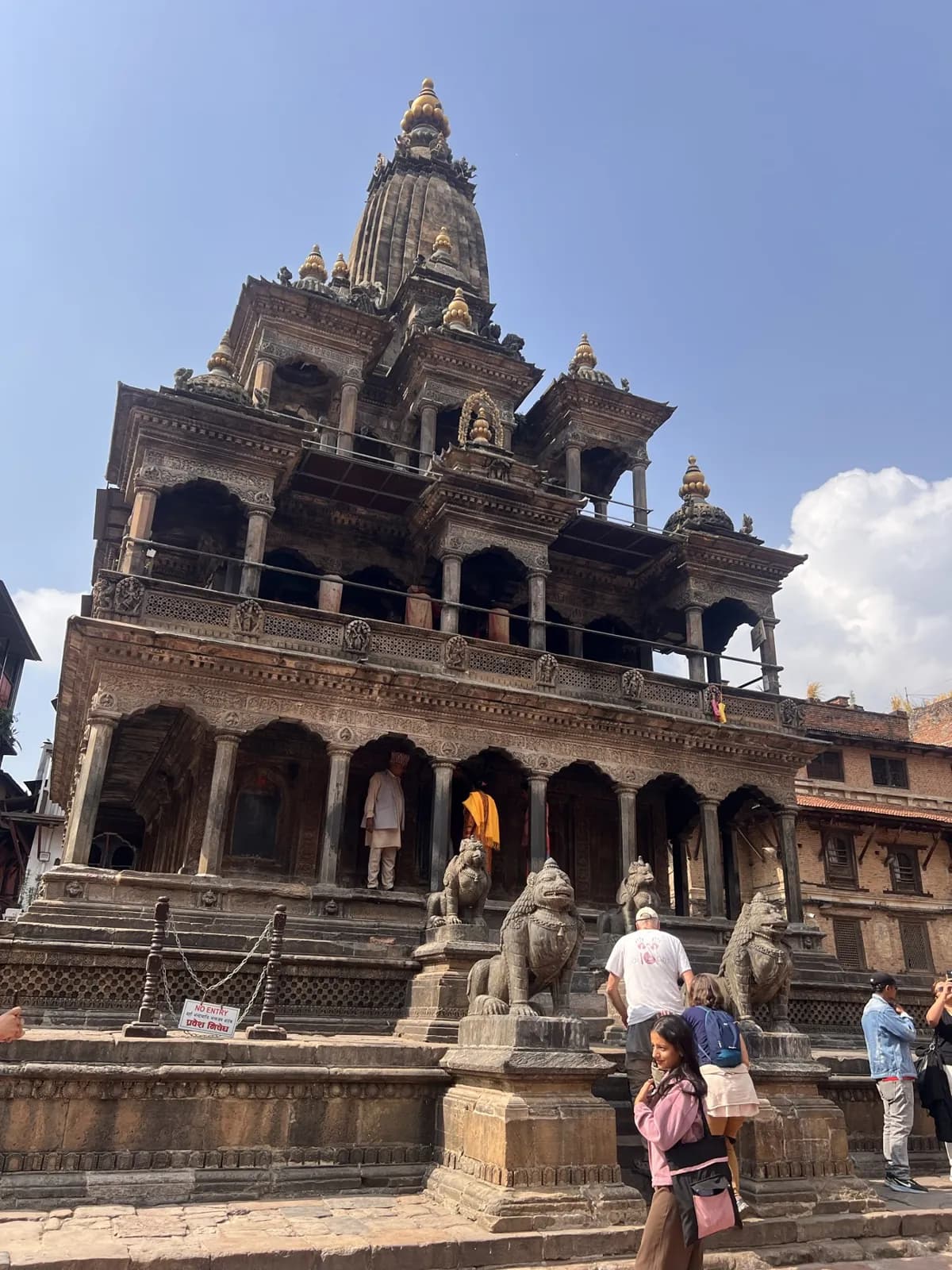
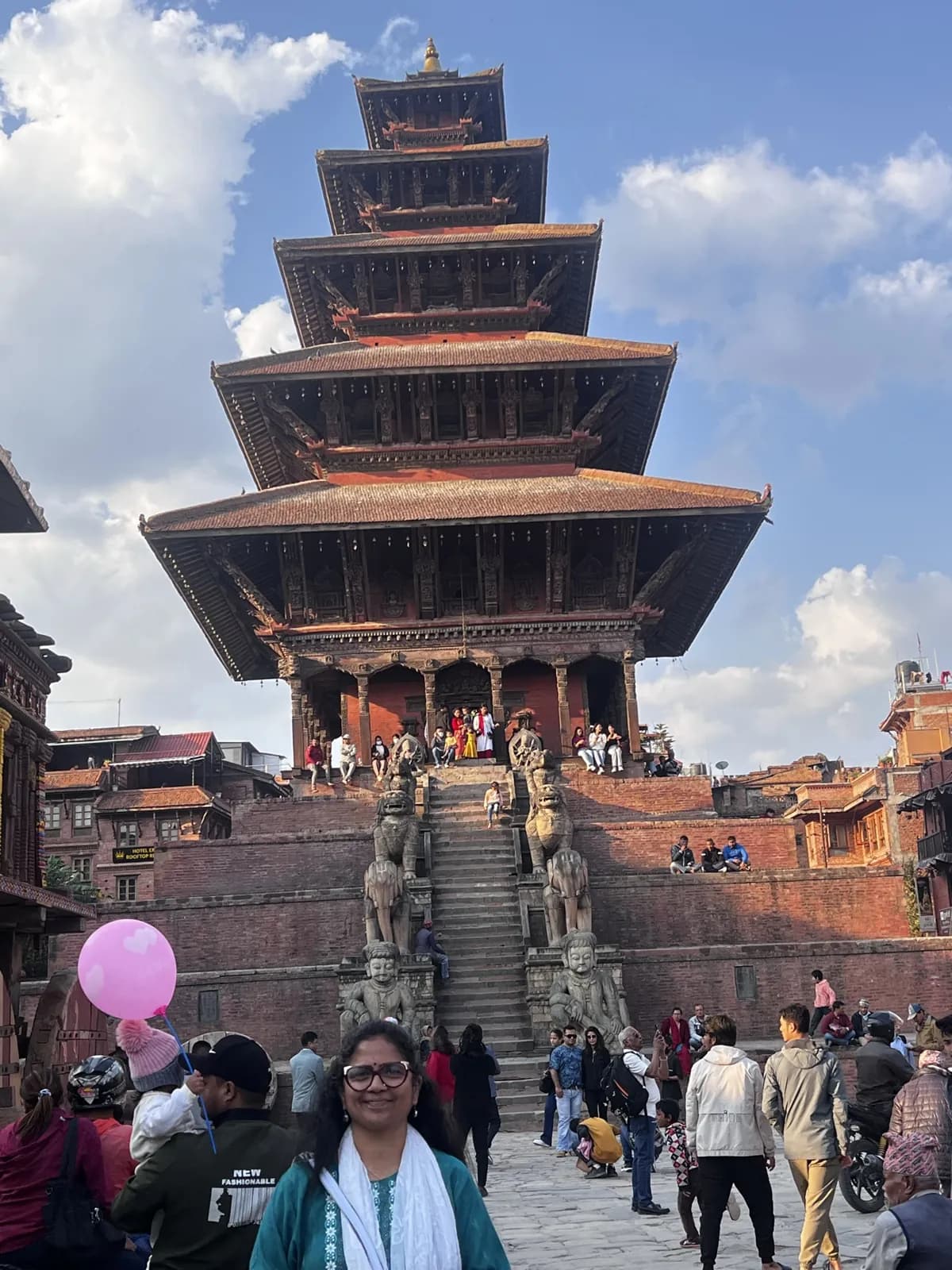
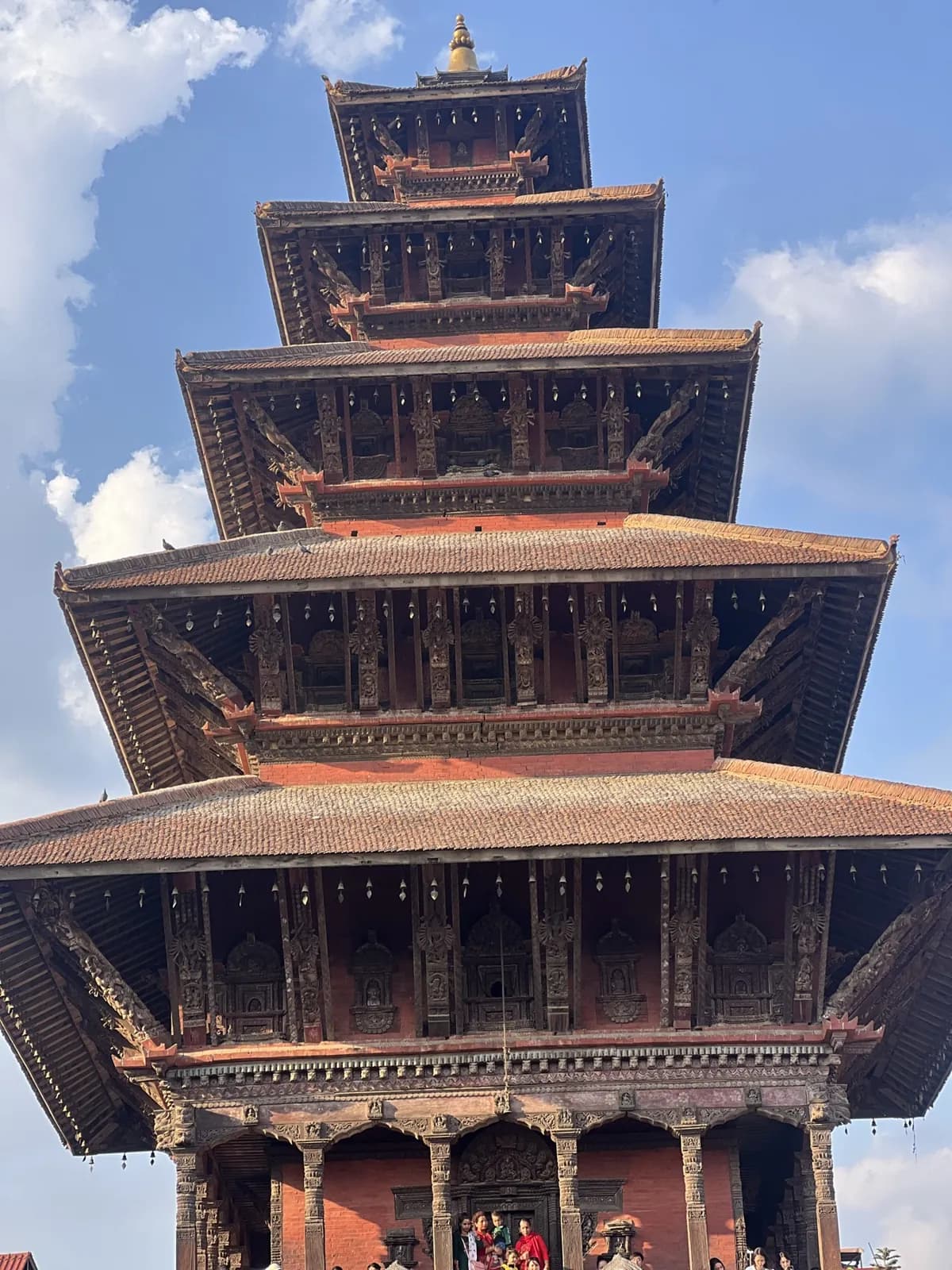
Swayambhunath above the city, Pashupatinath on the river, Boudhanath and its stupa, and Patan Durbar Square in the afternoon. Four UNESCO World Heritage Sites in one day, with a guide who can explain the religious art, in a private car, with entry fees included.
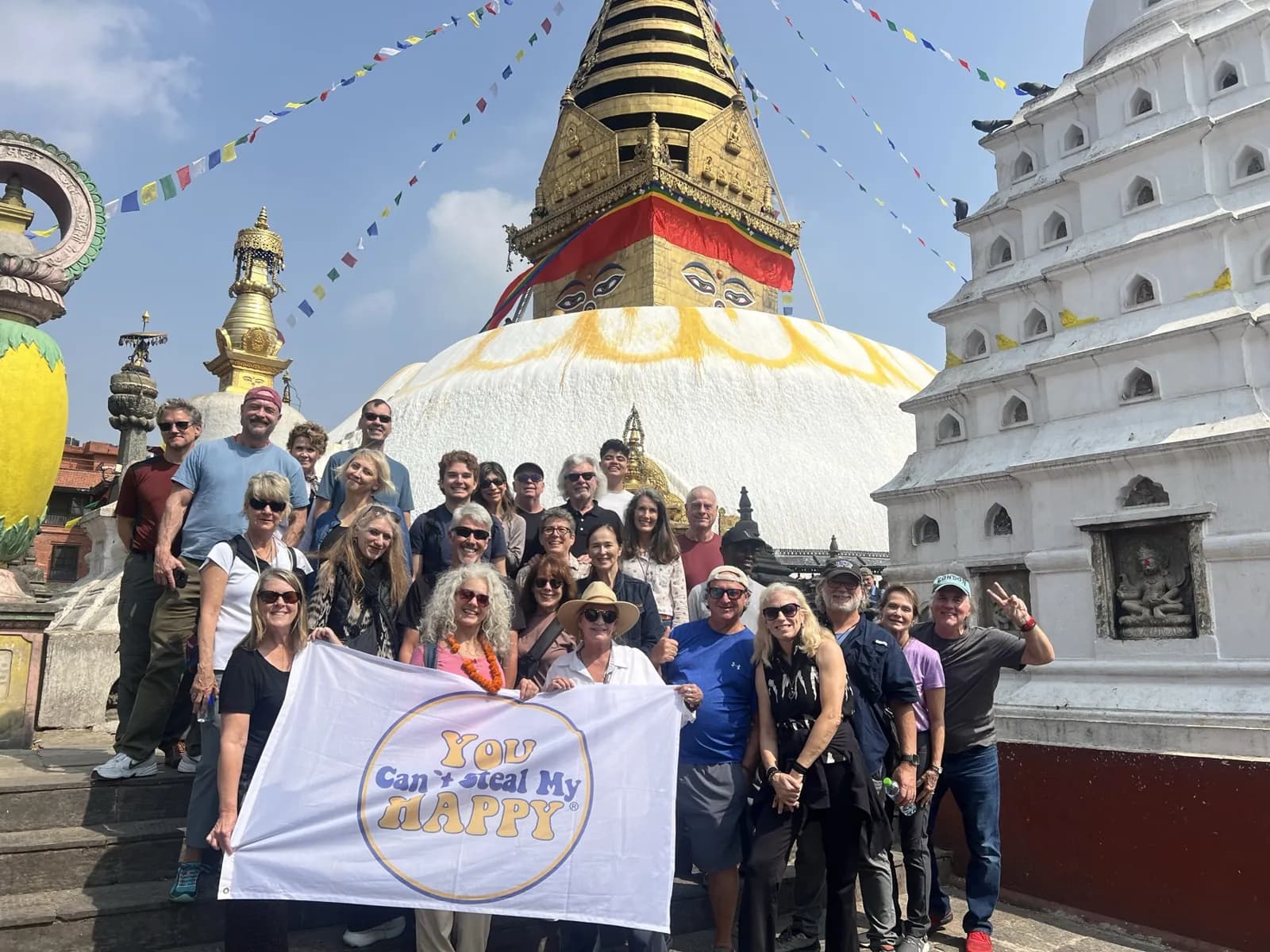
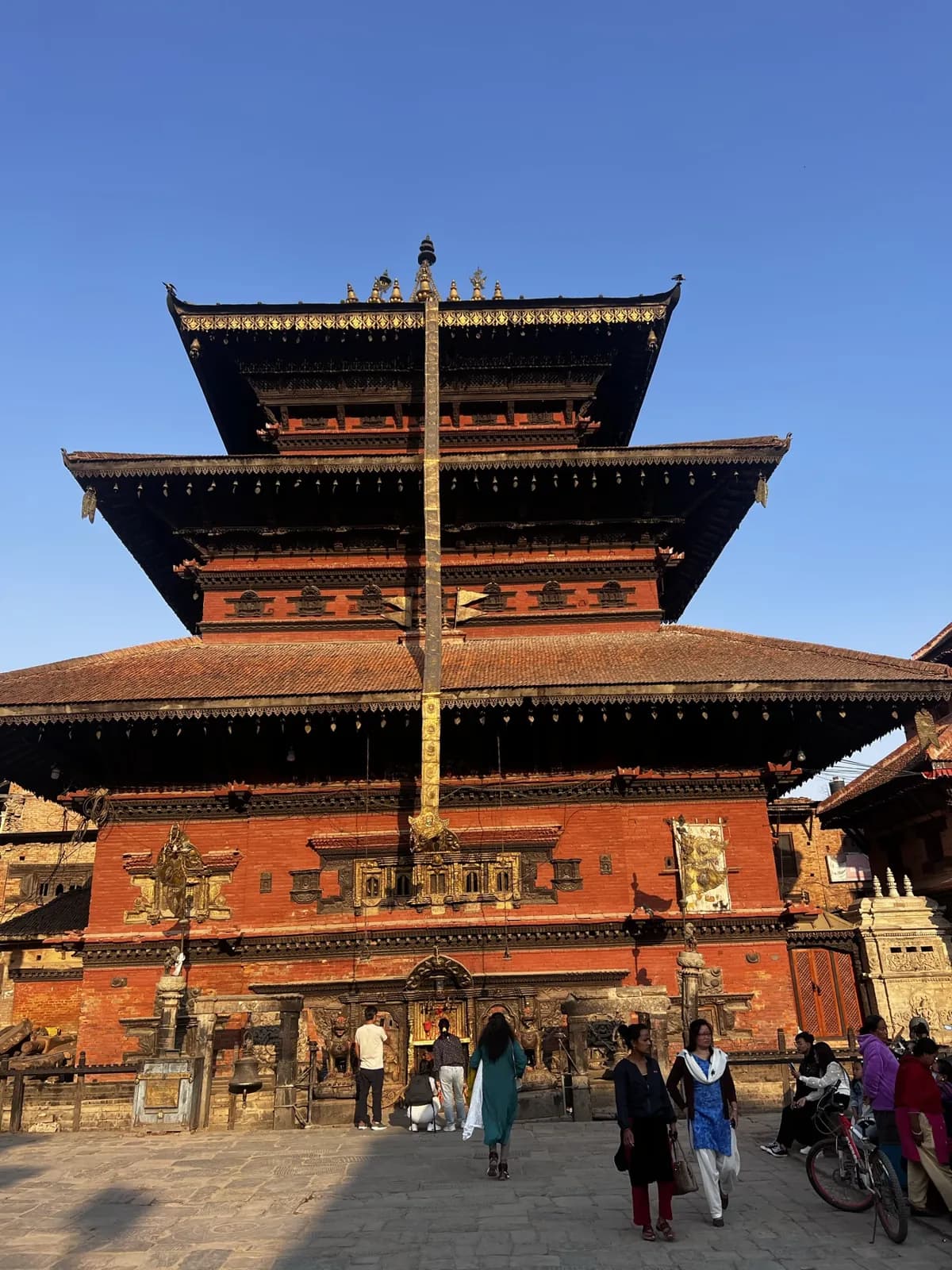
A 25-minute flight over the hills to Pokhara, where the trekking crew joins us, then a private vehicle to the road head beyond Nayapul. From there it is ninety minutes to two hours uphill to Ghandruk, a Gurung village of slate roofs and stone lanes directly below Annapurna South.
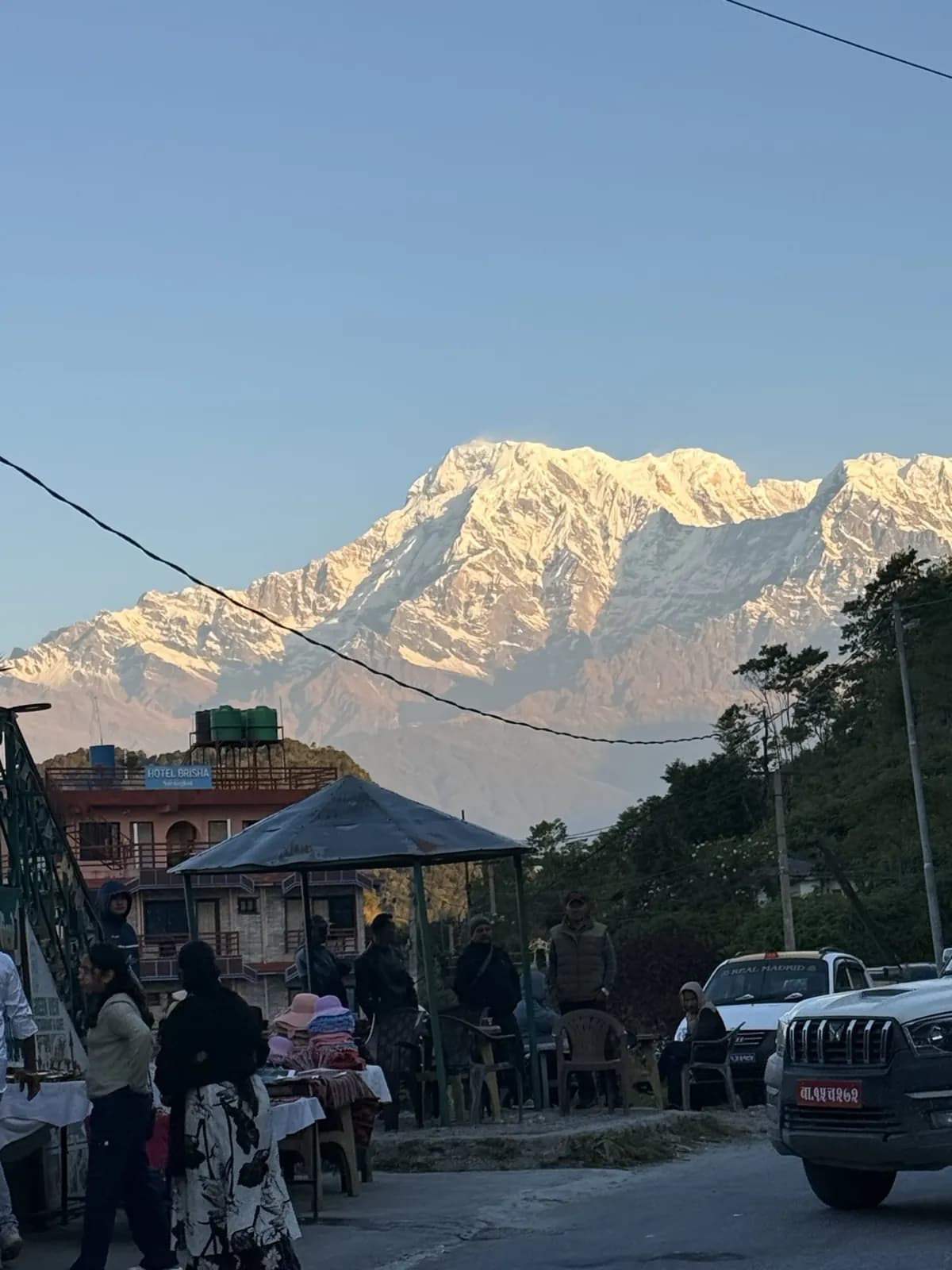
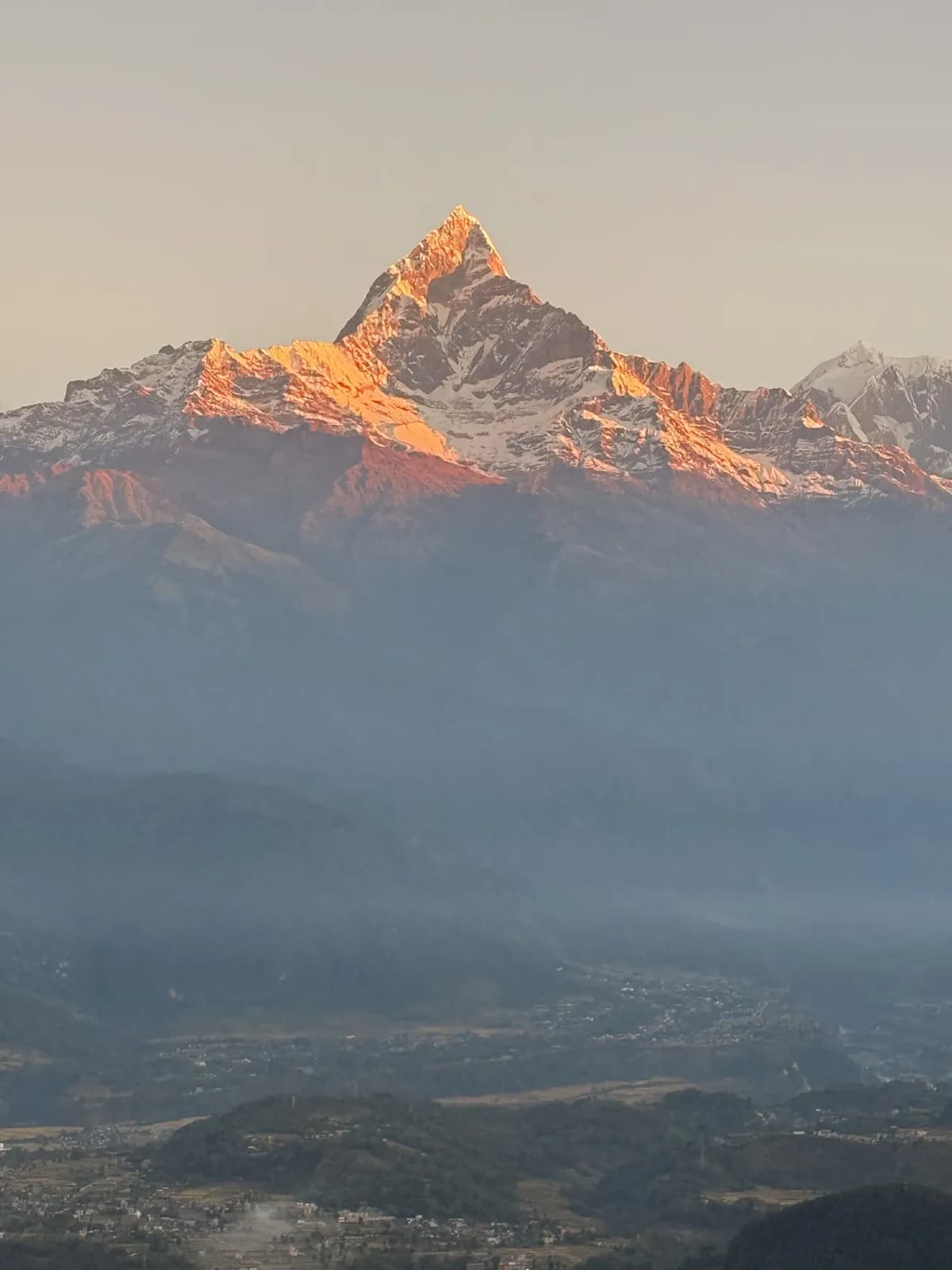
A long descent through terraces and forest to the Modi Khola, losing most of the height gained the day before. Twenty minutes below the lodge are natural hot pools beside the river. It is a memorable day, and a reminder that walking downhill is not necessarily easy.
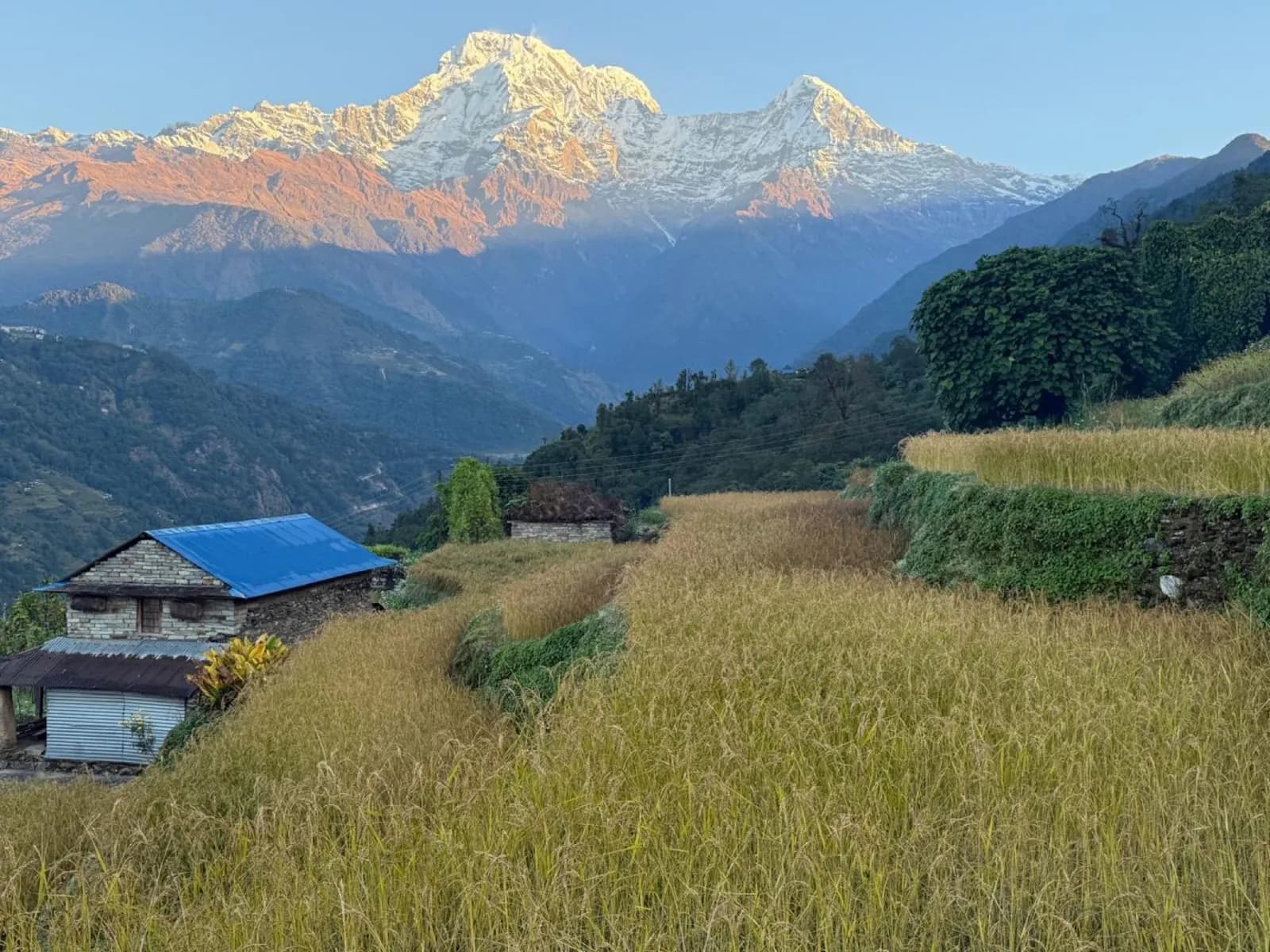
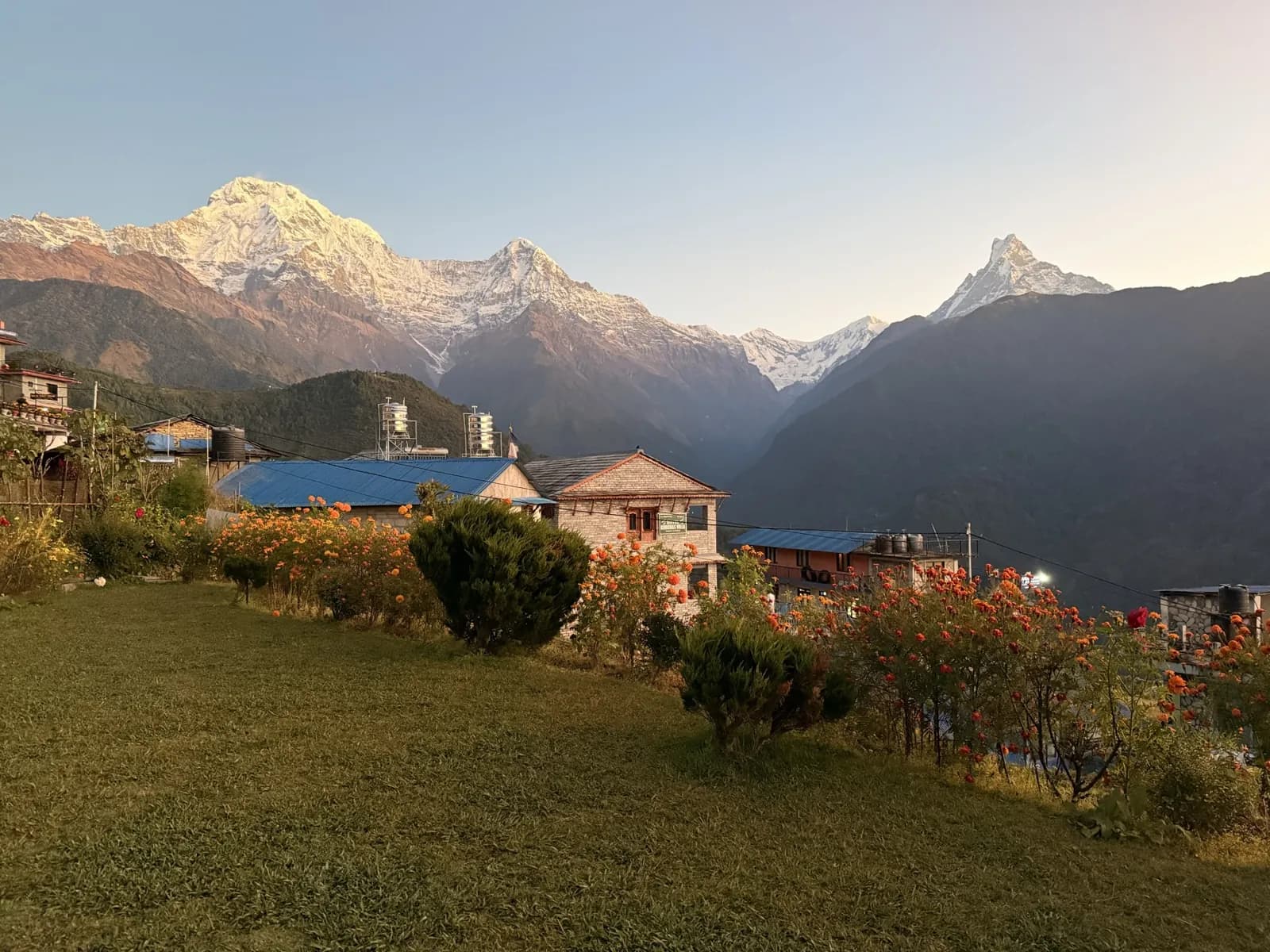
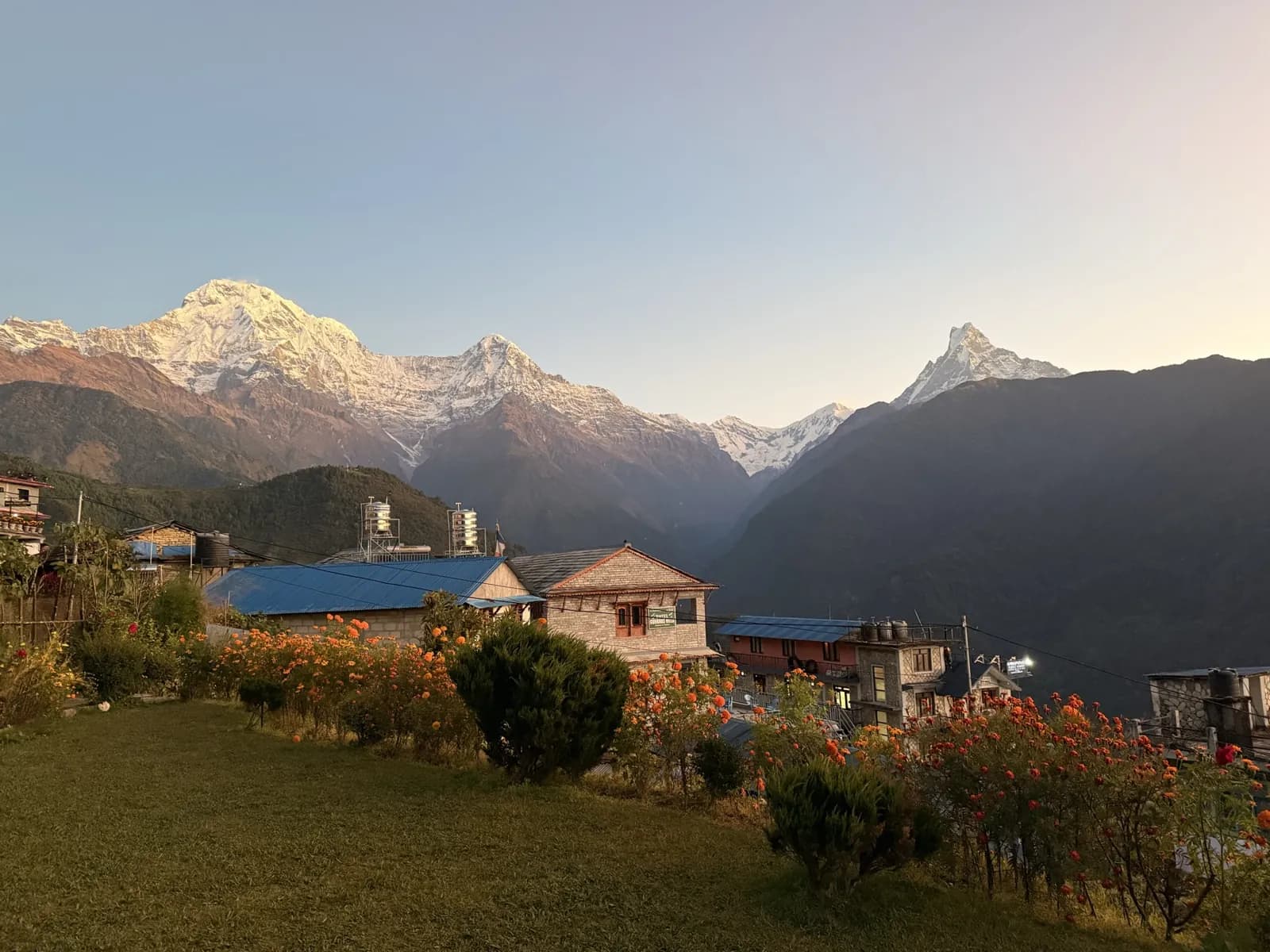
Back up out of the river gorge and along the hillside through Landruk, walking between villages and rice terraces, with the valley opening out below and the mountains above. A steady day with more ascent than descent.
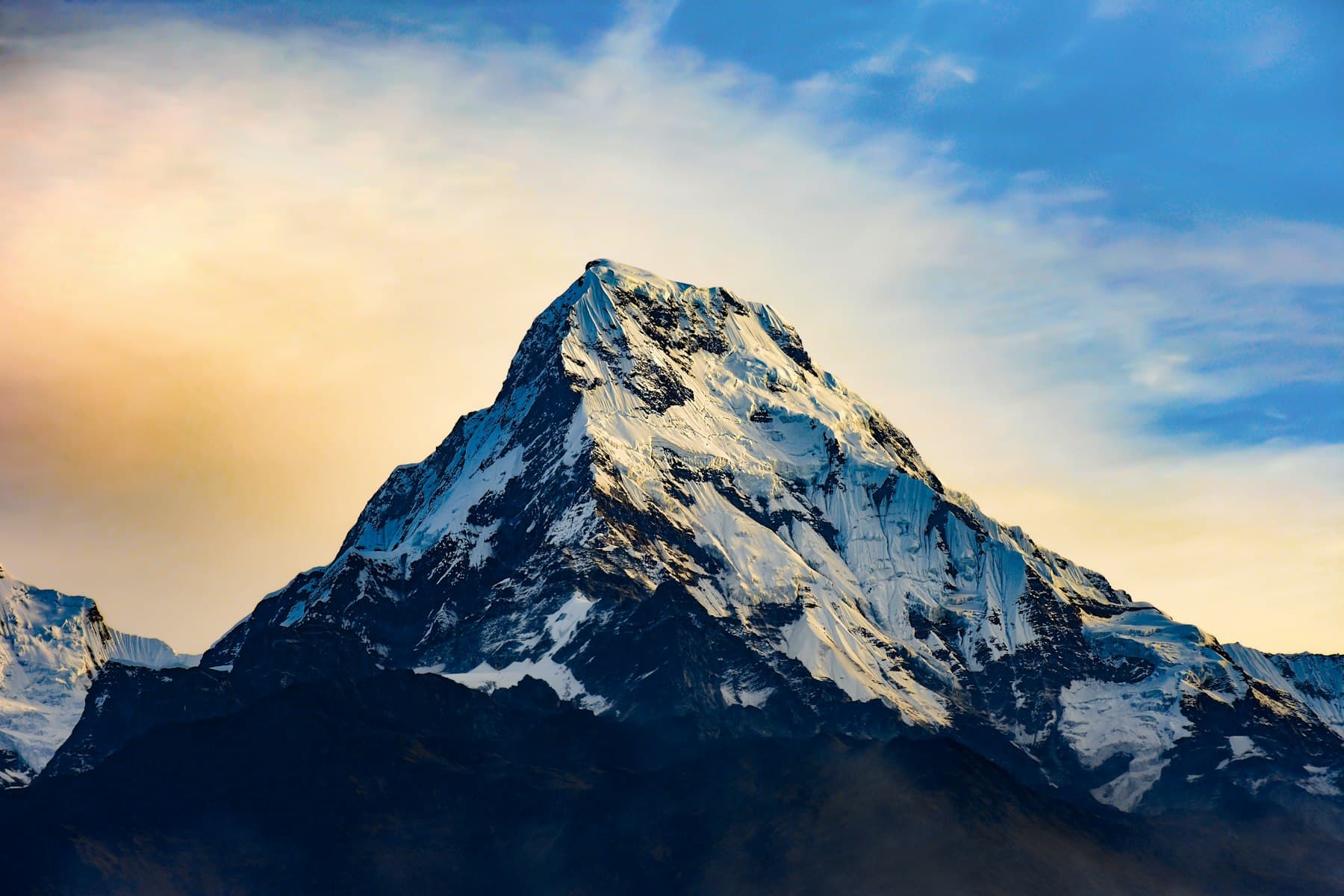
The shortest walking day, to the ridge at Dhampus, the main viewpoint of this trek. From a terrace at 1,650 m you can see Annapurna South, Hiunchuli, Machhapuchhre and Lamjung Himal along the skyline, and the afternoon is free to watch the light change on the mountains.
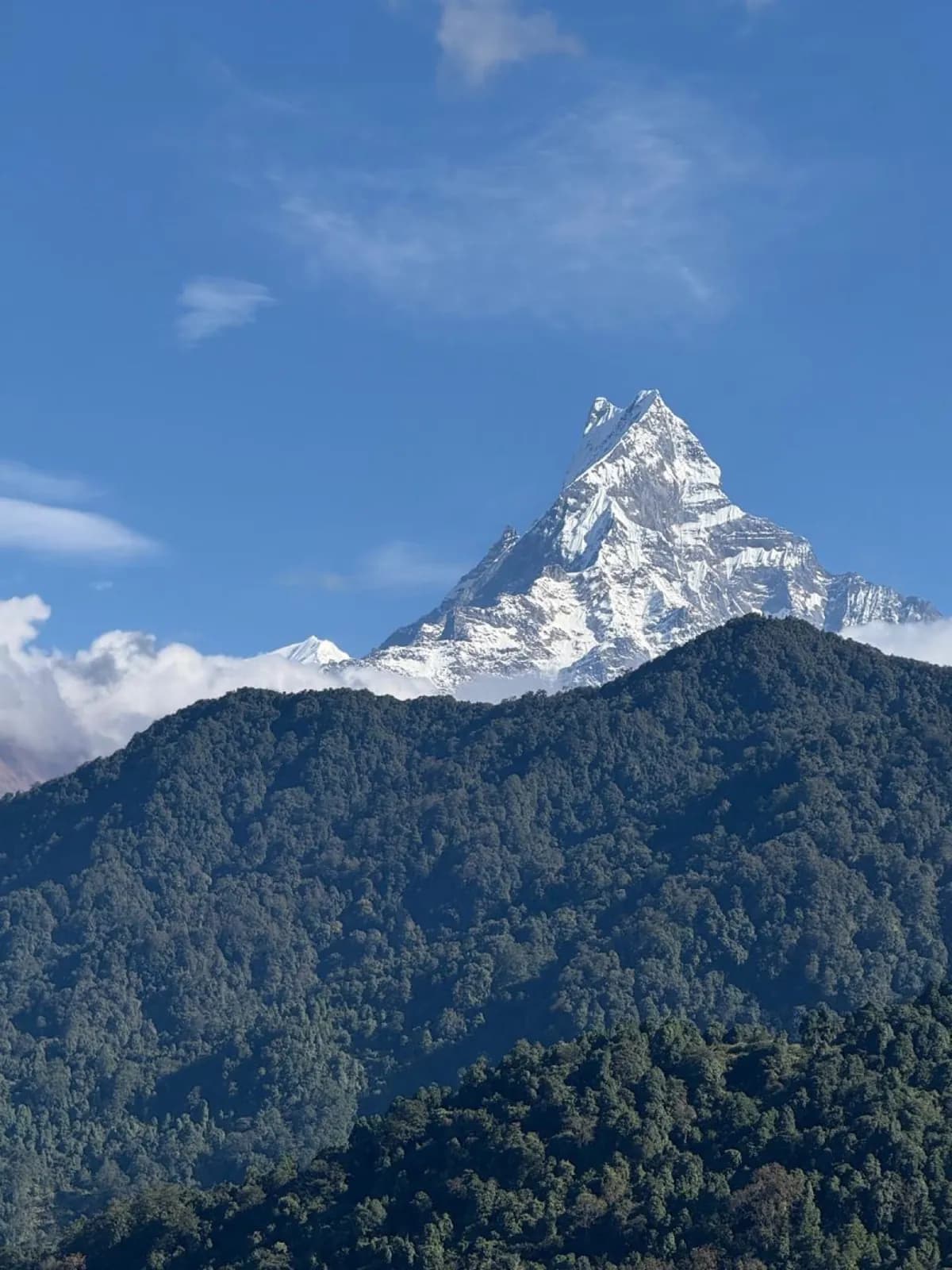
Two hours down to the road at Phedi, then a short drive to Pokhara, arriving in time for lunch by the lake. The afternoon is free: you might have a massage, take a boat out, or relax by Phewa Tal.
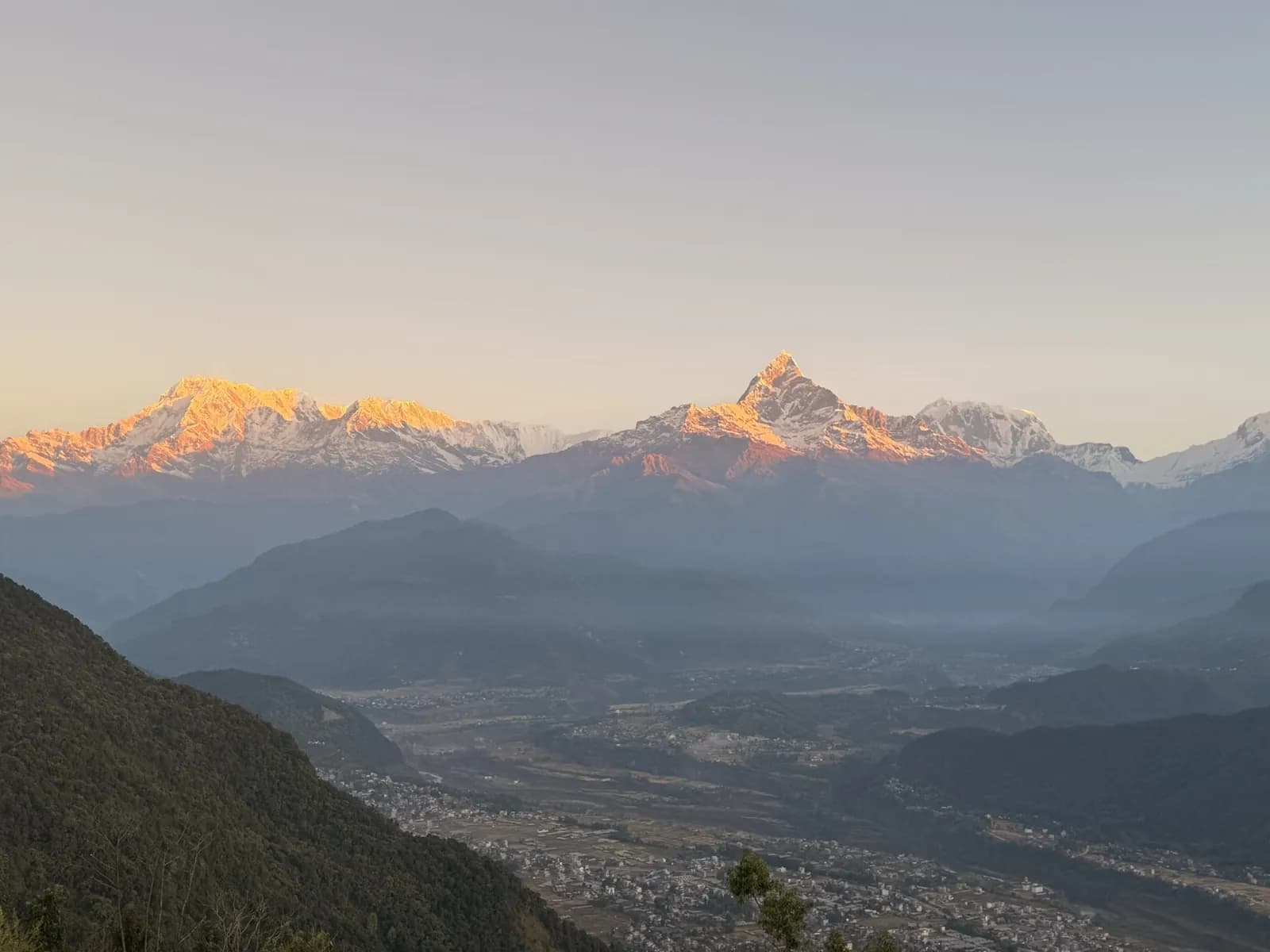
A boat trip across Phewa Tal to the Tal Barahi temple, then Davis Falls and the Gupteshwor cave below it. The morning is the time for a mountain flight along the range or a tandem paraglide from Sarangkot, both of which are optional extras rather than included.
The short flight back over the foothills, a free afternoon in Thamel for any last shopping, and a farewell dinner with a Nepali cultural programme in the evening.
Transfer to the airport for your international flight. If you are continuing to Chitwan or Bhutan, your next trip starts here instead.
Start date
22 Nov 2026
End date
1 Dec 2026
Available
12 places left
US $1,867
Per person
Start date
17 Oct 2027
End date
26 Oct 2027
Available
12 places left
US $1,967
Per person
Start date
28 Mar 2027
End date
6 Apr 2027
Available
12 places left
US $1,967
Per person
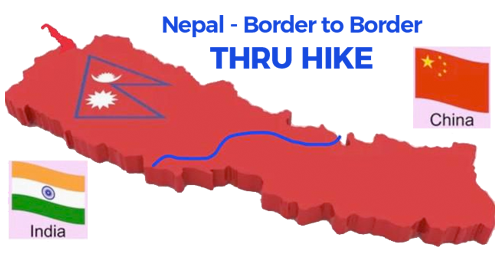
The trail from start to finish, at a glance.
No strict weight limits
There is no Lukla flight and no helicopter, so there is no 15 kg limit and nothing is weighed. The Pokhara flight allows 20 kg of checked baggage plus hand baggage, which is more than most people bring. Your porter carries up to 20 kg, and on a five-day walk your bag is unlikely to be close to that. Pack for two cities and five days of easy walking, and bring a good camera.
You fly from Kathmandu to Pokhara and back, 25 minutes each way, into an airport on flat ground. Unlike Lukla, these flights are rarely disrupted for long.
The flight from Kathmandu takes 25 minutes and lands at a full-sized airport on flat ground at 830 m, unlike the airstrip at Lukla. Weather delays do happen, but they are usually measured in hours rather than days. On the Everest treks a closed airstrip can cost three days of an itinerary; here, the worst case is that you drive instead and arrive the same evening.
The drive from Kathmandu to Pokhara takes six to seven hours on the Prithvi Highway along the Trishuli river. Some travellers prefer to see the countryside, and because nothing on this trip depends on the timing, it is a reasonable alternative to flying. It also saves the cost of the flight, which we refund to you. Let us know which you prefer when you book.
Treks used to start at Nayapul, but the jeep track now runs well beyond it, which shortens the first afternoon. We drive as far as the road is passable on your dates and start walking from there. In practice, day 3 involves ninety minutes to two hours of walking, uphill, wherever the road ends.
The scenic flight that some itineraries include on day 3 is a flight along the Annapurna range from Pokhara, not the transfer from Kathmandu to Pokhara. It takes an hour and depends on the weather. We list it under optional extras rather than including it in the price, because in clear October weather the view from Dhampus on day 6 is better, and free.
The four nights on the trail are spent in purpose-built luxury lodges at Ghandruk, Jhinu Danda, Tolkha and Dhampus. Each has twin or double rooms with proper beds, a private bathroom with a hot shower, and meals prepared in the lodge kitchen. The Ghandruk lodge is in a Gurung village, the Jhinu Danda lodge is above the hot springs, and the Dhampus lodge is on a terrace facing the Annapurnas. Because the whole route stays below 2,000 m, the same level of comfort is available throughout, unlike on the higher treks.
In Kathmandu and Pokhara you stay in five-star hotels, in deluxe rooms with a private bathroom and a bath. The Pokhara rooms face the lake.
| Where | Nights | Type | Room | Bathroom |
|---|---|---|---|---|
| Kathmandu | 3 | Five-star hotel | Deluxe double or twin | Private, hot water and a bath |
| Ghandruk | 1 | Luxury lodge, Gurung village | Twin or double | Private, hot shower |
| Jhinu Danda | 1 | Luxury lodge above the hot springs | Twin or double | Private, hot shower |
| Tolkha | 1 | Luxury lodge | Twin or double | Private, hot shower |
| Dhampus | 1 | Luxury lodge, facing the Annapurna range | Twin or double | Private, hot shower |
| Pokhara | 2 | Five-star hotel, lakeside | Deluxe double or twin, lake view | Private, hot water and a bath |
Porridge, Tibetan bread, eggs, chapati, pancakes, tea or coffee
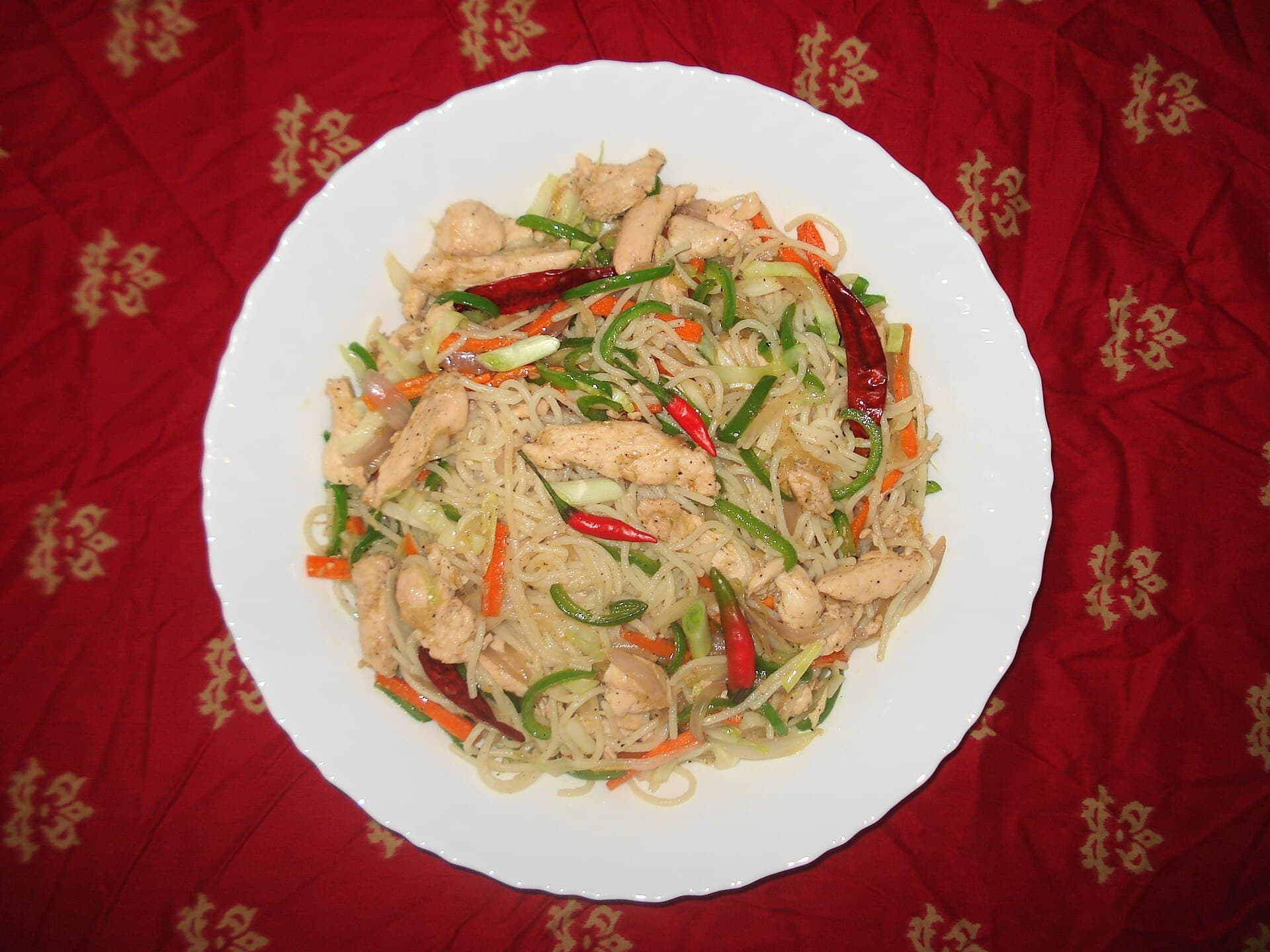
Dal bhat, fried rice, noodles, soup, momo, and potato dishes

Dal bhat, pasta, thukpa, curry and rice, soup to start
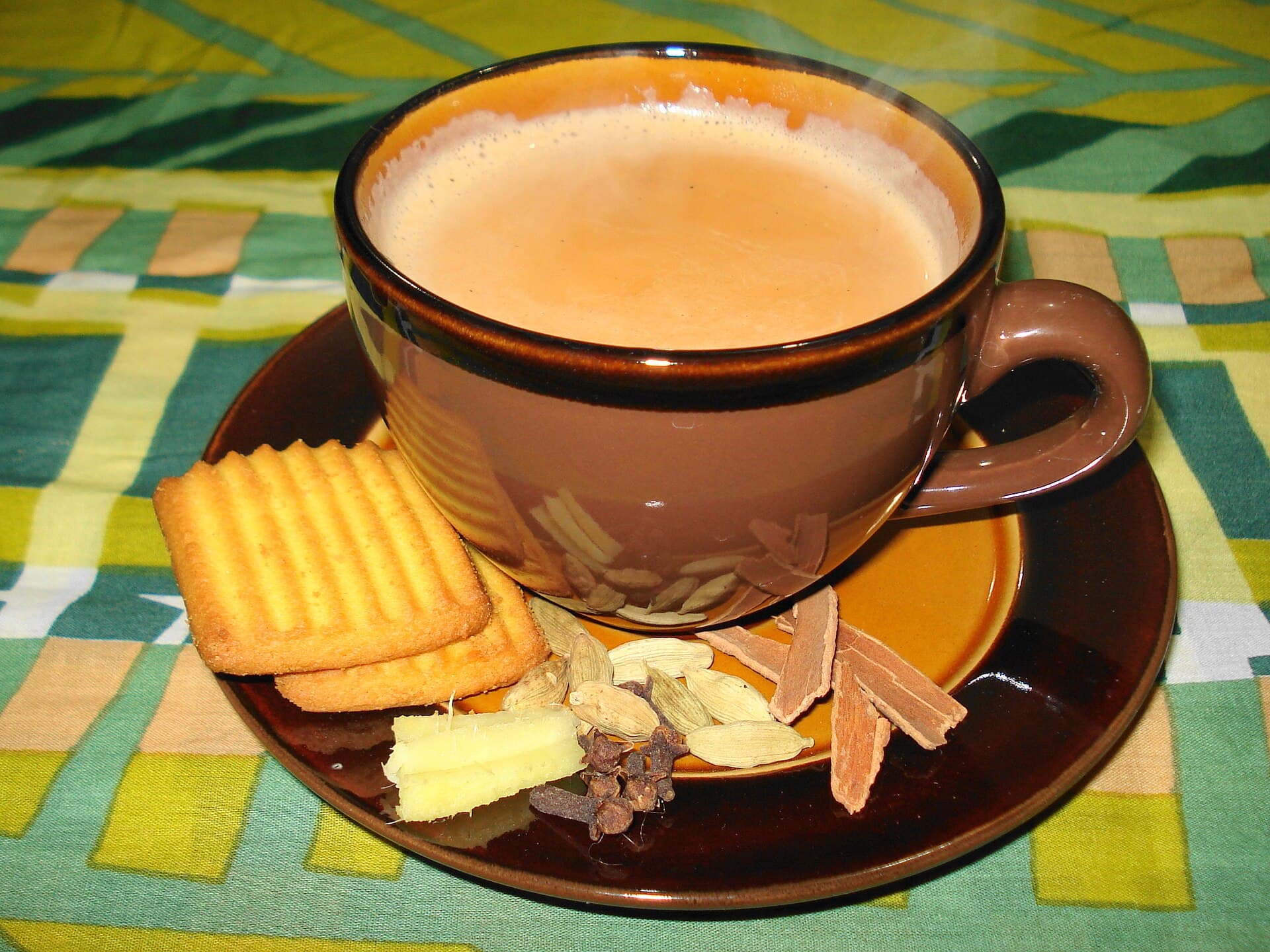
Black, milk, lemon, ginger, or masala. Included at every stop.
6:00Tea in your room, and a bowl of warm water to wash in
6:30Pack, and put the duffel outside your door for the porter
7:00Breakfast together in the dining room
8:00On the trail. The guide sets a steady, slow pace
12:00Lunch at a teahouse on the route, about an hour
13:00Two to four hours more, depending on the day
15:30Arrive at the lodge, tea, check in, wash, and rest if you need to
17:00Oxygen saturation and pulse taken, and written down
18:30Dinner, and the guide briefs you on the next day
20:30Bedtime. At 4,000 m most people are asleep by nine
The main physical demand of this trek is stone staircases. If you can walk for four hours, including going up and down stairs, you are ready.
The easiest trek we offer, and the only one with no altitude risk.
Written for somebody who walks a bit and does not train. If you already run or cycle regularly, start partway through. Nothing here needs a gym.
6 weeks before, stage 1 of 4
Two or three walks a week of an hour or more, including at least one on hilly ground. If you already walk regularly at weekends, you have already completed this step.
These are foothill temperatures rather than mountain ones. The figures below are for the ridge where you sleep, between 1,000 m and 2,000 m, and they are mild in every month the trek runs.
The rhododendron forest above Ghandruk comes into flower. Very good walking conditions.
Averages from Nepal DHM station data for the Annapurna foothills between 1,000 m and 2,000 m. Unlike the high treks, the coldest row on this table is still above freezing.
A senior government-licensed guide leads every departure and stays with you for all ten days, in the cities as well as on the trail. On less expensive Annapurna trips, a city driver usually hands you over to the trekking guide at Nayapul. There is one porter per traveller. On a trek this gentle, the main benefit of the porters is that you can walk without a heavy load and enjoy the views.
Each porter carries a maximum of 20 kg, which is your duffel bag and one other. This is below the 25 kg limit set by the trekking association and well below the loads you will see on the trail. If your bag is overweight, the load is divided rather than added to. Porters carry the main luggage, not daypacks: you carry your own water, camera, jacket and snacks for the day.
Salary, insurance, food and lodging for every guide and porter are included in the price you pay, and are not collected separately on the trail. Every member of the team is insured for altitude and helicopter evacuation on the same terms we require of you. Paying fair wages and insurance through the trip price is how we ensure our porters are properly equipped and not overloaded.
Tipping is customary but not compulsory, and it never replaces wages. For this trip, $100 to $150 per traveller for the whole team is usual, given together on the last evening rather than daily. Your guide will not ask for a tip, and would prefer that it is not given in front of the group.
A traveller drinking bottled water uses around 20 plastic bottles on this trip, and every one has to be carried in and carried out again. Boiled water is available at every lodge for one or two dollars a litre, and we encourage you to use it. Bring purification tablets or a filter as a backup.
We carry out everything we bring in that is not food. The Annapurna foothills, including the Gurung villages of Ghandruk and Dhampus, have a waste problem, and we make sure we do not add to it.
The lodges are family businesses in the villages you pass through, and the guides and porters live in this district. The ACAP fee funds the Annapurna Conservation Area Project, a conservation trust rather than a government department, which runs the micro-hydro schemes, the waste schemes and the lodge standards on this route. Almost all of what you pay is spent within a few days' walk of the trail. This is one reason to book with a Nepali operator rather than a foreign one that subcontracts the trek locally.
Ask before photographing anyone. When you meet a mule train, stand on the mountain side of the path, not the side with the drop, and let it pass. Monasteries welcome visitors, but they are places of worship: remove your hat and shoes, and if a service is taking place, wait.
Write to us or send a message on WhatsApp with your dates. Please include the size of your party in your first message: this trip runs for four or more people and the lodges are small, so for October dates availability depends on beds rather than price.
A deposit of 30 per cent secures your dates, and the balance is paid when you arrive in Kathmandu, in cash or by card. At the same time, we ask for a copy of your passport, your insurance certificate and any dietary or medical information.
You can pay by bank transfer, or by card through a secure link. Card payments carry the bank's fee of about 4 per cent, which we show you before you pay. The balance in Kathmandu can be paid in US dollars, pounds, euros or Nepali rupees.
If you cancel more than 30 days before departure, your deposit can be transferred to any other date or trip we run, with no time limit. If you cancel within 30 days, the deposit is retained, because the permits, flights and crew have been booked by then. If we cancel for any reason other than weather, we refund everything you have paid.
For a party of five or more, private and group departures cost the same. A private departure runs on your dates at your pace and can be arranged for one person. A group departure runs on the dates in the table above. Most travellers book privately, at no extra cost.
Three weeks' notice is enough for most of the year. October and early November are the exception, because lodge rooms rather than flights are limited: there are only four lodges, each with a few dozen rooms. For an October departure we need three months' notice.
Priced per person, arranged before you travel, and none of them included in the price above.
A one-hour flight along the range from Pokhara, with a guaranteed window seat. Best taken on day 8, when you already know the names of the peaks you are looking at.
A tandem flight from the ridge above Pokhara, twenty to thirty minutes over Phewa Lake. Pokhara is one of the best places in the world for paragliding, and day 8 has time for it.
Two extra days to add the Ghorepani ridge and the sunrise from Poon Hill at 3,210 m, joining this route at Ghandruk. This is the only option that takes the trek significantly higher.
Bhaktapur, Patan and Boudhanath with a guide who can explain the religious art, and a private car. Day 2 already includes a shorter version of this tour.
Travel to the lowland jungle to see rhinos, staying in a lodge rather than a camp. It combines well with this trip, as neither is physically demanding.
A room to yourself in both cities and at all four lodges. Unlike on the high-altitude treks, every stop on this route can provide a single room.
4 versions of this journey. They use the same guides and the same lodges; what changes is the length, the comfort and how much of it you walk.
Amazing trip
May 2025, Tripadvisor
We booked the luxury Annapurna trek for 11 days as a solo couple. It was the most amazing experience. Rajan was very prompt and knowledgeable with my questions when scheduling the trip. He met us at the airport and checked us into our hotel then handed us off to our guide Narayan. He was incredible. I can’t compliment him enough. His knowledge alone was worth the trip. He was very attentive and helped us through every step. He also took me on added small hikes to different places once we reached our destinations and to the market for spices when we finished our trek. Our porter Jaya was extremely helpful and filled in with any language barrier issues I had. I can’t recommend this company strongly enough. I look forward to booking with them again.
Nepal November 2014
November 2014, Tripadvisor
Hi, Wow me and my mate had a fantastic time in Nepal and made so many friends both in Katmandu and trekking. A big thanks to all at Hotel Friends Home in Katmandu superb service. A big thanks to Kumar, Binisha, Manoj and Sabi from Earthbound for making our Nepal visit so special we hope to visit again soon. All hotels on the trek were excellent.
Trip of a lifetime
April 2014, Tripadvisor
What an amazing trip! We took a 10 day trip, 5 trekking in the Annapurna region. Being in our 60's I was somewhat concerned about MY ability to succeed. However, our guides and porters made it possible. We were a very diverse group of 10 and by the end of the trek we were all friends. On the first day one of our porters Ramjee Bhatta stayed behind to bring up some luggage that had been lost in route to Kathmandu. He covered in a couple of hours what had taken us all day. With a smile on his face. The accommodations on trek, while spartan, were totally adequate and quite comfortable. The food was much better than I expected. I have done a fair amount of travel and this was one of my best experiences. It is difficult for me to put into words how life changing this trip was. Imagine 5 days without seeing a vehicle with wheels? All transport being on foot. And yet we had internet service at night. Meeting people from all over the world and still being in contact with them 7 months later. Not only did we experience incredible landscape beauty and physical challenges, we made friends. Ramjee was among those making this happen. Not only did he carry our bags he was more of an assistant guide, told us about his culture and was a great cheerleader. I would highly recommend making this trek.
Excellent Tsum Valley Trek
October 2014, Tripadvisor
I took a trip to Nepal in October 2014, including a trek of Tsum Valley and another couple of weeks split between Pokhara and Kathmandu. Rajan at Earthbound Expeditions managed every aspect of my trip perfectly -- from the day tours to the hotels, jeep transports, internal flights, and an excellent local guide from the Tsum Valley. He was flexible when I wanted to make changes to my itinerary in the middle of the trip, and he met with me personally several times during the Kathmandu portion of my trip. I could not have asked for a better experience. I chose Earthbound Expeditions because a co-worker has used the company three times previously for her trips/treks in Nepal, Bhutan and India. The people I trekked with in Tsum have also used Earthbound twice before, and this was their third time. That says it all. Thank you, Rajan!
Answers to the 16 questions travellers ask us most often. If your question is not here, contact us and we will answer it.
It is a proper trek on the main trail: the same stone paths, the same Gurung villages and the same daily routine of walking from lodge to lodge as the harder Annapurna routes. It is not an endurance challenge. You walk three to five hours a day, sleep in a proper bed every night, and the highest point is 1,950 m. You walk through the Himalaya below Annapurna South, without the physical demands of a high-altitude trek.
They share the first day and then follow different routes. Annapurna Base Camp takes fourteen days, climbs to 4,130 m, uses ordinary teahouses with shared bathrooms for two weeks, and ends in a ring of high peaks. This trek takes ten days, reaches 1,950 m and is comfortable at every stop. Base Camp is the greater mountain experience, while this trek is the more comfortable holiday. They cost about the same, because the accommodation on this trek is the main expense.
Yes, and this is the only trek we offer where we say so without conditions. There is no altitude to manage, the days are short, a vehicle is never more than a few hours away, and every night ends with a hot shower and a proper bed. The one thing to consider is the stone staircases, which are hard on the knees both going up and coming down. Let us know if this is a concern and we will adjust the descent on day 4.
You need to be able to walk for four hours, including many stairs up and down. That is the only requirement. You do not need previous trekking experience, altitude experience or gym training. The training section above has four short steps, and the most useful one is stair practice.
Not as standard. The route runs through Ghandruk, Jhinu, Tolkha and Dhampus, the lodge circuit on the near side of the ridge, and does not go north to Ghorepani. Poon Hill and its sunrise at 3,210 m are available as a two-day extension from Ghandruk, listed under the optional extras above. It is the only part of this trip that takes you significantly higher, and it is worth considering if altitude was not the reason you chose this trek.
Because the hot springs are at the bottom of the valley. Ghandruk is at 1,950 m and Jhinu Danda at 1,070 m, so day 4 is a long descent to the Modi Khola and a set of natural hot pools beside the river. It is a memorable day, and a reminder that walking downhill is not necessarily easy. You regain most of the height over the following two days.
Five. Two days are in Kathmandu at the start, two are in Pokhara in the middle and at the end, and one is the flight home. This balance is intentional: the cities have the UNESCO sites and the lake, and on a ten-day trip most people want to see both.
In Kathmandu and Pokhara, yes, in the usual international sense. On the trail, no. The four lodges are by far the best buildings on the ridge, with private bathrooms, reliable hot water, heating on request and a proper kitchen, and elsewhere they would be good four-star country hotels.
Almost all the way. All four lodges have wifi included, usually good enough for a video call, with Ghandruk the weakest. Ncell and NTC cover the entire route. This is a foothill trek an hour from a city, not a remote high-altitude region.
You walk in it, and at the end of the day you arrive at a lodge with a hot shower and a drying room. We only run the trek outside the monsoon, so prolonged rain is unlikely, but the foothills get more cloud than the high valleys, and an afternoon shower in April or October is normal.
Because most of the cost is accommodation and flights rather than days on the trail. Nine nights in five-star hotels and luxury lodges cost roughly ten times as much as the same number of nights in teahouses, and that accounts for most of the difference. The cost breakdown above shows the details. The trekking itself is the least expensive part of any trek, and this trip has less of it.
International flights, travel insurance, tips, lunches and dinners on the city days, and personal spending. Everything on the trek itself is covered: all meals, all lodges, the permits, the guide, one porter per person, the domestic flights and every transfer. The full list of exclusions is given further up this page.
Yes, at the prices in the group table above. The published price of $1,967 is the rate for four to twelve people, and the departures on this page run at that price. With fewer than four, the guide, vehicle and rooms are no longer shared, so the price is $2,190 each for two people and $2,680 for one.
No, you need neither, and this is the only trek we offer where that is the case. Every stop has a duvet and a proper mattress. A fleece and a light waterproof jacket are enough for every evening outside December and January, when a warm layer is useful on the terraces at Ghandruk and Dhampus.
Not for altitude, because the route is low. Ordinary travel insurance with medical cover is enough, without the high-altitude cover required for the Everest and Base Camp treks. We still require evacuation cover, as we would anywhere in Nepal, but the more expensive high-altitude cover is not needed for this route.
Three weeks' notice is enough for most of the year. October and early November are the exception, because beds are limited: there are four small lodges on this route, so October dates are usually booked three months in advance rather than three weeks.
Didn't find what you were looking for?
Search every word on this page, or ask somebody who has walked the route.
10 days
$1,967 per person