Breakfast
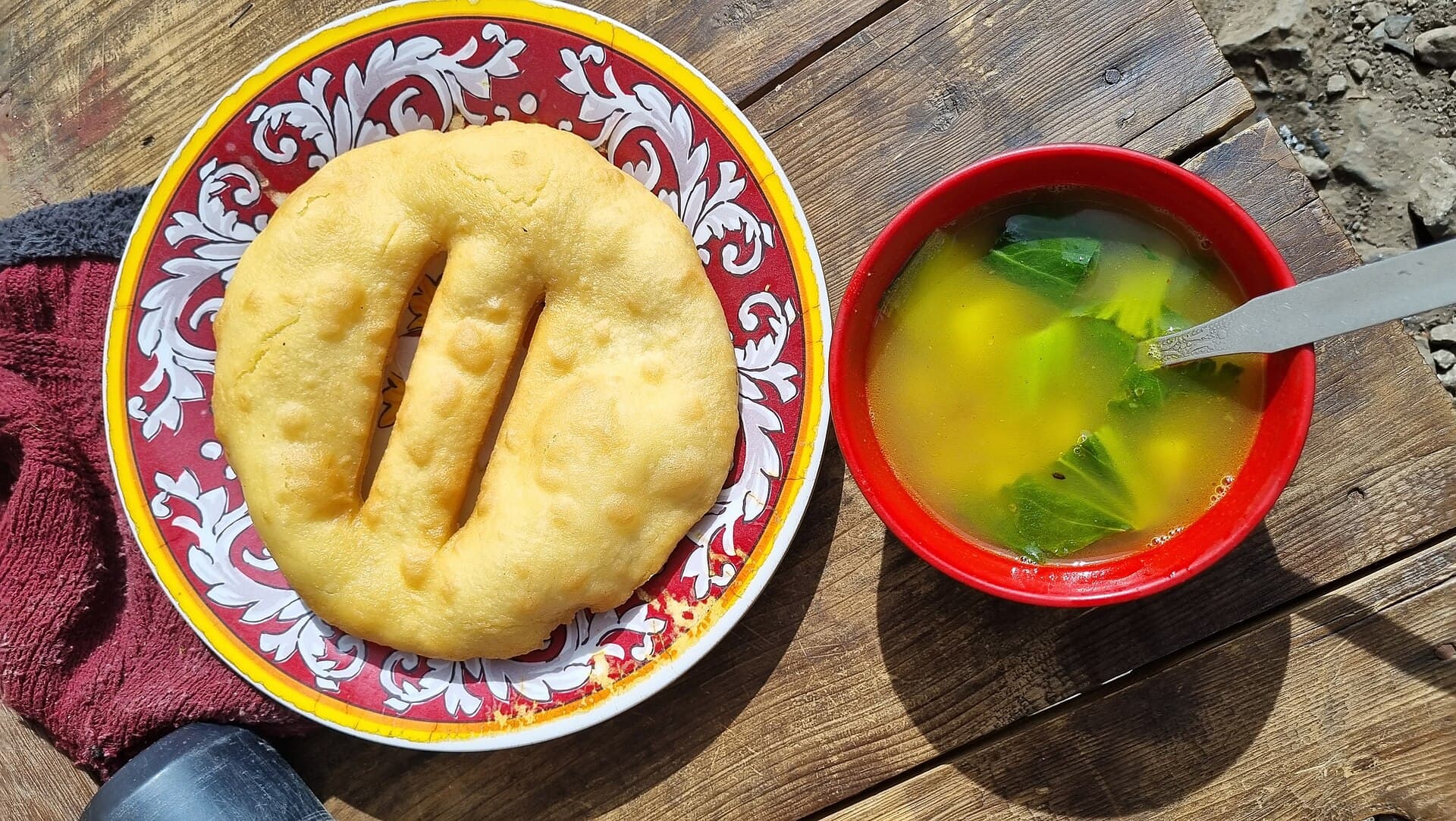
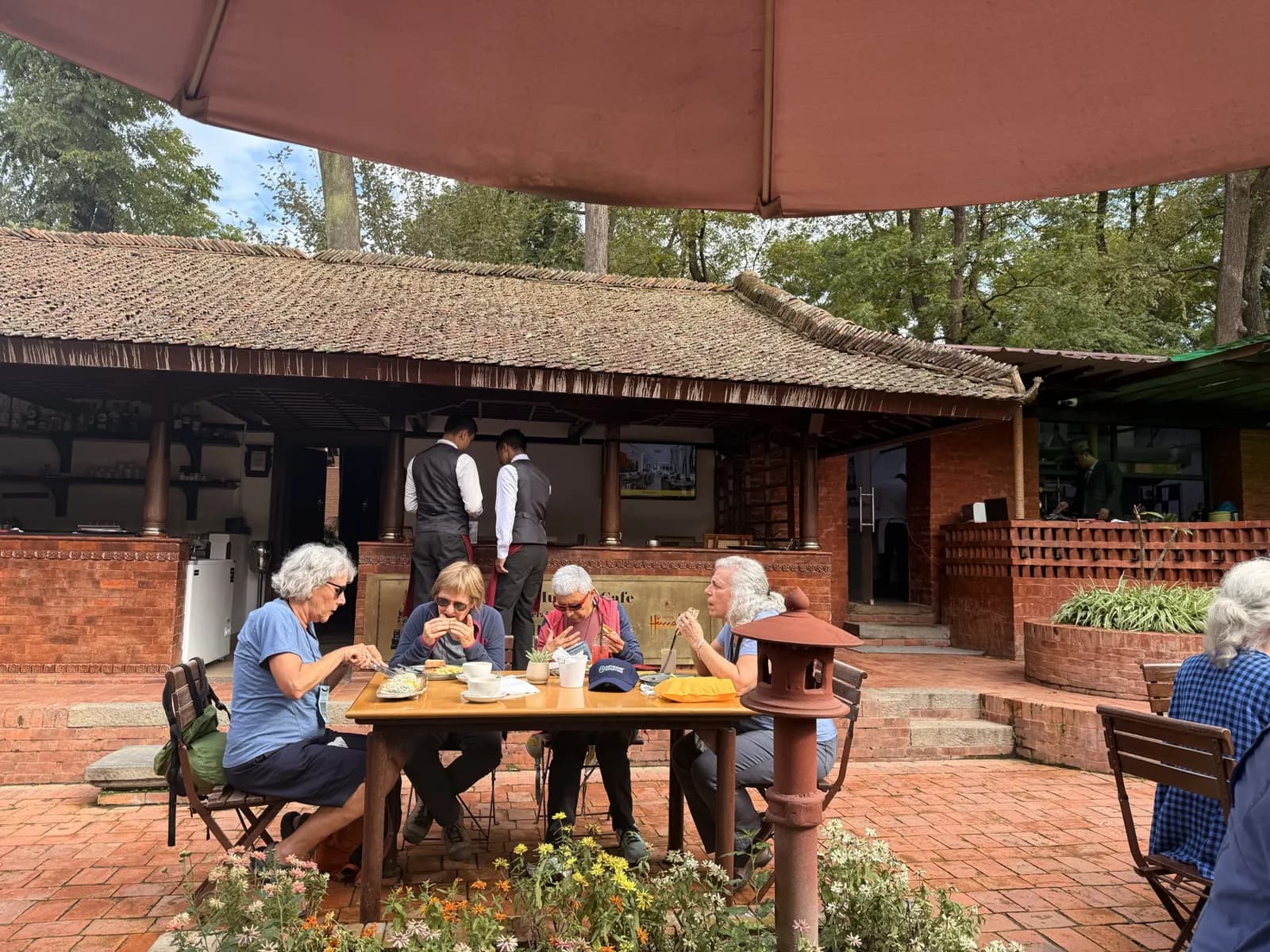
Porridge, eggs cooked to order, fresh bread, fruit and filter or espresso coffee
A short Everest trek at a slow, comfortable pace: Namche, the Everest View Hotel and Tengboche Monastery, with heated rooms and private bathrooms every night, and nothing above 3,880 m.
A short Everest trek at a slow, comfortable pace: Namche, the Everest View Hotel and Tengboche Monastery, with heated rooms and private bathrooms every night, and nothing above 3,880 m.
Eleven days, six of them walking, and none above 3,880 m. You fly to Lukla and walk for two days up the Dudh Koshi valley to Namche Bazaar. You spend a day visiting the Sherpa villages on the plateau above Namche, then continue to Tengboche Monastery and sleep in the forest below it at Deboche. From there you return the way you came. The trek does not go to Base Camp, and the view of Everest is just as good.
This trek is for people who want to see Everest but do not want to spend three weeks trekking to 5,545 m. Most travellers on this trek belong to one of three groups: people in their sixties and seventies, families with children, and anyone with ten days rather than three weeks. It is also a good choice if you have had problems with altitude before.
In Kathmandu, Phakding and Namche, you stay in a five-star hotel and then the two best lodges in the lower Khumbu, each with a heated room, a private bathroom, hot water and reliable wifi. At Deboche, the best room has its own bathroom, but the only heating is a stove in the dining room. No warmer accommodation exists at 3,820 m.
Seven-day versions of this trek exist. They fly you in, walk you quickly to Namche and back, and have no spare day for weather and no second night anywhere. Our itinerary adds a day in Kathmandu, a full acclimatisation day above Namche, a night at Deboche rather than a rushed turnaround, and a spare day at the end in case the Lukla flight is delayed.
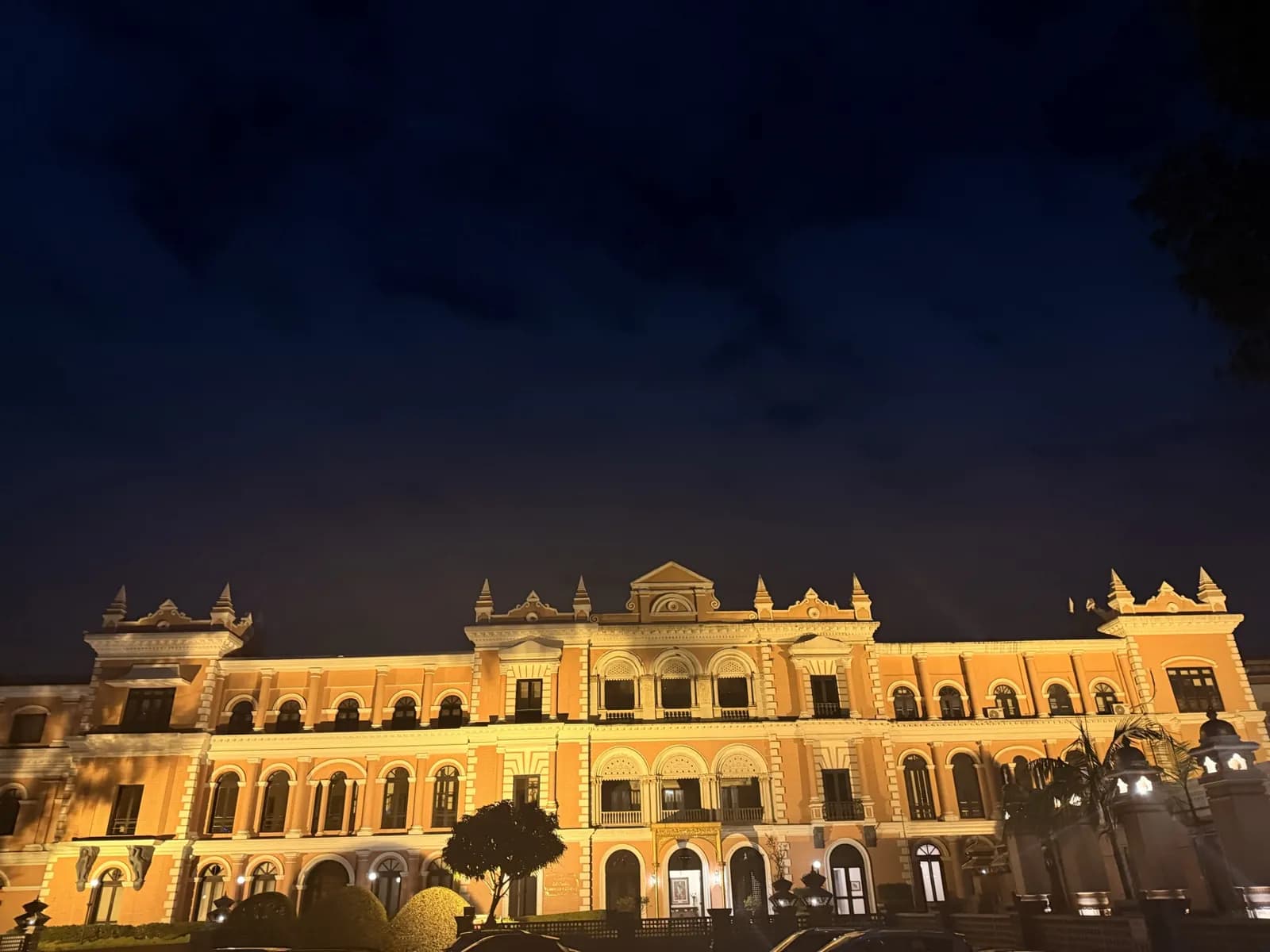
We meet you at the airport and drive you to a five-star hotel with a garden. Rest for as long as you need. In the evening, we go through the route over dinner, check your packing and weigh your bag, because the Lukla baggage allowance is strictly enforced.
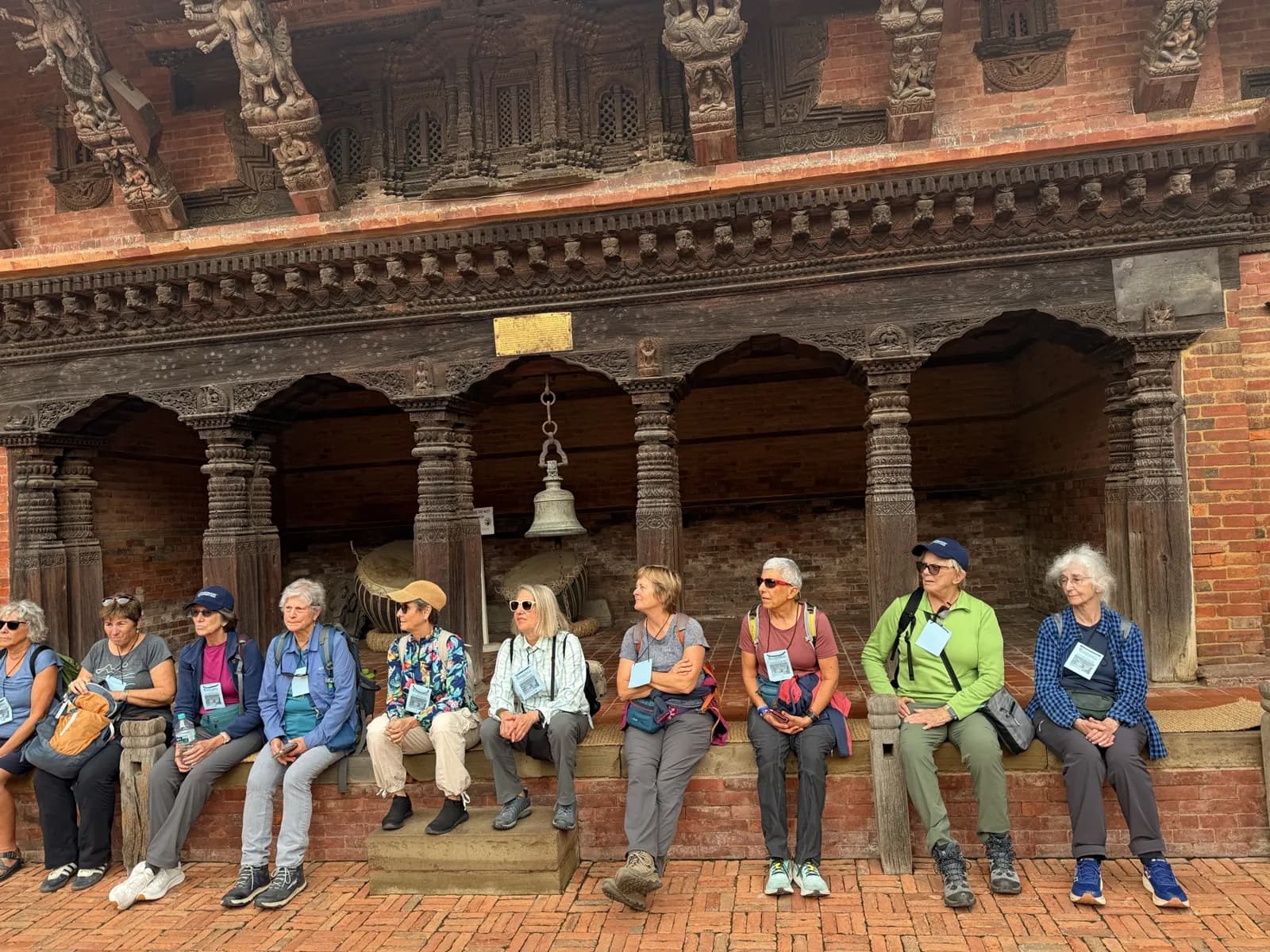
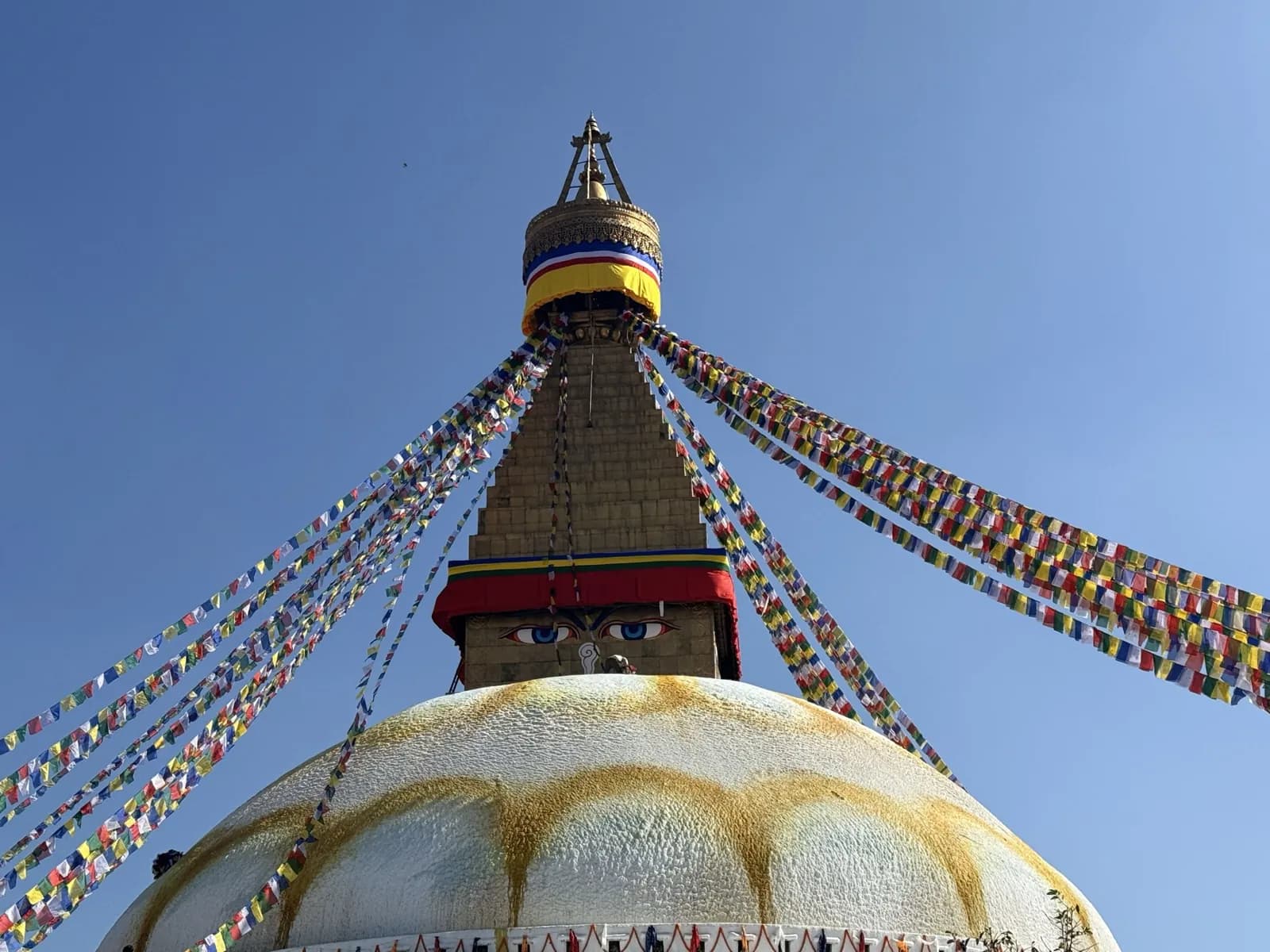
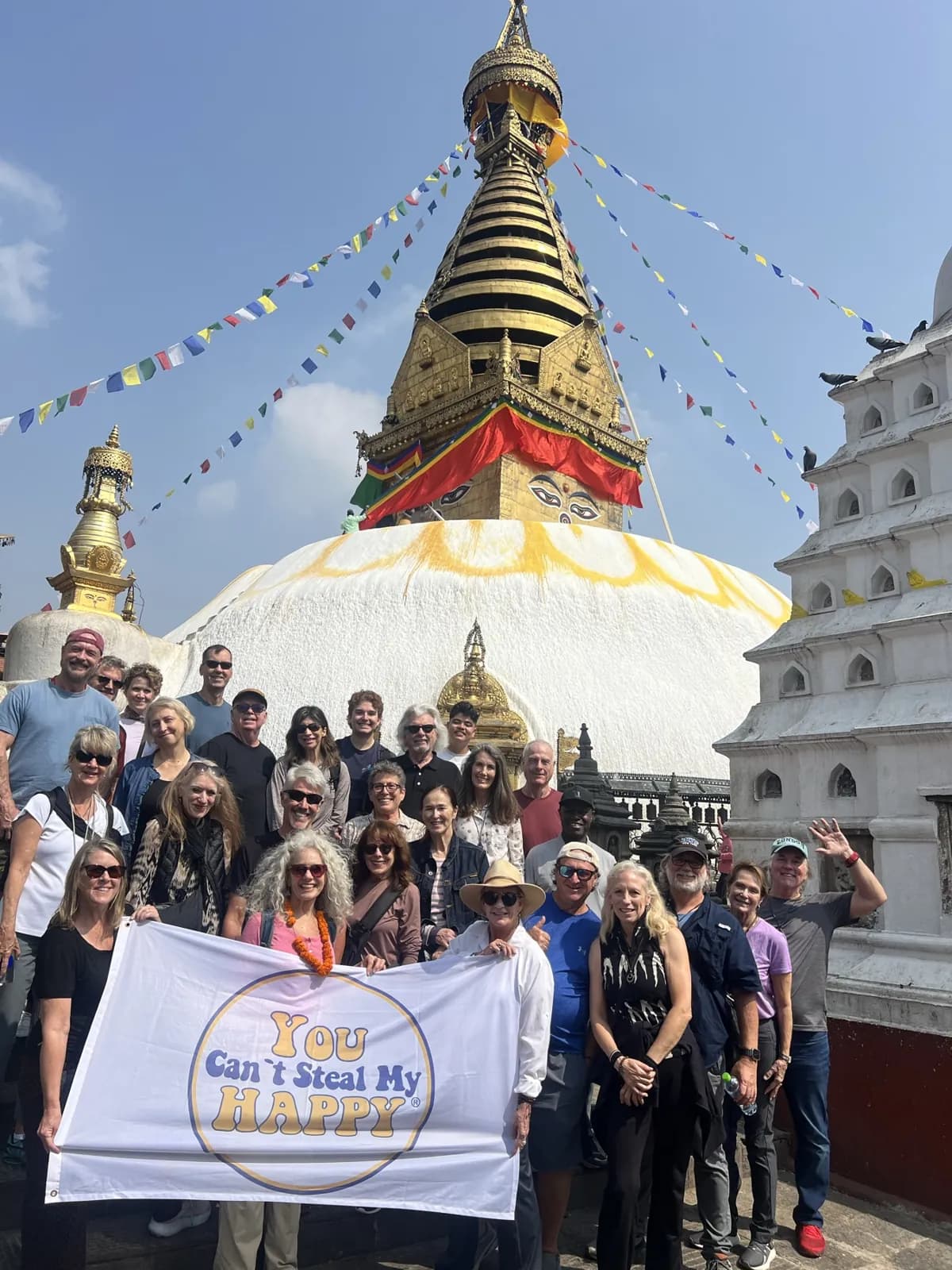
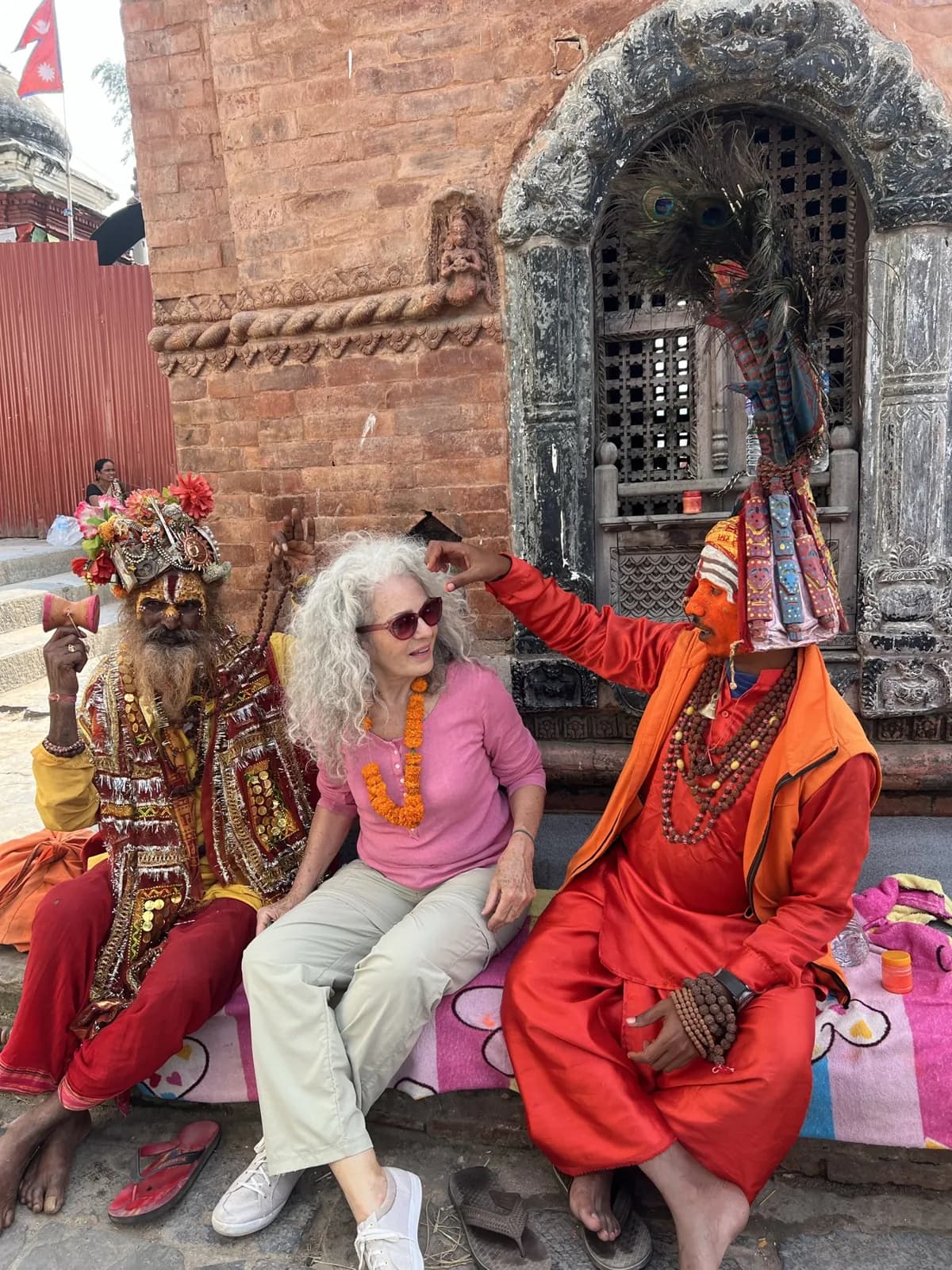
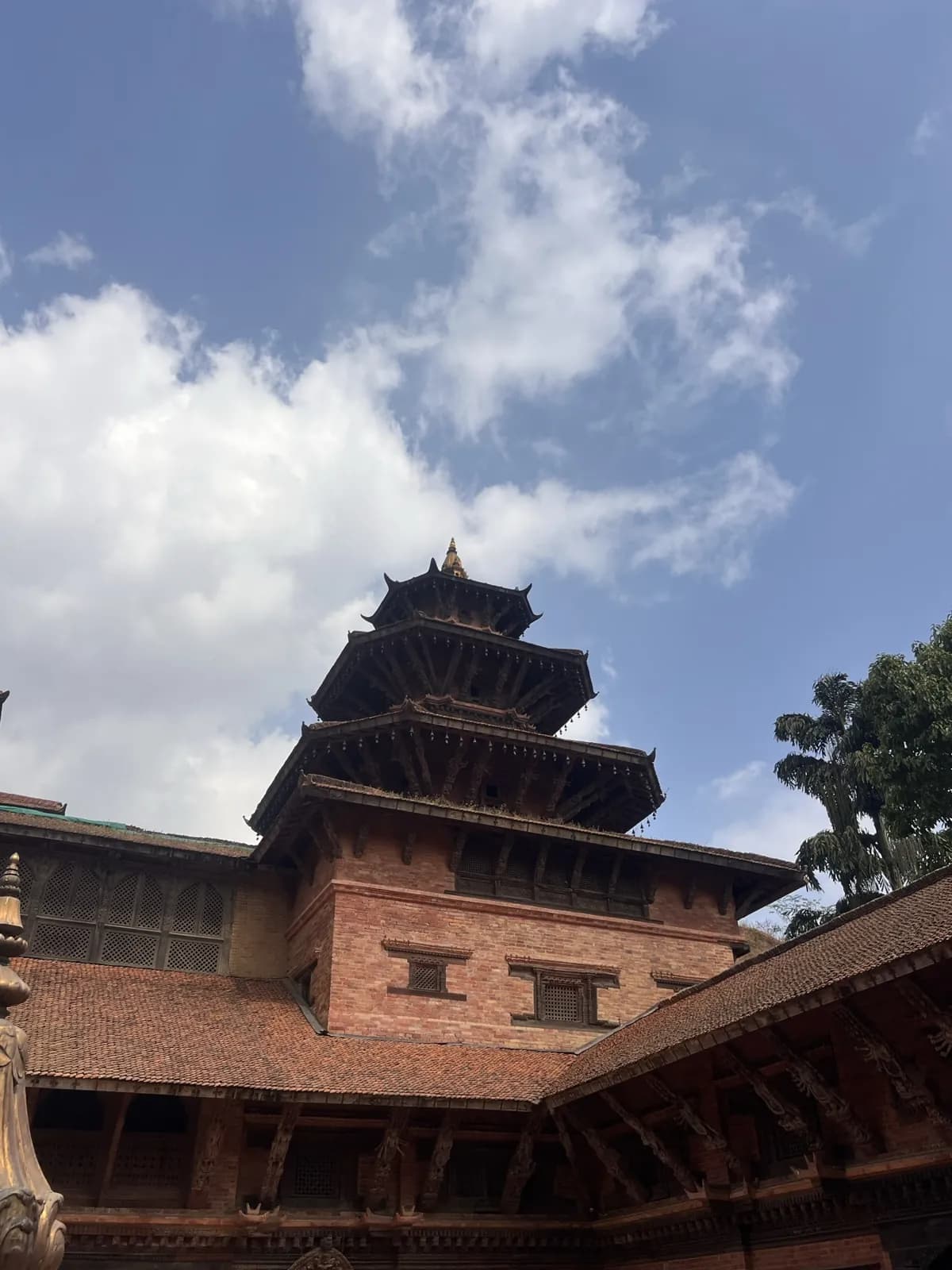
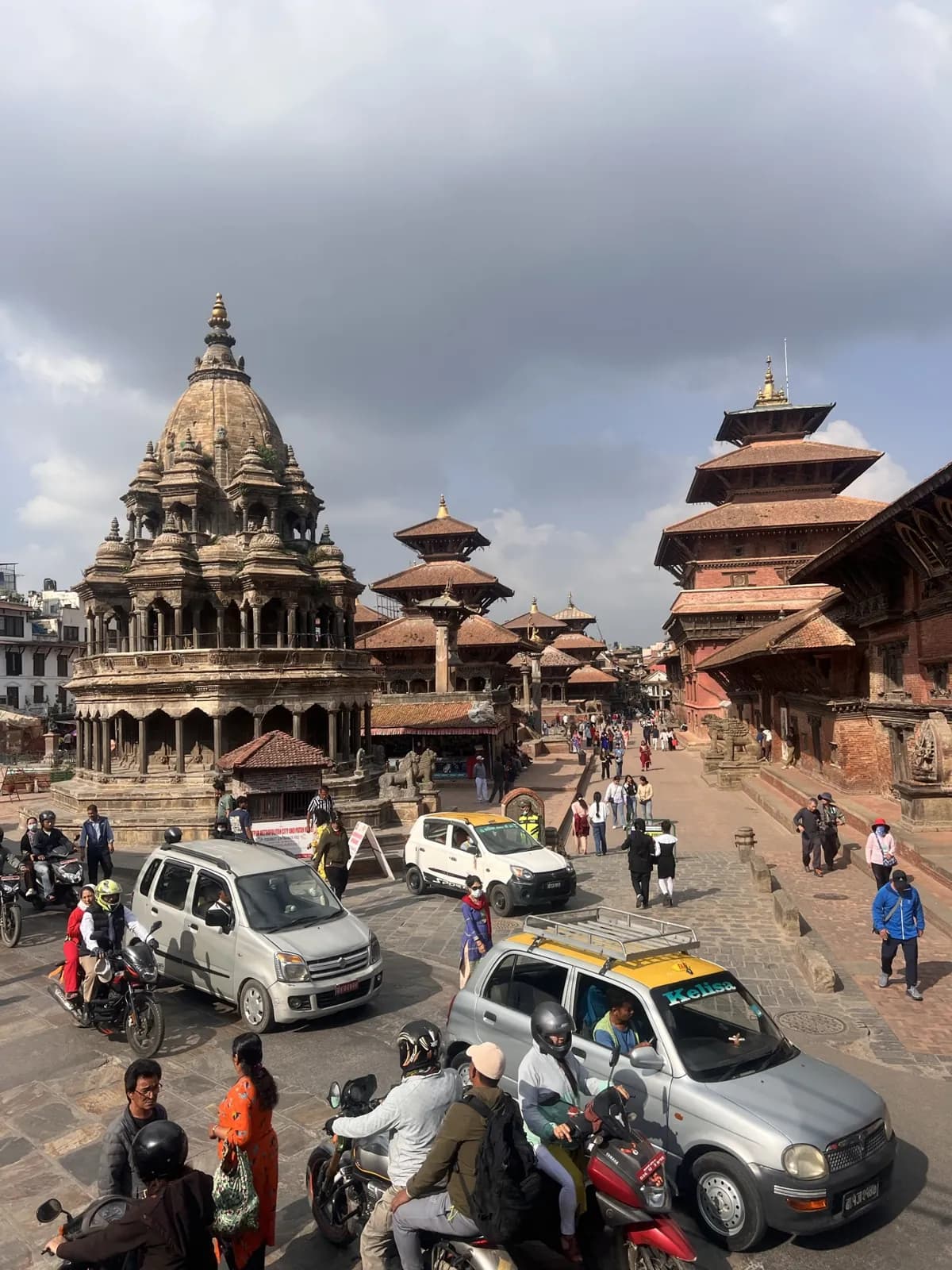
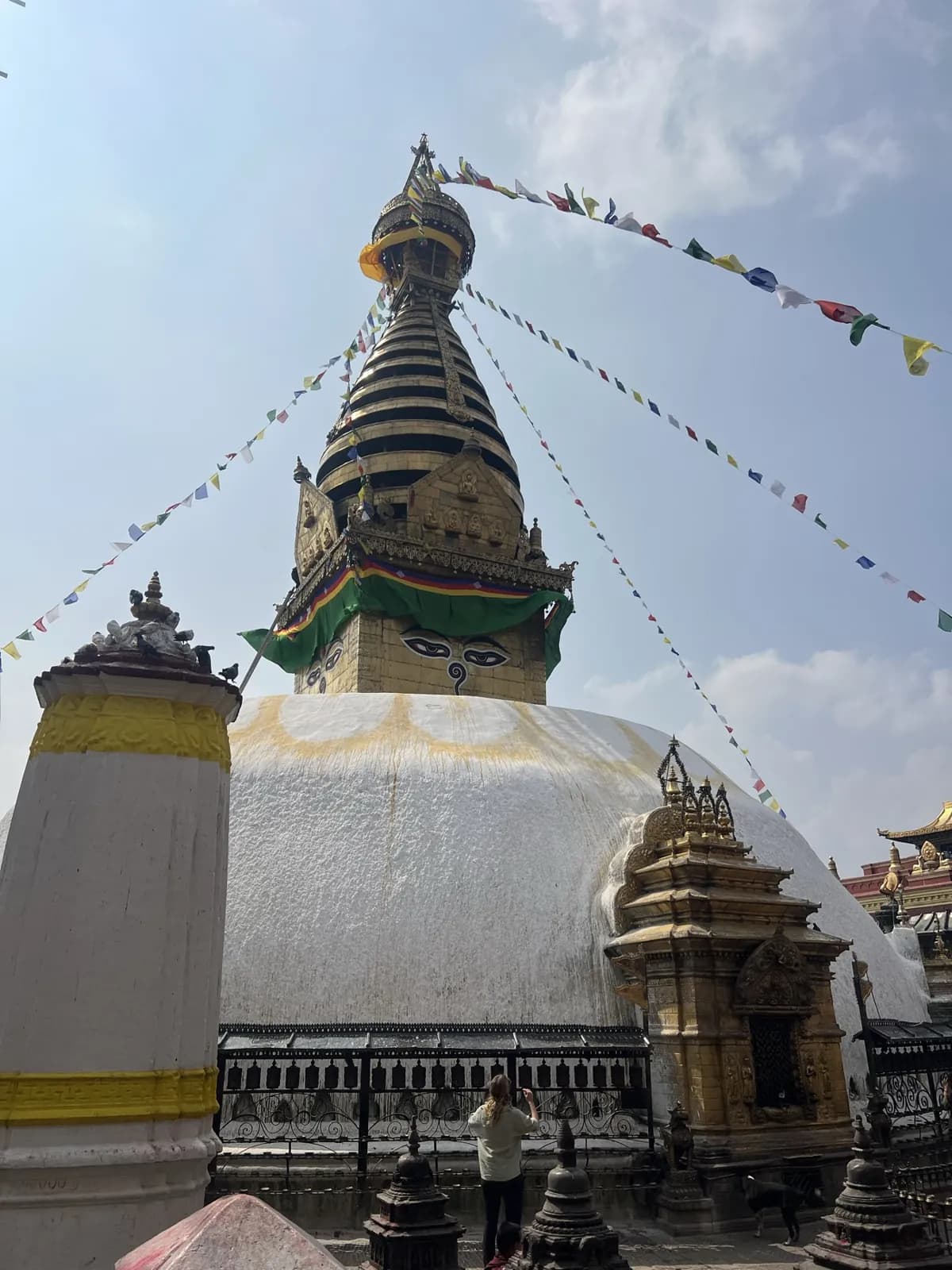
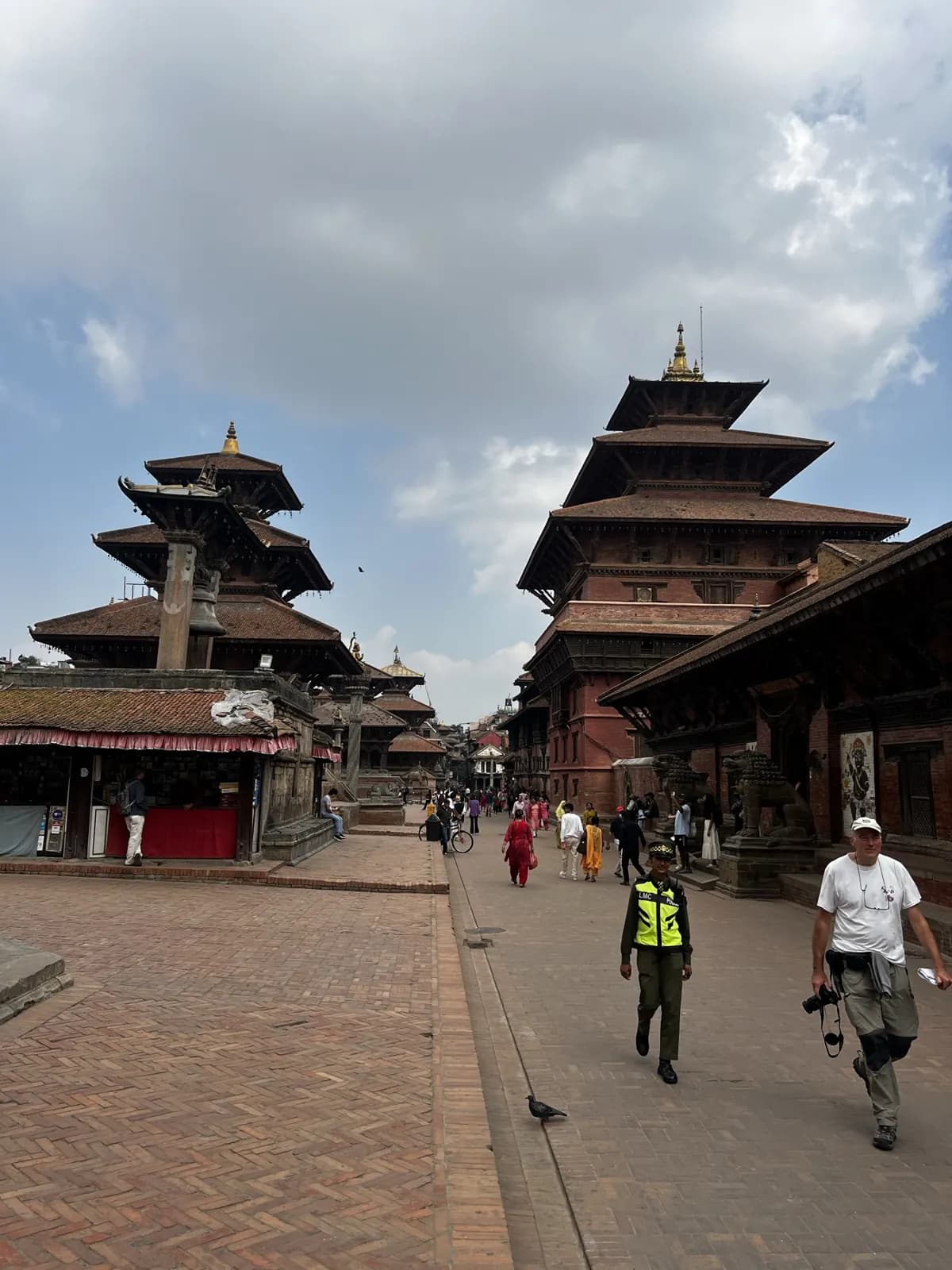
A private car and an experienced guide take you to the hilltop stupa at Swayambhunath, the cremation ghats at Pashupatinath, the white dome of Boudhanath and the carved courtyards of Patan. We return to the hotel by late afternoon, because tomorrow starts before dawn and the following day is the most demanding of the trek.
The twenty-minute mountain flight gives views of the Himalaya, and the Lukla runway slopes uphill. From Lukla, the trail descends gently beside the Dudh Koshi to Phakding, three or four easy hours with time to stop. Your first mountain lodge has a heated room, a private bathroom and hot water.
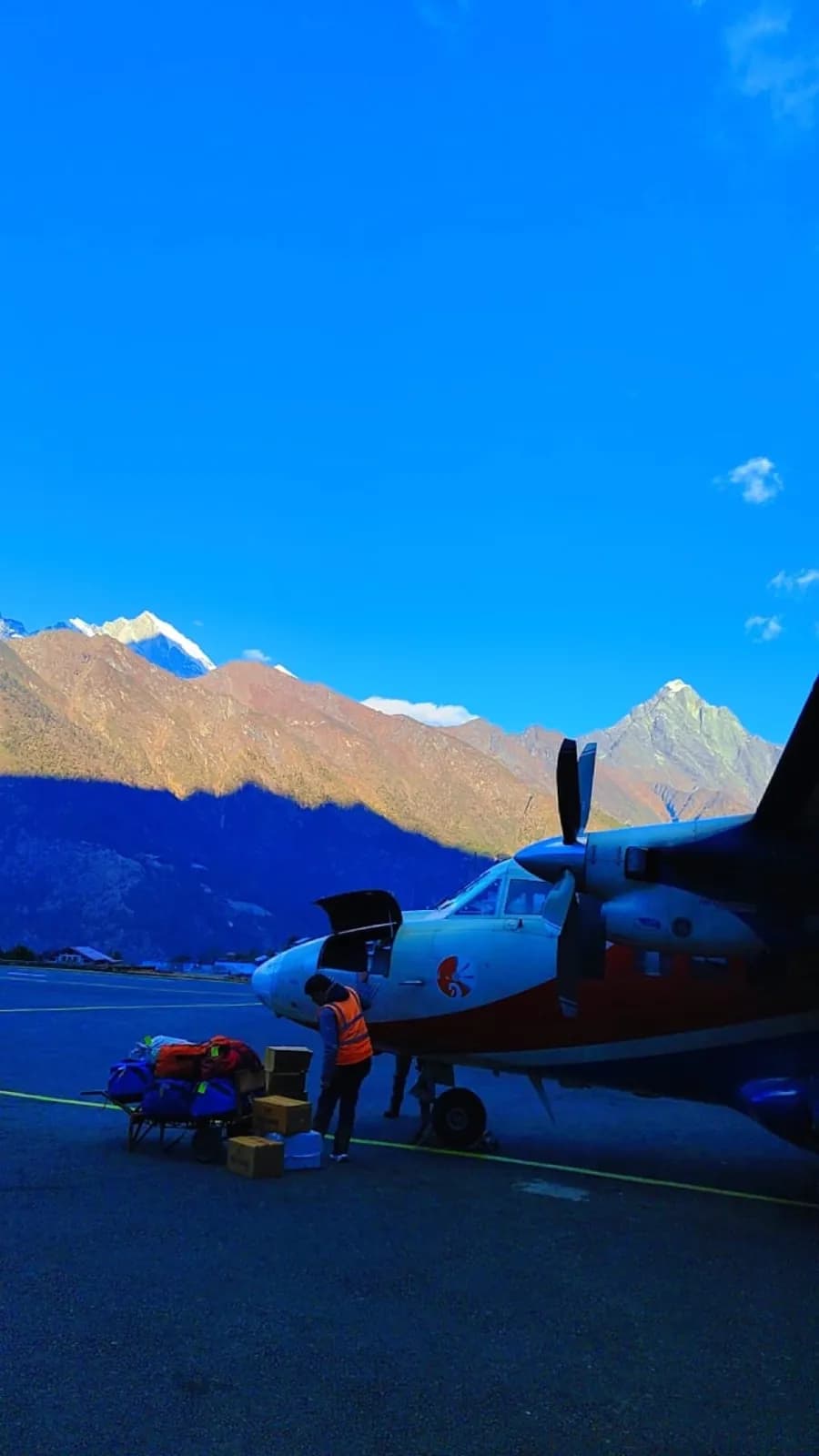
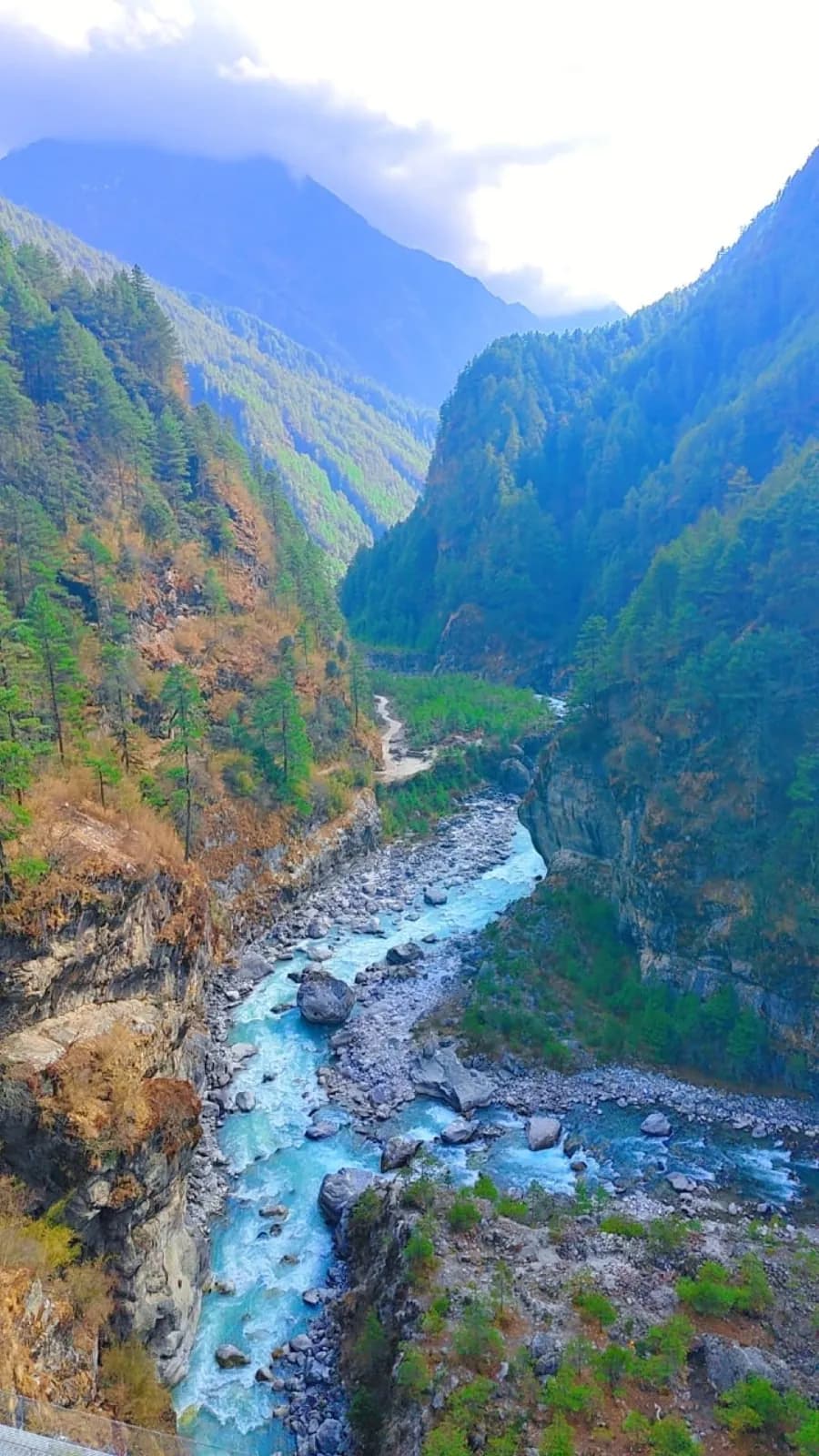
This is a long day and the only demanding one. The trail crosses the river on several bridges and passes the national park gate at Monjo, followed by the climb from the Hillary bridge to Namche: around 600 metres of ascent in two and a half hours. We stop often. Near the top, Everest comes into view through the trees, weather permitting.
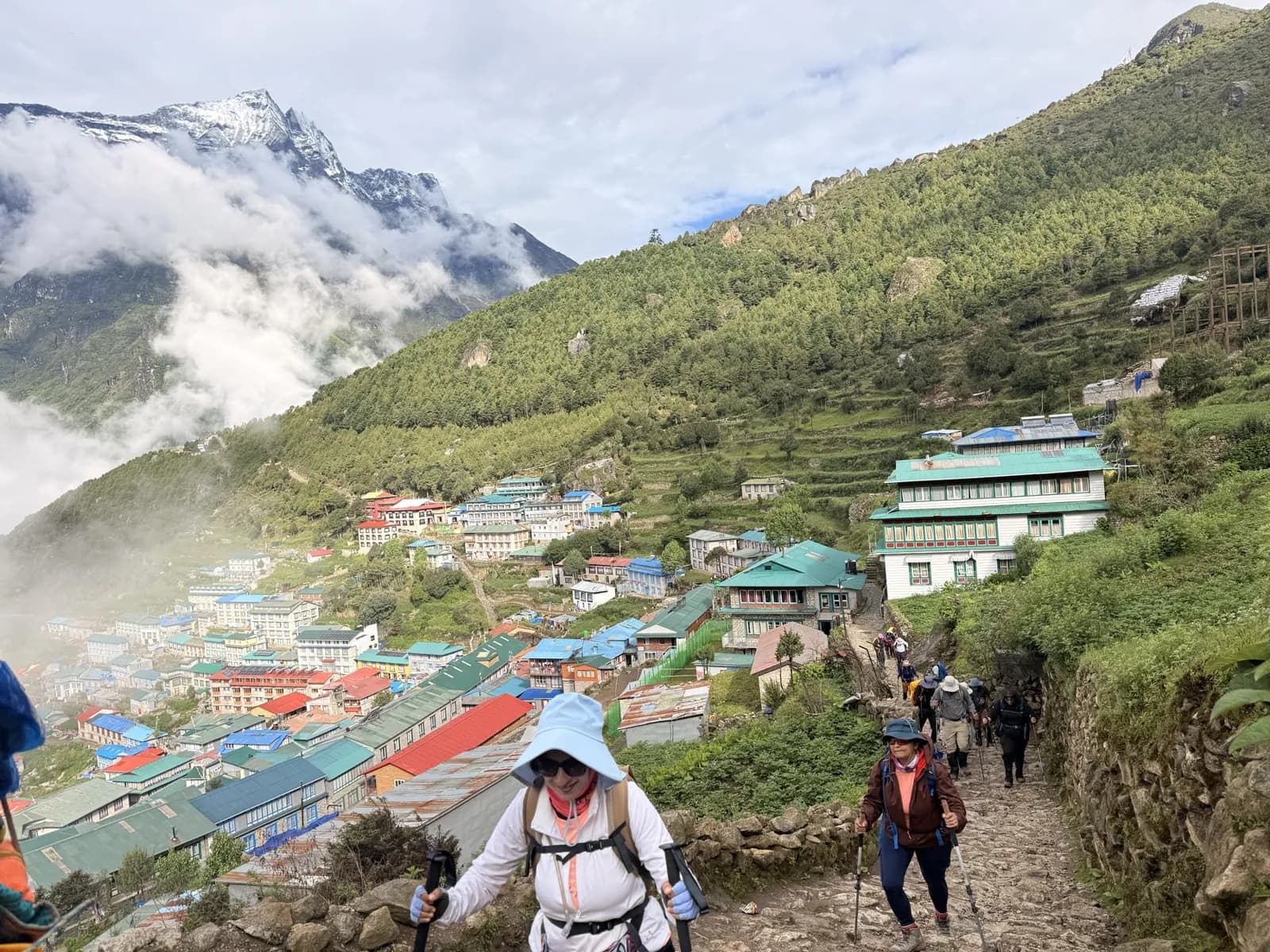
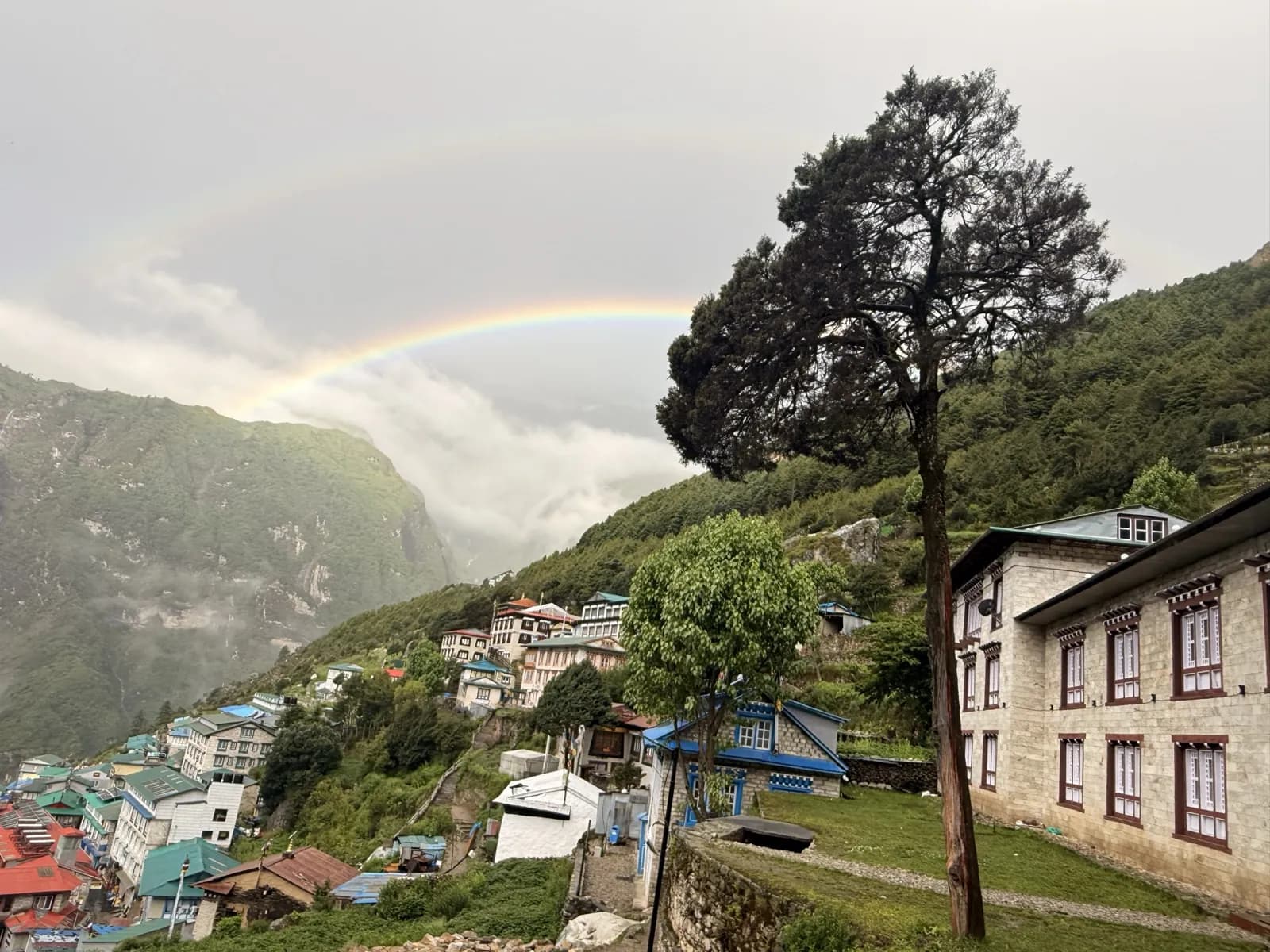
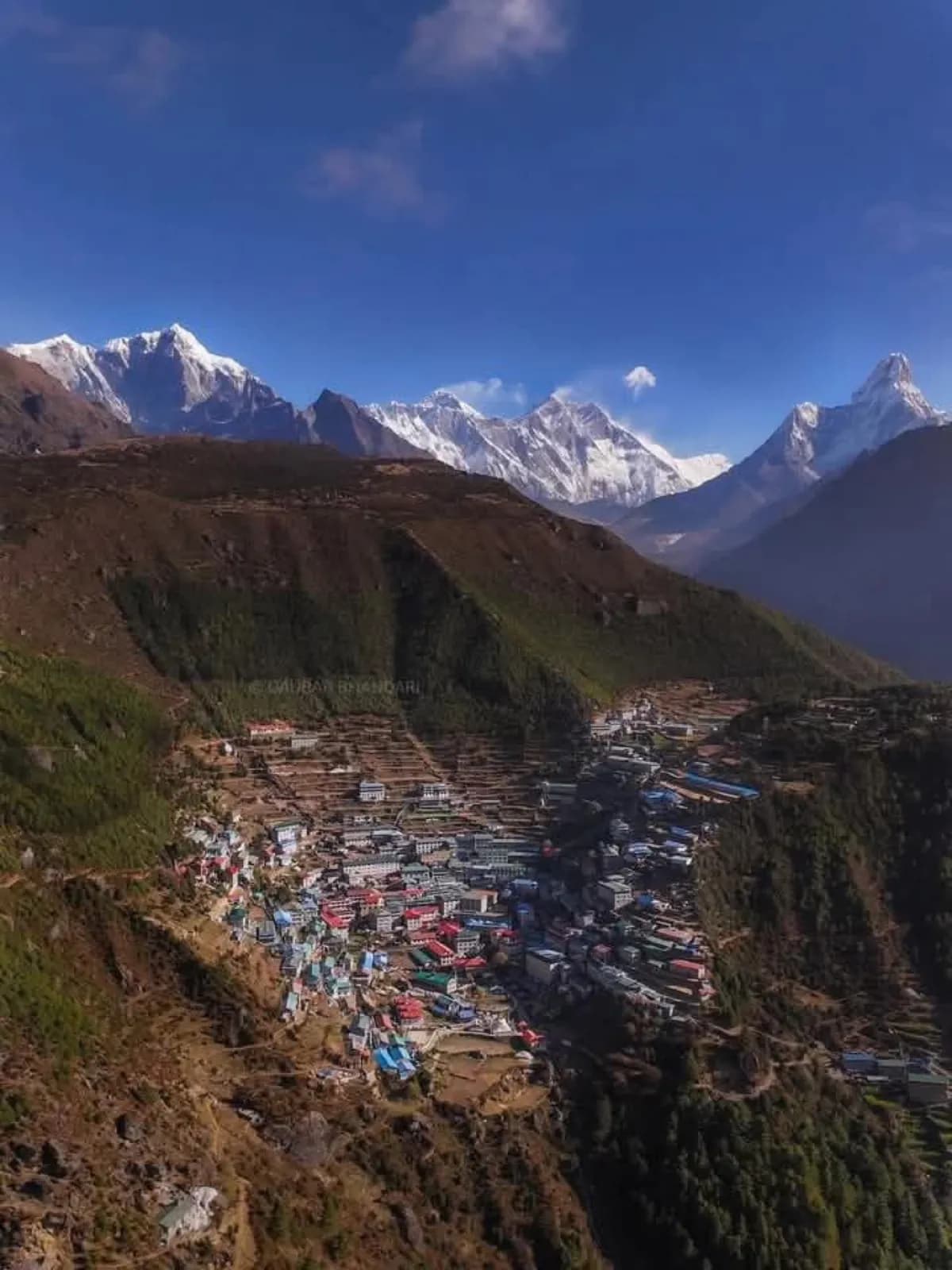
We climb the hill behind Namche to Syangboche and the Everest View Hotel at 3,880 m, the highest point of the trip, for coffee on the terrace with views of Everest, Lhotse and Ama Dablam. We then descend through Khumjung to visit the monastery and Hillary's school, pass Khunde hospital, and return to Namche to sleep at a lower altitude.
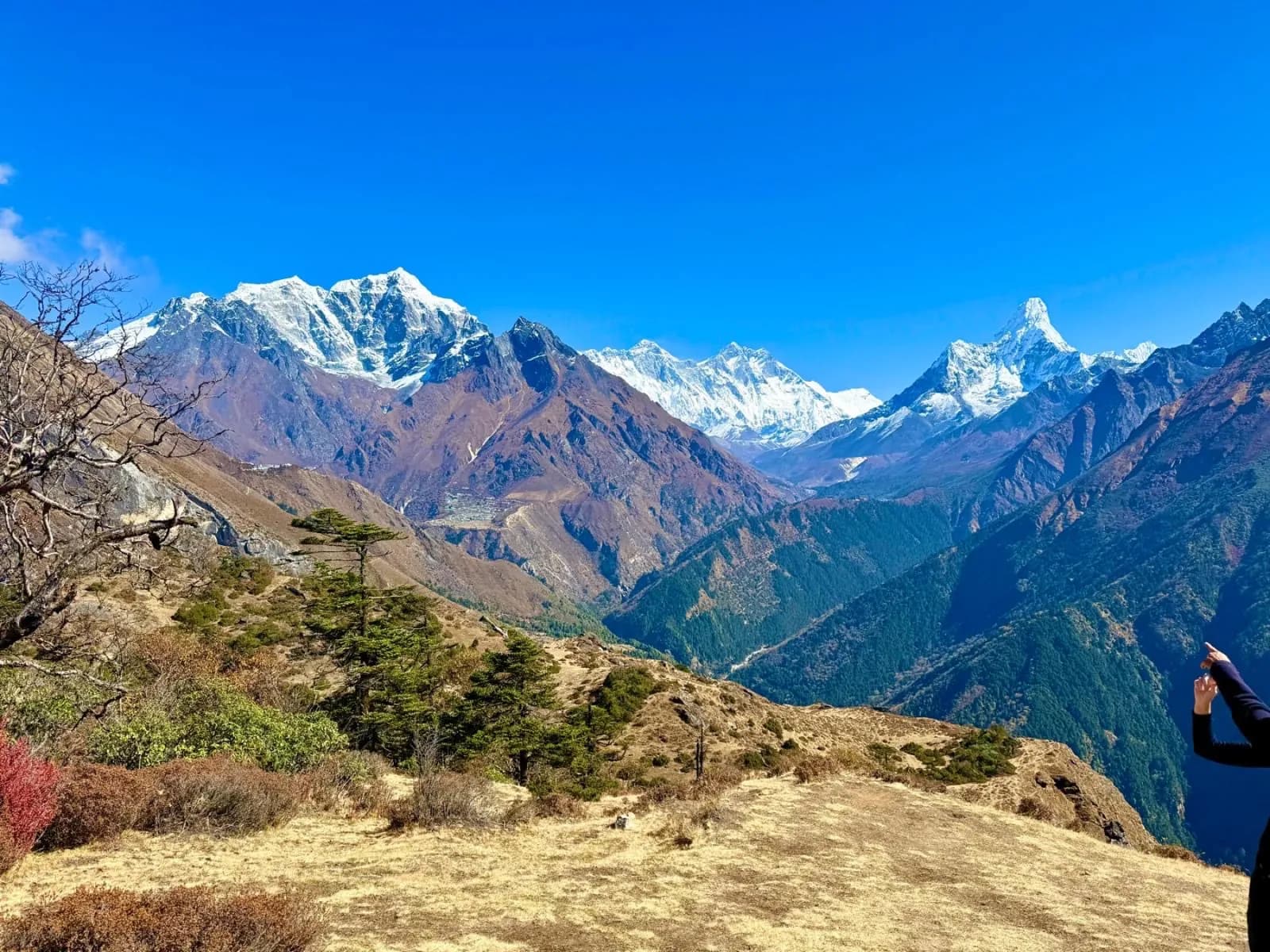
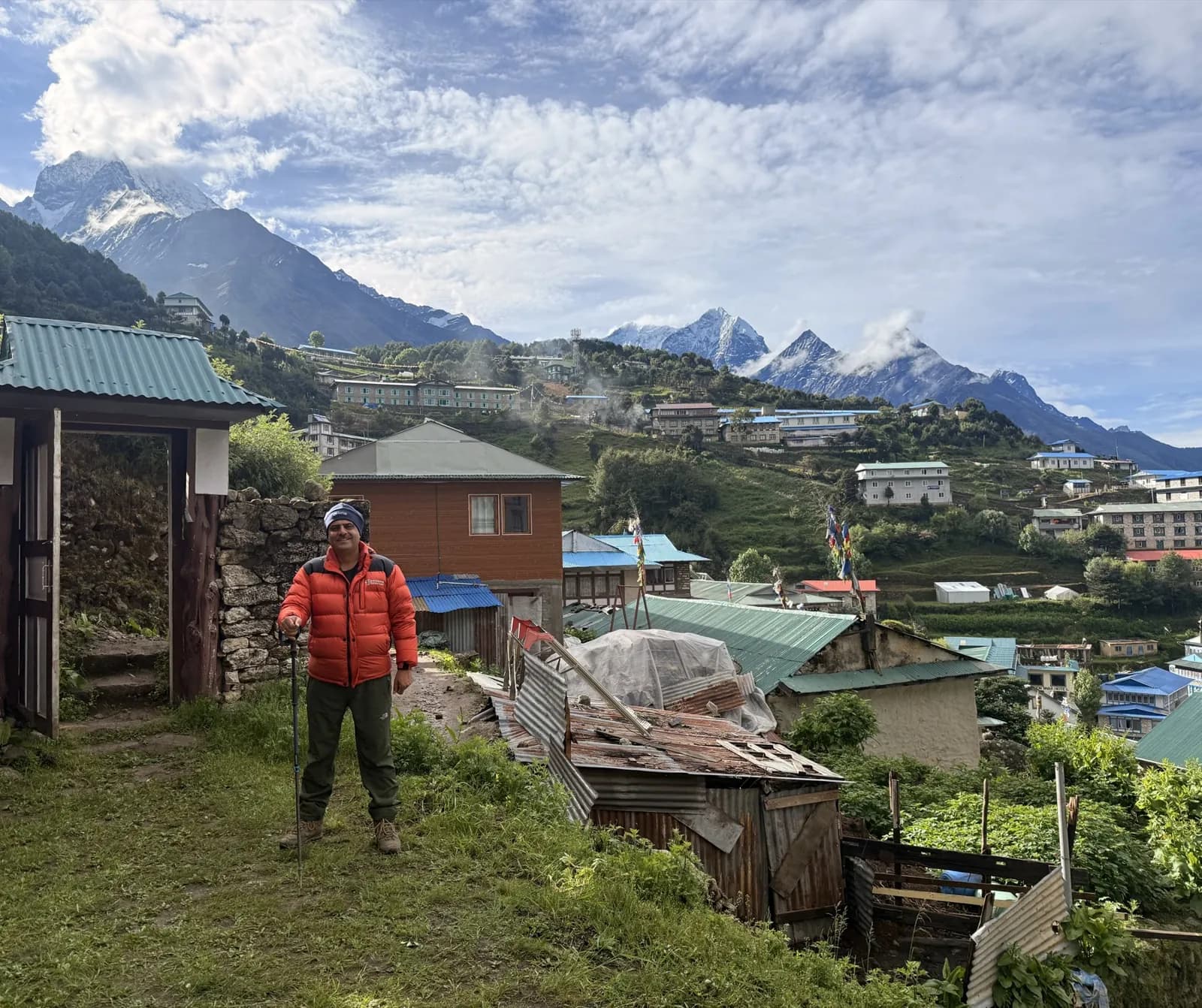
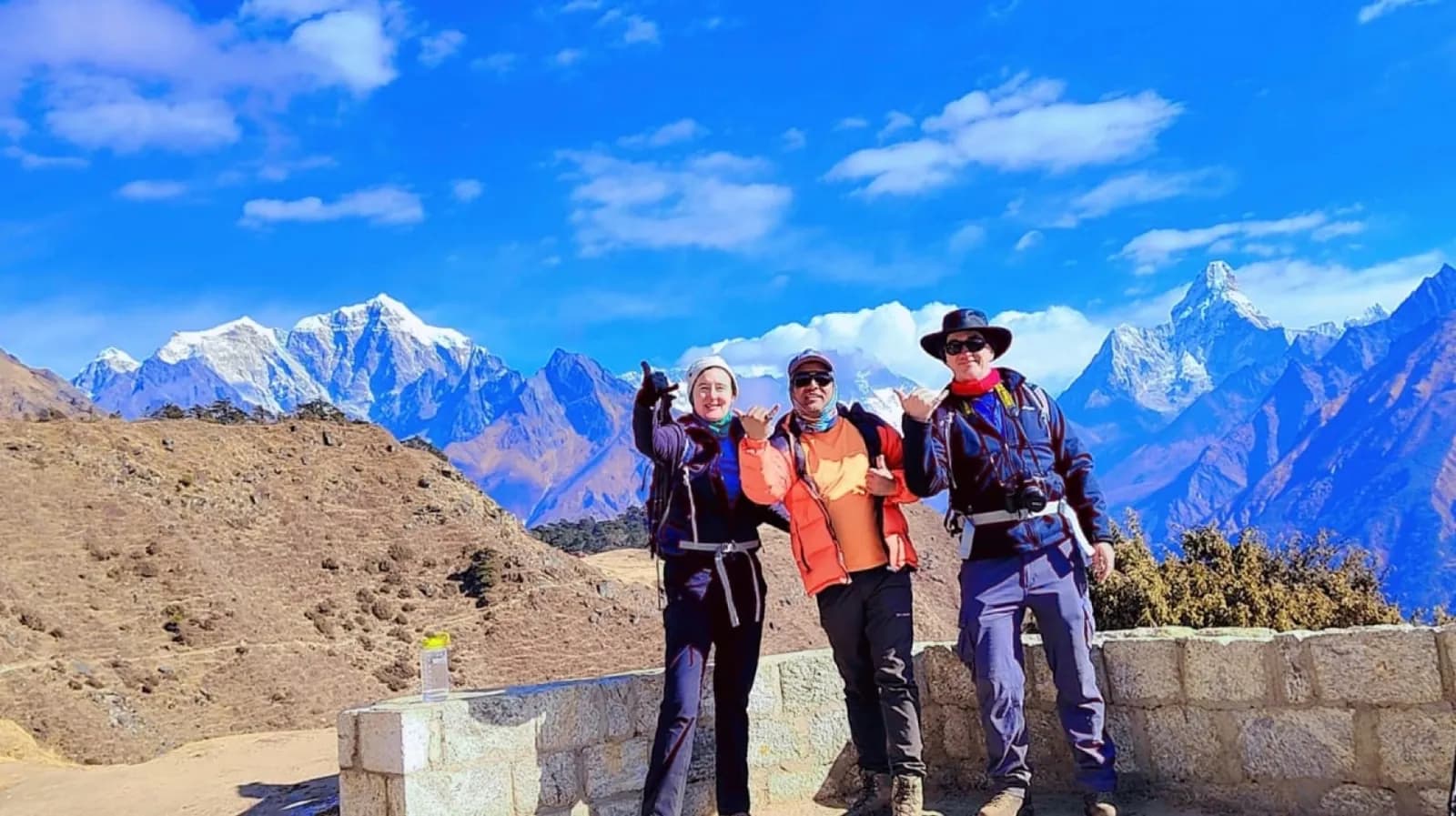
The trail follows the hillside with views of Ama Dablam ahead for most of the morning. It then descends to the river at Phunki Tenga and climbs steadily through forest to Tengboche Monastery at 3,867 m. We visit the monastery, then walk twenty minutes down to Deboche, which is quieter and more sheltered and has better beds.
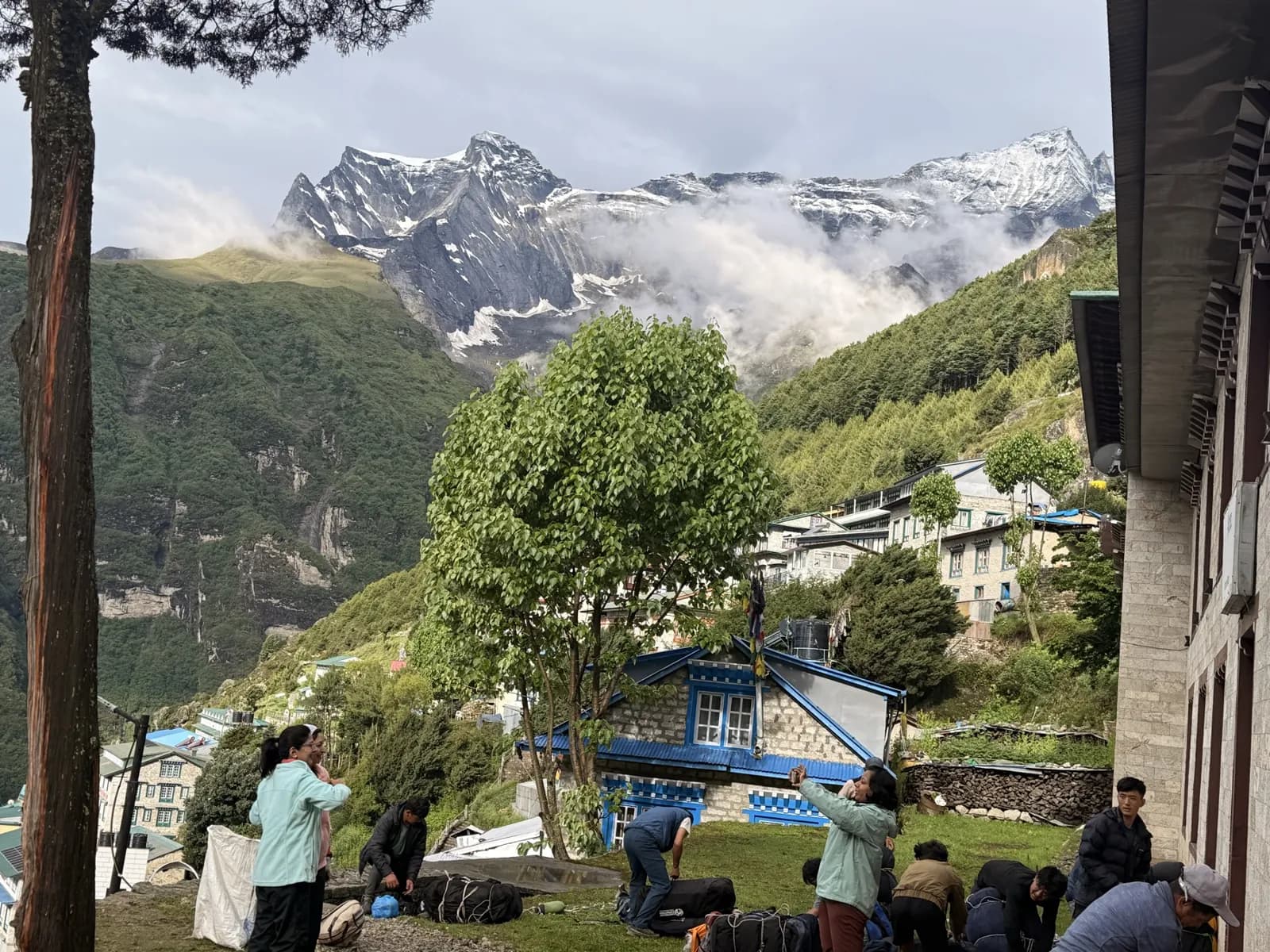
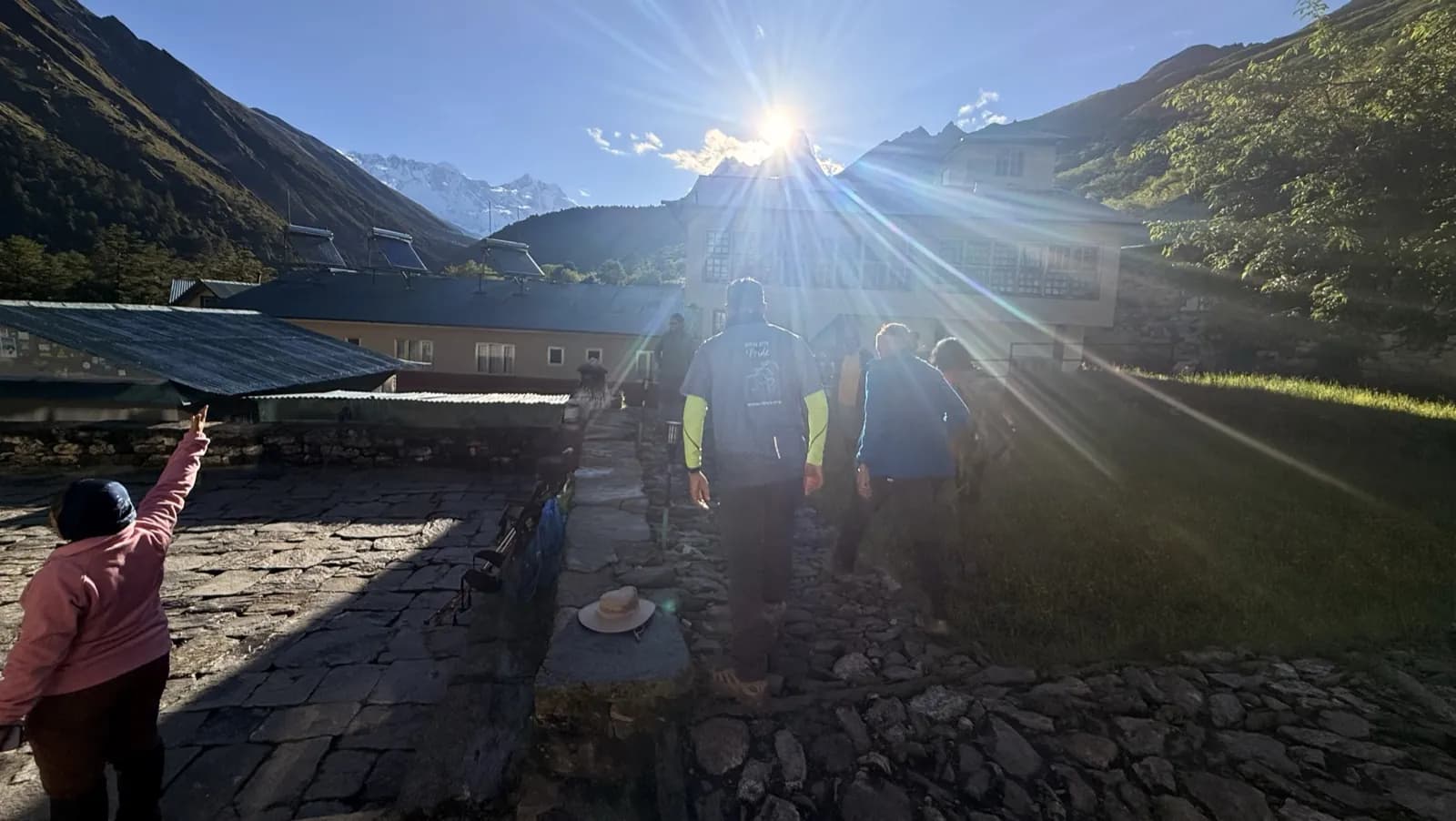
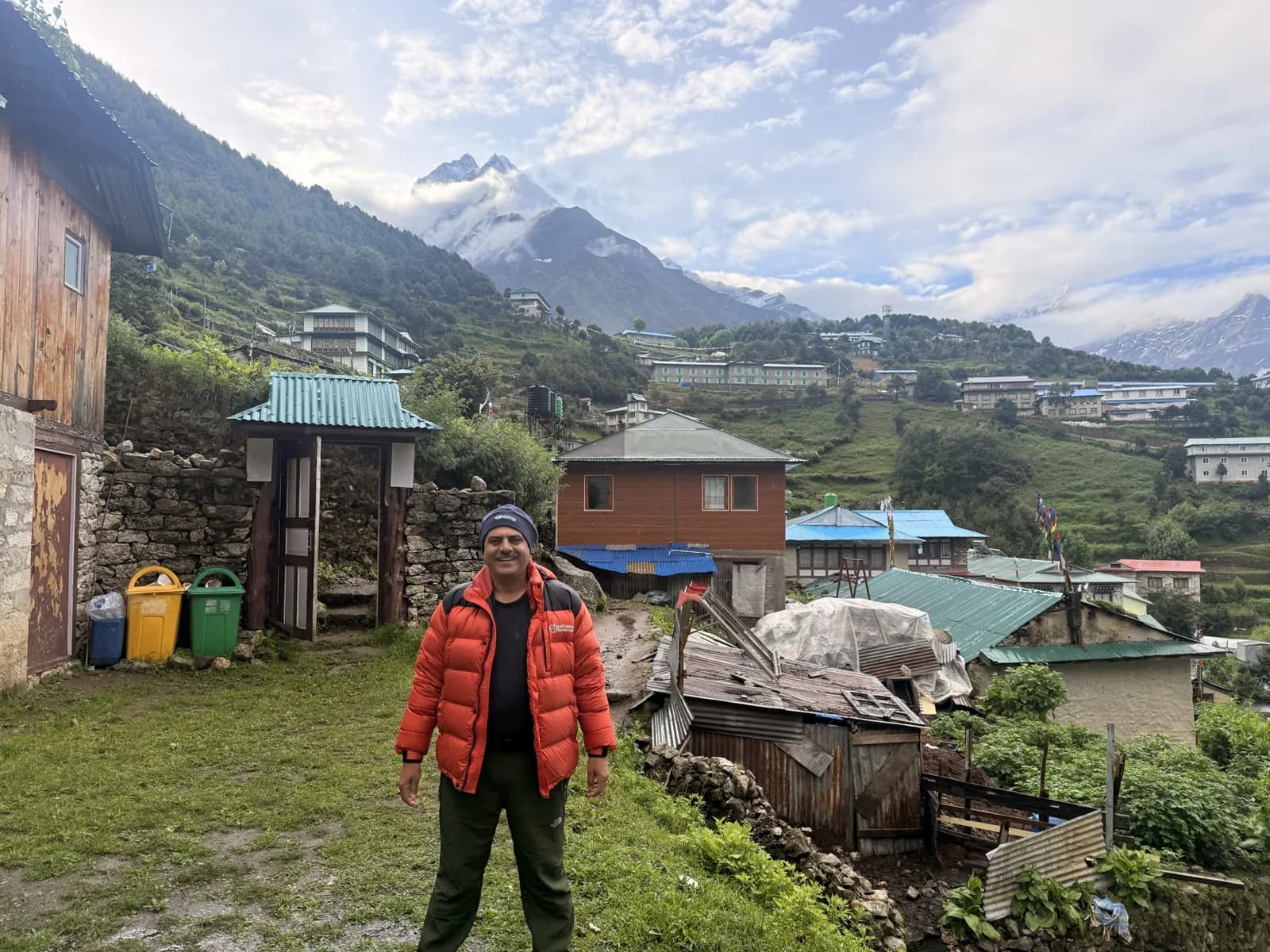
We walk back up to the monastery early for the morning puja, which visitors may attend if they arrive quietly and sit at the back. We then return along the same path, mostly downhill, through the rhododendron forest to Namche. You have a hot shower, same-day laundry and a comfortable bed.
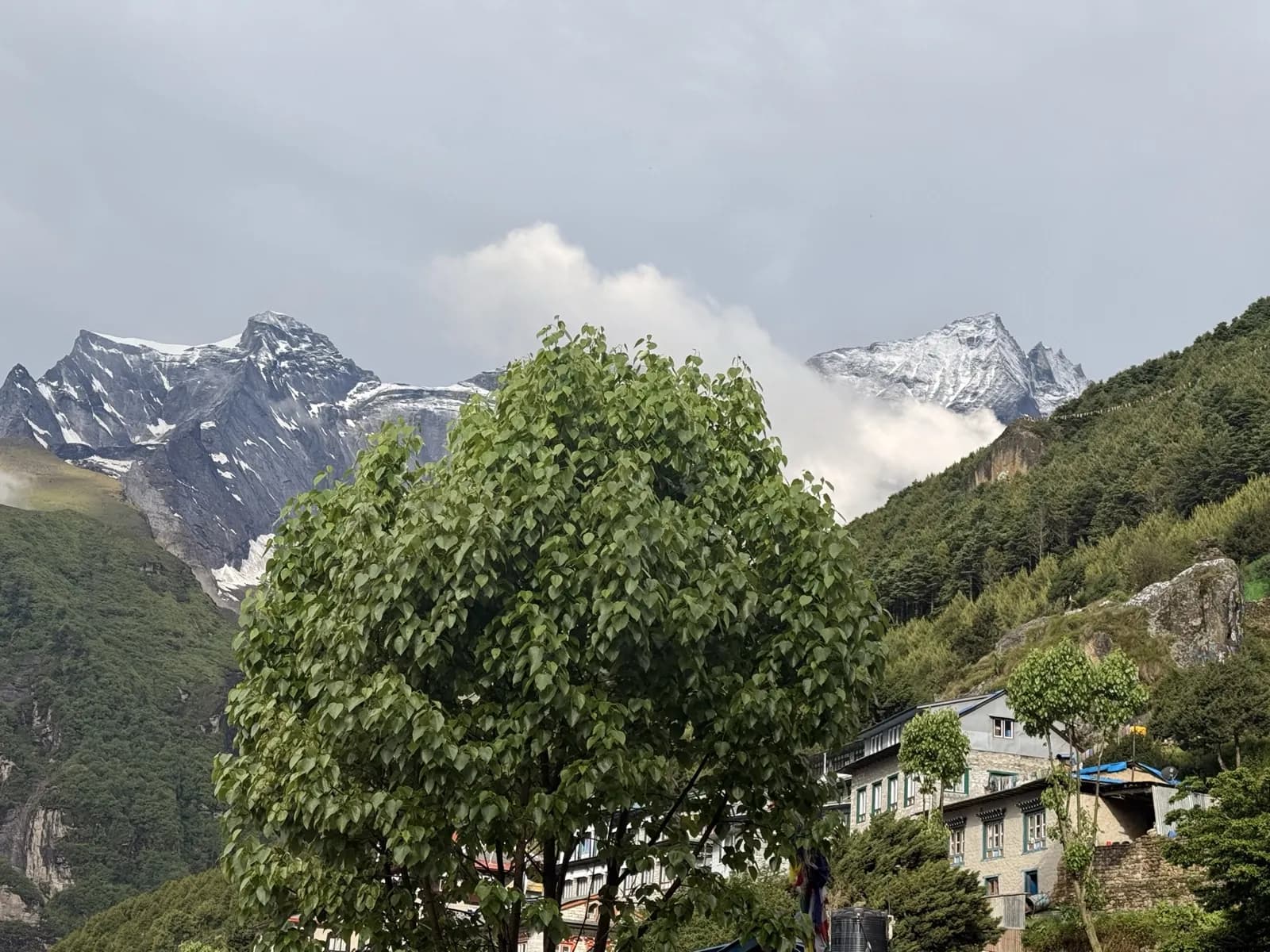
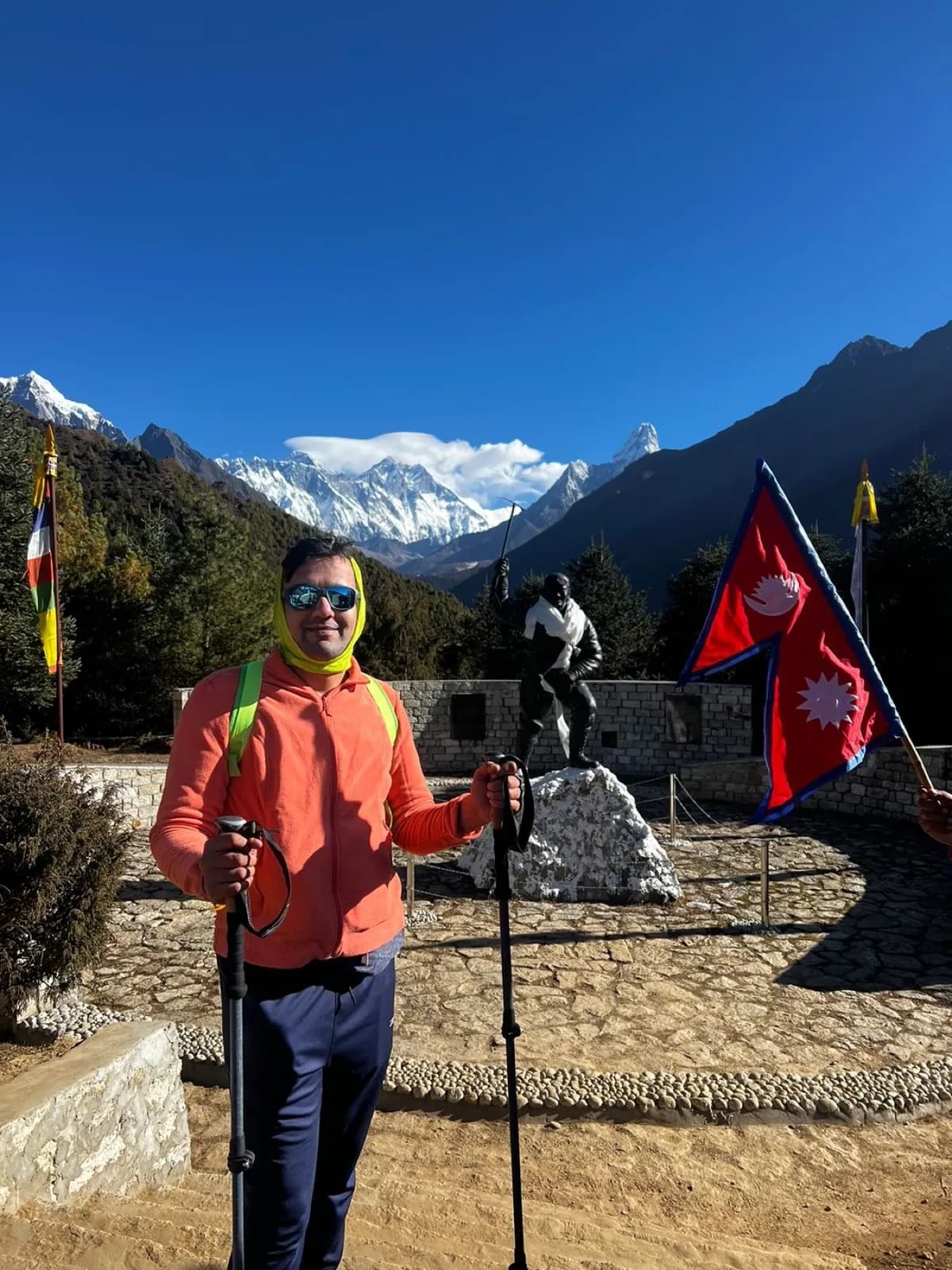
This is the last and longest day on the trail, though it is almost all downhill. You descend the height gained over the first two days, cross the bridges again, and walk back through Monjo and Phakding to Lukla. In the evening, we have dinner with the guides and porters to mark the end of the trek.
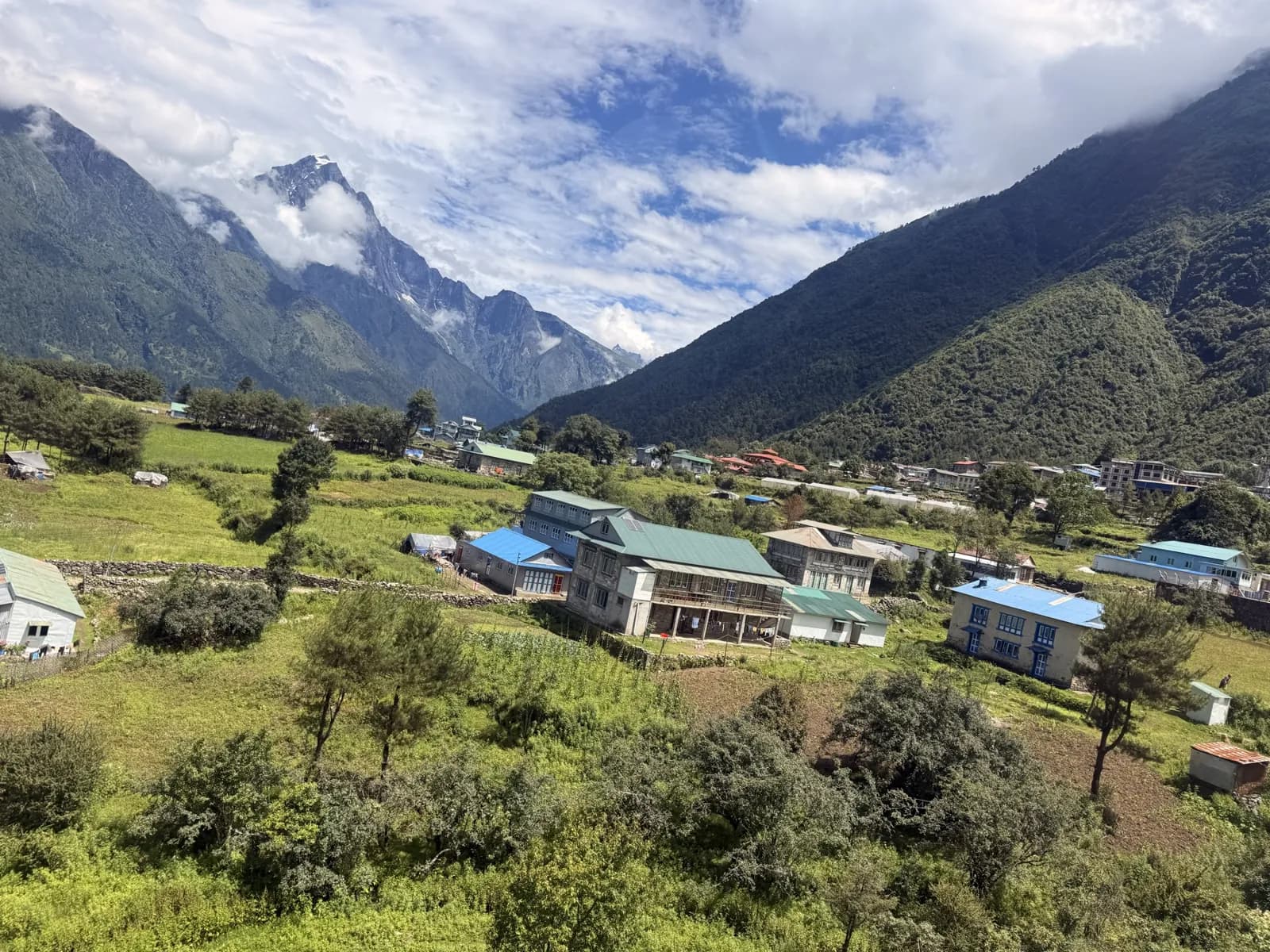
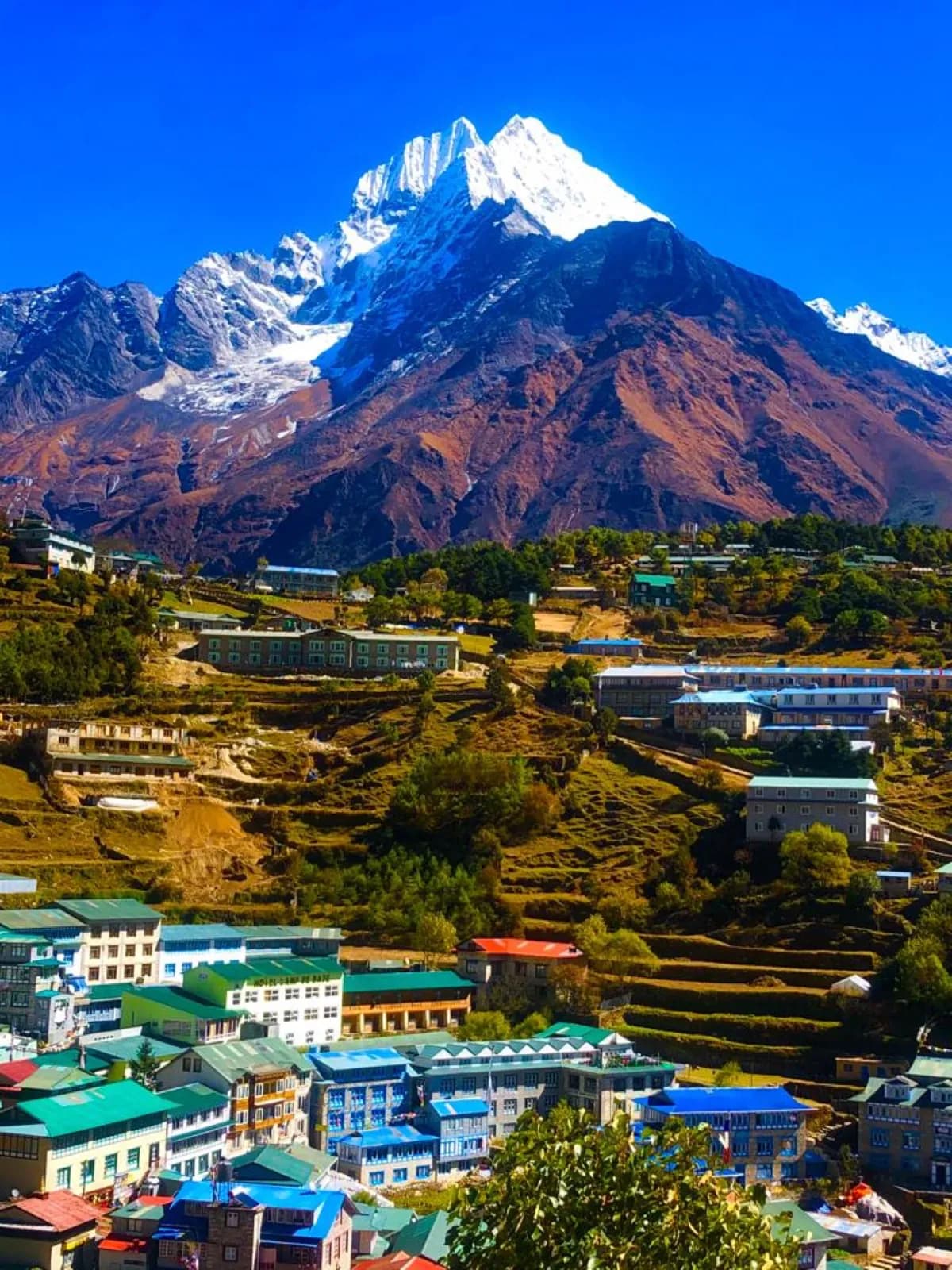
A short flight back to the Kathmandu Valley, usually in the early morning. The rest of the day is free for a bath, a massage or shopping in Thamel. In the evening, we have dinner together at a good restaurant, which is a welcome change after a week of lodge food.
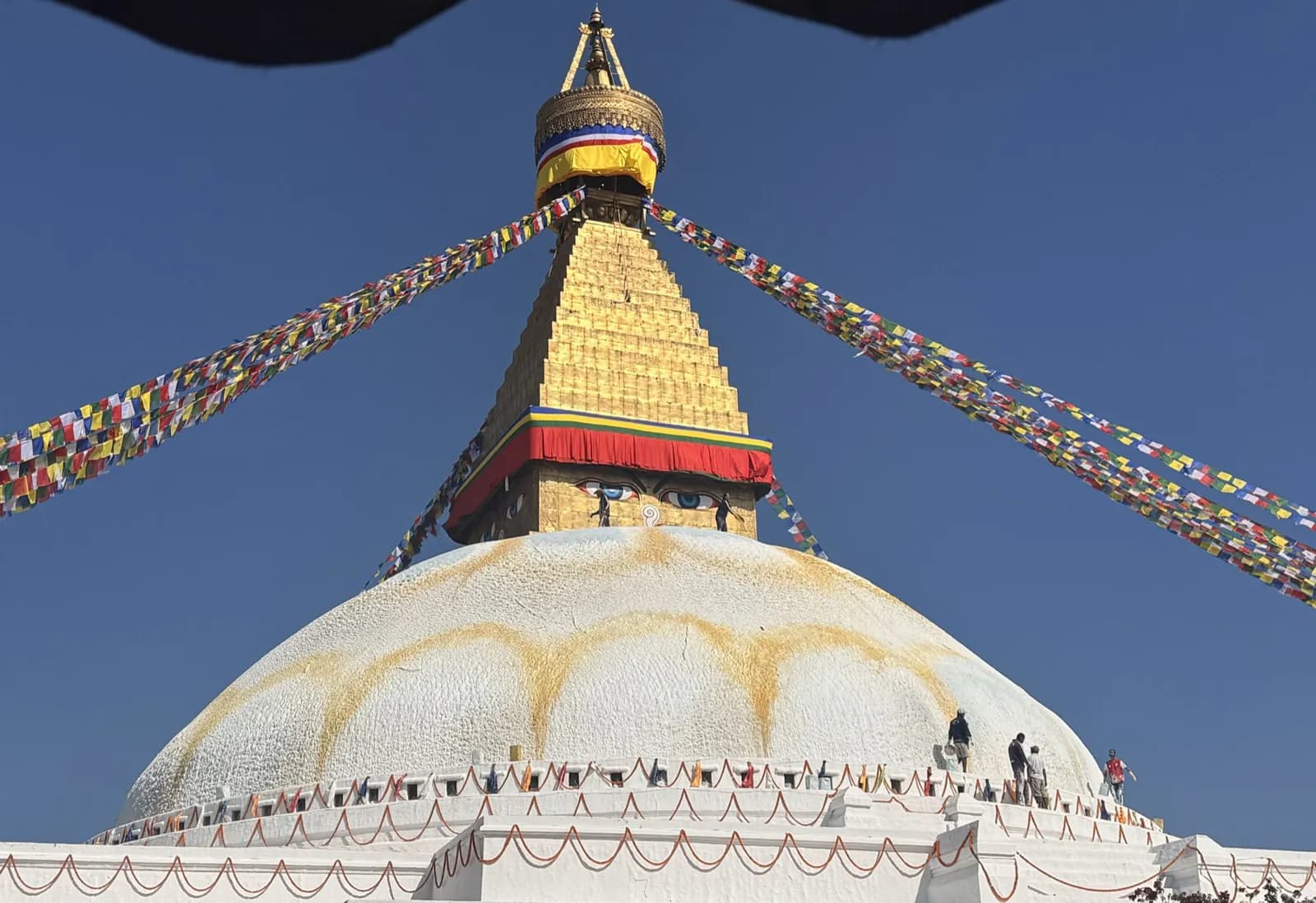
We keep this day in reserve in case of weather delays at Lukla. If everything has run to schedule, the day is free: you can visit Bhaktapur, take a cooking class or relax in the hotel garden. If a flight was delayed earlier in the week, this day absorbs the delay so that your journey home is not affected.
We drive you to the airport in good time for your flight. If you are continuing to Pokhara, Chitwan or Bhutan, we will have arranged that too. Whatever your plans, include a spare day, as Lukla flights are often delayed by weather.
Start date
2 Oct 2027
End date
12 Oct 2027
Available
8 places left
US $2,485
Per person
Start date
10 Apr 2027
End date
20 Apr 2027
Available
8 places left
US $2,485
Per person
Start date
21 Nov 2026
End date
1 Dec 2026
Available
8 places left
US $2,385
Per person
The trail from start to finish, at a glance.
Pack for six days, not eleven
Laundry at Namche is included and returned the same day, and you pass through Namche three times. This means you only need three days of clothes rather than six, which is important because the Lukla flight allows 15 kg in total and all baggage is weighed. We provide the duffel bag and a down jacket, and no sleeping bag is needed on this route because every bed has a duvet. Anything you do not take on the trek is stored free at our Kathmandu office.
The flight to Lukla is the least predictable part of this trip, and many short itineraries do not allow for delays. This section explains how we plan for them.
Outside the two busiest periods of the year, you fly from Kathmandu, which takes about 35 minutes. During most of the spring and autumn peak seasons, the aviation authority moves Lukla departures to Manthali airport at Ramechhap to reduce congestion at Kathmandu. This means a four to five-hour drive starting at around 2 am, followed by a twenty-minute flight. We tell you which applies to your dates before you book.
The allowance is 10 kg of checked baggage and 5 kg of hand luggage, and bags are weighed at the counter. Excess baggage costs about $1.50 per kilo. The aircraft is a nineteen-seat Twin Otter or Dornier that lands on a 527-metre runway built on a slope, which is why the limit exists. Anything you do not take on the trek is stored free at our office in Kathmandu.
Cloud closes Lukla airport several times a month in every season. A delay of one day is common and two days is not unusual, which is why this itinerary includes a spare day in Kathmandu at the end. If a delay lasts longer, a helicopter seat costs around $500, and we can usually arrange one within a few hours.
Flying in by helicopter is a reasonable option during a week of bad weather, and it lands at Lukla in the same way as the plane. We do not fly travellers to Syangboche at 3,880 m to start the trek there, as some operators do. Gaining altitude from 1,400 m to 3,880 m in twenty minutes is a serious risk for altitude sickness, even on a route designed to avoid it.
Whatever the itinerary says, book an international flight that leaves at least one clear day after your scheduled return to Kathmandu. It costs very little to arrange and is our most important advice for this trip.
At Phakding, Namche Bazaar and Lukla, you stay in premium mountain lodges. Rooms are twin or double and heated, with a private bathroom and hot shower. The dining rooms are warm and the food is cooked to a good standard. In Kathmandu, the hotel is five-star, with a bath in the room.
The one higher night is at Deboche, just below Tengboche, in the best lodge in that part of the valley. The rooms we book have their own bathroom, but the heating is a stove in the dining room, as it is everywhere at this altitude. Bring a sleeping bag or ask for extra blankets for that night.
| Where | Nights | Type | Room | Bathroom |
|---|---|---|---|---|
| Kathmandu | 4 | Five-star hotel | Deluxe double or twin | Private, hot water, and a bath |
| Phakding | 1 | Premium mountain lodge | Twin or double, heated | Private, hot shower |
| Namche Bazaar | 3 | Premium mountain lodge | Twin or double, heated | Private, hot shower |
| Deboche | 1 | The best lodge below Tengboche, and a very good one | Twin or double | Private in the rooms we book |
| Lukla | 1 | Premium mountain lodge | Twin or double, heated | Private, hot shower |
Porridge, eggs cooked to order, fresh bread, fruit and filter or espresso coffee
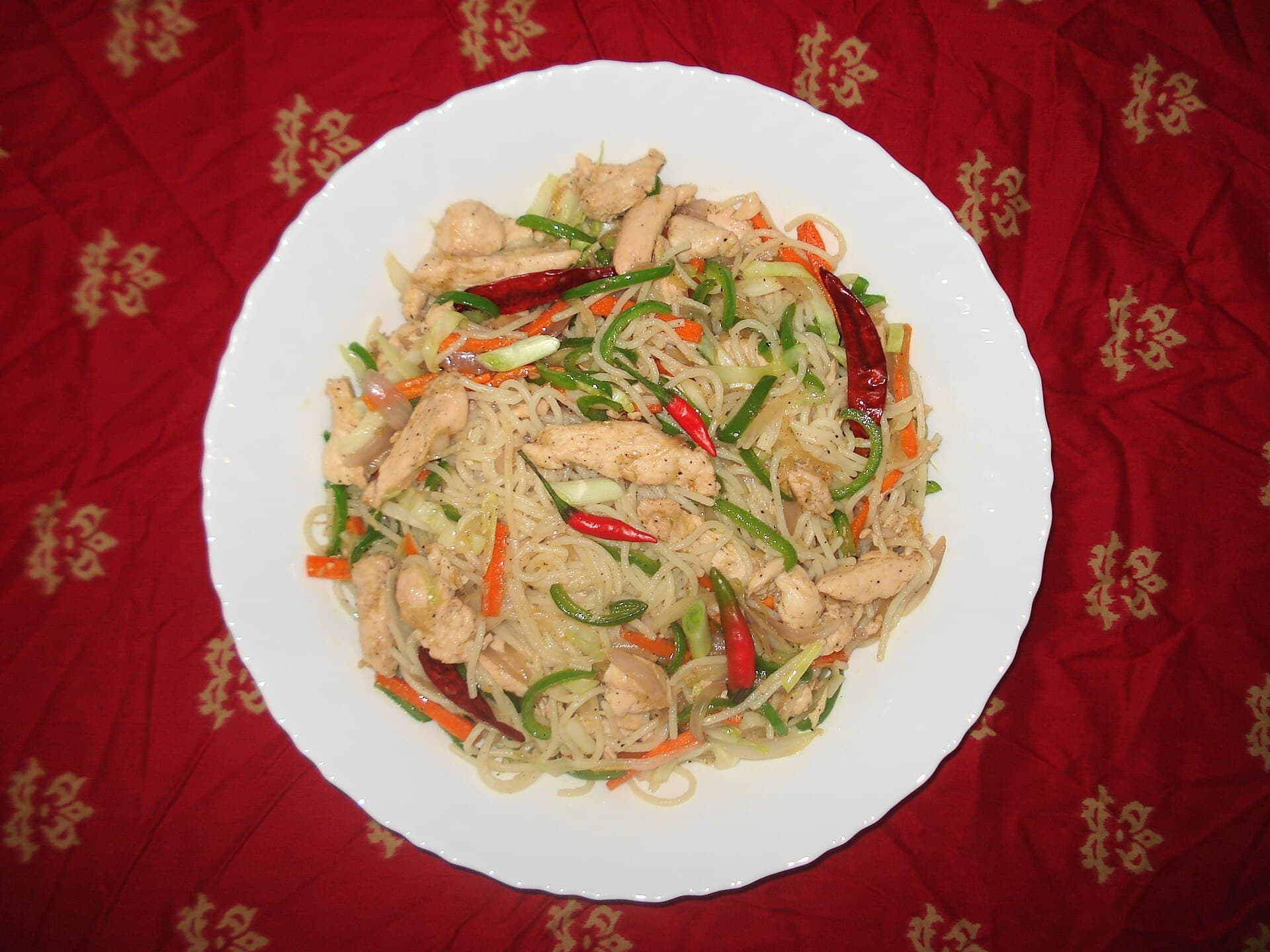
Dal bhat, soups, fried rice, momo and potatoes from the village fields

Soup to start, then curry, pasta, thukpa or Sherpa stew, and something sweet
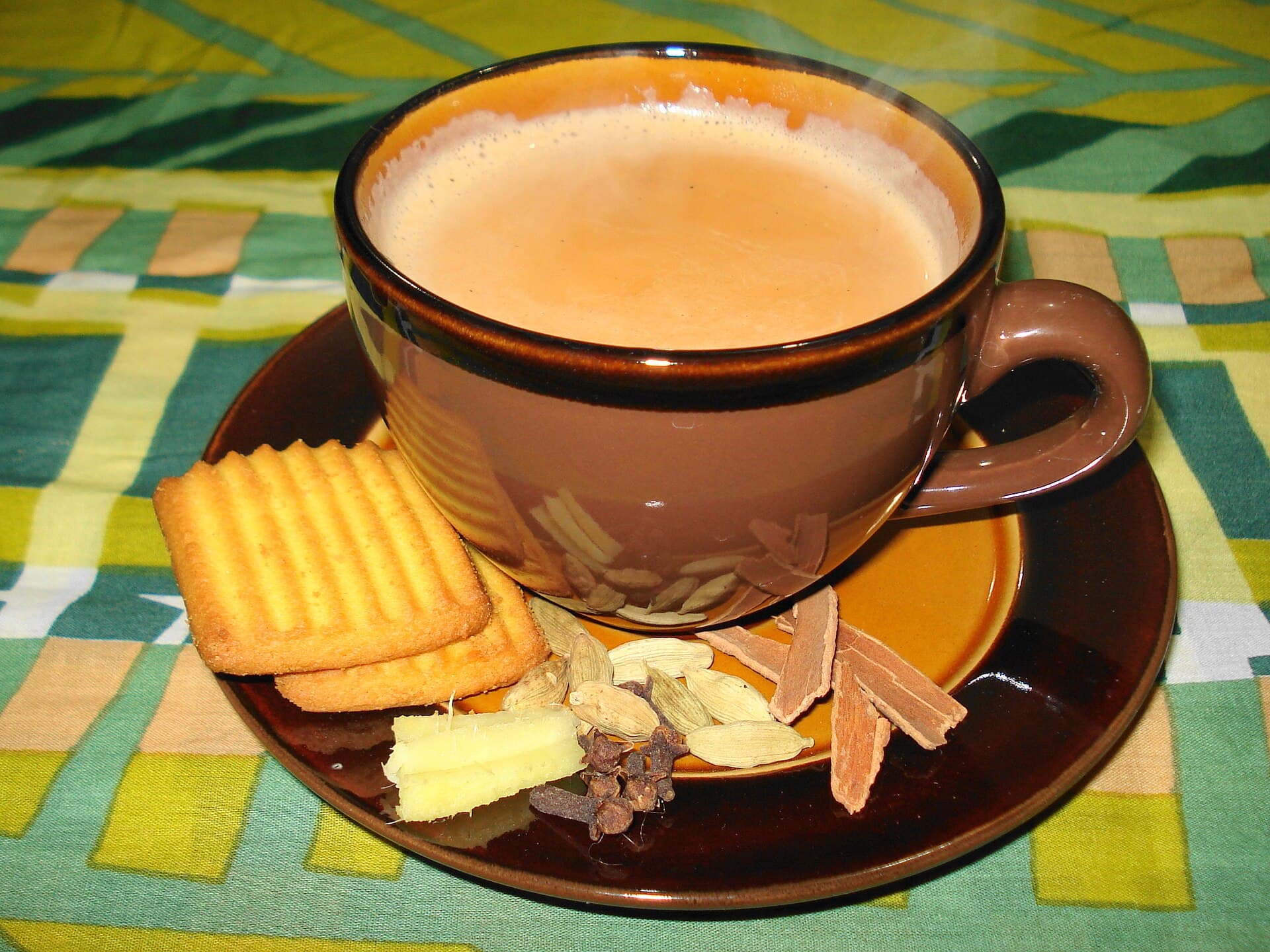
Black, milk, lemon, ginger or masala tea, with a pot ready when you arrive
6:30Tea brought to your room, often with mountain views from the window
7:00Pack, and leave your duffel bag by the door for your porter
7:30Breakfast together, at a relaxed pace
8:30On the trail. The guide sets a slow, steady pace
12:00Lunch at a lodge on the route, for at least an hour
13:00Two to three more hours of walking, with stops for the views
15:00Arrive at the lodge for tea and a hot shower, with your room ready
17:00Oxygen saturation and pulse measured and recorded
18:30Dinner, and a briefing from the guide on the next day
21:00Bed, in a heated room
A moderate trek at an altitude most people manage well.
Written for somebody who walks a bit and does not train. If you already run or cycle regularly, start partway through. Nothing here needs a gym.
8 weeks before, stage 1 of 6
Walk three times a week for 45 minutes, at a pace at which you can still hold a conversation. This is the most important part of your preparation. Most people who find this trek difficult have not trained on consecutive days before arriving.
The highest point where you sleep is Deboche at 3,820 m, and the highest point you reach is the Everest View Hotel at 3,880 m, for about an hour. At this height, each breath contains about two thirds of the oxygen it would at sea level. This is enough to make you breathless on stairs but not usually enough to make you ill. Serious altitude illness is uncommon below 3,900 m. This is the reason for this trek's route, and the reason we do not shorten the itinerary.
Daily health checks
Your guide carries a pulse oximeter and records your oxygen saturation and pulse at each stop. The readings are written down, so any decline over two days is clearly visible.
Mild symptoms
You spend an extra night at the same altitude. On this route, this costs one day and nothing else. Most symptoms resolve at this stage, and the trek continues as planned.
Serious symptoms
Descent is the only effective treatment, and on this route it is easy: Namche is within a few hours of every point on the trek, and it is 440 m lower than the highest point you reach.
Helicopter evacuation
There are helipads at Namche, Syangboche and Lukla, and a helicopter can be in the air within an hour in daylight. This is why you need insurance, and why we ask to see your policy before you fly to Lukla.
Hospital on the route
Khunde hospital, built by Edmund Hillary in 1966 and staffed all year, is at 3,840 m on the village loop you walk on day 5. It is fifteen minutes from the trail.
Fitness and altitude are unrelated
This is the thing people get wrong most often. Training makes the walking easier and does nothing for how your body handles thin air. Strong young trekkers get altitude sickness and unfit older ones frequently do not. Go up slowly, and say something the first time your head hurts.
Because this route stays low, February and December are suitable for this trek in a way they are not for the Base Camp trek. Only two months are unsuitable.
The best month, with warm walking, stable weather and the forest at Deboche in full flower.
Averages built from Namche station records and Khumbu climate data, adjusted for height along the route. Any given week can run ten degrees either side of these, and a clear night is always colder than a cloudy one.
A senior government-licensed guide with wilderness first aid training leads every departure, and there is one porter per traveller rather than one shared between two. Many travellers on this trek are older or are children, and this ratio helps the group stay together on the trail.
Each porter carries 20 kg, which on this trip is one duffel bag rather than two. This is below the 25 kg limit set by the trekking association and well below the loads you will see carried on the same trail. Porters carry duffel bags, not daypacks: you carry your own water, camera and jacket.
Salary, insurance, food and accommodation for every guide and porter are included in the price you pay, and are not requested from you on the trail. All staff are insured for altitude and helicopter evacuation on the same terms we require of you. Paying staff properly within the package price is essential to fair employment in the trekking industry.
Tipping is customary but not compulsory, and it never replaces wages. On this trip, $150 to $250 per traveller for the whole team is usual, given together on the last evening rather than daily. Your guide will not ask for a tip and would prefer that it is not given in front of everyone.
Every lodge on this itinerary provides filtered water free of charge, refilled into your own bottle, and we ask you to use it. A traveller buying bottled water uses twenty or more plastic bottles in a week, each flown or carried into a national park and each needing to be carried out again.
We carry out everything we bring in that is not food. The Khumbu has a waste problem that it did not create and cannot solve alone, and every operator should avoid adding to it.
The lodges are family businesses in the villages where you stay. The guides and porters live in this district. Permit fees fund Sagarmatha National Park and the Khumbu Pasang Lhamu Rural Municipality, and the hospital at Khunde is partly funded by visitor donations. Almost everything you pay for this trip is spent within a few days' walk of the trail.
Ask before photographing anyone, especially children and monks. Stand on the mountain side of the trail when a yak train passes. Tengboche Monastery welcomes visitors but is a place of worship: remove your hat and shoes, put your camera away during the puja, and leave a donation.
Write to us or send a WhatsApp message with your approximate travel dates and the number of people travelling. You will receive a reply from someone who has walked this route. Nothing is payable at this stage, and nothing is confirmed until you pay a deposit.
A 30% deposit secures your dates and the lodge rooms, which are in short supply on this trip. The balance is due on arrival in Kathmandu, in cash or by card. At the same time, we ask for a copy of your passport, your insurance certificate and any dietary or medical information.
You can pay by bank transfer or by card through a secure link. Card payments carry a bank fee of about 4 per cent, which we show you before you pay. The balance in Kathmandu can be paid in US dollars, pounds, euros or Nepali rupees.
If you cancel more than 30 days before departure, your deposit can be transferred to any other date or trip we run, with no time limit. If you cancel within 30 days, the deposit is kept, because by then the flights, permits, crew and rooms have all been paid for. If we cancel for any reason other than weather, you receive a full refund.
Both cost the same for a group of five or more. A private trip runs on your dates at your pace and can be arranged for a single traveller. A group departure runs on the dates above with a maximum of eight people. Most travellers on this trek book privately, as most are travelling as a family.
Outside October, three weeks' notice is usually enough. Availability depends on the lodge rooms rather than the flights: there are only a few lodges of this standard in the Khumbu, and in October they are fully booked months ahead. If you are already in Kathmandu, visit our office and we will check current availability.
Priced per person, arranged before you travel, and none of them included in the price above.
Sleep at 3,880 m at Syangboche, with a view of Everest from your window. We add an extra day beforehand so that you acclimatise gradually, which is why this is an optional extra and not part of the standard route.
A one-hour flight along the Himalaya from Kathmandu, with a guaranteed window seat. A good alternative if bad weather stops you reaching Lukla. It can be added on day 2 or day 10.
Avoid the drive to Ramechhap at the start, or a wait at Lukla at the end. Seats are shared when we can fill the helicopter, and it is chartered when we cannot.
Two days west from Namche to Tenzing Norgay's village at 3,800 m, on a much quieter trail. The best addition to this trek if you want more walking without going higher.
Travel down to the lowland jungle to see rhinos and, if you are fortunate, a tiger, staying in a lodge rather than a camp. A warm contrast to a week of cold mornings.
A room to yourself in Kathmandu and at every lodge on the trek. This is possible on this route because we stay at lower altitude, and is not possible on most Everest itineraries.
4 versions of this journey. They use the same guides and the same lodges; what changes is the length, the comfort and how much of it you walk.
Tengboche Trek
October 2017, Tripadvisor
My wife and I trekked to Tengboche Monastery in early October 2017 with arrangements made by Earthbound. Everything was very professional and on time. Everyone was very friendly and provided great conversations. Our hotel in Kathmandu was very clean and conveniently located. I would recommend Rajan and Earthbound Expeditions.
Rajan and his team looked after us very well for the second time
April 2017, Tripadvisor
We 3 amigos organised a personalized 10 days Everest Panoramic View Trek an with Kathmandu Heritage Site visits. Mr Rajan looked after us very well and sorted out all our extra requests professionally and without hesitation. We had another great experience with his trekking company and the price was not bad either. I do recommend for the younger trekkers to use Bikram as your guide as he looked after us very well and joked and ate with us most of the time and not forgetting our porter we named Lucky. The hotel we stayed at in Thamel was great as well which Mr Rajan arranged. On our third trip in 2020 we will use this trekking company again for the Mount Kalash trek
Everest panorama trek
April 2017, Tripadvisor
I did a 5 days trek on the road to Everest Base Camp. The organisation provided by Earthbound Expeditions was great and my guide, Bharat, was excellent. It was a real pleasure to spend this days with him. It was my first time in Nepal but certainly not the last and i will require Earthbound Expeditions services again with no hesitation.
Everest Panorama Trek
January 2017, Tripadvisor
Just finished this 7 day trek. Rajan arranges everything, airport transfers, hotels, flights and anything else you may need. Nothing is a problem to him. This is my second trekking holiday with Earthbound Expeditions and would recommend them 100% for their professionalism, adaptability and an amazing experience. I was lucky enough to have Ranjit as my guide on both treks. His 19 years of experience as a guide in the Himalayas is obvious with his guesthouse choices, leadership, advice and fun loving attitude. If you do an Earthbound trek make sure you ask fur Ranjit as your guide. Hard work and fun guaranteed. !!!!!
Answers to the 28 questions travellers ask us most often. If your question is not here, contact us and we will answer it.
Yes. It is one of the most suitable treks in the Everest region if you are concerned about altitude. You sleep no higher than 3,820 m at Deboche and reach 3,880 m for an hour at the Everest View Hotel. Serious altitude illness is uncommon at these heights, and the two nights at Namche before you go higher reduce the risk further.
You need to be able to walk four to six hours on rough ground, on consecutive days, carrying a light daypack. If you can walk in hilly country at home for half a day and enjoy it, you are fit enough. The climb to Namche is one demanding afternoon, and the rest of the trek is easier than most people expect.
There is no upper age limit. We recommend this trek to people in their seventies who want to see Everest and have been told that Base Camp is too demanding, and it is the trek we run most often for families. The minimum age is eight, walking with a parent.
Most children over eight manage this trek well, often better than their parents, provided the days are kept short and nobody is hurried. For families, we always add an extra night at Namche, our team carries the daypacks, and the night at Deboche is optional if a child is tired.
You miss Base Camp itself, which is a moraine with tents on it, and the view from Kala Patthar, which is the best on the Base Camp trek. You still see the Khumbu: the forest, the villages, the monastery, and a view of Everest from the Everest View Hotel that is arguably better than the view from Base Camp.
Not during the trek. Base Camp requires a different acclimatisation schedule, and we do not change the itinerary on the trail. If you think you might want to reach Base Camp, book the Base Camp trek instead. Turning back early on that trek is easy, but extending this trek is not possible.
Five-star hotels in Kathmandu rather than three-star, the best lodges on the route at Phakding, Namche and Deboche, a heated room with a private bathroom at every stop, one porter per traveller instead of one for every two, and a slower itinerary. The eleven-day schedule, compared with seven days, is part of what you pay for.
At Phakding, Namche and in Kathmandu, yes: each room has a private bathroom, hot water and heating. At Deboche, the best rooms have a private bathroom, but heating is provided by a stove in the dining room, not in your room.
Yes, we can arrange it, but it is not part of the standard itinerary. Sleeping at 3,880 m on your third night after Lukla is a larger gain in altitude than we recommend when you could sleep 440 m lower in Namche. If you would like to stay there, we add an extra day beforehand.
Yes, at every stop on this route, which is not the case higher up the valley. Hot showers are included and are in your own bathroom, not in a shared, coin-operated cubicle. Water is heated by gas or solar power, so after a cloudy day the water may be warm rather than hot.
Yes, at every stop on this itinerary. This is unusual in the Khumbu and is one reason we keep the route low. A single room throughout costs $360 in addition to the trip price. The lodges we use have single rooms available, but the teahouses further up the valley do not.
Mild symptoms, such as a headache or a poor night's sleep at Namche, are common and usually pass. Serious altitude sickness is rare below 3,900 m. Your guide measures your oxygen saturation each evening and records it, so any decline is clearly visible in the figures.
We descend, which is easy on this route, because Namche is always within a few hours and Lukla within a day. Descent is the effective treatment. If the condition is serious, we call a helicopter, which can reach Namche or Lukla within an hour in daylight, and your insurance covers the cost.
You need a policy that covers trekking to 4,000 m and includes helicopter evacuation and repatriation. This is cheaper and easier to buy than the 6,000 m cover needed for Base Camp, so tell your insurer which trek you are doing. We ask to see your insurance certificate before you fly to Lukla.
At Deboche, the highest overnight stop, expect around 0°C in October and as low as -14°C in January. Namche is two or three degrees milder. During the trekking seasons, daytime temperatures on the trail are 10°C to 16°C and pleasant in the sun. Your room is heated at Phakding and Namche, which makes the evenings much more comfortable.
Between 5 km and 13 km a day, which takes four to six hours at our pace. The last day, out to Lukla, takes six to seven hours. We stop for lunch every day, and we allow time at the monastery, at the Everest View Hotel and in Khumjung rather than passing straight through.
Wifi is included and works well at the lodges we book, which is not the case at most lodges on this route. Ncell and NTC mobile data cover Lukla, Namche and most of the trail between them. Buy a SIM card in Kathmandu, because you cannot register one on the trail.
At these lodges, the food is good and better than most people expect: soups, fresh bread, vegetables from the lodge greenhouse, and espresso machine coffee. We still advise against eating meat above Namche, because it is carried up without refrigeration. This applies at every standard of lodge.
Vegetarian food is easy to provide and is often the best choice on the menu. Vegan and gluten-free diets are manageable if you tell us when you book, because the guide orders ahead at each lodge. Teahouse kitchens cannot rule out cross-contamination, so please take this into account.
A porter carries your duffel bag. On this trip there is one porter per traveller rather than one for every two, and the maximum load is 20 kg. You carry a daypack of around 5 kg with water, a warm layer and a camera. The Lukla flight baggage allowance of 15 kg is the stricter limit.
You need two permits, and both are included in the price: the Sagarmatha National Park entry permit at NPR 3,390, and the Khumbu Pasang Lhamu Rural Municipality permit at NPR 2,000. A TIMS card has not been required in the Khumbu since 2018.
Most nationalities can get a visa on arrival at Kathmandu airport: $30 for 15 days or $50 for 30 days, paid in cash. Completing the online form within 15 days before arrival makes the queue much shorter. Bring a passport photograph and a passport valid for at least six months.
Bring $200 to $300 in small notes, changed into rupees in Kathmandu. Almost everything is included on this trip, so this covers drinks, souvenirs in Namche and tips. There is an ATM in Namche, but it often runs out of cash, and no lodge on the route accepts cards.
It depends on the month. During the busiest periods of spring and autumn, the aviation authority moves Lukla flights to Manthali airport at Ramechhap. This means a four to five-hour drive, leaving Kathmandu in the early hours of the morning. At other times, you fly from Kathmandu, which takes about 35 minutes. We tell you which applies before you book.
Lukla flights are cancelled several times a month in every season, and day 10 is a spare day for this reason. If the delay is longer, we can book you on a helicopter for around $500 a seat, or move you to a lower-altitude trek at no extra charge. Book your flight home with at least one clear day to spare.
You can fly from Kathmandu to Lukla by helicopter, and in a week of bad weather this may be the only way to start the trek. We do not fly travellers directly to Syangboche at 3,880 m to start there. Gaining 2,500 m in twenty minutes is a common cause of altitude illness, even on an easy route.
For October, book three to six months ahead, because there are only a few lodges of this standard in the Khumbu and they fill up long before the flights do. For other months, six to eight weeks is enough. We have occasionally started travellers on the trail within a week, when a cancellation made a room available.
Yes, and most travellers do. You can add a night at Namche, sleep at the Everest View Hotel, walk to Thame for a quieter day, or extend the trek to thirteen days for a more relaxed pace. For a group of five or more, a private trip on your own dates costs the same as joining a group departure.
Didn't find what you were looking for?
Search every word on this page, or ask somebody who has walked the route.
11 days
$2,485 per person