Breakfast
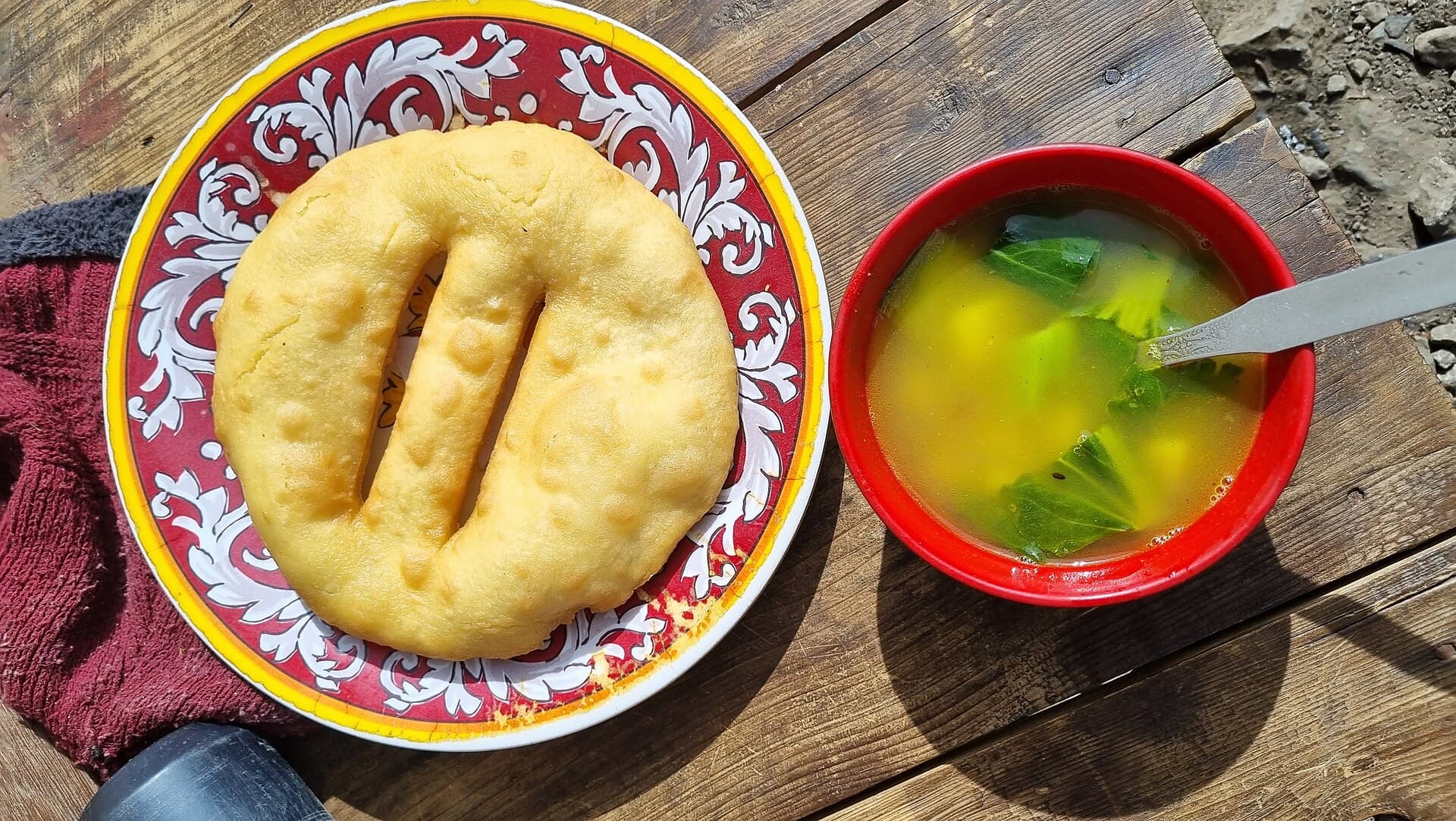
Hotel buffet in the cities, eggs and tsampa on the plateau
All destinations
All destinationsKailash reached through China: Beijing, the railway or a flight to Lhasa, the monasteries, and then the long road west to the mountain.
Kailash reached through China: Beijing, the railway or a flight to Lhasa, the monasteries, and then the long road west to the mountain.
Most pilgrims reach Kailash from Kathmandu. This journey travels through Beijing and Lhasa instead, for two practical reasons. It uses an ordinary Chinese visa obtained at home rather than the group visa issued in Kathmandu, which ties five travellers to one document. It also gives you three nights at 3,656 m in a city with hospitals and hotels before the demanding part of the trip begins.
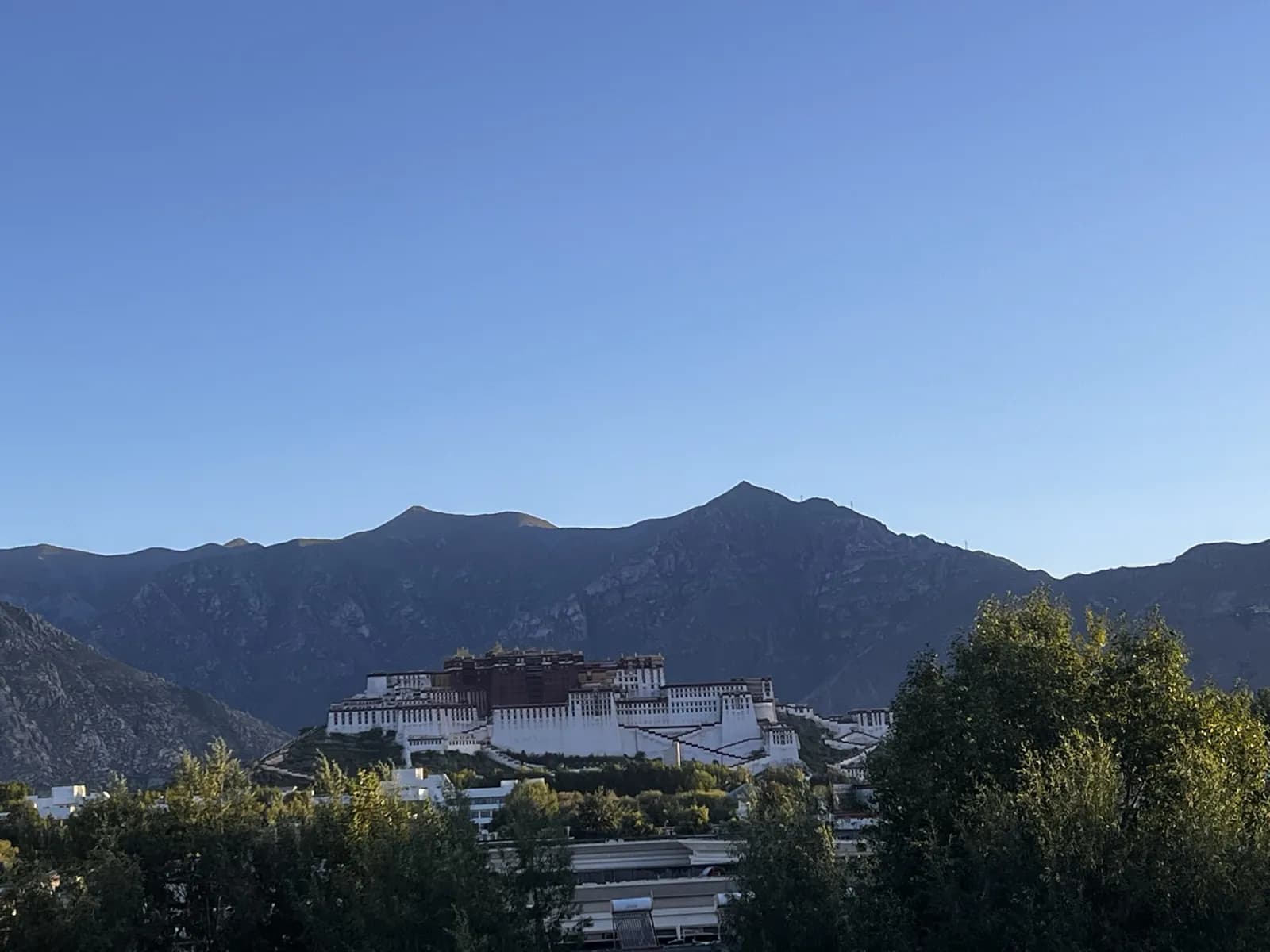
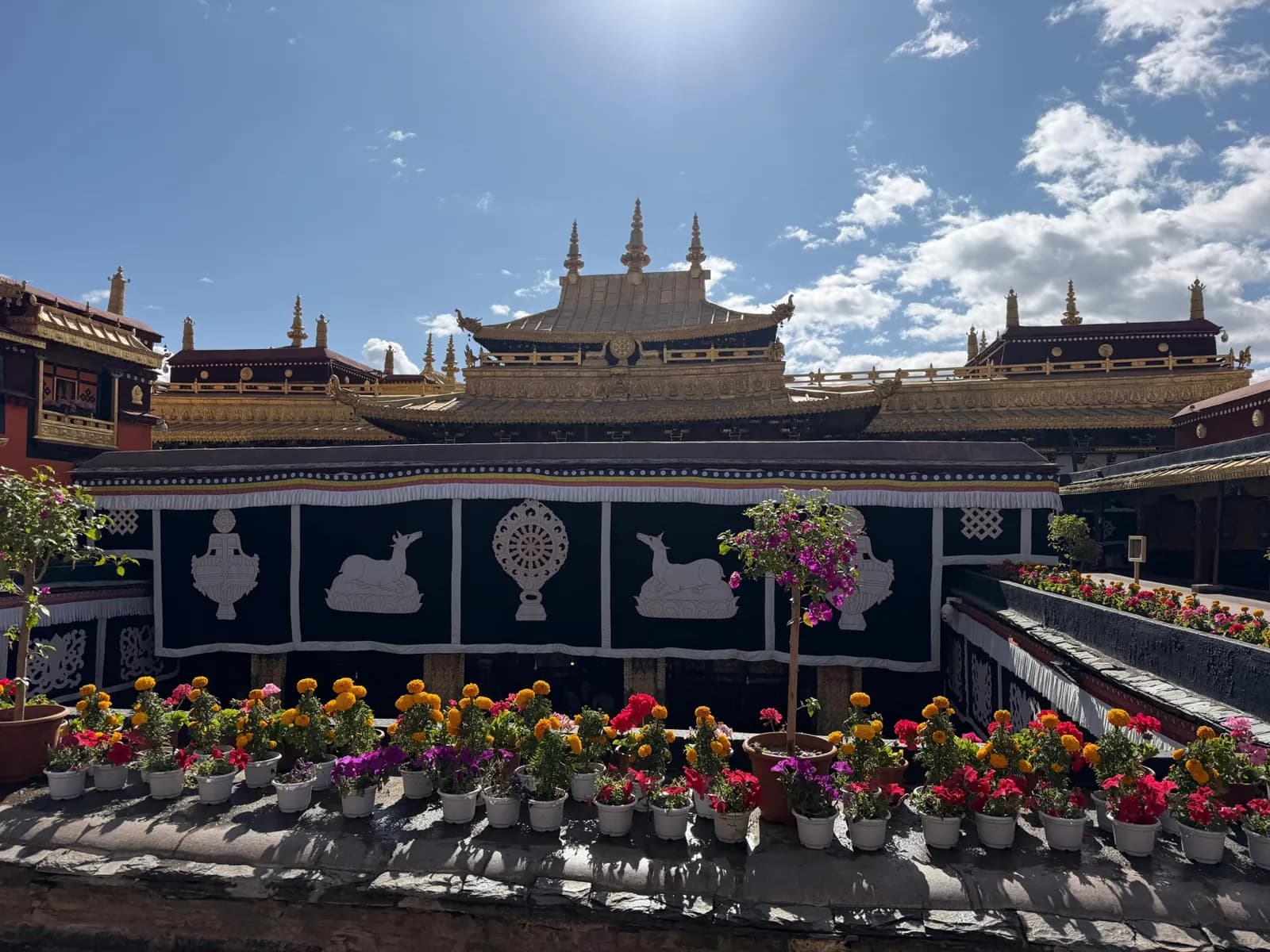
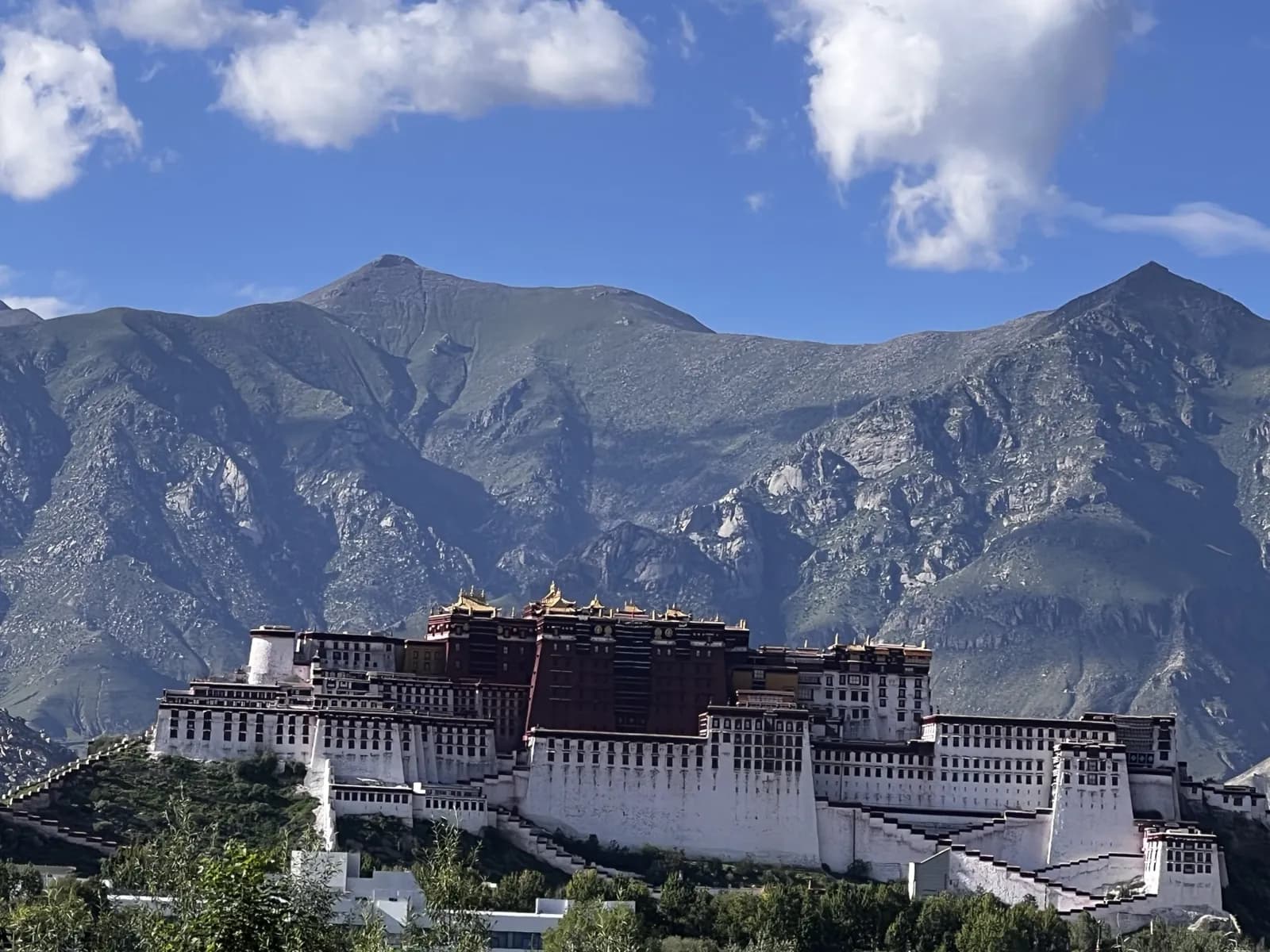
The three nights in Lhasa are central to the trip. You visit the Potala, the Jokhang with pilgrims prostrating at its door, Drepung on the hillside and the debating courtyard at Sera. This is also where your body acclimatises for the plateau, which is why the arrival day has no activities planned.
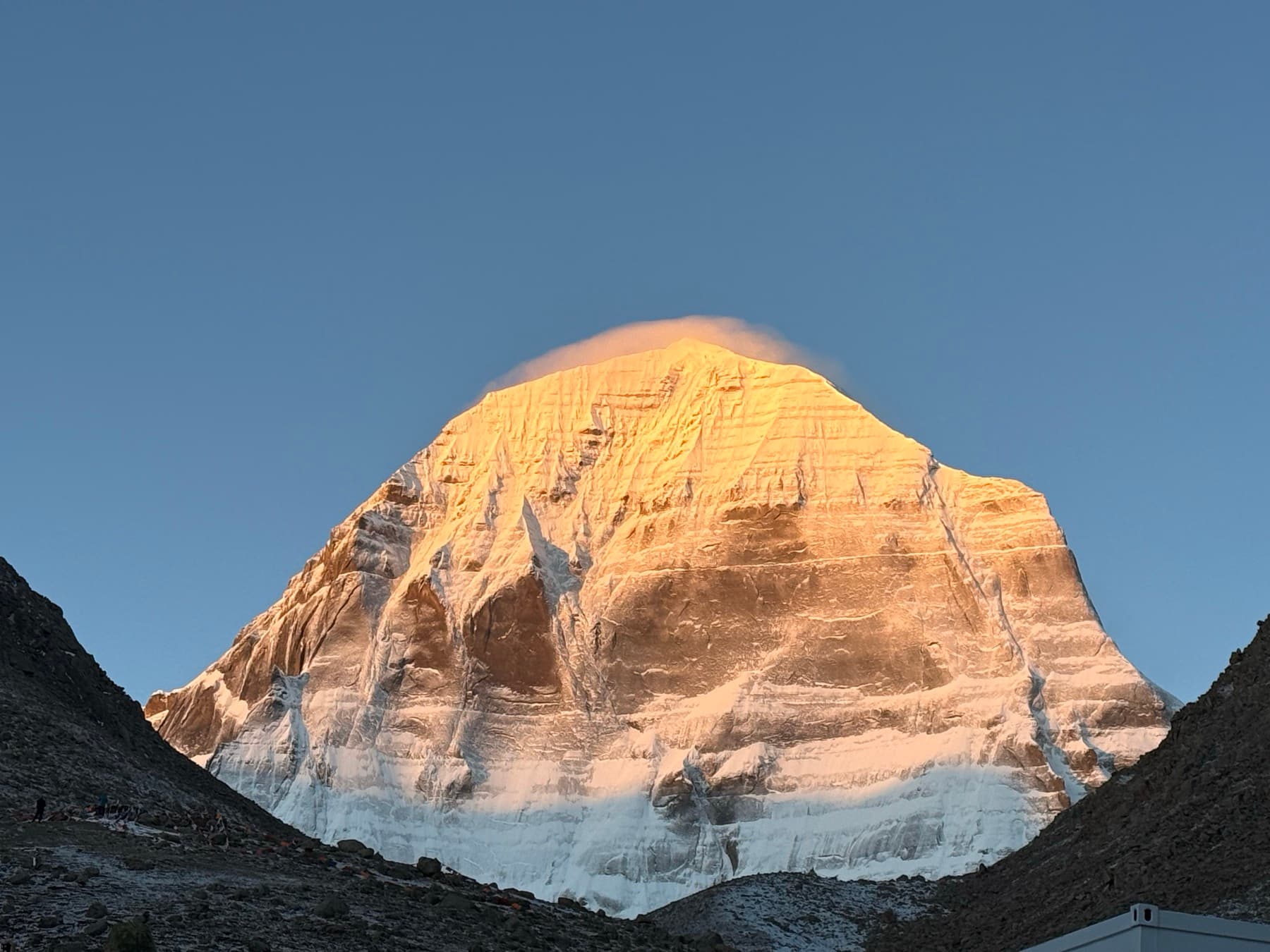
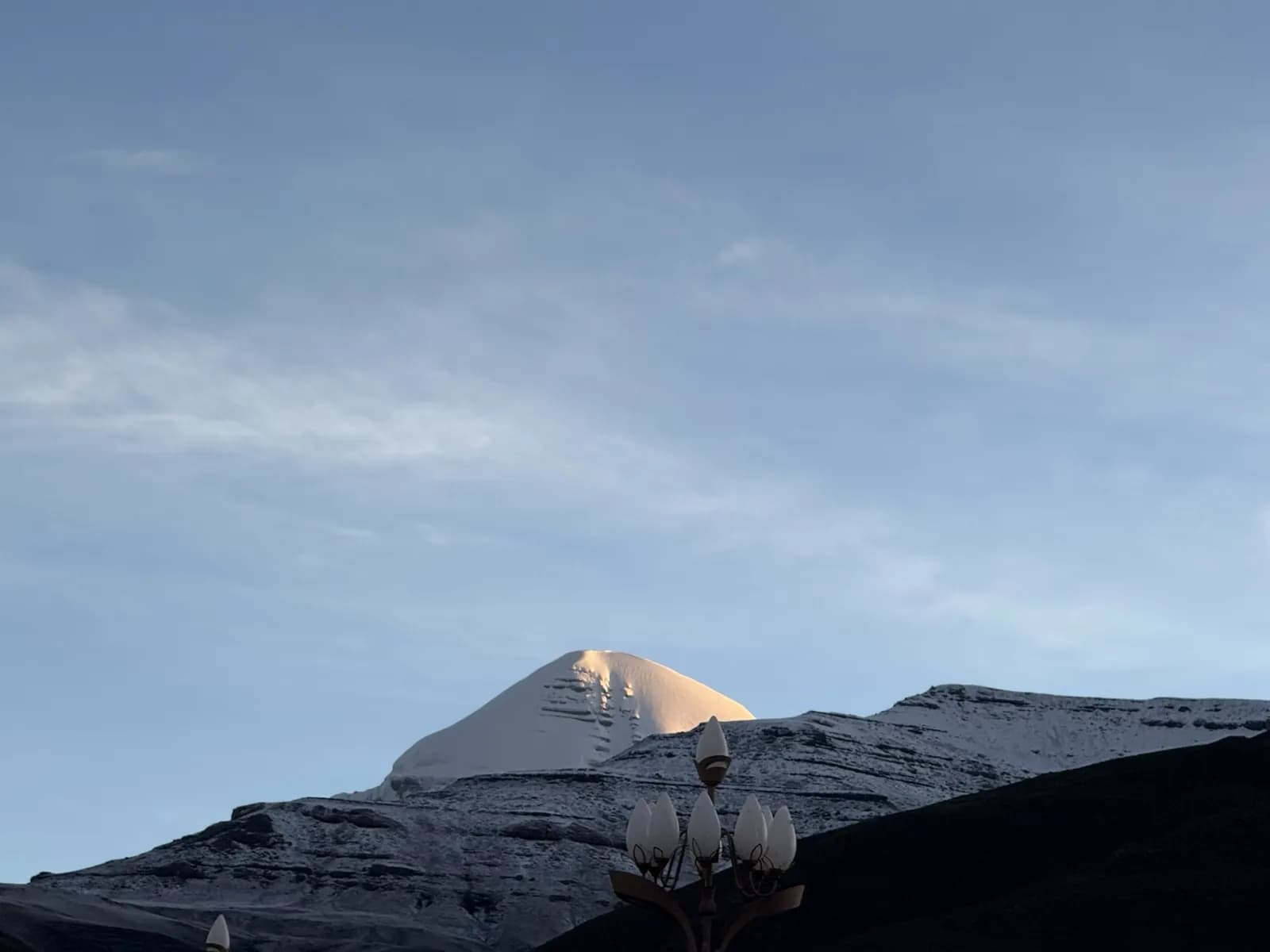
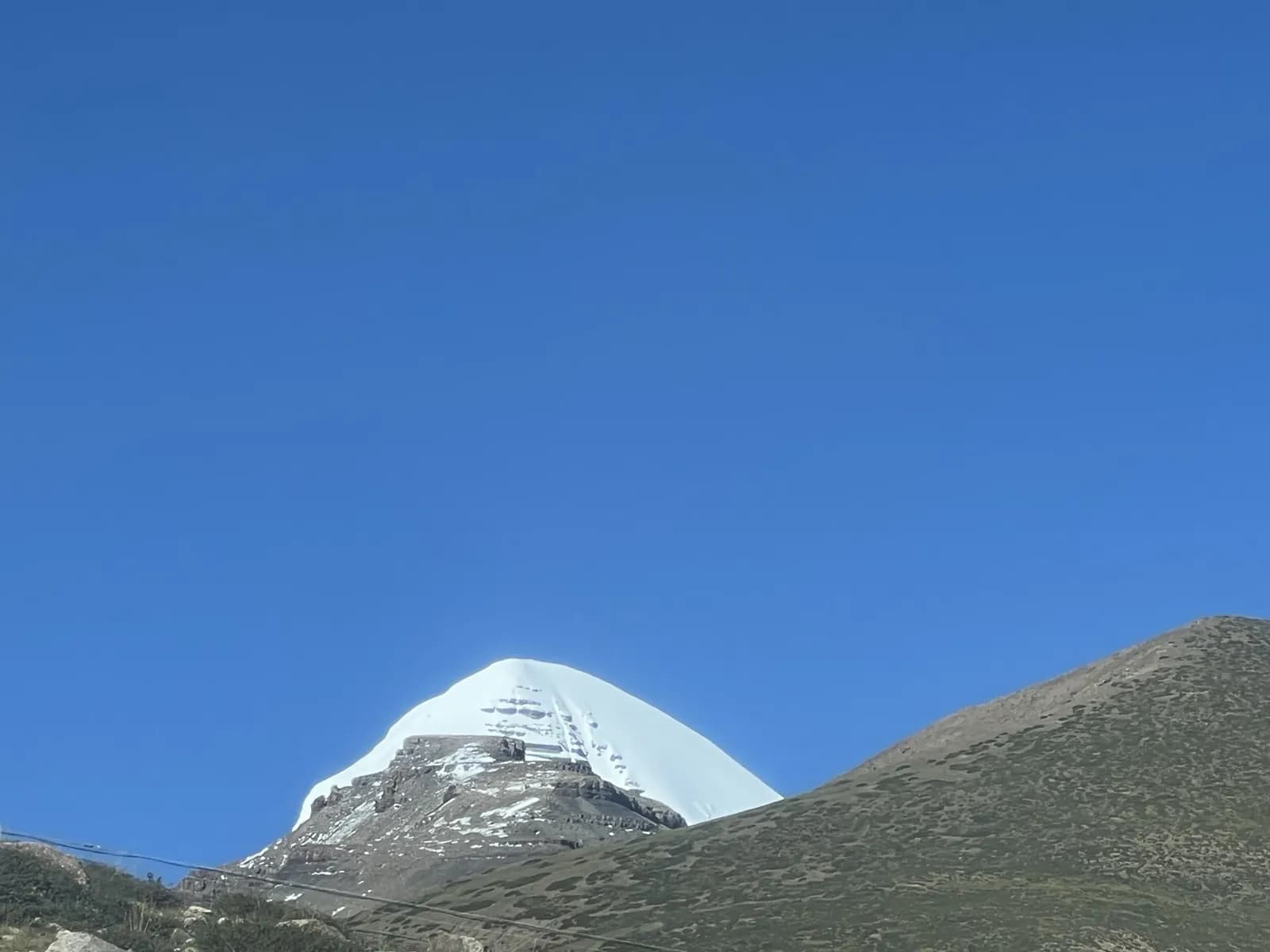
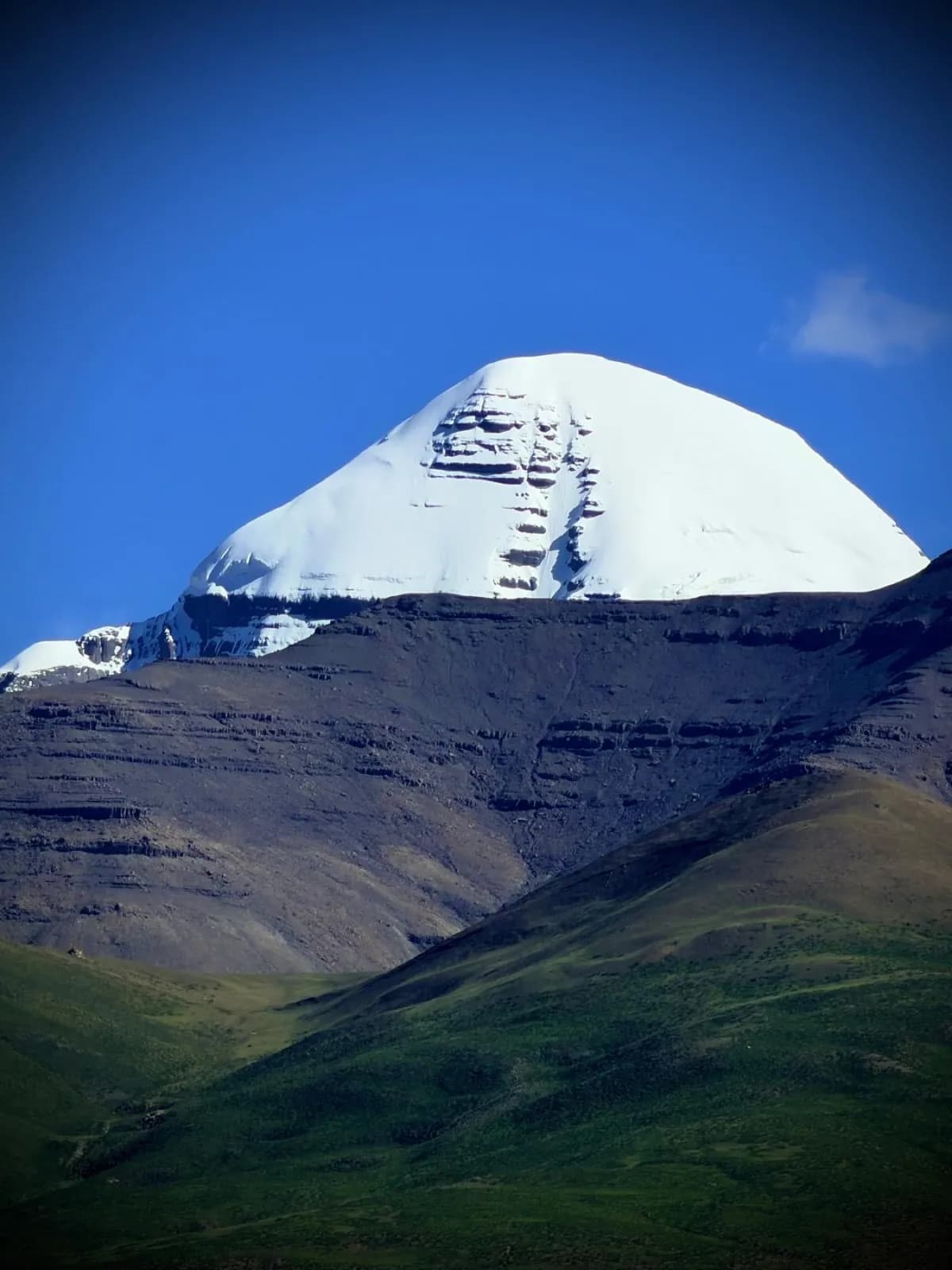
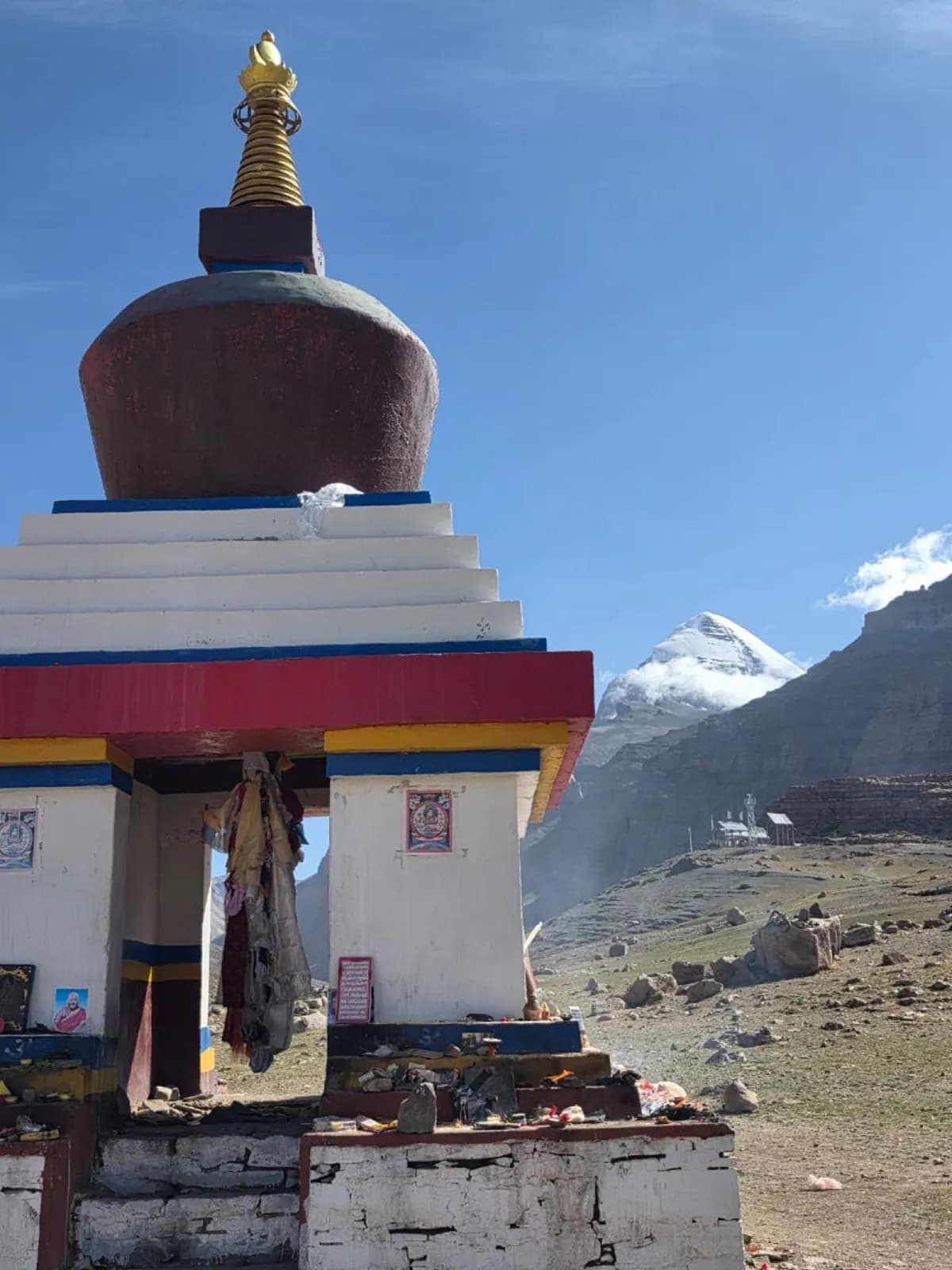
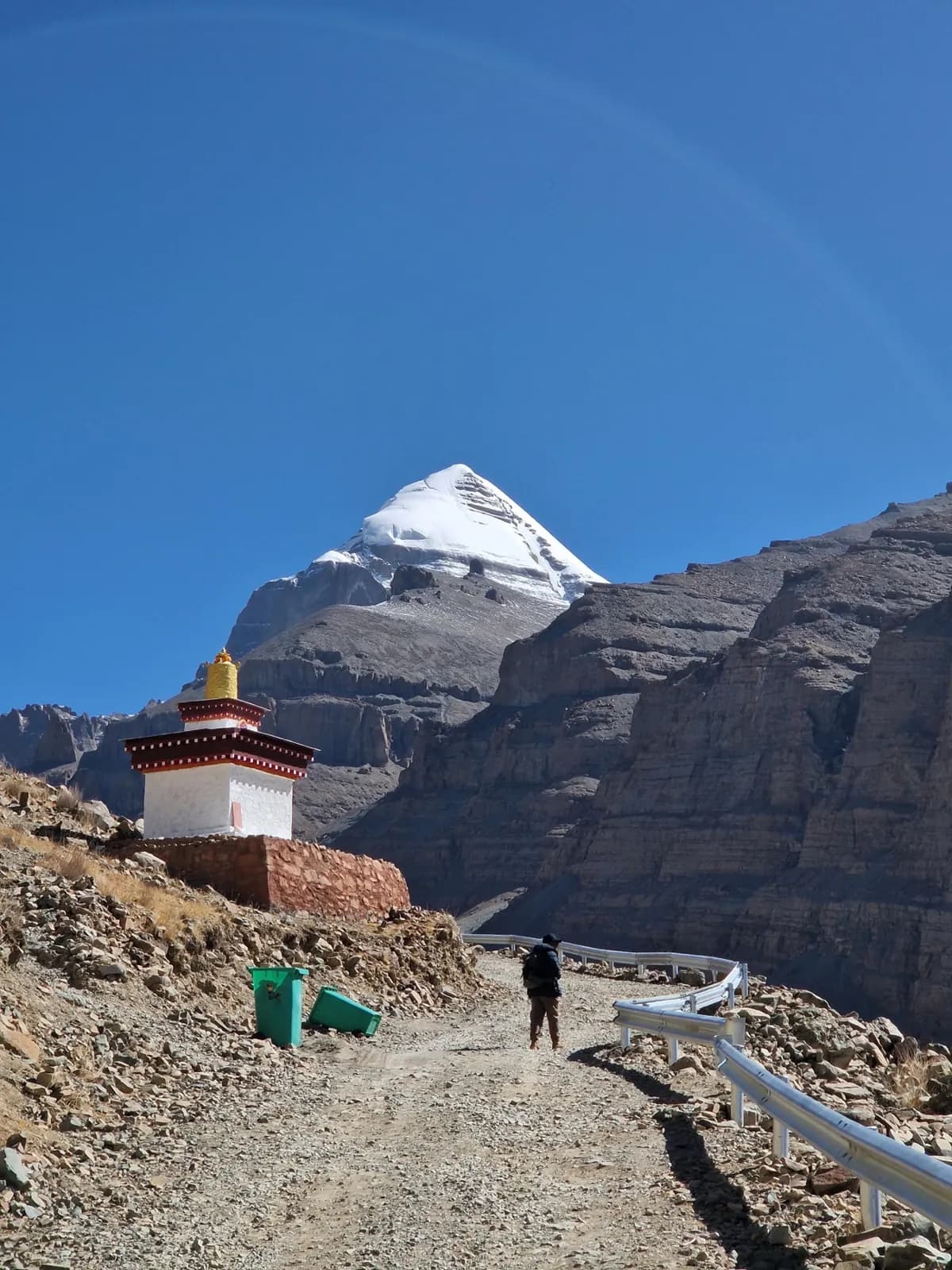
Kailash rises to 6,638 m in the far west of Tibet and has never been climbed, because climbing it is forbidden. Hindus know it as the abode of Shiva, Buddhists place Demchok on its summit, Jains hold that Rishabhadeva was liberated here, and Bon practitioners walk the circuit anticlockwise while everyone else walks clockwise.
The kora is fifty three kilometres from Darchen and back. You walk north below the west face to Dirapuk, cross the Dolma La at 5,630 m on the long second day, and descend the Zhong Chu valley to the plain on the third. None of it is technical. The difficulty comes from the altitude, and two weeks of gradual approach is the best preparation.
You fly from Kathmandu or Delhi to Beijing, where we meet you and take you to your hotel. There are no activities planned today. If your flight lands late, the programme begins tomorrow and there is no early start.
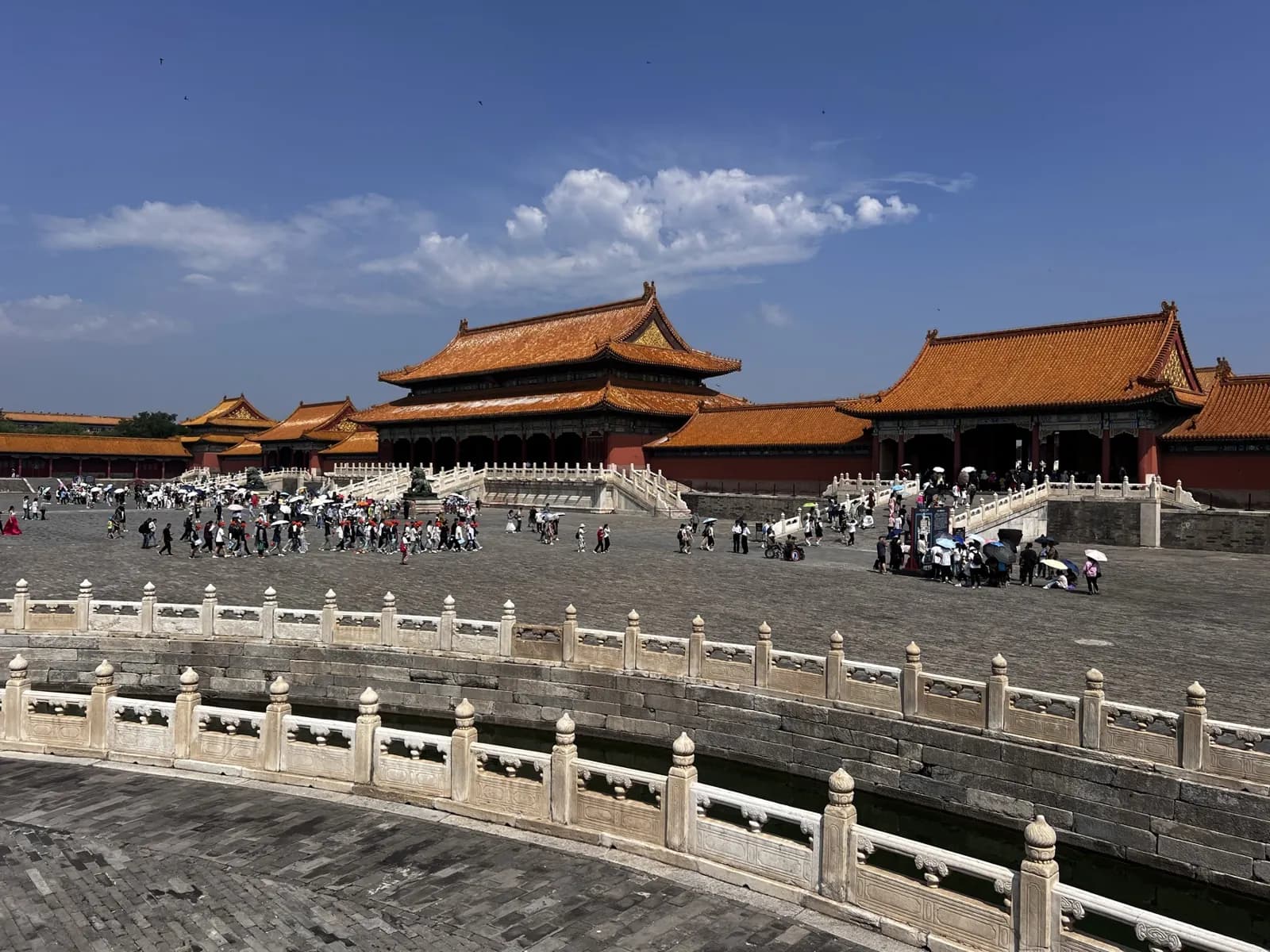
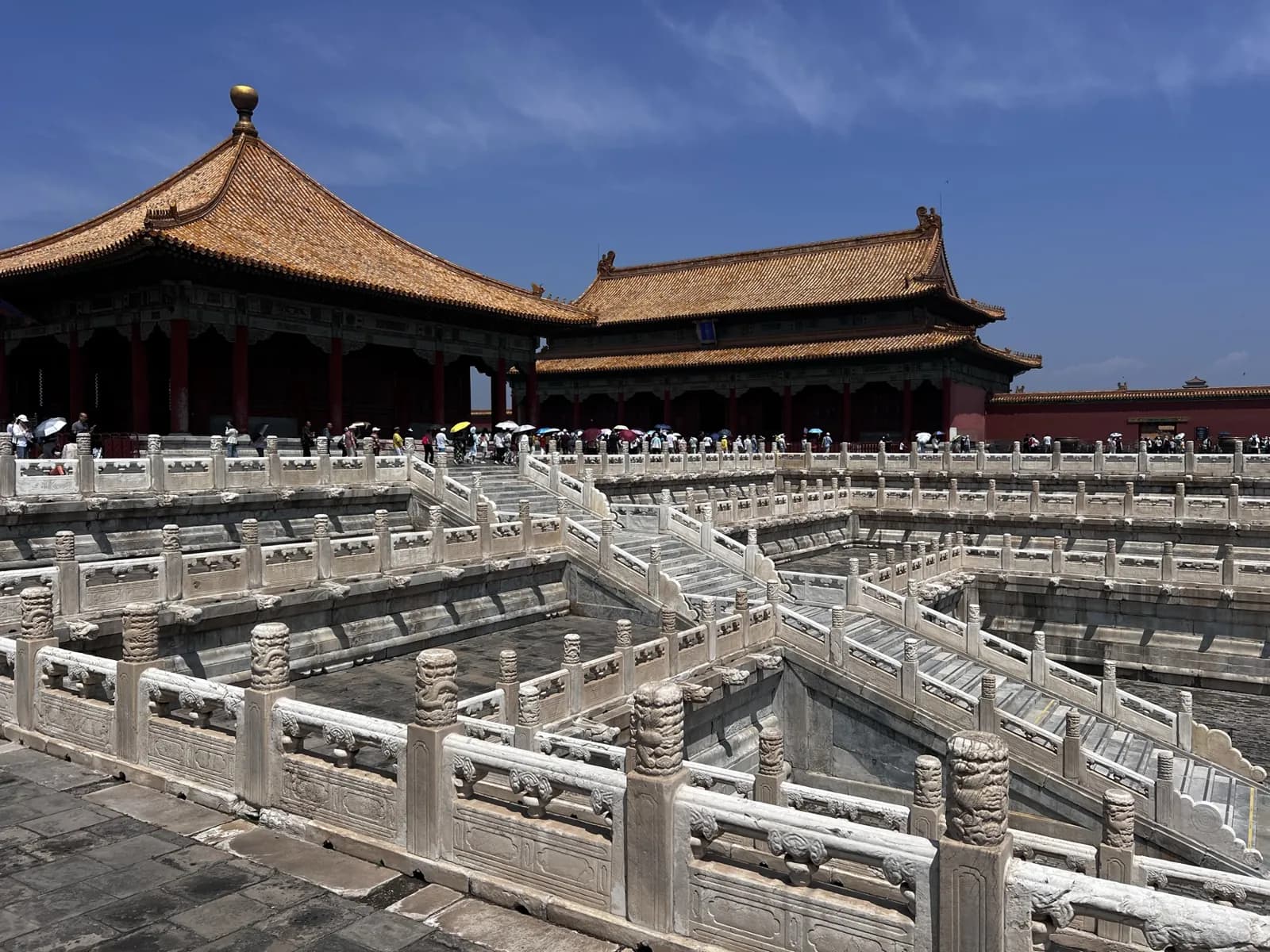
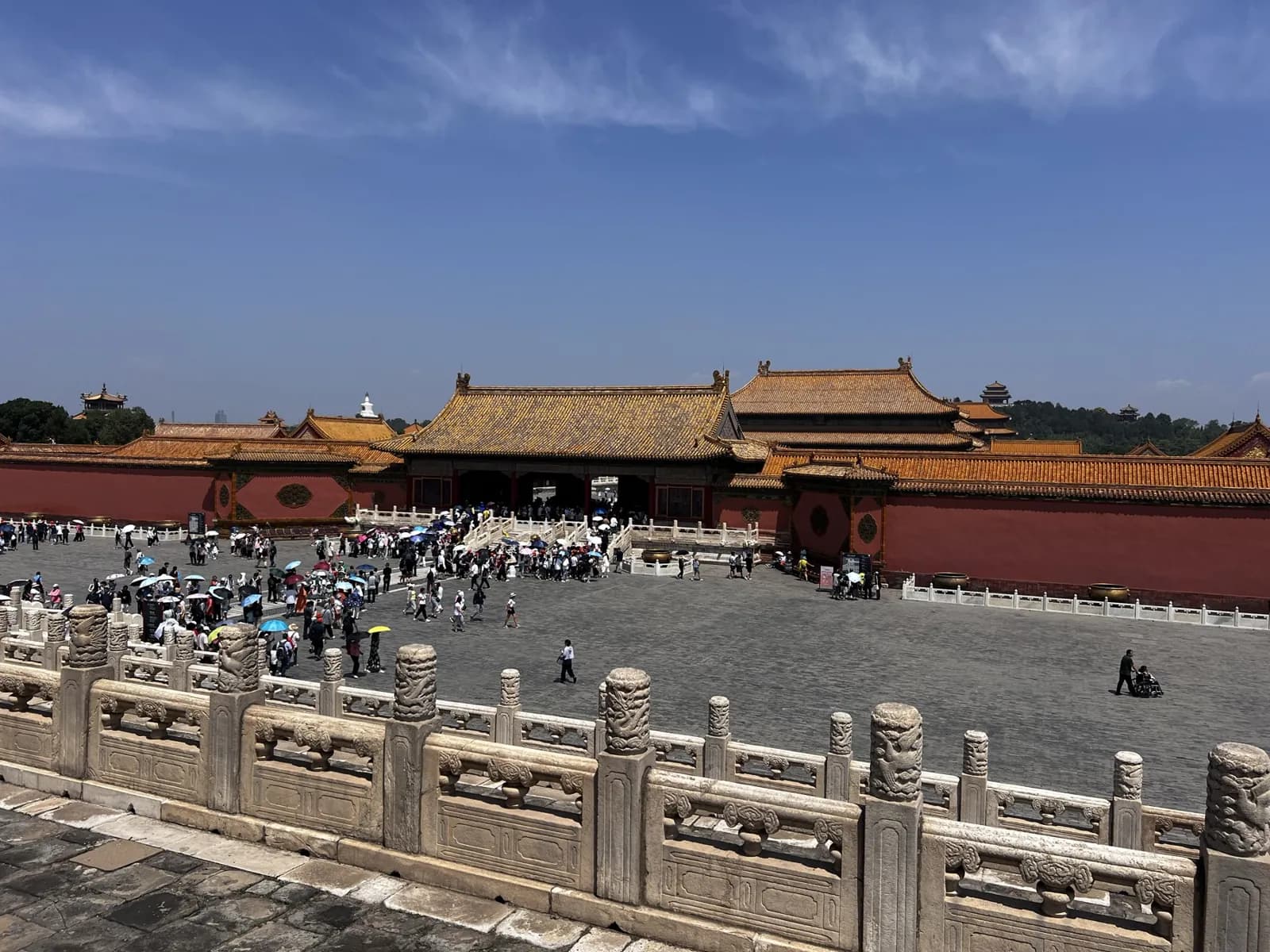
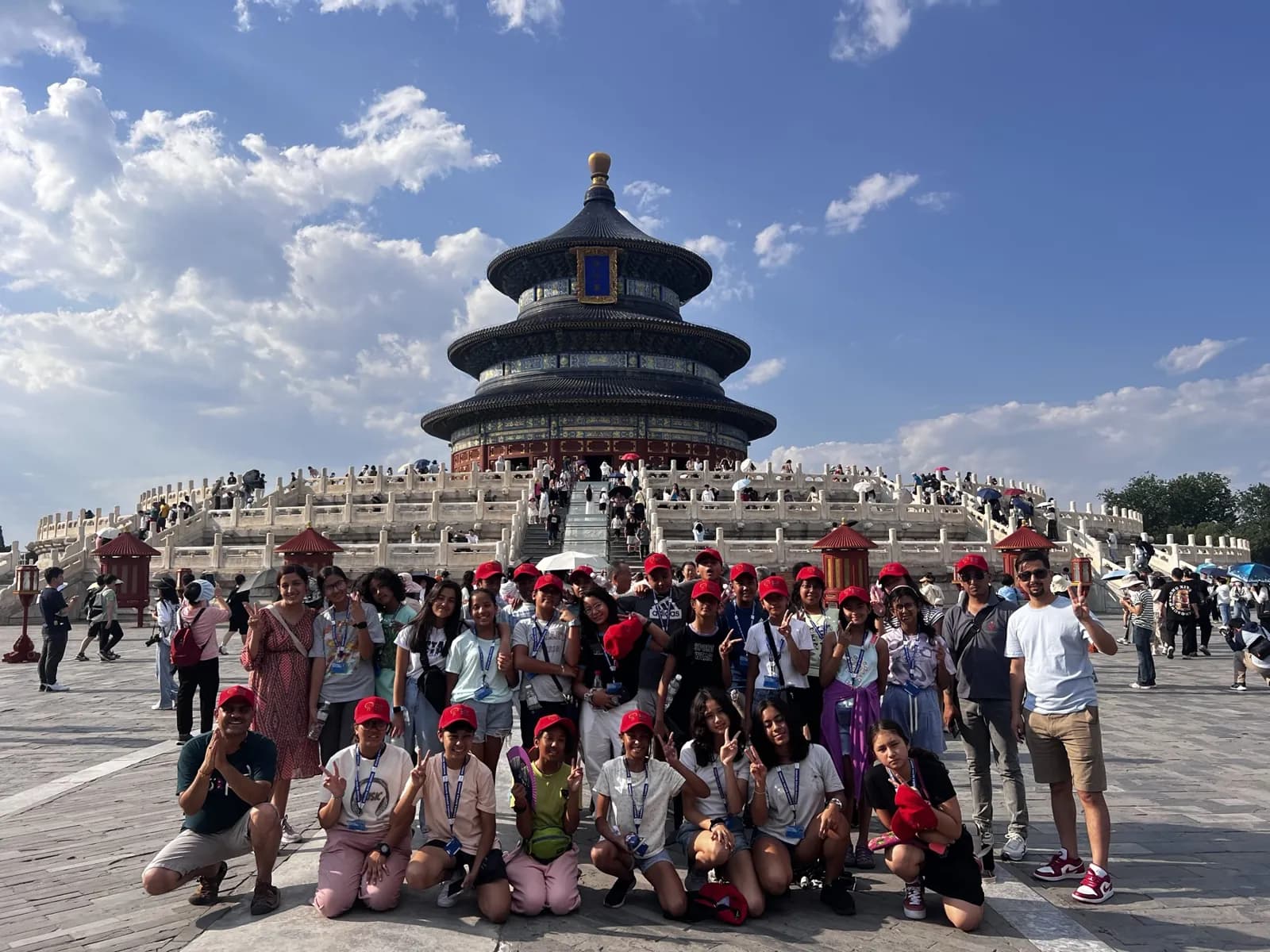
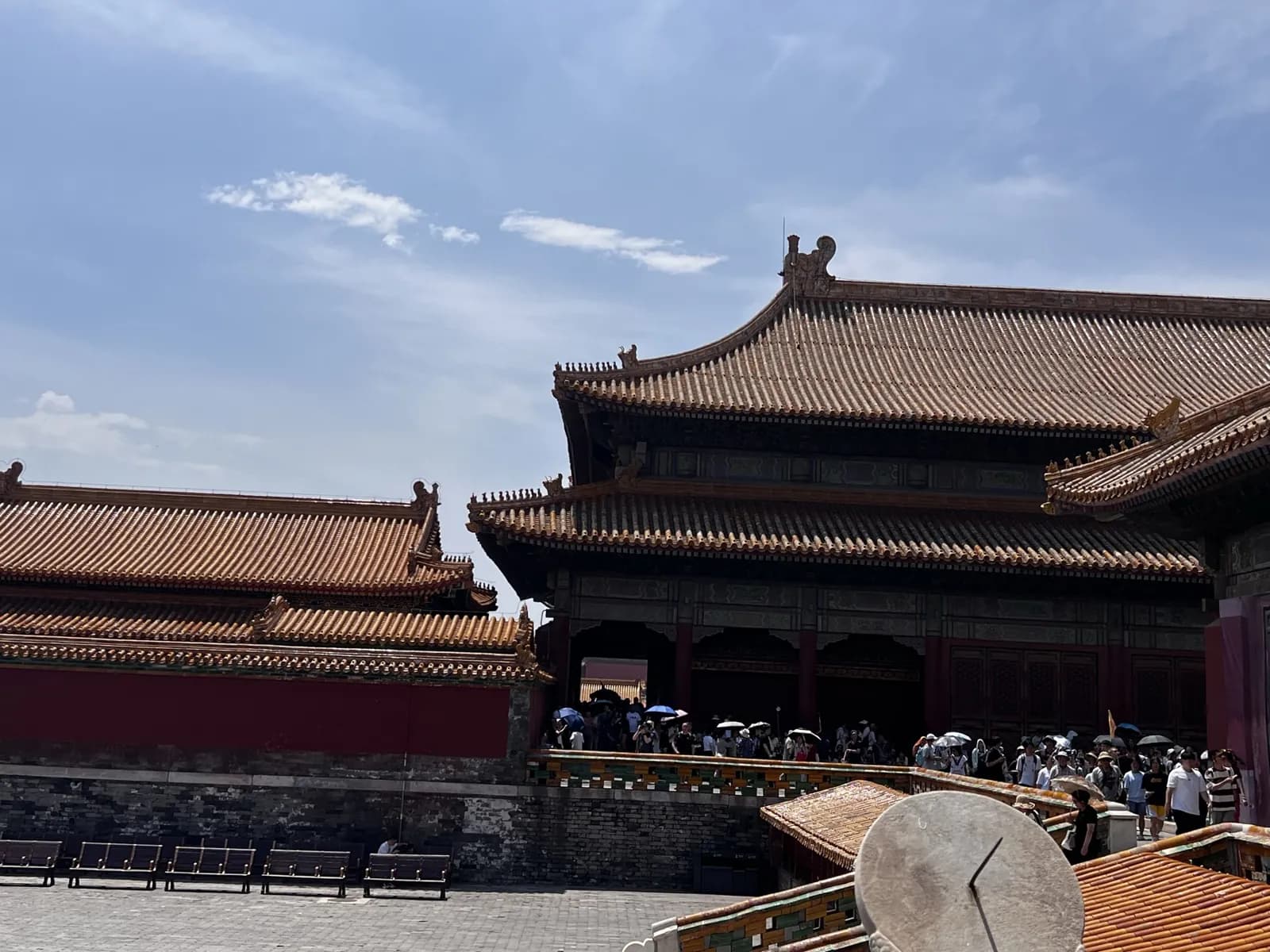
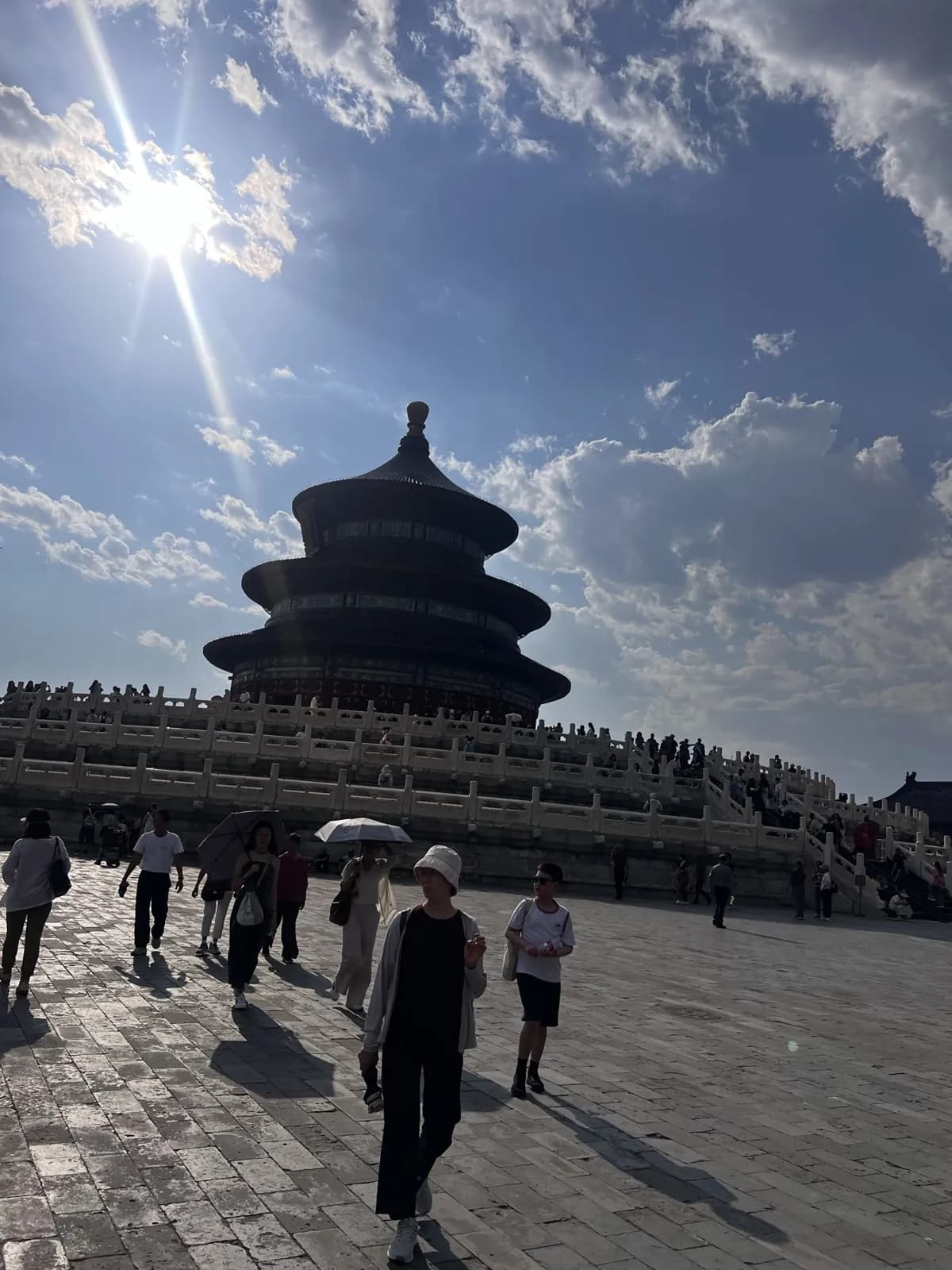
You visit the Forbidden City in the morning, then Tiananmen Square and the Temple of Heaven, at a pace that suits the group. It is an unusual start to a Himalayan pilgrimage, and most travellers value it afterwards. The evening briefing covers altitude, which becomes a factor from tomorrow.
You travel either by a four hour flight over the Kunlun mountains or by railway, which takes two nights and crosses the Tanggula Pass at 5,072 m in carriages with enriched oxygen. The train is neither faster nor cheaper, but it is a better introduction to the plateau, and most of our travellers who have done both would choose it again.
This is your first full day at 3,656 m, and the programme is kept light on purpose: a short walk in the Barkhor, tea and an early night. Oxygen saturation is measured morning and evening from today. Travellers who do a lot of sightseeing on this day are more likely to feel unwell at Shigatse.
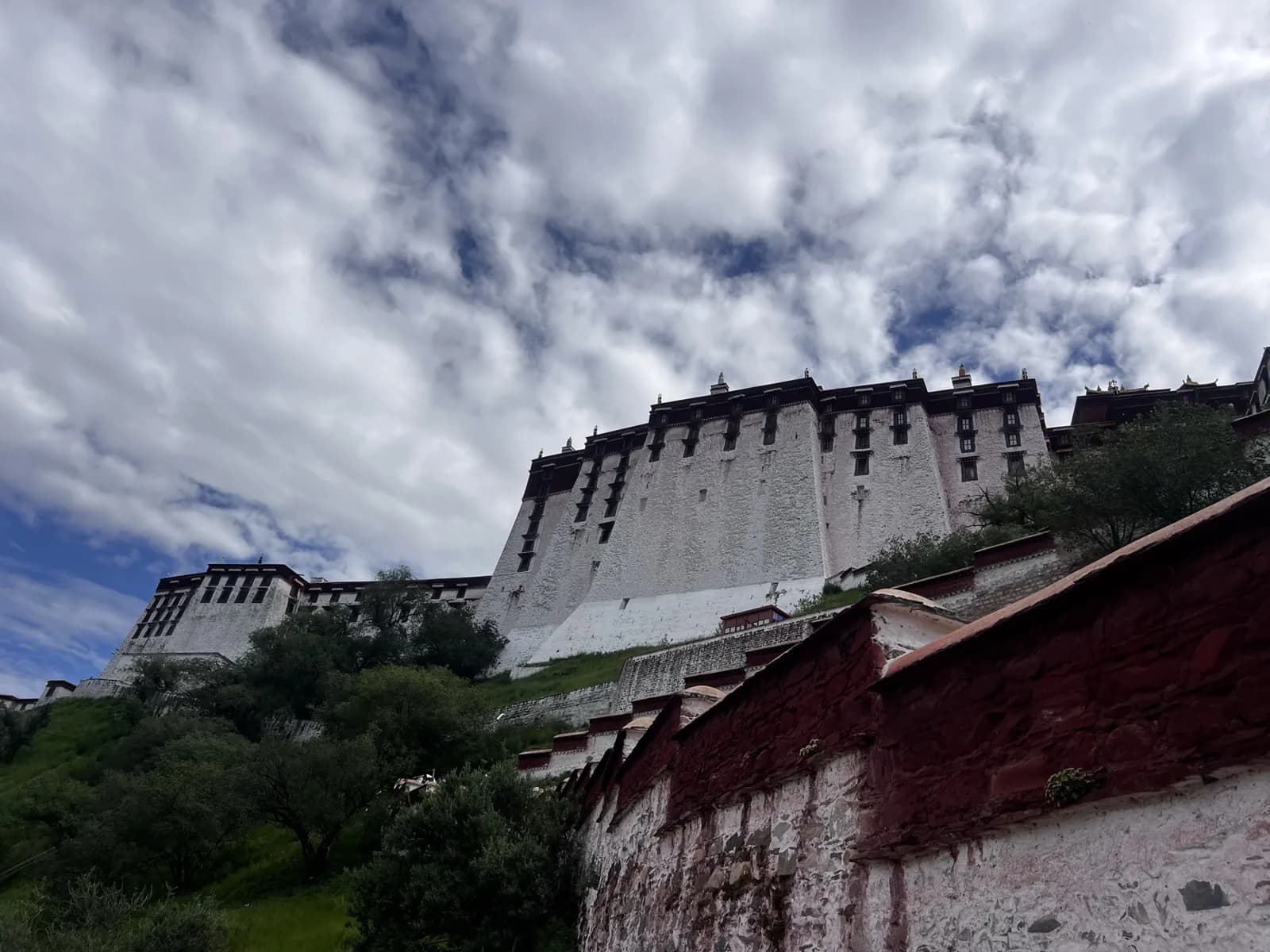
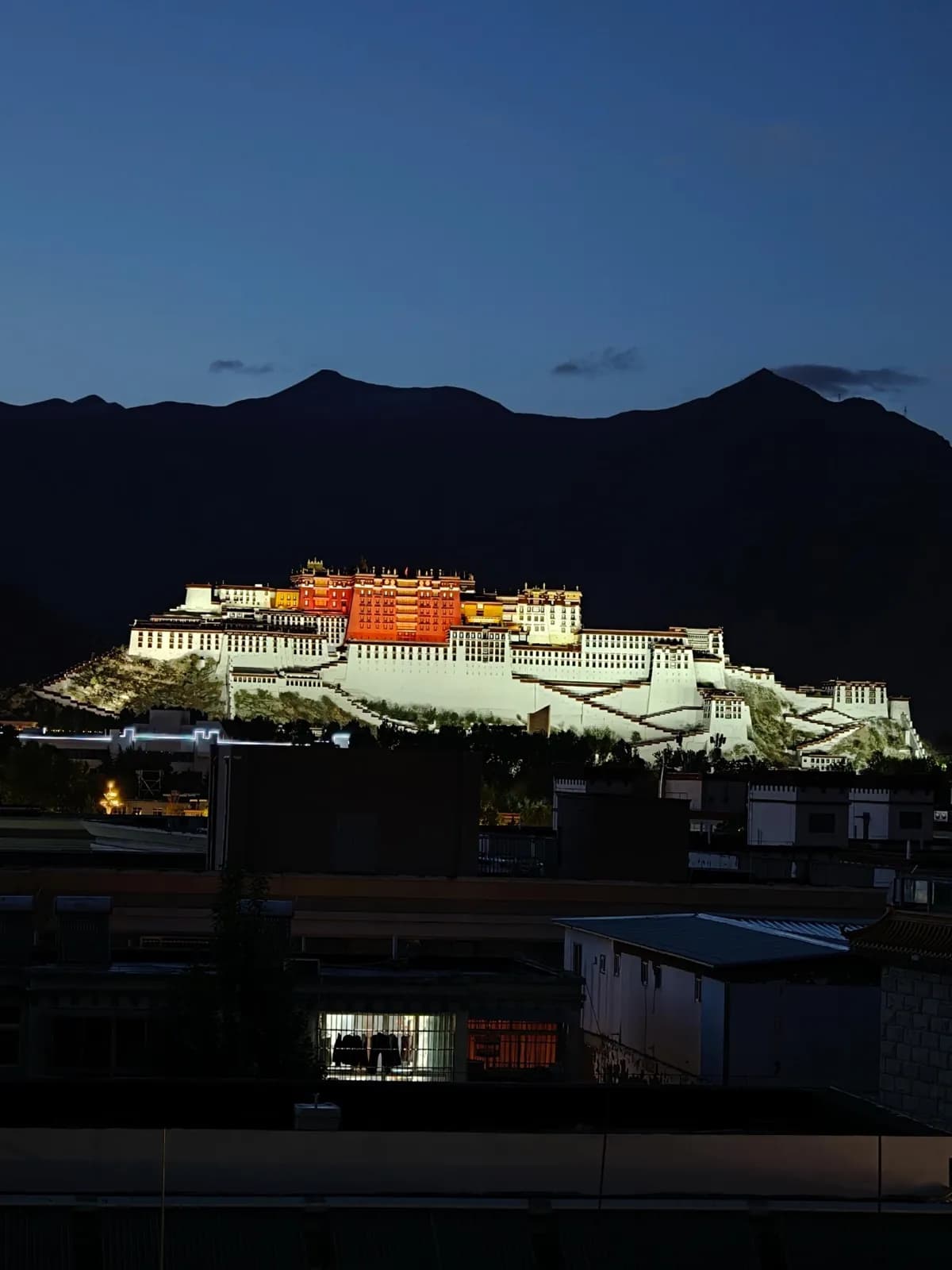
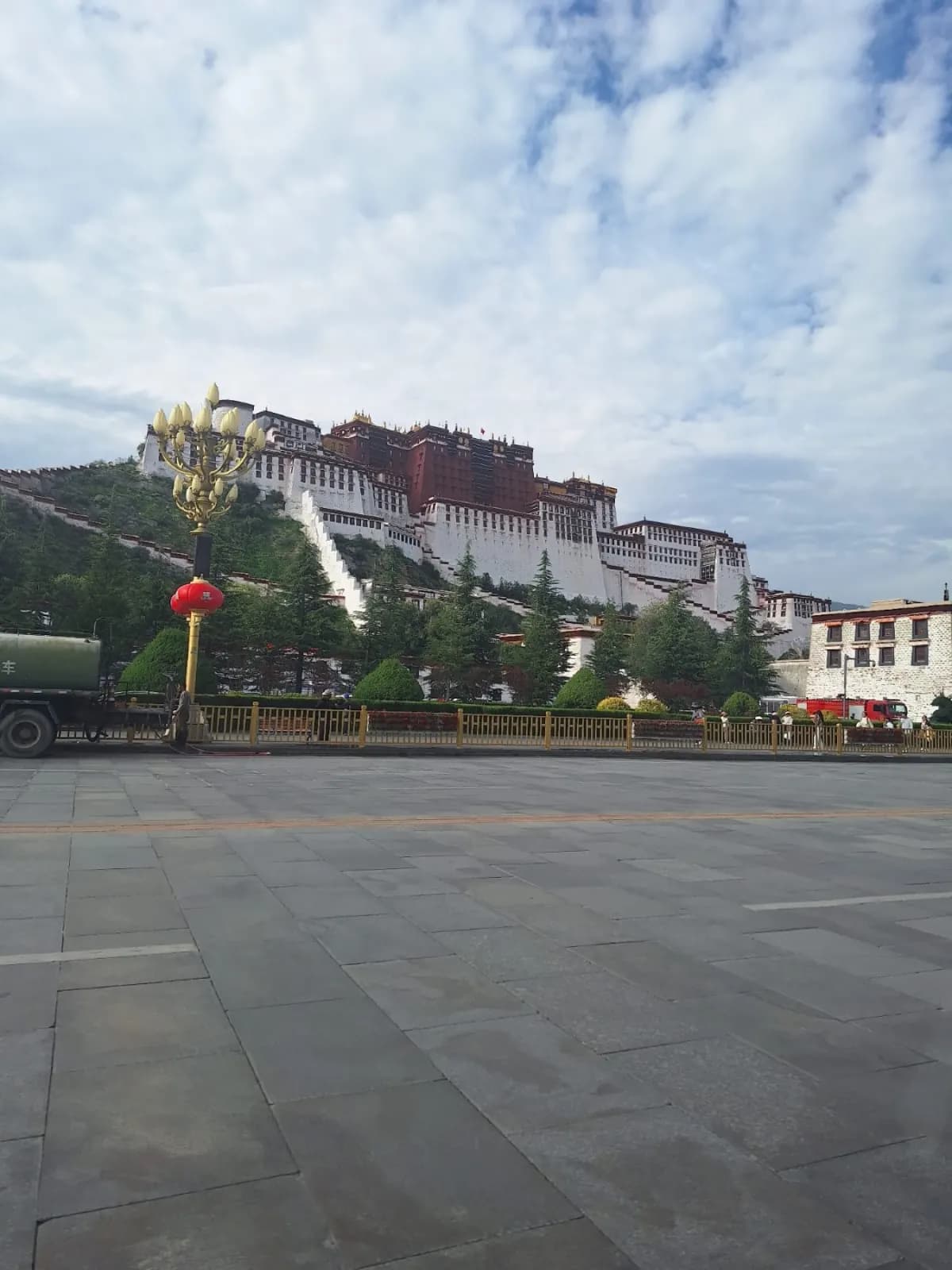
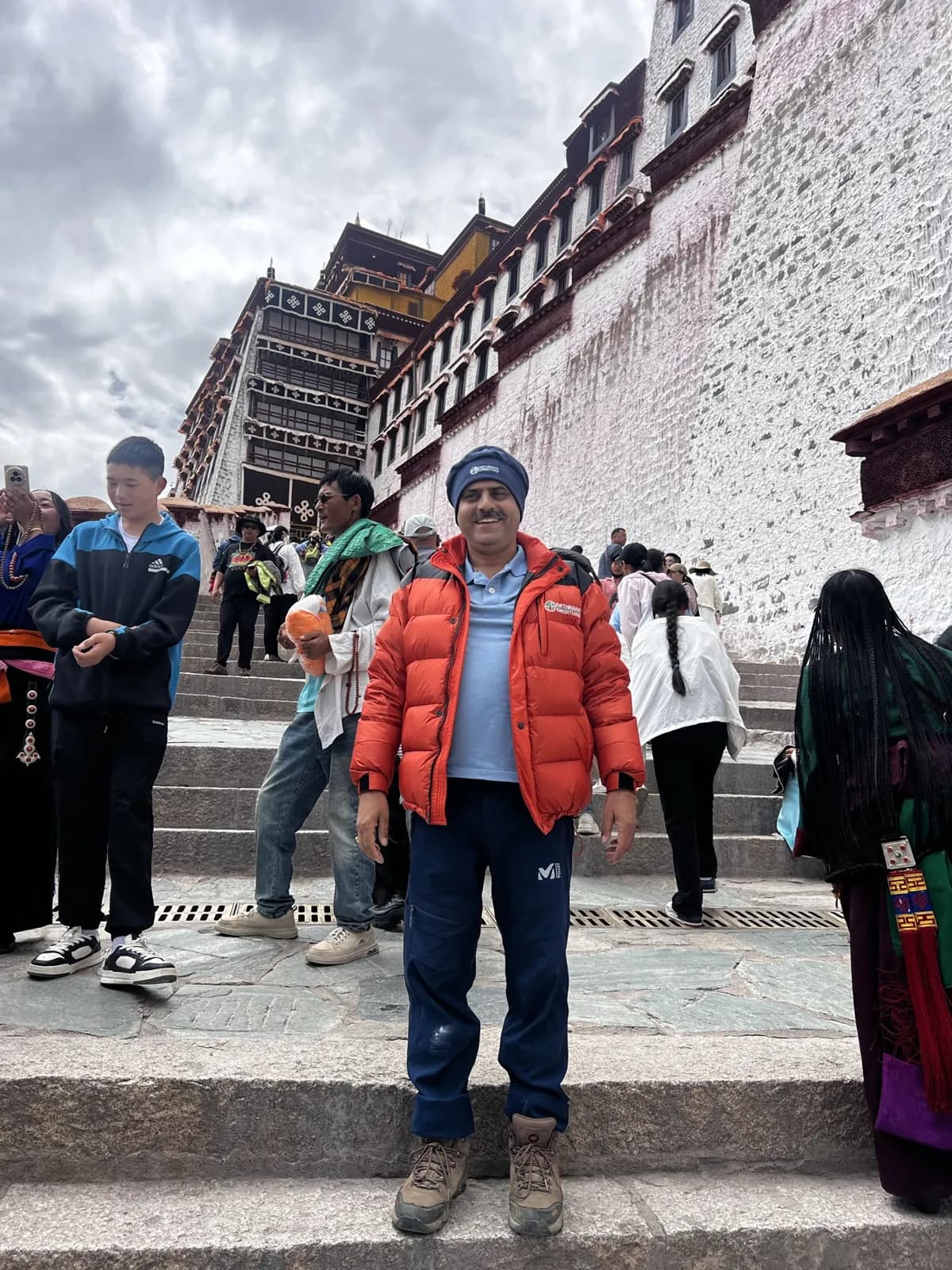
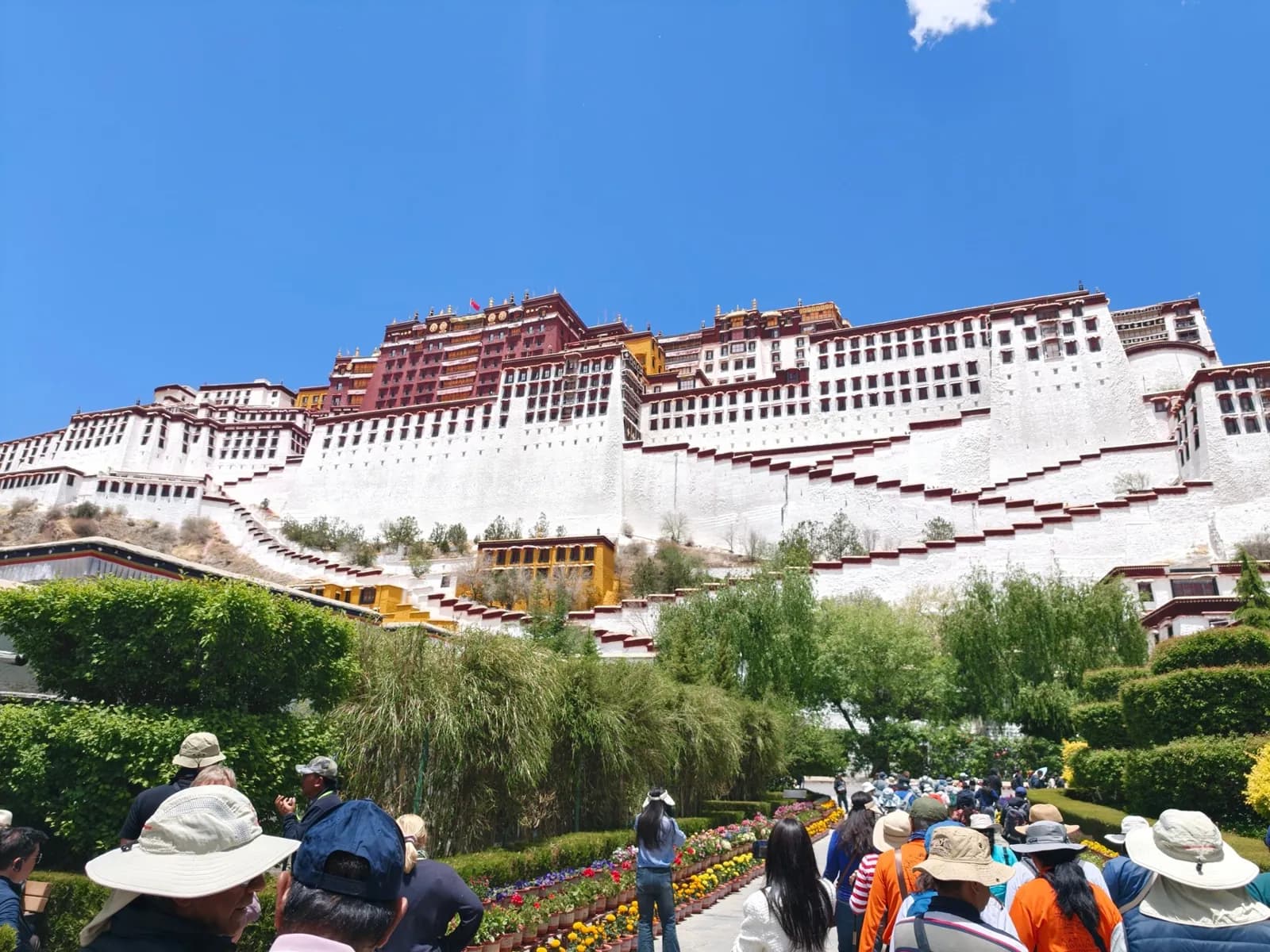
You visit the Potala in the morning on a fixed timed ticket. The climb through it is the most strenuous exercise since you arrived. In the afternoon you visit the Jokhang, where pilgrims prostrate themselves at the door, and walk the Barkhor kora around it, clockwise with the other pilgrims.
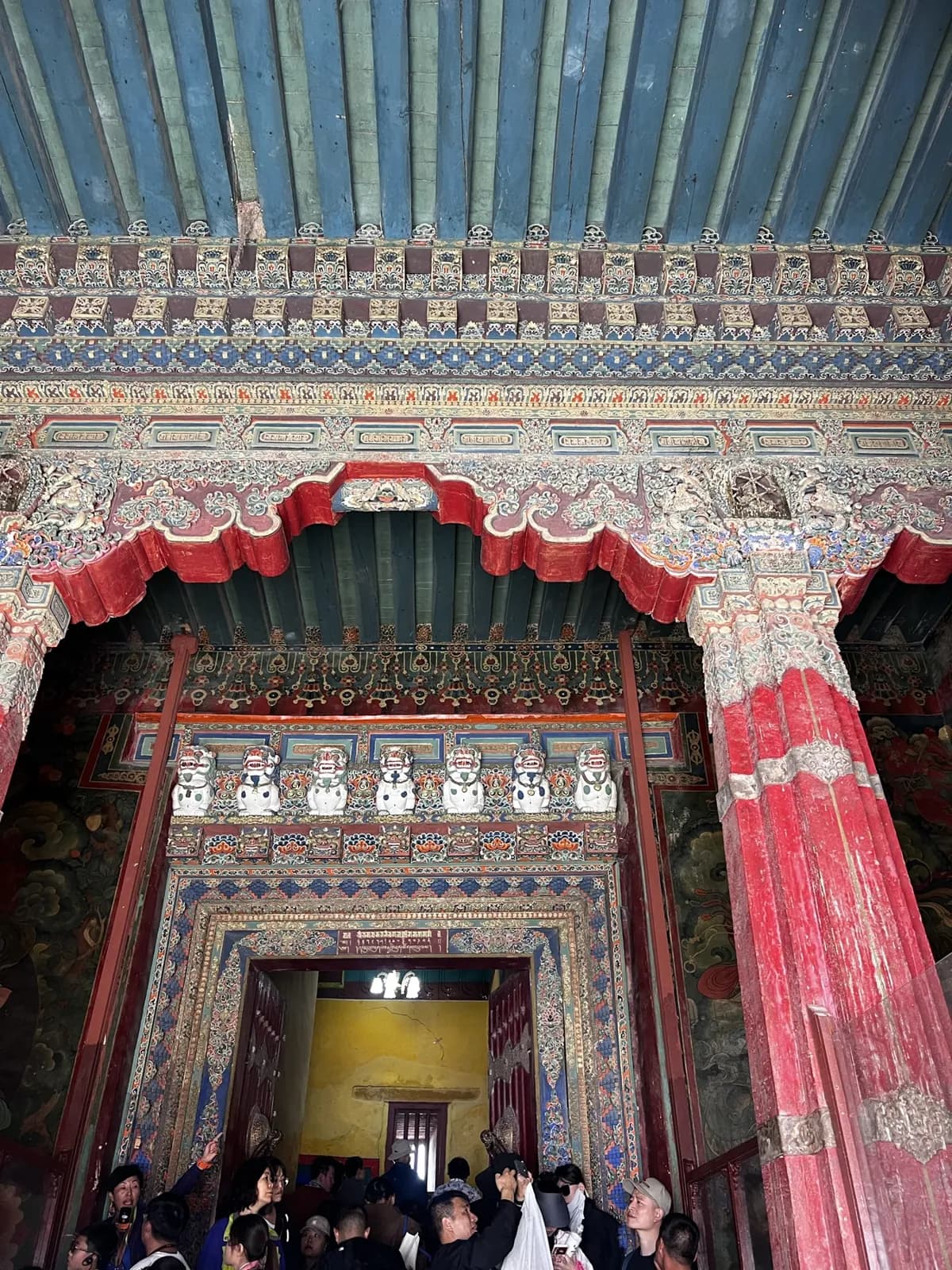
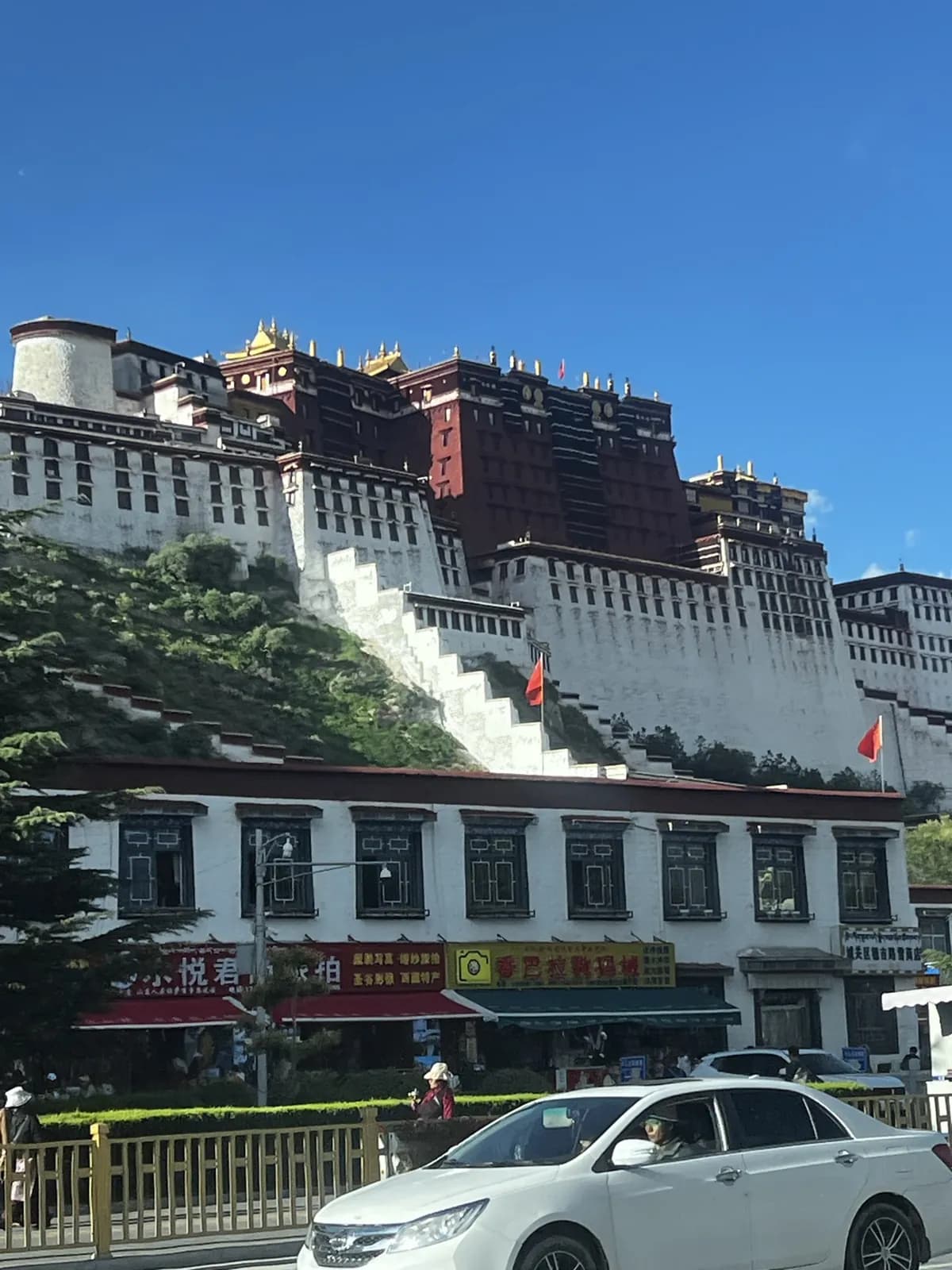
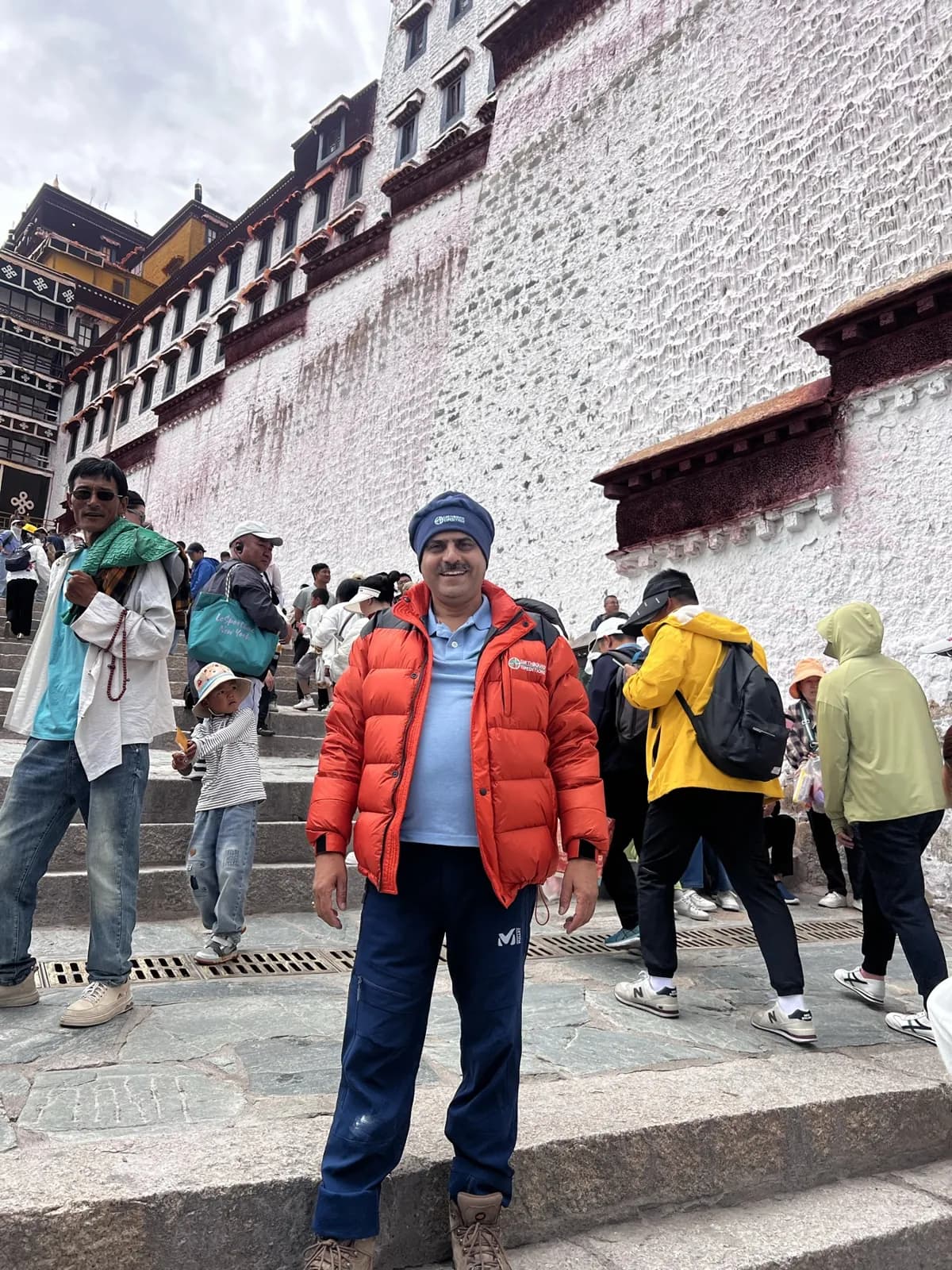
You visit Drepung in the morning, once the largest monastery in the world, and Sera in the afternoon for the monks' debates, which involve a great deal of clapping and are interesting to watch even in translation. This is the last evening in a city with restaurants for ten days.
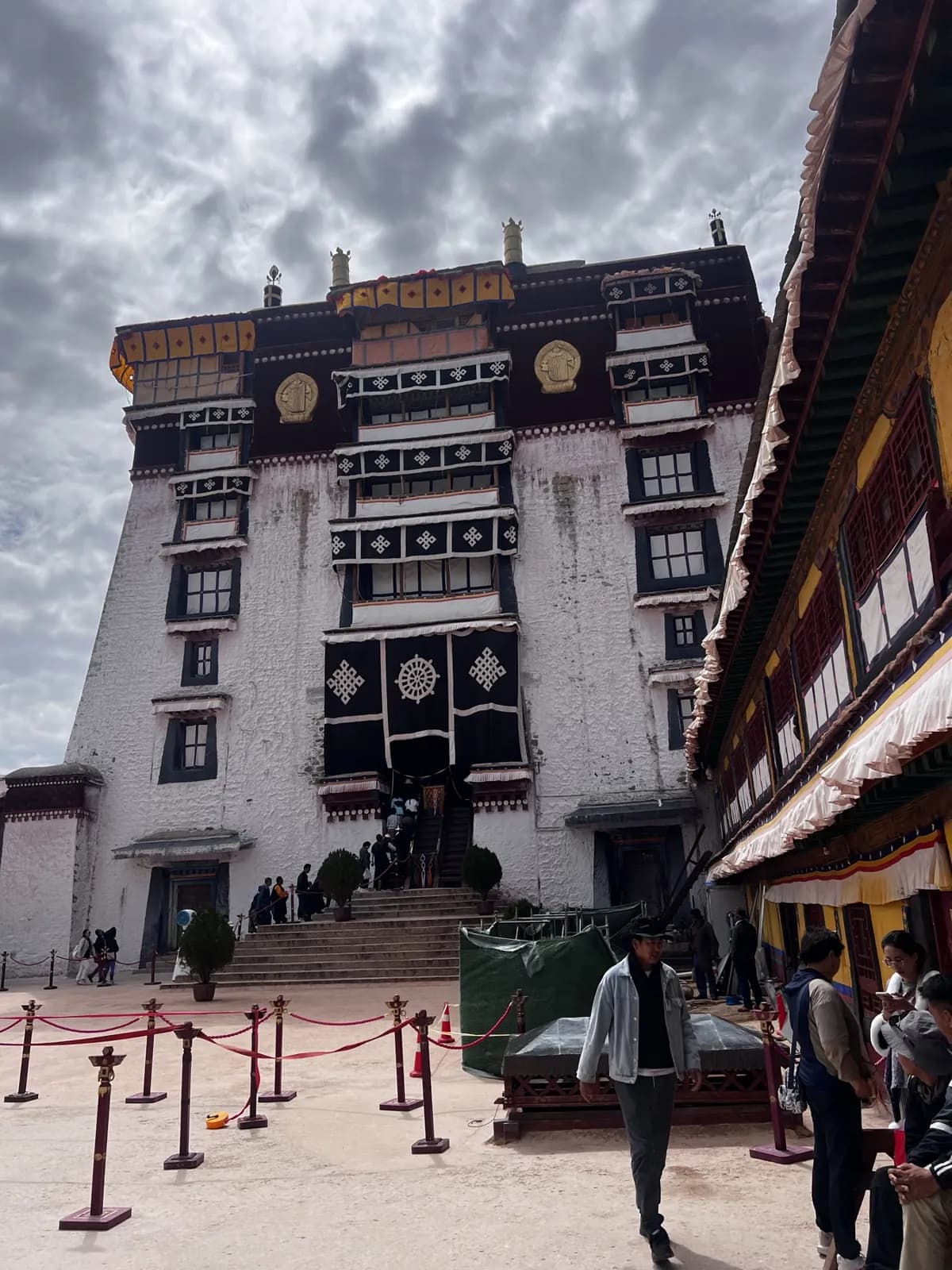
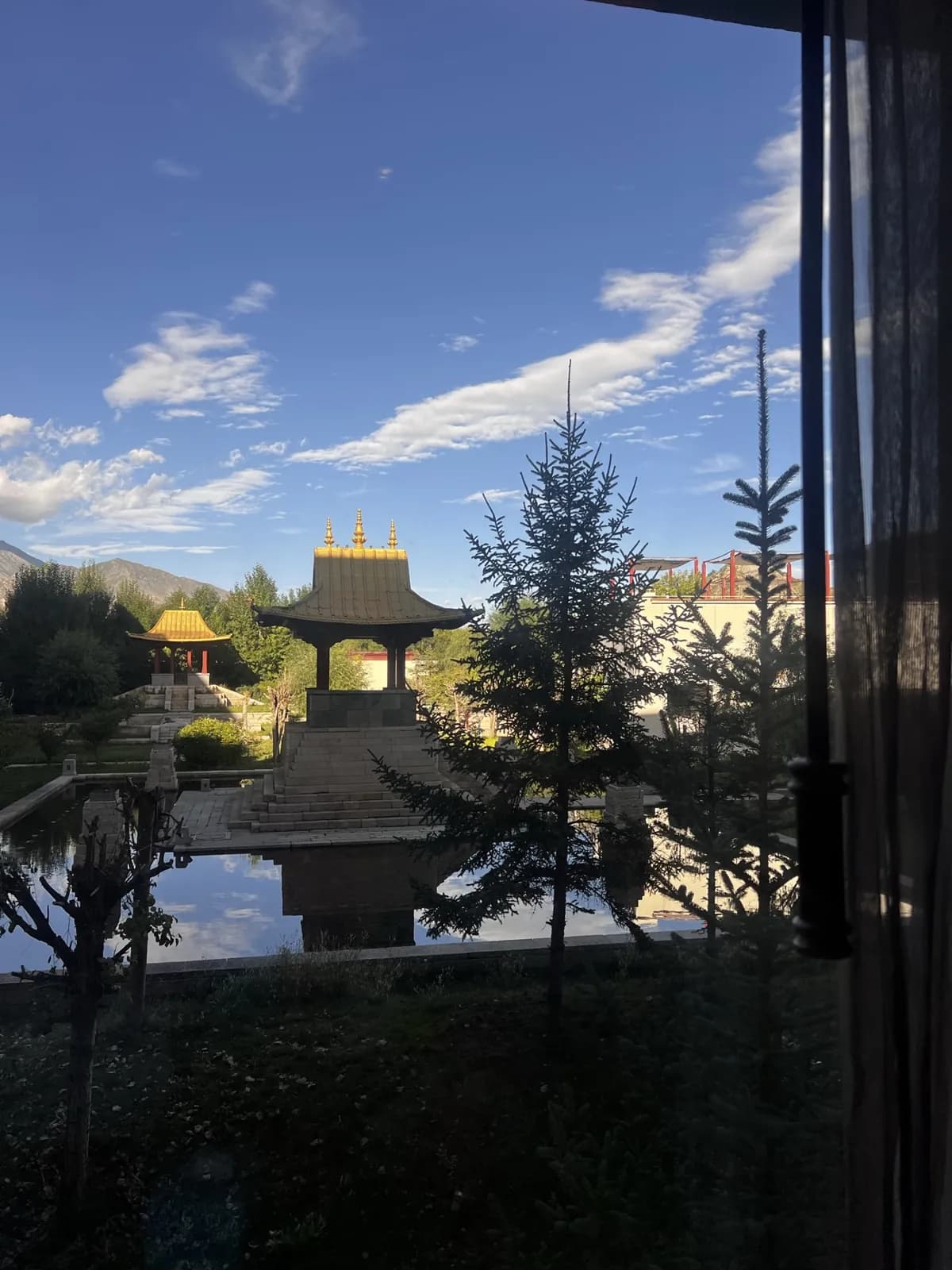
The route follows the Yarlung Tsangpo west. The river becomes the Brahmaputra much further downstream. If the group chooses the longer road, it passes Yamdrok Lake and the Karo La glacier. Shigatse is Tibet's second city and the seat of the Panchen Lamas, and you can visit Tashilhunpo Monastery in the late afternoon.
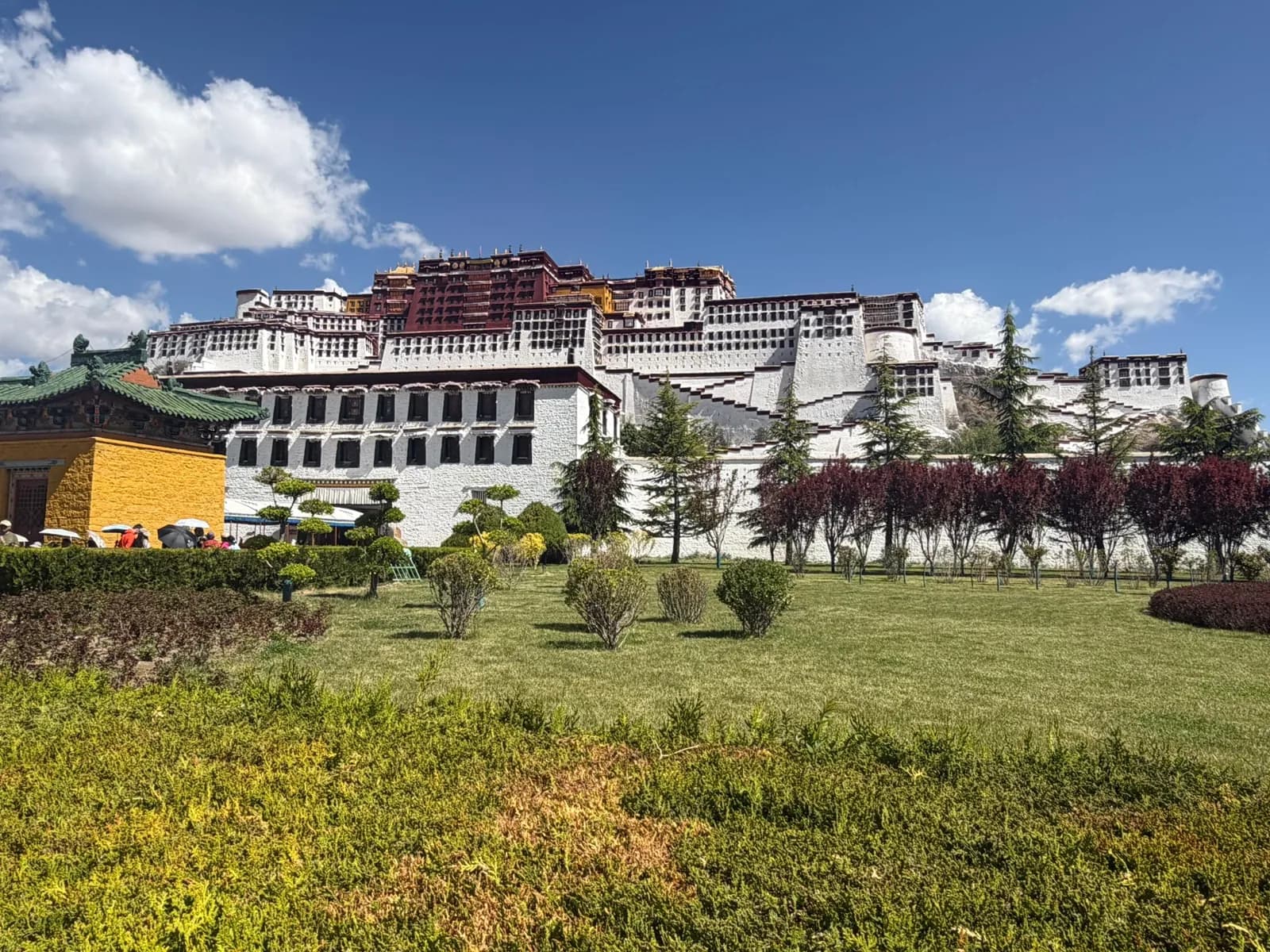
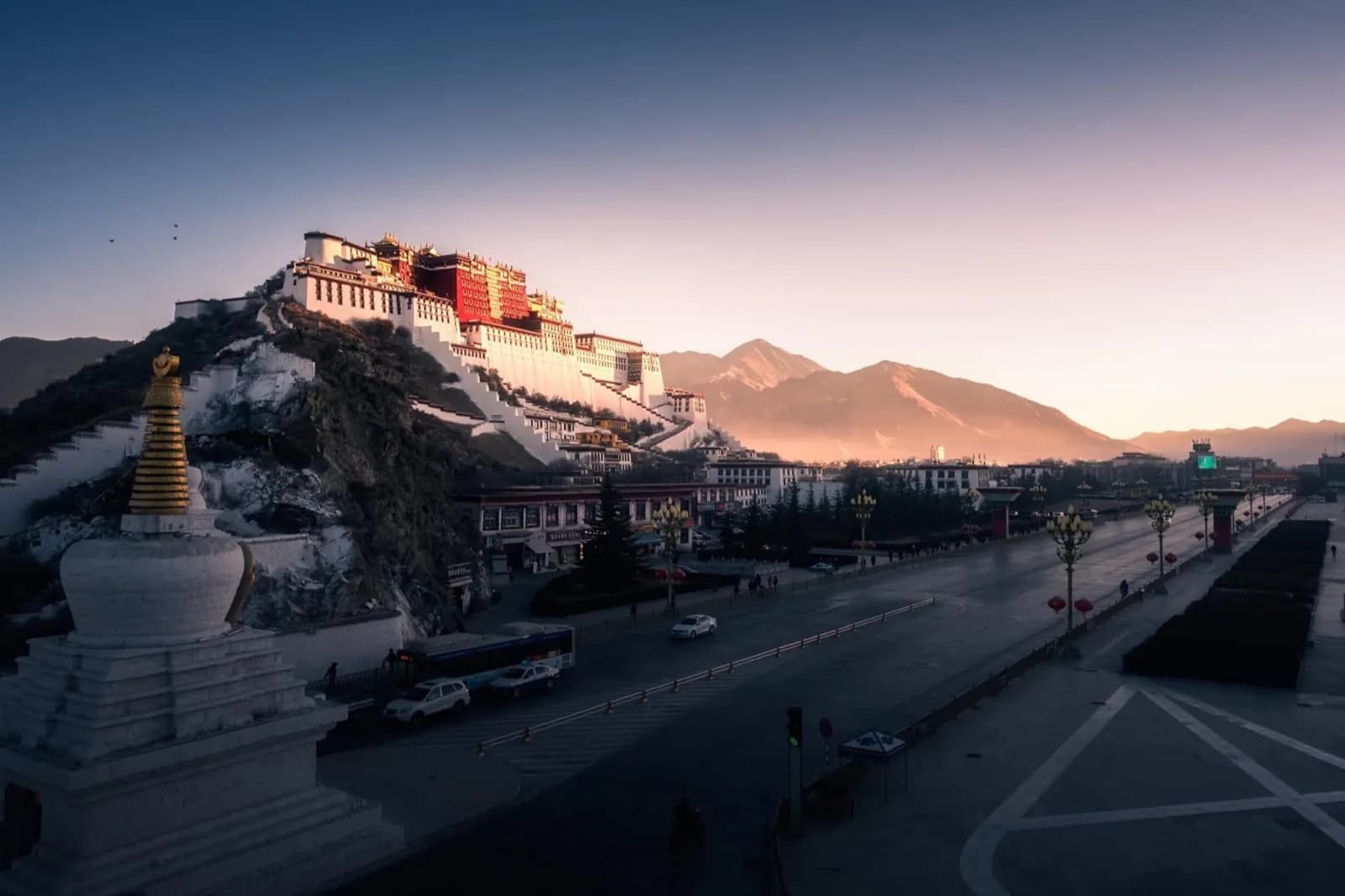
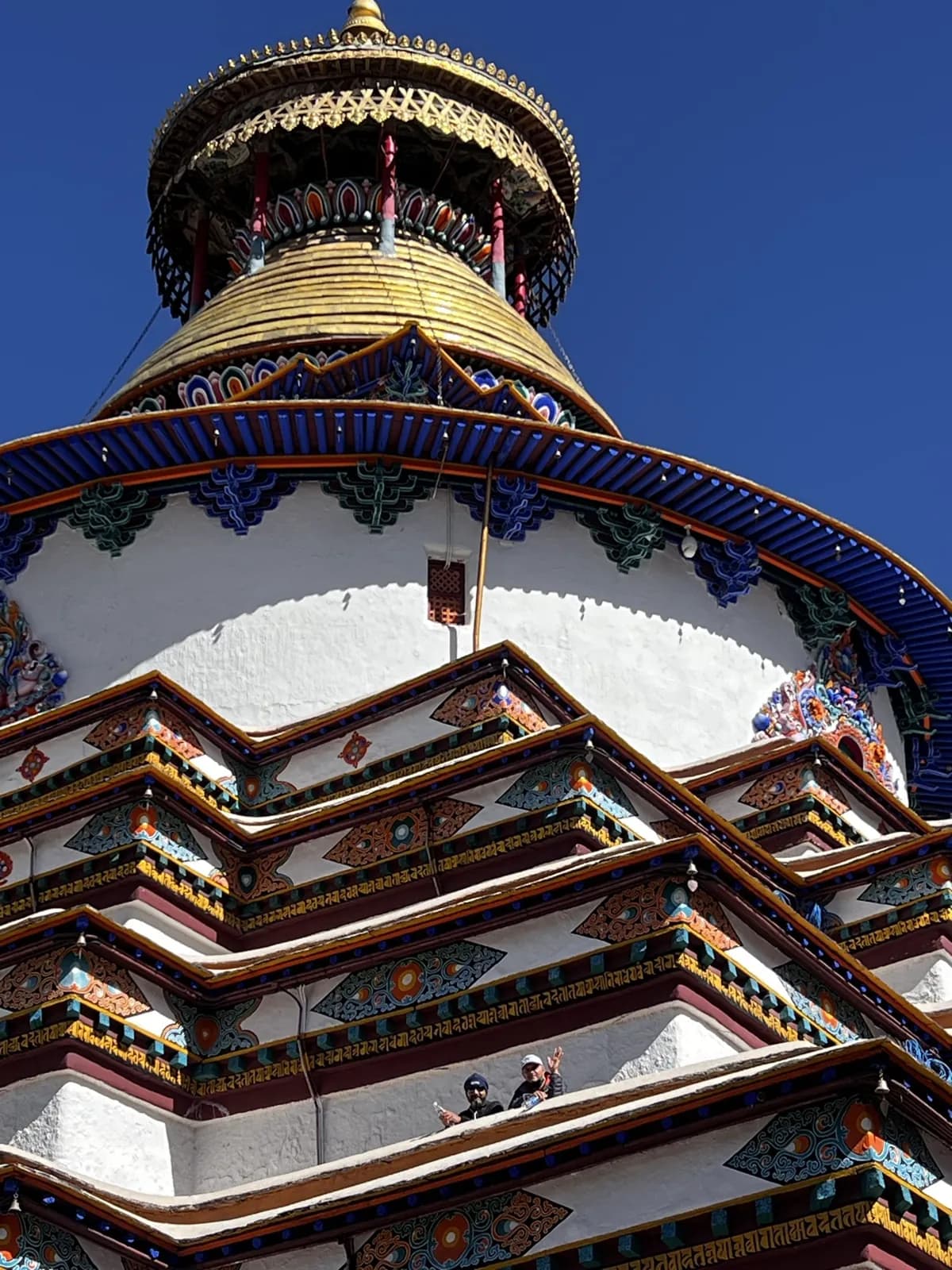
Today you reach the high plateau: high, brown, vast and almost empty. The road crosses several passes above 5,000 m by vehicle, with a long, steady gain in altitude that you will notice by evening. Saga is a garrison and truck-stop town and serves as an overnight stop on this route.
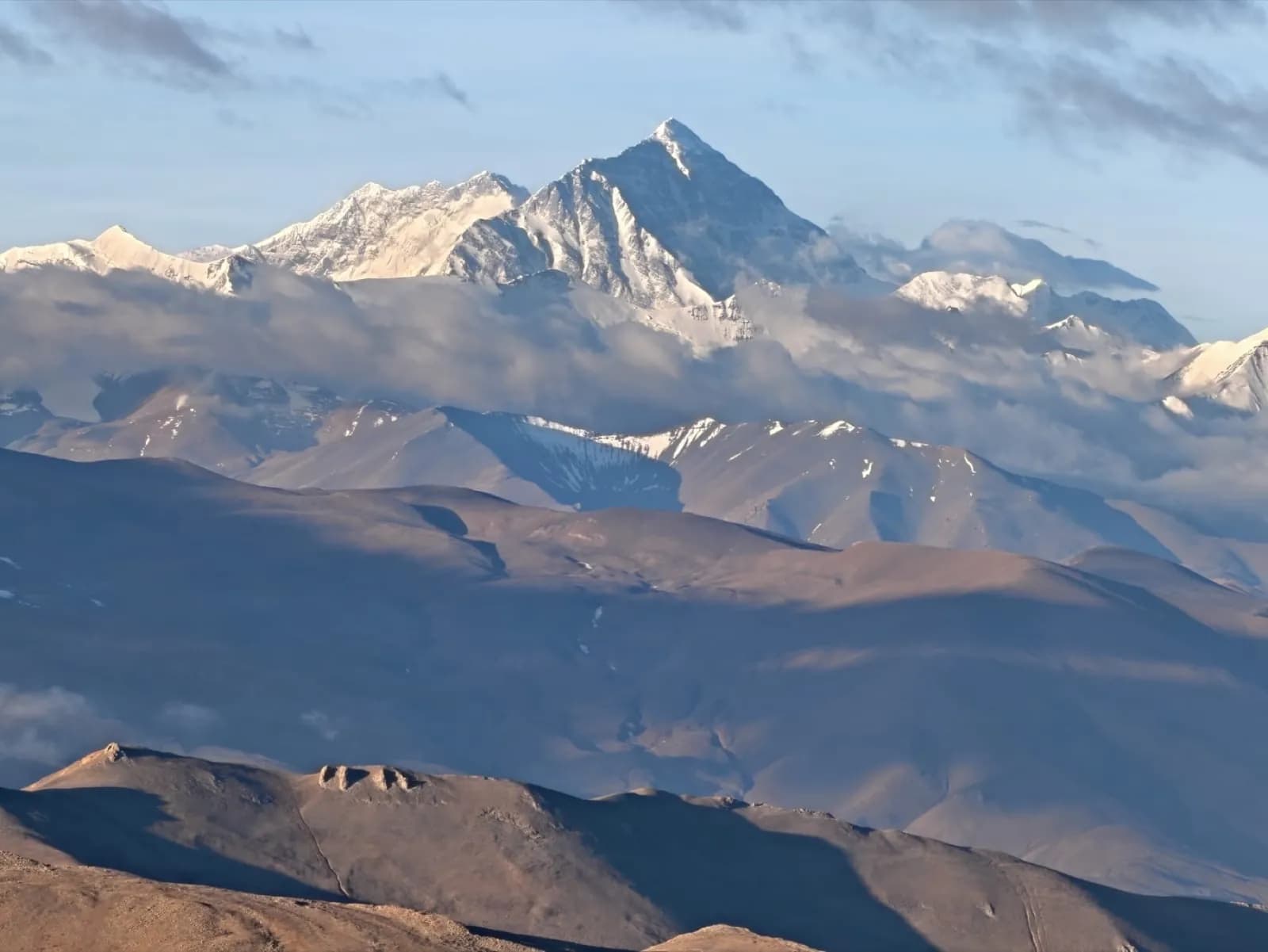
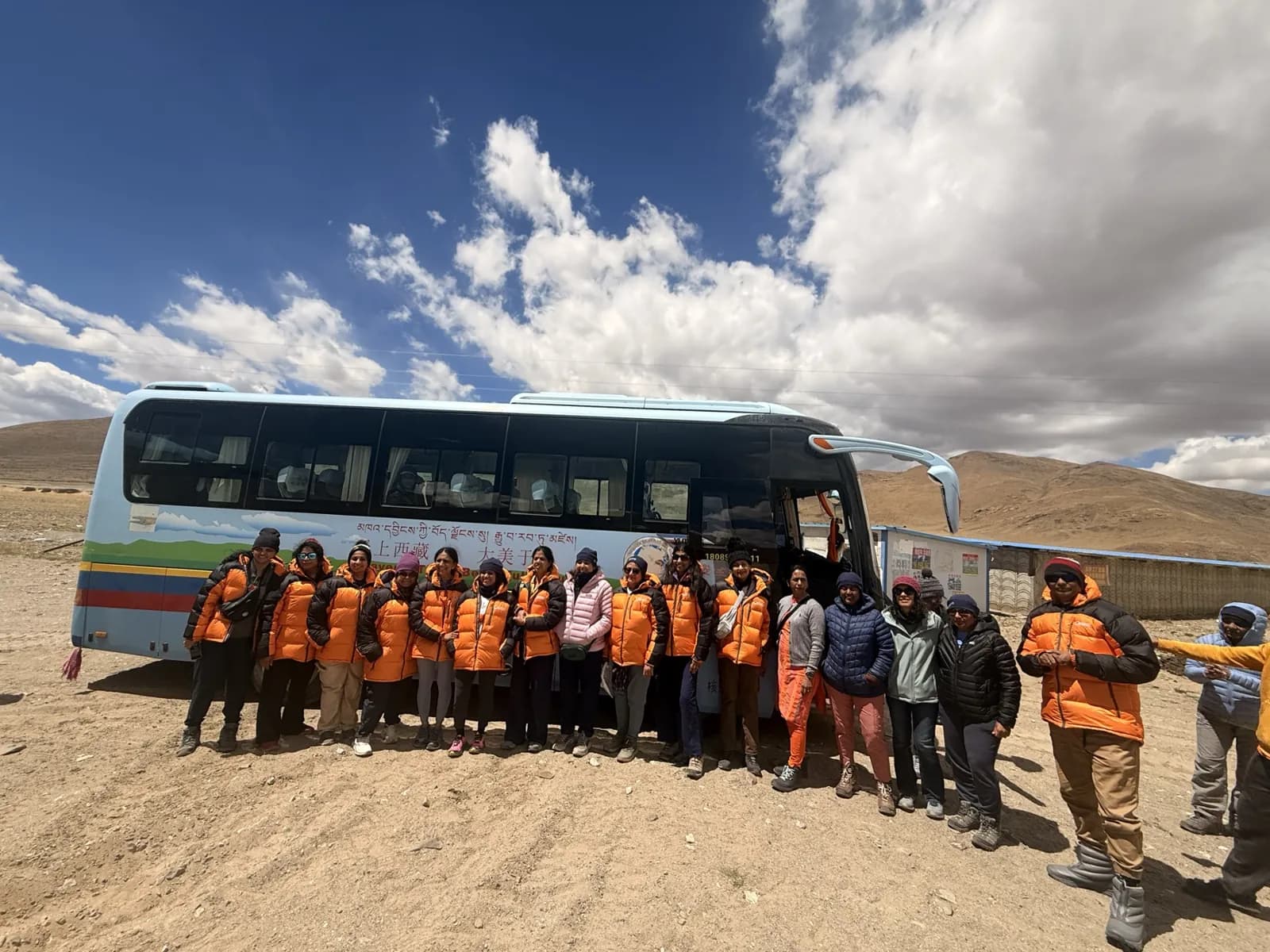
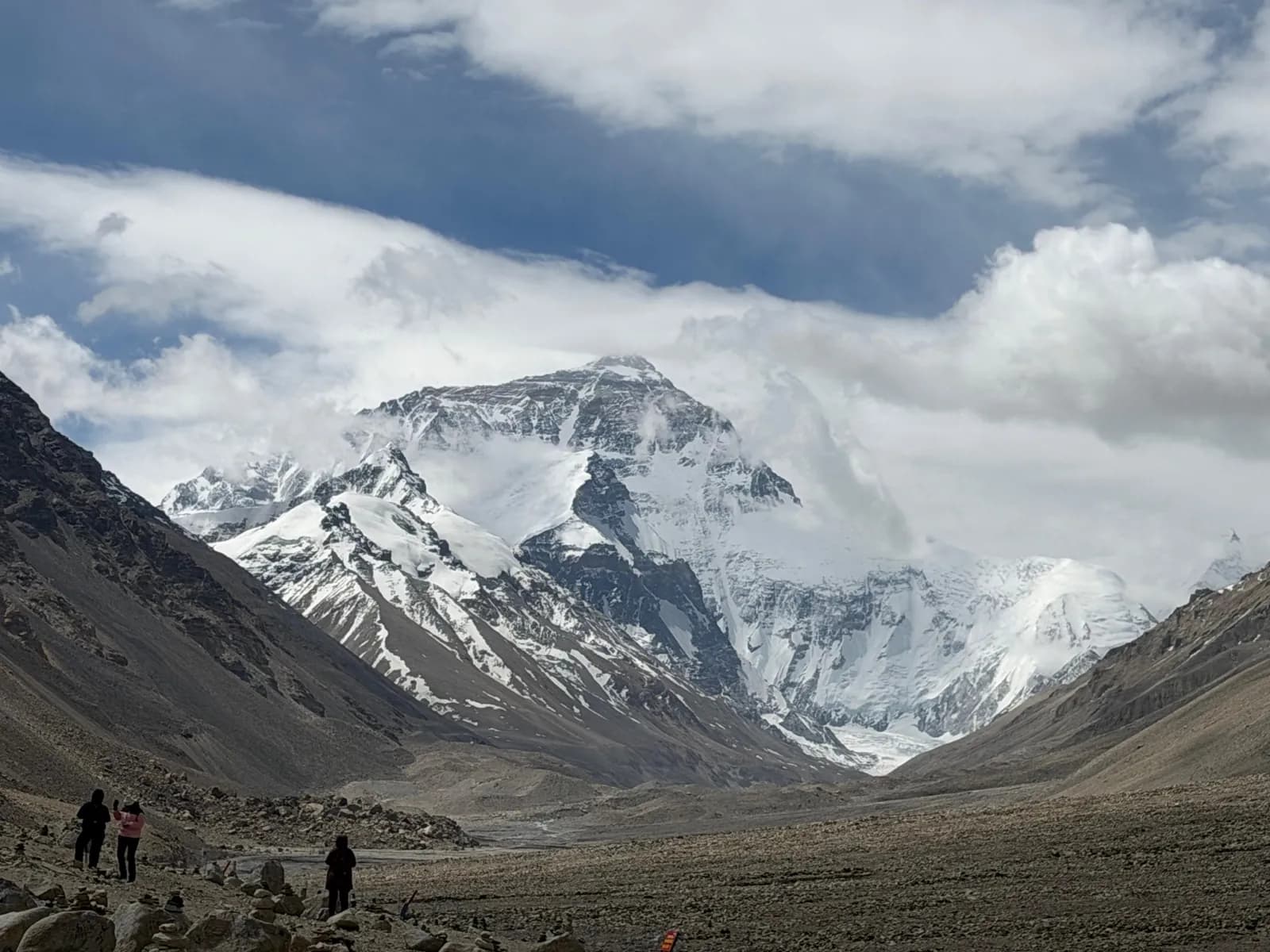
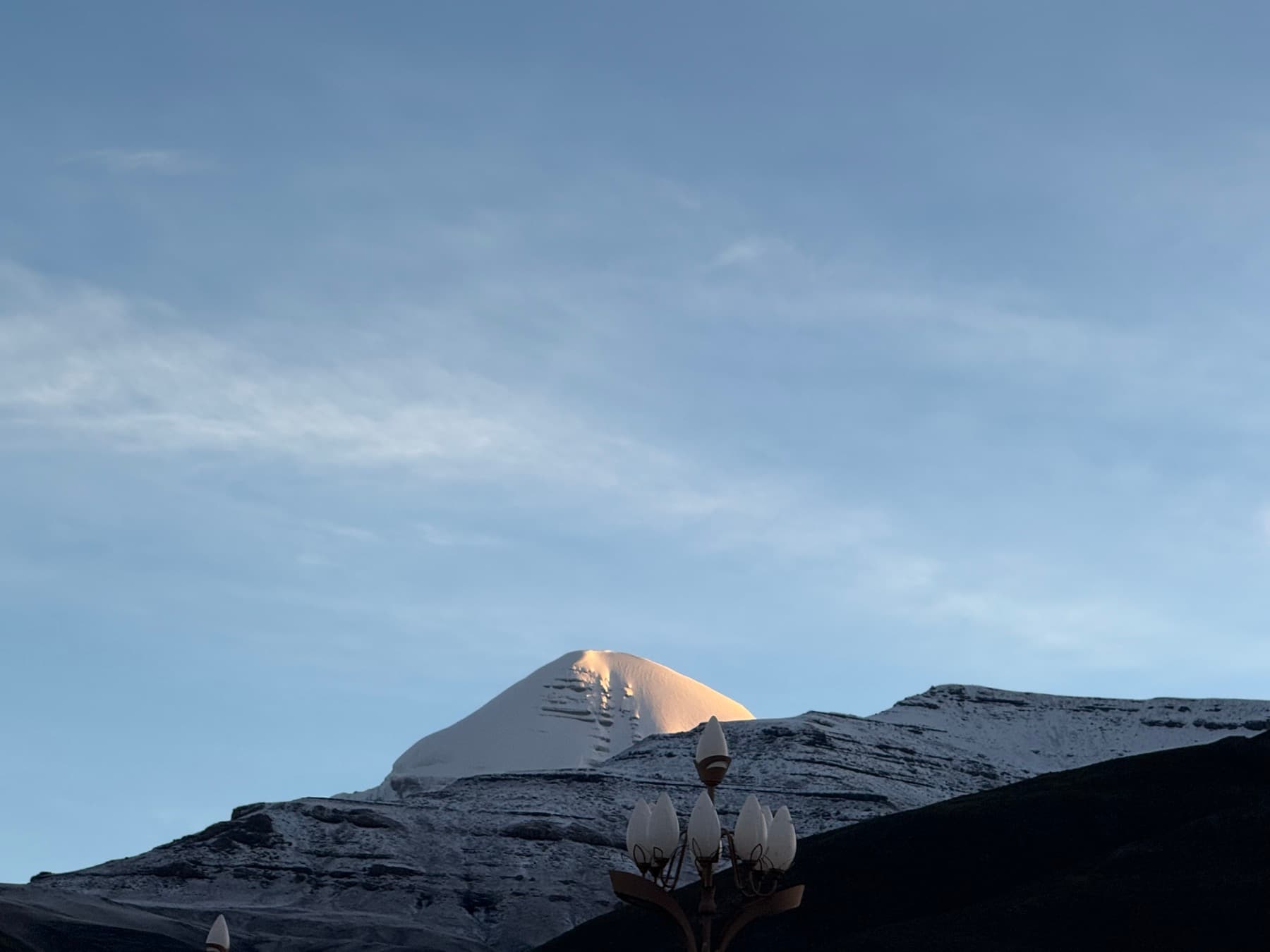
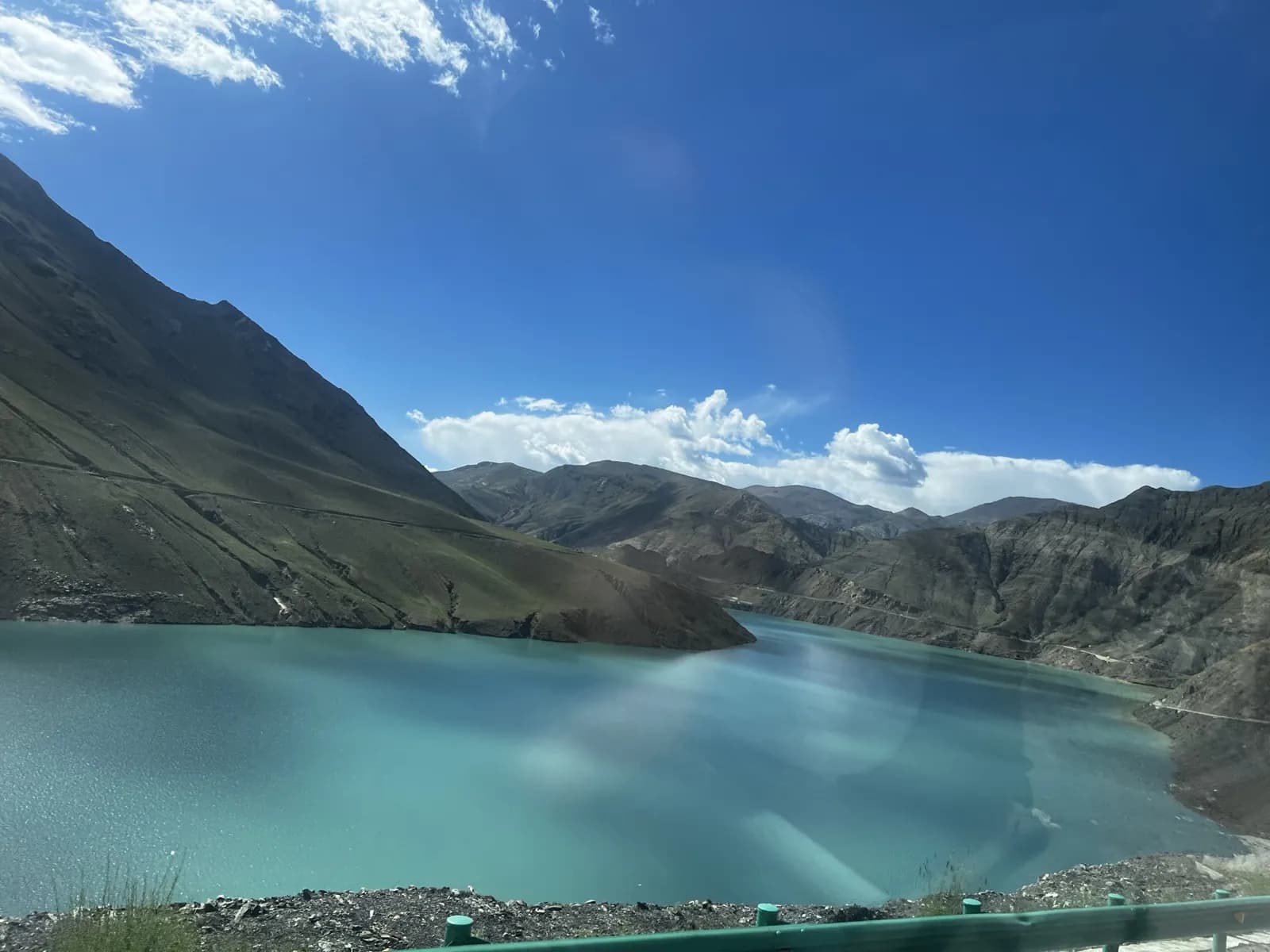
This is the longest drive of the journey, heading west past nomad camps and salt lakes. Late in the day Gurla Mandhata comes into view on the left, followed by the lake, which is very large and deep blue. We stay on the shore rather than continuing to Darchen.
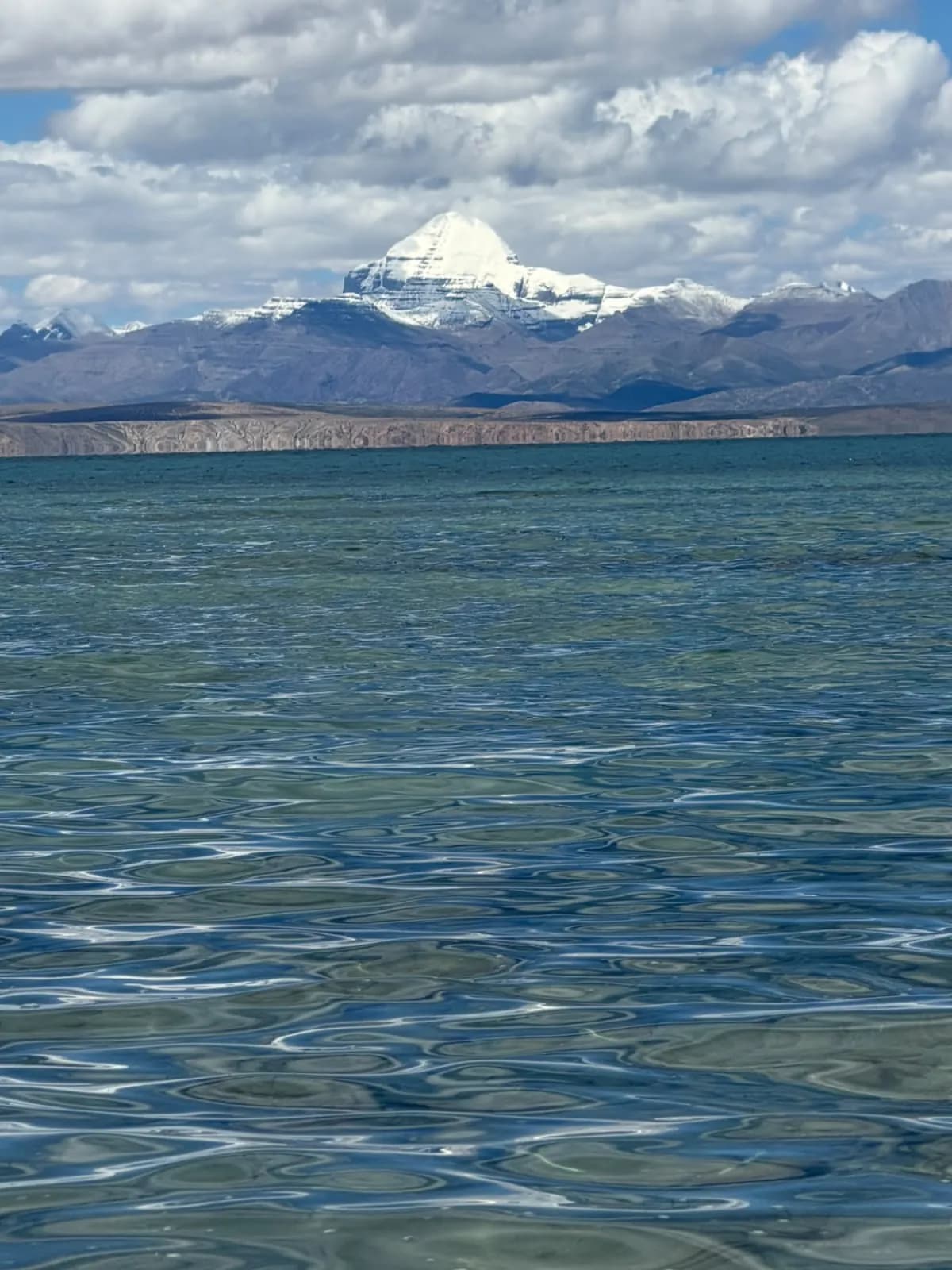
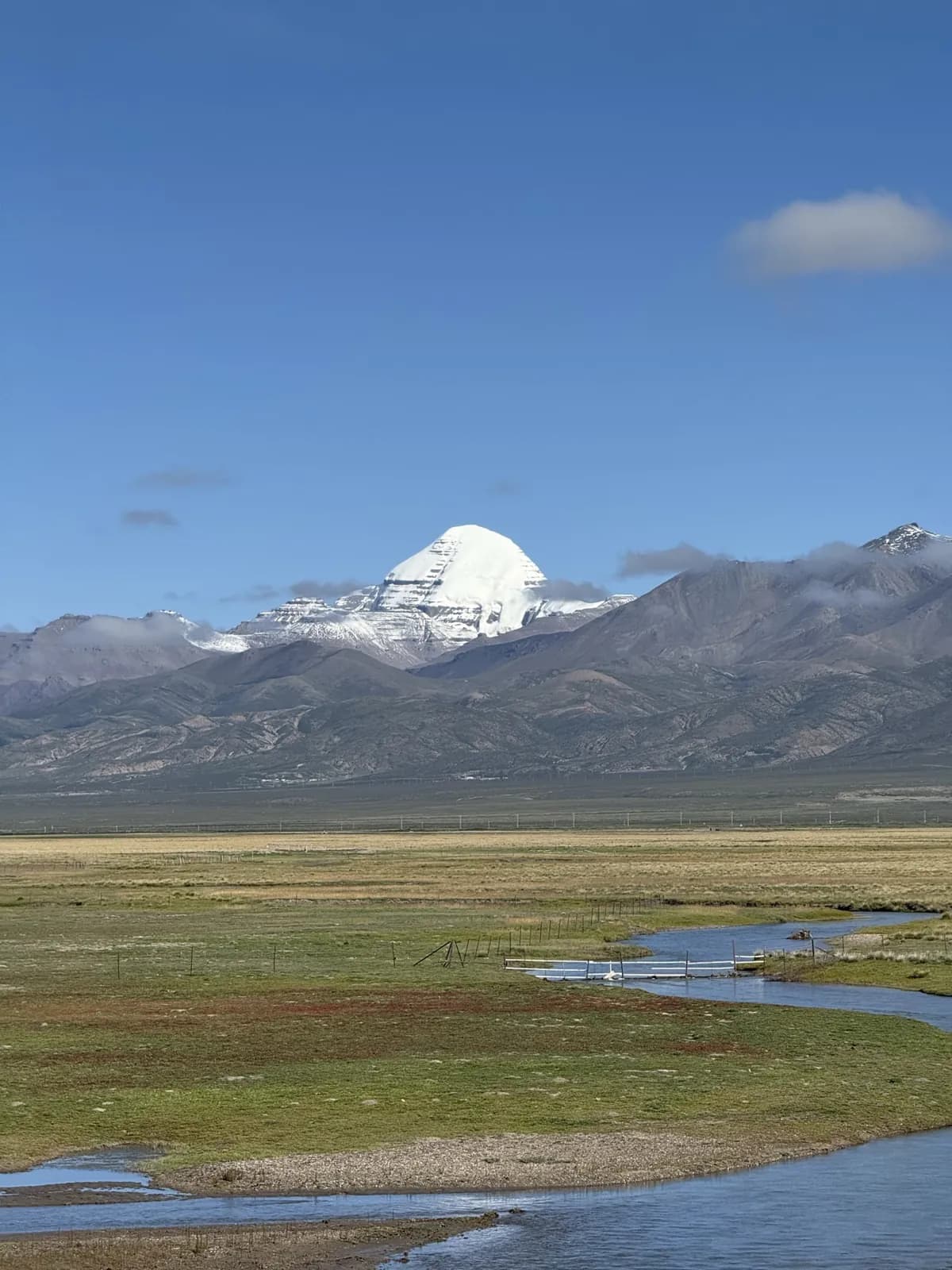
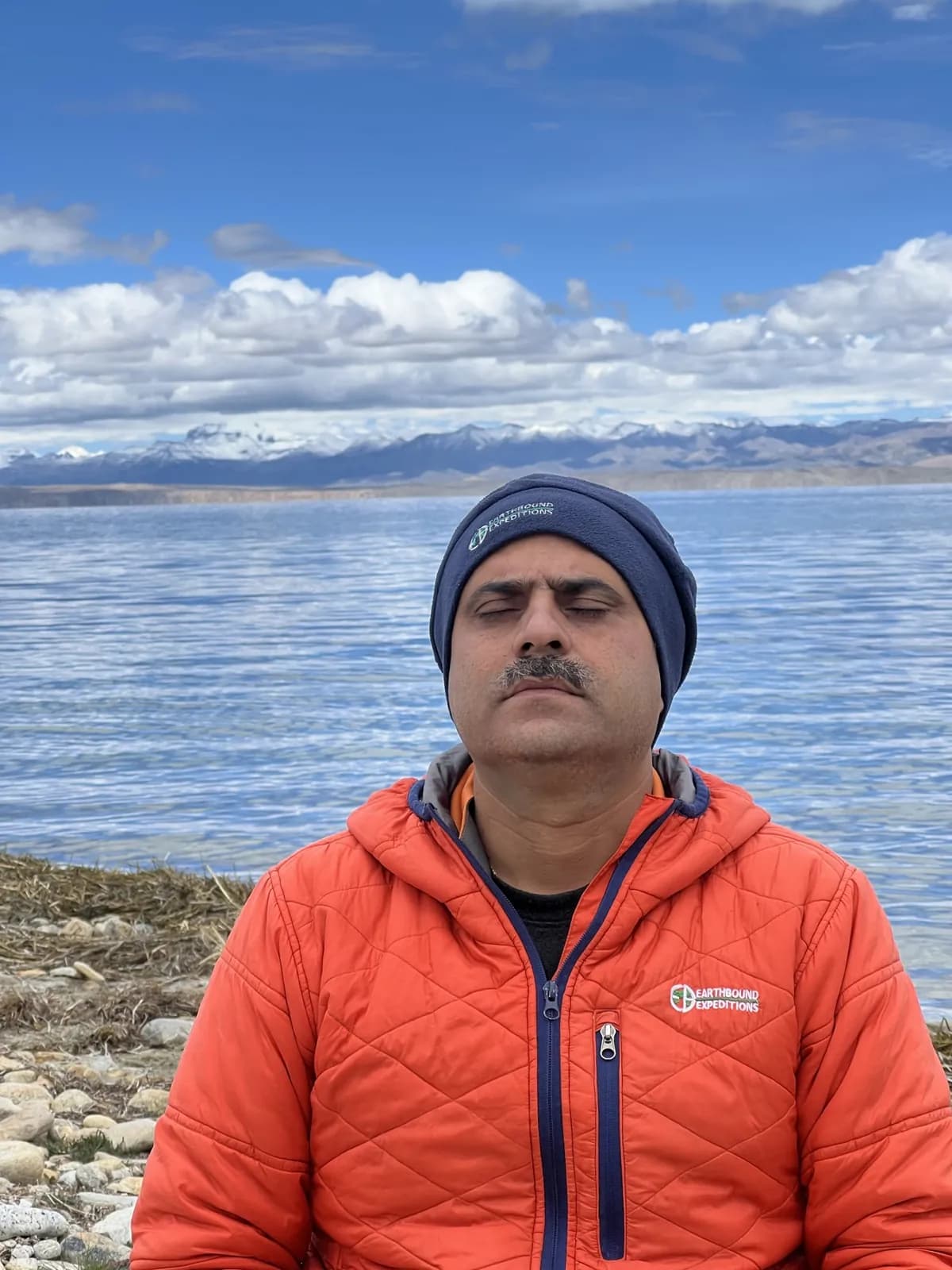
You see dawn over the lake, which is the reason for staying here. Anyone who wishes to bathe should be quick, as the water is only a few degrees above freezing. We drive along part of the shore, look across to Rakshastal, and reach Darchen in the afternoon to organise loads and rest before the kora.
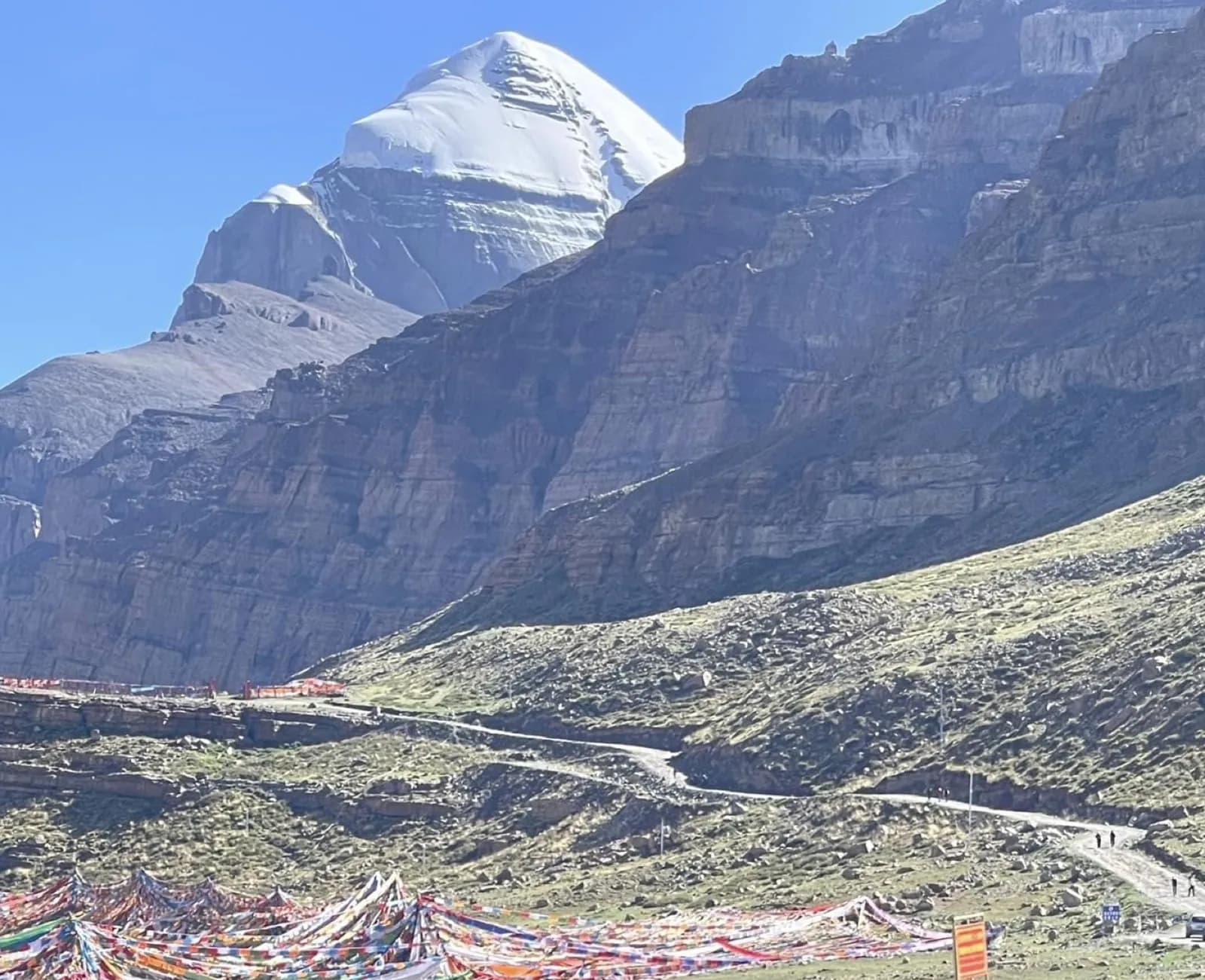
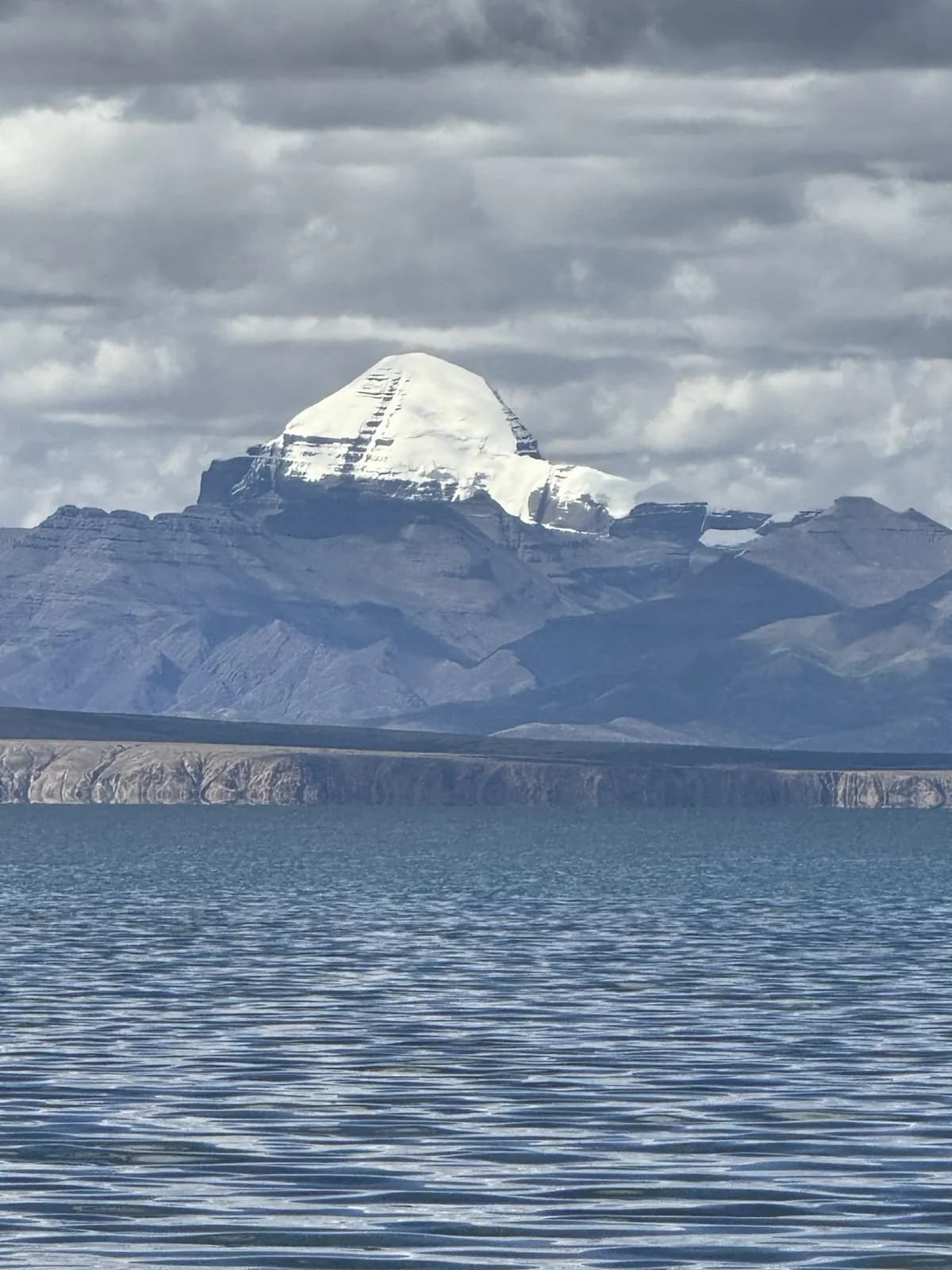
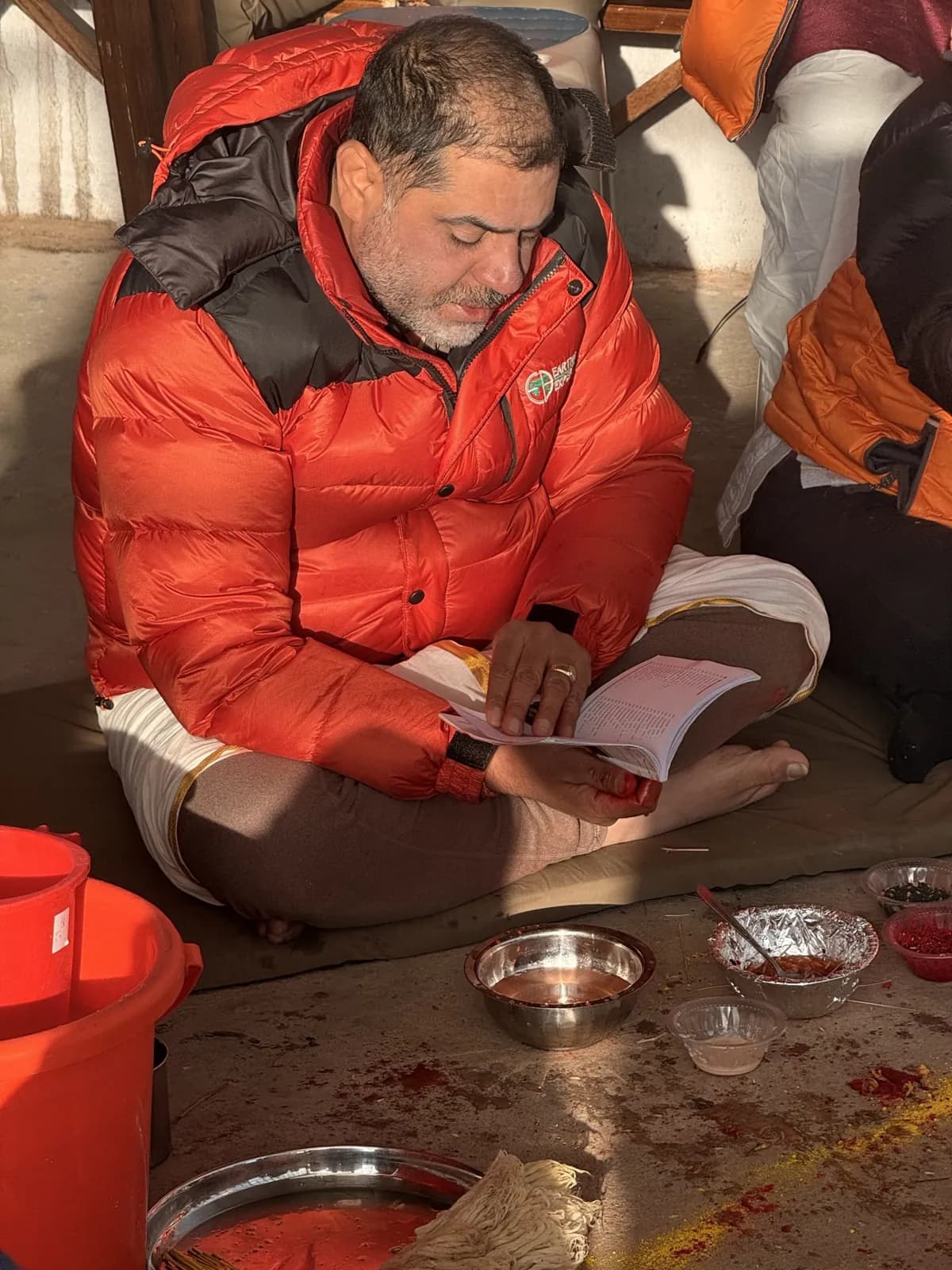
A short drive takes you to Yam Dwar, the gate, where the walking begins. You walk twelve kilometres north up the Lha Chu valley with little height gain, with the west face of Kailash above you for most of the afternoon. Dirapuk faces the north face directly, and the view at dusk is one of the highlights of the trip.
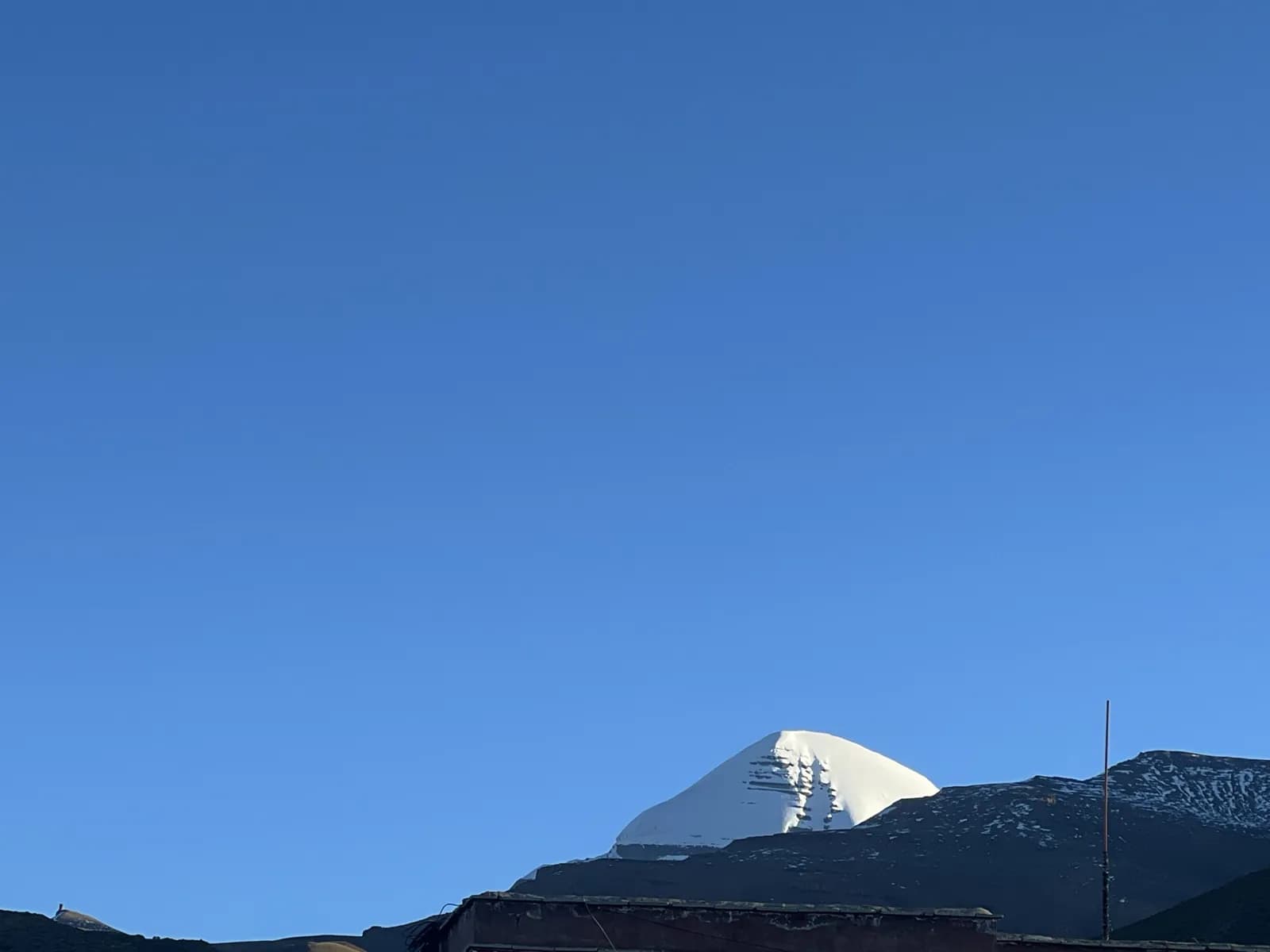
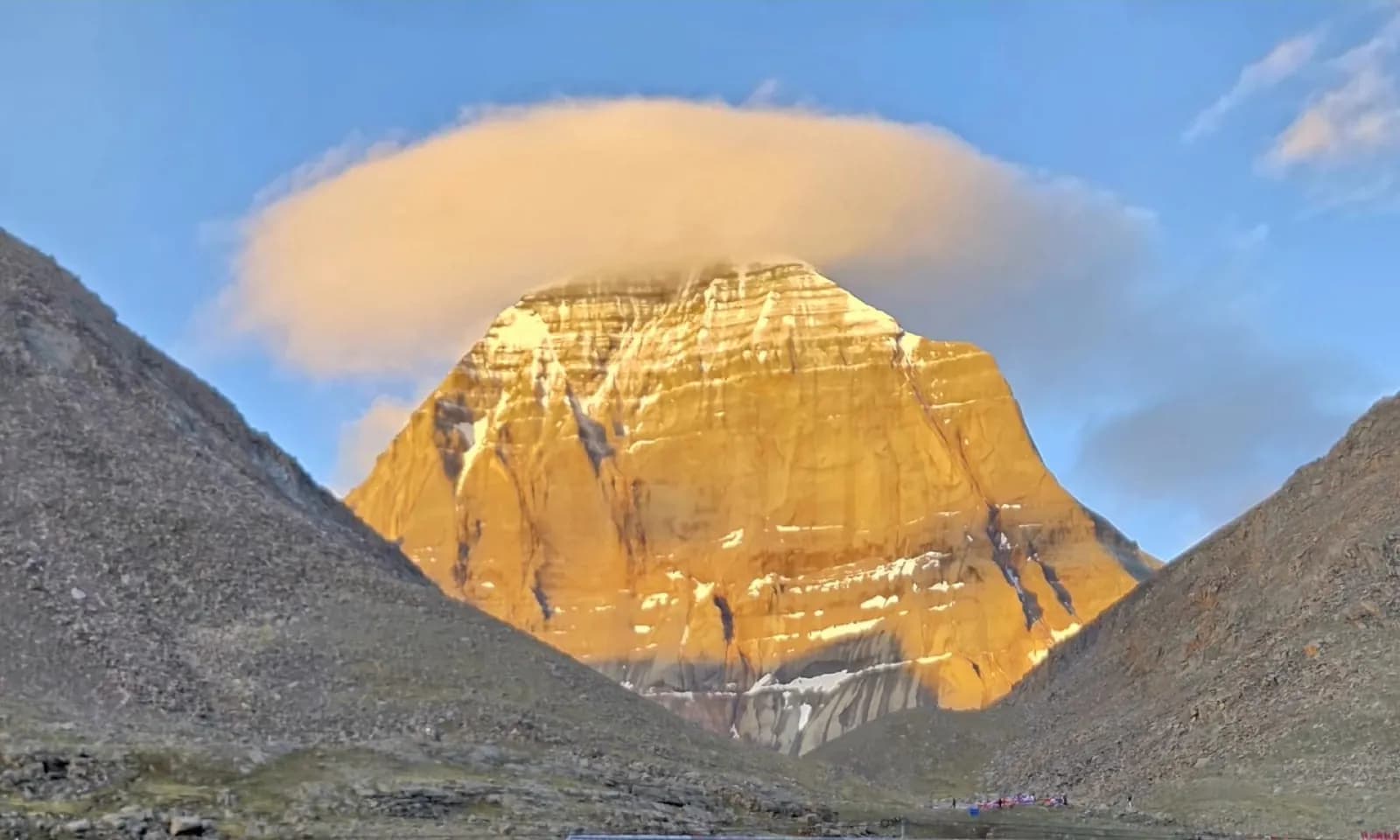
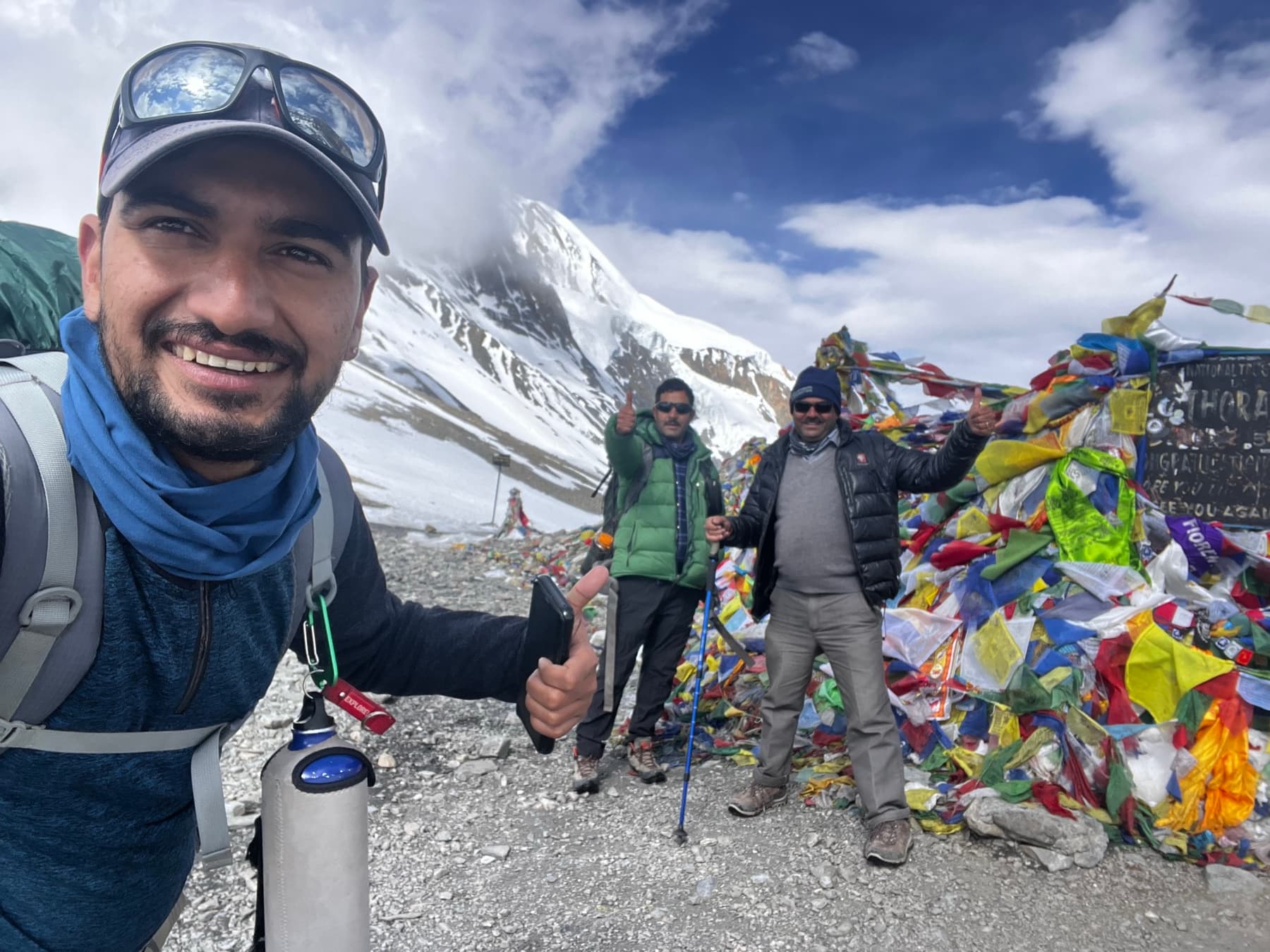
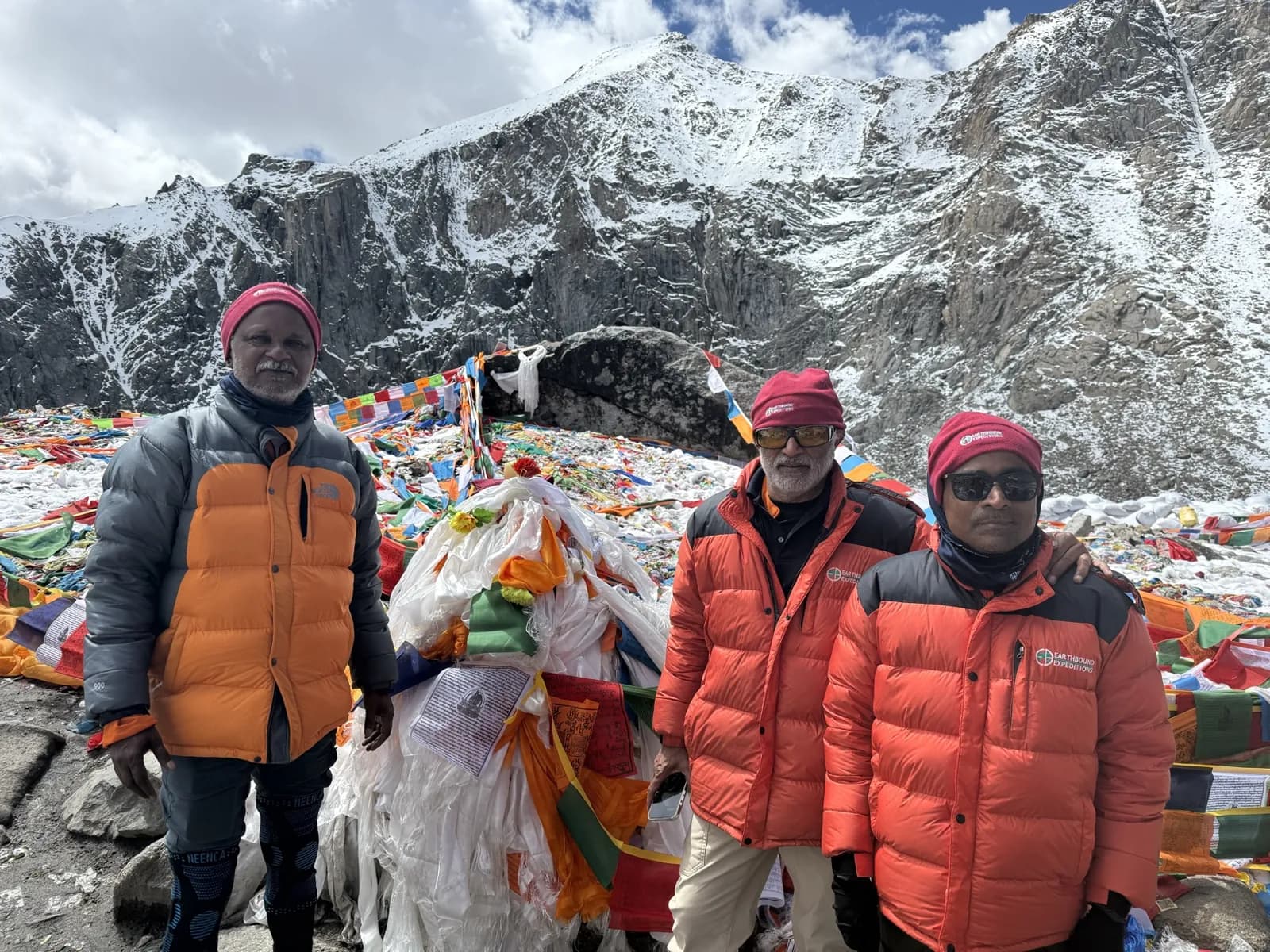
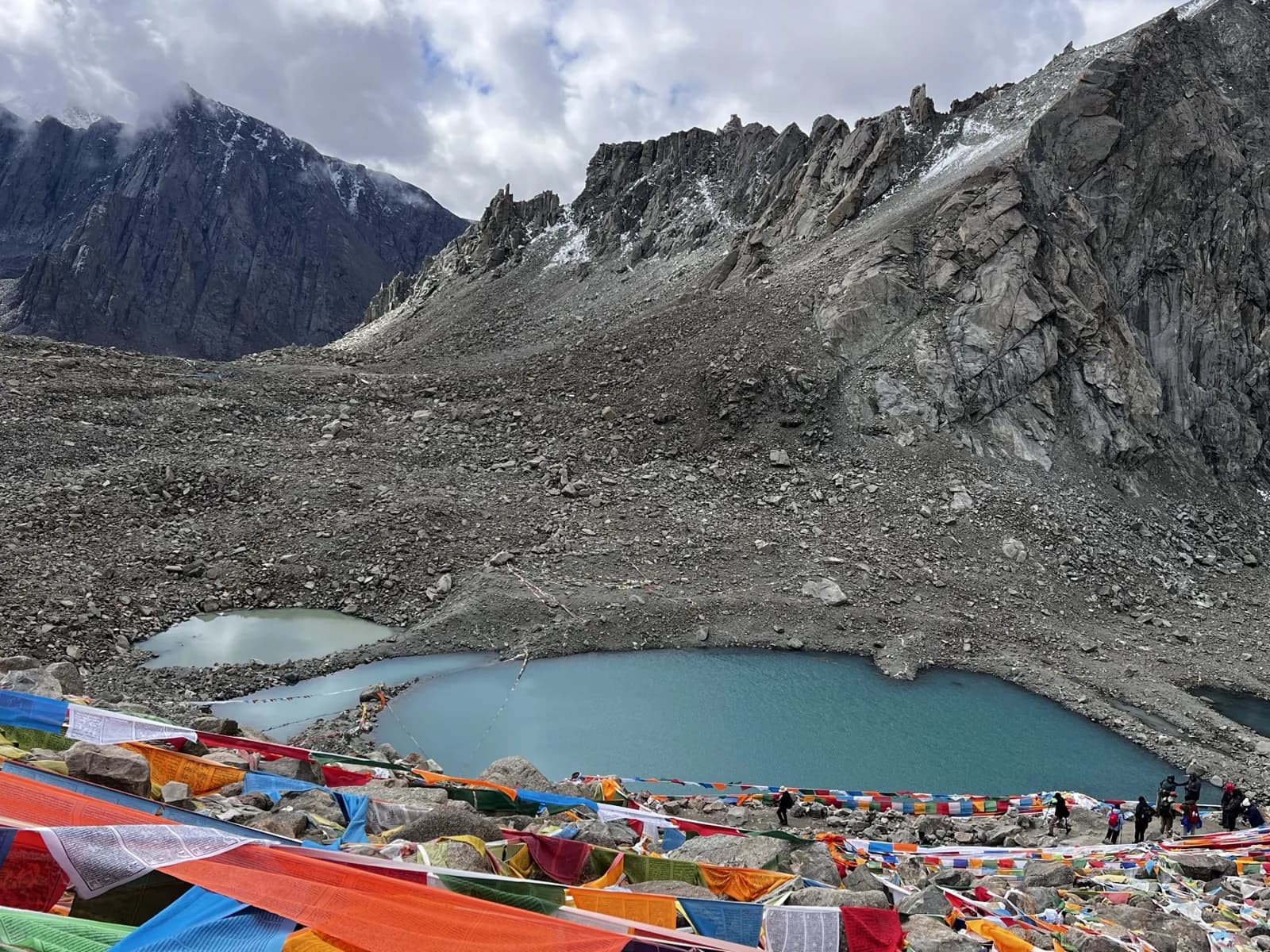
This is the hardest day. You set off before first light and climb the moraine to Shiva Tsal, where pilgrims leave a personal item behind, then make the long ascent to the Dolma La at 5,630 m, which is covered in prayer flags. The descent is steep and loose, and the valley that follows is flat and long.
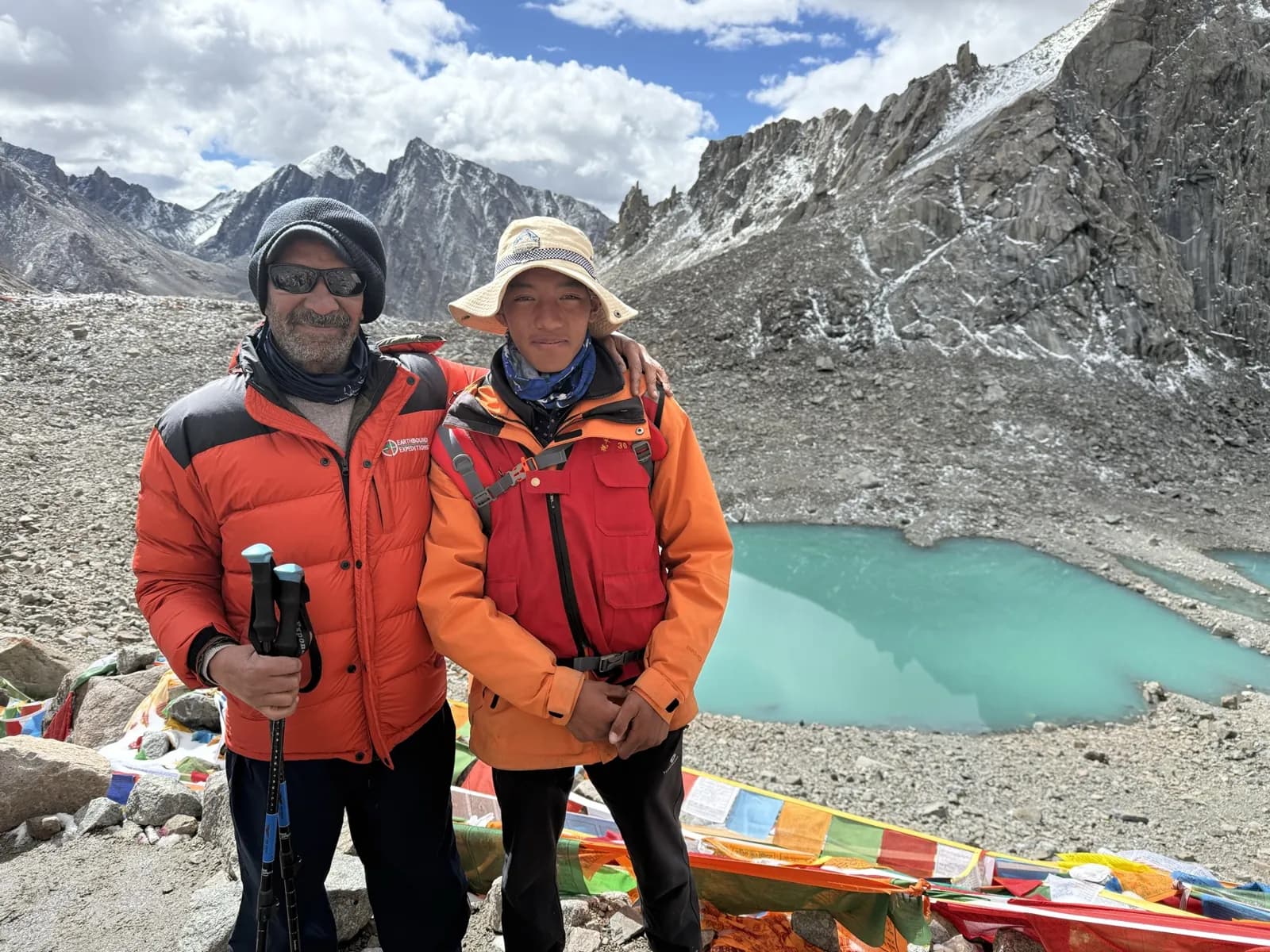
An easy morning walk down the gorge past Milarepa's cave until the valley opens onto the Barkha plain, where the vehicles are waiting. The kora is complete before lunch. We drive back east to the lake shore, where the lower altitude helps everyone sleep better.
This day is kept in reserve. If the pass was closed by snow, someone needed a slower day, or a vehicle broke down, this day allows for it. If it is not needed, you have a second morning at Mansarovar and a free afternoon, which is a useful rest at 4,560 m.
You drive the same road in the opposite direction. Most of the group sleeps for much of the journey. After the past week at higher altitude, Saga feels comfortable in the evening.
You continue east, slowly losing height, and pass the first villages with trees. After Ngari, Shigatse offers shops, hot water and a choice of restaurants for the evening.
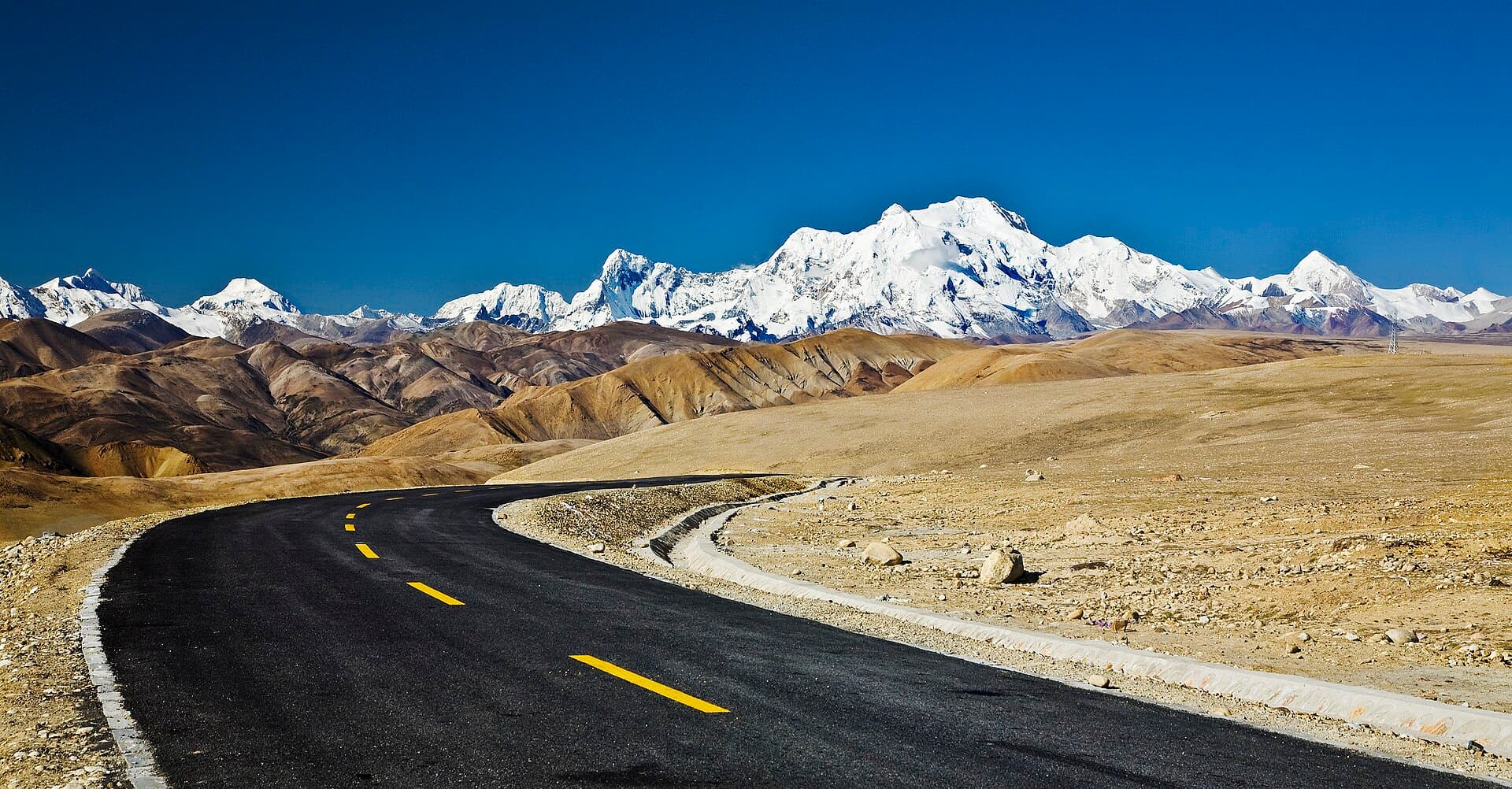
This is the final drive, back along the Tsangpo to Lhasa, arriving in the afternoon. You have an hour in the Barkhor for any shopping, followed by a farewell dinner. Your permits are returned to the authorities tomorrow.
You fly home from Lhasa, either through Beijing or directly to Kathmandu, depending on your ticket. We take you to the airport and help you through the first checks, which are more thorough on departures from Tibet than most people expect.
Start date
9 May 2027
End date
26 May 2027
Available
16 left
US $3,890
Per person
Start date
8 Aug 2027
End date
25 Aug 2027
Available
16 left
US $3,890
Per person
Start date
11 Jul 2027
End date
28 Jul 2027
Available
16 left
US $3,890
Per person
One duffel and one daypack
The truck carries one duffel of up to 20 kg for you across the plateau, and you carry a daypack on the three kora days. Pack the duffel so that what you need at Dirapuk is easy to reach without unpacking everything. Anything you need only in Beijing can be left at the Lhasa hotel free of charge, so you do not carry city clothes to 4,900 m.
You obtain your Chinese visa at home first, and we apply for the Tibet permits after that.
You fly to Beijing on your own ticket, from wherever suits you, and we meet you there. Most travellers come through Delhi, Kathmandu, Bangkok, Dubai or a European hub. Arrive a day early if the fare allows, because the spare time in the itinerary is at the end rather than the beginning.
The flight takes about four hours. The Qinghai Tibet railway takes two nights, crosses the Tanggula Pass at 5,072 m, the highest point on any railway in the world, and has carriages with enriched oxygen. It costs no less and saves no time, but it is a gentler introduction to the plateau and a remarkable journey in itself. We book soft sleepers when the group chooses the train.
The drive from Lhasa to Mansarovar takes four days by way of Shigatse and Saga, on good tarmac, crossing several passes above 5,000 m by vehicle. The distances are very long and so are the days. This is the same road used on the via-Lhasa trip, and it is the part of any Kailash journey that cannot be shortened.
You obtain your Chinese tourist visa first, at home, with no mention of Tibet on the application. Only then can we apply for the Tibet Travel Permit, which takes eight or nine working days, and the Ngari permits, which take longer. We need your passport and visa scans six weeks before departure, and we will send reminders.
We state this on every Kailash page. Western Tibet has no air ambulance service. Anyone who needs to descend does so in a Land Cruiser on the road they arrived on. This is why the oxygen, the pressure chamber and the spare day are essential rather than optional, and why the guide's decision on descent is final.
| Where | Nights | Type | Room | Bathroom |
|---|---|---|---|---|
| Beijing | 2 | Four-star hotel | Twin or double | Private, hot water |
| Lhasa | 4 | Four-star hotel | Twin or double | Private, hot water |
| Shigatse | 2 | Three-star hotel | Twin | Private, hot water |
| Saga | 2 | Simple hotel | Twin | Private, intermittent hot water |
| Mansarovar and Hor Qu | 3 | Lakeside guesthouse | Shared, two to four people | Shared, outside |
| Darchen | 1 | Simple hotel | Twin | Private, hot water |
| Dirapuk and Zuthulpuk | 2 | Kora guesthouse | Shared rooms, mattress and quilt | Outside, no running water |
Hotel buffet in the cities, eggs and tsampa on the plateau
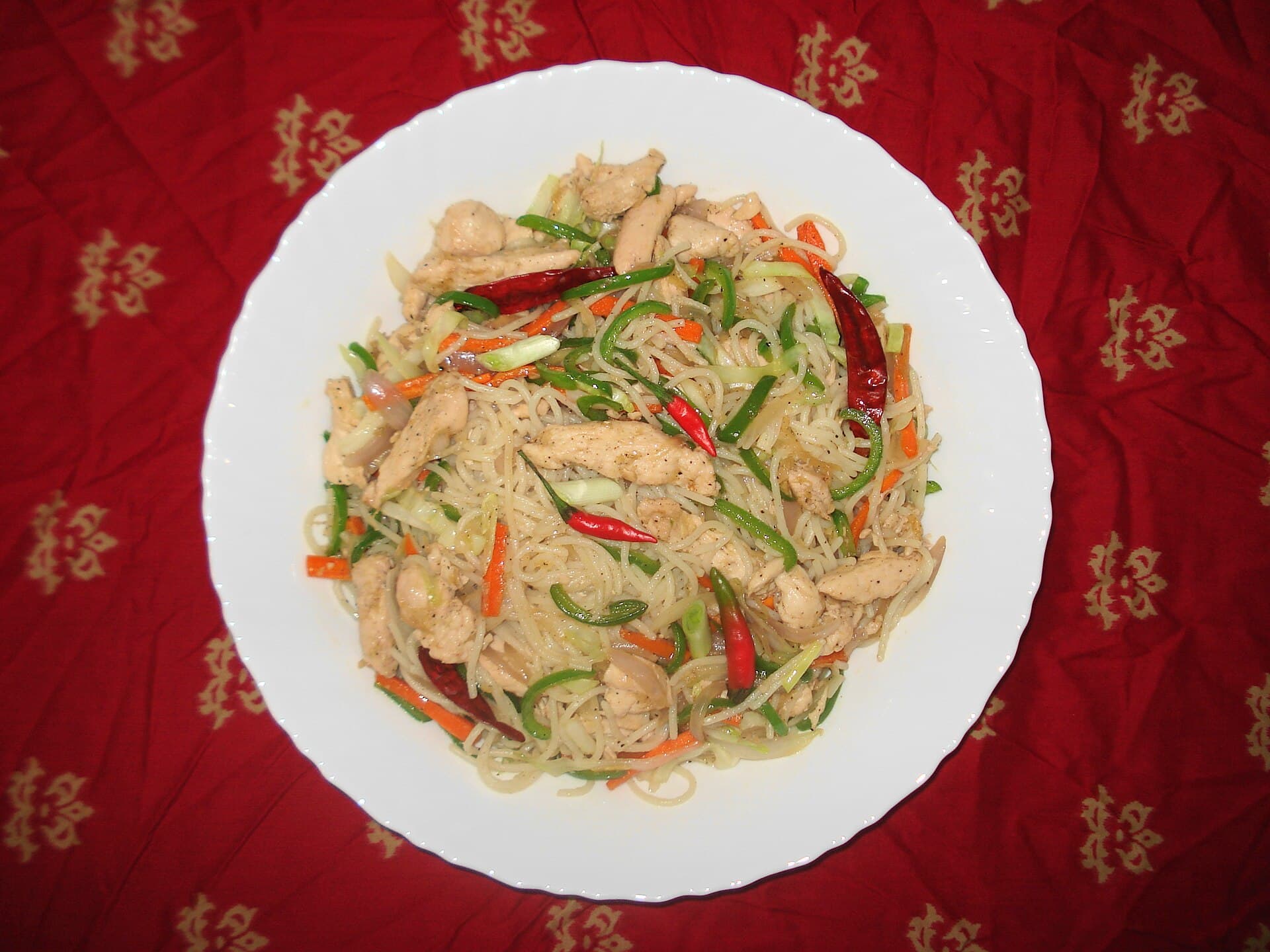
Restaurants in Beijing and Lhasa, roadhouses or a packed lunch beyond

Chinese and Tibetan food, dal bhat on the plateau, soup first at altitude

Our cook goes ahead, so hot soup is ready on arrival at Dirapuk
6.30Tea, and oxygen saturation measured and recorded from Lhasa onward
7.30Breakfast, and bags loaded onto the truck
8.30Driving or walking
10.30First stop, at a sheltered spot on the plateau
12.30Lunch, in a roadhouse or a packed lunch
16.00Arrival on driving days, and rest before the evening
17.30Second oxygen saturation check, and a short walk uphill
19.00Soup, then dinner
20.00Briefing on the next day, with distances and timings
21.30Bedtime
A long trip that is comfortable at the start and end and demanding in the middle. There are three days of walking, one of which is hard.
Written for somebody who walks a bit and does not train. If you already run or cycle regularly, start partway through. Nothing here needs a gym.
16 weeks before, stage 1 of 6
Walk for six hours on hills with a daypack. The kora involves walking rather than climbing, and endurance is what it requires.
This is the most gradual Kailash altitude profile we offer, because of the time spent in Lhasa. You arrive at 3,656 m and stay three nights before going higher, which gives your body time to adjust in a way the shorter routes cannot. From there the ascent west is gradual: Shigatse at 3,840 m, Saga at 4,640 m and the lake at 4,590 m, spread across three driving days. The largest single gain is the flight into Lhasa on day three, which is why day four has no activities planned and why nobody climbs the Potala on their first afternoon. Otherwise the arrangements are the same as on all our Tibet journeys: oxygen saturation measured and recorded twice a day, bottled oxygen and a portable pressure chamber with the group from Lhasa onward, a spare day after the kora, and a guide whose instruction to descend is final. There is no helicopter rescue anywhere in western Tibet, so we act on symptoms earlier than we would in Nepal.
Three nights in Lhasa
At 3,656 m, with a free arrival day, before going any higher.
Gradual ascent west
Shigatse at 3,840 m and Saga at 4,640 m across two days, rather than in one long drive.
Daily health checks
Oxygen saturation is measured and recorded twice a day from Lhasa onward, so any trend over three days is clear.
Oxygen and a pressure chamber
Carried in the support truck for treatment and descent, never to allow someone who is unwell to continue.
The guide decides on descent
The decision is final and made early, because there is no air ambulance in Ngari.
Fitness and altitude are unrelated
This is the thing people get wrong most often. Training makes the walking easier and does nothing for how your body handles thin air. Strong young trekkers get altitude sickness and unfit older ones frequently do not. Go up slowly, and say something the first time your head hurts.
The season on the plateau runs from May to September, when Beijing is at its hottest and most humid.
Settled and busy, with Saga Dawa filling the kora. Beijing is hot and humid.
Averages for the Ngari prefecture, where the walking happens. Beijing and Lhasa at either end are far milder, and Beijing in July is hot and humid rather than cold.
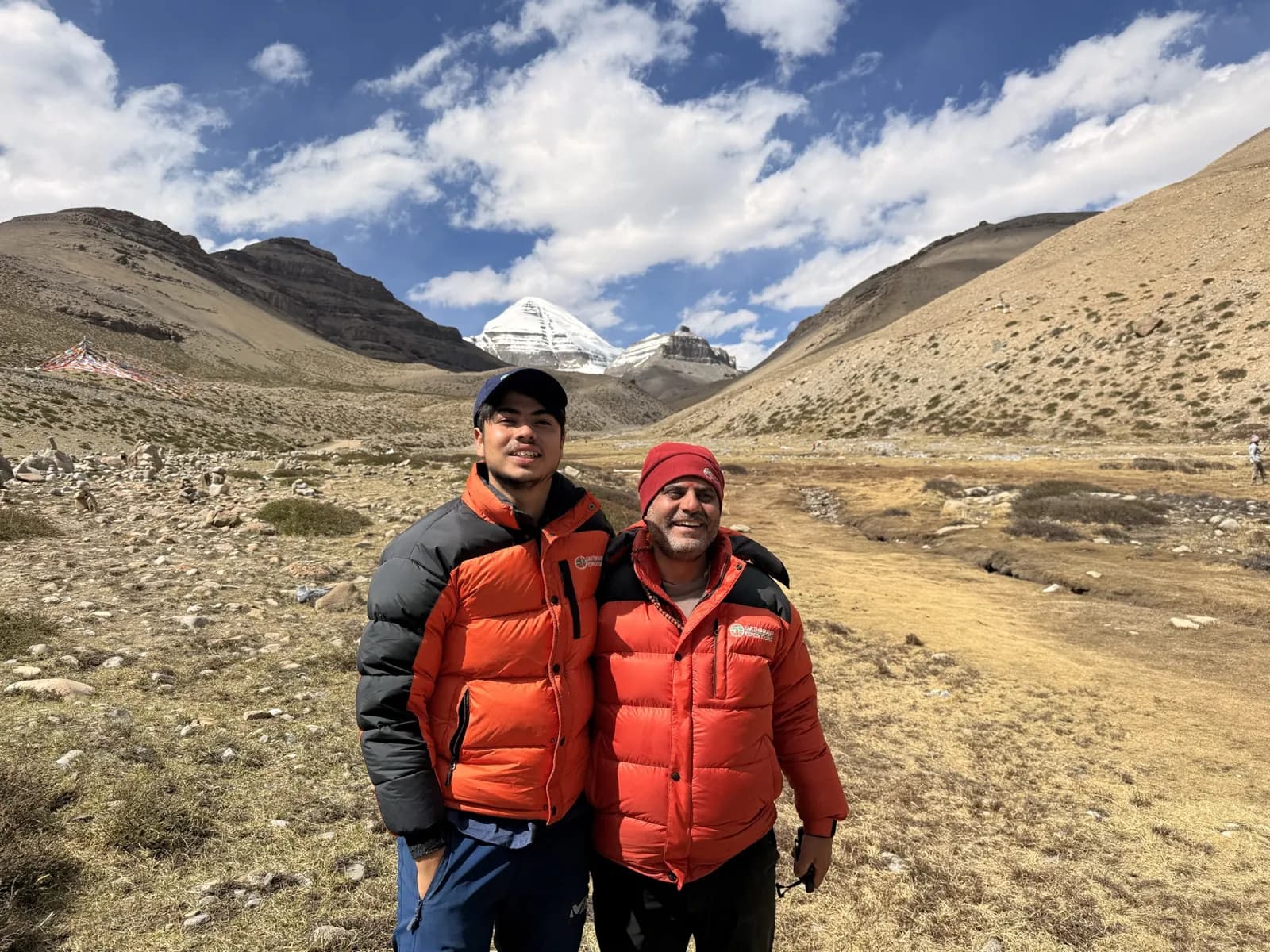
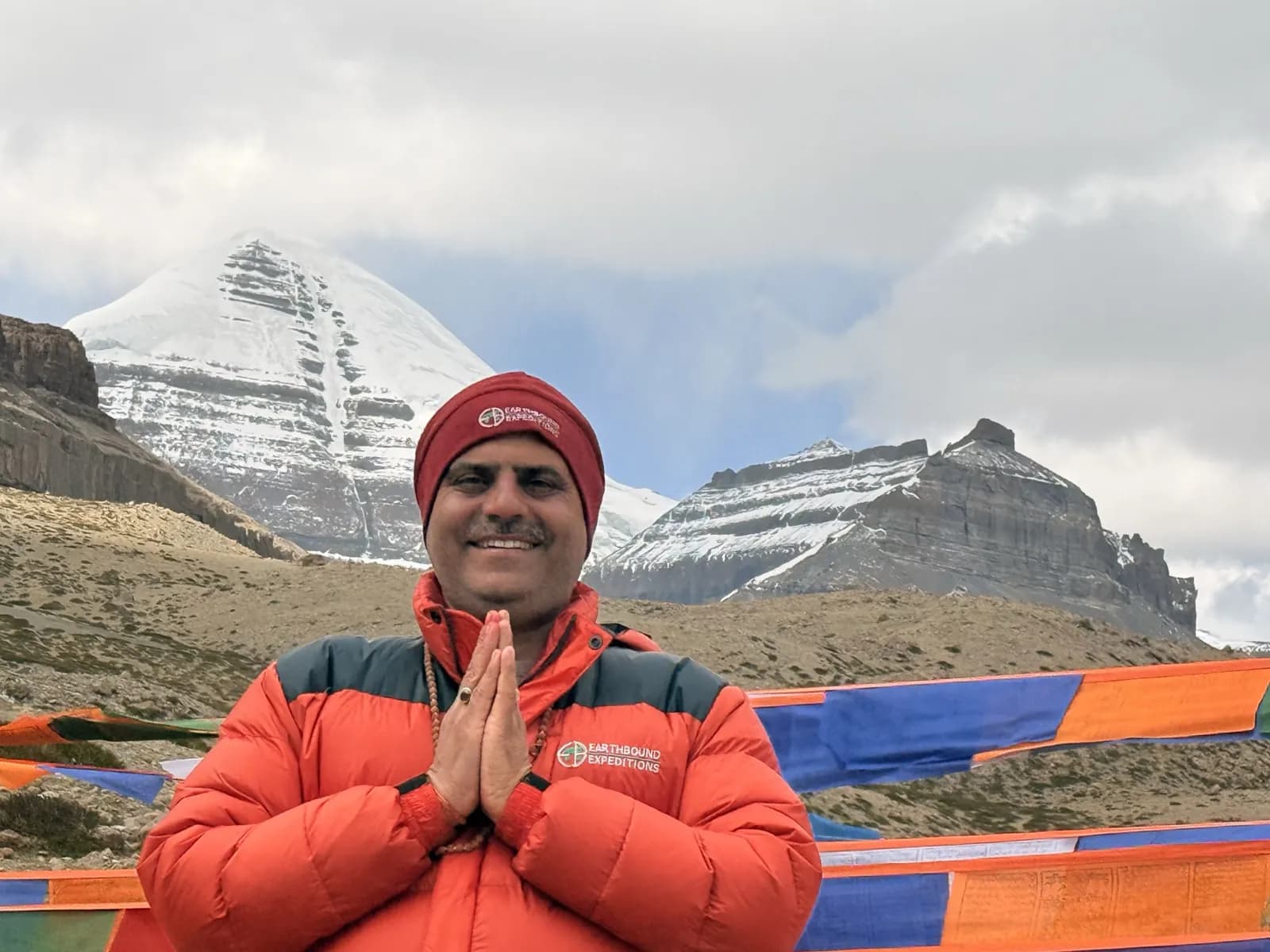
A national guide accompanies you in Beijing, and a licensed Tibetan guide travels with you from arrival in Lhasa to departure from Lhasa. By law, the Tibetan guide must stay with the group the whole time it is in the region. On the kora, a cook and kitchen crew go ahead to the guesthouses so that hot food is ready at Dirapuk.
Travellers ride in Land Cruisers, four to a vehicle rather than the common six, and a support truck carries baggage, food, fuel, oxygen and the pressure chamber. The drivers are Tibetan and know the road in every season, and they can also take someone down quickly if needed.
Baggage is carried by yak, arranged through the Darchen yak and horse association, which allocates the work in turn among local households. Your 10 kg travels with them. A riding horse and handler can be booked at Darchen for the first and third days, and the payment goes to the same families.
Tipping is customary and not included. About $150 to $220 per traveller covers the Beijing guide, the Tibetan guide, the drivers and the kora crew across eighteen days. We pool the tips at the end and hand them over together, and we will advise you on a fair amount.
Most people on the path are walking it for religious reasons. Walk clockwise unless you are Bon. Ask before photographing anyone, in Lhasa as well as at Darchen, and accept a refusal politely. At Shiva Tsal, where pilgrims leave clothing and hair, leave the ground exactly as you found it.
Your guide's licence and livelihood depend on the group behaving responsibly. Do not photograph police, checkpoints or military vehicles. Do not bring images of the Dalai Lama or books about Tibetan politics, as they will be confiscated. Do not ask your guide political questions in front of other people.
We carry out everything we bring in. There is no waste collection on the kora and nothing decomposes at 5,000 m. Our crew carries out our rubbish and often other people's as well. Bring a refillable bottle, since we boil and filter water throughout, and take your used batteries home with you.
Do not use soap, shampoo or detergent of any kind, including biodegradable products. Pilgrims bathe briefly as a ritual and wash elsewhere. For the people who live beside it, the lake is a source of drinking water, a shrine and an ecosystem, and we respect their priorities.
Nothing else can begin until you have a Chinese tourist visa, obtained at home. Apply for it as an ordinary visit to Beijing. Once you have it, we apply for the Tibet Travel Permit against a paid itinerary, and then for the Ngari permits. This order is fixed and cannot be changed.
We need a passport scan and a scan of the Chinese visa at least six weeks before departure, a passport valid for six months beyond the trip with two blank pages, four photographs, your occupation as you would write it on any official form, and details of any medication. Journalists and diplomats should contact us before booking.
Unlike the Kathmandu routes, this trip has no group visa minimum of five, because each traveller holds their own Chinese visa. We can run it for two people. The price per person falls as the group grows, because the vehicles and the guide cost the same whether there are four or fourteen travellers.
If the permit is refused, we refund everything you have paid us in full. Refusals are uncommon, are never explained, and are not your fault. We do not keep a deposit when a permit is refused.
Priced per person, arranged before you travel, and none of them included in the price above.
Two nights from Beijing over the Tanggula Pass in an oxygen-enriched soft sleeper. Book early in the season.
A stop between Beijing and Lhasa, which also helps with acclimatisation.
A detour from Shigatse to Rongbuk and the north face, added on the way west.
A simple option, and the natural choice if you want to add time in Nepal.
Available in Beijing, Lhasa, Shigatse, Saga and Darchen. Not available at the lake or on the kora.
This is the longest and most comfortable of our Kailash itineraries. The overland trip covers the same pilgrimage for about a thousand dollars less.
3 versions of this journey. They use the same guides and the same lodges; what changes is the length, the comfort and how much of it you walk.
July 2026, Tripadvisor
A incredible trip to Kailash and temples in Nepal. Earthbound expeditions took care of all our needs from the time we landed in Beijing. A enormous gratitude to Rajanji and our wonderful Earthbound team for taking such great care of us every step of the way. Your warmth, patience, dedication, and meticulous organization made this sacred and blissful high energy journey possible in tough circumstances. Can’t wait for my next trip.
August 2026, Tripadvisor
Our Mount Kailash trip with Earthbound Expeditions, from July 26 to August 15, was an unforgettable journey filled with breathtaking sights, deeply spiritual moments, and wonderful memories. From the moment we (team of 40+ people from across USA) landed in Beijing, the team took excellent care of us. Through Lhasa, our unforgettable experience at Mount Everest, and the sacred journey to Lake Manasarovar and Mount Kailash, their thoughtful planning and organization helped us fully appreciate each part of the trip. Lake Manasarovar was a deeply divine experience, bringing a profound sense of gratitude and spiritual connection. Completing the Mount Kailash Parikrama was the highlight of the pilgrimage—an experience of extraordinary peace, silence, and inner reflection that words cannot fully describe. Our five days in Nepal were also wonderful and brought this remarkable journey to a beautiful close. What made Earthbound Expeditions stand out was the genuine care they showed throughout the trip. Their support went far beyond arranging transportation and an itinerary. They paid attention to our food and comfort, offered help whenever someone felt uncomfortable, and supported us with patience, kindness, and reassurance. Those thoughtful gestures made a real difference during such a demanding and meaningful pilgrimage. Their planning, organization, and execution brought everything together, allowing us to focus on the experience and its spiritual significance. Our heartfelt thanks to the entire Earthbound Expeditions team for making this journey possible and so memorable. We would wholeheartedly recommend them to anyone planning a Mount Kailash pilgrimage. We returned home with treasured memories, deep gratitude, and a lasting sense of peace.
August 2026, Tripadvisor
Overall, we had an amazing and unforgettable experience with Earthbound Expeditions during our journey to Mount Kailash, Lake Mansarovar, the Great Wall of China, and Everest Base Camp from Tibet. From the very beginning to the end of the trip, Earthbound Expeditions did an outstanding job of taking care of us and truly exceeded our expectations. Traveling to these remote and challenging destinations requires tremendous planning, coordination, and attention to detail, and their team handled everything exceptionally well. One of the highlights was the excellent food service throughout the journey. We were pleasantly surprised to have hot, freshly prepared meals every day, even in some of the most remote locations. There was also an abundant supply of drinking water available throughout the day, which was extremely helpful during the high-altitude portions of the trip. The staff were absolutely wonderful—polite, courteous, patient, and always willing to help. They were attentive to our needs at every step and made us feel comfortable and well cared for throughout the journey. Their flexibility was another major plus; whenever we needed a break or requested a bus stop, they were accommodating and worked with us without hesitation. The transportation was excellent, and the buses were well managed for the long and sometimes challenging journeys. Given the distances, terrain, altitude, and remote nature of many of the places we visited, the smooth coordination of transportation made a significant difference. Visiting Mount Kailash and Mansarovar, Everest Base Camp, and the Great Wall of China was a once-in-a-lifetime experience for us, and Earthbound Expeditions played a major role in making the journey comfortable, memorable, and enjoyable. A huge thank you to the entire Earthbound Expeditions team for your professionalism, hospitality, flexibility, and genuine care. You went above and beyond our expectations, and we would highly recommend Earthbound Expeditions to anyone planning this incredible journey. Thank you for helping us create memories that we will cherish for a lifetime! 🙏❤️
August 2026, Tripadvisor
Earthbound Expeditions — Mt. Kailash & Lake Manasarovar From the moment our group began the journey from Beijing to Lhasa, and onward to the divine landscapes of Mt. Kailash and Lake Manasarovar, Earthbound Expeditions proved why they are one of the most trusted names in Himalayan spiritual travel. Rajan and his exceptional team delivered an experience that was not just well‑organized, but deeply personal, thoughtful, and filled with genuine care. 1) Hospitality That Felt Like Family: The warmth with which Rajan and his staff welcomed us at every stage of the journey made even the highest altitudes feel comforting. Their attentiveness was remarkable — whether it was checking on each traveler’s well‑being, offering guidance on acclimatization, or simply sharing a smile and light hearted jokes that eased the fatigue of long travel days. Every interaction felt sincere. They didn’t just “manage” the trip; they hosted us, cared for us, and stood by us like family. 2) Food That Nourished Body and Spirit In remote regions where good food is often a challenge, Earthbound’s culinary arrangements were a blessing. The meals were: • Fresh • Comforting • Thoughtfully planned for altitude • Served with warmth and patience Whether it was a simple hot soup after a long drive or a full meal before the Kailash Kora, the food consistently lifted our spirits and kept us energized. 3) Logistics Executed With Precision: The Kailash–Manasarovar route demands flawless coordination — flights, permits, vehicles, guides, oxygen support, and timing across Tibet’s vast terrain. Earthbound Expeditions handled all of it with professional excellence. • Smooth transitions from Beijing → Lhasa → Mt Kailash/Manasasarovar • Well‑timed acclimatization stops • Knowledgeable local guides • Reliable vehicles and drivers • Clear communication at every step Their experience showed in every decision. 4) A Journey Made Truly Sacred: What makes Earthbound special is not just their logistics — it’s their heart. Rajan’s leadership, the staff’s humility, and their respect for the spiritual significance of Kailash and Manasarovar elevated the entire experience. They ensured that every traveler felt safe, supported, and emotionally connected to the pilgrimage. Everyday starting with prayers by Rajan made the trip even more focused and spiritual. Final Thoughts Earthbound Expeditions delivered a journey that was smooth, safe, soulful, and unforgettable. Rajan and his staff deserve immense appreciation for their hospitality, food, and flawless logistics across one of the world’s most challenging and sacred routes. I would wholeheartedly recommend Earthbound Expeditions to anyone dreaming of Mt. Kailash and Lake Manasarovar either thru Lhasa or thru Khatmandu. They are the best and top class.
Answers to the 22 questions travellers ask us most often. If your question is not here, contact us and we will answer it.
There are two reasons. The first is the visa: this route uses an ordinary Chinese tourist visa obtained at home, rather than the group visa issued in Kathmandu, which ties five travellers to one document and one border crossing. The second is that you have time to see Beijing and Lhasa properly on the way to the mountain.
It is the longest, the most comfortable and the most expensive. The overland trip by road from Kathmandu takes sixteen days and is the easiest on the body. The trip via Lhasa takes fourteen days and flies in from Kathmandu. The Express takes eleven days and gains altitude very quickly. This trip takes eighteen days, with three nights in Lhasa before any demanding days begin.
We recommend the train if you are comfortable with two nights in a sleeper. It crosses the Tanggula Pass at 5,072 m, the highest railway in the world, in carriages with enriched oxygen, and you arrive in Lhasa having gained height over a day and a half. The flight takes four hours and takes you from sea level to 3,656 m in one step.
You need a standard Chinese tourist visa from the embassy or a visa centre in your own country, obtained before you travel. Do not mention Tibet on the application, because this often leads to a refusal. For the visa application, your itinerary is Beijing. We then apply for your Tibet Travel Permit using that visa.
Four permits are needed, and we arrange all of them: the Tibet Travel Permit from the Tourism Bureau, an Alien's Travel Permit for the Ngari prefecture, a military area permit because western Tibet is a border zone, and a foreign affairs permit. They are issued against a paid itinerary and take longer for Kailash than for a Lhasa trip.
At least two months ahead, and three months is better. The Tibet Travel Permit takes eight or nine working days once you have your Chinese visa, and the Kailash permits are issued in Ngari on their own timescale. We ask for a scan of your passport and visa at least six weeks before departure, and we will remind you if we have not received it.
Yes. The route through China is often simpler for Indian passport holders than the Kathmandu group visa, which has periodically had its own complications. Please contact us early: the visa process is different, and a trip through Beijing needs more lead time than a trip that starts in Kathmandu.
It is not dangerous, but it is the fastest altitude gain on the itinerary, and this is why the fourth day is kept free. Going from near sea level to 3,656 m in four hours gives many travellers a headache and a poor night's sleep. We plan for this rather than scheduling a monastery visit on that day.
We spend three nights in Lhasa before going higher, then climb gradually west through Shigatse at 3,840 m and Saga at 4,640 m. Oxygen saturation is measured and recorded twice a day. Oxygen and a portable pressure chamber travel with the group, and there is a spare day after the kora. The guide's decision to send someone down is final.
No. There is no helicopter evacuation anywhere in western Tibet. Descent means a vehicle on the road you arrived by, and the nearest well-equipped hospital is a long way from Darchen. Your insurance must cover evacuation to 6,000 m, and we check the certificate.
The kora takes three days and covers 53 km on paths rather than steep climbs. The first day is twelve kilometres of gentle walking to Dirapuk. The second is twenty two kilometres over the Dolma La at 5,630 m and takes nine or ten hours. The third is twelve kilometres downhill. The second day is hard for everyone. Arriving after two weeks of gradual altitude gain makes a significant difference.
Yes, on the first and third days. Horses are arranged at Darchen for roughly $180 to $260 with a handler. On the pass day the horse can only go as far as the ground allows, and everyone walks the steep section above Shiva Tsal. Book the evening before, as the animals are allocated in turn among local families.
You return to Darchen with a crew member and rejoin the group when it completes the circuit, usually after one extra night. The decision is made at Dirapuk in the morning, not halfway up the pass. Nobody is carried over the Dolma La. On a trip of this length there is time to rest for a day without missing the rest of the journey.
From May to September. Outside those months the Dolma La holds snow, the kora guesthouses close for the winter, and Tibet usually closes to foreign visitors for the whole of March. June and September are the best months: June for warmth and the Saga Dawa festival, September for clear air and fewer people.
Saga Dawa is the full moon of the fourth Tibetan month, when the large flagpole at Tarboche is taken down, re-dressed and raised again, and thousands of pilgrims walk the kora together. It is a remarkable time to be there, but also the busiest, and beds on the circuit are scarce. Consider which of these matters more to you.
Four star hotels in Beijing and Lhasa, three star in Shigatse, a plain hotel in Saga and Darchen, a lakeside guesthouse at Mansarovar, and two nights in kora guesthouses at Dirapuk and Zuthulpuk. Those last two are shared rooms with a mattress and a quilt, no heating and an outside toilet.
In Beijing the food is Chinese and very good. In Lhasa there is Tibetan, Chinese and Nepali food. From Lhasa onward meals are vegetarian, following the custom around the mountain, and our own cook carries supplies for the plateau. Appetite decreases at altitude, so we serve soup first and often.
Yes in Beijing and Lhasa with a Chinese SIM card, but not on the kora. Most western apps and services are blocked throughout China unless you have made arrangements in advance, and we suggest treating the fortnight as time away from them.
There are four long days of driving west and three on the return, on good Chinese tarmac roads that cover long distances. The days are long and monotonous rather than physically demanding, unlike the roads in Nepal. Bring something to read, and motion sickness medication if you need it.
Pack for two climates. Beijing in summer is hot and humid. The plateau is dry, cold at night and very windy. A windproof shell is more important than an extra fleece. A four season sleeping bag is needed only for the kora guesthouses. You will need plenty of sun cream and lip balm.
We refund everything you have paid us in full. Refusals happen and are rarely explained. Journalists, diplomats and people whose passports carry certain stamps are refused more often than others. We do not keep a deposit if the permit is refused.
Yes, and this trip is well suited to it. Options include Xian and the Terracotta Army on the way through, a few extra days in Beijing, Everest Base Camp on the Tibetan side as a detour from Shigatse, or Kathmandu and Chitwan afterwards if you fly out through Nepal. Please tell us when you book.
Didn't find what you were looking for?
Search every word on this page, or ask somebody who has walked the route.
18 days
$3,890 per person