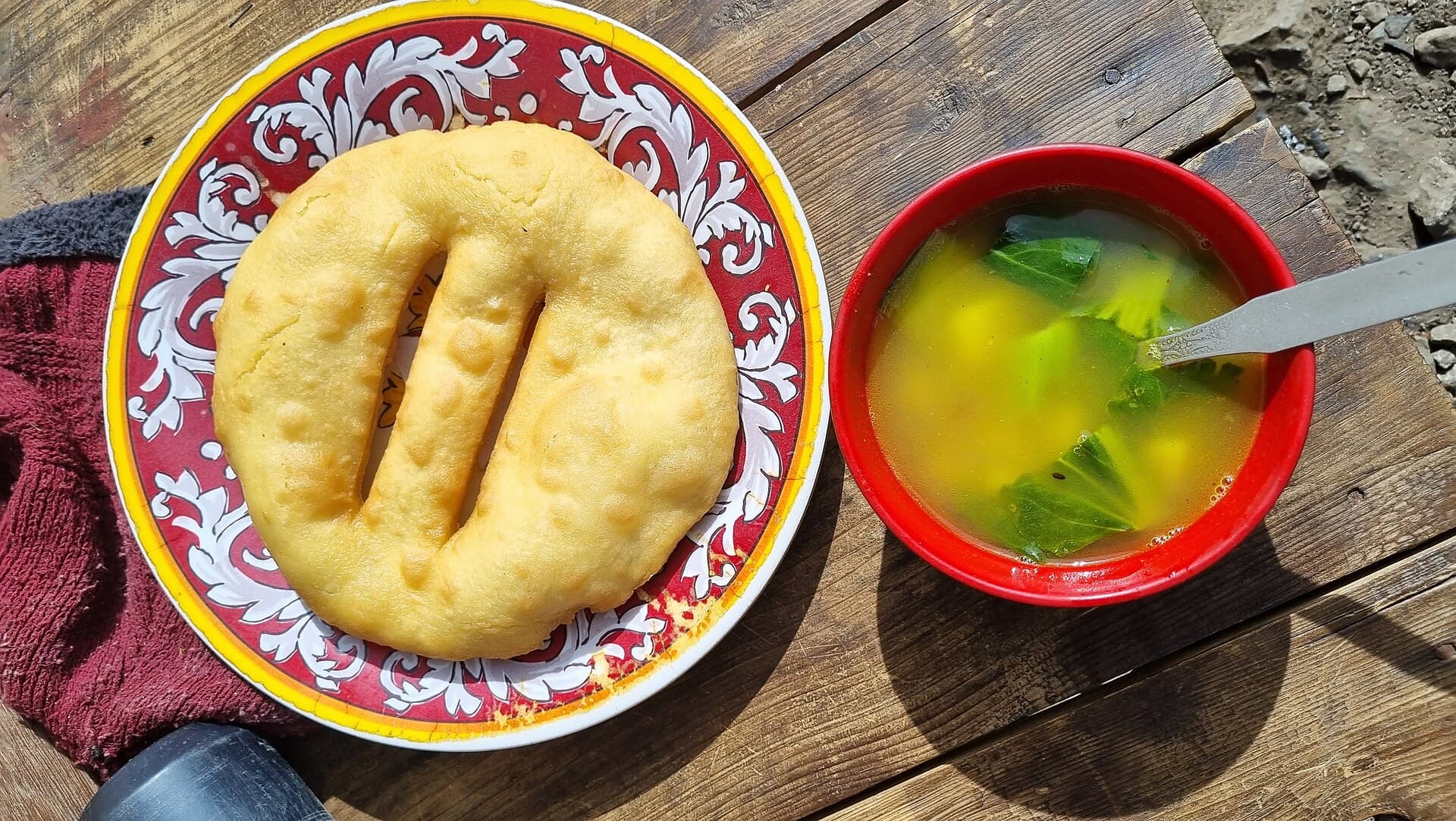
Breakfast
Roti, eggs, porridge, curd and honey, milk tea or coffee
All destinations
All destinationsFour warm days at low altitude on a ridge east of Pokhara, through Gurung and Brahmin villages and terraced fields, with the Annapurnas and Manaslu in view from breakfast to dusk.
Four warm days at low altitude on a ridge east of Pokhara, through Gurung and Brahmin villages and terraced fields, with the Annapurnas and Manaslu in view from breakfast to dusk.
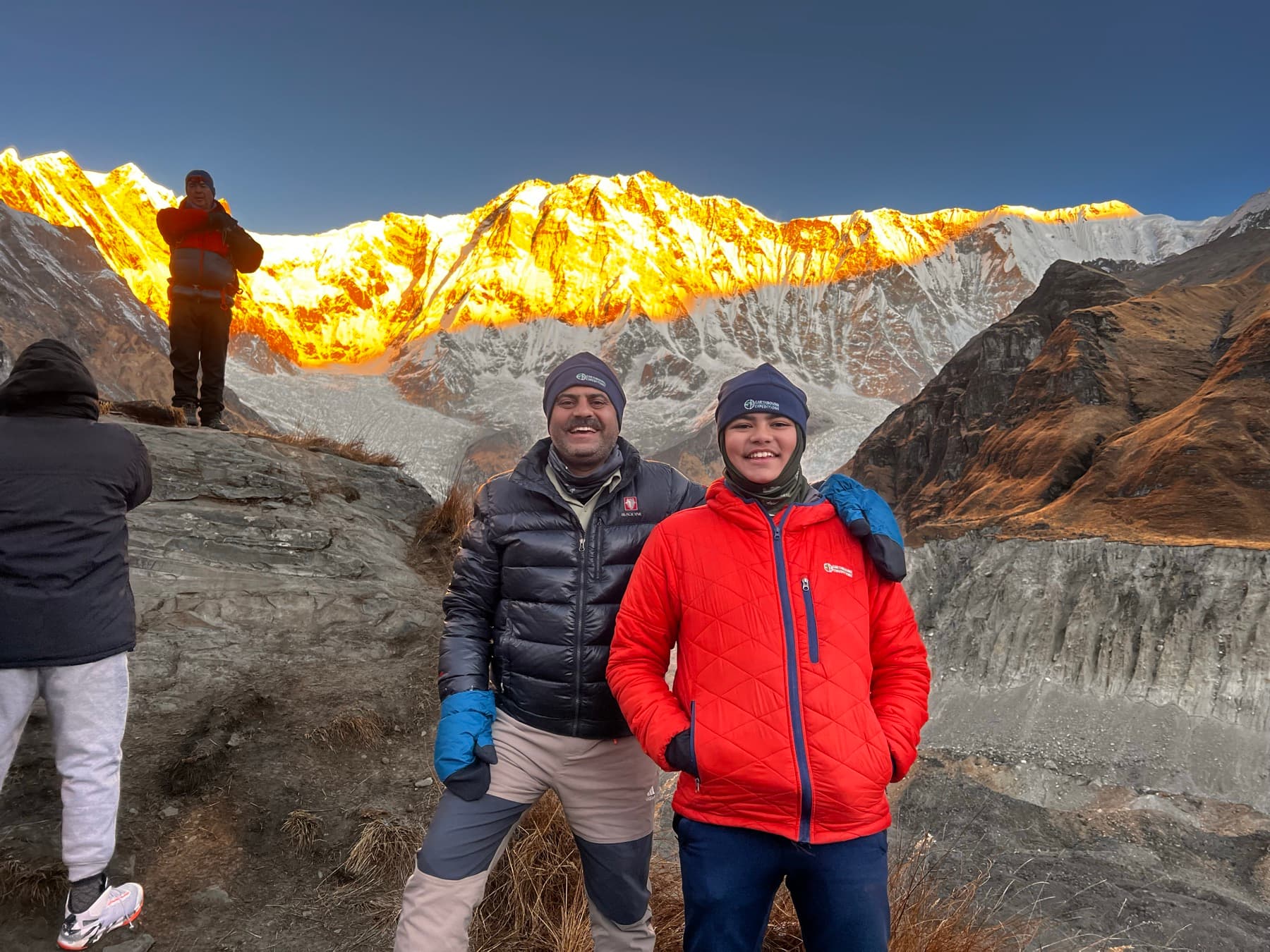
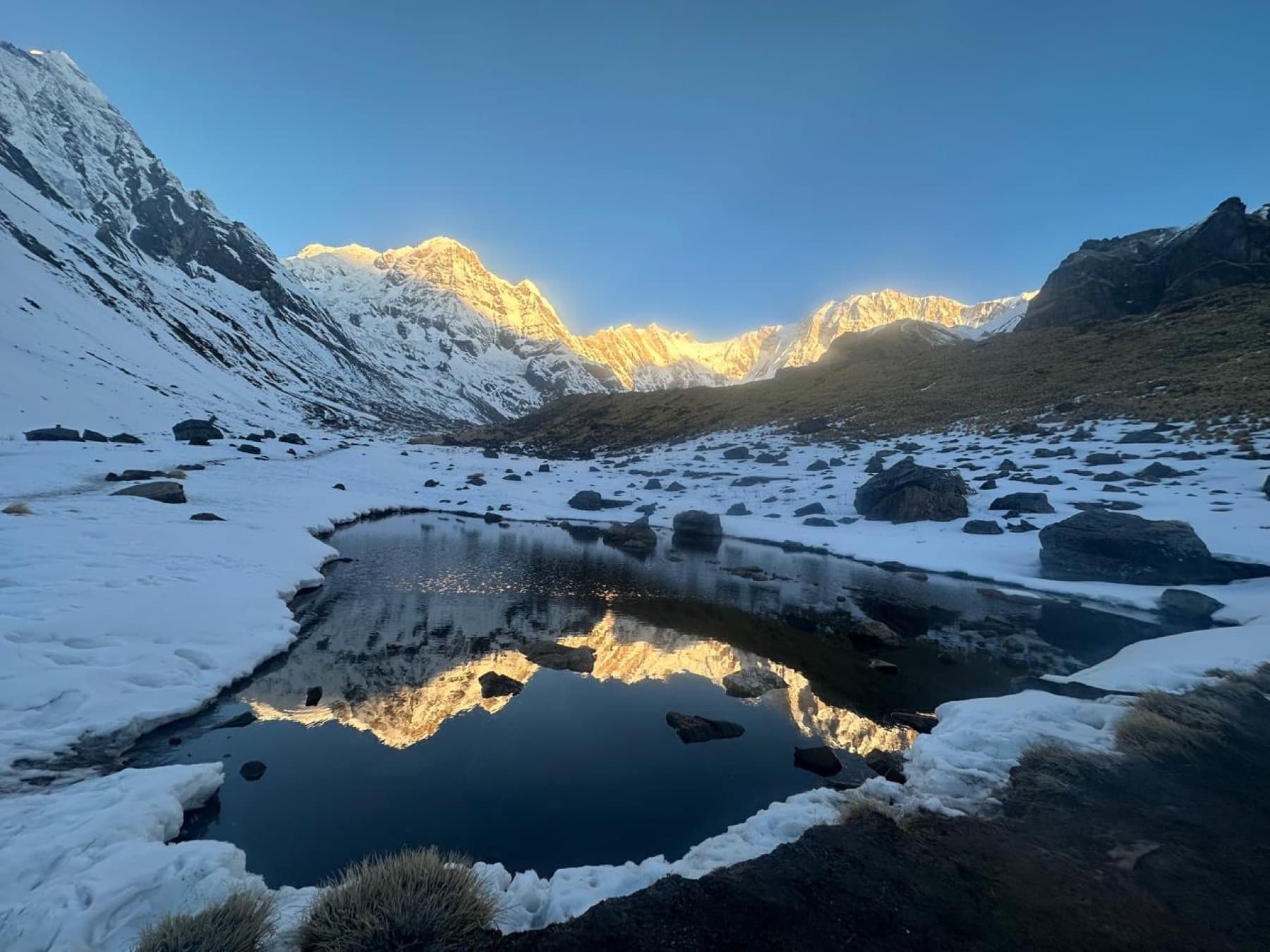
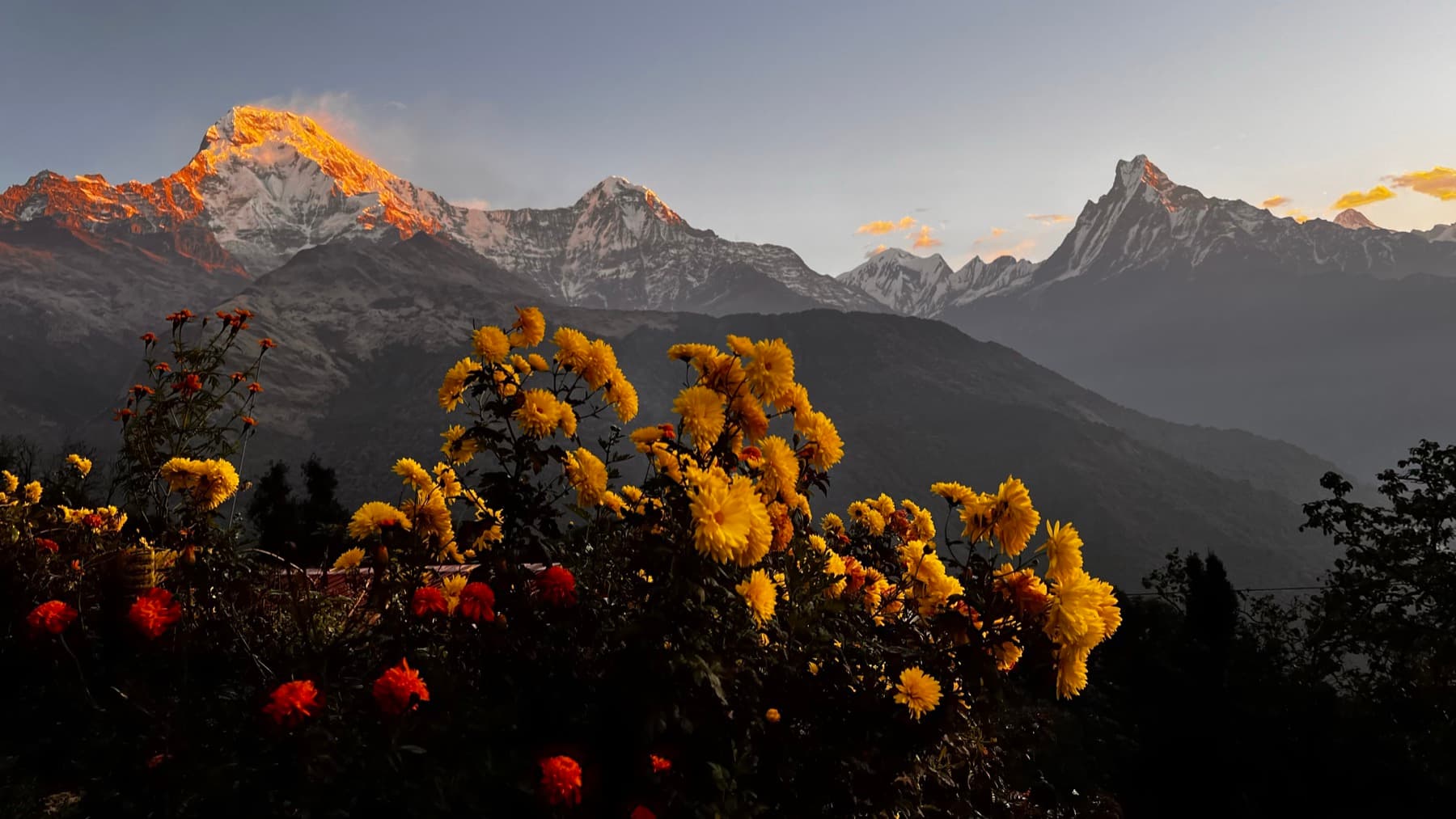
Four days on a ridge east of Pokhara, staying in three villages, never higher than 1,730 m. You start at the Bijayapur stream, climb once onto the ridge and then follow it north-east through Kalikasthan, Syaklung and Chisapani, before descending to Rupa and Begnas lakes at the end. The Annapurnas and Manaslu are visible to the north for most of the day, and you walk almost entirely between farmers' terraces.
Travellers who want to see the Himalaya without two weeks of trekking, high altitude or crowds. It suits first-time trekkers, walkers in their seventies, families with children aged eight or nine, and anyone with one week rather than three. It is also a worthwhile trek for experienced trekkers who want to see daily life in the middle hills.
The Prince of Wales made an official visit to Nepal in 1980, visited the Gurkha regiment of which he was colonel-in-chief, and spent three days walking these ridges with a party usually reported at around ninety people. Some sources date the visit to 1981, and accounts differ. The main reasons to walk the trek are the villages and the terraces.
Dirt roads now reach most of the villages on this ridge, and on two or three short sections the trail follows the road. We use footpaths wherever they still exist. The roads have not changed the views or the terraces, and you will still meet more schoolchildren than trekkers.
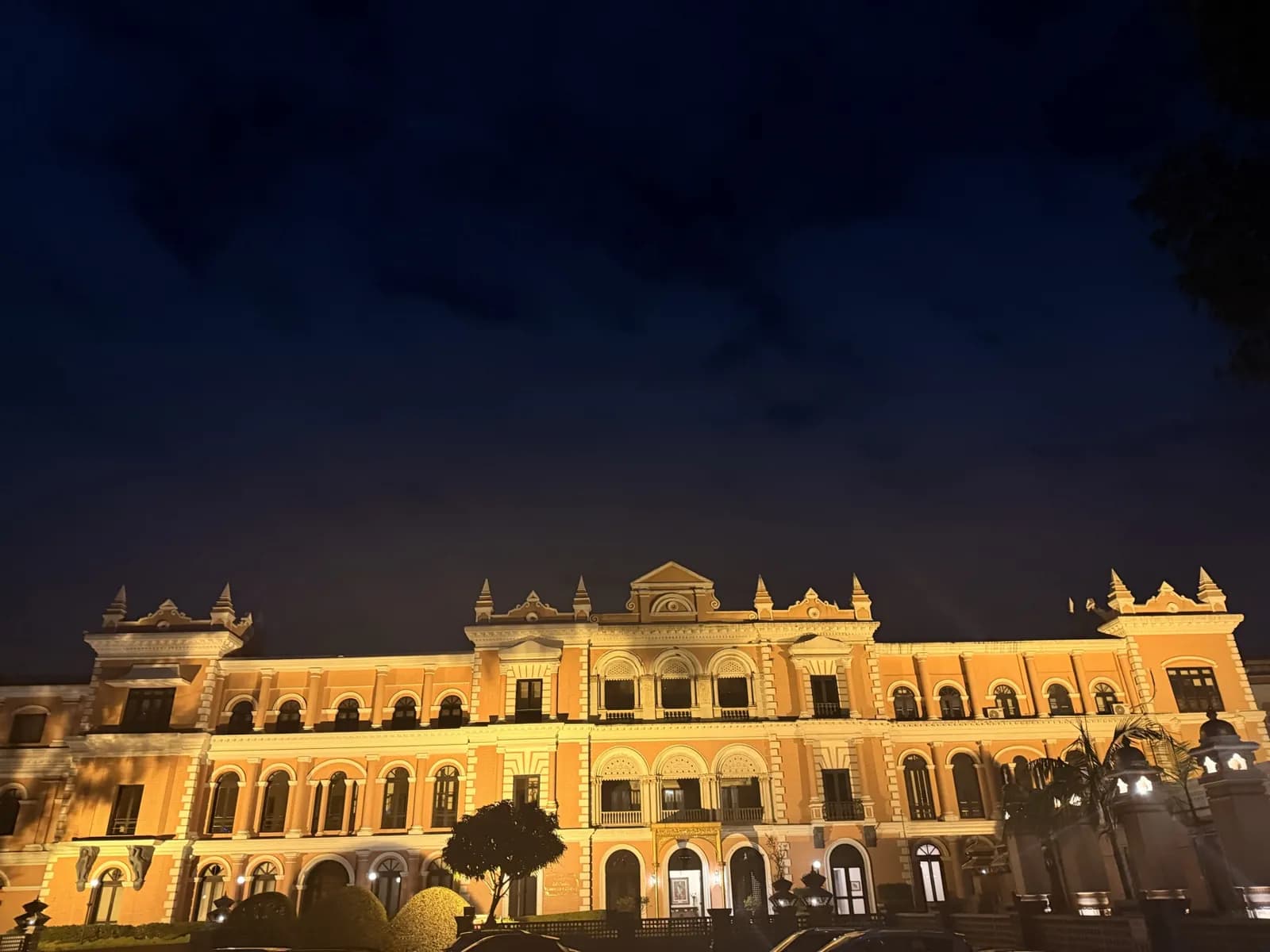
We meet you at the airport and drive you to your hotel. If you arrive early, there is time to walk around the old streets near Thamel. In the evening we meet to go through the route, check your equipment and answer any questions.
A twenty-five-minute flight west, or a seven-hour drive along the Trishuli river if you prefer to see the countryside. Pokhara lies at 822 m beside Phewa Lake, with the Annapurnas rising close above it. The afternoon is free, and we collect your permit while you rest.
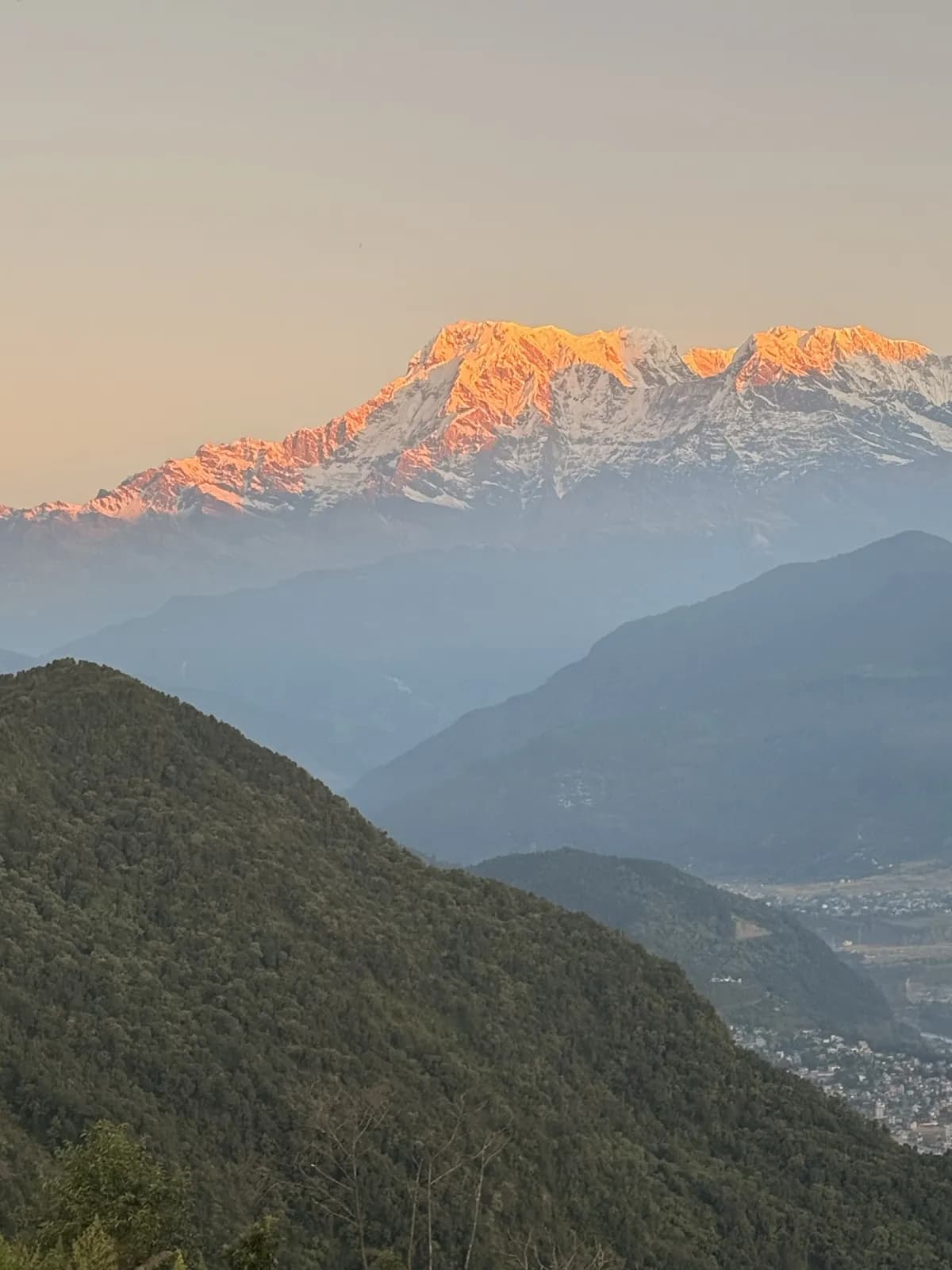
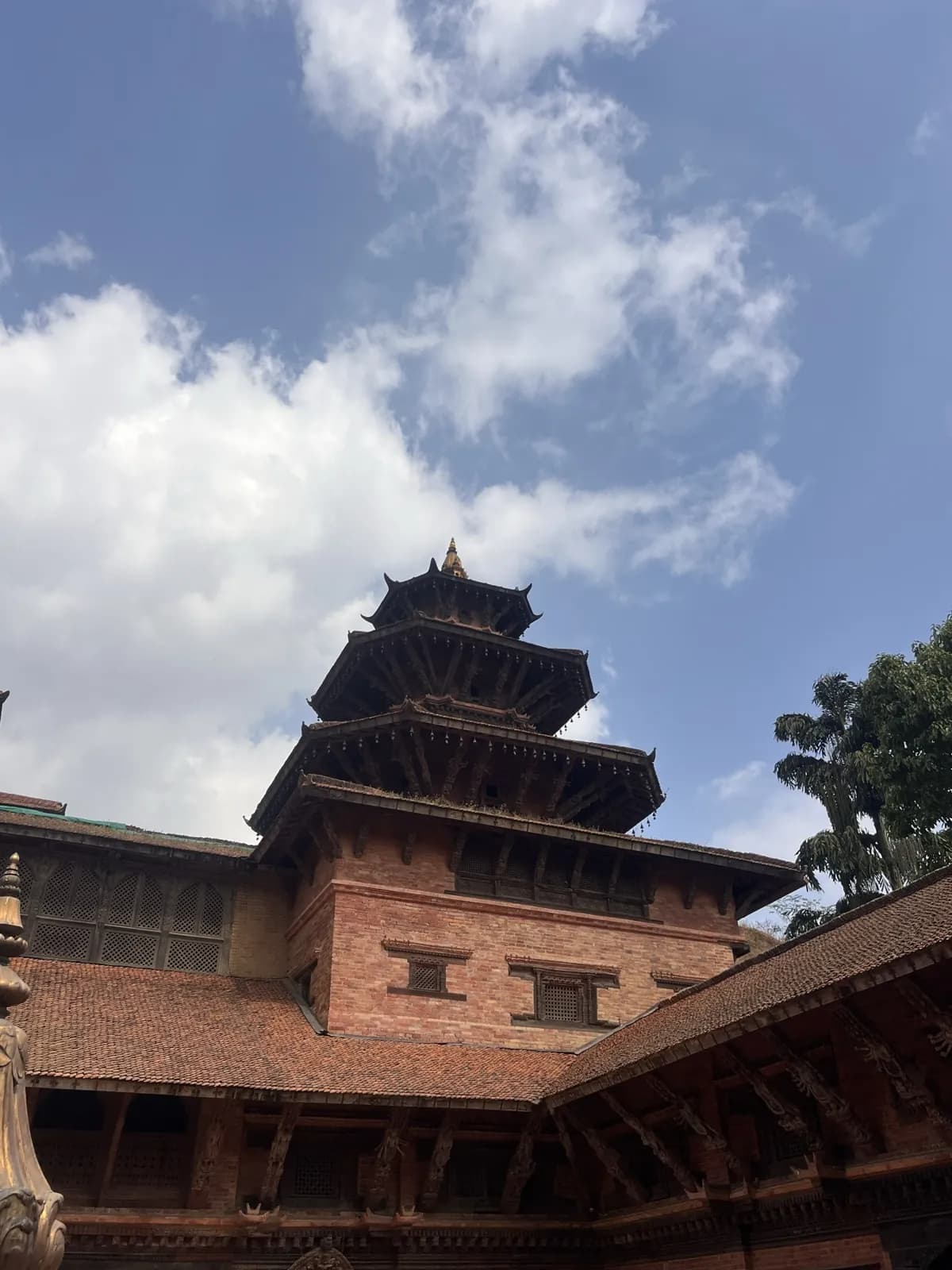
A twenty-minute drive to the Bijayapur stream on the eastern edge of town, followed by the only sustained climb of the trek, up through rice terraces and buffalo sheds onto the ridge. Kalikasthan is a small group of Brahmin houses around a Kali temple, and from above the village the Annapurna range is visible at dusk.
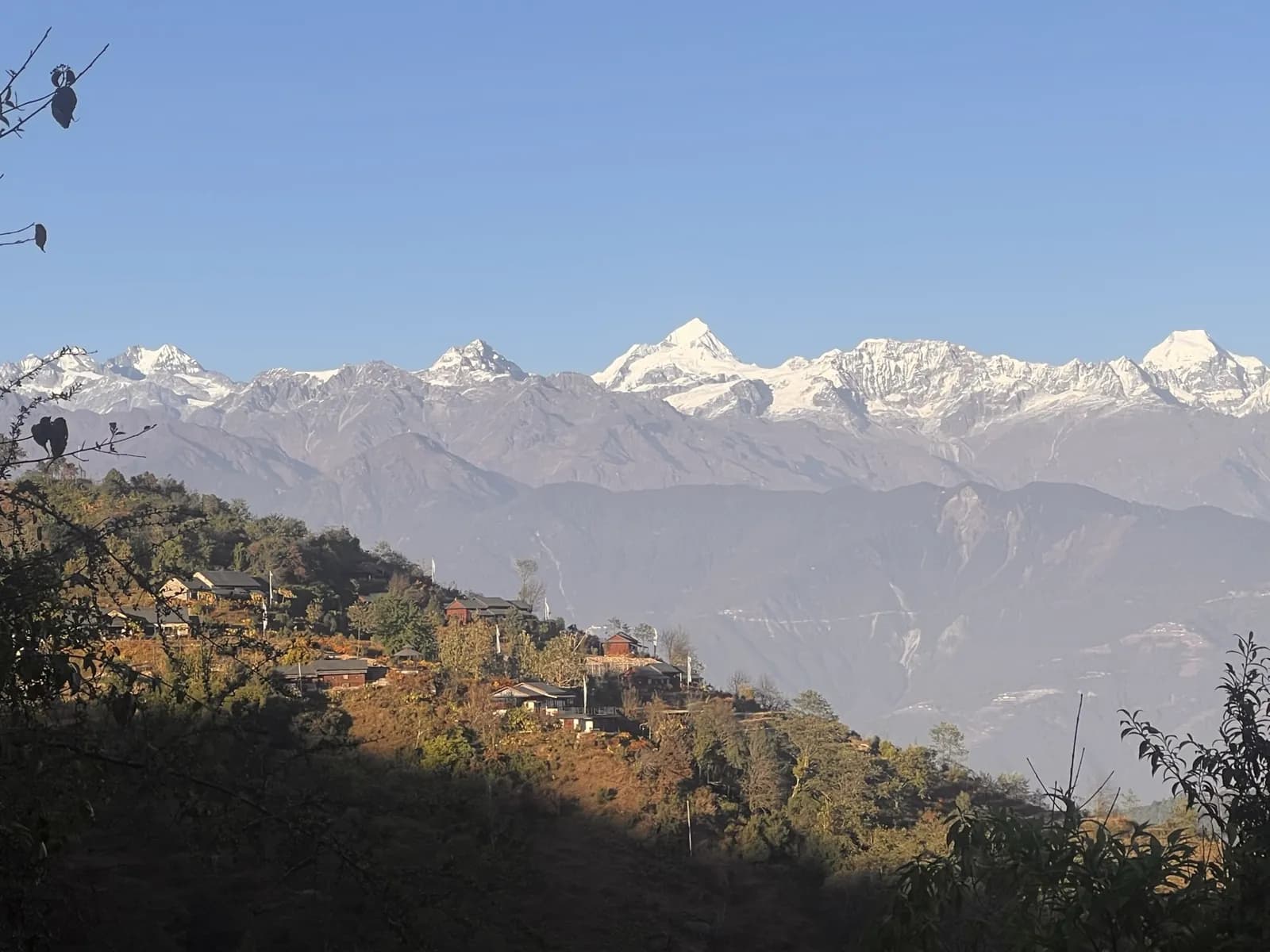
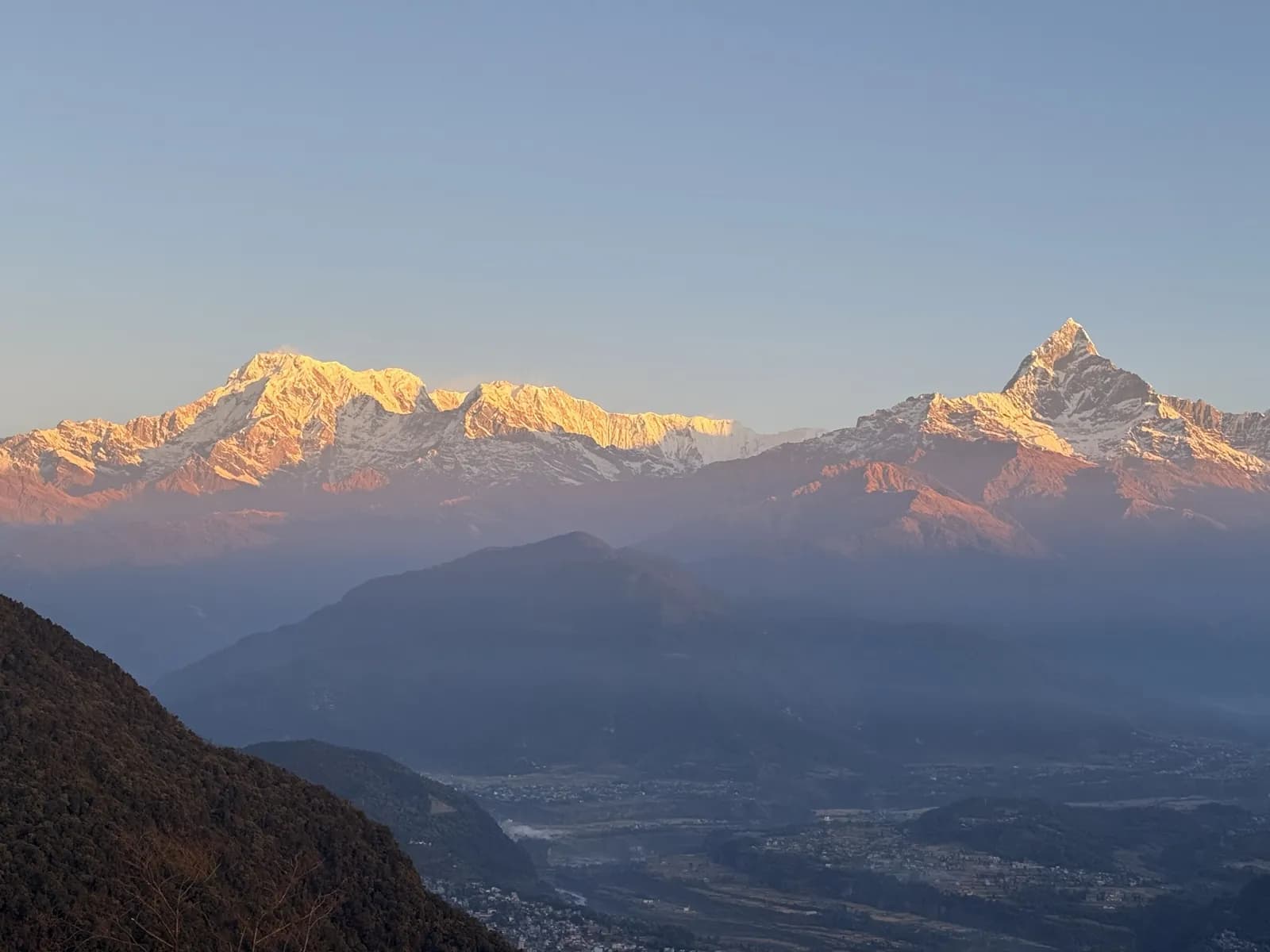
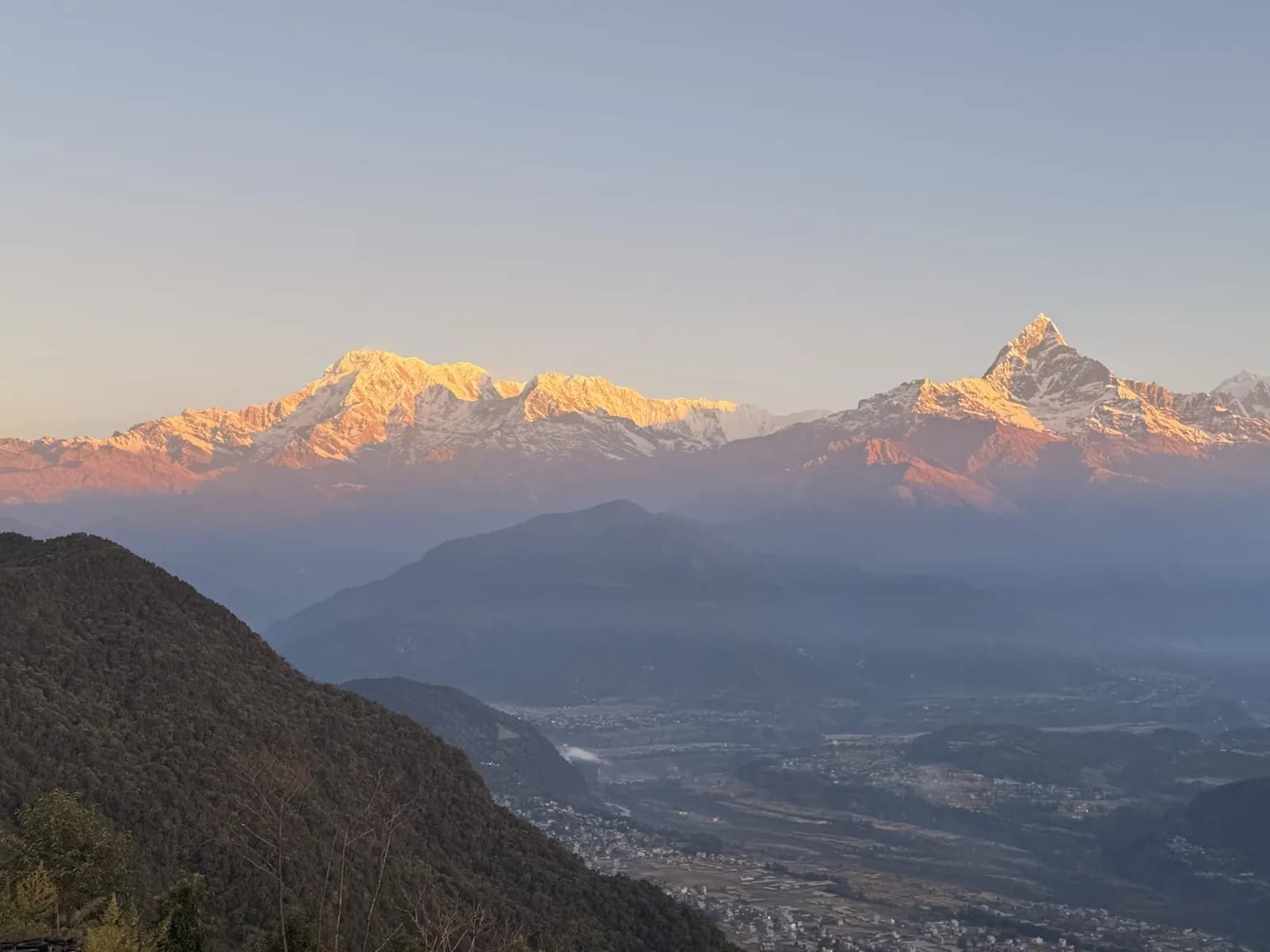
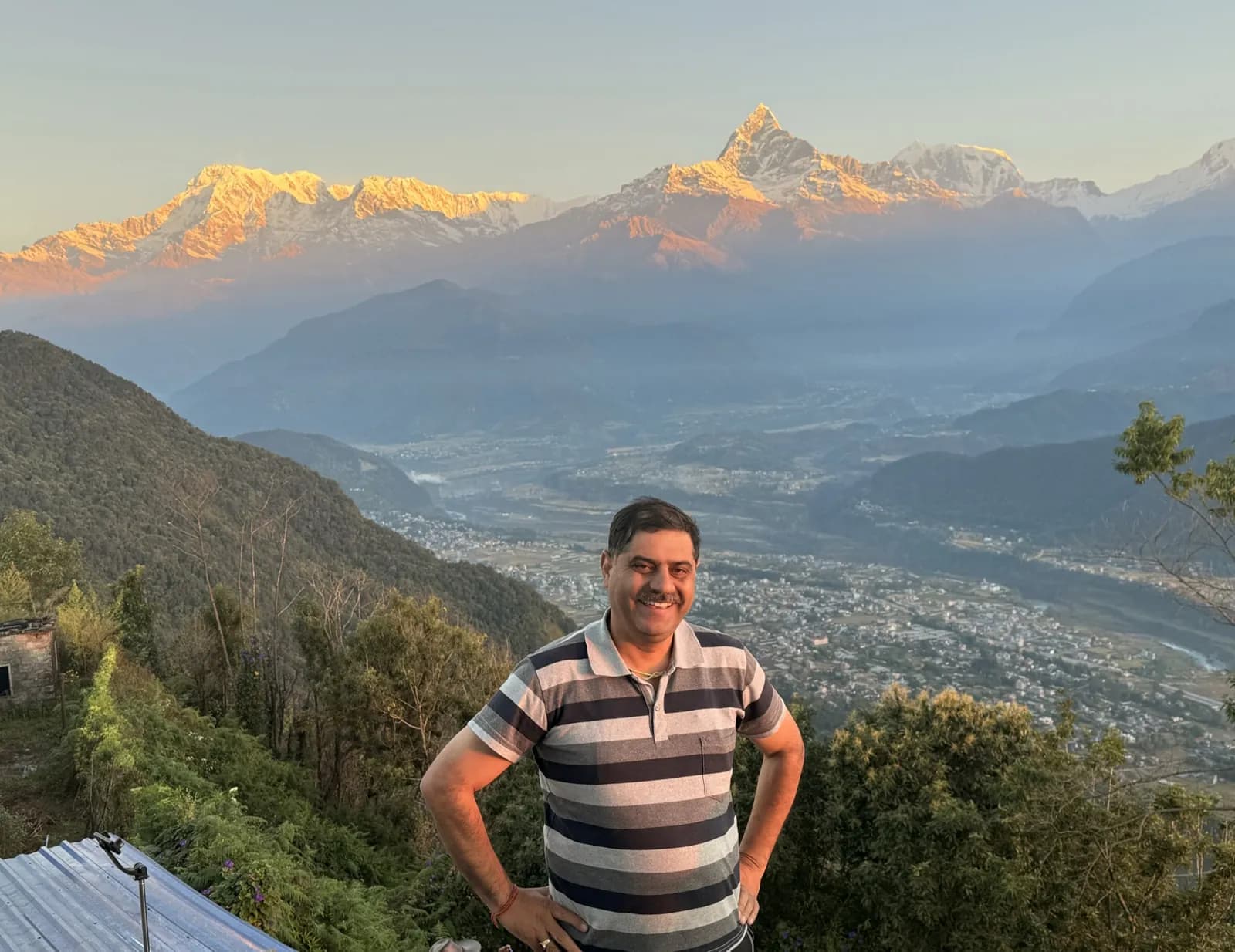
Today you follow a long, gentle ridge with terraces on both sides and Annapurna II, Lamjung Himal and Manaslu to the north. You pass through the Gurung villages of Thulakot and Mati Thana, stopping for tea when it is offered. Syaklung, at 1,730 m, is the highest overnight stop of the trek.
We descend from the ridge through oak and pine forest, then climb gradually onto the next ridge. Chisapani means 'cold water'; about forty villages in Nepal share the name, and here it refers to the spring below the houses. The view north from the shoulder above the village is the finest of the trek.
The last morning is downhill all the way, a descent of nine hundred metres through terraces to the lakes. You pass Rupa Lake first, which is quiet and rich in birdlife, then cross the low saddle between the two lakes and descend to Begnas at 650 m. You cross by boat, have lunch by the water and take a thirty-minute drive back to Pokhara.
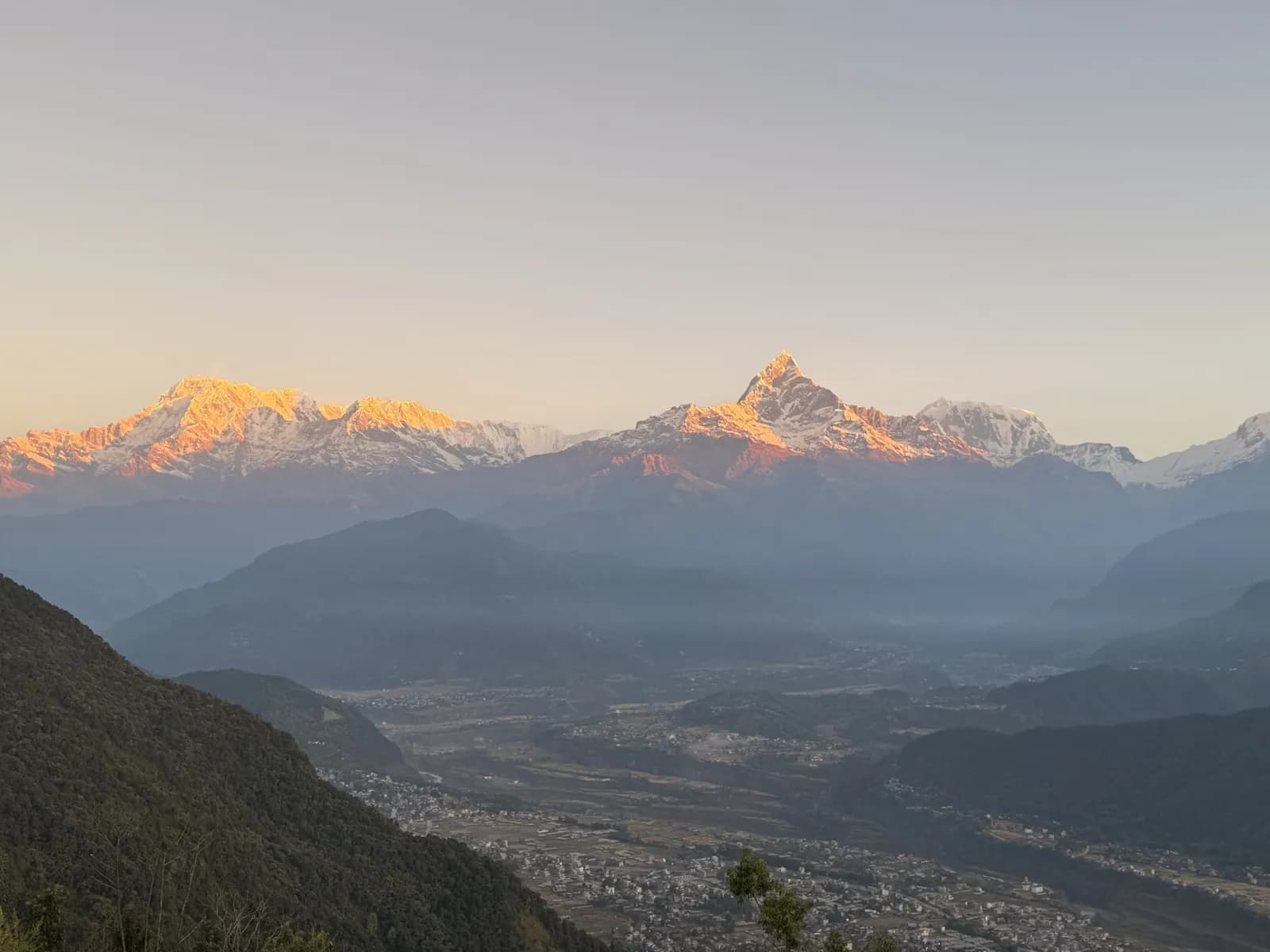
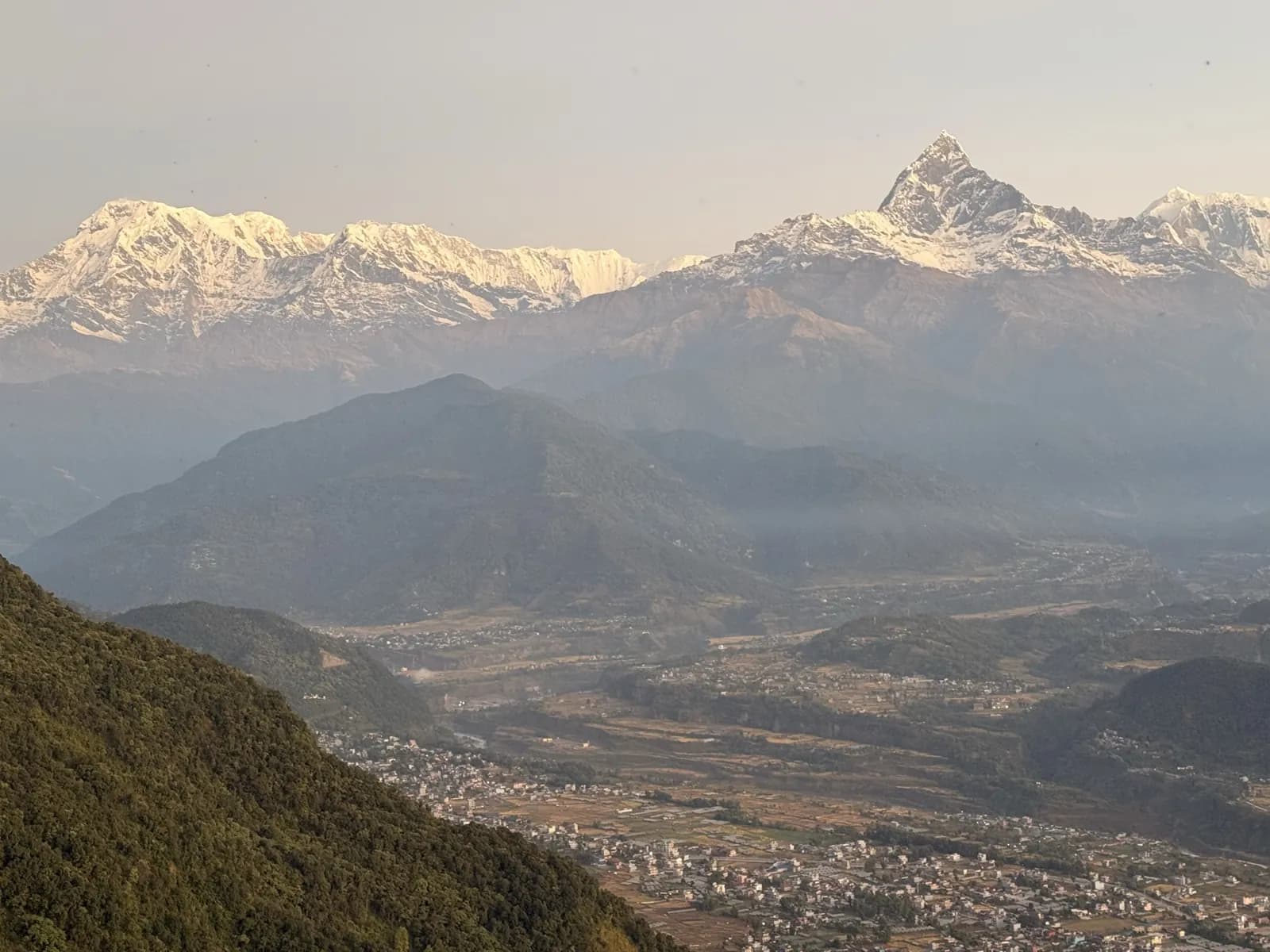
A twenty-five-minute flight or a seven-hour drive back, depending on what you booked. If you fly, ask for a window seat on the right-hand side to see the range from Annapurna to Ganesh Himal. The evening is free in Kathmandu, and we can have dinner together if you wish.
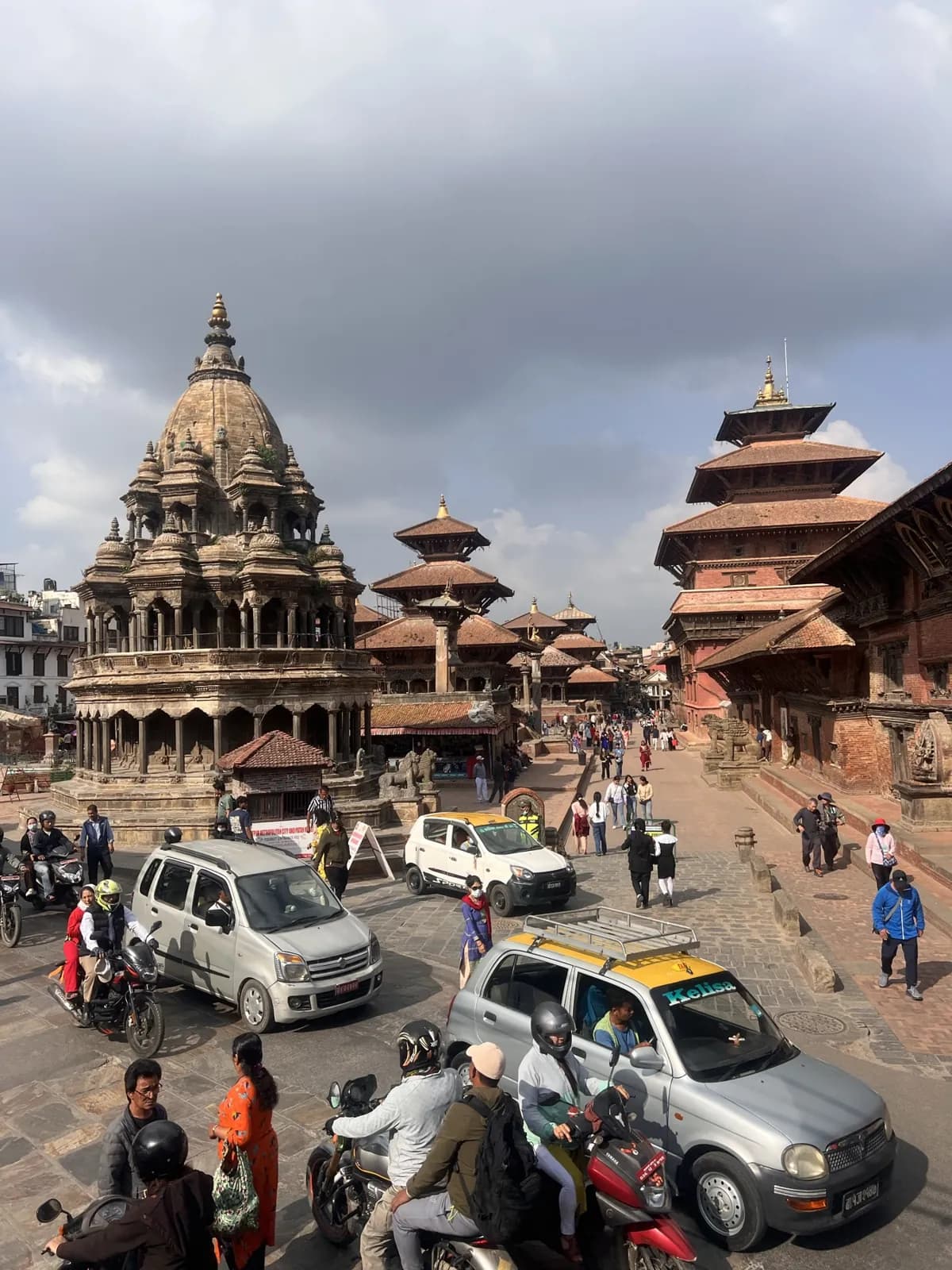
We take you to the airport three hours before your flight. If your flight is late in the day, there is time to visit the carved courtyards of Patan or the bookshops of Thamel, and we can store your bags at our office until you need them.
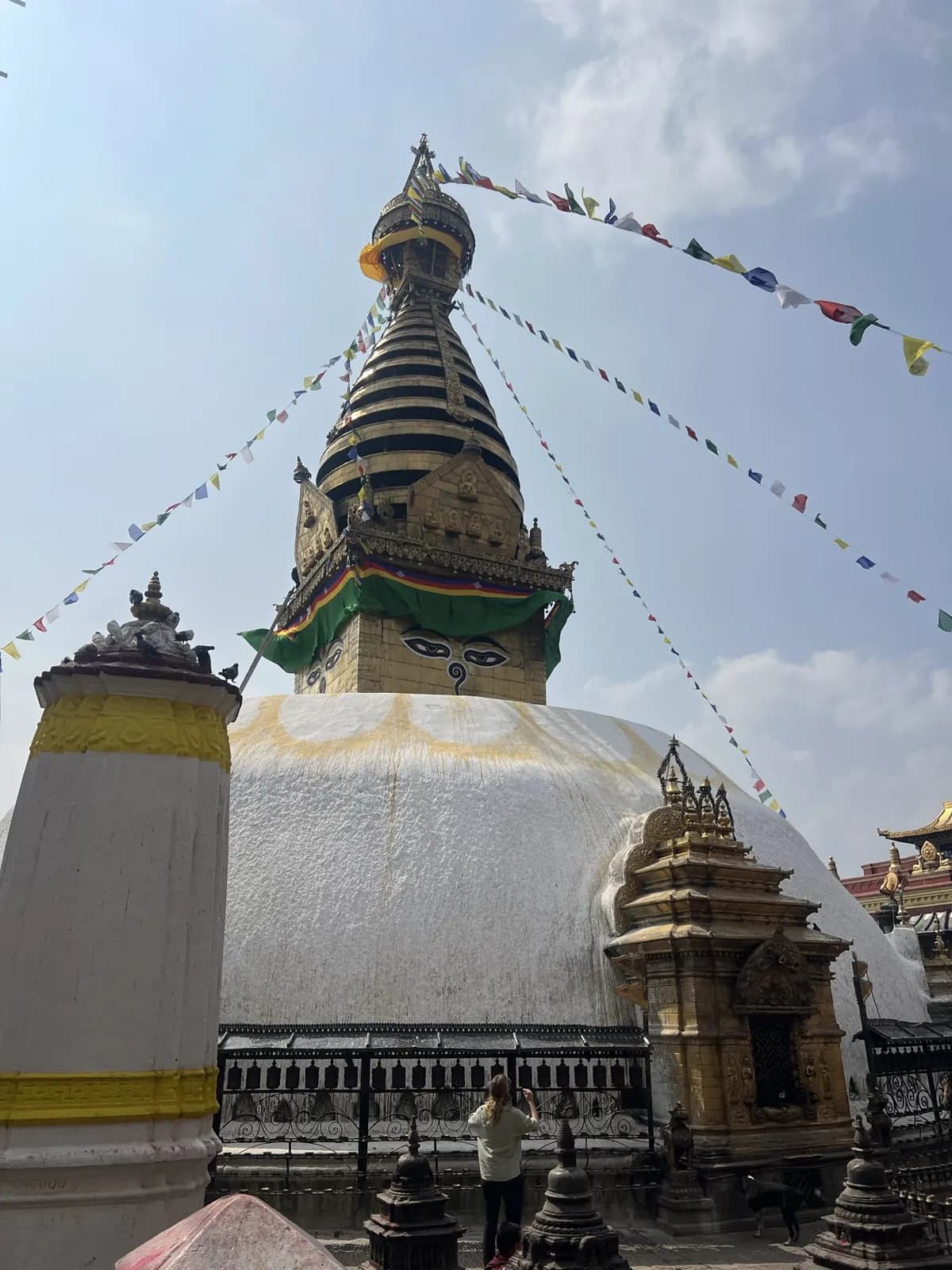
There are eight set departures a year, but most travellers choose their own dates, which costs the same for groups of five or more.
Start date
14 Feb 2027
End date
21 Feb 2027
Available
10 left
US $795
Per person
Start date
4 Apr 2027
End date
11 Apr 2027
Available
10 left
US $845
Per person
Start date
25 Oct 2026
End date
1 Nov 2026
Available
10 left
US $845
Per person
The trail from start to finish, at a glance.
Pack light for this trek
There is no altitude, no snow and no flight baggage limit, and every village has mains power and road access. Most people carry their own daypack for the four days and leave the rest of their luggage at the hotel in Pokhara, where we store it free of charge. If you would like a porter, the cost is $20 to $25 a day, shared between two trekkers. We provide the duffel and, from November to February, a sleeping bag. Bring boots that are already broken in.
Twenty-five minutes by air or seven hours by road. Unlike the Everest treks, nothing here depends on a mountain airstrip.
The flight takes twenty-five minutes and costs $55 to $85 each way, with around a dozen flights a day from Kathmandu. The tourist bus takes seven hours on a road that follows the Trishuli river and costs about $18. Neither is affected by weather in the way that a mountain airstrip is, and both run all year. Many travellers fly one way and drive the other.
Bijayapur lies on the eastern edge of Pokhara, beyond the army camp, and the road takes you to the bridge over the stream where the walk begins. There is no long transfer at either end of the trek, which is why it fits into eight days.
Unlike treks in the Khumbu, this trek does not depend on flights to Lukla, has no risk of a three-day weather delay and needs no spare day in the itinerary. If the Pokhara flight is delayed by fog on a winter morning, you drive instead and lose half a day.
Book it for the evening of day 8 or later. Even on this reliable trek, a landslide on the Prithvi Highway during a wet September can add four hours to the drive back.
Three nights in village houses and small lodges. The accommodation is simple.
The three nights on the trail are in village houses, not large lodges. Kalikasthan has the largest lodge on the route, with plain twin rooms and a shared hot shower. At Syaklung you stay in a Gurung homestay, in a room in a family house with a shared bathroom and a bucket of hot water, and you eat with the family. At Chisapani you stay in a homestay or a small lodge, depending on the month, with plain twin rooms and a hot shower at most houses.
In Kathmandu and Pokhara you stay in three-star hotels, by the lake in Pokhara, with twin or double rooms and a private bathroom.
| Where | Nights | Type | Room | Bathroom |
|---|---|---|---|---|
| Kathmandu | 2 | Three-star hotel | Twin or double | Private, hot water |
| Pokhara | 2 | Three-star hotel by the lake | Twin or double | Private, hot water |
| Kalikasthan | 1 | Village lodge, the largest on the route | Twin, plain | Shared, with a hot shower |
| Syaklung | 1 | Gurung homestay, in a room in a family house | Twin, sometimes with three beds | Shared, with a bucket of hot water |
| Chisapani | 1 | Homestay or small lodge, depending on the month | Twin, plain | Shared, with a hot shower at most houses |
Roti, eggs, porridge, curd and honey, milk tea or coffee
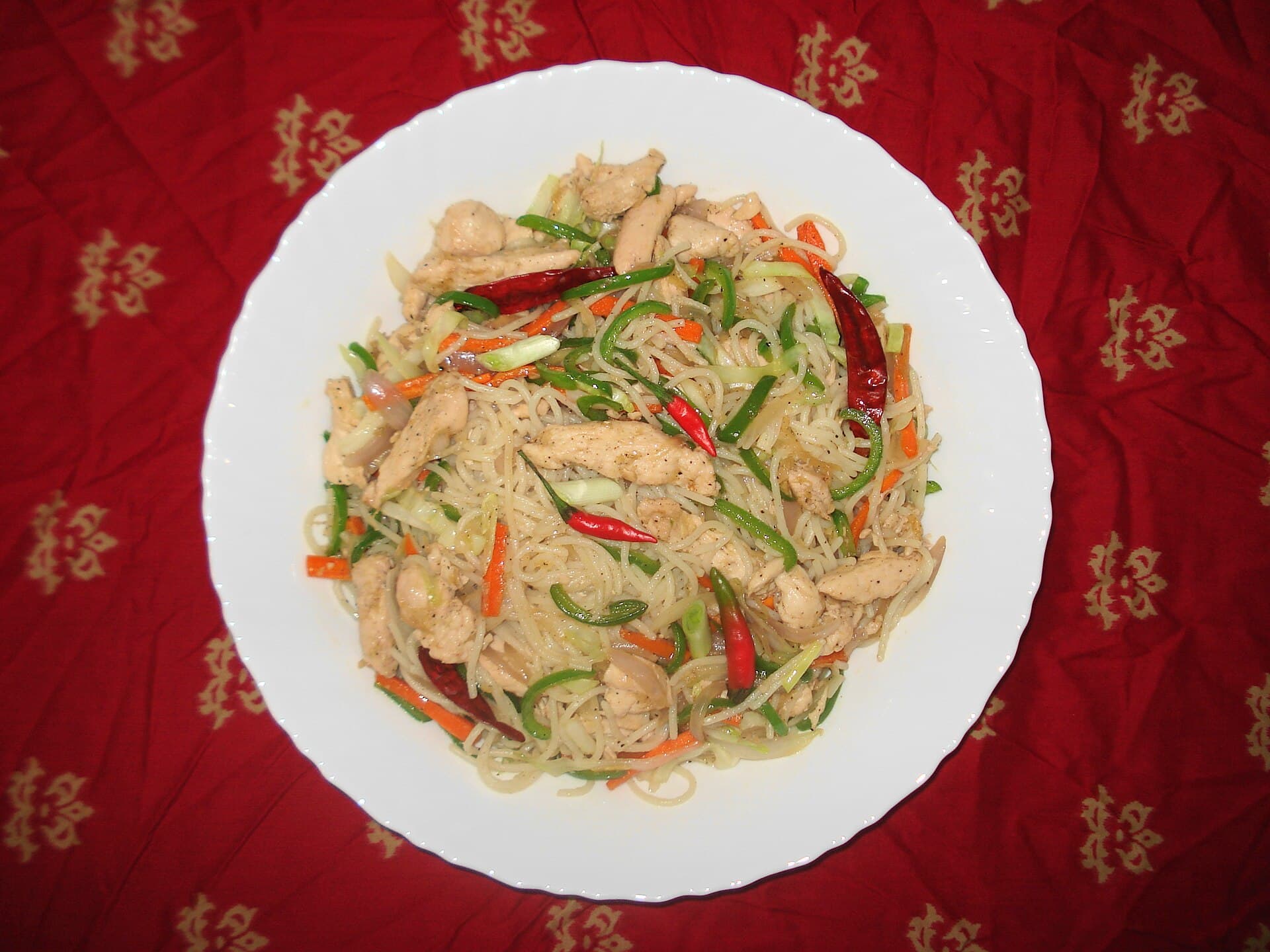
Dal bhat, fried rice, chow mein and vegetable curry, depending on what the garden provides

Dal bhat with three or four vegetable side dishes and pickle, with chicken if you ask in the morning
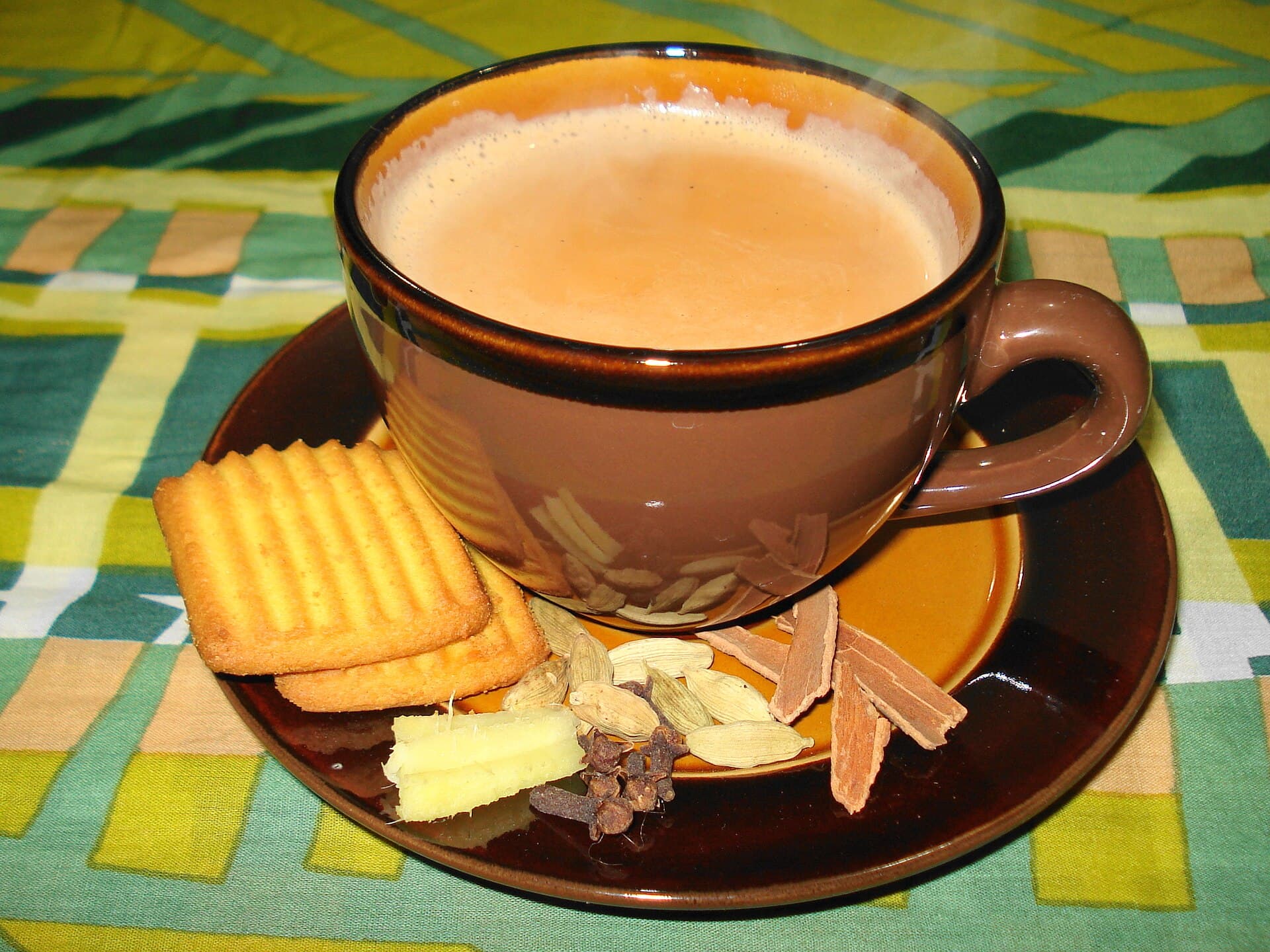
Milk tea, ginger or lemon tea, or the local millet spirit if there is a celebration
6:30Tea outside, with views of the mountains in the evening light
7:30Breakfast, usually at a table in the yard
8:30Start walking. No day on this trek requires an earlier start
12:00Lunch in a village on the ridge, for about an hour
13:30Two to three more hours of walking, mostly along the ridge rather than uphill
15:30Arrive, wash, have tea, and relax for an hour
17:30Sunset lights up the mountains to the north
19:00Dinner with your host family, with your guide translating
21:00Bed. The village goes quiet early
The easiest multi-day trek in Nepal that still offers mountain views.
Written for somebody who walks a bit and does not train. If you already run or cycle regularly, start partway through. Nothing here needs a gym.
8 weeks before, stage 1 of 5
Walk three times a week for forty-five minutes, at a pace where you can still talk. This alone is enough preparation for this trek.
The highest overnight stop is 1,730 m. Altitude sickness is extremely rare below 2,500 m, so altitude is not a concern on this trek.
The highest overnight stop on this trek is 1,730 m, and the highest point you cross is only slightly higher. Altitude sickness is extremely rare below 2,500 m, so there is no need to acclimatise, no rest day in the itinerary and no need for oxygen readings in the evening. Pokhara, where you stay before and after the trek, is lower than most European ski resorts.
First aid
Your guide carries a first aid kit with blister treatment, rehydration salts, antiseptic, painkillers and a splint, and is trained to use it. On a trek at this altitude, this covers almost every problem that occurs.
Road access to every village
A jeep can reach Kalikasthan, Syaklung and Chisapani, so anyone who needs to leave the ridge can do so within an hour or two.
Hospital care in Pokhara
Manipal Teaching Hospital in Pokhara, two to three hours away, is a full hospital with intensive care and English-speaking doctors. Nothing on this route is more than a short drive from it.
Helicopter evacuation
A helicopter is available and quick to arrive from Pokhara, although in eight years of running this trek we have never needed one. We still recommend standard trekking insurance.
Fitness and altitude are unrelated
This is the thing people get wrong most often. Training makes the walking easier and does nothing for how your body handles thin air. Strong young trekkers get altitude sickness and unfit older ones frequently do not. Go up slowly, and say something the first time your head hurts.
December, January and February are among the best months for this trek, although we advise against them for almost every other trek in Nepal.
Excellent. Clear, dry and warm enough to walk in a shirt, with very few other trekkers.
Built from Pokhara station averages with roughly five degrees taken off for the height of the ridge. Any given week runs a few degrees either side, and the winter figures assume a clear night, which most of them are.
One government-licensed guide with wilderness first aid training accompanies you, and a second guide joins for groups of eleven or more. Our guides on this route come from Kaski and Lamjung, so they know the families whose houses you stay in, which makes conversations at dinner much easier.
If you would like a porter, one porter is shared between two trekkers, carrying a maximum of 20 kg in total. Many people carry their own pack, because there is no altitude and the days are short. Either choice is fine, and hiring a porter provides a day's wage for someone from these villages.
The wages, insurance, food and accommodation of every guide and porter are included in the price on this page, not collected on the trail. Staff are insured for accidents and evacuation on the same terms we ask of you. We pay fair wages on easy treks as on difficult ones.
Tipping is customary rather than compulsory and never replaces wages. For a trek of this length, $60 to $100 per trekker for the whole team is usual, given together on the last evening. Your guide will not ask for tips.
A night in a family house at Syaklung brings income directly to a household that has no other way to earn from trekking. There are no lodge chains here, no owners based in Kathmandu and no commissions, so the money goes directly to the community.
Boiled or filtered water is included at every stop, and we do not buy plastic bottles on this trek. The ridge has no rubbish collection: anything bought here is burned here, in someone's yard, so a week of plastic bottles leaves real waste behind.
Some trekkers dislike the dirt roads on this ridge. However, the roads mean that a woman in Chisapani can now reach a hospital in two hours instead of being carried for eight. We use footpaths wherever they remain.
Always ask before photographing anyone. Remove your shoes at the door, eat with your right hand or ask for a spoon, and do not step over food or over someone who is sitting down. Cover your shoulders and knees in the villages. Your guide will explain other customs as they arise.
Email us or send a WhatsApp message with your approximate month of travel. You will receive a personal reply from someone who has walked this route, and there is no payment until you pay a deposit.
A thirty per cent deposit secures your dates, and the balance is due on arrival in Kathmandu, in cash or by card. At the same time, we ask for a copy of your passport, two photographs for the permit, your insurance certificate and any dietary requirements.
Pay by bank transfer, or by card through a secure link. The bank charges about 4 per cent on card payments, and we show you this amount at the time of payment. The balance in Kathmandu can be paid in dollars, pounds, euros or rupees.
If you cancel more than 30 days before departure, the deposit can be transferred to any other date or trek we run, with no time limit. Within 30 days it is retained, because the rooms, guide and transport have been booked. If we cancel for any reason other than weather, you receive a full refund.
For five or more people, both options cost the same. A private departure runs on your dates at your pace and can be arranged for one person at $1,190. Because this trek is short and involves no flights to coordinate, private departures are particularly easy to arrange.
Four days' notice is enough, or two if you are already in Pokhara. There are no permit delays, no domestic flights that sell out and no lodges that need reserving. This trek is a good option for travellers whose original plans have changed.
This short trek leaves you with spare days, and Pokhara is a good place to spend them.
Priced per person, arranged before you travel, and none of them included in the price above.
A thirty-minute flight from the hill above Pokhara, with the Annapurnas ahead and Phewa Lake below. A very popular activity in Pokhara.
An early jeep ride to watch the first light on Dhaulagiri, Annapurna and Machhapuchhre, returning for breakfast. It fits well on the day you arrive in Pokhara.
A five-hour drive south to the lowland jungle to look for rhinos, crocodiles and possibly a tiger. It is easy to add, as Pokhara is already partway there.
Cook, kitchen, dining and toilet tents and a camp crew for the three nights on the ridge. This is how the trek was originally walked, and it lets you camp at the viewpoints rather than in the villages.
Stay by the lake at the end rather than driving straight back to Pokhara, with a boat trip, a swim and a quiet evening.
Bhaktapur, Patan and Boudhanath with a guide who can explain the carvings. A good use of day 7 if you fly back from Pokhara in the morning.
A room of your own for all four nights in the cities. On the ridge, a private room depends on which house is open, so we cannot guarantee one.
4 versions of this journey. They use the same guides and the same lodges; what changes is the length, the comfort and how much of it you walk.
June 2026, Tripadvisor
We went on a 15 days em trip with Earthbound team, we visited Manasarovar, and Kailash. Through out the journey, the team provided excellent service. Took utmost care of each and every member of the 45 people group. The accommodations were excellent. The food was fresh cooked every single meal ( breakfast, lunch, snacks -tea and Dinner) every single day. Most excellent service and care provided . I would highly recommend this team for any of our next journeys. A++ service, care and attention provided from the time we arrived in Katmandu until we took flight back home. Special Shoutout to Arjan, Raam, and Rajanji and the entire Earthbound support crew for taking care of us so well
June 2026, Tripadvisor
Om NamaSiVaYa! I recently completed a 15-day pilgrimage to Kailash & Mansarovar with Earthbound Expeditions, and I would like to express my heartfelt appreciation to Mr. Rajan and his entire team. They did an outstanding job in arranging food, accommodation, logistics, and, most importantly, ensuring our well-being throughout the yatra by regularly monitoring our hydration, oxygen levels, and overall health. The team’s dedication, care, professionalism, and attention to detail made this challenging pilgrimage comfortable and memorable for all of us. I would strongly recommend ** Earthbound Expeditions** to anyone planning a Kailash–Mansarovar Yatra. Their service, support, and genuine care for every yatri were truly exceptional. Thank you, Mr. Rajan and team, for your outstanding service and for helping us complete this sacred journey successfully. Om NamaSiVaYa! 🙏
June 2026, Tripadvisor
It was a very satisfying trip to kailash from Kathmandu. We also did the Muktinath and Janakpur trips. The staff and service were top notch. We were treated so well from get go all the way to trip back to airport. I would highly recommend. You are dealing with a lot here in terms of altitude, China group visa etc and it is important to go with someone as experienced as Earthbound and Rajan Simkhada.
June 2026, Tripadvisor
Thank you all for such a wonderful and divine experience. This journey was far more meaningful creating the dedicated hiking group, encouraging all of us to actively participate My sincere thanks also to Rajan Ji and his crew for making the journey smooth by taking care of all the important details related to our accommodation, food, travel, and overall support. Grateful for everything 🙏 Om Namah Shivaya! 🙏
Answers to the 23 questions travellers ask us most often. If your question is not here, contact us and we will answer it.
No. We recommend this trek to people who have never trekked before. It involves four days of four to six hours of walking on paths that farmers use every day. If you can manage a long day walk at home, you can manage this trek.
A reasonably active lifestyle is enough. The first afternoon climbs 570 m and the last morning descends 900 m, and the ridge in between is gentle. Eight weeks of walking three times a week is ample preparation, and many people arrive having done less.
Yes. The trek is easy, but it offers four days experiencing life in the middle hills, the part of Nepal most trekkers pass through quickly on the way to higher routes. The mountains are in view throughout.
Yes, and this is the trek we recommend for families. Children aged eight or nine and older can manage it, the days are short enough to stop when someone is tired, and a jeep can reach every village if needed. Local families in the homestays are very welcoming to children.
No. We have run this trek for walkers in their eighties. With no altitude, no exposed sections and a road to every overnight stop, the factors that usually prevent people from trekking in Nepal do not apply.
No. The highest point you sleep at is 1,730 m, and altitude sickness is extremely rare below 2,500 m. There is no acclimatisation day on this itinerary because none is needed.
Yes, and December to February is one of the best times for it. Daytime temperatures on the ridge are around 15°C to 17°C in full sun, nights fall to about 3°C to 5°C, there is no snow at this altitude, and the mountain views are the clearest of the year. Very few treks in Nepal are suitable in winter.
We do not run this trek in July or August. Pokhara receives over 900 mm of rain in July, the mountains are hidden for weeks, the forest sections have leeches and the access roads are affected by landslides. June and September are borderline, and we will advise you on conditions for the part of the month you are considering.
In April and May the ridge reaches about 24°C to 25°C by midday, with very little shade, and it feels hotter on open sections. For this reason we start at half past eight and finish by mid-afternoon, and a sun hat is more important than a fleece.
Three nights on the ridge: a small village lodge at Kalikasthan and family homestays at Syaklung and Chisapani, with occasional changes depending on the month and which houses are open. There are beds, mattresses, quilts, shared bathrooms and a bucket of hot water. The accommodation is simple.
Yes, and this is how the trek was originally walked. For $195 we add a cook, kitchen, dining and toilet tents and a camp crew, so that you can camp at the viewpoints rather than stay in the villages. Camping offers better views but less contact with local families, and most people choose to stay in the houses.
At Kalikasthan, and usually at Chisapani, there is a plumbed hot shower, free or for a dollar. At Syaklung there is a bucket of hot water in a stone washroom, which is adequate after a warm day. You will be able to wash every day on this trek.
Ncell and NTC cover the whole ridge, and 4G works along most of it, which is better coverage than at 4,000 m in the Khumbu. Wifi is available at Kalikasthan and is unreliable elsewhere. Buy a SIM card in Kathmandu or Pokhara, as you cannot register one in a village.
In places, yes. Dirt roads reach all three villages, and two or three short sections of the route follow the road. We use footpaths wherever they still exist. Traffic is light, with only a few jeeps and motorbikes a day.
Dal bhat twice a day, cooked in the house where you stay, with three or four vegetable side dishes from the garden and a strongly flavoured pickle. Breakfast is roti, eggs and curd. The food is fresher than trail food at altitude, and there is no menu, which most people come to prefer.
Very few. In a busy week in November you might pass two or three other groups in four days, and in January you may see none. The road building that some trekkers dislike is one reason this ridge has remained quiet.
An Annapurna Conservation Area permit at NPR 3,000, about $22, issued by the National Trust for Nature Conservation in Kathmandu or at the Damside counter in Pokhara. We also buy you a TIMS card at NPR 2,000, about $15. Both are included in your trip price, and we arrange them using a copy of your passport and two photographs.
Sources disagree, and checks on this ridge are much less strict than at the Annapurna checkpoints at Birethanti. We buy one because it costs $15 and avoids any problem at a checkpoint.
$100 to $150, changed into rupees, covers drinks, snacks, the boat at Begnas, a shower or two and your tips, with some to spare. There are ATMs throughout Pokhara but none on the ridge, so withdraw what you need before you leave town.
A standard travel policy covering trekking, medical treatment and repatriation. You do not need the high-altitude cover or helicopter cover required for the Everest treks, because you never go above 1,730 m. Check that your policy does not exclude Nepal.
No. If you are already in Pokhara, we can run it as a six-day trip starting and finishing there, which is cheaper. Many people add it to the end of another trek or to a work trip, and it is easy to shorten to three walking days if you have limited time.
A maximum of ten on a set departure, which runs with a minimum of one. For groups of eleven or more, a second guide joins. Most people book private departures on their own dates, which costs the same for groups of five or more and is easier to arrange on this trek than on any other we run.
Yes, easily, because it is short and ends in Pokhara. Popular combinations are three days in Chitwan, a week on the Annapurna Base Camp trail afterwards, or the Panchase ridge on the other side of the lake. Tell us your plans and we will arrange the dates.
Didn't find what you were looking for?
Search every word on this page, or ask somebody who has walked the route.
8 days
$845 per person