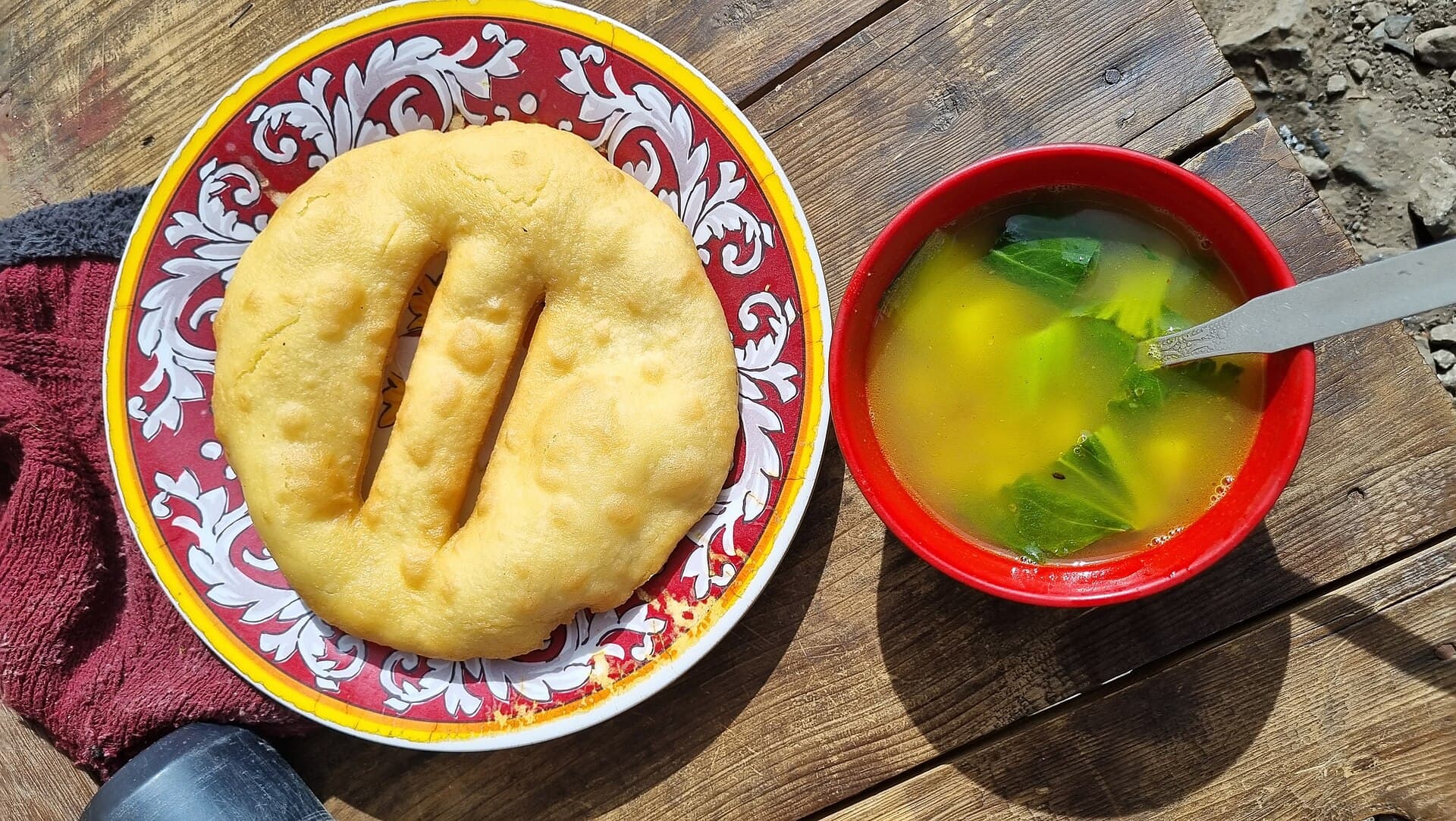
Breakfast
Porridge, Tibetan bread, eggs, chapati, pancakes, tea or coffee
All destinations
All destinationsTwo days of walking up to a ridge, an hour on a hilltop at 3,210 m, and sunrise over the Dhaulagiri and Annapurna ranges. The shortest and gentlest trek we offer in the Himalaya.
Two days of walking up to a ridge, an hour on a hilltop at 3,210 m, and sunrise over the Dhaulagiri and Annapurna ranges. The shortest and gentlest trek we offer in the Himalaya.
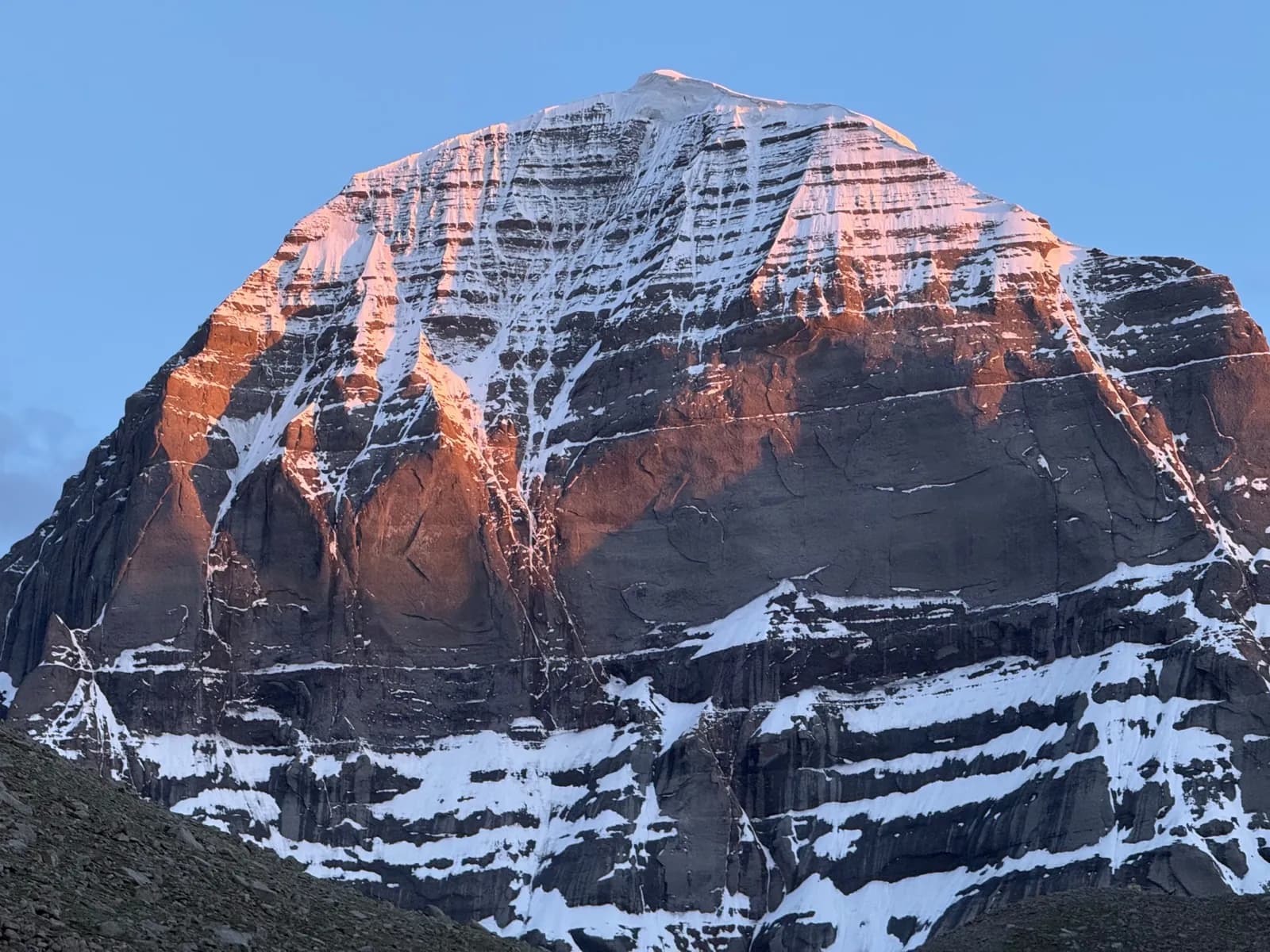
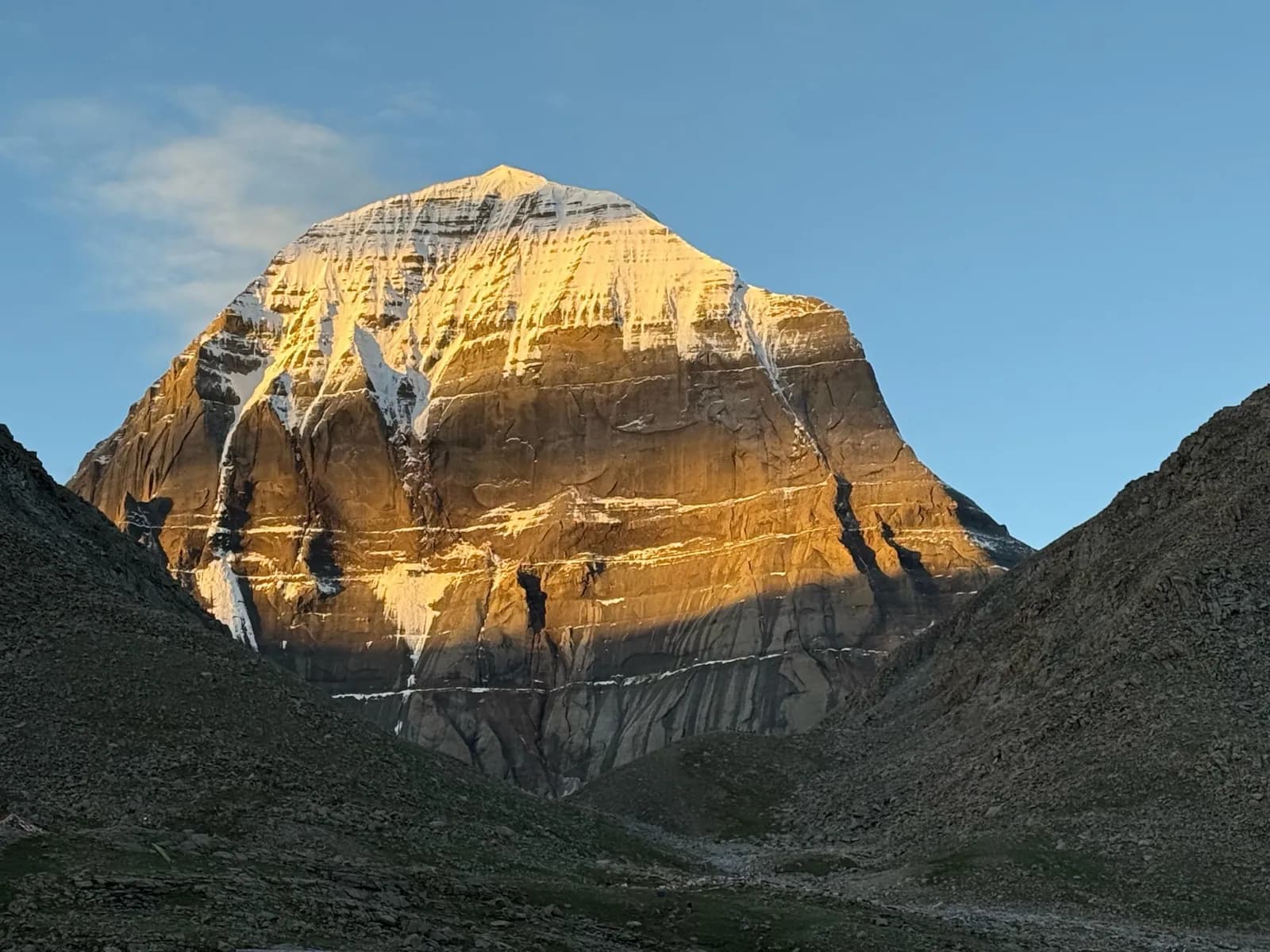
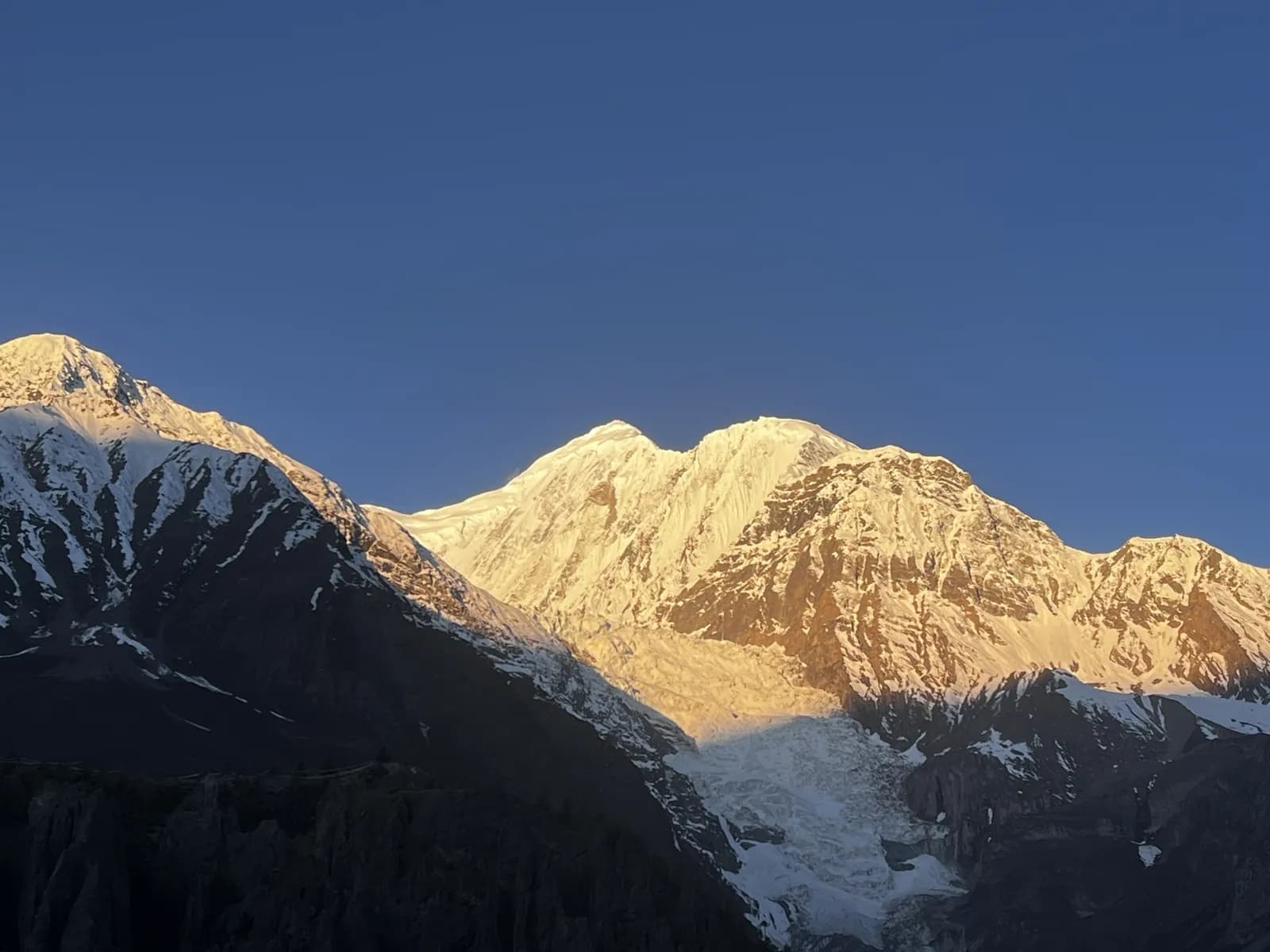
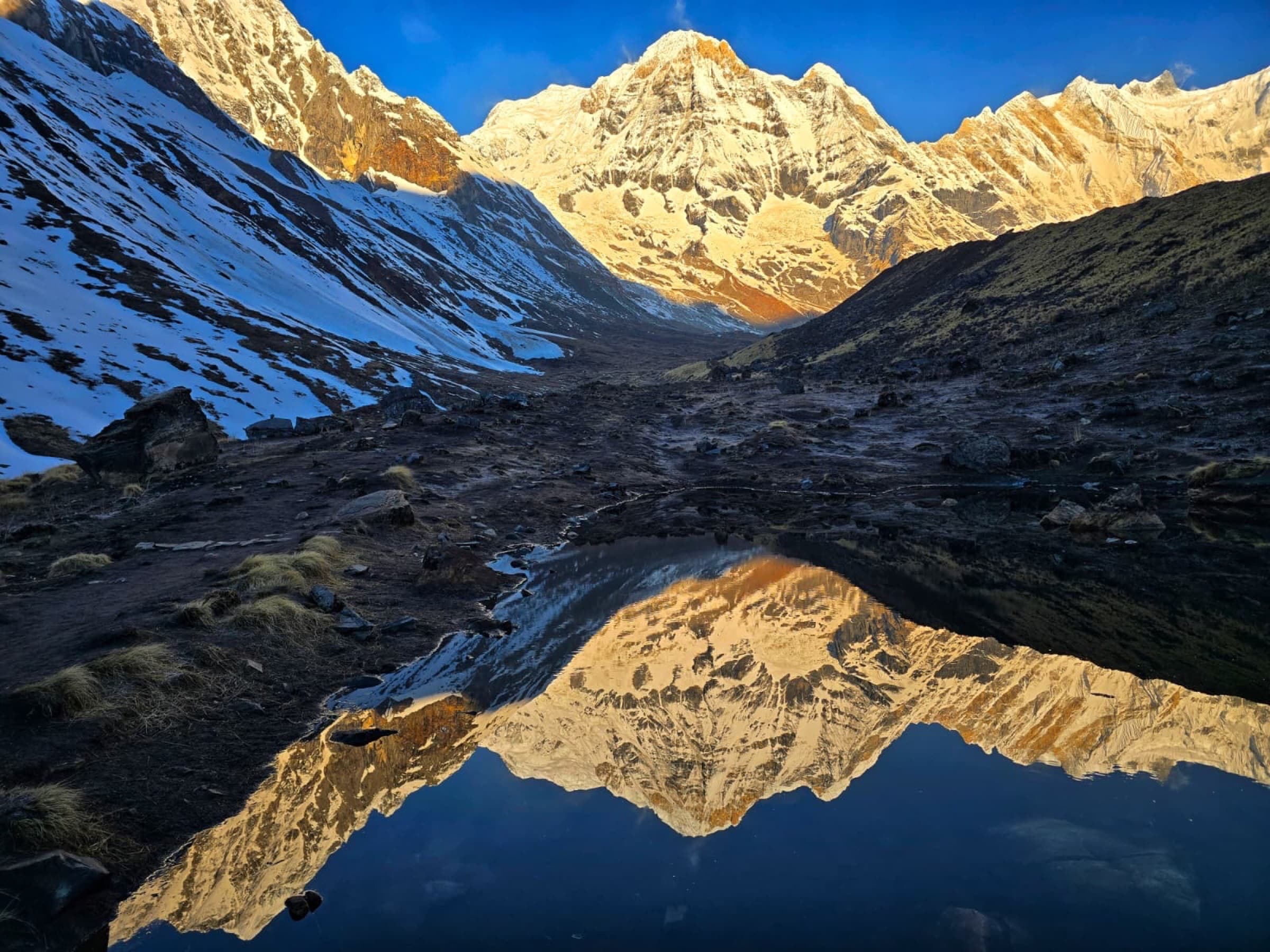
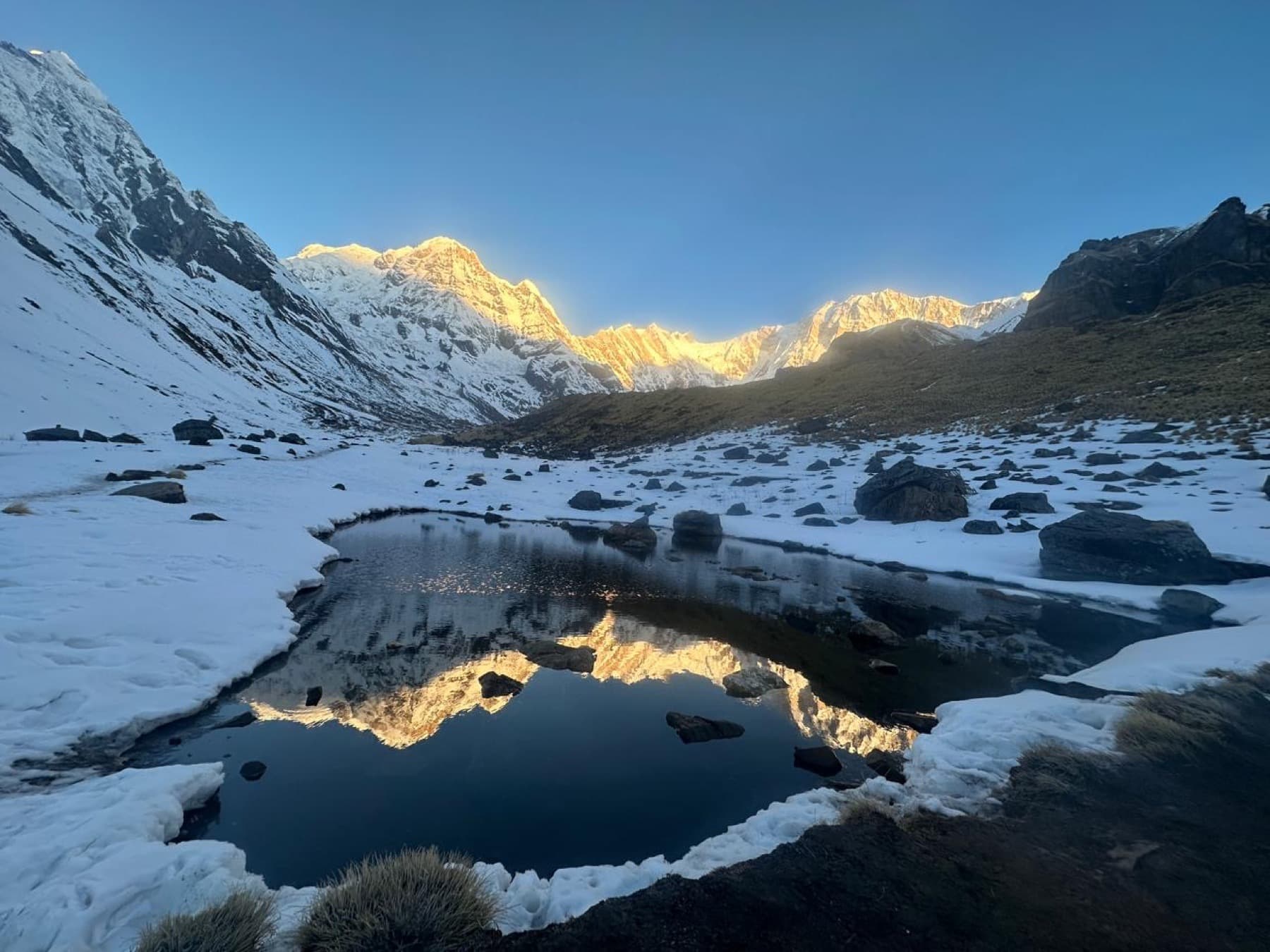
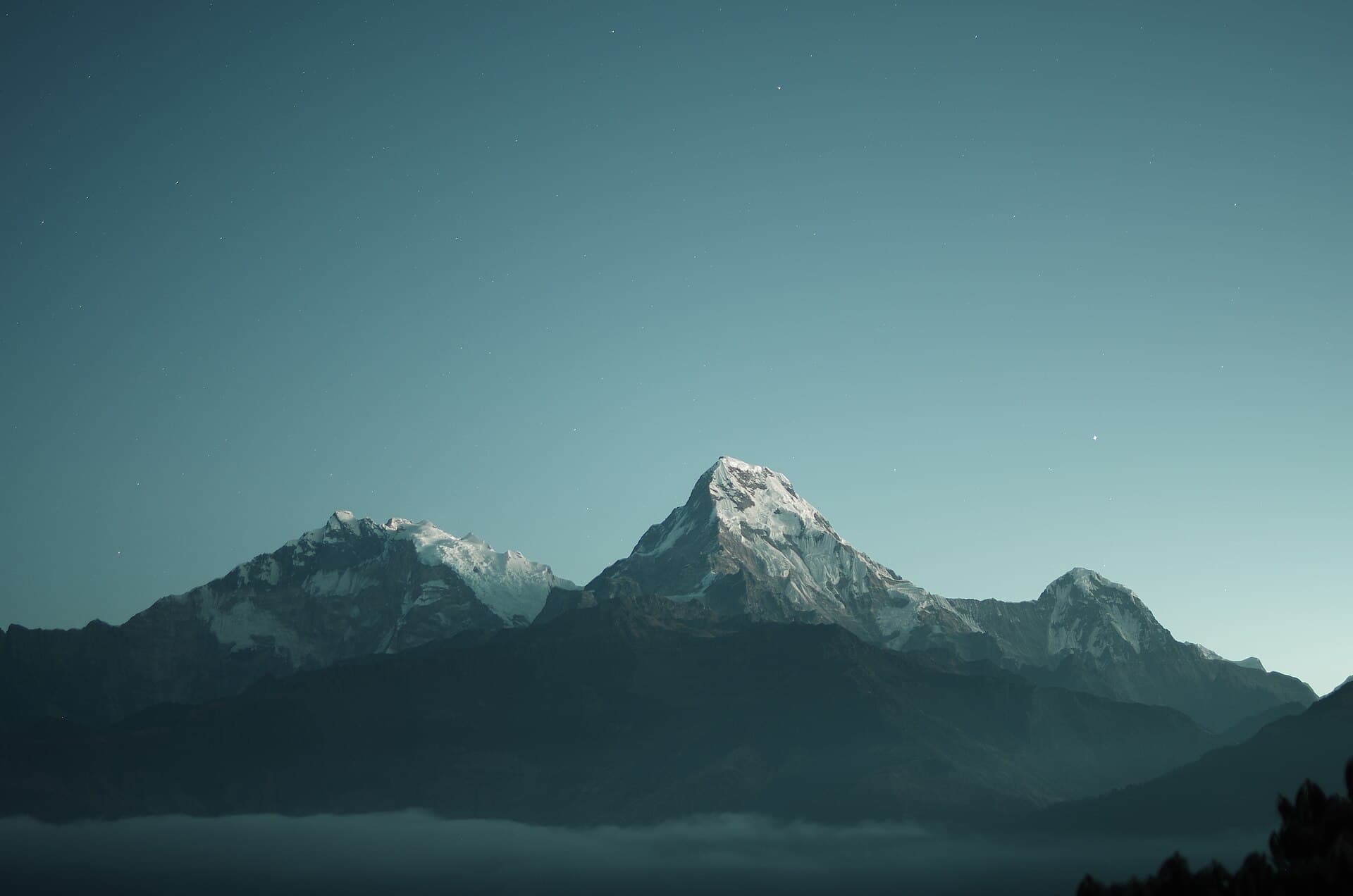
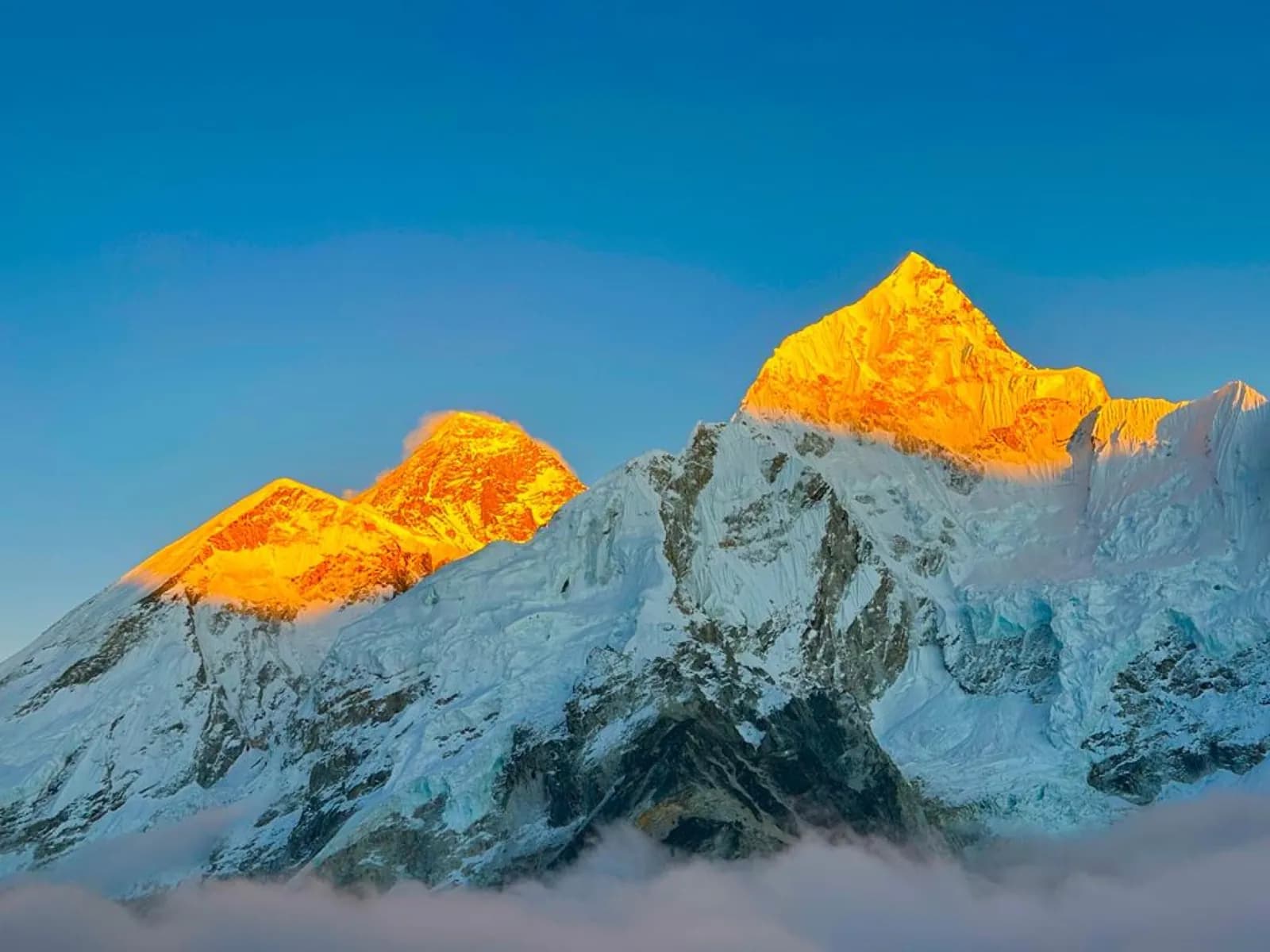
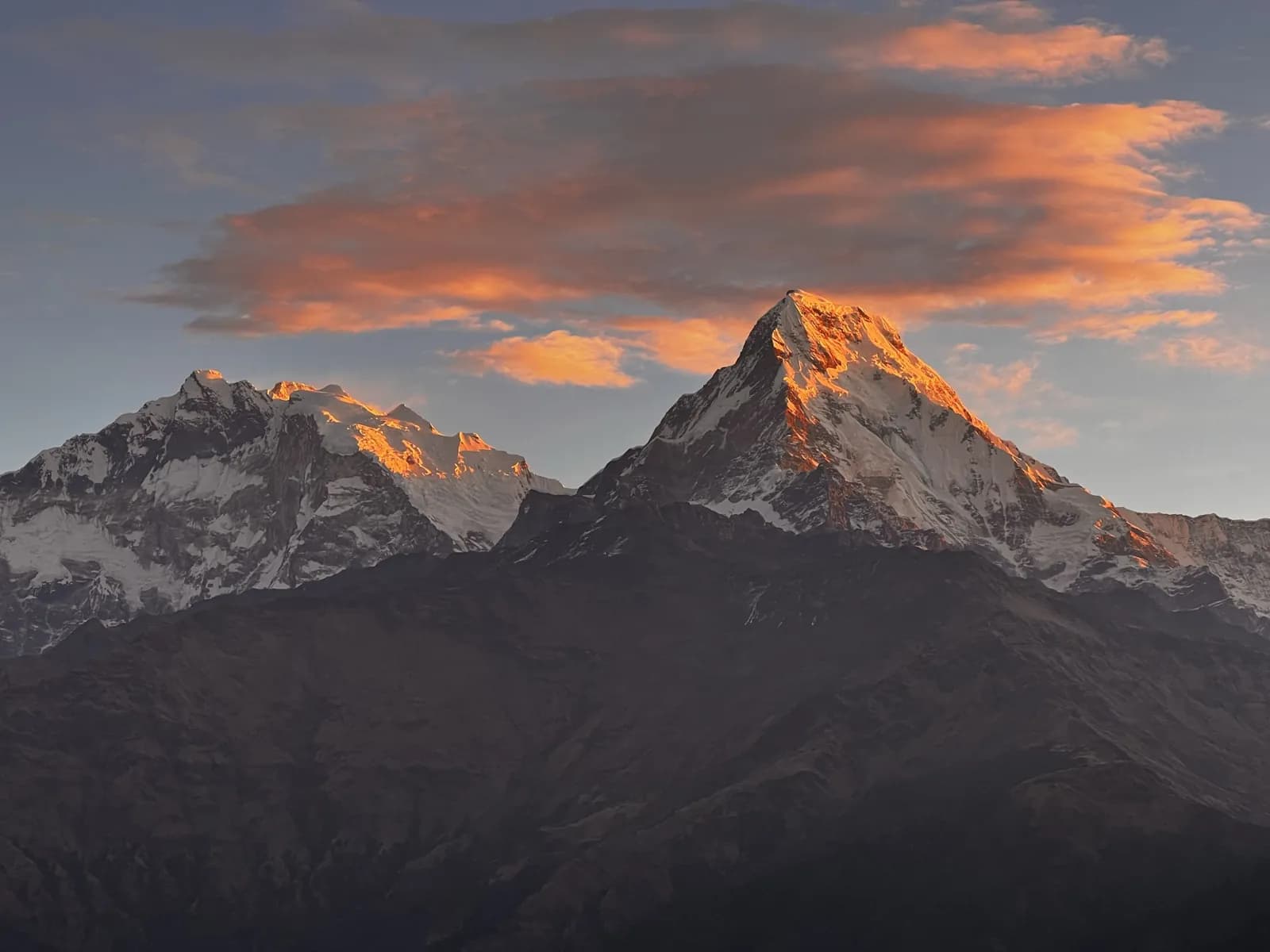
The trip takes seven days, four of them on the trail. You fly to Pokhara, drive to the road head above Birethanti, and walk for two days through Magar and Gurung villages to the ridge at Ghorepani. Before dawn on the third walking day, you climb for 45 minutes to the viewing tower on Poon Hill, at 3,210 m, and watch the sunrise on Dhaulagiri, Annapurna South, Nilgiri and Machhapuchhre. You then return the way you came.
First-time trekkers in the Himalaya, families with children who enjoy walking, and anyone with less than two weeks available. There is no technical ground, no pass, no snow in the trekking seasons and no significant altitude. If you can manage a hilly day walk at home, and do it two days in a row, you are fit enough for this trek.
We offer two treks that include Poon Hill, and they are different trips. The circuit continues east from Ghorepani to Tadapani and down through Ghandruk, which adds three days, considerably more climbing and several hundred dollars. This trek goes up to Poon Hill and returns down the same staircase. It is shorter, less expensive and easier, and it is the right choice if you have days rather than weeks in Nepal. If you have two weeks, choose the circuit instead.
The climb from Tikhedhunga to Ulleri is a stone staircase of more than 3,000 steps, with roughly 500 metres of ascent. It is not dangerous, but it is slow and tiring. The other is the 4:30 am start, in the cold and dark, for the walk up to the viewpoint. The rest of the trek is straightforward.
When you land in Kathmandu, we meet you outside customs and drive you to your hotel. There is nothing to do for the trek this evening, so you can rest after your flight. Over dinner your guide briefs you on the four walking days, checks your boots and insurance, and answers your questions.
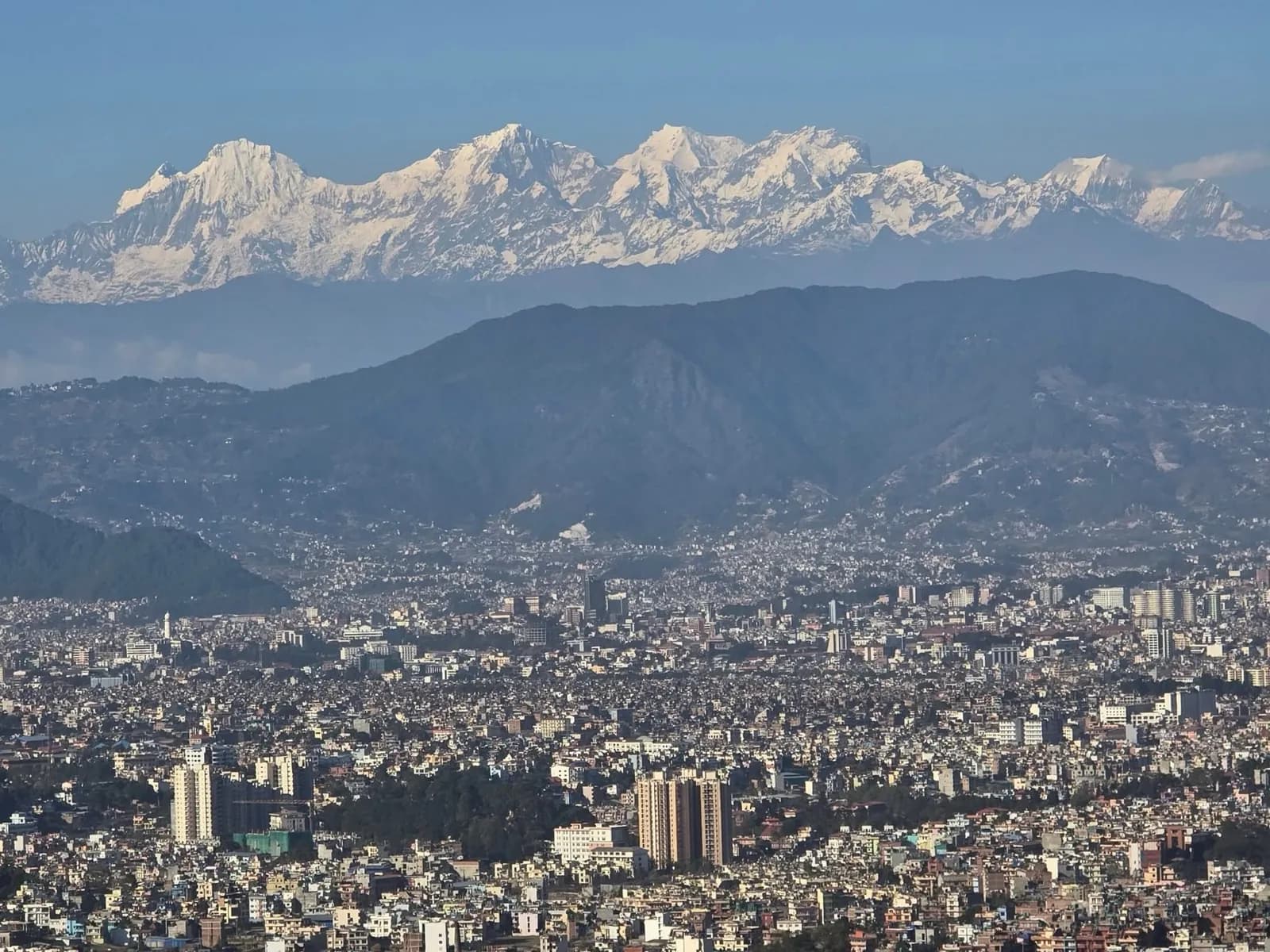
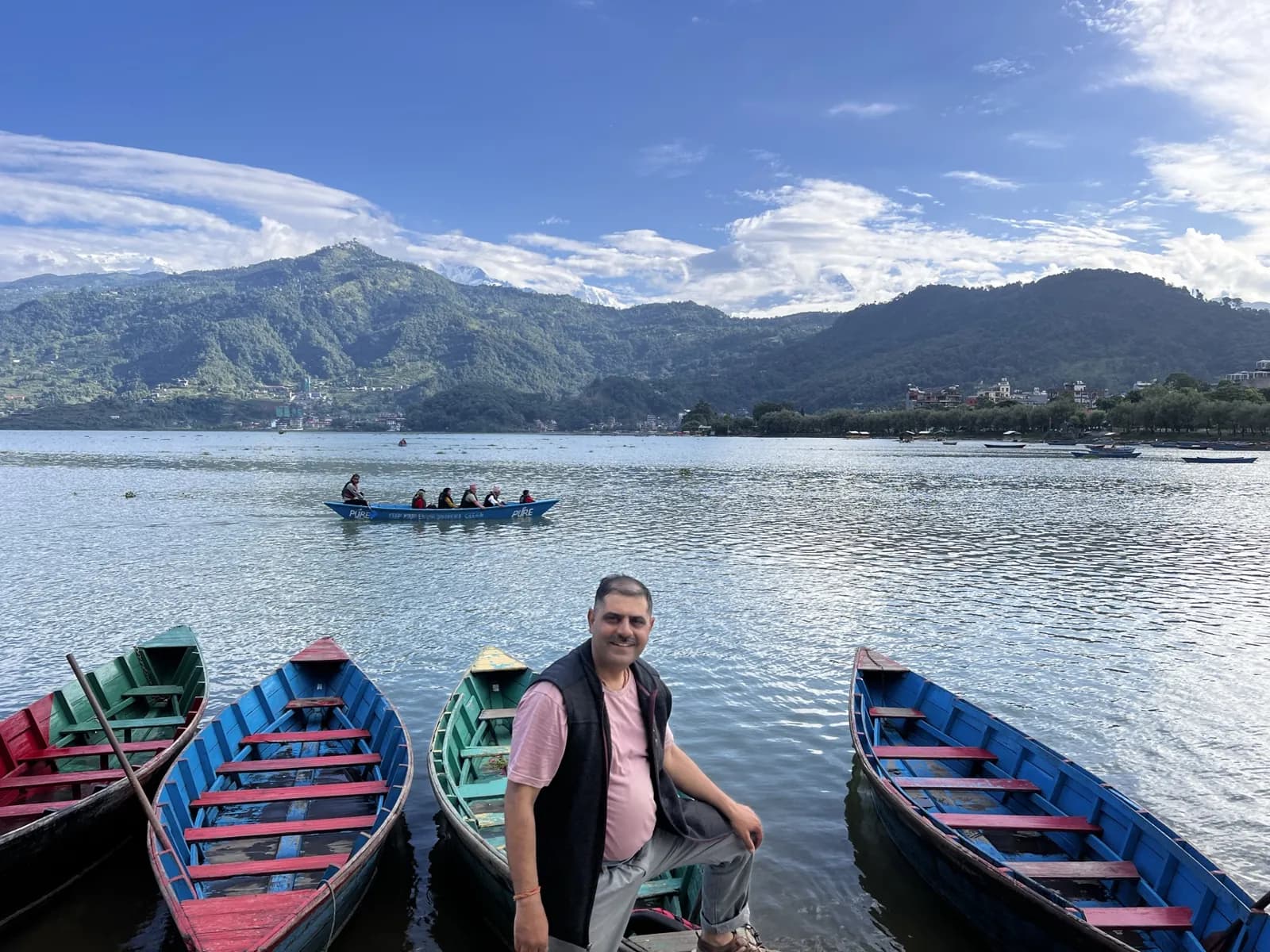
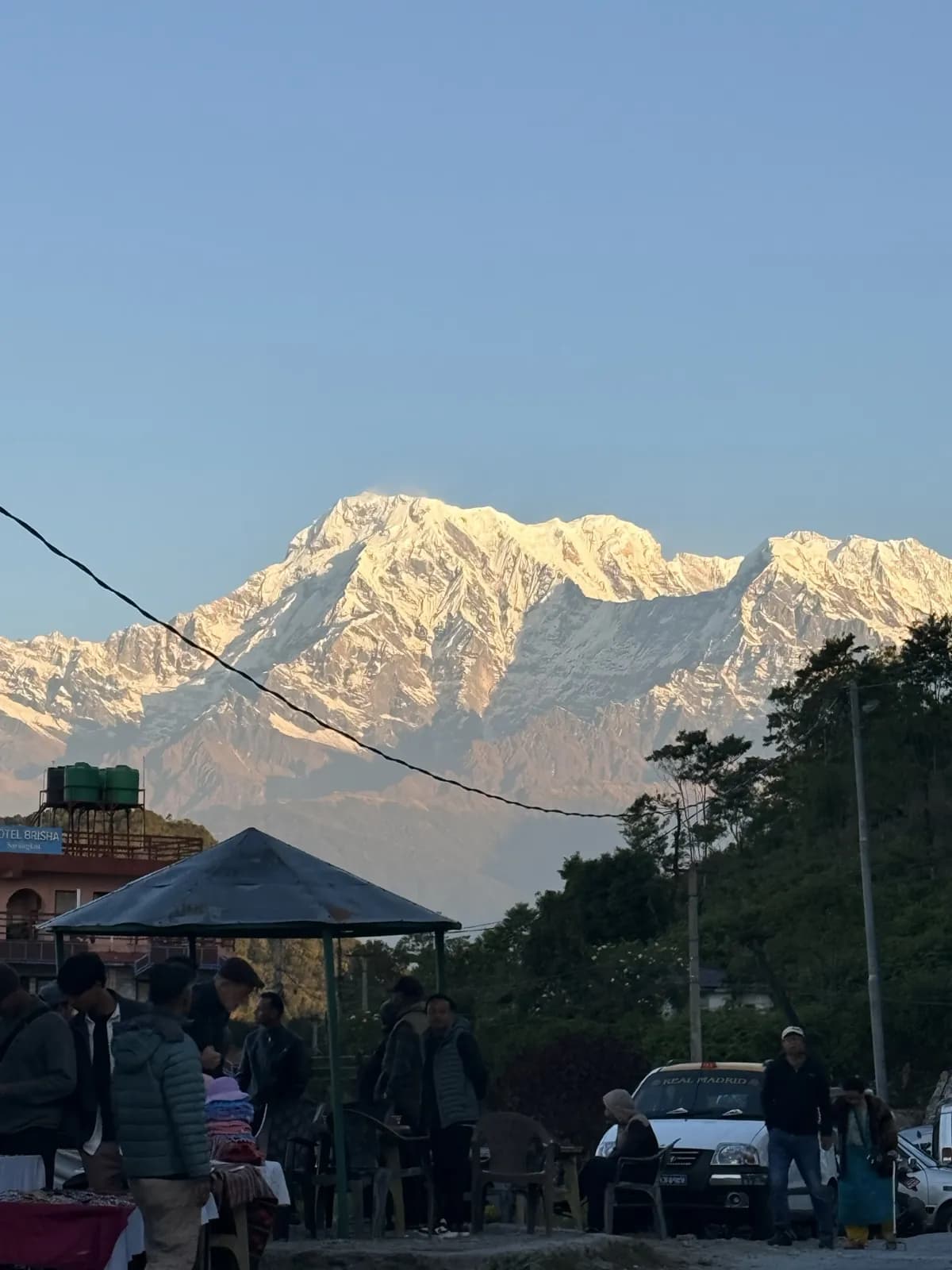
A 25-minute flight west to Pokhara, or six hours by road if you would like to see the countryside. Pokhara lies at 822 m beside a lake below the Annapurna range, and from here you can see how close the mountains are. The afternoon is free.
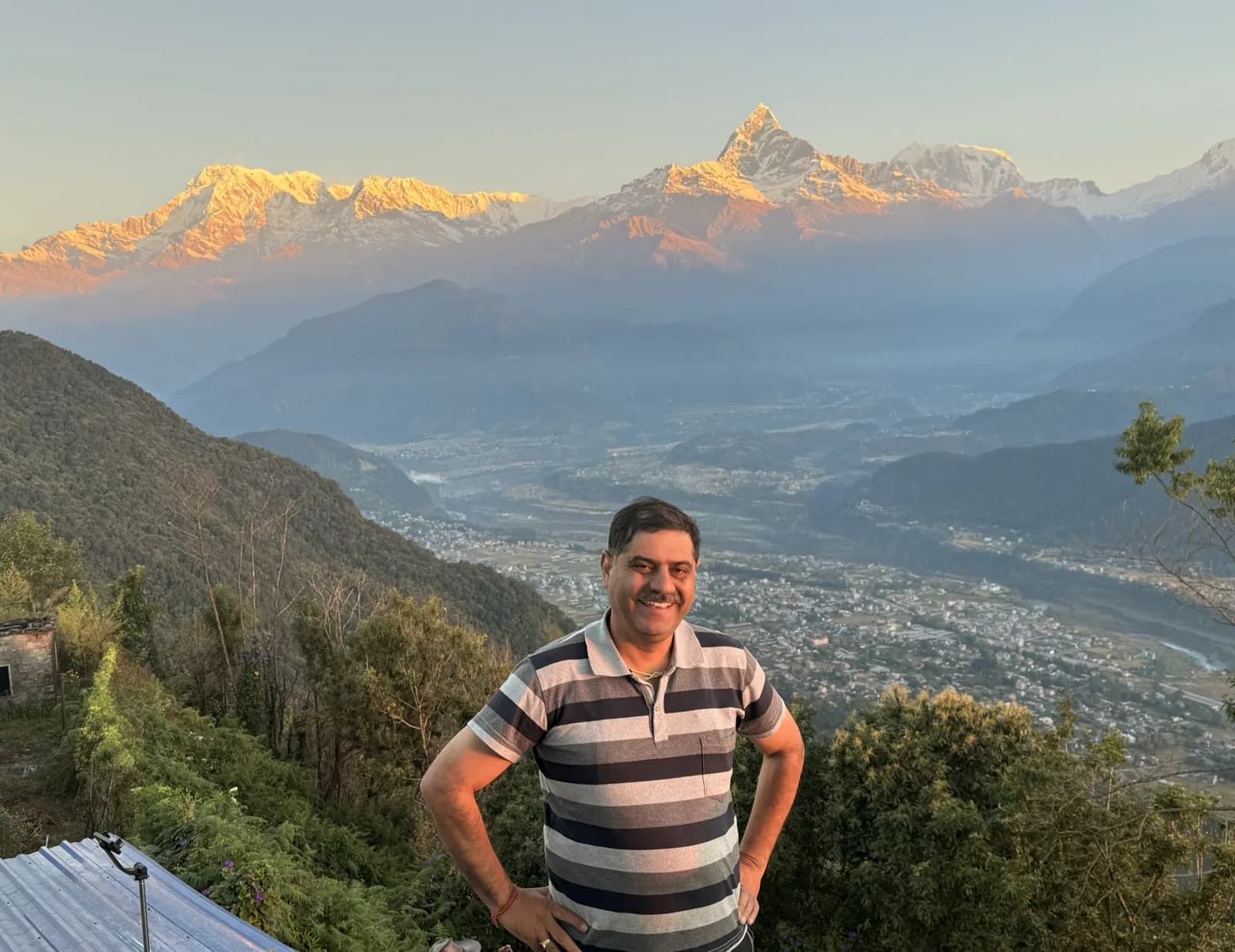
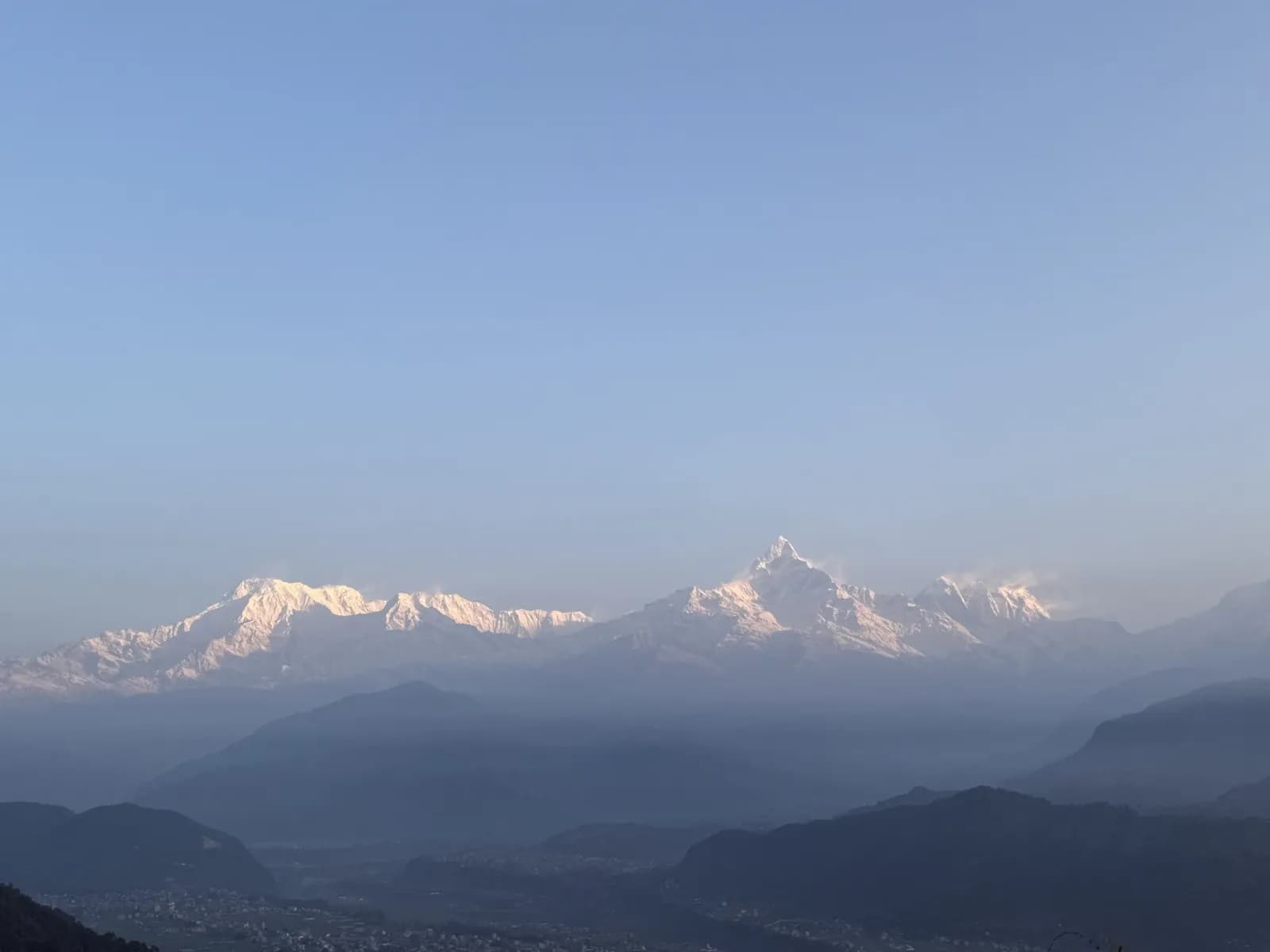
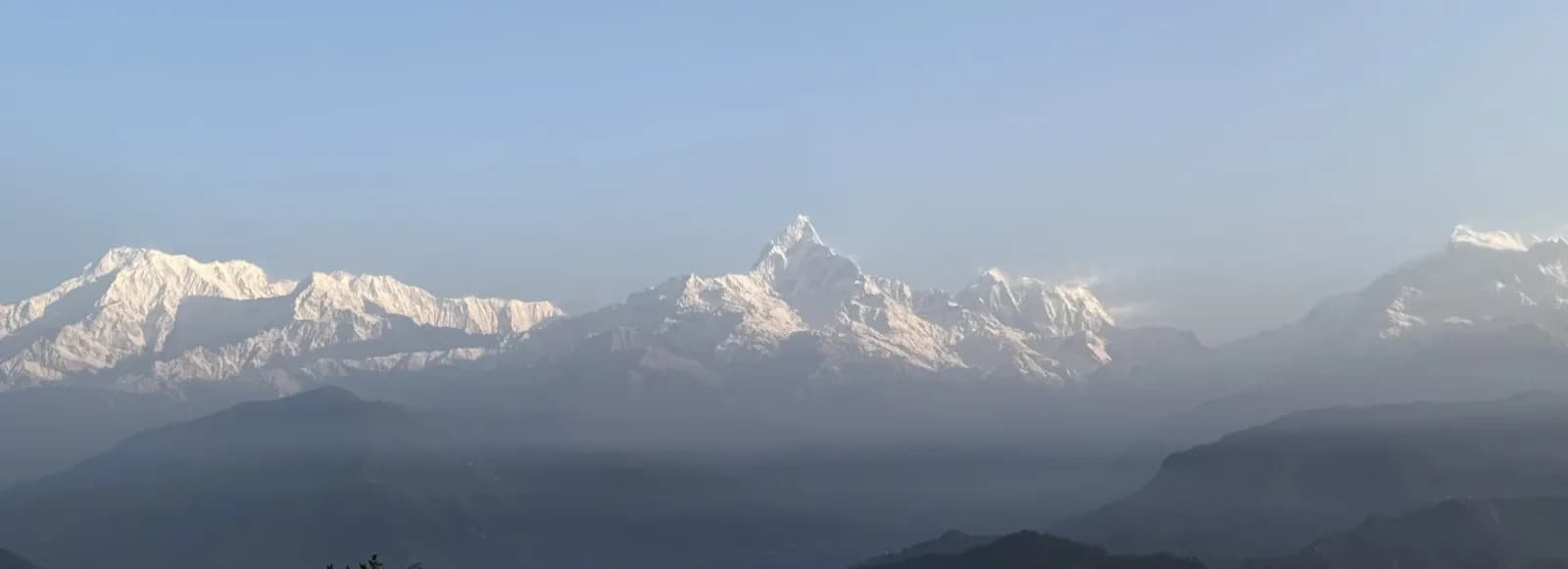
An hour and a half by jeep to the road head above Birethanti, where your permits are checked at the conservation area post. Then a gentle walk upstream beside the Bhurungdi Khola, on stone paths and across suspension bridges, past buffalo and terraced millet. The first day is deliberately short, because the next day is harder.
The most demanding day of the trek. A steady climb to Ulleri up a stone staircase of more than 3,000 steps, taken slowly with plenty of stops, then an easier section through rhododendron and oak forest via Banthanti and Nangethanti to Ghorepani on its ridge. Roughly 500 metres of the climb is on the staircase.
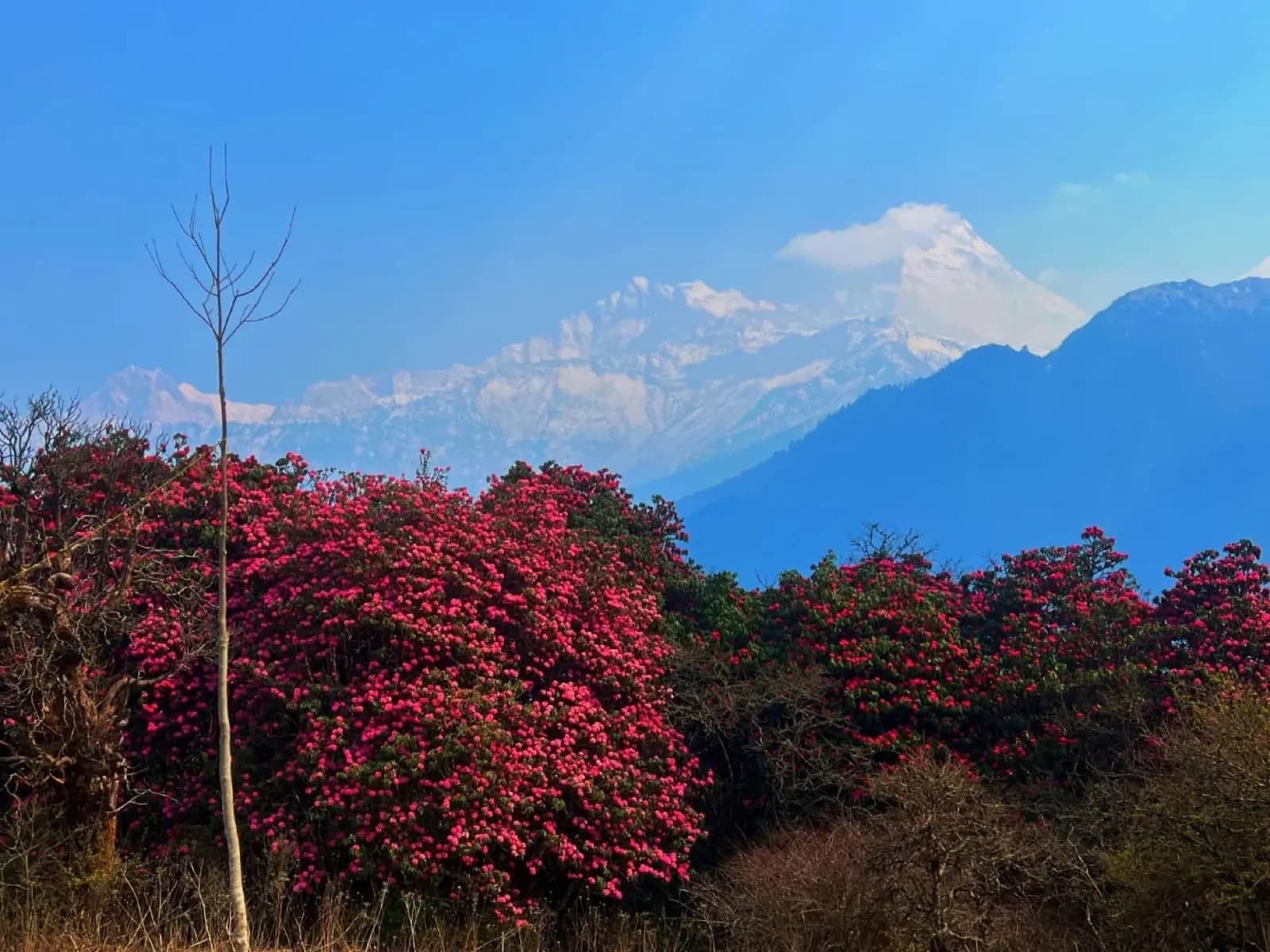
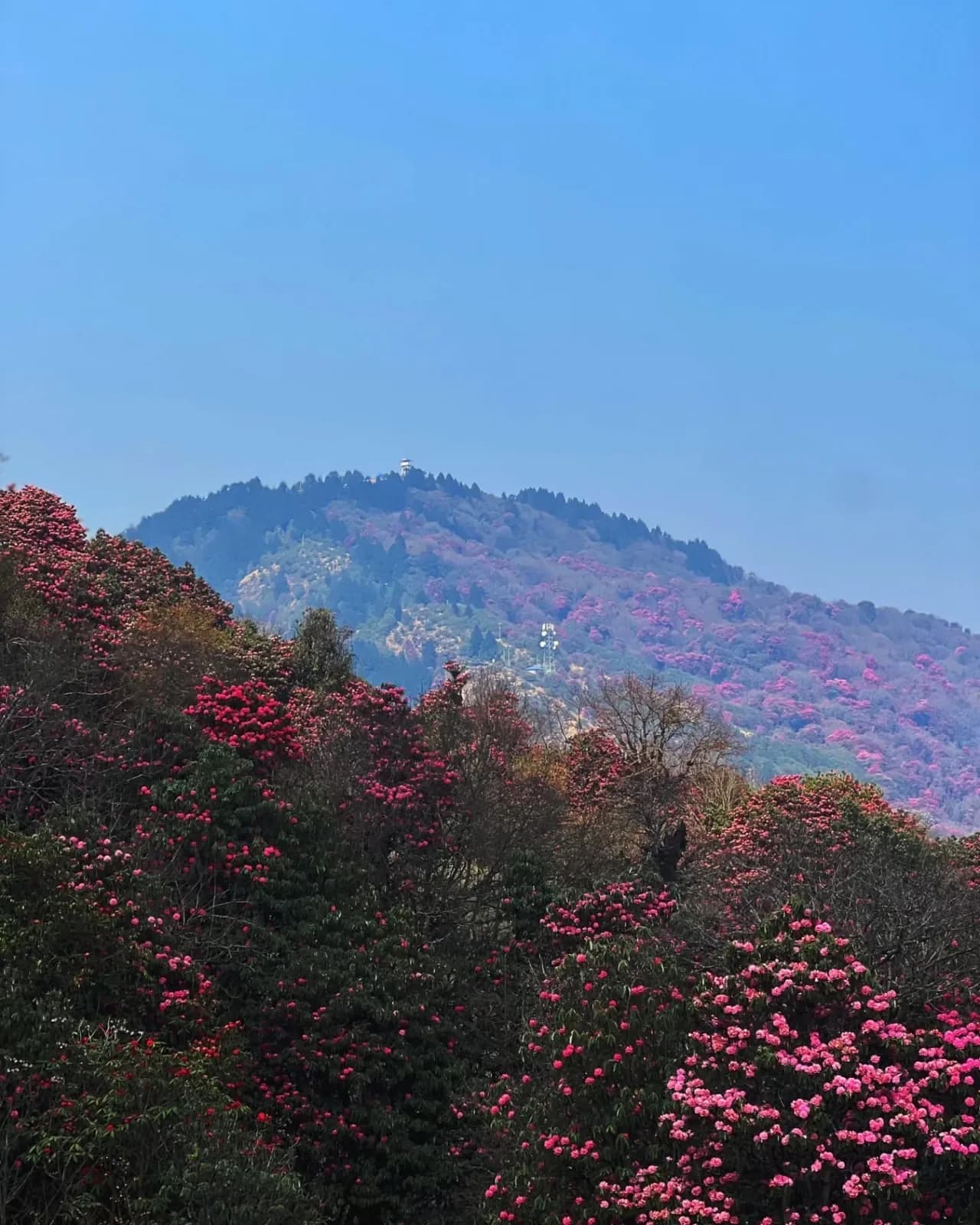
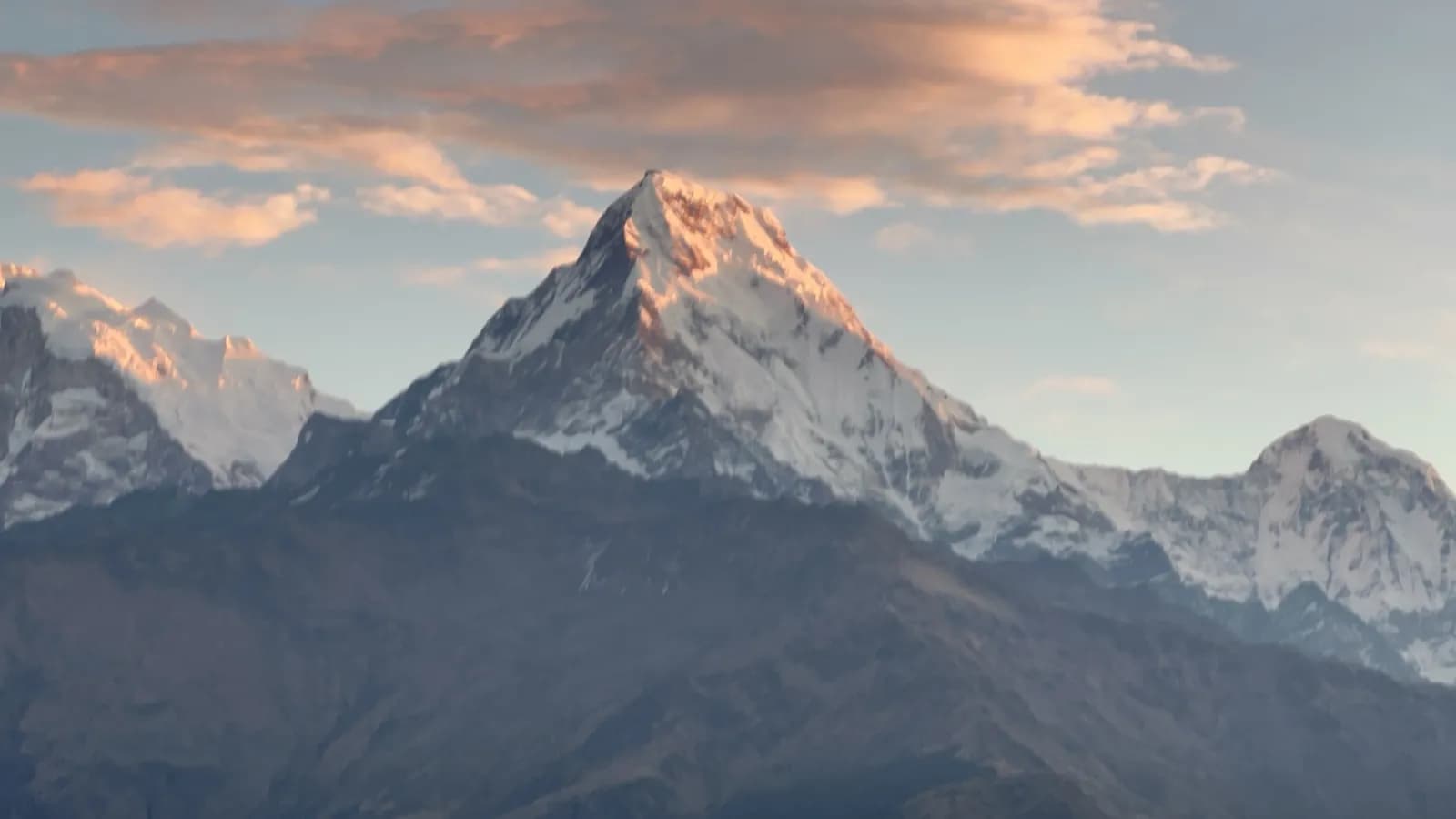
An early start at 4:30 am and a 45-minute climb by head torch up the steps to the viewing tower on Poon Hill, to see the first light on Dhaulagiri, Annapurna South, Nilgiri and the fishtail summit of Machhapuchhre. Return for breakfast, then a long descent along the same route to Hile. The descent is hard on the knees but easy on the lungs.
Two easy hours beside the river to Birethanti and out through the checkpoint, where the jeep is waiting. Lunch in Pokhara, then the afternoon flight to Kathmandu. In the evening we have dinner together.
We take you to the airport for your flight home. If you have a spare day, Kathmandu has plenty to see: the stupa at Boudhanath, the carved squares of Patan, and shops in Thamel that can post your purchases home for you.
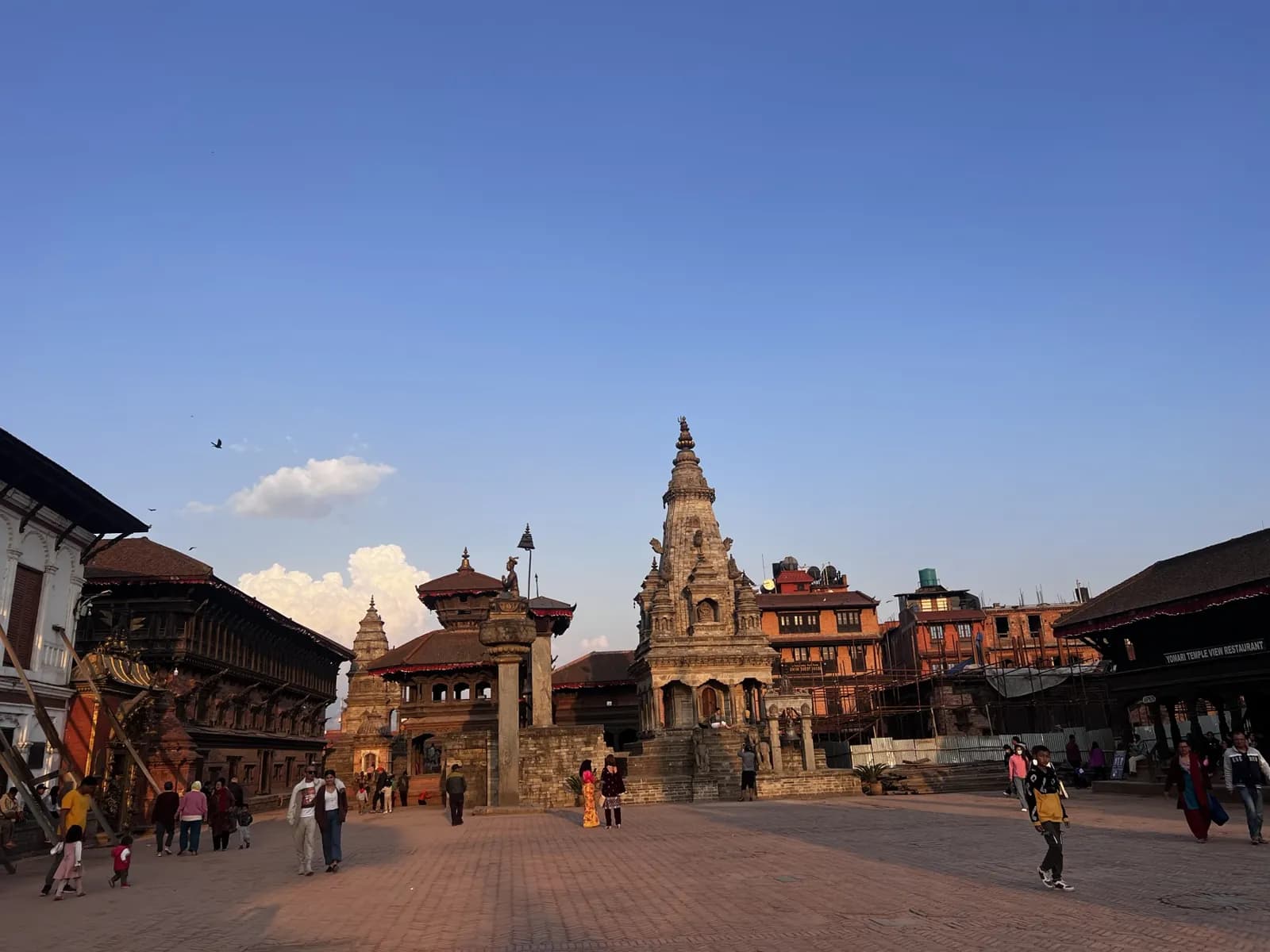
Short treks are easy to fit into your plans, so most people choose their own dates. These are the departures already scheduled.
Start date
29 Nov 2026
End date
5 Dec 2026
Available
12 places left
US $637
Per person
Start date
18 Apr 2027
End date
24 Apr 2027
Available
12 places left
US $687
Per person
Start date
21 Mar 2027
End date
27 Mar 2027
Available
12 places left
US $687
Per person
The trail from start to finish, at a glance.
A short, low trek needs much less equipment than most packing lists suggest. The item people most often underestimate is a warm set of clothes for the viewpoint at dawn.
A short packing list
With four walking days, three nights in teahouses and nothing above 3,210 m, you need only a small bag. We provide the duffel bag and a sleeping bag, and a porter shared between two trekkers carries up to 20 kg for the pair. Many people on this trek carry everything themselves. Anything you do not need on the trek can be stored free of charge at our Kathmandu or Pokhara office.
You travel to Pokhara, then by jeep. There is no mountain airstrip that could delay you for days, so a trek this short can be planned around your return flight.
The flight from Kathmandu takes 25 minutes and lands at an airport on flat ground at 822 m. There is no Lukla flight on this trek: delays are measured in hours rather than days, and if the weather closes in completely, you can travel by road. This is why a seven-day trek can be booked around a fixed flight home without the spare day that every Everest itinerary needs.
The drive from Kathmandu to Pokhara takes six to seven hours along the Trishuli river on the Prithvi Highway, and costs about 25 US dollars by tourist coach. On a trip this short most people fly, but the drive is a good way to see central Nepal and some travellers prefer it. Let us know which you prefer when you book, and we will price the trip accordingly.
Treks used to start at Nayapul, but the jeep track now runs beyond Birethanti and, in dry conditions, as far as Hile or even Ulleri. We drive as far as the road is safe on your dates and start walking from there, so day 3 involves three to four hours of walking wherever the road ends.
On this trek you are never more than half a day's walk from a jeep, although this is rarely needed. From Ghorepani a pony can be arranged within an hour, and a vehicle can meet you at the road head the same day. A helicopter to Pokhara is possible and costs around $2,000 for the aircraft, although we have never needed to call one on this trek.
The three nights on the trail are spent in teahouses: family-run lodges with one warm dining room and simple twin rooms with foam mattresses and thin walls. On this route most rooms have a private bathroom, and a hot shower is available for a fee. The nights are cool rather than cold, but a sleeping bag is still useful at Ghorepani.
Tikhedhunga is a teahouse beside the stream. Ghorepani, on the ridge, has the best lodges on the route and is where you sleep before the dawn walk up Poon Hill. Hile is a small village teahouse on the way down. In Kathmandu and Pokhara you stay in three-star hotels.
| Where | Nights | Type | Room | Bathroom |
|---|---|---|---|---|
| Kathmandu | 2 | Three-star hotel | Twin or double | Private, hot water |
| Pokhara | 1 | Three-star hotel, lakeside | Twin or double | Private, hot water |
| Tikhedhunga | 1 | Teahouse beside the stream | Twin | Private in most lodges, hot shower for a fee |
| Ghorepani | 1 | Teahouse on the ridge, the best on this route | Twin | Private, hot shower for a fee |
| Hile | 1 | Teahouse | Twin | Private, hot shower for a fee |
Porridge, Tibetan bread, eggs, chapati, pancakes, tea or coffee
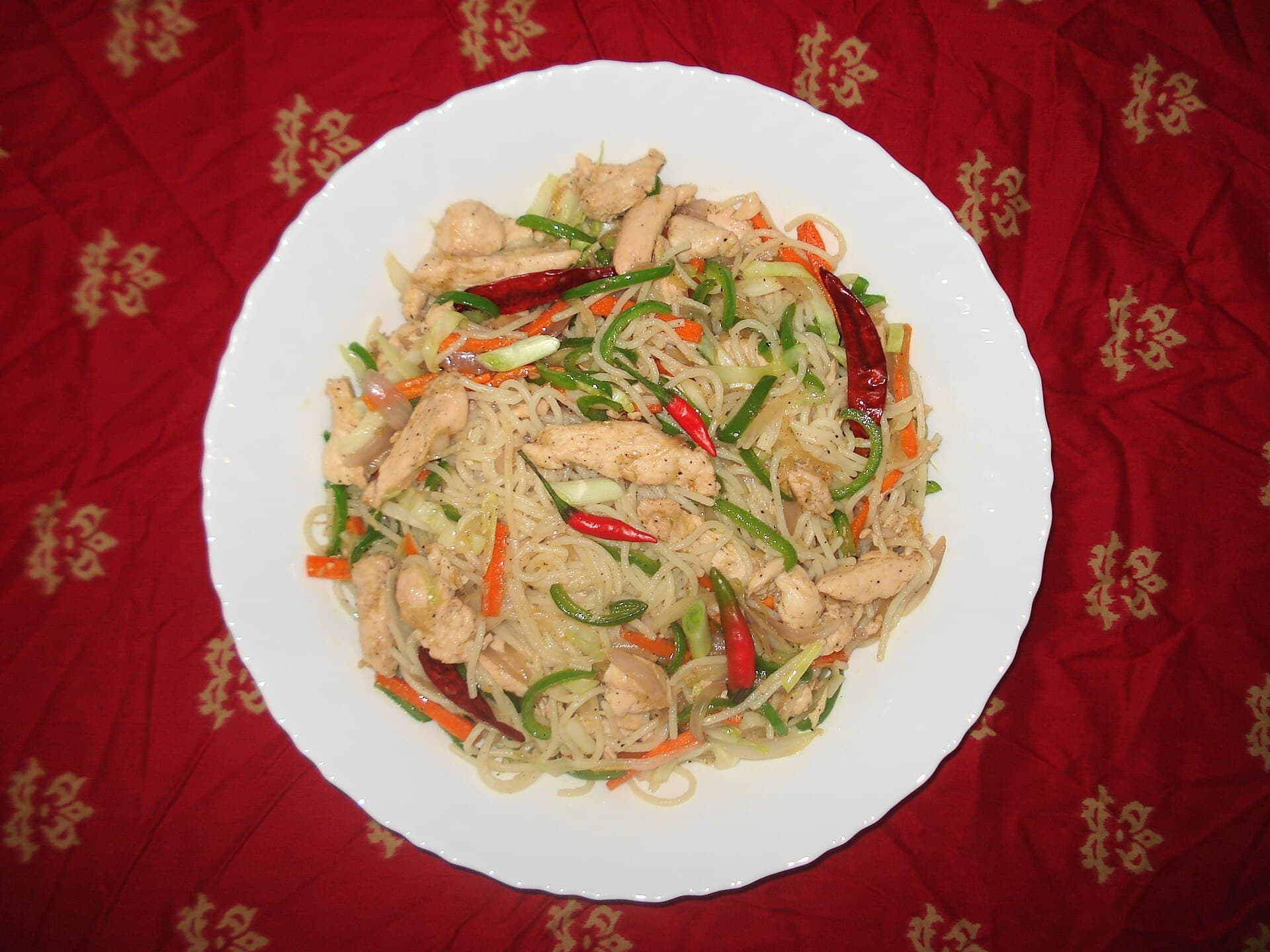
Dal bhat, fried rice, noodles, soup, momo, and potato dishes

Dal bhat, pasta, thukpa, curry and rice, and apple pie at Ghorepani
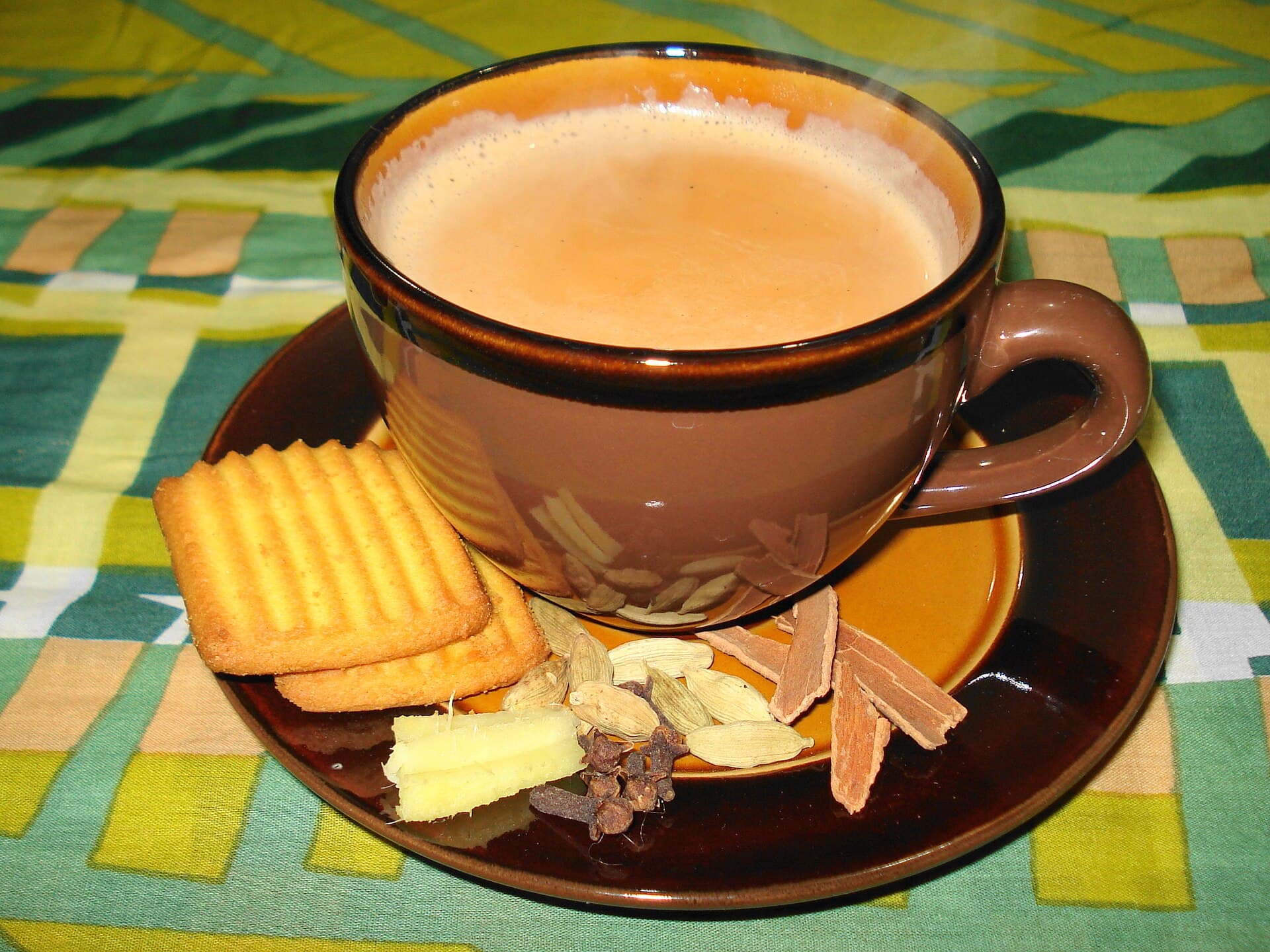
Black, milk, lemon, ginger or masala. Included at every stop.
6:30Tea in your room, and warm water to wash in
7:00Breakfast in the dining room
8:00On the trail. The guide sets a slow, steady pace on the stairs
12:00Lunch at a teahouse on the route, about an hour
13:00Two to three hours more. Days on this trek are shorter than on the longer treks
15:30Arrive at the lodge, tea, check in, and a hot shower
17:30Sunset on the mountains from the terrace at Ghorepani
18:30Dinner, and the guide briefs you on the next day
20:30Bedtime, because on the morning of Poon Hill the alarm is set for 4:30
Six weeks of regular walking is enough. The most useful training is for stairs and descents rather than for fitness in general.
Short days, one long staircase and an early start. The gentlest trek we run in the Annapurna region.
Written for somebody who walks a bit and does not train. If you already run or cycle regularly, start partway through. Nothing here needs a gym.
6 weeks before, stage 1 of 6
Three walks a week of forty minutes, at a pace where you can still talk. Any activity that raises your heart rate helps, but walking is what you are training for and is the best choice.
The highest point is 3,210 m, where you spend about an hour. Serious altitude illness is unlikely on this trek.
The highest place you sleep is Ghorepani, at 2,874 m, for one night, and the highest point is 3,210 m, for about an hour at sunrise. Acute mountain sickness can occur from around 2,500 m, so it is possible here, but it is uncommon and almost always mild: usually a headache at Ghorepani that clears by the time you reach Hile the next afternoon. Altitude is not the main challenge on this trek.
Health check at Ghorepani
Your guide carries a pulse oximeter and measures your oxygen saturation and pulse on the one night you sleep above 2,500 m. On a trek this low the reading is usually normal, but it can show an early problem before you notice it yourself.
If you are unwell at dawn
The viewpoint is 336 m above the lodge, and it is not worth climbing if you feel unwell. You can sleep in and photograph the same peaks from the ridge after breakfast, and a few people do so every season.
Descending quickly
The route from Ghorepani to Hile descends 1,444 m in a single morning, on stone steps. Descent is the treatment for altitude sickness, and on this route it is always possible within hours.
Evacuation by road
The road head is a few hours below the highest lodge, and from there a jeep takes two hours to reach the hospital in Pokhara. Your insurance should still cover helicopter rescue, but on this trek evacuation is most likely to be by road.
Fitness and altitude are unrelated
This is the thing people get wrong most often. Training makes the walking easier and does nothing for how your body handles thin air. Strong young trekkers get altitude sickness and unfit older ones frequently do not. Go up slowly, and say something the first time your head hurts.
Only two months of the year are unsuitable, fewer than on any other Annapurna trek we run. The trek stays open in winter because the trail never goes high enough to be closed by snow.
The rhododendron begins to flower below Ghorepani, and walking conditions are excellent. The number of trekkers increases as the month goes on.
Drawn from Nepali meteorological records for the Pokhara valley, adjusted for the height of Ghorepani at 2,874 m and checked against lodge readings. The Poon Hill column is what standing still at 3,210 m feels like before the sun arrives, wind included.
A government-licensed guide with wilderness first aid training leads every departure, and there is one porter for every two trekkers who want one. From thirteen trekkers, a second guide joins the group. Most of our Annapurna guides grew up within a day's walk of Ghorepani and have been to the viewpoint many times.
Each porter carries a maximum of 20 kg, which is your duffel bag and one other, shared between two trekkers. This is below the 25 kg limit set by the trekking association. If your bag is overweight, the load is divided rather than added to. Porters carry the main luggage, not daypacks: you carry your own water, camera and jacket.
Wages, insurance, food and lodging for every guide and porter are included in the price you pay, and are never collected separately on the trail. They are insured for accidents and evacuation on the same terms we require of you. This trek is inexpensive for our customers, but not because any member of the crew is underpaid.
Tipping is customary but not compulsory, and it never replaces wages. For a trek of this length, $60 to $100 per trekker for the whole team is usual, given together on the last evening. Your guide will not ask for a tip, and would prefer that it is not given in front of the group.
There are safe drinking water stations at Birethanti, Ulleri and Ghorepani that refill your bottle for much less than the cost of a plastic bottle, and the money goes to the village that runs the station. You can complete the whole week on this route without buying a single bottle of water. Bring purification tablets or a filter as a backup.
Every lodge you stay in on this trek is a family business in a village on the route. The conservation area fee funds the wardens, the forest and the trail repairs that maintain the Ulleri staircase. Nearly all of what you pay for this week is spent within twenty miles of the trail.
In October and April a few hundred people stand on Poon Hill at sunrise, and the platform was built for fewer. We go up early enough to find space at the quieter eastern end, we carry our rubbish back down, and we ask you not to fly a drone over other people.
Ghorepani means "horse water", and mule trains still bring supplies to the lodges. When you meet one, stand on the hillside of the path rather than the side with the drop, and let it pass. Ask before photographing anyone, and remove your shoes where a sign asks you to.
Write to us or send a message on WhatsApp and tell us roughly when you will be in Nepal. You will receive a reply from a member of our team who has walked this trail. Nothing is payable until you pay a deposit.
A deposit of 30 per cent secures your dates, and the balance is due when you arrive in Kathmandu, in cash or by card. At the same time we ask for a copy of your passport, your insurance certificate and any dietary requirements, because the permits are issued in your name.
You can pay by bank transfer, or by card through a secure link. Card payments carry the bank's fee of about 4 per cent, which we show you before you pay. The balance in Kathmandu can be paid in US dollars, pounds, euros or Nepali rupees.
If you cancel more than 30 days before departure, your deposit can be transferred to any other date or trek we run, with no time limit. If you cancel within 30 days, the deposit is retained, because the permits, vehicles and crew have been booked by then. If we cancel for any reason other than weather, we refund everything you have paid.
This is the trek we can arrange most quickly. Permits are issued the same day in Pokhara and the jeep can be booked by phone, so three days' notice is enough outside October and April. If you are already in Pokhara with a free week, visit our office.
For a party of five or more, private and group departures cost the same. A private departure runs on your dates at your pace and can be arranged for one person. A group departure runs on the dates above, with a maximum of twelve people. On a trek this gentle, families often choose a private departure so the pace suits the youngest walker.
Priced per person, arranged before you travel, and none of them included in the price above.
A jeep takes you past the 3,000 steps and starts you above them. If the staircase concerns you, this option avoids it.
A 30-minute flight from Sarangkot, with views of the Annapurnas across the valley. It requires one extra night in Pokhara, and it is one of our most popular extras.
Two nights by the lake at the end of the trip, with a boat trip on Phewa Tal and no climbing. The trek is short, so most people have time for this.
Continue east from Ghorepani over Deurali to Tadapani and down through the large Gurung village of Ghandruk instead of returning the same way. Please decide before you book rather than at Ghorepani, because the permits and lodges are arranged in advance.
Travel to the lowlands to see rhinos and the tall elephant grass. It fits easily between Pokhara and Kathmandu on the way back.
A room to yourself for the three hotel nights. On the trail, lodges are twin-share only.
Mountain Lodges of Nepal runs lodges in the Annapurna foothills at Dhampus, Landruk, Ghandruk, Majgaon, Tomijong and Birethanti. Where this route stops in one of those villages, we can book the lodge instead of the teahouse: a private room with its own bathroom, a garden and a full dinner.
Higher on the route there are only teahouses, so those nights stay the same. We confirm availability for your dates before you book.
4 versions of this journey. They use the same guides and the same lodges; what changes is the length, the comfort and how much of it you walk.
Beautiful Poonhill Trip
January 2020, Tripadvisor
I did 7 days poonhill trip with earthbound expeditions was before covid19 it was amazing trip like balalala u can write or u can check what other gust write a review about their great services. I thank the great leadership and all organizers in this trip.
Annapurna Panarama near Poonhill Mountain
March 2020, Tripadvisor
I hope to inform you of things that you can do so your experience will be just as beautiful as mine. I am an athletic 33 year old male. I came with my dad who is 64 years old and in good shape. The hiking was fairly easy. The mountains were breathtaking. The monkeys in the trees were fun to watch. We came in mid March so the Rhododendron trees were beginning to show their colors. Our guide was Namaraj (Nama), who spoke good English and who was very informative about the mountains and scenery, along with the giving us background on the people of Nepal and their culture. My favorite part of the hiking was walking through the villages. I wish I would have brought school supplies to give to the school up in the mountain or to give to some children we passed on the trail. We had wifi at every place we stayed each night. Very inexpensive. We had warm showers as well. We were awakened one night from a little earthquake. Our guide moved us into a more secure living quarters. Our guide, Nama, was wonderful! Most people speak English, but the locals love it if you can say a couple of things in Nepali.
What an Adventure!!!
March 2019, Tripadvisor
If you EVER get the opportunity to visit Nepal, take it!!! I would come back in a heartbeat. Earthbound Expeditionsmade our first-time experience a trip of a lifetime. From accommodations, our guide and porters, the sights, the people, words cannot describe who phenomenally amazing our trip has been with this company. They do great works in the community, employing those who were significantly affected by the earthquake in 2015 and participating in charitable giving to schools and hospitals devastated as well. We did the Annapurna Panaroma Trail which was a 4.5 day trek through various villages and stays in guesthouses. BE PREPARED FOR AN ADVENTURE!!! Those who enjoy hiking but do not do it often, this will be a challenge. The locals consider it one of the easier treks, however it is all an individual's perception. I would consider myself physically fit, but it was still challenging. I will say, we had someone who had never hiked before and she was able to complete it with a smile on her face... so its not impossi la and there's no day like today to get out there and do it! Most of the guesthouseshave WiFi you can pay for; however I enjoyed the break from technology and social media. Our adventure was a good introduction to Nepal. I would HIGHLY RECOMMEND to anyone planning to visit someday. Earthbound Expeditions is fantastic! Also, we came before peak season, which was even more amazing. We were not crowded on the trails nor in the guesthouses, and we still saw the beauty of the mountains and country side... Never Ending Peace And Love, that is NEPAL.
Annapurna Panorama Trek
February 2015, Tripadvisor
I was trying to book a 5 day trip from out of Nepal and it is always quite overwhelming to choose from the many companies online offering tours to popular destination. I had only a short time to browse and plan. So I chose a few operators and started to contact them via email. Rajan (the head of EE) was the quickest to respond. He was also always very helpful in tailoring the tour based on my interest and the number of days I can spend. In Kathmandu, Rajan himself greeted me and gave useful tips for the trek. After one day in Kathmandu, I head straight to the start of the trek from Pokhara where I met my guide, Namaraj. Friendly, respectful, experienced and knowledgeable about the area, I had a great time trekking with him. I would highly recommend arranging your trip through Earthbound Expeditions.
Answers to the 24 questions travellers ask us most often. If your question is not here, contact us and we will answer it.
Yes, and it is the trek we most often recommend to first-time trekkers. There are four walking days of three to six hours each, nothing technical, and a highest point of 3,210 m. If you go on hilly walks at home from time to time, you are fit enough.
There are two. The staircase from Tikhedhunga to Ulleri has more than 3,000 stone steps and around 500 metres of ascent, and it takes most people two hours with stops. The other is getting up at 4:30 am in the cold for the viewpoint. Neither is dangerous, but both are tiring.
The circuit continues east from Ghorepani to Tadapani and Ghandruk rather than returning the same way, which adds three days, much more ascent and descent, and about $300. This trek goes up to Poon Hill and returns along the same trail. Both include the same sunrise. Choose this trek if your time in Nepal is short, and the circuit if you have more time.
Yes, and many families walk this route. Children aged eight and over manage it at a pace set for them, and a private departure is the best way to arrange this. Children under ten do not need a conservation area permit.
There is no upper age limit, and we take walkers in their seventies on this trail every season. Whether you walk regularly at home matters more than your age. The only thing to consider is the staircase, and there is a jeep option that starts you above it.
Twelve at most, and departures run with as few as one person. From thirteen people, we add a second guide. A private trip on your own dates costs the same for a party of five or more. For one or two people it costs more, only because the guide is not shared.
Probably not. You sleep one night at 2,874 m and spend about an hour at 3,210 m. Mild symptoms are possible from about 2,500 m, and a few people get a headache at Ghorepani, but serious altitude illness on this route is rare. This trek does not need acclimatisation days.
At night, Ghorepani is around freezing from November to February and a few degrees above freezing for the rest of the year. The cold is most noticeable at the viewpoint at dawn, where it ranges from about 0°C in October to around minus 10°C in January, including wind chill. You stand still there for about half an hour, so dress warmly.
A policy covering trekking to 4,000 m, including medical evacuation and repatriation. It costs less than a high-altitude policy, around $70 to $120. The most likely emergency here is a twisted ankle and a jeep journey rather than a helicopter rescue, but you should still buy cover that includes helicopter evacuation.
It can happen, and no operator can guarantee a clear morning. In October, November and December it is clear on most days. If there is cloud at Ghorepani, you can wait a day and go up again the following morning. Adding a spare night to your trip costs about $60. We will let you know the evening before what the forecast looks like.
In October and around Easter, a few hundred people are on the viewing platform, and the trail up is lined with head torches. The atmosphere is friendly. We leave early and stand at the quieter eastern end. In December, January and February you may share the viewpoint with about twenty people.
Yes, every night, which is unusual. Hot showers cost $2 to $4 at all three teahouses, wifi is free or a few dollars, including at Ghorepani, and charging a phone costs one or two dollars. Mains electricity reaches most of this route.
Yes. Dal bhat is freshly cooked, refilled free of charge and the safest choice on every menu. Because the road head is close, the kitchens here restock daily, so vegetarian and vegan diets are easy to cater for and meat is safe at this altitude. Tell us about gluten intolerance or allergies when you book.
Not necessarily, and this is the only trek we run where that is the case. Clothing for three nights fits in a 40-litre pack that most people can carry themselves. A porter is available if you prefer to walk the stairs without a load, and costs $20 to $25 a day, shared between two trekkers.
Simple and comfortable. You have a twin room with a mattress, pillow and blankets, a dining room with a stove at Ghorepani, and hot food all day. They are warmer and better equipped than lodges on the high-altitude treks, because a jeep can reach the bottom of the hill.
You need two permits. The Annapurna Conservation Area permit costs NPR 3,000 (about $22) and is issued by the National Trust for Nature Conservation in Kathmandu or Pokhara. The TIMS card costs NPR 2,000 (about $15) and is issued by the tourism board and the trekking association through a registered agency. Both are included in your trip price, and both are checked at Birethanti.
Yes. Since April 2023, foreign trekkers in Nepal's conservation areas must walk with a licensed guide, and this is enforced at the Birethanti checkpoint. Your guide is included in the price. This is a legal requirement and cannot be waived at the checkpoint.
$100 to $150 in small notes, changed into rupees in Pokhara. This covers showers, charging, drinks, snacks and tips over four days. The last reliable cash machine is in Pokhara, and no lodge on this route accepts cards.
Most nationalities can get a visa on arrival at Kathmandu airport: $30 for 15 days or $50 for 30 days, paid in cash. Complete the online form within 15 days before arrival to shorten the queue, and bring a passport photo and a passport valid for at least six more months.
October and November offer the most reliable weather, March and April are the months for rhododendron, and December combines clear skies with very few trekkers. Because the trek stays low, it remains open in winter when higher treks close. We do not run it in July and August.
Six weeks' notice is comfortable, and outside the peak season three days' notice is possible, because permits are issued the same day and there are no mountain flights to book. For October, and for the two weeks either side of Nepali New Year in mid-April, book two to three months ahead so that we can reserve rooms at Ghorepani.
Yes, and it is easy on a trek this short. You can start on any day, add a night at Ghorepani for a second chance at the sunrise, drive to Ulleri to avoid the stairs, add nights in Pokhara at the end, or continue east to Ghandruk to make it a circuit. Ask us before you book so that the permits match your route.
Yes. This shortens the trip by two days and reduces the price by about $180. If you are already in Pokhara, the trek itself takes four days, and we can have you at the road head the morning after you contact us.
Walk slowly up the Ulleri staircase, and put on your warm clothes before you leave the lodge in the dark, not halfway up the hill. These two points prevent most of the difficulties people have on this trek.
Didn't find what you were looking for?
Search every word on this page, or ask somebody who has walked the route.
7 days
$687 per person