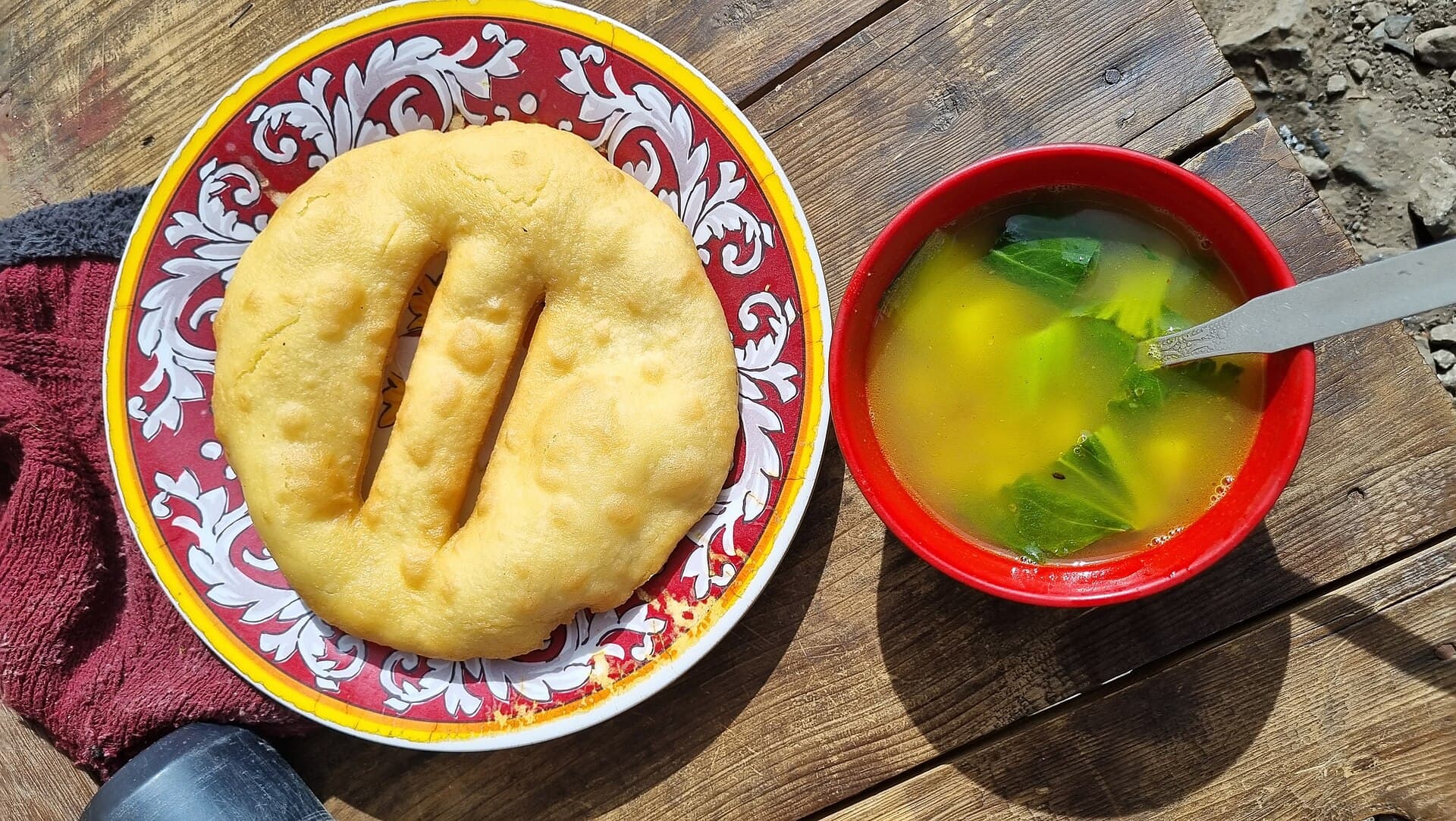
Breakfast
Porridge, Tibetan bread, eggs, chapati, pancakes, tea or coffee
The full anticlockwise circuit through the Annapurna foothills: sunrise on Poon Hill, the forest ridge east to Tadapani, and the descent to the Gurung village of Ghandruk, with no section walked twice.
The full anticlockwise circuit through the Annapurna foothills: sunrise on Poon Hill, the forest ridge east to Tadapani, and the descent to the Gurung village of Ghandruk, with no section walked twice.
A five-day circuit on the ridges west of Pokhara, walked anticlockwise so that you finish somewhere new rather than returning the same way. You climb the Bhurungdi valley to Ghorepani at 2,874 m, reach Poon Hill at 3,210 m at sunrise, then cross east over the Deurali ridge to Tadapani and descend through forest to Ghandruk. You stay in teahouses every night, and there are no passes or glaciers.
Most Poon Hill itineraries turn back at Ghorepani and descend the same staircase they climbed. This trek does not. Completing the circuit through Tadapani and Ghandruk adds two walking days and includes the whole second half of the region: the mossy ridge forest east of Deurali, the Gurung heartland, and close views of Annapurna South above Ghandruk. It is the longer and more complete of the two treks we offer in this area.
This trek is for people who want a real Himalayan trek but have a week and a half rather than three weeks. It suits first-time trekkers, families with children who enjoy walking, and anyone who does not want to sleep at high altitude. It requires strong legs rather than acclimatisation: there are two long sections of stone steps, and the highest overnight stop is 2,874 m.
Poon Hill is busy. In late October and early April, a few hundred people gather on the hill at sunrise, and the last fifteen minutes of the climb is a line of headtorches. The view of Dhaulagiri and the Annapurnas at sunrise is worth it, and later the same morning, the ridge east of Deurali is quiet.
A member of our team will meet you at the airport and take you to your hotel. If you arrive early, you have time to walk into Thamel and explore the shops and shrines. In the evening, we meet to go through the route day by day, check your boots and answer your questions.
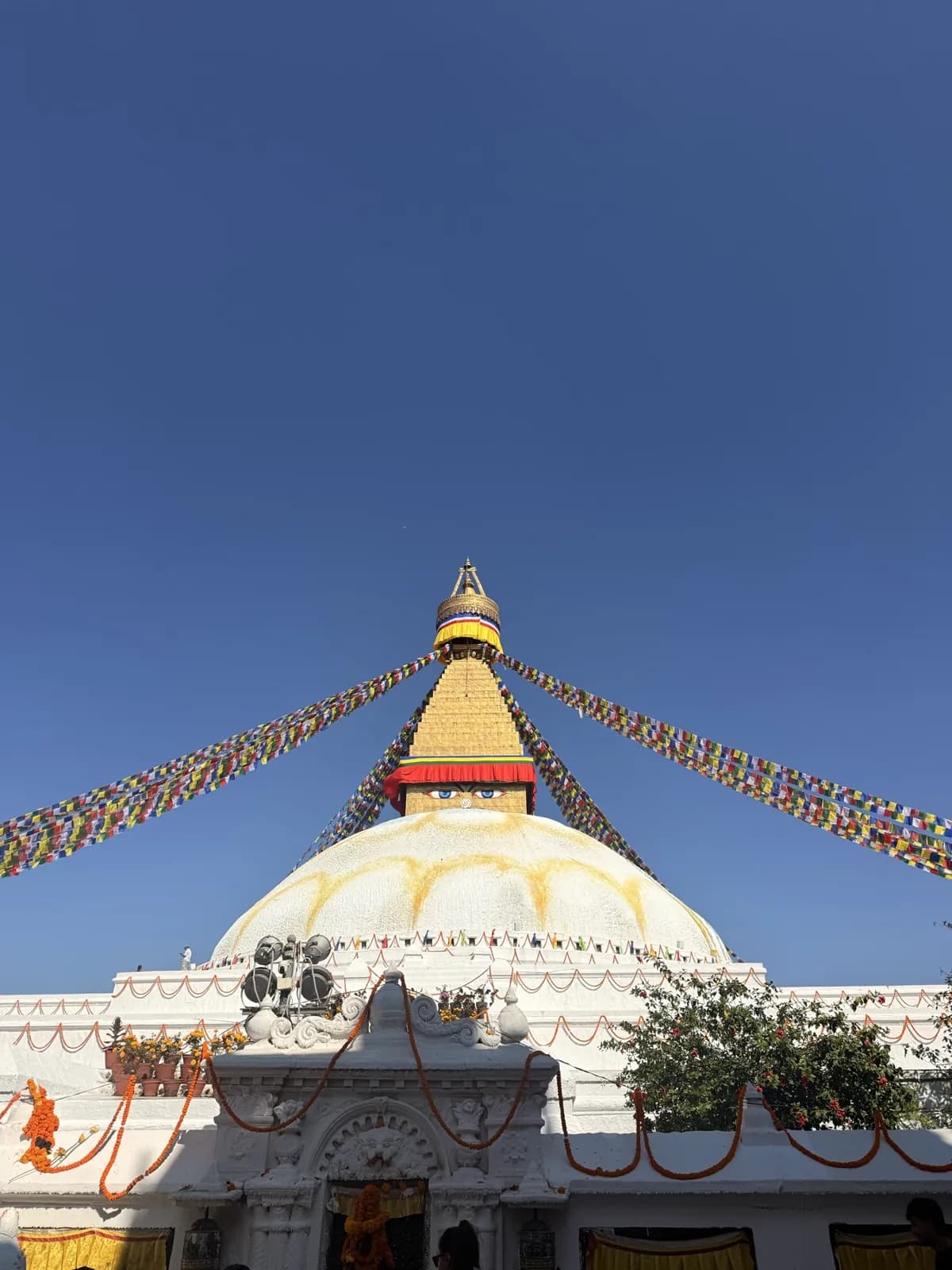
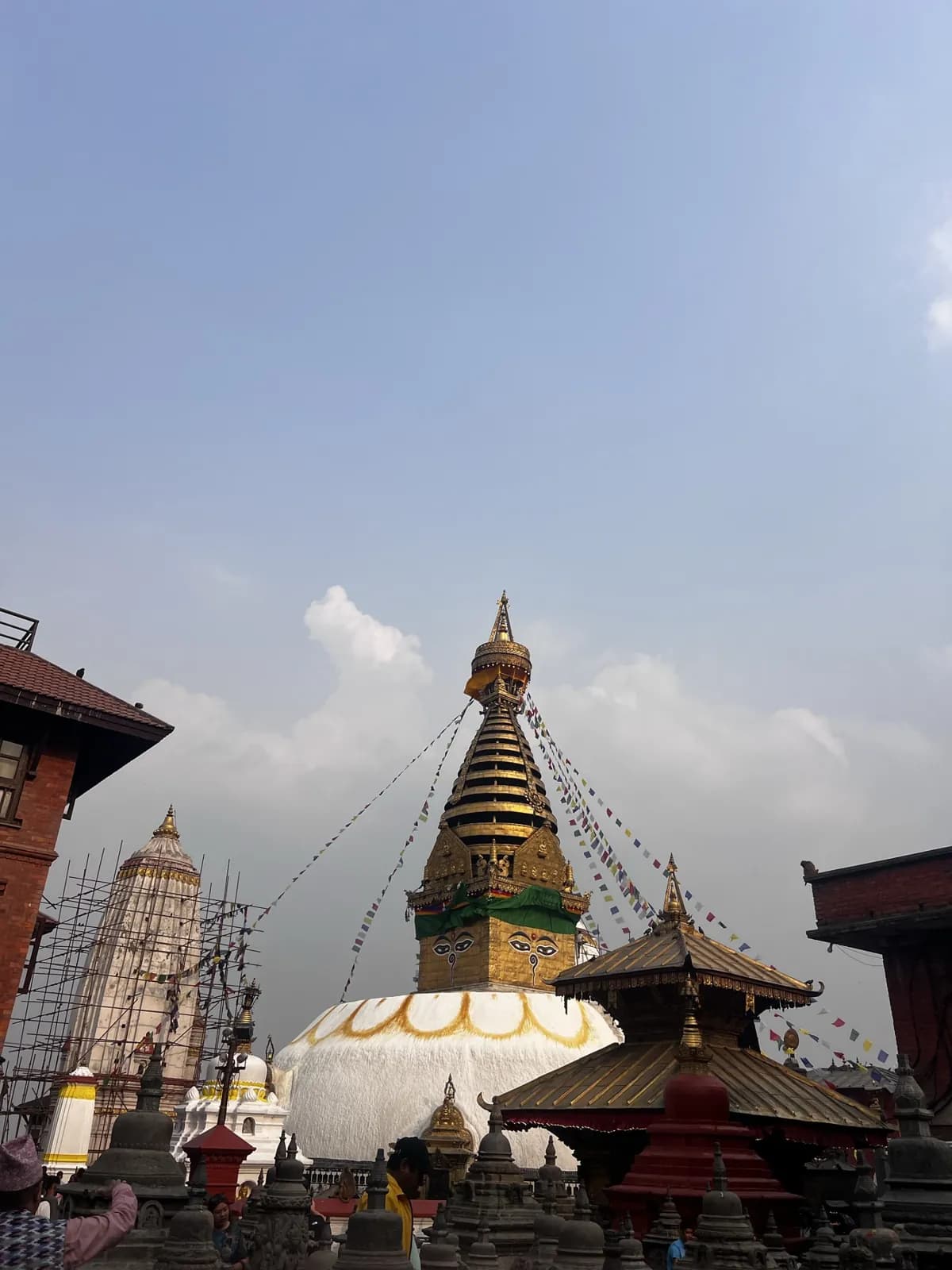
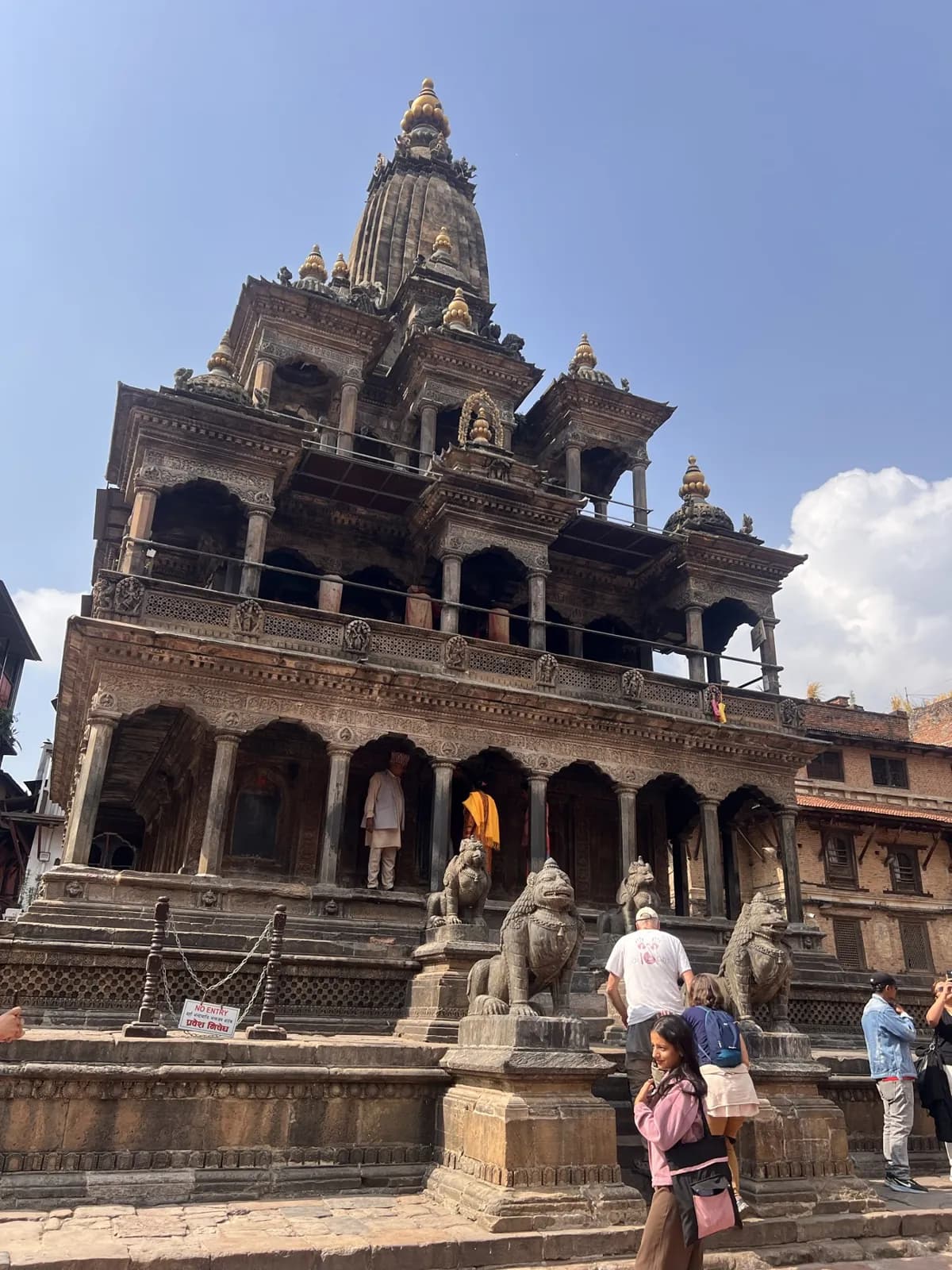
In the morning, you visit the historic sites of the valley: the hilltop stupa at Swayambhunath, the riverside ghats at Pashupatinath and the carved courtyards of Patan. In the afternoon, a twenty-five-minute flight takes you west to Pokhara, at 830 m beside a lake, with the Annapurnas rising above the far shore.
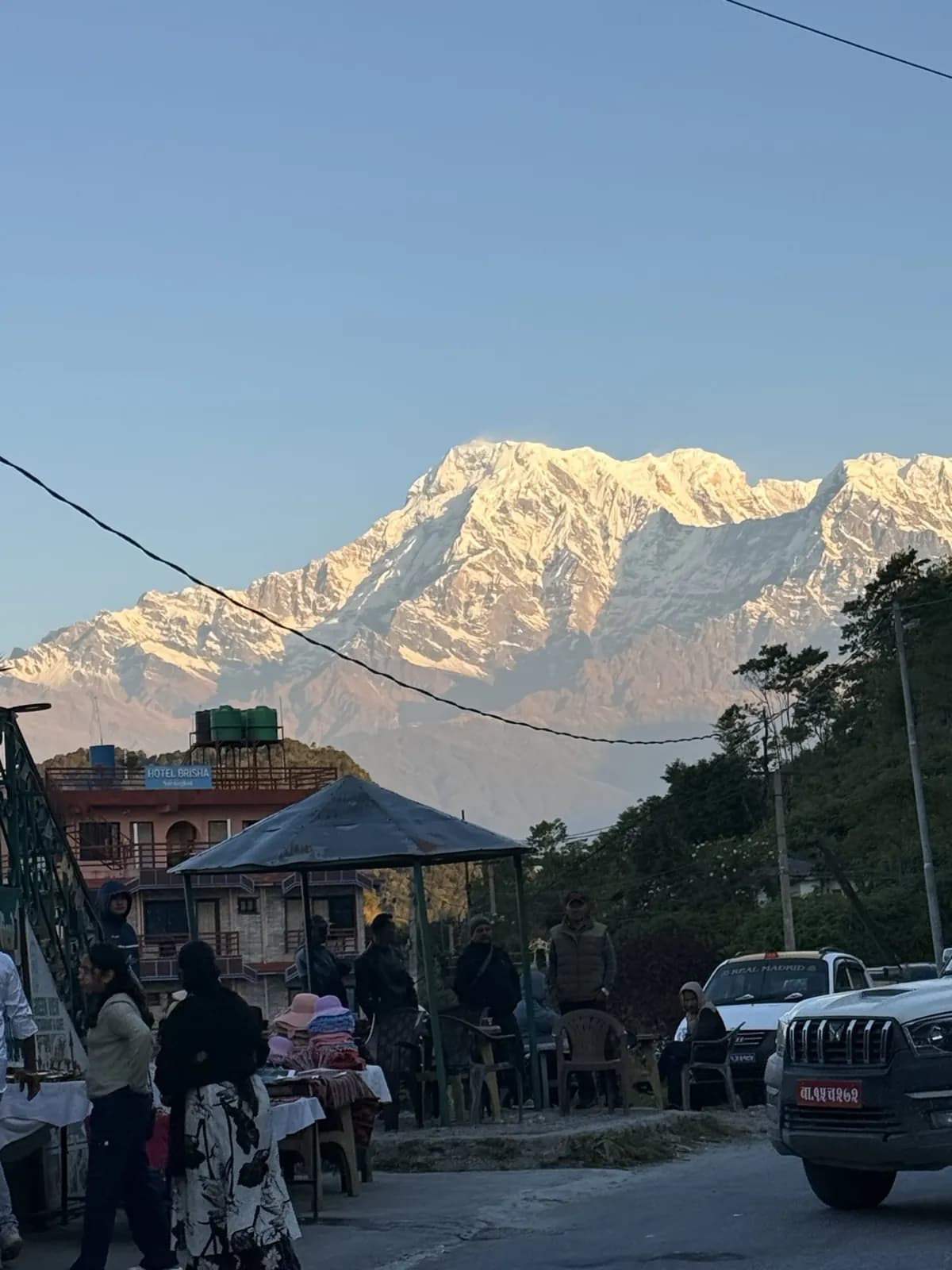
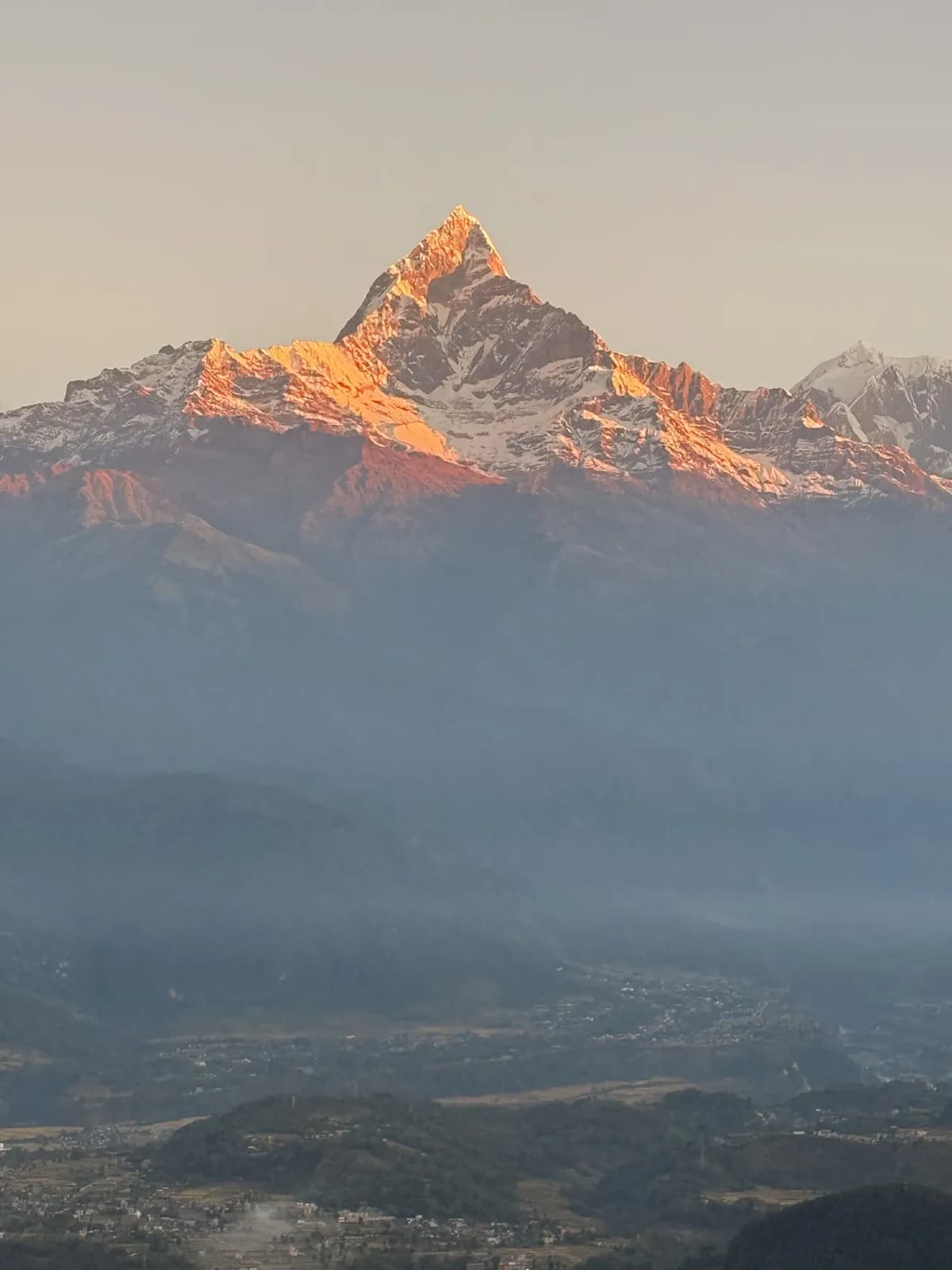
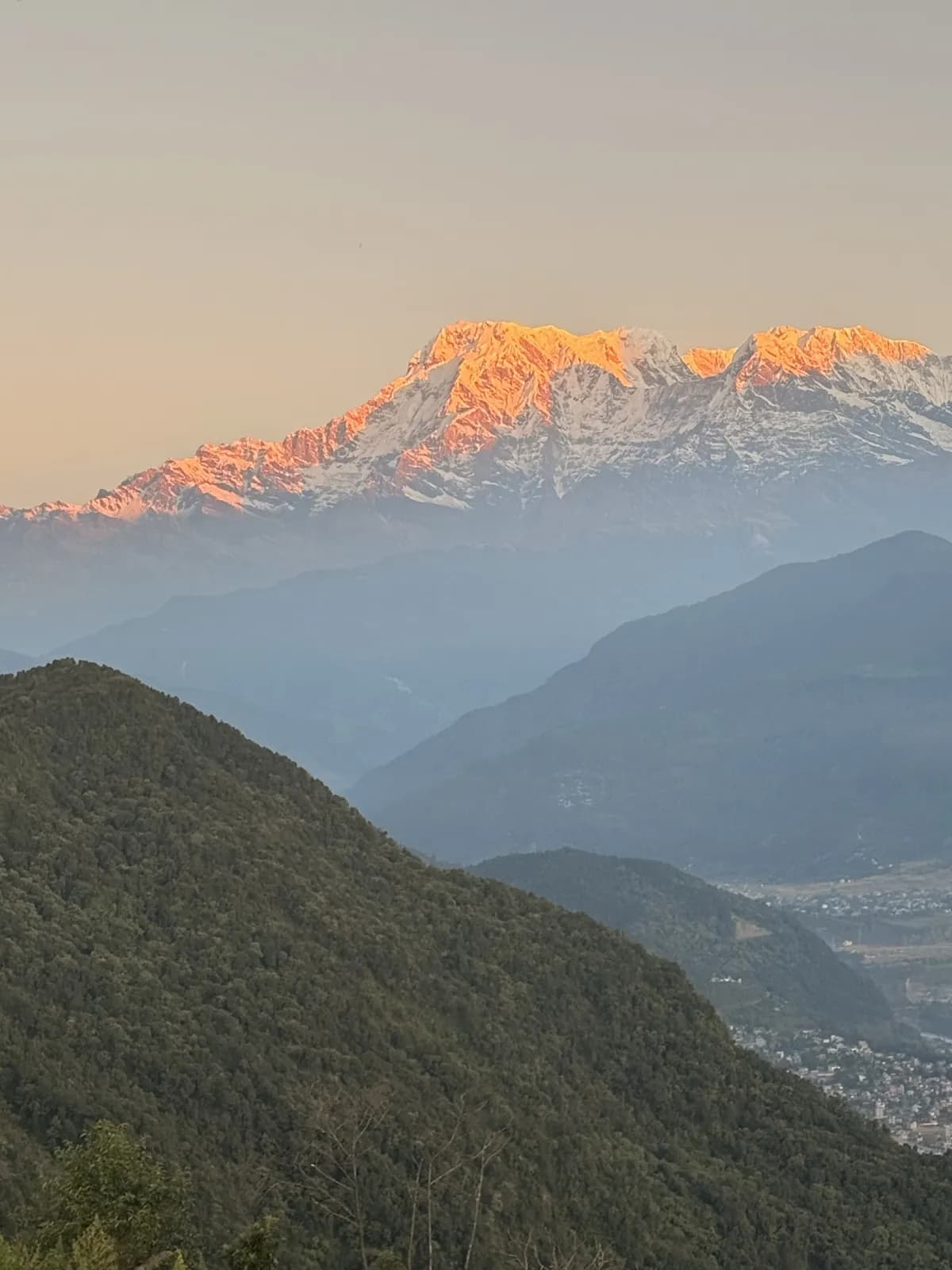
An hour and a half by jeep from Pokhara to the point where the road is in good condition, somewhere between Nayapul and Hile. The walking then begins, following the Modi river past the checkpoint at Birethanti, through rice terraces and villages where the footpath is also the main street. This is an easy half day.
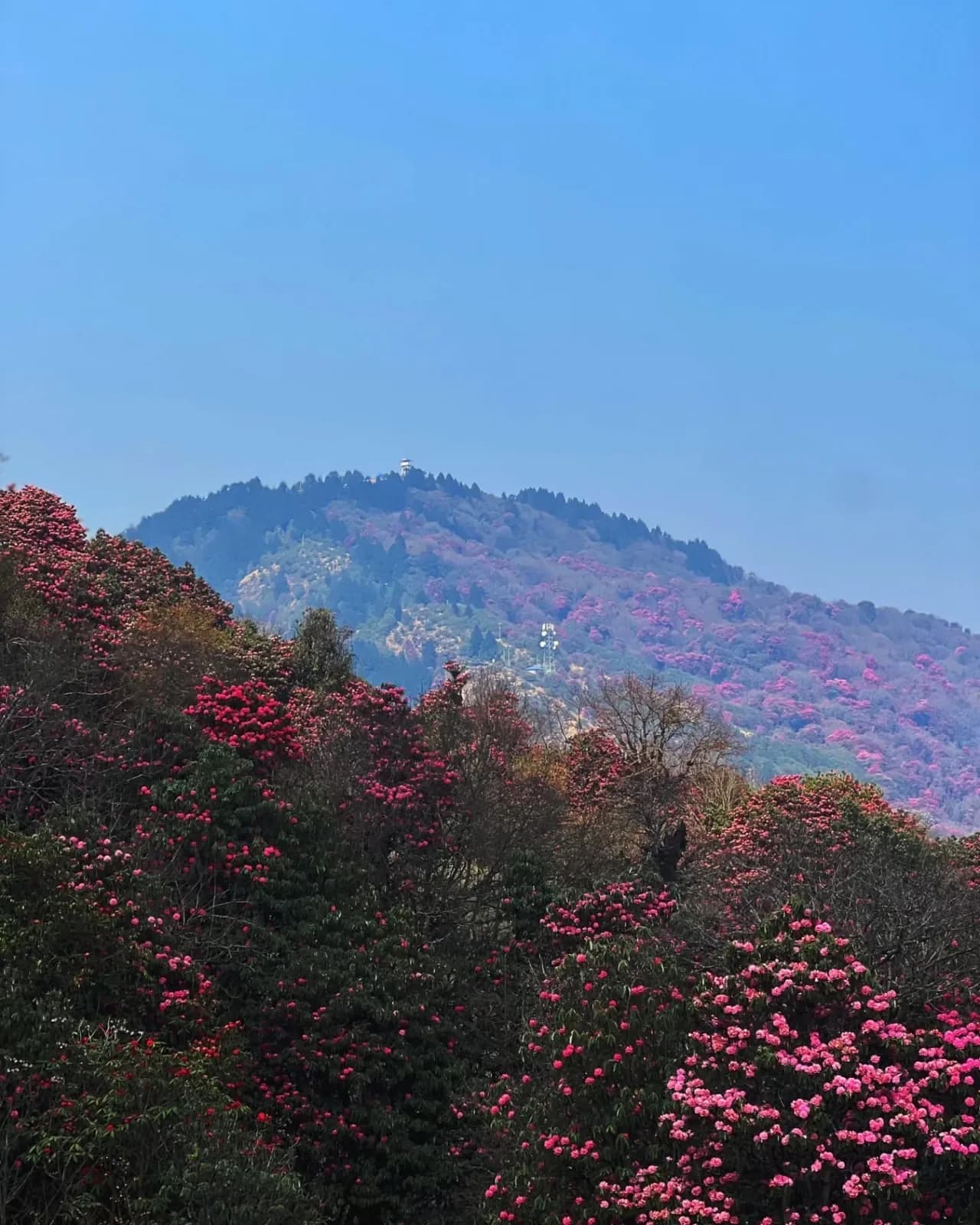
This is the only demanding day. More than three thousand stone steps climb to the Magar village of Ulleri. After that, the gradient eases and the trail winds up through Banthanti and Nangethanti into rhododendron forest. In late March and April, the forest is in red flower all the way to Ghorepani.
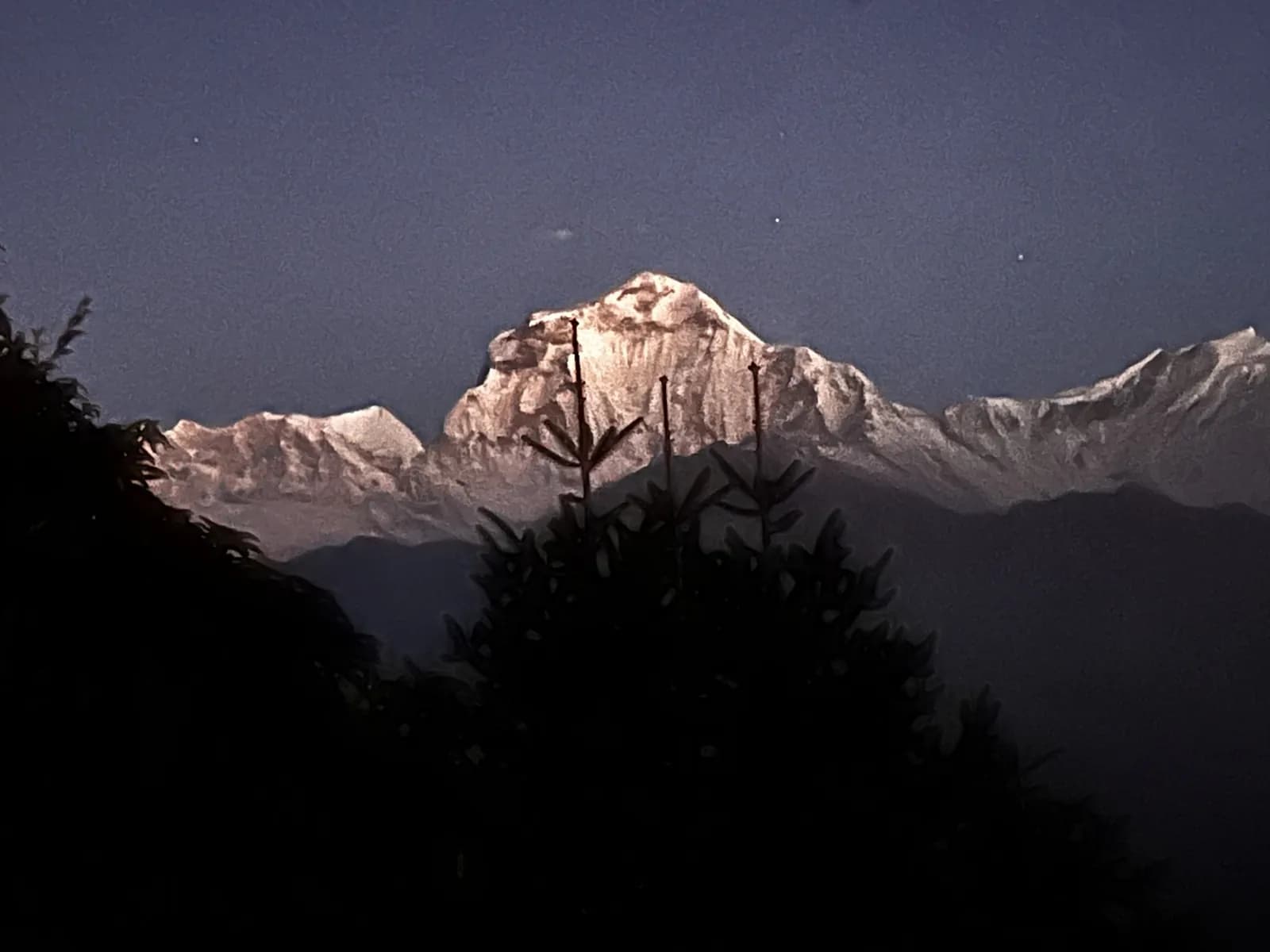
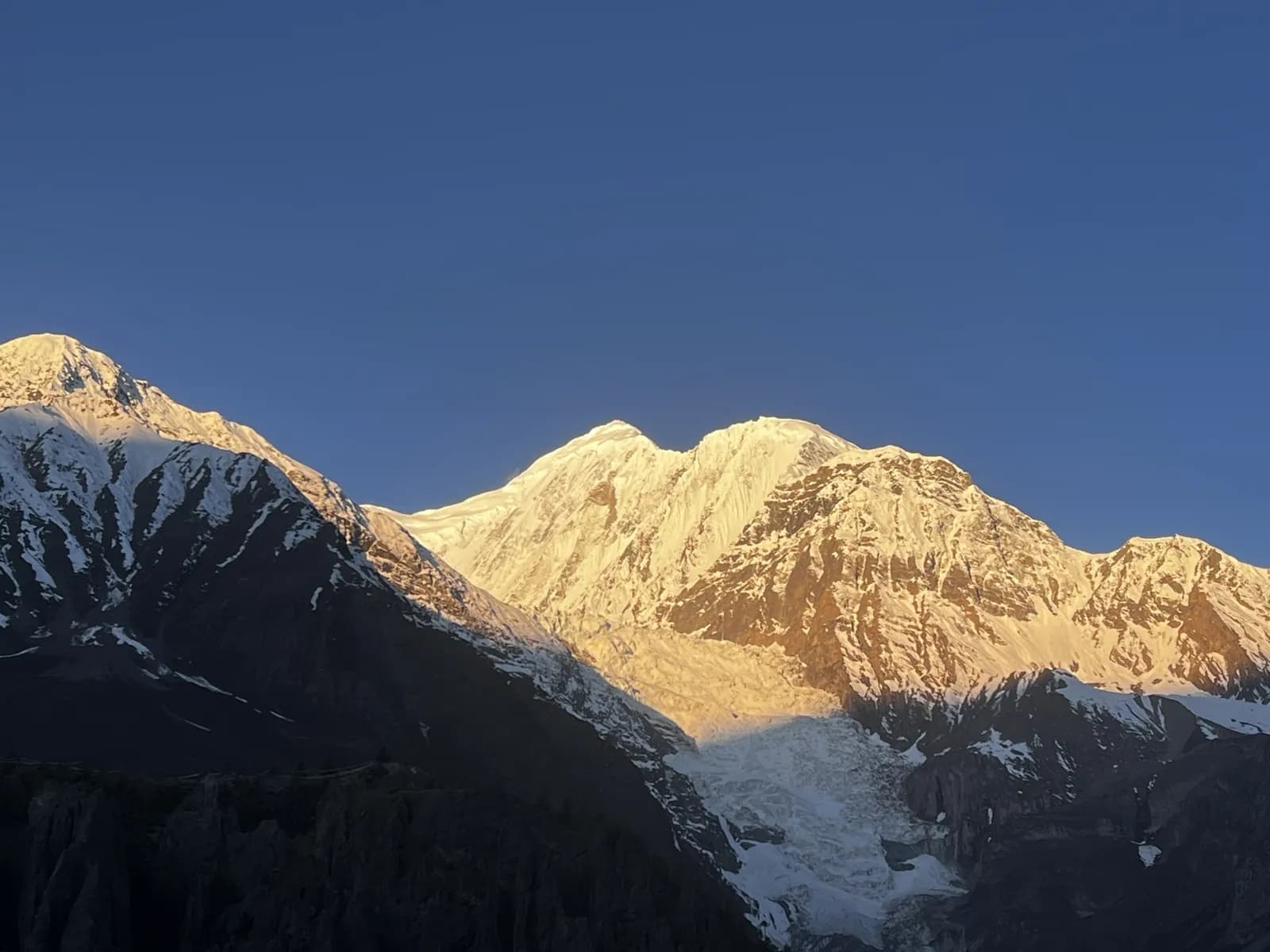
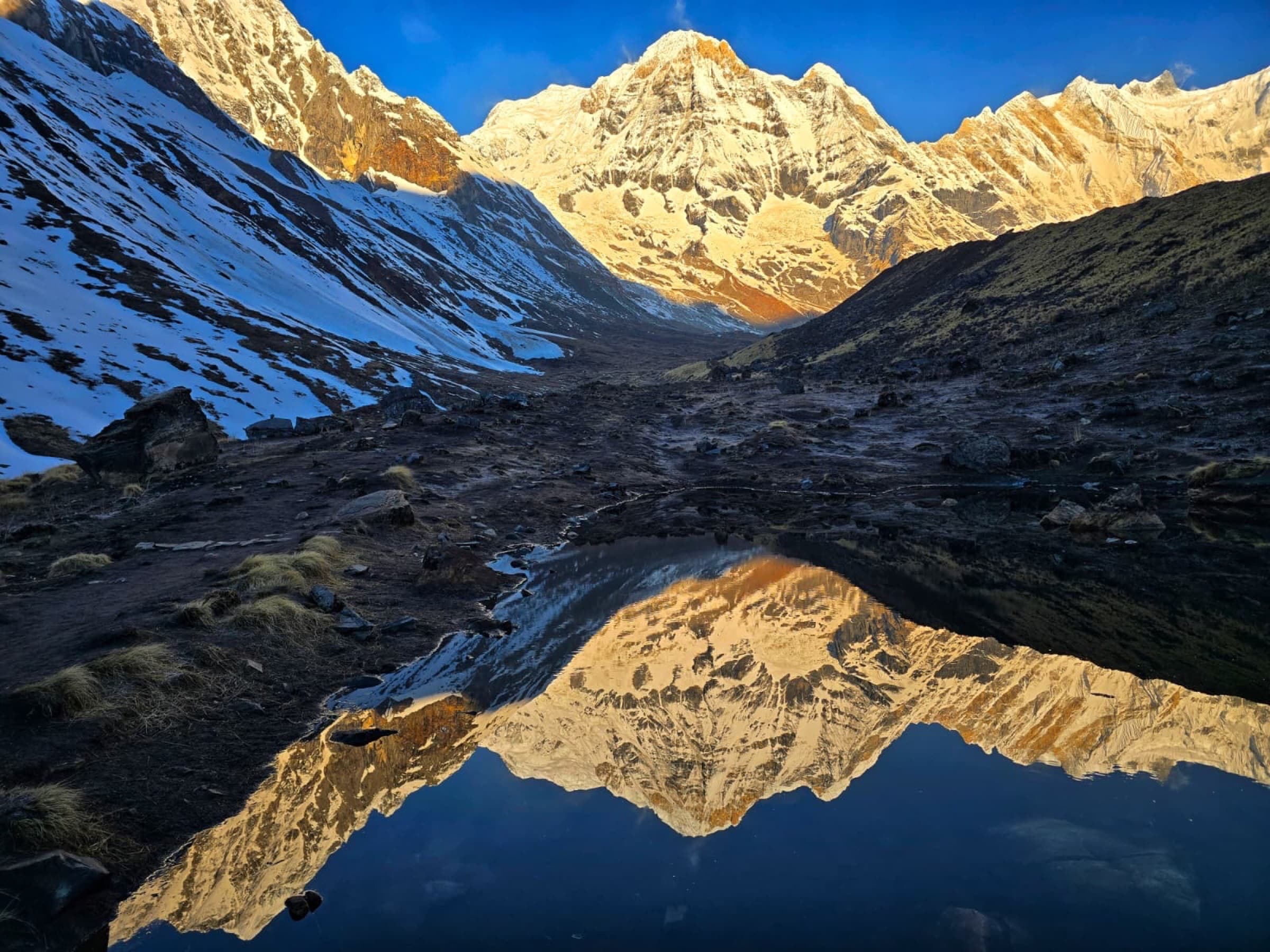
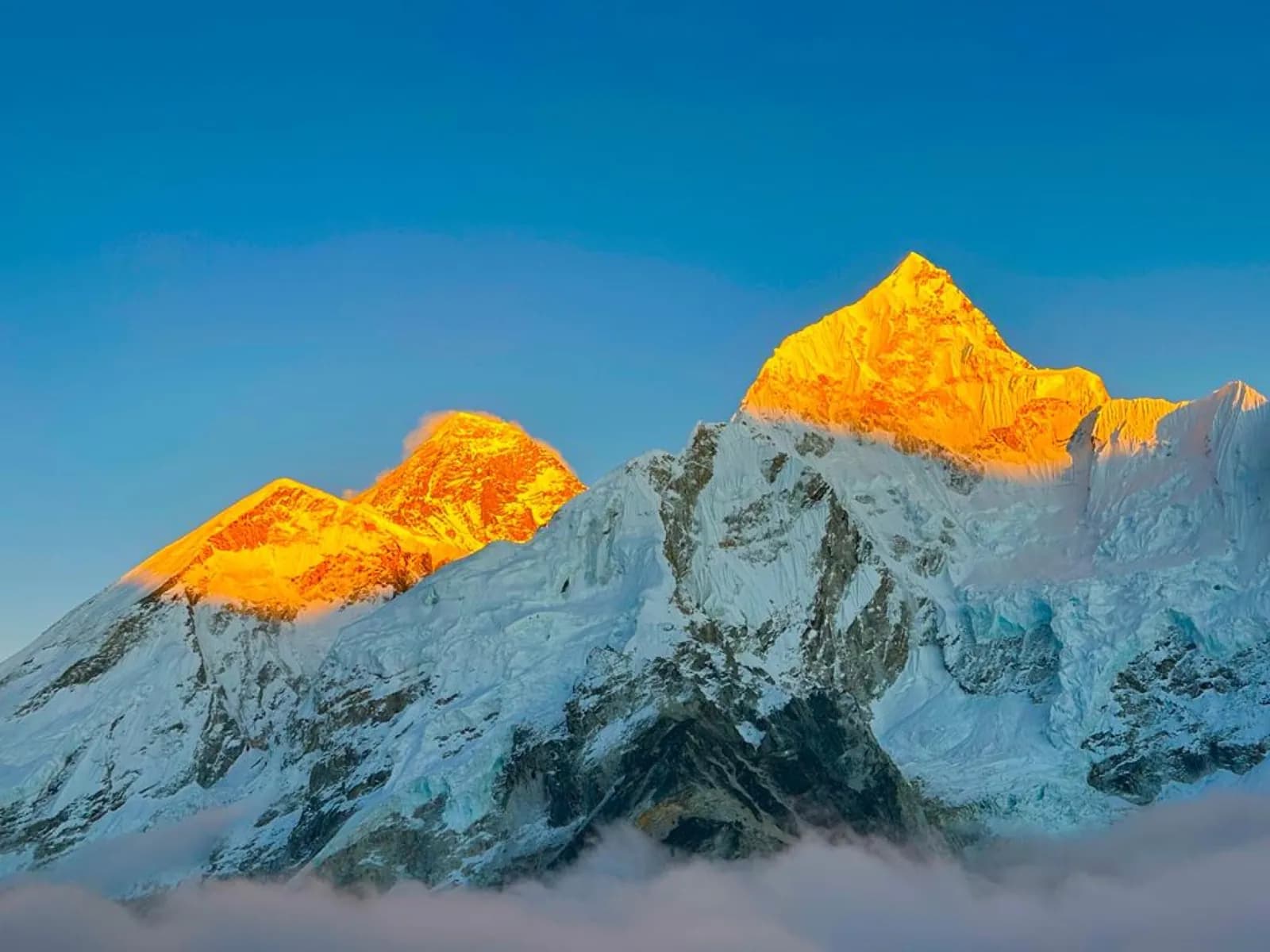
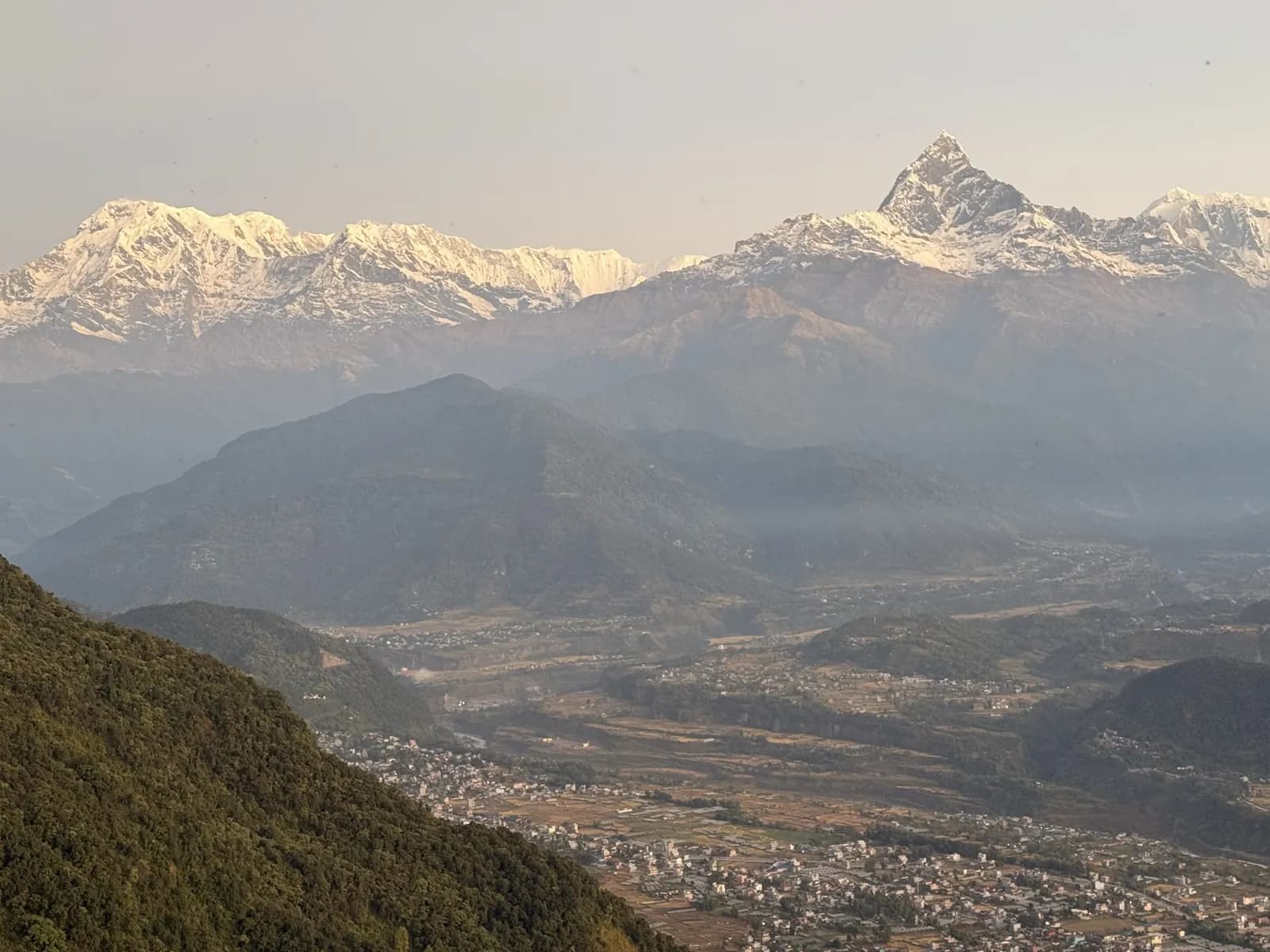
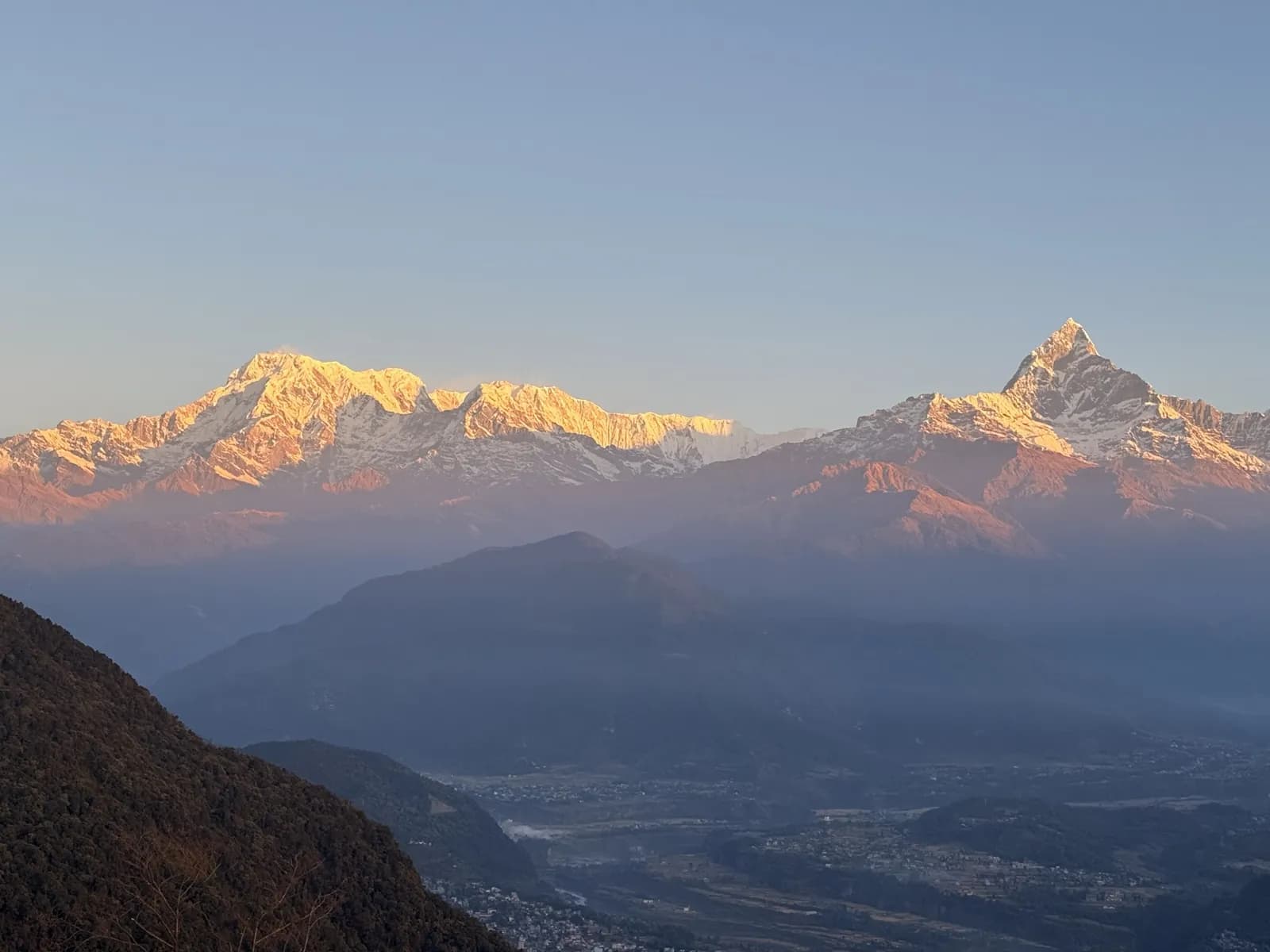
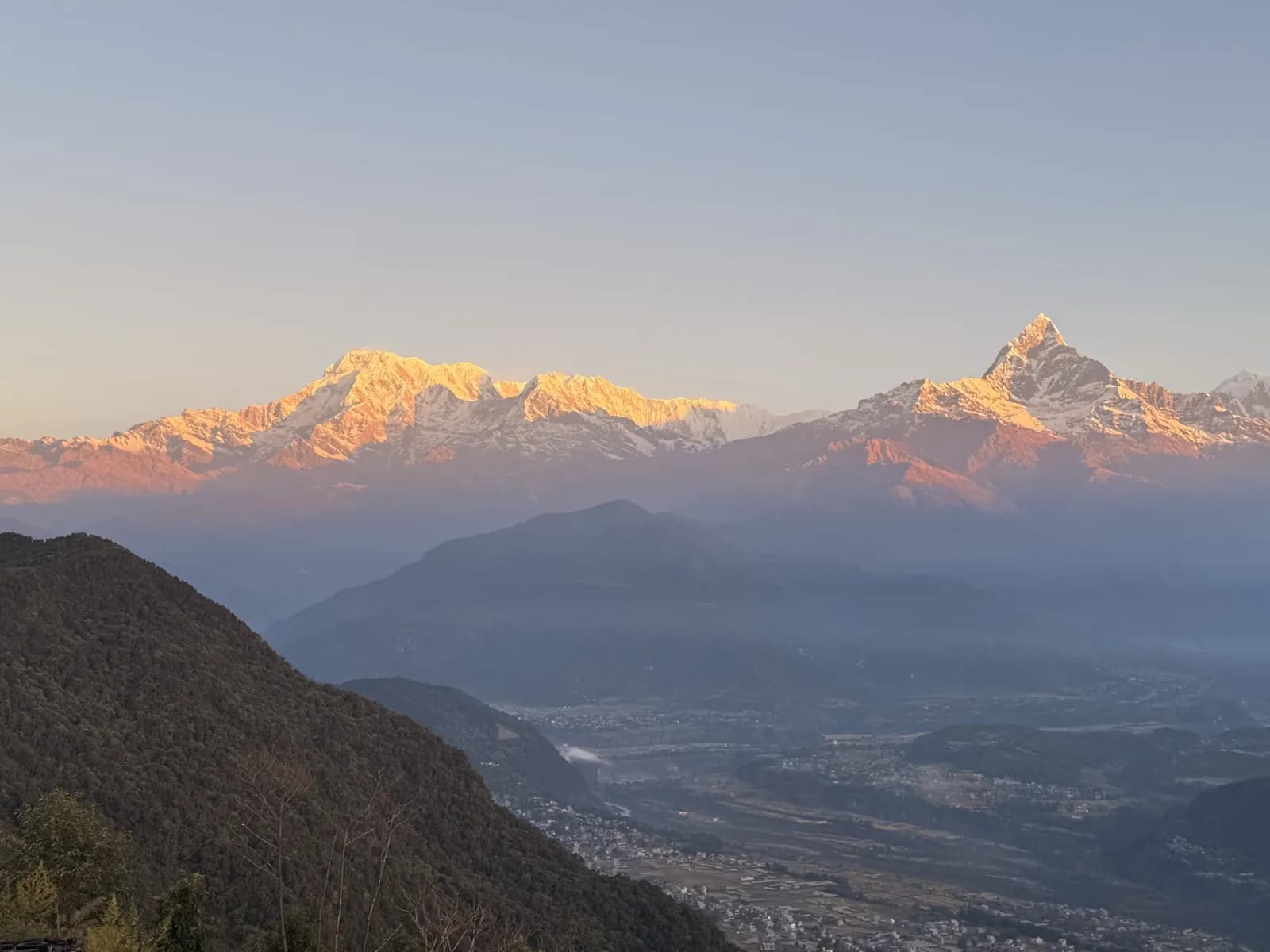
Get up in the dark for the forty-five-minute climb to Poon Hill at 3,210 m, where Dhaulagiri, Annapurna South and Machhapuchhre turn gold at sunrise. Return to the lodge for breakfast, then walk east over the Deurali ridge and down through mossy forest full of birds to Tadapani. From here, the circuit leaves the Poon Hill route.
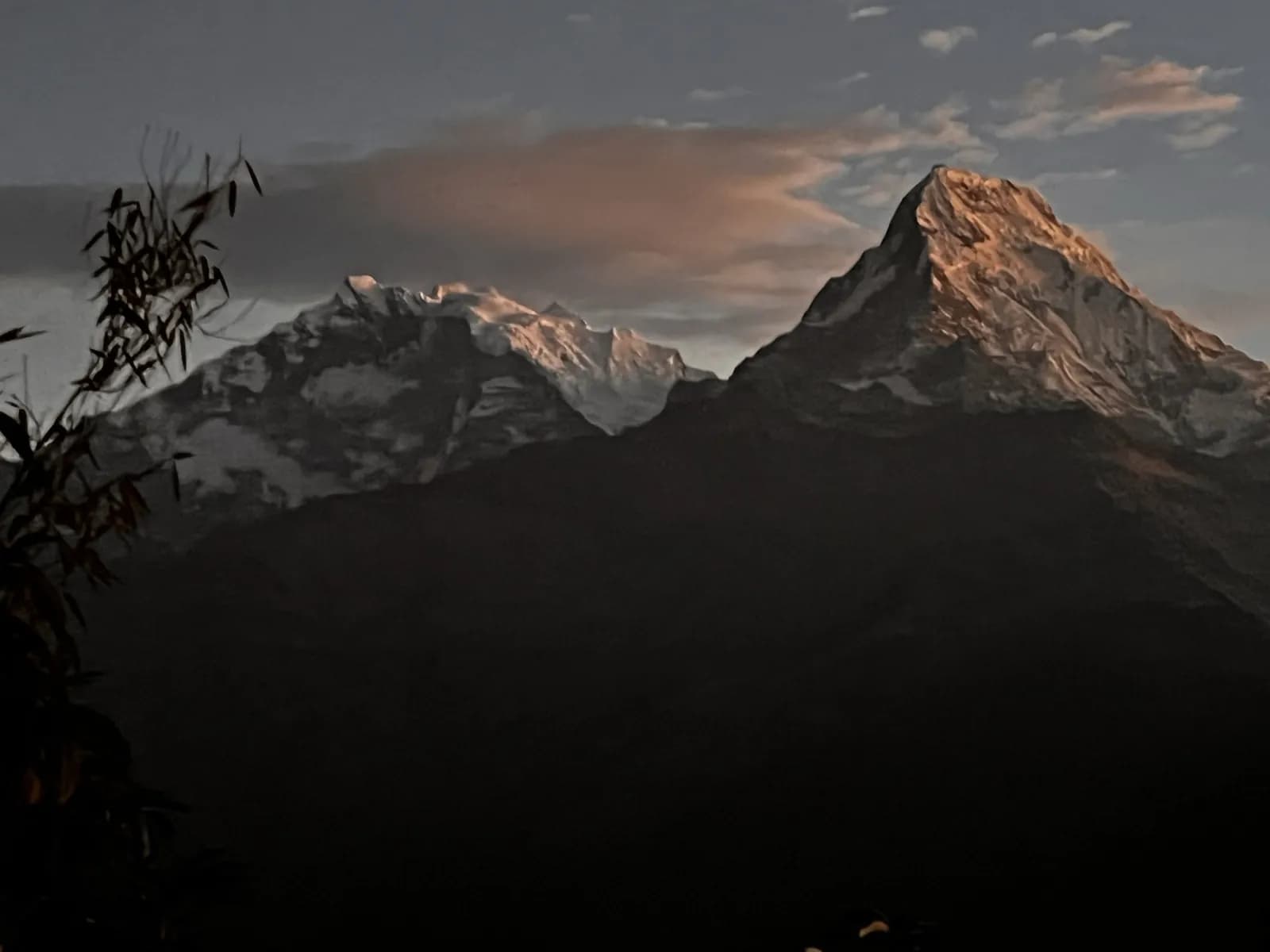
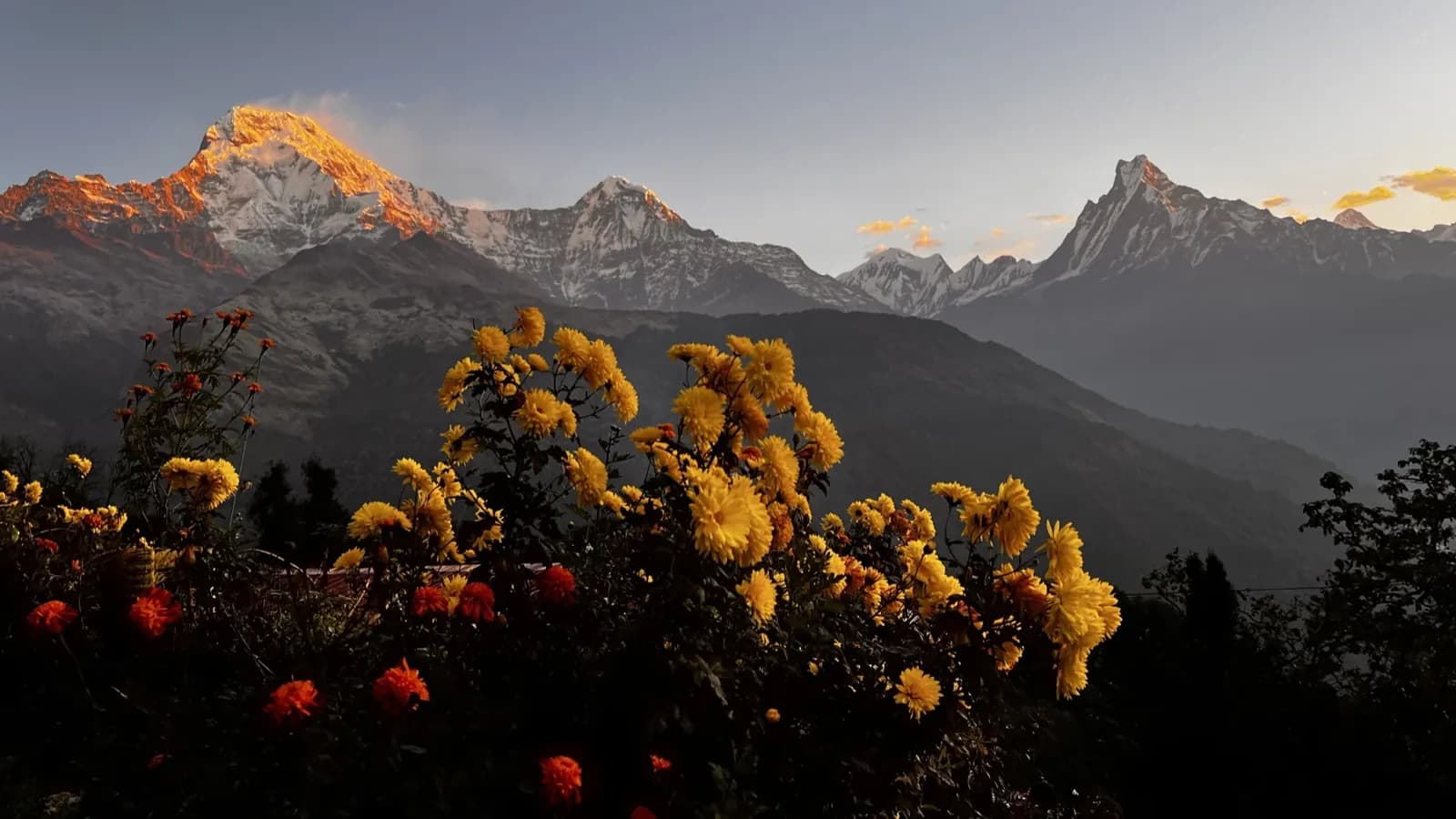
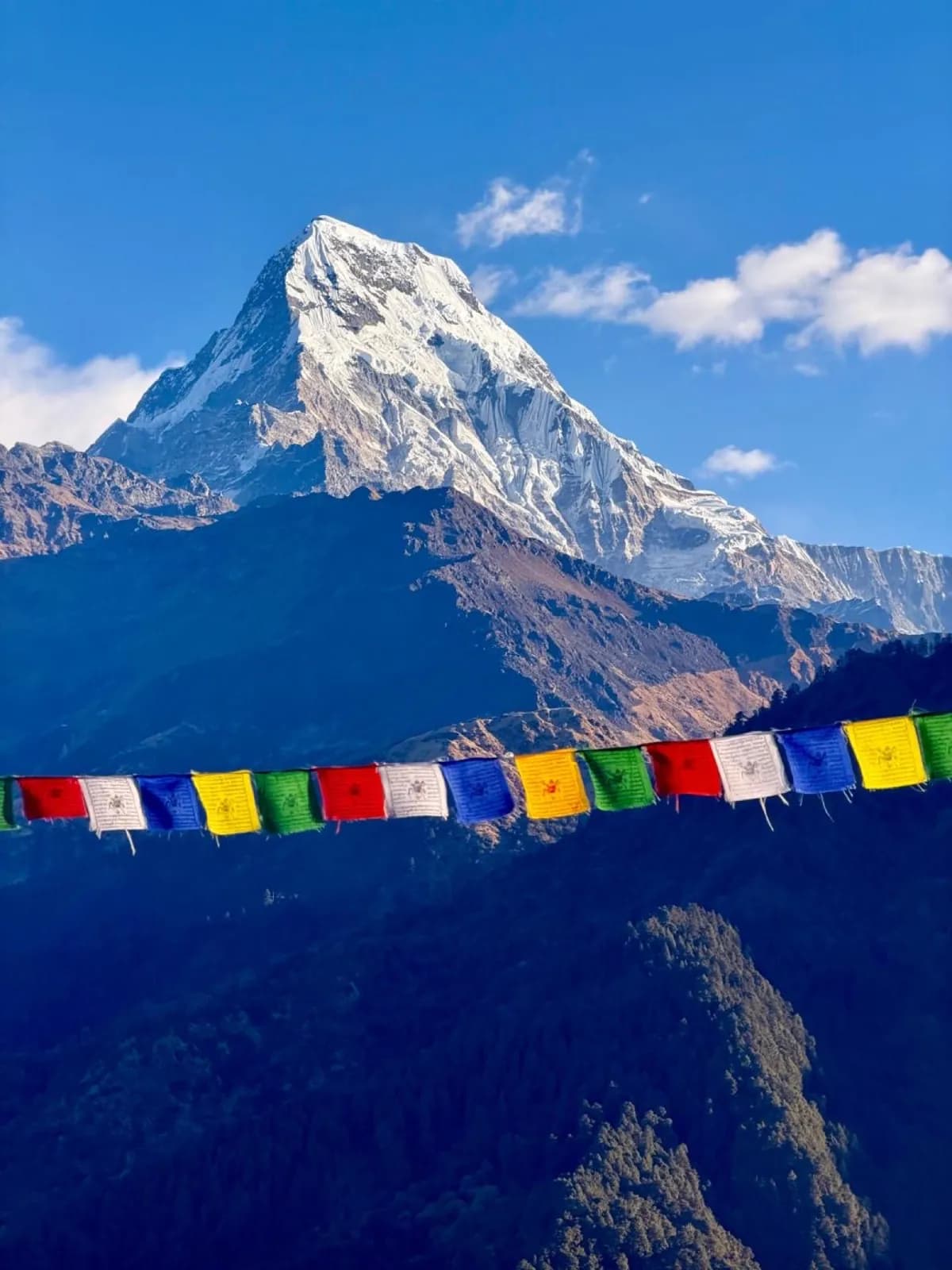
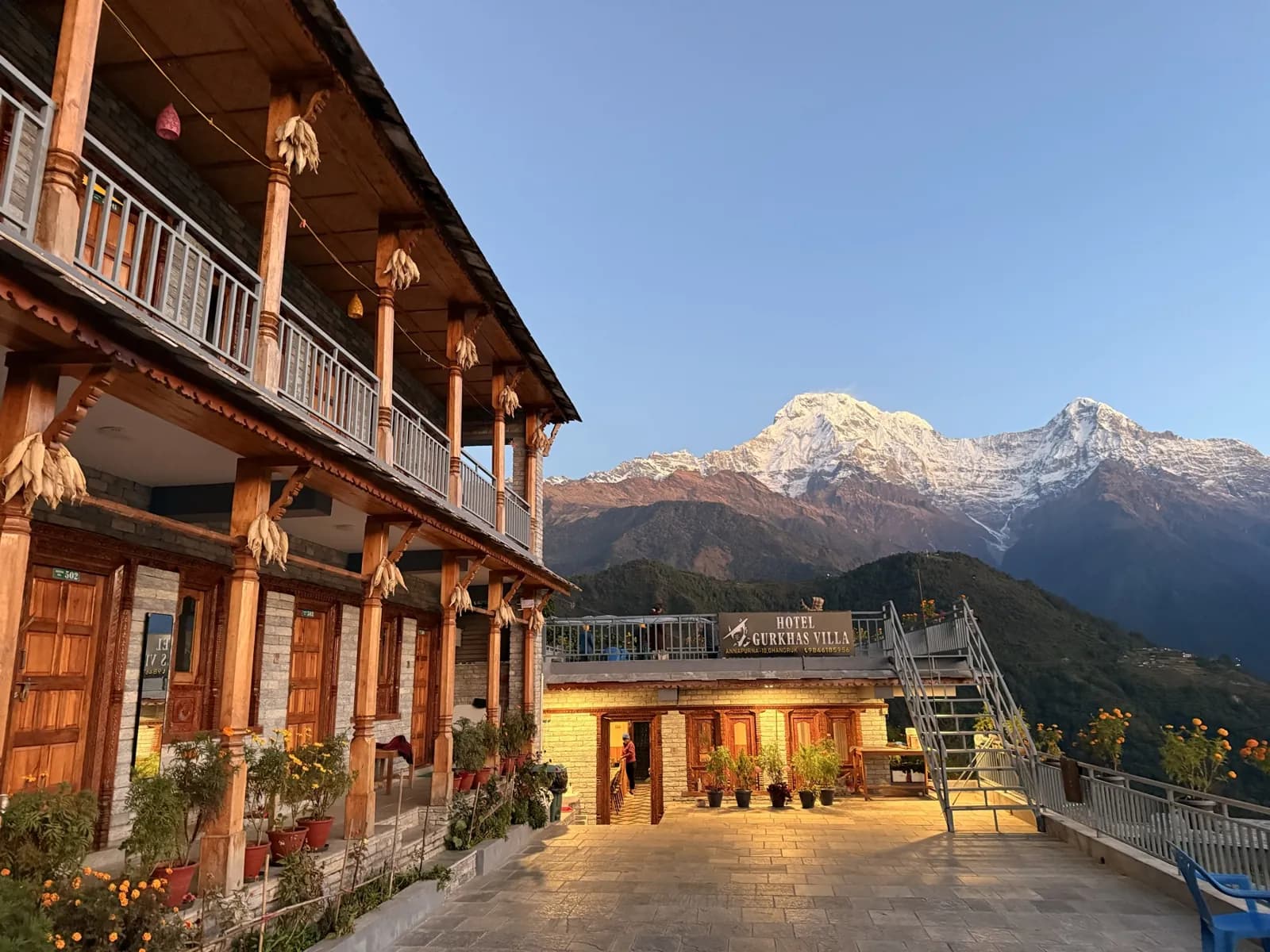
A short, steep and scenic morning: the trail descends through oak and rhododendron forest beside the Kimrong stream, past Bhaisi Kharka, and out of the trees onto the terraces above Ghandruk. You arrive by lunchtime, leaving the afternoon free for the Gurung museum, the stone lanes of the village and the views of Annapurna South.
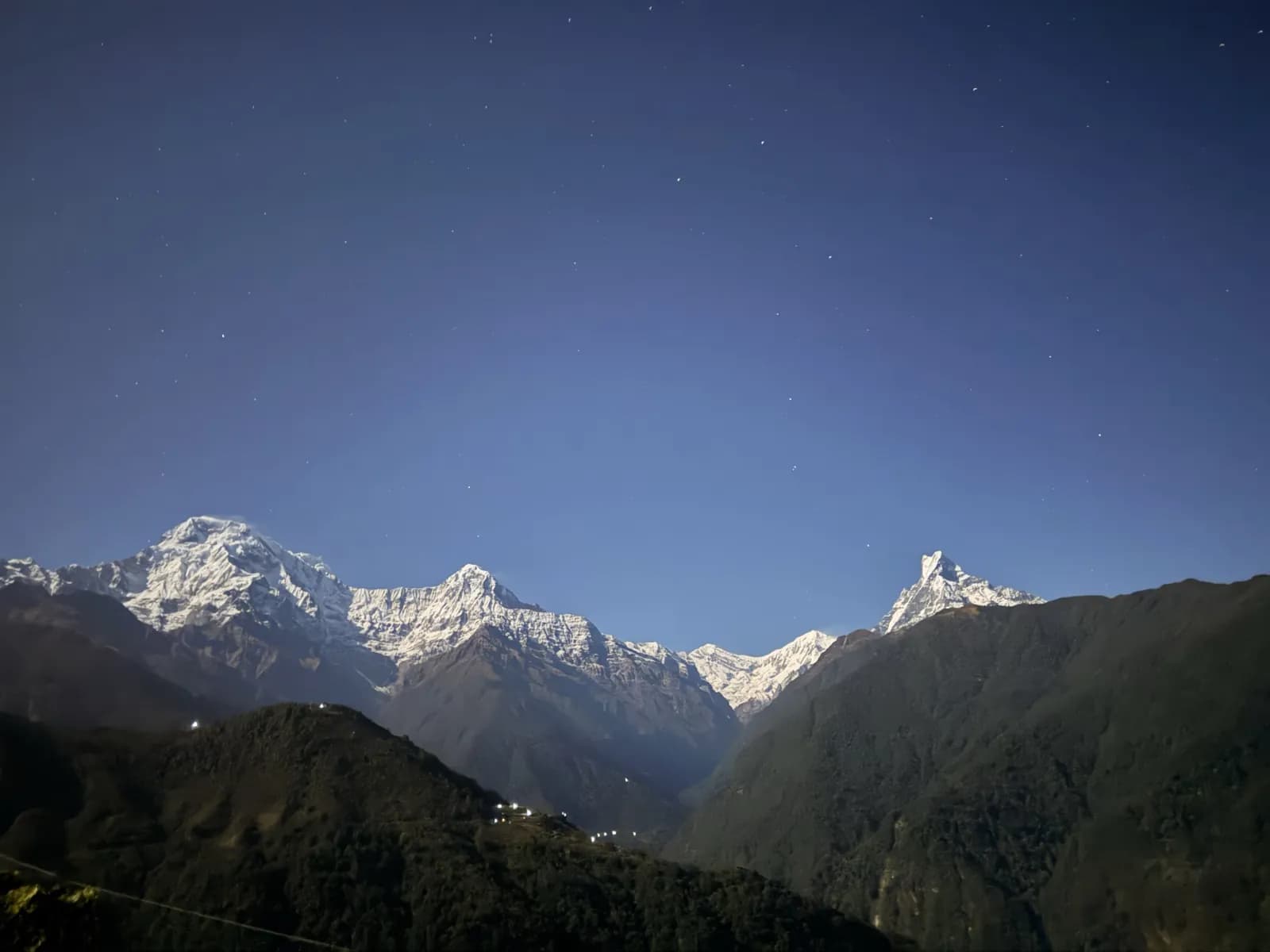
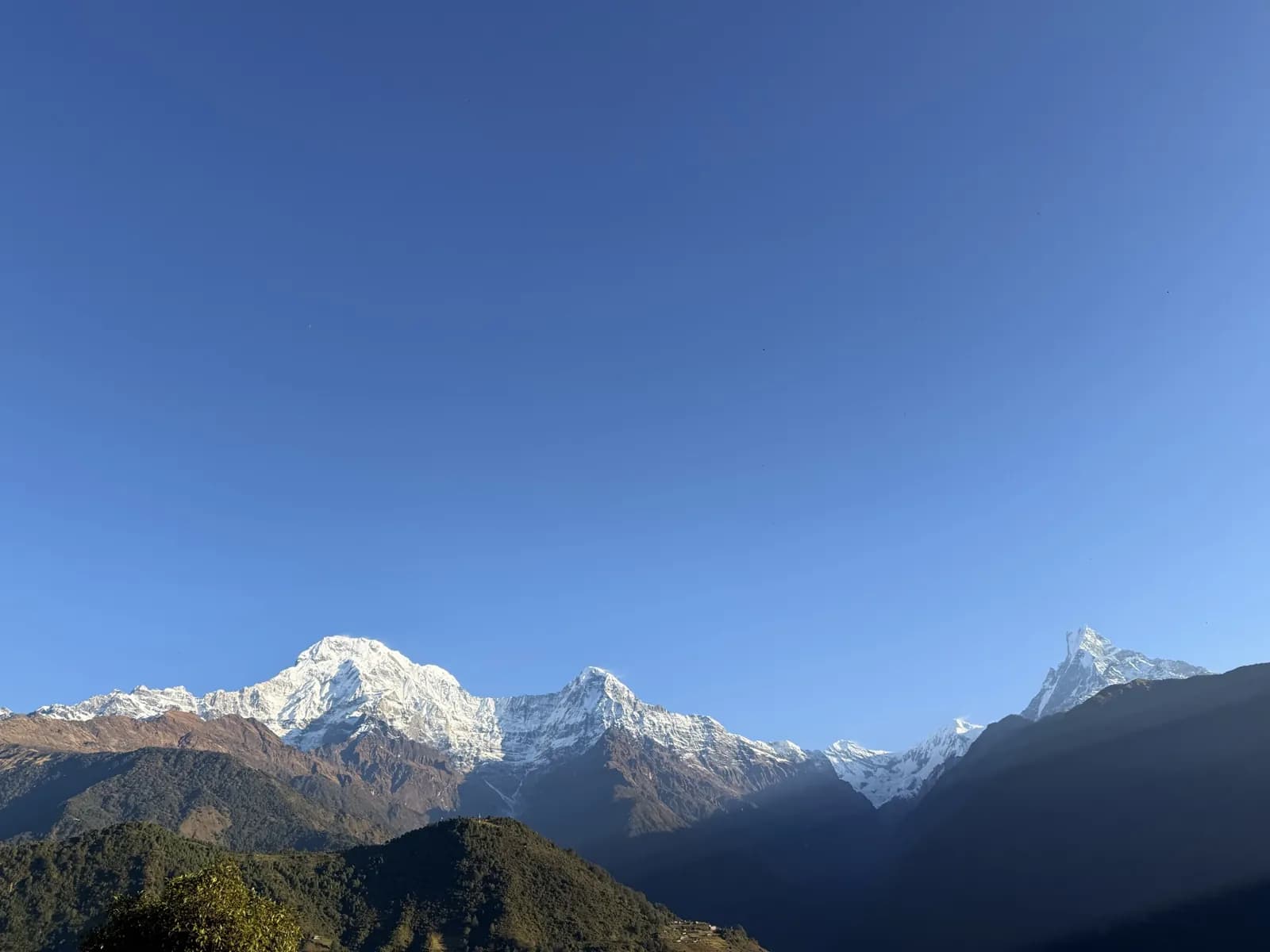
Watch the sunrise on Annapurna South from the village, then walk down the last stone steps to the road at Kimche. From there, it is a couple of hours by jeep back to Pokhara, where you have a free hot shower and dinner beside the lake.
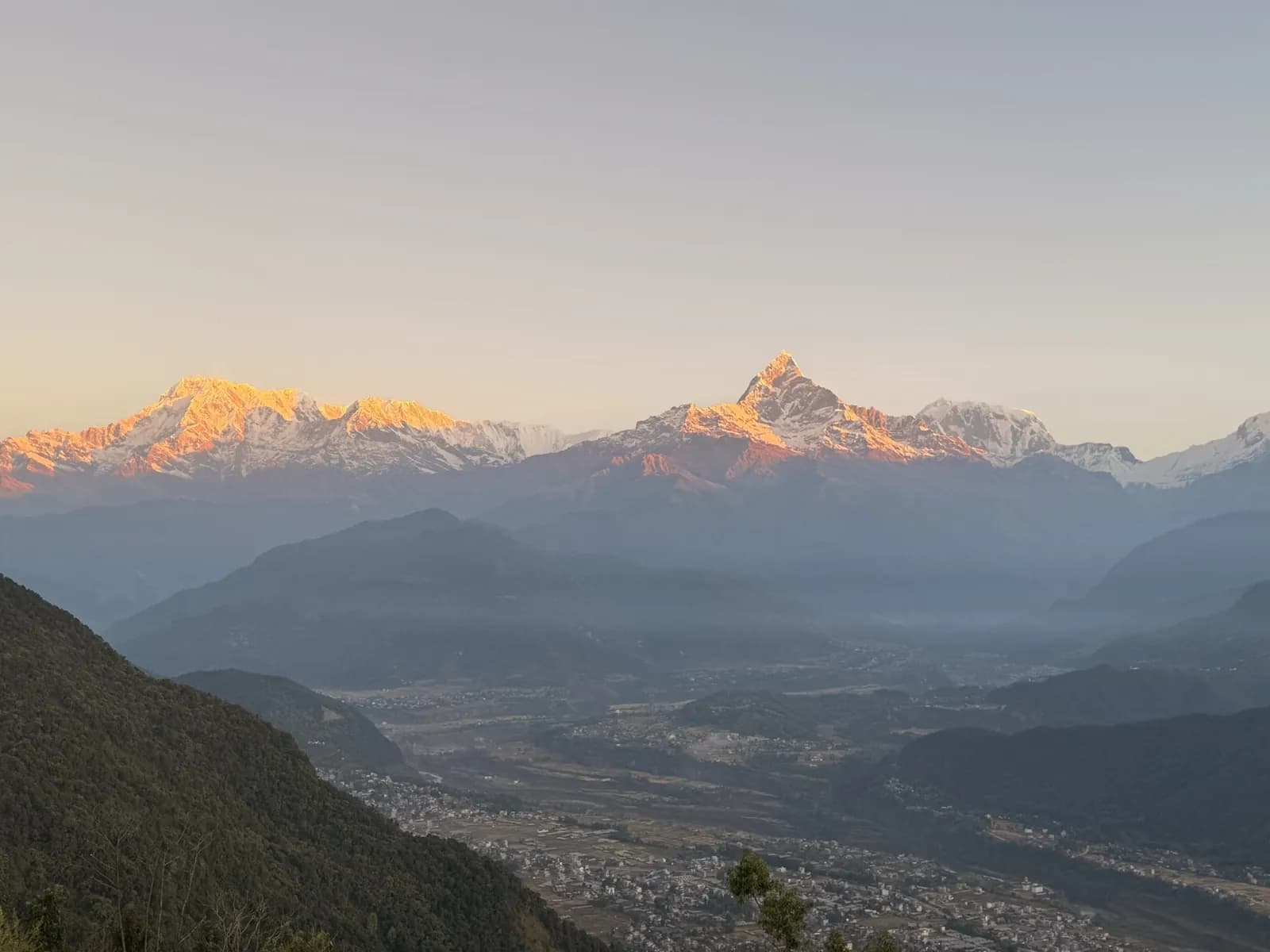
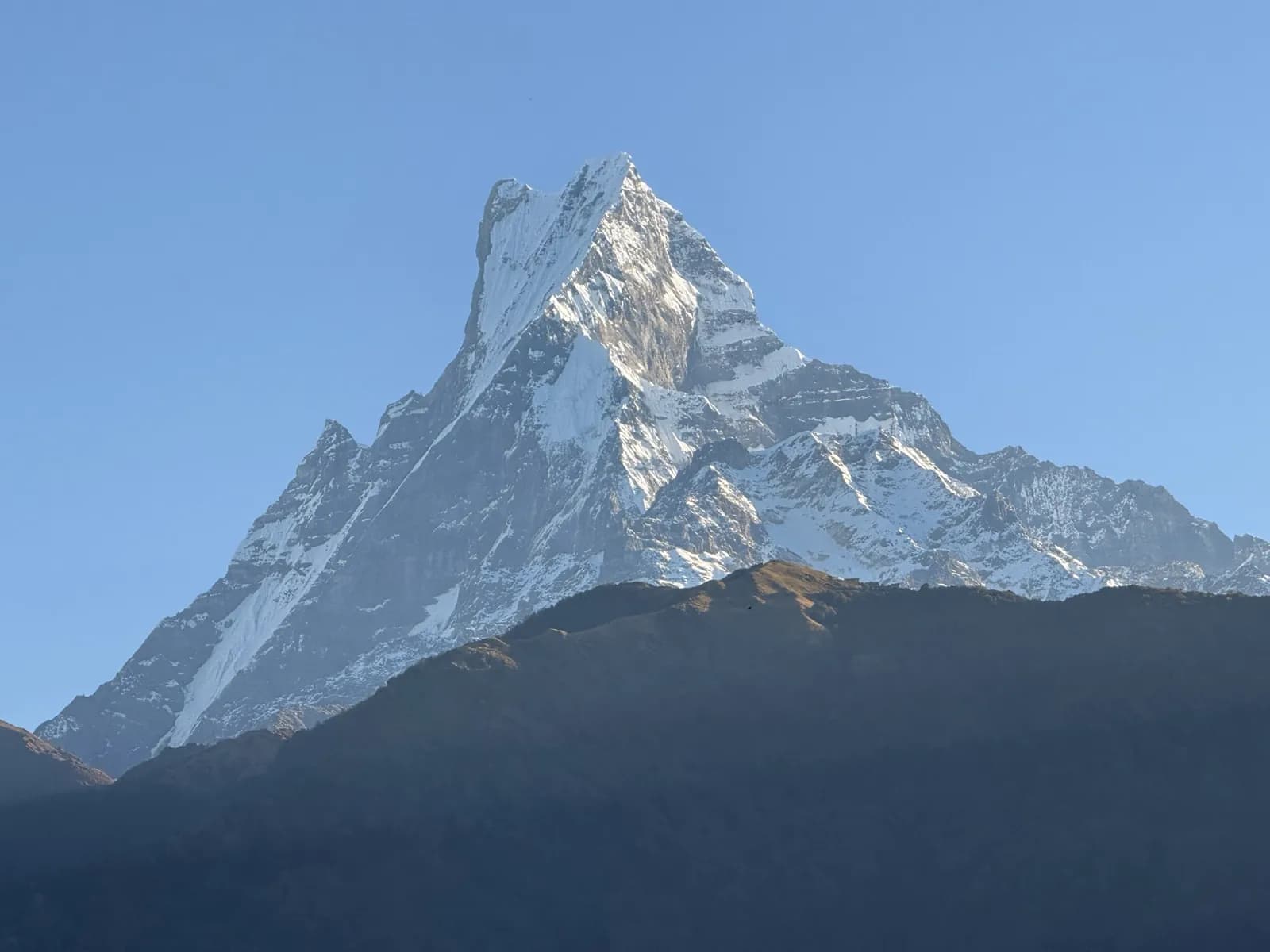
The day is free. Most people have a late start and then take a rowing boat on Phewa Lake, visit the Sarangkot viewpoint at sunrise if they feel up to it, see the mountain museum, have a massage, or go paragliding, for which this valley is one of the best places in the world.
A twenty-five-minute flight, or the longer road journey along the Trishuli river if you would like to see the countryside. In the evening, you have a farewell dinner with your guide.
We take you to the airport. If your flight is late in the day, we will store your bags and suggest parts of the old city you did not see on day 2, or a good café where you can relax.
There are two trekking seasons, and they offer different things: spring has flowers and autumn has clearer views.
Start date
20 Mar 2027
End date
29 Mar 2027
Available
12 places left
US $897
Per person
Start date
24 Oct 2026
End date
2 Nov 2026
Available
12 places left
US $897
Per person
Start date
9 Oct 2027
End date
18 Oct 2027
Available
12 places left
US $897
Per person
The trail from start to finish, at a glance.
Baggage weight limit
Your porter carries a maximum of 20 kg, shared between two trekkers, and there is no airstrip weight limit on this trek. Many people pack too much for this circuit: it is five days, every lodge has a hot shower, and you can wash a shirt at Ghorepani and have it dry by Ghandruk. We provide the duffel bag and the sleeping bag, and anything you leave behind is stored free at our office in Kathmandu or Pokhara.
There are no mountain flights to be cancelled, and the road now reaches further up the hill each year.
The flight from Kathmandu takes twenty-five minutes and lands at an airport on flat ground at 830 m. Delays are measured in hours rather than days. This trek does not depend on small mountain aircraft finding a break in the cloud, which is why the itinerary has no spare day and does not need one.
The drive from Kathmandu to Pokhara takes six to seven hours along the Trishuli river on the Prithvi Highway and costs about twenty dollars by tourist coach. On a trip with no tight connections, this is a good option, and you see part of central Nepal that you would miss by air. Tell us which you prefer when you book.
Nayapul, at 1,070 m, was the traditional starting point. The jeep track now continues past Birethanti and Hile and, in dry conditions, as far as Ulleri, so where you start walking depends on the month and the condition of the road. We drive as far as the road is in good condition on your dates and start from there, which keeps day 3 to three to four hours.
This is the easiest trek in Nepal to leave early. Ghandruk has a road, Ghorepani has a rough one, and a jeep is at most a few hours away from anywhere on the circuit. A helicopter is available but is rarely needed here. If someone in your group wants to stop, they can be in a hotel in Pokhara the same afternoon while the others continue.
The four nights on the trail are spent in teahouses: family-run lodges with one warm dining room, heated by a single stove, and simple twin rooms with foam mattresses and thin walls. Bring a sleeping bag for Ghorepani and Tadapani, where the nights are cold. Hot showers and charging are usually paid for separately.
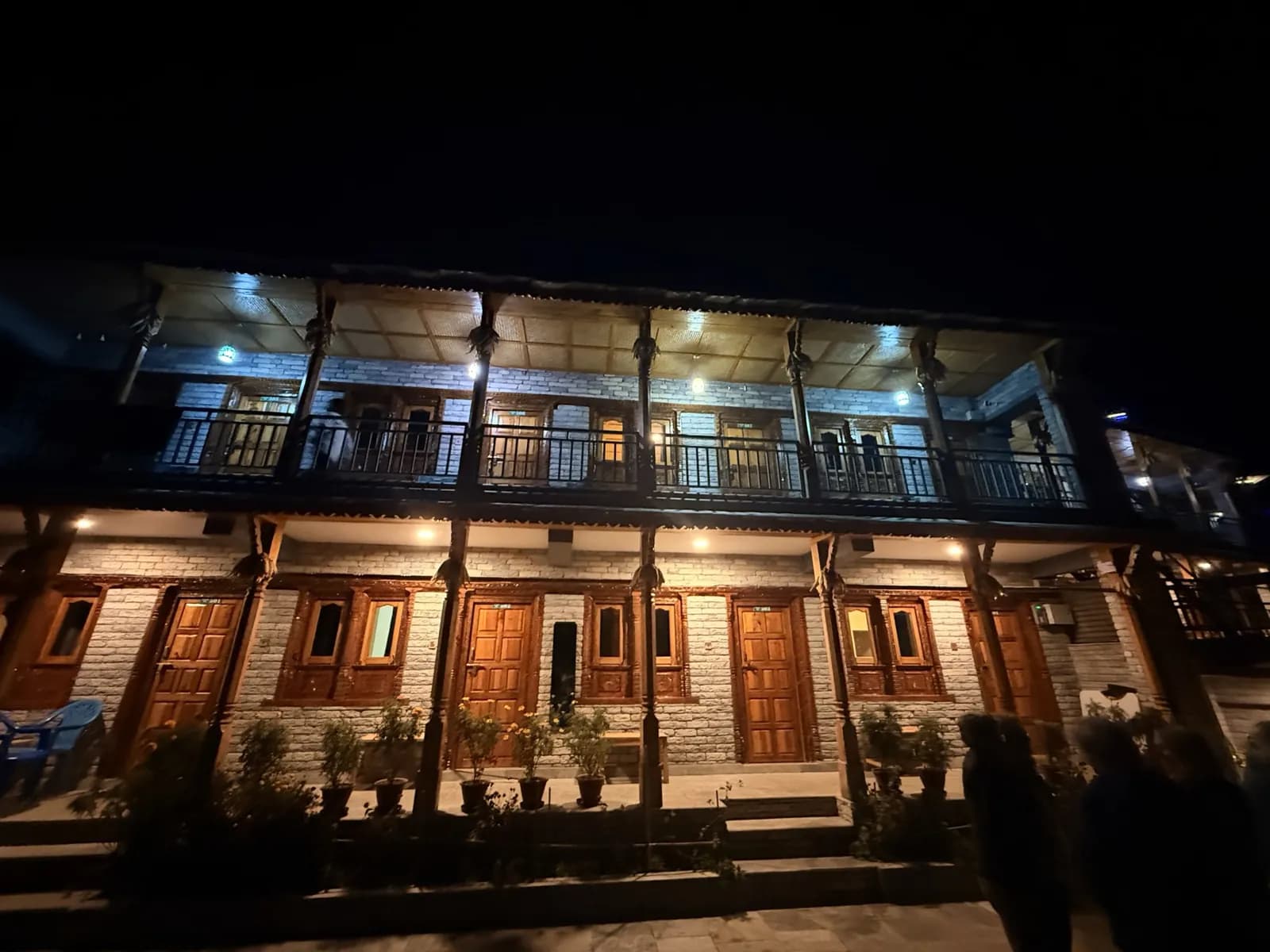
At Tikhedhunga, you stay in a teahouse beside the Bhurungdi river, with private bathrooms in most lodges. Ghorepani is the highest night of the circuit, with private bathrooms and a hot shower for a fee. Tadapani is on a forest ridge, and the older lodges there have shared bathrooms. Ghandruk has the best rooms on the route, in a stone Gurung house with private bathrooms.
| Where | Nights | Type | Room | Bathroom |
|---|---|---|---|---|
| Kathmandu | 3 | Three-star hotel | Twin or double | Private, hot water |
| Pokhara | 3 | Three-star hotel, lakeside | Twin or double | Private, hot water |
| Tikhedhunga | 1 | Teahouse beside the Bhurungdi | Twin | Private in most lodges |
| Ghorepani | 1 | Teahouse, the highest on the loop | Twin | Private, hot shower for a fee |
| Tadapani | 1 | Teahouse on the forest ridge | Twin | Shared in the older lodges |
| Ghandruk | 1 | Teahouse in a stone Gurung house | Twin | Private, in the best rooms on the route |
Porridge, Tibetan bread, eggs, chapati, pancakes, tea or coffee
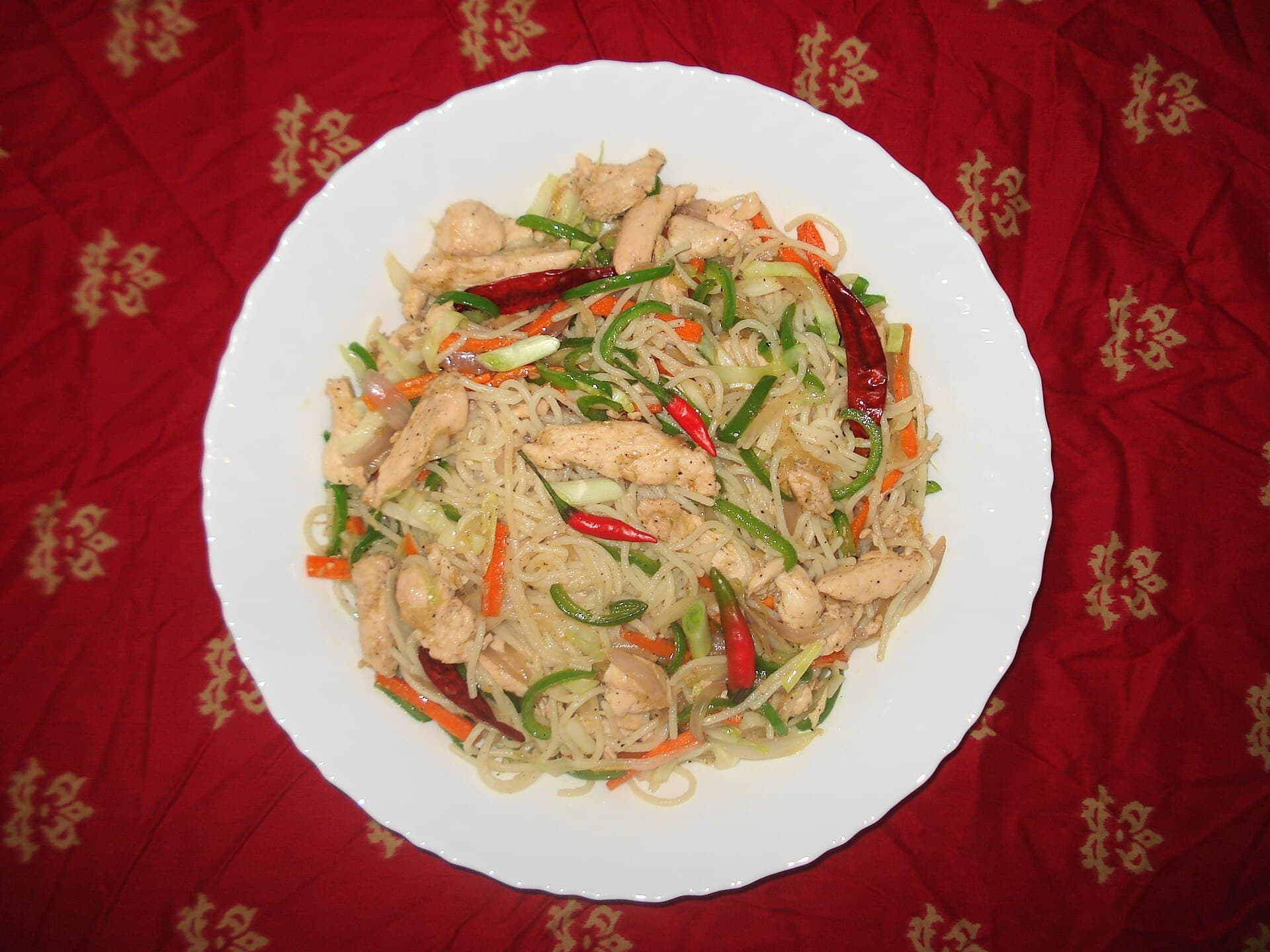
Dal bhat, fried rice, noodles, soup, momo and potatoes cooked in many ways

Soup to start, then dal bhat, pasta, thukpa, or curry and rice
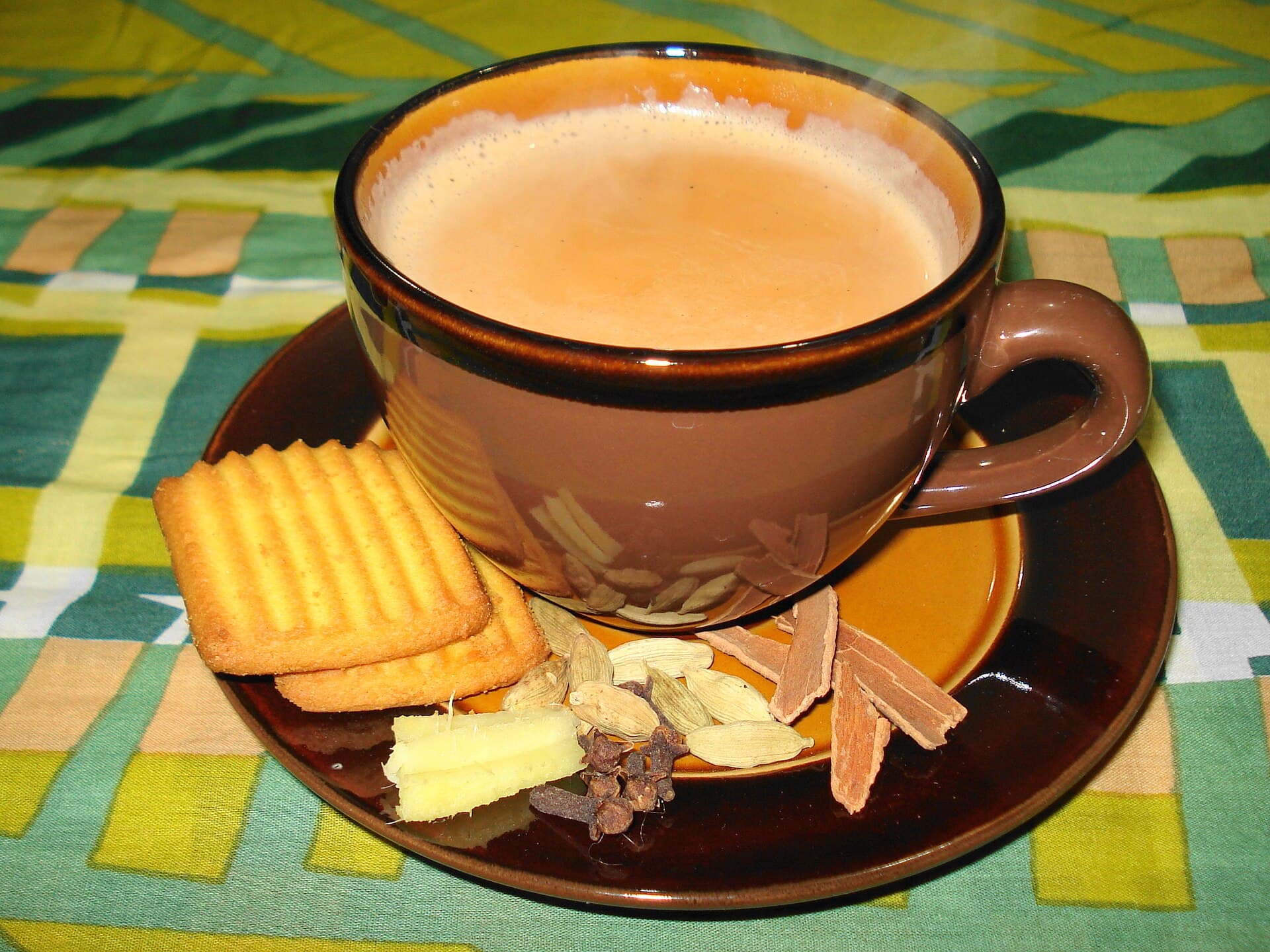
Black, milk, lemon, ginger or masala tea. Included at every stop.
The days are shorter than on a high-altitude trek, which leaves long evenings in a warm dining room.
6:30Tea in your room, and a bowl of warm water to wash in
7:00Pack, and put the duffel outside your door for the porter
7:30Breakfast together in the dining room
8:15On the trail. The guide sets a slow, steady pace
12:00Lunch at a teahouse on the route, for about an hour
13:00One to three more hours of walking, depending on the day
15:00Arrive at the teahouse for tea, choose a bed, and have a shower while the water is hot
16:30Free time: reading or cards in the dining room as the stove is lit
18:30Dinner, and a briefing from the guide on the next day
21:00Bed, earlier on the night before Poon Hill
Long stone staircases up and down, at low altitude.
Written for somebody who walks a bit and does not train. If you already run or cycle regularly, start partway through. Nothing here needs a gym.
6 weeks before, stage 1 of 6
Train three times a week for 40 minutes, at a pace at which you can still hold a conversation. Walking, cycling or swimming are all suitable. Most people who find this trek difficult were fit enough but had not walked on several consecutive days.
Altitude is a minor concern on this trek. This section explains why, and the precautions we still take.
The highest point where you sleep is Ghorepani at 2,874 m, and the highest point you reach is Poon Hill at 3,210 m, for about an hour at sunrise. Acute mountain sickness is uncommon below 3,000 m and is very rare on this route: in most seasons, nobody in the group experiences more than a restless night and slight breathlessness on the climb from Ulleri. A walk to 3,210 m is not an altitude challenge. However, altitude sickness is rare rather than impossible, and the precautions below are easy to follow.
Daily health checks
Your guide carries a pulse oximeter and measures your oxygen saturation and pulse on the one night you sleep above 2,500 m, at Ghorepani. It is a quick check, and the results are recorded.
Serious symptoms
If someone is unwell, we descend early. Descent is the only effective treatment, and on this route it is easy. Day 5 descends 244 m, and missing the sunrise climb means missing a view, not the trek.
Road access
There is a rough road to Ghorepani and a good one to Ghandruk. Anyone who needs to leave can be in Pokhara, at 830 m, within a few hours, which is not the case on most treks in Nepal.
Helicopter evacuation
Helicopters are available but are rarely needed. Evacuation to Pokhara takes about twenty minutes from anywhere on the circuit and costs $2,000 to $3,500. Your insurance should cover it. In practice, the problems we treat on this trek are blisters, knee pain and stomach upsets.
Fitness and altitude are unrelated
This is the thing people get wrong most often. Training makes the walking easier and does nothing for how your body handles thin air. Strong young trekkers get altitude sickness and unfit older ones frequently do not. Go up slowly, and say something the first time your head hurts.
There are two months when we do not run this trek, and two months when conditions are at their best.
The forest flowers from the bottom of the hill upwards, and the woods around Ghorepani reach their peak in the last week.
Averages from Nepal DHM station data for the Pokhara valley and the Annapurna foothills, adjusted for height. Any given week can sit several degrees either side, and a clear December night at Ghorepani is colder than the table suggests.
Every departure is led by a government-licensed guide trained in wilderness first aid, with one porter for every two trekkers. A second guide joins from 13 trekkers, so that nobody is ever alone at the back of the group. Our guides come from these hills, and several of those who work on this circuit grew up in Ghandruk or Ulleri.
Each porter carries 20 kg, which is your duffel bag and one other. This is below the 25 kg limit set by the trekking association and well below the loads you will see carried by some other groups. If your bag is overweight, the load is split rather than added to. Porters carry duffel bags, not daypacks: you carry your own water, camera, jacket and snacks.
Wages, insurance, food and accommodation for every guide and porter are included in the price on this page, and are not requested from you on the trail. All staff are insured for accidents and helicopter evacuation on the same terms we require of you. The trekking industry has a long history of porters climbing stone steps in poor footwear for very low pay. Including fair pay in the package price is the way to avoid this.
Tipping is customary but not compulsory, and it never replaces wages. On a trek of this length, $80 to $130 per trekker for the whole team is usual, given together on the last evening rather than during the trek. Your guide will not ask for a tip and would prefer that it is not given in front of everyone.
A trekker drinking bottled water uses fifteen or twenty plastic bottles on this short circuit, and each one has to be carried back down by a porter. There are safe drinking water stations at Ghorepani and Ghandruk that cost much less than bottled water, and boiled water is available at every lodge. Bring water purification as a backup.
We carry out everything we bring onto the trail that is not eaten. This is the busiest short trek in Nepal, so careless groups cause the most visible damage here, and every operator should leave the ridge as they found it.
Every lodge you stay in on this circuit is a family business in its own village, and Ghandruk in particular has funded much of its school and water supply from trekking. The ACAP fee goes to a national trust rather than to the government, and a documented share returns to these villages. Nearly everything you pay us is spent within a day's walk of the trail.
Ask before photographing anyone, and especially before photographing a house or a shrine. Stand on the mountain side of the path when a mule train passes. The Gurung museum at Ghandruk is run by the village rather than as a tourist attraction, and a small donation there is more helpful than most souvenirs.
Send us an email or a WhatsApp message with your approximate month of travel. You will receive a personal reply from someone who has walked this circuit. Nothing is payable at this stage, and nothing is due until you pay a deposit.
A 30% deposit secures your dates, and the balance is due on arrival in Kathmandu, in cash or by card. At the same time, we ask for a copy of your passport, your insurance certificate and any dietary or medical information, because the permits are issued using your passport details.
You can pay by bank transfer or by card through a secure link. Card payments carry a bank fee of about 4 per cent, which we show you before you pay. In Kathmandu, we accept US dollars, pounds, euros or rupees.
If you cancel more than 30 days before departure, your deposit can be transferred to any other date or trip we run, with no time limit. If you cancel within 30 days, the deposit is kept, because by then the crew has been booked and the permits bought. If we cancel for any reason other than weather, you receive a full refund.
Both cost the same for a group of five or more. A private departure runs on your dates at your pace and can be arranged for one person. A group departure runs on the dates in the table, with a maximum of twelve people. This trek is enjoyable both in a group and alone with a guide.
Outside October, a week's notice is enough, as there are no mountain flights to book. For the middle two weeks of October, we need three weeks' notice, because beds at Ghorepani are limited. We have started travellers on this trek two days after they contacted us.
Priced per person, arranged before you travel, and none of them included in the price above.
Continue from Ghandruk to Jhinu Danda and down to the natural hot pools beside the Modi river. After five days of stone steps, this is a very welcome addition.
Half an hour in the air from Sarangkot, facing the whole Annapurna range. Day 8 is already free, and Pokhara is one of the best places in the world for paragliding.
Join the ridge east of Ghandruk and climb to 3,580 m below Machhapuchhre. A good next step if you would like to go higher after this circuit.
Look for rhinos, sloth bears and possibly a tiger in the lowland forest, between Pokhara and Kathmandu on the return journey.
Two extra nights by the lake at the end of the trip. Many travellers wish they had added them.
A room to yourself for all six hotel nights, and for the teahouse nights wherever the lodge has one available, which on this route is usually the case.
Mountain Lodges of Nepal runs lodges in the Annapurna foothills at Dhampus, Landruk, Ghandruk, Majgaon, Tomijong and Birethanti. Where this route stops in one of those villages, we can book the lodge in place of the teahouse: a private room with its own bathroom, a garden and a good dinner.
Higher on the route there are only teahouses, so those nights stay the same. We confirm availability for your dates before you book.
4 versions of this journey. They use the same guides and the same lodges; what changes is the length, the comfort and how much of it you walk.
Once in a lifetime experience
January 2026, Tripadvisor
Earthbound Expeditions delivered an unforgettable, once‑in‑a‑lifetime experience for my 18‑year‑old daughter and me on the Ghorepani Poon Hill Trek. Rajan Samlkhada greeted us on arrival at Kathmandu airport and the next morning provided a detailed, confidence‑building briefing that set the tone for the entire journey. Our guide, Rajan Neupane, led the trek with outstanding knowledge, patience, and attention to every detail. Our sherpas, Kedar and Shankar, were absolute mountains of strength and always ready to help with anything we needed. From start to finish, we were treated like family — and the nightly fruit platter for dessert was a beautiful and thoughtful touch. I highly recommend Earthbound Expeditions and look forward to taking on the Everest Base Camp trek next… hopefully before my old knees give way! 😊
Soul stirring family adventure!
December 2025, Tripadvisor
We had an incredible adventure on our 14-day expedition through Nepal, journeying from the vibrant streets of Kathmandu to the serene hills of Nagarkot, the charm of Bandipur, and the lakeside beauty of Pokhara — topped off with an unforgettable 5-day Ghorepani–Poon Hill trek. A heartfelt thank you to Rajan, Sree, and the amazing team of porters for their outstanding support, guidance, and seamless arrangements throughout this adventure. The city hotels were superb, and the travel vehicles were exceptionally comfortable, making every leg of the journey a pleasure. We already look forward to returning to Nepal for more trekking, exploration, and adventure. It truly is a wondrous and soul-stirring place.
The most amazing experience! Kathmandu. Poon Hill trek, Pokhara, Chitwan National Park
May 2023, Tripadvisor
This trip was amazing. Every detail was taken care of. This trip was put together with love! Shree is the best, so knowledgeable about the geography and history of Nepal. He encouraged us during our trek, and just took care of us every step of the way! Absolutely recommended this trip for anyone wanting to explore Nepal. I’m going to tell all my friends about this amazing experience.
Highly professional and experienced company. Choose them for the best Nepal experience!
November 2022, Tripadvisor
We booked the Poon Hill Trek in Annapurna region with Earthbound Expeditions. The expectation of the trip was surpassed by the organizational expertise of the owner and CEO Mr Rajan Simkhada. From the minute the first email was promptly replied to, through the whole trek until the departure for home, we were so well looked after. Mr Simkhada was always available to answer any question prior to trip. He organised highly skilled team of guide and porter who displayed amazingly detailed knowledge about the area. Every aspect of this trip met and exceeded our expectations and I would recommend this trip to everyone. The guide, assistant guide/porter (Rajan Neupane and Som Giri) were the best, super attentive and supportive. It was a great experience and great adventure with a professional and friendly team. Back in Kathmandu, our day sightseeing was also organised through Earthbound. Our driver (Raju) was exceptional. Very professional and friendly service, they listen to what your preferences are and build your holiday around them. Everything was superbly organised, absolutely reliable service at its best. I can strongly recommend Earthbound Expedition and will be booking with them again on our future adventures in Nepal. Our plan is to continue doing climbing trips in Nepal and we will be sure to book their services again. Mr Rajan Simkhada and his team will do everything to make sure you have the best trip, contact him directly at : earthboundnpl@gmail.com if you are planning on trekking, hiking, sightseeing or any adventures when in Nepal.
Answers to the 20 questions travellers ask us most often. If your question is not here, contact us and we will answer it.
The Panorama trek goes up to Ghorepani, climbs Poon Hill and returns down the same valley. This trek continues east over the Deurali ridge to Tadapani, down through the forest to Ghandruk, and out on the other side of the loop. It is two days longer, never repeats a section, and is the more complete of the two. We recommend the Panorama trek only if you are short of time.
Yes, it is one of the best first treks. You sleep in teahouses every night, the highest overnight stop is 2,874 m, a road is never far away, and you still see Dhaulagiri and the Annapurnas at sunrise. However, it is a proper trek, not a short introduction: five days of walking with two long staircases. People often underestimate it because it is at low altitude.
You need to be able to walk four to six hours on stone steps for five consecutive days, carrying a light daypack. The six-week training plan on this page is suitable for someone who is reasonably active. The most important thing to train on is stairs, both up and down, because the circuit consists largely of stone steps.
Yes. This is the trek we recommend for families. The minimum age is eight, with a parent. The days are short enough to keep children interested, and there is a hot shower and usually wifi at the end of each day. The early morning climb to Poon Hill is the only part children may find difficult.
You can book as a single traveller, but you will still have a guide with you: since April 2023, a licensed guide has been compulsory for foreign trekkers in the conservation area, and this is enforced at the Birethanti checkpoint. A private trek for one person runs on your dates for $1,240, regardless of other bookings.
It has more than three thousand stone steps, climbs around 500 m, and takes most people two to three hours. It is tiring rather than dangerous: the steps are wide, well built and dry in the trekking seasons. Porters climb it in under an hour, but that is not a useful comparison. Use poles, keep a slow rhythm and stop whenever you need to.
It depends on the condition of the road. Nayapul, at 1,070 m, was the traditional starting point, but the jeep track now continues beyond Birethanti and Hile, and in dry conditions almost to Ulleri. We drive as far as the road is in good condition on your dates and start walking from there, which keeps day 3 to three to four hours. We do not drive to Ulleri to avoid the staircase unless you ask us to.
The forest flowers from the bottom of the hill upwards. The lowest slopes near Ulleri start flowering in the first week of March, the forest around Ghorepani is in full flower between the last week of March and mid-April, and the highest trees are still flowering in early May. If the flowers are your main reason for coming, the first two weeks of April are the most reliable time to book.
In peak season, in October and early April, there can be a few hundred people at the top, and the last part of the path is a slow line of headtorches. It is busy. We leave earlier than most lodges, and by 8 am, once you are past Deurali on the ridge to the east, you will see very few other trekkers for the rest of the day.
Autumn is best for clear views and spring for colour. October and November have the most reliable mountain views of the year, and November is quieter once the festivals are over. March and April bring the rhododendrons in flower, the highlight of this route, though the horizon is slightly hazier.
It is unlikely. You sleep at 2,874 m for one night and reach 3,210 m for an hour, and acute mountain sickness is uncommon below 3,000 m. A few people sleep poorly at Ghorepani and some find the climb from Ulleri makes them breathless, and that is usually all. Your guide still checks your oxygen saturation at Ghorepani, because altitude sickness is rare but not impossible.
Yes. It is a condition of booking, even though you are unlikely to need it on this route. Cover to 4,000 m is sufficient. A rescue flight to Pokhara costs $2,000 to $3,500, and the helicopter will not fly without a guarantee of payment, which must be in place before an emergency.
The lodges are comfortable and better than most people expect. Ghandruk has some attractive stone houses with private bathrooms and good beds. Ghorepani is the busiest and coldest stop, with a large dining room heated by a central stove. Every stop on the circuit has a hot shower for two to four dollars, which is not the case on any high-altitude trek.
Yes, all three, and they all work. Mains electricity reaches the whole circuit, charging costs two to three dollars per device, and the wifi at Ghorepani and Ghandruk is good enough for a video call. Ncell and NTC cover almost the whole route; the forest between Deurali and Tadapani is the only area with weak signal.
At Ghorepani, the coldest overnight stop, temperatures fall to about -6°C in December and January and to one or two degrees above freezing in April and October. The lower villages are mild all season, and in April you can walk in a shirt. Bedrooms are not heated anywhere, which is why we provide a sleeping bag.
You need the Annapurna Conservation Area permit, at NPR 3,000 (about $22), issued by the National Trust for Nature Conservation, and a TIMS card at NPR 2,000 (about $15). Both are included in the price, and we arrange them using your passport details. TIMS checks have become inconsistent on this route, but we buy the card so that you have no problems at checkpoints.
Bring $150 to $250, changed into small rupee notes in Pokhara, to cover showers, charging, drinks, snacks and tips. There are cash machines at Ghorepani and Ghandruk, but they are not reliable, so plan to carry all the cash you will need.
A week's notice is usually enough for most of the year. For the middle two weeks of October, give us about three weeks, because Ghorepani becomes fully booked and we want to reserve beds in advance. Outside the peak season, we have started travellers on this trek at two days' notice.
Yes, and most groups make some changes. You can add a second night at Ghandruk to walk up to the Australian Camp viewpoint, finish at Jhinu for the hot springs, walk out via Landruk instead of Kimche, or split day 6 into two days to make the descent easier on your knees. For a group of five or more, a private trek on your own dates costs no more than joining a group.
Bring trekking poles and use them on the descents. Very few people have difficulty on the climb to Ghorepani, but many arrive at Ghandruk with sore knees that could have been avoided. Also, go to bed early at Ghorepani and leave for Poon Hill ten minutes before the other lodge guests.
Didn't find what you were looking for?
Search every word on this page, or ask somebody who has walked the route.
10 days
$897 per person