Breakfast
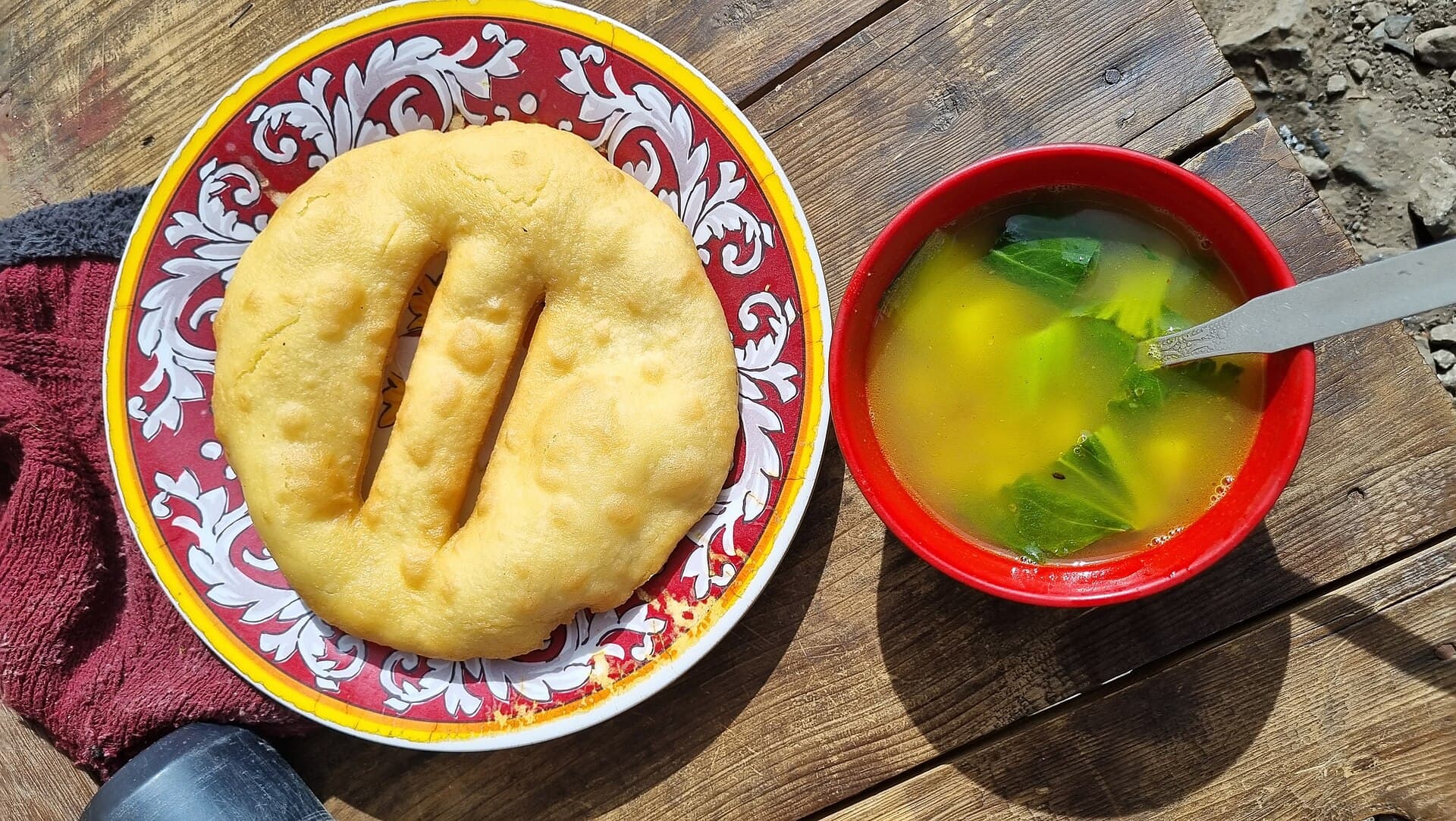
In the hotels: eggs, bread, congee, tsampa, tea or instant coffee
An overland journey from Kathmandu across the Tibetan plateau to the north face of Everest, then east through Shigatse and Gyantse to Lhasa. This is the only Everest Base Camp that can be reached by vehicle.
Update, September 2026: the flood of 26 August 2026 closed the border at Rasuwagadhi and Kerung, and the road to it, and no reopening date has been set. Until it reopens, we run this trip with flights to and from Lhasa. Please ask us for the current route before you book.
An overland journey from Kathmandu across the Tibetan plateau to the north face of Everest, then east through Shigatse and Gyantse to Lhasa. This is the only Everest Base Camp that can be reached by vehicle.
This trip crosses the whole width of southern Tibet by road, from the Nepali border to Lhasa, visiting the north side of Everest on the way. You drive over the Himalaya on day 4, spend a night at Rongbuk below the north face, and then travel east through Shigatse and Gyantse to Lhasa over two 5,000 m passes. Six of the twelve days are driving days, which is what crossing a plateau the size of western Europe involves.
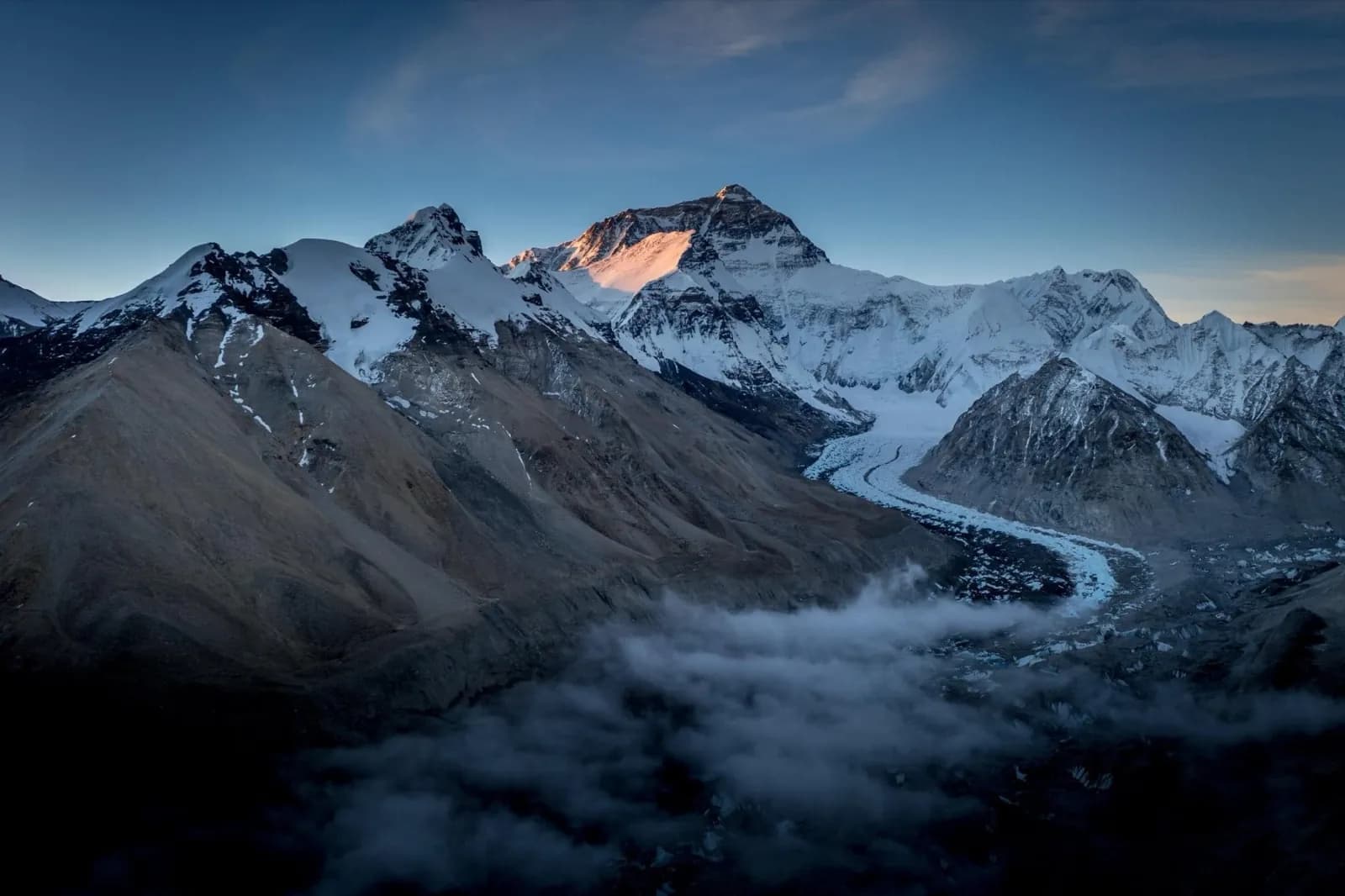
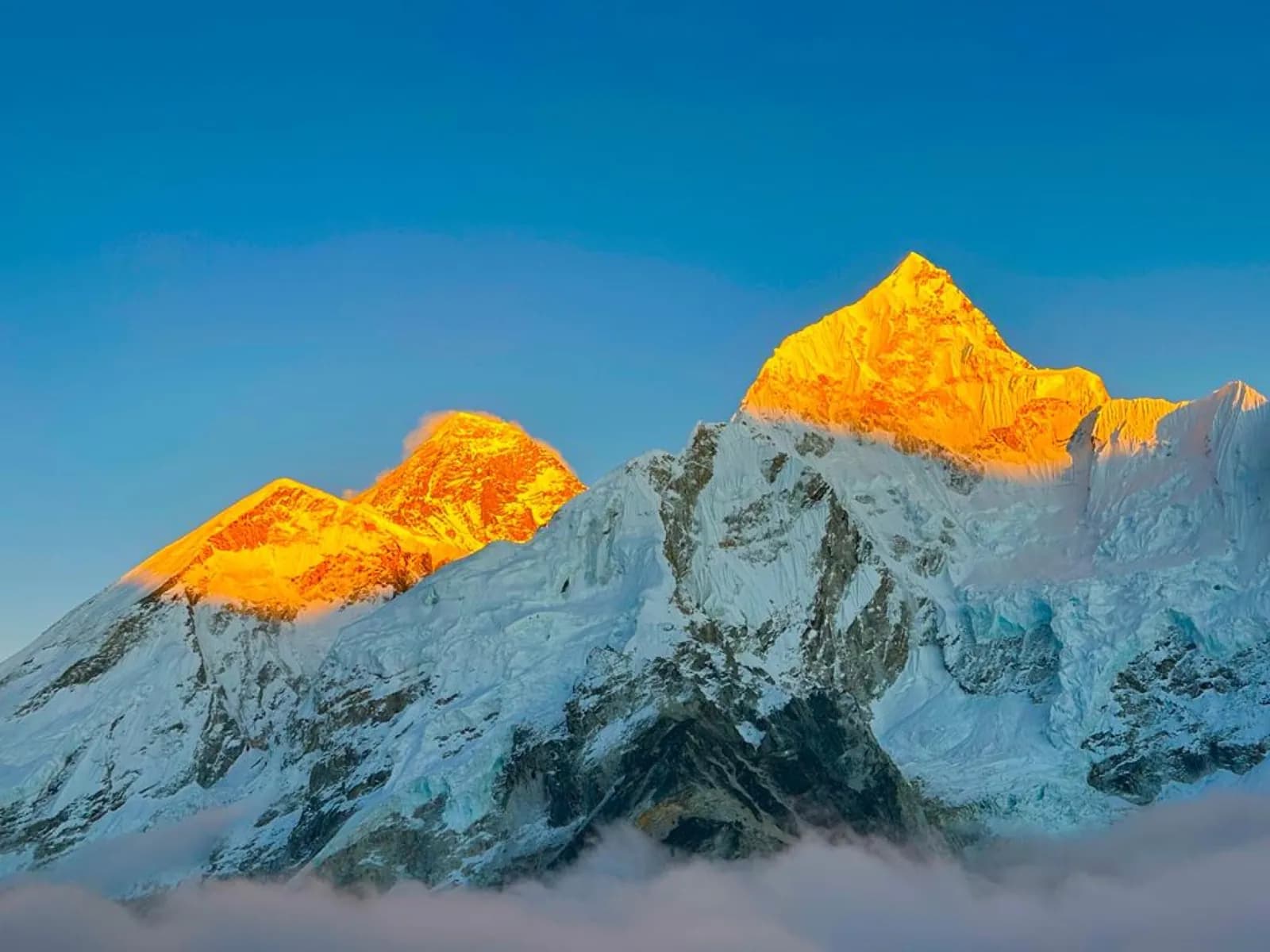
This is the only Everest Base Camp that can be reached by vehicle, and the view is very different from the Nepal side. On the south side you walk for ten days to reach the moraine at 5,364 m below the icefall, where the summit is not visible. Here a road takes you up the Rongbuk valley to 5,200 m, and Everest stands at the head of the valley with a clear view of its three and a half vertical kilometres, framed by the valley walls. It is the classic view of the mountain, and it requires no trekking.
Travellers who want to experience Tibet rather than go trekking. There is very little walking: an hour at Rongbuk, the stairs at the Potala and a circuit of the Barkhor. Instead, the trip requires you to be comfortable with long days in a vehicle at altitude, and to have an interest in monasteries, as after Everest the trip focuses largely on them. It also suits people who cannot walk for ten days to Base Camp but still want a full view of Everest.
We drive in and fly out, which is the better direction for two reasons. It gains altitude gradually by road over three days, rather than taking you straight to 3,656 m on a flight into Lhasa, which is significantly safer. It also places Everest on day 5, before the monasteries, so the highest and coldest night comes while you are fresh rather than at the end of the trip.
We meet you at the airport and take you to your hotel. In the evening we brief you on the trip and, most importantly, the paperwork: your group visa is collected in Kathmandu, and the permits have already been issued in your name.
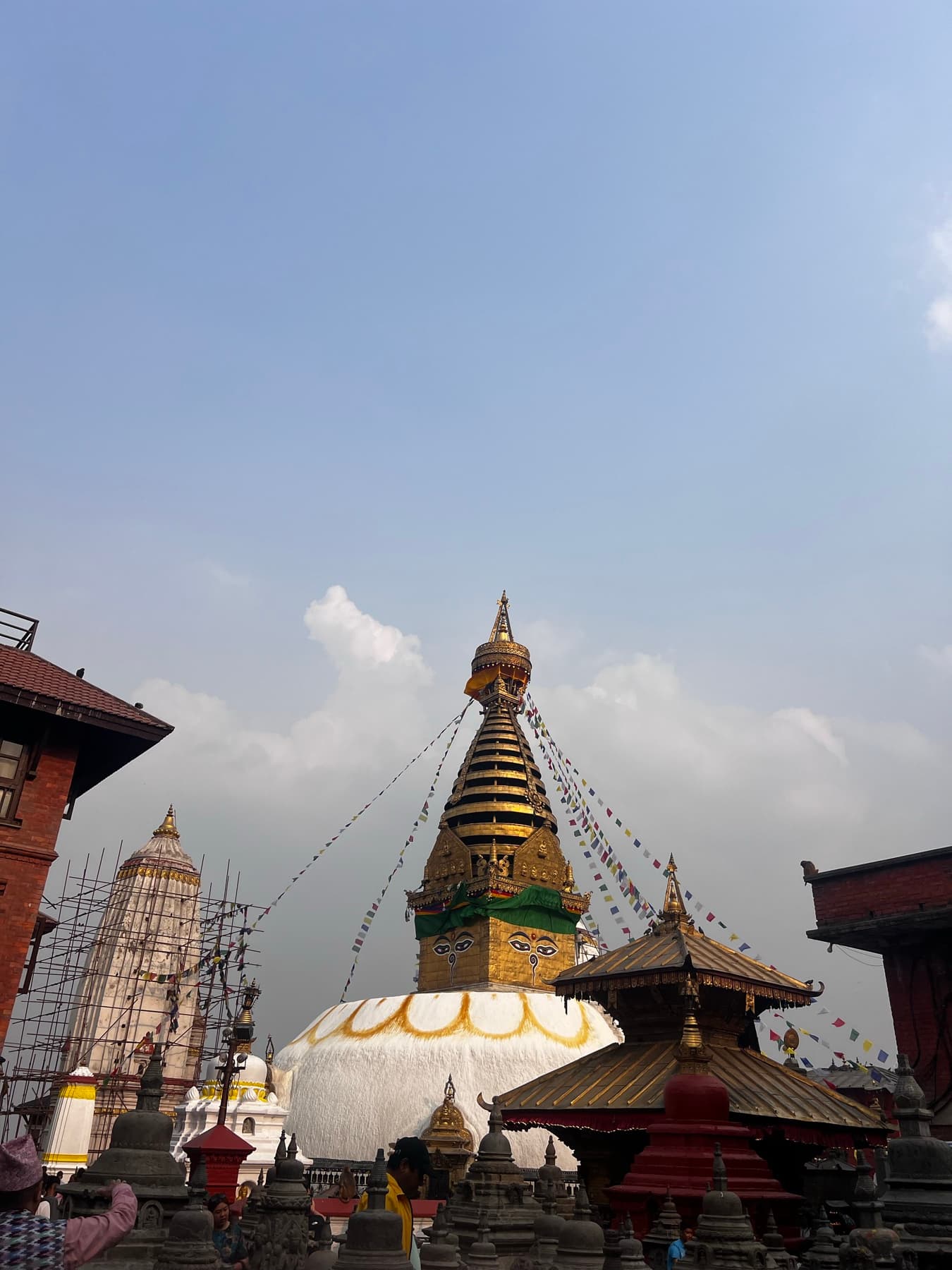
You visit the hilltop stupa at Swayambhunath, the river temples and cremation ghats at Pashupatinath, the great dome at Boudhanath, and the carved squares of Patan. Boudhanath is particularly relevant today, as you will spend the next week among the Tibetan people who built it.

The drive heads north out of the valley and up the Trishuli and Bhote Koshi gorges to Rasuwagadhi, then through the border formalities and up the far side to Kerung. The drive takes seven to eight hours, mostly climbing, and you finish the day 1,400 m higher than you started.
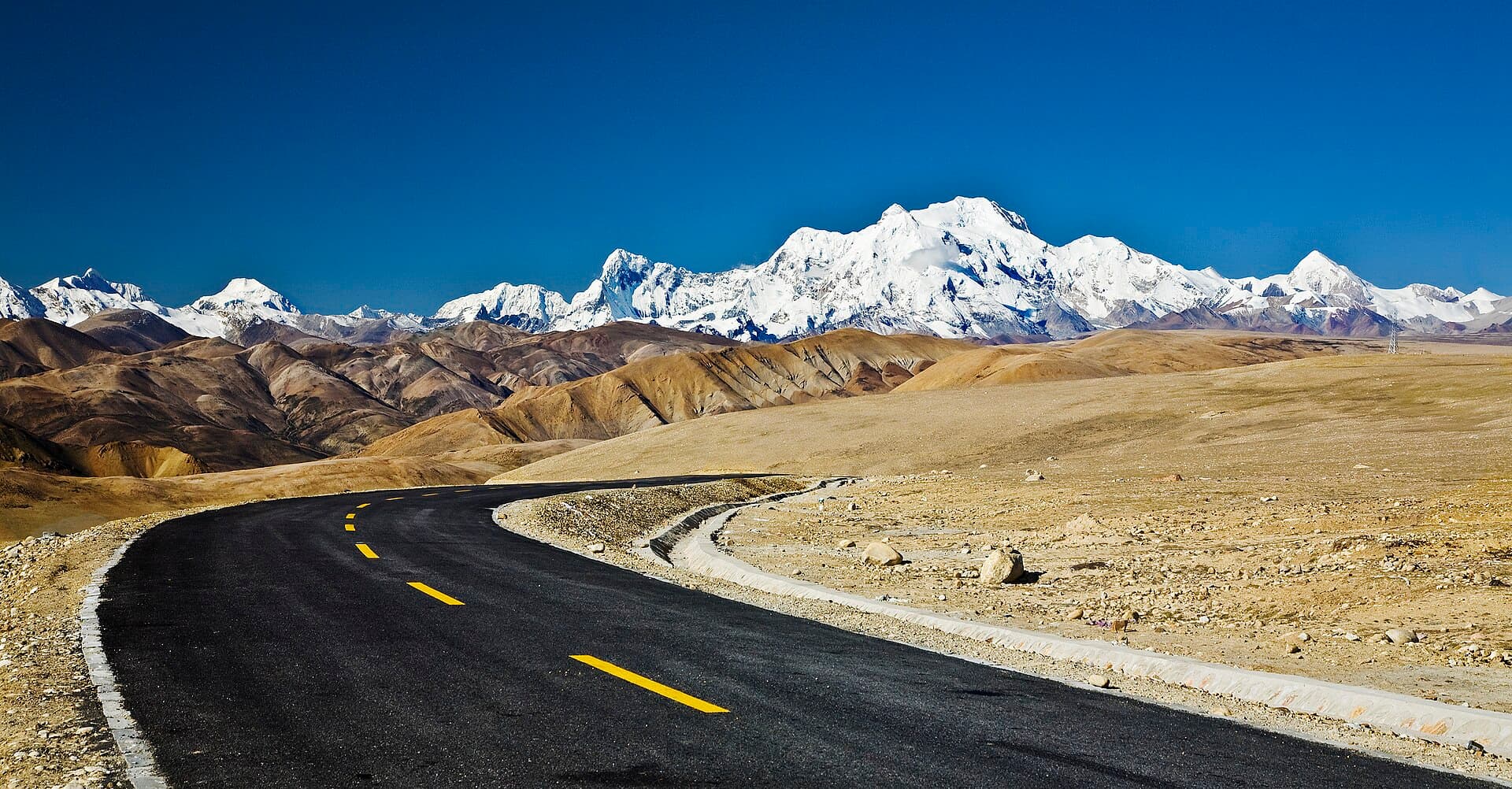
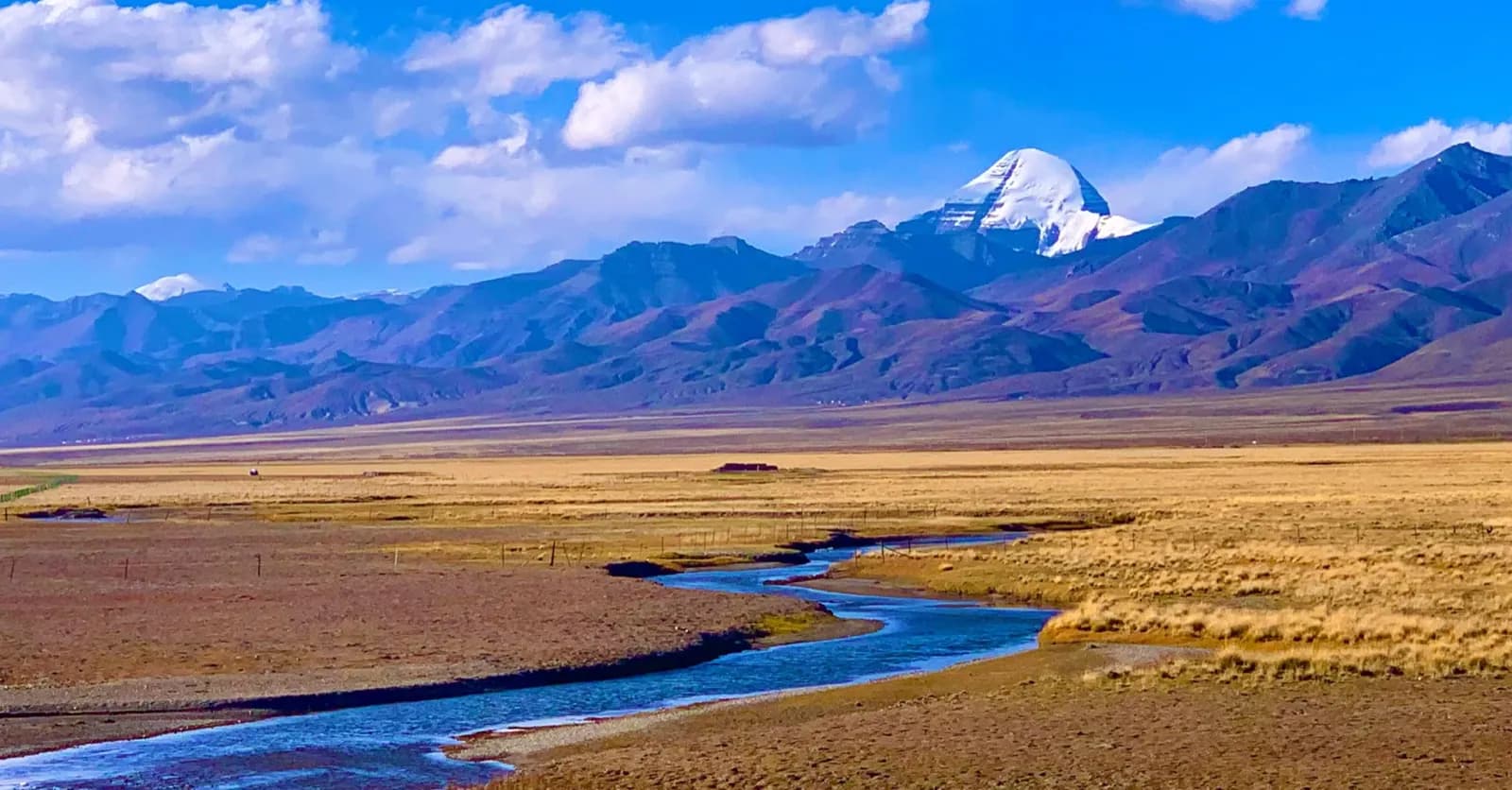
Today the landscape changes completely. The road climbs out of the last green valley over a pass at 5,236 m and descends onto the plateau. From the top, on a clear day, you can see Shishapangma, Cho Oyu and Everest together. Tingri is a windswept village on a high plain, with the north side of the range on the skyline.
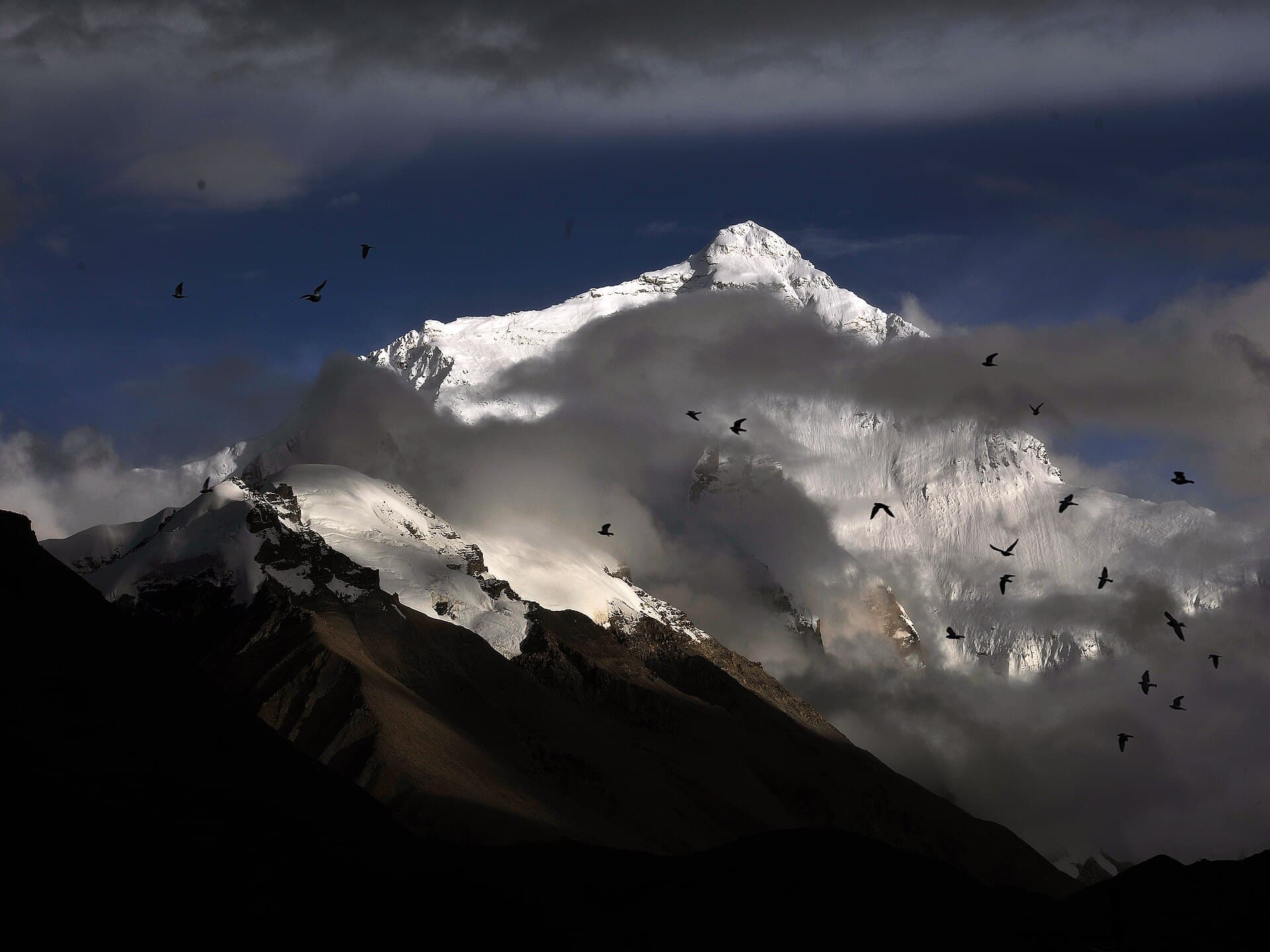
A morning drive up the switchbacks of the Rongbuk valley to the highest monastery in the world, at 4,980 m, followed by a short eco-bus ride to the base camp viewpoint. Everest stands at the head of the valley with a clear, unobstructed view, which is not possible from the Nepal side. We sleep at Rongbuk, which is cold and basic.
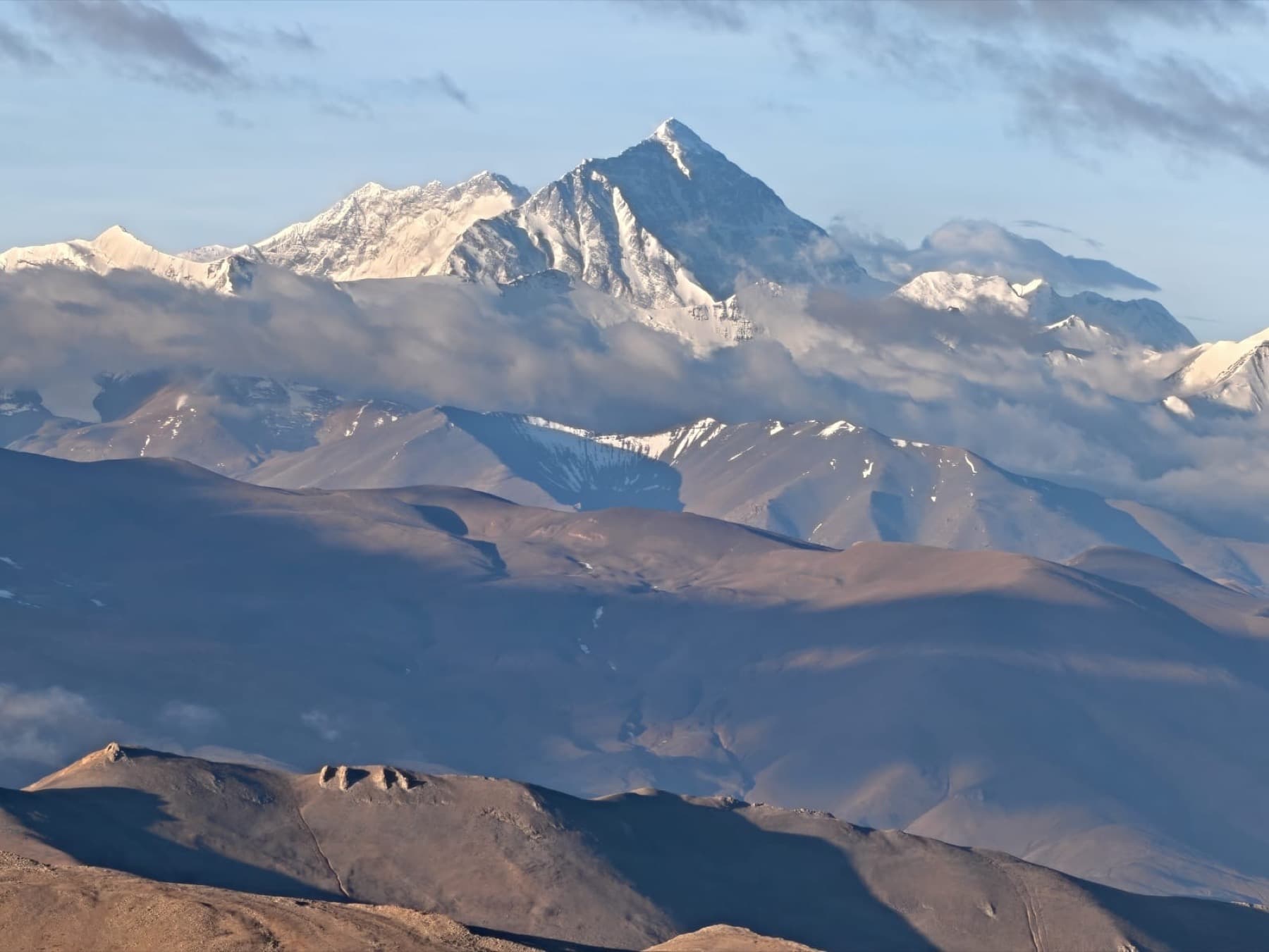
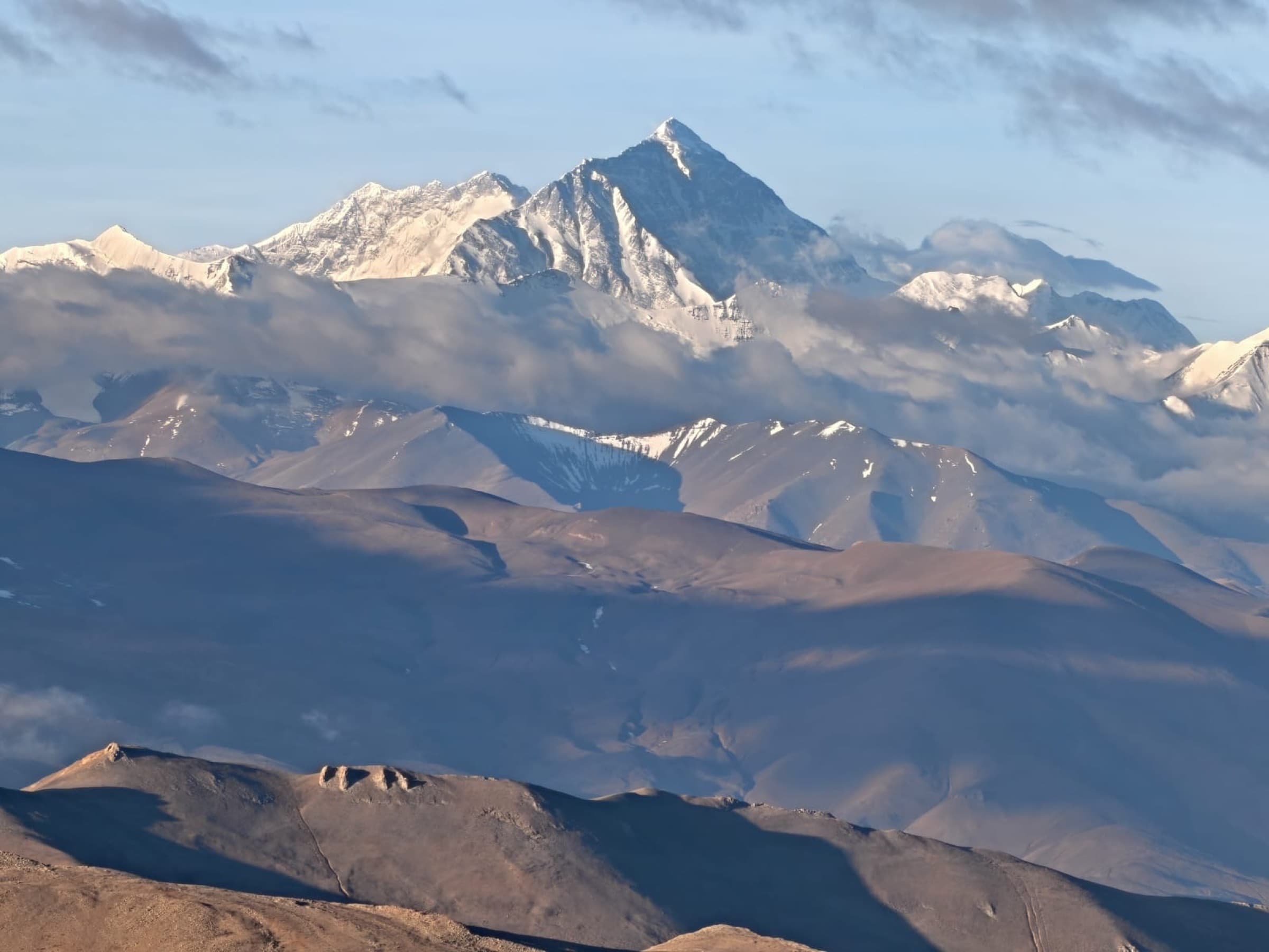
A long drive east across the plateau, descending to 3,900 m, which feels much easier after a night at Rongbuk. Shigatse is Tibet's second city and the seat of the Panchen Lama.
The morning is spent at Tashilhunpo, a working monastery of some six hundred monks with a twenty-six metre gilded Maitreya statue. A short drive then takes you to Gyantse to visit the Kumbum, a tiered stupa containing more than seventy chapels, and the finest single building on this route.
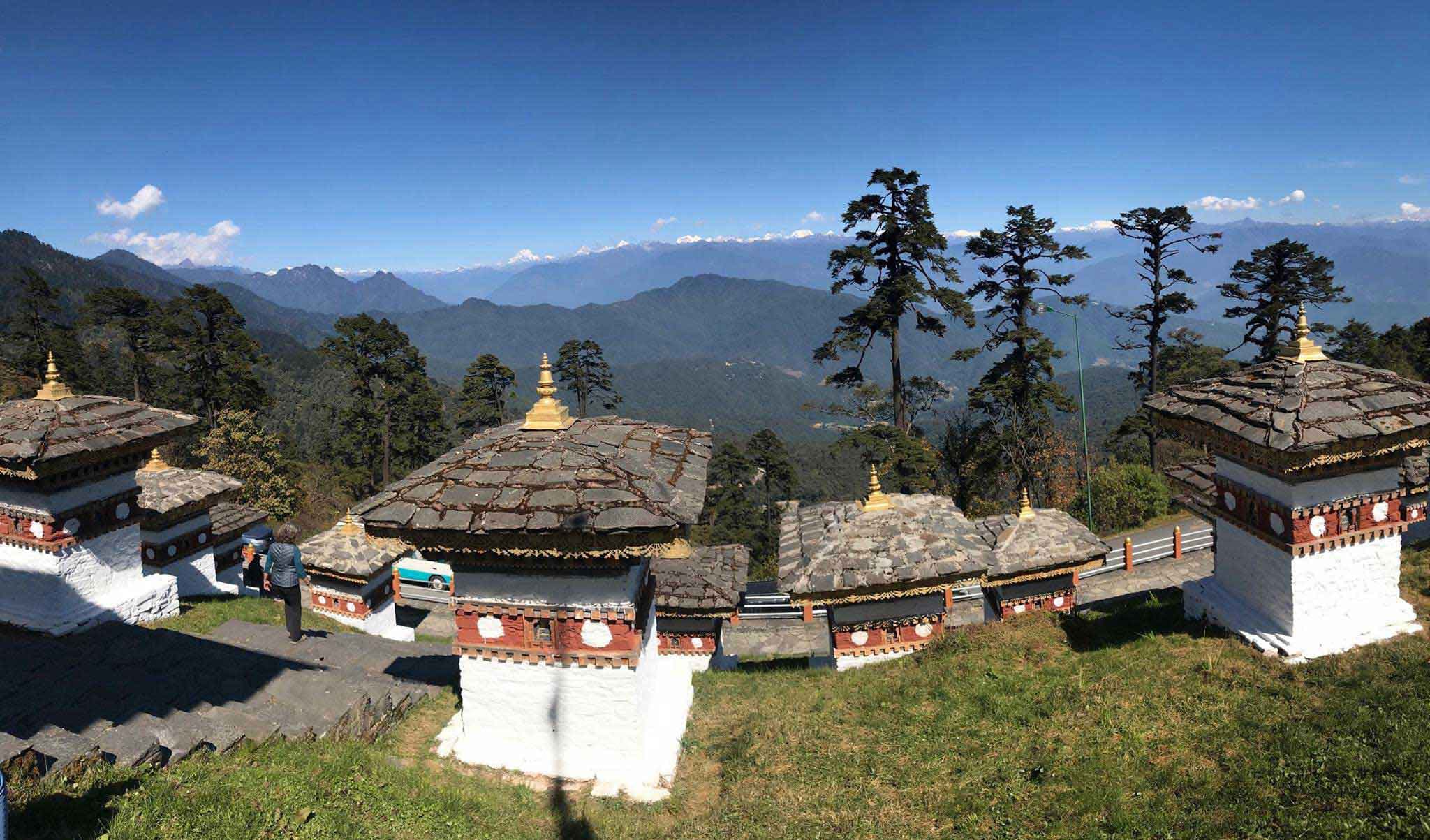
The most scenic driving day of the trip. You cross the Karo La at 5,010 m, passing a glacier that reaches almost to the road, and the Kamba La at 4,794 m above Yamdrok Tso, a turquoise, scorpion-shaped lake that fills the valley below. The road then descends into Lhasa.
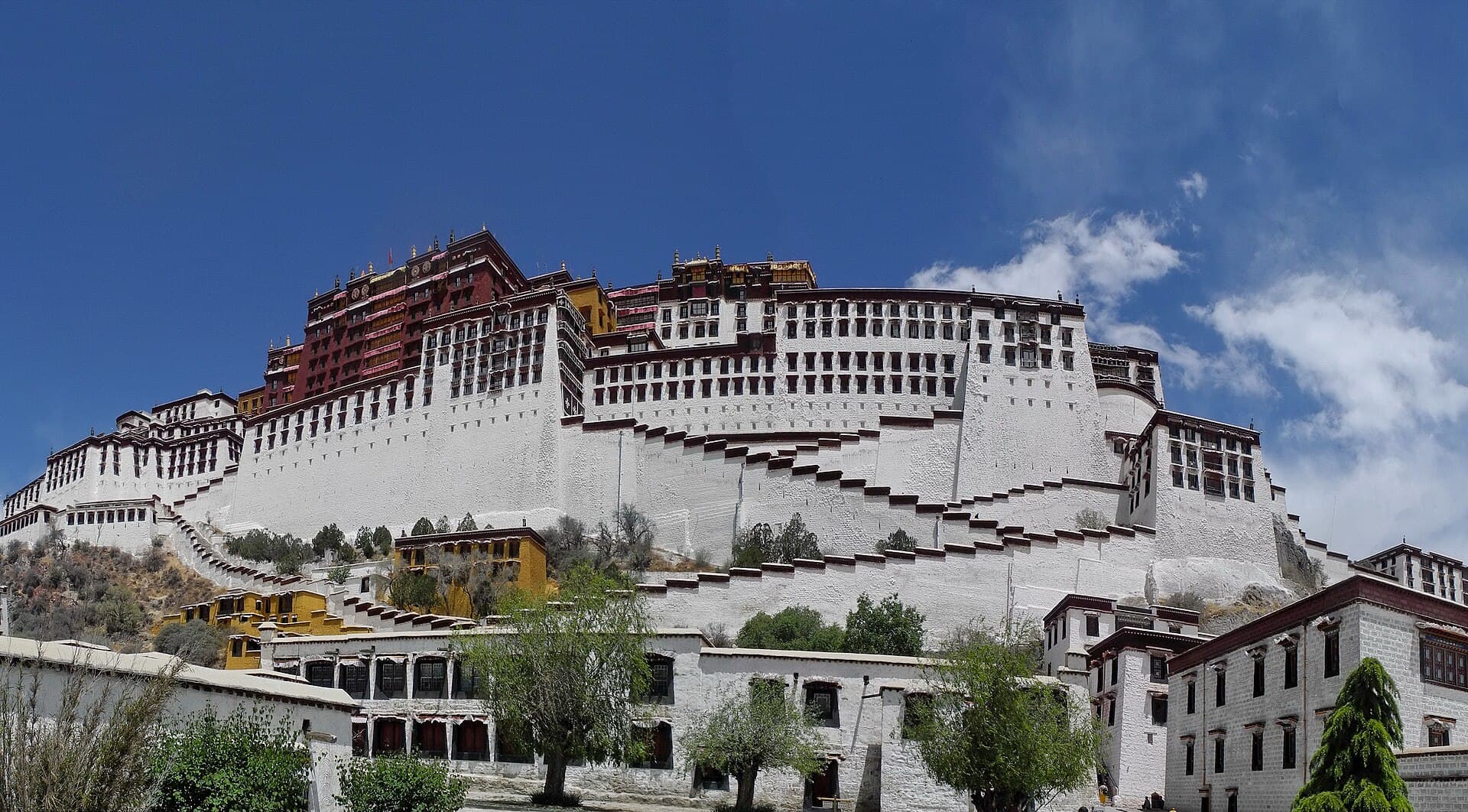
In the morning you visit the Potala Palace, which has a thousand rooms and stands on a hill. Entry is by timed ticket, and there are many steps at 3,656 m. In the afternoon you visit the Jokhang, the holiest temple in Tibetan Buddhism and a far busier place of worship than the Potala, followed by the Barkhor circuit around it.
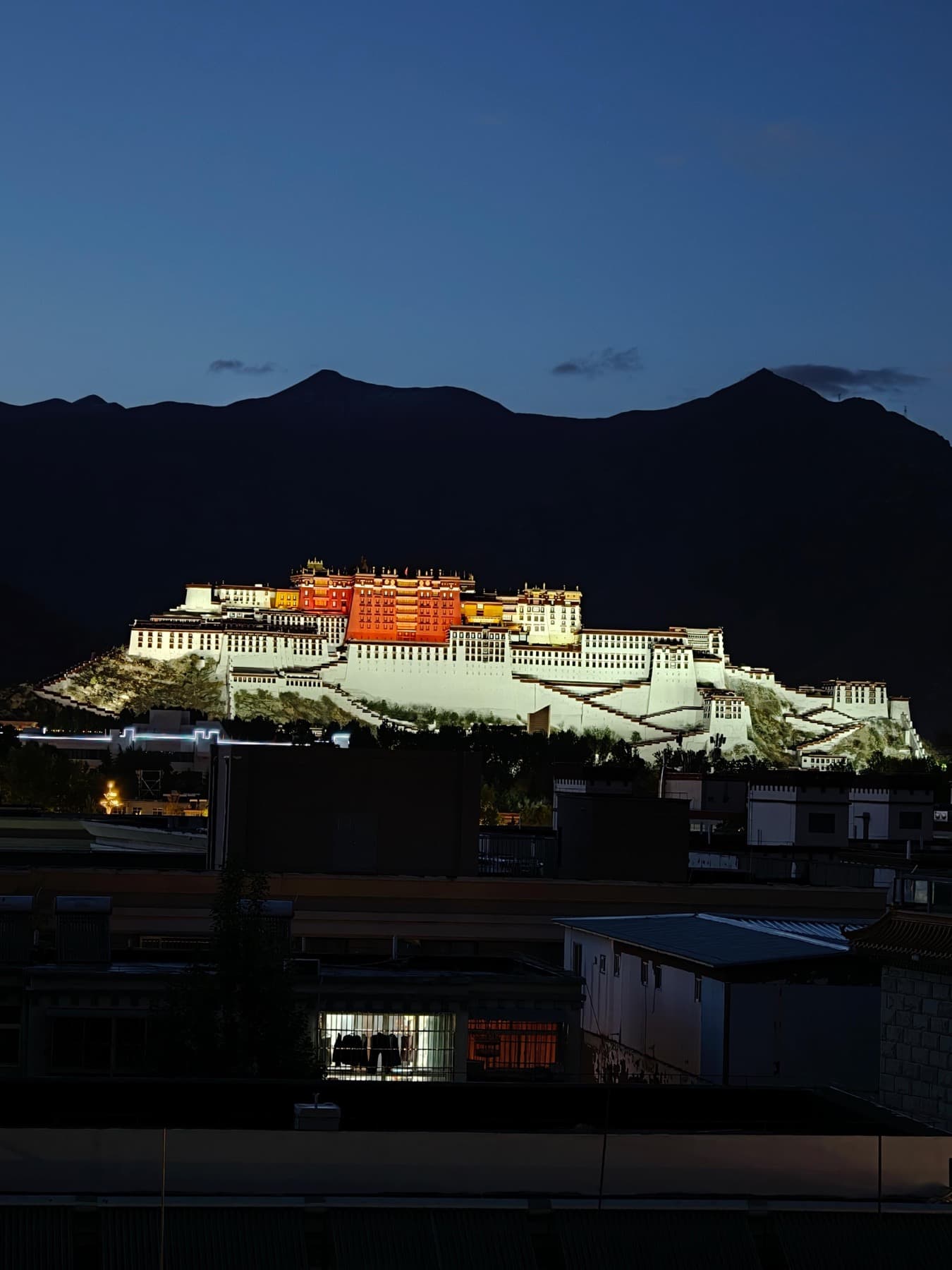
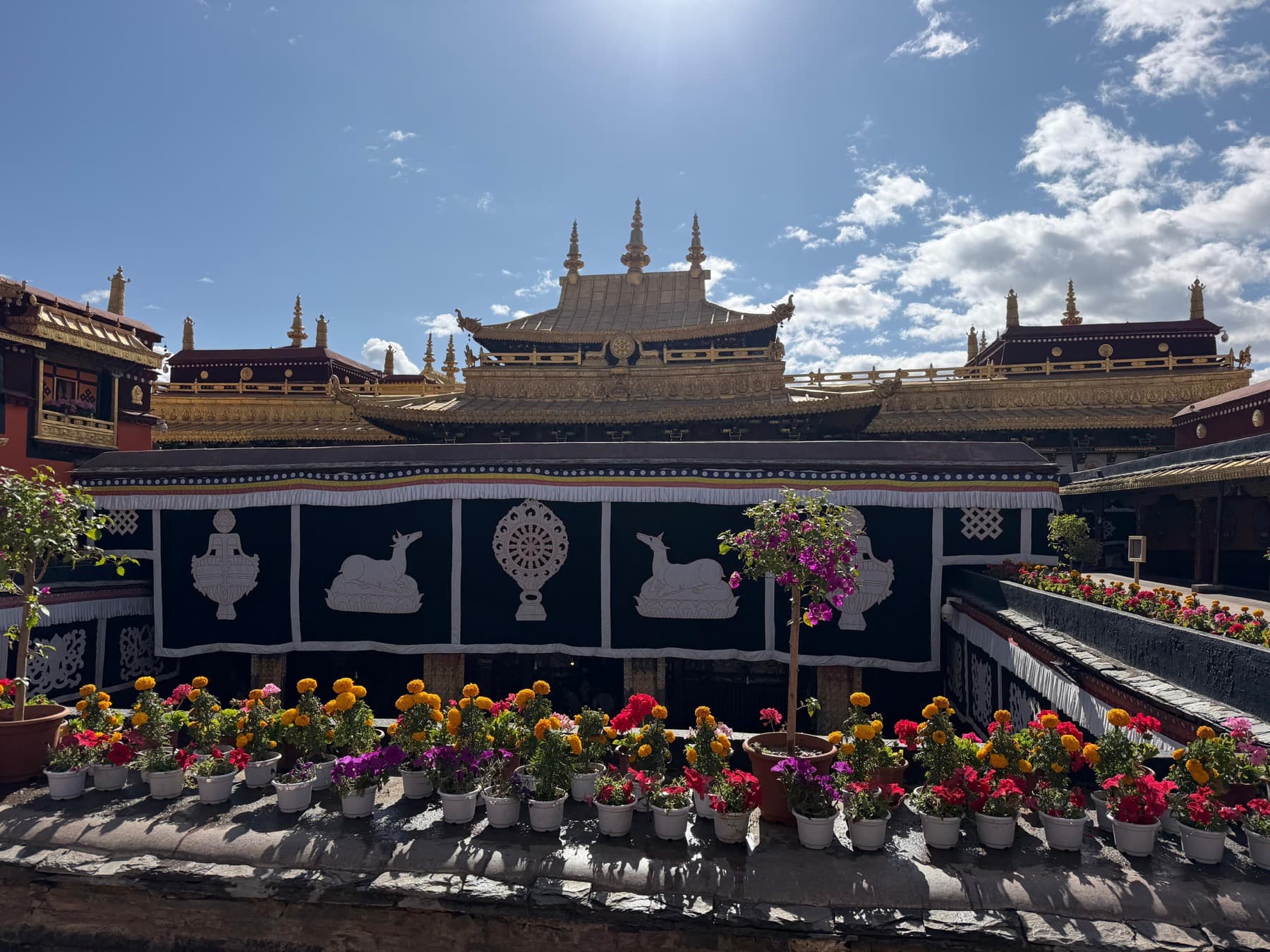
In the morning you visit Drepung, once the largest monastery in the world with around ten thousand monks. In the afternoon you visit Sera to see the debating courtyard, where the monks debate doctrine with a clap on every point. If time allows, you also visit the Norbulingka, the summer palace.
A morning flight of one hour and thirty-five minutes over the Himalaya, with the range you drove through visible from the left-hand windows. The rest of the day is free in Kathmandu, with a farewell dinner in the evening.
We take you to the airport. If you are continuing on a trek, we hand you over to the trekking team at this point.
Start date
7 Aug 2027
End date
18 Aug 2027
Available
4 places left
US $3,587
Per person
Start date
12 Jun 2027
End date
23 Jun 2027
Available
4 places left
US $3,687
Per person
Start date
16 Oct 2027
End date
27 Oct 2027
Available
4 places left
US $3,687
Per person
Luggage carried by vehicle
A vehicle carries your luggage for the whole trip, so there is no weight limit to observe. The one bag that matters is a daypack for the hour at Rongbuk and the Potala steps. Bring your own sleeping bag for the unheated night at 4,980 m.
You cross a land border on a group visa collected in Kathmandu, and the permits require fifteen to twenty working days to process. This lead time is set by the authorities, not by us.
On day 3 you drive from Kathmandu to the Kerung border at Rasuwagadhi, and on day 4 you cross the Himalaya over the Gyatso La at 5,236 m onto the plateau. Climbing by road over two days from 1,400 m to 4,300 m is significantly gentler than flying into Lhasa at 3,656 m, and it is the main reason we run the trip in this direction rather than the reverse.
The Nepali side of the road runs up the Trishuli and Bhote Koshi gorges and is prone to landslides between June and September. The crossing has also closed at short notice for political and administrative reasons more than once in the past decade. We monitor it, and if it closes we fly the group into Lhasa and run the itinerary in reverse. This works, but it is harder on your body.
Himalaya Airlines and Sichuan Airlines fly from Lhasa to Kathmandu on weekdays in about one hour and thirty-five minutes. Sit on the left: the whole Himalaya is visible from that side, and you will recognise the ground you drove across. On a clear day it is one of the finest commercial flights in Asia.
The Tibet Travel Permit is issued against a paid, confirmed itinerary and takes fifteen to twenty working days, and the Kathmandu group visa takes a further five. This is the real lead time for this trip. We need passport scans six weeks before departure, preferably eight, as the government office cannot be made to process them faster.
This is the most important logistical fact about this trip, and the main difference from travelling in Nepal. If someone is seriously ill at Rongbuk, they are evacuated by vehicle on a long drive down. This is why the itinerary spends two nights climbing to Tingri instead of one, and why we would rather cancel the Everest night than take someone through it while unwell.
| Where | Nights | Type | Room | Bathroom |
|---|---|---|---|---|
| Kathmandu | 3 | Three-star hotel | Twin or double | Private, hot water |
| Kerung | 1 | Simple border-town hotel | Twin | Private, hot water when available |
| Tingri | 1 | Basic hotel on the plateau | Twin | Private, water supply intermittent |
| Rongbuk | 1 | Monastery guesthouse, the highest overnight stop of the trip | Multiple-share, basic | Shared, no shower, no heating |
| Shigatse | 1 | Three-star hotel | Twin | Private, hot water |
| Gyantse | 1 | Three-star hotel | Twin | Private, hot water |
| Lhasa | 3 | Four-star hotel | Twin or double | Private, hot water |
In the hotels: eggs, bread, congee, tsampa, tea or instant coffee
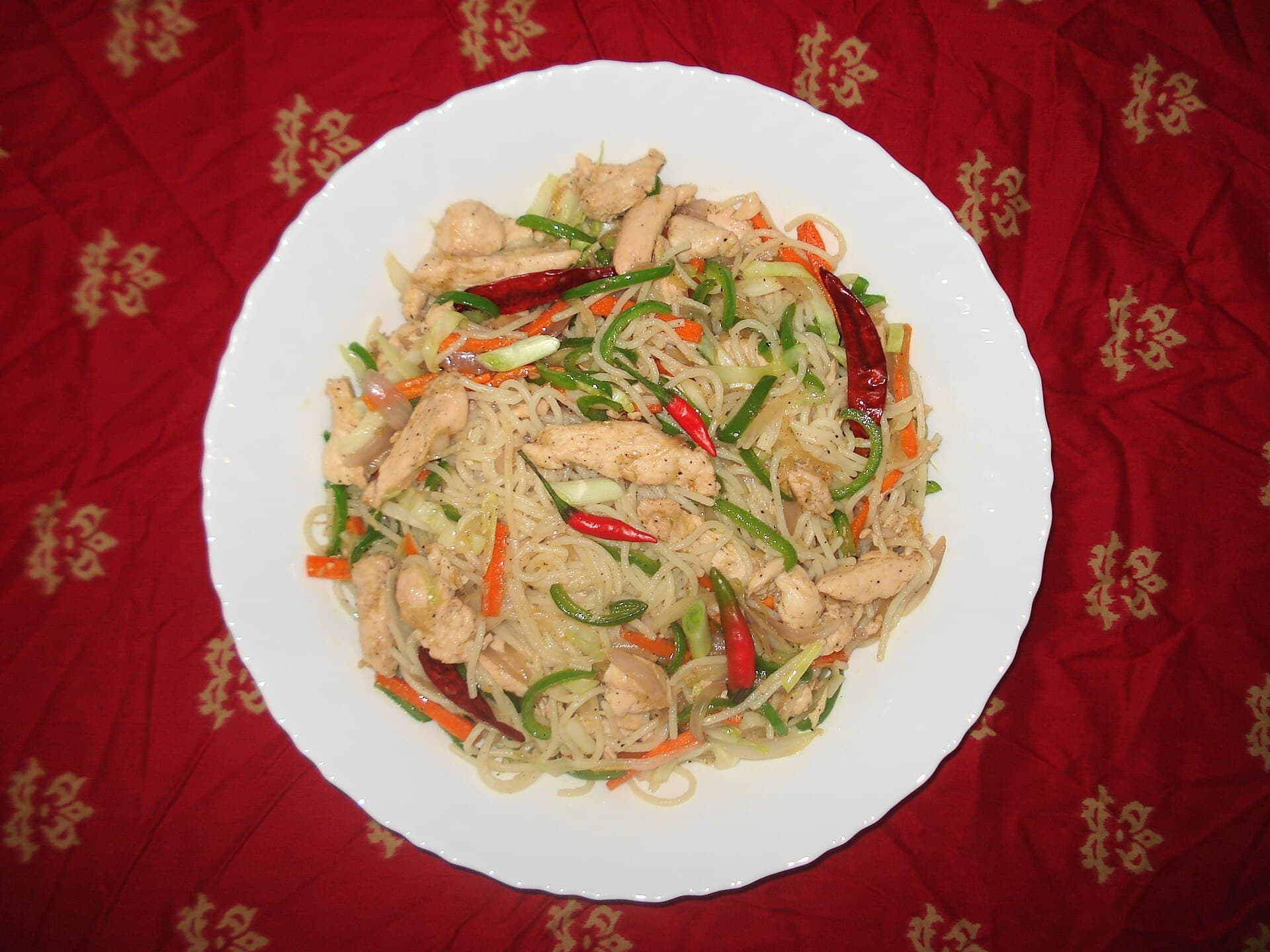
On driving days, a roadside restaurant or a packed lunch: noodles, momo, fried rice

Tibetan and Sichuanese: thukpa, yak curry, stir-fried greens, rice. Lhasa has very good restaurants
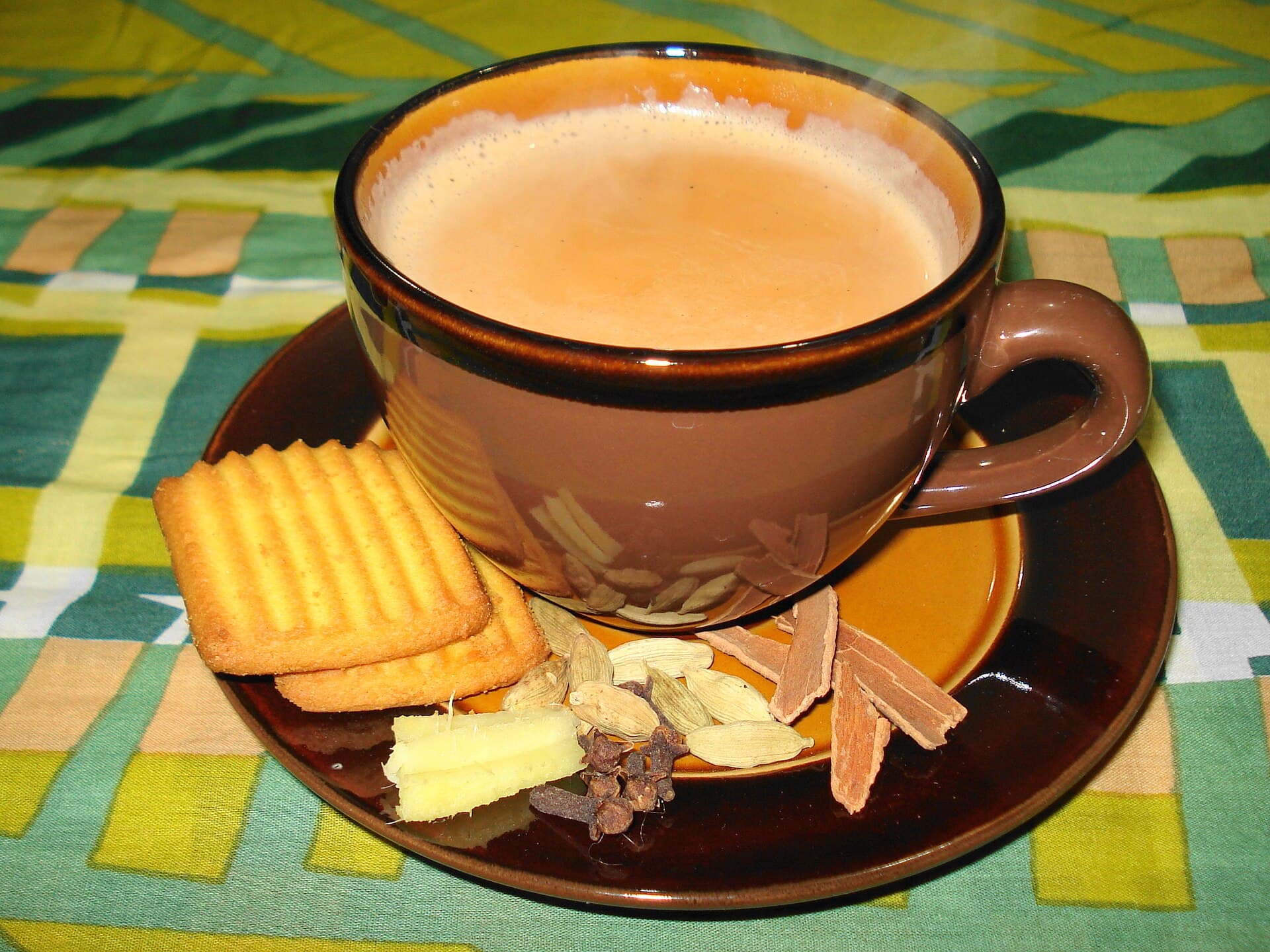
Sweet milk tea, jasmine tea, or salted butter tea, which is worth trying once but does not suit everyone
7:00Breakfast in the hotel. On driving days it is early, as the days are long
8:00On the road. Checkpoints are frequent, and your guide handles the paperwork at each one
10:30First stop at a pass, a viewpoint or a village
12:30Lunch at a roadside restaurant, or a packed lunch
13:30Two to four hours more, depending on the day
16:30Arrive, check in and rest. At altitude, the afternoon is for resting and drinking water
18:00Oxygen saturation and pulse checked on the plateau days
19:00Dinner, and a briefing from the guide on the next day
21:00Bed. The clock runs on Beijing time, so it is often still light
Very little walking, but significant altitude.
Written for somebody who walks a bit and does not train. If you already run or cycle regularly, start partway through. Nothing here needs a gym.
Before you book, stage 1 of 5
This is particularly important if you are over sixty or have any heart, lung or blood pressure condition. You will sleep at 4,980 m on the fourth day out of Kathmandu, having driven there, in an unheated room, with no helicopter rescue available. Please have this conversation before paying the deposit.
Altitude is the main difficulty of this trip, and it is easy to underestimate because a vehicle does the climbing. In four days you go from 1,400 m in Kathmandu to 4,980 m at Rongbuk, crossing a 5,236 m pass on the way, without walking any of the ascent. By comparison, the Everest Base Camp trek takes ten days to reach a slightly lower overnight stop and includes two acclimatisation days. Acute mountain sickness is common on this itinerary, and mild cases are to be expected at Tingri and Rongbuk. Two things make it manageable: the overland approach, which gives you two graded nights at 2,800 m and 4,300 m, and the fact that after day 6 you are descending.
Daily health checks
Your guide carries a pulse oximeter and records your oxygen saturation and pulse every evening from day 3, and again on any morning you feel unwell. On a trip where altitude is gained faster than the body adjusts, a written record over four days is more reliable than an individual impression.
Oxygen in the vehicle
Bottled oxygen is carried with the group for the whole plateau section, particularly for the Rongbuk night. It is a temporary measure that gives time to descend, not a treatment.
Cancelling the Rongbuk night
This is our own protocol and differs from that of most operators. If someone is unwell at Tingri, we visit the Everest viewpoint as a day trip and return to sleep at 4,300 m, or at Shigatse. You see the same mountain from the same place without sleeping at 4,980 m. Several travellers have been glad of this arrangement.
Serious symptoms
Descent is the only effective treatment, and here it is quick: Shigatse at 3,900 m is a long day's drive from Rongbuk, and Kerung at 2,800 m can be reached from Tingri. Travelling by road is the main advantage this trip has over a trek.
No helicopter rescue and distant hospitals
Helicopter rescue is not available to tourists in Tibet. The nearest adequate hospital is at Shigatse, seven to eight hours from Rongbuk. This is why our protocol cancels the Everest night rather than continuing with it.
Fitness and altitude are unrelated
This is the thing people get wrong most often. Training makes the walking easier and does nothing for how your body handles thin air. Strong young trekkers get altitude sickness and unfit older ones frequently do not. Go up slowly, and say something the first time your head hurts.
The season is long, with one fixed exception: no tours run in March, for administrative reasons rather than because of the weather.
The season opens, and this is the clearest month for views of Everest from the north. Rongbuk is cold.
Averages for the southern Tibetan plateau. The March row is administrative rather than meteorological: the region shuts to foreign visitors for the month.
A licensed Tibetan guide accompanies you for the whole time you are in the region, with a driver who knows the road. The guide is a legal requirement: independent travel by foreign passport holders is not permitted anywhere in Tibet, so you cannot go off on your own, even for an afternoon. Our guides are Tibetan rather than Han Chinese, which makes a difference to what you learn in the monasteries.
Please be aware of this before you ask. Your guide is licensed by a government body and can lose that licence, so there are subjects on which they will change the topic. This is not evasiveness or lack of knowledge; their job and family are at stake. Your guide can tell you a great deal about the iconography, history, monasteries and pilgrims. Please do not press them on contemporary politics, especially near a checkpoint, as this puts them at risk.
A Land Cruiser for a party of four to eight, or a minibus for larger groups, carrying your luggage, bottled water and oxygen. You spend six of the twelve days in it, for five to eight hours each day. This is a road trip across a plateau, and the drive is a large part of the experience.
Tipping is not traditional in Tibet but is now expected from tour groups. Allow about $120 to $180 per traveller for the guide and driver together, handed over on the last evening in Lhasa.
Inside most monastery halls, photography is either forbidden or charged for, sometimes at CNY 100 per chapel, and the money goes to the monastery. Please ask, and respect the answer. The following rules are strict: do not photograph military installations, checkpoints, border posts or police, do not photograph monks without asking, and do not photograph anyone who is prostrating.
You may be offered the chance to see a sky burial. Please do not go. It is a funeral, families are present, and in several parts of Tibet spectators are now prohibited by law. An operator that arranges this is acting disrespectfully and, increasingly, illegally.
Less of your money stays local than on our Nepal treks. The permits and reserve fees go to Chinese government bodies. The hotels, vehicles and guiding are largely Tibetan-run. Monastery entry fees, which on this itinerary come to well over a hundred dollars per person, go directly to the monasteries and are the most useful money you will spend here.
The road to the north side has made Everest accessible to anyone with a Land Cruiser, and the valley shows the effects. Rubbish, vehicle emissions and the number of visitors are an ongoing problem, and the Chinese authorities have responded by limiting access and running the eco-buses. We carry our waste out to Shigatse and use the buses, and we ask you not to leave prayer flags or anything else at the viewpoint.
This is the reverse of most travel. The Tibet Travel Permit is issued against a confirmed, paid itinerary that names your hotels and guide, so you commit to the trip before you know whether the permit will be approved. This is why our Tibet deposits require a longer lead time than any of our other trips.
We need clear colour scans of your passport photo page at least six weeks before departure, with your occupation on the form. Journalists, photographers, diplomats and anyone with 'government' in their job title are routinely refused. If you tell us your occupation accurately and early, we can usually find a way to proceed. An inaccurate answer discovered at the border cannot be resolved.
The Kathmandu group visa is issued to a party on one visa, and current practice requires at least five travellers. A couple can join one of our departures. A private Tibet trip from Kathmandu for two people is not possible, and we will tell you so rather than take a deposit.
Refusals happen occasionally, with no reason given and no appeal. If this happens, we refund the Tibet portion in full. This is the one part of a Tibet booking where we carry the risk rather than you, and we recommend asking any operator that does not offer this why they do not.
Priced per person, arranged before you travel, and none of them included in the price above.
A sacred lake at 4,718 m north of Lhasa, reached over the Largen La at 5,190 m, and the most photographed place in Tibet after the Potala. The extension takes two days, and the night at the lake is cold.
Time to visit Ganden monastery, see the Norbulingka in full, and spend longer in the Barkhor rather than only walking its circuit. Lhasa benefits from a slower pace more than the rest of this itinerary.
For travellers who are short of time. It removes the graded overland approach, which is the most important feature of this itinerary, so we generally advise against it.
See Everest from both sides in one trip. Travellers who have done both say the two sides feel very different.
Drive out via Kerung instead of flying, reversing the itinerary. You spend two more days on the road and save the cost of the flight, but you miss the view from the aircraft.
For the hotel nights in Kathmandu, Kerung, Tingri, Shigatse, Gyantse and Lhasa. At Rongbuk all rooms are shared, and a single room is not possible.
4 versions of this journey. They use the same guides and the same lodges; what changes is the length, the comfort and how much of it you walk.
Incredible Tibet!
October 2015, Tripadvisor
The whole trip was organised very professionally by Earthbound Expeditions from applying for the Tibet group visa, through to rearranging flights into Tibet. I joined two other tourists to go into Tibet with. We were greeted at Lhasa airport by our guide Lakpa and driver Penba of Kyunglung Travel. Over the next nine days we all became great friends and had quite a few laughs and saw some truly amazing sights. The trip was everything I had hoped for and more. The monasteries we visited were very interesting and Lakpa did his upmost to make sure we understood the history in great detail. He is very knowledgable and passionate about his country. The highlight for me was to visit Everest Base Camp and stay the night in a tent (see separate review highly recommended). To walk out of the tent at night and stand beneath the amazingly clear skies, the Milky Way above my head with Everest at the end of the valley is one memory I will never forget. Tibet is an amazing country, full of interesting and surprising people and sights. It is also challenging in regards the climate and altitude but the amazing scenery, the vivid blue skies and the people more than make up for this. Thanks to Earthbound Expeditions who made this trip possible. Go now before it changes too much.
Fantastic Personalized Trip through Tibet
October 2014, Tripadvisor
My son and I wanted to experience Tibet, but had no idea where to start. Earthbound Expeditions had the answer. We had only 6 days, and for a great price they flew the two of us from Kathmandu where we stayed in Lhasa for 3 days and drove overland back to Kathmandu. Our excellent guide took us to the key monasteries, palaces, and temples of Lhasa. His knowledge was encyclopedic. He drove us over 9 mountain passes to the Friendship Bridge, and we took a 9 hour detour to see Mount Everest base camp. It was the trip of a lifetime. I would definitely recommend Earthbound Expeditions to anyone traveling in the Himalayas!
Earthbound Expeditions - Beyond Expectations
November 2010, Tripadvisor
What a magical experience! This August my family and I enjoyed the trip of a lifetime in Nepal and Tibet. We are in our 40's and 50's and have two boys ages 5 and 12. Since we had just under two weeks for our trip we had a lot of things we wanted to do in a short time. We used Earthbound Expeditions of Katmandu for every detail of our trip. We flew into Katmandu, spent a night in Nagarkot and the Club Himalaya, drove to Pokara for a few days - stayed at the Fishtail Lodge, drove to Chitwan - stayed at the Rhino Residency, drove back to Katmandu - stayed at Darwicka's, flew to Lhasa - stayed at the Four Points Sheraton, worked our way overland back to Katmandu via Everest Base Camp, and then Darwicka's in Katmandu again before flying out. All along the way we had private guides, a Landcruiser, and driver. I really can't even begin to describe how utterly amazing this trip was. We were in the car for a very long time but I wouldn't have traded it for the world. The road trip let us see so much beauty and get such a feeling from being immersed in the both countries. Every corner we rounded brought another amazing sight into our view. Wow. It was simply breathtaking. Additionally having our own car allowed us to stop and check out whatever caught our interest. Like in Nepal the kids wanted to go out onto one of the wire suspension bridges that span the rushing rivers that crash through mountain canyons...so we did. HIghlights of Nepal include seeing all sorts of wildlife including several rhinos, up close and personal. Rhino Residency and in particular Mr. Chok our Chitwan naturalist were spectaular. If you go to Chitwan and you are interested in the people and wildlife of the area, you must go out into the jungle with Mr. Chok. He is like the "Steve Irwin of Chitwan". Highlights of Tibet were the breathtaking scenery and the off road trip from Everest Base Camp to Tingri and stopping to have tea with an ancient looking monk who invited us into his tent on a lonely mountain pass. The Tibetan driver and guide had friends all along the way. In regards to taking young children on this trip, I would say it is not for everyone but for our kids it was wonderful. They had so much fun and everywhere we went they found other kids to play with and got lots of attention for the local people who were not used to seeing young American kids. I believe that this trip and our other travels have made them very accepting to all of the diversity in our world and very comfortable with it. Whether they were receiving a blessing from a Hindu holy man, lighting a yak butter candle in a Buddist temple, or playing with the local Taru children in Chitwan .....they took it all in stride. I found myself yelling after the little one in Chitwan "Hey slow down and stay away from the water buffalo's". That is something I never would have said back in Ohio ;) The altitude in Tibet has to be respected especially with kids. The most important thing is to know the signs of altitude sickness and go lower if you have problems. Since we were traveling a little faster than I would have liked we took diamox which I think helped a great deal. My little one started to feel sick after a couple hours at Everest Base Camp so we headed back down instead of staying overnight in the tents like we had planned. As soon as we descended to a lower altitude he was fine. I made everyone drink only bottled water, no ice, or boiled drinks and nobody got sick even a little bit. The food was great in both countires. By the way, all of the reviews speak negatively about the tents at EBC but I found the one we were going to stay in to be very cozy and we had some yummy noodles and coffee there. I really can't say enough about Earthbound and the owner Rajan. I think we exchanged about 100 emails trying to sort out the details of our trip. He patiently worked with me and made change after change to our itinerary until we finally settled on the perfect package for our family. He was honest. Completely trustworthy. And best of all treated us like respected friends during the entire process. I have to admit that as a suburban American Mom I was a little cautious about heading out into exotic Nepal and Tibet with my kids. Working with Rajan was like having an old friend or a family member there for us. He met us at the airport, dropped us back off at the airport, was available via cell phone at all times during the trip. I am amazed at how he handled every detail. He took care of us at every step. For example, I was particularly concerned about the border crossing between Tibet and Katmandu because our guide from Tibet couldn't go with us across the border. However there were two guides waiting for us and introduced themselves as soon as we stepped out of our Landcruiser. They walked us through customs, over the border, through Nepal's immigration, and to our waiting Landcruiser on the Nepal side. It was seamless. Our guides and drivers were fabulous and wonderful company on our vacation. I can imagine that they are treated very well by Rajan and that promotes their great attitudes and service levels. So if you are thinking about visiting Nepal and Tibet I would say go and enjoy. It is a once in a lifetime magical experience.
Kailash Mansarovar June 2025
June 2025, Tripadvisor
I travelled as a SOLO female with Earthbound expedition to Kailash Mansarovar. It was an amazing experience. EB even took care of my restrictions on diet and paying personal attention on my safety and well being like a family. The hotel stay at every site was very comfortable and EB paid special attention to maintain good health on daily basis to accomplish yatra to completion. It has been a unique mesmerising experience of a lifetime. Many many thanks to EB for making it possible.
Answers to the 22 questions travellers ask us most often. If your question is not here, contact us and we will answer it.
They are very different trips. In Nepal you fly to Lukla and walk for ten days to reach the moraine at 5,364 m below the icefall, where the summit is not visible. Here you drive up the Rongbuk valley to 5,200 m, and Everest stands at the head of the valley with a clear view of its three and a half vertical kilometres. The Nepal trek is the better journey; the Tibet route has the better view of the mountain.
You can drive to within a few kilometres of it. This is the only base camp on the mountain that a vehicle can reach. Private vehicles stop at Rongbuk monastery, and a short eco-bus ride takes you to the viewpoint. There is about an hour of walking in total on the whole trip.
You stand at the tourist viewpoint at around 5,200 m, where the road and the eco-bus end. The climbers' base camp is a little further up and is closed to visitors during the climbing season. From the viewpoint you see the north face of Everest in its best-known view.
Yes. Travellers who have done both say the two sides feel very different. The usual plan is this trip followed by the Nepal trek, or the reverse, in about a month. We arrange this combination regularly.
The altitude is the most important thing to understand about this trip. In four days you go from 1,400 m to sleeping at 4,980 m at Rongbuk, crossing a 5,236 m pass, without walking any of the ascent. That is higher than any overnight stop on the Everest Base Camp trek except Gorak Shep, and you reach it on day four rather than day ten. Mild altitude sickness at Tingri and Rongbuk is common.
We cancel the Rongbuk night rather than take you through it. This is our own protocol, not an industry standard. You visit the Everest viewpoint as a day trip from Tingri and return to 4,300 m to sleep, or continue to Shigatse. You see the same mountain from the same place.
Yes. Bottled oxygen is carried in the vehicle for the whole plateau section, particularly for the Rongbuk night. It gives time to descend; it does not treat altitude sickness.
You descend by road, which is the main advantage this trip has over a trek. There is no helicopter rescue for tourists in Tibet. The nearest adequate hospital is at Shigatse, seven to eight hours from Rongbuk, and Kathmandu is a day and a half away. Insurance covering evacuation and repatriation is a condition of booking.
You need a China group visa issued in Kathmandu, which is different from a normal Chinese visa, and the Tibet Travel Permit, which we apply for against a paid itinerary. No other documents are needed on this route. The Alien's Travel Permit was dropped for the Shigatse prefecture, which covers Everest, in June 2025, although some operators still list it.
No, please do not apply for one. The Kathmandu group visa cancels any Chinese visa already in your passport, so a visa obtained at home is wasted money and can cause complications at the border.
At least two months, and three months is advisable. The Tibet Travel Permit takes fifteen to twenty working days and the group visa a further five, and both are applied for only against a paid booking. This lead time is set by the government office, and we cannot shorten it.
Not on our departures. The Kathmandu group visa is issued to a party, and current practice requires at least five names on one visa. Two people can join a scheduled departure. This is the limit of what we can arrange from Kathmandu.
Occasionally, with no reason given and no appeal. If this happens, we refund the Tibet portion in full. Occupation is the usual cause: journalists, photographers, diplomats and anyone with 'government' in their job title are routinely declined. Please tell us your occupation accurately when you enquire, and we can usually find a way to proceed.
Tibet routinely closes to foreign visitors for the whole of March and sometimes into April, around the anniversary of the 1959 uprising. The closure is announced with a few days' notice or none. None of our trips start in March, and we advise caution with any operator that runs departures that month.
Six of the twelve days, for five to eight hours each. This is what crossing the plateau involves, and you should be aware of it before booking. The drive is spectacular, crossing two 5,000 m passes and passing Yamdrok Tso, but it is still six long days in a vehicle.
Rongbuk is the highest monastery in the world, at 4,980 m, and the guesthouse beside it is basic, shared and unheated. It is cold, and you are unlikely to sleep well, but it is the most memorable night of the trip. Bring your own sleeping bag to use on top of the quilts.
The connection will work, but most of the services you use will not, because the usual Western services are blocked in China. Install a VPN on every device before you leave Nepal, as you cannot download one once you have crossed the border.
Outside, you can take photographs freely. Inside the halls, photography is often forbidden and sometimes charged, occasionally at CNY 100 per chapel, and that money goes to the monastery. Please ask each time. Never photograph checkpoints, military installations or police, and never photograph someone who is prostrating.
Your guide can tell you a great deal about history, iconography, monasteries and pilgrims. Please do not press them on contemporary politics, particularly near a checkpoint, as this puts their licence and their family at risk. If you ask, your guide will change the subject.
April and October give the clearest views of Everest from the north, and September is our preferred month for the whole route. May is excellent but busy, as the climbing season below Rongbuk is under way. July and August are warm, and the mountain is often in cloud.
A party of four needs the same Land Cruiser, the same driver and the same licensed guide for nine days as a party of twelve, and these make up close to half the price. The cost also covers five permits, a one-way international flight, monastery fees of well over a hundred dollars per person, and hotels rather than teahouses. Very little of the price is margin.
It is mostly reliable, but not entirely. The Kerung road is prone to landslides on the Nepali side between June and September, and the crossing has closed at short notice for administrative reasons more than once. If it closes, we fly the group into Lhasa and run the itinerary in reverse. This works, but it is harder on your body.
Didn't find what you were looking for?
Search every word on this page, or ask somebody who has walked the route.
12 days
$3,687 per person