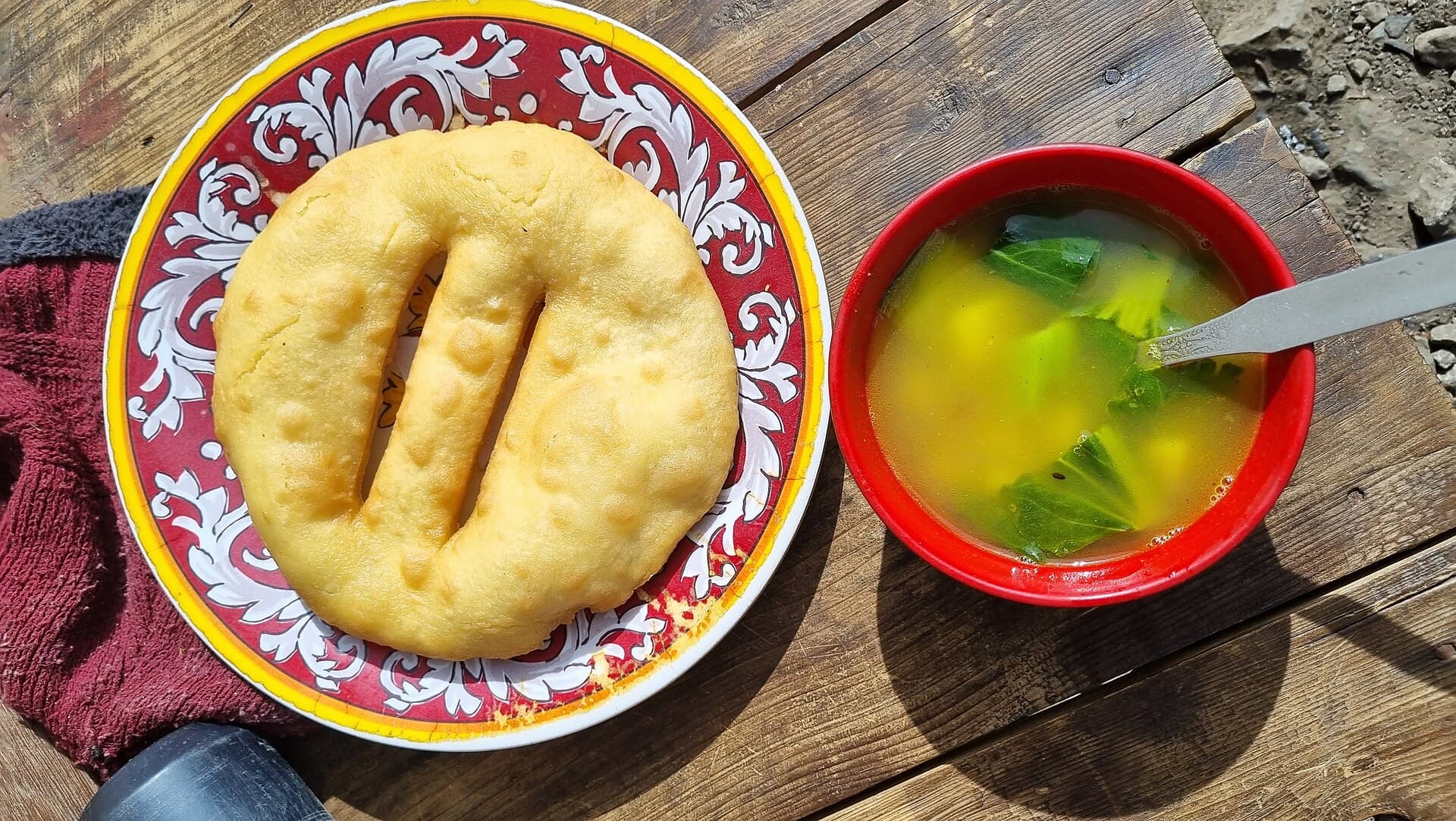
Breakfast
Porridge, Tibetan bread, eggs, chapati, pancakes, tea or coffee
All destinations
All destinationsBoth Khumbu valleys joined into one circuit: the six Gokyo lakes and the view from Gokyo Ri, a crossing of the Cho La at 5,420 m, then Everest Base Camp and sunrise from Kala Patthar.
Both Khumbu valleys joined into one circuit: the six Gokyo lakes and the view from Gokyo Ri, a crossing of the Cho La at 5,420 m, then Everest Base Camp and sunrise from Kala Patthar.
This trek links the two main valleys of the Khumbu. You fly to Lukla, walk to Namche, and then take the left branch of the trail to Gokyo rather than the right branch to Base Camp. You spend five days walking up the quiet valley to the lakes, climb Gokyo Ri at dawn, and then cross east over the Cho La at 5,420 m into the Khumbu valley for Everest Base Camp and Kala Patthar. The trek spends fourteen days on the trail and is walked as a circuit rather than there and back.
Without the pass, these would be two separate trips. With it, one trek includes both the best view in the Khumbu and its most famous destination, and no section of trail is repeated between leaving Namche and returning to it. The crossing involves a 4 am start, a boulder gully up to the ice, a short, flat glacier crossed in microspikes, and a steep, loose descent on the eastern side. It is not climbing and there are no ropes, but on this one morning the terrain is as important as the altitude.
This trek suits people who are comfortable walking six hours a day for two weeks and want to see more than one valley. You do not need previous experience of altitude, but you should consider carefully how you feel about ice. If forty minutes on a glacier in microspikes, holding a fixed rope for part of the way, would make you uncomfortable, the classic Base Camp trek reaches the same Base Camp without any of this. If you are more interested in the lakes and the view than in Base Camp, the Gokyo Lakes trek is shorter, cheaper and easier.
We walk this route anticlockwise, visiting Gokyo first and Base Camp second, for good reason. This puts the pass on day 10, after a week of acclimatisation, rather than on day 5 with none. It also means you cross the Cho La from west to east, climbing the steeper side and descending the gentler one. Finally, it leaves Base Camp and Kala Patthar until the end, so the trek builds to the destination most people come for.
We meet you at the airport and take you to your hotel. Later, your guide checks your equipment with you. This is more important on this trek than on most, because the Cho La requires microspikes, gaiters and gloves you can use on rock. Anything missing can be bought or hired in Thamel that afternoon. In the evening, we have dinner together and go through the route.
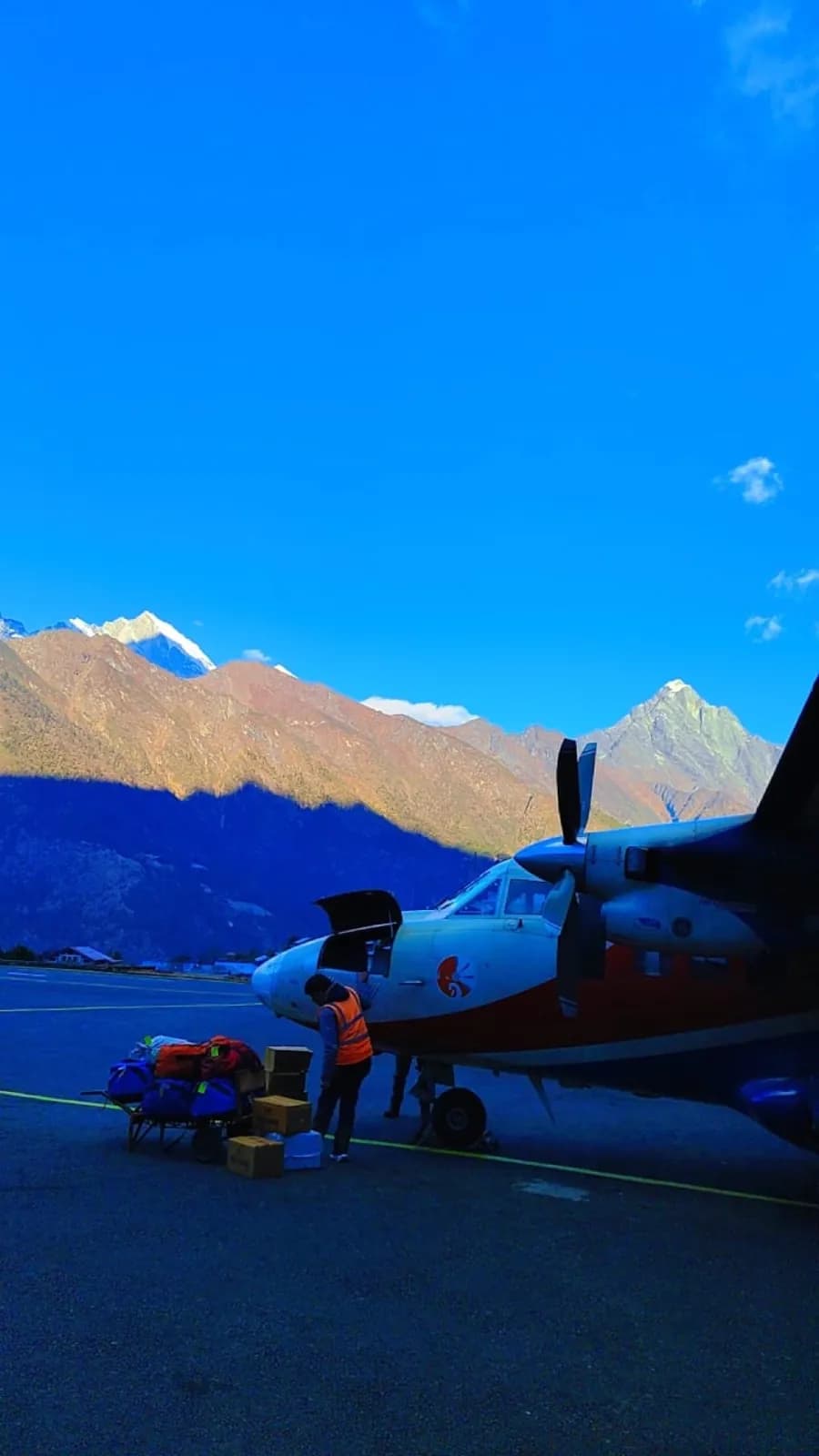
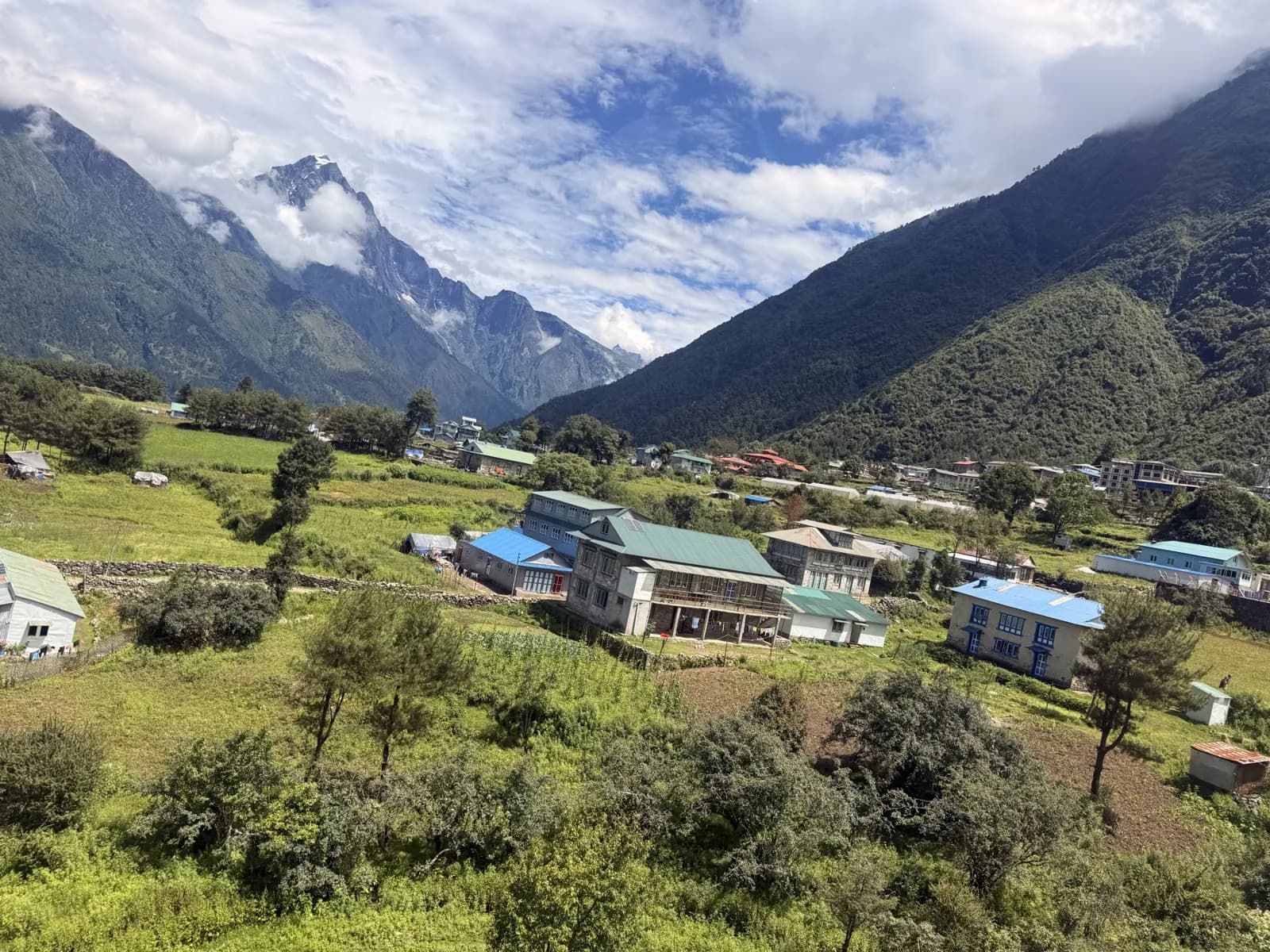
An early flight to Lukla, from Kathmandu or Manthali depending on the month, followed by an easy half day down the Dudh Koshi valley to Phakding. You lose height rather than gain it, which is a gentle start, and the walking is level beside the river, through Ghat and past its mani walls.
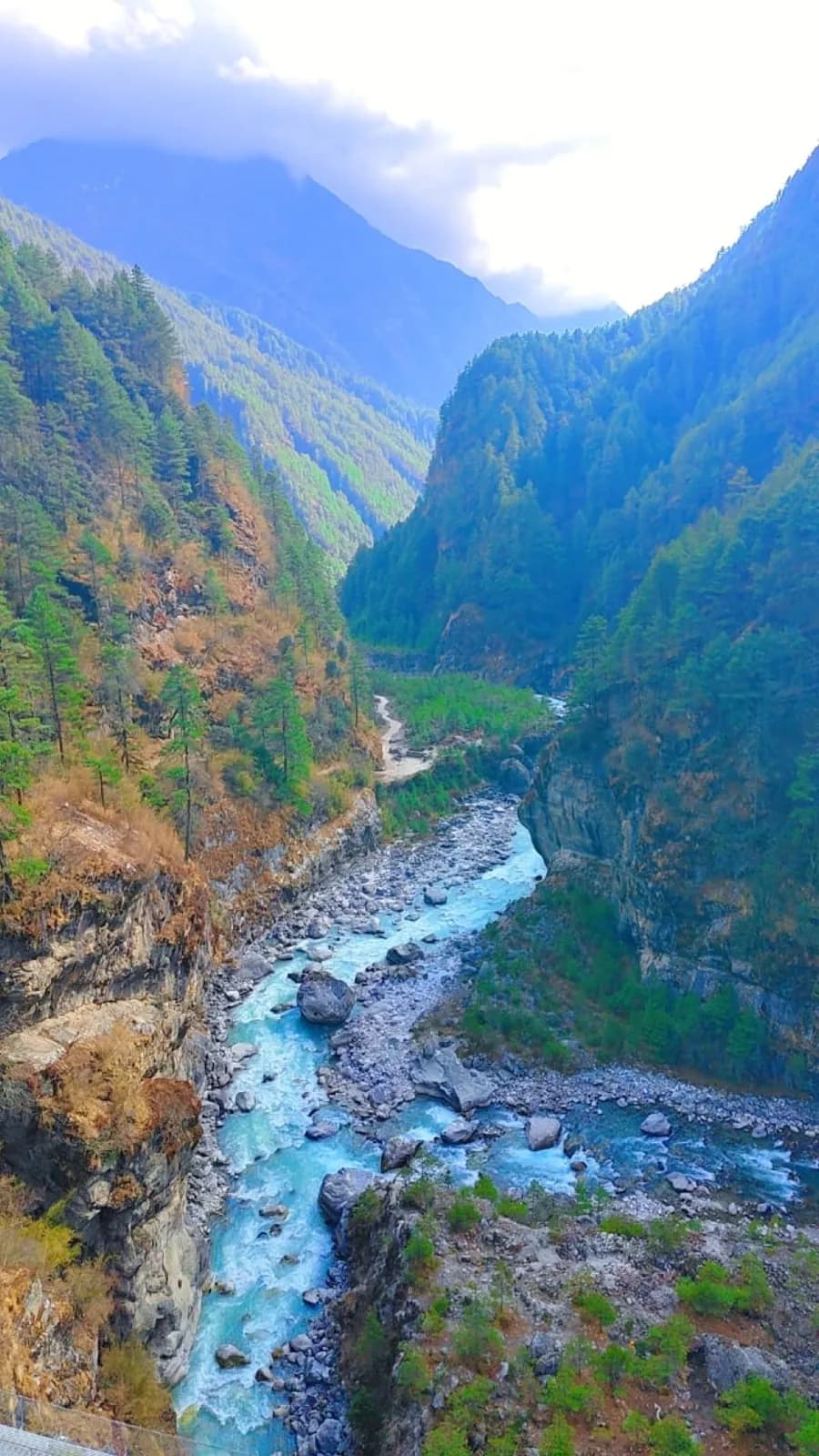
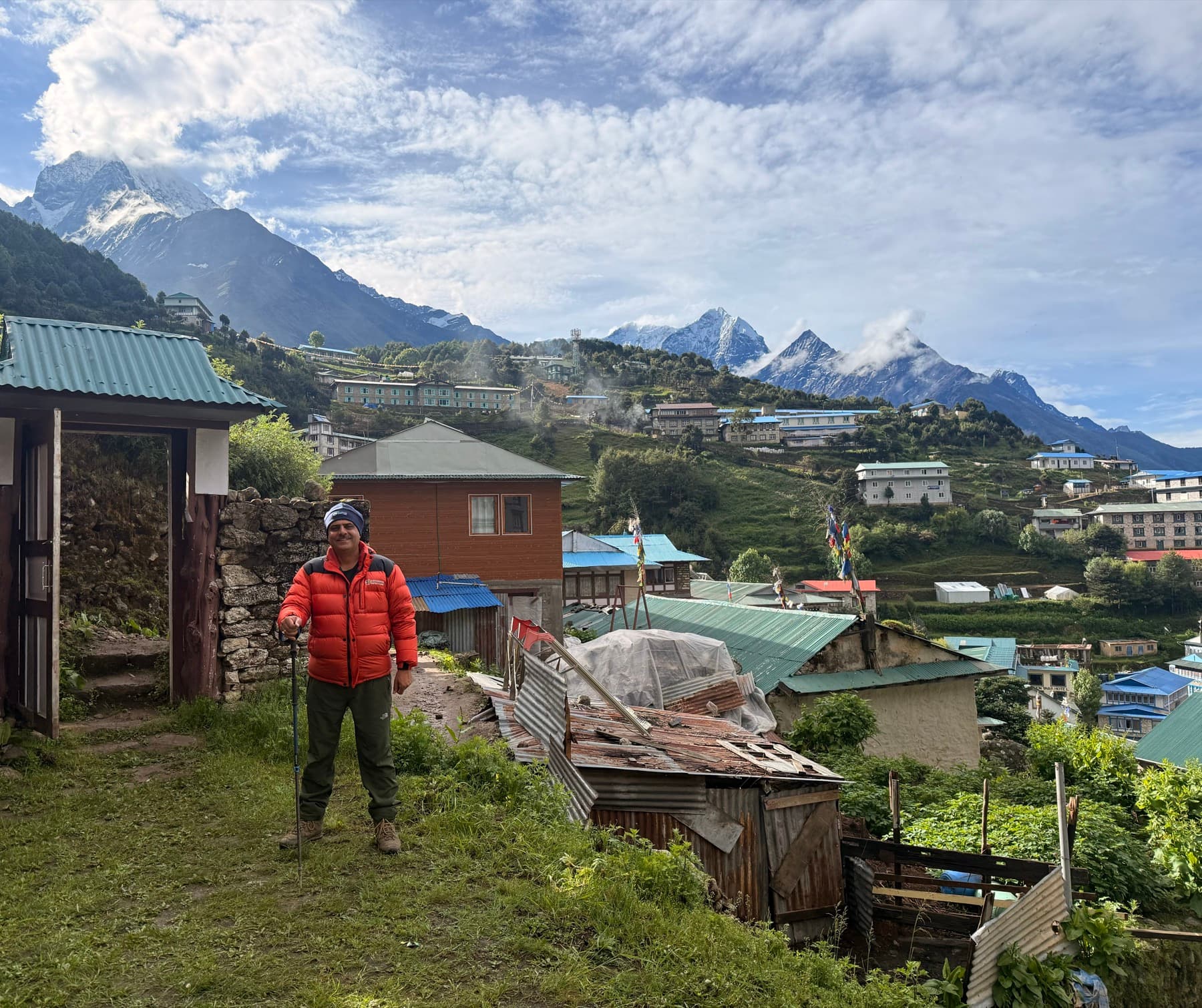
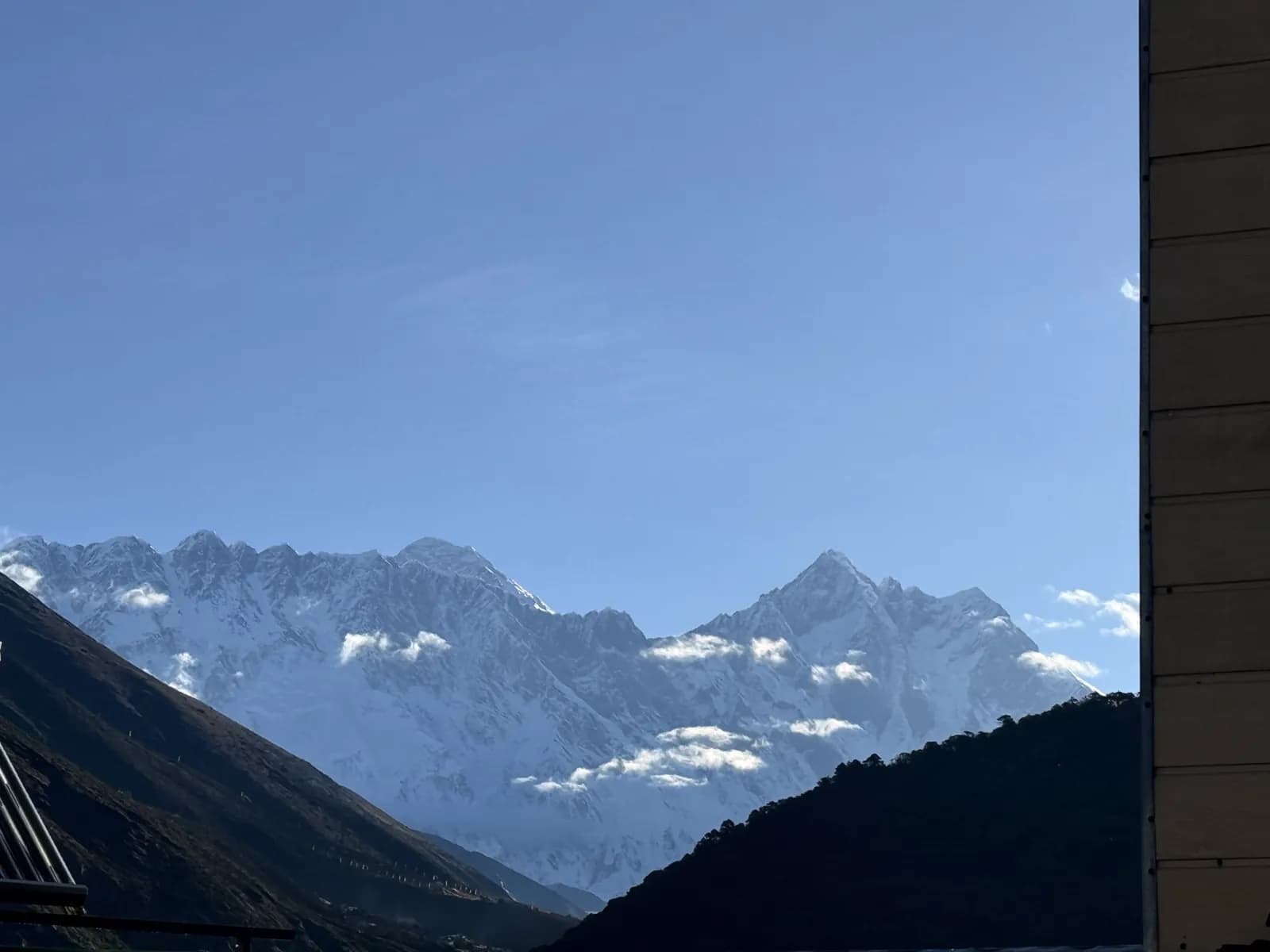
The trail crosses the river several times on suspension bridges, enters the national park at Monjo, and then climbs steadily for two and a half hours to Namche. Near the top, weather permitting, you have your first view of Everest behind you. Namche is the last town on the route, with the last cash machine.
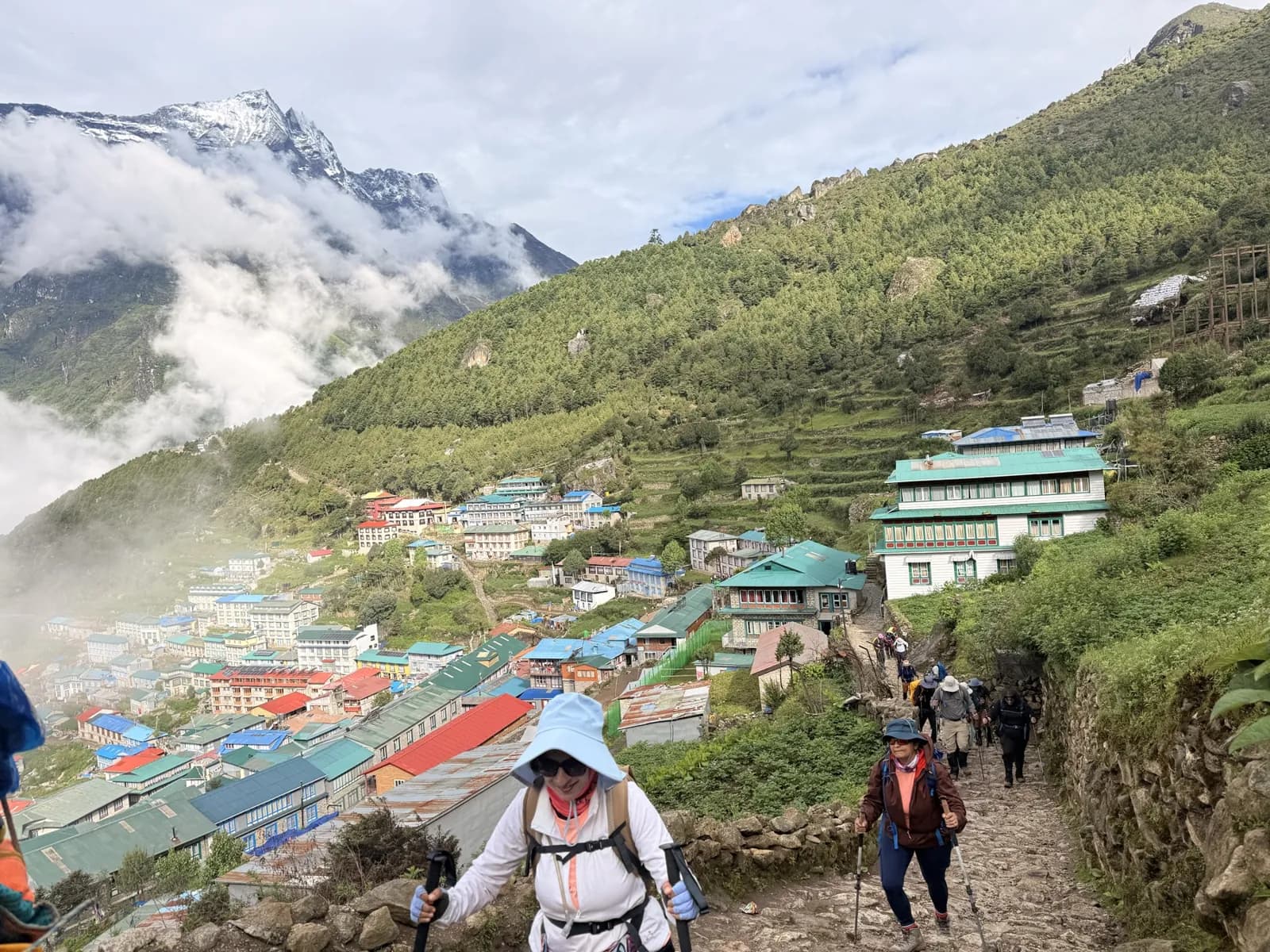
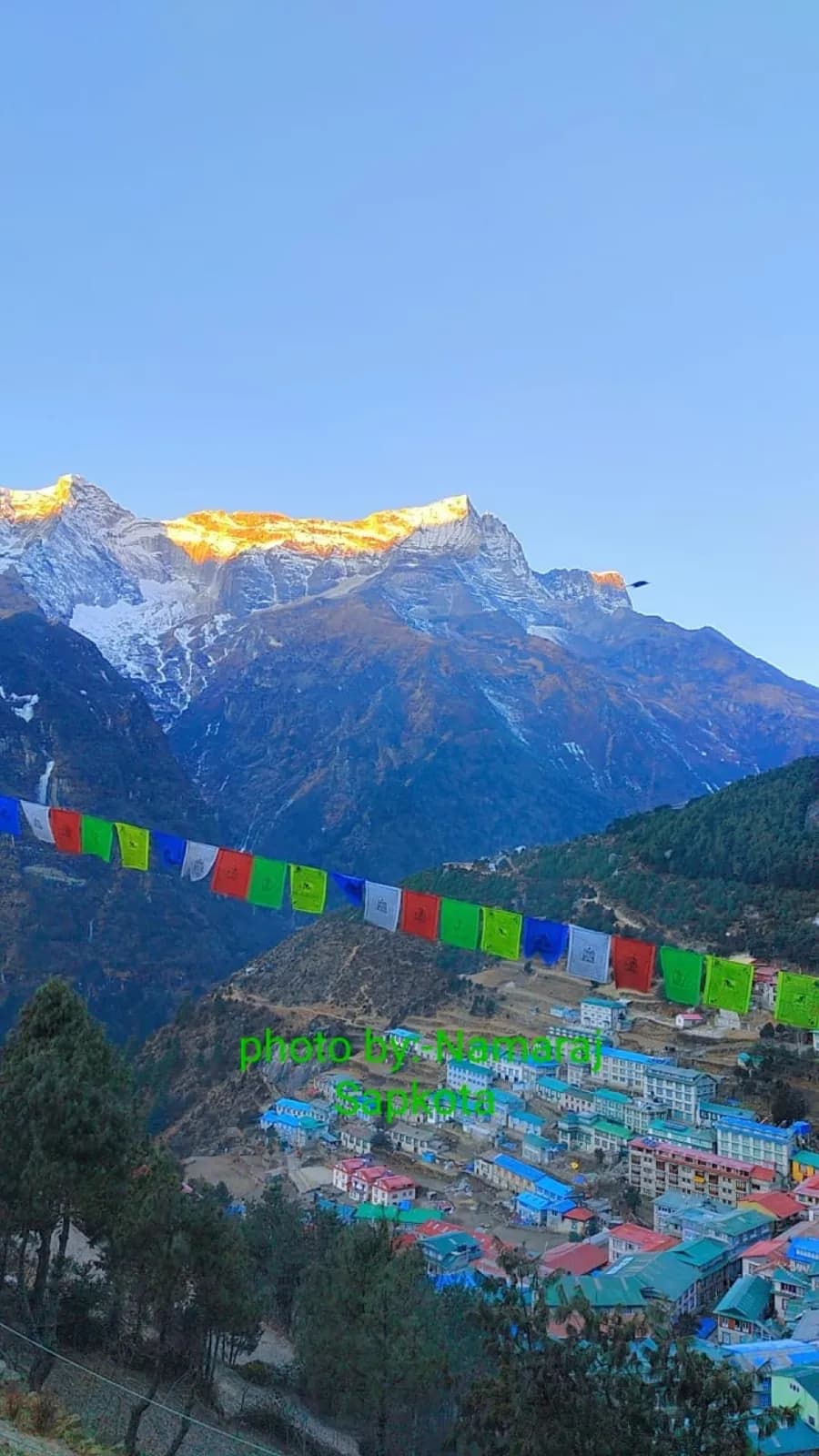
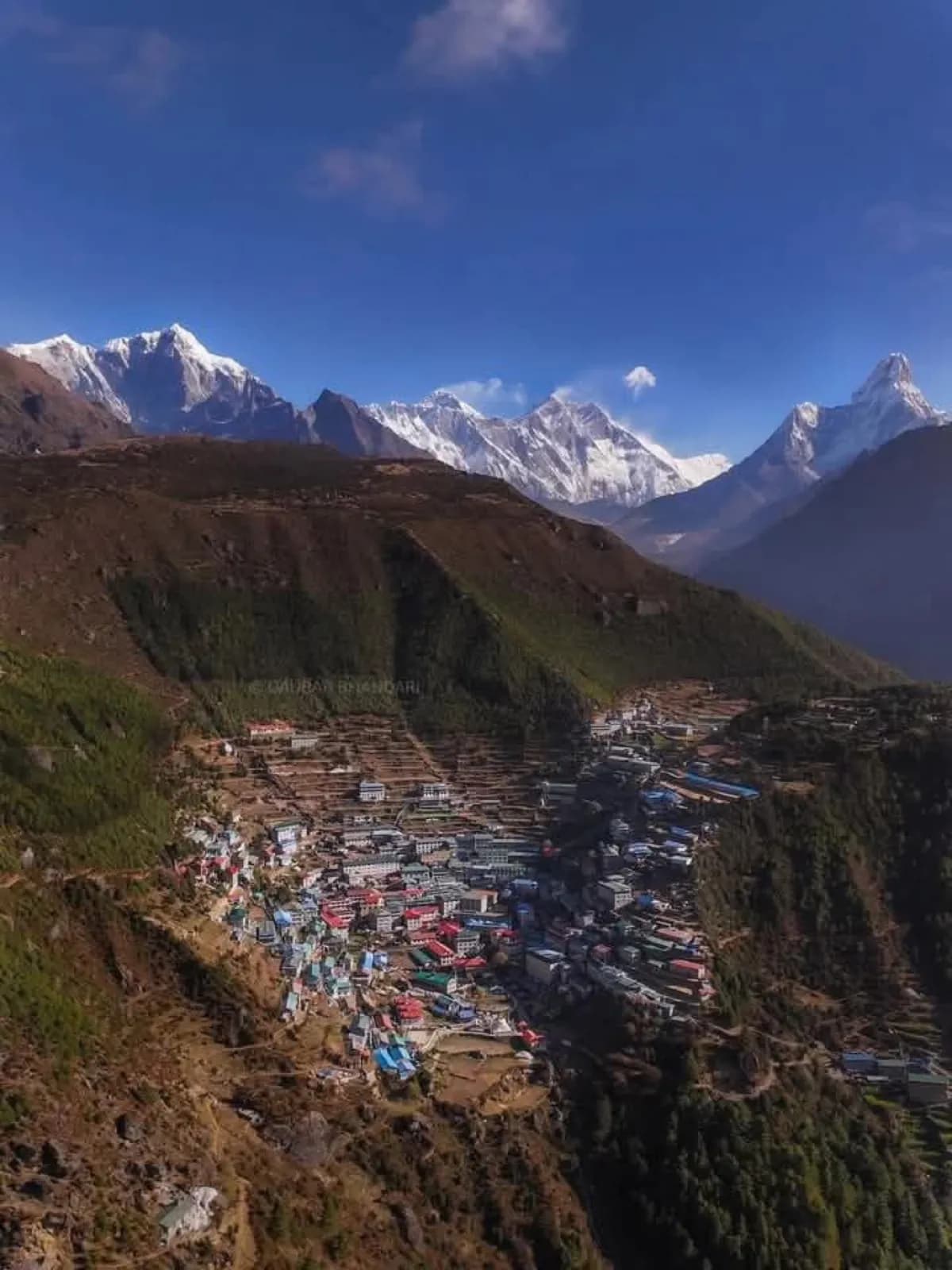
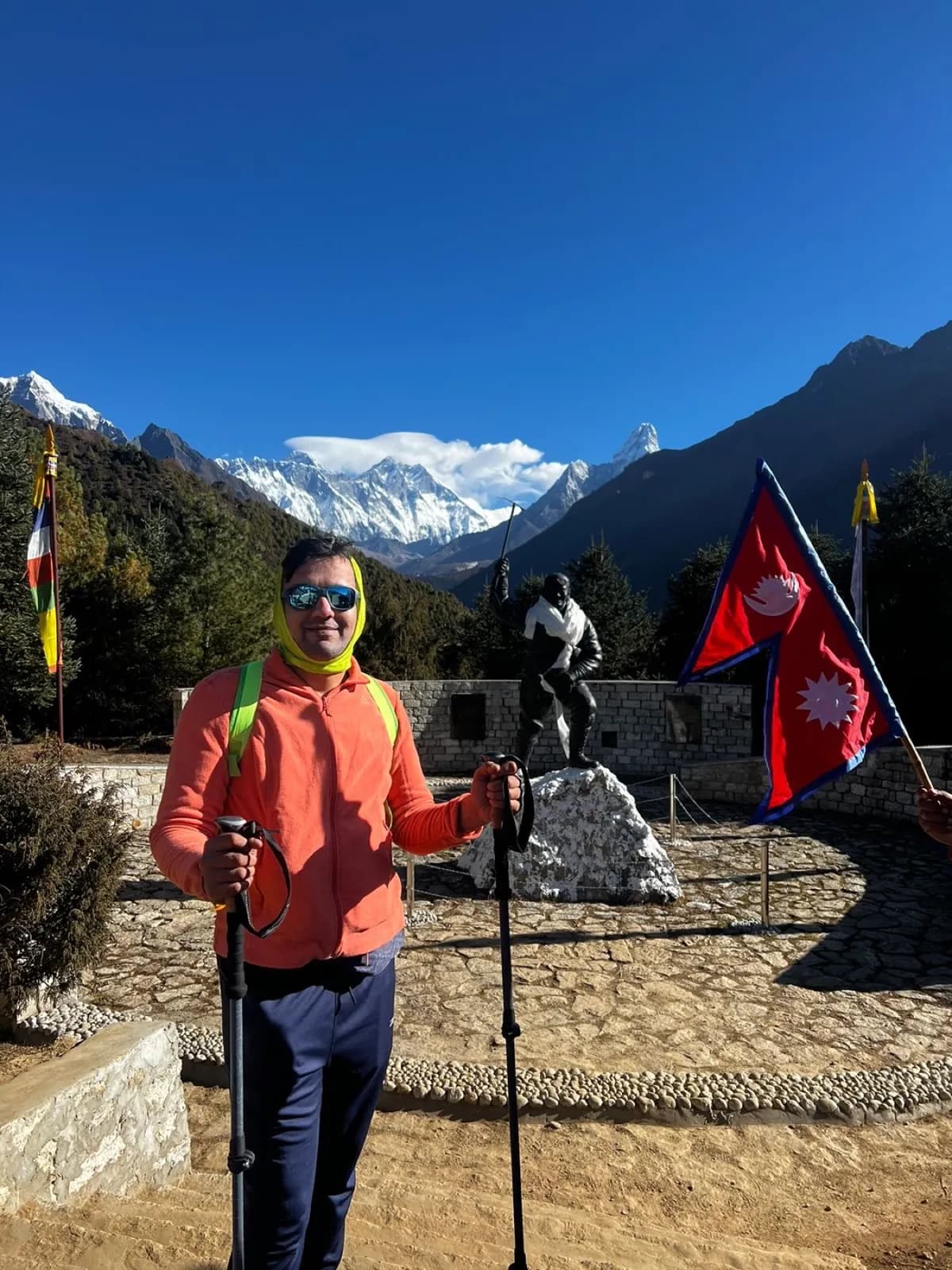
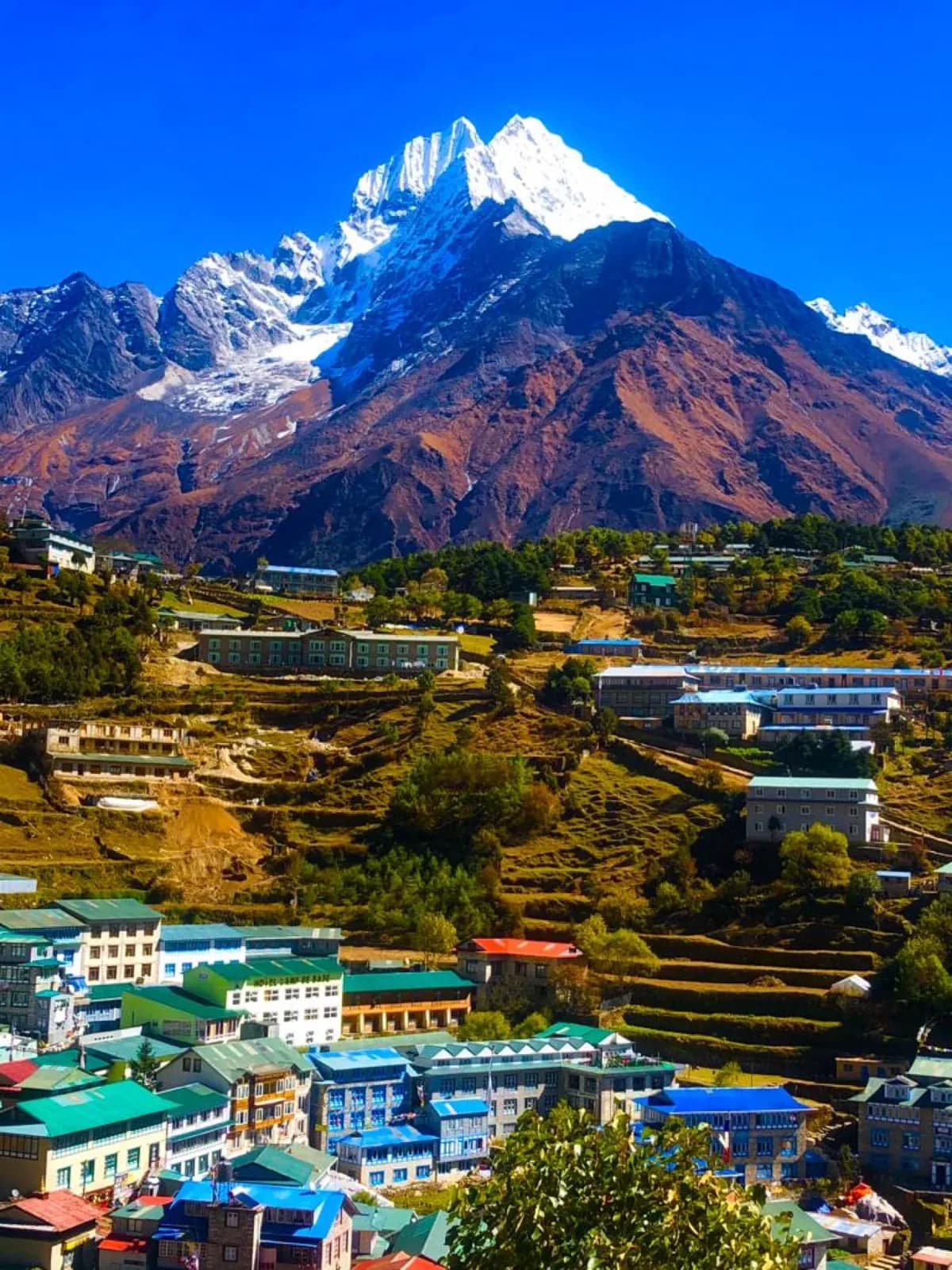
A day at the same overnight altitude, which is not a rest day. You walk up past the airstrip at Syangboche to the viewpoint at 3,880 m for views of Everest, Lhotse and Ama Dablam, then return to sleep lower than the height you reached. The rest of the afternoon is free for the bakeries and equipment shops, or for resting.
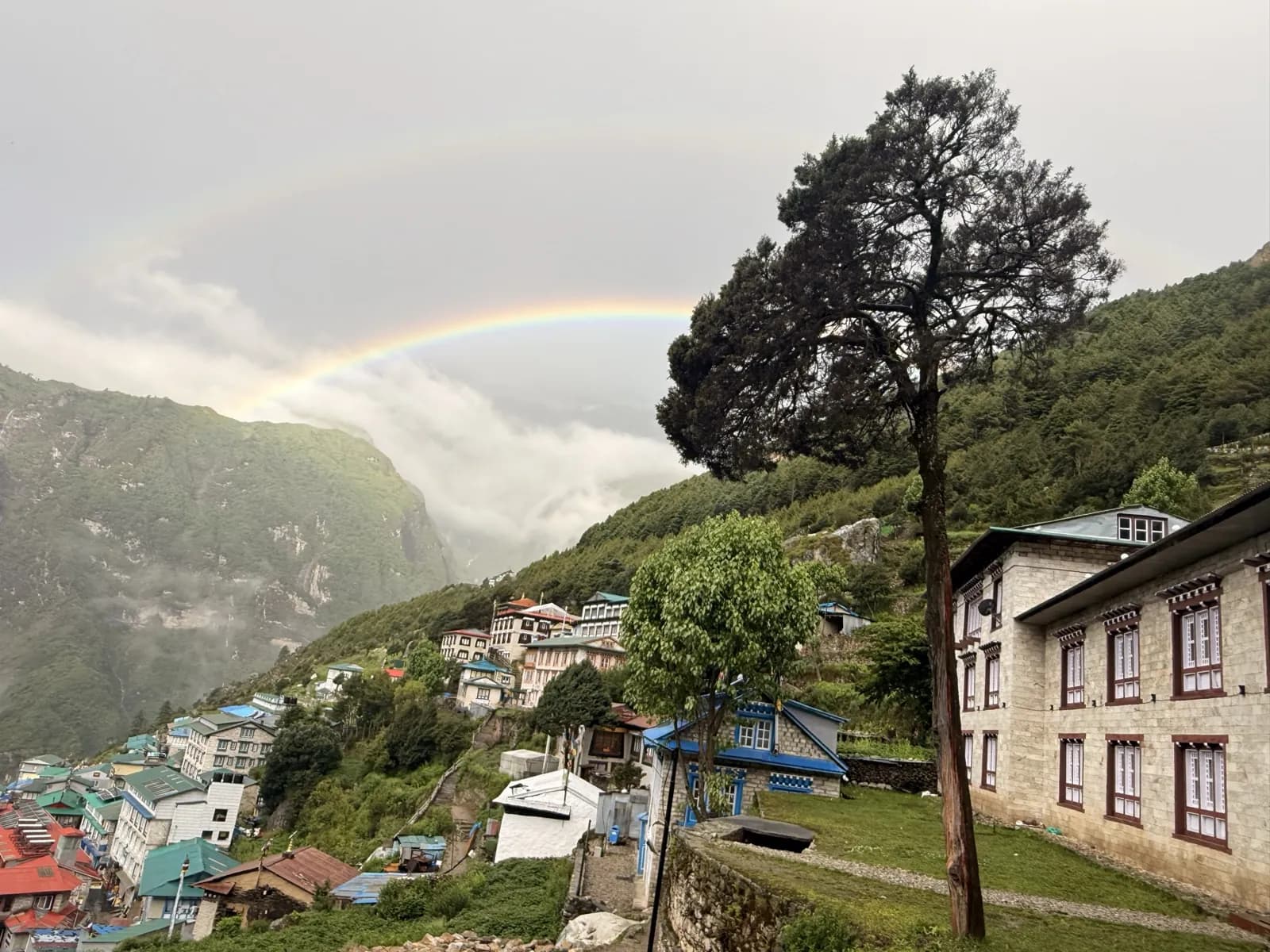
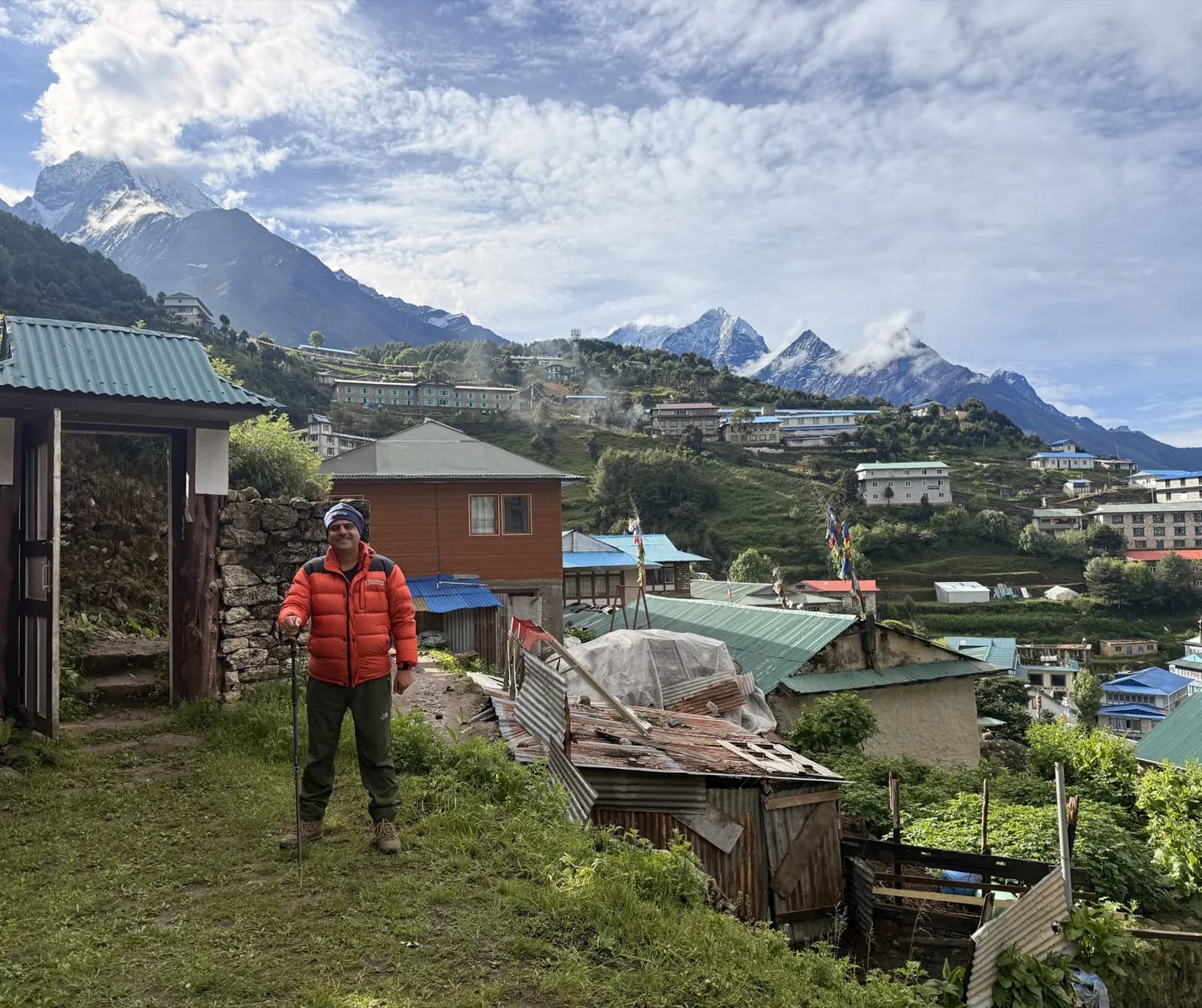
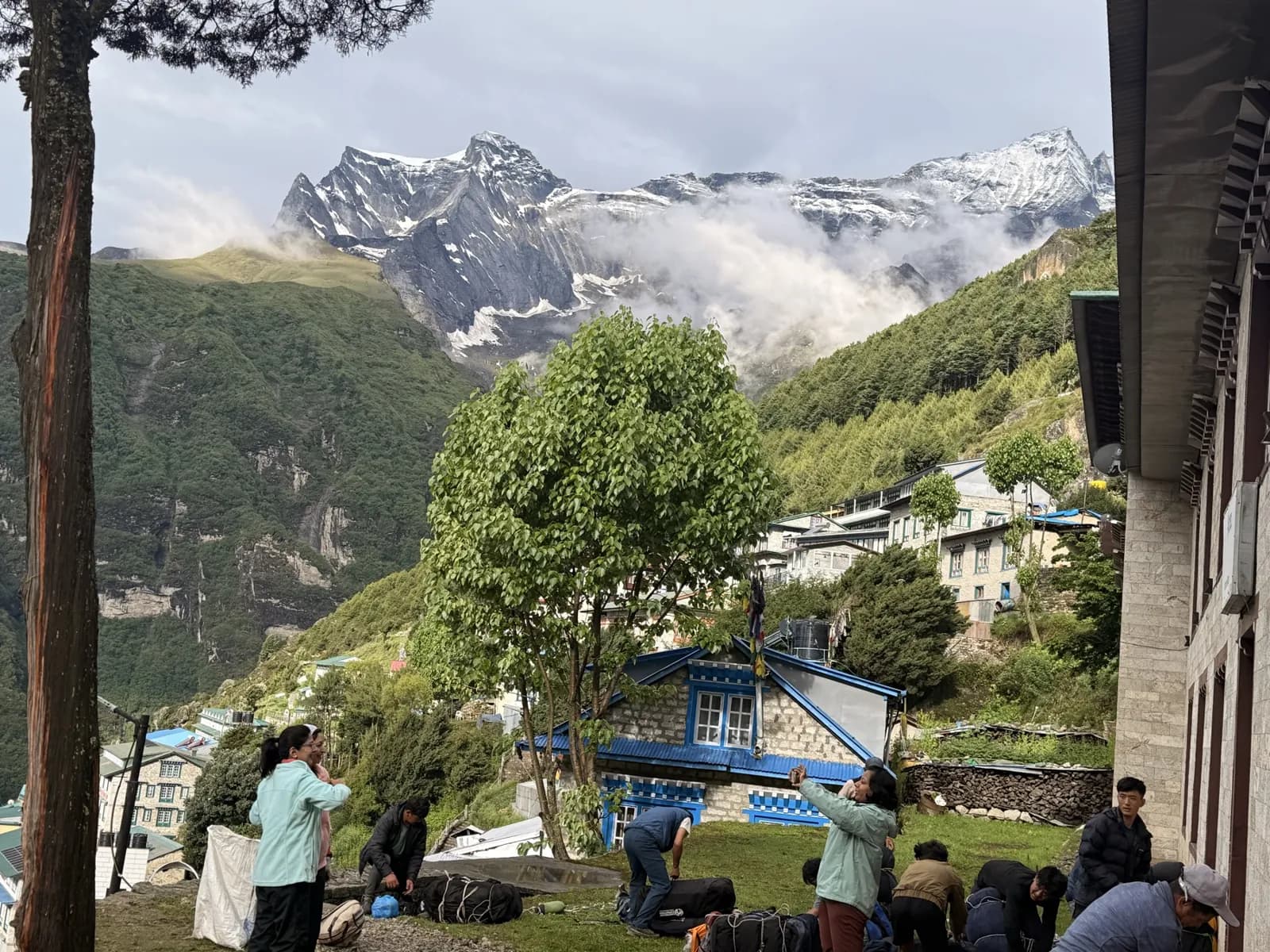
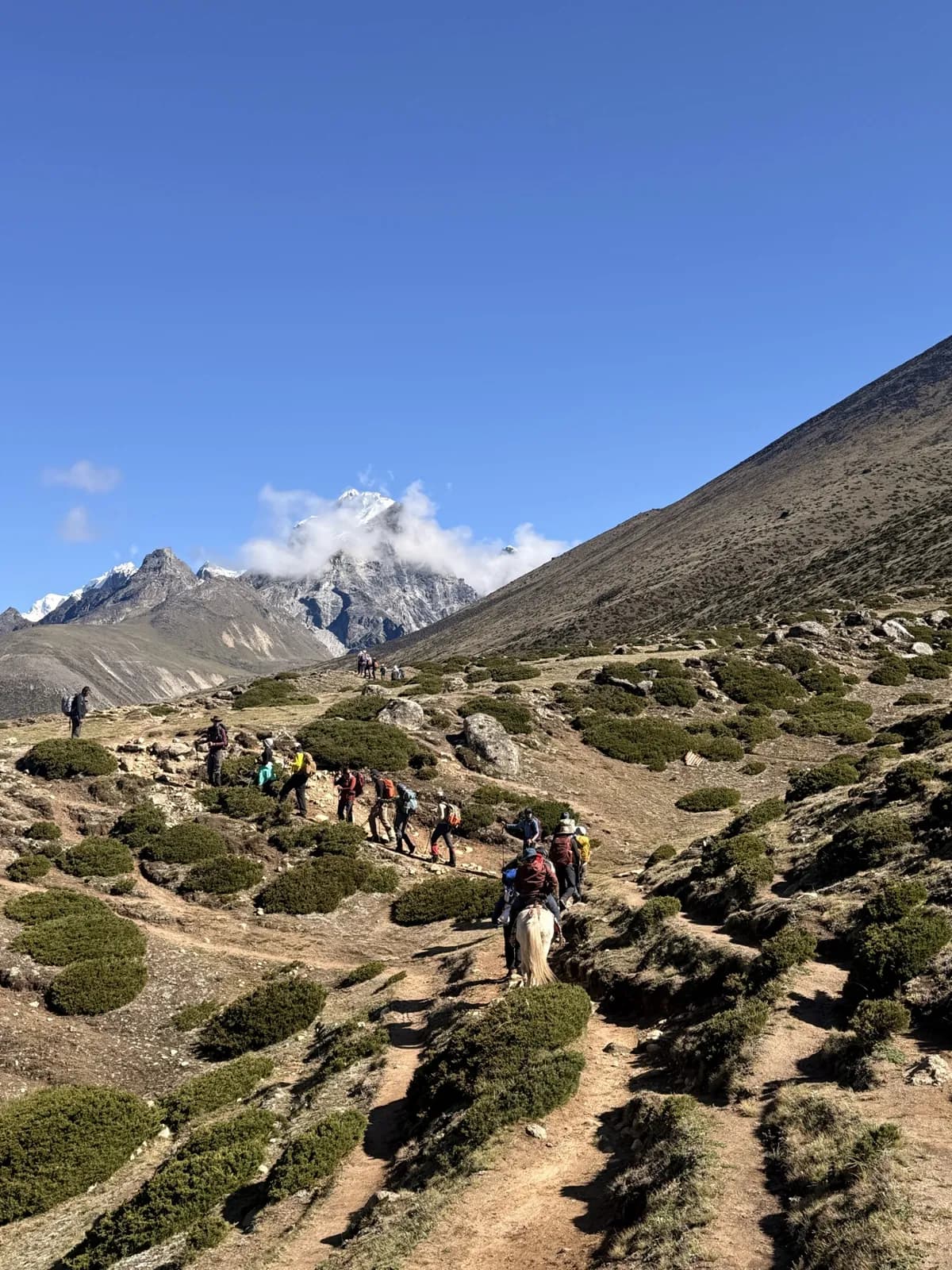
Above Kyangjuma, the trail divides and you take the left branch, away from the Base Camp route, climbing to the chorten on the saddle at Mong La at 3,975 m, with the valley falling away on both sides. A steep descent follows to the river at Phortse Thanga, then a long climb through rhododendron and juniper forest to Dole.
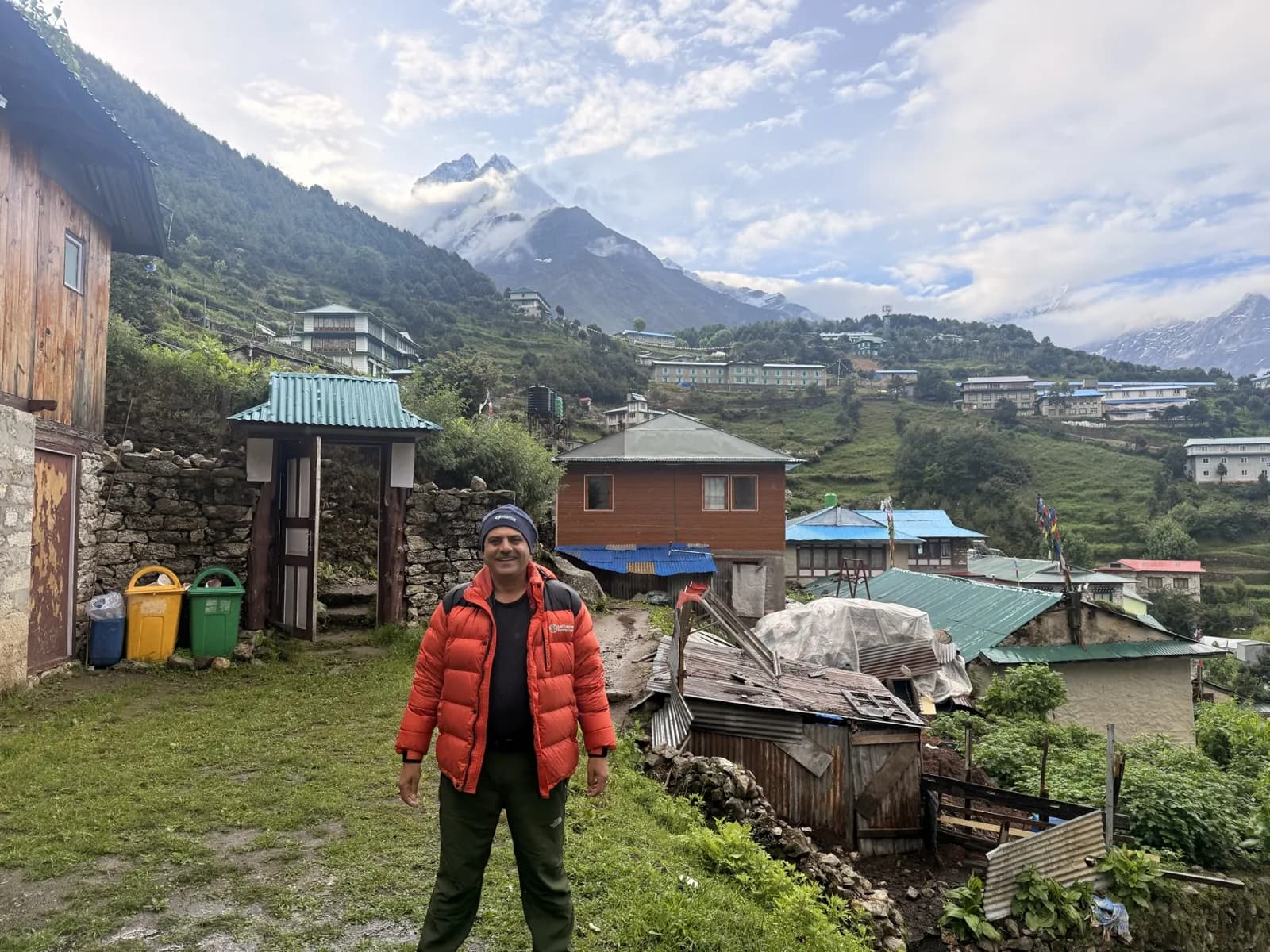
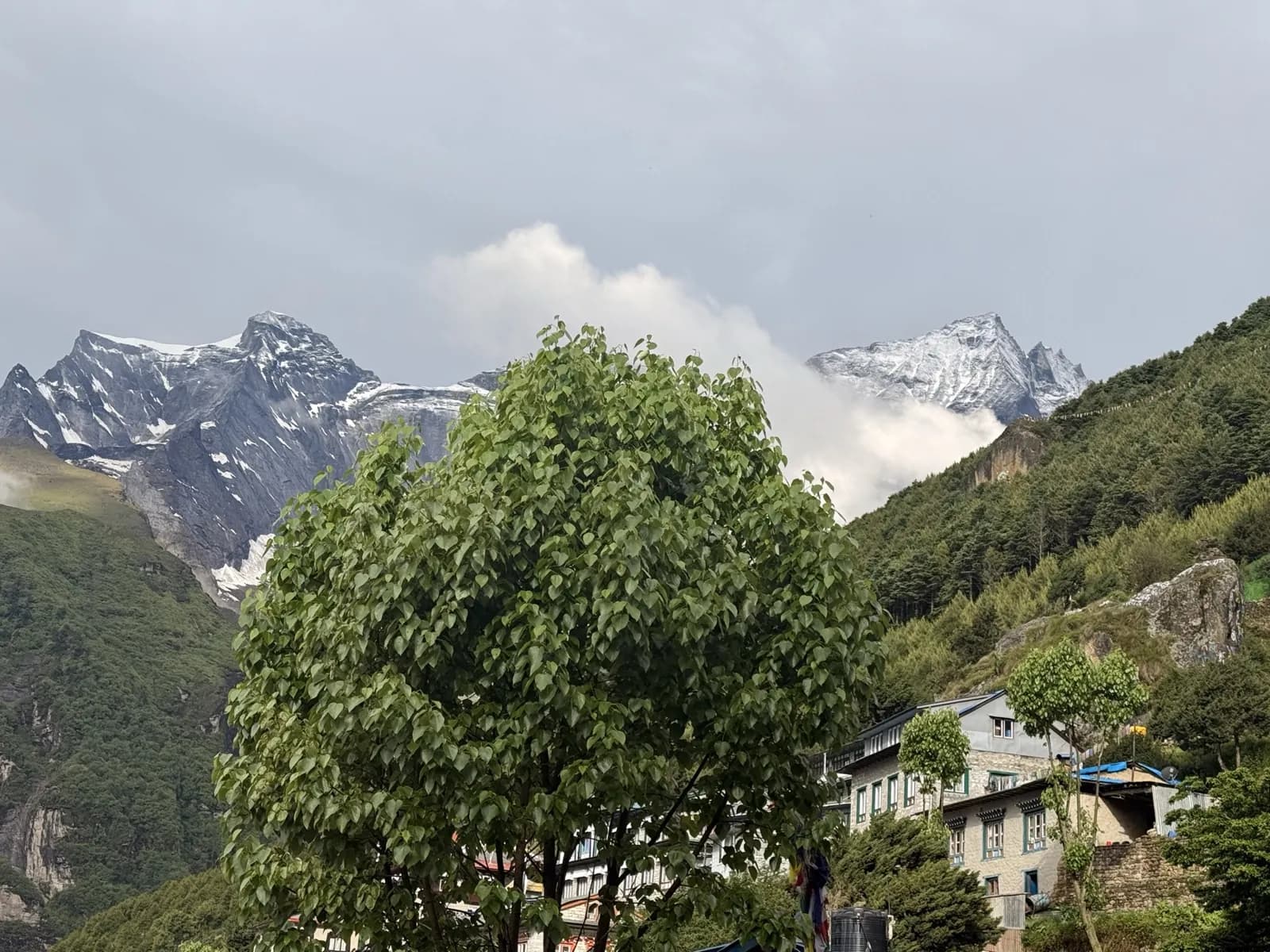
A deliberately short day after the previous day's climb. The trail follows the side of the valley through scrub and the summer grazing settlements of Lhabarma and Luza, with Cho Oyu ahead and the river far below. Machhermo has a Himalayan Rescue Association aid post, which gives a talk on altitude most afternoons. It is worth attending.
Walk up past Pangka, then climb onto the terminal moraine of the Ngozumpa Glacier. The first lake appears below you, then the second, and Gokyo village stands on the shore of the third, at 4,790 m. The walk takes four or five hours, and the afternoon is free to relax by the lake.
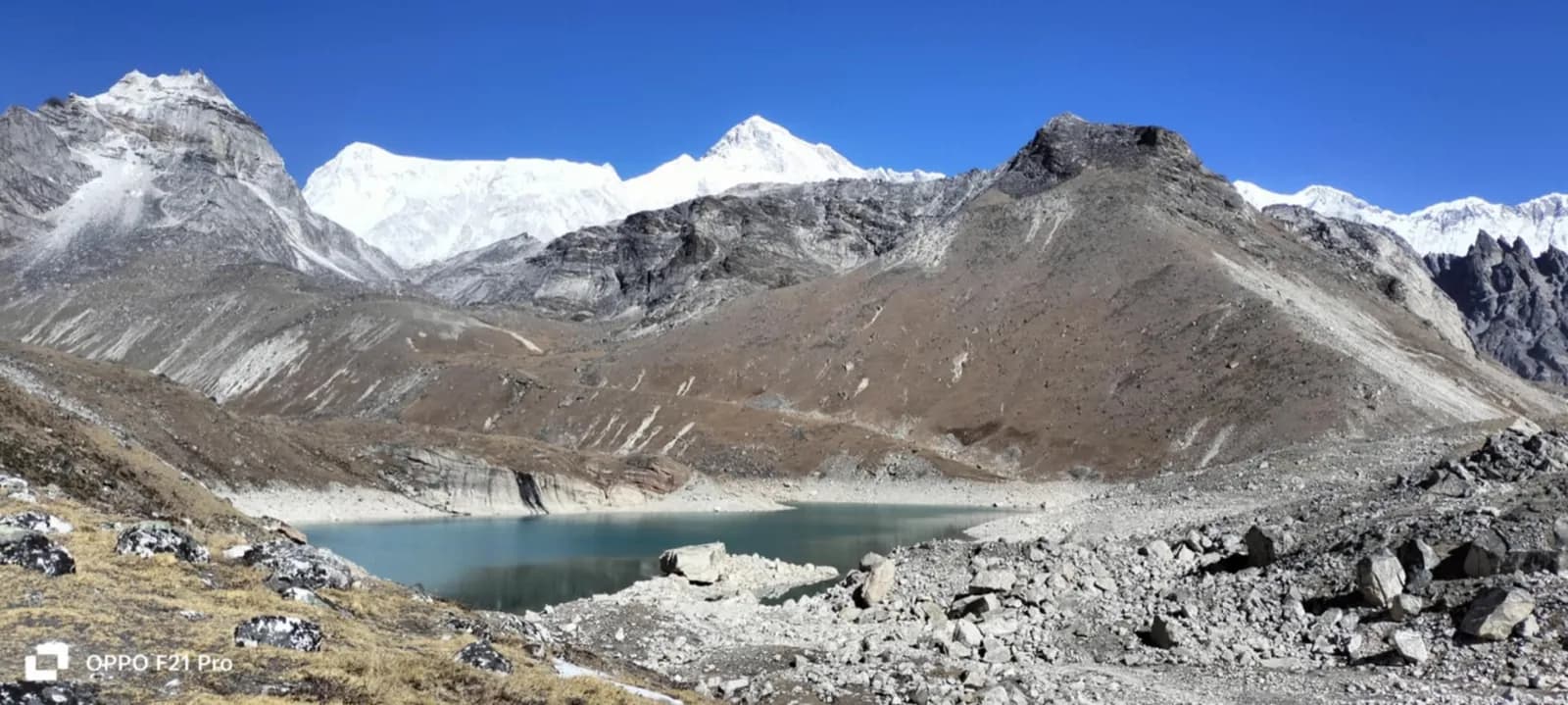
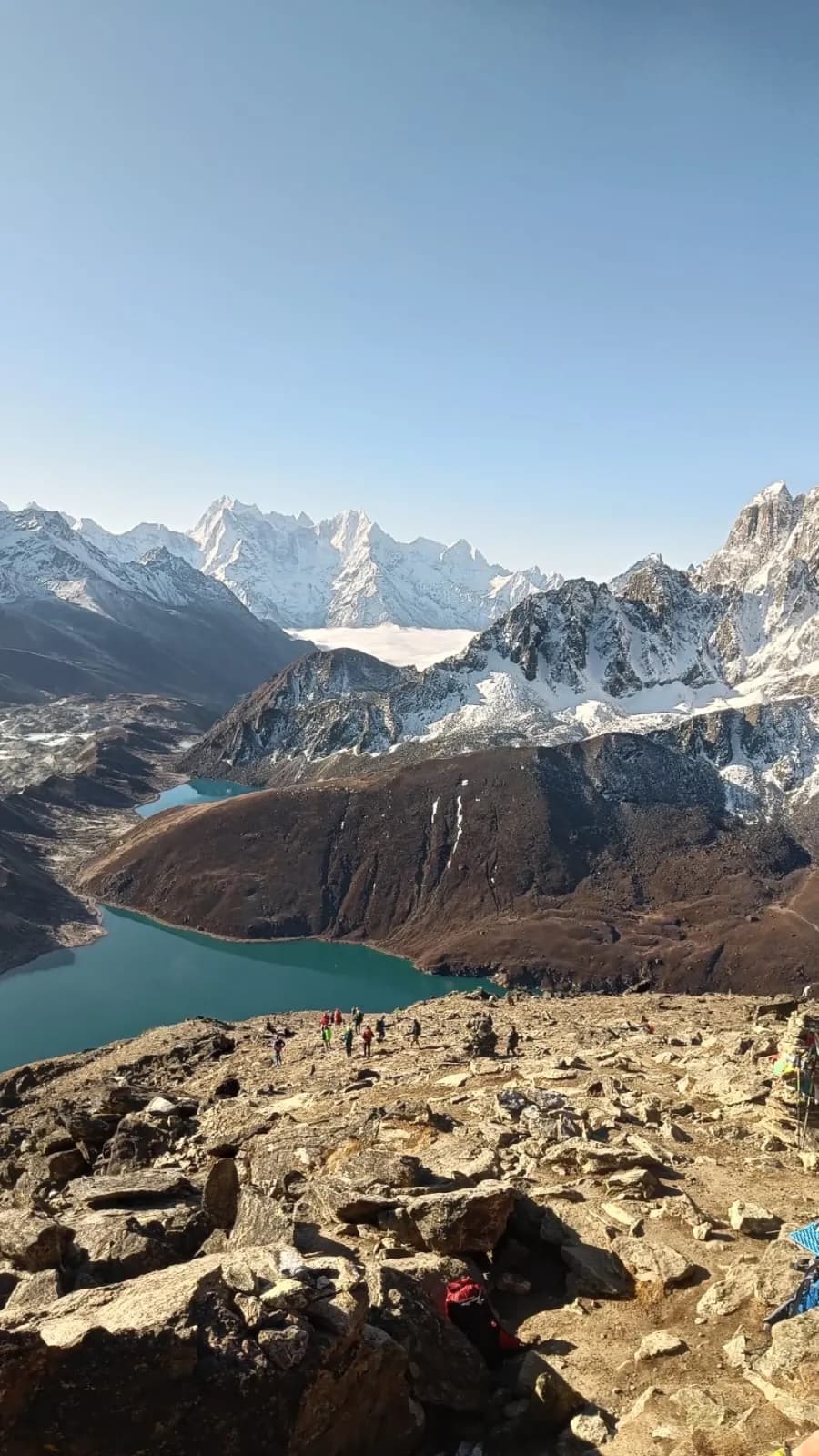
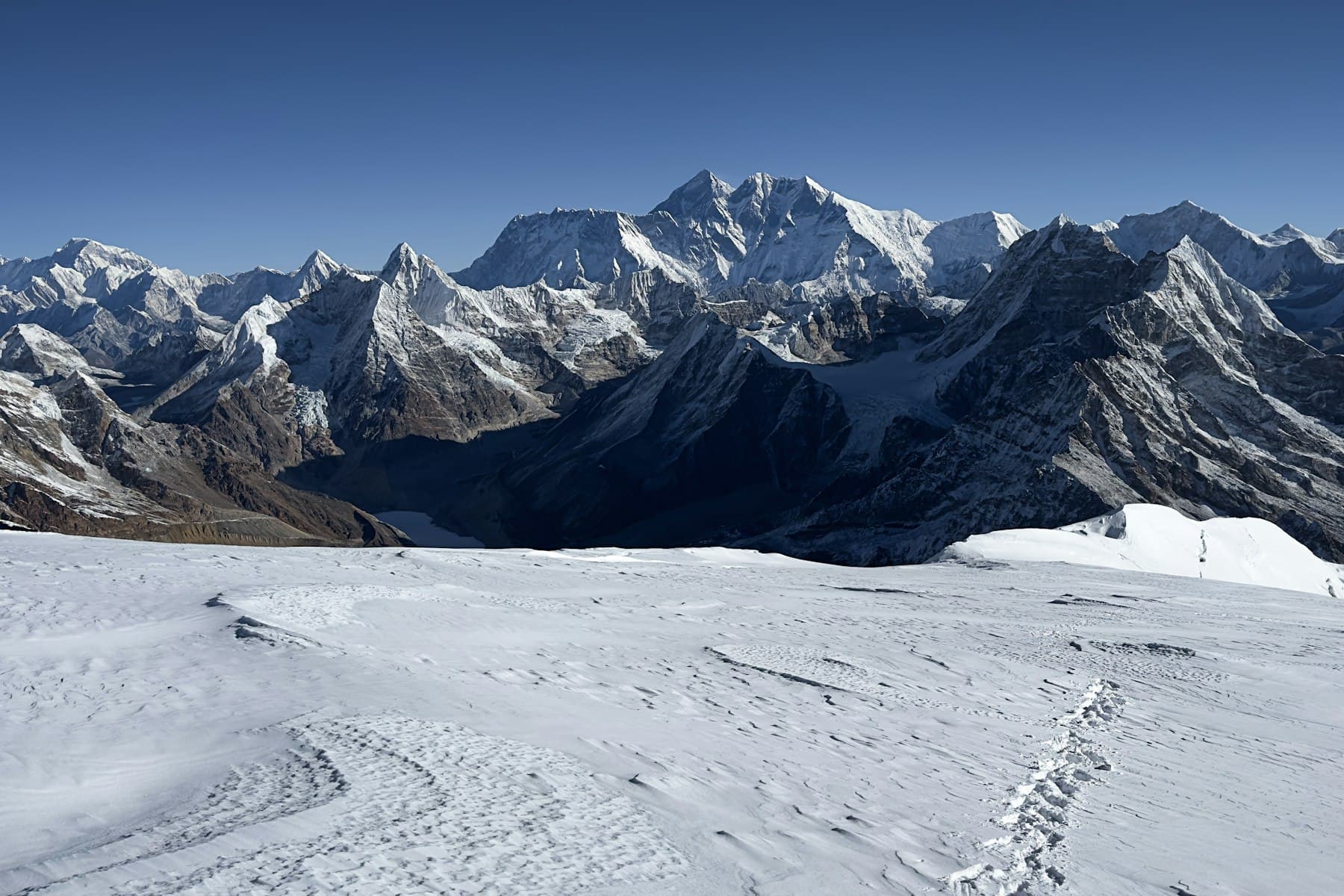
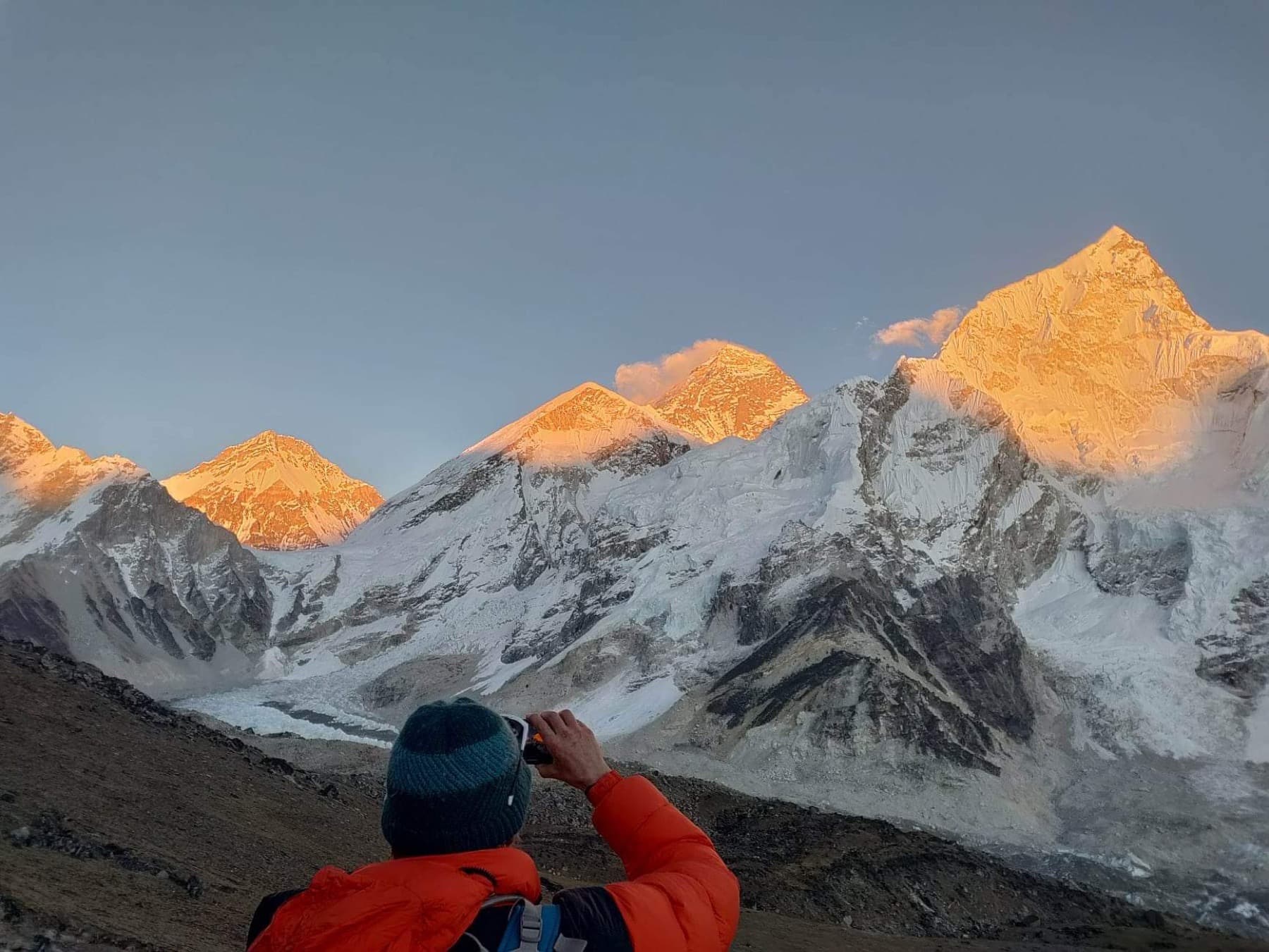
Set off in the dark to climb the hill behind the village: 560 metres of steep zigzags to 5,357 m. From the top, Everest, Lhotse, Makalu and Cho Oyu stand in one line, four of the six highest mountains in the world, with the lakes below and the glacier stretching north out of sight. Return to the village for lunch, then rest.
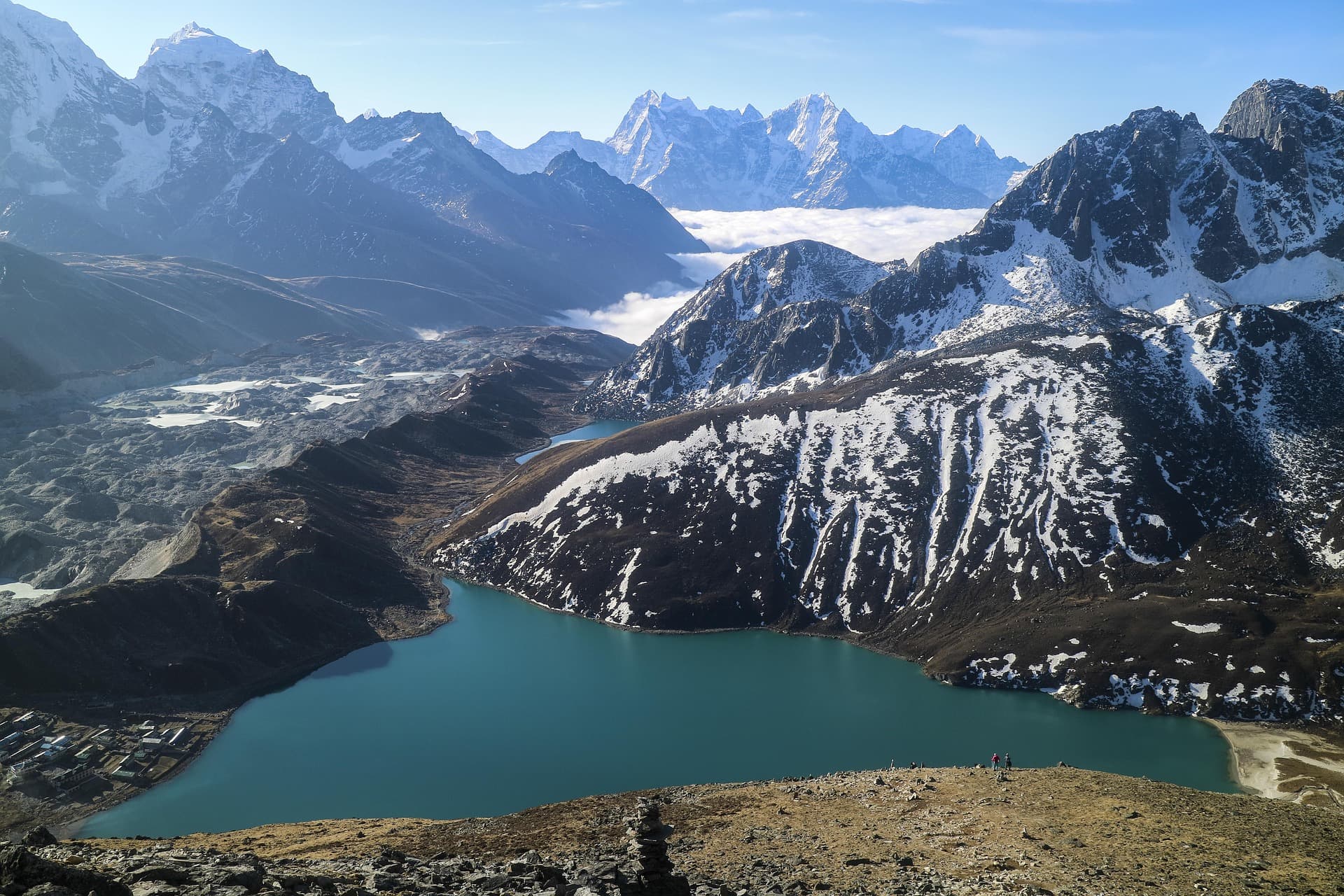
A walk of two or three hours, and one of the most unusual in Nepal. You cross the Ngozumpa, the longest glacier in the country: a kilometre of grey rubble, meltwater pools and small ice cliffs, with the route marked by cairns that are rebuilt every season. Thagnak, on the far side, has three lodges below the pass. You go to bed early.
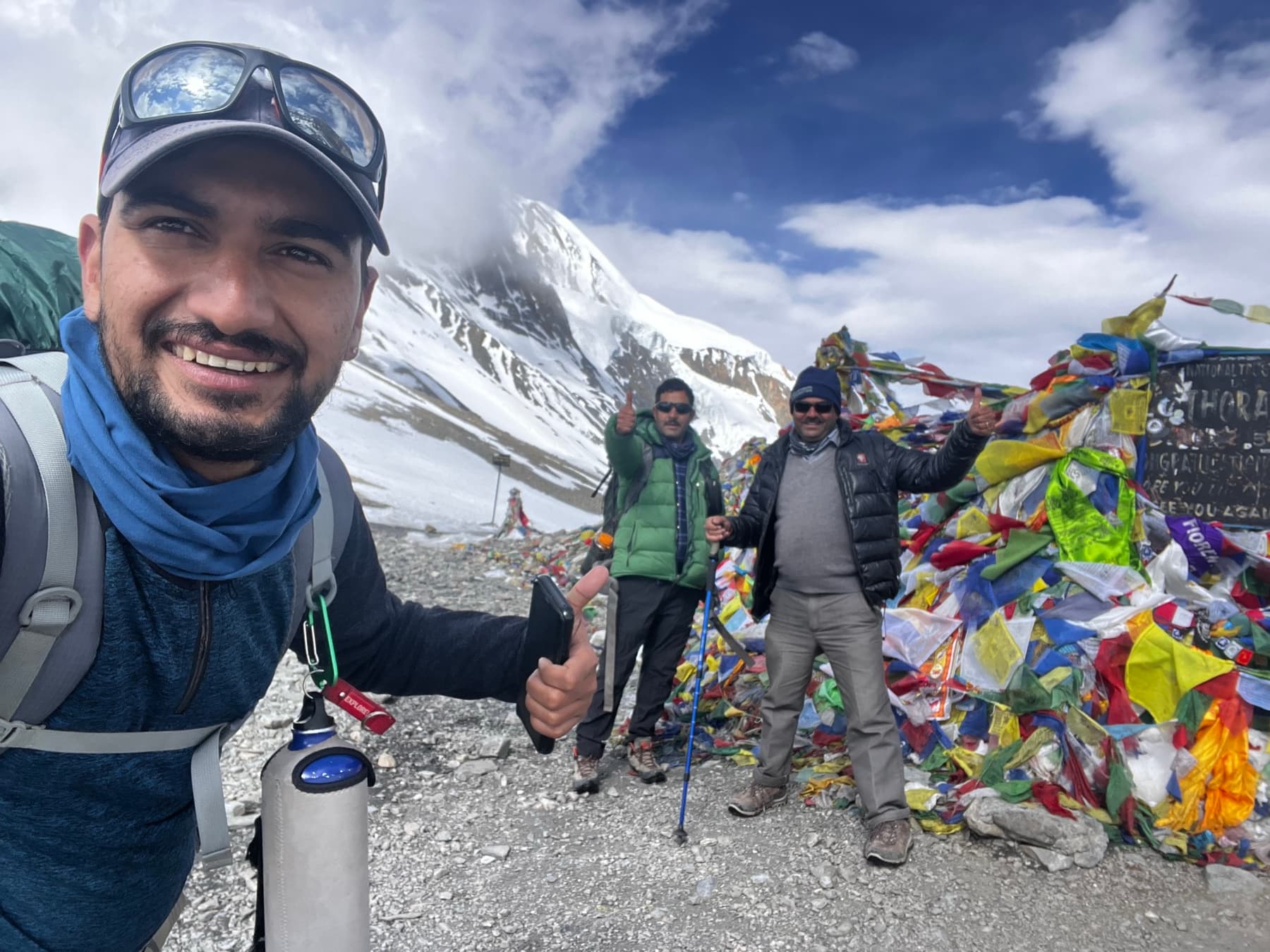
The hardest day and the main feature of the trek. You set off at 4 am with headtorches, walk for an hour on rough ground, then climb a steep boulder gully to the snow line and cross a short glacier in microspikes. The pass, at 5,420 m, is hung with prayer flags and is windy. On the east side, there are two hours of loose moraine before the trail eases down to Dzongla.
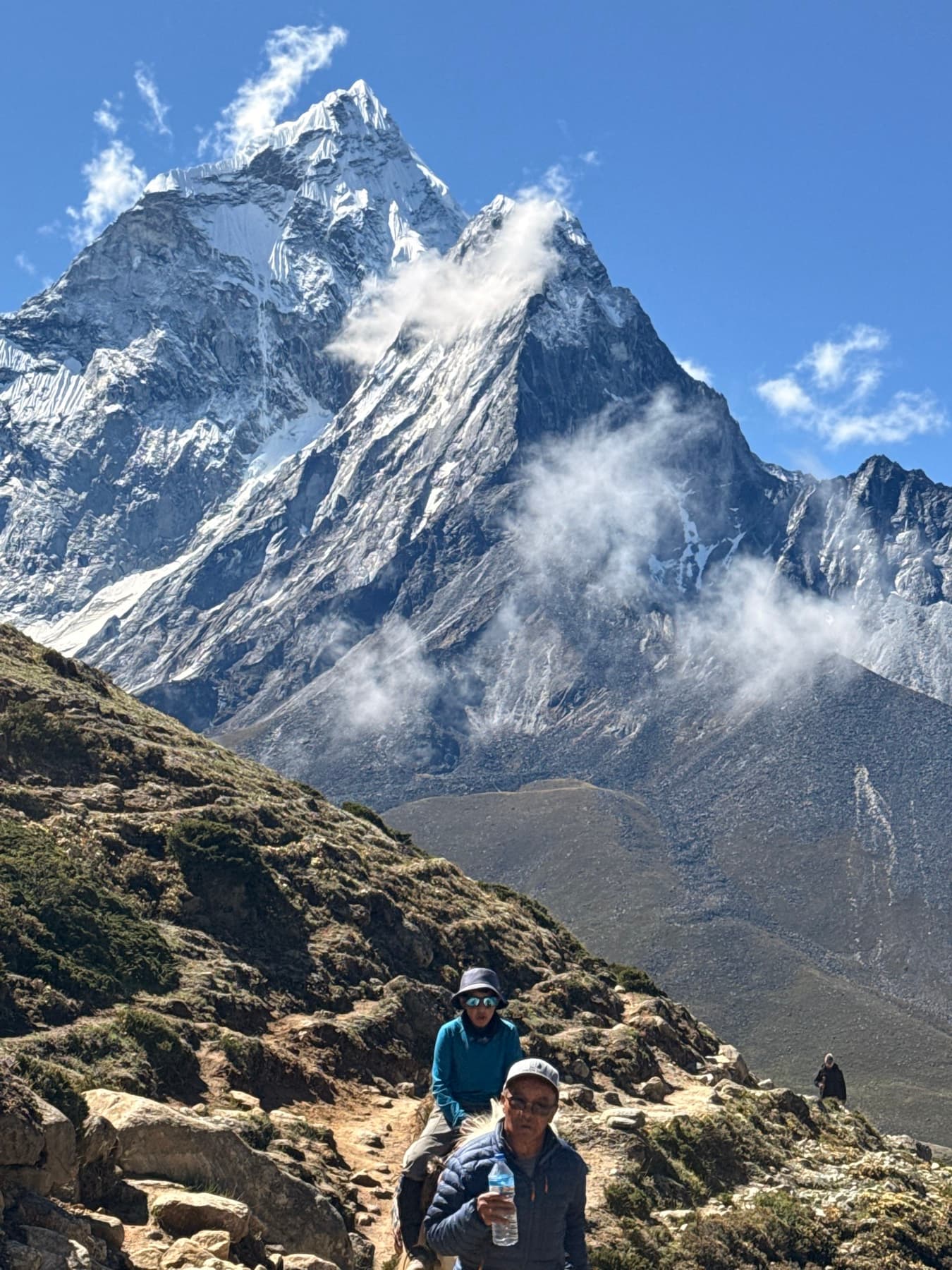
An easy walk of three or four hours, which is welcome after the pass. The path follows a grassy shelf above the Chola Tsho lake, with Cholatse behind you and Ama Dablam to the south, then joins the main Base Camp trail at Lobuche. From here to Kala Patthar, you share the valley with trekkers on the classic route.
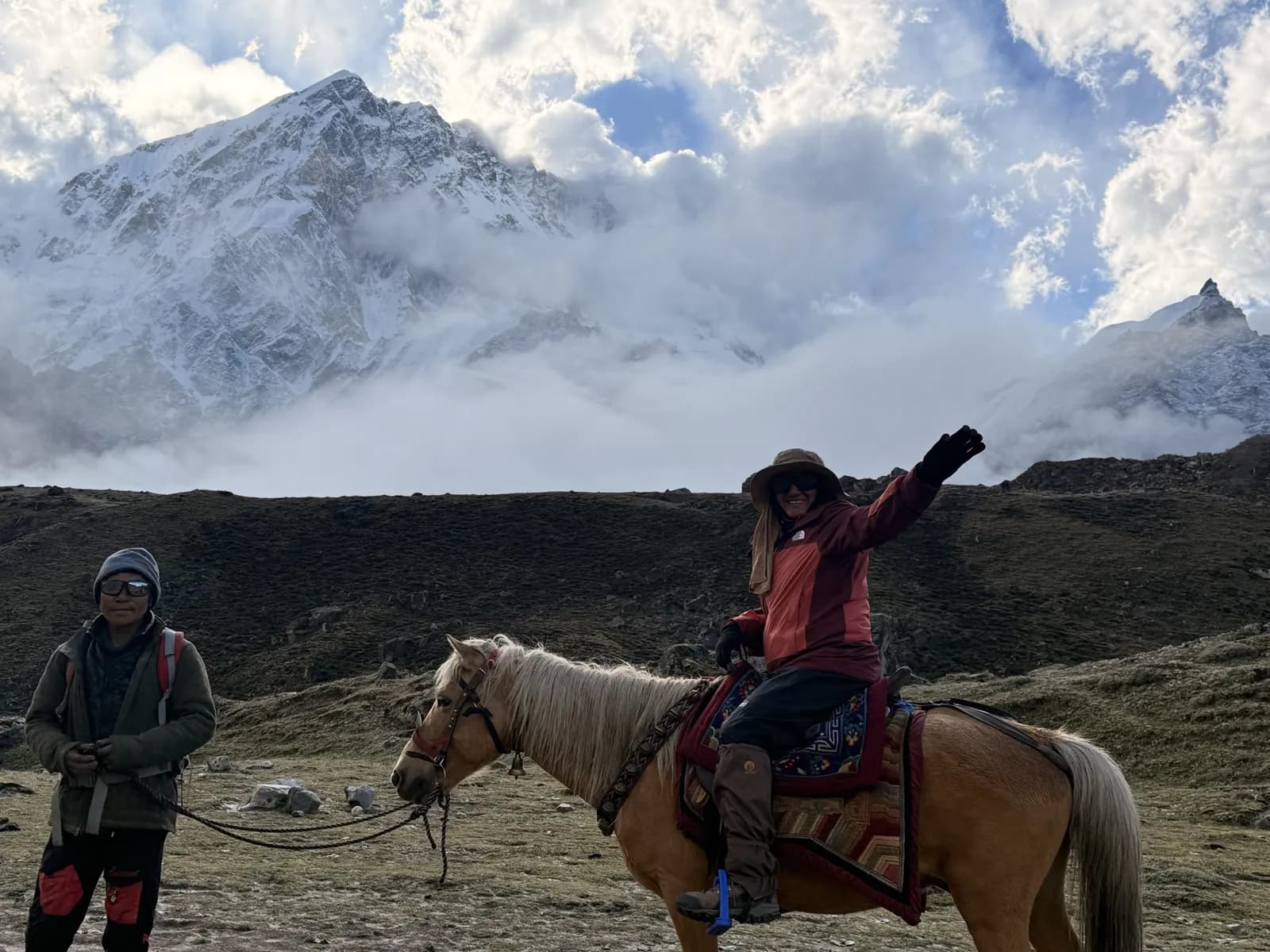
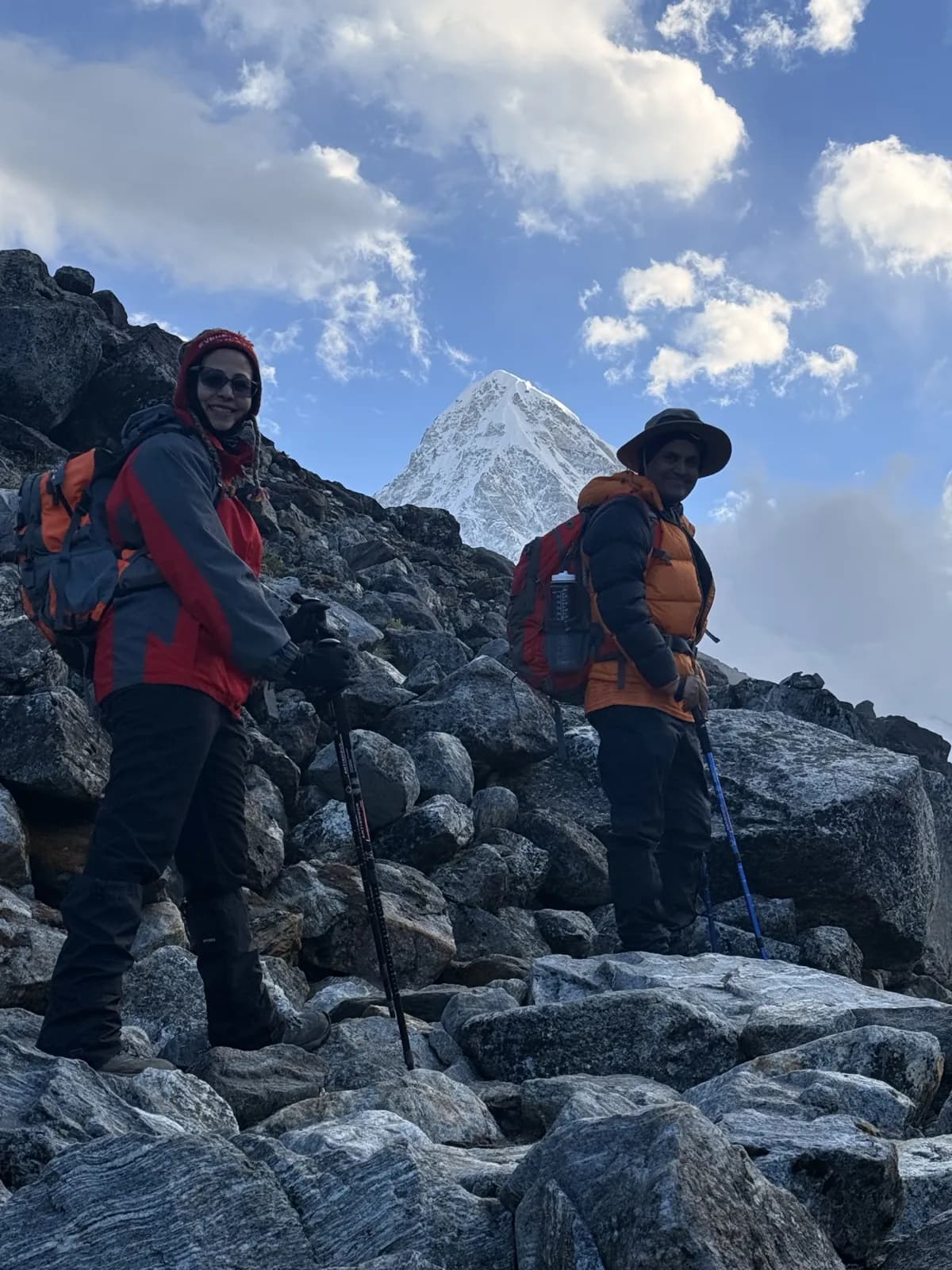
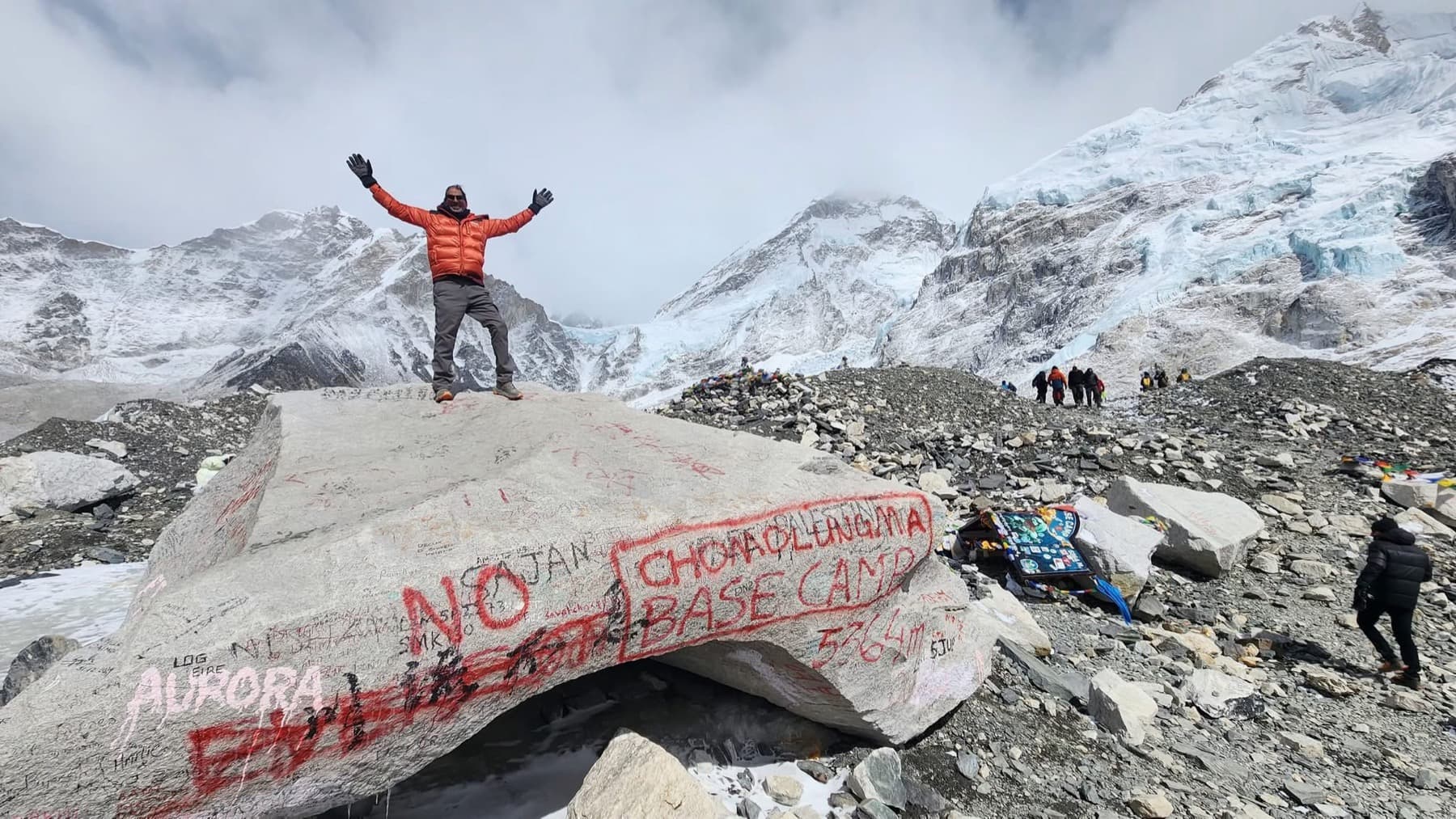
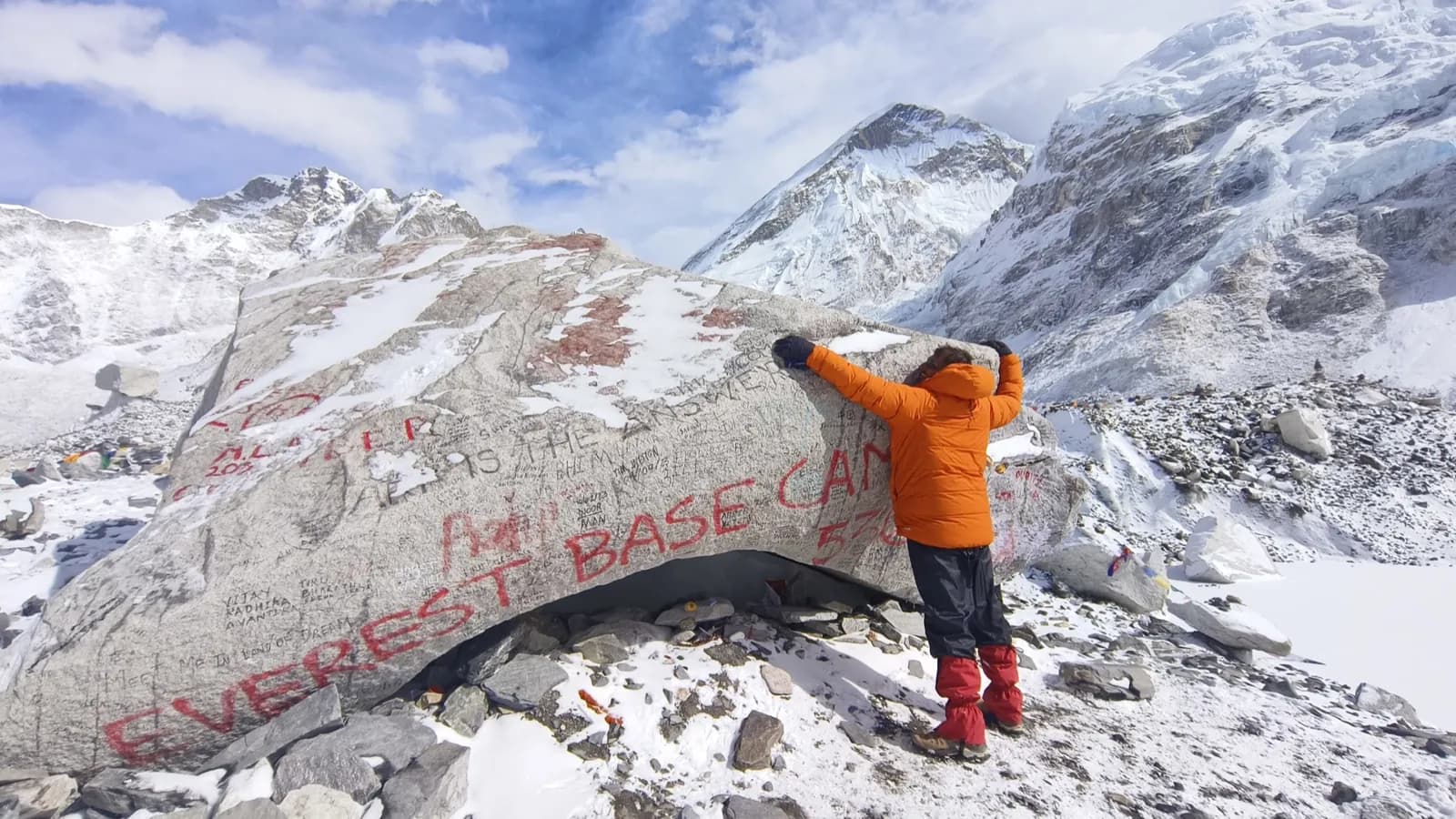
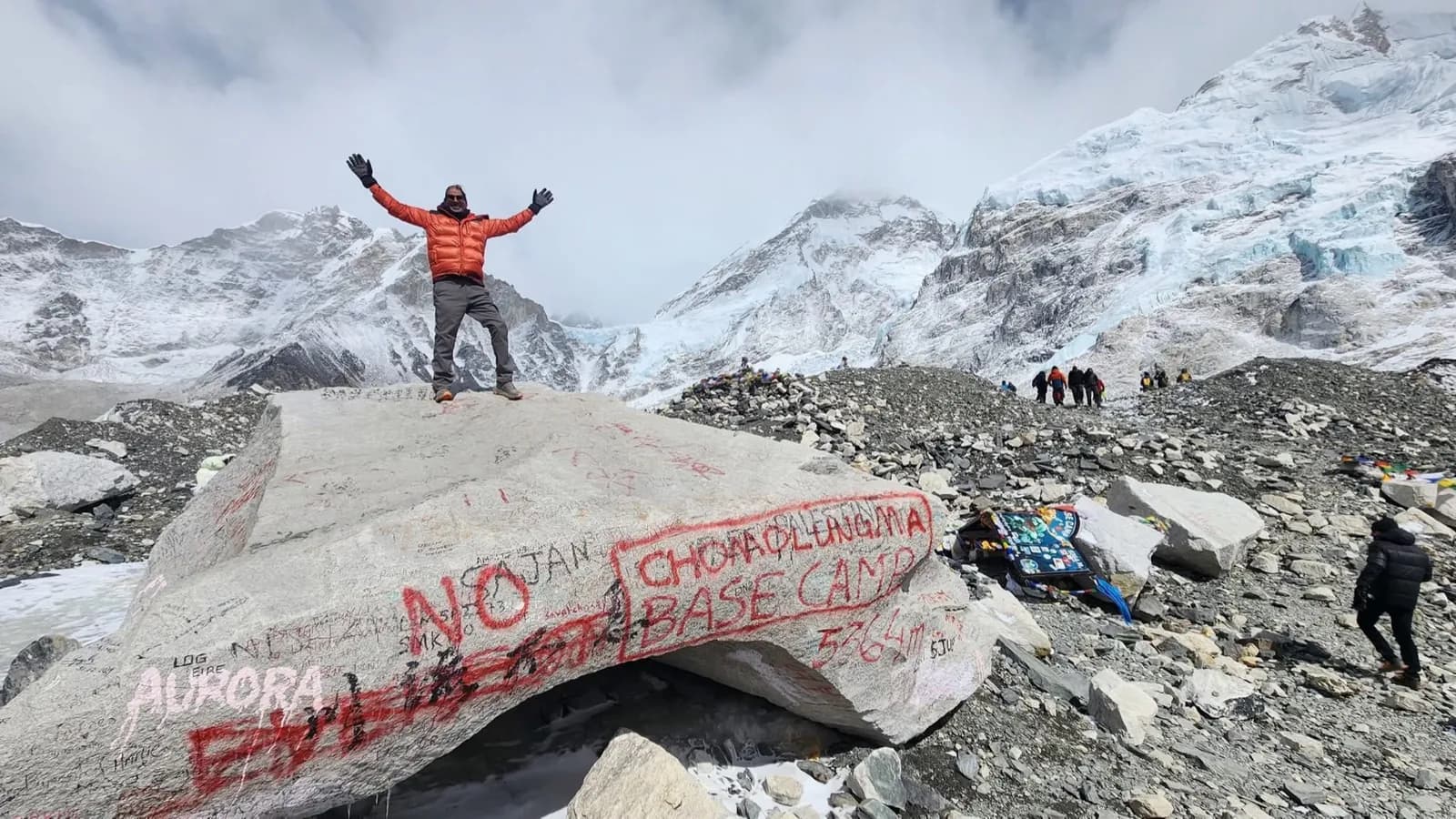
Follow the lateral moraine of the Khumbu Glacier to Gorak Shep for lunch, then cross the rubble to Base Camp at 5,364 m, directly below the Khumbu Icefall. In spring, it is filled with yellow expedition tents and generators. You walk back to Gorak Shep to sleep at 5,164 m, the highest and coldest night of the trek.
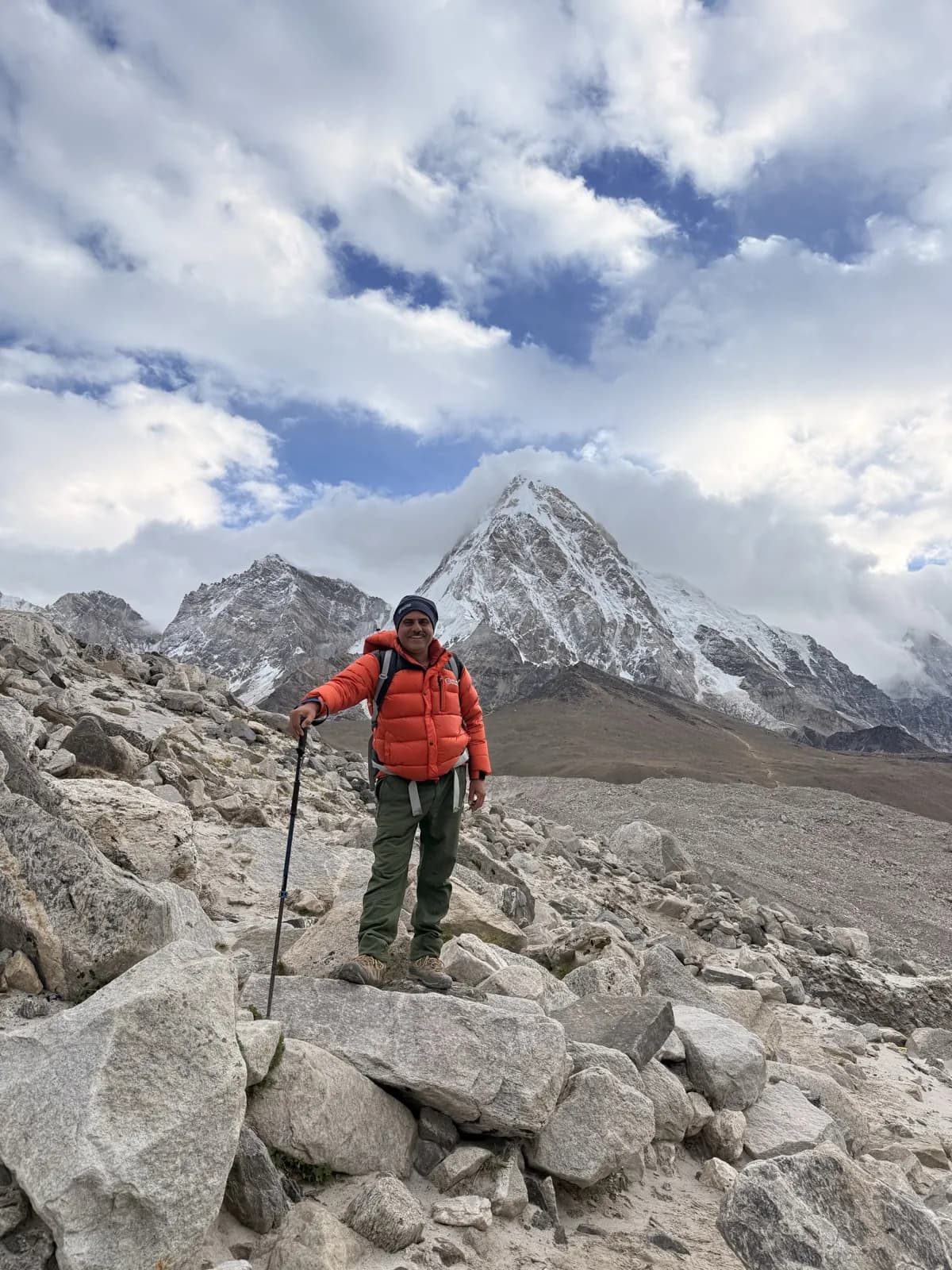
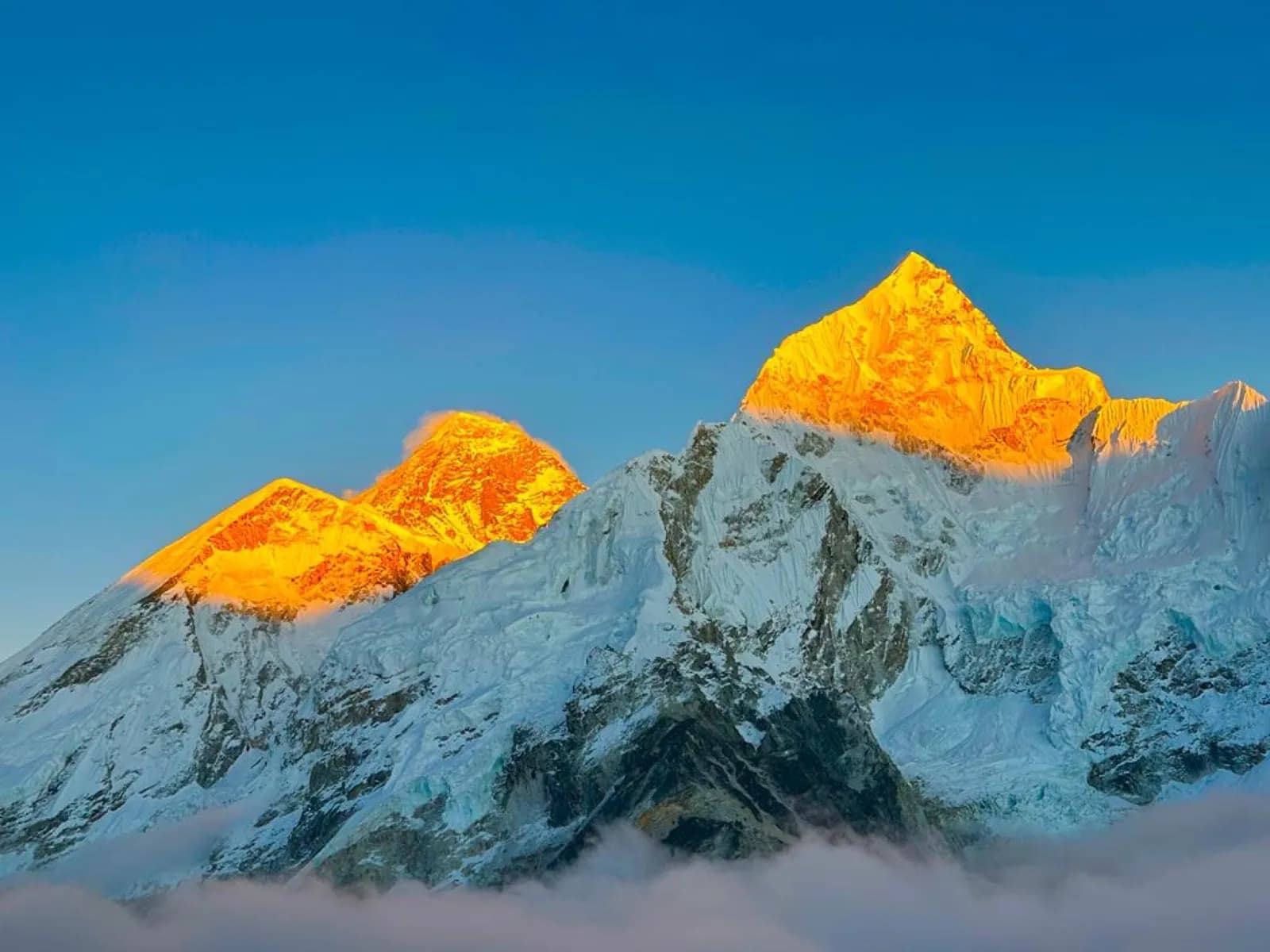
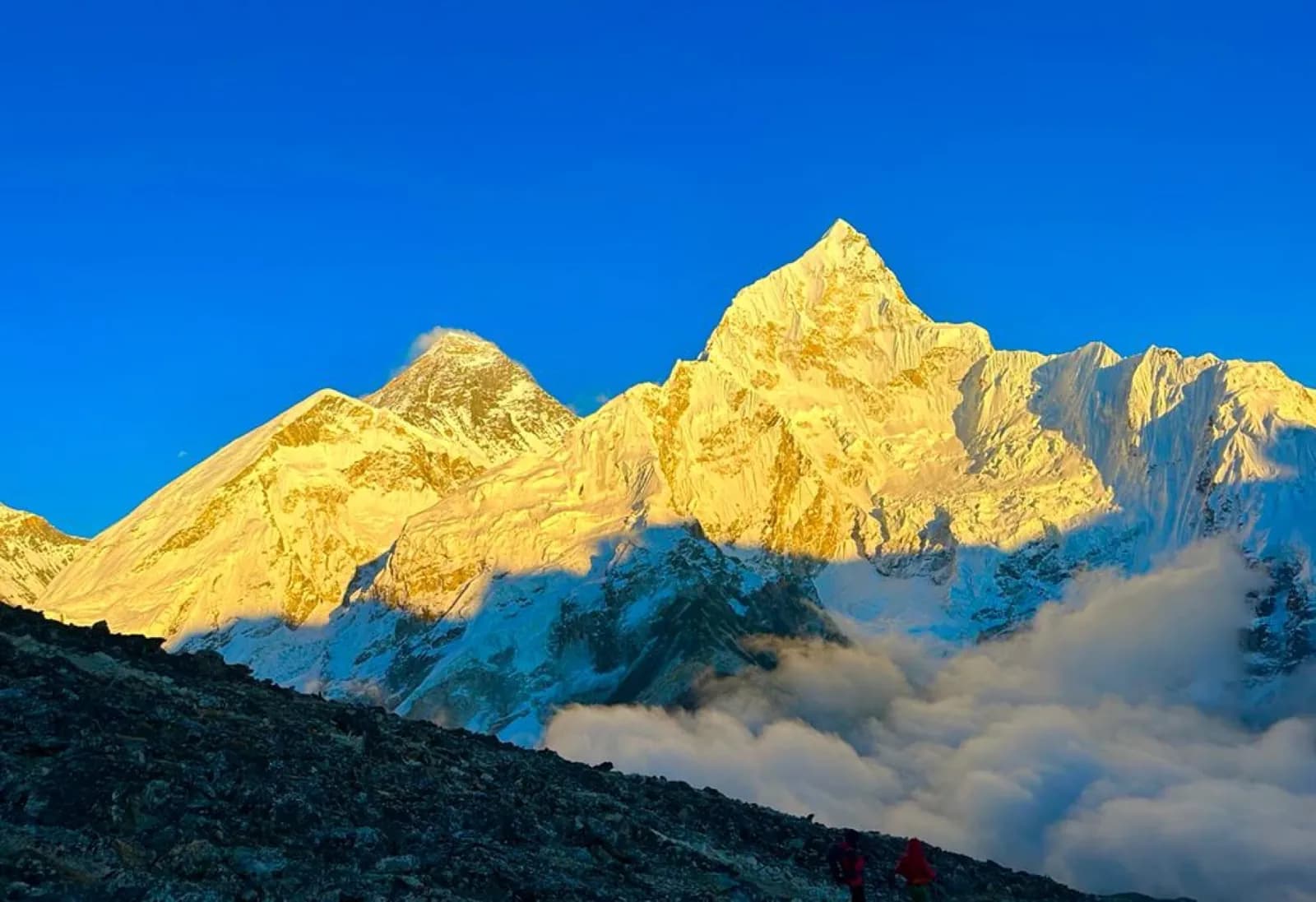
Another early start in the dark to climb Kala Patthar at 5,545 m, for a view that Base Camp does not have: the whole south-west face of Everest at sunrise. Then a long descent past Lobuche and the climbers' memorials at Thukla to Pheriche, where breathing is noticeably easier and the clinic is beside the trail.
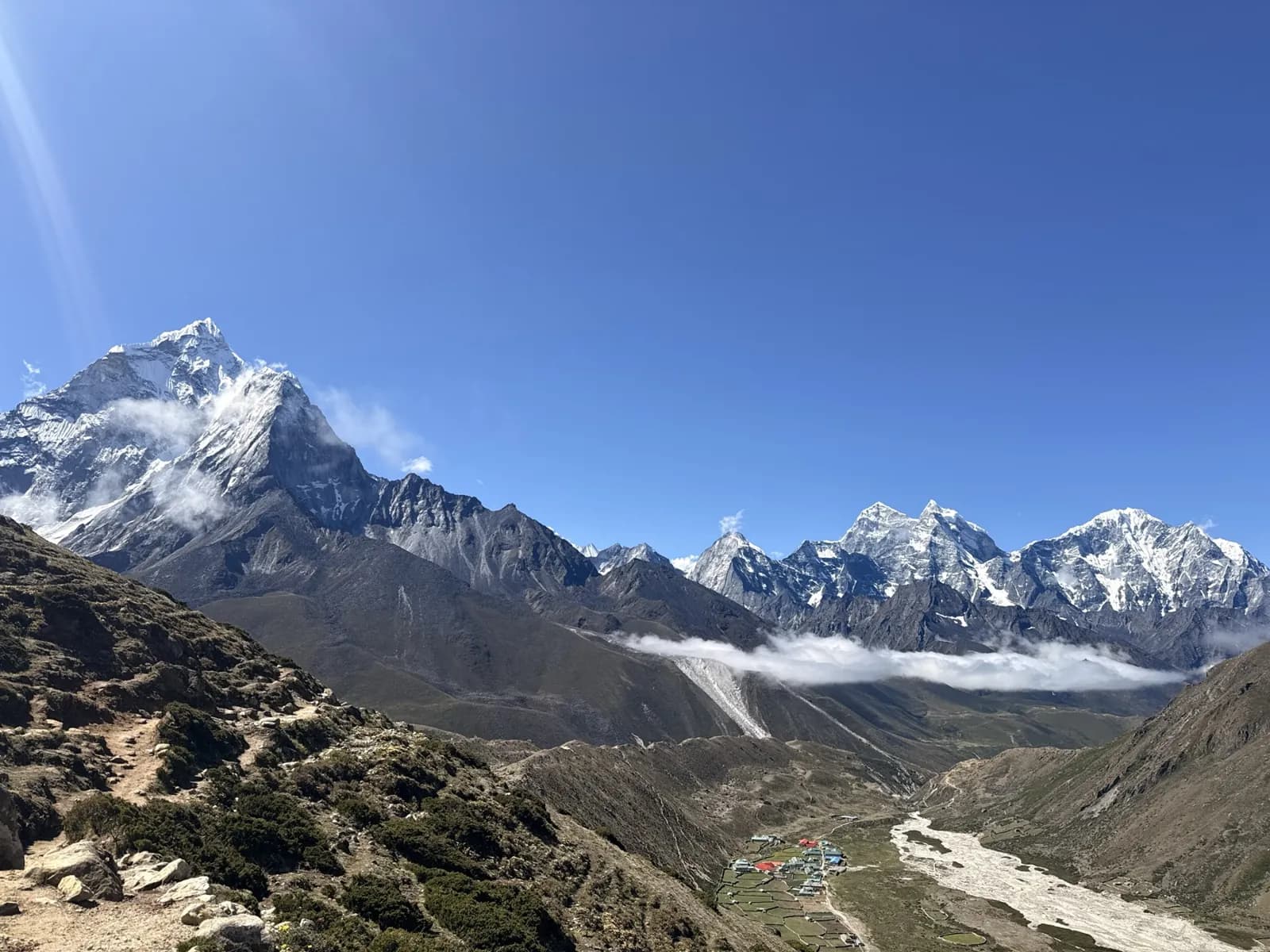
A long day, mostly downhill, through Pangboche and up the last climb of the trek to the monastery at Tengboche, followed by the steep descent to the river at Phunki Tenga and a level walk back to Namche. You return to forest, birdsong, warmth and a hot shower. Most people have a very good appetite by the evening.
The last day on the trail: the long descent to the river, back over the bridges through Monjo and Phakding, and a final climb to Lukla. The descent is hard on the knees, and the day is longer than the map suggests. In the evening, we have dinner with the guides and porters to mark the end of the trek.
A short morning flight back to Kathmandu, or a flight to Manthali followed by a drive, depending on the season. The rest of the day is free for a bath, a long lunch and collecting the equipment you left at our office eighteen days earlier. We have dinner together in the evening.
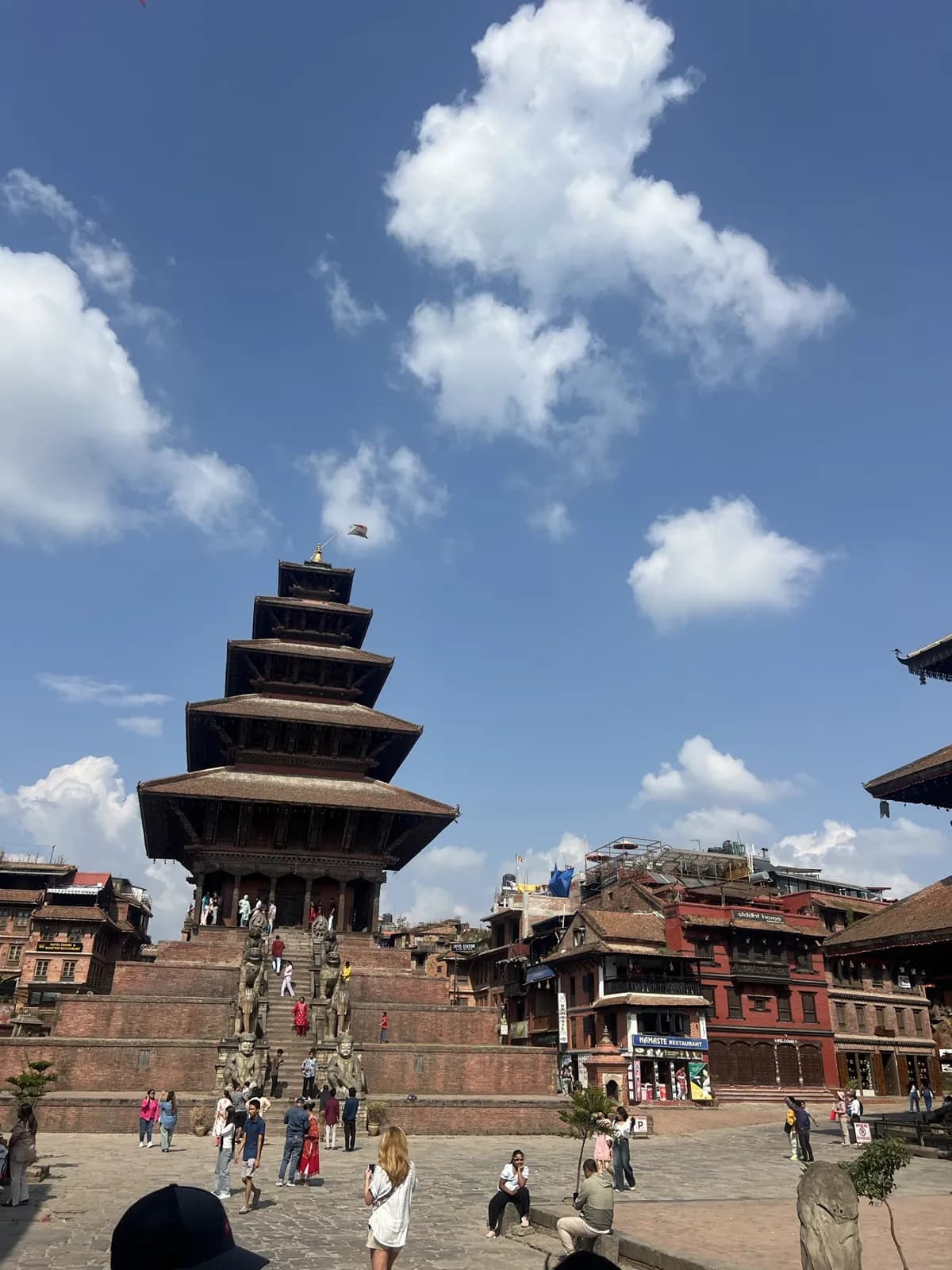
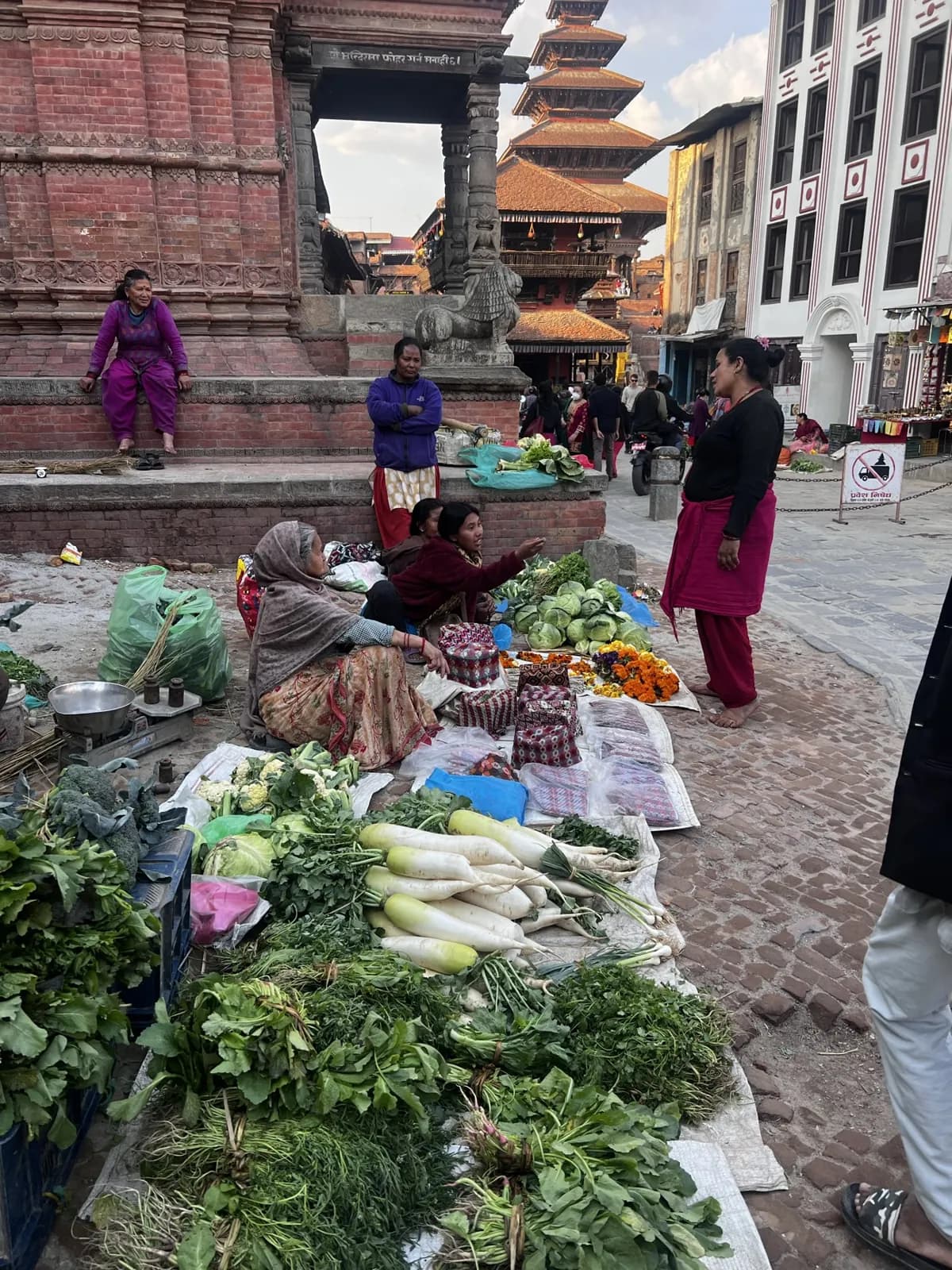
This day is kept in reserve in case of weather delays, because Lukla flights are delayed often enough that an itinerary without a spare day puts your flight home at risk. If everything has run to schedule, the day is free: you can visit Bhaktapur, Patan or the stupa at Boudhanath, or simply relax.
We take you to the airport for your flight. If you are travelling on elsewhere in Nepal, such as Chitwan or Pokhara, we can arrange this for you. We recommend keeping a spare day in your wider plans in case of weather delays at Lukla.
Start date
11 Apr 2027
End date
28 Apr 2027
Available
8 left
US $2,290
Per person
Start date
25 Oct 2026
End date
11 Nov 2026
Available
8 left
US $2,290
Per person
Start date
21 Mar 2027
End date
7 Apr 2027
Available
8 left
US $2,290
Per person
The trail from start to finish, at a glance.
Baggage weight limits and microspikes
Your porter carries a maximum of 20 kg, shared between two trekkers, and the Lukla flight allows 15 kg in total, 10 kg checked and 5 kg as hand luggage. The flight limit is the stricter of the two. The one item on this list that a Base Camp trekker does not need is microspikes. We provide a pair, which you return at Dzongla after the pass. We also lend the duffel bag, the sleeping bag and the down jacket, so you do not need to bring these, and you can store anything else at our office in Kathmandu.
Flight delays at Lukla are the most likely cause of disruption on this trek. This section explains how they are handled.
Outside the two busy periods, the flight leaves from Kathmandu and takes about thirty-five minutes. From about mid-March to mid-May, and from late September to the end of November, the aviation authority moves Lukla flights to Manthali airport at Ramechhap to reduce congestion at Kathmandu. This means a four to five-hour drive starting at about 2 am, followed by a twenty-minute flight. We tell you which applies to your dates before you book.
The allowance is 10 kg of checked baggage and 5 kg of hand luggage, and bags are weighed at the desk. Excess baggage costs about $1.50 per kilo. The aircraft is a nineteen-seat Twin Otter or Dornier landing on a 527-metre runway built on a slope, so the limit is a safety requirement. Anything you do not take on the trek is stored free at our Kathmandu office until you return.
Cloud closes Lukla airport several times a month in every season. A delay of one day is normal and two days is not unusual, which is why day 17 is a spare day and why we do not offer this trek without it. If the airport stays closed for more than three days, we move you to a lower-altitude trek of the same quality at no extra cost, or you can fly out by helicopter for around $500 a seat, which we can usually arrange the same morning.
Even with the spare day on day 17, book an international flight that leaves at least one clear day after your scheduled return to Kathmandu. This is the least expensive precaution you can take on this trip. An extra day in Kathmandu is far better than a tight connection after a delayed Lukla flight.
Every night on the trail is spent in a teahouse: a family-run lodge with one warm dining room, heated by a single stove, and simple twin rooms with foam mattresses and thin walls. Bring a sleeping bag. At Phakding, Namche and Lukla, most rooms have a private bathroom. Above Namche, bathrooms are shared, and hot showers, charging and wifi are paid for separately.
At Gokyo, you spend two nights in a lodge on the third lake, with a hot shower for a fee. On either side of the Cho La, the lodges are at their most basic. Thagnak has three basic lodges with twin rooms or a dormitory, and Dzongla is small and often fully booked. Neither has a shower. Gorak Shep, below Kala Patthar, is the highest night of the trek.
| Where | Nights | Type | Room | Bathroom |
|---|---|---|---|---|
| Kathmandu | 3 | Three-star hotel | Twin or double | Private, hot water |
| Phakding | 1 | Teahouse | Twin | Private in most lodges |
| Namche Bazaar | 3 | Teahouse | Twin | Private, hot shower for a fee |
| Dole | 1 | Teahouse | Twin | Shared |
| Machhermo | 1 | Teahouse | Twin | Shared |
| Gokyo | 2 | Teahouse on the third lake | Twin | Shared, hot shower for a fee |
| Thagnak | 1 | Teahouse, one of three, all basic | Twin or dormitory | Shared, no shower |
| Dzongla | 1 | Teahouse, small and often fully booked | Twin, basic | Shared, no shower |
| Lobuche | 1 | Teahouse | Twin | Shared |
| Gorak Shep | 1 | Teahouse, the highest on the route | Twin, basic | Shared, no shower |
| Pheriche | 1 | Teahouse | Twin | Shared |
| Lukla | 1 | Teahouse | Twin | Private |
Porridge, Tibetan bread, eggs, chapati, pancakes, tea or coffee
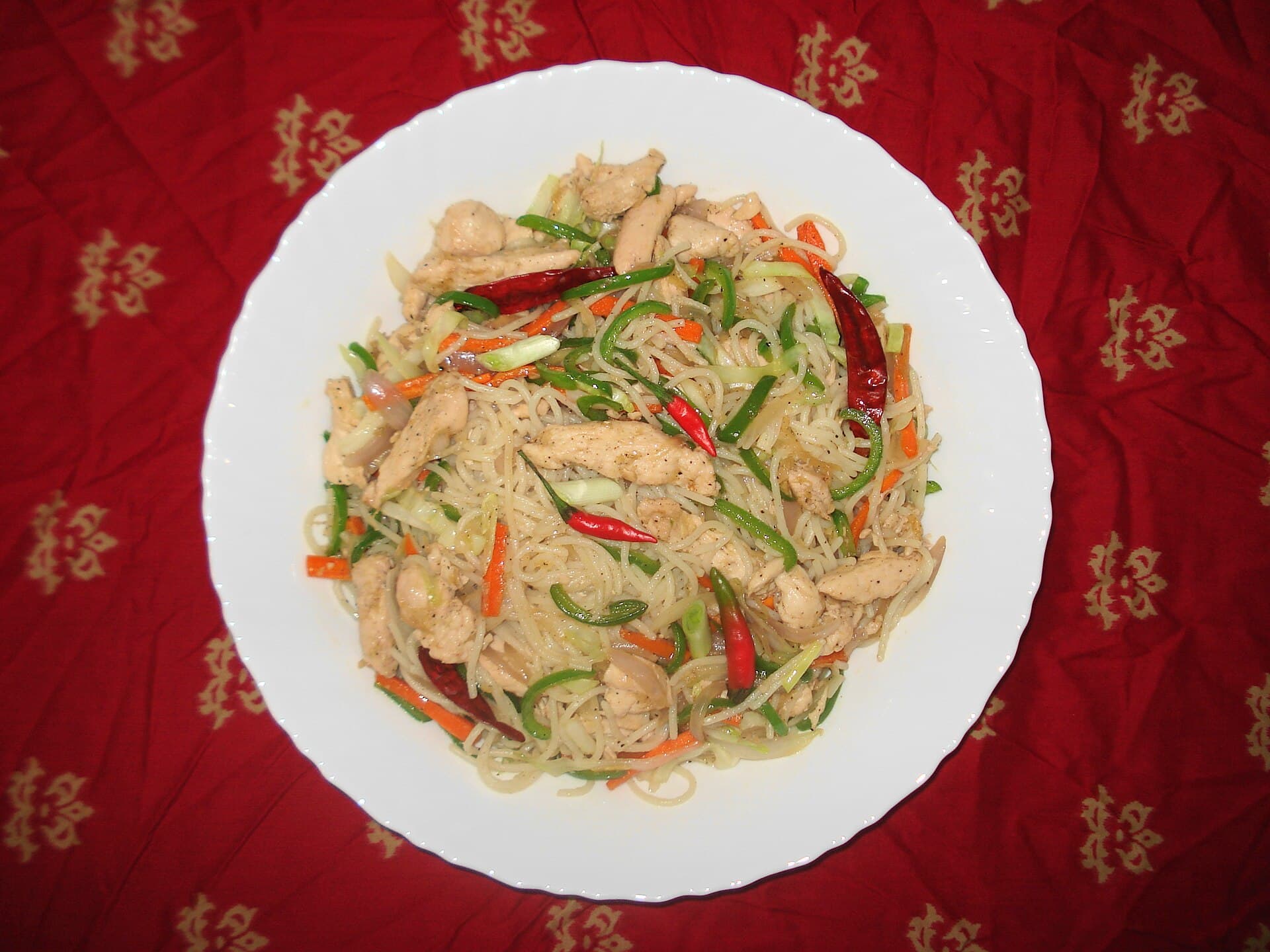
Dal bhat, fried rice, noodles, soup, momo and potatoes cooked in many ways

Soup to start, then dal bhat, thukpa, pasta, or curry and rice
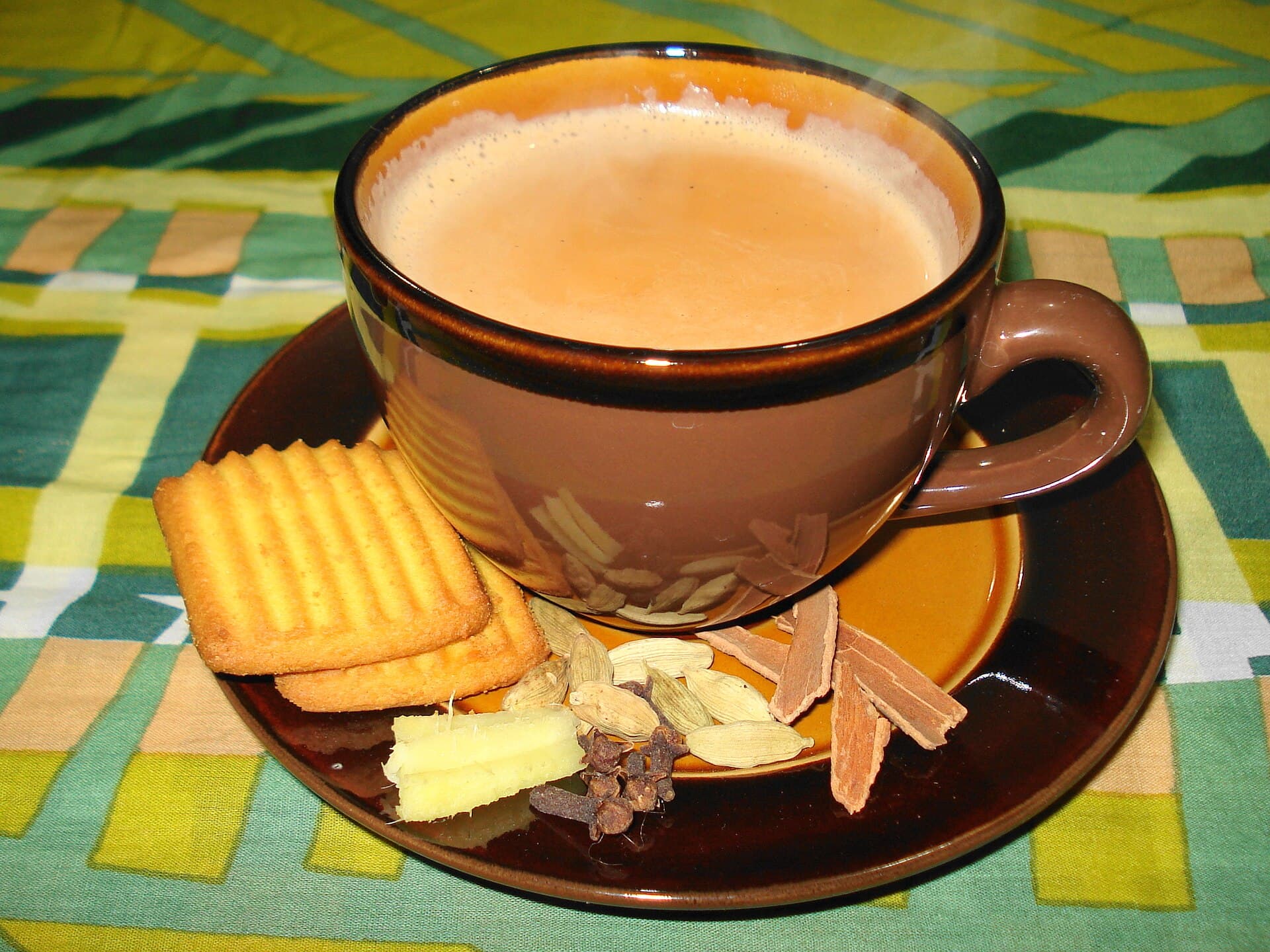
Black, milk, lemon, ginger or masala tea, included at every stop
Porridge and tea before dawn, with lunch carried in your pack
6:00Tea in your room, and a bowl of warm water to wash in
6:30Pack, and leave the duffel outside the door for the porter
7:00Breakfast together in the dining room
8:00On the trail, at a slow, steady pace
12:00Lunch at a teahouse on the route, for about an hour
13:00Two to four more hours of walking, depending on the day
15:30Arrive at the teahouse for tea, choose a bed, wash, and rest if you need to
17:00Oxygen saturation and pulse measured and recorded
18:30Dinner, and a briefing from the guide on the next day
20:30Bed. On the night before the pass, bedtime is 8 pm, with an alarm at 3:30 am
Harder than the Base Camp trek, with one pass and four extra days.
Written for somebody who walks a bit and does not train. If you already run or cycle regularly, start partway through. Nothing here needs a gym.
14 weeks before, stage 1 of 7
Do three cardio sessions a week of forty-five minutes, at a pace at which you can still talk. Walking, cycling, rowing or swimming are all suitable. This is the most important part of your preparation, so start earlier than you think you need to.
On this trek, you sleep nine consecutive nights above 4,000 m, three more than on the classic Base Camp route. The highest is at Gorak Shep, at 5,164 m, where each breath contains about half the oxygen it would at sea level. The itinerary is designed to prepare you for this. Two stages on this route exceed the maximum daily gain of 500 m recommended by the Himalayan Rescue Association above 3,000 m: the climb to Namche and the climb to Dole. Both are followed by a short or level day rather than another long climb. Fitness has little to do with how well you tolerate altitude, so the most important things are to walk slowly and to report symptoms early.
Daily health checks
Your guide carries a pulse oximeter and records your oxygen saturation and pulse every evening, and again on any morning when you seem unwell. Because the readings are recorded, a decline over three days is clearly visible.
Clinics on the route
The Himalayan Rescue Association runs an aid post at Machhermo, at 4,470 m, which you reach on day 6, and its long-established clinic at Pheriche, at 4,371 m, which you reach on day 13. Both are staffed by volunteer doctors in the spring and autumn seasons.
Mild symptoms
We spend an extra day at the same altitude, or make a short descent to the previous village and climb back up in the morning. Most cases resolve at this stage, and the trek continues using a day from the spare time.
Serious symptoms
Descent is the only reliably effective treatment, and a descent of 500 m is usually enough. This decision is not put to the group. The one place where descent is difficult is Thagnak, where going down means crossing back over the glacier.
Helicopter evacuation
Helicopter evacuation is possible from Gokyo, Dzongla, Lobuche and Gorak Shep, usually within an hour in daylight. It is not possible from the pass itself. A rescue costs $3,000 to $5,000, and the helicopter will not fly without a payment guarantee, which is why we check your insurance before you fly to Lukla.
Fitness and altitude are unrelated
This is the thing people get wrong most often. Training makes the walking easier and does nothing for how your body handles thin air. Strong young trekkers get altitude sickness and unfit older ones frequently do not. Go up slowly, and say something the first time your head hurts.
The suitable months for crossing the Cho La are fewer than for Base Camp, and this table shows which months those are.
The best month of the year for this circuit, with stable weather, a well-established route over the ice, and rhododendrons in flower below Namche.
Averages built from Nepal DHM station records for the Khumbu and from our own guides' logs on the pass. Any given week runs ten degrees either side of these, and the wind on the Cho La at first light makes minus fifteen feel a great deal colder.
A government-licensed guide with wilderness first aid training leads every departure, and there is one porter for every two trekkers. On this route, we only send guides who have crossed the Cho La within the last two seasons, because the route across the glacier changes as the ice retreats. A second guide joins from nine trekkers.
The crew leaves the lodge ahead of you to find the route in the dark and fix a rope on the steep section if conditions require it. You walk in microspikes in single file, with a guide at the front and one at the back, and nobody overtakes. If the group is moving too slowly to be off the ice by mid-morning, we turn back, and the guide alone makes that decision.
Wages, insurance, food and accommodation for every guide and porter are included in the price you pay, and are not collected from you on the trail. All staff are insured for altitude and helicopter evacuation on the same terms we require of you. The trekking industry has a long history of porters carrying too much, in poor footwear, for very low pay. Including fair pay in the package price is the way to avoid this.
Tipping is customary but not compulsory, and it never replaces wages. For a trek of this length, $180 to $300 per trekker for the whole team is usual, given together on the last evening rather than daily. Your guide will not ask for a tip and would prefer that it is not given in front of everyone.
A trekker drinking bottled water uses around fifty plastic bottles on an eighteen-day trip, each one flown or carried into a national park and each needing to be carried out again. Boiled water is sold at every lodge for one or two dollars a litre, and we ask you to buy that instead. Bring water purification as a backup.
We carry out everything we bring in that is not food, on both sides of the pass. The Gokyo valley receives far fewer visitors than the Khumbu side, and its lodges have very limited facilities for dealing with waste, so anything dropped there tends to remain. We leave nothing at Thagnak or Dzongla.
The Gokyo lakes are a Ramsar wetland site and are sacred to both Hindus and Buddhists. Do not wash, swim or use soap in them, walk clockwise around the shrines, and keep to the path on the moraine rather than making your own. The shoreline is fragile and recovers very slowly at 4,790 m.
The lodges are family businesses in the villages where you stay, the guides and porters live in this district, and permit fees fund the national park and the rural municipality. Nearly everything you pay for this trek is spent within thirty miles of the trail, which is a good reason to book with a Nepali operator rather than a foreign one that subcontracts to a local company.
Write to us or send a WhatsApp message with your approximate travel dates. You will receive a reply from someone who has crossed the Cho La, and we will ask about your walking experience and whether you have walked on ice before. Nothing is payable until you pay a deposit.
A 30% deposit secures your dates, and the balance is due on arrival in Kathmandu, in cash or by card. At the same time, we ask for a copy of your passport, your insurance certificate and any dietary or medical information, because permits and Lukla flight seats are booked in your name months ahead on this route.
You can pay by bank transfer or by card through a secure link. Card payments carry a bank fee of about 4 per cent, which we show you before you pay. The balance in Kathmandu can be paid in US dollars, pounds, euros or Nepali rupees.
If you cancel more than 30 days before departure, your deposit can be transferred to any other date or trek we run, with no time limit. If you cancel within 30 days, the deposit is kept, because permits, flights and the crew have been committed by then. If we cancel for any reason other than weather, you receive a full refund.
Both cost the same for a group of five or more. A private departure runs on your dates at your pace and can be arranged for one person. A group departure runs on the dates above, with a maximum of eight people. On this route, most travellers book privately, because the pass day is easier for a group that walks at the same speed.
Two weeks' notice is enough if Lukla flight seats are available, but in April and October they often are not. Beds at Dzongla and Thagnak are also limited, as there are only a few lodges at each and they fill up early in the day. If you are already in Kathmandu, visit our office and we will check availability.
Priced per person, arranged before you travel, and none of them included in the price above.
An extra day at Gokyo to visit the upper lakes and Scoundrel's Viewpoint, which looks up the Ngozumpa Glacier towards Everest. It also gives you another night at 4,790 m before the pass, which helps your acclimatisation.
Instead of descending the Gokyo valley, you return west over a 5,340 m pass to Thame, making this a two-pass circuit. This is only advisable after the Cho La, not before it.
Fly from Gorak Shep or Pheriche to Lukla or directly to Kathmandu. Travellers choose this to save time, and also to avoid the long descent.
A one-hour flight along the Himalaya from Kathmandu, with a guaranteed window seat. A good alternative to keep in reserve if bad weather stops you reaching Lukla.
Travel down to the lowland jungle to see rhinos and, if you are fortunate at Bardia, a tiger. A welcome contrast after two weeks above 3,000 m.
A room to yourself for all three hotel nights. On the trail, the lodges only have twin rooms, especially at Thagnak.
Where the route passes a premium lodge, we book it in place of the standard teahouse. Mountain Lodges of Nepal has lodges at Lukla, Phakding, Monjo, Namche and Deboche, and Everest Summit Lodges has lodges at Lukla, Monjo, Tashinga and Pangboche. Expect warmer rooms, better beds, attached bathrooms in most rooms and a quieter dining room.
There are no premium lodges above Pangboche, so the higher nights are in standard teahouses. We confirm which lodges have rooms on your dates before you book.
4 versions of this journey. They use the same guides and the same lodges; what changes is the length, the comfort and how much of it you walk.
May 2026, Tripadvisor
I had wonderful trip organized by Rajan at earthbound with friends through gokyo and to ebc. The trip exceeded my expectation and earthbound was committed to make it a special trip. The agency was very responsive and accommodating with the arrangements. Our guide Chattan was wonderful with his junior guide lotchen helped inform us of various aspects of the culture and also points of interests. They were keen on making it a truly memorable trip and knowledgeable about the region. Most importantly, Chattan was directing through the trail and ensuring our safety throughout the trip. The trip wouldn’t have been possible with our porter help from Kishor and Abishek who encourage us through the treks and shared various aspects of their culture. Overall, the trip exceeded my expectations and I am looking forward for my next trip with them. I have no reservations recommending them to family and friends.
April 2026, Tripadvisor
I had a fantastic 16 days trekking with Earthbound, taking in Gokyo Lakes as well as Everest Base Camp. I had originally booked this trip immediately before Covid and was finally able to travel six years later! The trip was fantastic, with a well-qualified guide and a wonderful porter. Everything was taken care of and Rajan patiently answered all my questions before and during the trek. Would absolutely recommend this company!
April 2024, Tripadvisor
I have nothing but amazing things to say about my experience with Earthbound! As a solo traveler, I was able to work with the team to build some flexibility into my trek, which was amazing. I did Everest Base Camp and Gokyo Lakes and it was phenomenal. Rajan is very helpful and does a beautiful job at coordinating everything for your trip, leaving you feeling confident and assured. I thoroughly enjoyed the company of my guide, Bharat Ghale, who was very kind, helpful, and knowledgeable about the trekking route and culture. Cannot recommend enough!
May 2019, Tripadvisor
A friend and I have done a custom trekking including Gokyo track and Cho La Pass, returning via EBC route. Earthbound Expeditions organized everything in the best possible manner. Both Rajan and our guide, Bharratt, have been very flexible to address our specific wishes regarding routing, accomodations and timings. What was really surprising is that despite a lot of circumstances beyond human control, such as weather, all of the arrangements worked with the precision of a Swiss Watch. I am extremely happy with the service that was provided and will not hesitate to use Earthbound Expeditions for my future travels.
Answers to the 23 questions travellers ask us most often. If your question is not here, contact us and we will answer it.
You leave Thagnak at about 4 am, walk for an hour on rough ground, then climb a steep boulder gully to the snow line. The last section to the top is a short glacier, flat but slippery, which you cross in microspikes, in some years with a fixed rope. The pass is at 5,420 m, covered in prayer flags and usually windy. The descent on the east side is loose moraine that requires care for two hours, and then the trail becomes easier all the way to Dzongla.
You do not need climbing experience or technical crampons. Microspikes are sufficient in the normal seasons, and we provide them, along with a trekking pole for each person. In February, early March or after heavy snow, full crampons and a rope would be needed, and on those dates we would advise you not to attempt the crossing.
This happens in most seasons, usually after heavy snowfall, and the guide decides on the morning. If we cannot cross, you walk back down the Gokyo valley and up the Khumbu valley to Base Camp instead. This takes two days longer, which is why the itinerary includes spare time. You will still reach Base Camp and Kala Patthar, but you will miss the pass.
Not once you have started up the gully. Thagnak has three basic lodges and Dzongla a few more, and between them there is nothing: no teahouse, no village and no helicopter landing site at the top. This is why we start early, why we turn back a group that is moving too slowly, and why you pack your equipment for the day the night before.
It is four days longer, it costs more, and it covers two valleys rather than one. You see the Gokyo lakes and the view from Gokyo Ri, which is the better view, as well as Base Camp and Kala Patthar, the more famous destinations. You also cross a 5,420 m pass on ice. If you only want to reach Base Camp, the classic route is the better choice, and we will advise you of this.
Choose the Gokyo Lakes trek if you want to see the lakes and the view from Gokyo Ri over fifteen easier days, with no ice. Choose this trek if you also want to reach Base Camp and are prepared for the pass crossing that links the two valleys. A useful question to ask yourself: if the pass were closed and you had to walk down one valley and up the other, would you still be glad you came? If so, this is the right trek for you.
You need to be able to walk four to seven hours a day for fourteen days, with one day of seven to nine hours on rough and icy ground. This is a step above the classic Base Camp trek, and the difference is stamina rather than technical skill. The training plan on this page is what we recommend for a reasonably active person, starting fourteen weeks before departure.
There is no upper age limit, and trekkers in their late sixties have crossed the Cho La with us. The minimum age on this route is sixteen, higher than for the classic trek, because of the pass. Experience of walking on rough ground matters more than age.
Yes, for $2,790 rather than $2,290, because the guide and porter are paid for one person rather than shared. Since 2023, a licensed guide has been compulsory for foreign trekkers in Nepal's national parks, and on this route a guide is essential in any case.
Yes. By the time you cross the Cho La, you will have slept six nights above 3,400 m, climbed Gokyo Ri at 5,357 m and spent two nights at 4,790 m. This is better preparation for 5,420 m than the classic route gives for Base Camp. The direction is important: if we walked the route the other way, you would reach the pass on day 5, which would make it a much harder trek.
At Gorak Shep, the highest overnight stop, expect −10°C to −20°C after dark, depending on the month. On the pass at dawn, -15°C with wind is normal in April, and it is colder in November. During the trekking seasons, daytime temperatures on the trail are 8°C to 15°C and pleasant in the sun. No bedroom on this route is heated.
Your guide measures your oxygen saturation every evening and records it, so any decline is noticed early. Mild cases usually improve with a rest day or a short descent. If they do not, we descend. There are Himalayan Rescue Association clinics at Machhermo on day 6 and Pheriche on day 13, and helicopter evacuation is possible from every village on this route, though not from the pass itself.
You need a policy covering trekking to 6,000 m, helicopter evacuation and repatriation, which does not exclude glacier travel or the use of microspikes. Some policies exclude these, so check carefully. We ask to see your insurance certificate before you fly to Lukla. A rescue costs $3,000 to $5,000, and the helicopter will not fly without a guarantee of payment.
They are basic, and these are the simplest nights of the trek. Thagnak has three lodges and Dzongla has a few, with plywood walls, no shower, solar power that may not be enough to charge your phone, and a short menu. They exist to serve the pass, they are fully booked early in October, and you spend only one night at each.
Everest Link cards work at Namche, Gokyo and Gorak Shep, for about $20 for 10 GB, though the connection is slow. Ncell and NTC cover most of both valleys. There is no signal on the pass and very little at Thagnak, so let people at home know that you will be out of contact for about two days around day 10.
Showers are available as far as Gokyo, for $5 to $10, usually heated by gas. After that, there are no showers until you return to Pheriche on day 13, four nights later. Wet wipes are the practical alternative, and the shower at Namche on day 14 is very welcome.
Your duffel bag is carried by a porter shared with one other trekker, with a maximum of 20 kg between you. You carry a daypack of 6 to 8 kg with water, a warm layer, a camera and snacks. On the day of the pass, your daypack also holds your lunch and an extra litre of water, because there is nowhere to buy anything between Thagnak and Dzongla.
You need two permits, and both are included in your price: the Sagarmatha National Park entry permit at NPR 3,390, issued by the national parks department, and the Khumbu Pasang Lhamu Rural Municipality permit at NPR 2,000, checked at Lukla and Monjo. There is no separate permit for the Cho La or the Gokyo valley. A TIMS card is not required here.
Bring $350 to $550 in small notes, changed into rupees in Kathmandu. This covers showers, charging, wifi, drinks, snacks and tips over eighteen days. The highest cash machine is in Namche, and it often runs out of money. Beyond Namche, nobody accepts cards, including the two lodges on either side of the pass.
Day 17 is kept in reserve for this, because cloud closes Lukla airport several times a month in every season. If the airport stays closed for more than three days, we move you to a lower-altitude trek of the same quality at no extra cost, or you can fly out by helicopter for around $500 a seat. Book your flight home with at least one clear day after day 18.
For April and October, book four to six months ahead. Lukla flight seats and beds in the small lodges at Dzongla and Thagnak are the first to sell out on this route, well before anything else. For other months, eight weeks is enough, and two weeks is possible.
Yes, and most travellers make some changes. You can add a day at Gokyo for the fourth and fifth lakes, walk out over the Renjo La instead of returning down the valley, spend the extra night at Dzongla rather than Lobuche, or fly back from Gorak Shep by helicopter. For a group of five or more, a private trek on your own dates costs the same as joining a group departure.
Treat the days before the pass as preparation for it rather than as the easy part. Walk slowly up the Gokyo valley, drink more than you feel like drinking, eat at Thagnak even if you do not want to, and go to bed at 8 pm the night before. Trekkers who struggle on the Cho La have usually not followed at least two of these points.
Didn't find what you were looking for?
Search every word on this page, or ask somebody who has walked the route.
18 days
$2,290 per person