Breakfast
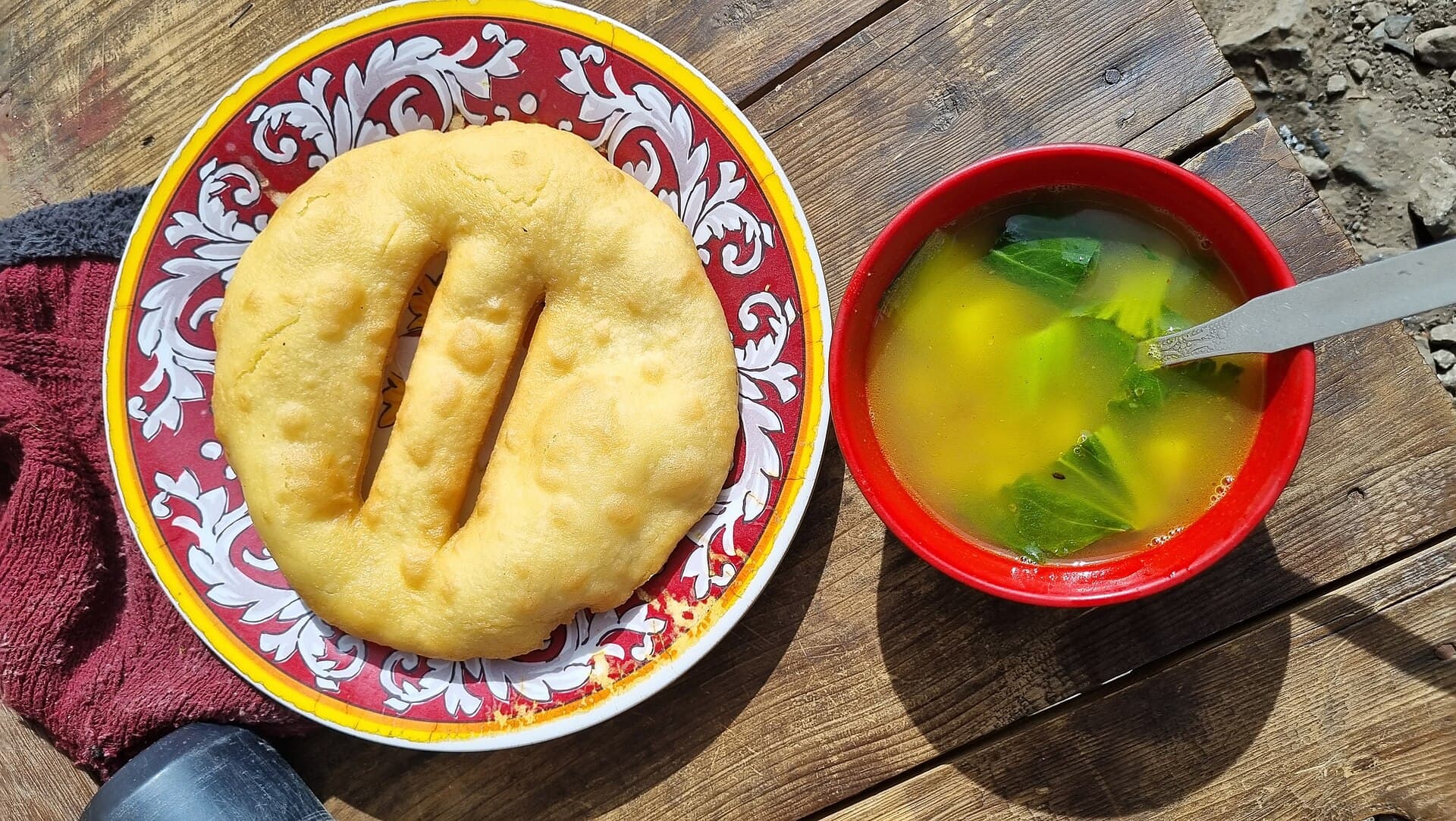
Porridge, muesli, paratha, eggs, and tea or coffee
Fourteen days from Kathmandu and back by road, with the holy bath and puja at Lake Mansarovar and the three-day kora of Mount Kailash over the Dolma La.
2027 route: the flood of August 2026 damaged the crossing at Rasuwagadhi and Kerung, so all 2027 departures of this trip enter and leave Tibet through Zhangmu and Nyalam.
Fourteen days from Kathmandu and back by road, with the holy bath and puja at Lake Mansarovar and the three-day kora of Mount Kailash over the Dolma La.
This is our standard Kailash Mansarovar Yatra: fourteen days from Kathmandu and back, entirely by road. It is the most popular way to Kailash, chosen by about two thirds of our yatris for its cost and its length. You spend three days in Kathmandu while the group visa is issued, visiting Pashupatinath, Swayambhunath and Budhanilkantha, then cross into Tibet at Zhangmu and drive across the plateau to Lake Mansarovar and Mount Kailash.
We have run Kailash yatras since 1999, as the operator rather than an agent, and many of our leaders have been to the mountain more than thirty times. We use five-star hotels in Kathmandu and the best available guesthouses on the route, our own cooks prepare hot vegetarian meals throughout, and there is one staff member for every four guests.
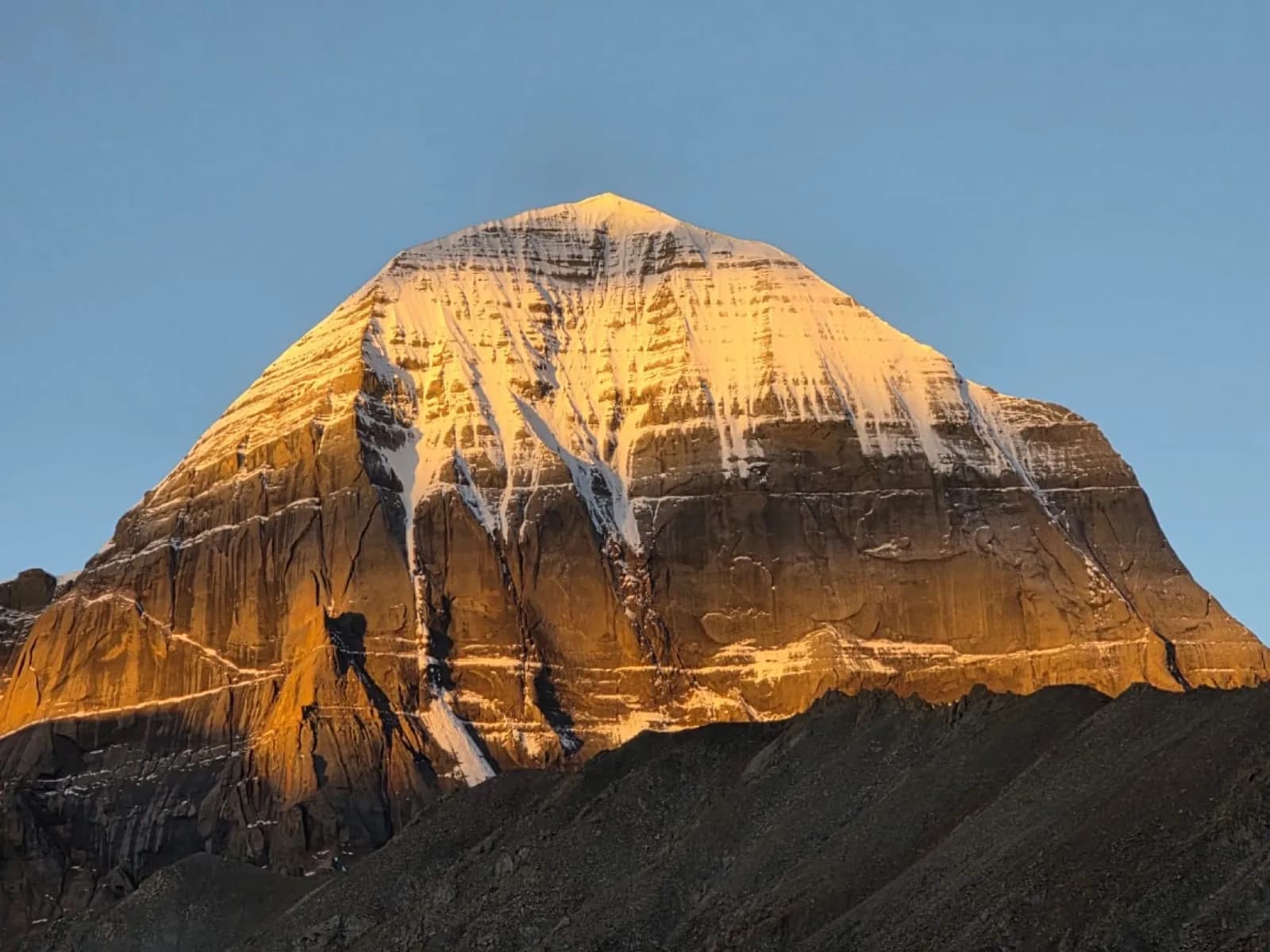
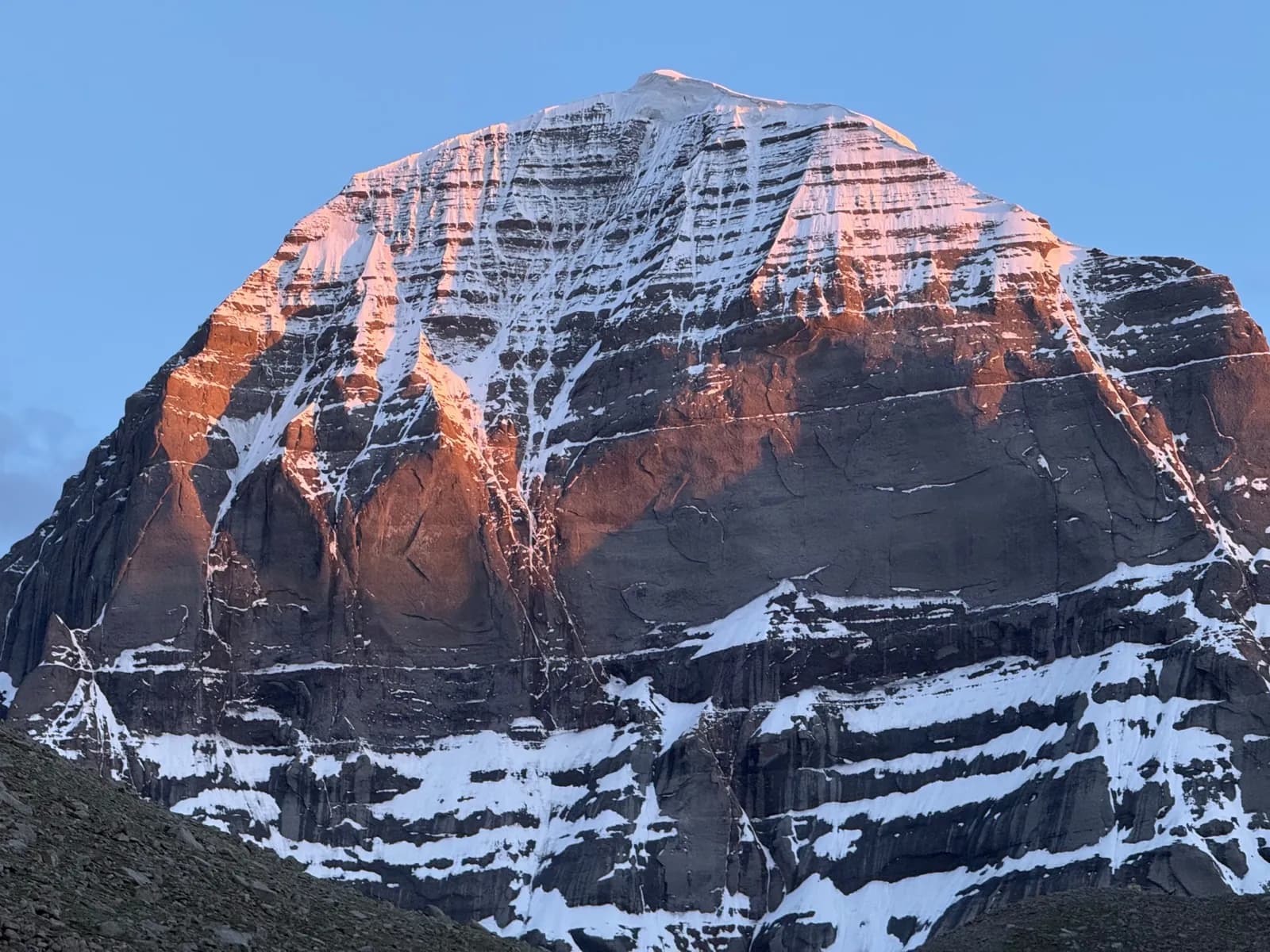
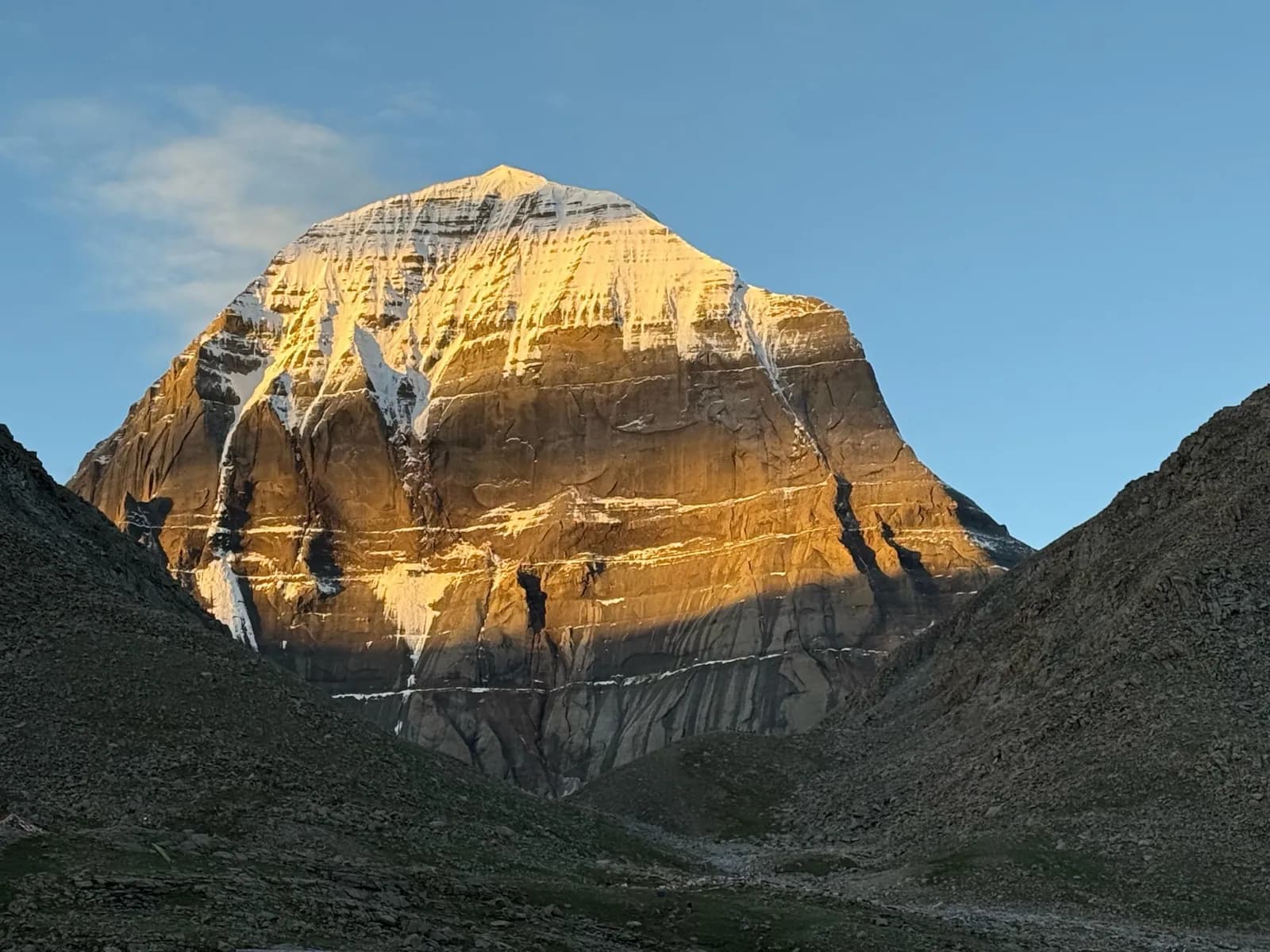
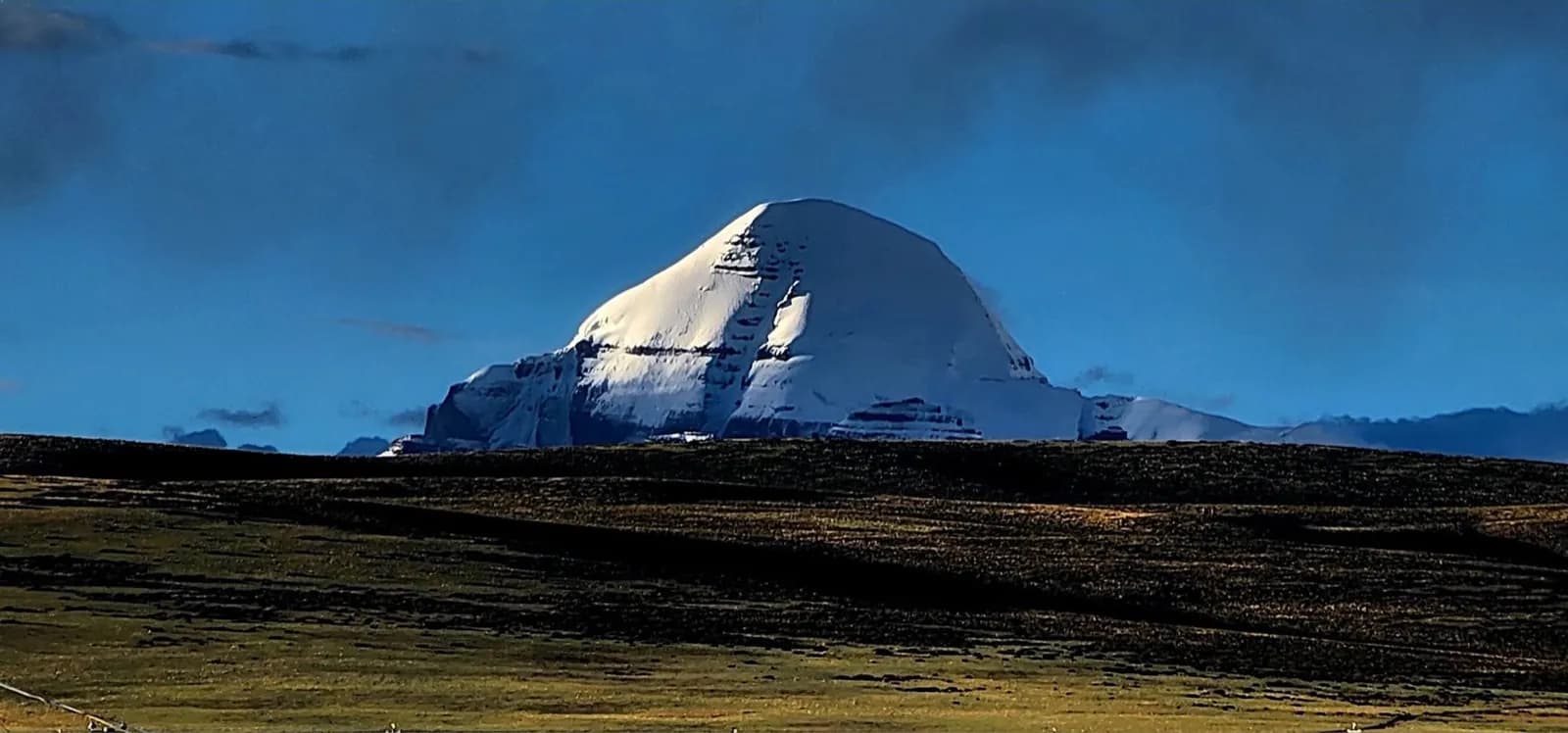
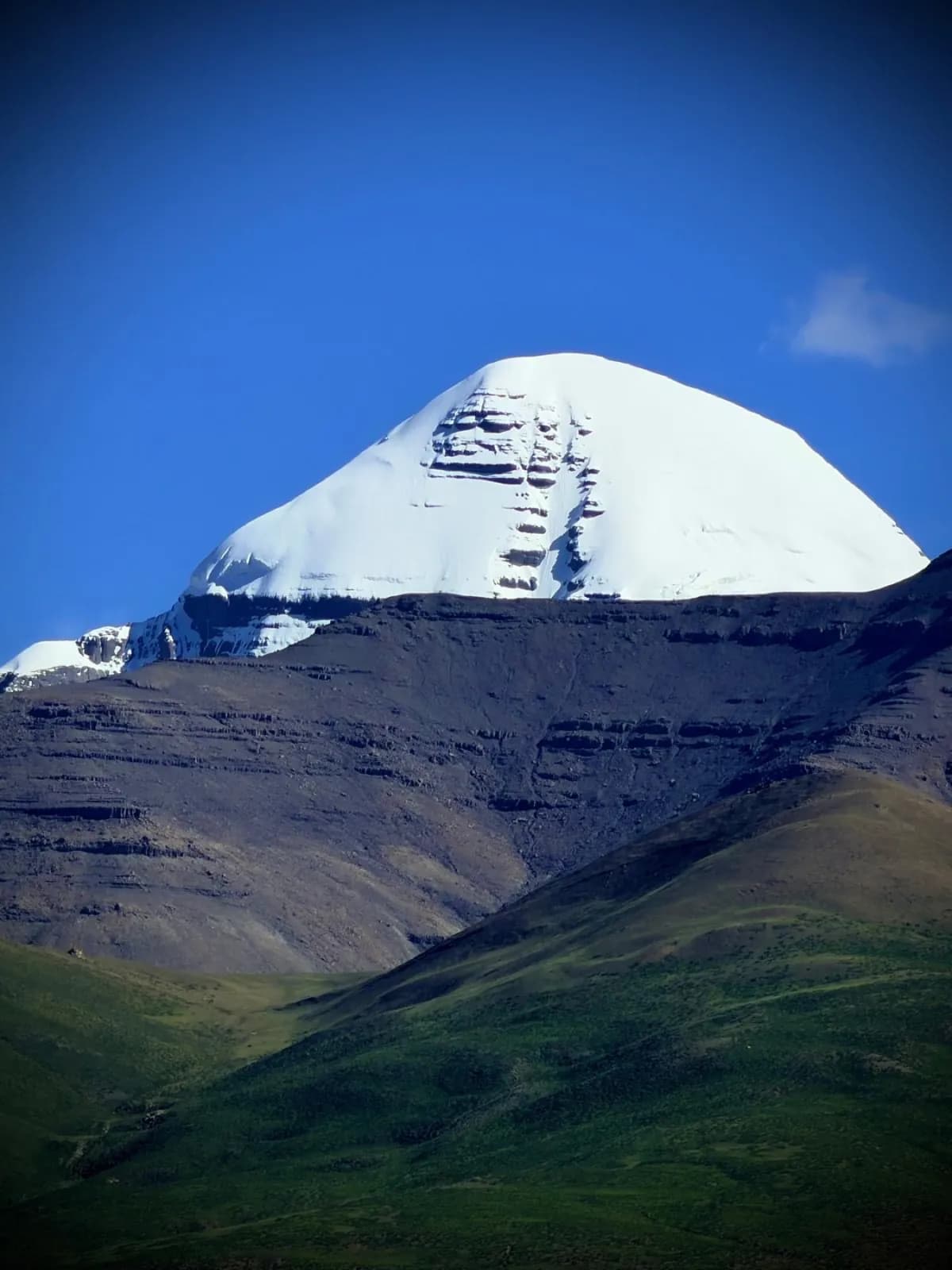
Kailash is a 6,638 m peak of dark rock in the far west of Tibet. It has never been climbed, because climbing it is not permitted. Hindus regard it as the abode of Shiva and as Mount Sumeru, the centre of the world. Buddhists revere it as the home of Demchok and Avalokiteshvara. Jains believe that Rishabhadeva attained liberation here. Followers of Bon walk around it in the opposite direction.
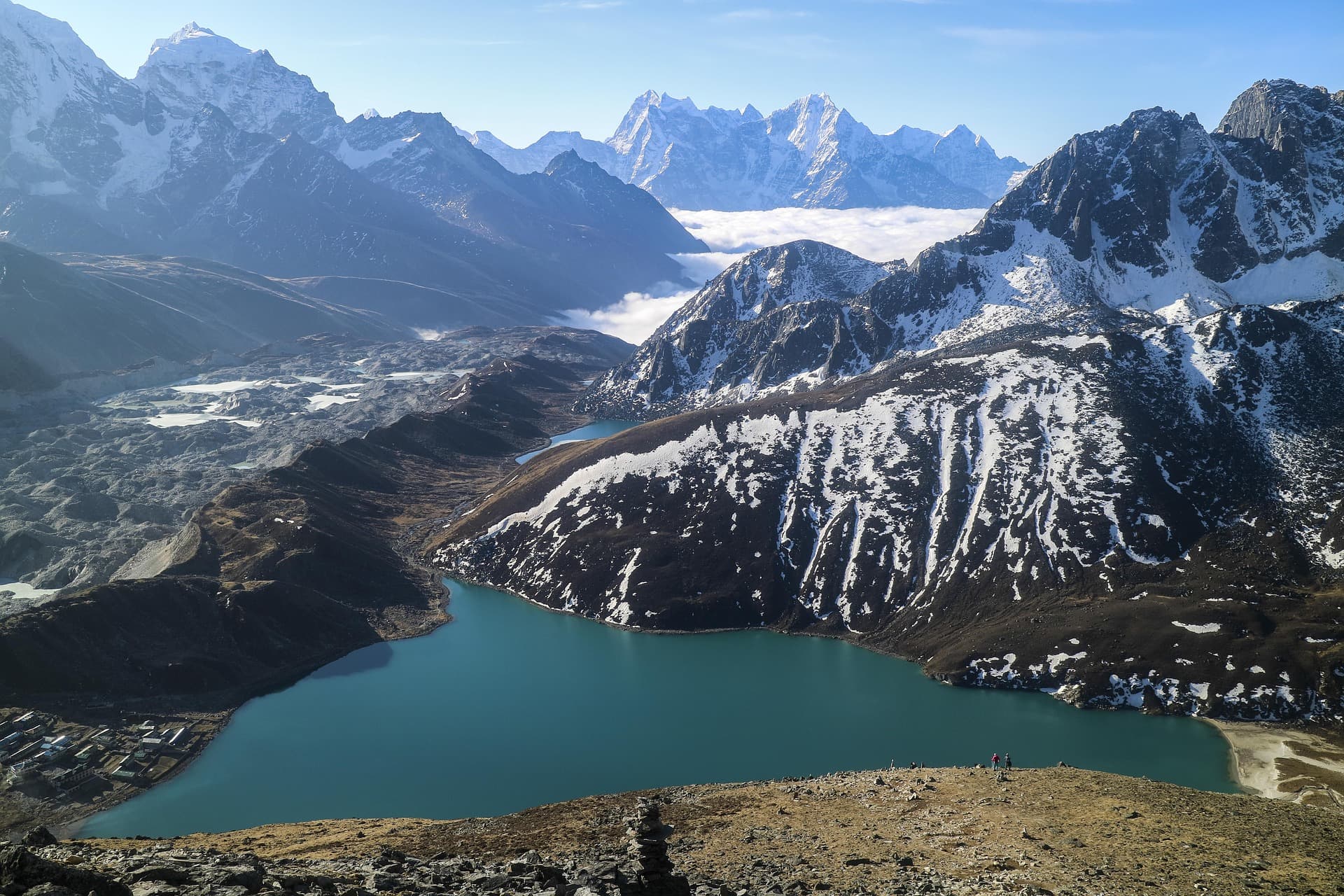
At 4,590 m, Mansarovar lies at the foot of Kailash, and the sources of four great rivers, the Indus, the Sutlej, the Brahmaputra and the Karnali, rise within a short distance of it. Pilgrims bathe in it to wash away their sins. We spend a full day at the lake, with a bathing tent and warm lake water for the holy bath, followed by puja and havan on the shore.
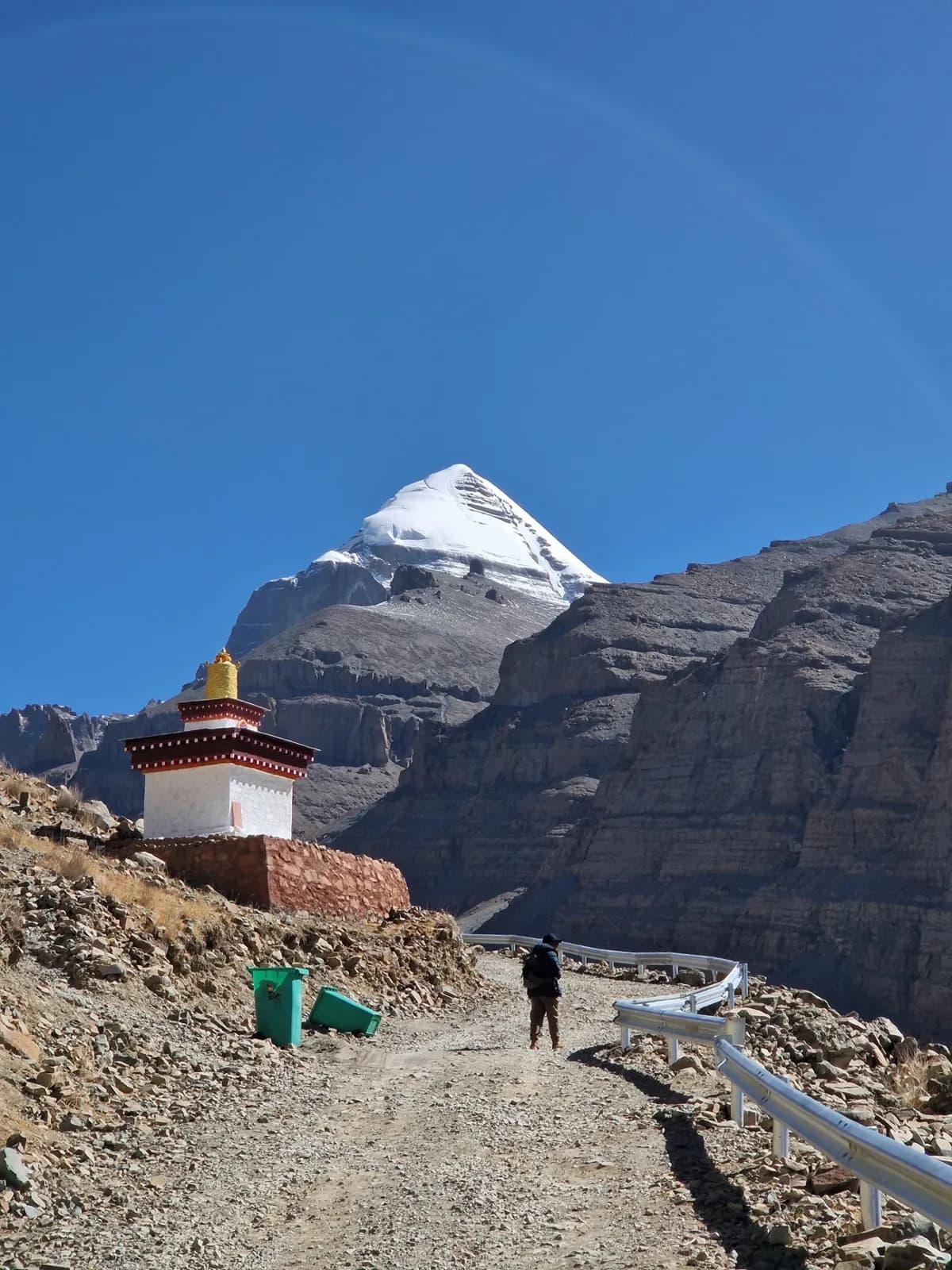
The kora around Kailash is about 52 km, but because you now drive to Tarboche at the start and from the Zuthulpuk valley at the end, about 38 km is walked over three days. The first day goes up the Lha Chu valley to Dirapuk below the north face. The second crosses the Dolma La at 5,630 m and is long and demanding. The third is a short walk down to the road.
None of the journey is technical. The difficulty is the height: you sleep six nights above 4,500 m, and even the easiest day on the plateau is higher than the summit of Mont Blanc. We carry oxygen cylinders, a portable pressure chamber, oximeters and a blood pressure monitor, and an emergency vehicle travels with the group.
We meet you at Tribhuvan International Airport and drive you to your hotel. If you are getting your Nepal visa on arrival, ask for a multiple-entry visa, because you come back into Nepal at the end of the trip. In the evening there is a short briefing on the yatra.
Please arrive by Sunday evening, or before 9.00 on Monday at the latest: the Chinese group visa is applied for that morning. If you already hold a Chinese tourist (L) visa, send us a copy in advance and we apply for the Tibet Travel Permit with it.
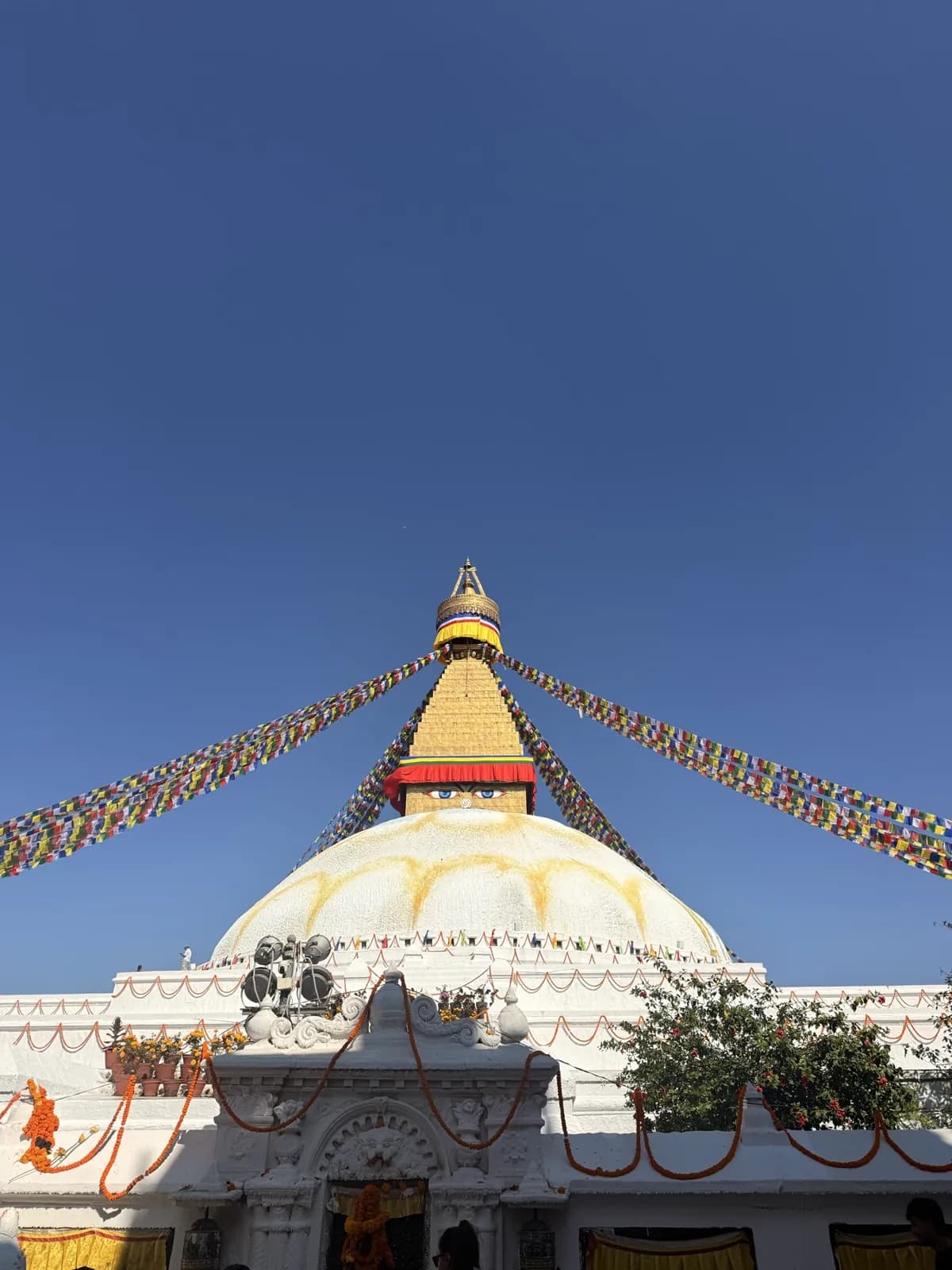
A day at the holy places of the valley while the visa is processed. We start at Swayambhunath, the hilltop stupa reached by 365 steps, revered by Hindus and Buddhists alike, with a wide view over the city. Then Budhanilkantha, where a 5th-century statue of Vishnu lies on a bed of serpents in a pond.
In the afternoon we visit Pashupatinath, the great Shiva temple on the Bagmati River and a UNESCO World Heritage Site. Only Hindus may enter the main temple, but the wider complex of shrines and ghats is open to everyone. In the evening we brief you on the yatra and help you pack.
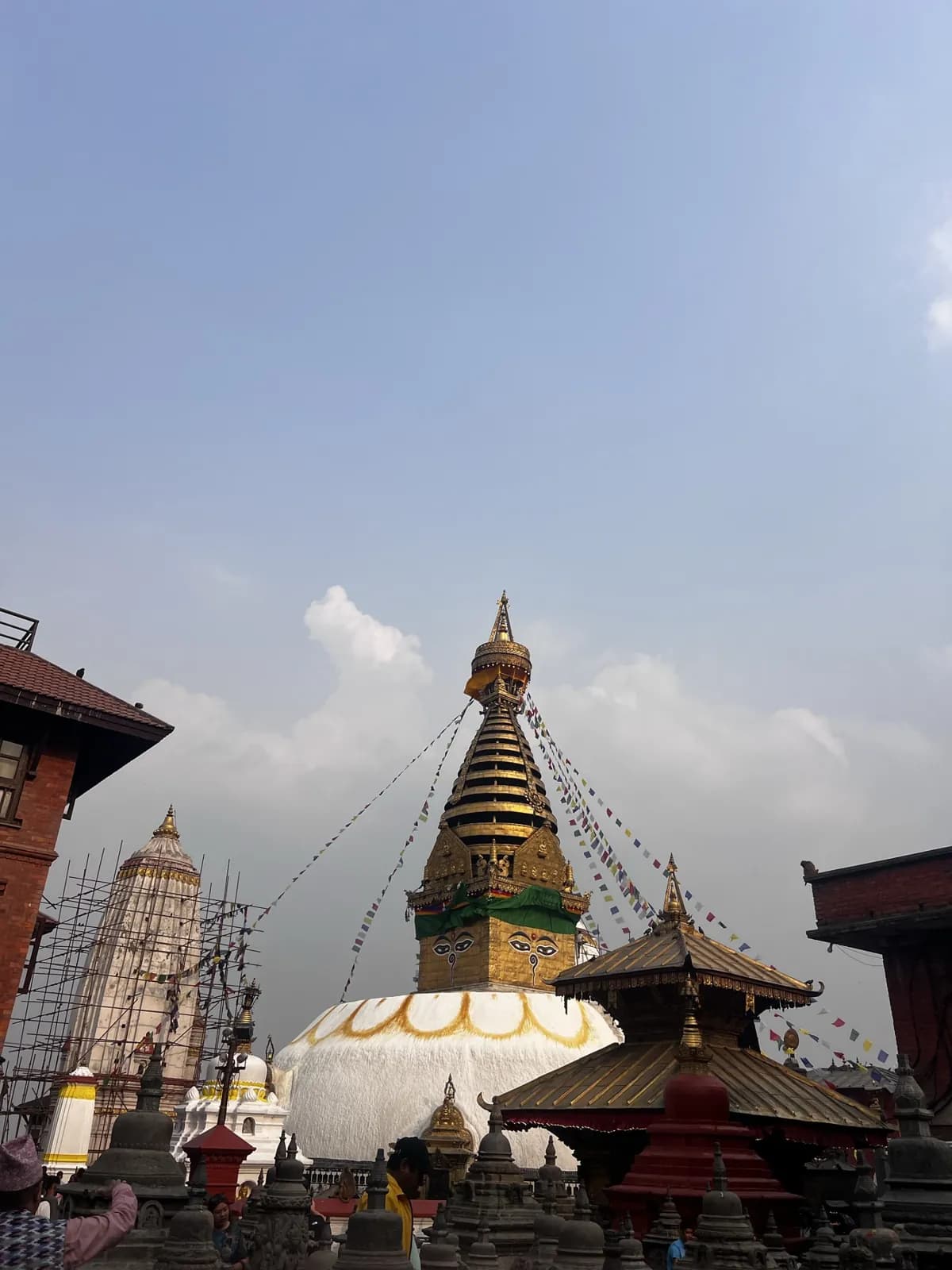
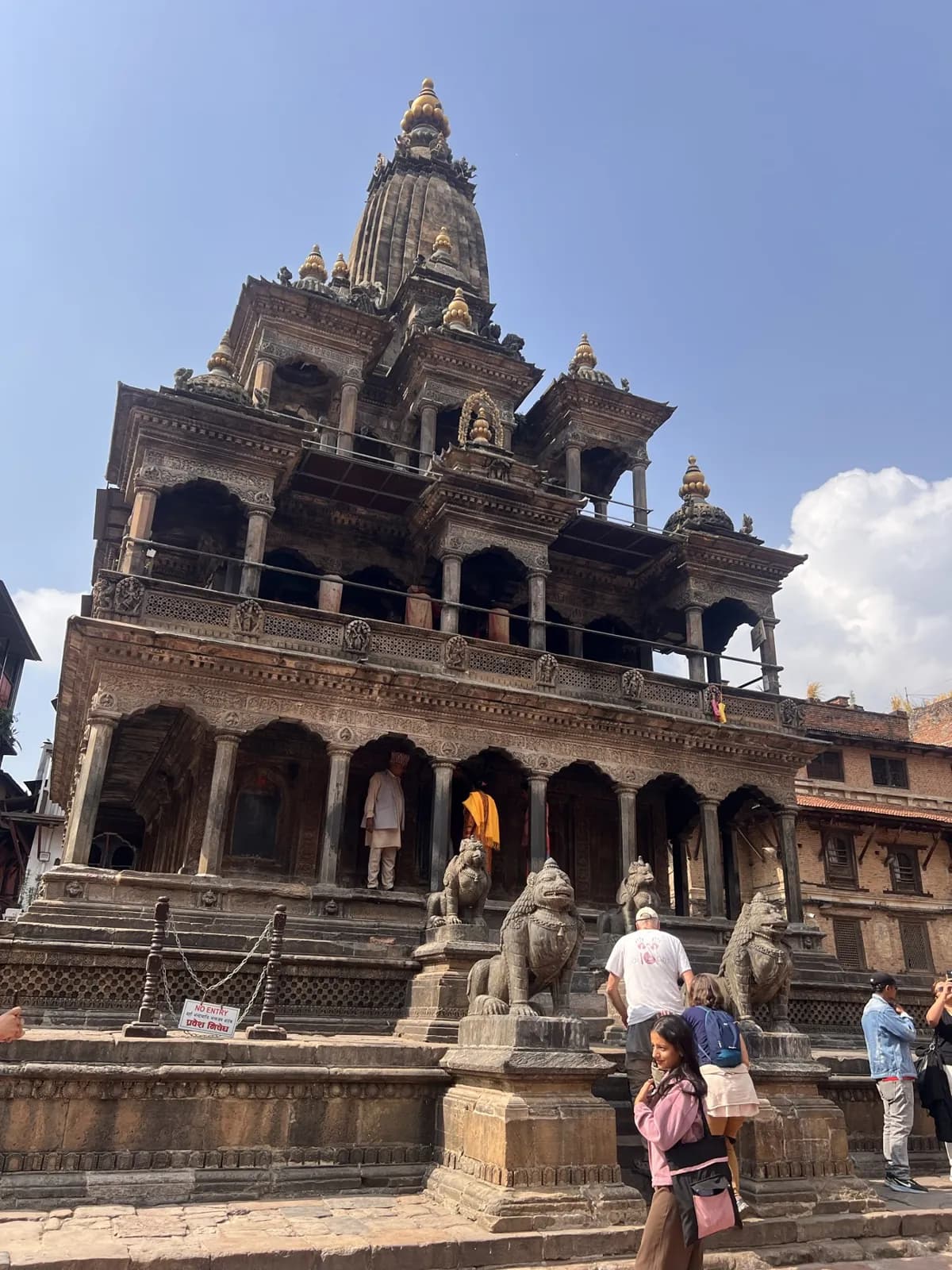
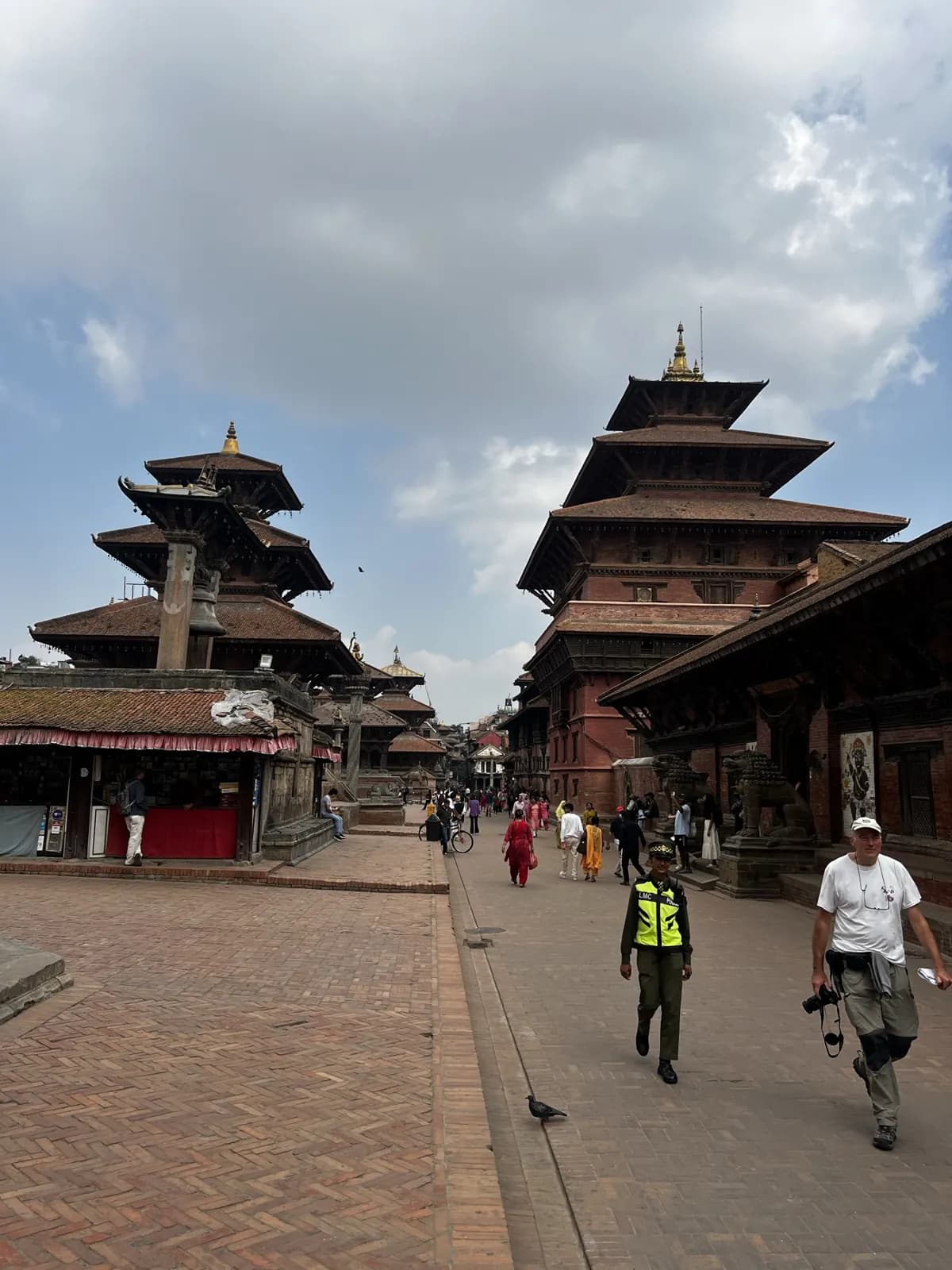
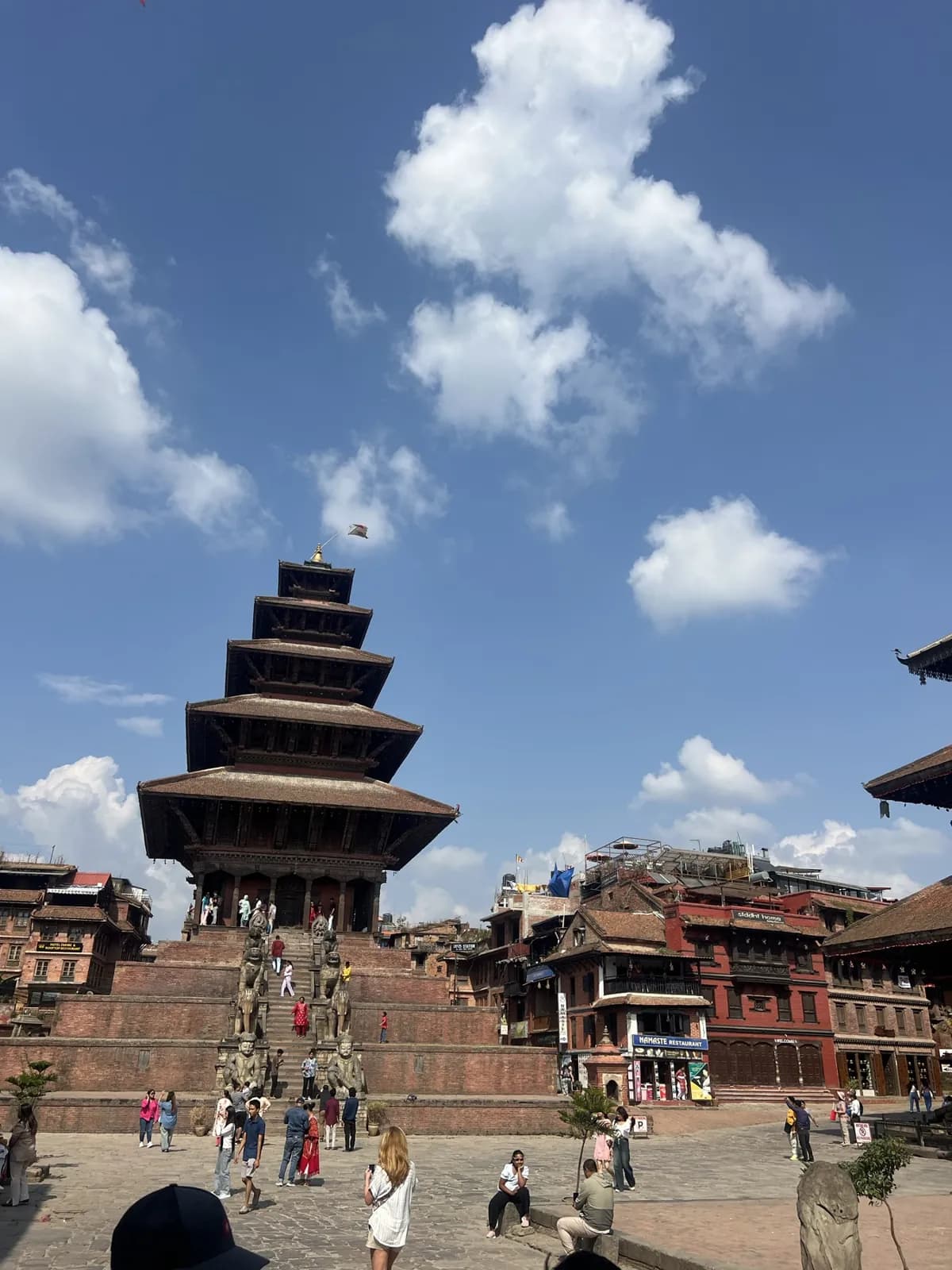
After breakfast we drive to Doleshwar Mahadev, the Shiva temple east of the valley, and, if time allows, Bhaktapur Durbar Square. We then return to the hotel in Kathmandu, or drive on to Dhulikhel on the valley rim, which is a little higher and closer to the border road.
An early start for the drive to the border at Tatopani, about five hours, with a briefing on the way. At Zhangmu we go through Chinese immigration: passports, visas and baggage are checked, and our Tibetan guide and crew join the group.
From the border the road climbs steeply to Nyalam, a small town on the Himalayan slope at 3,700 m. Nearby are the Milarepa cave and the 7th-century Pakba monastery.
A second night at the same height to let your body adjust. We take a gentle acclimatisation walk of three to four hours above the town, with some stretching and meditation, and rest for the remainder of the day.
A long, scenic drive west across the plateau with the Tibetan Himalaya to the south. Late in the day we turn north, cross the Brahmaputra (Yarlung Tsangpo) and reach Saga, a town with simple hotels and a small market.
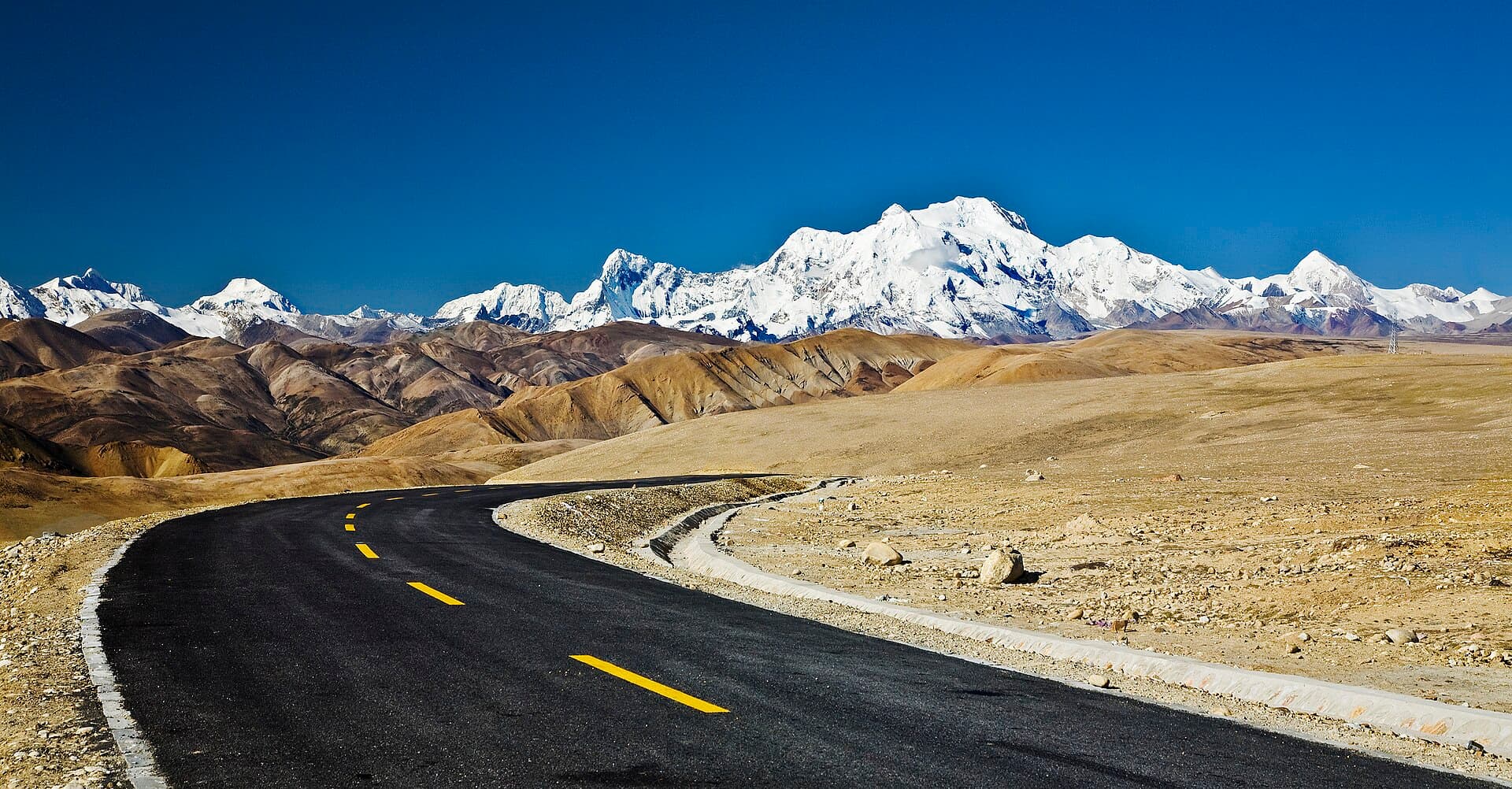
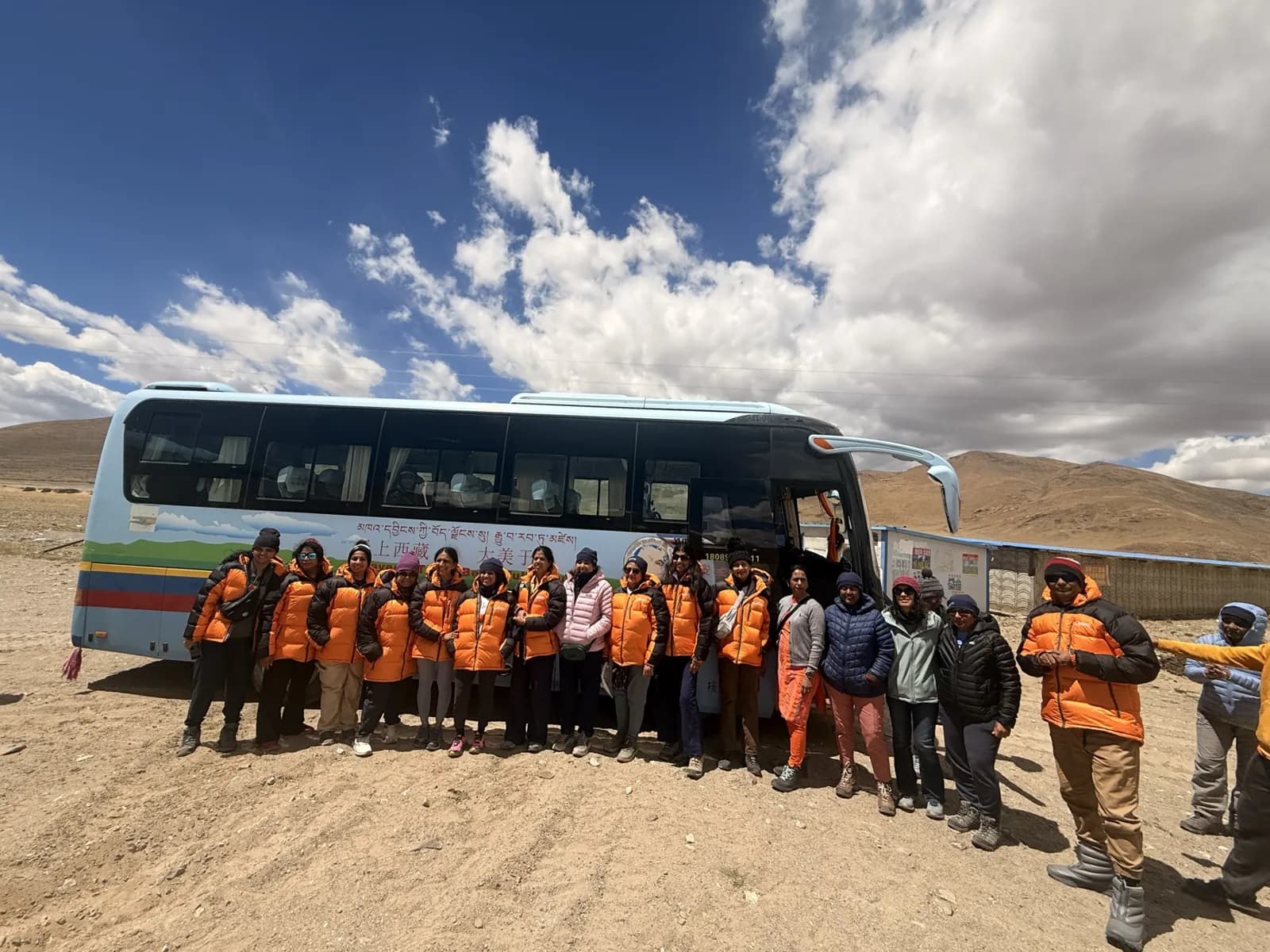
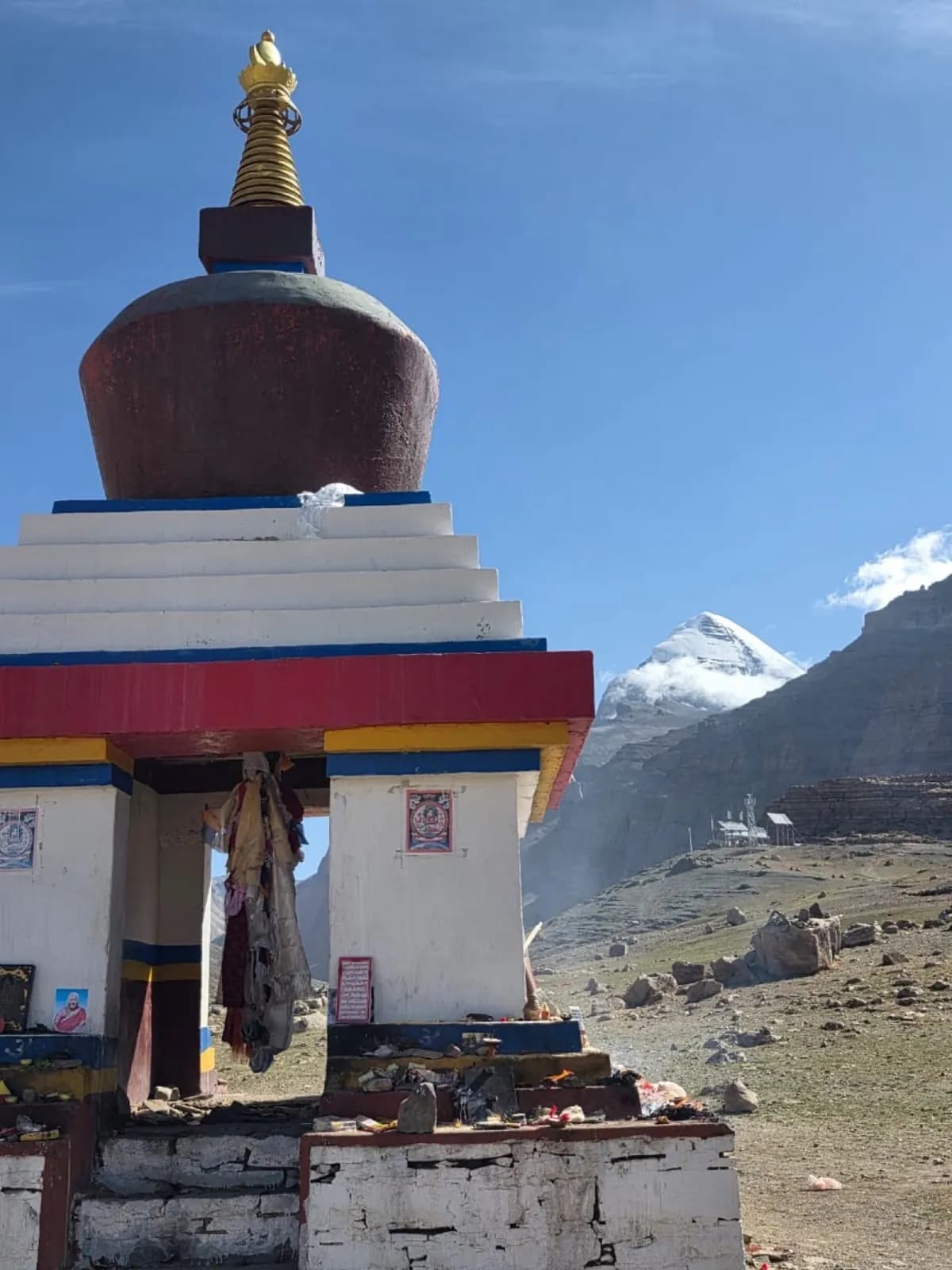
Seven to eight hours west to the lake. On a clear day the first view of Mount Kailash comes at Horchu, where we stop to pray and take photographs. At the lake we drive around its shore on the Ngari Kailash bus service, then check into our guesthouse near Chiu Gompa.
Many yatris go down to the lake at night to see it under the moon and stars. It is safe, but go in a group, wear warm clothes and take a torch.
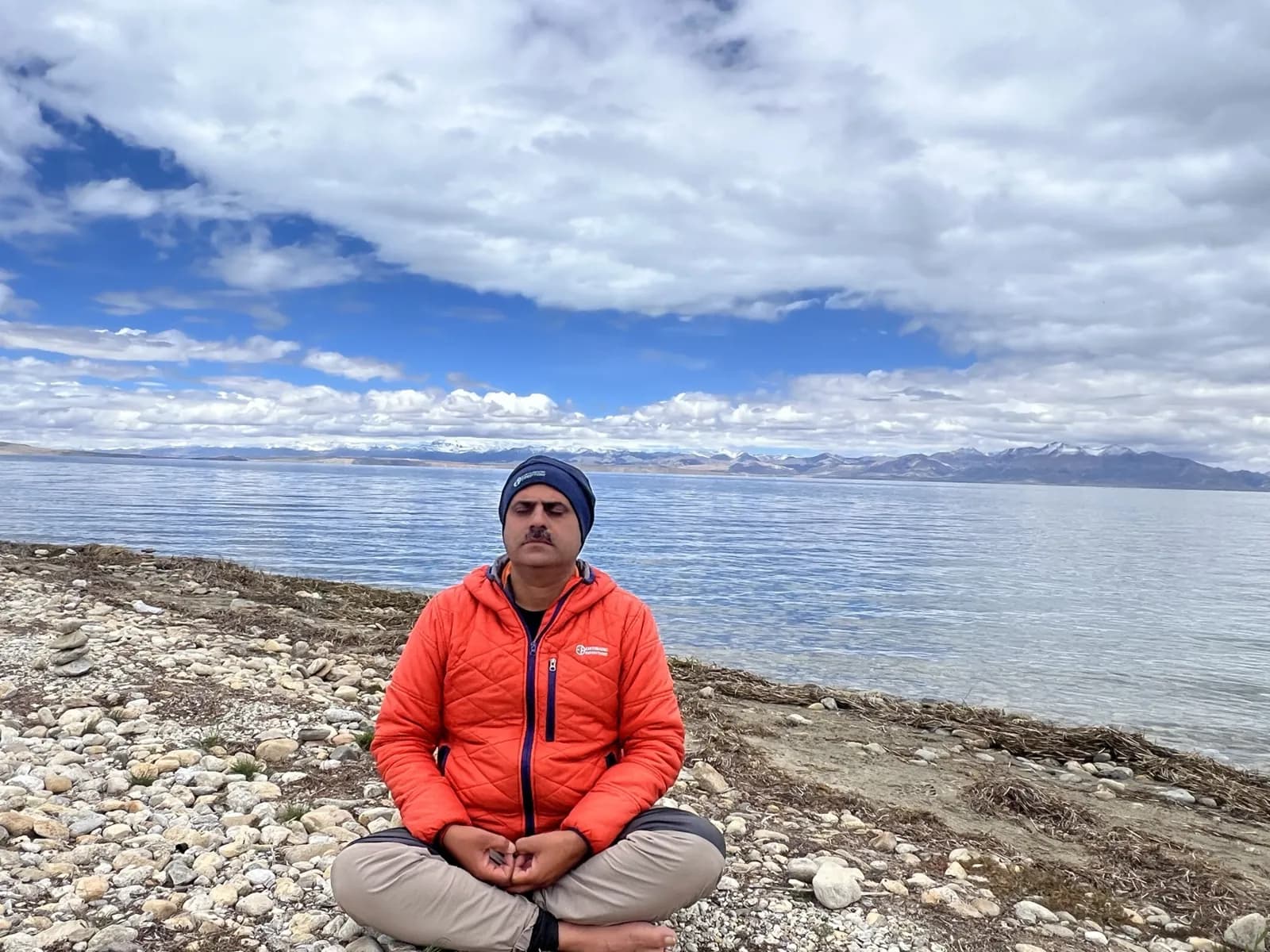
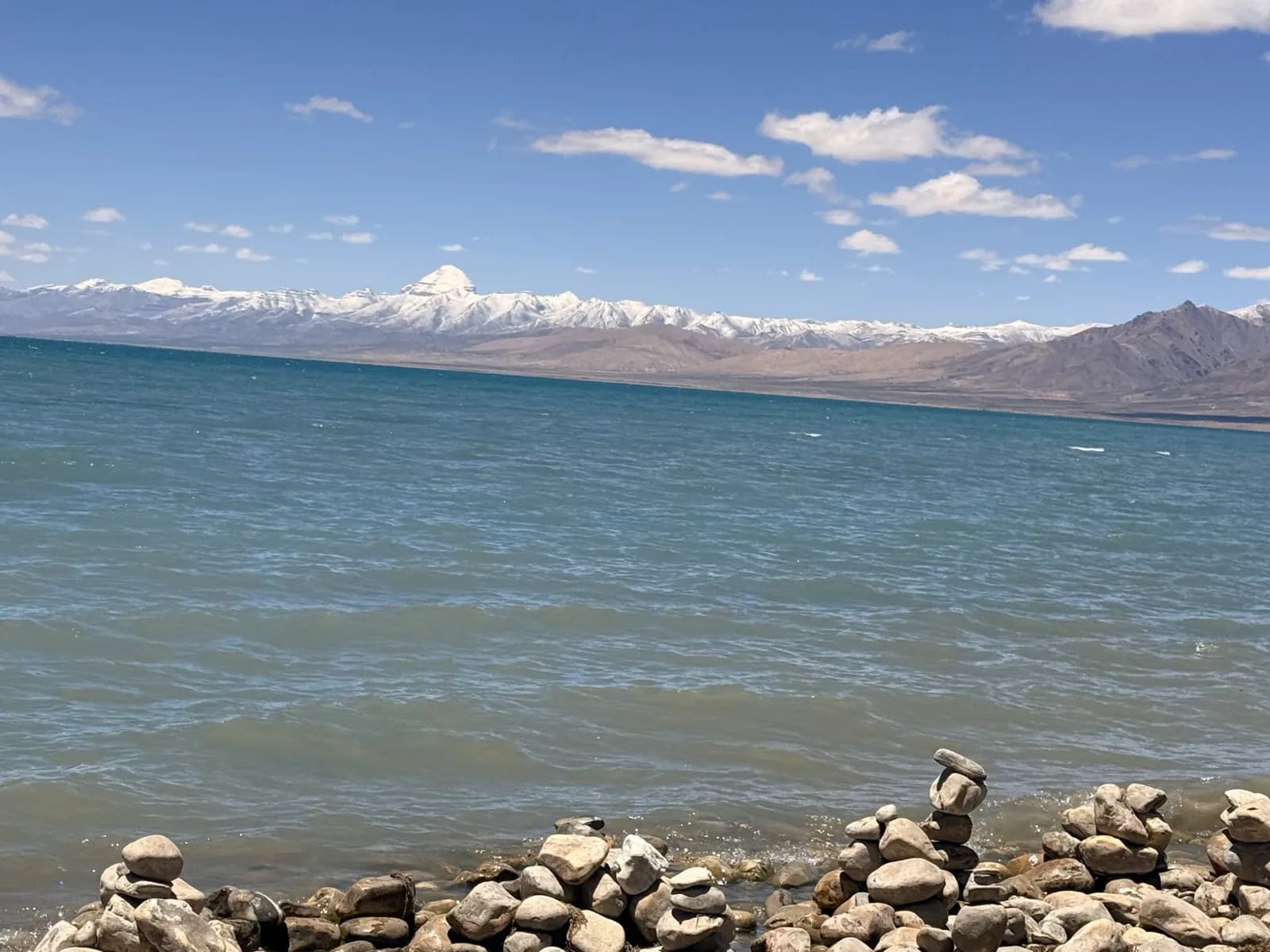
A day at the lake. We provide warm lake water in a bathing tent for the holy bath, then hold puja and havan on the shore. There is time to visit Chiu Monastery above the lake, and in the afternoon we prepare for the kora, pack, and book any extra horses or porters.
Most groups sleep at Mansarovar again and drive to Tarboche in the morning. If the group prefers, we drive to Darchen, the town at the foot of Kailash, this evening instead.
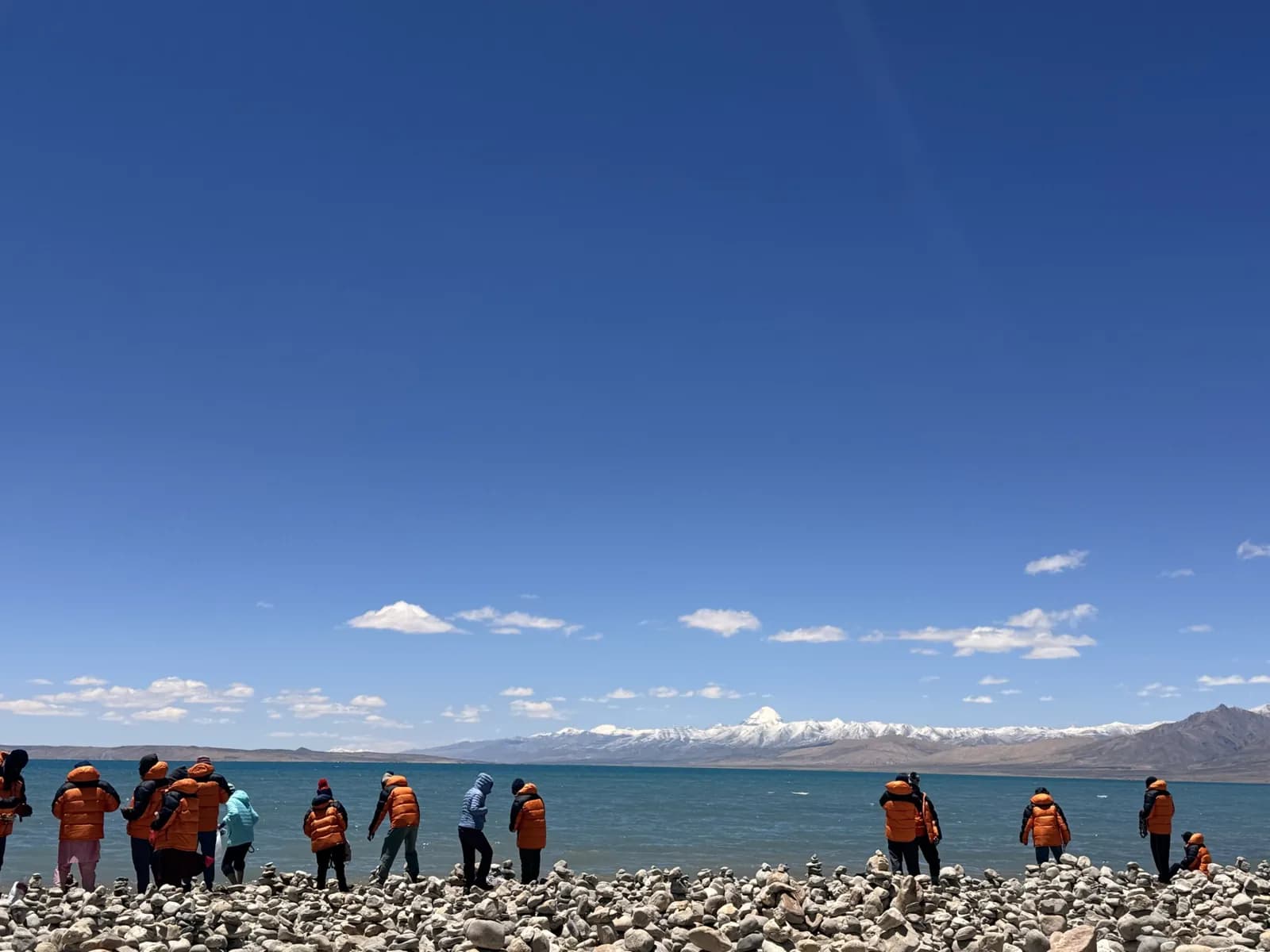
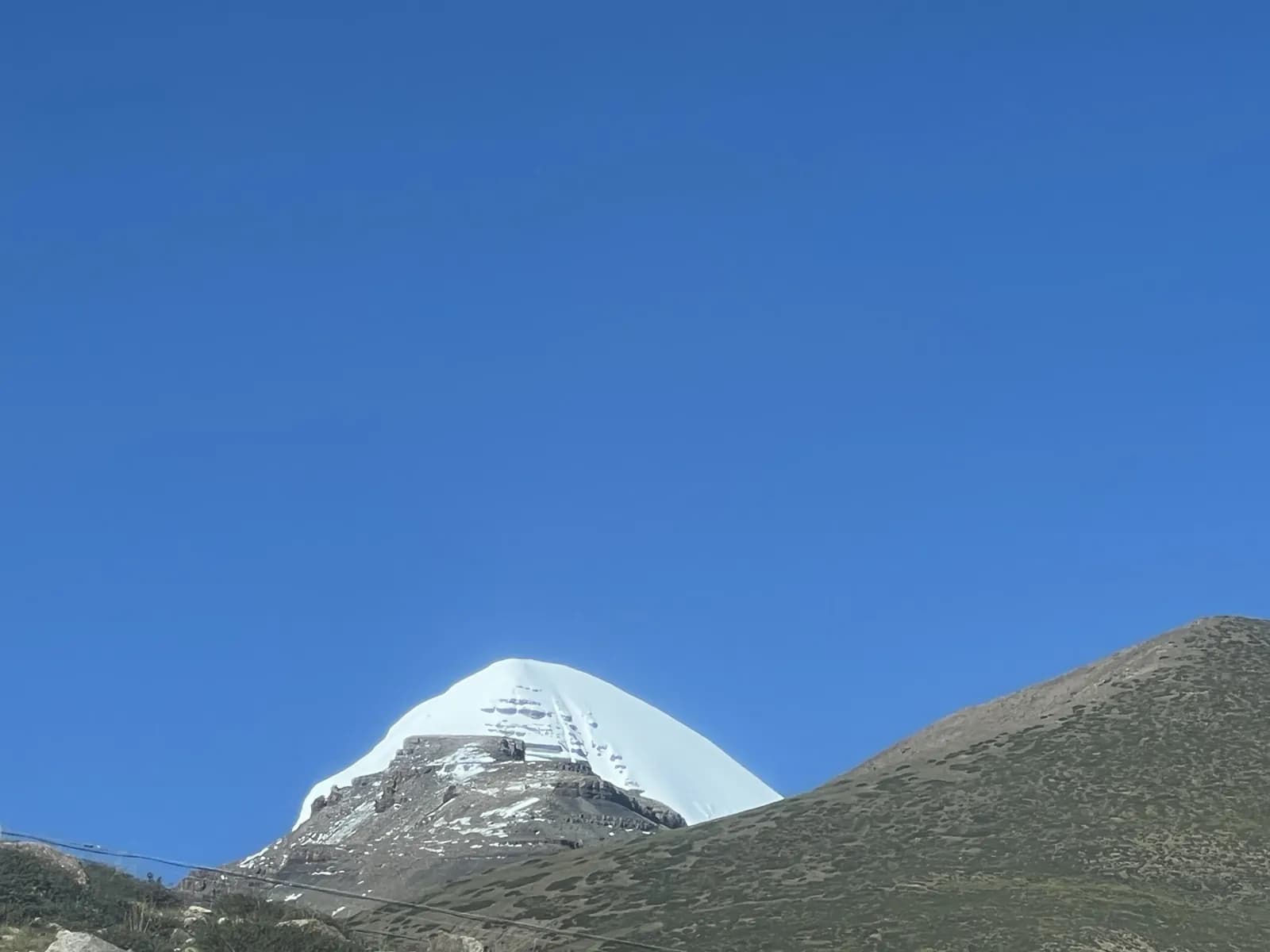
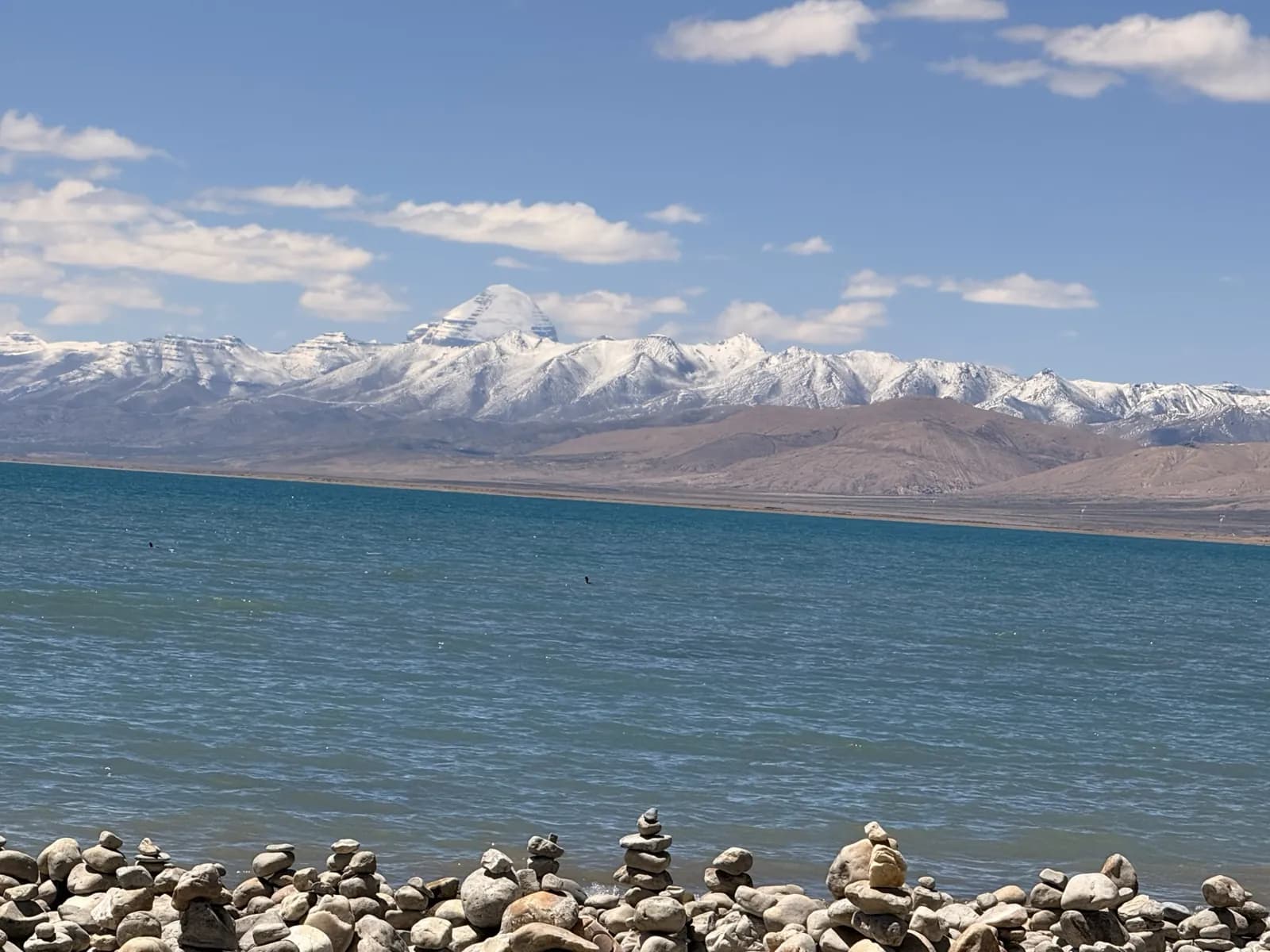
An early drive to Tarboche, near Yama Dwar, where the kora begins and we meet the porters and horses for those who have booked them. From Yama Dwar we walk six to seven hours up the Lha Chu valley to Dirapuk, below the north face of Kailash, the closest view of the mountain on the whole yatra.
Anyone who decides not to complete the kora can walk to the north face, take part in the puja, and return to Darchen by foot or jeep to wait for the group. The walk to Charan Sparsh at the foot of the north face depends on the weather, your health and military permission, so it is not part of the itinerary.
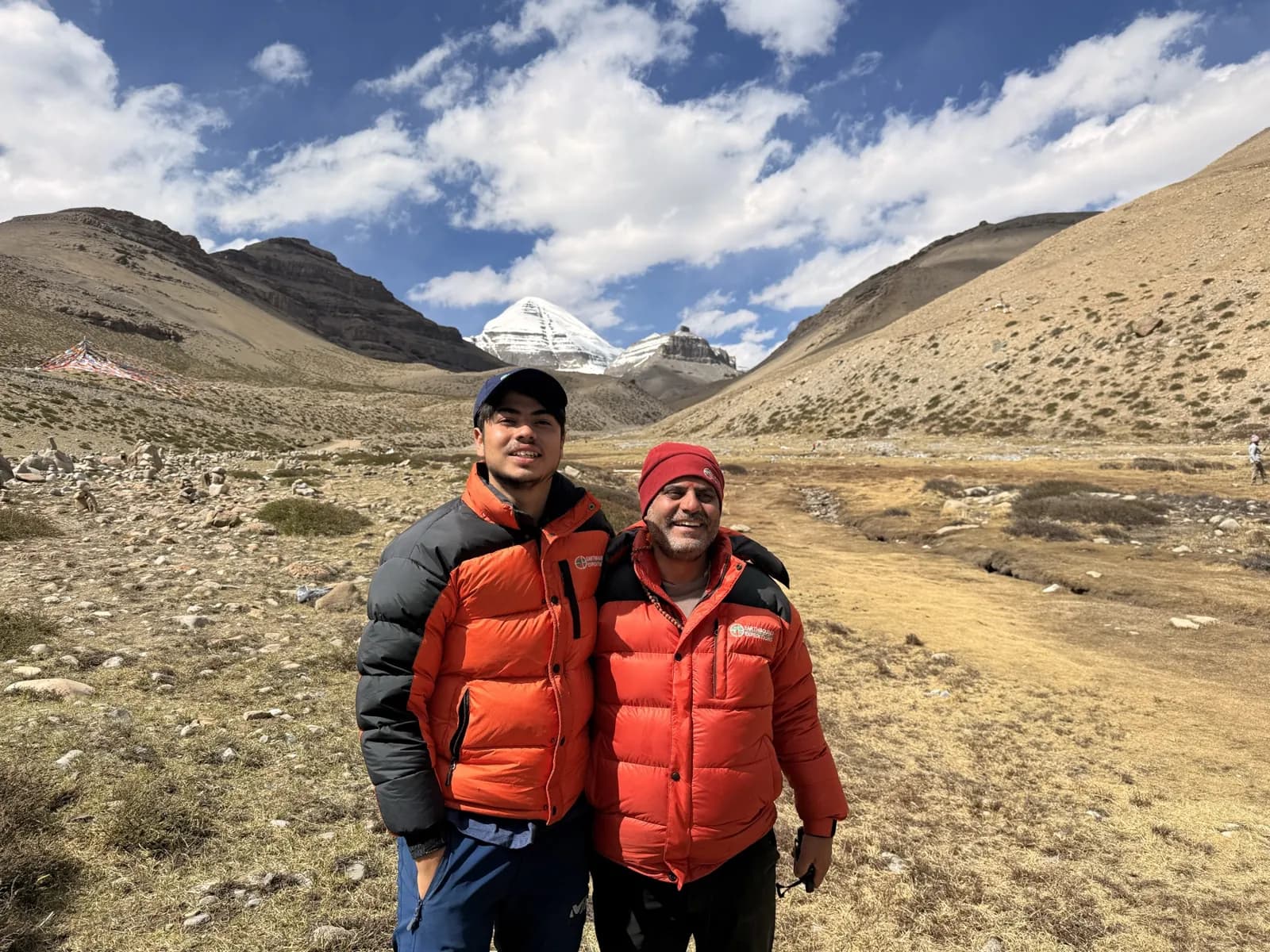
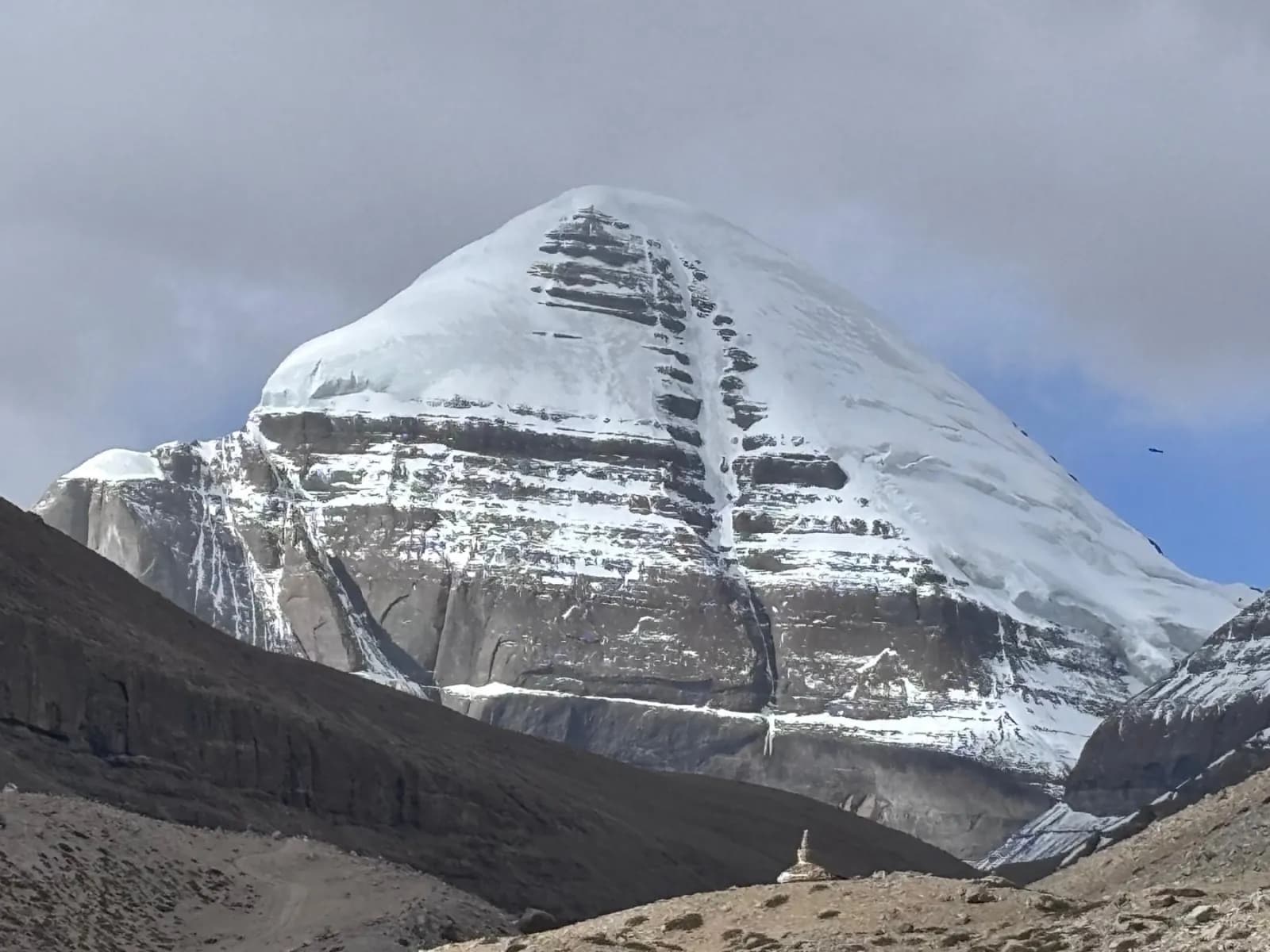
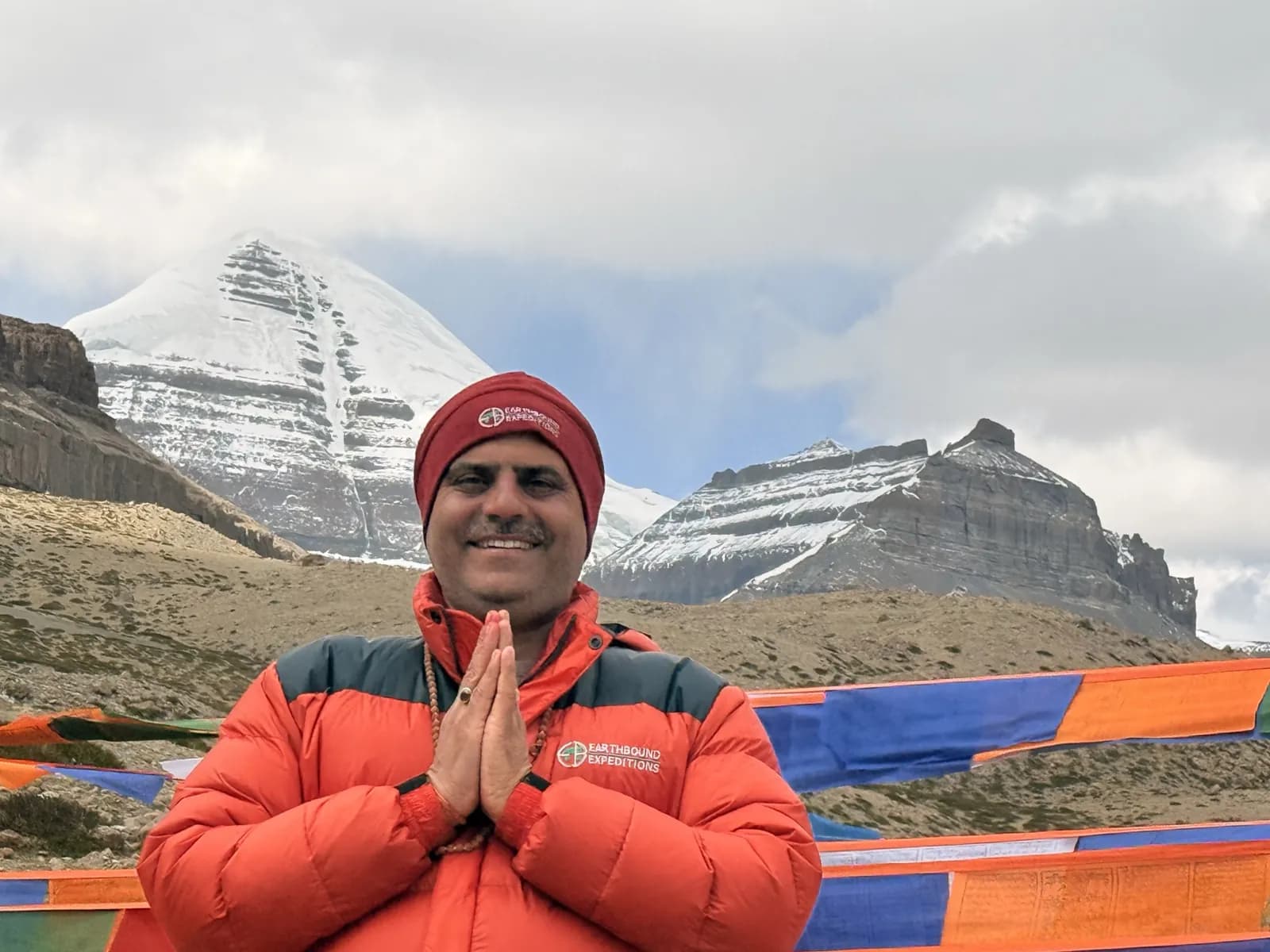
The longest and hardest day of the yatra, eight to ten hours on foot. After an early breakfast we climb past Shiva Tsal to the Dolma La at 5,630 m, the highest point of the trip, hung with prayer flags, where we stop to pray. On the descent we pass Gauri Kund, and our crew collect holy water from it for you. The path then follows the valley to Zuthulpuk and its monastery.
An emergency jeep can be arranged from the tea house in the Zuthulpuk valley to Darchen, which saves about 12 km. It is optional and costs extra.
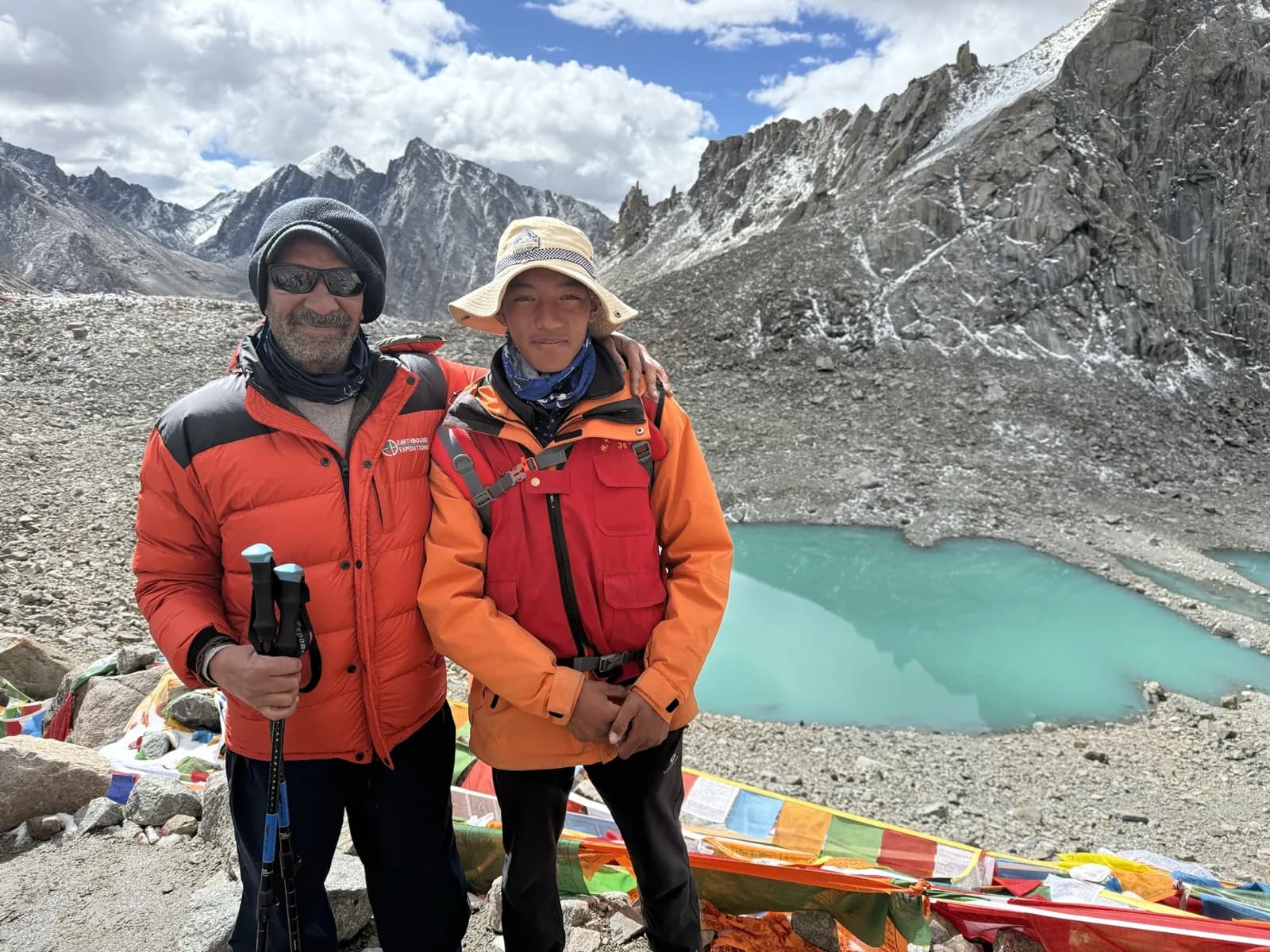
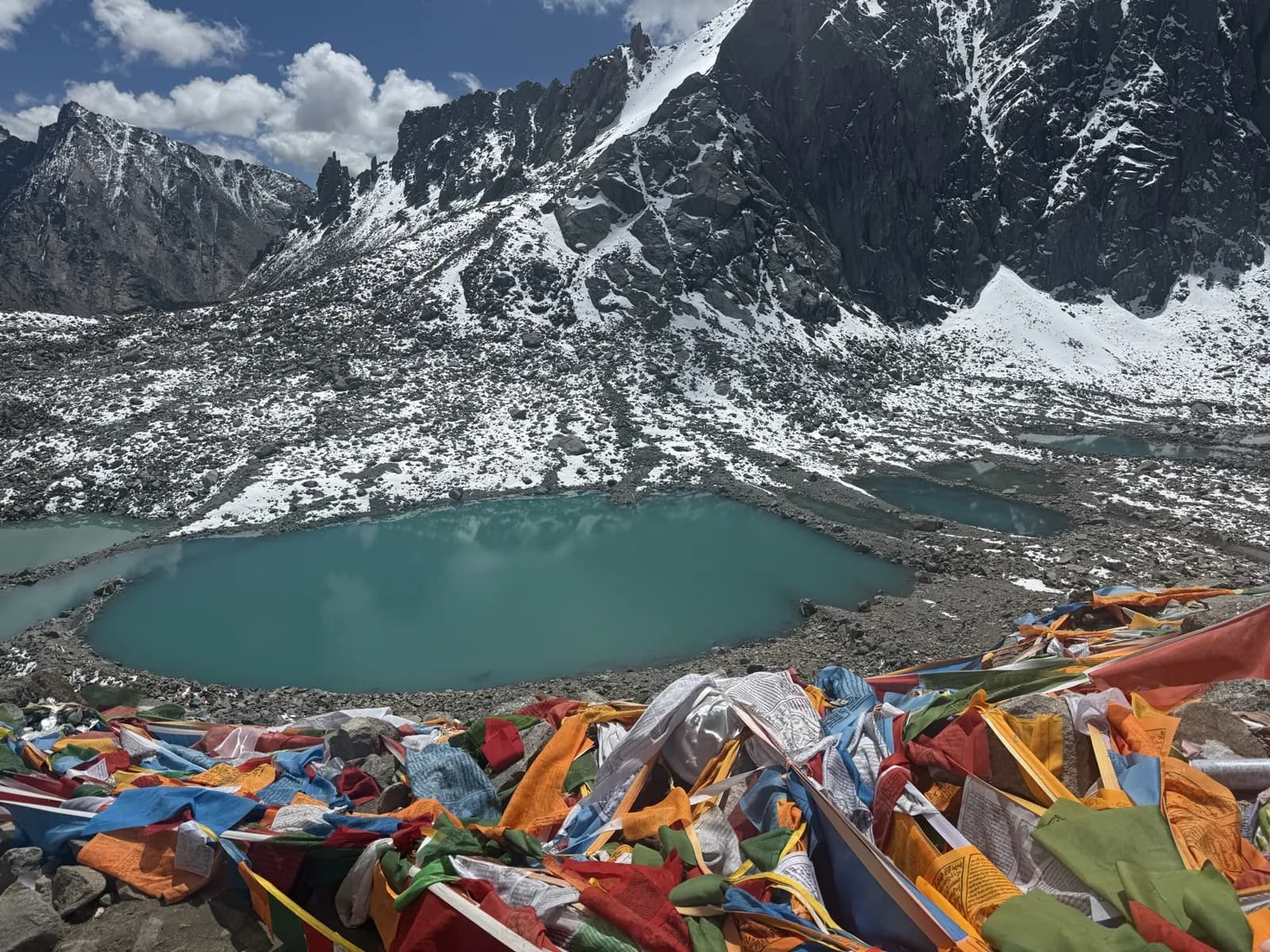
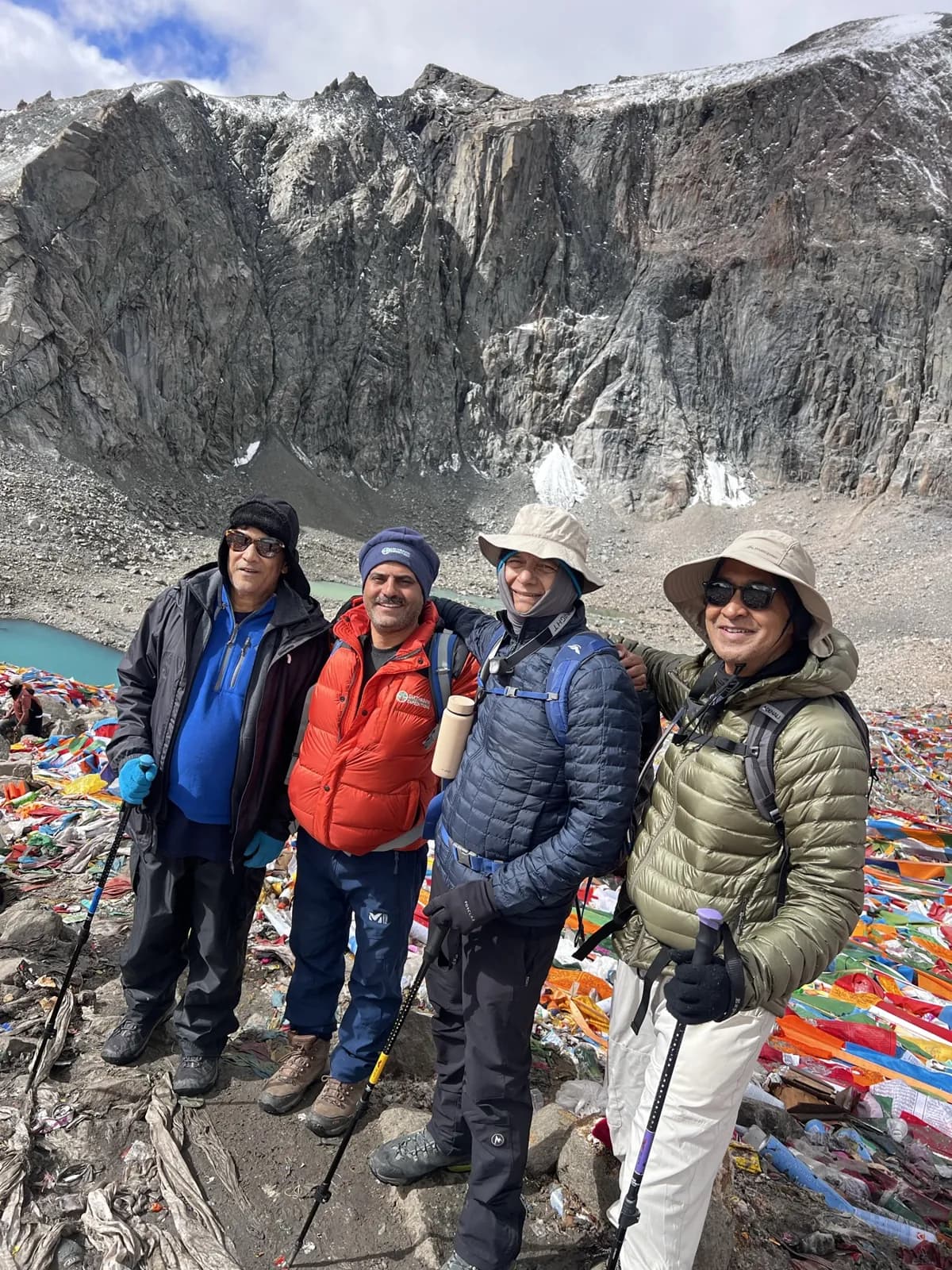
The last morning of the kora: about four hours down the valley to the road near Hor Qu village. From there we drive to Darchen, collect our bags, have lunch and drive back east to Saga. It is a long day.
We retrace the road east across the plateau and descend to Nyalam for the night, much lower than anywhere we have slept for a week.
Down to Zhangmu, where we say goodbye to our Tibetan guide, complete Chinese and Nepali immigration, and drive back to Kathmandu. The rest of the day is free at your hotel.
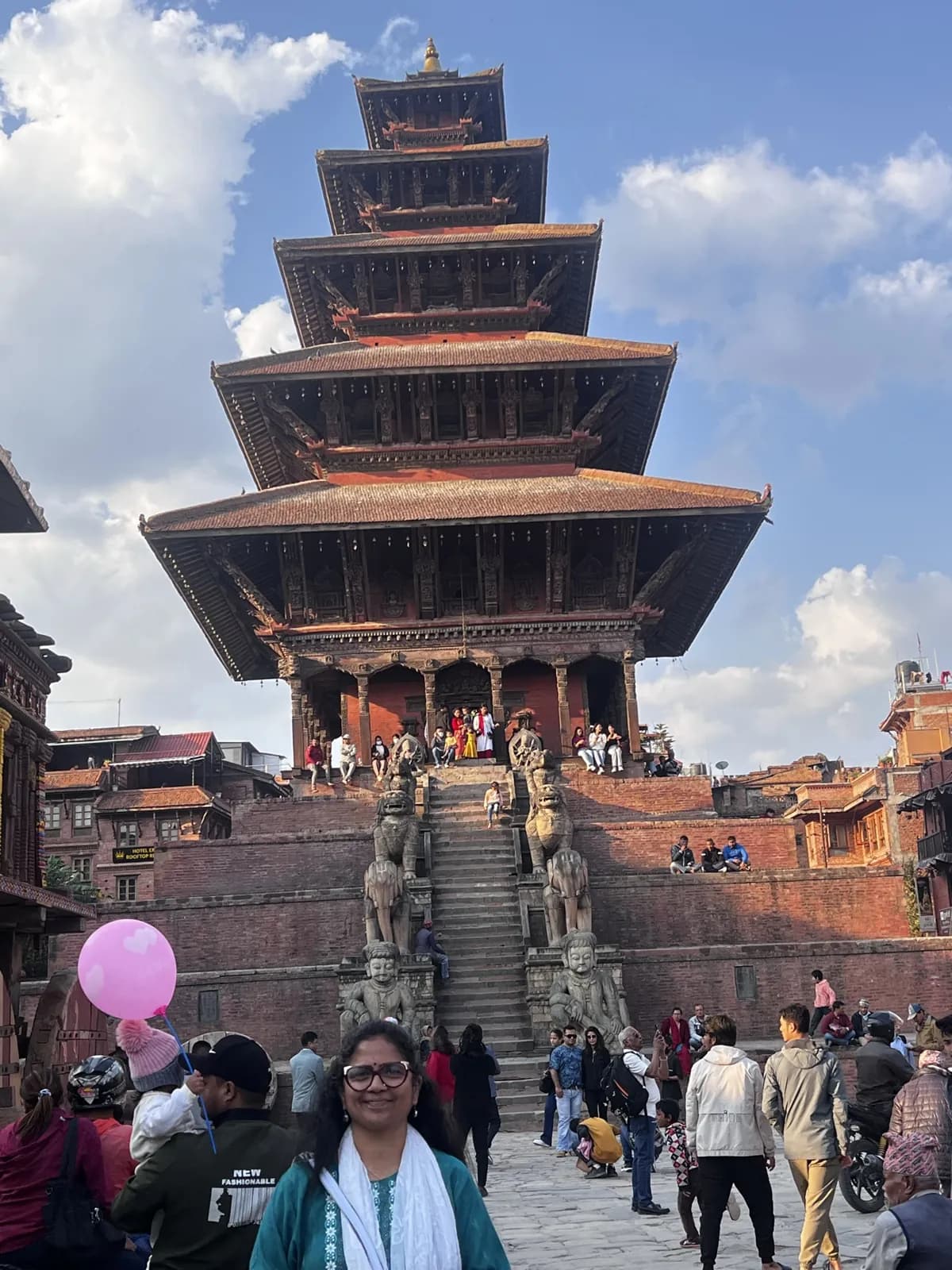
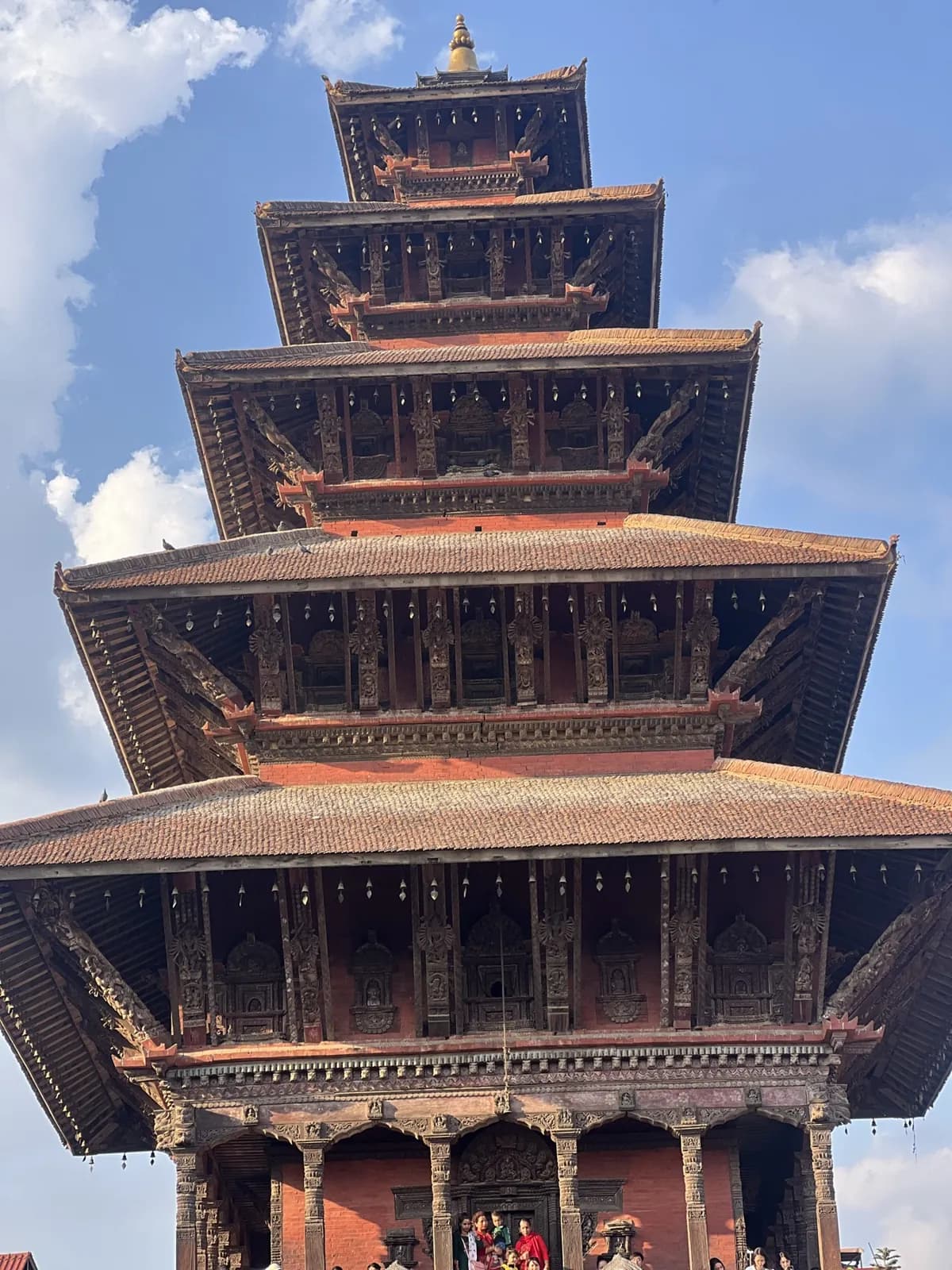
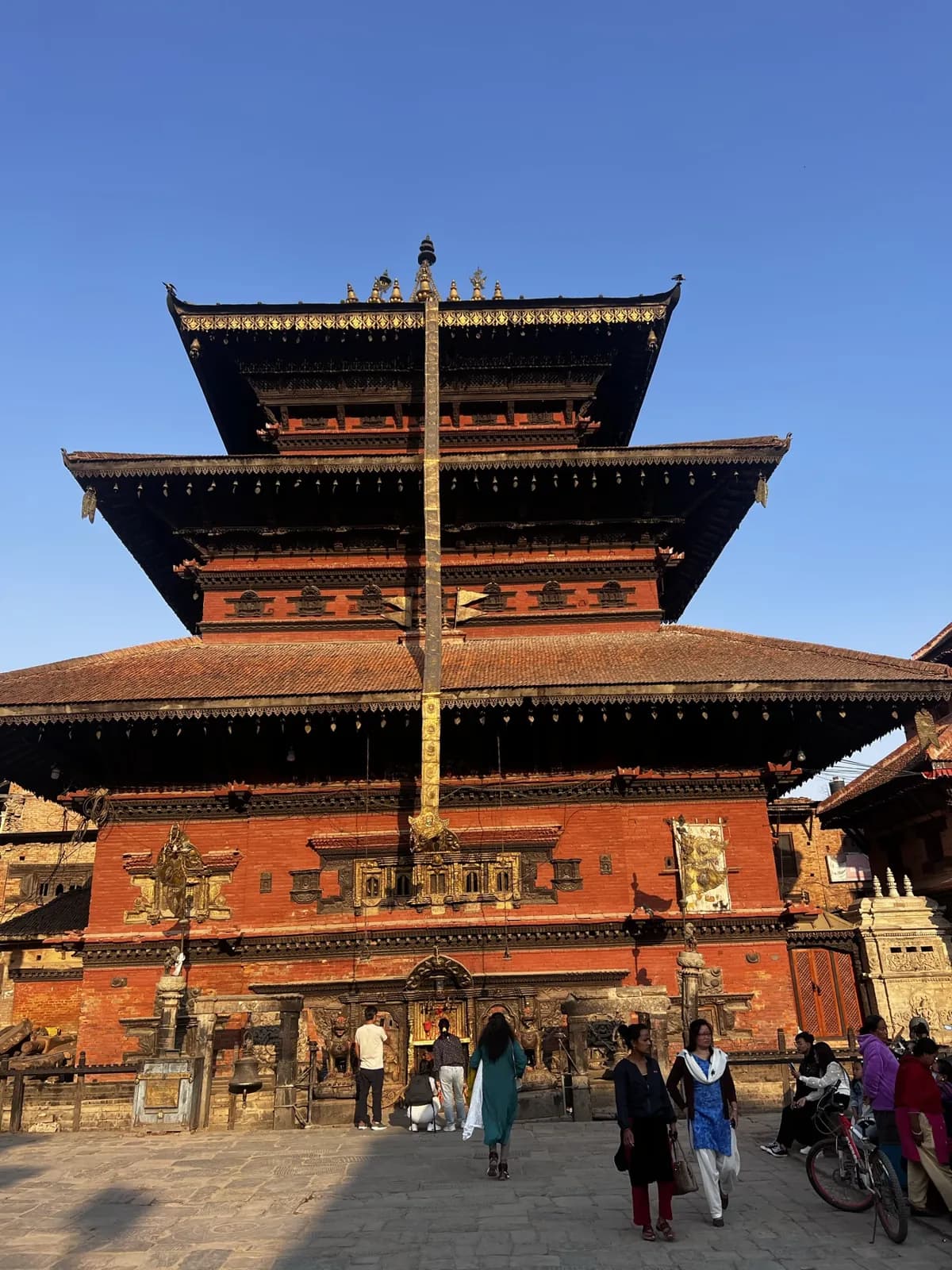
We take you to the airport three hours before your flight. If time allows, you can visit Pashupatinath once more before you leave.
We recommend booking your flight home a day later than this, in case a landslide, the visa or illness costs the group a day on the road.
Start date
29 Jun 2027
End date
12 Jul 2027
Available
35 places left
US $2,778
Per person
Start date
4 Jul 2027
End date
17 Jul 2027
Available
35 places left
US $2,778
Per person
Start date
18 Jul 2027
End date
31 Jul 2027
Available
35 places left
US $2,778
Per person
One duffel and one daypack
We give you a duffel bag for Tibet, and it travels on the bus and, on the kora, by yak. You carry a daypack on the walking days, so pack your duffel with the kora in mind: the things you need at Dirapuk should be easy to find without unpacking everything. Anything you do not need in Tibet can be left at your hotel in Kathmandu.
About five hours by road to the border at Zhangmu, and permits that should be arranged four to five months ahead.
Fly into Tribhuvan International Airport. Most travellers connect through Delhi, Doha, Dubai, Istanbul, Bangkok or Kuala Lumpur. Arrive by Sunday evening, or before 9.00 on Monday, because the group visa is applied for that morning, and ask for a multiple-entry Nepal visa on arrival.
The drive from Kathmandu to Tatopani on the Araniko Highway takes about five hours. The road is narrow and slower after rain. From the border the road climbs steeply on the Tibetan side to Nyalam at 3,700 m.
Nepali exit stamps are issued on one side and Chinese entry on the other, and the Chinese checks are thorough. Bags are searched by hand. Books about Tibet, images of the Dalai Lama and anything the officer considers political will be confiscated. Do not bring any of these, and allow plenty of time.
We apply for the Tibet Travel Permit in advance, from a copy of your passport. The Chinese group visa is issued in Kathmandu in three working days while you visit the holy sites. If you already hold a Chinese tourist visa, send us a copy and we apply for the permit with it. Because the permits take time, book at least four to five months ahead.
In Nepal, a serious altitude case can be flown to Kathmandu within hours. In western Tibet, no such service is available at any price. Descent is by vehicle on the road you came in on, which is why we carry oxygen and a pressure chamber and an emergency vehicle travels with the group.
In Kathmandu you stay in a five-star hotel, twin share. On the route we use the best hotels and guesthouses available: simple hotels in Nyalam and Saga, and guesthouses at Lake Mansarovar. The two nights on the kora, at Dirapuk and Zuthulpuk, are in basic guesthouses with shared rooms. Everything essential is provided, but the plateau is remote, so do not expect the comfort of Kathmandu after the border.
| Where | Nights | Type | Room | Bathroom |
|---|---|---|---|---|
| Kathmandu | 4 | Five-star hotel | Twin or double | Private, hot water |
| Nyalam | 3 | Simple hotel | Twin | Private, hot water |
| Saga | 2 | Hotel or guesthouse | Twin | Private, intermittent hot water |
| Lake Mansarovar | 2 | Lakeside guesthouse | Shared by two to four people | Shared |
| Dirapuk and Zuthulpuk | 2 | Kora guesthouse | Shared by several people | Outside, no running water |
Porridge, muesli, paratha, eggs, and tea or coffee
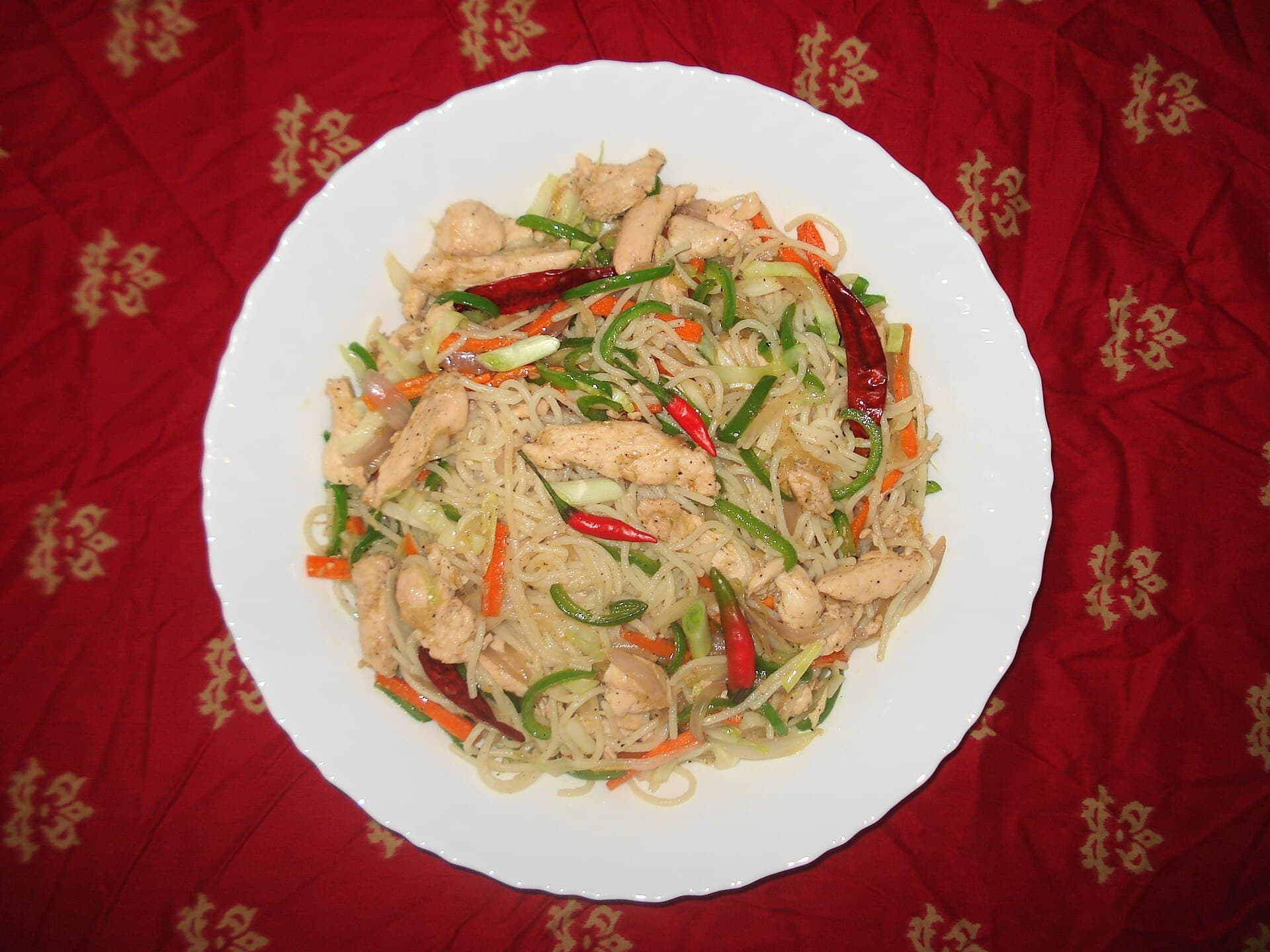
Hot lunch from our cooks: rice, dal, vegetable curry or pakoras

Soup first, then roti, dal, rajma, rice, puri or khichdi, and curd

Our cooks go ahead, so hot soup and tea are ready when you arrive
5.30Tea, and oxygen saturation measured and recorded
6.00Breakfast, and bags loaded onto the bus
7.00Driving or walking, depending on the day
9.00First stop, wherever there is shelter from the wind
12.30Hot lunch from our cooks
15.00Arrival on driving days, and rest before the evening
17.00Second health check, and a short walk near our accommodation
18.30Soup, then dinner
19.30Briefing on the next day: distances, timings and the weather
21.00Bed. Rest is essential at this altitude
Long days by road and three days of walking, one of them demanding. There are no technical sections; the altitude is the main difficulty.
Written for somebody who walks a bit and does not train. If you already run or cycle regularly, start partway through. Nothing here needs a gym.
4 months before, stage 1 of 6
Walk for six hours on hills carrying a daypack. Endurance matters more than speed on this trip.
This yatra spends six nights above 4,500 m and crosses 5,630 m once, and the altitude is the main difficulty. The largest single step is the drive from Kathmandu at 1,400 m to Nyalam at 3,700 m, so we spend a second night at Nyalam before going higher. Your oxygen saturation and blood pressure are checked daily and recorded, so that any change is clearly visible. Oxygen cylinders and a portable pressure chamber travel with the group in the emergency vehicle. Most importantly, we ask you to accept before you book that if the guide tells you to descend, you descend, and this decision is not open to discussion.
A rest day at Nyalam
A second night at 3,700 m, with a gentle walk higher, before the plateau.
Daily health checks
Oxygen saturation and blood pressure are measured and recorded every day from the border onwards, so that any decline is visible.
Oxygen and pressure chamber
Oxygen cylinders and a PAC bag are carried in the emergency vehicle, for treatment and descent, not to allow someone who is unwell to continue.
Choice on the kora
Anyone who is not well enough for the pass can visit the north face on the first day and return to Darchen to wait for the group.
The guide's decision is final
If you are told to descend, you descend. There is no helicopter rescue here to provide another option.
Fitness and altitude are unrelated
This is the thing people get wrong most often. Training makes the walking easier and does nothing for how your body handles thin air. Strong young trekkers get altitude sickness and unfit older ones frequently do not. Go up slowly, and say something the first time your head hurts.
The season runs from May to September. The route is closed for the rest of the year, for two different reasons.
Warm and settled, and the busiest weeks of the year around Saga Dawa.
Averages for the Ngari prefecture. The season shuts at both ends for different reasons: snow on the Dolma La, and an administrative closure of the region in March.
Our own Nepali leader, cooks and helpers travel with you from Kathmandu and back. A licensed Tibetan guide joins at the border and, as required by law, stays with the group for the whole time it is in Tibet. Many of our leaders have been to Kailash more than thirty times, and there is one staff member for every four guests.
The group travels by private bus, with an emergency vehicle always alongside, carrying oxygen and medical supplies. The drivers know the plateau roads well.
Luggage and supplies on the kora are carried by yaks, arranged through the Darchen yak and horse association. If you want a riding horse and helper or a personal porter, we book it the evening before, at extra cost.
Tips are customary and not included. Please allow about $150 per person for the guides, drivers and crew. We collect tips at the end and hand them over together.
Most people on the path are walking it for religious reasons. Walk clockwise, as Hindus, Buddhists and Jains do, unless you follow Bon. Ask before photographing anyone, and respect a refusal. At Shiva Tsal, where pilgrims leave clothing and hair, leave the ground as you found it.
We carry out everything we bring. There is no waste collection on the kora, and anything left at 5,000 m remains for years. Bring a refillable bottle rather than bottled water, and take your used batteries home.
Never use soap, shampoo or detergent in the lake, including biodegradable products. Our bathing tent uses lake water carried up from the shore, and the waste water is disposed of away from the lake. For the people who live beside it, the lake is a source of drinking water and a sacred site.
Tibetan permits, guides and accommodation are paid in China at rates set there. In Nepal, we employ our own leader, cooks and crew, all paid at our usual rates, and use hotels in Kathmandu.
Choose a date from the table, or ask us for a private departure for your family, friends, temple or community. We take a deposit and apply for the permits, and your place is confirmed once they are issued. If the permits are not issued, we refund your payment.
A clear scan of your passport, valid for at least six months beyond the trip, sent as early as possible and at least four months ahead. If you hold a Chinese tourist visa, send a copy of that too. Journalists, diplomats and photographers should contact us before booking.
Our groups usually number between ten and thirty-five yatris, and the price per person depends on the size of the group, as shown in the table. Prices for 2027 are held for bookings made by December 2026; after January 2027 they may rise by about ten per cent.
We refund everything you have paid us. Refusals are rare, are made without explanation and are not your responsibility, so we do not keep a deposit in these cases.
Priced per person, arranged before you travel, and none of them included in the price above.
By custom, only for pilgrims who have already completed thirteen koras. We arrange it for those who have.
Fly from Ngari Gunsa to Lhasa and on to Kathmandu, instead of driving back.
The full moon festival at Tarboche, and the busiest days of the year on the kora.
Jungle and a warm climate at 150 m, which is a welcome change after the plateau.
Available in Kathmandu, Nyalam and Saga. Not available at Mansarovar or on the kora.
The overland route starts and ends in Kathmandu and costs the least. The others fly into Lhasa from Kathmandu or Beijing, or fly most of the way, in return for comfort or speed.
3 versions of this journey. They use the same guides and the same lodges; what changes is the length, the comfort and how much of it you walk.
Kailash Manasarovar Yatra Sept 2023
September 2023, Tripadvisor
Was acquainted with Rajan ji by a close friend. He was very professional and knowledgeable during our numerous conversations, patiently answering all my trip related queries. He equipped us with all the pre-trip requirements and essentials. i.e admin, packing list and acclimatization and fitness regime. Rajan ji personally came to the airport and fetched us. Was a warm and personal touch on his part. That made us so welcomed and reassuring. The 16 day trip was well planned and executed. Rajan's team took very good care of us and kept an eye on our every move to ensure we're in good health and ready to push on to greater heights! (5800m) Special THANKS to Arjun ji, dendi ji and the chef team for the hard work and dedication to ensure the trip was smooth sailing. KUDOS TO RAJAN JI AND TEAM! Well done. Wishing you the very best and ill definitely link you up with my buddies. Cheers!!!
Blissful Muktinath, Lake Manasarovar and Kailash Yatra
June 2026, Tripadvisor
We came back a week ago after completing our Muktinath, Lake Manasarovar, and Kailash Yatra with Earthbound Expeditions, and we are still filled with gratitude for the extraordinary experience they created. For many of us, this was a once‑in‑a‑lifetime spiritual journey, and Earthbound made it possible with professionalism, compassion, and genuine dedication. From the start, Earthbound was upfront and transparent about all costs, providing detailed information and setting clear expectations. Their planning was meticulous, and the entire yatra unfolded exactly as per the original plan, which is impressive given the complexity of travel across Nepal and Tibet. We want to express our sincere thanks to Rajan Ji, Kedar Ji, Chattan, Chota Rajan, Kedar Jr, and the rest of the Earthbound team. Their coordination was outstanding—handling logistics, transportation, meals, and daily briefings with calmness and confidence. Even in high‑altitude and remote conditions, they remained composed, supportive, and attentive. Their timely updates, gentle encouragement, and warm smiles made every member of our group feel safe and cared for. A special mention goes to our drivers, who navigated challenging mountain roads with remarkable skill and patience, and to our local Tibetan guide, whose knowledge, cultural insights, and steady presence enriched every step of the journey. The support staff—from cooks to porters to helpers—played an equally important role, ensuring comfort, warm meals, and seamless transitions throughout the yatra. One of the most remarkable examples of Earthbound’s dedication was when they arranged to ship our passports and group visa paperwork by helicopter to Timure to ensure we completed the Tibet immigration process on time. This extraordinary effort demonstrated their commitment to making the yatra smooth and stress‑free. Accommodations throughout the journey were comfortable and well‑selected for the terrain. At Lake Manasarovar, the facilities were understandably basic due to the remoteness. As constructive feedback, Earthbound could consider keeping yatris in Darchen or nearby hotels and driving them to Manasarovar during Brahma Muhurtham for shooting stars, sunrise darshan, and Rudrabhishekam. This small adjustment could improve comfort while preserving the spiritual essence of the experience. Aside from this, every other aspect of the journey was exceptional. The crew’s dedication was evident in countless ways—ensuring warm meals, managing altitude challenges, coordinating transportation smoothly, and maintaining a positive, uplifting atmosphere. Their kindness and patience made even the toughest stretches feel manageable. This yatra was blissful, transformative, and beautifully organized. Earthbound Expeditions delivered far more than a trip—they delivered an experience that touched our hearts and strengthened our spiritual connection. We wholeheartedly recommend them to anyone planning Muktinath, Manasarovar, or Kailash Yatra. Om Namah Shivaya.
Once in a lifetime spiritual journey - organized extremely well by Earthbound!
June 2026, Tripadvisor
Excellent tour operator with highly flexible tour schedule customized to your needs. This was a once in a lifetime spiritual journey, well organized by Earthbound Expeditions. Rajan/Kedar took care of the logistics, Chhota Rajan/Chattan assigned to our group as well as Sri/Arjan assigned to parallel group took care of our day to day needs. The acclimatization protocol helped us to get used to the higher altitudes well. Daily health checks and reasonable accommodations along the way. The team did their best to help us with last minute change of plans (such as helicopter ride from Syabu Benzi to KTM), Pitru Tharpana at Kali Gandaki river etc. The total tour was 3 weeks long and well worth every bit of the tightly packed schedule. Fees were comparable to other similar tour operators with often spotty records.
Amazing experience with Earthbound team
July 2024, Tripadvisor
Visited Mt Kailash in July 2024 through Earth Expeditions headed by Rajanji. We chose them as their iterniary is different from other travel companies and they responded to most of my questions/concerns. They included Nagarkot, hiking and visiting Monastery in Kerung as part of the trip. We had a great group maintained positive energy throughout. We had an Emergency with health. Their team addressed it as a high priority, took us to the nearest hospital for immediate treatment before sending us to Kathmundu hospital. Rajanji, Tibet guides Tasha La and Kelsang la made sure to get expedited exit at Border. I strongly suggest Earthbound Expeditions for anyone planning to take Mt. Kailash trip.
Answers to the 28 questions travellers ask us most often. If your question is not here, contact us and we will answer it.
It is the most popular way to Kailash and the least expensive: no flights within China, and the trip starts and ends in Kathmandu, so you need only one international ticket. The group visa is arranged in Kathmandu while you visit the holy sites of the valley, and the whole route is by road with your own crew and cooks from the first day.
We run four routes. This one goes by road from Kathmandu and back in fourteen days. The Kailash Luxury Tour flies from Kathmandu to Lhasa, visits its monasteries and drives to Kailash and back to Kathmandu in sixteen days. The Ultra Luxury Yatra starts in Beijing, flies to Lhasa, drives to Kailash and leaves through Kathmandu in fifteen days. The Express Premium starts and ends in Beijing and flies to Purang near the mountain, covering everything in twelve days.
Three days in Kathmandu for the group visa and the holy sites, a rest day at Nyalam before the plateau, two days by road to the lake, a full day at Mansarovar for the bath and puja, three days for the kora and three days back. If everyone in the group already holds a Chinese visa, the yatra can be done in thirteen days.
Zhangmu, reached from Tatopani on the Araniko Highway. The crossing at Rasuwagadhi and Kerung, which we used before, was damaged by the flood of August 2026, so all 2027 departures enter and leave Tibet through Zhangmu and Nyalam.
The full circuit around Kailash is about 52 km, but because you now drive to Tarboche at the start and from the Zuthulpuk valley at the end, you walk about 38 km over three days. The first day, to Dirapuk, is about 10 km and six to seven hours, and not steep. The second, over the Dolma La at 5,630 m to Zuthulpuk, is the longest and hardest: eight to ten hours. The third is about four hours down the valley. Local Tibetan pilgrims walk it in one day; we take three.
Yes. A horse with a helper is booked at Darchen or Tarboche at extra cost; allow about $600 to $800 for the three days. A horse is most useful on the climbs, and everyone walks the steepest part of the descent from the pass. Porters can also be hired. A walking stick, which we provide, helps a great deal.
You can walk on the first day to the north face of Kailash at Dirapuk, take part in the puja there, and return to Darchen on foot or by jeep with a crew member to wait for the group. The decision about the second day is made at Dirapuk in the evening, because turning back once you are on the pass is much harder.
A Chinese group visa and a Tibet Travel Permit, with the military and Kailash area permits that go with it, all arranged by us. Send us a copy of your passport, valid for at least six months, when you book. We apply for the permit in advance, and the group visa is issued in Kathmandu in three working days while you visit the holy sites. The visa fee is not included in the price.
Yes. If you hold a Chinese tourist (L) visa from home, send us a copy in advance and we apply for the Tibet Travel Permit based on it. If everyone in the group holds one, the yatra can be completed in thirteen days, because no time is needed for the group visa in Kathmandu.
Yes, and it is issued on arrival at Kathmandu airport. Ask for a multiple-entry visa, because you leave Nepal for Tibet and come back into Nepal at the end of the yatra.
We run Kailash yatras for Indian passport holders too, but separately. The Chinese visa for Indian citizens is issued in Delhi and our Delhi office arranges it, and those yatras follow their own fixed itinerary, so Indian and non-Indian passport holders cannot travel in the same group. Please contact us for the current dates.
The highest point is the Dolma La at 5,630 m, crossed on the tenth day, and the highest night is at Dirapuk at 4,900 m. The biggest single step is the drive from Kathmandu at 1,400 m to Nyalam at 3,700 m on the fourth day, which is why the fifth day is spent resting there before the plateau.
No. There is no helicopter evacuation in the Ngari region of Tibet. Anyone who needs to descend does so by road, and the nearest well-equipped hospital is a long way away. This is why we carry oxygen cylinders, a portable pressure chamber (PAC bag), oximeters and a blood pressure monitor, and why an emergency vehicle travels with the group.
Many pilgrims take it and it helps, but you should discuss it with your own doctor. It does not replace the measures that work: gaining height slowly, drinking more than you feel you need, eating even when you have no appetite, and telling your guide immediately if you feel unwell, not at dinner.
From May to September, when the weather is most stable and the Dolma La is open. June and July are popular for clear skies and the Tibetan festivals, and August and early September give good visibility on the kora. Tibet usually closes to foreign visitors in March.
Several of our dates are timed so that the group is at Lake Mansarovar on or near the full moon, which many yatris consider the most auspicious time for the holy bath and puja. They are marked in the dates table and tend to fill first.
Saga Dawa is the full moon of the fourth Tibetan month, when the flagpole at Tarboche is lowered and raised again and thousands of pilgrims walk the kora together. It is a remarkable occasion, but it is crowded and beds are scarce. Decide in advance whether you want to be there or avoid it.
A five-star hotel in Kathmandu, simple hotels in Nyalam and Saga, and guesthouses at Lake Mansarovar. The two nights on the kora, at Dirapuk and Zuthulpuk, are in basic guesthouses with shared rooms. All have the essentials, but the nights on the plateau are simple, and there is no better alternative on the kora.
Hot, freshly cooked vegetarian food throughout, prepared by our own cooks: North and South Indian dishes and some Western ones, such as porridge, muesli, roti, dal, paratha, rice, rajma, vegetable curry, pasta, puri, khichdi, soup and curd, with tea and coffee. Tell us about special dietary needs when you book.
You can bathe in the lake as pilgrims do, briefly, because the water is only a few degrees above freezing. Most of our yatris prefer the bathing tent we set up on the shore, with warm water drawn from the lake. The puja and havan follow on the shore.
No. The mountain itself is worshipped, as Mount Sumeru and as Shiva's lingam. Pilgrims bathe and hold puja and havan on the shore of Mansarovar, pray and light lamps at the north face and on the Dolma La, and at Shiva Tsal leave old clothes, hair or nails as a sign of rebirth.
The Tibetan side is mostly good tarmac with long distances, so the long days are tiring but not rough. The Araniko Highway between Kathmandu and the border is narrower and slower, especially after rain. Bring medication for motion sickness if you need it.
We provide a sleeping bag and a warm jacket for the trip, a duffel bag, a cap, a poncho and a walking stick. Bring wind protection above all: the plateau is dry and open and the wind is constant, so a windproof shell, a buff and good lip protection matter more than an extra fleece. You also need much more sun cream than the temperatures suggest.
In the hotels, yes, with a Chinese plug adaptor. On the kora, no. Dirapuk and Zuthulpuk have no reliable power, so bring a battery pack and keep it warm inside your jacket, because the cold drains batteries quickly.
Your Nepali SIM card stops working at the border. Chinese SIM cards work in the towns but not on the kora, and many common Western apps are blocked in China unless you arrange access before you arrive. Most travellers spend their days on the plateau largely offline.
Border crossings between Nepal and Tibet can close because of landslides, festivals or politics, sometimes without notice. If Zhangmu closes before departure, we offer you the route via Lhasa where seats are available, or a full refund. If it closes while we are in Tibet, we leave by the best open route and tell you what it costs as soon as we know.
We refund your payment. Permits are occasionally refused without explanation, and journalists and people with certain stamps in their passports are refused more often. We do not keep deposits when a refusal is not your responsibility.
At least four to five months ahead. The Tibet visa and military permit take time to obtain, and every Kailash group applies during the same short season. Prices for 2027 are held for bookings made by December 2026; after January 2027 they may rise by about ten per cent.
Didn't find what you were looking for?
Search every word on this page, or ask somebody who has walked the route.
14 days
$2,778 per person