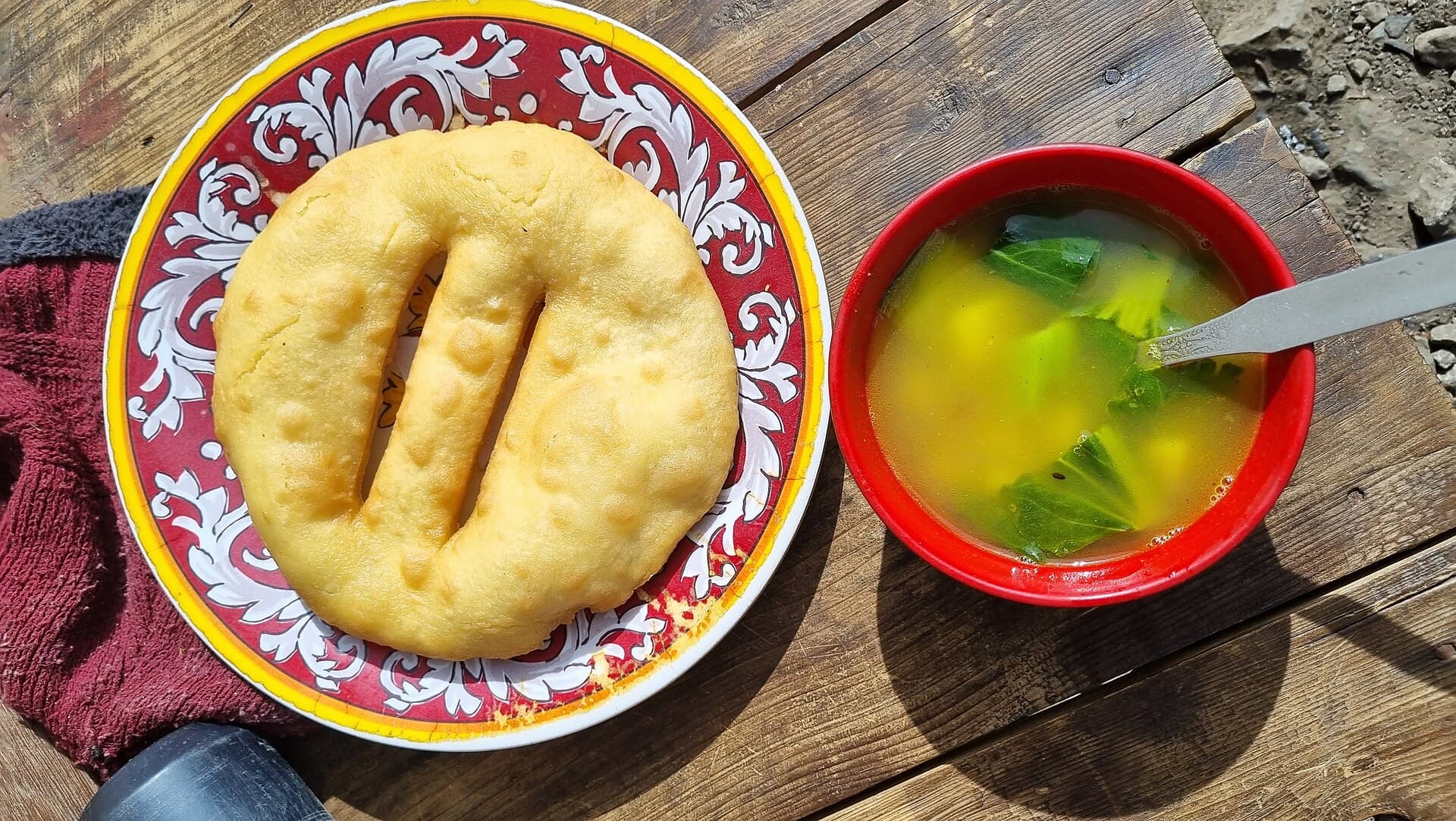
Breakfast
Porridge, Tibetan bread, eggs, chapati, pancakes, tea or coffee
All destinations
All destinationsTrek the Everest Base Camp trail, then climb a 6,119 m peak with crampons, an alpine start, fixed lines and a summit ridge.
Trek the Everest Base Camp trail, then climb a 6,119 m peak with crampons, an alpine start, fixed lines and a summit ridge.
The trip lasts nineteen days, thirteen of which are spent on the trail or the mountain. You trek the Everest Base Camp route as far as Kala Patthar, which provides your acclimatisation, then cross to Lobuche East Base Camp at 4,950 m. There you spend a day training with ropes and crampons, move up to a high camp at about 5,400 m, and climb through the night to the 6,119 m summit.
This trip is for trekkers who want to climb their first mountain, rather than mountaineers looking for a difficult one. You do not need previous alpine experience, and most people who climb it with us have none. You do need to be fit enough for the Base Camp trek followed by a summit day, and willing to learn to use an ascender and abseil on a rope before you need to do so in the dark.
Above the crampon point at roughly 5,700 m you are on glacier and fixed rope. The headwall below the summit ridge is 45 to 50 degrees; you climb it with a jumar and descend it by abseil. The ridge at the top is narrow, with a long drop on one side. The climb is graded PD+ in the alpine system. It is not difficult by mountaineering standards, but it requires proper preparation.
A single weather window is not enough to plan around. Day 14 is a reserve summit day: if wind or fresh snow stops the first attempt, you try again the following night rather than going home. Day 18 is a spare day in Kathmandu in case the Lukla flight is delayed. Shorter versions of this trip use up both of these days in their itinerary and have no reserve.
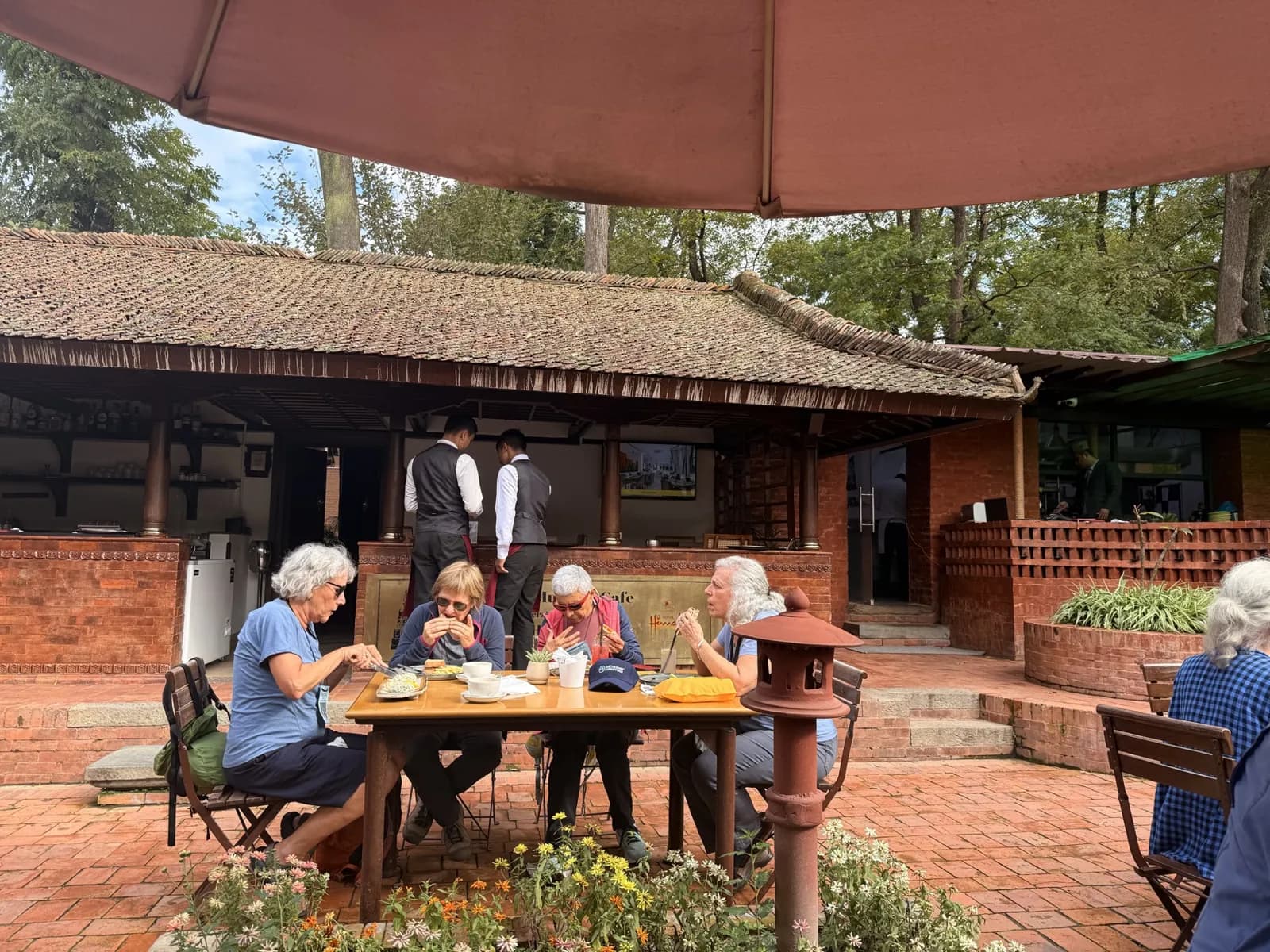
When you land in Kathmandu, we meet you at the airport and take you to your hotel in Thamel. The afternoon is free to rest after the flight or explore the old streets. In the evening we have dinner together, go through the route day by day and answer any questions you have.
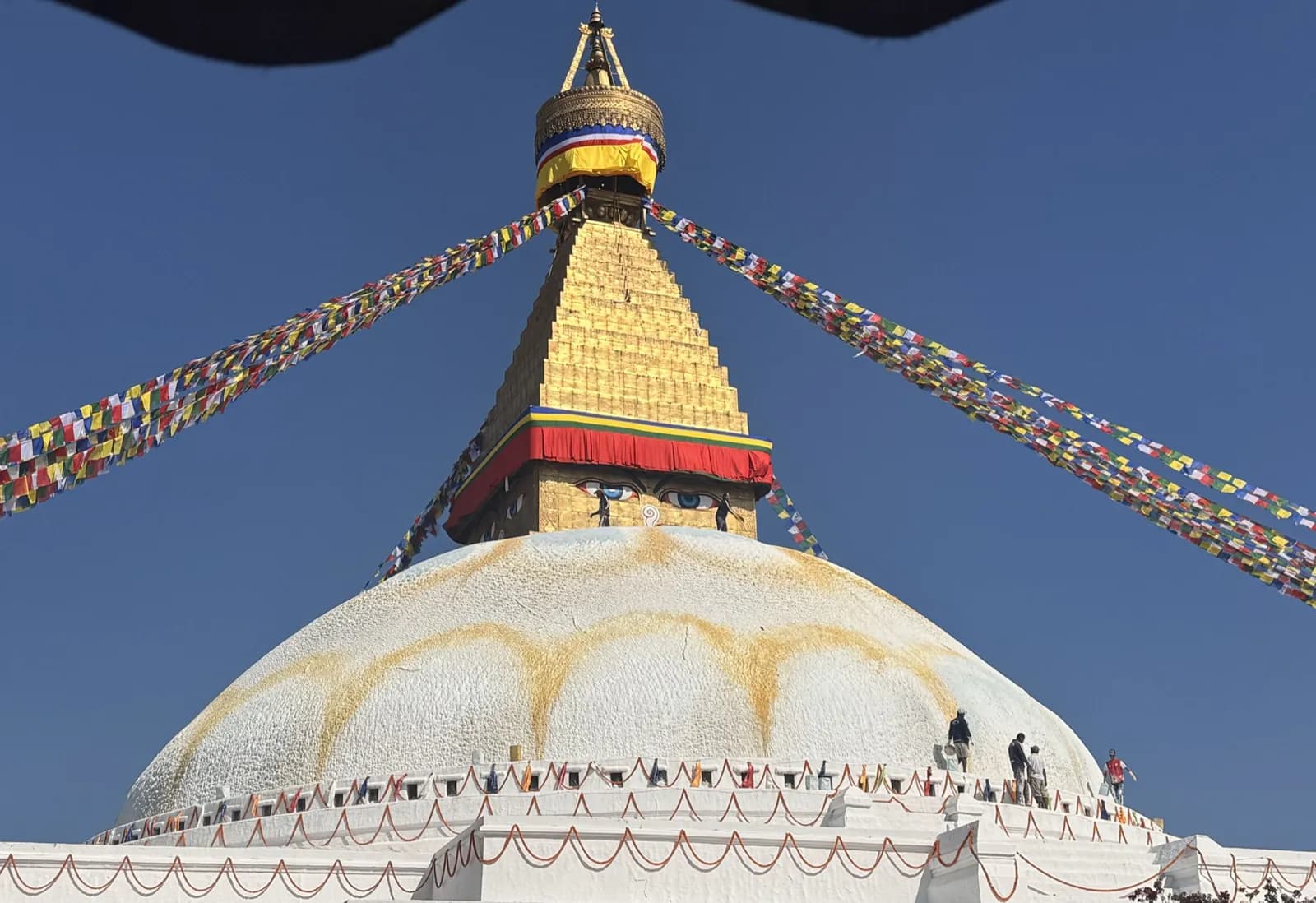
A working day in Kathmandu. We lodge your climbing permit with the Nepal Mountaineering Association, then check your kit item by item: boots, crampons, harness, helmet and ascender. Anything missing is hired or bought in Thamel the same afternoon, which is far cheaper than buying it at home. Your guide checks the fit of every item personally.
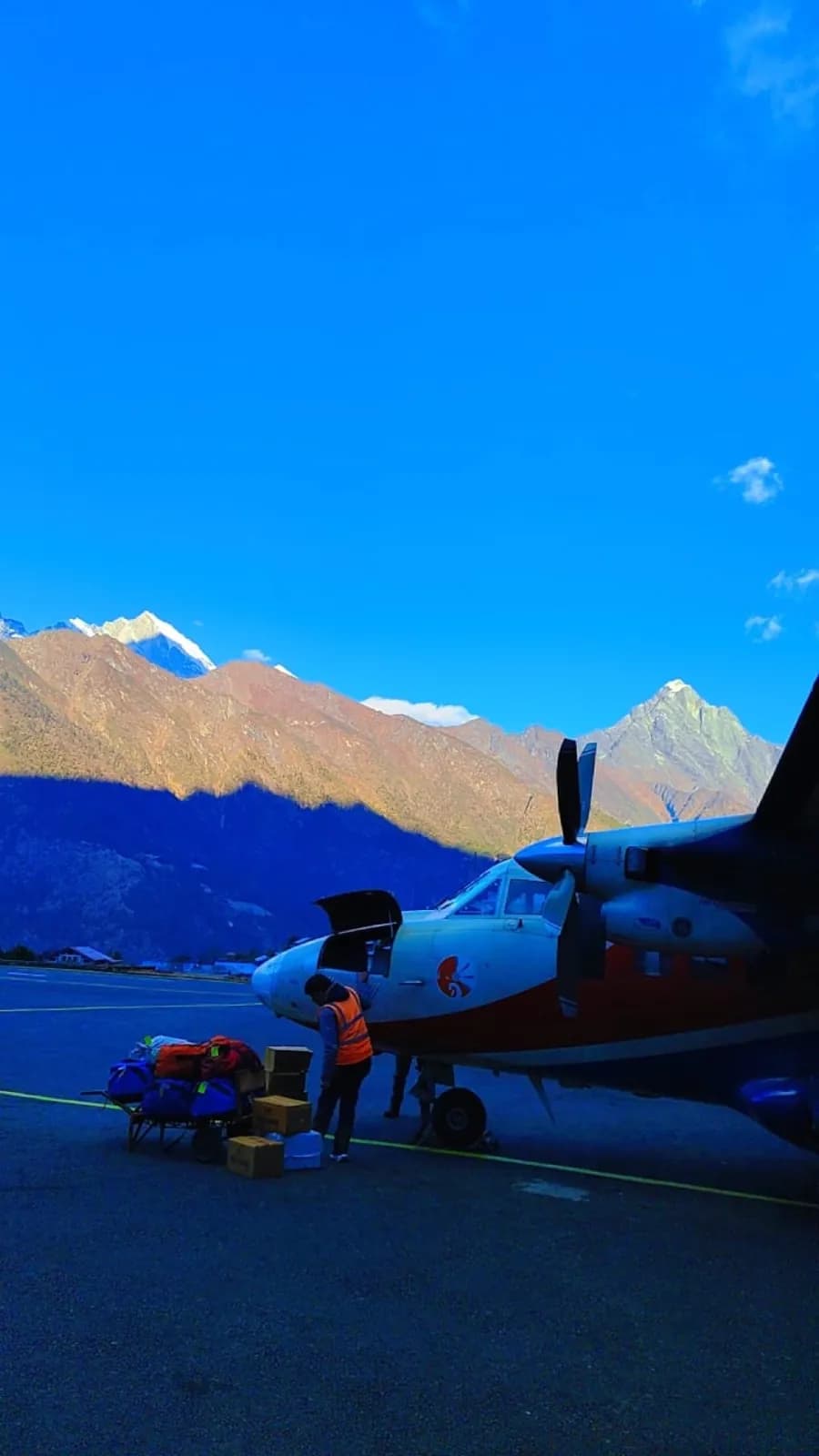
An early mountain flight of about twenty minutes over the ridges takes you to Lukla at 2,840 m, where the runway is built on a slope. From the airstrip the trail descends gently through Chheplung and Ghat beside the Dudh Koshi. It is a half day of easy walking to Phakding, which helps your legs adjust to trekking.
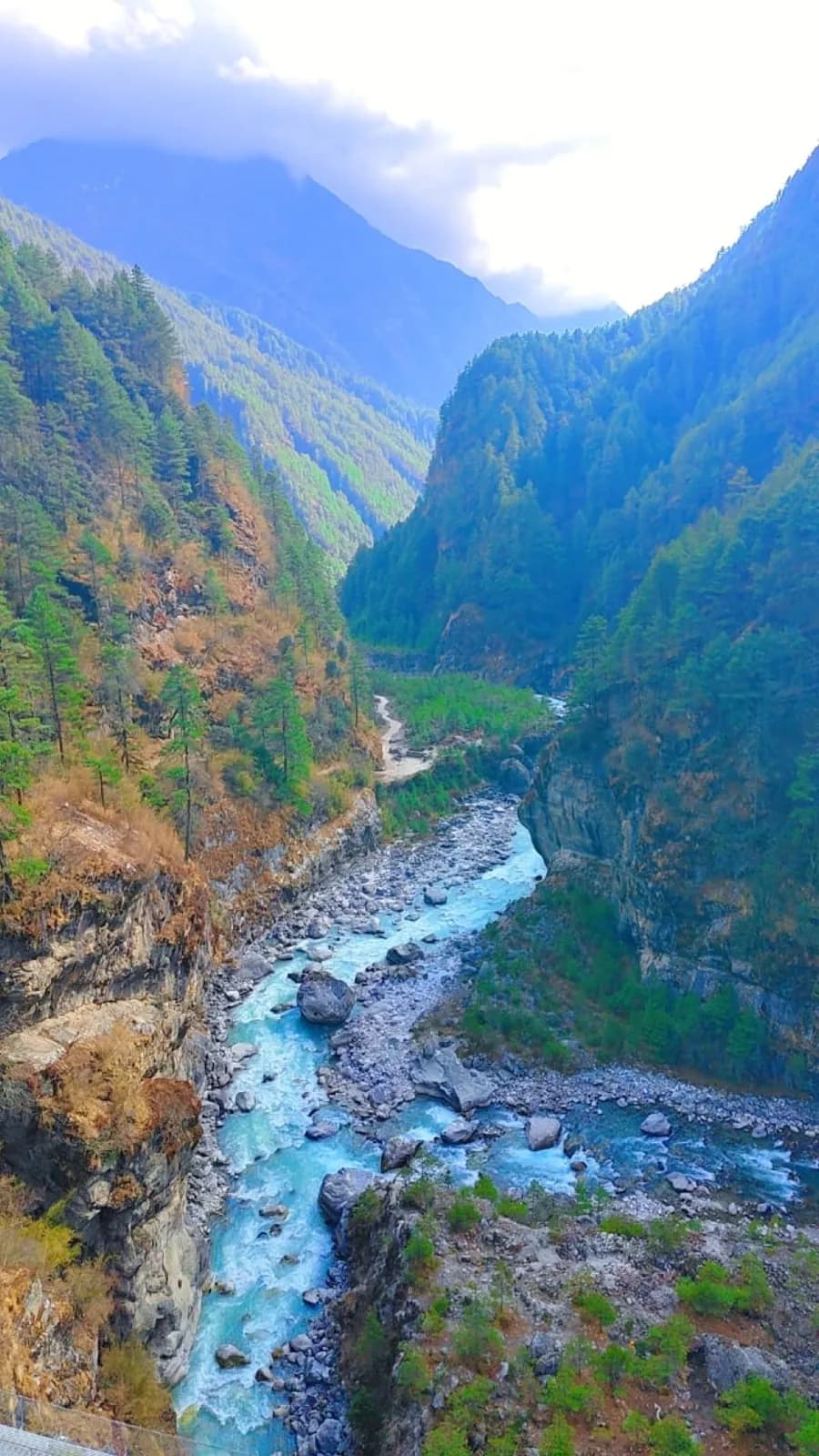
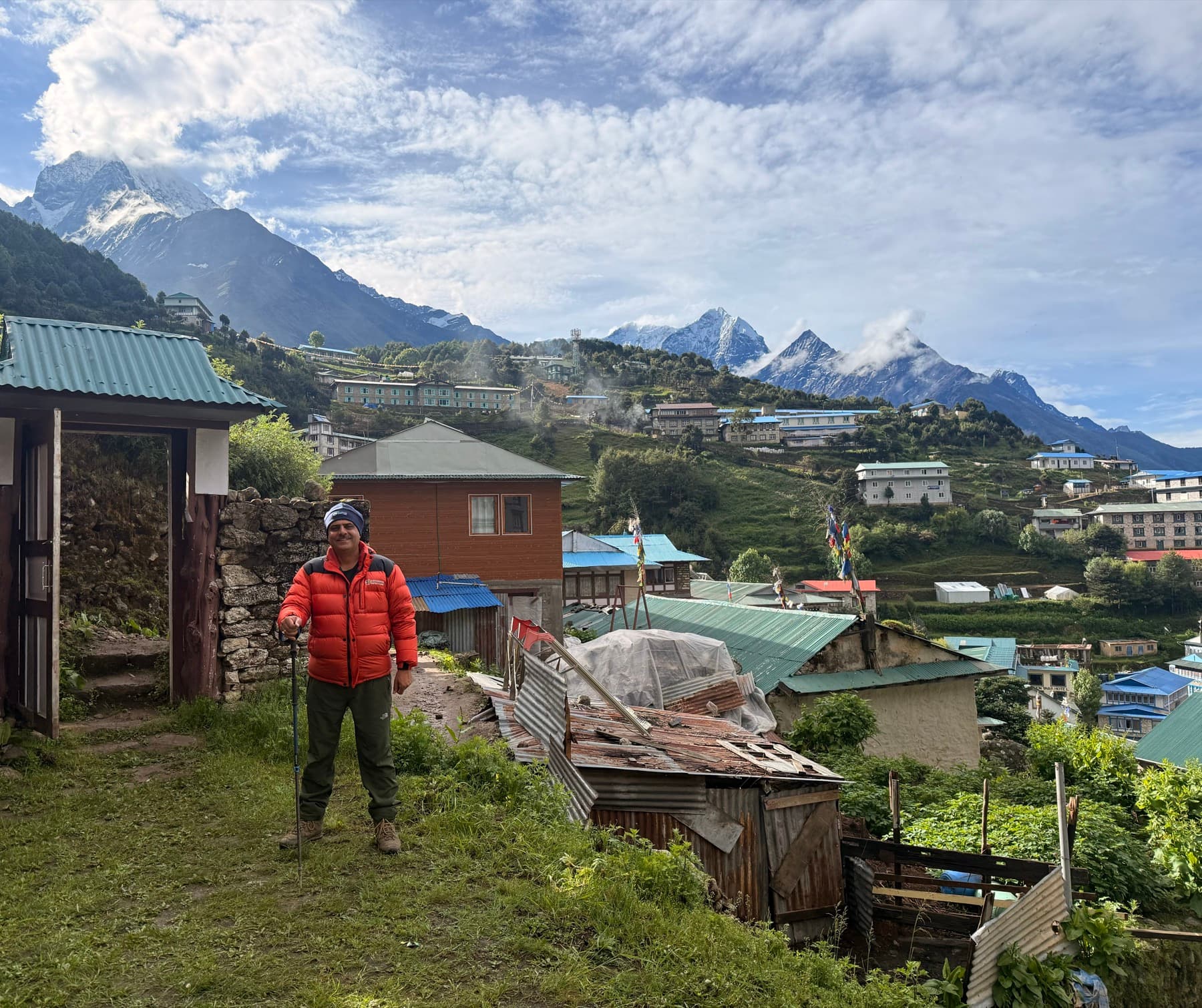
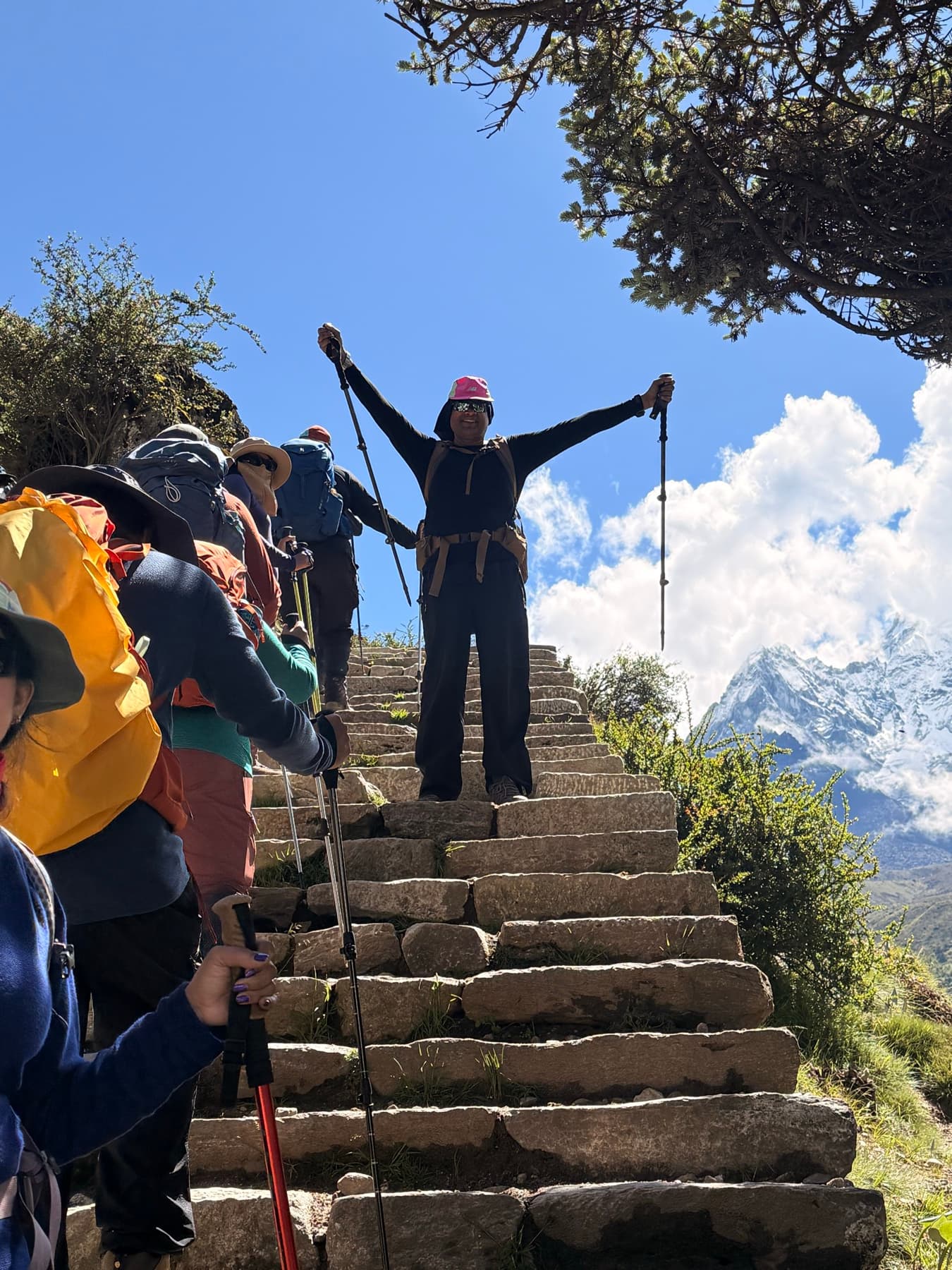
A long climb into the heart of the Khumbu. You cross the river five times on suspension bridges and pass the national park gate at Monjo, where permits are checked, then climb 600 metres of forested switchbacks. Near the top, Everest can be seen briefly through the trees if the cloud allows.
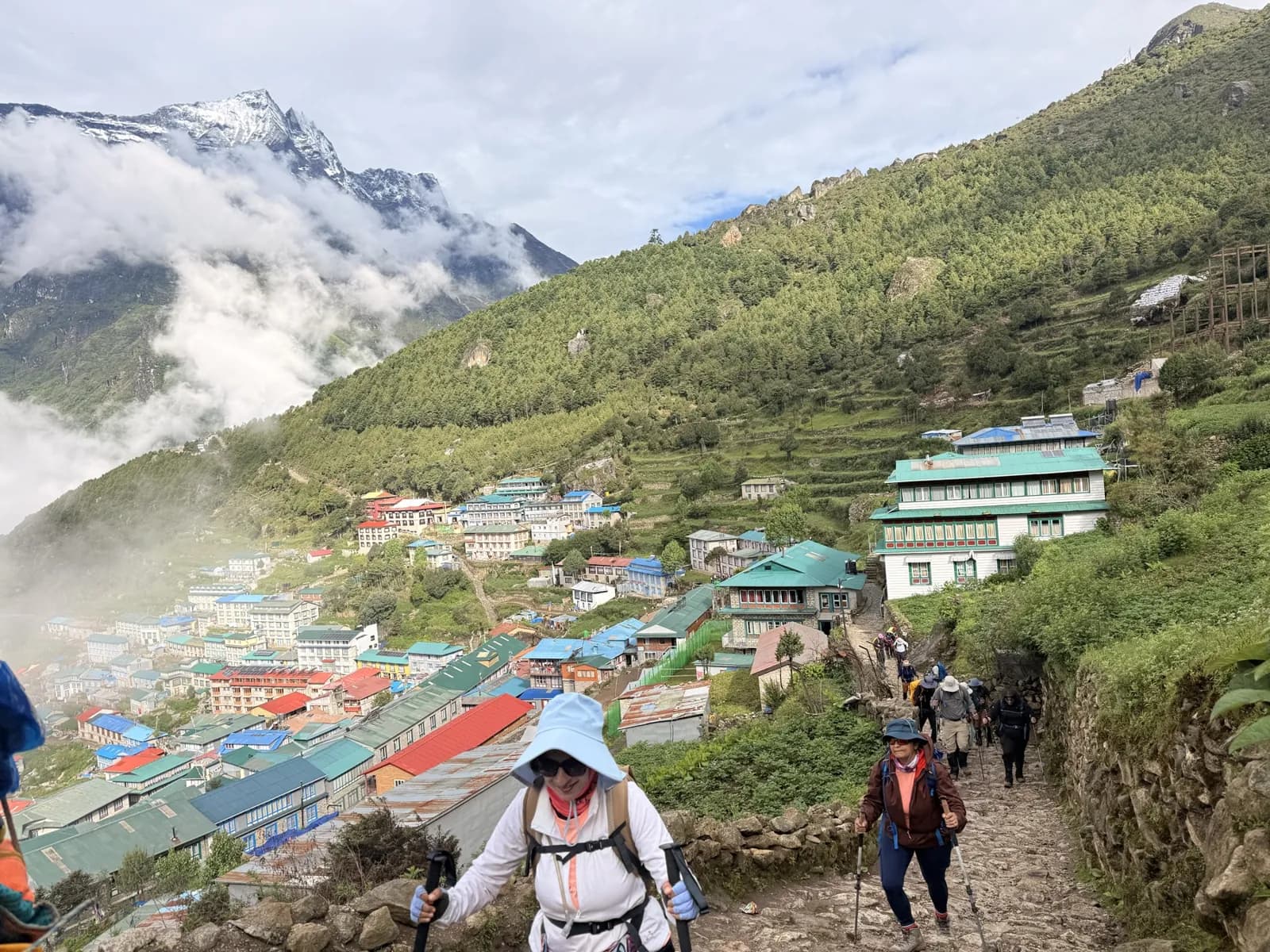
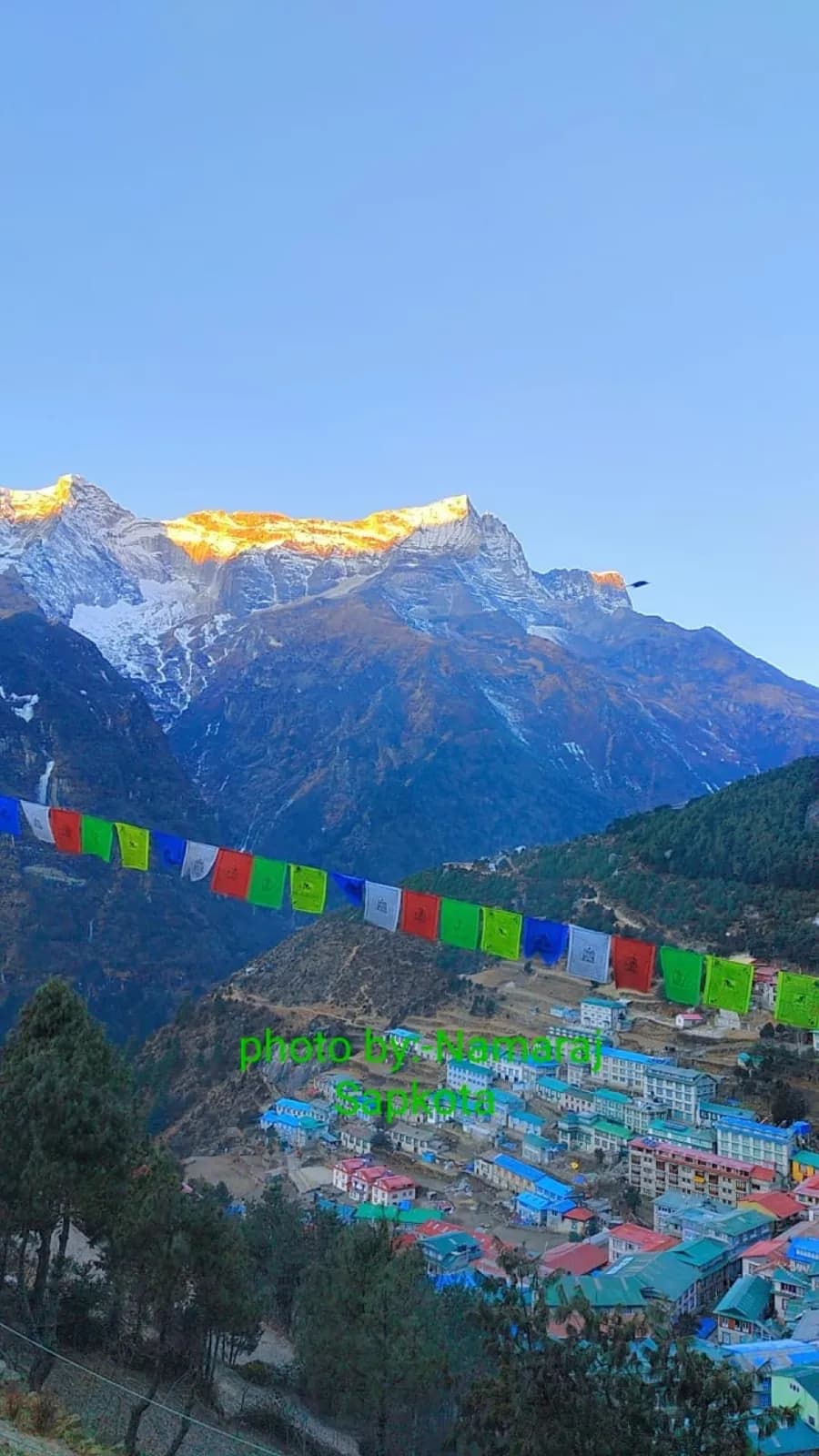
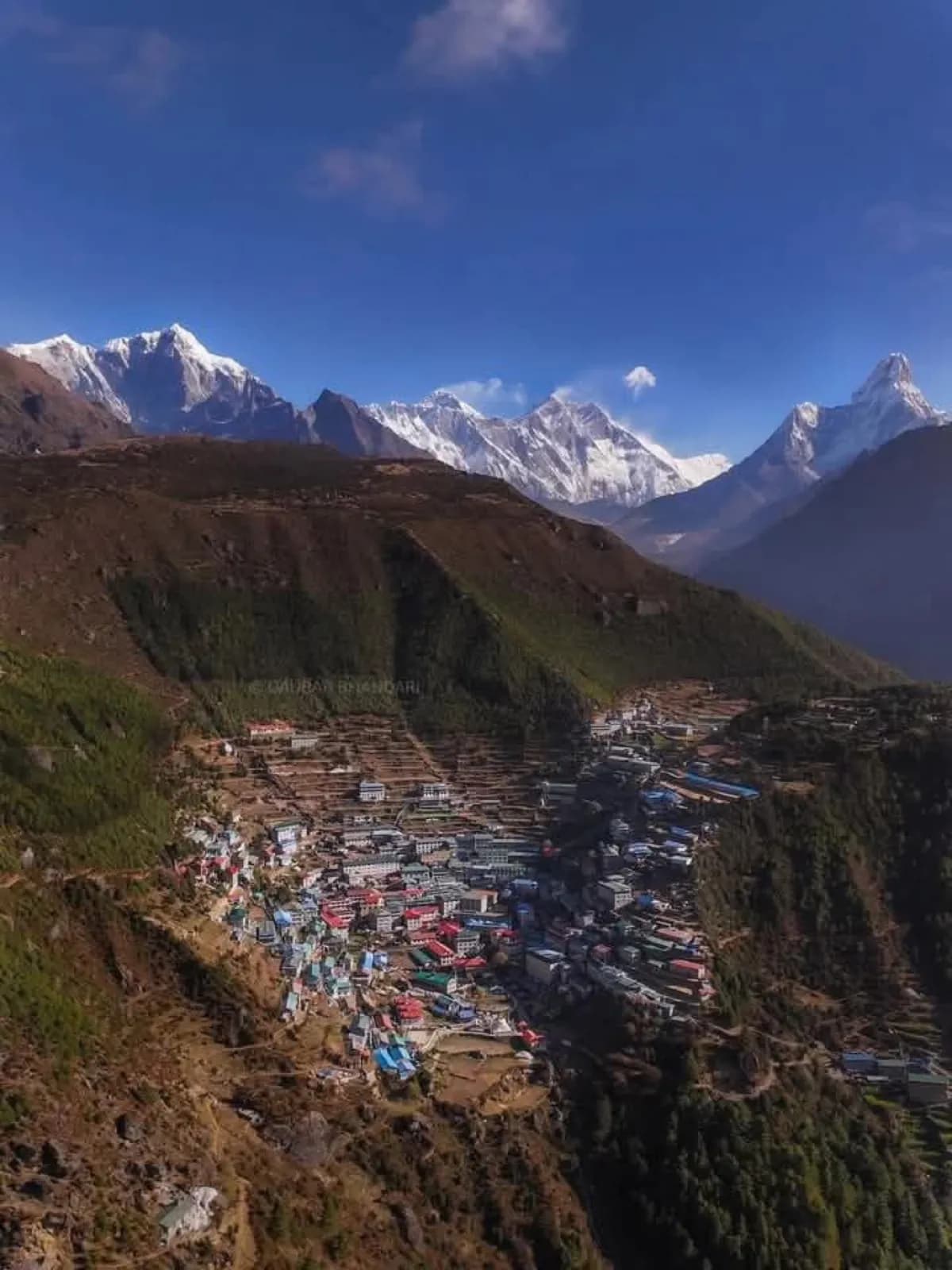
Although it may look like a rest day, this is an active acclimatisation day. You walk up to the Everest View Hotel at 3,880 m for the panorama, continue to Khumjung and its monastery, and return to sleep at Namche. Climbing high and sleeping low is what makes the summit possible two weeks later.
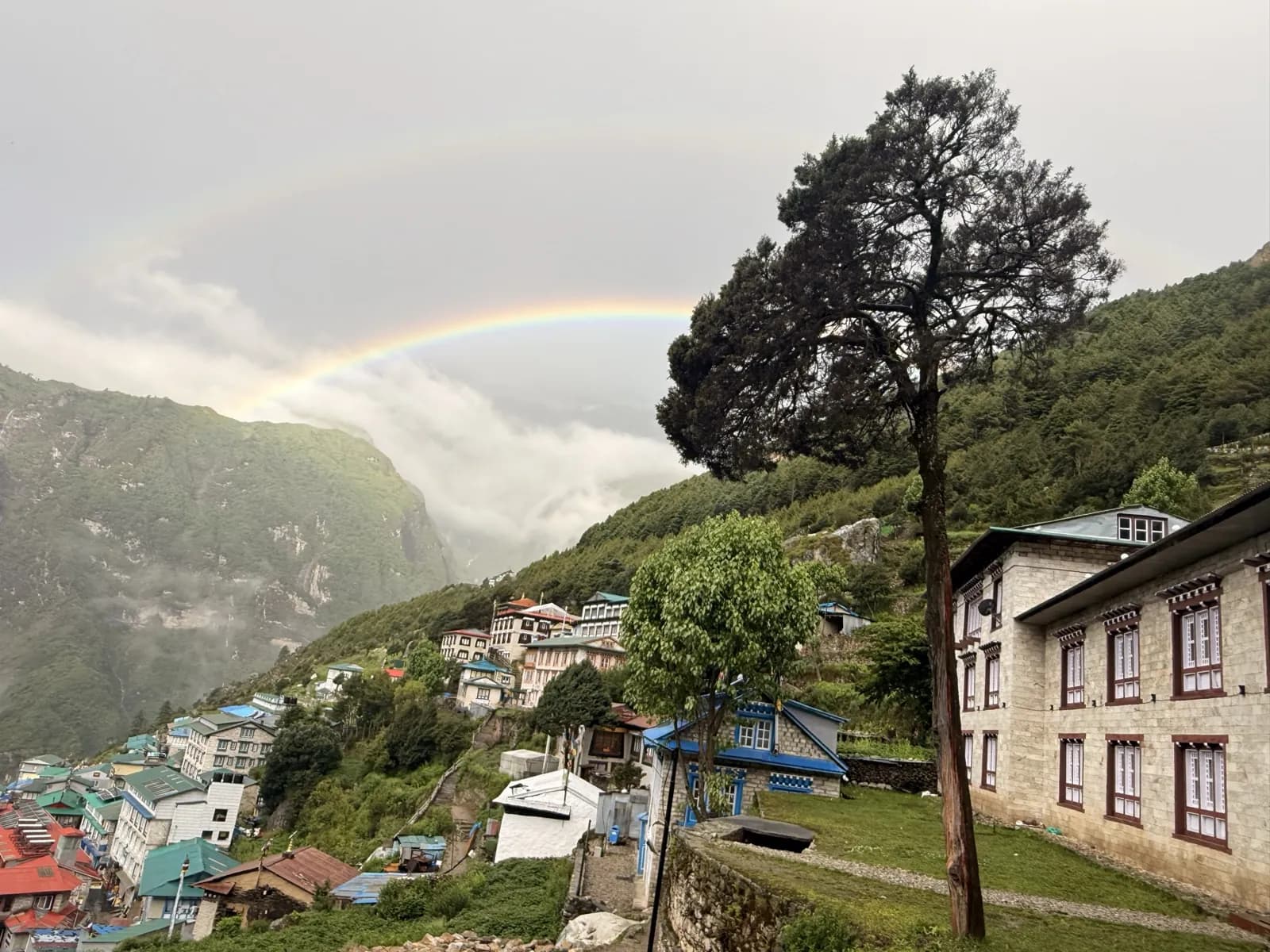
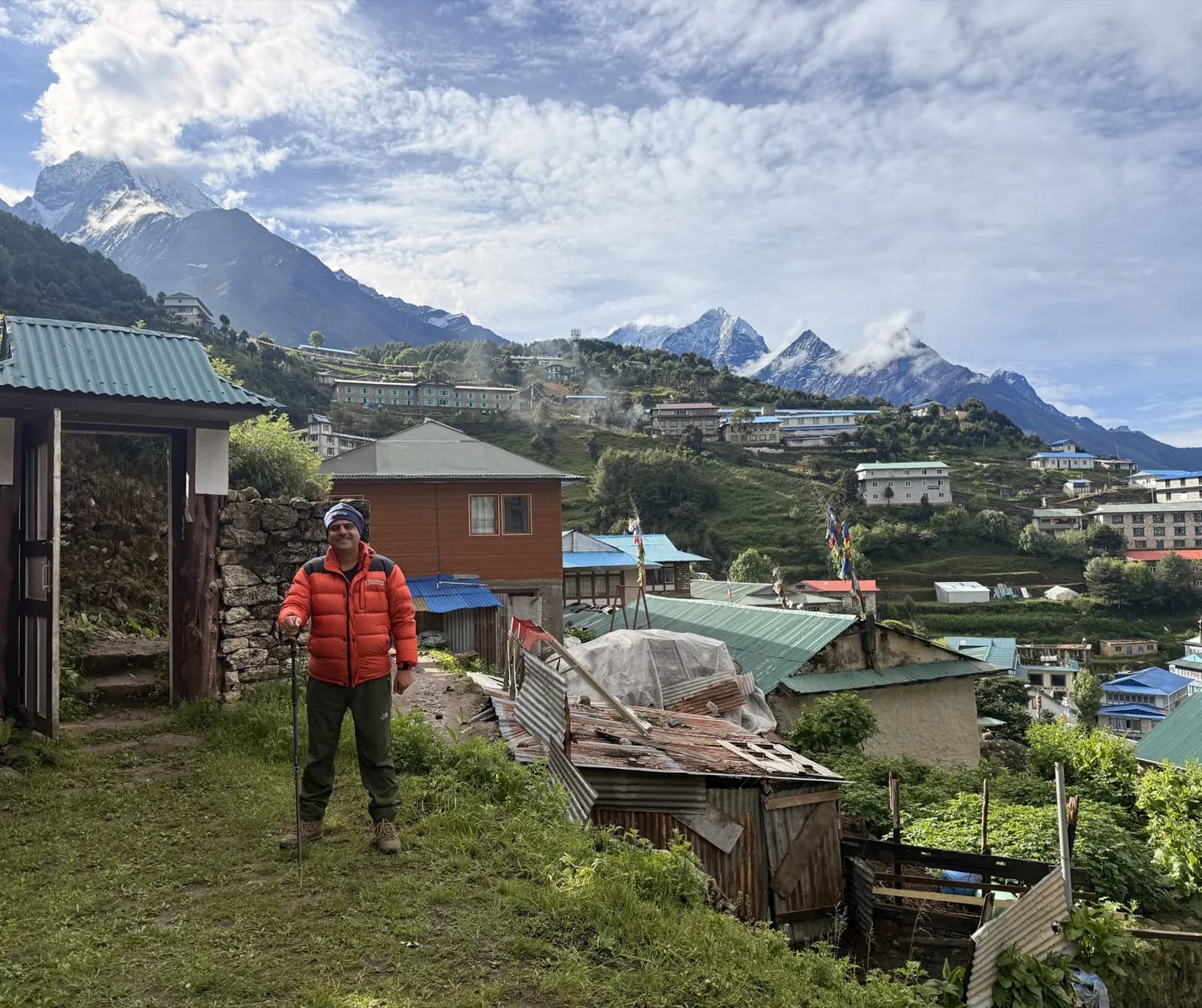
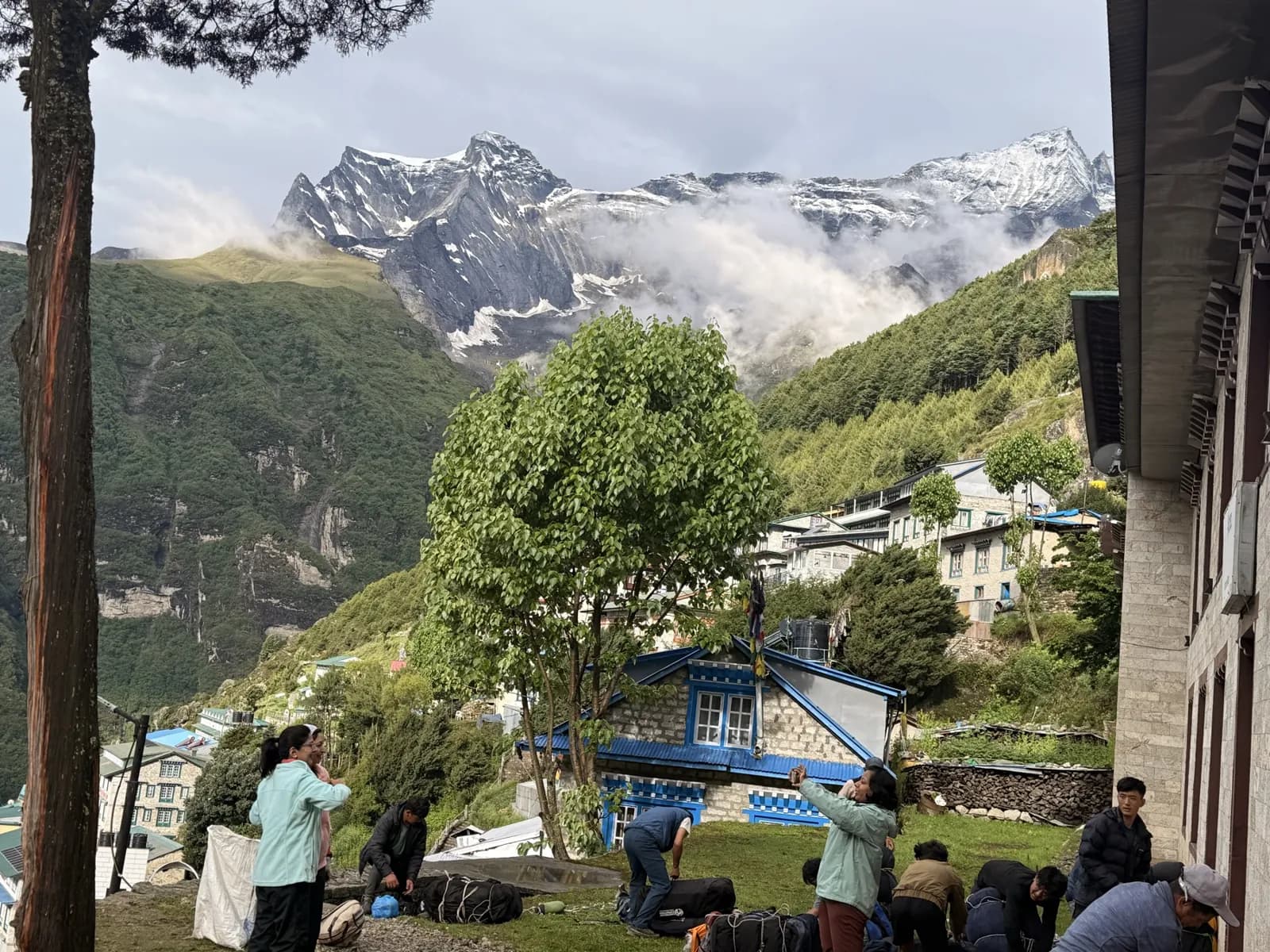
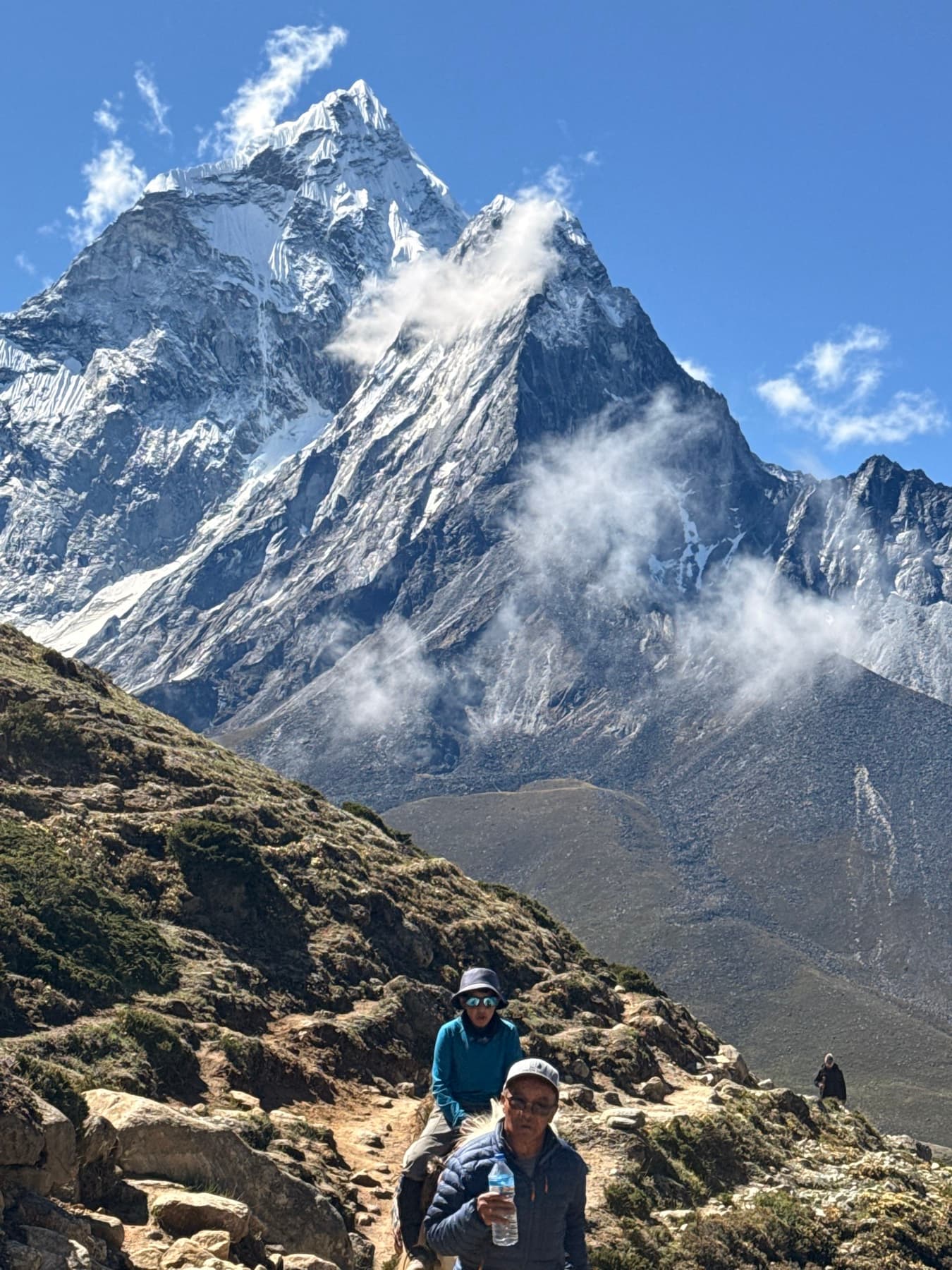
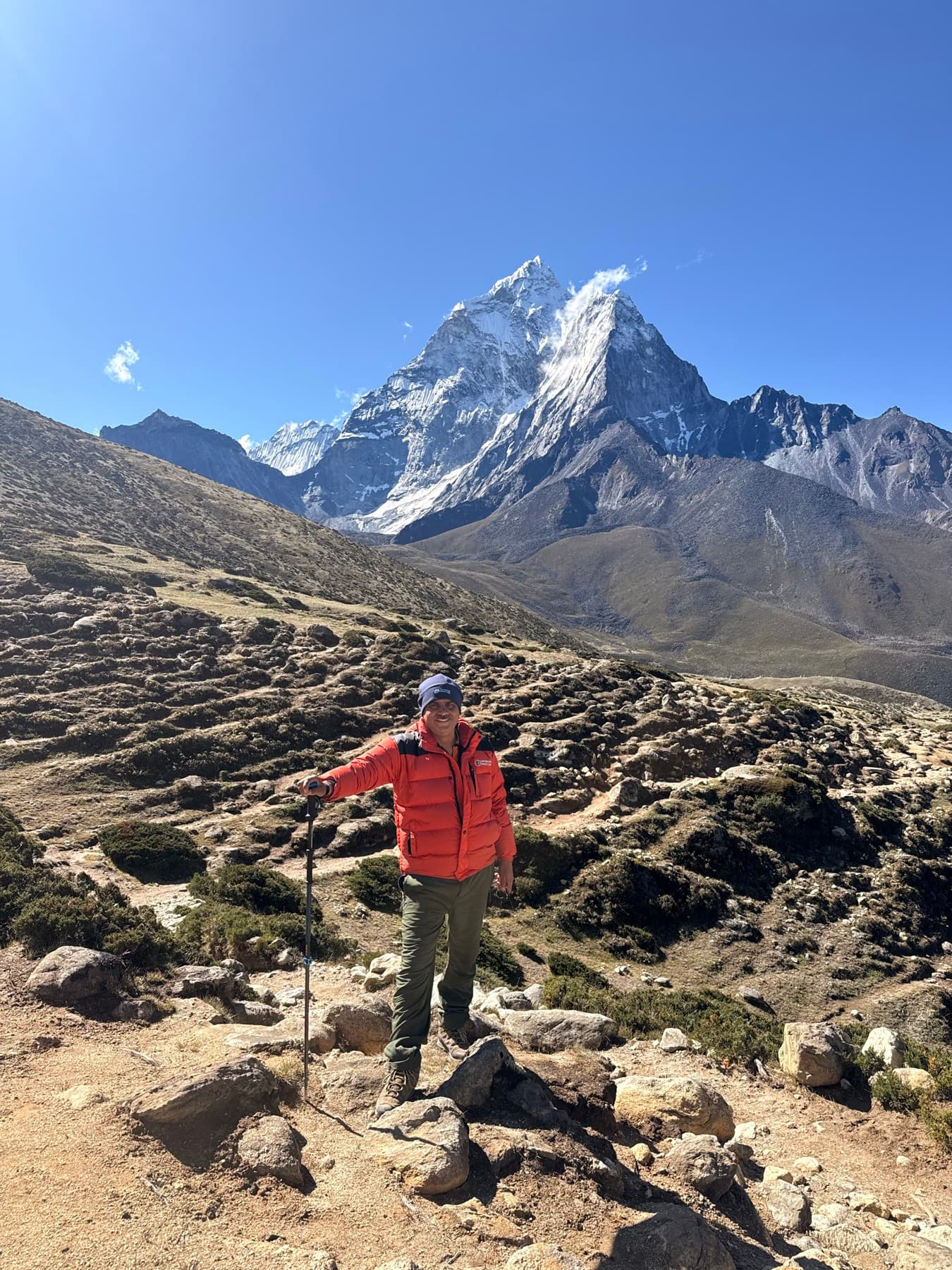
The trail follows the valley wall with Ama Dablam ahead the whole way, drops to the river at Phunki Tenga, then climbs 600 metres through rhododendron forest to Tengboche. The monastery holds an afternoon service most days, and visitors may sit quietly at the back. Please remove your hat and boots.
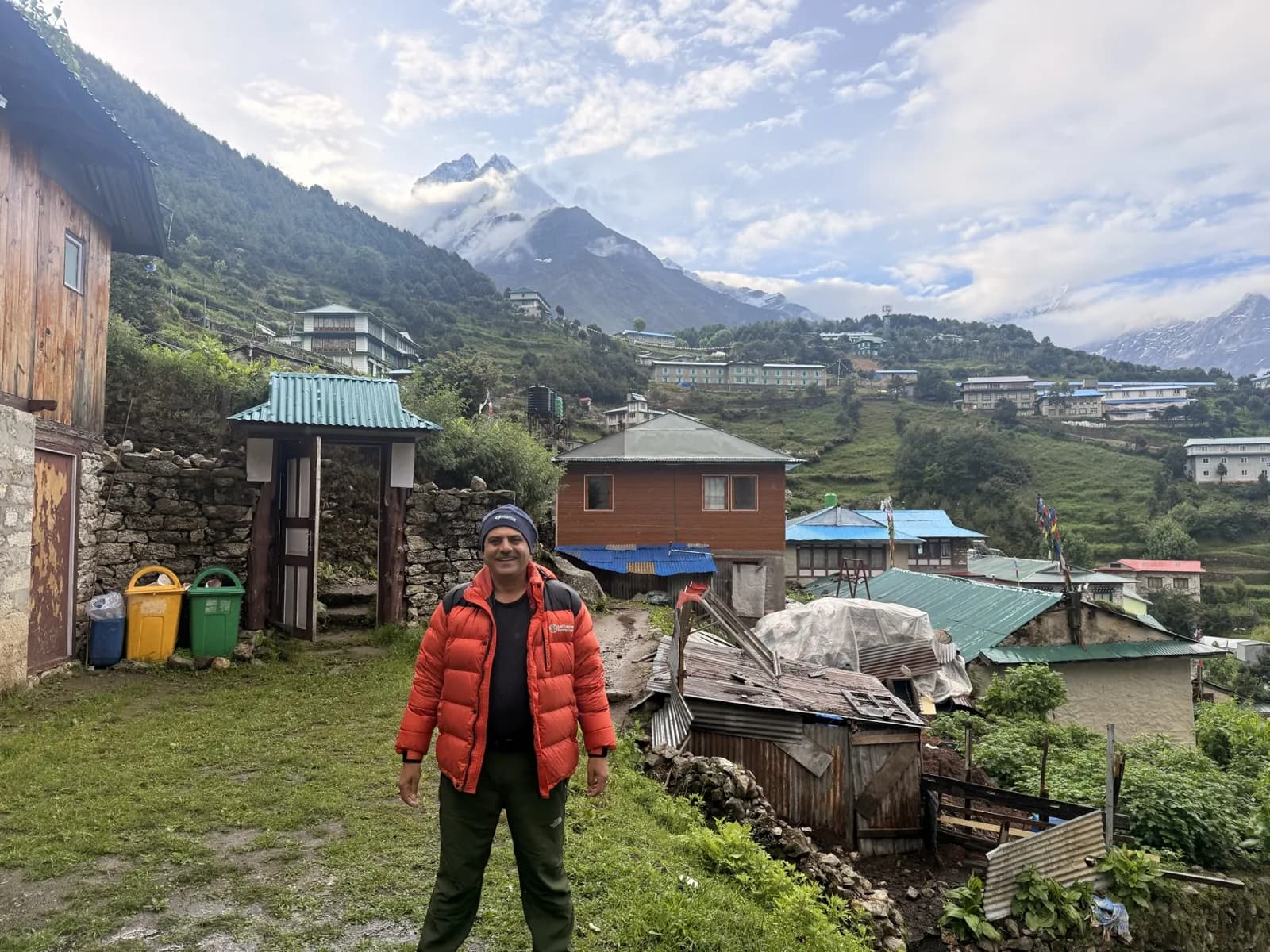
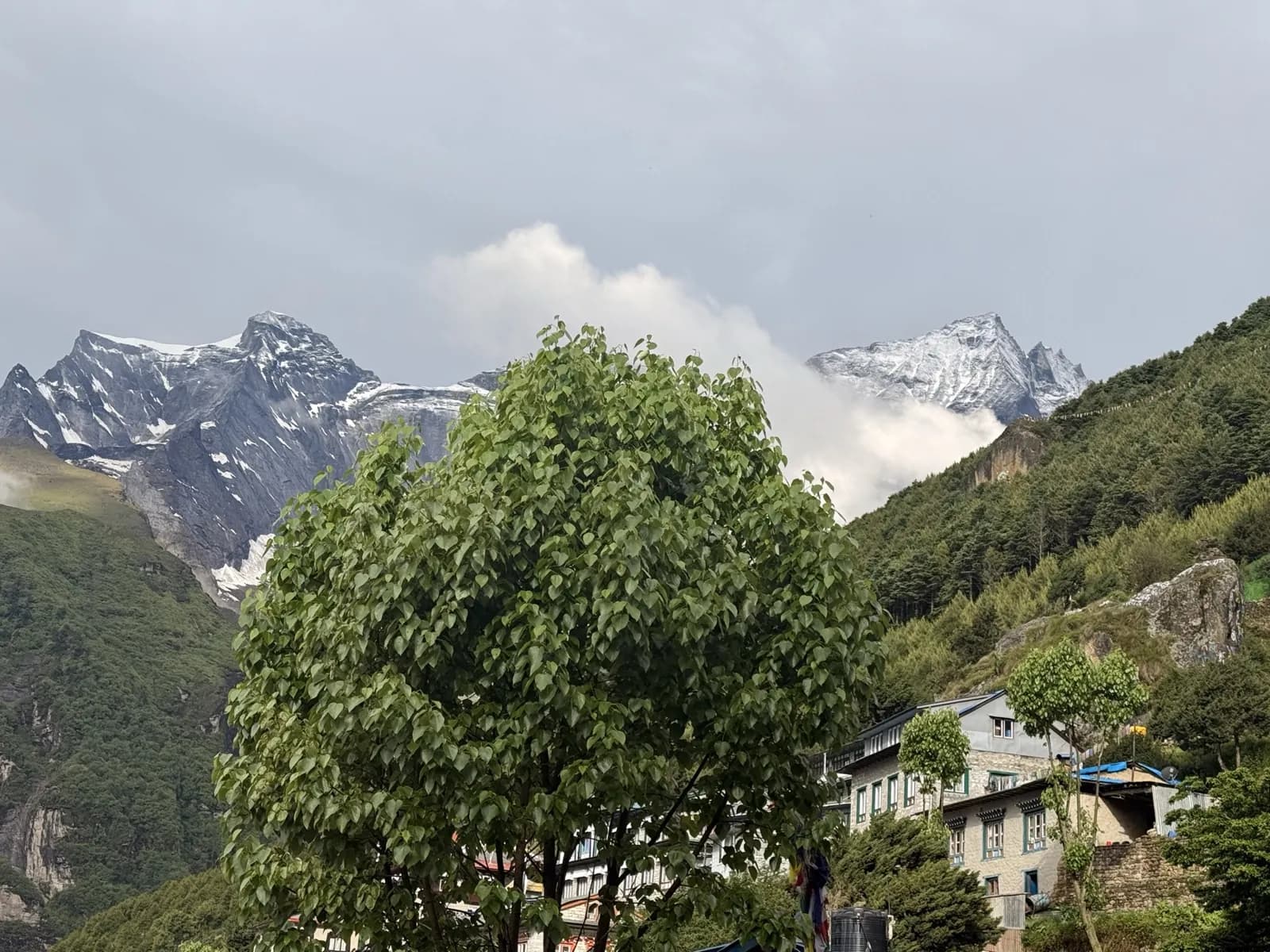
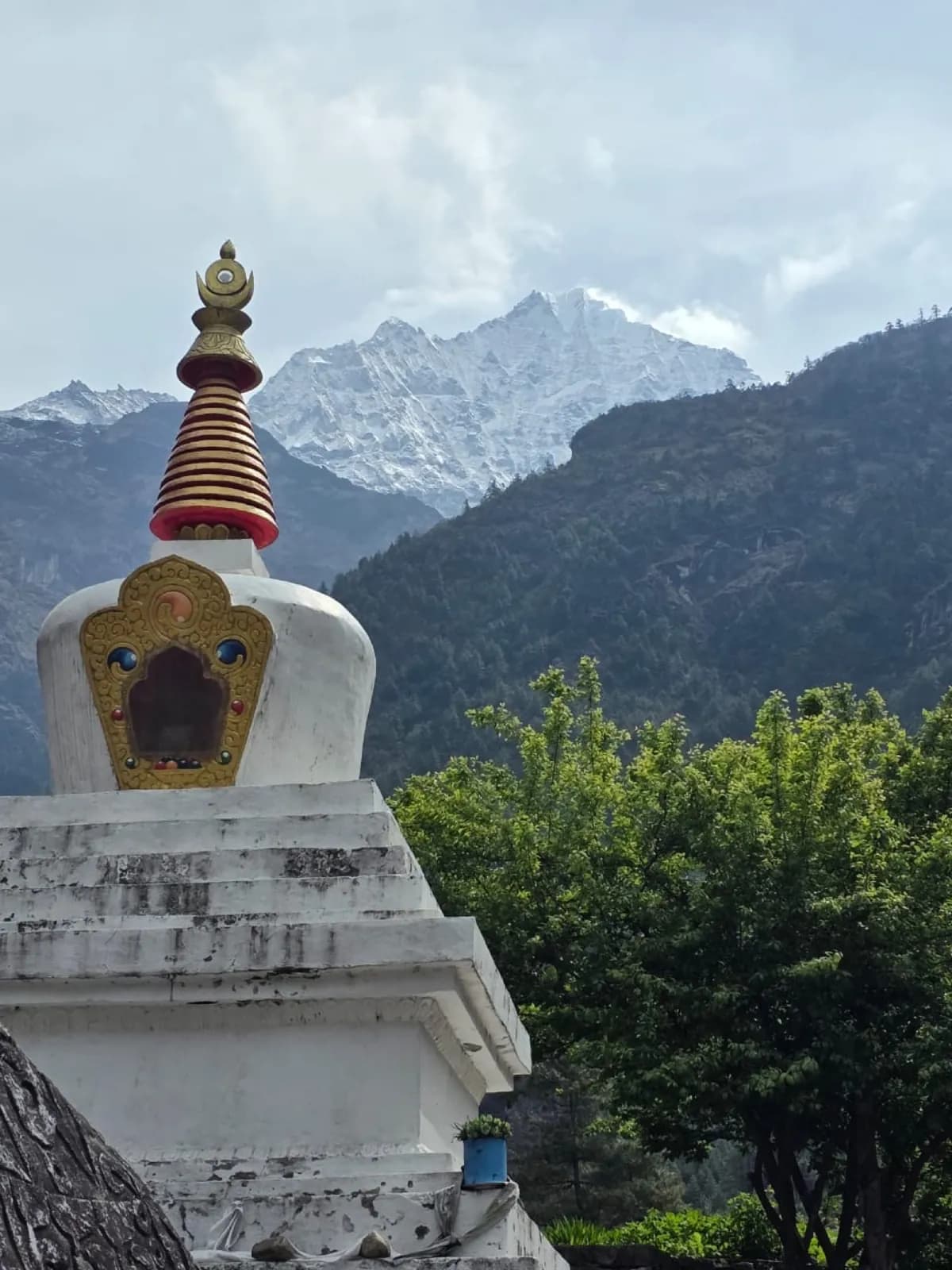
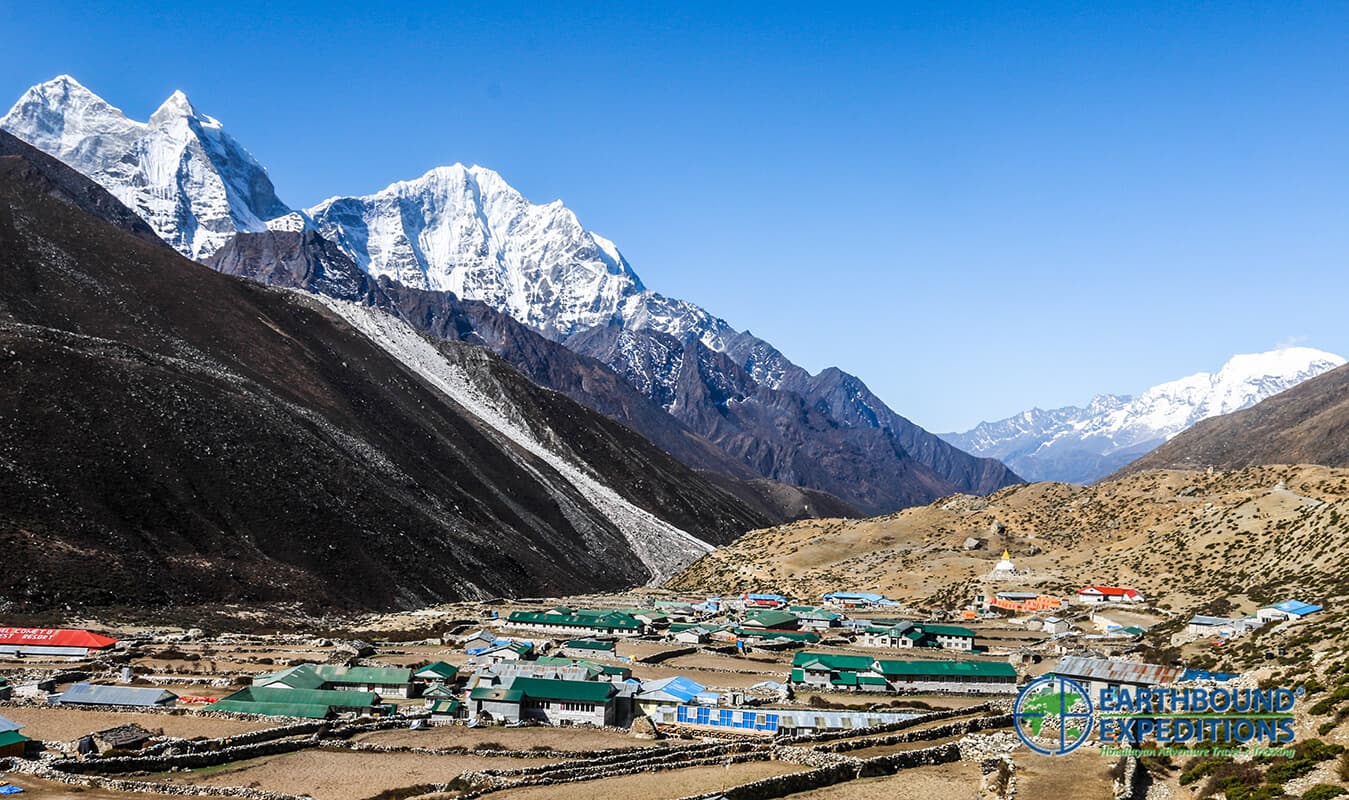
The trail descends through Debuche, crosses the Imja Khola and climbs past Pangboche, where the oldest monastery in the Khumbu stands above the trail. The trees end at around Shomare, and the valley opens into dry scrub and stone-walled fields. Dingboche sits at 4,410 m, with Island Peak at the head of the valley.
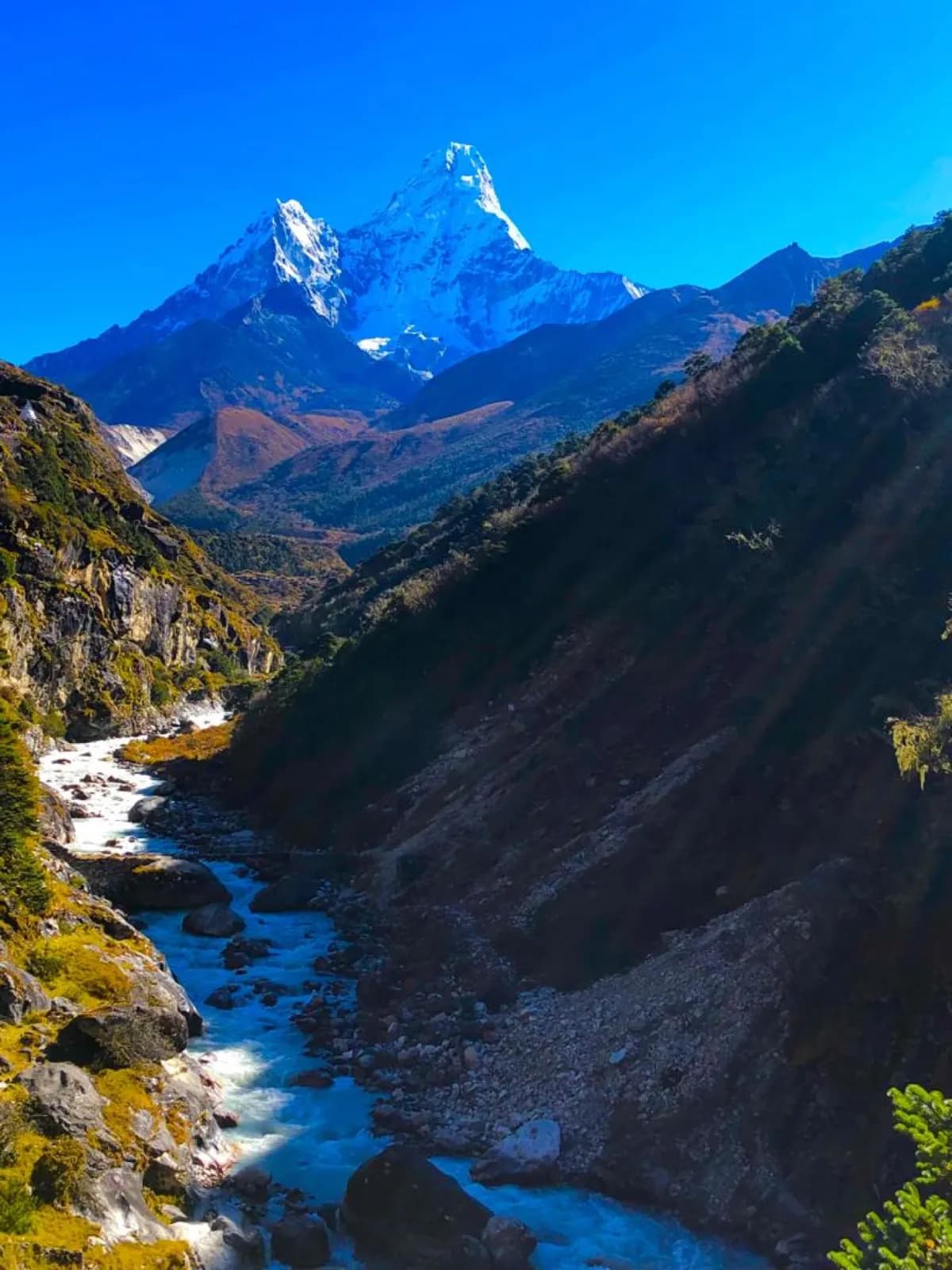
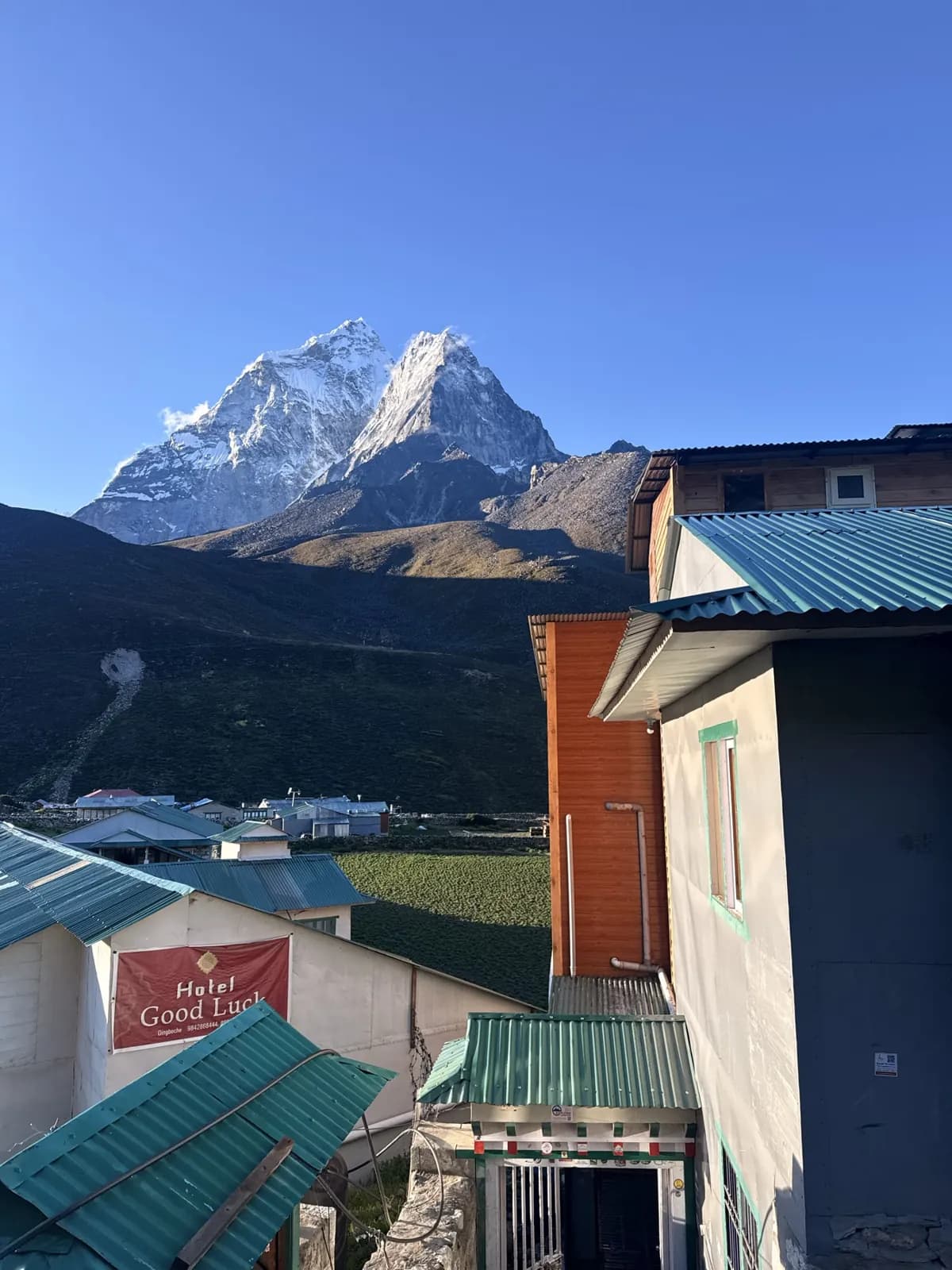
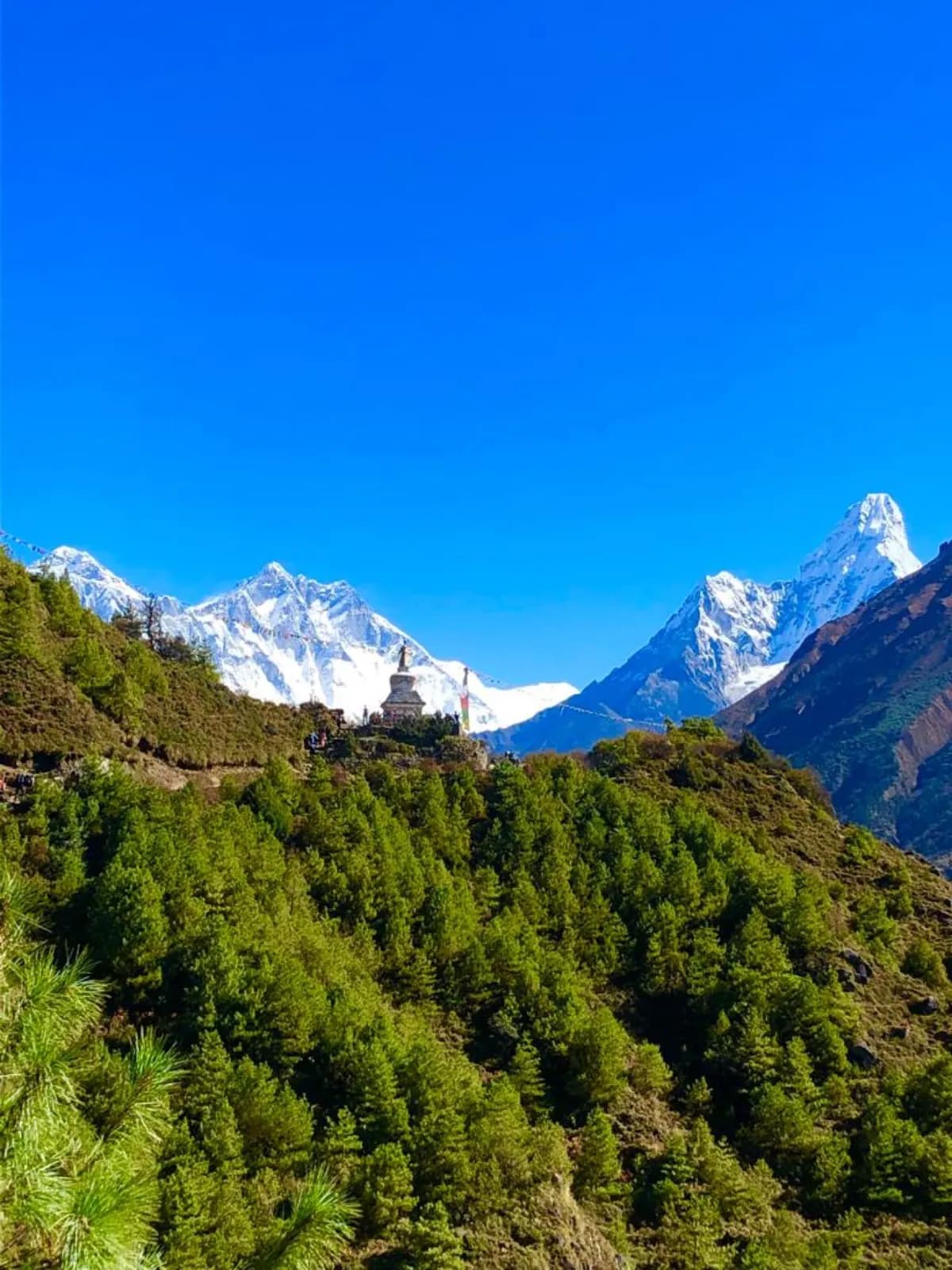
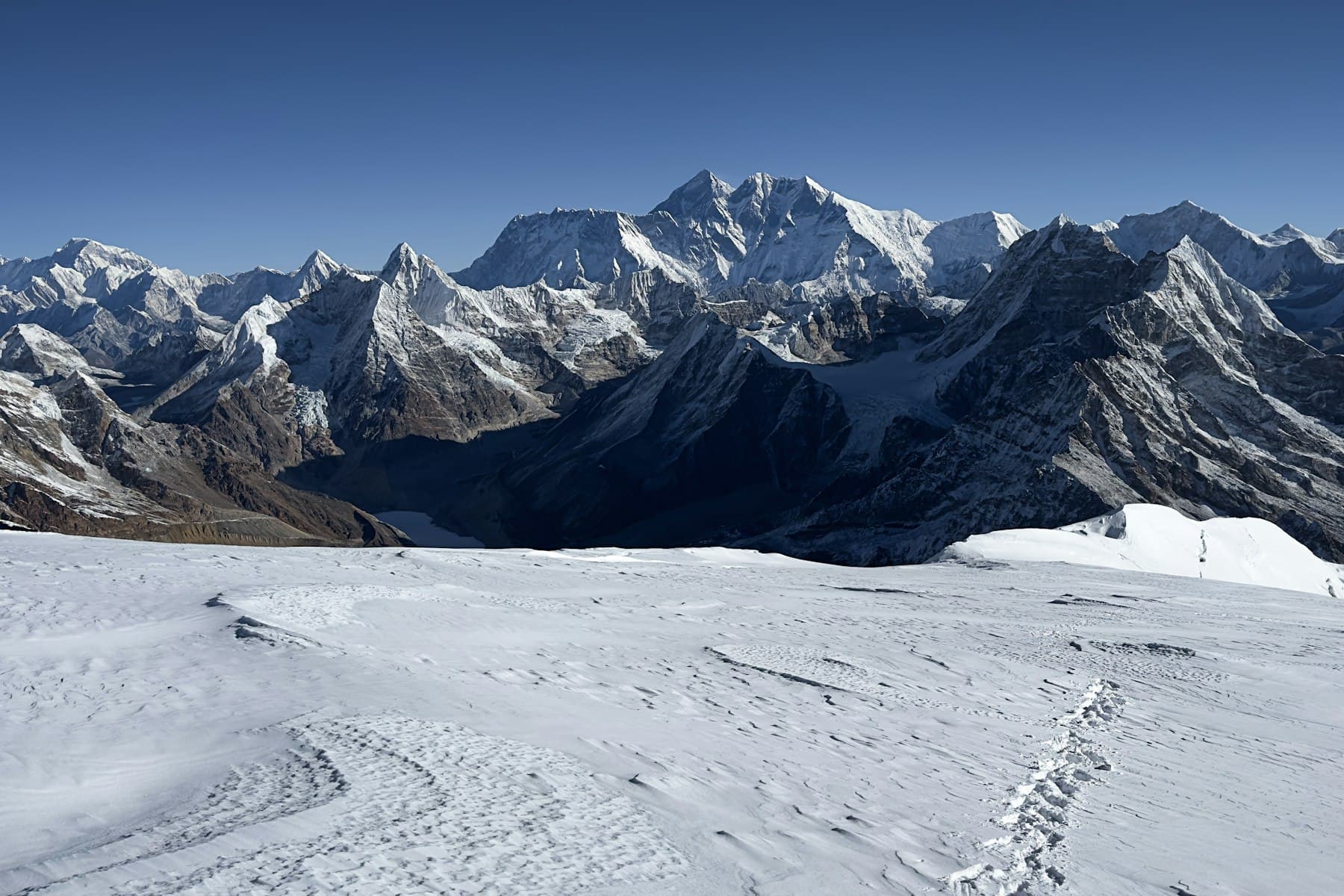
This is the second acclimatisation day, and it is more demanding than many people expect. You climb the Nangkartshang ridge behind the village to about 5,083 m, which takes three hours and gives views of Makalu, Lhotse and Ama Dablam, then return to the same lodge to sleep. Walk slowly and steadily; there is no advantage in arriving first.
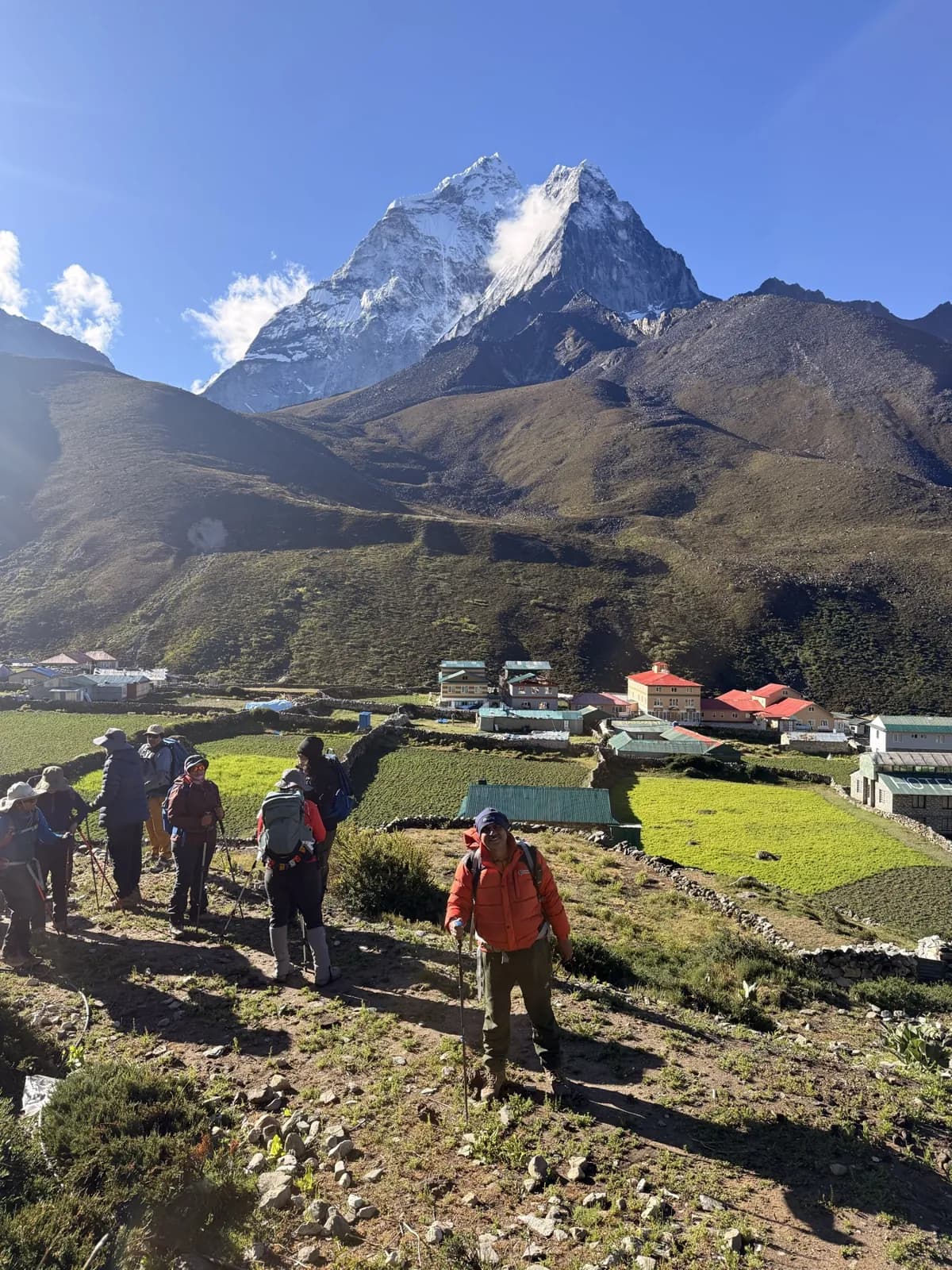
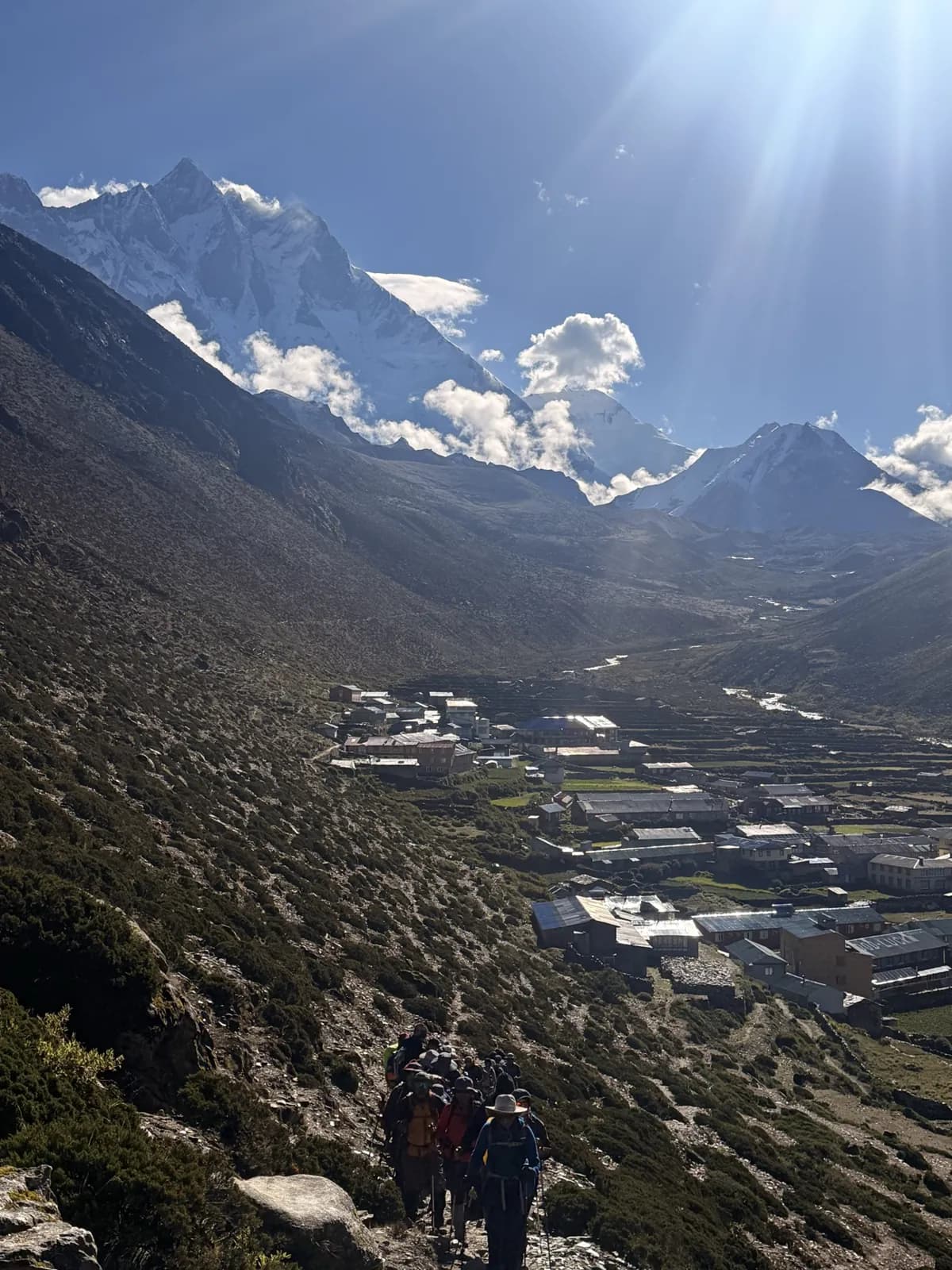
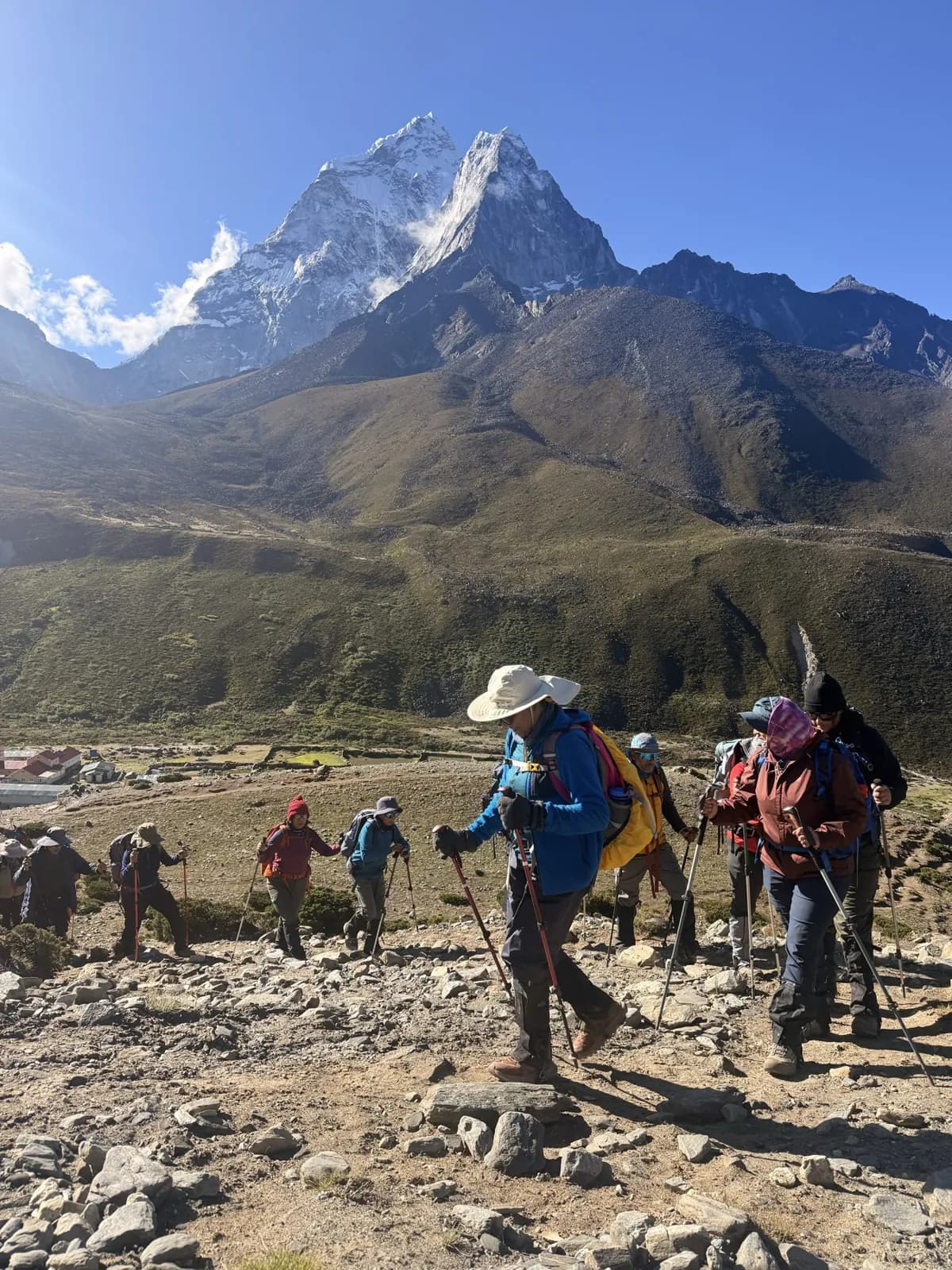
You walk up the valley to Dughla, then climb steeply onto the terminal moraine of the Khumbu Glacier. At the top are the memorials to climbers who died on Everest, including Scott Fischer and Babu Chiri Sherpa, where most people spend about half an hour. Lobuche is another hour further on, at 4,940 m, and is cold and windy.
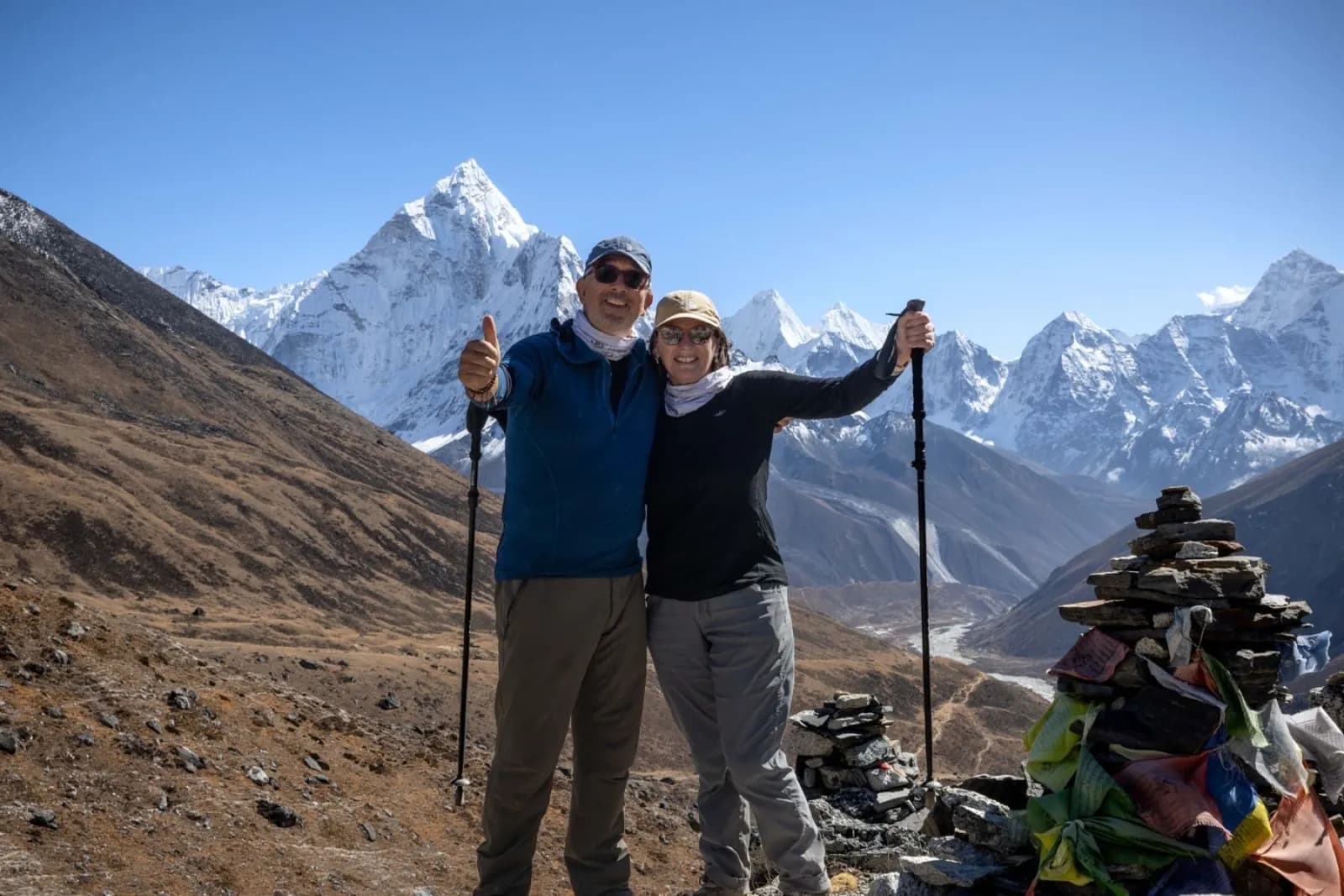
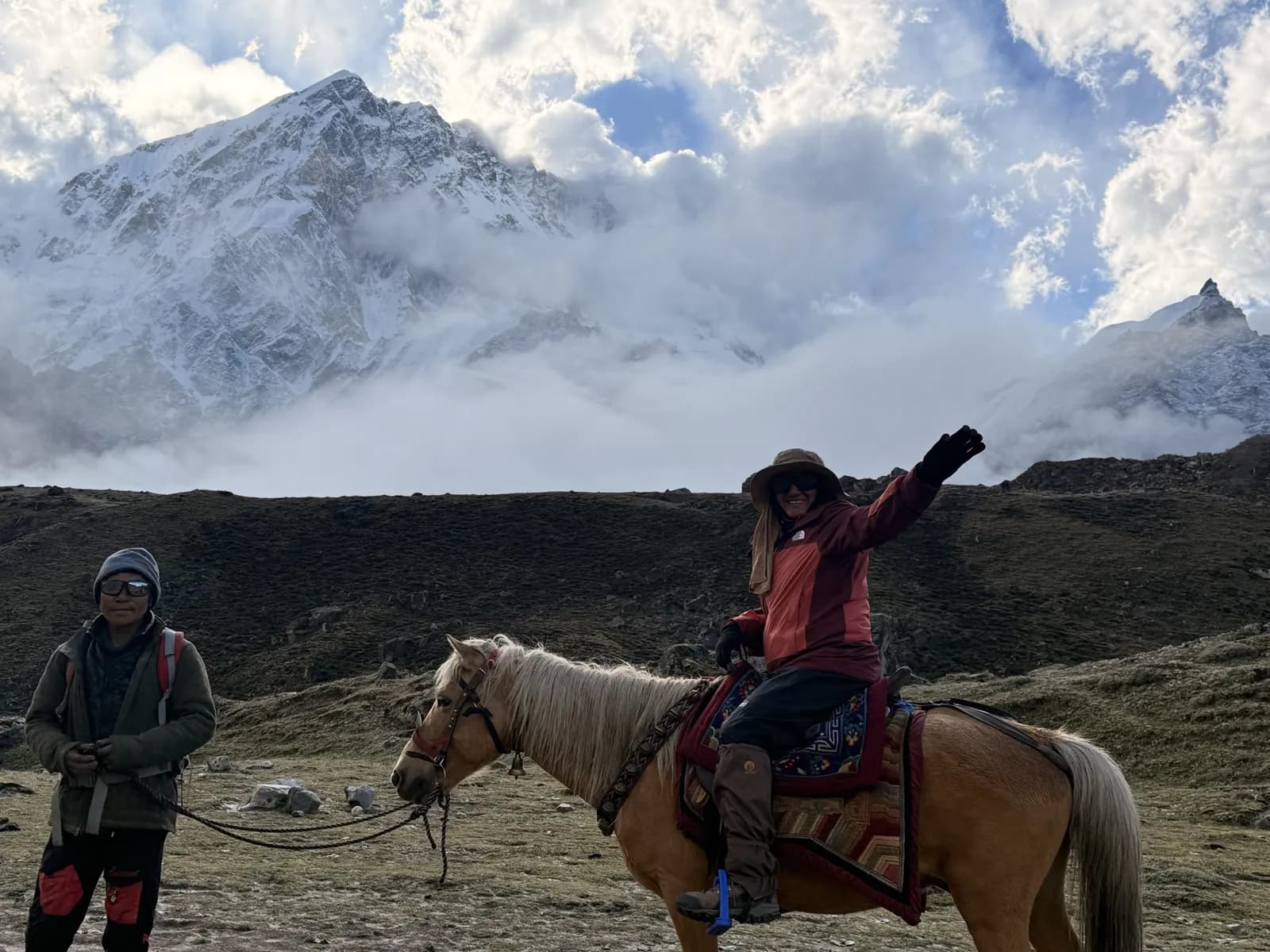
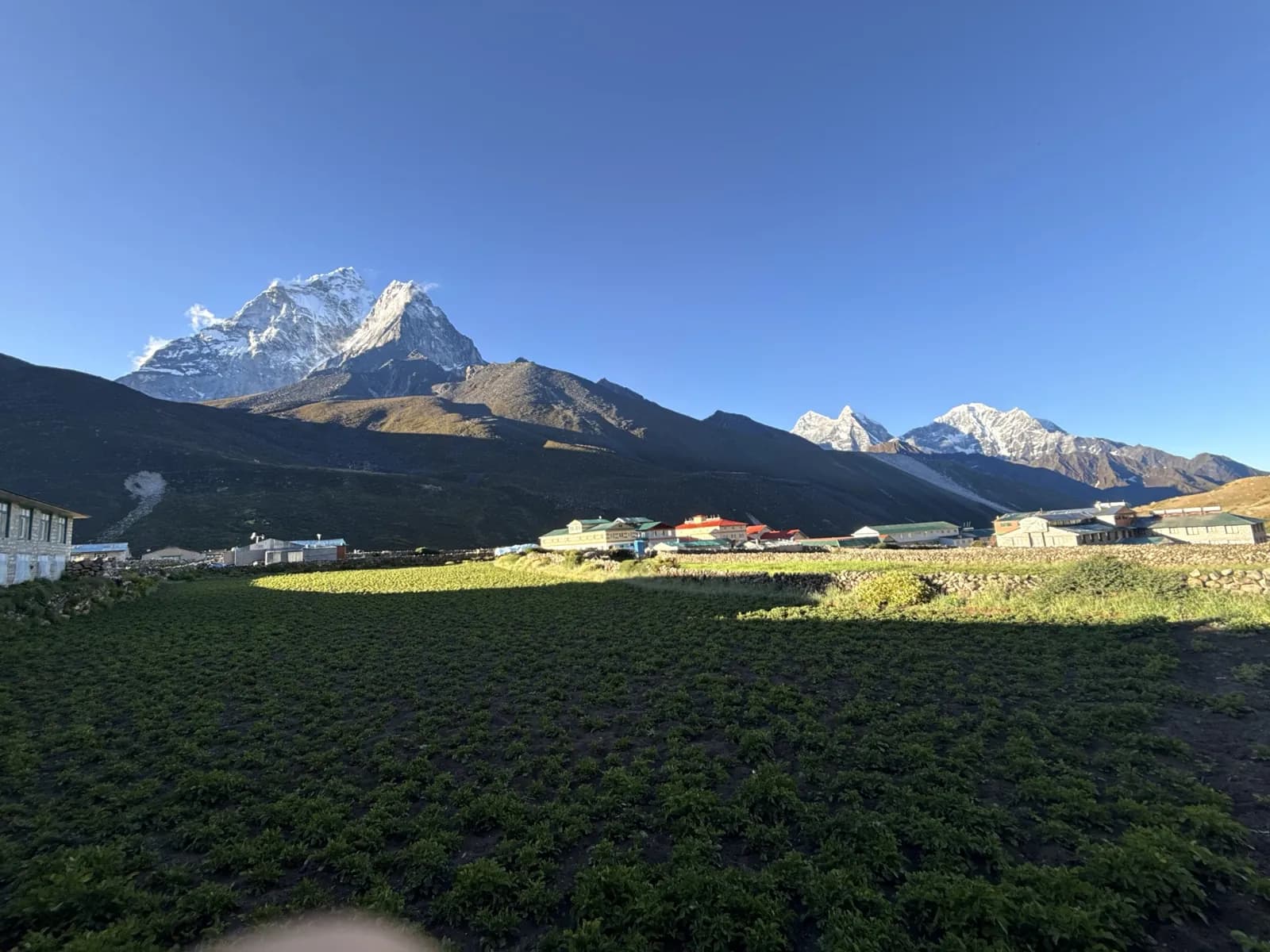
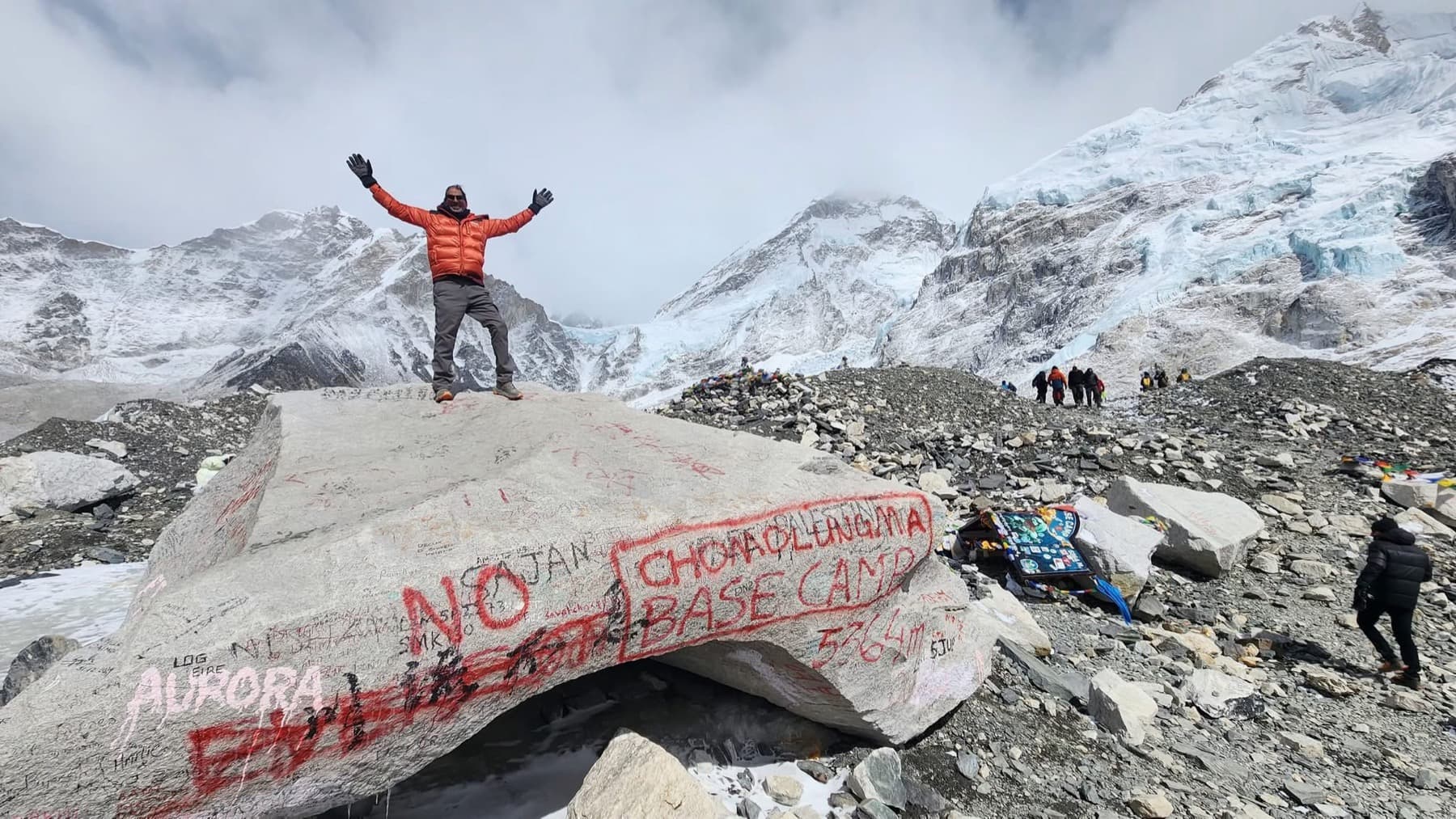
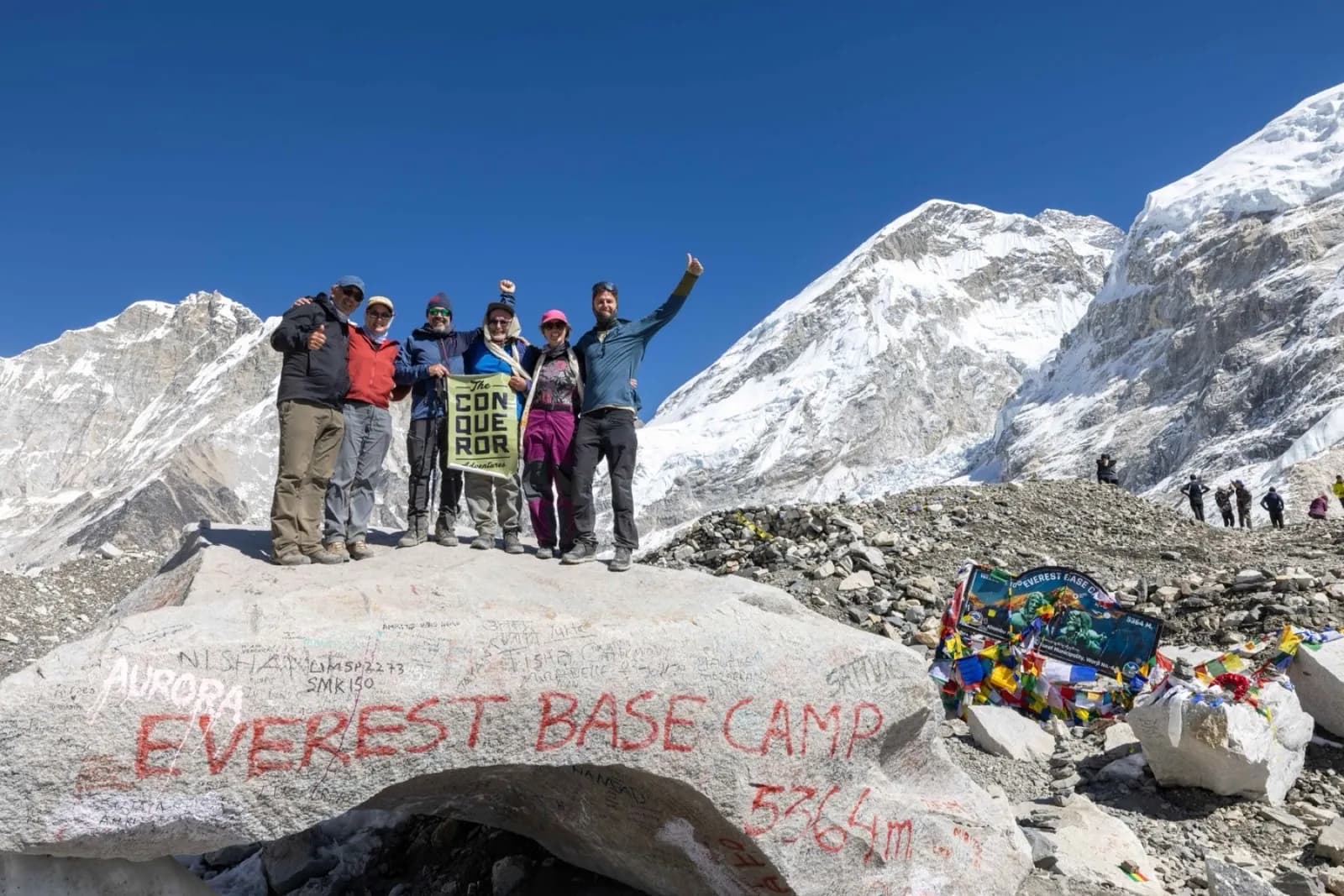
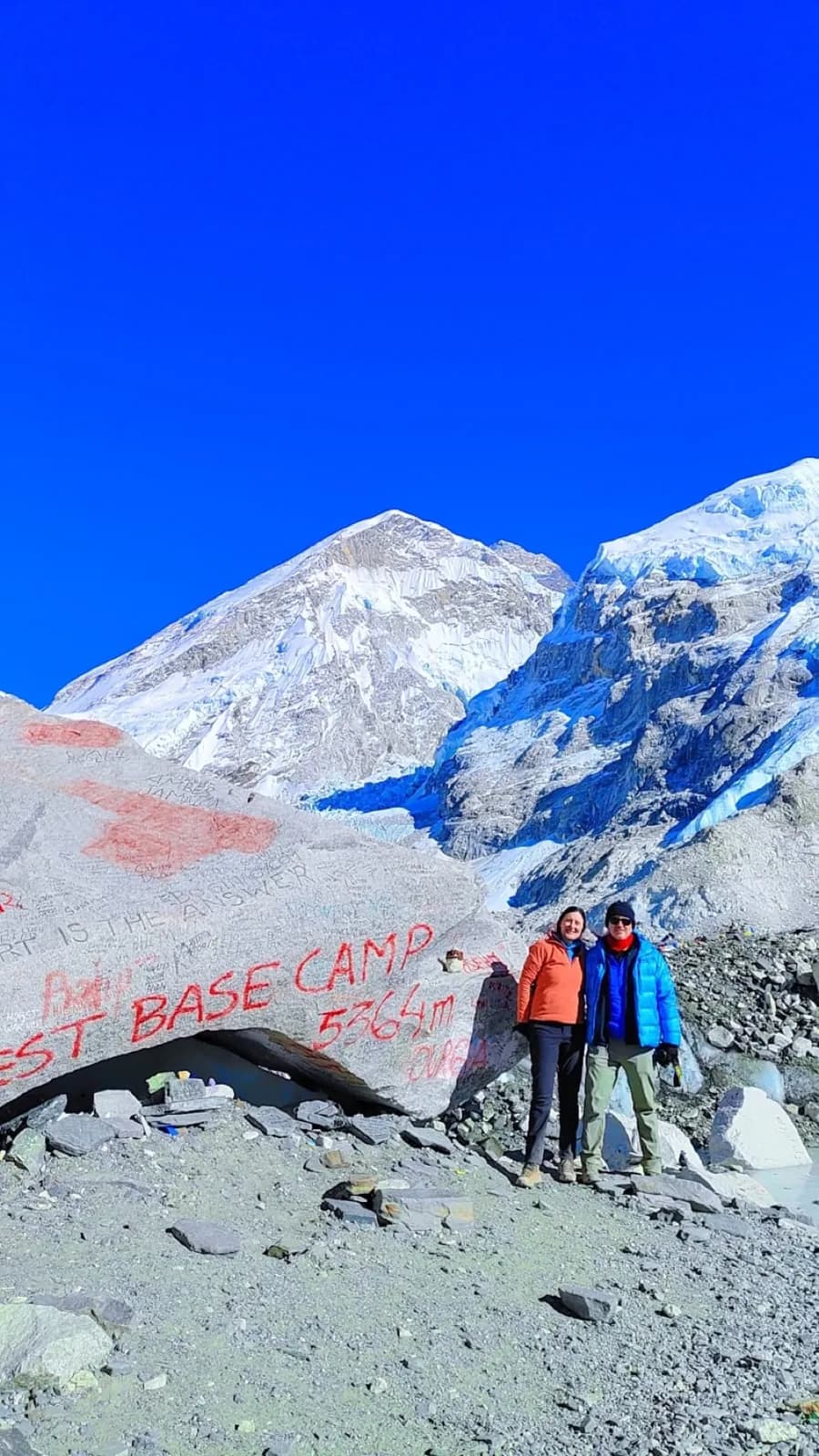
The main day of the trekking section. You follow the moraine to Gorak Shep, leave your bag at the lodge, then cross the glacier to Everest Base Camp at 5,364 m, with the Khumbu Icefall above you at the head of the valley. You return to Gorak Shep for the highest and most uncomfortable night of the trip.
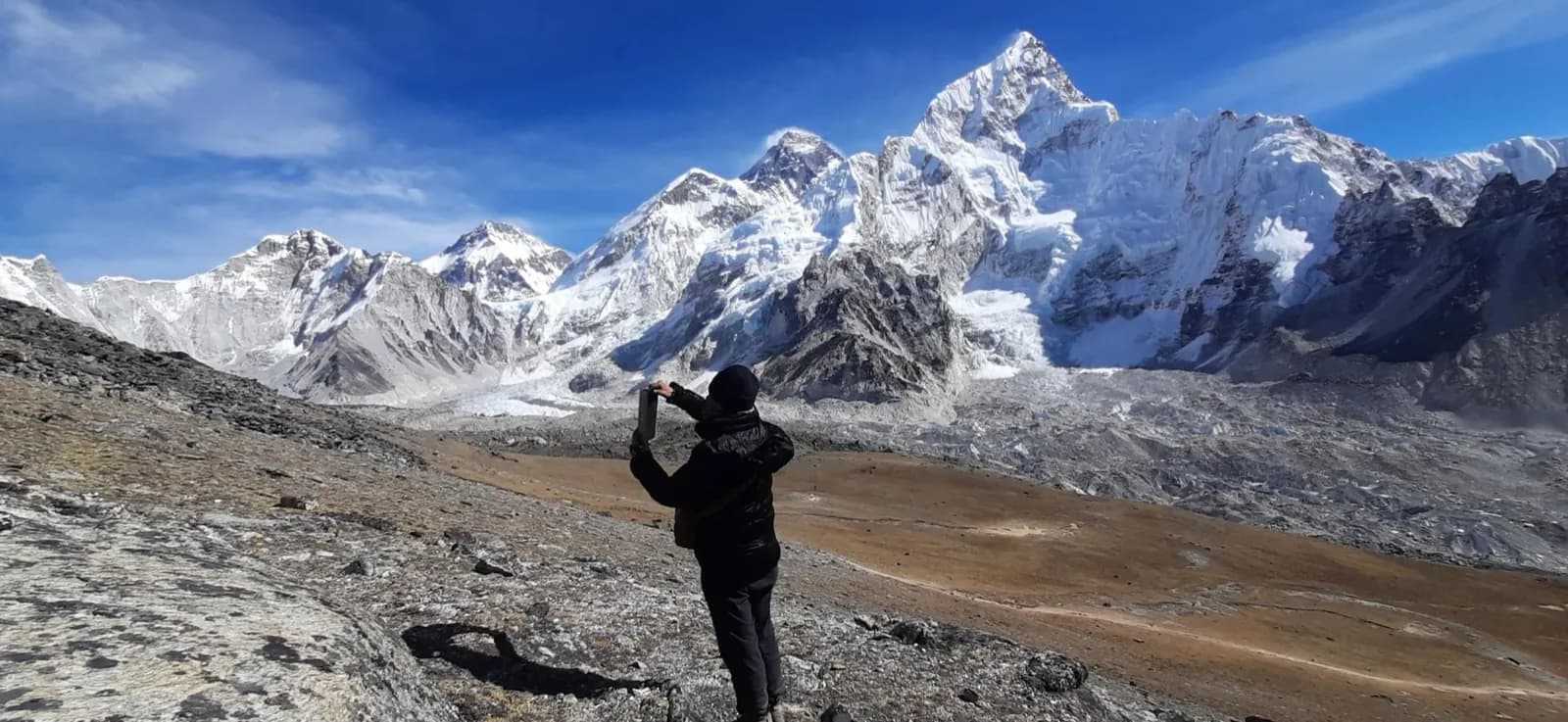
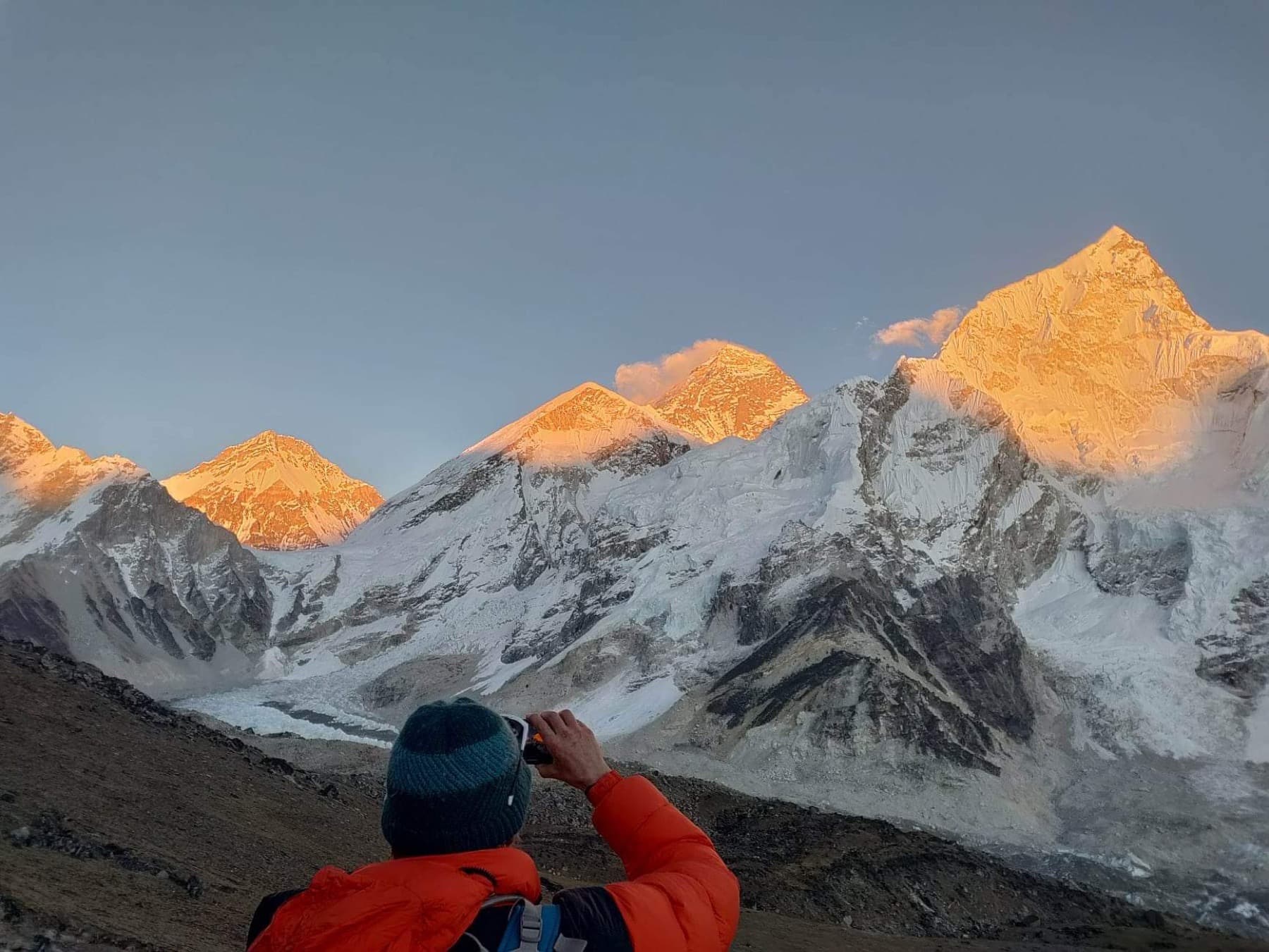
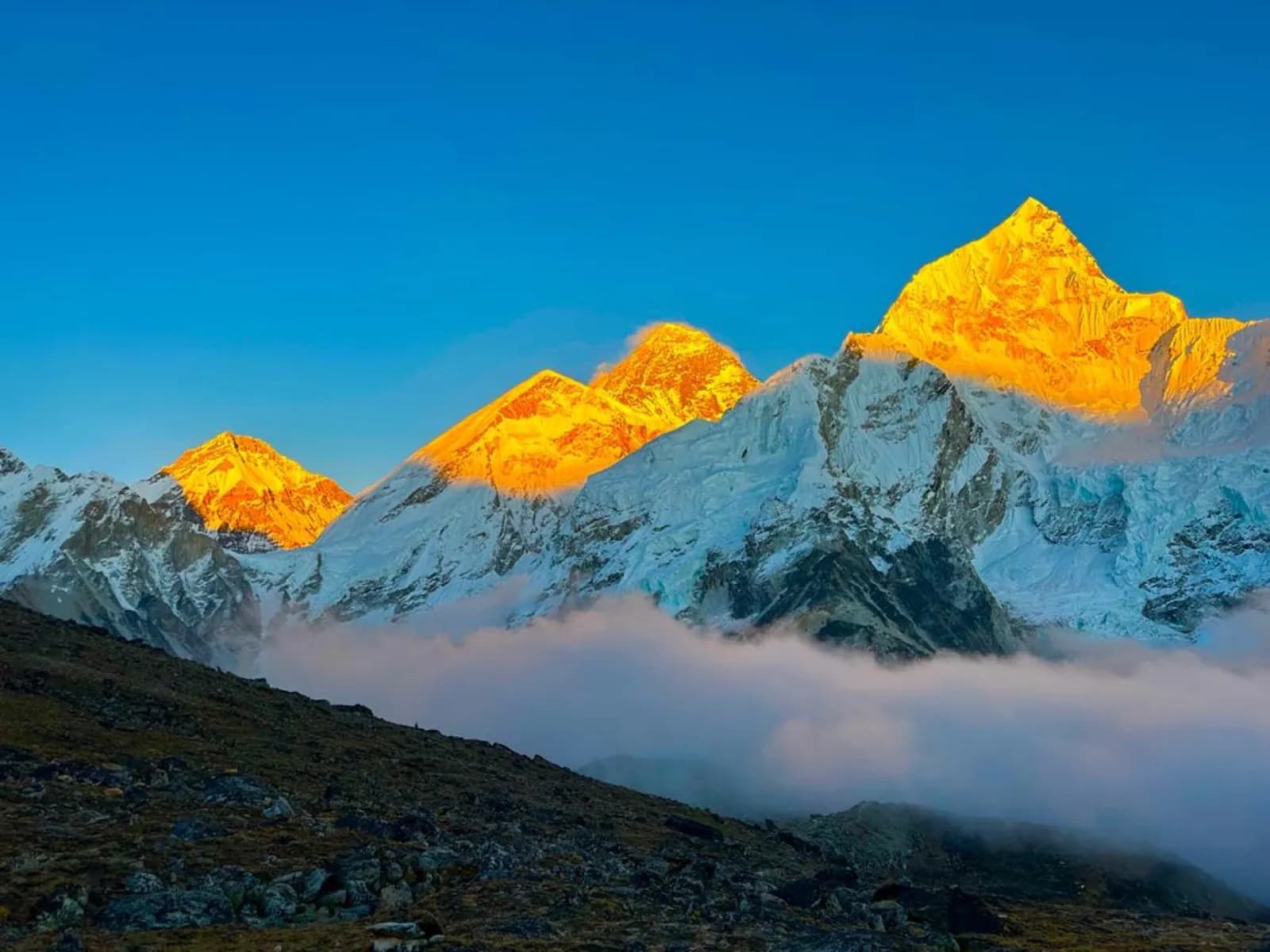
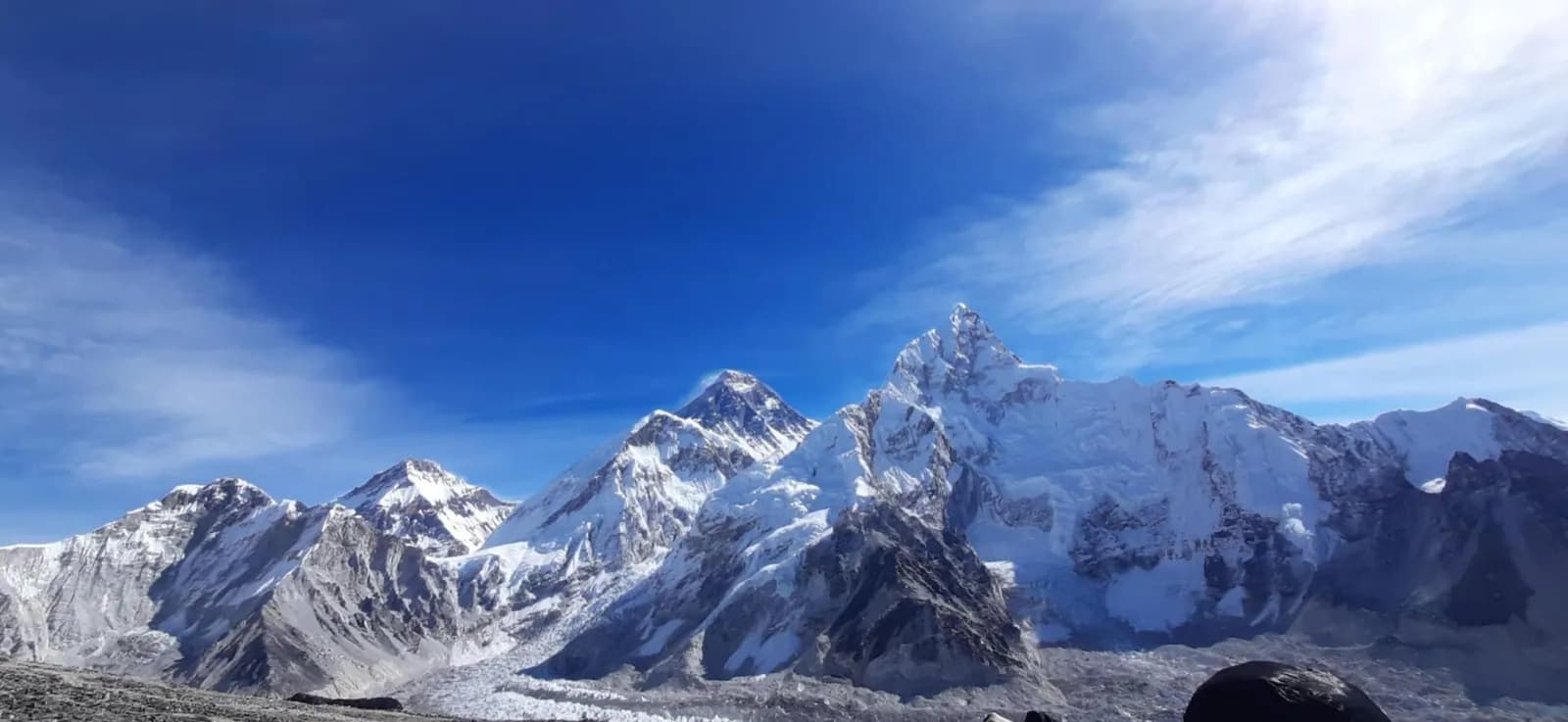
You climb Kala Patthar (5,545 m) before dawn for a view of Everest that cannot be seen from Base Camp itself. It is very cold before sunrise, but the view is well worth it. You then descend past Lobuche and cross to Lobuche East Base Camp at 4,950 m, where the tents, kitchen and dining shelter are already set up.
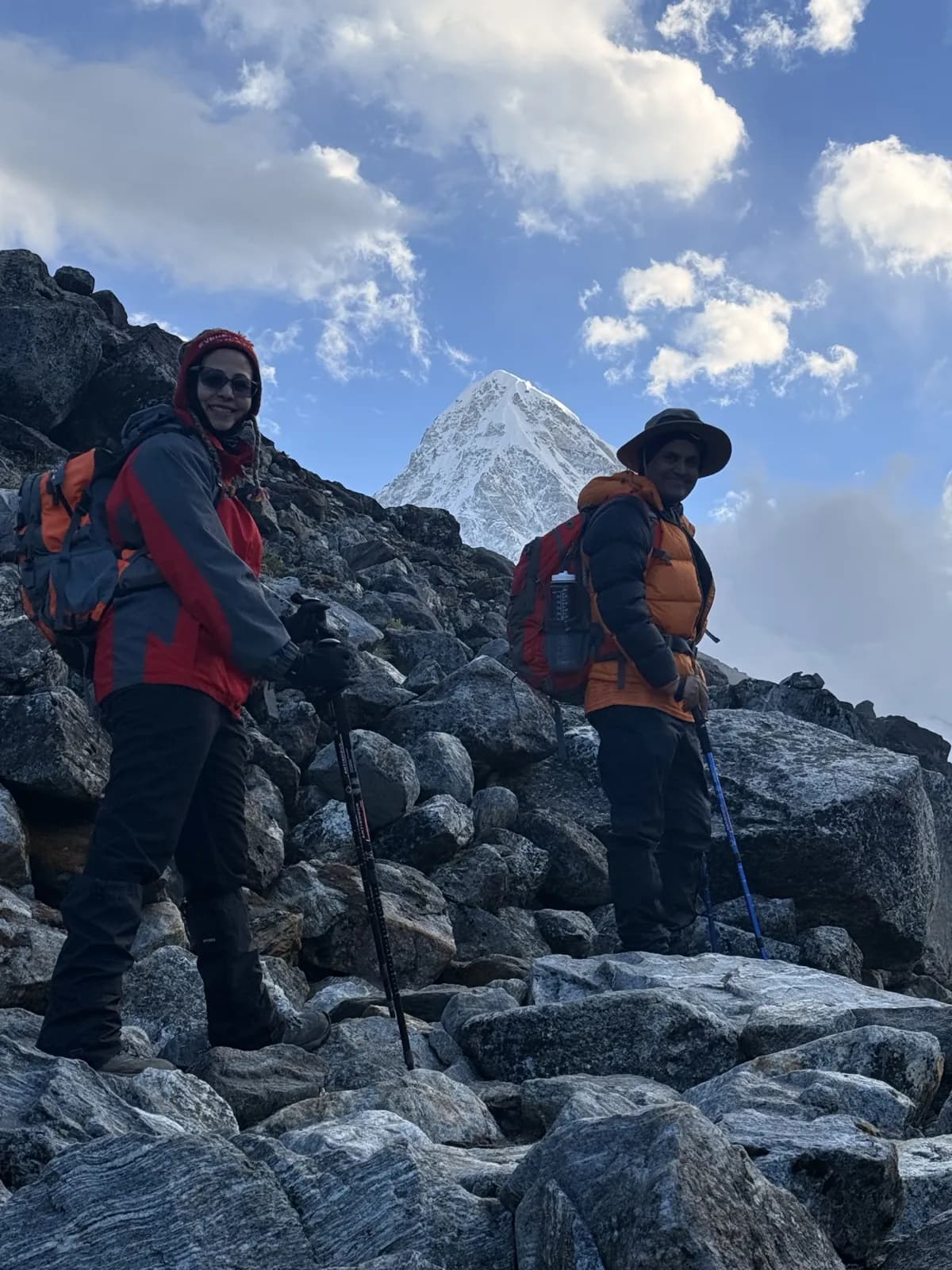
In the morning you practise with crampons, harness and abseil device, and spend an hour on a fixed rope with your ascender until the technique becomes familiar. After lunch you climb the boulder slope to High Camp at about 5,400 m, a three-hour scramble over rock carrying your climbing kit. Dinner and bed are early, and most people sleep little.
You wake around midnight for soup and sweet tea. You cross rocky ground by headtorch to the crampon point near 5,700 m, then the glacier, then the fixed lines. The headwall below the ridge is 45 to 50 degrees, and you climb it with your ascender. The summit ridge is narrow and exposed. You abseil the steep sections on the descent.
This is the reserve day, and the reason the itinerary is nineteen days rather than seventeen. If wind or fresh snow stopped your attempt the night before, you eat, rest and try again tonight. If you reached the summit, the camp is taken down and you walk to Pheriche at 4,371 m, where the lower altitude makes breathing noticeably easier.
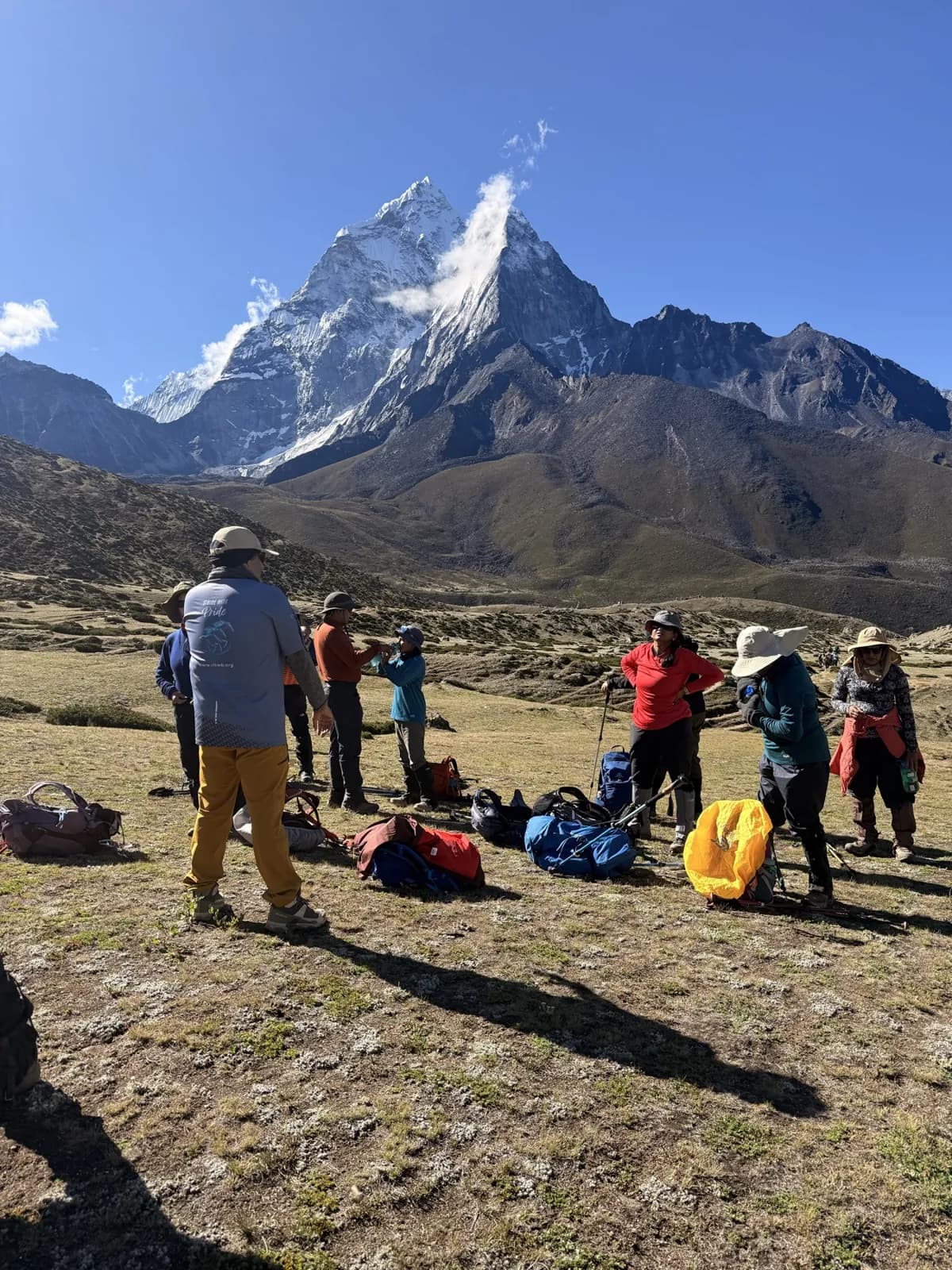
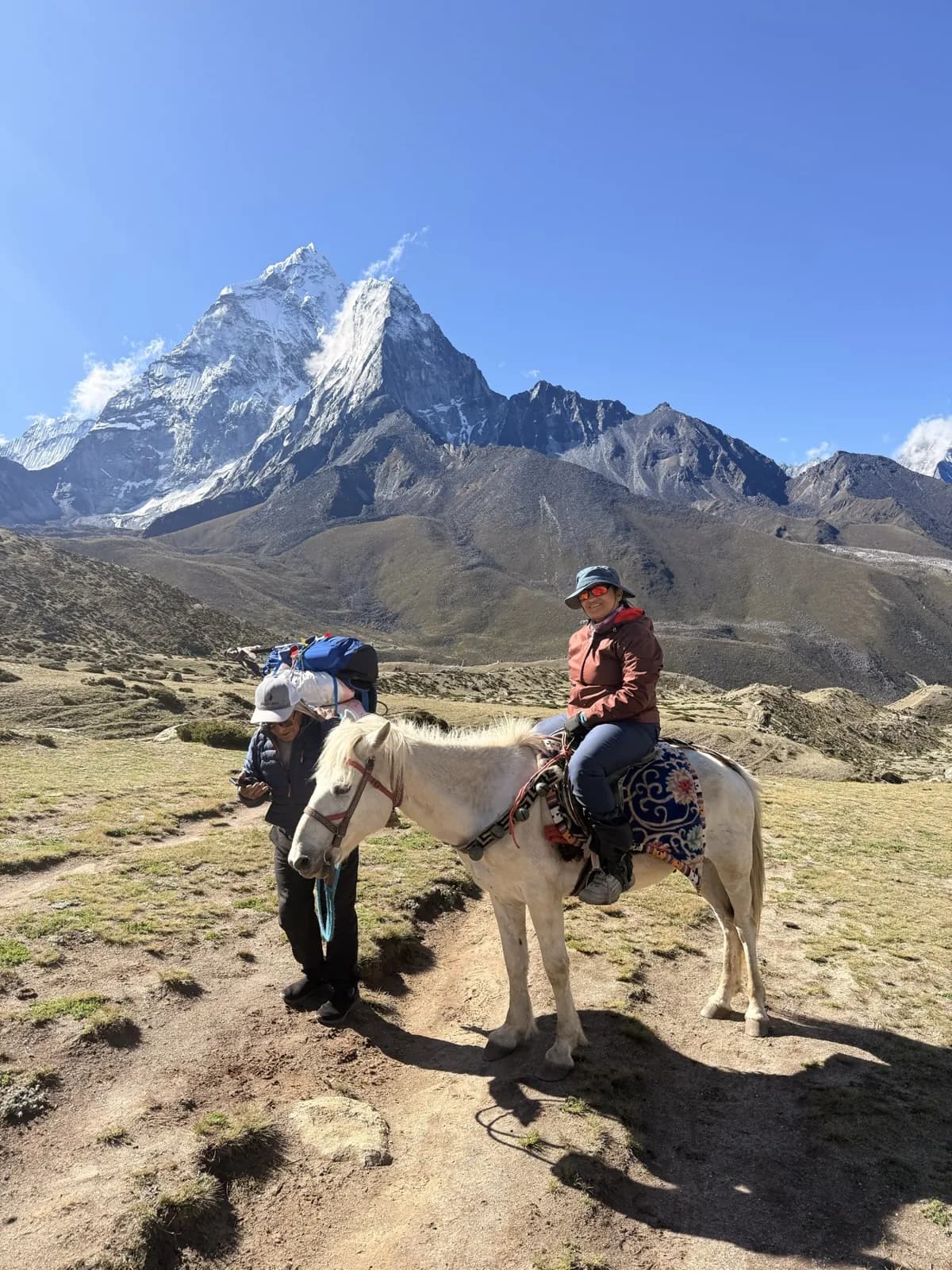
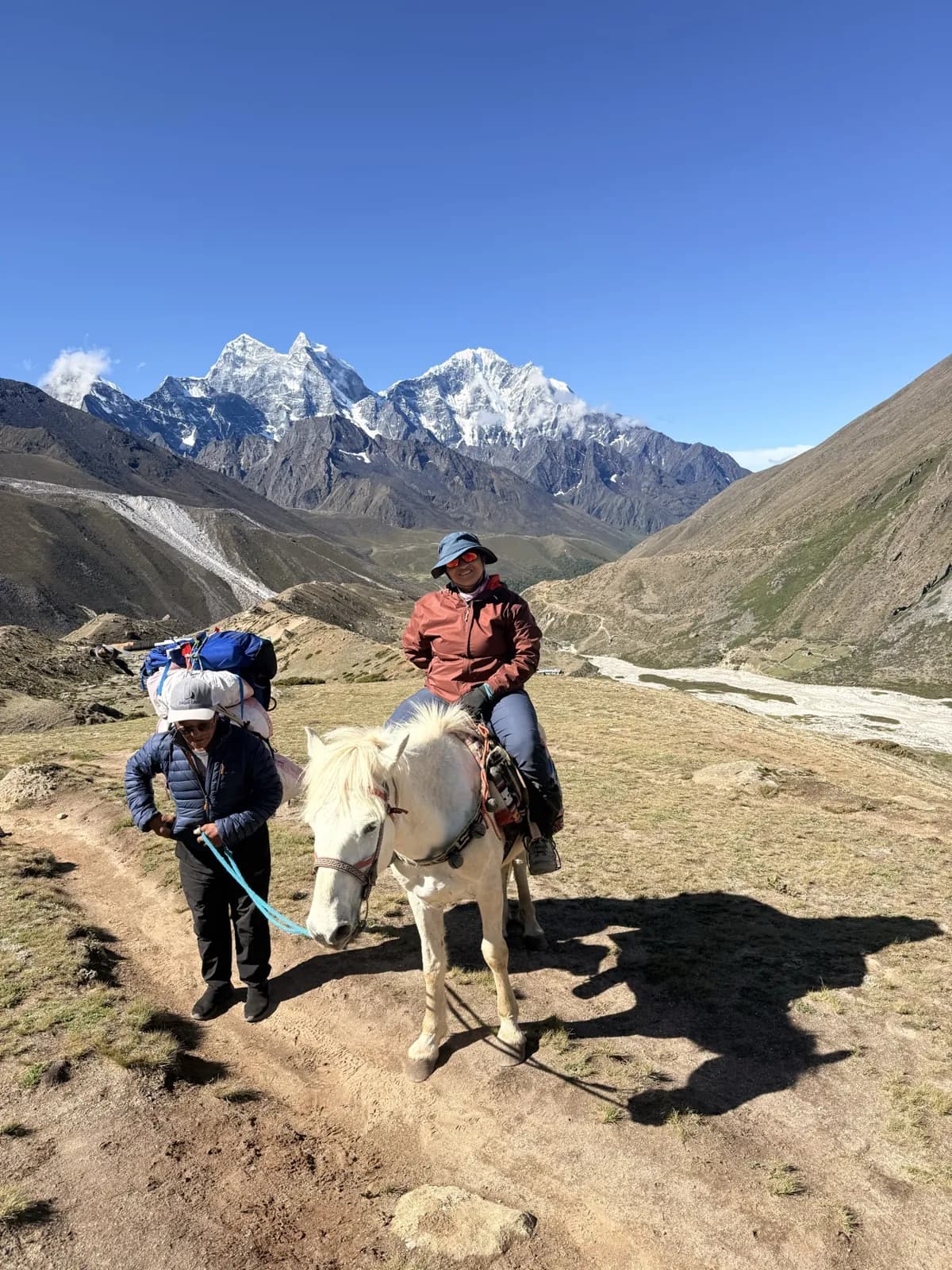
A long descent, where the thicker air makes breathing easier. You walk down the Imja valley past Pangboche and Tengboche, cross the river and finish with a steady one-hour climb to Namche. After two weeks above the treeline, Namche offers bakeries, hot showers and the first proper wash since Dingboche.
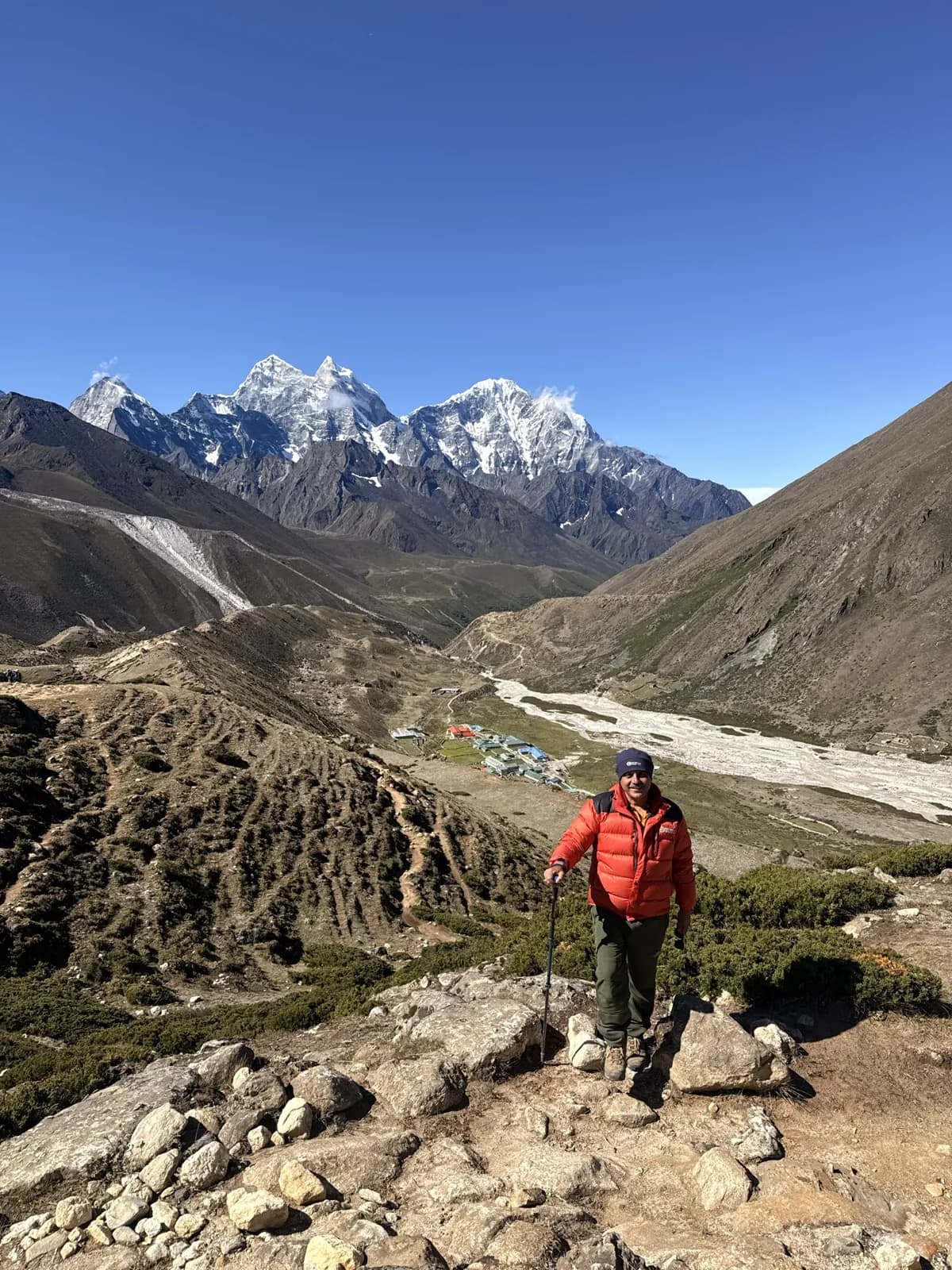
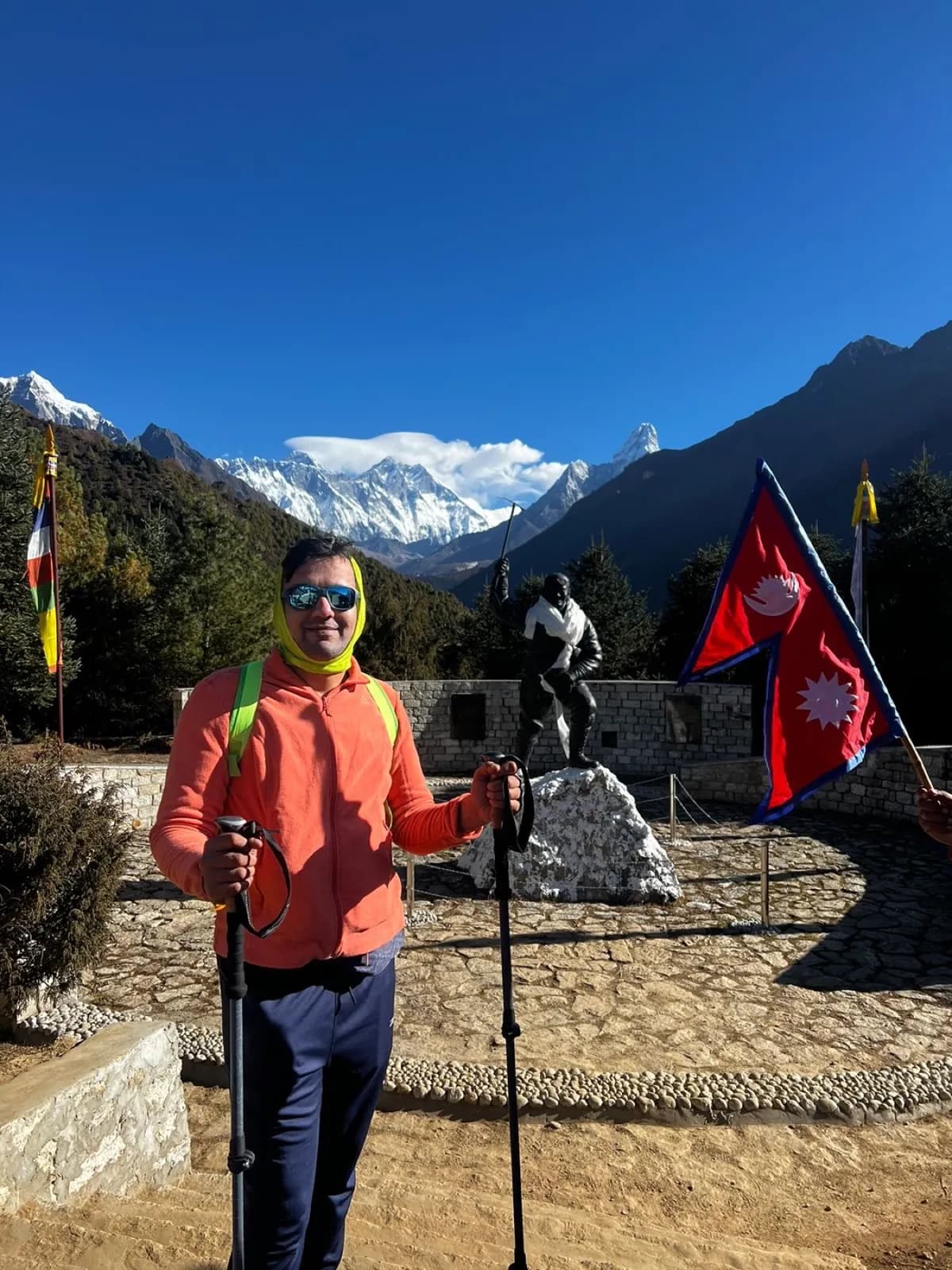
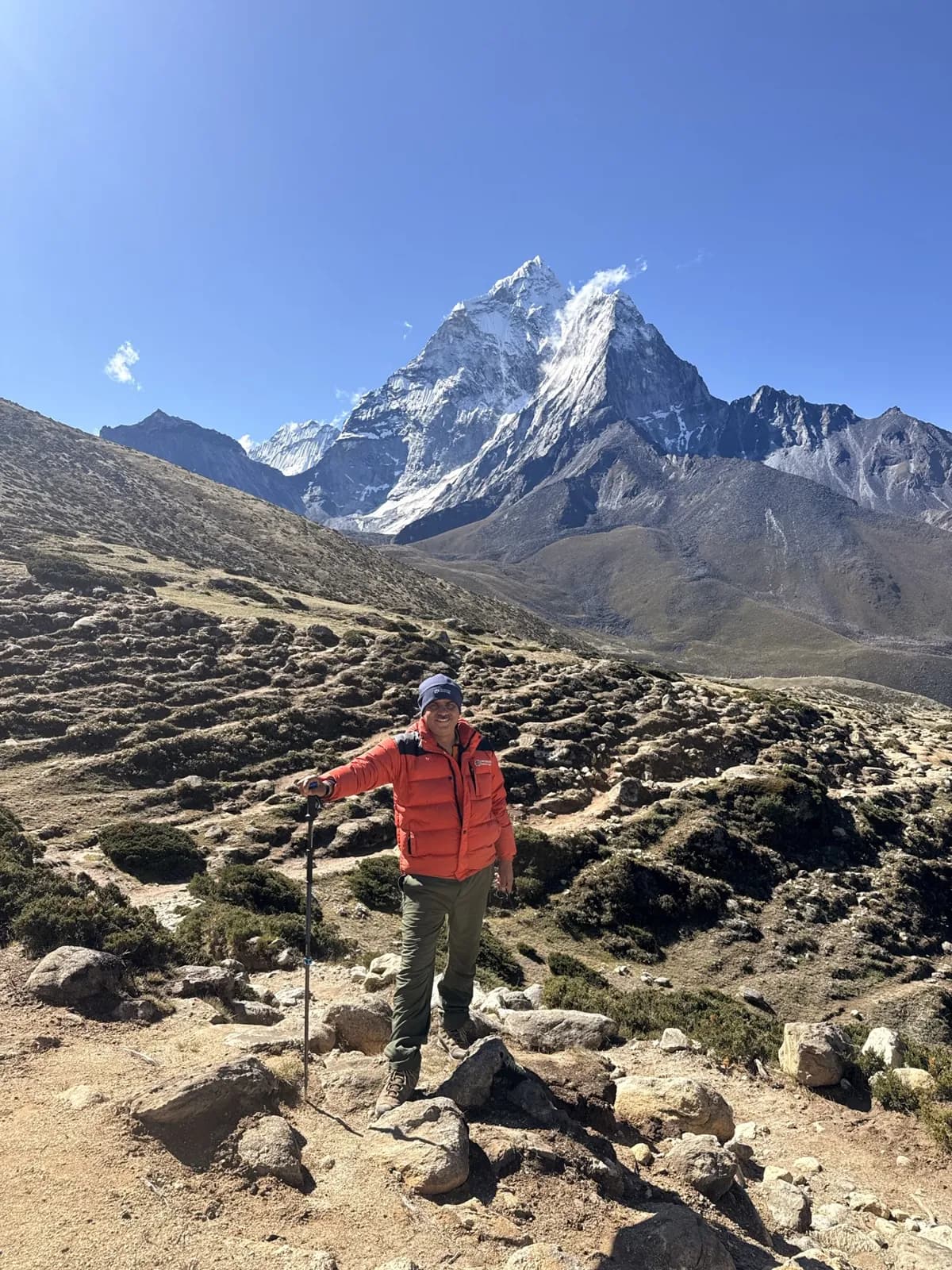
The last day on the trail. You descend the switchbacks to the river, cross the high bridge and follow the Dudh Koshi through Monjo and Phakding. The day ends with a final climb up to Lukla. In the evening you have dinner with the crew and hand over the tips together.
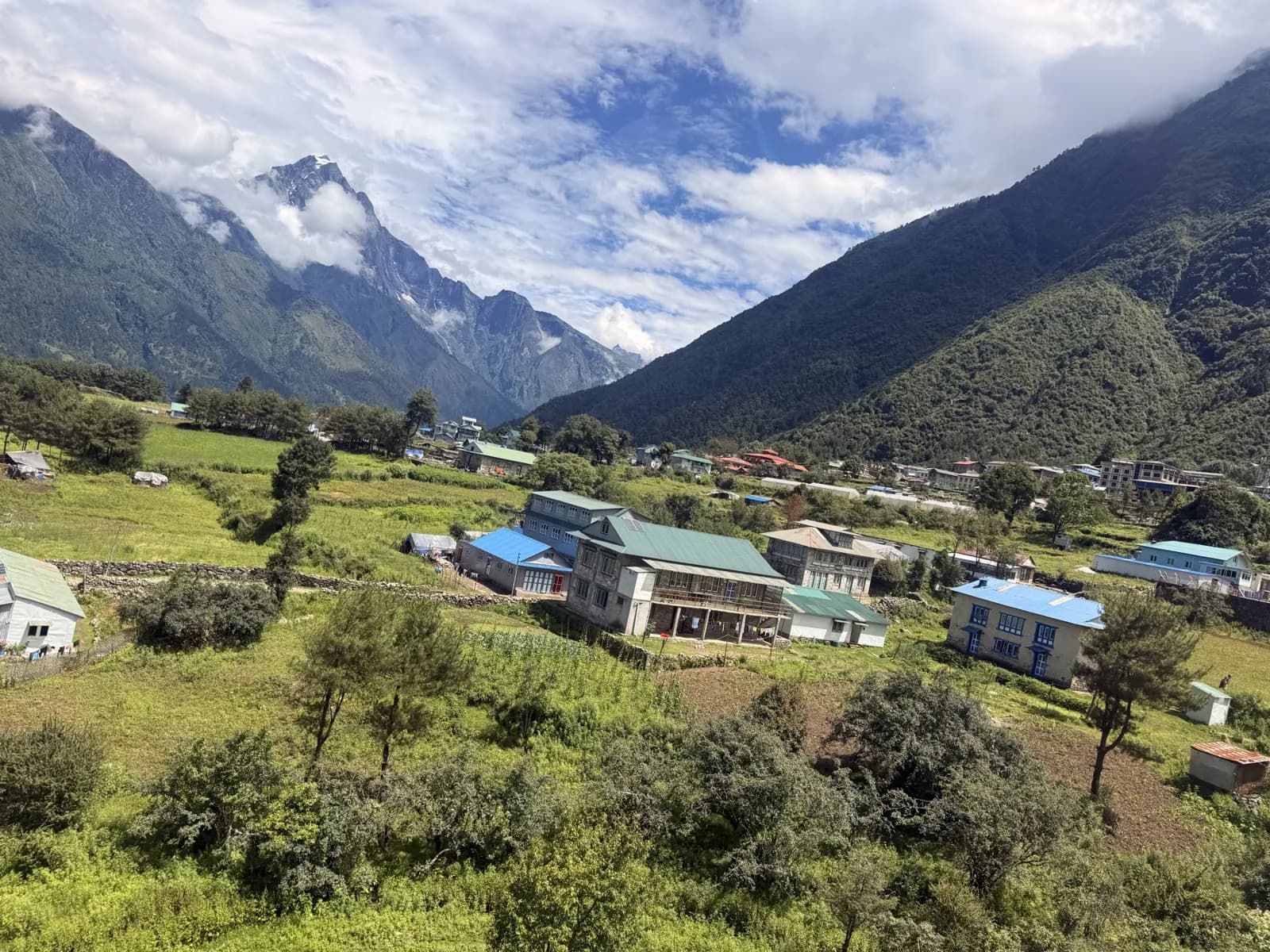
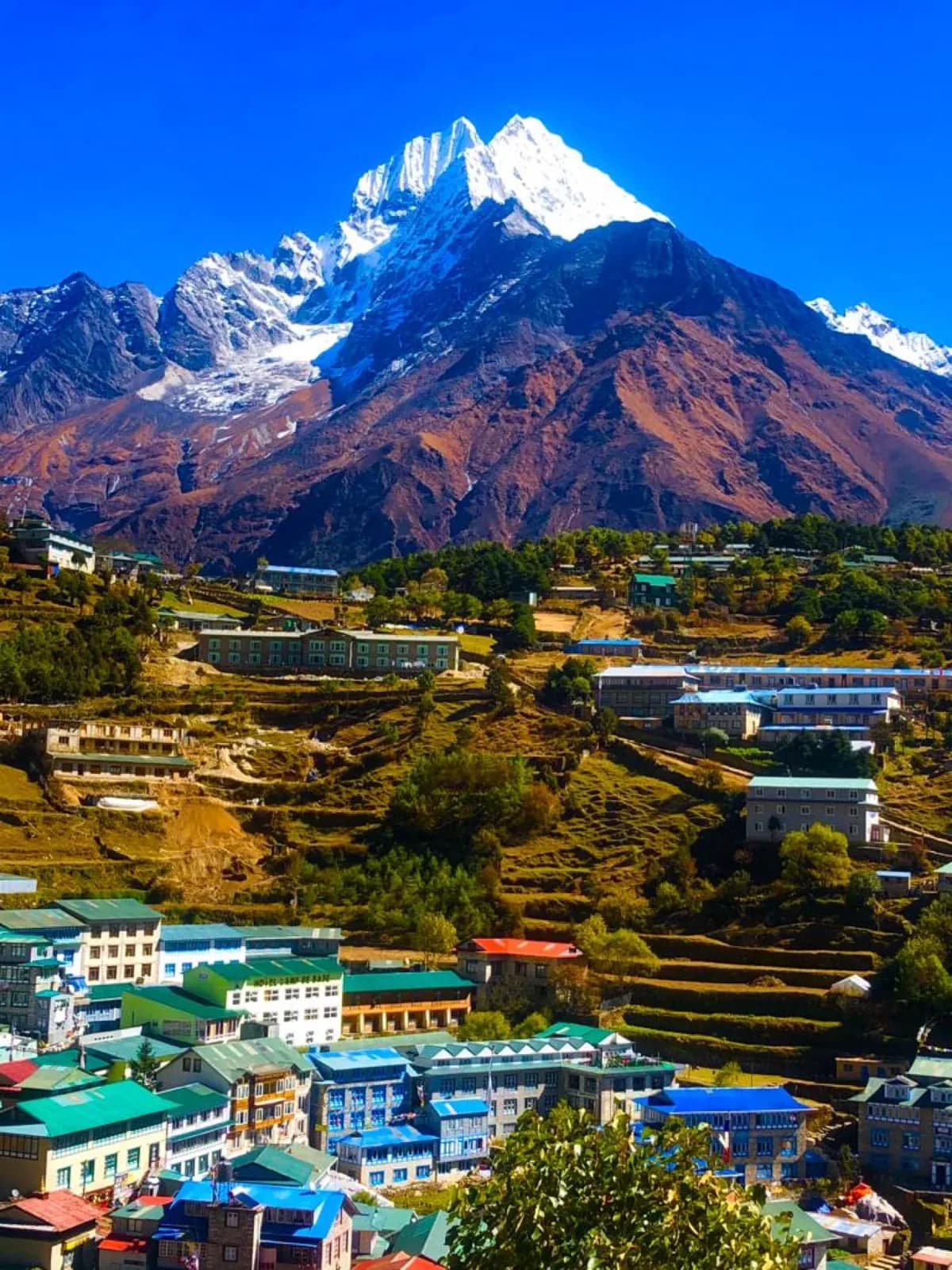
A morning flight out, weather permitting, either directly to Kathmandu or to Manthali followed by a drive. You are back at the hotel by early afternoon, with a hot shower, a proper bed and a choice of meals other than dal bhat.
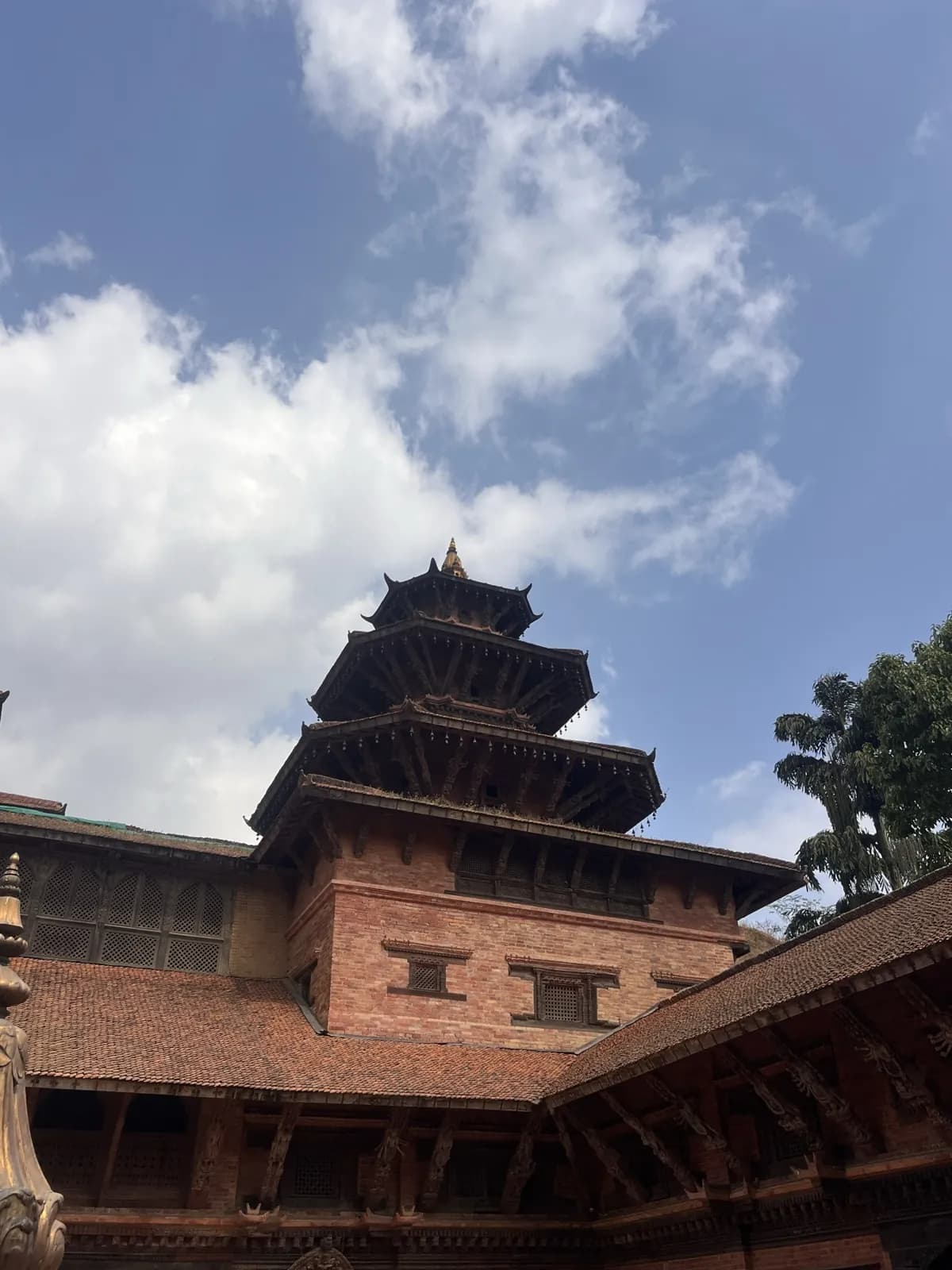
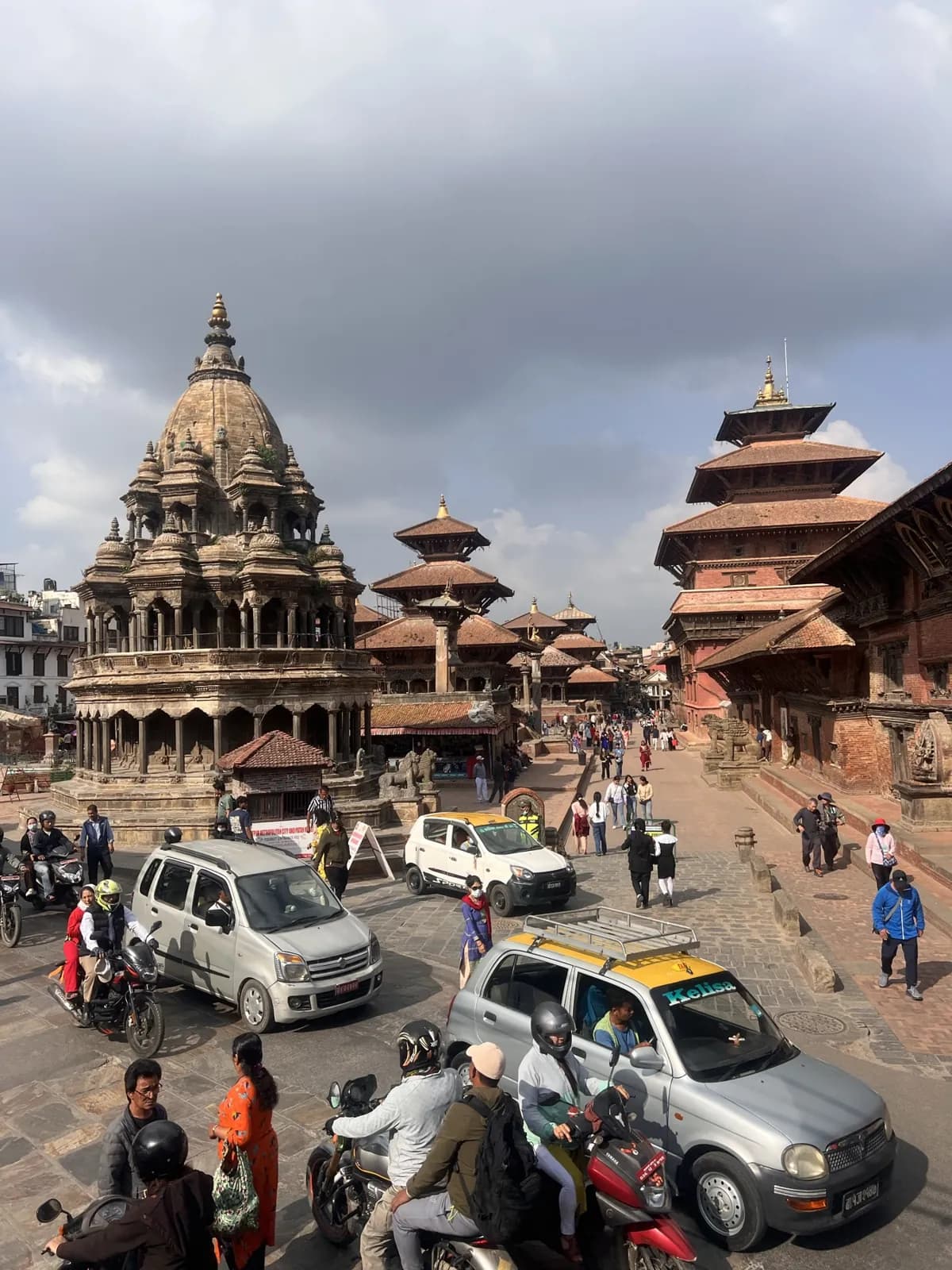
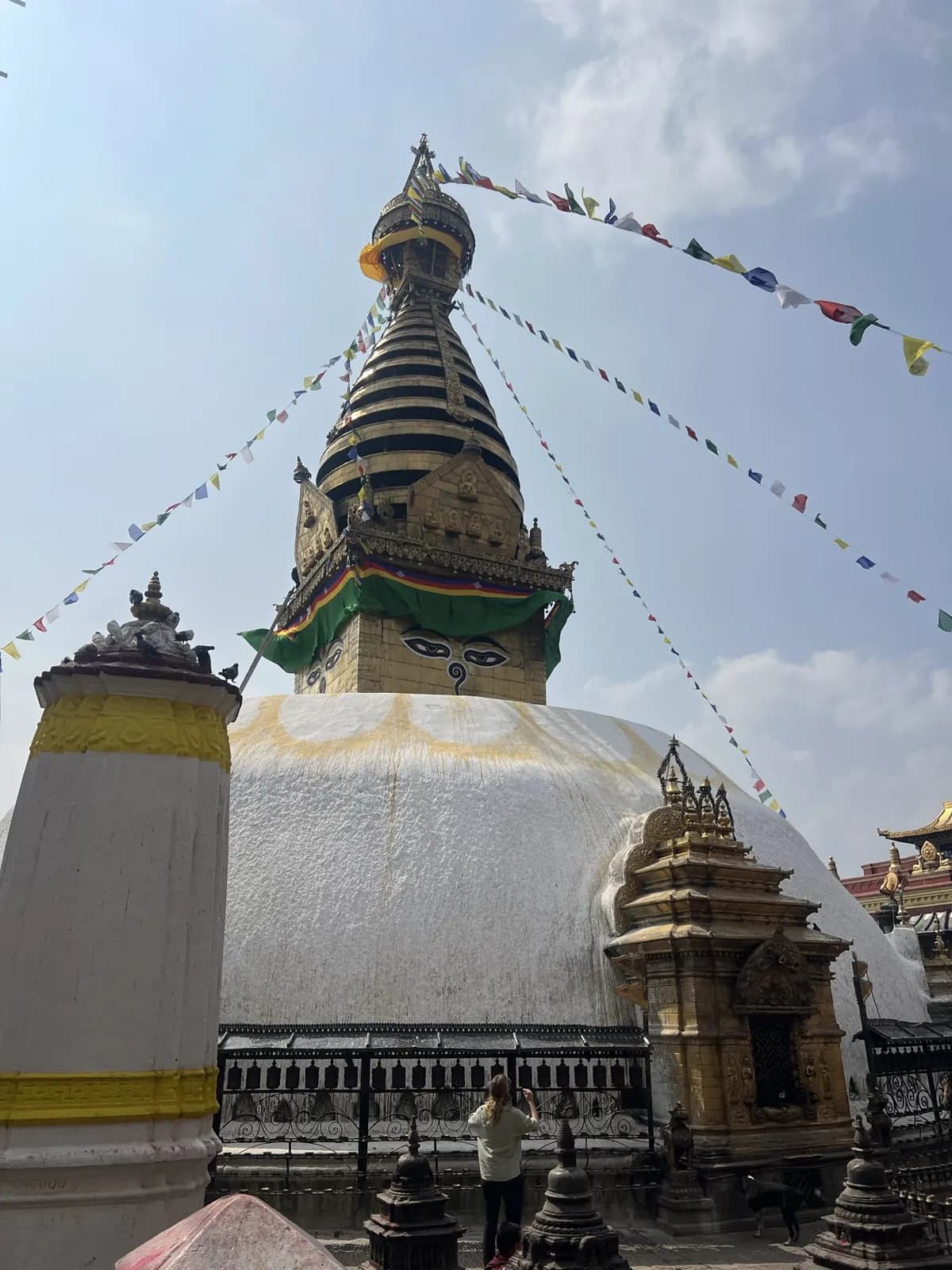
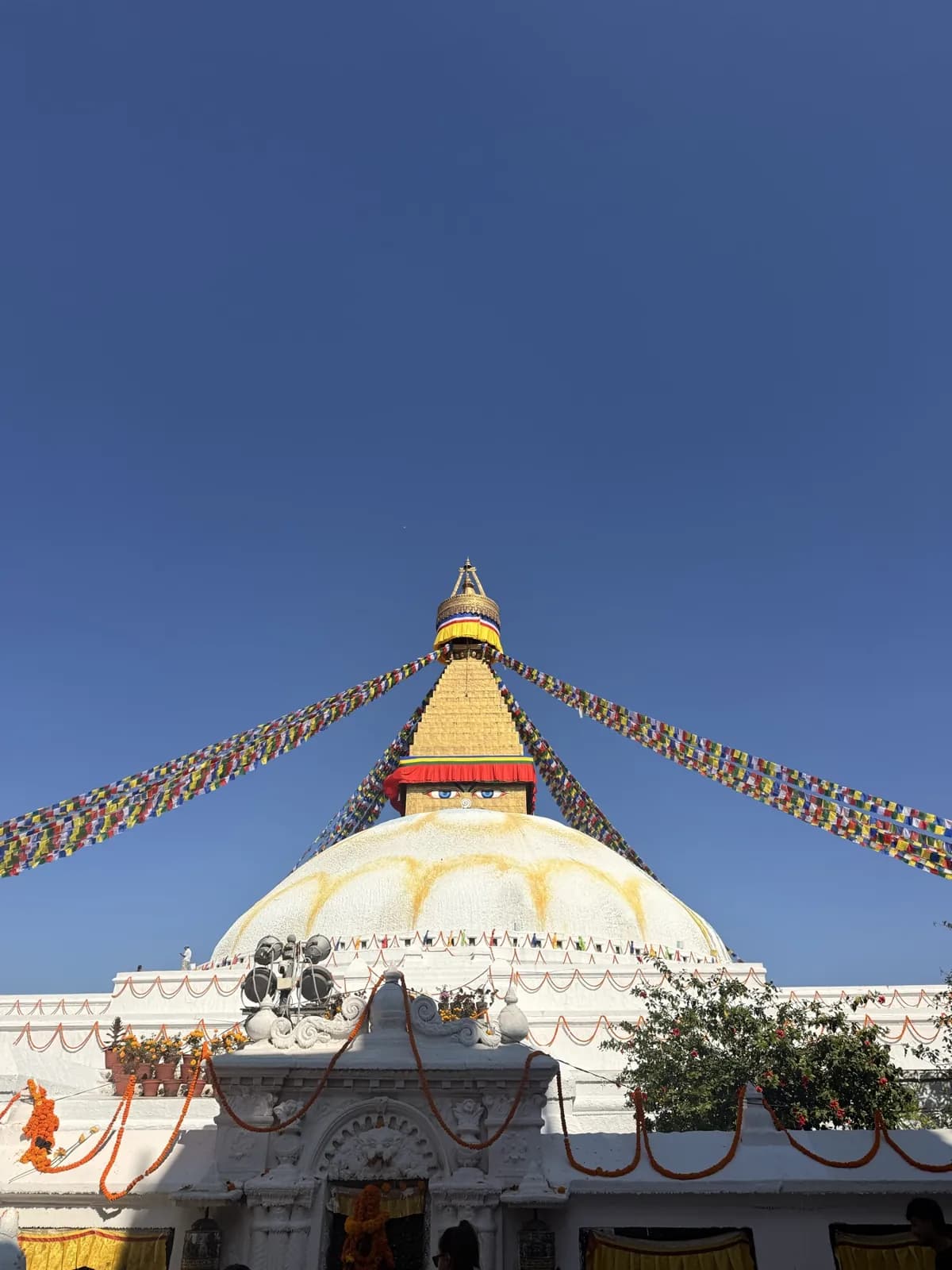
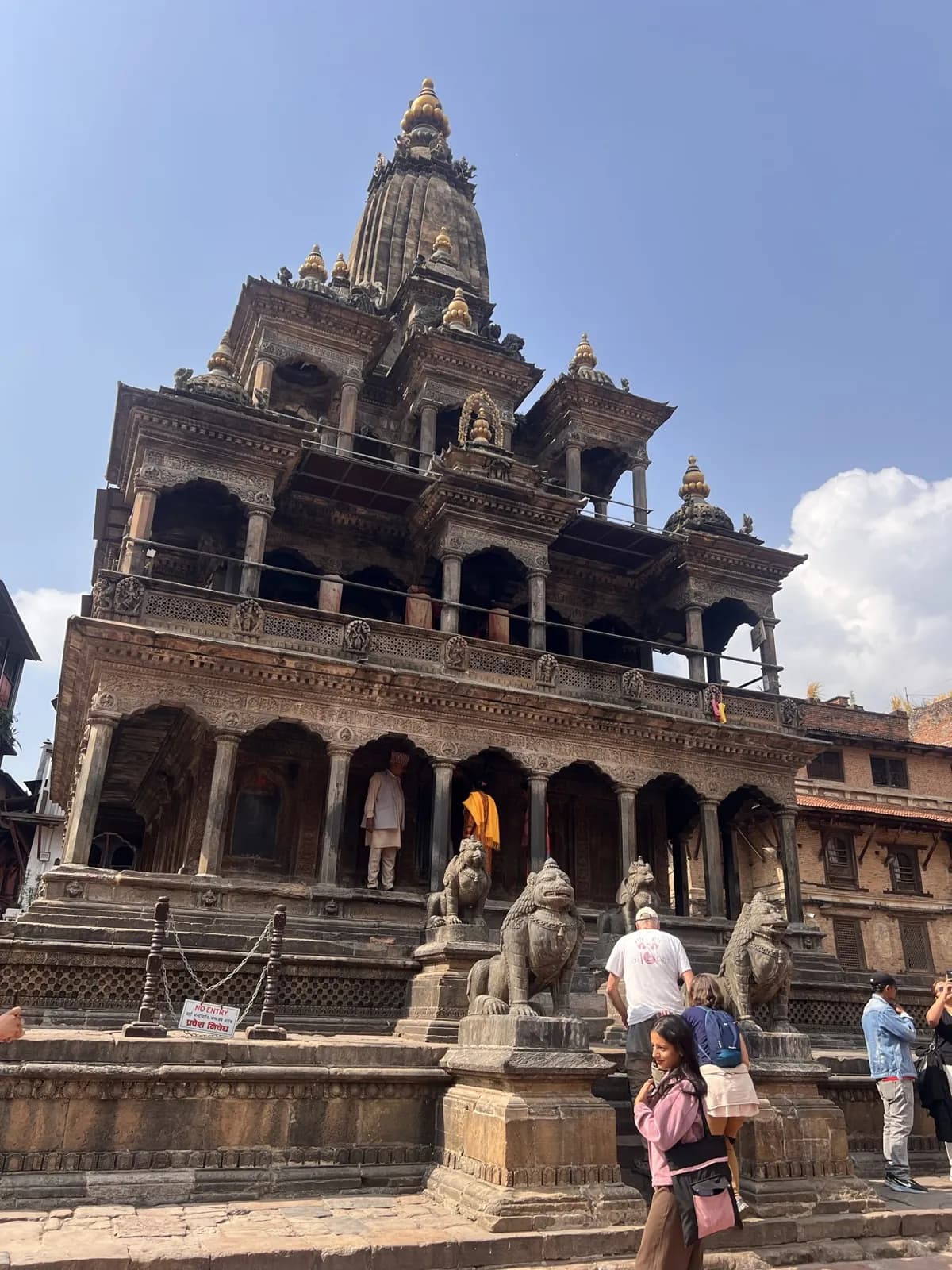
This day is held in reserve in case the Lukla flight is delayed. If it is not needed, the day is free: you can visit Patan and Bhaktapur, the great stupa at Boudhanath, or the shops of Thamel. In the evening we present your summit certificate and have a farewell dinner together.
We take you to the airport for your flight home. If your flight is later in the day, we hold the room until midday, and our office can store your bags in the meantime. We recommend booking your flight home with a clear day to spare after the trip.
Start date
21 Mar 2027
End date
8 Apr 2027
Available
8 left
US $2,890
Per person
Start date
11 Apr 2027
End date
29 Apr 2027
Available
8 left
US $2,890
Per person
Start date
1 Nov 2026
End date
19 Nov 2026
Available
8 left
US $2,790
Per person
The trail from start to finish, at a glance.
Hire climbing equipment in Kathmandu, bring clothing from home
Boots, crampons, ice axe, harness, helmet and ascender can all be hired in Kathmandu for around $130 to $220 for the trip. Hiring them saves you carrying 8 kg through three airports and past the Lukla baggage limit of 15 kg. Bring from home anything that needs to fit you well: base layers, gloves, socks and your trekking boots. We provide the duffel, sleeping bag, down jacket, helmet and harness, and all the group gear, including ropes, screws and snow bars.
Flight delays are the most common problem on any Khumbu trip, at both the start and the end. This section explains how they are handled.
Outside the two busiest periods of the year, the flight leaves Kathmandu and takes about 35 minutes. For much of March to May and late September to November, air traffic control moves Lukla departures to Manthali airport at Ramechhap. This means a four to five hour drive leaving Kathmandu at around two in the morning, followed by a twenty-minute flight. The destination is the same, but the night is much shorter. We tell you which applies to your dates before you book.
The allowance is 15 kg in total, 10 kg checked and 5 kg hand luggage, and it is weighed. The aircraft has nineteen seats and lands on a 527-metre runway built on a slope. Excess baggage costs roughly $1.50 per kilo. Climbing kit uses up the allowance quickly, which is one good reason to hire boots and crampons in Kathmandu rather than bring them from home.
Lukla is closed by cloud several times a month in every season. Losing one day is common and losing two is not unusual, which is why there is a spare day on day 18. If the flight is delayed at the start for more than three days, we rearrange the trip rather than shorten the acclimatisation, because shortening it puts climbers at risk. A helicopter seat out costs around $500, and we can usually arrange one within a few hours.
Whatever the itinerary says, book an international flight that leaves at least one clear day after your scheduled return to Kathmandu. On a trip that includes a reserve summit day, this margin is especially important. It is the cheapest protection you can buy for this climb.
Up to Gorak Shep, and again on the way down, you sleep in teahouses: family-run lodges with one warm dining room heated by a single stove, and simple twin rooms with foam mattresses and thin walls. At Phakding, Namche and Lukla most rooms have a private bathroom. Above Namche bathrooms are shared, hot showers, charging and wifi are paid for separately, and Gorak Shep has no shower.
After Kala Patthar you move into tents. At Lobuche East Base Camp, at about 4,950 m, you spend two nights in two-person tents, with a dining tent, a kitchen and a toilet tent. High Camp, at about 5,400 m, is one short night on rocky ground before the summit. It is cold, and a four-season sleeping bag is needed.
| Where | Nights | Type | Room | Bathroom |
|---|---|---|---|---|
| Kathmandu | 4 | Three-star hotel | Twin or double | Private, hot water |
| Phakding | 1 | Teahouse | Twin | Private in most lodges |
| Namche Bazaar | 3 | Teahouse | Twin | Private, hot shower for a fee |
| Tengboche | 1 | Teahouse | Twin | Shared |
| Dingboche | 2 | Teahouse | Twin | Shared |
| Lobuche | 1 | Teahouse | Twin | Shared |
| Gorak Shep | 1 | Teahouse, the highest on the route | Twin, basic | Shared, no shower |
| Lobuche East Base Camp | 2 | Tented camp, 4,950 m | Two-person tent | Toilet tent |
| High Camp | 1 | Tented camp, about 5,400 m | Two-person tent | Toilet tent |
| Pheriche | 1 | Teahouse | Twin | Shared |
| Lukla | 1 | Teahouse | Twin | Private |
Porridge, Tibetan bread, eggs, chapati, pancakes, tea or coffee
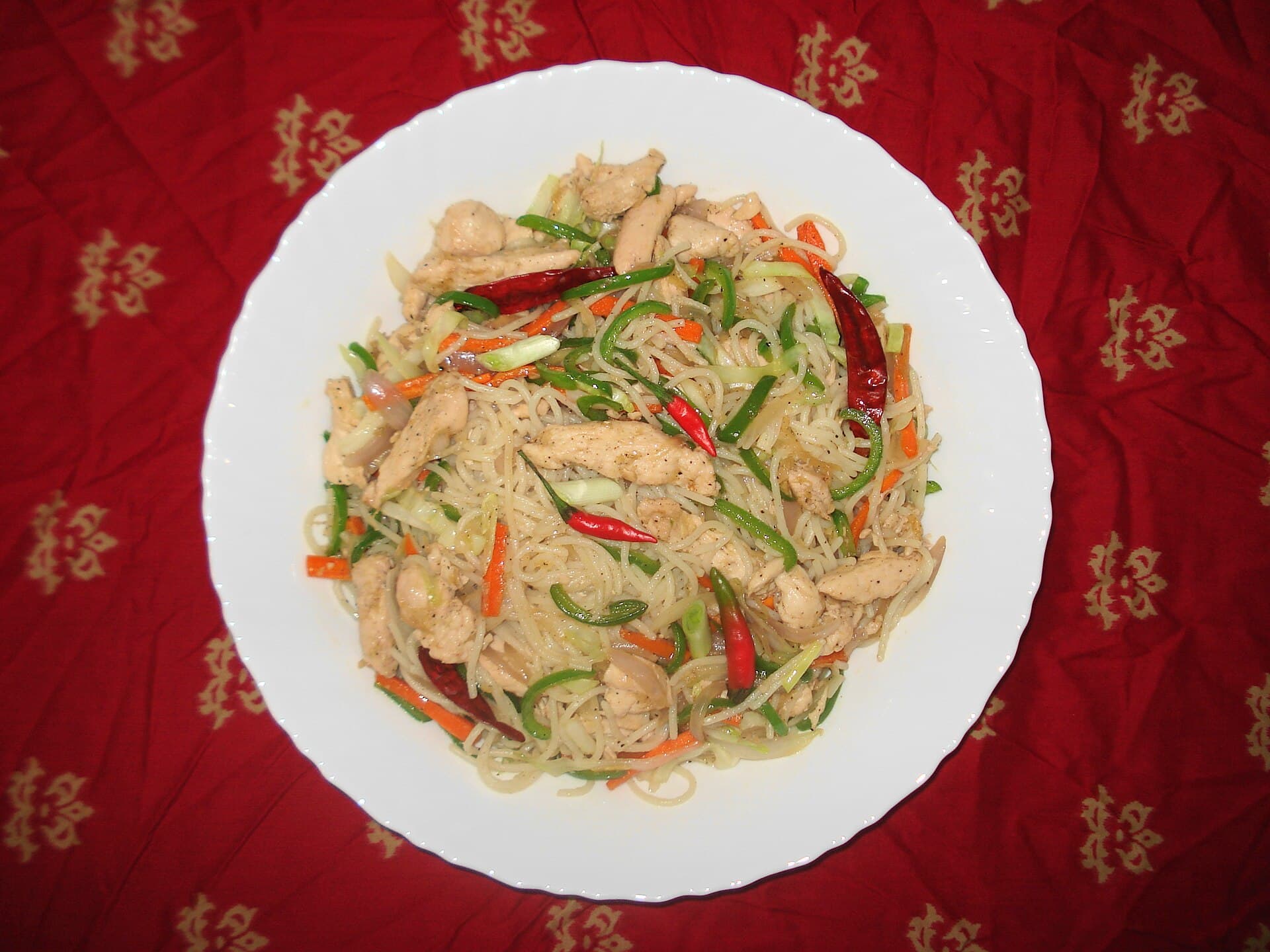
Dal bhat, fried rice, noodles, soup, momo, potatoes cooked in many ways

Dal bhat, pasta, thukpa, curry and rice, soup to start
Porridge, biscuits, soup and sweet tea, eaten in a tent at a time when few people feel hungry
6:00Tea in your room, and a bowl of warm water to wash in
6:30Pack, and put the duffel outside your door for the porter
7:00Breakfast together
8:00On the trail. The guide sets a slow, steady pace
12:00Lunch on the route, about an hour
13:00Two to four hours more, depending on the day
15:30Arrive at the lodge, tea, choose a bed, wash and rest if needed
17:00Oxygen saturation and pulse taken, and written down
18:30Dinner, and the guide briefs you on the next day
20:30Bed. At 4,000 m most people are asleep before nine
A trekking peak with a genuine technical climb at the top.
Written for somebody who walks a bit and does not train. If you already run or cycle regularly, start partway through. Nothing here needs a gym.
16 weeks before, stage 1 of 7
Do four cardio sessions a week, 45 to 60 minutes each, at a pace where you can still hold a conversation. This trip involves eleven days of trekking before the climbing starts, and this base fitness is what carries you through them.
The summit is at 6,119 m, where each breath contains a little under half the oxygen available at sea level, and you spend a night at about 5,400 m on the way. The Himalayan Rescue Association advises raising your sleeping altitude by no more than 300 to 400 m a day above 3,000 m, and the Base Camp trek in the first half of this trip allows us to follow that guidance. Fitness and altitude tolerance are unrelated: being very fit will not protect you, and average fitness does not put you at greater risk.
Daily health checks
Your guide carries a pulse oximeter and checks your oxygen saturation and pulse every evening, and again on any morning you feel unwell. The readings are recorded, so any decline over three days is clear from the figures rather than a matter of opinion.
Rules at the camps
Base camp and high camp are not places to wait for a headache to pass. If you are unwell at 4,950 m, you do not go up to 5,400 m. If you are unwell at high camp, you descend that night with a guide while the rest of the team climbs.
Mild symptoms
You rest for a day where you are, or descend a short distance to the last village and climb back up the following day. Most cases resolve at this stage and the climb continues.
Serious symptoms
Descent is the only effective treatment, and 500 m of descent is usually enough. This decision is not negotiable and is not put to a vote.
Oxygen and altitude chamber
Bottled oxygen and a portable altitude chamber travel with the climbing team from base camp onwards. Both provide time to descend. Neither is a reason to continue climbing.
Helicopter evacuation
Helicopter evacuation can be arranged by phone from anywhere on this route, and in daylight the helicopter is usually airborne within the hour. The cost is $3,000 to $5,000, and the helicopter will not fly without a guarantee of payment, which is what your insurance provides.
Medical clinic at Pheriche
The Himalayan Rescue Association clinic at Pheriche, 4,371 m, is staffed by volunteer doctors during both climbing seasons and is on our route on the way down.
Fitness and altitude are unrelated
This is the thing people get wrong most often. Training makes the walking easier and does nothing for how your body handles thin air. Strong young trekkers get altitude sickness and unfit older ones frequently do not. Go up slowly, and say something the first time your head hurts.
We do not run the climb in two of these months, and in two more we run it only for climbers who understand the conditions they will face.
The best month. Stable weather, good snow on the headwall, rhododendron in flower below Namche.
Averages built from Nepal DHM station data for the Khumbu and long-run records for Lukla and Lobuche. Any given week can be ten degrees either side, and wind on the summit ridge makes minus twenty feel like minus thirty-five.
A government-licensed trekking guide leads the whole trip, and from base camp one climbing guide joins for every two climbers. Our climbing guides have NMA climbing instructor training, and most have climbed this peak many times. One porter carries for every two climbers on the trekking days.
We fix our own rope on every trip. Old fixed line left on the mountain from previous seasons is sun-bleached and unreliable, and we do not use it or leave ours behind. On summit night the climbing guides go ahead of the team and place the anchors on the headwall.
Each porter carries 20 kg, which is your duffel and one other. This is below the 25 kg limit set by the trekking association and well below the loads you will see on the trail. Porters carry duffels, not daypacks: your water, camera, jacket and climbing kit stay with you on the days you need them.
The salary, insurance, food and lodging of every guide, climbing guide, cook and porter are included in the price you pay. Climbing staff are insured for altitude work and helicopter evacuation on the same terms we ask of you. This costs more than trekking cover, and we do not reduce it to save money.
Tipping is customary but not compulsory, and it never replaces wages. On a climb like this, $250 to $400 per climber for the whole team is usual, handed over together on the last evening rather than daily. Your guide will not ask for tips, and would prefer that you do not tip them in front of the group.
Everything we take up is brought back down: tent pegs, rope, gas canisters, batteries, food packaging and human waste from the camps. The NMA holds a $500 deposit for this purpose, and we aim to leave base camp clean regardless of the deposit.
A climber drinking bottled water uses around fifty plastic bottles on a trip of this length, each one flown or carried into a national park. Boiled water costs a dollar or two a litre in the lodges and is free at our camps. Bring purification as a backup rather than as your main supply.
The lodges are family businesses in the villages on the route. The guides, climbing guides, cooks and porters live in this district. The permits fund the national park, the rural municipality and the NMA. Almost all of what you pay is spent within thirty miles of the trail.
Ask before photographing anyone. When a mule train approaches, stand on the mountain side of the trail, not the drop side, and let it pass. Monasteries welcome visitors, but they are places of worship, not attractions. Remove your hat and shoes, and if a service is taking place, wait.
Write to us or send a WhatsApp message and tell us your approximate dates. You will receive a personal reply from someone who has climbed this mountain. We will ask about any climbing and rope work you have done, because this affects how we staff your team.
A deposit of thirty per cent holds your dates, and the balance is paid when you arrive in Kathmandu, in cash or by card. The climbing permit is issued in your name, so at the same time we need a copy of your passport, your insurance certificate and any dietary or medical notes.
Pay by bank transfer, or by card through a secure link. Card payments carry the bank's fee of about 4 per cent, which we show you before you pay. The balance in Kathmandu can be paid in US dollars, pounds, euros or Nepali rupees.
If you cancel more than 45 days before departure, the deposit can be transferred to any other date or trip we run, with no time limit. Within 45 days the deposit is retained, because the permit, flights and climbing crew are committed by then. If we cancel for any reason other than weather, you receive a full refund.
If weather or conditions prevent the summit on both the climbing day and the reserve day, the trip is not refunded, because the permit, camps and crew were all paid for and used. Instead, we give you $400 off any peak you climb with us in the next three years.
Two weeks' notice is enough if the Lukla flights have space, although in spring and autumn they often do not. The climbing permit takes a day or two to issue. If you are already in Kathmandu, visit our office and we will see what is possible.
Priced per person, arranged before you travel, and none of them included in the price above.
Climb Lobuche East, descend to Chhukung, and climb Island Peak at 6,189 m with your acclimatisation already complete. This is the most economical way to add a second summit.
Fly out the morning after the climb instead of walking to Lukla. Most people choose this to save time or to spare their knees.
Your own guide on the rope for the climbing days, rather than one guide between two climbers. Recommended if you have never used an ascender.
A one-hour flight along the range from Kathmandu, with a guaranteed window seat. A good way to see the mountains if Lukla flights are grounded by cloud for a week.
Travel down to the lowland jungle to see rhino, and possibly tiger at Bardia. A restful contrast after two weeks above 3,000 m.
A room to yourself for all four hotel nights. On the trail, lodges are twin-share and tents are two-person.
Where the route passes one, we book a premium lodge in place of the standard teahouse. Mountain Lodges of Nepal has lodges at Lukla, Phakding, Monjo, Namche and Deboche, and Everest Summit Lodges at Lukla, Monjo, Tashinga and Pangboche. Expect warmer rooms, better beds, attached bathrooms in most rooms and a quieter dining room.
There are no premium lodges above Pangboche, so the higher nights are in the usual teahouses. We confirm which lodges have rooms on your dates before you book.
5 versions of this journey. They use the same guides and the same lodges; what changes is the length, the comfort and how much of it you walk.
June 2019, Tripadvisor
I and my 14 year old son, were part of a large group that trekked to the Everest Base Camp. We also went on a mountaineering trip to Mt. Lobouche on the way. :) From the time we landed in Kathmandu to the time we left for home, Rajan and his crew left no stone unturned to make this trip as comfortable and memorable as possible. The food was great and the accommodations were comfortable. The guides and porters took extra care to ensure our safety and comfort during the treks and at the various lodges we stayed at on the way. We were also well informed on what our day(s) would entail. Special shoutout to Gokul who carried a sick child on his back for miles, on the trek from Dingboche to Kala pathar lodge on our way to Lobouche. Customer service is a commitment and not a mere slogan for these wonderful people. And they do it all with a genuine warm smile. I am already looking forward to my next Himalayan expedition!
June 2026, Tripadvisor
A high altitude spiritual & transformational journey to Kailash Manasarovar Parikrama involves serious preparation, acclamatization to altitudes, proper safety gear, experienced guides, great & nutritious food, careful travel execution etc. Team Earthbound Expeditions, led by Sri. Rajan Simkhada excelled at this by carefully curating a travel plan that included adequate acclamatization and visits to several holy places. The staff took personal attention to each and every one of our team to ensure people were healthy, well fed, cared for and equipped to do one of the most difficult, but, spiritually enriching Yatra to Kailash & Manasarovar. The personal care taken by the staff felt like they were all Shiva Ganas, protecting us throughout our journey. There are no superlatives to explain the high quality of service. A lot of gratitude and thanks to Earthbound for making our trip the most memorable one, yet. If you are drawn to make a Kailash Manasarovar Yatra, there is NO ONE BETTER than Earthbound Expeditions!
June 2026, Tripadvisor
Jai mata di har har Mahadev ive just got back from the kailash parikrama and the experience is honestly life changing being in the presence of kailash and lake mansarova is so powerful it truly is the land of the gods thankyou rajan ji and everyone at earthbound these guys look after you every step of way the food and organisation is second to none but more than that they really care about your wellbeing and also your spiritual experience that this whole trip is about to really gain shivas kripa all the team are so lovely and I wouldn't dream of doing it with anyone else thanks again jai maa har har Mahadev 🙏🏔🕉🔱❤️
May 2026, Tripadvisor
The experience was very good. The company looked after us very well with a good army of helpers. The travel expert Tokla ( guide) was very friendly and helpful. He informed us of all the details with anticipation. Tokla even managed to arrange a different accommodation for us in an urgent situation when the government cancelled our booked accommodation. We were very grateful for that. The army of helpers including the kitchen staff were very friendly and cooked us good food during our travel against all the odds and time.
Answers to the 22 questions travellers ask us most often. If your question is not here, contact us and we will answer it.
No. Most people who climb it with us have none. We ask only that you arrive willing to learn. You spend a morning at base camp practising with crampons, ascender and abseil device before you use them on the mountain, and above base camp there is one climbing guide for every two climbers.
It includes the Base Camp trek and adds three days. The differences are a night at about 5,400 m, a summit day of ten to twelve hours starting around midnight, and several hundred metres of fixed rope at 45 to 50 degrees. The trekking days are the same, but the summit day is a technical climb rather than a walk.
You need to be fit enough to trek five to seven hours a day for eleven consecutive days, followed by a very long summit night. The sixteen-week training plan on this page is suitable for a reasonably active person. Leg strength matters more than speed on this climb.
There is no upper age limit, and we have guided climbers in their sixties to the summit. The minimum age is 16, and climbers under 18 must be accompanied by a parent. We ask everyone over 55, and anyone with a history of heart or lung conditions, to provide a doctor's letter before the climbing days.
On well-acclimatised guided teams, roughly four in five climbers reach the true summit. Almost every turnaround is caused by weather, wind on the ridge or altitude, rather than fitness or skill. The reserve day on day 14 means that one night of bad weather still leaves you a second attempt.
You wake near midnight, eat what you can and leave high camp by headtorch. There are two hours of rock and scree to the crampon point at around 5,700 m, then the glacier, then fixed line to the headwall, which is 45 to 50 degrees. The ridge above is narrow. Most teams reach the summit soon after sunrise.
Lobuche East has a subsidiary high point that is easily mistaken for the top. It lies well short of the true summit, along a corniced ridge. Some parties stop there and count it as the summit. We do not. If conditions on the ridge are safe, we take you to the true summit at 6,119 m.
Our own climbing guides fix our own rope on every trip. Old rope left from earlier seasons is bleached and weakened, and we do not clip into it or leave ours behind. On summit night the guides go ahead of the team to set the anchors on the headwall before the climbers reach it.
The climb is graded Alpine PD+. This means steep snow and ice, fixed rope and short technical sections. It is well below what an experienced alpinist would consider difficult, but it is considerably more demanding than a trek. Keep both points in mind when you decide.
You do not need to own any. Boots, crampons, ice axe, harness, helmet, ascender and abseil device can all be hired in Kathmandu for around $130 to $220, and we include the helmet, harness and all group gear. Bring from home only the items that need to fit you well: gloves, socks, base layers and your trekking boots.
Yes. The itinerary is designed around it. You sleep at 5,164 m at Gorak Shep before you approach the mountain, and the two rest days follow the Himalayan Rescue Association guidance of raising your sleeping altitude by 300 to 400 m a day above 3,000 m. Shorter fourteen-day itineraries do not.
Yes. Bottled oxygen and a portable altitude chamber travel with the climbing team from base camp upwards, and the guides are trained to use both. They are not used to allow an unwell climber to continue. They provide time for a descent, which is the only effective treatment.
You descend that night with a guide, and the rest of the team continues the climb. This is a safety decision, not a punishment or a group vote. High camp is at about 5,400 m, which is not a safe place to wait and see whether a headache improves, and 500 m of descent usually resolves symptoms that nothing else will.
You need a policy that covers mountaineering or climbing to 6,500 m, including helicopter evacuation and repatriation. Standard trekking cover to 6,000 m is not sufficient for a 6,119 m summit, and insurers do enforce this limit. We ask to see your certificate before you fly, because a helicopter will not fly without a guarantee of payment.
Expect minus 15 to minus 25 degrees at high camp before dawn, and colder in the wind on the ridge. This is the night when your down jacket, mittens and thick dry socks are essential. Keep batteries and a water bottle inside your sleeping bag.
You sleep in two-person tents with a foam mat each, and eat in a dining tent where our cook serves your meals. Base camp at 4,950 m sits on rock and moraine below the peak. High camp at about 5,400 m is a small group of ledges. There is a toilet tent, and there are no showers at either camp.
In the lodges, yes, for $3 to $5 per device, and Everest Link wifi cards work as far as Gorak Shep. At the camps we carry a solar panel and a battery, and headtorches and radios take priority. Expect to be out of contact on the climbing days.
Around 8 kg to high camp: climbing kit, down jacket, water, snacks, and the sleeping bag if the porters have turned back. Porters carry only as far as base camp, so the loads for high camp are carried by you and the climbing guides. On summit night your pack is light.
Cancellations happen several times a month in every season. The spare day on day 18 covers one cancellation at the end of the trip. If a delay at the start lasts more than three days, we rearrange the itinerary rather than shorten the acclimatisation. A helicopter seat costs about $500, and we can usually arrange one within a few hours.
Yes, and most climbers choose this option. For a party of five or more, it costs no more than the published departure. For one person on their own dates, it costs $3,890 and runs regardless of other bookings, with a dedicated climbing guide for the summit.
The Nepal Mountaineering Association issues it: $350 per climber in spring and $175 in autumn, winter and summer, under the rates revised in 2025. It is included in your price, along with the national park permit, the municipality permit and the refundable $500 team garbage deposit.
Carry 400 to 600 US dollars in small notes, changed to rupees in Kathmandu. There is no ATM above Namche, and the ATMs in Namche often run out of cash in the busy season. This covers drinks, hot showers, charging, wifi, occasional bakery visits and your share of the tips at the end.
Didn't find what you were looking for?
Search every word on this page, or ask somebody who has walked the route.
19 days
$2,890 per person