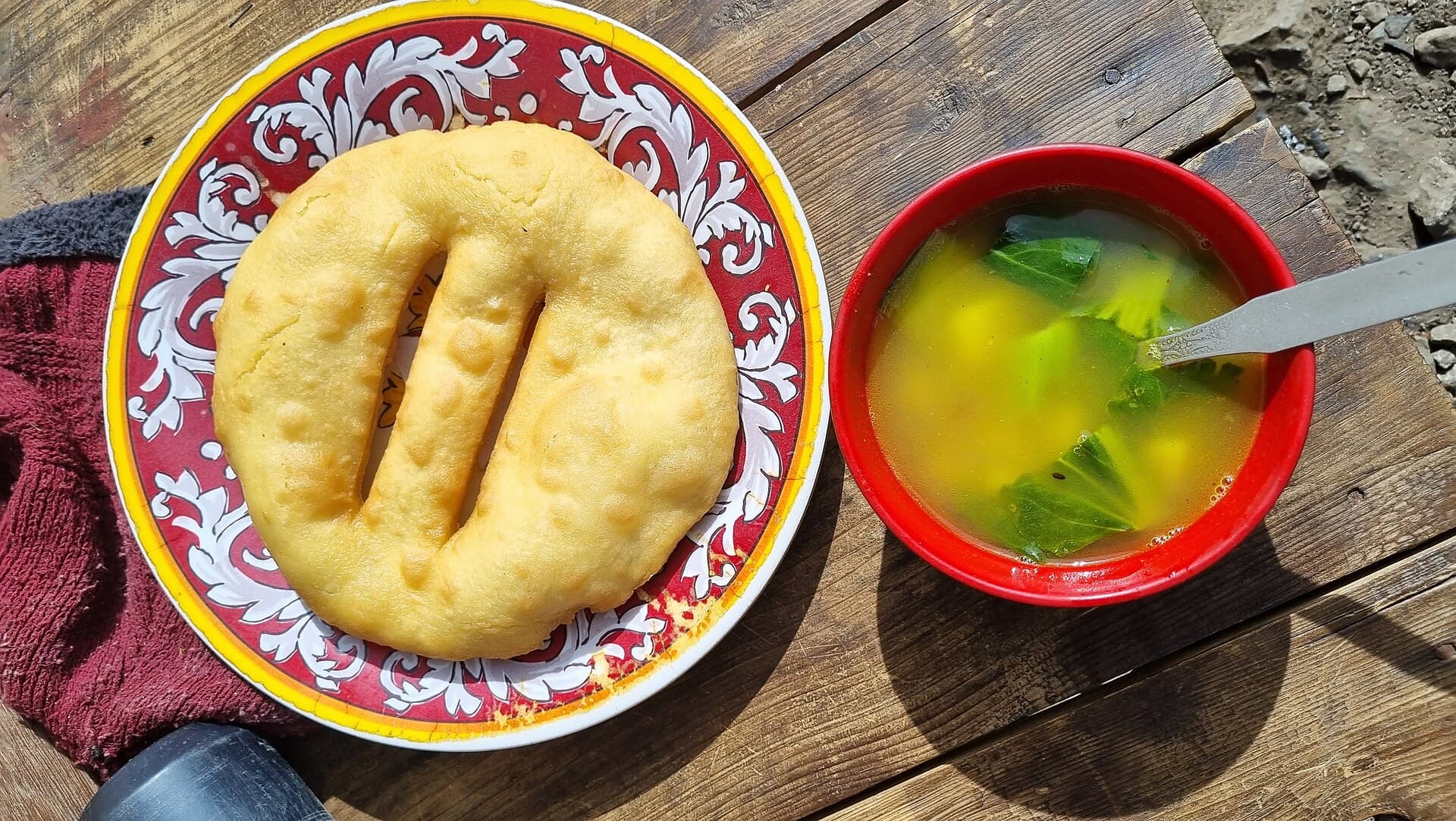
Breakfast
Porridge, Tibetan bread, eggs, chapati, pancakes, tea or coffee
All destinations
All destinationsClimb Nepal's highest trekking peak through the quiet Hinku Valley, with a full day of rope and crampon training before you go onto the glacier.
Climb Nepal's highest trekking peak through the quiet Hinku Valley, with a full day of rope and crampon training before you go onto the glacier.
The trip lasts eighteen days. Eleven are spent moving, and four are planned rest days at altitude for acclimatisation. You fly to Lukla, turn south away from the Everest trail, cross the Zatrwa La at 4,610 m into the Hinku Valley, and walk up the valley to Khare at 5,045 m. From Khare it is two days on the glacier to a tented high camp at 5,780 m, followed by one long night that ends on the summit of Mera Central at 6,461 m.
This climb suits trekkers who want to take the next step, rather than climbers looking for a difficult route. There is no rock, no mixed ground and no significant exposure. The only steep section is fifty metres of fixed rope below the summit. Mera requires the endurance to walk for two weeks and the patience to acclimatise properly. The technical skills take one day to learn, and we teach them at Khare.
Fifteen-day versions of this climb exist, but we do not offer one. They save time by removing an acclimatisation day, by going directly from Khare to high camp in a single 735 m ascent, and by leaving no spare day for bad weather. Climbers on Mera are rarely turned back by the difficulty of the climb. They are usually turned back because they reached high camp two days too early.
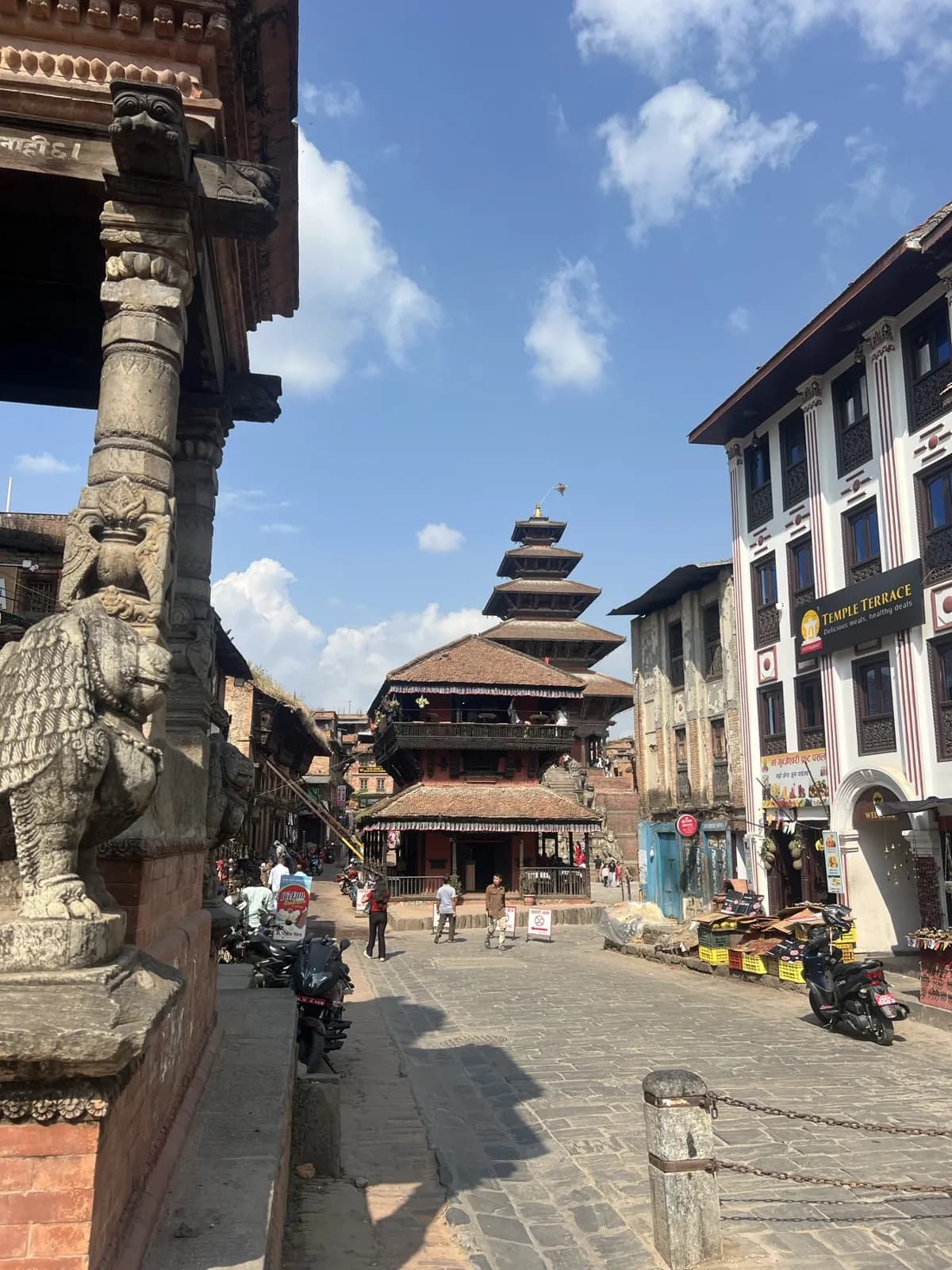
We meet you at Kathmandu airport and drive you to your hotel. If you are not too tired, you can take an hour to walk through the old streets. In the evening we have dinner together, go through the route day by day, and answer your questions.
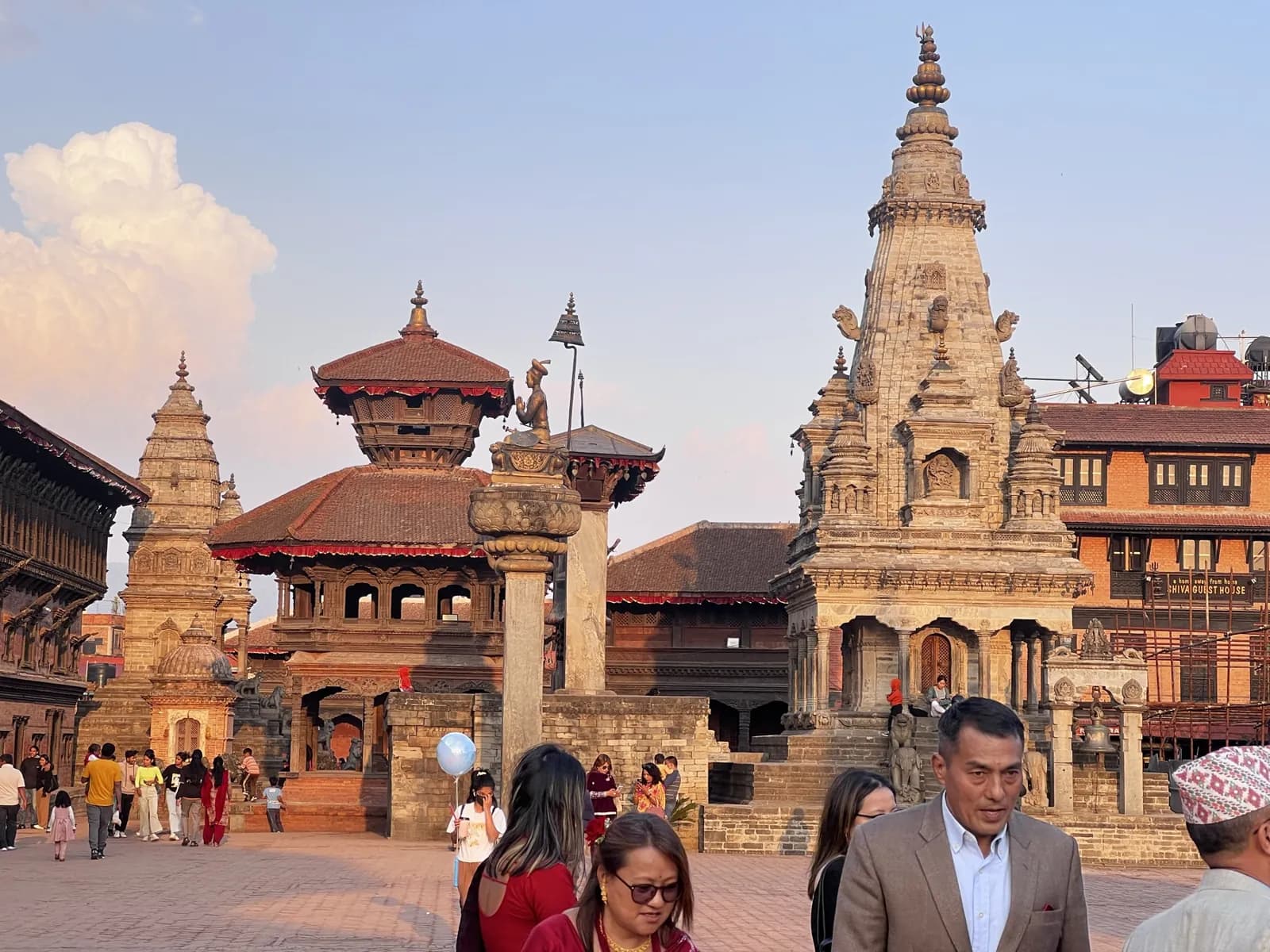
This is a preparation day rather than a sightseeing day. Your photographs and passport go to the Nepal Mountaineering Association office for the climbing permit. We then fit your boots, crampons, harness, ice axe and jumar, so that everything is ready before Khare. The afternoon is free if you would like to visit Boudhanath or Patan.
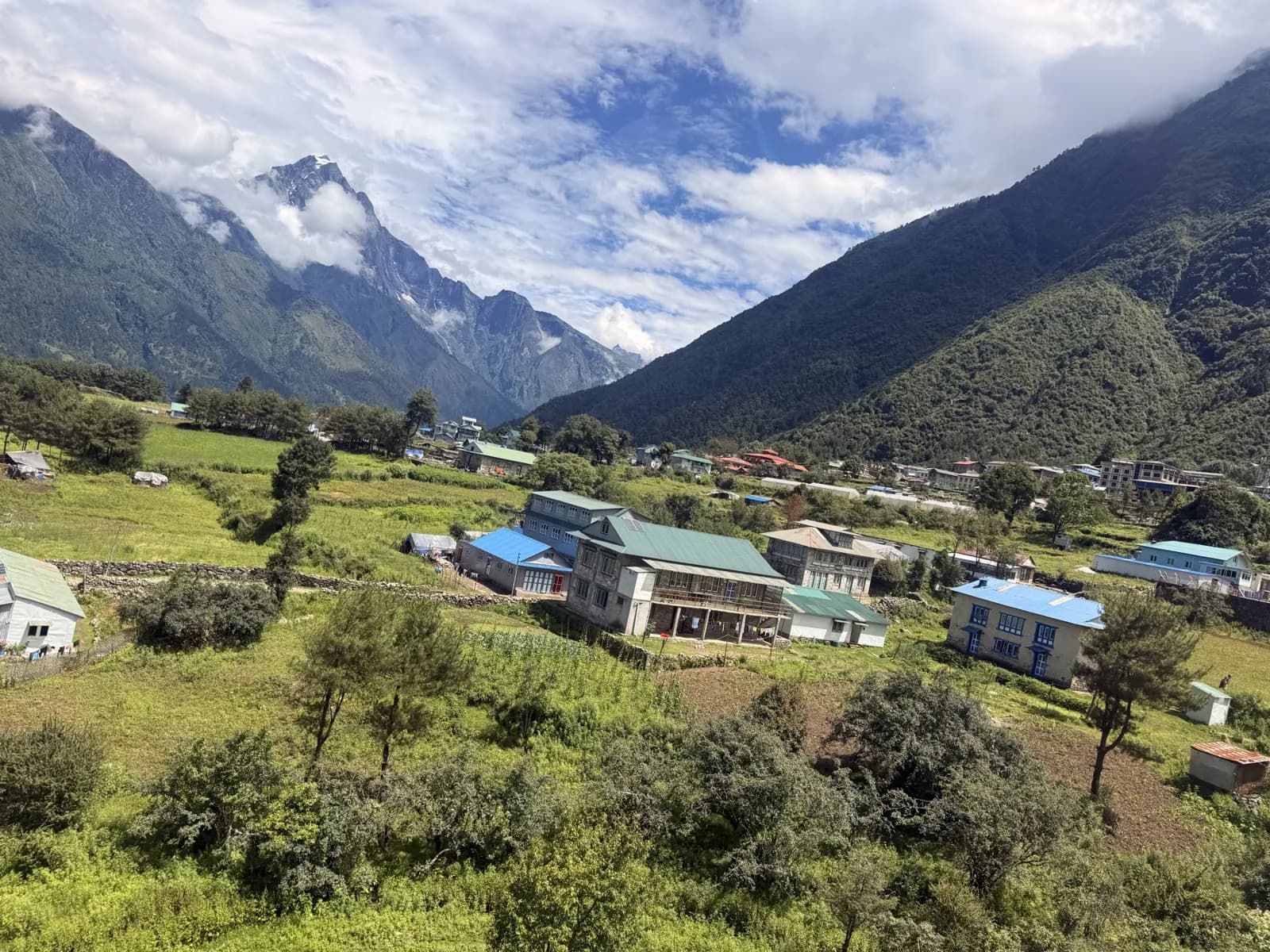
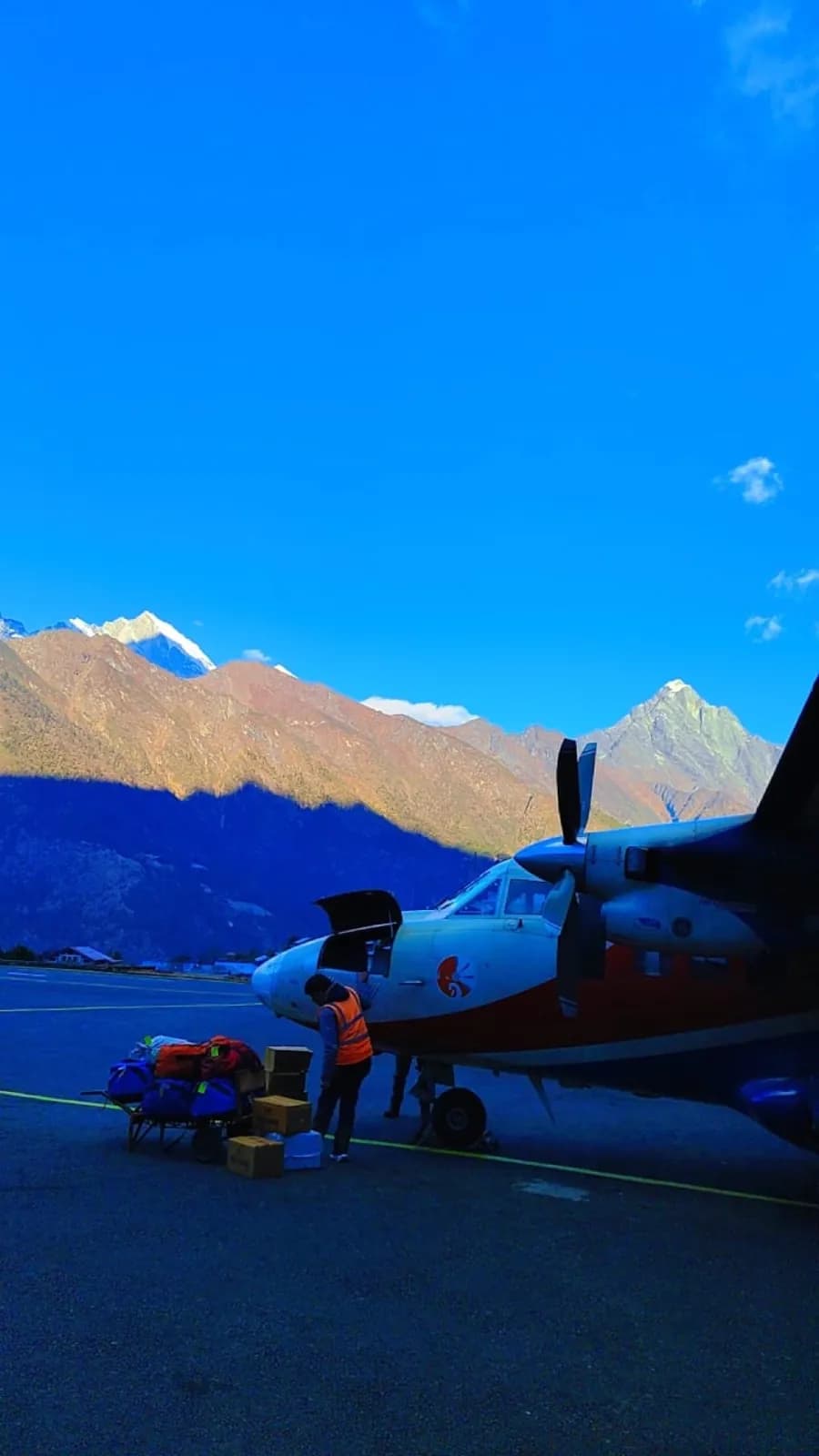
The flight lands on Lukla's short, sloping runway, and you start walking within the hour. The trail soon turns south, away from the busy Everest route, and climbs gently through rhododendron and juniper to the few stone huts and tent platforms at Chutanga. The first day is kept short on purpose.
You sleep at the same altitude for a second night. This is the first of four days in this itinerary without forward progress. In the morning we walk up towards the ridge below the pass to about 3,800 m, look at the next day's route from above, and return for lunch and a free afternoon.
This is the hardest day of the approach. A long, steady climb over rock, and often snow, leads to the Zatrwa La at 4,610 m, where the Hinku Valley appears ahead and the Khumbu is left behind. A rough traverse and a descent follow, to the yak pastures at Thuli Kharka. This is your first night above 4,000 m.
A long day, mostly downhill, which helps your body recover after the previous night. The path follows the western side of the Hinku Valley through fir and rhododendron, drops steeply to the river, then follows it upstream to Kothe. You sleep 700 m lower than the previous night, which is planned for acclimatisation.
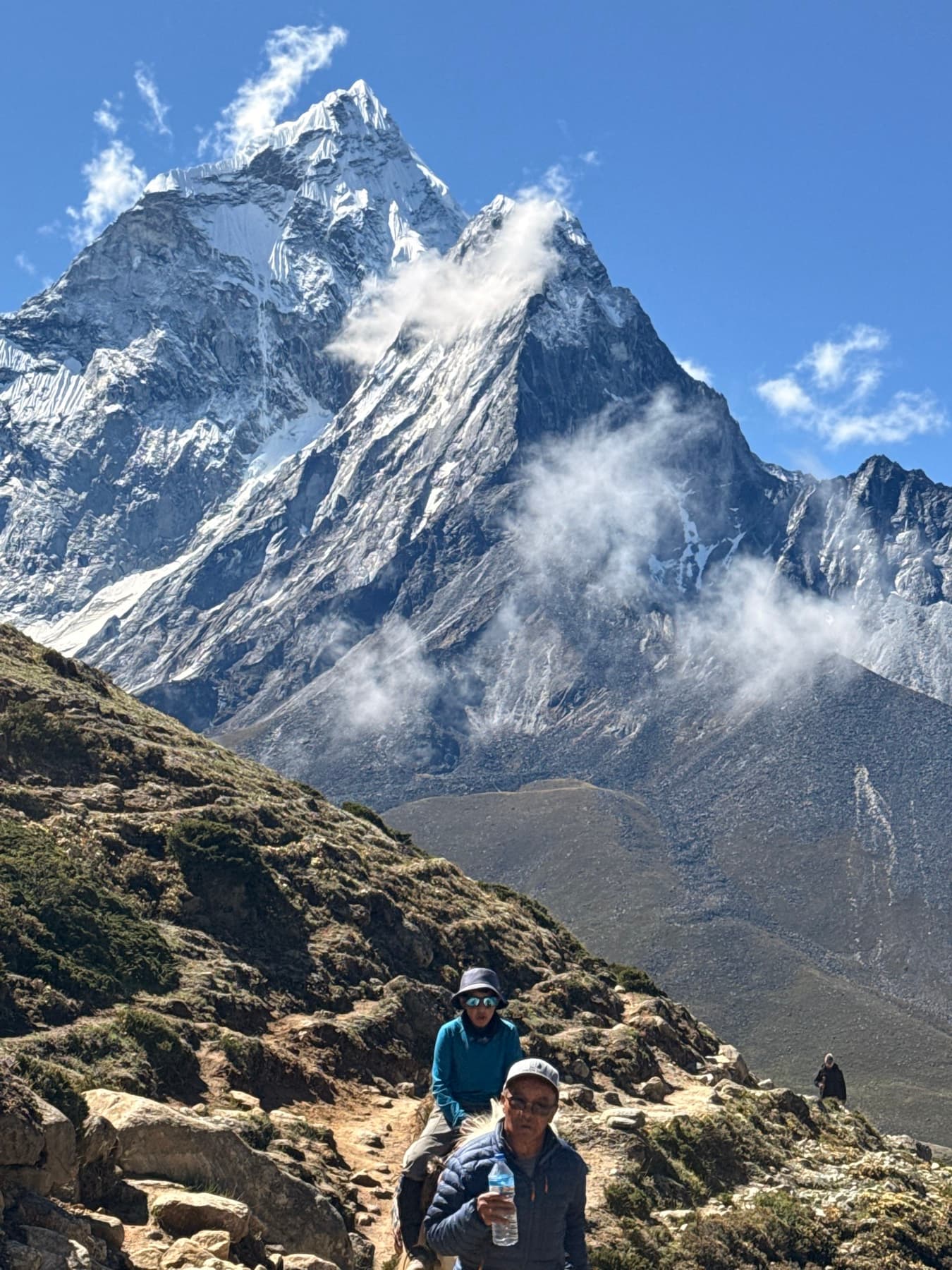
The trail follows the Hinku Khola, with the south face of Mera ahead for most of the morning. The forest gives way to scrub and then to open ground, and the valley becomes wide, grey and open. Thaknak is a summer grazing settlement with a few lodges that serve mainly climbers.
This is the second acclimatisation day. We walk up the moraine to Sabai Tsho, the glacial lake below Kusum Kanguru, reach about 4,900 m, and return to sleep at the same place as the night before. The walk takes half a day, is one of the best mornings of the trip, and helps your body adjust to the altitude.
The distance is short but progress is slow. The trail climbs the moraine beside the Dig Glacier, becomes steeper, and reaches the shelf at Khare, directly below the Mera glacier. You are now at 5,045 m, higher than Everest Base Camp. You spend two nights here now and two more after the summit.
A full day on the ice below Khare with your climbing guide. You practise walking in crampons, using the ice axe and harness, climbing a fixed line with a jumar, abseiling, and what to do if the person ahead of you falls into a crevasse. If you have no experience of these skills, this is where you learn them.
You rope up for the first time. A steep climb from Khare leads onto the glacier, followed by an easier route to the Mera La at 5,415 m and a short descent to the base camp tents on the far side. This takes three to four hours. Tonight you sleep in a tent, and our kitchen crew cooks the food they have carried up.
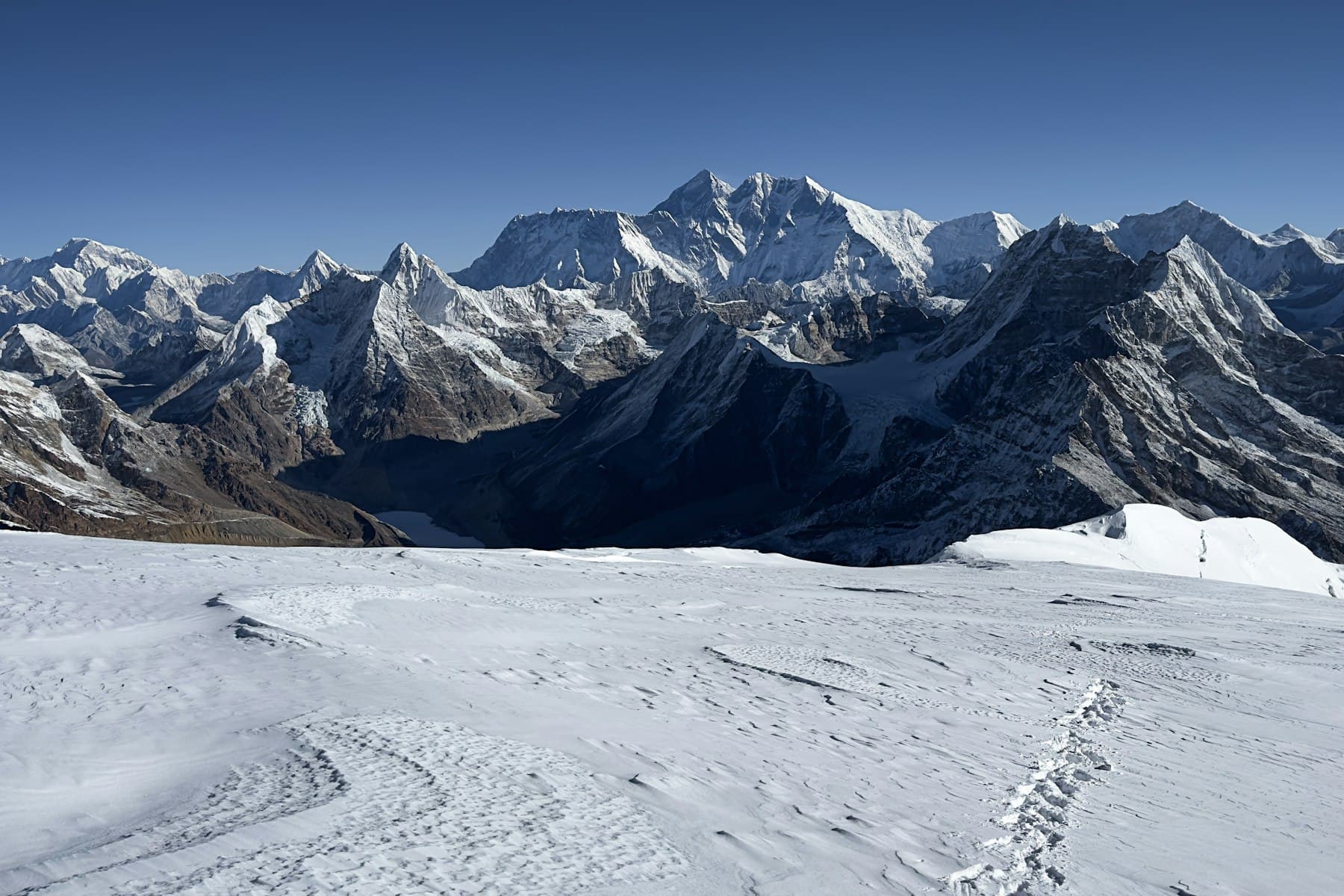
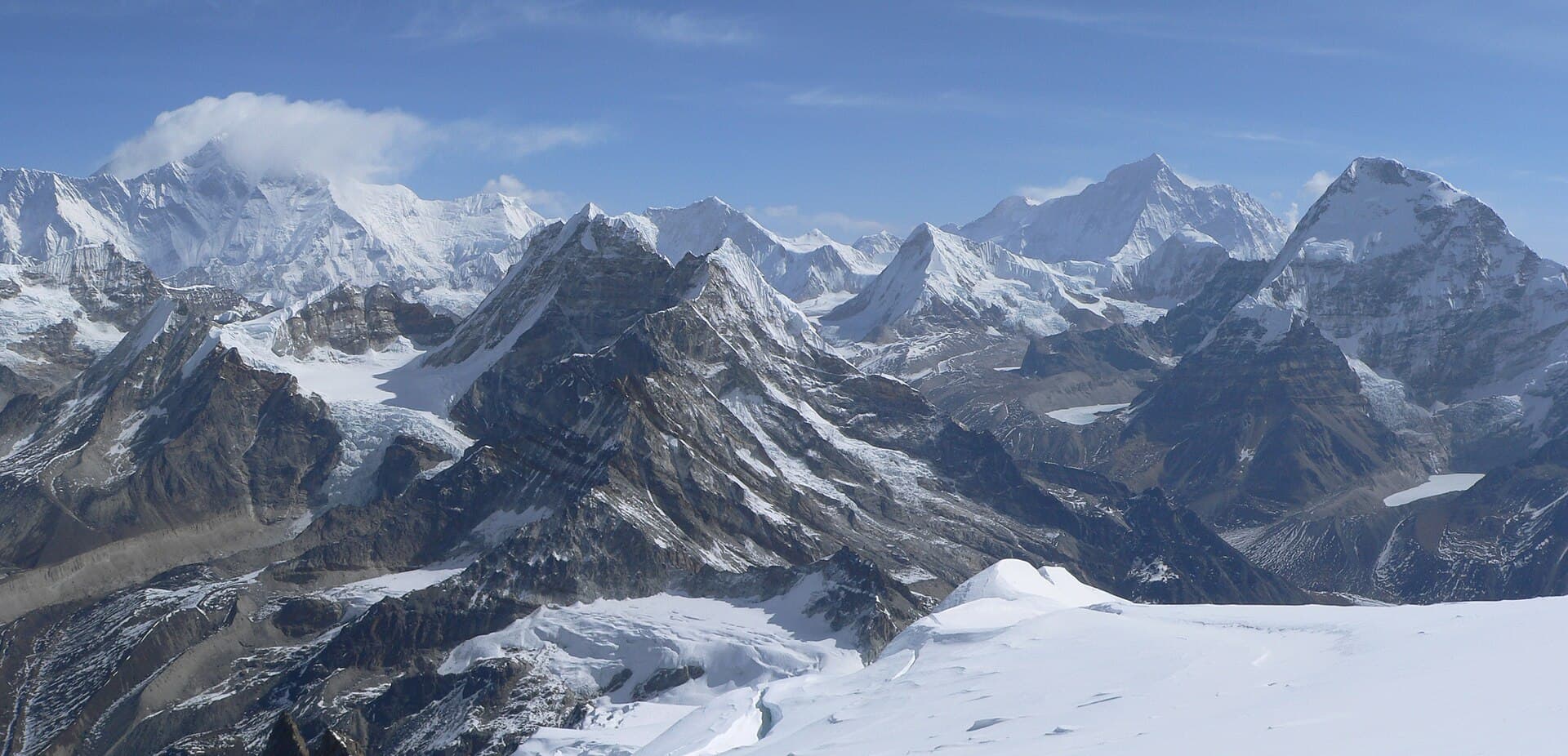
The climb takes only two to three hours, on snow and roped together, with the Khumbu peaks rising behind you as you gain height. High Camp is on a rock band at 5,780 m, above a long drop, with views of Everest, Lhotse and Makalu across the valley. You eat early, drink plenty of fluids, and try to sleep by seven.
You leave by two in the morning with head torches and climb slowly up a broad glacier, which is much less steep than it looks from below. The final fifty metres are steep and fixed with rope, and you climb them using a jumar. The summit is a snow dome surrounded by five 8,000 m peaks. You then descend all the way to Khare.
This is a reserve day. If wind or cloud prevented the summit attempt the day before, we climb again today. If not, you rest at Khare, eat well and recover. We include this day in the itinerary rather than offering a shorter trip.
You return the way you came, and the walking is easier. You pass the moraine, Thaknak and the long grey valley, and then reach the first bushes and trees, and thicker air for the first time in over a week. Kothe has a bakery.
The trail leaves the river and climbs steadily, 700 metres, up the western side of the valley to the yak pastures where you stayed on the way in. It is a long afternoon, with views of Mera behind you for most of the way.
You cross the pass for the second time, early in the day, before the cloud rises from the Hinku Valley. You then descend 1,800 m through Chutanga to Lukla. The walk takes seven hours, mostly downhill, and is hard on the knees. At Lukla there is a hot shower and a dining room full of other trekkers and climbers at the end of their trips.
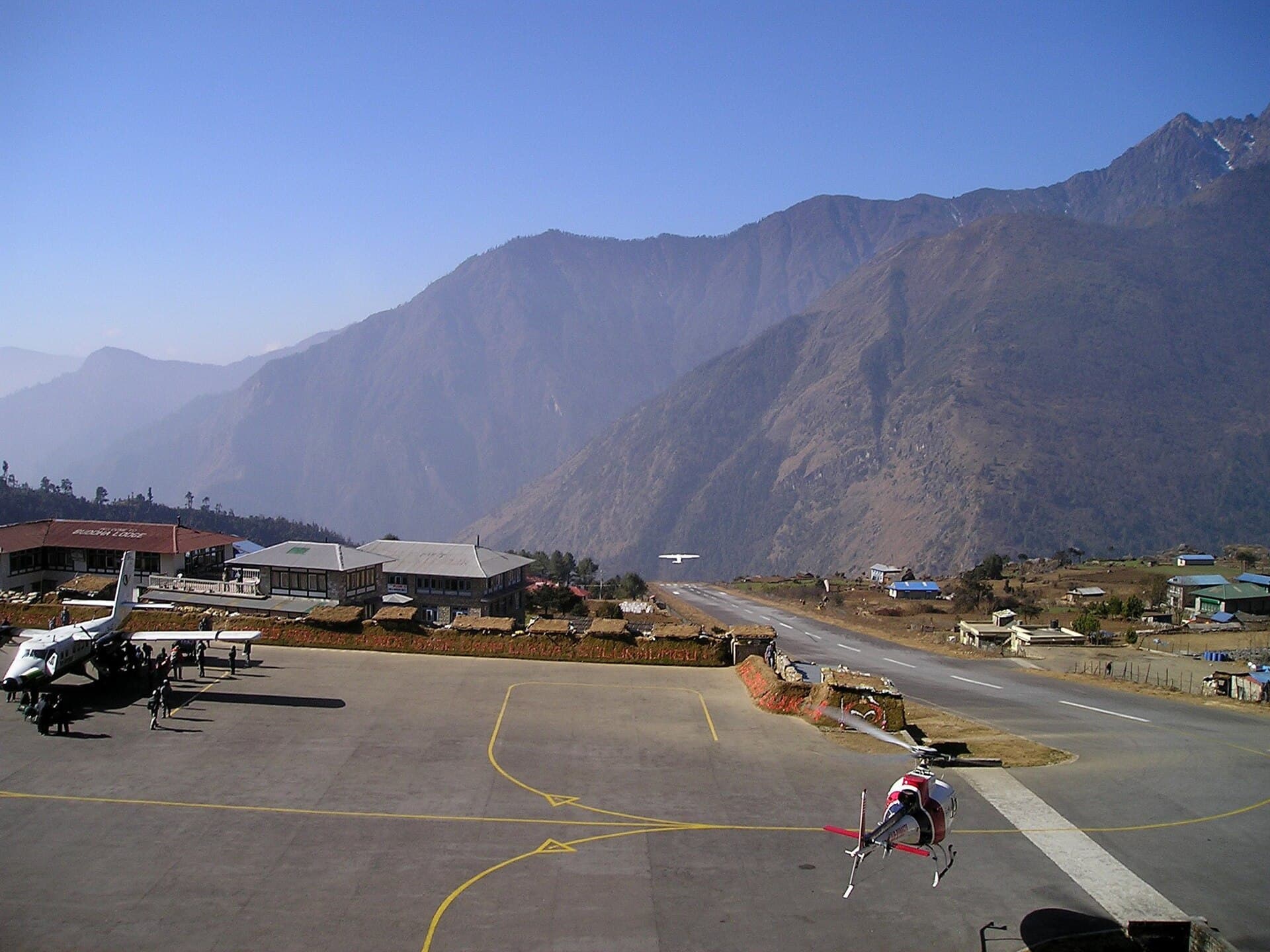
Flights from Lukla leave early in the morning or not at all, so you are at the airstrip at first light. You are back at the hotel by mid-morning, or by mid-afternoon if your flight goes via Manthali. We have dinner together in the evening. Book your flight home for tomorrow at the earliest, never for tonight.
Start date
10 Apr 2027
End date
27 Apr 2027
Available
8 left
US $2,660
Per person
Start date
24 Oct 2026
End date
10 Nov 2026
Available
8 left
US $2,485
Per person
Start date
10 Oct 2026
End date
27 Oct 2026
Available
8 left
US $2,485
Per person
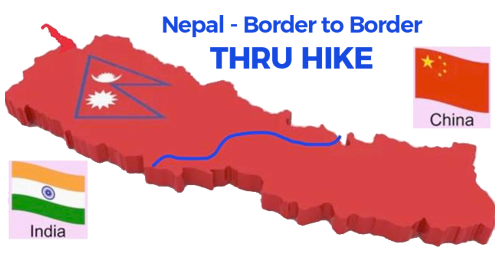
The trail from start to finish, at a glance.
Baggage weight limits
Your porter carries a strict maximum of 20 kg, shared between two climbers. The Lukla flight allows 15 kg in total, 10 kg checked and 5 kg hand luggage, and all bags are weighed. Mountaineering boots and crampons use up much of this allowance, which is why we hire equipment in Kathmandu and send it up as freight with the crew. We provide the duffel bag, sleeping bag and down jacket, so you do not need to bring these. Anything else you are not taking on the trek is stored free of charge at our office.
Flight delays to and from Lukla are the most common problem on any Everest region trip. This section explains how they are handled.
Outside the two busiest periods of the year, the flight leaves from Kathmandu and takes about 35 minutes. From about mid-March to mid-May, and from late September to the end of November, the civil aviation authority moves Lukla departures to Manthali airport at Ramechhap to reduce congestion at Kathmandu. This means a four to five hour drive, leaving at around two in the morning, followed by a twenty-minute flight. The climb is the same, but the night before is much shorter. We tell you which applies to your dates before you book.
The allowance is 15 kg in total: 10 kg checked and 5 kg hand luggage. Excess baggage costs about $1.50 per kilo and the limit is enforced, because the aircraft is a nineteen-seat Twin Otter or Dornier landing on a 527-metre sloping runway. Climbing boots and crampons use up much of the allowance, which is one reason we hire equipment in Kathmandu and send it up with the porters. Anything you do not take is stored free of charge at our office.
Lukla airport closes because of cloud several times a month in every season. Losing one day is common, and losing two is not unusual. On this itinerary, the spare day at Khare covers a weather day on the mountain, and the day you need to protect is the one after you return to Kathmandu. If flights are cancelled for more than three days at the start, we will move you to a climb that does not require Lukla rather than shorten this one, and we do not charge for the change.
This itinerary ends in Kathmandu on the evening of day 18. Book an international flight that leaves on day 19 at the earliest, and on day 20 if possible. This costs little and protects you against delays, and it is the advice we most often wish travellers had followed.
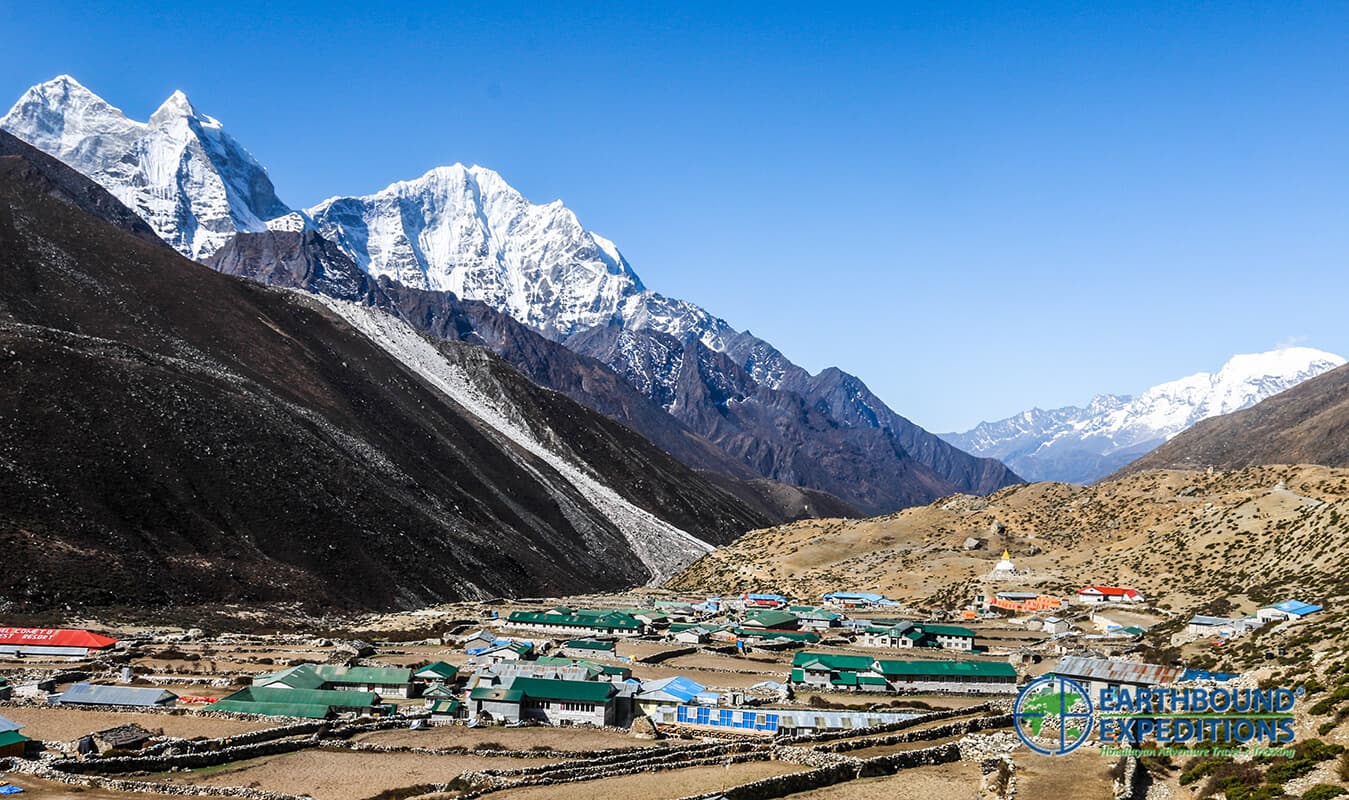
From Lukla into the Hinku Valley you stay in simple lodges, each with one warm dining room with a stove, and plain twin rooms with foam mattresses and thin walls. Bathrooms are shared. Chutanga and Thuli Kharka are basic, and Kothe and Thaknak have hot showers for a fee. You spend four nights at Khare, the highest lodge on the route, which is basic and has no shower. Bring a warm sleeping bag.
Above Khare you sleep in tents. You spend one night in tents at Mera Base Camp and one night at Mera High Camp, at about 5,780 m, in two-person tents on a rock band, with a toilet tent. The crew cook and melt snow for water. You leave High Camp in the dark on summit day.
| Where | Nights | Type | Room | Bathroom |
|---|---|---|---|---|
| Kathmandu | 3 | Three-star hotel | Twin or double | Private, hot water |
| Chutanga | 2 | Simple lodge | Twin | Shared |
| Thuli Kharka | 2 | Lodge in a yak pasture | Twin, basic | Shared |
| Kothe | 2 | Lodge | Twin | Shared, hot shower for a fee |
| Thaknak | 2 | Lodge | Twin | Shared, hot shower for a fee |
| Khare | 4 | Lodge, the highest on the route | Twin, basic | Shared, no shower |
| Mera Base Camp | 1 | Tented camp | Two-person tent | Toilet tent |
| Mera High Camp | 1 | Tented camp on a rock band | Two-person tent | Toilet tent |
| Lukla | 1 | Lodge | Twin | Private |
Porridge, Tibetan bread, eggs, chapati, pancakes, tea or coffee
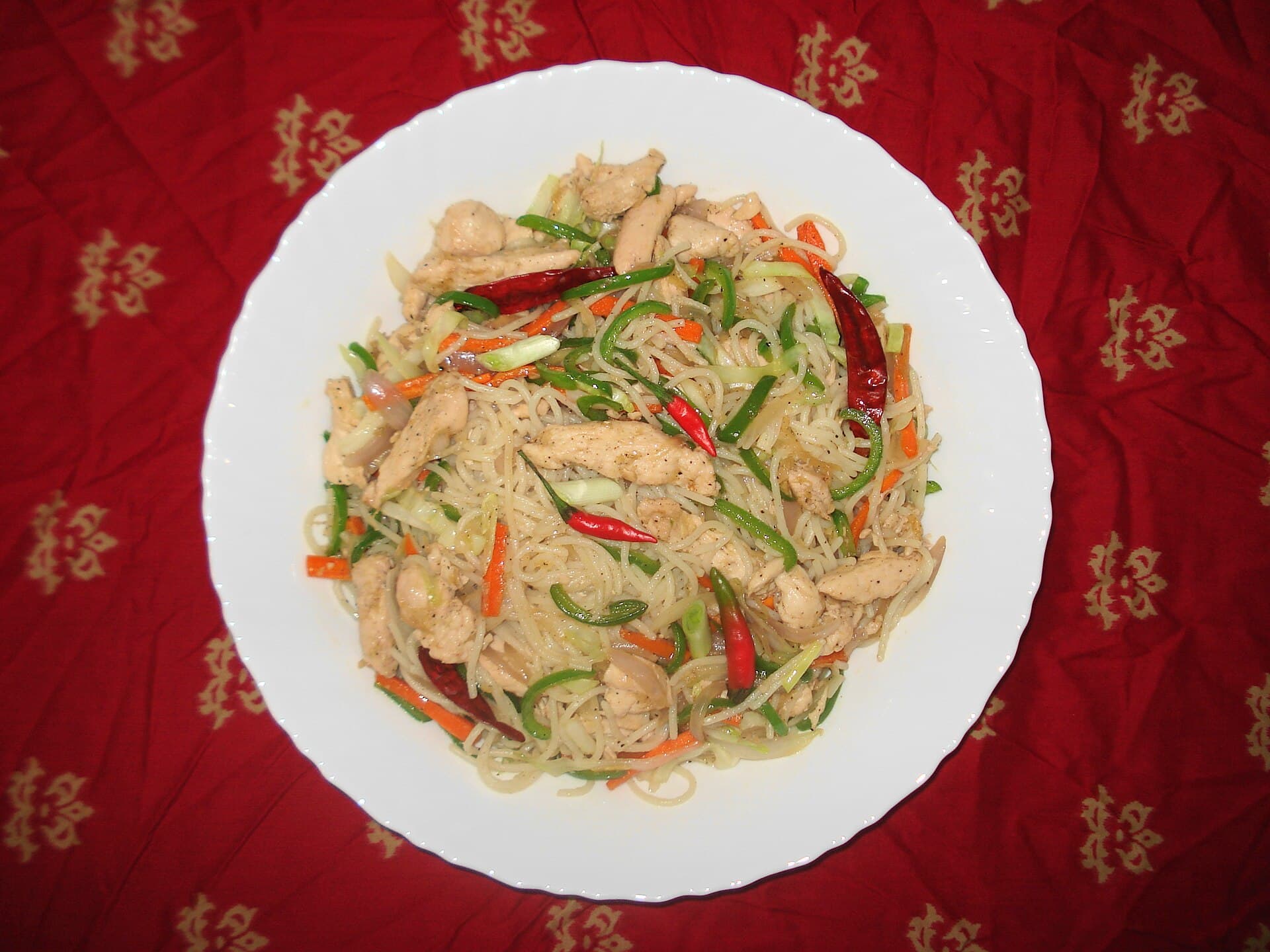
Dal bhat, fried rice, noodles, soup, and potatoes prepared in many ways

Dal bhat, pasta, thukpa, curry and rice, soup to start

Above Khare, our own kitchen crew serves soup, rice, pasta, tinned fish and as many hot drinks as you want
6:00Tea in your room, and a bowl of warm water to wash in
6:30Pack, and leave your duffel outside the door for the porter
7:00Breakfast together in the dining room
8:00Walking. The guide sets a slow, steady pace
12:00Lunch, about an hour, at a lodge or on the trail
13:00Two to four more hours of walking, depending on the day
15:30Arrive, have tea, choose a bed, wash, and rest if you need to
17:00Oxygen saturation and pulse taken, and written down
18:00Dinner, and the guide explains the next day's plan
20:00Bed. At 5,000 m, most people are asleep by nine
A long trek followed by a straightforward climb, both at very high altitude.
Written for somebody who walks a bit and does not train. If you already run or cycle regularly, start partway through. Nothing here needs a gym.
16 weeks before, stage 1 of 7
Do four cardio sessions a week, 45 to 60 minutes each, at a pace where you can still hold a conversation. Walking, cycling, swimming or rowing are all suitable. This is the most important factor in how you will feel on day 12.
You sleep one night at 5,780 m and reach 6,461 m, where each breath holds less than half the oxygen it does at sea level. Training at home does not change how your body responds to this. Fitness and tolerance of altitude are unrelated: strong young climbers can get altitude sickness, and less fit older climbers often do not. What helps is ascending slowly, which is the purpose of the four rest days in this itinerary, and telling your guide on the day a symptom starts, not three days later at high camp.
Daily health checks
Your guide carries a pulse oximeter and measures your oxygen saturation and pulse every evening, and again on any morning you feel unwell. The readings are recorded, so a decline over three days can be clearly seen.
Final check at Khare
No one goes onto the glacier unless they are eating, sleeping and showing normal readings at Khare. The climbing guide makes this decision on the evening of day 10, in a lodge, rather than at two in the morning at 5,780 m.
Mild symptoms
You rest for a day where you are, or descend a short distance to the previous village and climb back up the next day. Most cases are resolved at this stage, and the expedition continues.
Serious symptoms
Descent is the only effective treatment, and 500 m is usually enough. From high camp this means descending to Khare, and from Khare it means descending to Kothe. This decision is not open to discussion.
Helicopter evacuation
Helicopters can land at Khare and, in an emergency, on the flat ground near base camp. There is no clinic in the Hinku Valley, so evacuation goes directly to Kathmandu. This is why you need insurance and why we ask to see it: the cost is $4,000 to $6,000, and no helicopter will fly without a payment guarantee.
Fitness and altitude are unrelated
This is the thing people get wrong most often. Training makes the walking easier and does nothing for how your body handles thin air. Strong young trekkers get altitude sickness and unfit older ones frequently do not. Go up slowly, and say something the first time your head hurts.
This table shows the conditions month by month. We do not run the climb in three of these months.
The best month of spring. Stable weather, deep firm snow, and rhododendrons in flower lower in the valley.
Built from Lukla station records and standard lapse rates for the Hinku and Khare. Any given week can sit ten degrees either side of these, and wind at high camp makes minus twenty feel a great deal worse than the number looks.
A government-licensed trekking guide leads the whole expedition. A climbing Sherpa with the NMA high-altitude qualification joins the team at Khare, one for every two climbers on the glacier. One porter carries for every two climbers as far as Khare, and from there our own crew moves the camps. With nine or more climbers, a second climbing Sherpa joins the team.
Each porter carries twenty kilos, which is your duffel and one other. This is below the 25 kg limit set by the trekking association and well below the loads you will see on the trail. If a bag is overweight, the load is split rather than added to. Porters carry luggage, not daypacks: your water, camera, jacket and food for the day stay with you.
Salary, insurance, food, accommodation and high-altitude clothing for every guide, climbing Sherpa and porter are included in the price you pay, not collected separately on the trail. All of them are insured for altitude and helicopter evacuation on the same terms we require of you. Climbing Sherpas are paid a higher rate above Khare, because the work there is different.
Tipping is customary but not compulsory, and it never replaces a wage. For this expedition, $250 to $400 per climber for the whole team is usual, given together on the last evening rather than daily. Your guide will not ask for tips and would prefer that you do not tip in front of the group.
Everything we carry above Khare comes back down with us: tents, fuel canisters, packaging, batteries, food waste and the contents of the toilet tent. A garbage deposit is paid for every climbing permit, but we would carry everything out even without it, because there is nobody on the mountain to clean up.
A climber drinking bottled water uses fifty or more plastic bottles on this trip, each of them flown to Lukla and carried over a 4,610 m pass by a porter. Boiled water costs a dollar or two a litre in the lodges, and the camps melt snow. Bring purification as a backup, not as your main supply.
The lodges in the Hinku Valley are family businesses with a season of about five months. The guides, climbing Sherpas and porters live in this district. The permit fees fund the national park and the rural municipality. Almost all of what you pay is spent within fifty miles of the trail. This is a reason to book with a Nepali operator rather than a foreign company that subcontracts the work to a local operator.
The Hinku Valley is grazing land, not a resort, and the settlements at Thaknak and Khare are occupied for only a few months a year. Ask before photographing anyone. Camp where the crew sets up the tents rather than where the view is best. If a herder asks you to walk around rather than through, please do so.
Write to us or send a message on WhatsApp. Tell us roughly when you would like to go and what you have climbed before, if anything. You will receive a reply from someone who has climbed this peak, not an automated form. Nothing is payable at this stage, and there is no obligation until you pay a deposit.
A deposit of thirty per cent secures your dates and your climbing permit, and the balance is paid when you arrive in Kathmandu, in cash or by card. At the same time, we ask for a copy of your passport, four photographs, your insurance certificate and any dietary or medical information, because the NMA permit cannot be applied for without them.
You can pay by bank transfer or by card through a secure link. Card payments carry the bank's fee of about 4 per cent, which we show you before you pay. The balance in Kathmandu can be paid in US dollars, pounds, euros or Nepali rupees.
If you cancel more than 45 days before departure, the deposit can be transferred to any other date or trip we run, with no time limit. Within 45 days, the deposit is kept, because the climbing permit, flights, camping equipment and crew have been booked by then. If we cancel for any reason other than weather, you receive a full refund.
From a group of five, both cost the same. A private expedition runs on your dates at your pace and can be arranged for a single climber. A group departure runs on the dates in the table above, with a maximum of eight climbers. Most people book privately, at no extra cost.
Three weeks is usually enough if the Lukla flights have seats, although in October they are often full. The climbing permit itself can be issued in a couple of days. If you are already in Kathmandu with two free weeks, visit our office and we will see what we can arrange.
Priced per person, arranged before you travel, and none of them included in the price above.
Fly from Khare to Lukla or directly to Kathmandu instead of crossing the Zatrwa La again. People usually choose this to save time or to spare their knees.
Cross the Amphu Labtsa from the Hinku Valley into the Imja Valley and climb Island Peak while you are still acclimatised. A serious, committing route, and one of the best-value climbs in Nepal.
Walk in through Paiya, Pangkoma and Ningsow instead of over the Zatrwa La. It takes three days longer, with several hundred metres less climbing each day, and gives much better acclimatisation.
A one-hour flight along the range from Kathmandu, with a guaranteed window seat. A useful option if Lukla flights are cancelled for a week.
Bhaktapur, Patan and Boudhanath with a guide who can explain the religious art, on the day after you return from the mountains.
A room to yourself for all three hotel nights. Lodges and tents are twin-share only.
4 versions of this journey. They use the same guides and the same lodges; what changes is the length, the comfort and how much of it you walk.
September 2019, Tripadvisor
We just returned from Manasa Sarovar and Mount Kailash trip to the US. The trip would not have been so successful without the loving care of Rajanji and his (Nine Jewels ) team. Narayanji the chief chef is better than the best. The hot food he server was nothing short of divine. We cannot forget Ram and his magic potion, the little secret of our health. All we can say is Annadatha Sukhi Bhava. The team monitored our health and oxygen levels and gave such revitalizing head massages that any fatigue and pain vanished in minutes. Arjunji's mother like and tender attention was a major factor in 100% success of the trip. God knows when they would sleep and wake up and prepare hot food for us. Amrith, Gopal, Deepak, Ram, Sherpa, Arjun, and others watched our every step and made sure that every one of us was safe and doing good while hiking. Hats off to all of you sir. You gave us the best of service and have helped us have a lifetime experience and memories. Rajanji, a spiritual seeker and author of wonderful spiritual books, who shared his wisdom whenever opportunities arose. Traveling with him and discussing spiritual aspects during this journey was like the icing on the cake. The entire journey was a great learning and humbling experience. Given the time I would not hesitate to go on each and every trip The Earthbound Expeditions would offer. I would highly recommend Rajanji's services and his Earthbound Expeditions team to all of my friends and family anytime.
September 2019, Tripadvisor
Manas Sarovar and Mt. Kailash Parikrama with the amazing Rajan Sinkhada’s earthbound expeditions team! We are a group of 27 U.S. nationals, known friends and families with two doctors out of 27, who went on this trip. Rajan’s team lead by himself with his daily prayers in the morning and end of the day briefing in the evening took care of each of us with personalized care. Rajan’s right hand Dorjee handled all the security check points and permit issues so smoothly that we felt like we are in the U.S. Rajan’s customer service team lead by Arjun, took care of each one of us, whether it is monitoring our oxyzen levels daily or offering medical care or providing head messages to get rid of minor headaches or what not. Rajan’s cook Narayanji is so special. His team paid personal attention and offered no onion and garlic food to some and all vegetarian food to others while providing hot food anywhere to our amazement. With limited guidance he and his team learnt some South Indian dishes and offered them as well. Rajan’s customer service team lead by Ramji gave us hot chai to hot breakfast and ensured that we do not carry any bags and retain our depleted oxyzen levels to complete a successful trip. Sri. Rajan surrounded us with positive energy and once we met Sri. Rajan that we never had a doubt even once that we may not be able to complete such an amazing Mt. Kailash Parikrama. I personally would not hesitate to use their services again and highly recommend Earthbound Expeditions to any of my friends and family anytime.
September 2019, Tripadvisor
Mr Rajan Sinkhada is such a pious man that we were highly blessed to have him with us throughout our Manasarovar Mount Kailash trip. He was very professional and helpful right from the beginning. He dealt every single detail with so much ease and positive energy. Like many expressed, 5 stars are not enough to describe our experience with Earthbound Expeditions We were a team of 27 from USA and we were 200% taken care of by Mr. Rajan and his awesome crew. Every detail was taken care of from the moment we arrived Lhasa till we left Kathmandu. Entire Rajan's crew including Arjun, Dorjee, Ram, Sargi, Gokul, Narayan and the rest were amazing in taking care of our team, exceptionally. Our kudos to them. Except for Parikrama lunch, we were served clean, hot, delicious meals throughout our trip! It was amazing to see such a positive attitude crew. Rest of the world has a lot to learn from that team - just like we did. Our guide Kumar in Nepal was very knowledgeable and did an excellent job explaining the sights to us. I highly recommend Earthbound Expeditions and I can not imagine any of our future arduous trips without them.
September 2019, Tripadvisor
We recently completed this tour and trekking expedition in September 2019 with Mr Rajan Simkhada and his team from Earthbound Expeditions. We were a group of 27 people and I have to say that this team surpassed all our expectations. Looking back, we couldn't have asked for a better tour company for this mentally and physically challenging trekking expedition. Mr. Rajan and his team were very accommodating to individual group member’s need and went above and beyond to cater to our comfort and convenience. They were flexible, personable and very attentive to the minutest and the biggest details of our travel. A bright smile on their faces and cheerful dispositions kept our spirits high all the time, but specially during the arduous ‘parikrama’ days. Food was amazingly delicious and was cooked fresh daily by Chef Narayan and his helpers. Crew members RAMJI, SHERPA TERKI and GOKUL made sure that each person ate well and we were all well hydrated. Highlight of the day used to be head and neck massage by ARJUN every evening while checking our Oxygen levels. I am looking forward to doing future trips with Mr Rajan and his team @ Earthbound Expeditions!! Thank you so much you all for this wonderful experience and your commitment to giving your customers the best experience!!!
Answers to the 24 questions travellers ask us most often. If your question is not here, contact us and we will answer it.
No. Most people who book this climb have none. Day 10 at Khare is a full day of training on the glacier: crampons, ice axe, harness, jumar, abseiling and moving roped together as a group. Mera requires stamina at altitude and a willingness to learn, not previous climbing experience.
You need to be able to walk four to seven hours a day on rough ground for two weeks, day after day, and then keep moving for nine to eleven hours on summit day, starting at two in the morning. The training plan on this page is designed for a reasonably active person starting twelve weeks before departure.
Mera is more demanding physically, and Island Peak is more technical. Mera is nearly 300 m higher, the approach is twice as long, and you sleep two nights in tents above 5,300 m. Island Peak has a steeper, more technical headwall but a much shorter approach. Most people find Mera the harder climb overall.
Across the industry, roughly four in five climbers who set out from high camp reach the summit. Weather and altitude account for almost all of the others. Our itinerary includes an extra acclimatisation night and a spare summit day, which helps, but no one can guarantee a summit and we do not.
There is no upper age limit. We have guided climbers in their sixties to the summit and turned back climbers in their twenties. The minimum age is sixteen, with a parent on the trip. Experience of long days in the hills matters more than age.
Mera Central, 6,461 m. The peak is usually listed at 6,476 m, which is the height of Mera North, a more technical summit about three hours further on that most commercial groups do not attempt. Your certificate will say Mera Central, because that is the summit you reached.
You leave high camp at around two in the morning, when the snow is firm and the wind is usually lighter. You walk slowly, roped together, for four to five hours up a wide glacier, then climb a steep fifty-metre section on a fixed rope to the summit. You descend to Khare the same day, so the total is nine to eleven hours.
For almost all of the route, the slope is gentle. The glacier above high camp rises at an angle you could walk up without a rope if it were rock. The exception is the final headwall below the summit. It is short and steep enough to need a jumar, and it has fixed ropes in both climbing seasons.
Yes, on the glacier between Mera La and the summit. There are more of them in a warm spring than in a cold autumn. You walk roped together from the time you leave Khare, and your guide chooses the route. The early start is partly so that snow bridges are frozen when you cross them.
We provide the ropes, ice screws, snow bars and tented camps. Boots, crampons, harness, jumar, descender, helmet and ice axe are personal equipment. You can bring your own or hire a set in Kathmandu for about $150 for the trip. We fit all equipment on day 2, rather than at 5,045 m in the cold.
There are three acclimatisation days, at Chutanga, Thaknak and Khare. On each, you climb several hundred metres and return to sleep at the lower altitude. Above Khare, the sleeping altitude rises by 305 m and then 430 m, both within the guidance published by the Himalayan Rescue Association. Fifteen-day versions of this climb leave out one of these days.
This is the only day on the route that goes beyond the recommended gain, and it cannot be avoided: between Chutanga and Thuli Kharka there is a 4,610 m pass and nowhere to sleep. For this reason, day 4 is a rest day beforehand, and day 6 takes you 700 m down to Kothe afterwards.
An emergency oxygen bottle and mask travel with the team from Khare upwards, and your guide carries a pulse oximeter for the whole trip. The oxygen is for emergency descent only, not for climbing. Climbers on our departures do not use supplementary oxygen on Mera, and it is not needed.
You stay at Khare with a member of our crew while the rest of the group climbs. This costs nothing extra and happens on about one departure in four. If you need to descend instead, we walk you down to Kothe. You are always accompanied.
No. The Hinku Valley has no clinic, no road and no aid post like the one at Pheriche on the Everest trail. The nearest medical care is in Kathmandu, reached by helicopter. For this reason, we ask to see insurance that covers climbing to 6,500 m and helicopter evacuation before you fly to Lukla.
You need three: the NMA climbing permit for Mera, the Makalu Barun National Park entry permit, and the Khumbu Pasang Lhamu Rural Municipality permit, which is bought in Lukla. All three are included in the package price. A refundable garbage deposit is paid for each team and returned when the team brings its rubbish back.
No. A climbing permit replaces it, and the Khumbu stopped using TIMS in 2018 in favour of the municipality permit. Some other operators still list it for Mera, but you do not need to buy one.
You need a policy that specifically covers mountaineering or high-altitude trekking to at least 6,500 m, including helicopter evacuation and repatriation. Standard travel insurance rarely covers this, and an upgrade limited to 6,000 m is not enough for this peak. Please send us the certificate before you fly.
You stay in simple lodges as far as Khare, with plywood walls, a stove in the dining room and no heating in the bedrooms. Above Khare, you spend two nights in tents at 5,350 m and 5,780 m. We supply a sleeping bag rated to minus twenty and a mat, and at high camp you sleep in your down jacket.
It is unreliable, and there is none above Khare. Lodges from Kothe upwards charge around $3 to $5 per device and sell data cards that work when the signal is good. There is no wifi or charging at base camp or high camp. Bring a power bank, keep it inside your sleeping bag at night, and let people at home know that you may be out of contact.
There is a screened toilet tent with a drum, which we carry back out. It is cold and the least comfortable part of the trip, but it keeps waste off the mountain, which has suffered from it for thirty years. Please use it rather than the snow.
The NMA royalty for a peak of this height is $350 per climber in spring and $175 in autumn, winter and summer. This $175 difference accounts for the whole price difference on this page. We pass it on at cost rather than charging an averaged price all year.
International flights, your Nepal visa, insurance, personal climbing equipment if you do not hire ours, drinks, hot showers, charging, wifi and tips. Budget $300 to $500 in cash, in addition to tips. There are no ATMs in the Hinku Valley and no card machines above Lukla.
Book two to three months ahead for October and November, because Lukla flights and the better lodges at Khare fill early. Six weeks is usually enough for spring. We have arranged a climbing permit in five days when a place became free, so it is always worth asking.
Didn't find what you were looking for?
Search every word on this page, or ask somebody who has walked the route.
18 days
$2,485 per person