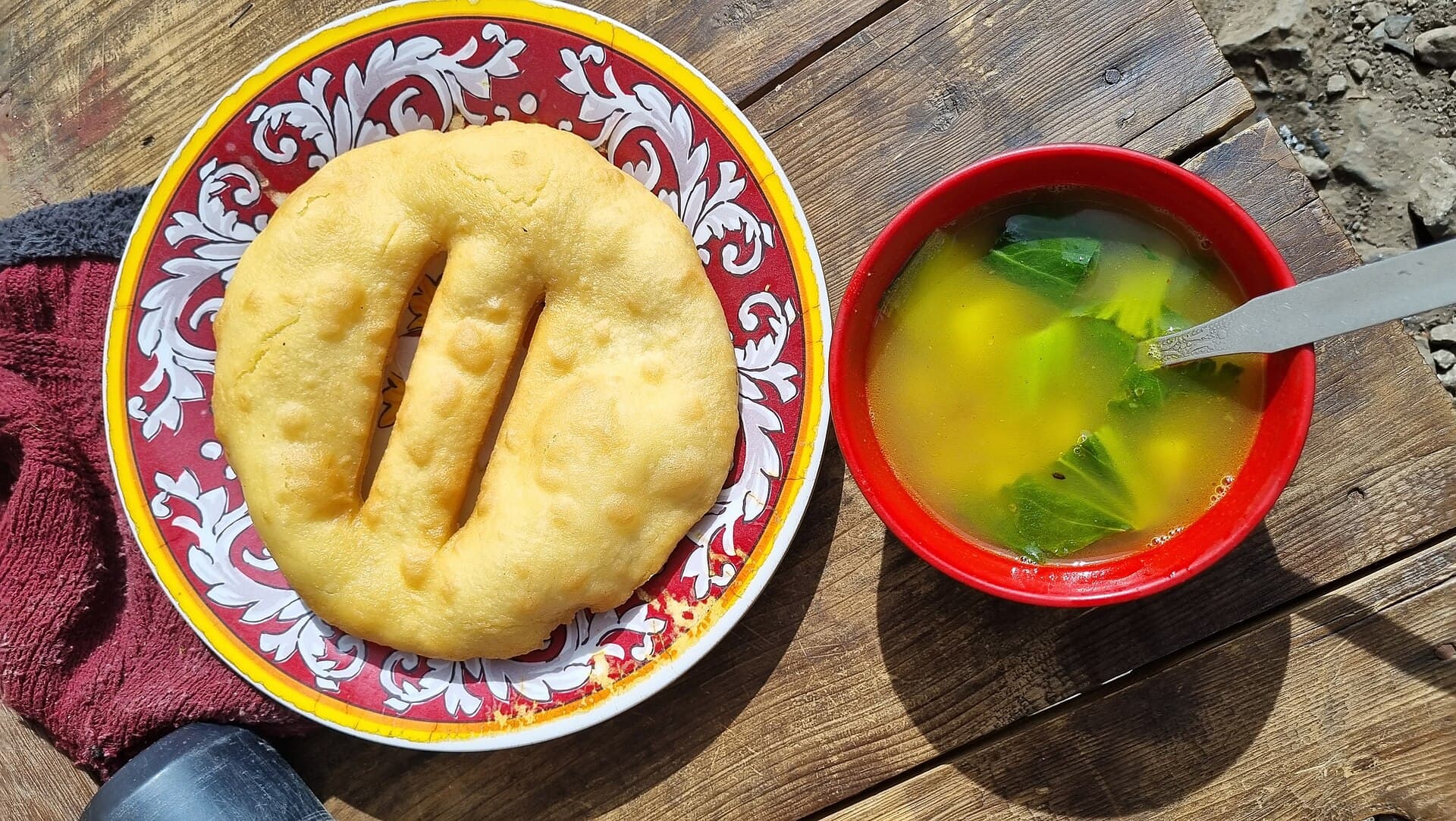
Breakfast
Hotel buffet. In India this includes paratha, idli, poha and eggs as well as toast
Delhi, the Taj Mahal, Jaipur, the temples of Khajuraho and the cremation ghats of Varanasi, then across the border to the temple cities of the Kathmandu Valley.
Delhi, the Taj Mahal, Jaipur, the temples of Khajuraho and the cremation ghats of Varanasi, then across the border to the temple cities of the Kathmandu Valley.
This is the classic north Indian circuit, followed by the Himalaya. Delhi, Jaipur and Agra form the Golden Triangle, which is what most first visits to India include. Orchha, Khajuraho and Varanasi are older and less visited, and many itineraries leave them out for lack of time. The trip then flies north to Kathmandu, which after eight days on the plains has a different climate, a slower pace and a different religious tradition with similar practices.
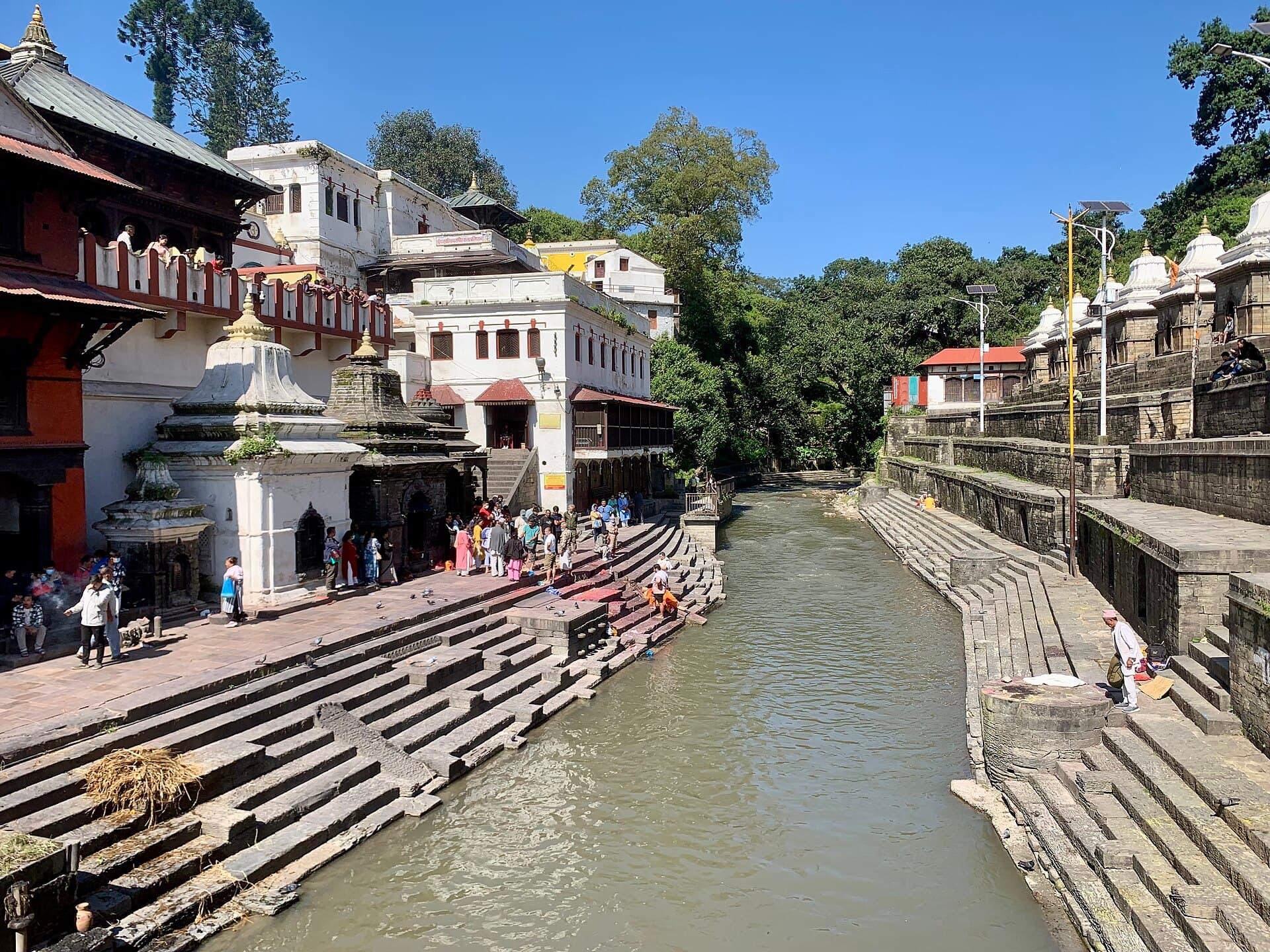
The itinerary is planned around this order. Pashupatinath in Kathmandu is a Hindu riverside cremation ground, as are the cremation ghats at Varanasi, and they are the two most important such places in Hinduism. If you have seen Varanasi first, Pashupatinath on day 10 is much easier to understand. Reversing the trip would not reduce the cost and would lose this connection.
Travellers who want to see sights rather than walk long distances. There is no trekking on this itinerary and no significant altitude. It does require stamina of a different kind: eight days in Indian cities in December is tiring regardless of fitness, and the driving days are long. It is also the least expensive trip we offer by a wide margin, which makes it a good first visit to both countries.
Day 8, Khajuraho to Varanasi, is about nine hours by car. It is the longest transfer on any of our trips, and a forty-minute flight covers the same distance. The trip price includes the drive, and we will book the flight for anyone who asks, as most travellers do. Please decide at the time of booking rather than on the day.
We meet you at Indira Gandhi International Airport with an Earthbound Expeditions sign and take you to your hotel. There are no activities today, so you can rest after your flight.
Today you see two very different parts of Delhi. In the morning, Mughal Delhi: the Red Fort, the large courtyard of the Jama Masjid, and a walk or rickshaw ride through the crowded lanes of Chandni Chowk. In the afternoon, Lutyens' imperial capital, with its wide, quiet avenues: India Gate, Rashtrapati Bhavan, the Parliament building, and Raj Ghat, where Gandhi was cremated.
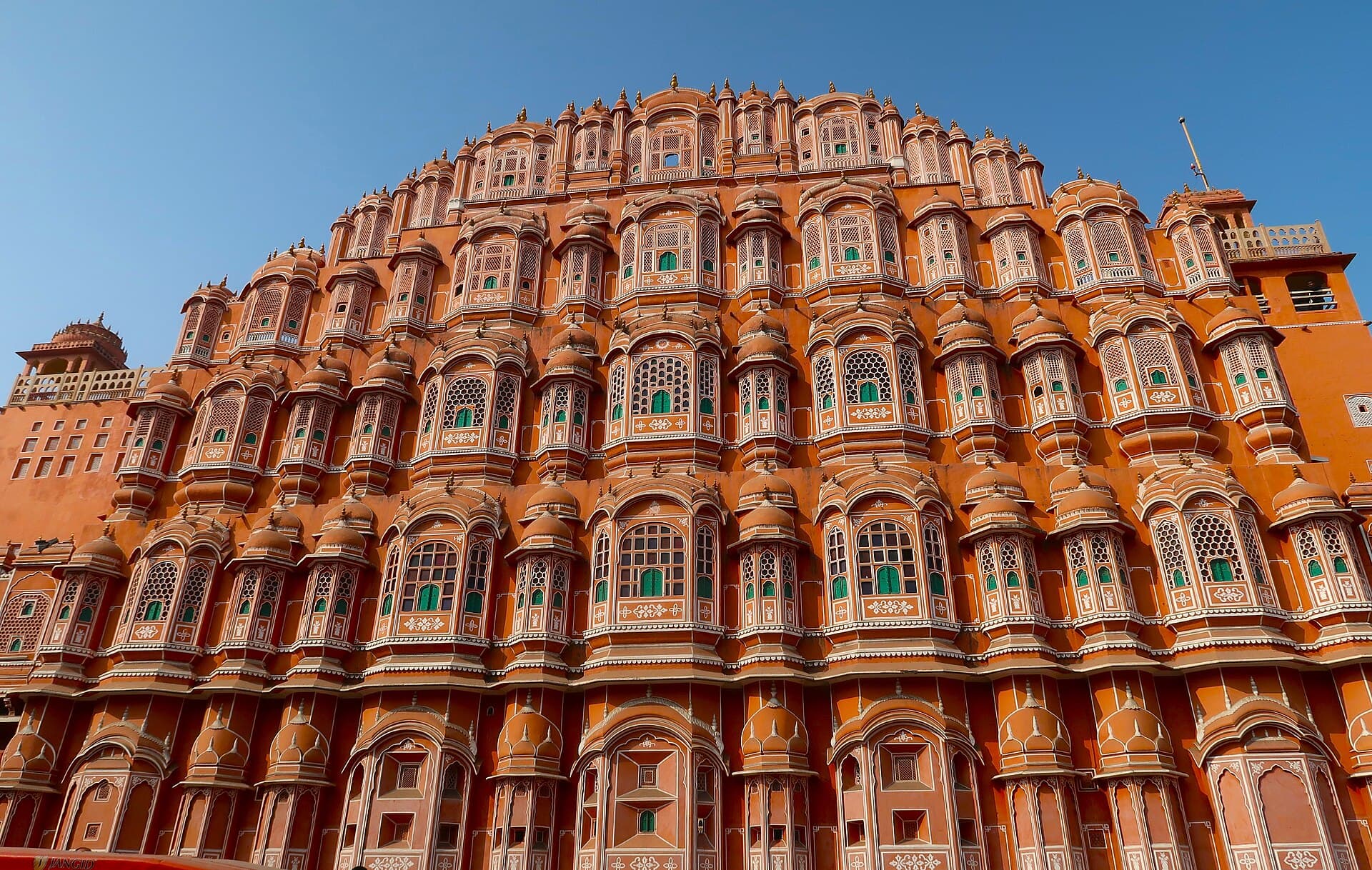
A drive of about five hours south-west into Rajasthan, where the land becomes drier and browner and the buildings more colourful. In Jaipur, you visit Amer Fort on its ridge above a lake, and the Hawa Mahal, the pink honeycomb facade built so that the women of the court could watch the street without being seen.
A drive of about four hours east, with a stop at Fatehpur Sikri, the abandoned Mughal capital, if time allows. In Agra, you visit the Red Fort, a fortress and palace where Shah Jahan spent his last years imprisoned by his son, with a view down the river to the tomb he built for his wife.
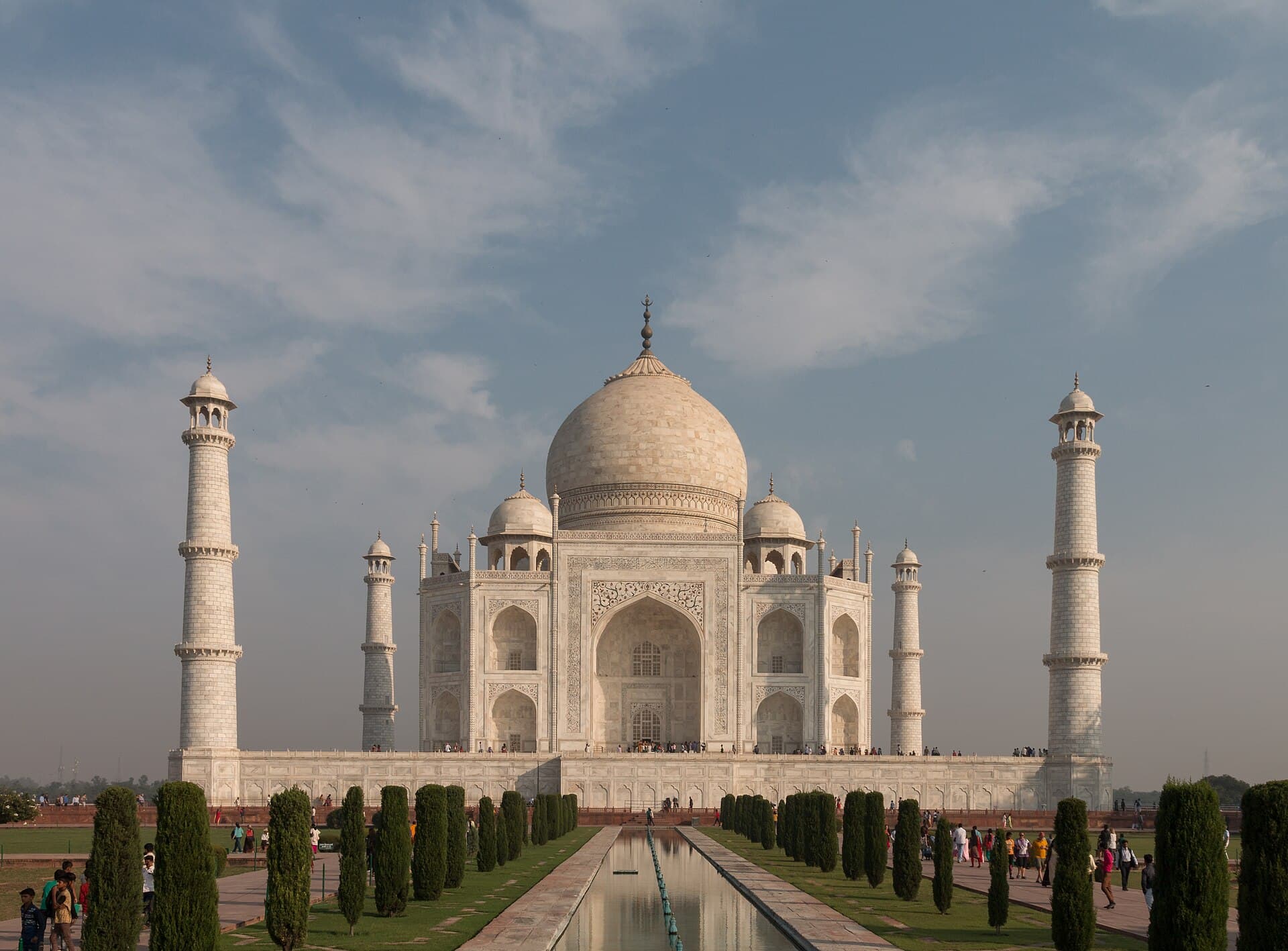
We visit at sunrise, when the light on the marble changes every twenty minutes and before the crowds arrive. The Taj Mahal is a tomb rather than a palace, built by Shah Jahan for Mumtaz Mahal. Look closely at the inlay work: thousands of pieces of semi-precious stone set flush into the white marble.
A drive of about five hours south to a small town on the Betwa river that many itineraries leave out. Orchha has palaces and cenotaphs of the Bundela kings standing above the water. After Delhi, Jaipur and Agra, it is the first place on this trip where the monuments are not crowded.
A drive of about four hours east to the temples built by the Chandela dynasty between about 950 and 1050 and abandoned when the capital moved. Around twenty of the original eighty-five temples survive. They are covered in some of the finest sculpture in India, a small and well-known part of which is erotic.
This is the most tiring day of the trip: about nine hours by road east to the Ganges. A forty-minute flight covers the same journey, and we will book it for you if you prefer. In the evening, you attend the Ganga Aarti at Dashashwamedh ghat, where priests perform a fire ceremony to the river at dusk.
Before sunrise, take a rowing boat along the river past the bathing ghats and the cremation ghats, where cremations take place continuously. Please treat this as a religious and personal occasion for the families present. Then fly north to Kathmandu, arriving in the Himalaya by evening.
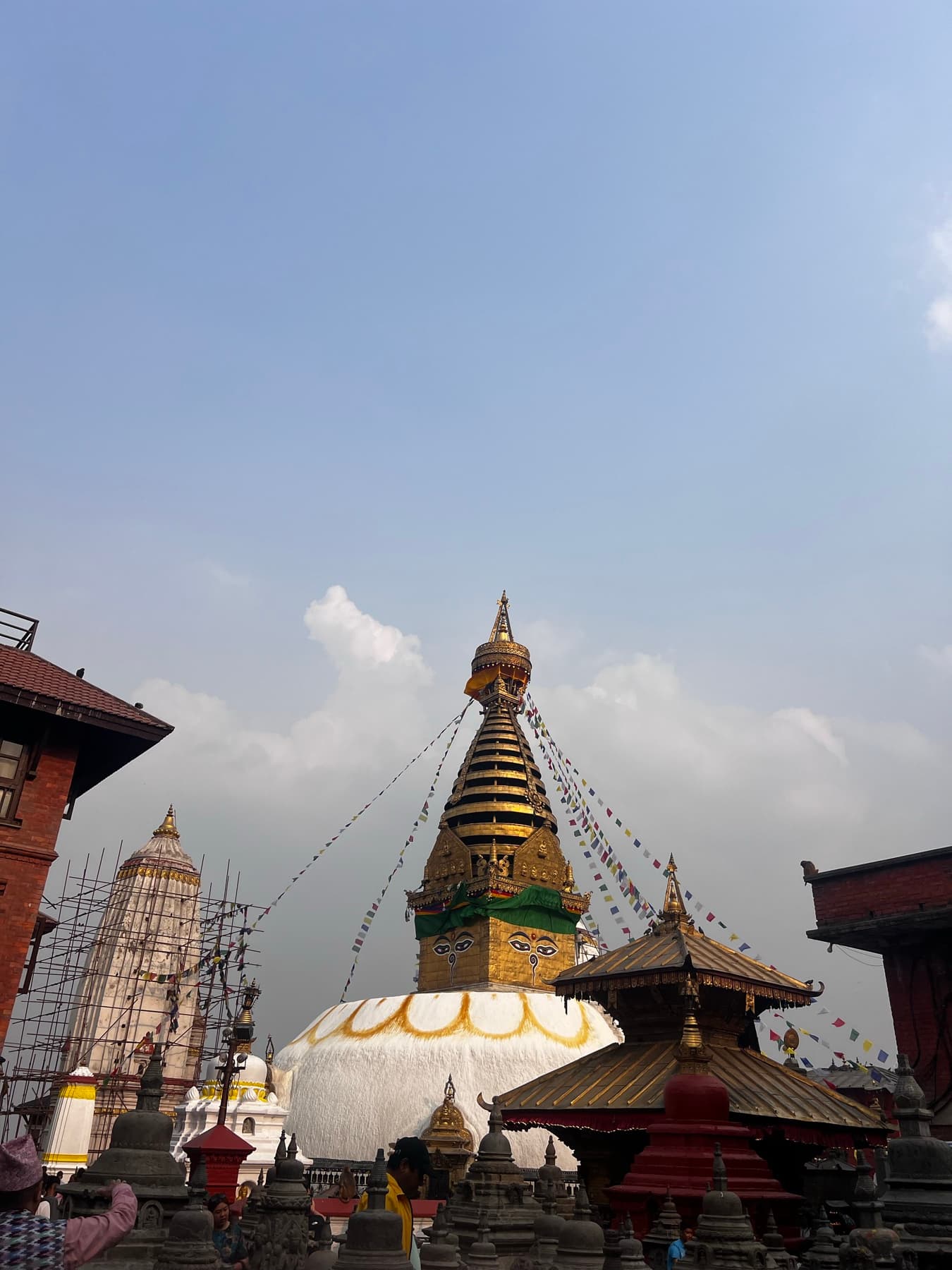
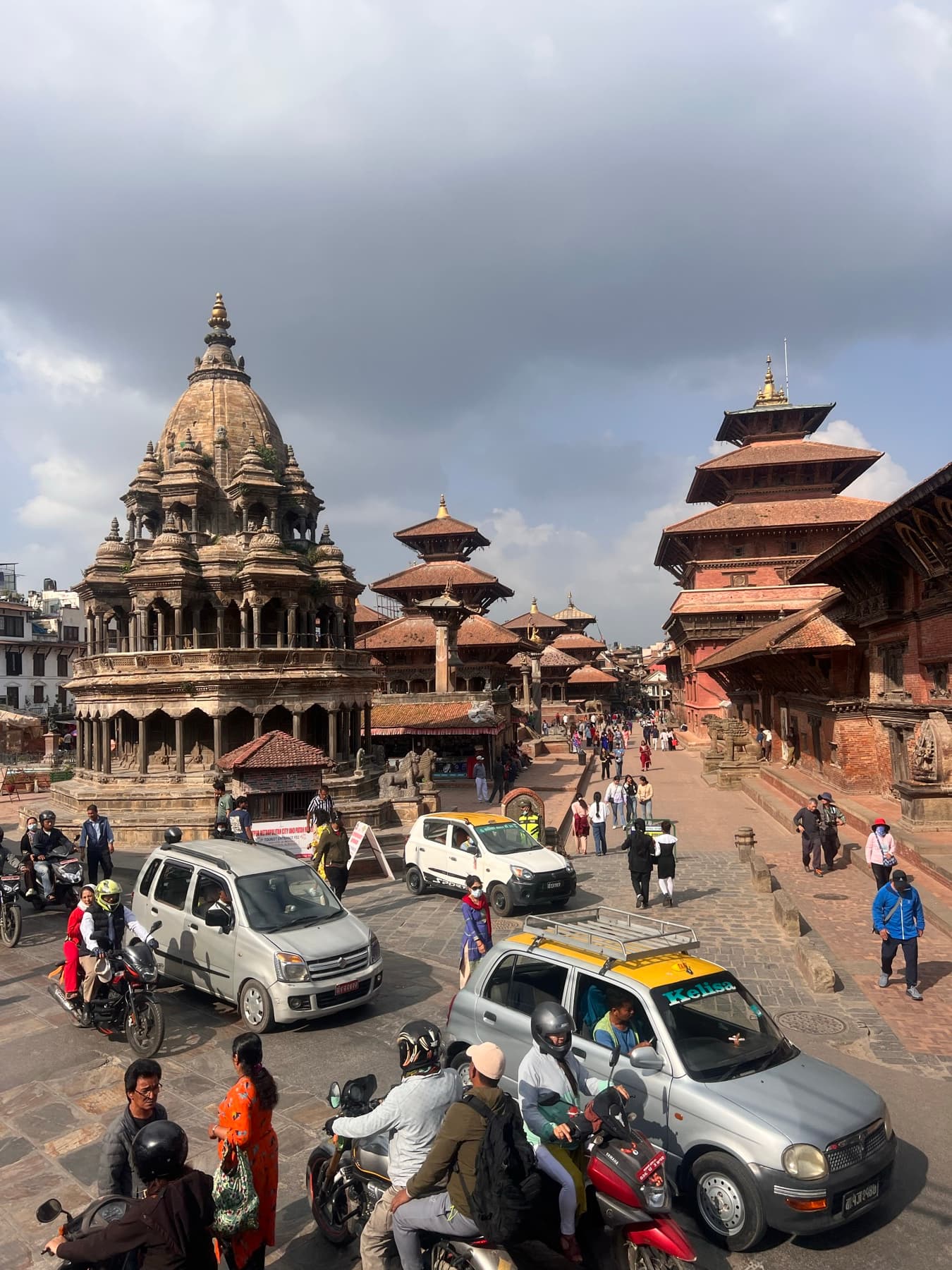
Visit Swayambhunath on its hill above the city, the riverside temples and cremation ghats at Pashupatinath, which are easier to understand after Varanasi two days earlier, and the great dome of Boudhanath. In the afternoon, drive up to Nagarkot on the valley rim for sunset over the mountains.
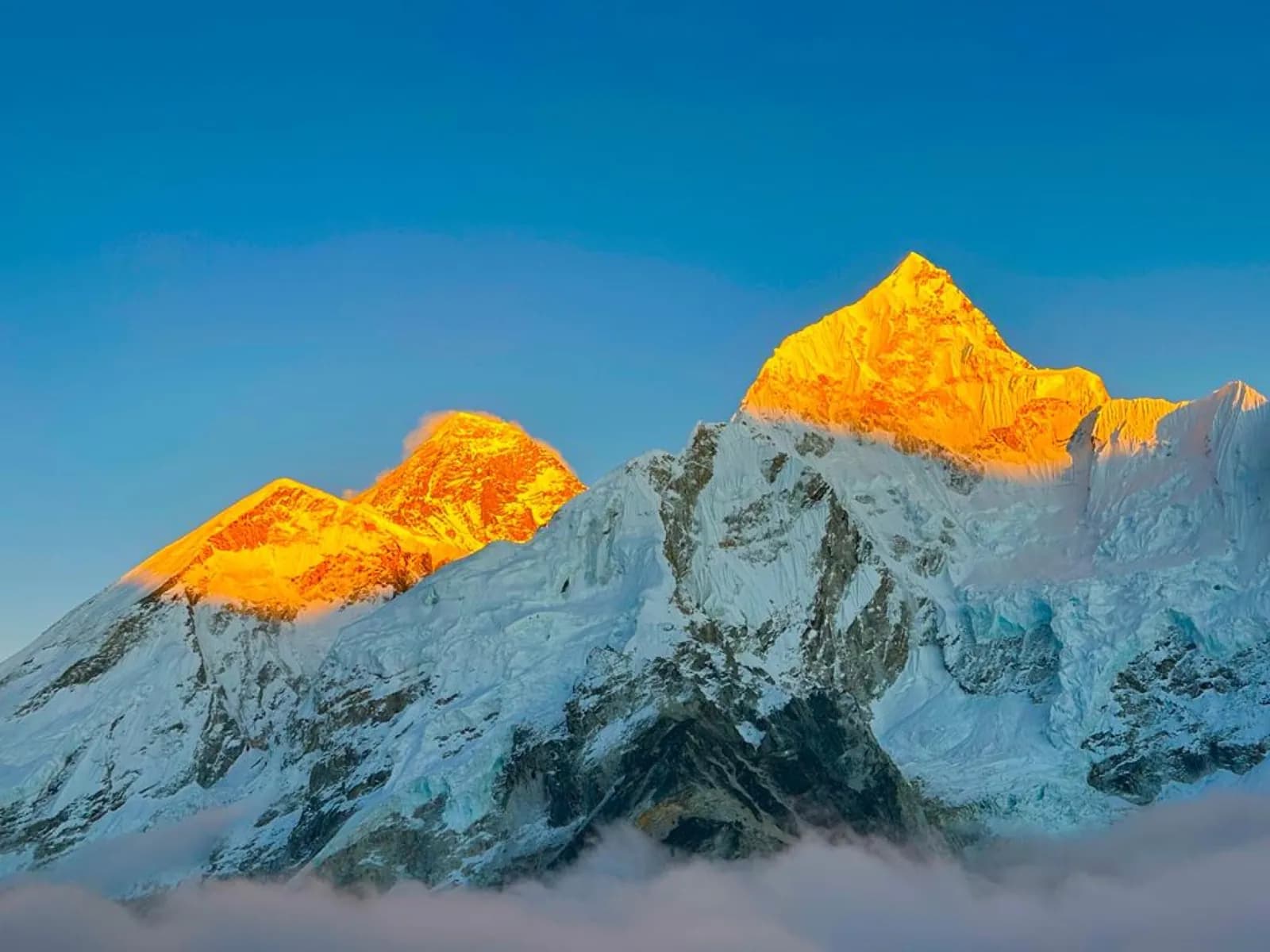
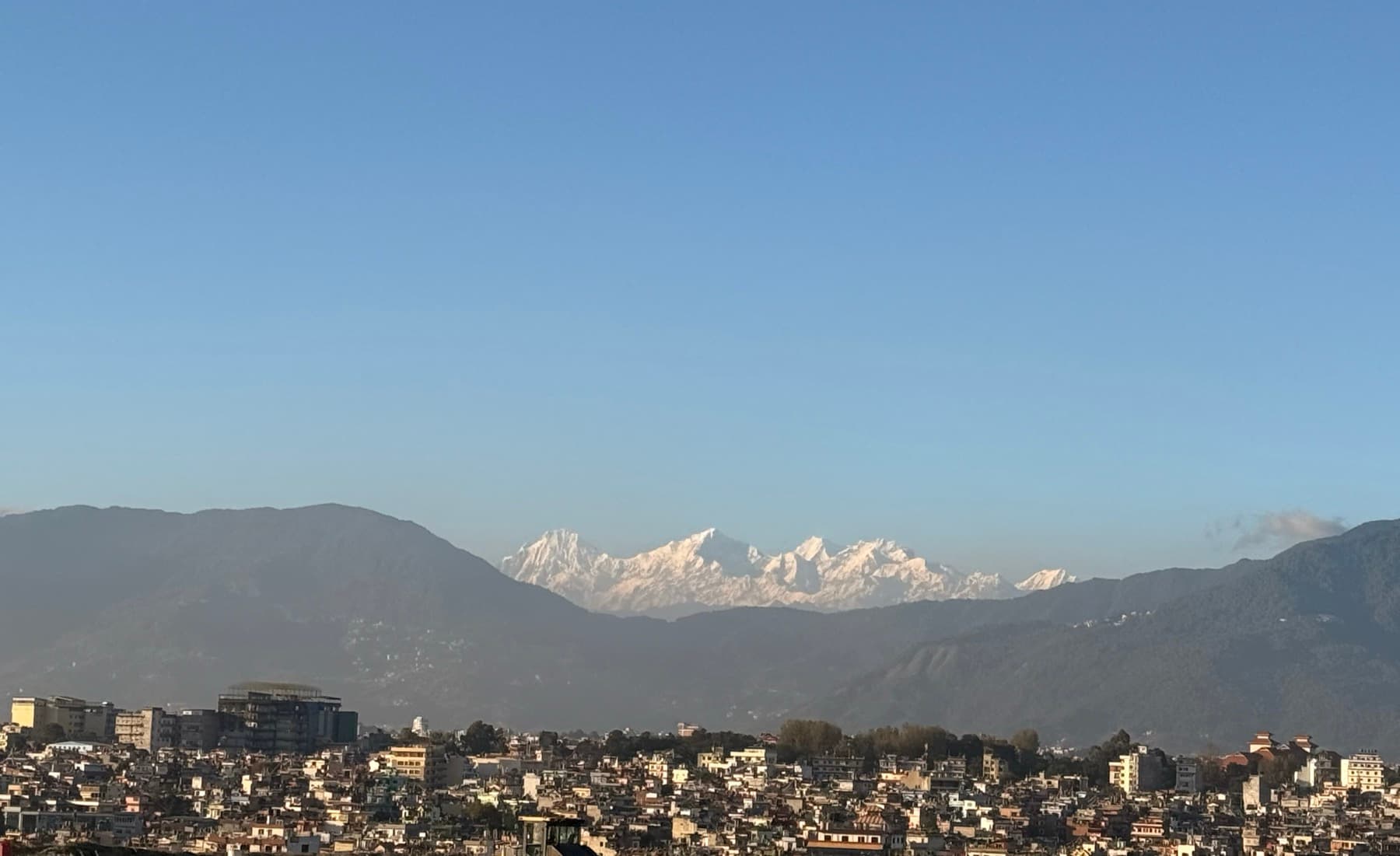
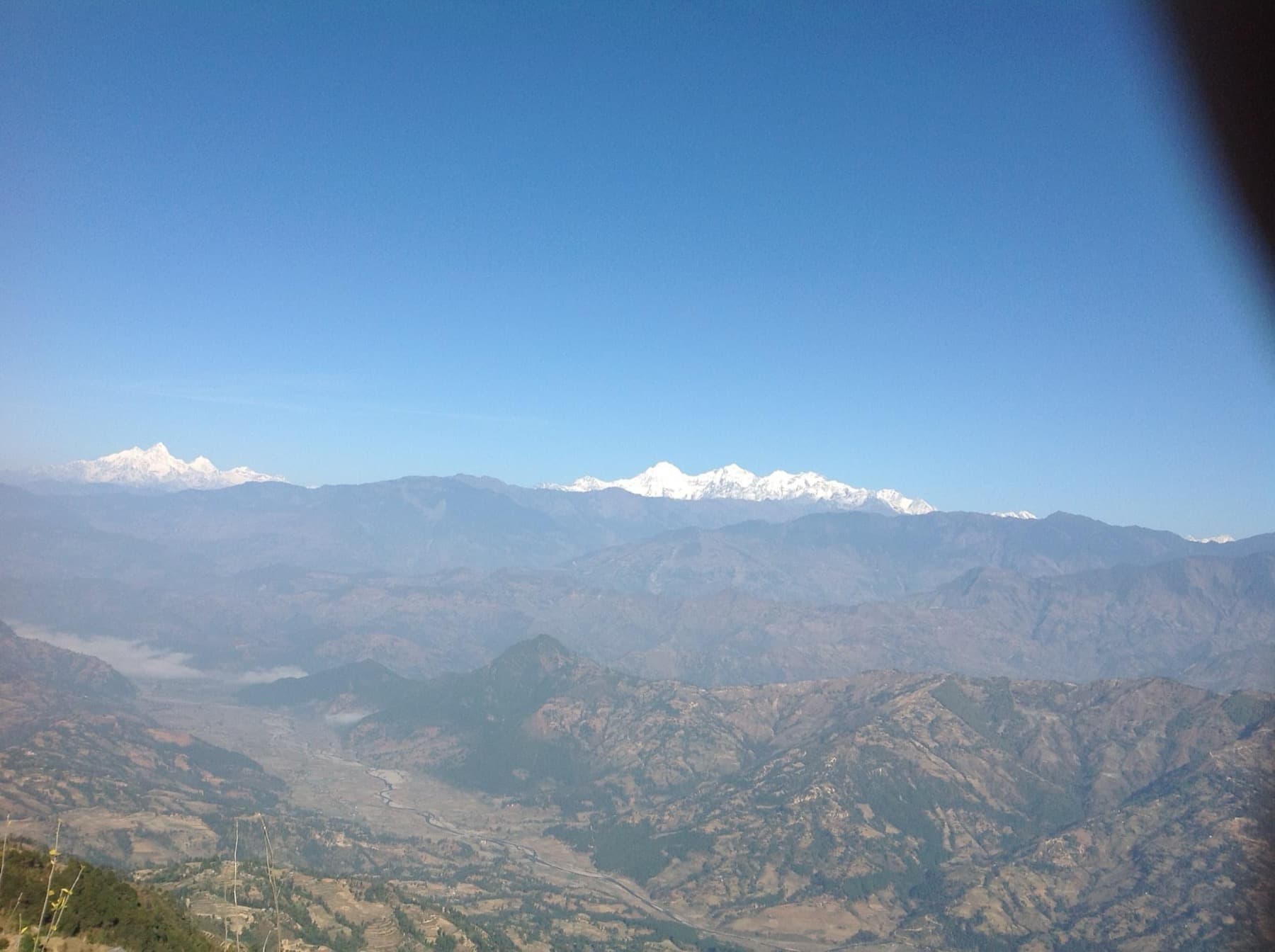
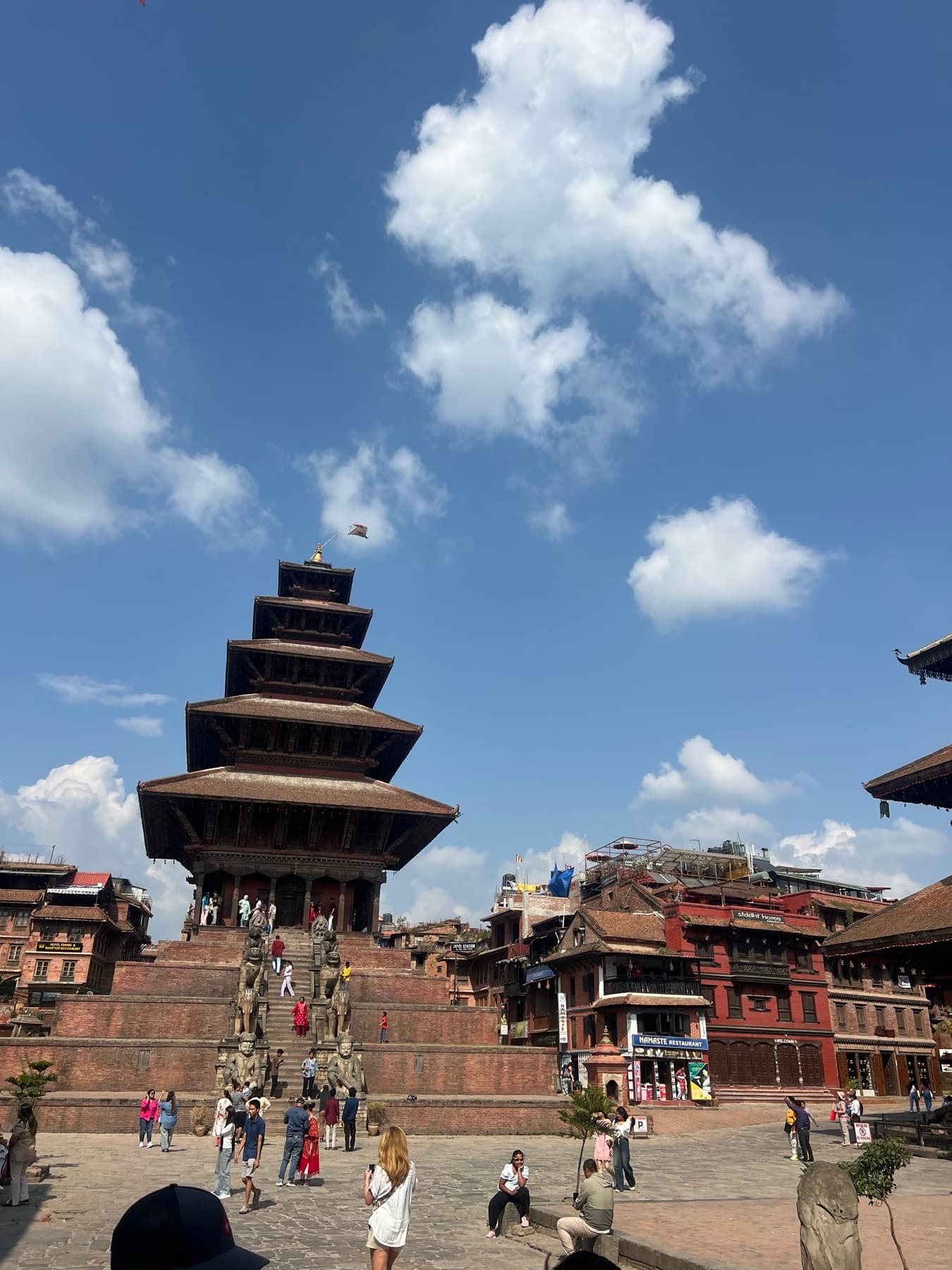
Rise early to see the Himalaya along the northern horizon; on a clear morning Everest is visible. Then drive down to Bhaktapur, the best preserved of the valley's three medieval cities, where you spend the afternoon. In the evening, a cultural show and farewell dinner in Kathmandu.
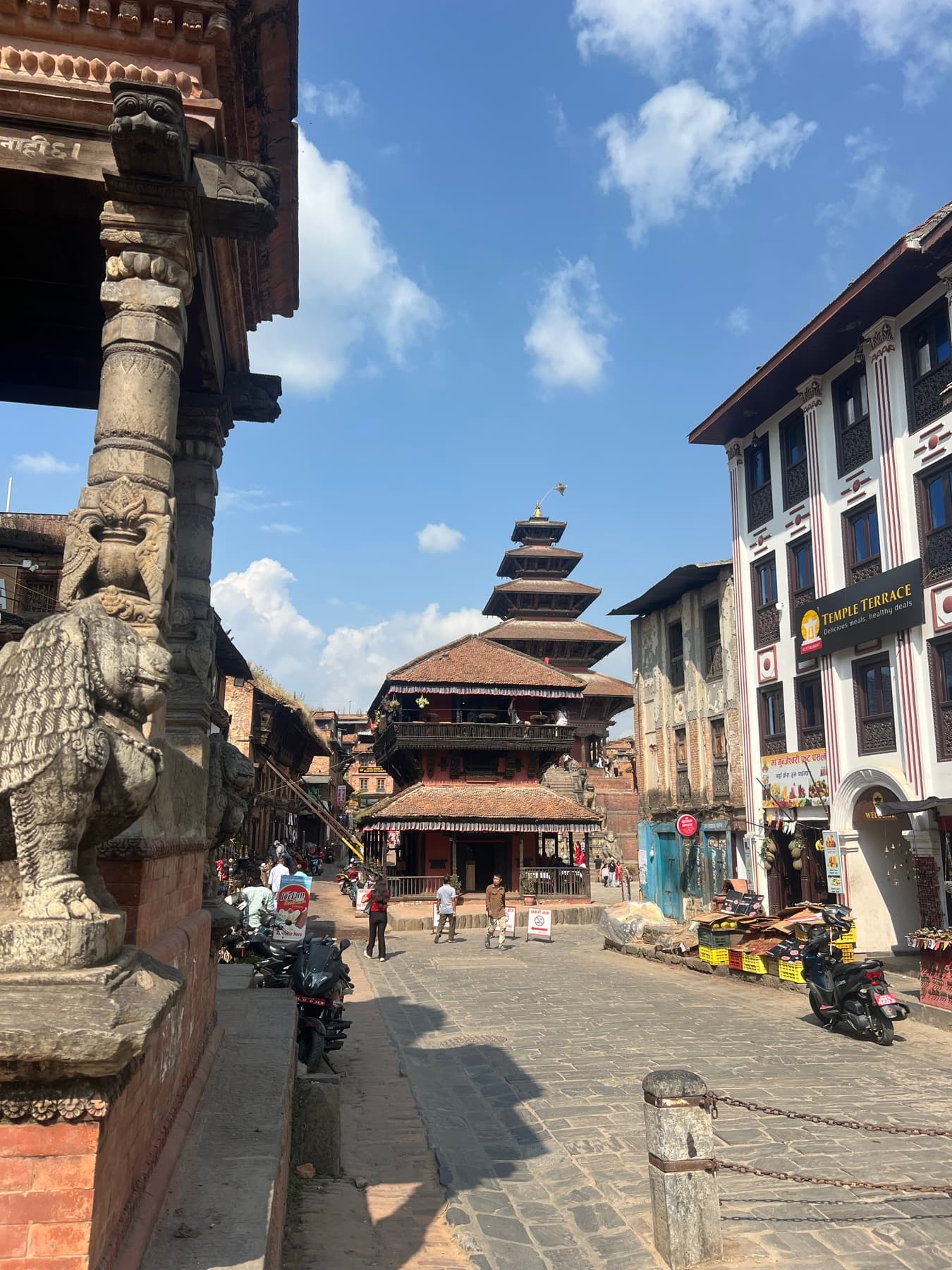
We take you to Tribhuvan International Airport for your flight. If you are continuing on a trek, our trekking team meets you here.
Start date
4 Dec 2027
End date
15 Dec 2027
Available
8 places left
US $1,247
Per person
Start date
5 Dec 2026
End date
16 Dec 2026
Available
8 places left
US $1,247
Per person
Start date
8 Mar 2027
End date
19 Mar 2027
Available
8 places left
US $1,447
Per person
The trip includes one international flight, and there are three land borders you could use instead. The long drive on day 8 can be replaced by a flight.
The flight from Varanasi to Kathmandu takes about an hour and a quarter and is the only international flight within the trip. Buddha Air and Nepal Airlines operate it, and it allows the itinerary to go from the Ganges to the Himalaya without returning to Delhi.
Khajuraho to Varanasi is about nine hours by road. A forty-minute flight covers the same distance and costs $90 to $140. The trip price includes the drive, and we will book the flight for anyone who asks. Please decide at the time of booking rather than on the day.
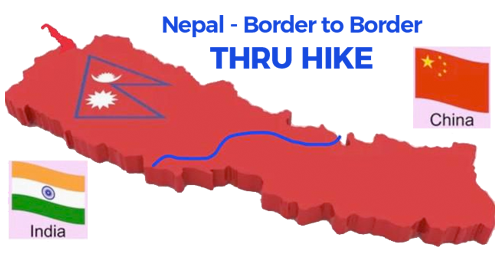
Sunauli, near Bhairahawa, for Varanasi and Lucknow; Raxaul, near Birgunj, for Patna and Bodhgaya; and Kakarbhitta in the east for Darjeeling. All three issue Nepali visas on arrival and all three accept the Indian e-Visa. Each crossing takes a full day, which is much longer than the map suggests.
This trip is one way, so book an open-jaw ticket: into Delhi and out of Kathmandu. It usually costs the same as a return ticket to either city and saves a day. If your airline does not offer this, there are several flights a day from Kathmandu to Delhi, taking an hour and forty-five minutes.
About 1,300 km over eight days in India, in a private air-conditioned car with a driver who stays with you throughout. Indian highways are in reasonable condition but slower than the distances suggest. None of the roads are poor, but the total distance is long.
| Where | Nights | Type | Room | Bathroom |
|---|---|---|---|---|
| Delhi | 2 | Three-star hotel | Twin or double | Private, hot water |
| Jaipur | 1 | Three-star hotel, often a converted haveli | Twin or double | Private, hot water |
| Agra | 2 | Three-star hotel | Twin or double | Private, hot water |
| Orchha | 1 | Small hotel by the river | Twin or double | Private, hot water |
| Khajuraho | 1 | Three-star hotel | Twin or double | Private, hot water |
| Varanasi | 1 | Three-star hotel, near the ghats | Twin or double | Private, hot water |
| Kathmandu | 2 | Three-star hotel | Twin or double | Private, hot water |
| Nagarkot | 1 | Hill resort on the valley rim | Twin or double, mountain-facing | Private, hot water |
Hotel buffet. In India this includes paratha, idli, poha and eggs as well as toast
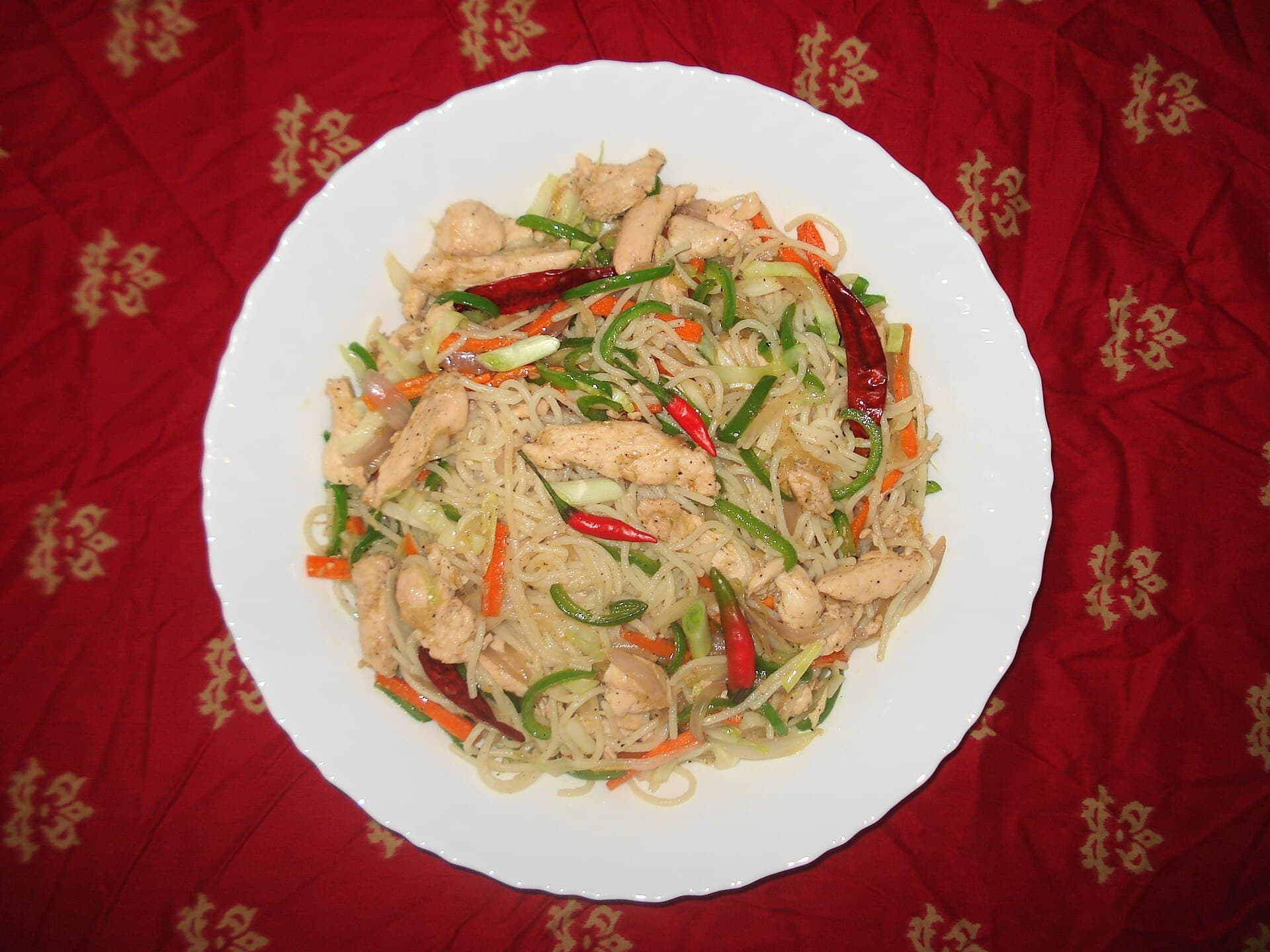
On driving days, a highway restaurant, which in India is usually good

Mughlai in Delhi and Agra, Rajasthani in Jaipur, and thali almost everywhere
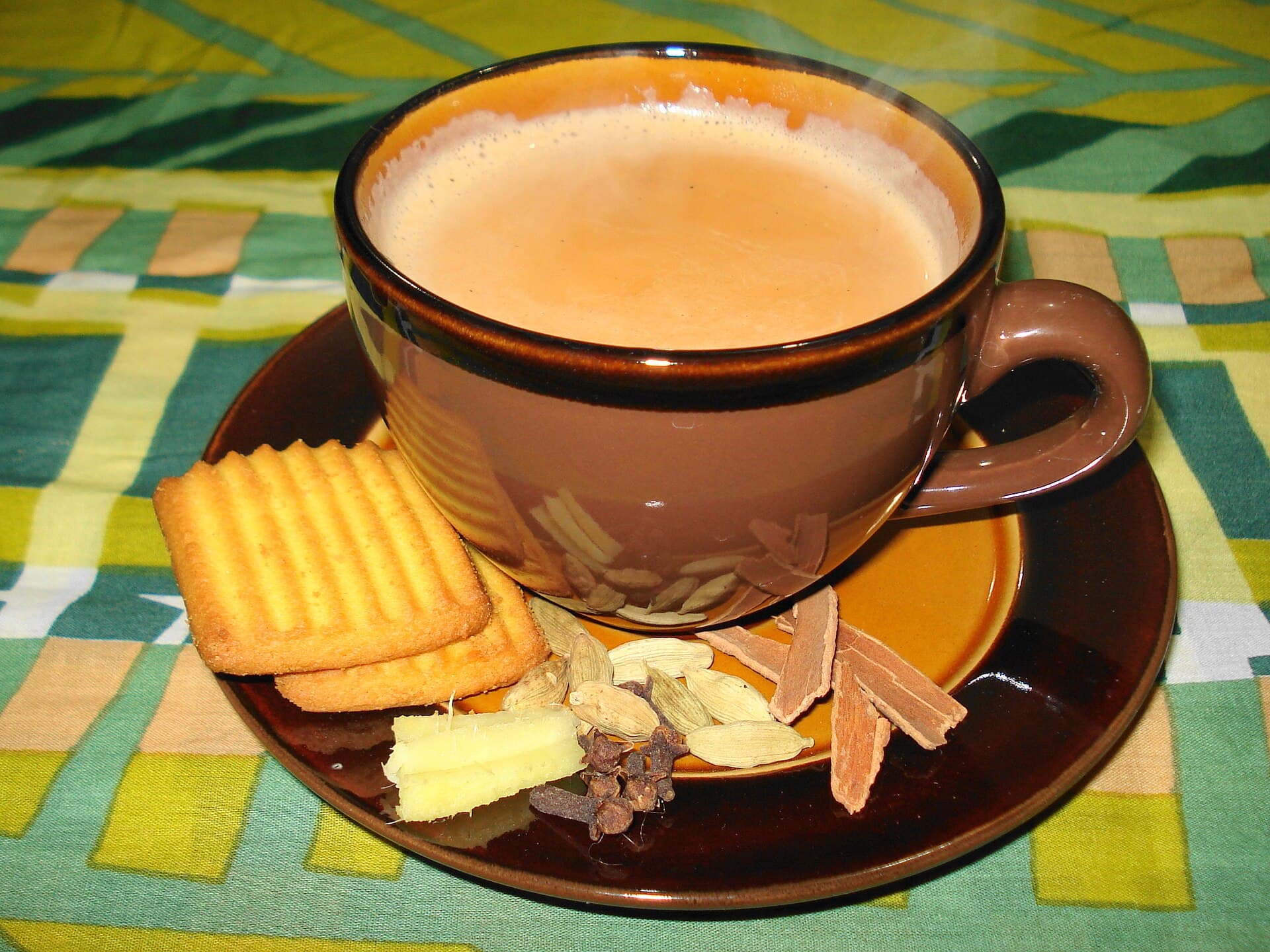
Masala chai from a roadside stall, served in a clay cup where these are still used
6:00On two mornings, for the Taj Mahal and the Ganges, you set out before sunrise
8:00Breakfast at the hotel on most days
9:00Sightseeing with the local guide, or driving on a travel day
12:30Lunch. On driving days this is at a highway restaurant
14:00The afternoon visit, or the rest of the drive
17:00Check in, or the evening ceremony. The Ganga Aarti at Varanasi takes place at dusk
19:30Dinner, and the guide explains the plan for the next day
21:30Rest, or an evening walk. Indian cities remain busy late into the evening
Our easiest trip, although eight days in Indian cities is still tiring.
Written for somebody who walks a bit and does not train. If you already run or cycle regularly, start partway through. Nothing here needs a gym.
8 weeks before, stage 1 of 4
Typhoid, hepatitis A and tetanus vaccinations are the standard recommendations for India, and rabies is worth discussing. None of these are mandatory, and they are easier to arrange eight weeks before departure than two.
These figures are for the Indian plains, where eight of the twelve days are spent. Kathmandu is milder than every figure below.
The best month on the plains. Warm days, cool nights, and no more fog.
Averages for Delhi and Agra, with the Kathmandu daytime figure alongside. Eight of the twelve days are on the plains, which is what makes May and June impossible.
In India, one driver stays with you for all eight days, and a different local guide accompanies you in each city. We do this deliberately: a Delhi guide who specialises in Mughal architecture is not the right person to explain the sculpture of Khajuraho or the cremation rites at Manikarnika, and a single guide across five cities would not have the same local knowledge. In Nepal, one of our own Kathmandu guides accompanies you for the last three days.
The driver is the only person with you for the whole Indian part of the trip. He drives about 1,300 km and knows where to find clean toilets between Orchha and Khajuraho. He is a driver, not a guide. We pay and insure him and provide his own room and meals, so he does not have to sleep in the car.
Tipping is customary and expected. Allow about $100 to $160 per traveller for the whole trip: roughly half for the driver at the end of the Indian part, and the rest shared between the city guides as you go and the Kathmandu guide at the end.
The cremation ghats at Manikarnika and Harishchandra are active cremation grounds where families grieve in public. Photography is forbidden there, and the rule is enforced by those who have the right to do so. Watch from the boat or from a distance, put your camera away, and ignore anyone who offers to take you closer in return for a donation. This is a well-known scam and is also disrespectful.
Around the Taj Mahal, Amer Fort and the Varanasi ghats you will be approached often. Your guide handles most of this. The most effective response from you is a firm no, without eye contact or an explanation. A hesitant or polite answer is taken as interest. A direct refusal is not considered rude locally.
Always ask first. In both countries most people are happy to be photographed. A sadhu on the ghats who poses for a photograph will expect payment, so agree the amount beforehand. Do not photograph anyone who is bathing, praying or mourning.
In India, your money is spent on Indian hotels, an Indian driver and Indian city guides, arranged by our long-standing partner in Delhi rather than a chain. Monument fees go to the Archaeological Survey of India and, in Nepal, to the trusts that maintain Bhaktapur and Patan, which is where your NPR 1,800 entrance fee at Bhaktapur goes.
Write to us or send a WhatsApp message with your dates and the number of travellers. Nothing is payable at this stage. This itinerary is very flexible and days can be added or removed at almost any point.
A deposit of thirty per cent secures your dates, and the balance is paid on arrival. For this trip the balance is paid in Delhi at the start rather than in Kathmandu, because most of the costs are in India.
A copy of your passport and your India e-Visa approval once you receive it. We do not apply for the Indian visa on your behalf: it is a simple online form, and agencies that offer this service charge three or four times the fee. We will tell you exactly what to enter.
Fly into Delhi and out of Kathmandu. This usually costs the same as a return ticket to either city and saves you a day and an extra flight back to your starting point.
If you cancel more than 30 days before departure, your deposit can be transferred to any other date or trip we run, with no time limit. Within 30 days the deposit is retained, because the hotels and the internal flight have been booked. If we cancel for any reason other than weather, we refund the full amount.
Two weeks' notice is comfortable and one week is possible. This is the easiest of our trips to book at short notice, because there are no permits, restricted areas or mountain flights. The exceptions are Holi and Diwali, which fall on single dates and are booked up months ahead.
Priced per person, arranged before you travel, and none of them included in the price above.
Khajuraho to Varanasi in forty minutes rather than nine hours by road. Most travellers take this option.
The festival of colours falls on one date in March and is the best day to be in north India. Hotels are booked up months ahead and charge higher rates.
A national park between Jaipur and Agra with a good chance of seeing a tiger. The extension includes two safaris and one night and fits into the itinerary without other changes.
The places where the Buddha attained enlightenment and first taught, both near Varanasi. This extension suits travellers more interested in Buddhist sites than Mughal ones.
Rhinos and Tharu villages in the lowland jungle, added after Kathmandu. It also gives you a break before the flight home.
A one-hour flight along the range from Kathmandu with a guaranteed window seat. It fits on day 11 and is the closest this trip comes to the mountains.
4 versions of this journey. They use the same guides and the same lodges; what changes is the length, the comfort and how much of it you walk.
Travelling in India and Nepal
March 2015, Tripadvisor
My contact with EE was Badri in the UK. He dealt with my initial enquiry, the planning of my itinerary in both India and Nepal to suit my requirements, and was helpful throughout. I can only say the service I received was excellent and the whole trip of nearly a month was faultless. From the moment I was met at Delhi airport until my flight home from Kathmandu, the co-ordination was exceptional, which for me as solo traveller was very reassuring. The hotels in Delhi, Agra, Jaipur and Varanasi were of good standard, and I was provided with very good guides and drivers throughout my stay. In Nepal, I began the Annapurna Cicuit Trek, but due to bad weather this had to be changed after 3 days. Arrangements were made smoothly for us to leave the Annapurna and travel to Pokhara where instead I then began (and completed) the Gorephani-Gandruk Trek. My Guide Arjun was a lovely young man, helpful and looked after me, even taking my day sack as well as my rucksack on particulary tough climbs. At the end of my trip, I met Rajan from the Nepal office before I left Kathmandu when we went for dinner and cultural evening. He took a real interest in us all and wanted feedback on our respective travels with the company. I can only highly recommend Earthbound Expeditions who provided a 5* service from start to finish.
Excellent tour
March 2014, Tripadvisor
I met Rajan in the US at a travel show. I contacted him by email afterwards & I was given an exceptional tour price. I decided to move forward to go to India & Nepal with Earthbound Expeditions. Everything was great. They take great care of you and cater to single travelers. In Napal, my trek was with Pradeep. He was able to keep up me me & my physical level. Great guy. Great tour! A few months after I returned, a friend was going to India and was inspired by my pics. I referred her to Earthbound and she also gave rave reviews of her tour. If I ever find myself going back to India or neighboring countries, I won't hesitate to go with Earthbound.
Flawless India Nepal Trip
July 2013, Tripadvisor
I am really impressed with Earthbound. The guides and drivers were really friendly and helpful and Rajan (the director of Earthbound) was always available by phone and email. It was a trip of a lifetime. I would recommend Earthbound Expeditions to anyone. I am hoping to return to India at the end of this year and I will certainly be in touch with Rajan.
Couldn't Ask For More
May 2012, Tripadvisor
Actually, as we are in our 60's, we did not plan any extended hikes in Nepal, but Earthbound Expeditions kept us happily intrigued in Delhi, Agra, Jaipur, Varanasi, Lumbini, Kathmandu and Pokhara, a lovely lakeside resort. While Rajan found us excellent--over the top accomodations--we walked through parts of the cities with knowledgeable guides and drove through the countryside and thus had the opportunity to connect with a variety of people. As this was our first time in Asia, we truly appreciated drivers who took great care of us. Rajan frequently phoned to make sure that we were safe and happy--which we always were. We also appreciated Rajan's philosophy--doing all that one person can do to establish appreciation for a stunningly beautiful country and providing employment to deserving professionals and porters. We wish him well.
Answers to the 20 questions travellers ask us most often. If your question is not here, contact us and we will answer it.
Yes. It is close to the standard first itinerary. Delhi, Jaipur and Agra form the Golden Triangle and cover Mughal and Rajput India in five days. This itinerary adds the eastern part, Orchha, Khajuraho and Varanasi, which many first trips leave out for lack of time and which shows much more of India than its monuments.
Two or three hours a day around monuments, on stone surfaces. There is no trekking and no altitude, and no day is physically demanding. Travellers are usually tired by the heat, the crowds and the driving rather than by the walking.
Yes, with one consideration: the driving. Every night has a bed, a private bathroom and hot water, and the sightseeing is gentle. Eight days of long car journeys suit some families better than others, and taking the flight on day 8 helps considerably.
Yes, with the normal caution any large Indian city requires. You are with a driver and a guide all day and in booked hotels every night, which removes most of the difficulties solo travellers face. Dress modestly at religious sites, avoid walking alone at night in the old cities, and be firm in saying no to strangers.
Yes. Khajuraho to Varanasi is about nine hours by road, and it is the longest transfer on any of our trips. A forty-minute flight costs $90 to $140, and most travellers choose it. The trip price includes the drive, and we will book the flight whenever you ask.
About 1,300 km over eight days in India, in a private air-conditioned car with a driver who stays with you throughout. The longest driving days are days 3, 6 and 8; days 2 and 5, and the days in Nepal, have almost no driving.
For parts of the route, yes, and we arrange it on request. The Gatimaan Express from Delhi to Agra and the Varanasi trains are good. By train you cannot stop at Fatehpur Sikri, choose your departure time or leave your bag in the car, but you do experience Indian railways. Ask and we will price both options.
An India e-Tourist visa, applied for online, costs $25 for thirty days, or $10 if you arrive between April and June. A Nepal visa on arrival at Kathmandu costs $30 for fifteen days, paid in cash. That is $55 in visas, compared with $440 in Bhutanese fees on our other two-country trip, which largely explains the difference in price.
No. indianvisaonline.gov.in is the only official website, and the form takes twenty minutes. Many unofficial websites that look similar charge three or four times the fee for the same service and appear high in search results. If you are asked for $120 for a thirty-day tourist visa, you are on one of these websites.
Mostly because of the photograph. It needs a plain white background, a square crop, your face filling most of the frame, and no glasses. Take it with a phone against a white wall rather than scanning an old passport photograph. Apply at least four days before you fly, and up to 120 days ahead.
India is inexpensive: $10 to $25 a day covers the meals that are not included, tea, water and small purchases. Allow $100 to $160 for tips across the trip. Cards are accepted in hotels and at most tourist businesses; markets, rickshaws and small towns take cash only. Indian ATM withdrawal limits are low, so expect to use ATMs several times.
Small notes, yes, and they are widely accepted in the border towns. Notes of INR 500 and above are not legal tender in Nepal and will be refused. Spend your larger notes before you fly.
You may have a mild stomach upset, and it is worth preparing for. Drink sealed or filtered water, choose street food stalls that are busy and serve food quickly, and carry rehydration salts and medicine for an upset stomach. Visit a travel clinic eight weeks before you leave.
Long trousers or a long skirt and tops with sleeves for temples and mosques, which you visit on most days. Slip-on shoes, because you take them off often. A scarf to cover your head at the Jama Masjid. In shorts and vests you may be refused entry to important sites.
No. Manikarnika and Harishchandra are active cremation grounds where families grieve in public. Photography is forbidden and the rule is enforced. Watch from the boat, put your camera away, and ignore anyone offering to take you closer in return for a donation.
Say a firm no, without eye contact or an explanation. A hesitant or polite answer is taken as interest and can cost you twenty minutes at the Taj gate. Your guide handles most approaches. A direct refusal is not considered rude locally.
They are the two most important Hindu riverside cremation grounds, and seeing them two days apart is the main reason this itinerary runs east and then north. Pashupatinath is smaller and quieter, and it is easier to understand once you have seen the Varanasi ghats.
October to March, and February and November are the best months. October is warm and clear after the monsoon; November is clear in both countries; February has the best weather of the year on the plains. Avoid May and June, when Delhi and Agra reach 45°C. In December and January, fog in Delhi delays flights on most mornings.
If you want to experience the most remarkable festival day in north India, yes. Holi falls on one date in March, the whole country stops, and everyone is covered in colour by ten in the morning. Hotels book out months ahead and charge more. We also run a shorter Holi tour in Nepal if the festival is your main interest rather than the circuit.
One week before departure. This is the easiest of our trips to arrange at short notice, because there are no permits, restricted areas or mountain flights. Allow four days for the e-Visa. Holi and Diwali are the exceptions and need to be booked months ahead.
Didn't find what you were looking for?
Search every word on this page, or ask somebody who has walked the route.
12 days
$1,297 per person