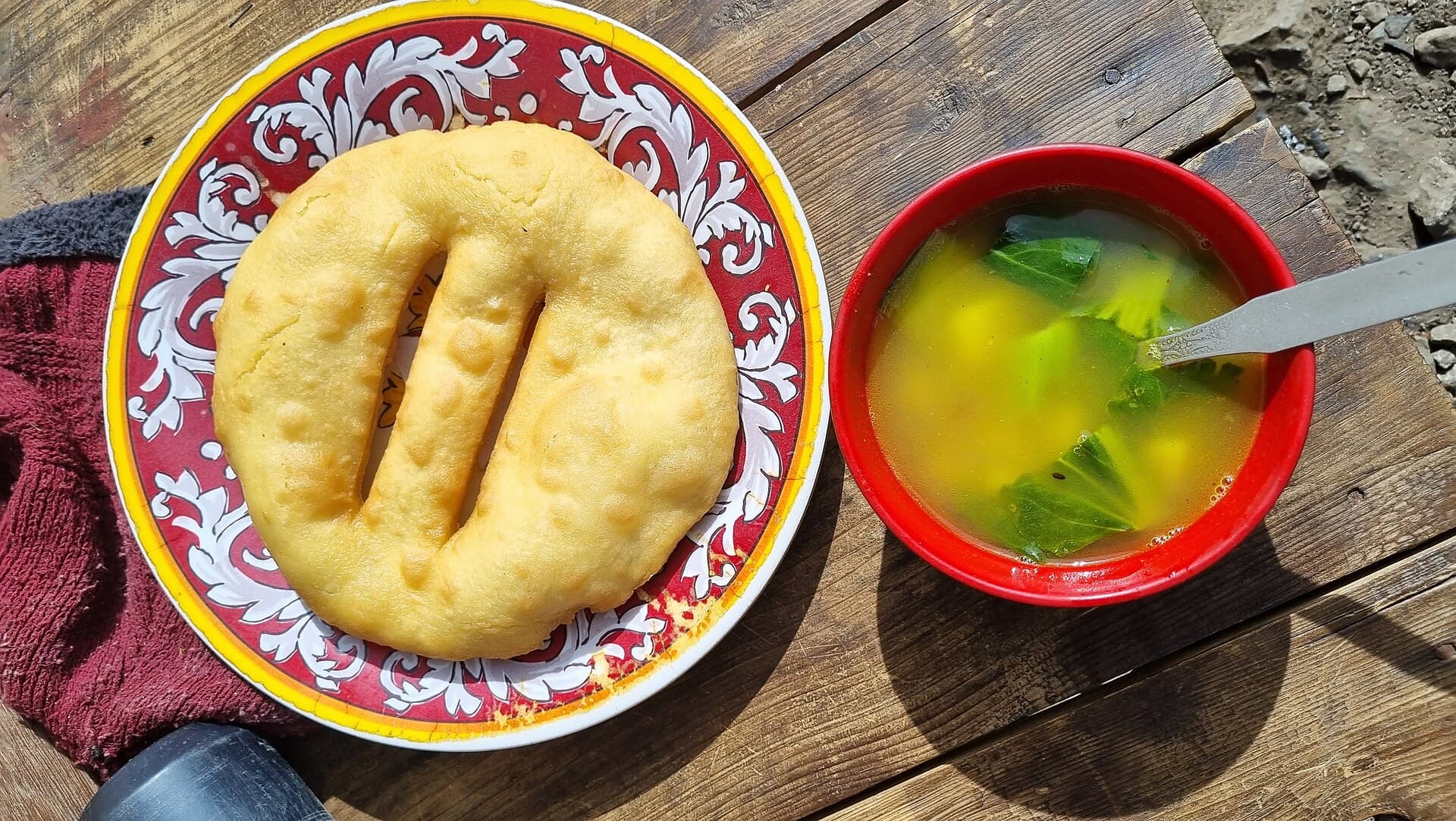
Breakfast
Porridge, Tibetan bread, eggs, chapati, pancakes, tea or coffee
All destinations
All destinationsThree valleys and one high pass: up Langtang to Kyanjin Gompa, over the Laurebina La past the sacred lakes at Gosainkunda, and out on foot through Helambu to the edge of Kathmandu.
Update, September 2026: the August 2026 flood damaged the road through Syabrubesi, the usual start of this trek. We confirm the road and the starting point when you book.
Three valleys and one high pass: up Langtang to Kyanjin Gompa, over the Laurebina La past the sacred lakes at Gosainkunda, and out on foot through Helambu to the edge of Kathmandu.
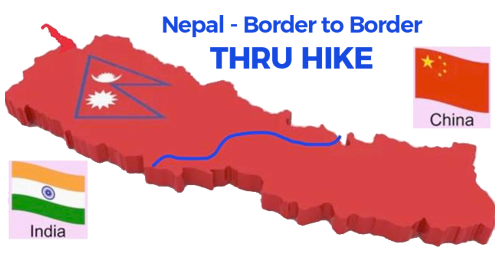
This is a circuit rather than a return trek. You drive north, walk for four days up the Langtang valley to Kyanjin Gompa at 3,870 m, come back down the gorge, then climb out of it into a second valley to reach the sacred lakes at Gosainkunda, 4,380 m. From there you cross the Laurebina La at 4,610 m into Helambu and walk south along the ridges for three days to Sundarijal, at the edge of the Kathmandu valley. The route covers three valleys and one pass, and you finish on foot rather than by bus.
Our Langtang Valley and Gosainkunda Trek goes up to the lakes and returns the same way, down to Dhunche and the road. This trek continues beyond the lakes: over the pass and down the long descent into Helambu on the far side. That adds four days, a genuine high crossing, and a week of very different country, forested and inhabited, where Langtang is glacial and open.
The Laurebina La is not technical. It is a two-hour climb over boulders and old snow from the lake, where you sleep at 4,380 m, followed by 1,200 m of loose descent that takes most of the day. It requires an early start, a settled forecast and legs that have already walked for ten days. The pass does close. If there is fresh snow, ice on the traverse or low cloud, we turn back at the lake and walk out to Dhunche instead, which follows the shorter trek. The guide makes that decision on the morning, and we would rather lose four days of your itinerary than take a risk at 4,500 m.
You walk through the affected area, so you should know about it before you arrive. On 25 April 2015 the earthquake brought ice and rock down from Langtang Lirung onto Langtang village, and the official count for the valley is 306 dead: local people, Nepalis from elsewhere, guides and foreign trekkers. Local families believe the number is higher. The old village lies under the debris field that the trail crosses, and the village you sleep in was rebuilt further up the valley by the survivors, largely with money earned from trekking. Trekking here puts money back into the community. Please pass the memorial quietly.
Trekkers who have walked at altitude before, have a little over two weeks, and prefer to cross a pass rather than return the same way. It is not the hardest trek we offer, and it is not a beginner's trek either: it has thirteen consecutive walking days, a 4,610 m pass with a rest day built in before it, and three long days in Helambu that people often underestimate. There are no flights that can be cancelled, which is an important advantage for many travellers.
We meet you at Tribhuvan airport and drive you to your hotel in Thamel. No activities are planned today. If you have the energy, the old streets around Asan, a ten-minute walk away, are busy in the evening. Over dinner we go through the whole route, check your insurance and inspect your boots, which is an important check.
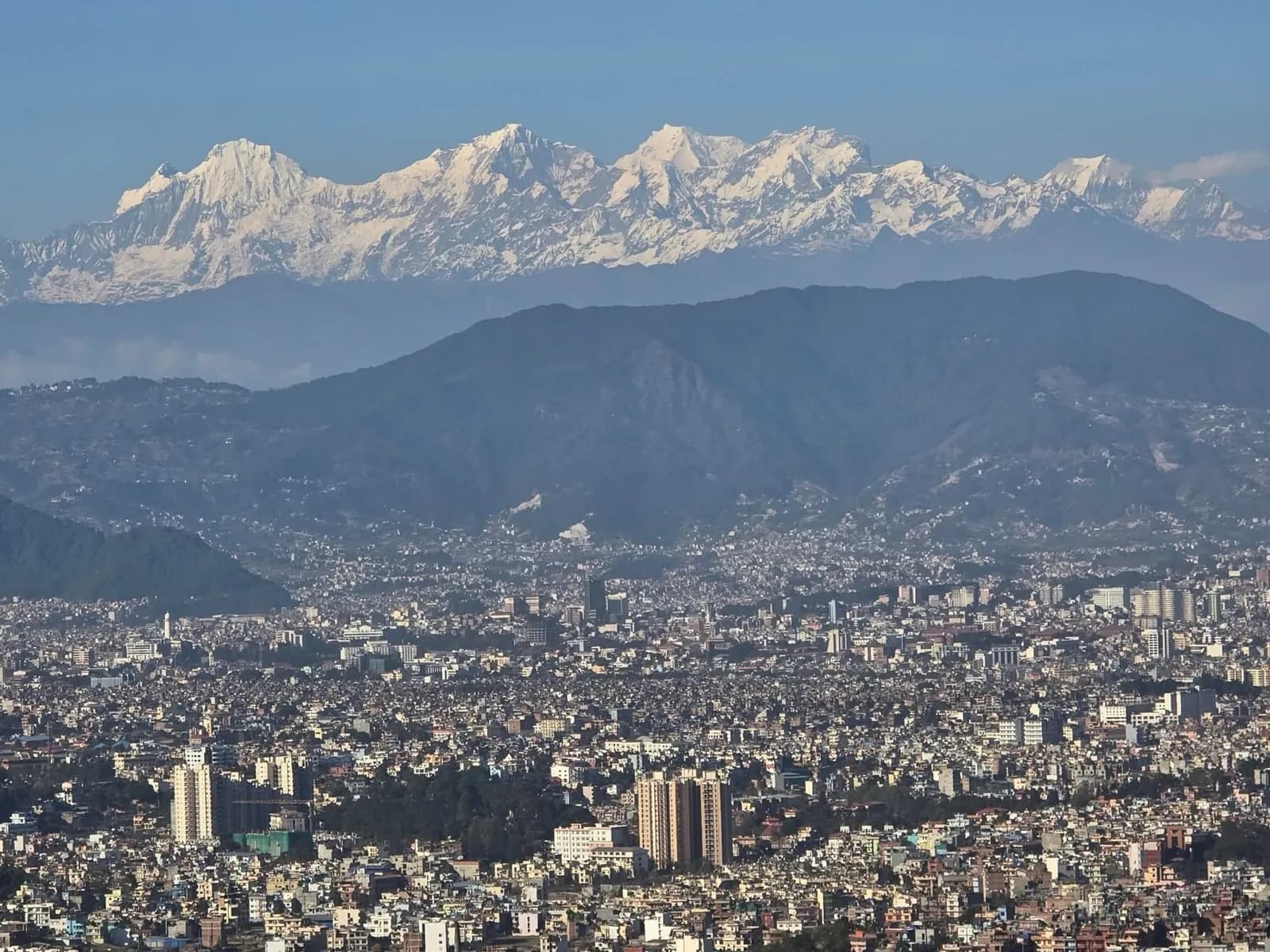
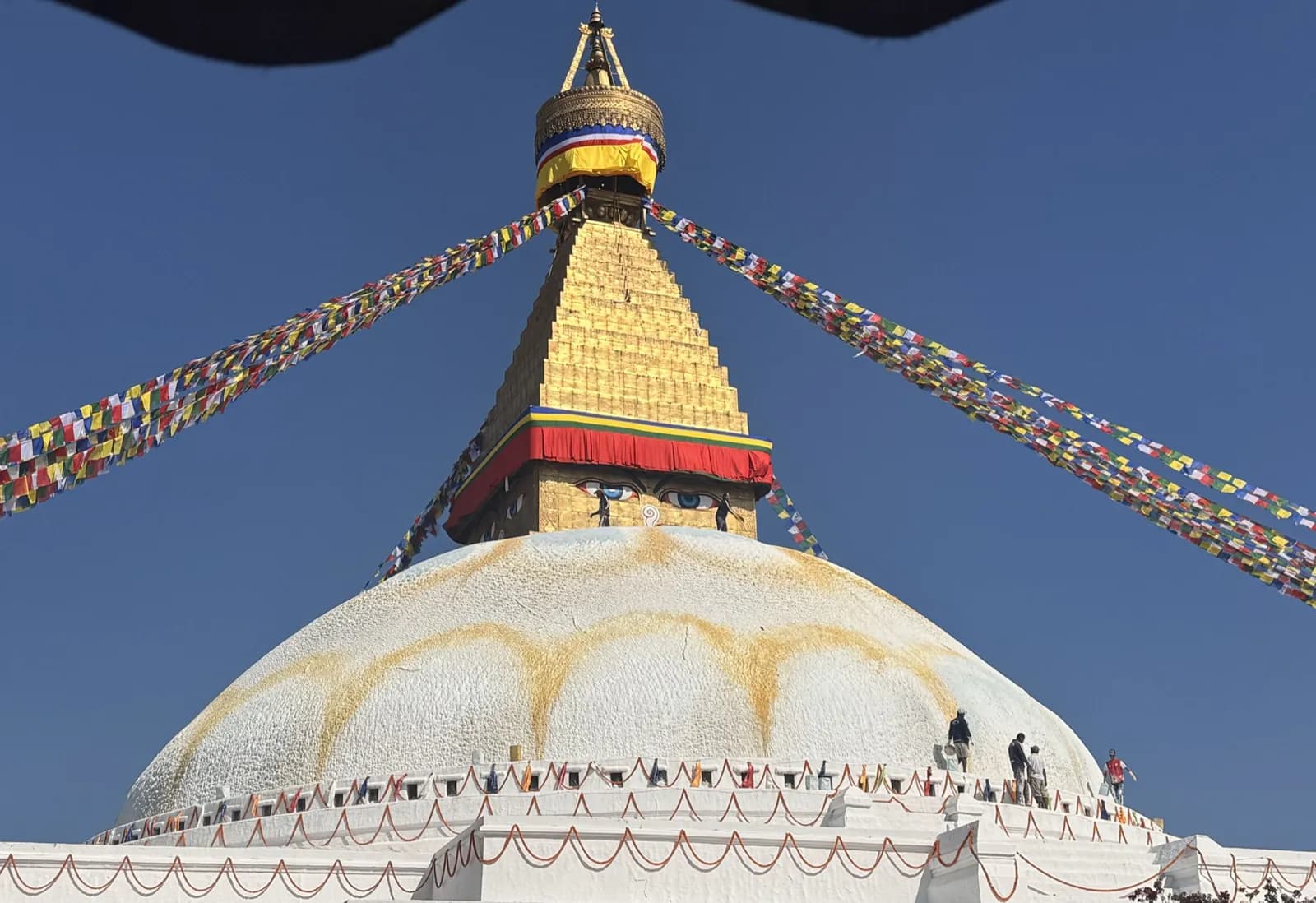
A guided day around the valley: the great stupa at Boudhanath, the cremation ghats at Pashupatinath, the hilltop temple at Swayambhunath and the carved courtyards of Patan. It is a gentle way to recover from the flight. Your guide uses the day to assess the group's pace and to finalise the permits before the drive north.
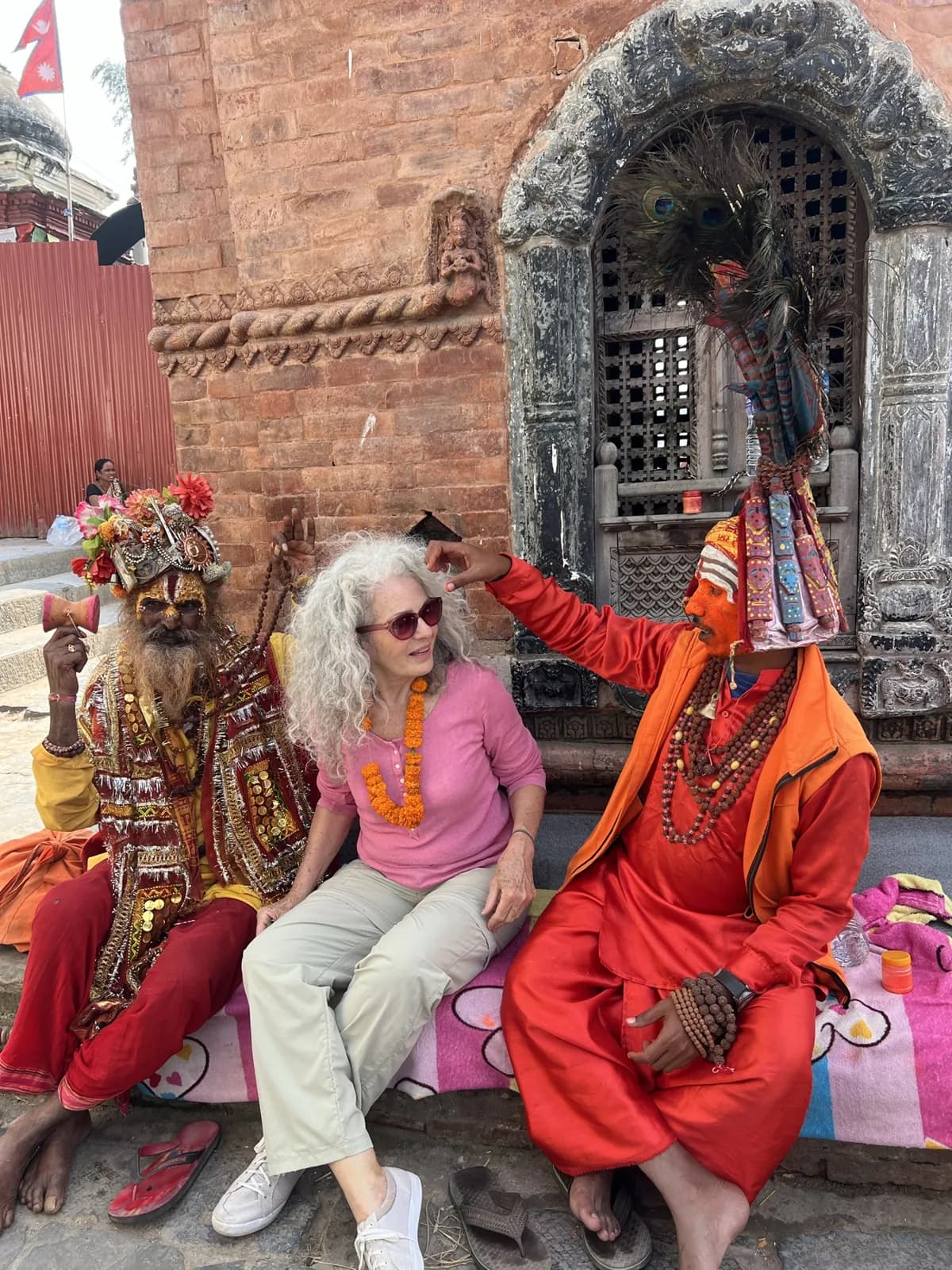
The 122 km drive north takes seven to eight hours on a very winding road. You climb out of the valley at Kakani, descend to the Trishuli, then follow the Pasang Lhamu highway past Dhunche, where the national park checkpost is. The last section is rough and slow. Syabrubesi is at a river junction at 1,460 m.
You cross the Bhote Koshi and turn east into the narrow Langtang gorge. The trail follows six hours of forest, oak giving way to rhododendron, with the river loud below and langur monkeys in the trees. It is a humid, steady day without major views, and it gains a thousand metres.
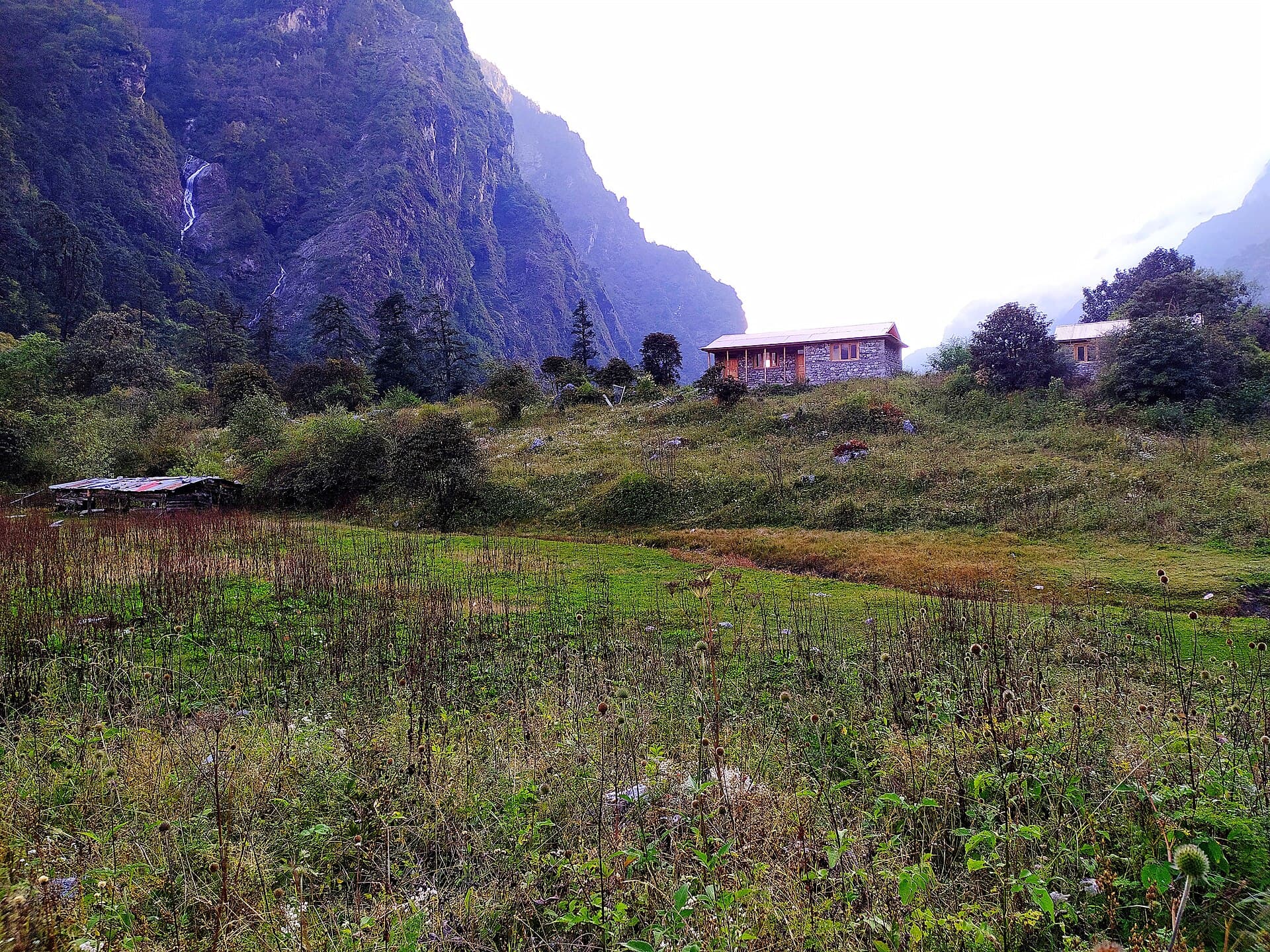
The trail climbs out of the forest in the biggest ascent of the first week. You gain nearly a thousand metres through Ghoda Tabela, where your permit is checked, and the valley opens up as the forest gives way to yak pasture. You then cross the avalanche debris field, half an hour of grey rubble and carved stones, and reach the rebuilt village beyond it.
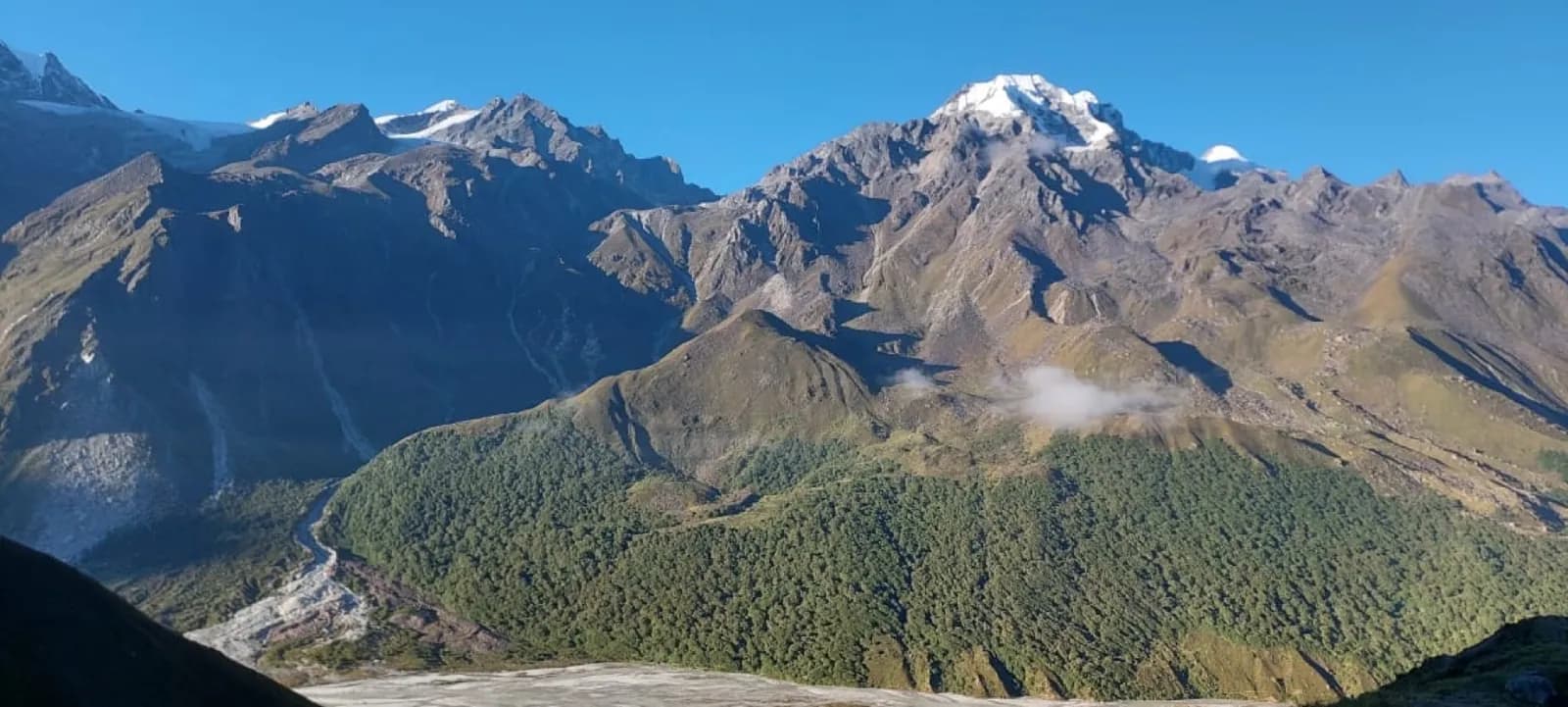
A short day, planned for acclimatisation. You walk for three to four hours past Mundu and Sindum, over a moraine and alongside the longest mani wall in the valley, to Kyanjin Gompa below the south face of Langtang Lirung. You arrive by lunch, leaving the afternoon to visit the yak cheese factory and rest at 3,870 m.
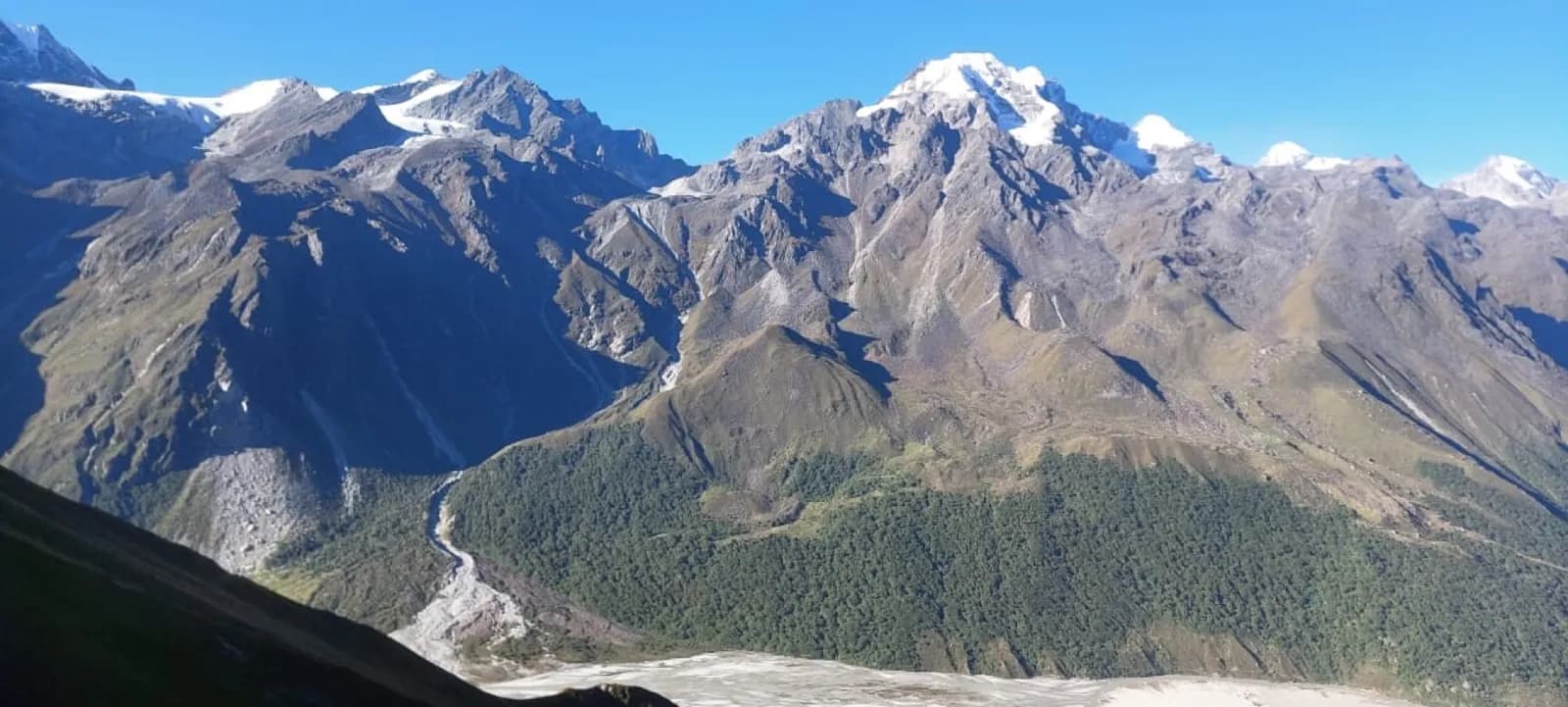
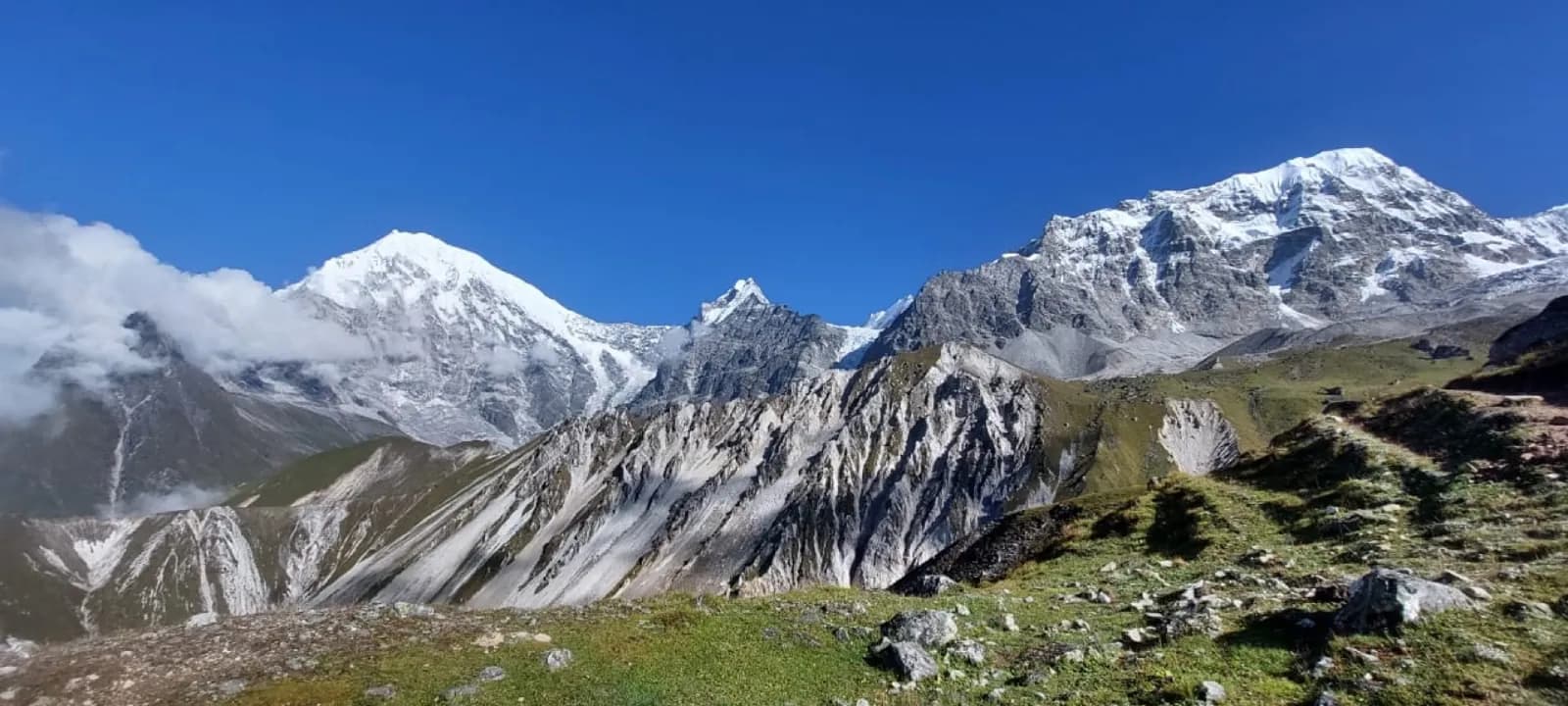
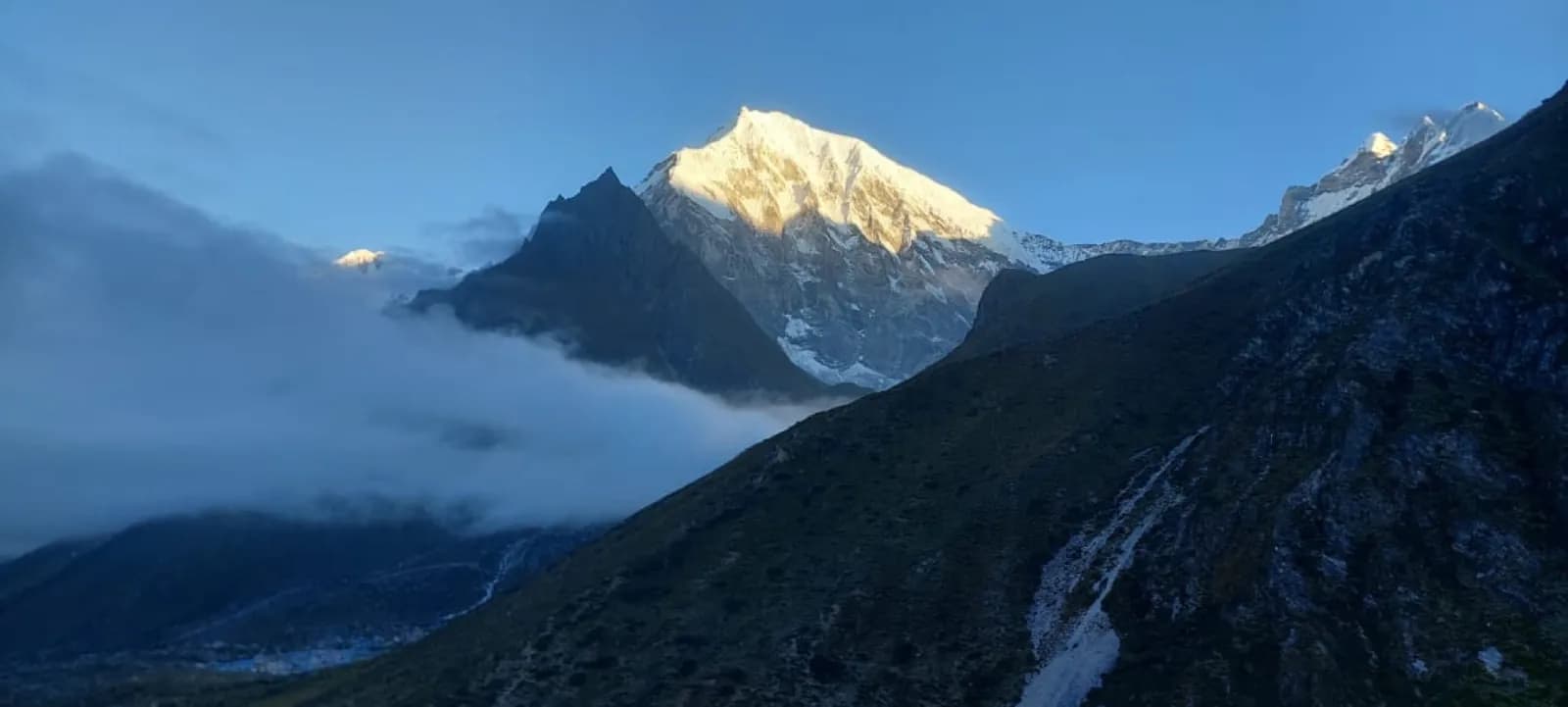
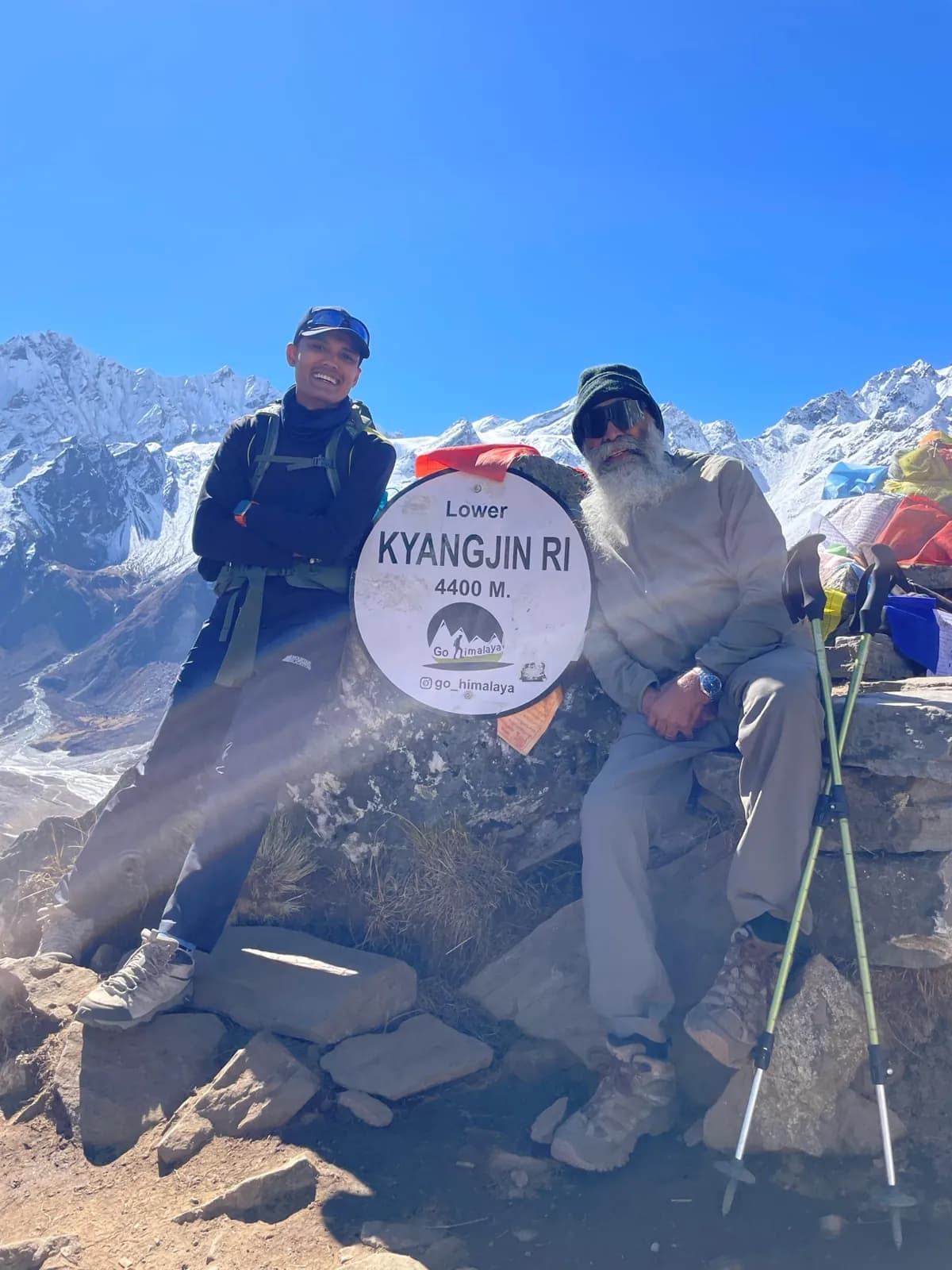
This is an acclimatisation day, but an active one. Tserko Ri at 4,984 m is a seven-hour round trip with a full panorama of Langtang Lirung, Dorje Lakpa and the peaks on the Tibetan border. Kyanjin Ri at 4,773 m takes half as long and offers a similar view. Your guide decides at breakfast, based on how everyone slept.
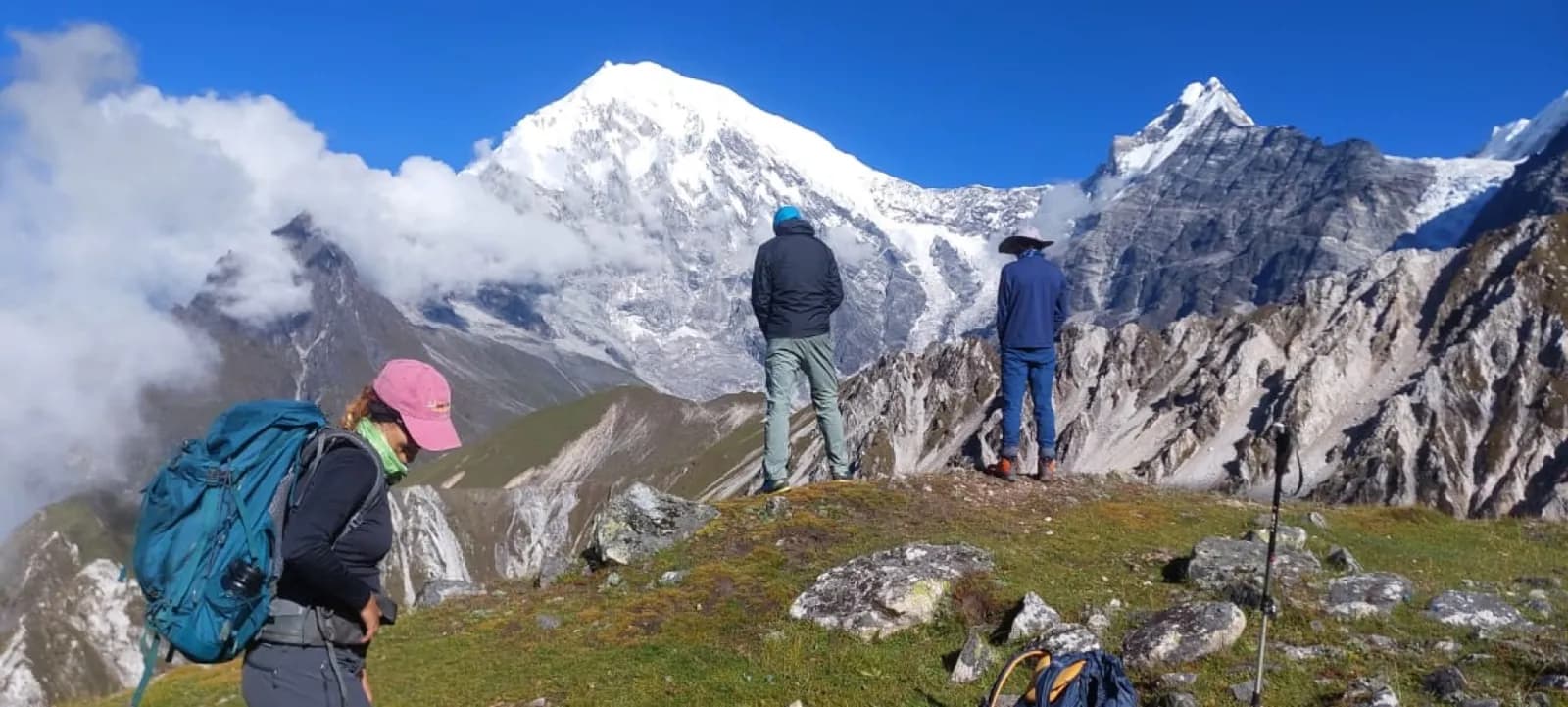
Today you descend in one day the height you climbed over two. It is twenty-one kilometres downhill through the village, the debris field and the gorge, which is hard on the knees. Walking poles are very useful today. You also see the valley from the opposite direction, with the light behind you rather than in your eyes.
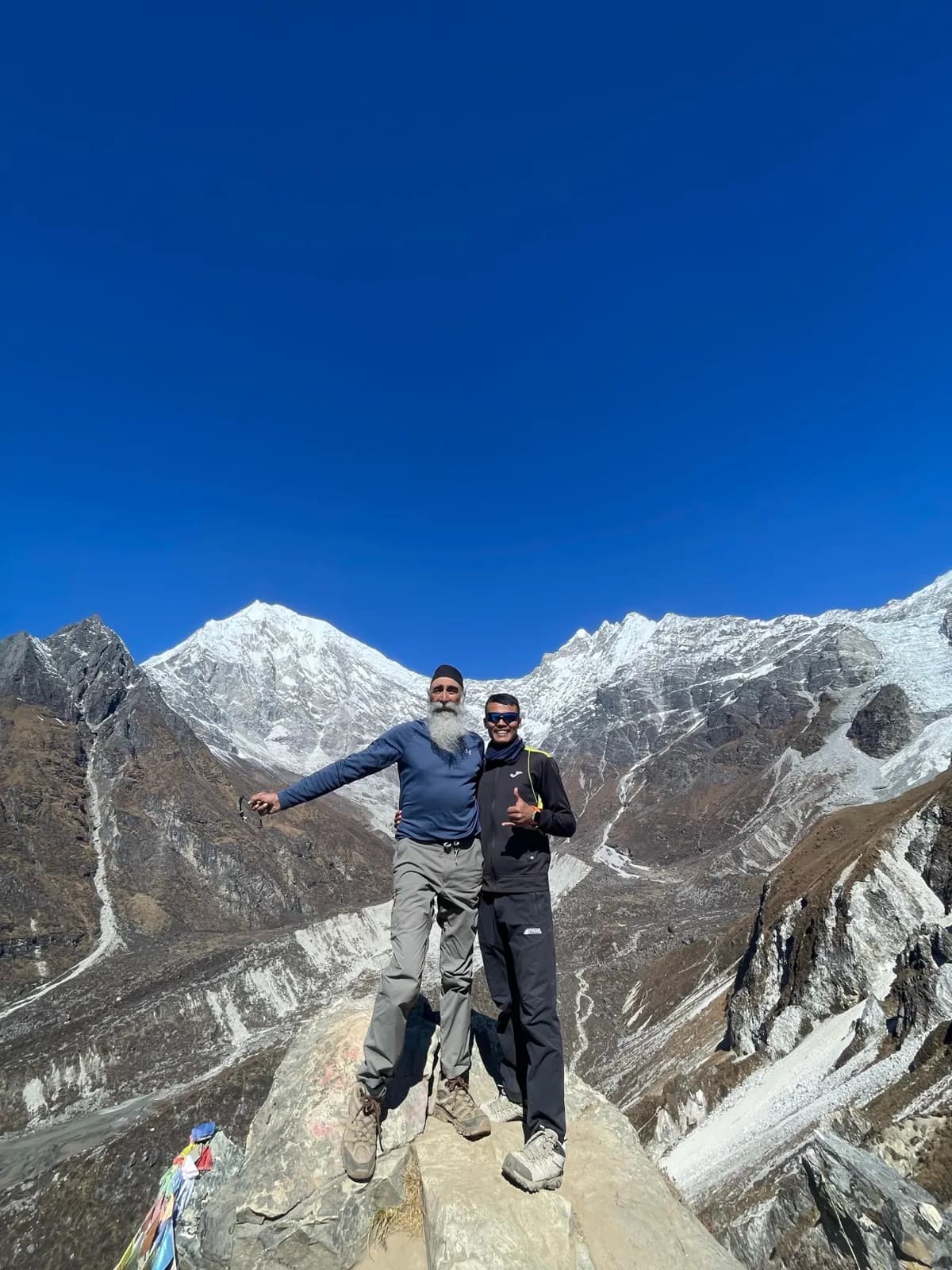
You descend the gorge to the bridge over the Bhote Koshi, then climb steeply on the far side to Thulo Syabru, a Tamang village along a ridge with the Langtang range behind it. From here the circuit changes direction: you climb into a different valley and do not walk the same ground twice.
The day involves 1,100 metres of climbing through rhododendron and oak forest to Dursagang, followed by a long ridge walk into silver fir forest. Sing Gompa, also called Chandanbari, has a small Buddhist monastery and a second cheese factory at about 3,330 m. Red pandas live in this forest, although sightings are very rare.
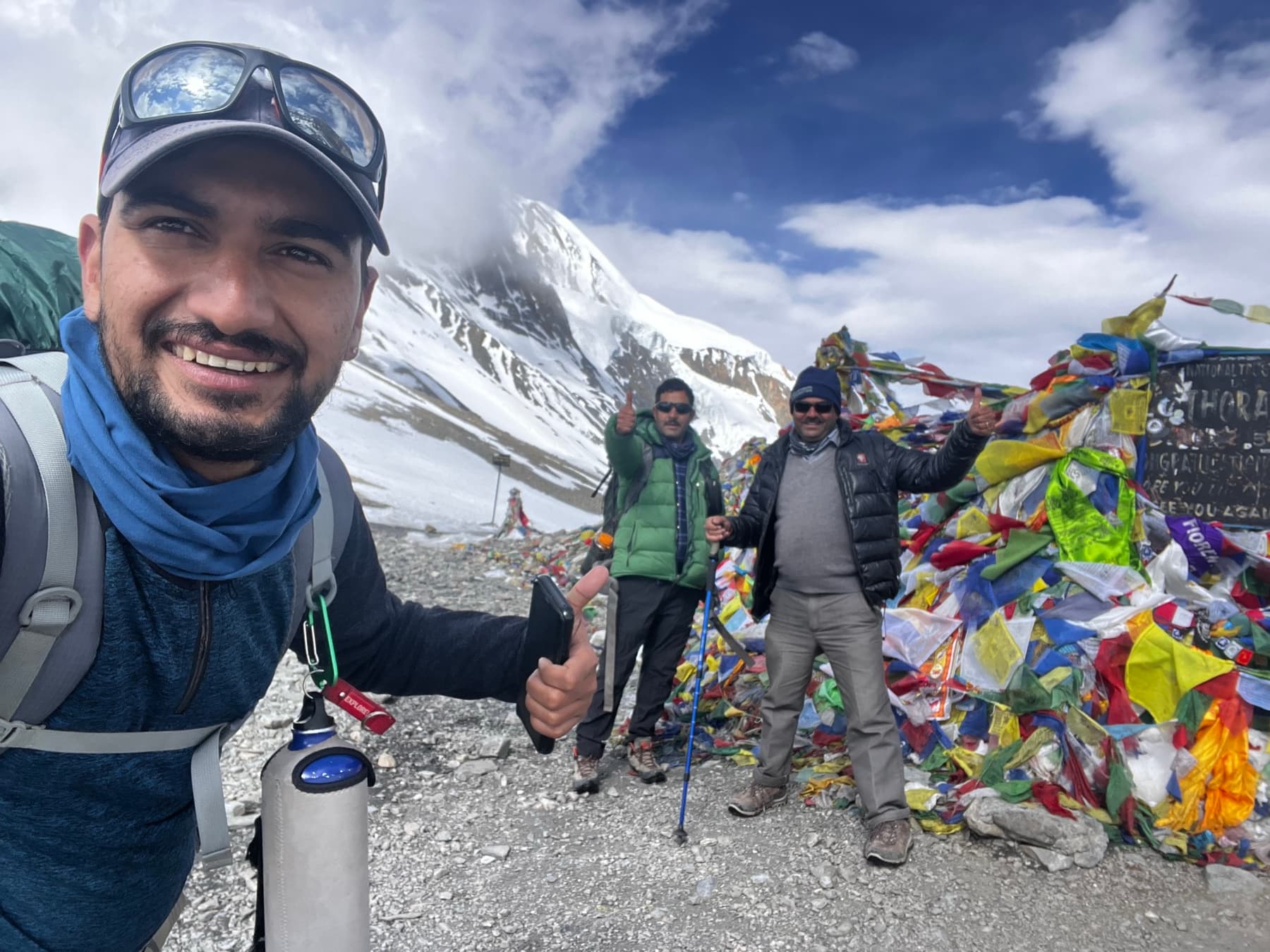
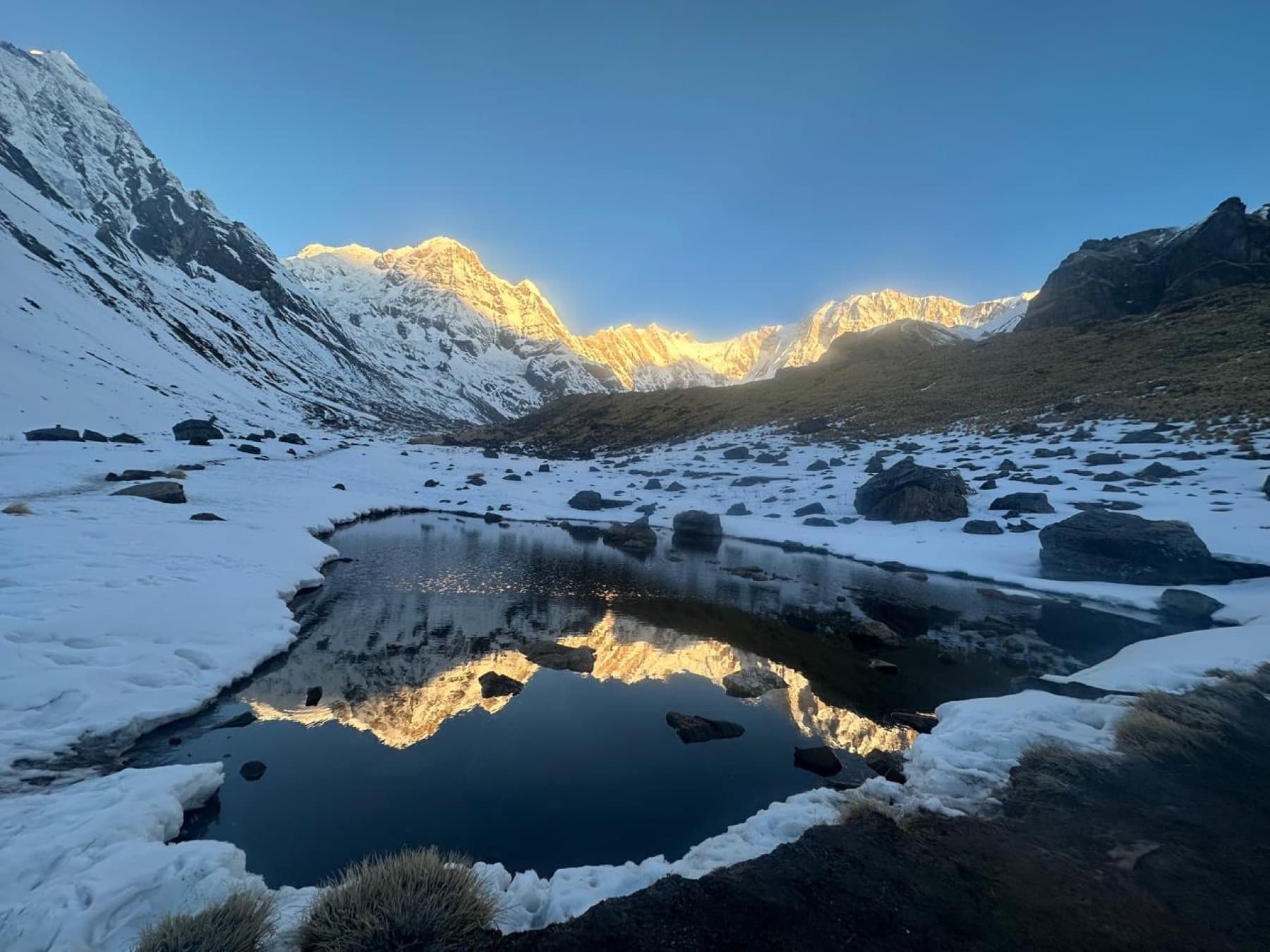
The most scenic walking day of the trek and the hardest so far. You climb past Cholangpati to Laurebina Yak at 3,920 m, where the tree line ends and Manaslu, Ganesh Himal and Himalchuli are visible behind you. A rocky traverse then passes two smaller lakes to Gosainkunda itself at 4,380 m, with the lodges on the near shore.
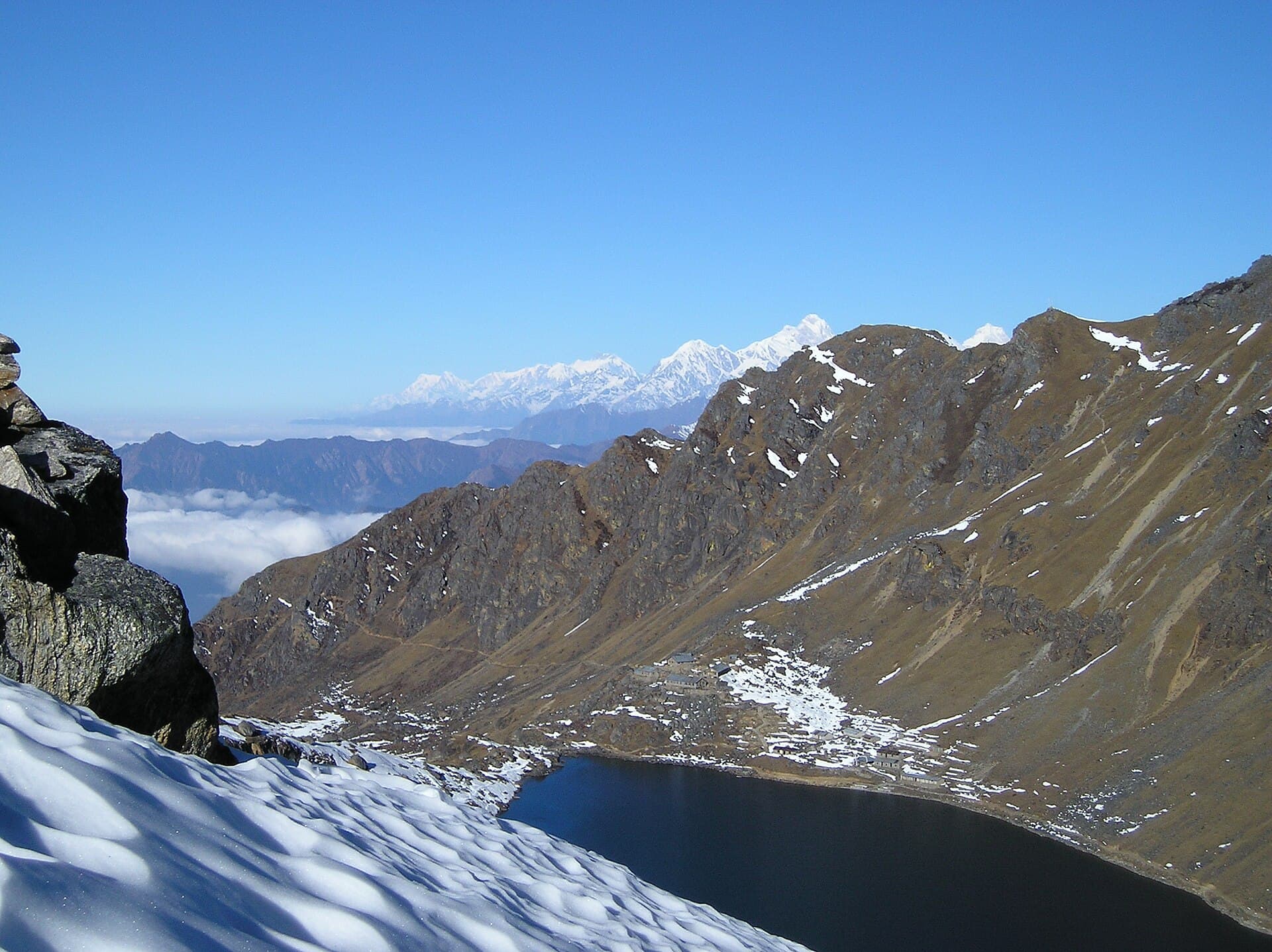
This rest day is what makes the pass crossing safe. You walk along the north shore past the rock in the water that pilgrims regard as Shiva's head, then climb to the viewpoint at about 4,610 m and return to sleep by the lake. Reaching the height of the next day's pass and then descending to sleep is the purpose of the day.
This is the most demanding day of the trek. Two hours over boulders and old snow bring you to the Laurebina La at 4,610 m, marked by prayer flags, with views from Langtang Lirung to the Annapurnas on a clear morning. This is followed by 1,200 m of descent through Phedi to Ghopte, on loose rock and through juniper, which takes considerably longer than it appears.
A varied and scenic day. You climb back up to Tharepati at 3,690 m, the last high ground of the trek, then follow the ridge south through Magen Goth into moss-covered fir forest that is very different from the Langtang valley. Kutumsang, at 2,470 m, is a Sherpa and Tamang village with terraced fields below it and warm nights.
This is the longest day of the final section: sixteen kilometres over a series of ridge saddles at Gul Bhanjyang, Chipling and Pati Bhanjyang, climbing and descending all day through villages and millet terraces. Chisapani has views north to Langtang and Ganesh Himal and south towards Kathmandu. It is your last night on the trail.
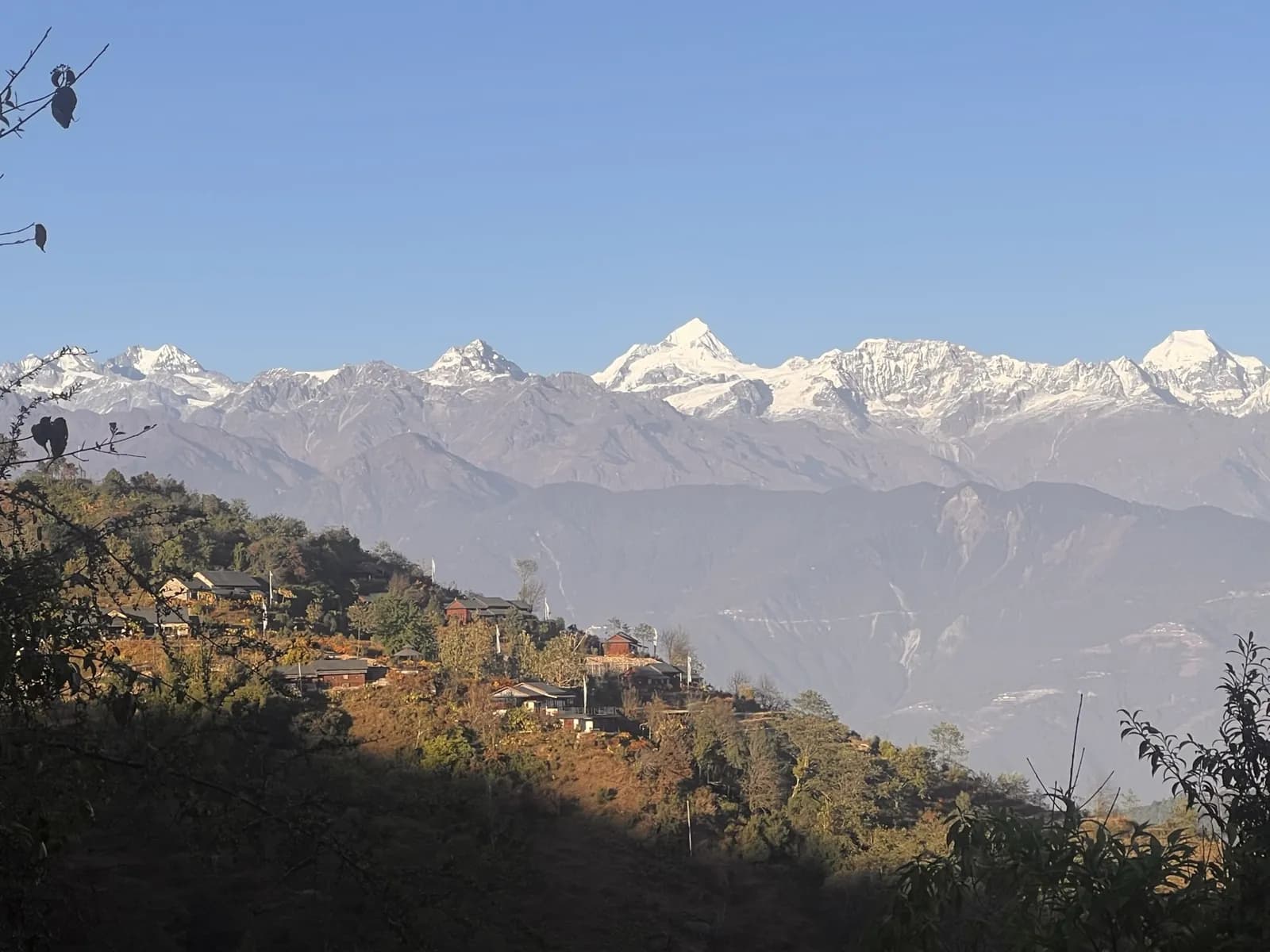
The trail enters Shivapuri Nagarjun National Park through oak forest, passes the Tamang hamlet at Mulkharka, then descends a very long staircase beside the pipeline that carries Kathmandu's water to the checkpost at Sundarijal. From there it is an hour's drive back to the hotel, with the full circuit complete and no section retraced.
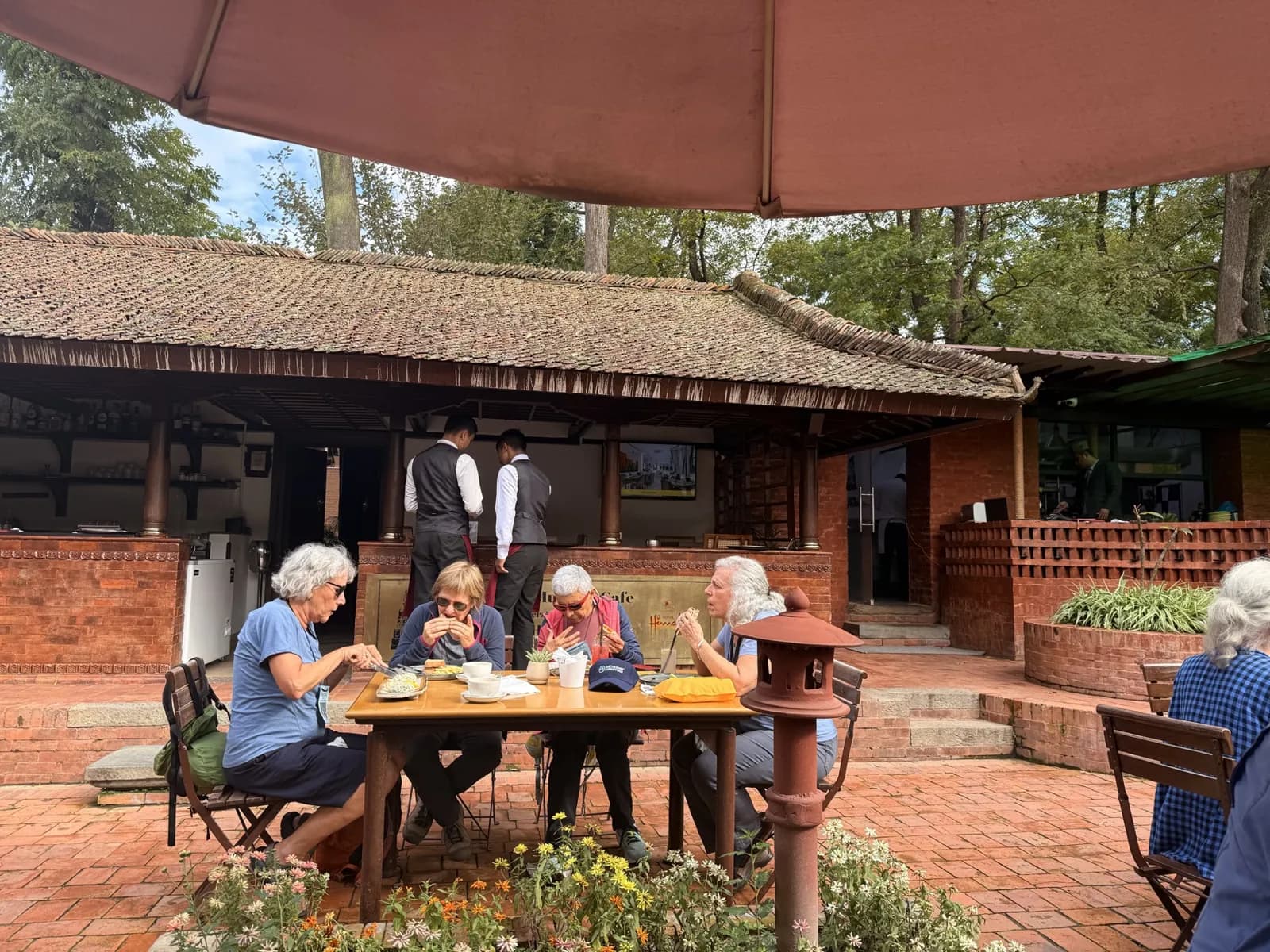
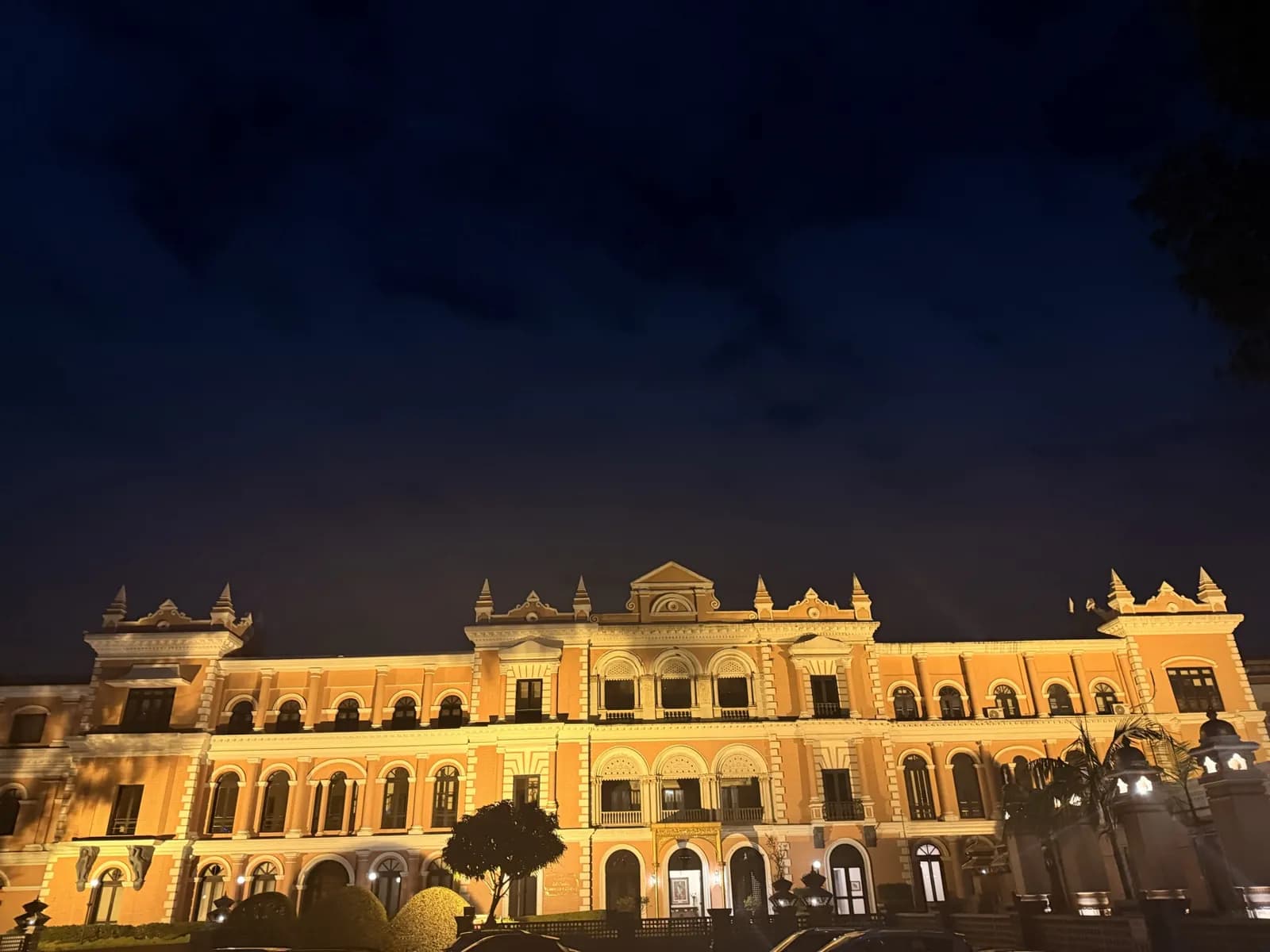
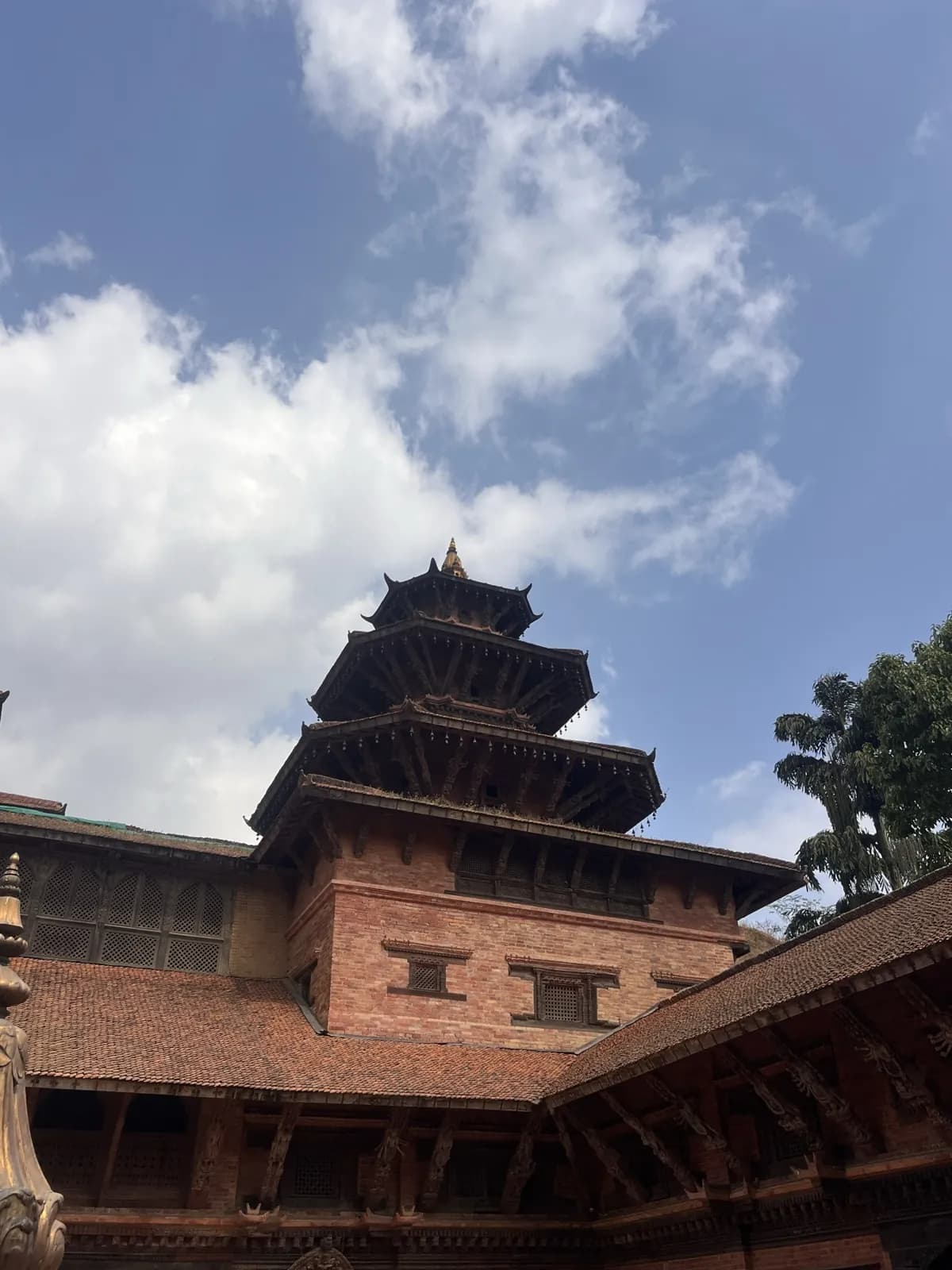
We take you to the airport three hours before your flight. If you have a free morning, the shops in Thamel sell singing bowls and other souvenirs. If you let us know in advance, we will reserve a day room at the hotel so you can shower and repack before a late departure, as most flights from Kathmandu leave late.
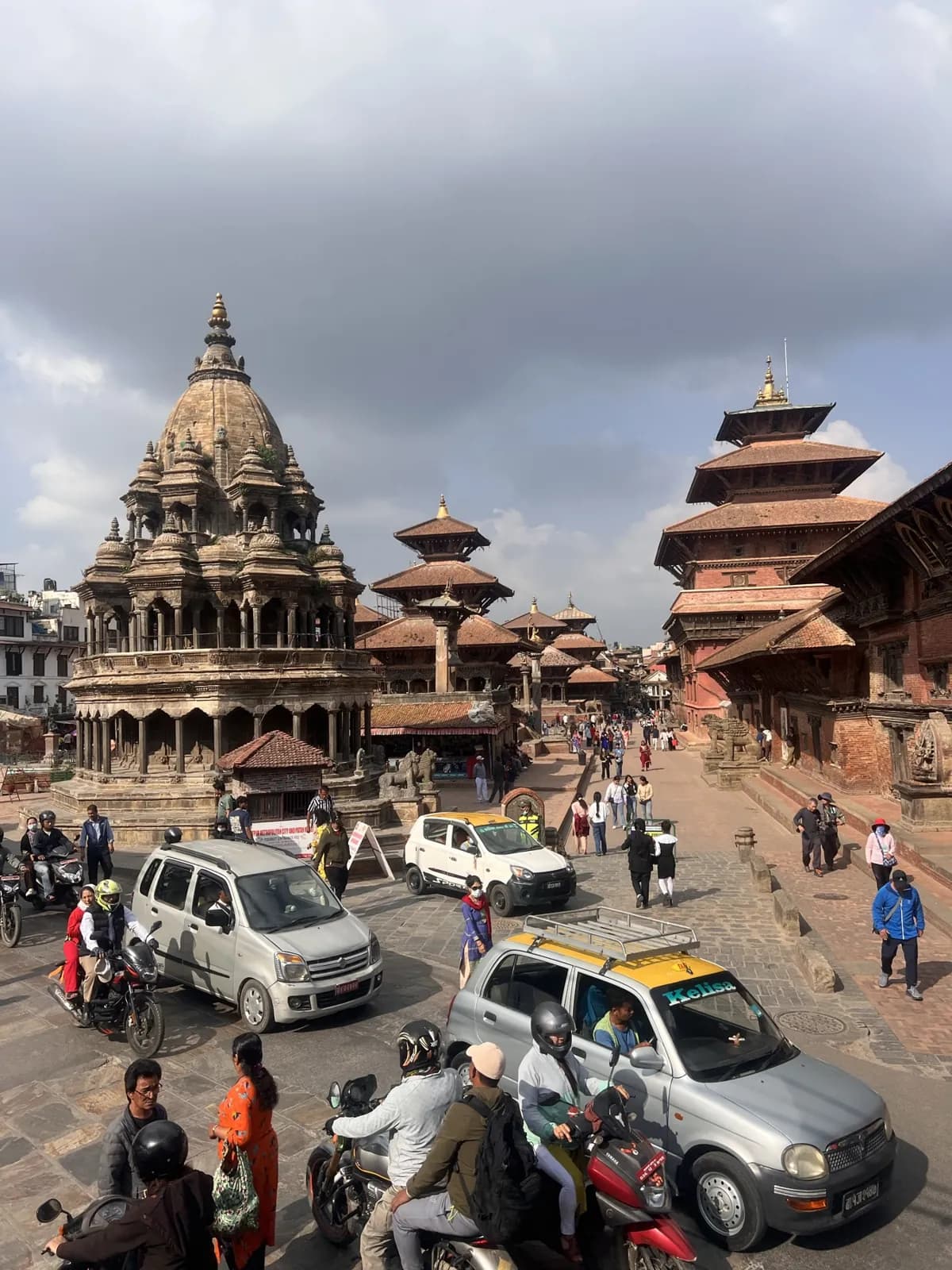
Autumn departures come first, followed by spring. Every departure listed runs, and most travellers on this route choose their own dates instead.
Start date
4 Oct 2027
End date
20 Oct 2027
Available
10 left
US $1,487
Per person
Start date
19 Apr 2027
End date
5 May 2027
Available
10 left
US $1,487
Per person
Start date
5 Apr 2027
End date
21 Apr 2027
Available
10 left
US $1,487
Per person
The trail from start to finish, at a glance.
Luggage weight limit
There are no flights on this trek, so your luggage is not weighed at a check-in desk. Your porter carries a strict maximum of 20 kg shared between two trekkers, which is more than the allowance on any Everest itinerary. We provide the duffel, the sleeping bag and the down jacket, so you do not need to bring these. Anything you do not take on the trek is stored free of charge at our Kathmandu office. The item people most often forget is warm clothing for two nights at 4,380 m, where the lake is frozen for much of the season.
There is one long drive at the start and no mountain flight, which is the main reason this trek is rarely disrupted.
Nothing on this itinerary depends on a small aircraft and a short runway. You travel north by road and walk out to within an hour of your hotel. When Lukla is closed for several days in a row and travellers are waiting at the airport, this trek continues as planned. It is the main reason to choose Langtang over the Khumbu if your dates cannot change.
The drive takes seven to eight hours for 122 km. You climb to the Kakani ridge, descend to the Trishuli, then follow the Pasang Lhamu highway up the gorge, with a few kilometres of unsealed landslide ground before Dhunche in any season. We leave at 6:30 to reach the national park checkpost in good time. A private jeep for six costs $110 for the group and is worth it over the public bus.
On 26 August 2026 a rock and ice collapse dammed the Lhende Khola near the Tibetan border and then released down the Bhote Koshi, destroying Timure and Rasuwagadhi and causing great loss of life downstream. This area is north of Syabrubesi, in a different drainage from the trek. Road access along the corridor is being repaired and changes month by month, so we confirm the situation for your dates in writing before you pay a deposit.
Book your flight home with a spare day in Kathmandu after your scheduled return. A delay of a week is unlikely, but a road closed for a day by rain is quite possible, and the spare day costs you nothing if you do not need it. Most flights from Kathmandu leave late in the evening, and we will reserve a day room so you do not have to wait in the hotel lobby.
Rebuilt lodges in Langtang, basic and cold lodges at the lakes, and simple, warm lodges in Helambu.
Every night on the trail is spent in a teahouse: a family-run lodge with one warm dining room, heated by a single stove, and simple twin rooms with foam mattresses and thin walls. Bring a sleeping bag. In the Langtang valley the lodges at Lama Hotel are in the forest with shared bathrooms, Langtang village was rebuilt after the 2015 earthquake, and Kyanjin Gompa has the best lodges on the route.
At Gosainkunda you spend two nights in a stone lodge by the lake: basic, cold, sometimes a dormitory, and without a shower. Ghopte, after the Laurebina La, is the most basic night of the trek. In Helambu the lodges improve: Kutumsang has a village teahouse with a hot shower for a fee, and Chisapani, on the ridge above Kathmandu, has private rooms with hot water.
| Where | Nights | Type | Room | Bathroom |
|---|---|---|---|---|
| Kathmandu | 3 | Three-star hotel | Twin or double | Private, hot water |
| Syabrubesi | 1 | Teahouse at the river junction | Twin | Private in most lodges |
| Lama Hotel | 2 | Teahouse in the gorge | Twin | Shared |
| Langtang village | 1 | Teahouse, all rebuilt since 2015 | Twin | Shared, hot shower for a fee |
| Kyanjin Gompa | 2 | Teahouse, the best on the route | Twin | Shared, hot shower for a fee |
| Thulo Syabru | 1 | Teahouse on the ridge | Twin | Private in the better lodges |
| Sing Gompa | 1 | Teahouse by the monastery | Twin | Shared |
| Gosainkunda | 2 | Stone lodge by the lake, basic and cold | Twin, sometimes a dormitory | Shared, no shower |
| Ghopte | 1 | The most basic night on the trek | Twin, basic | Shared, no shower |
| Kutumsang | 1 | Village teahouse | Twin | Shared, hot shower for a fee |
| Chisapani | 1 | Lodge on the ridge above Kathmandu | Twin | Private, hot water |
Porridge, Tibetan bread, eggs, chapati, pancakes, tea or coffee
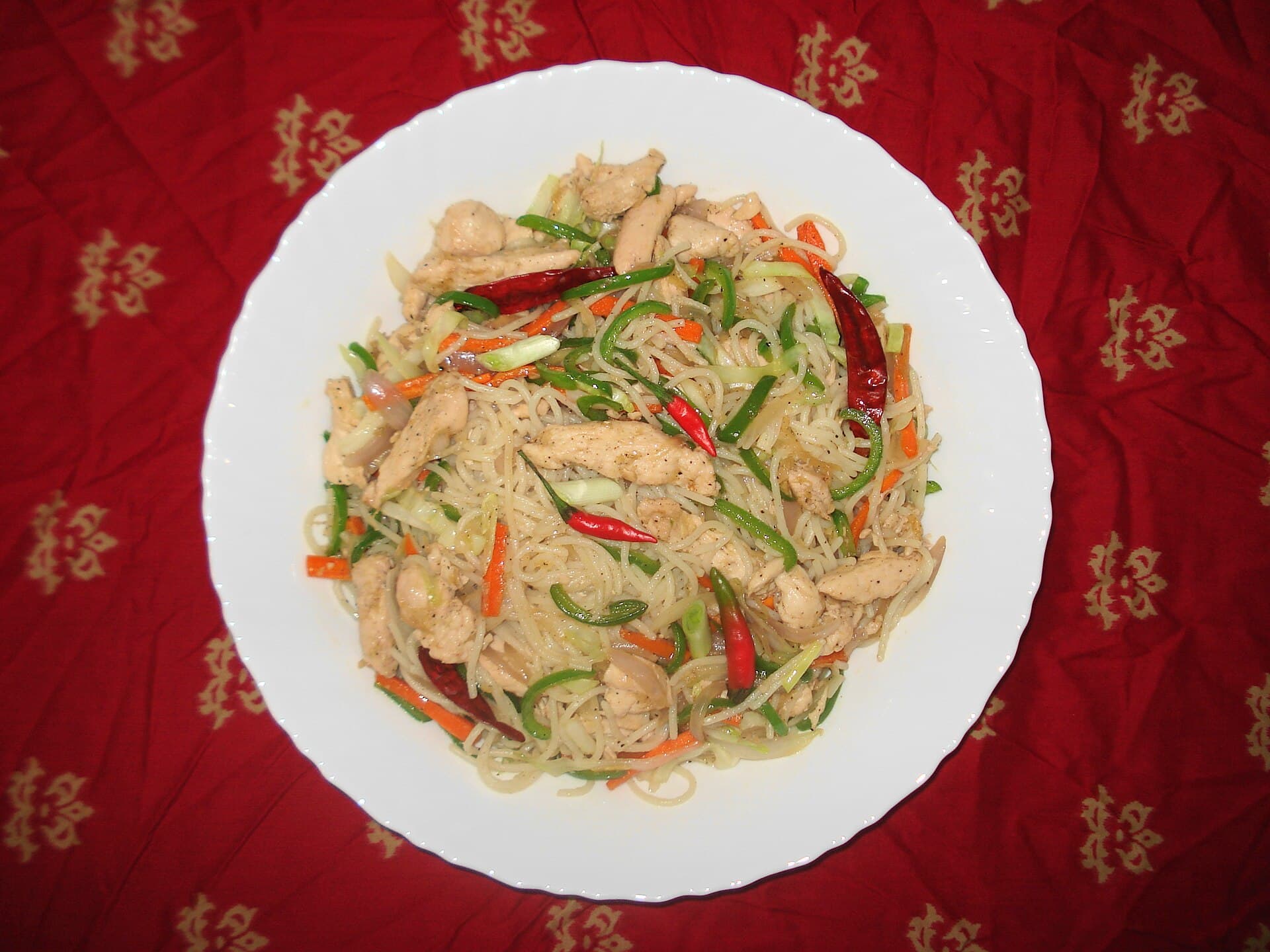
Dal bhat, fried rice, noodles, thukpa, potatoes, yak cheese in the Langtang valley

Dal bhat, pasta, curry and rice, soup to start, dessert in Helambu
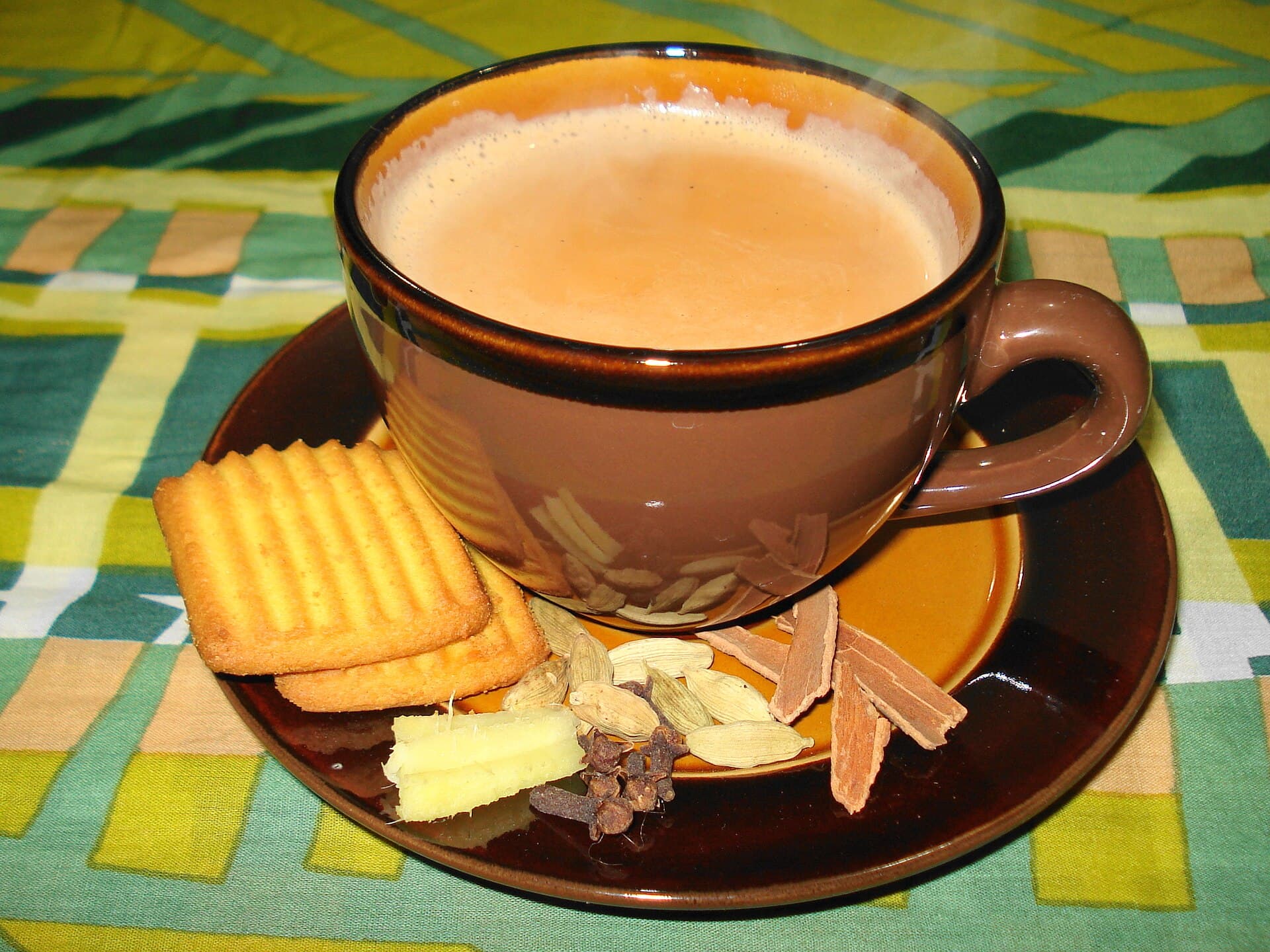
Black, milk, lemon, ginger or masala. Included at every stop.
Days start early on the pass day and are unhurried on most others.
6:00Tea in your room, and a bowl of warm water to wash in
6:30Pack, and put the duffel outside your door for the porter
7:00Breakfast together. On the pass day, breakfast is an hour earlier
8:00On the trail, at a slow and steady pace
12:00Lunch at a teahouse on the route, about an hour
13:00Two to four hours more, depending on the day
15:30Arrive, tea, choose a bed, wash, and rest if needed
17:00Oxygen saturation and pulse taken and written down, above Sing Gompa
18:30Dinner, and the guide talks through tomorrow
20:30Bed. Everyone goes to sleep early at 4,380 m
A long trek with one significant pass.
Written for somebody who walks a bit and does not train. If you already run or cycle regularly, start partway through. Nothing here needs a gym.
12 weeks before, stage 1 of 6
Three cardio sessions a week, 45 minutes each, at a pace where you can still hold a conversation. Walking, cycling, swimming or rowing are all suitable. If you do only one thing on this list, do this.
This is the most demanding part of the itinerary, and the reason the days are ordered as they are.
On this trek, the order of the days matters more than the highest point. You sleep two nights at 4,380 m beside Gosainkunda and cross 4,610 m the following morning, after climbing from 2,250 m in three days. That is a steep profile, and it is manageable only because of the week you spend in the Langtang valley first, including two nights at 3,870 m and a hill day at nearly 5,000 m. Fitness does not determine how well you tolerate altitude. What helps is arriving already acclimatised, walking slowly, and telling your guide on the first day you feel unwell rather than the third.
Daily health checks
From day 10 at Sing Gompa, your guide carries a pulse oximeter and records oxygen saturation and pulse every evening, and again on any morning when someone feels unwell. The readings are written down, so a decline over three days is clearly visible.
Mild symptoms
We add an extra night at Sing Gompa or at the lake, or make a short descent to Laurebina Yak and climb back up the next morning. Most cases resolve at this stage and the group crosses the pass a day late, which the itinerary allows for.
Serious symptoms
From Gosainkunda the fastest descent is back towards Sing Gompa and Dhunche, not over the pass. Crossing 4,610 m with altitude sickness is the wrong direction, even though it leads to a road. This decision is not put to a vote.
Helicopter evacuation
A helicopter evacuation from Kyanjin or from the lakes takes about forty minutes to Kathmandu, and the aircraft can usually be in the air within the hour in daylight. It costs $2,500 to $4,000, the helicopter will not take off without a guarantee of payment, and this is what your insurance covers.
Medical facilities
Unlike the Khumbu, there is no aid post at altitude on this route. The nearest hospital is at Dhunche. This is a reason to act early on symptoms, not a reason to avoid the trek.
Fitness and altitude are unrelated
This is the thing people get wrong most often. Training makes the walking easier and does nothing for how your body handles thin air. Strong young trekkers get altitude sickness and unfit older ones frequently do not. Go up slowly, and say something the first time your head hurts.
We do not run this trek in three months of the year, and in two further months we will tell you in advance that the pass may not be open.
The best month of spring, with rhododendron in the gorge, settled mornings and warm nights in Helambu.
Averages from Nepal DHM station data for Langtang and Helambu. The lake column is 500 m higher and more exposed than the valley, and any given week can sit either side of these figures.
A government-licensed guide who has crossed the Laurebina La many times and can judge when conditions are not safe for crossing. Most of our Langtang guides are Tamang and from this district, so the lodges know them and keep beds for them, and the history of the valley is their own. They speak fluent English and hold current first aid and altitude training.
There is one porter for every two trekkers, carrying a strict maximum of 20 kg. Porters are insured, are paid the rate agreed with the union, and are equipped by us with boots, a jacket and a sleeping bag. The pass day is as long for them as it is for you, and they carry the duffels.
The maximum group size is ten, and we have run this trek for a single trekker. Above ten, a second guide joins so the group can split on the pass day, when the gap between the fastest and slowest walkers is greatest. A second guide also means one person can turn back with a guide without the rest of the group stopping.
The assistant guide walks the person who is struggling back down, at their pace, and stays with them until they are with us in Kathmandu. Nobody is left on the trail alone and nobody has to make that decision by themselves. This is why we add a second guide on this route at a smaller group size.
Langtang rebuilt itself largely on trekking income, and Helambu receives far fewer trekkers than it could support. We use family-run lodges rather than the largest lodge in each village, we buy food locally instead of carrying it from Kathmandu, and we eat the cheese made at Kyanjin and at Sing Gompa. These choices add up across a group of ten over two weeks.
We do not supply bottled water. There are drinking water stations at Thulo Syabru and Langtang village, boiled water is available everywhere else, and we ask you to bring purification tablets or a filter. All plastic brought up this valley has to be carried back down or burned, and most of it is burned.
You walk through the debris field where the old village stood. People who live here lost family members in it, and some of your crew may have too. Please walk through quietly, do not fly a drone over it, and do not photograph anyone praying at the mani walls. If your guide is quiet for twenty minutes, this is the reason.
Gosainkunda is a pilgrimage site and a Ramsar wetland. Nobody washes in it, nothing is thrown into it, and you walk clockwise around it as everyone else does. Camping on the shore is not allowed, and the lodges make it unnecessary.
The published price is $1,487 for a group of five to ten. It covers three hotel nights in Kathmandu, thirteen nights in teahouses, all meals from day 3 to day 16, the guide and porters, the jeep north, the drive in from Sundarijal, and all three permits. It does not cover your international flight, insurance, tips or hot showers.
A deposit of twenty per cent secures your place, and the balance is paid on arrival in Kathmandu in cash or by card. We do not ask for the full amount months in advance. If you book more than eight weeks ahead, the price is fixed on the day you book, regardless of any change in permit fees.
You continue trekking, but not over the pass. The group turns back at the lake and walks out to Dhunche, following our shorter Gosainkunda trek, and we refund the difference in lodge and transport costs. The decision is made on the morning, at the lake, on the guide's judgement rather than a weather app.
You can move your dates free of charge once, up to four weeks before departure. If you cancel more than four weeks ahead, you lose the deposit. Within four weeks the charge is fifty per cent, and within a week we have already paid the crew and the lodges. If Nepal closes or the road is impassable on your dates, you can move your dates free of charge or receive a full refund.
A passport scan, four photographs, your insurance certificate showing helicopter cover to 5,000 m, and full details of anything a doctor has said about your heart, lungs or blood pressure. This last item is important. There is no aid post on this route and the nearest hospital is at Dhunche.
When you write to us, you receive a reply from someone who has walked this circuit, not a standard response. If we think the shorter Gosainkunda trek or the Langtang valley trek would suit you better, we will tell you, even though they cost less. We want you to book the trek that is right for you.
Priced per person, arranged before you travel, and none of them included in the price above.
An extra night at Kyanjin Gompa so you can climb Kyanjin Ri and Tserko Ri on separate days instead of choosing between them. It is excellent value and it improves acclimatisation for the pass.
A lower cultural loop west of Syabrubesi through Tamang villages, with a hot spring at Tatopani and a view into Tibet. Added at the start, it also provides acclimatisation, which makes the rest of the circuit easier.
Descend east from Tharepati into the Buddhist heart of Helambu instead of following the Kutumsang ridge, then finish at Melamchi Pul. This option has older monasteries, easier days, and finishes by road instead of on foot.
For the one road day at the start. Eight hours on the Pasang Lhamu highway is much more comfortable with six people in a jeep than with forty in a bus, and you leave when you choose.
Travel to the lowland jungle to see rhino, and possibly tiger at Bardia. It is a good contrast to two weeks of mountain ridges, and easy to add after a trek that ends at the edge of Kathmandu.
For the Kathmandu nights and wherever a lodge has a spare room. Most lodges at Gosainkunda and Ghopte do not, and in late October none do.
5 versions of this journey. They use the same guides and the same lodges; what changes is the length, the comfort and how much of it you walk.
The best Agency to go to for Nepal trips and treks
April 2026, Tripadvisor
Hats off to Mr. Rajan Simkhada for his expertise in the field of trekking. Did Manaslu circuit last April and Langtang Valley+ Gosaikunda/ Lauribina Pass circuit this march/ April. Perfectly designed night halts considering daily allowable height gain and good, cosy hotels. Did not feel any AMS symptoms on any day. Quite accomodative to changes/ requests, Rajan goes out of the way to make one comfortable and comes up with solutuons for any situation. The trek itinerary is customised considering individual trekker's potential and capacity. Well versed guides and courteous Porters are his speciality. He has contacts at all the Tea houses on the route. Manaslu was my first trek with Earthbound and I came back to them for this year's Gosaikunda trek. Plan to go to them every year for many more years to come.
Langtang National Park 6-day Trek - Dec ‘19 / Jan ‘20
January 2020, Tripadvisor
We made our second trip to Nepal with Earthbound Expeditions. Our first was 10 years ago and was great. Our most recent trip was just as memorable and equally as well-organized. We were a group of 10 and did a 6-day trek to the Langtang Area (up to Gosaikunda and over the pass) over New Year’s followed by a couple of days in Kathmandu. Pre-trip, Raj is great. He answered every email with our questions almost instantly no matter how detailed. On arrival late at night, we were met at the airport, taken to our hotel. At the hotel when we arrived, were extra duffel bags, sleeping bags, snow caps, and one down jacket that we asked for at the last minute. Having this there allowed us to complete our packing for the trek which would start the next day. Raj met us early the next morning to introduce us to our tour guide, Gokal, and head porter, Cerkey Sherpa, brief us on the trek and then see us off. Gokal, our guide, was excellent as were the porters - always with a smile on their face as they lugged our bags up and down the mountains. During the trek, most of us experienced some minor altitude sickness combined with cold temperatures (-15C) and Gokal took good care of us. He even had an oxygen monitor that went on your finger that he used on us. We all fought through it (encouraged by Gokal and Cerkey) and made it over the pass and immediately felt better as we descended. The trek itself was great with amazing views, diverse landscapes, and lots of snow. We hardly saw anyone else on the trails given it was offseason. We had an excellent guide in Kathmandu who showed us around for the day. He was knowledgeable and informative and fun. I would not hesitate to book with Earthbound Expeditions. It is an exceptional company that really does care about your experience. A lot of companies say that but they walk the walk with highly personalized service.
Earthbound Expeditions- Great, we will come back soon for Nepal trekking
December 2011, Tripadvisor
We were a team of 3 ladies from Hong Kong and Taiwan. Thank you so much to Rajan, the boss of Earthbound Expeditions, for his quick response on emails. He recommended us to go trekking in "the heart of Annapurna" because the weather was too cold in December and for us, the beginners for long trekking. Yes, he was absolutely right. We built up great confidence on this trekking company. Other reason that we chose Earthbound Expeditions was that the prices they charged was quite reasonable. We did very enjoy the trekking. Speical thanks to our guide, Gopal Tamang, who is an experienced, caring and freindly guy. The whole arrangement for transportation, route, meals and lodge was satisfaction. We love Nepal and will come back soon. Oithout hesitation, EARTHBOUND EXPEDITION AGAIN!!! Noel (Hong Kong)
Amazing Nepal Trip by All Means!
March 2012, Tripadvisor
We stayed in Nepal for one week of which all trip was booked and arranaged by Earthbound Expeditions. The head of the agent Mr. Rajan was so professional and responsive to all request and even flexible to re-schedule any changes in the plan. We stayed in Pokhara for two nights in cozy Tiger Mountain Lodge and toured most landmark places in the city including the Ultra-Flight experience. In Kathmandu, we stayed in Dwarika's Hotel for four nights and managed to visit all UNESCO World Heritage sites with private guide and driver. It is always true that one visit to Nepal is not enough! And dealing with Earthbound Expedition agent and Mr. Rajan is the best choice for any planned tour in Nepal.
Answers to the 28 questions travellers ask us most often. If your question is not here, contact us and we will answer it.
The shorter trek walks up to the lakes and returns on the same trail to Dhunche for the bus. This trek does not retrace its route. From Gosainkunda you cross the Laurebina La at 4,610 m into a third valley, Helambu, then walk south along the ridges for three more days and finish at Sundarijal, an hour from the hotel. It adds four days and one pass, with no repeated ground at the end.
You need to be fit enough for thirteen consecutive walking days, most of them five to seven hours and two of them eight hours. Train in particular for the pass day and the Kutumsang day. If you can walk six hours in hills at home, then walk five hours again the next morning comfortably, you are ready for this trek.
It is better suited as a second trek. The Langtang valley on its own is an excellent first trek, and this circuit adds a 4,610 m pass and a week of ridge walking to it. If you have never slept above 3,500 m, we recommend doing the valley trek first and returning for the circuit later.
Twelve is the minimum age for this trek, compared with ten on the valley trek, and we would like to speak with you first. The pass day is long and cold, and there is no easy way off the route once you start down the far side. A strong fourteen-year-old who walks regularly with you at home will be fine.
It is a long day rather than a hard climb. You climb for two hours from the lake over boulders and old snow to 4,610 m, in thin air and usually with a cold wind at the top. This is followed by 1,200 m of descent on loose rock, which takes four to five hours. No rope is needed, crampons are not needed in a normal season, and there is no exposure. We start at six and aim to be over the pass by nine.
We do not attempt it. If there is fresh snow, ice on the traverse below the pass or poor visibility, the guide turns the group around at the lake and leads you back down to Dhunche for the bus, following the route of the shorter Gosainkunda trek. This happens most often in January and February, in early December, and after a late spring storm. You miss the Helambu section, not the whole trip, and we refund the unused lodge and transport costs.
Not in October, November, March, April or May in a normal year. Microspikes are worth their two hundred grams in any month, and in early December or late February we carry them for the group as standard. If conditions require an ice axe, we should not be crossing the pass.
The usual published figure is 4,610 m and that is the figure we use. GPS units often read 4,630 to 4,650 m on the day, and some operators quote the higher figure, which is why sources differ. The viewpoint above Gosainkunda that you climb on the rest day is at about the same height, by design.
Without it, the altitude profile would be too steep. You sleep at 4,380 m and cross 4,610 m the following morning, after three days of steep climbing from 2,250 m. The extra day at the lake lets you walk up to the viewpoint at pass height and come back down to sleep, which follows the standard principle of climbing high and sleeping low.
Day 11, Sing Gompa to Gosainkunda, which gains about 1,050 m in one day to sleep at 4,380 m. That is more than we would normally accept, and it is why the Langtang section comes first: by then you have slept six nights above 2,400 m and two at 3,870 m, which gives you proper acclimatisation.
You need cover for helicopter rescue to 5,000 m, because Tserko Ri is 4,984 m. This is a condition of booking and we ask to see the certificate. A flight out from Kyanjin or from the lakes is short, about forty minutes, but still costs $2,500 to $4,000, and the helicopter will not take off without a guarantee of payment.
On 25 April 2015 the earthquake sheared a hanging block of ice and rock off Langtang Lirung. The debris and the air blast it pushed ahead of it buried almost the whole village. The official toll for the valley is 306 dead, including 175 of the roughly 370 locals present, 82 Nepalis from elsewhere and 49 foreign trekkers. Local people believe the real number is higher. The valley is safe to walk today and the ground is no more hazardous than any other Himalayan valley.
The trail crosses about half an hour of grey boulder field where the old village stood, with memorial stones and mani walls carved with names at the far side. The present village was rebuilt a little further up the valley by the families who survived, largely with their own labour and with income from trekking. Please pass the memorial quietly and do not photograph anyone there.
Yes, and most are better than before. Kyanjin Gompa now has the best lodges on the circuit, with hot showers and micro-hydro power. The cheese factory, built with Swiss help in 1955, was rebuilt with Swiss help again. Where you spend your money in this valley matters more than in most places.
Hindus believe that Shiva struck the mountain with his trident to create water after swallowing the poison churned from the ocean, and that he lies beneath the rock you can see in the lake. It is one of a chain of lakes said to number 108 and is a Ramsar wetland site. Both Hindus and Buddhists come here, which is unusual and characteristic of Nepal.
At the August full moon, tens of thousands of pilgrims climb to the lake over a few days, many of them overnight and some barefoot, to bathe and to change the sacred thread. It is a remarkable event, but finding a bed that week is very difficult. We do not run the circuit at that time, because of the crowds and because the pass is in monsoon cloud.
We believe it is, and it is the quietest walking of the trip. The route follows ridge after ridge of fir and moss, through Sherpa and Tamang villages that see far fewer trekkers than Langtang, and finishes on foot within an hour of your hotel. It is also the section people most often underestimate: three long days with a lot of ascent.
Langtang has the best lodges, most of them rebuilt since 2015, with hot showers and micro-hydro power. The lodges at Gosainkunda are basic and cold, and the water freezes. Helambu lodges are simple but warm and inexpensive, with fewer beds in each village, so we send the guide ahead. Ghopte is the most basic night on the trek and one of the most memorable.
Day 15, Kutumsang to Chisapani. It covers sixteen kilometres and three ridge saddles, with about 1,300 m of ascent and 1,600 m of descent, at the end of two weeks of walking. It is rarely described because it reaches only 2,200 m and there is no named mountain. Even so, most people remember it as the longest day.
Coverage is good as far as Kyanjin Gompa, which is one of the better connected valleys in Nepal, then there is no useful signal between Laurebina Yak and Tharepati. Helambu has coverage again, and Chisapani receives a signal from the Kathmandu valley. We recommend buying an Ncell or NTC SIM card in Kathmandu on day 2.
The 122 km drive takes seven to eight hours, on a road with more hairpin bends than straight sections and a few kilometres of unsealed landslide ground before Dhunche in every season. It is the least comfortable part of the trip. A private jeep instead of the tourist bus costs $110 and is good value. There is only one drive on this trek rather than two, because you walk out at the other end.
The flood of 26 August 2026 came down the Bhote Koshi from the border, north of where you trek, and it did severe damage at Timure and Rasuwagadhi and along the Trishuli below. The trekking route up the Langtang Khola and over to Gosainkunda is a different drainage. Road access changes week by week while repairs go on, and we tell you the position for your dates before you pay anything.
You need three permits: the Langtang National Park entry permit at NPR 3,000, a TIMS card at NPR 2,000, and the Shivapuri Nagarjun National Park permit at NPR 1,000, because you walk out through that park to Sundarijal. All three are included and we arrange them. No restricted area permit is needed on this route.
The difference comes from five extra days of guide, porters, lodges and food, a third permit and a second major climb. That accounts for most of the $400 difference. Staff rates do not change: our Langtang guide and porter rates are the same on every trek in this region, and transport costs less on this trek because there is only one drive.
Carry $200 to $300 in rupees, in small notes. There is a cash machine at Dhunche, but you should not rely on it. No lodge above Thulo Syabru accepts cards. Prices at Gosainkunda are the highest on the route because everything is carried up from Sing Gompa, and Helambu is the least expensive trekking area we offer.
October and early November are best, followed by late March and April. October has the most reliable pass conditions and the clearest air. April has slightly more haze, but brings rhododendron in the lower gorge and warmer nights in Helambu. May is possible, but cloud builds by mid-afternoon. December suits travellers who want to see the lakes frozen and accept that they may have to turn back.
Ten days ahead is comfortable, and bookings five days ahead have been possible. There are no flights to arrange. The limits are the TIMS card, which must be issued through us and takes one working day, and lodge space at Gosainkunda and Ghopte in late October, where there are few beds and we prefer to book in advance.
Yes, and some travellers prefer it: you start walking at Sundarijal, climb the Helambu ridges, cross the pass westwards and finish in the Langtang valley, with a drive back to Kathmandu. It gives more gradual acclimatisation and leaves the best scenery for the end. However, the pass comes on day 8 rather than day 13, leaving less margin if the weather changes.
Didn't find what you were looking for?
Search every word on this page, or ask somebody who has walked the route.
17 days
$1,487 per person