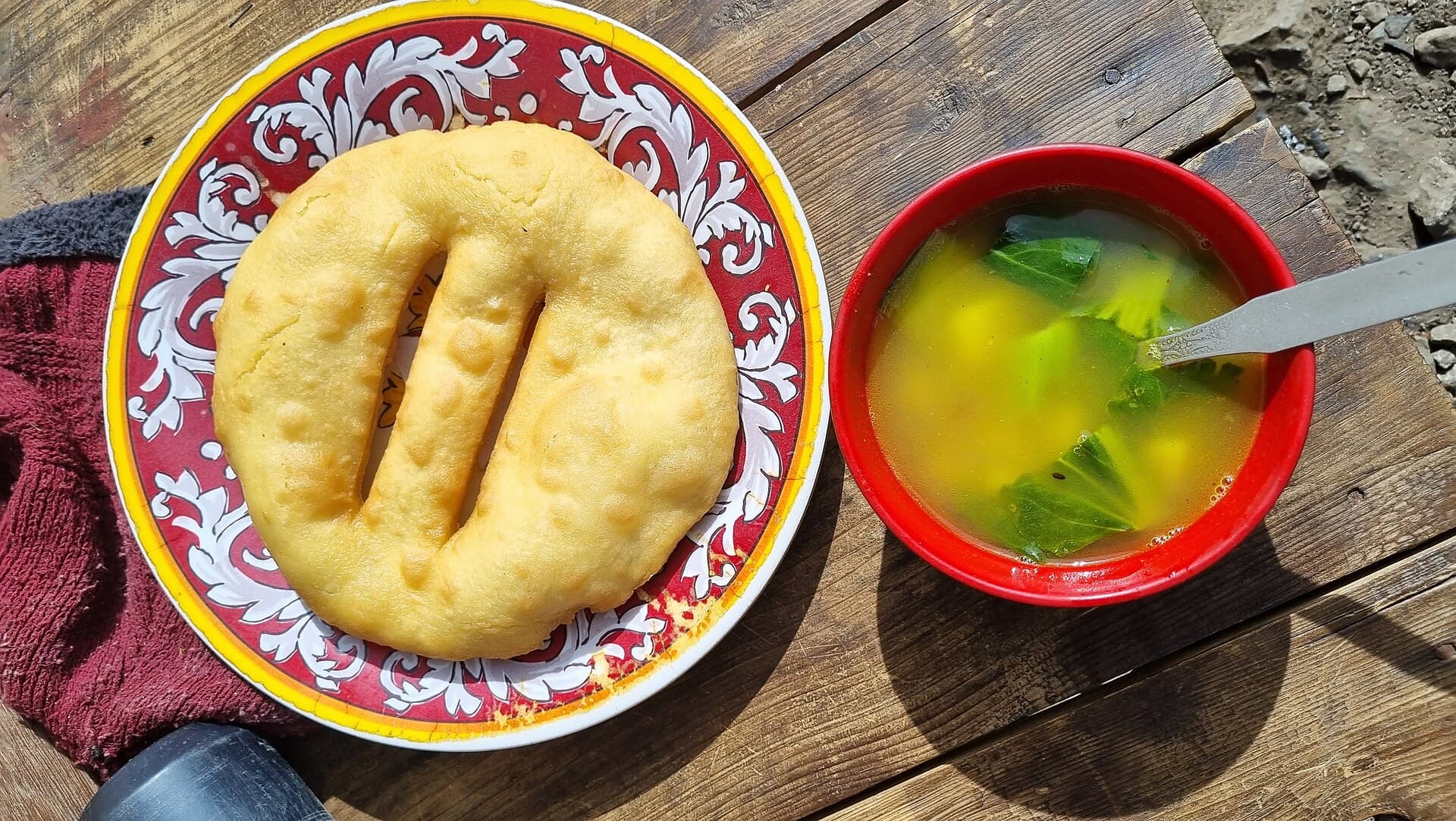
Breakfast
Porridge, Tibetan bread, eggs, chapati, pancakes, tea or coffee
All destinations
All destinationsUp the Langtang valley to the glaciers at Kyanjin Gompa, then back down and up the neighbouring ridge to the sacred lakes at Gosainkunda, finishing at Dhunche.
Update, September 2026: the August 2026 flood damaged the road through Syabrubesi, the usual start of this trek. We confirm the road and the starting point when you book.
Up the Langtang valley to the glaciers at Kyanjin Gompa, then back down and up the neighbouring ridge to the sacred lakes at Gosainkunda, finishing at Dhunche.
The trek lasts fourteen days, ten of them walking, and visits two separate high areas. You first walk up the Langtang valley, from the river gorge through yak pastures to the glacier snouts above Kyanjin Gompa at 3,870 m, with a day there to climb one of the hills. You then walk back down the valley, turn south at Thulo Syabru and climb a forested ridge to the lakes at Gosainkunda at 4,380 m.
There is another version of this trek with a similar name, so we explain the difference here. Our Langtang Gosainkunda Circuit crosses the Laurebina La at 4,610 m the morning after the lakes and walks south through Helambu to Sundarijal, an hour from Kathmandu. It is two days longer, needs a second national park permit, and places a high pass between you and the nearest road. This trek turns back at the lakes and descends to Dhunche. It visits the same lakes and mountains, and it is shorter and easier.
Shortly before noon on 25 April 2015, the earthquake dislodged a hanging block of ice from the south side of Langtang Lirung. The avalanche buried Langtang village under rock, ice and silt within minutes, and the air blast ahead of it flattened mature forest on the opposite bank. The official death toll is 306, including villagers, Nepali workers from other parts of the country and foreign trekkers. People in the valley believe the true figure was higher, because nobody knows exactly who was in the village that Saturday. The surviving Tamang families rebuilt a short distance from the debris, largely with income from trekking. Please walk quietly past the memorial and take time to read some of the names on it.
Gosainkunda is a place of pilgrimage rather than a viewpoint. According to Hindu belief, Shiva swallowed the poison churned from the ocean to save the world, then struck his trident into the mountain here to find water for his burning throat. This is why he is known as Nilkantha, the blue-throated one, and the lakes are said to be that water. At Janai Purnima, the August full moon, many thousands of pilgrims walk up from the valleys and bathe in water a few degrees above freezing, while jhankri shamans drum through the night. Bon and Buddhist traditions also honour the site, and there are said to be 108 lakes in the basin.
This trek suits travellers with two weeks available who want more than one kind of experience, and who prefer not to risk a week of their time on a mountain airstrip. It combines glaciers and a pilgrimage site, Tamang villages and alpine lakes, and the route can be shortened from almost any point because there is a road at both ends. It is not an easy trek, but it is a flexible one.
We meet you at the airport and take you to your hotel in Thamel. If you arrive early, you have time to walk to the old squares or relax in a garden. In the evening your guide meets you, checks your equipment and briefs you on the two weeks ahead.
An early start north out of the Kathmandu valley, over the ridge at Kakani and down to the Trishuli river, then up a mountain road where the tarmac turns to dirt before Dhunche. The drive is about 120 km and takes seven hours on a good day. You arrive in mid-afternoon, below the steep walls of the gorge.
Cross the Bhote Koshi and turn east into the narrow Langtang gorge. The trail climbs the north bank through oak and rhododendron forest, with langur monkeys in the trees and the river below. Lama Hotel is not a hotel but a small settlement made up of a row of lodges in the forest.
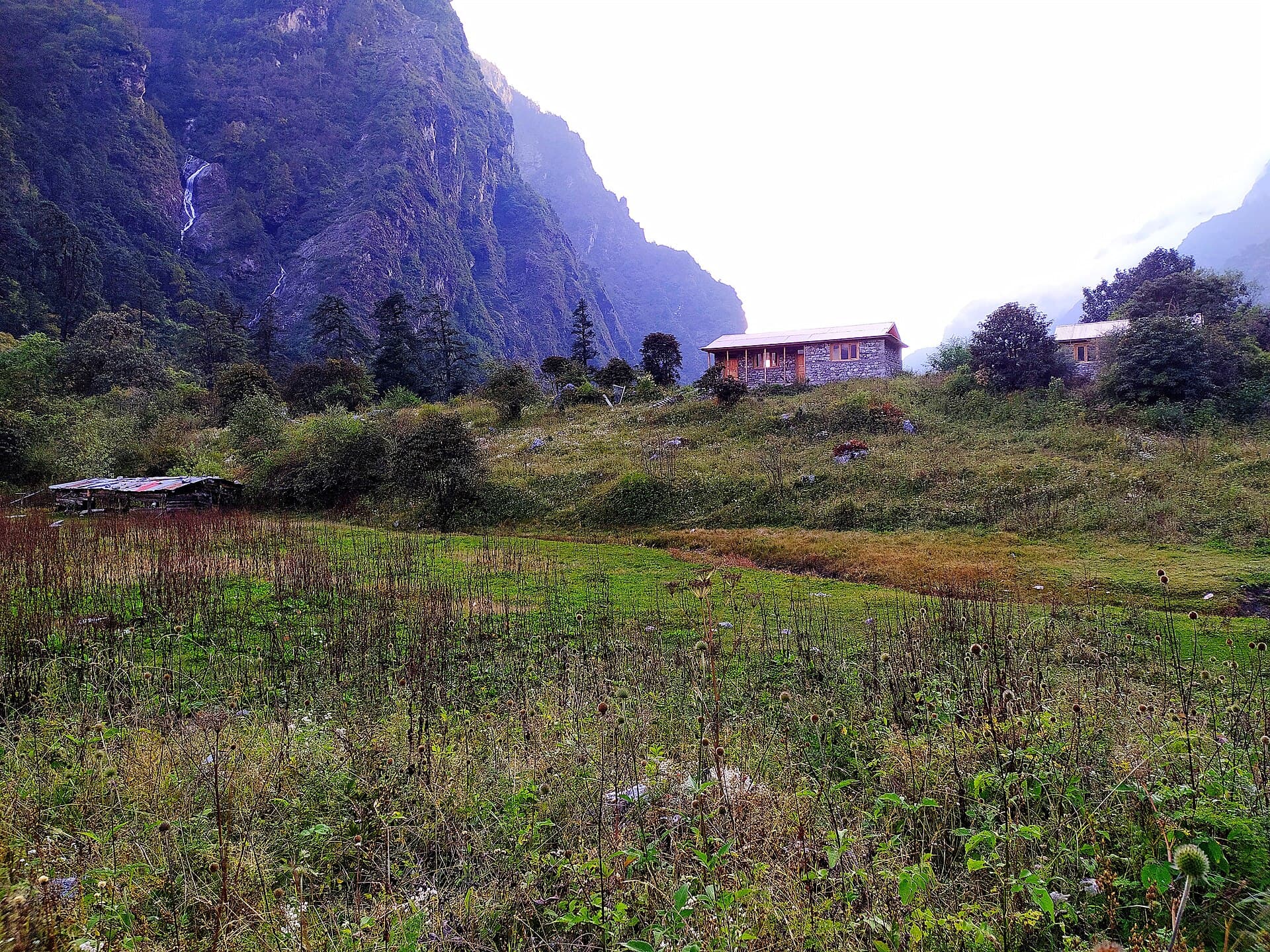
The hardest walking day of the first half, with 960 m of ascent. The forest thins at Ghoda Tabela, the valley opens out, and you cross the grey debris field below Langtang Lirung where the old village stood. The rebuilt village lies just beyond it. Walk slowly today, as this is where altitude headaches often begin.
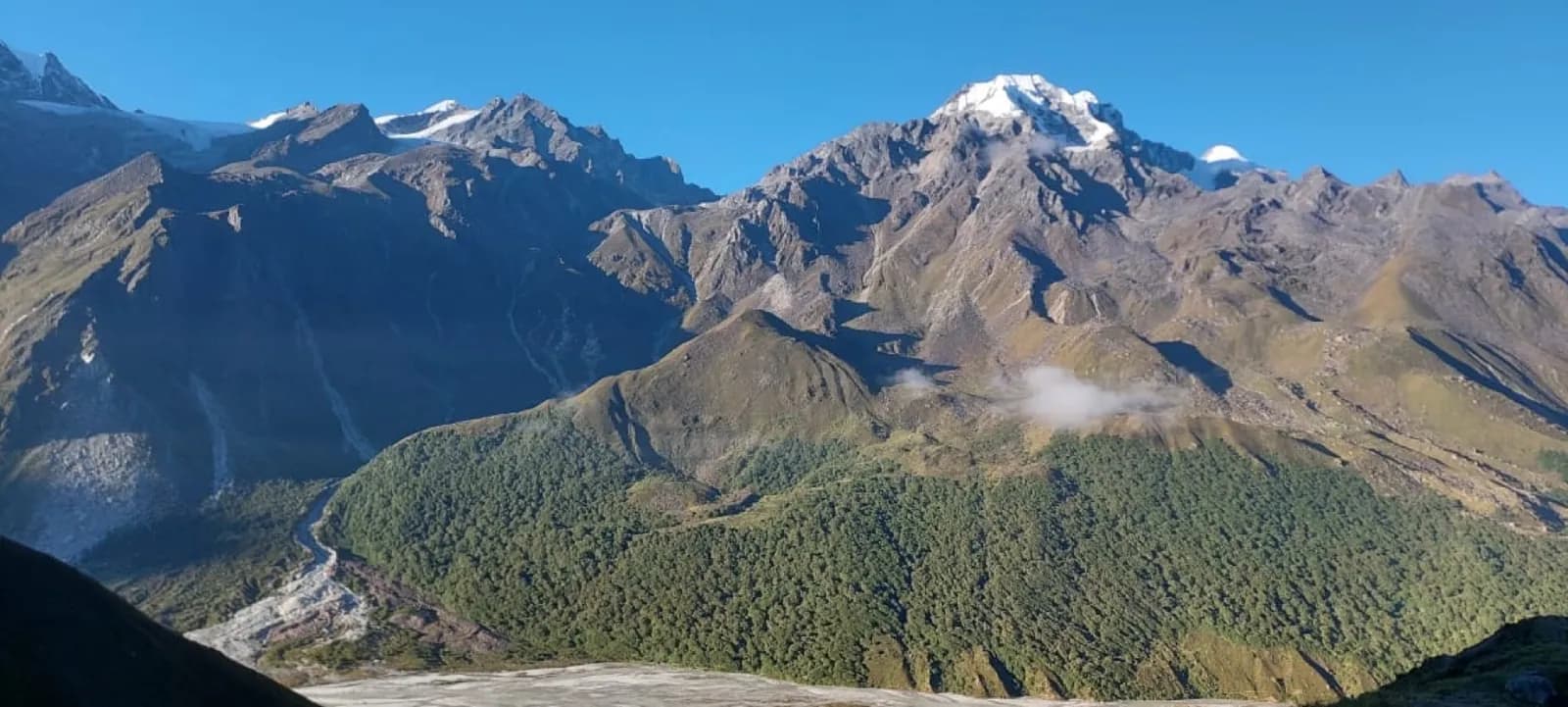
A short morning walk past mani walls, water mills and grazing yaks, with the valley now wide open and Langtang Lirung (7,227 m) dominating the view. You reach Kyanjin by lunchtime. Spend the afternoon visiting the monastery and the cheese factory, and allow your body to adjust to the extra 440 m before tomorrow.
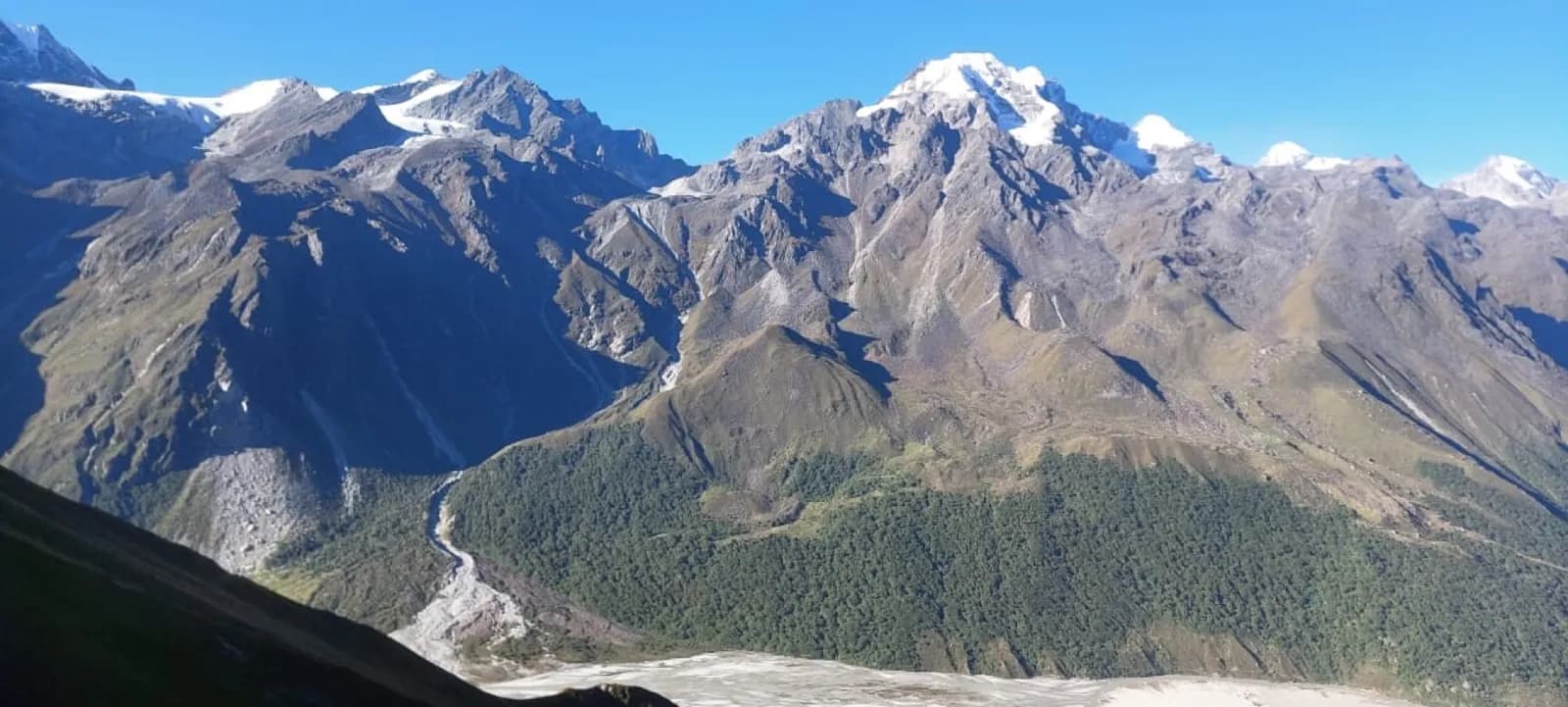
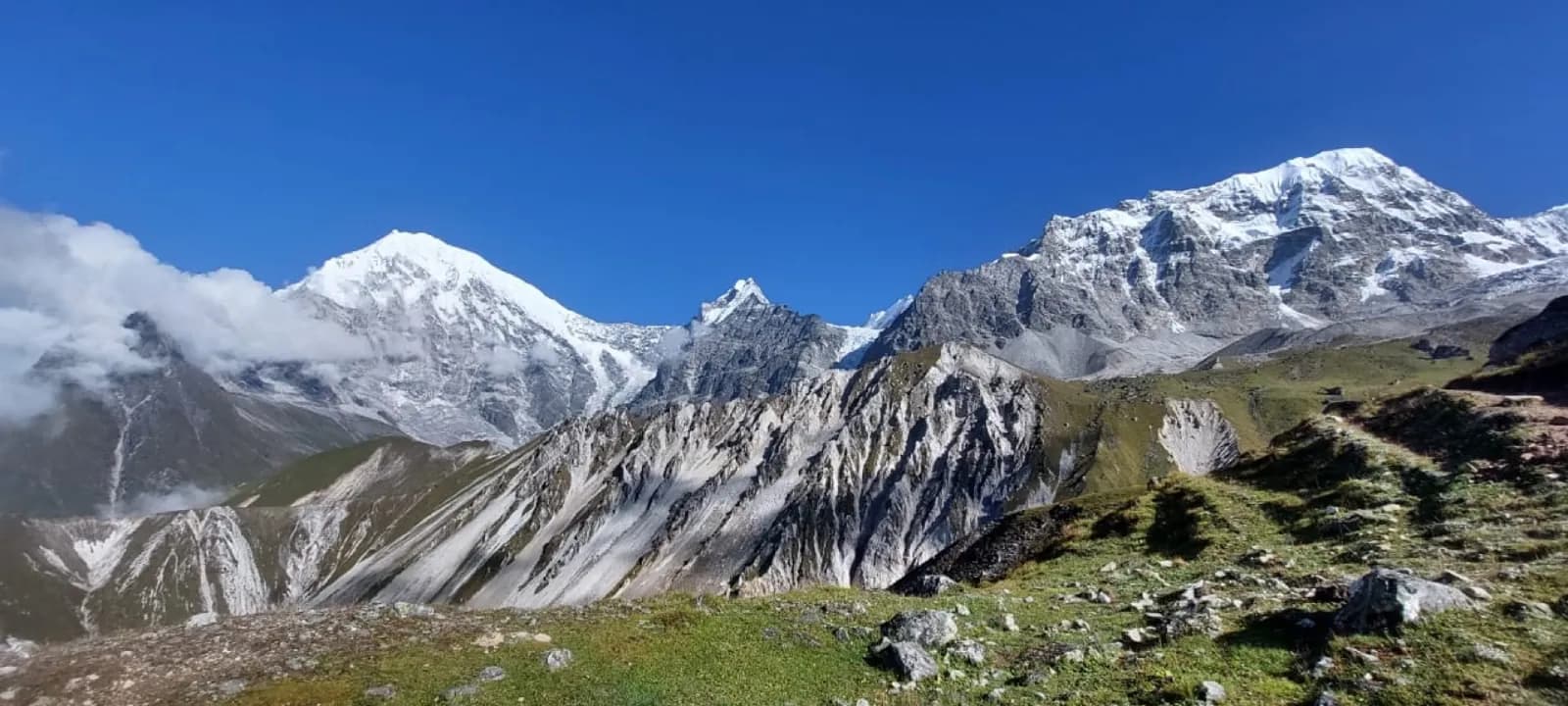
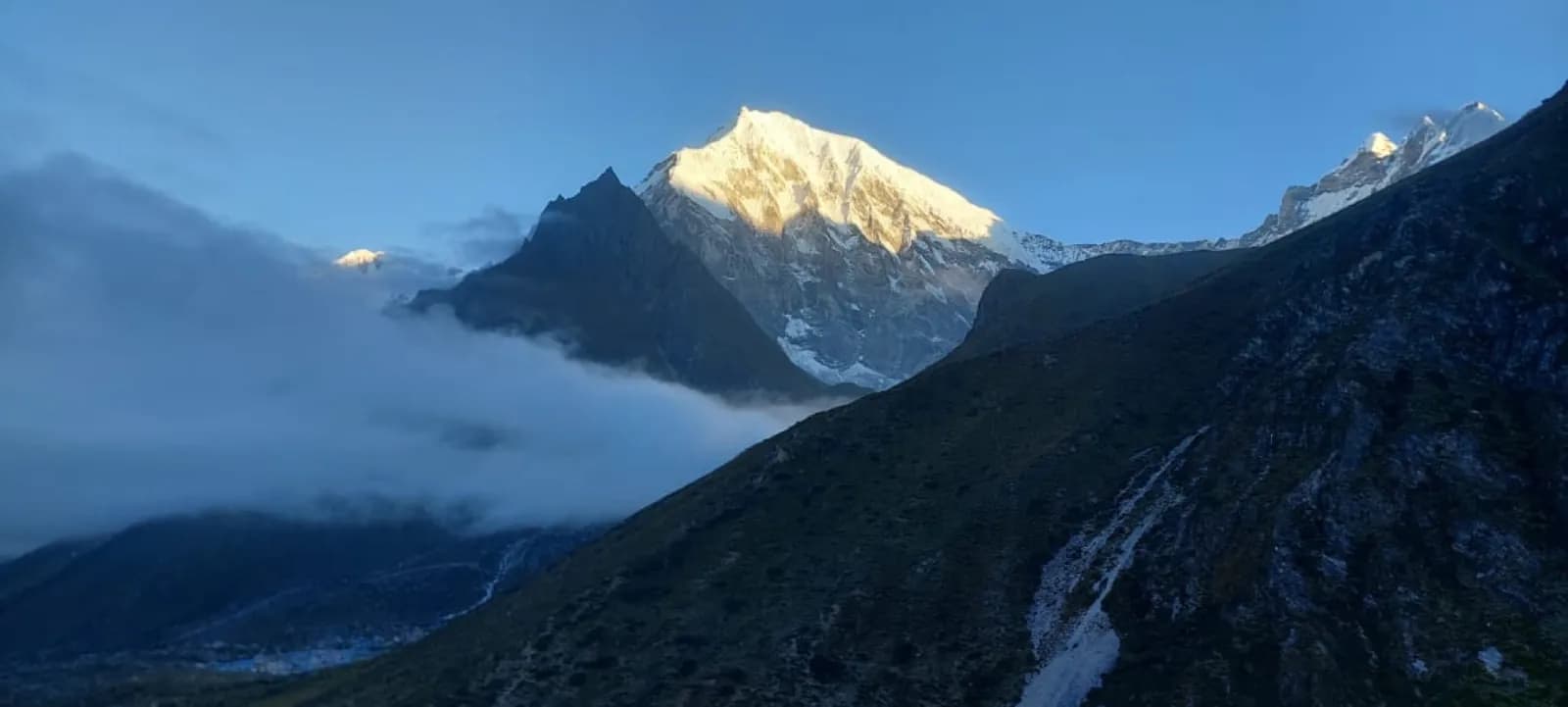
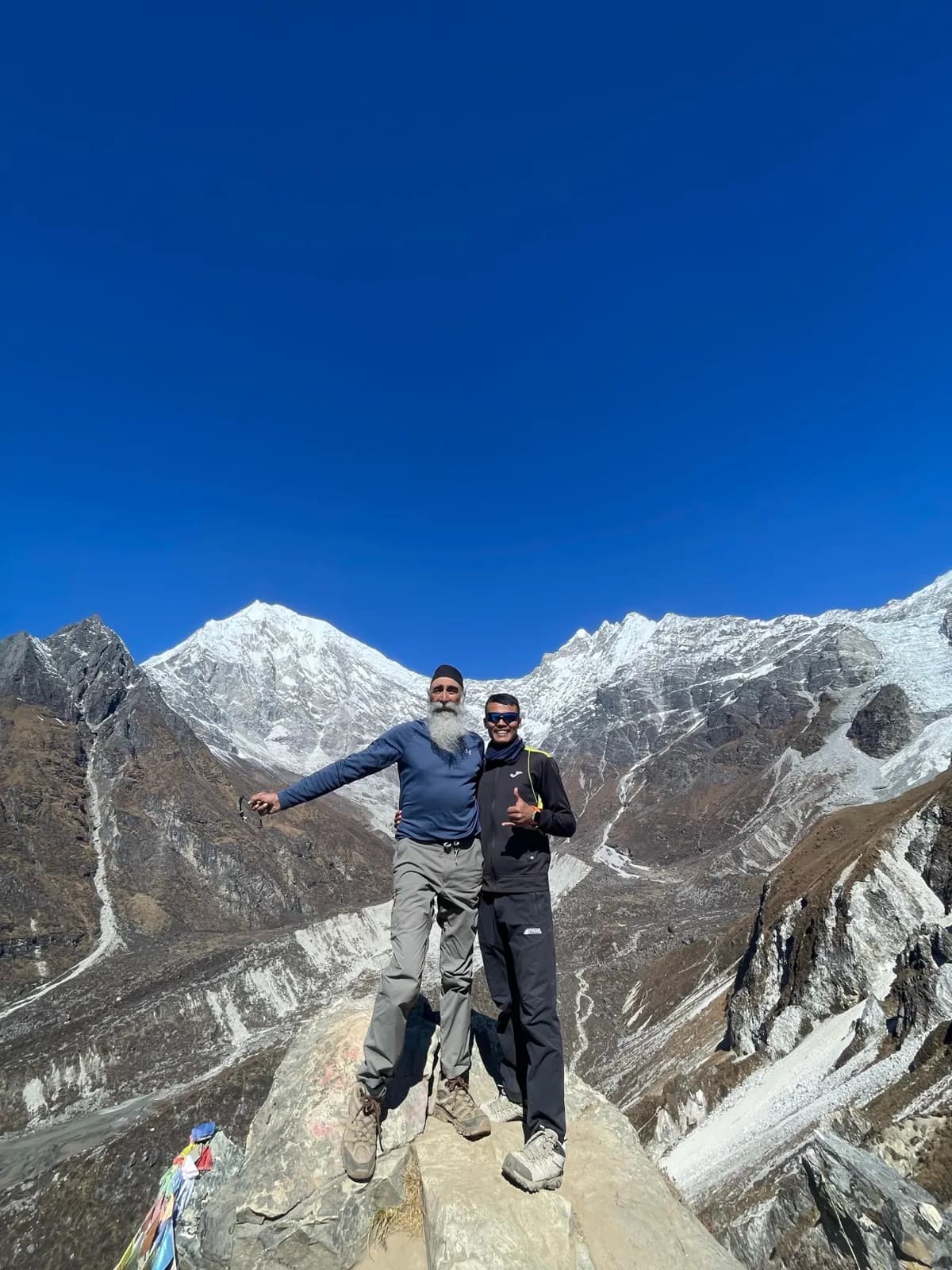
Start before dawn to climb one of the two hills above the village. Tserko Ri (4,984 m) is a six-hour round trip east up the valley and gives the wider view, taking in Langtang Lirung, Dorje Lakpa and the border peaks. Kyanjin Ri (about 4,770 m) takes half a day and the view is almost as good.
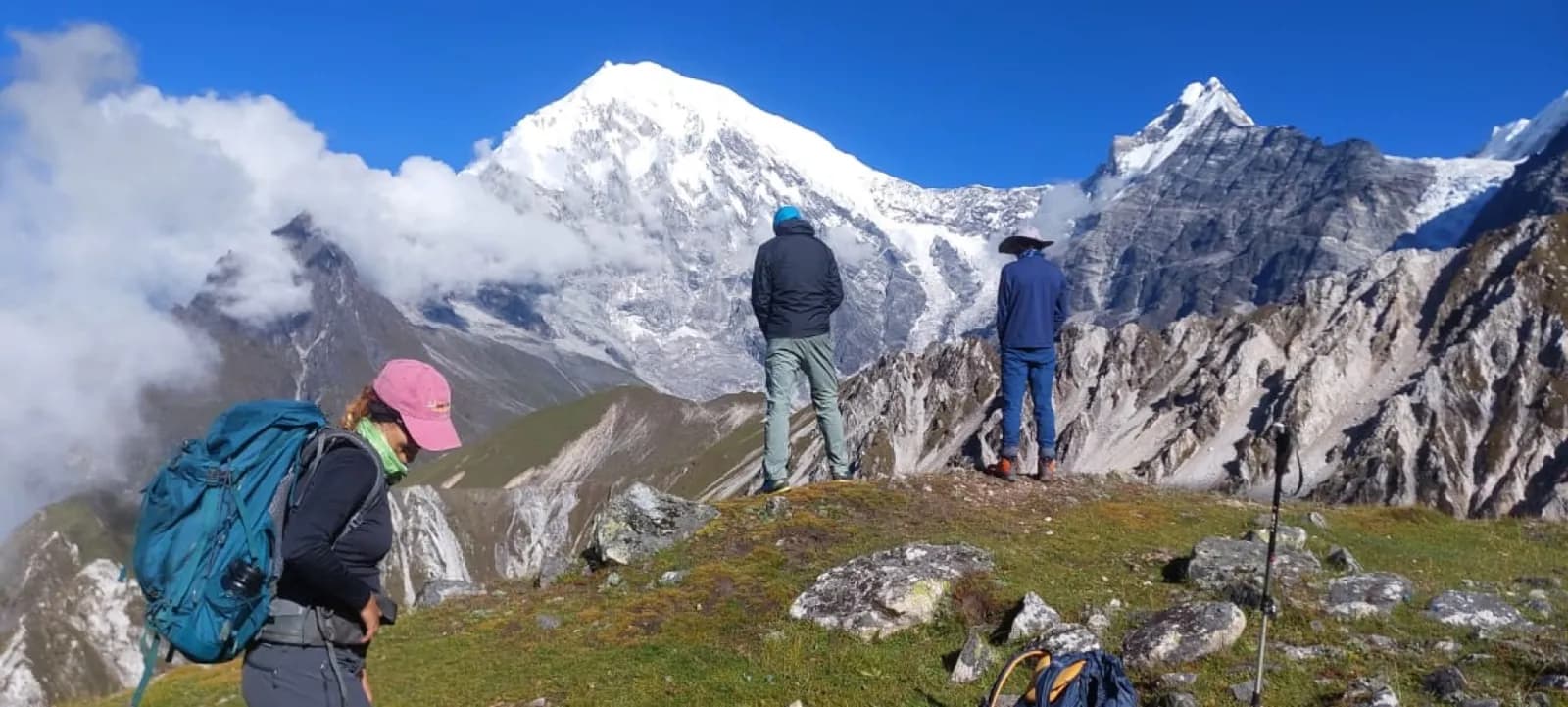
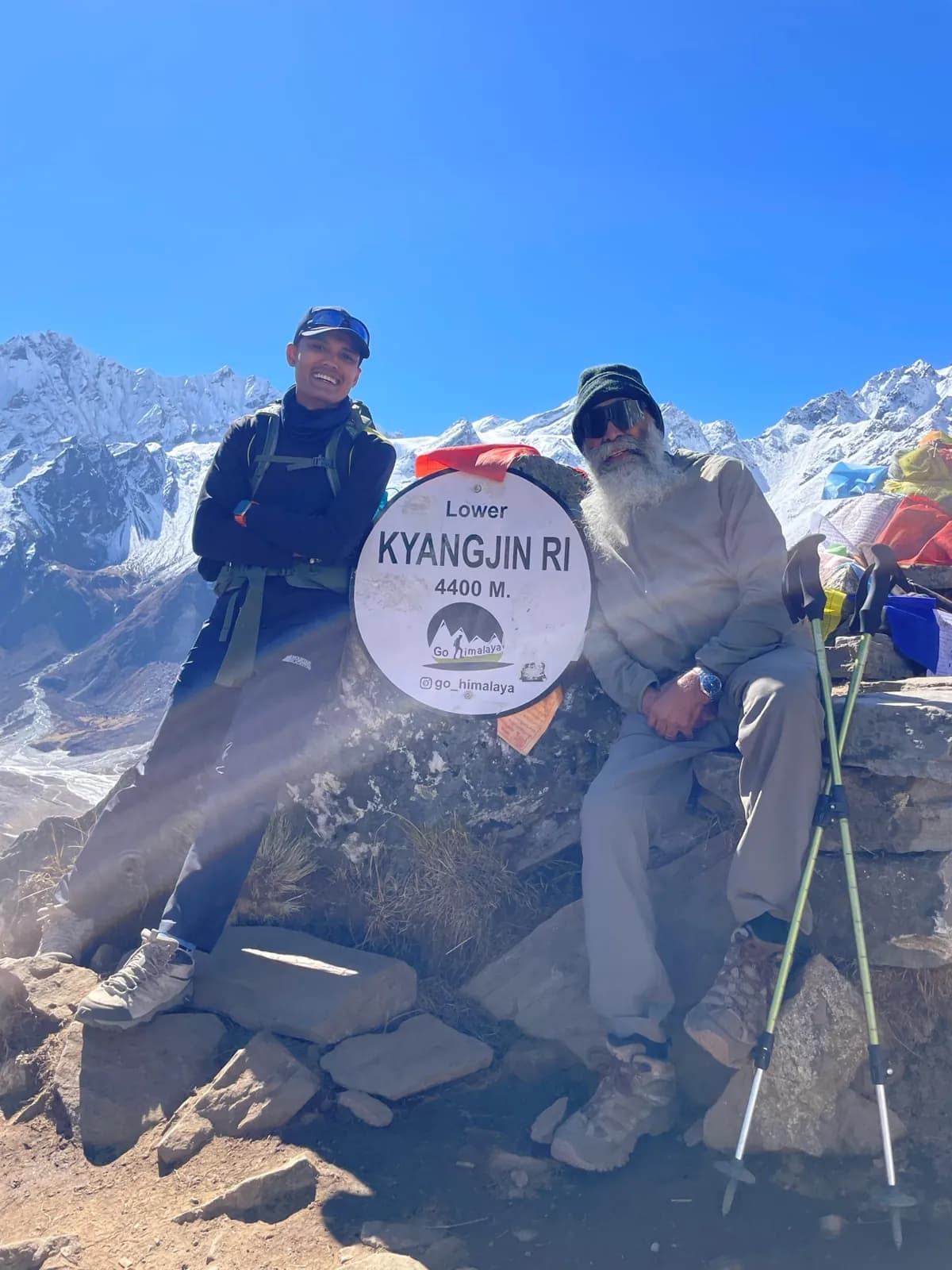
Today you descend in one day what you climbed in two. It is a long day for the legs, but easier on the lungs. You pass the memorial stones again, descend through Ghoda Tabela and reach the forest by early afternoon. The long descent is hard on the knees, so use trekking poles.
Descend the gorge to the river junction at Bamboo, then cross the river and climb a steady hillside to Thulo Syabru, a Tamang village along a spur with a gompa at the top and views of Ganesh Himal across the valley. The first half of the trek ends here. Tomorrow you begin climbing again, on the other side of the valley.
A long climb through quiet, shaded forest of old oak and fir. Red pandas live here, although you are very unlikely to see one. Sing Gompa, also called Chandanbari, sits on the ridge at 3,330 m, with a monastery, a yak cheese factory and views to the west. This is a demanding day, with 1,080 m of ascent.
Today you leave the forest behind. The path climbs the ridge past Cholangpati and the lodges at Lauribina, with views of Manaslu and Ganesh Himal behind you, and of the Annapurnas on the clearest mornings. Two smaller lakes appear below the trail, followed by Gosainkunda itself, a dark lake beneath a wall of rock.
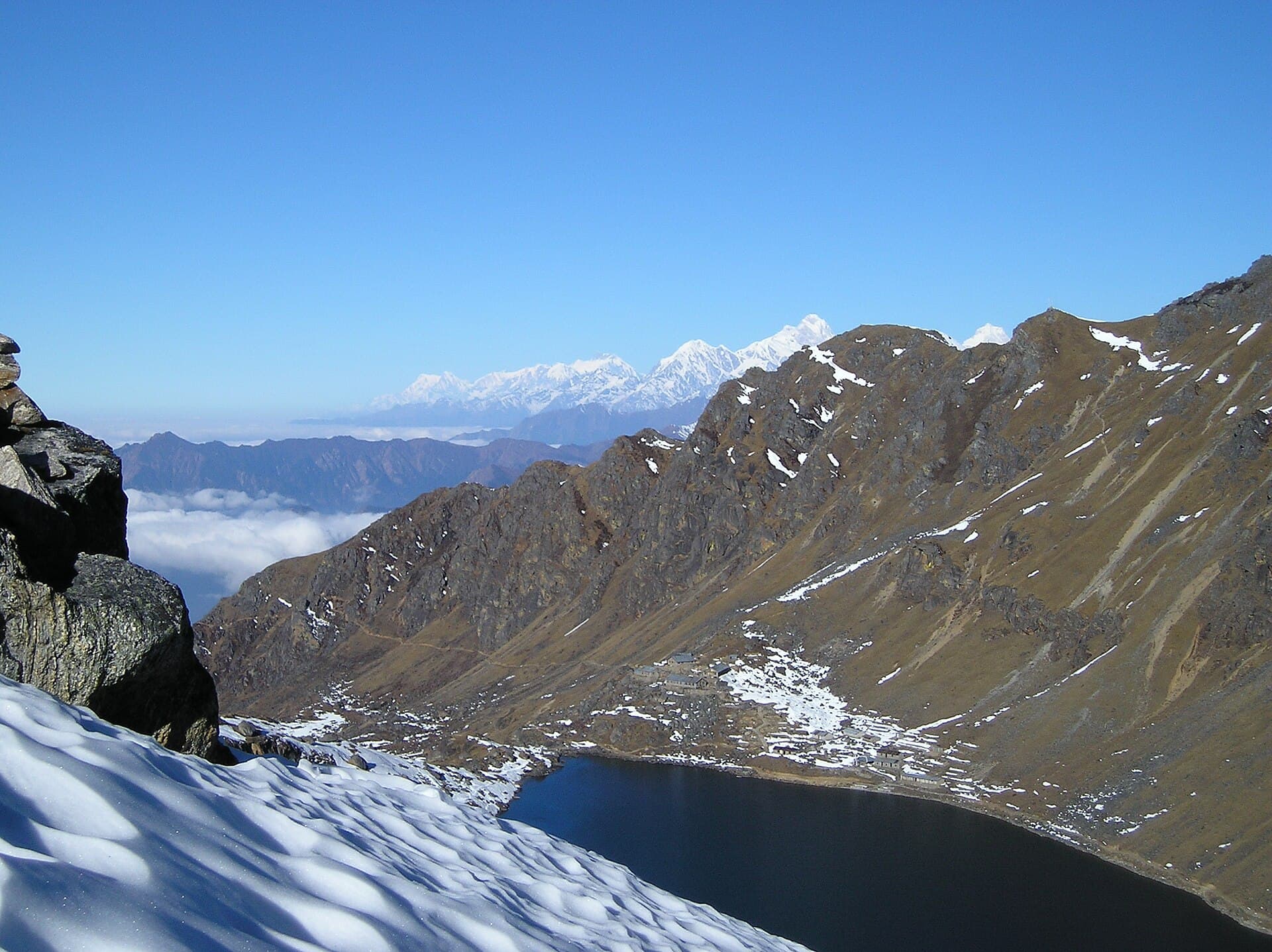
After breakfast you walk for an hour up towards the Laurebina La, which gives the best view over the whole basin and is the easternmost point of this trek. You then return past the stone shrine at the lake and descend. The walk to Sing Gompa takes four to five hours, and breathing becomes easier as you lose height.
A steep, almost continuous descent of nearly 1,400 m through rhododendron and pine forest, crossing a suspension bridge near the bottom, to Dhunche, the headquarters of Rasuwa district, built on terraces. You sign out of the national park at the same post where you signed in. In Dhunche you can enjoy a hot shower, a proper bed and a cold beer.
Drive back to Kathmandu on the same road, downhill this time, with the Trishuli river alongside for most of the way and a lunch stop at Trishuli Bazaar. You usually arrive in Thamel by late afternoon, with time for a shower before a farewell dinner together.
After breakfast we take you to the airport in good time for your flight. If you are staying longer, we can arrange a Chitwan trip, a guided day tour of the Kathmandu valley or a flight to Pokhara at short notice, and your guide can recommend places to eat.
We run ten group departures a year. A private trek on your own dates costs the same for groups of five or more.
Start date
24 Oct 2026
End date
6 Nov 2026
Available
10 left
US $1,390
Per person
Start date
24 Apr 2027
End date
7 May 2027
Available
10 left
US $1,390
Per person
Start date
16 Oct 2027
End date
29 Oct 2027
Available
10 left
US $1,390
Per person
The trail from start to finish, at a glance.
Luggage weight limit
There are no flights on this trek, so the only weight limit is your porter's: a strict 20 kg shared between two trekkers. This is more generous than on the Lukla treks, so you can bring a warmer jacket. We lend you a duffel, a sleeping bag and a down jacket, and anything you do not take on the trek is stored free of charge at our Kathmandu office while you are away.
There is no airstrip and no scheduled helicopter service. The only access is one mountain highway, which river floods have repeatedly damaged since 2025.
No part of this itinerary can be cancelled because of cloud. The Everest treks depend on a nineteen-seat aircraft landing on a sloping airstrip at Lukla, whereas this trek starts with a jeep journey. If you have fourteen days and cannot risk losing three of them waiting for the weather, this is the main reason to choose this region.
Kathmandu to Syabrubesi is about 120 km and takes seven hours. The first seventy or so kilometres to Trishuli Bazaar are sealed and quick. After that the road climbs into the hills, alternating between tarmac and dirt, and there is a rough, slippery section a few kilometres before Dhunche that four-wheel-drive vehicles manage and two-wheel-drive vehicles find difficult. It is a scenic drive, but a long one.
In July 2025 a glacial lake burst in Tibet and sent a flood down the Bhote Koshi through Rasuwagadhi, destroying the Nepal-China bridge and around a kilometre of road north of Syabrubesi. In August 2026 another flood damaged Syabrubesi and the hydropower works below it. Repairs, single-lane detours and occasional changes of vehicle are now a normal part of this route. We check the road before every departure and will tell you if we are starting at Dhunche instead.
From Kyanjin you are two days' walk from the road at Syabrubesi. From Gosainkunda you are a day and a half from Dhunche. Helicopters can land at Kyanjin Gompa, Langtang village and in the Gosainkunda basin, and reach Kathmandu in well under an hour, making this one of the quickest regions in Nepal for an evacuation.
Every night on the trail is spent in a teahouse: a family-run lodge with one warm dining room heated by a single stove, and simple twin rooms with foam mattresses and thin walls. Bring a sleeping bag. Syabrubesi and Dhunche, at either end, have private bathrooms with hot water. In between, bathrooms are mostly shared, and hot showers and charging are paid for separately.
Lama Hotel is a group of lodges in the forest. The lodges in Langtang village were rebuilt after the 2015 earthquake. Kyanjin Gompa, where you spend two nights, has the best lodges in the valley. On the second half, the lodge at Sing Gompa is by the cheese factory, and Gosainkunda is a stone lodge at the lake: the most basic night, cold, sometimes a dormitory, with no shower.
| Where | Nights | Type | Room | Bathroom |
|---|---|---|---|---|
| Kathmandu | 2 | Three-star hotel | Twin or double | Private, hot water |
| Syabrubesi | 1 | Teahouse | Twin | Private, hot water |
| Lama Hotel | 2 | Teahouse in the forest | Twin | Shared |
| Langtang village | 1 | Teahouse, rebuilt since 2016 | Twin | Shared, hot shower for a fee |
| Kyanjin Gompa | 2 | Teahouse, the best on the route | Twin | Shared, hot shower for a fee |
| Thulo Syabru | 1 | Teahouse on the ridge | Twin | Shared |
| Sing Gompa | 2 | Teahouse by the cheese factory | Twin | Shared, hot shower for a fee |
| Gosainkunda | 1 | Stone lodge at the lake, the most basic on the route | Twin, sometimes a dormitory | Shared, no shower |
| Dhunche | 1 | Teahouse | Twin | Private, hot water |
Porridge, Tibetan bread, eggs, chapati, pancakes, tea or coffee
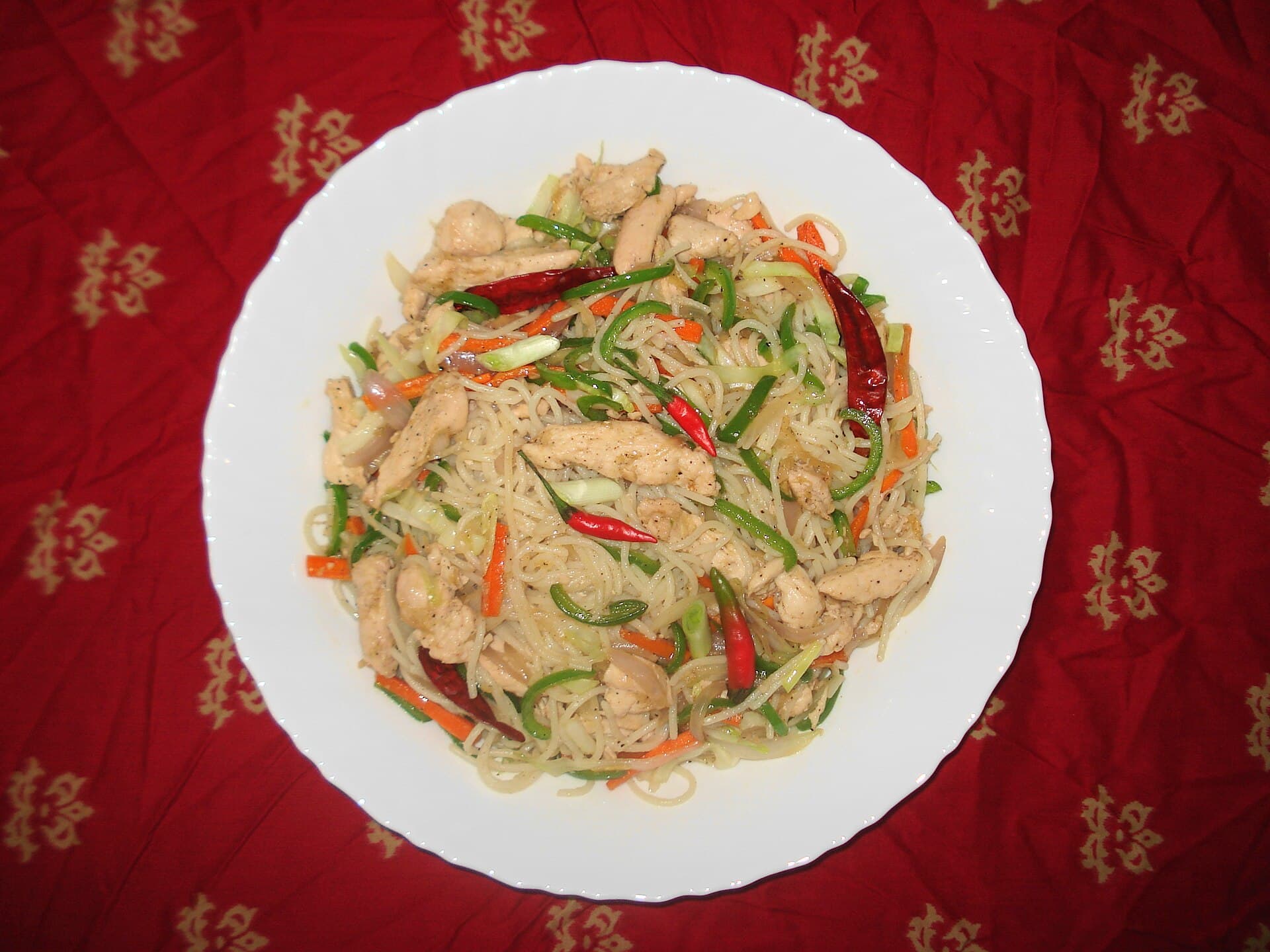
Dal bhat, fried rice, thukpa, momo, potatoes with local cheese

Dal bhat, pasta, noodle soup, curry and rice, soup to start
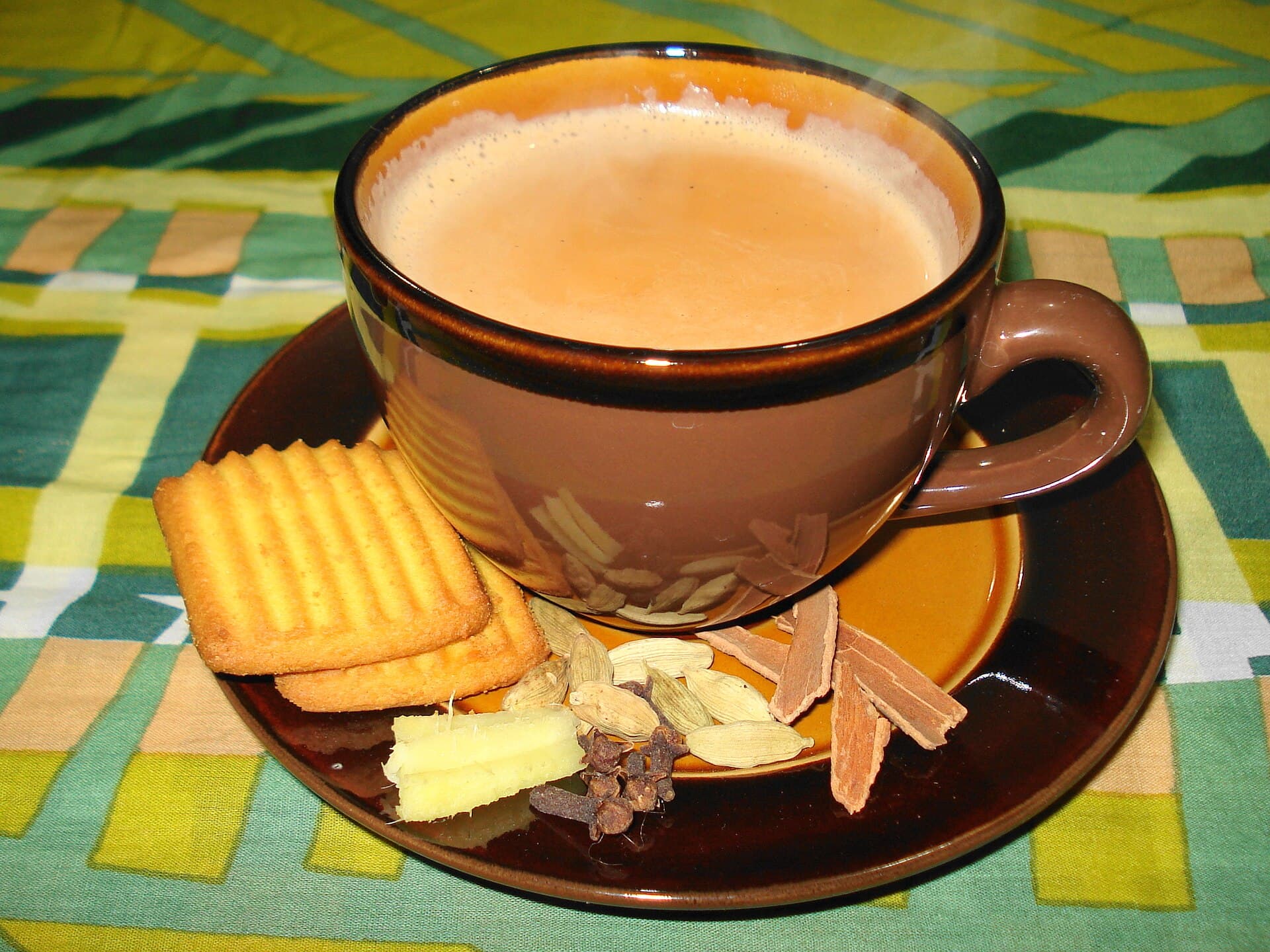
Black, milk, lemon, ginger or masala. Included at every stop.
6:00Tea brought to your room and a bowl of warm water to wash in
6:30Pack and leave your duffel outside the door for the porter
7:00Breakfast together in the dining room
8:00On the trail, at a slower pace than you might choose yourself
12:00Lunch at a lodge on the route, about an hour
13:00Two to four more hours of walking, depending on the day
15:30Arrive, have tea, choose a bed, wash and rest if needed
17:00Oxygen saturation and pulse measured and recorded, above 3,300 m
18:30Dinner, and the guide briefs you on the next day
20:30Bed. Most trekkers are asleep by nine o'clock at 4,000 m
Moderate, at the upper end of the grade: ten walking days and two separate climbs.
Written for somebody who walks a bit and does not train. If you already run or cycle regularly, start partway through. Nothing here needs a gym.
12 weeks before, stage 1 of 6
Do three cardio sessions a week of 45 minutes, at a pace where you could still hold a conversation. Walking, cycling, rowing or swimming are all suitable. If you do only one thing on this list, do this.
This section explains how the itinerary helps you acclimatise, including the part that looks unusual on paper.
You sleep at 3,870 m at Kyanjin Gompa and at 4,380 m at Gosainkunda, and those two nights are five days and a 2,130 m descent apart. This gap is the key feature of the itinerary. The Langtang section acclimatises you in the usual way, over four nights, with a climb to nearly 5,000 m on day 6. You then spend two nights lower down, at 2,470 m and 2,250 m, which is long enough to lose some of that acclimatisation but not all of it. You then climb 2,130 m in two days to the lakes. On a standalone trek, that second climb would be too fast. It works here because you are already partly acclimatised and you sleep only one night above 4,000 m. It is still the part of the trek where people are most likely to have problems, and the night at Gosainkunda needs the closest attention.
Daily health checks
Your guide carries a pulse oximeter and records your oxygen saturation and pulse every evening from Langtang village onward, and again from Sing Gompa. The readings are written down, so any decline over three days is clear from the record.
Mild symptoms
If symptoms are mild, you spend a second night at the same place or take an easy day. At Kyanjin this means missing a hill climb and nothing more. At Sing Gompa it adds a day to the itinerary, and we would much rather spend that day there than at 4,380 m.
Serious symptoms
Descent is the only treatment that reliably works. From Gosainkunda, Sing Gompa is 1,050 m lower and four hours away on a good trail. From Kyanjin, Langtang village is 440 m lower and Lama Hotel 1,400 m lower.
Helicopter evacuation
Helicopters can land at Kyanjin Gompa, Langtang village and in the Gosainkunda basin, and reach Kathmandu in under an hour. This is what your insurance is for: an evacuation costs $2,500 to $4,000, and no helicopter will fly without a guarantee of payment.
Medical facilities
Unlike the Everest region, this region has no Himalayan Rescue Association post. There is a health post at Kyanjin that is not always staffed, and a district hospital at Dhunche at the end of the trek. In between, you rely on your guide's training and the daily readings.
Fitness and altitude are unrelated
This is the thing people get wrong most often. Training makes the walking easier and does nothing for how your body handles thin air. Strong young trekkers get altitude sickness and unfit older ones frequently do not. Go up slowly, and say something the first time your head hurts.
The Langtang section has a longer season than the Gosainkunda section. The table below rates each month by whichever section is the limiting factor.
The best of the spring season. The forest below Lama Hotel is in flower, the ground on the Gosainkunda ridge is firm, and mornings are long and clear in both sections.
Long-run averages built from Nepal DHM records for Dhunche and the Langtang valley and adjusted for height. Any given week can sit ten degrees either side, and the lake basin is colder at night than its altitude alone suggests.
A government-licensed guide with wilderness first aid training leads every departure, and there is one porter for every two trekkers. A second guide joins groups of eleven or more, so that nobody is left alone at the back of a long line. Most of our Langtang guides are Tamang people from Rasuwa, so the villages you walk through are their home villages.
Each porter carries a maximum of twenty kilos, which is your duffel and one other trekker's. This is below the 25 kg limit set by the trekking association, and well below the loads carried by some other porters on this trail. If a bag is overweight, the load is split rather than stacked. Your water, camera, jacket and the day's food stay in your own daypack.
Wages, insurance, food and accommodation for every guide and porter are included in the price on this page, not collected separately during the trek. All staff are insured for altitude and helicopter evacuation on the same terms we ask of you. Including these costs in the package price is the most reliable way to make sure staff are treated fairly.
Tipping is customary but not compulsory, and it never replaces wages. For two weeks on this trek, $130 to $220 per trekker covers the whole team. Please give it together on the last evening at Dhunche rather than daily. Your guide will not raise the subject and would prefer that you do not tip in front of the group.
A trekker who drinks bottled water uses around forty plastic bottles in two weeks. Every one has to be carried up the road, and most are never carried back down. Boiled water costs one or two dollars a litre in every lodge on this route. If you also bring a filter or purification tablets, you will not need to buy any bottles, which is what we encourage.
Langtang rebuilt itself after 2015 largely with trekking income, and with much less government support than the scale of the disaster required. We stay in locally owned lodges rather than the few owned by outside investors, buy food where we sleep, and hire staff from Rasuwa. This is not charity, but the fair place for the money to go, and you can see the difference it has made as you walk up the valley.
Gosainkunda is sacred to Hindus, Buddhists and Bon practitioners, and people walk for days to bathe there. Do not swim, do not wash yourself or anything else in the water, do not fly a drone over the lake, and walk clockwise around the shrines. If you visit near Janai Purnima, remember that you are a guest at a religious festival.
The forest between Thulo Syabru and Sing Gompa is old forest and red panda habitat, and firewood collection is the main pressure on it. Our crew cooks on kerosene and gas, never on wood. We ask you to take your hot shower at Kyanjin rather than at the lakes, where the water is heated over a fire. Everything we carry in, including batteries, is carried back to Kathmandu.
Email us or send a WhatsApp message with your preferred month. You will receive a reply from someone who has walked this route, not an automated quote. There is no charge at this stage, and nothing is payable until you pay a deposit.
A deposit of thirty per cent secures your dates, and the balance is due when you arrive in Kathmandu, in cash or by card. At the same time we ask for a copy of your passport, your insurance certificate and any dietary or medical information, because the permits are issued using these details.
You can pay by bank transfer or by card through a secure link. Card payments carry a bank charge of about 4 per cent, which we show you before you pay. The balance in Kathmandu can be paid in US dollars, pounds, euros or Nepali rupees.
If you cancel more than 30 days before departure, your deposit can be transferred to any other date or any other trek we run, with no expiry date. Within 30 days of departure the deposit is retained, because the permits, vehicles and crew are committed by then. If we cancel for any reason other than weather or road conditions, you receive a full refund.
For five or more people, private and group departures cost the same. A private departure runs on your dates at your pace, and will run for one person. A group departure runs on the dates in the table, with a maximum of ten people. Most people who book this trek choose a private departure, as it costs no more.
One week's notice is enough, and we have arranged this trek with three days' notice, because there is no flight to book. If you are already in Kathmandu and your Lukla flight has been cancelled, visit our office and we can discuss starting two days later.
Priced per person, arranged before you travel, and none of them included in the price above.
A third night at Kyanjin so you can climb Kyanjin Ri and Tserko Ri on separate mornings instead of choosing between them. This is good value for money.
Break the 1,080 m day at Dursagang or Foprang Danda and arrive at Sing Gompa rested. Recommended if the Langtang section has left you tired or if you want a more gradual approach to the lakes.
A low-altitude loop west of Syabrubesi through Tamang villages, with a hot spring at Tatopani and a view over the border into Tibet. It focuses on culture rather than altitude, and is a good warm-up for the trek.
Turn this trek into the circuit by crossing the Laurebina La at 4,610 m and walking out through Helambu to Sundarijal. We only do this if the pass is clear and you are walking well.
Seven hours on this road is much more comfortable in a jeep with six people than in a bus with forty, and you can leave when you are ready rather than waiting for the bus to fill.
For the Kathmandu nights and at any lodge on the trail that has single rooms. Above Sing Gompa most lodges do not, and at Gosainkunda you may have to sleep in a dormitory in the busy season.
4 versions of this journey. They use the same guides and the same lodges; what changes is the length, the comfort and how much of it you walk.
May 2023, Tripadvisor
It was a fantastic experience to trek with Earthbound Expeditions. All the arraignments planned and provided by them were excellent. Right from the stay in Kathmandu, Tea Houses during the trek and most importantly the team guiding us through the trek. I would recommend Earthbound Expeditions to each and everyone. Thank you Rajan ji for everything.
May 2023, Tripadvisor
We did the Langtang Valley and Gosaikund trek with Earthbound Expeditions with Arjun as our trek lead. Few highlights from the trek experience: 1. Rajan ji explained the itinerary to us in detail with transparency at the Eco Thamel resort which btw is a cozy and lovely place to stay in Kathmandu. 2. Arjun our trek lead is a great communicator and leader. He bound the team as one from day 1 and we all got along well. 3. Whenever any problems arose due to weather or health conditions, Arjun rose to the occasion and handled it deftly. 4. Arjun included us in all collective decision-making when we had to change our plans on days 3 and 4 of the trek 5. The entire staff Pandit dai, Badri Dai, Bharat Dai, Anil, and Subhash were respectful, friendly, and professional. We all gelled well by the end of the trek. 6. We did not have to worry about safety and other arrangements on the trails as the team was very adept. Overall we had an enjoyable, fun, and homely experience with the Earthbound team. Not once did we feel that we were in another country. That's how much at home they made us feel. Highly recommend booking trekking adventures with the Earthbound team.
October 2019, Tripadvisor
We recently visited Nepal for the Langtang Gosaikunda trek in October 2019. The Langtang trek rewards one with great landscape and stunning mountain vistas just after a 3 day hike from the trail head at Syabrubesi. Dense green forests, beautiful valleys, gushing river and waterfalls make it an enjoyable trek. The Langtang valley has lovely trails passing through dense rhododendron and pine forests. The mountain landscape and valley view at Kyanjin Gompa are amazingly beautiful. The Gosaikunda region has scenic high altitude lakes that are a treat for the eyes after a steep hike. A wonderful experience overall. Many Many Thanks once again to Rajan at Earthbound Expeditions for everything. As always, excellent support and involvement. Prompt, patient and great service right through. This was our fourth trek with Earthbound Expedtions and that explains it all. Thanks to our guide Narayan who joined us for a third time. Loads of patience, support and caring attitude was of great help to us throughout the trek. Really appreciate the spirit and resilience of the local people who are rebuilding their lives after the devastating earthquake of 2015. Nepal is a must visit destination for anyone looking at a vacation or trek. Beautiful landscapes, lovely peaceful villages and nature at its best. Very warm and friendly people with amazing hospitality. We highly recommend Rajan and Earthbound Expeditions for anyone planning a vacation / trek in Nepal. Best Wishes October 2019
March 2019, Tripadvisor
I had decided to travel to Nepal in March as I always wanted to do a trek to the Himalayas. However I wasnt sure about which trek to go on and which company to go with. I was lucky to find Earthbound expedition through a friend's recommendation and go in touch with Mr Rajan who was very kind to help me find the right the trek. I booked the Langtang Gosaikunda trek which was for 12 days. The entire trip was so well organised from the time I was picked at the airport and drop off at my accommodation at Eco Thame. My guide Gokul was very professional and knowledgeable about the entire region. He was always encouraging and patient with me. But for his sharp eyes, I wouldnt have seen many of the wild life in Langtang national park. In all I had an excellent trip and so happy to have booked my tour with Earthbound. Thank you for your excellent Nepali hospitality.
Answers to the 23 questions travellers ask us most often. If your question is not here, contact us and we will answer it.
The first half is the same, and this trek adds a second section. The valley trek turns back at Kyanjin and walks out. This trek walks out as far as Thulo Syabru, then turns south and climbs a different ridge to Gosainkunda at 4,380 m. This adds two days, a second high camp and the part of the region that is most important to Nepalis rather than to trekkers.
The circuit crosses the Laurebina La at 4,610 m the morning after Gosainkunda and walks south through Helambu to Sundarijal, near Kathmandu. This trek does not cross the pass. You climb towards it for the view, return to the lake and descend to Dhunche by the route you came up. It is two days shorter, needs one fewer permit, and has no snow-covered pass between you and a road.
Choose the circuit if you have sixteen days, want to finish on foot an hour from your hotel, and are comfortable committing to a pass at 4,610 m. Choose this trek if you have two weeks, are trekking in early spring or late autumn when the pass holds snow, or want a route you can turn back from at any point.
You should be fit enough to walk five to seven hours a day on rough ground for ten consecutive days, carrying a daypack. Three days are particularly demanding: 960 m of ascent to Langtang village, 1,080 m of ascent to Sing Gompa, and nearly 1,400 m of descent to Dhunche. Nothing on the route is technical and no ropes are needed.
Yes, with one caution. The walking is well within the ability of a regular hillwalker. The altitude is significant: you sleep at 4,380 m, and most people climb to nearly 5,000 m on day 6. If this is your first time above 3,500 m, please read the altitude section carefully.
We accept children from the age of twelve travelling with a parent, and the Langtang section suits families well. The Gosainkunda section is harder for young walkers, with two long climbing days, thinner air and colder nights. Tell us their ages and walking experience and we will give you our honest advice.
There is no trail between the head of the Langtang valley and the Gosainkunda ridge. They are separate valleys that meet at a lower altitude at Thulo Syabru. Everyone who does both walks down to that junction and then climbs again. The descent may seem like a lost day, but the second climb takes you through a completely different landscape.
Yes. Dhunche to Sing Gompa and the lakes and back is a good short trek of five or six days, and we offer it. You would miss the glaciers, the yak pastures and Tserko Ri, as well as the acclimatisation those days provide before the lakes.
Tserko Ri (4,984 m) has the better view and takes about six hours there and back, with 1,100 m of ascent. Kyanjin Ri (about 4,770 m) takes two to three hours and offers much of the same view. Your guide will decide on the morning, based on how you slept and the weather, rather than on what you booked.
There are a few stone lodges, a shrine at the water's edge, a rock in the lake that pilgrims associate with Shiva, and a chain of smaller lakes above and below. In August it is the busiest high-altitude site in Nepal. For the rest of the year it is a cold, quiet basin with very few visitors.
Yes. The risk of altitude sickness increases significantly above 3,500 m, and Gosainkunda is nearly 900 m higher than that. On this route you reach the lakes already partly acclimatised from the Langtang section, and you sleep only one night at that altitude.
We set out the acclimatisation plan in full on this page. The second half climbs 2,130 m in two days, which would be unsafe on a standalone trek and is acceptable here only because of the five days you spend in the Langtang valley first. If you feel unwell at Sing Gompa, tell your guide before you start up the ridge.
You descend. Sing Gompa is 1,050 m below Gosainkunda and about four hours' walk away, and the trail is good enough to descend in the dark if necessary. Helicopters can land at Gosainkunda and at Kyanjin and reach Kathmandu within an hour, which is why we ask to see your insurance.
No. There is no Himalayan Rescue Association post in this region. There is a small health post at Kyanjin that is not always staffed, and a district hospital at Dhunche at the end of the trek. Medical cover on the trail comes from your guide's first aid training, a pulse oximeter and a willingness to turn back.
The drive takes seven hours for about 120 km, and the last third is on a dirt road with dust and hairpin bends cut into a steep hillside. It is scenic but tiring, and travelling by jeep with six people is very different from travelling by bus with forty. Many trekkers find the drive harder than the walking.
Yes. In July 2025 a glacial lake burst in Tibet, and the Bhote Koshi river washed away the border bridge and a kilometre of road north of Syabrubesi. A second flood in August 2026 hit Syabrubesi itself. Repairs and detours are common on this route. We check the road status before every departure and will tell you if we are starting from Dhunche instead.
There is no airstrip in this region. A helicopter charter from Kathmandu to Kyanjin Gompa takes about forty minutes and is available on request. However, it lands you at 3,870 m without any acclimatisation, so we will discuss the risks with you carefully before booking it.
The lodges are simple, reasonably warm and better than their reputation suggests. Everything from Langtang village upward was built after 2016, so the accommodation is newer than most teahouses in Nepal. Gosainkunda has the most basic lodges: stone rooms, a single stove, no shower and cold nights.
Coverage is good in the Langtang valley, patchy on the Gosainkunda ridge and unreliable at the lakes. Buy an Ncell or NTC SIM card in Kathmandu. Micro-hydro power makes charging cheaper here than in the Everest region, although at Gosainkunda the power is solar and limited.
Not untreated. Every lodge sells boiled water for one or two dollars a litre, and we ask you to buy this or carry a filter rather than buy plastic bottles. There is a safe drinking water station at Thulo Syabru. Above Sing Gompa, the only drinking water is what the lodges boil.
You need two permits: the Langtang National Park entry permit (NPR 3,000, about $22) and the TIMS card (NPR 2,000, about $15). Both are included in your trek price and we arrange them in Kathmandu. You do not need the Shivapuri Nagarjun permit required for the circuit version, because this route does not reach Sundarijal.
Yes. Since 1 April 2023, every foreign trekker in a Nepali national park must be accompanied by a licensed guide booked through a registered agency, and the TIMS card is only issued this way. It is checked at the Dhunche post. Solo trekking is not permitted in this region.
Around $250 to $350 in rupees covers the two weeks, including hot showers, charging, boiled water, snacks, beer and any purchases. There is an ATM at Dhunche that does not always work, and there are none further up. Bring small notes, as a lodge at Gosainkunda cannot give change for a thousand-rupee note when you buy a cup of tea.
Didn't find what you were looking for?
Search every word on this page, or ask somebody who has walked the route.
14 days
$1,390 per person